
 Ask ChatGPT


 The High Performance Podcast
18 Aug 2025 · 1h 3m
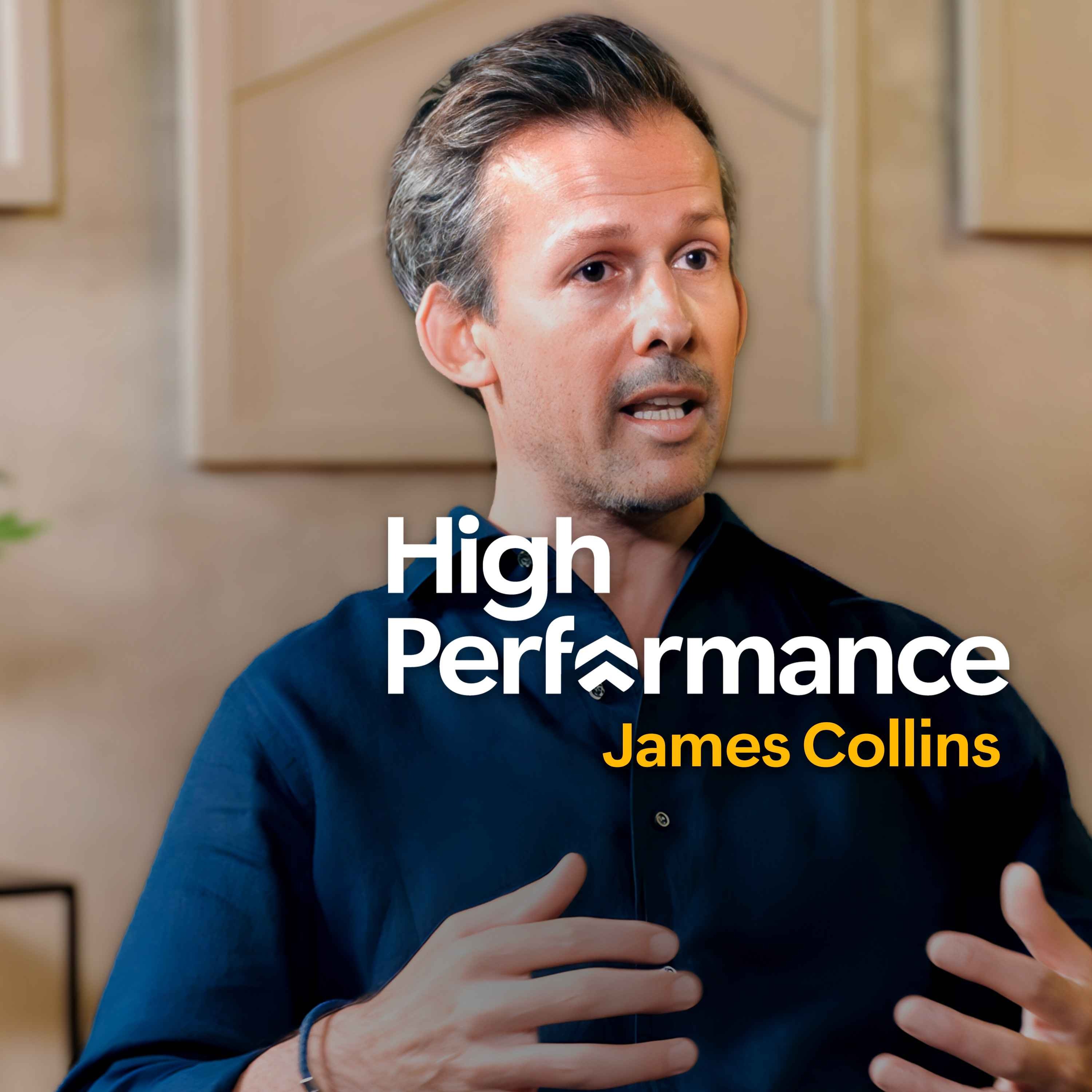
In this episode of The High Performance Podcast, hosts Jake Humphrey and Damian Hughes sit down with James Collins, a performance and nutrition expert who has collaborated with Premier League footballers, global artists like Stormzy, and Olympic athletes. The conversation delves into the critical role of nutrition in enhancing performance, recovery, and overall well-being.
Written by AI. May contain mistakes.

Get the gist, explore an idea or ask about something said.
 Claude
On The High Performance Podcast, what are the key points of this episode?
Searching your listeningAutomatic transcript. May contain errors.
0:00Watch it early on the High Performance App. Available now, Roman Kemp The broadcaster opens up A powerful conversation On success and mental health We've done this with lots of groups And we've seen huge results Both in terms of moods Energy levels as well Nutrition needs to be proactive He met Storms in 2019 In order to achieve the physique he wanted We needed to get him to Olympic athlete Premier League footballer level And he's a musician It's the same principle that we use with the actors and the athletes by fueling them to execute. What you eat might be different and it might be less than them, but the principle is exactly the same.
0:39Imagine preparing some of the most famous athletes, musicians and CEOs in the world, not just to perform, but to thrive under the spotlights. Well, that's exactly what human performance and nutrition expert James Collins does. From his time with Arsenal under Arsene Wenger to England and France at the Men's World Cups to working closely with Stormzy before that famous headlining gig at Glastonbury to advising Hollywood actors. This is a guy who spent years inside the world of elite performance. And in this episode, James is going to cut through all the noise because right now there's more information about health and nutrition than ever before.
1:17But if you're like me, you're probably more confused than ever. Well, that won't be the case after this because James explains why the answer to being the person you want to be isn't about eating less. He will explain why we need to be more proactive, not reactive with our food choices. And you can expect to hear him explain why most of us are fueling our day completely backwards. He also takes on some of my toughest questions about my body image, my energy dips, my discipline, and why I think so many people are feeling stuck just like me. So this is honestly one of the most practical conversations we've had in the five years we've been running High Performance.
1:52It's full of tools that you can use straight away. Before we get into it, hit follow on Apple or Spotify so you never miss an episode. And remember, you can of course get early access and bonus content on the High Performance app. As we welcome James Collins, human performance and nutrition expert to High Performance.
2:15James, welcome to the show. Thank you, Jake. Thanks for having me on. So what are these kind of core principles around nutrition and allow people to get the very best out of themselves? nutrition is something that's always been done very badly it's always been very reactive especially in the public domain and you know if I look back to when I started my career actually I started from performance perspective and there was only a handful of nutritionists really working in sport at the time and I think at that time it was really important that we gain trust with the athletes that we work with and we had an impact very quickly so I think for me it's really important and we use nutrition as a vehicle to have an impact upon performance.
2:55That's really the key because when you're working with any performer, whether this is an athlete, whether this is an entertainer or a business person, you have to have an impact. You have to be able to demonstrate an impact. Otherwise, it's just healthy eating. So what's the first thing people should think about then when it comes to this conversation? Almost the first thing maybe you'd like them to do at the end of this conversation when it comes to their nutrition. I think for me, it comes down to being proactive. If I look back 10 years, Jake, I had a practice on Harley Street where I would see business people that would come in.
3:24And we would sit down and these guys were incredibly well planned with their training, with their work. I'd then ask them about their nutrition. And they'd say, I'll have a protein shake here. I'll have this meal. Was that okay? It was completely reactive. And that for me was one of the moments where I said, well, look, nutrition needs to be proactive. You need to be able to plan your fueling to meet the demands of your day. And that's really the key thing that we've taken and distilled from sport into the general population. Can I ask you, James, that you said about you have to have an impact.
3:57What are the kind of measures then that would show you you're having the impact you want? Well, I think one of these, the performance data is really important. So I guess if we take a step back then, I went into Arsenal in 2010. And one of the roles for me from Arsene Wenger at the time was, we have a first team squad of players, first team men's squad. you need to have an impact with them and win them over. And the area that I chose to have an impact on straight away, the thing that we can influence really quickly is the pre-match meal. So one of the things that we know with football especially, if we change what we eat before the meal, we can affect the outcome in the game.
4:32And there are two ways that we can do that. One, the player can feel more energized, which is obviously really important. The second is we can speak to the analysts and get the data. So we can see their high-speed loading in the second half, for example. So one of the key points for me at the start with the players was I didn't want to overcomplicate things with nutrition, but I did want to promise it was about performance. And I said, let's start by building out what you're eating before the match, looking at how you're fueling for the match. And we're going to build backwards over the 24 hours to ensure that you're fueled to be able to deliver a performance over 90 minutes.
5:05And we worked on that for the first couple of months. And across the team, we saw huge improvements in the data. So the outcome measures within the second half. And from there, that's when we had buy-in with the players. It then gives us license to talk about the other things that we want to talk about. Body composition, immunity, you know, other areas that we feel could have an impact. But, you know, with any athletes and the performers that you speak to as well, guys, if you don't have an impact quickly, you're dead. So how did you come to work at Arsenal? Did Arsene Wenger pick up the phone to you or what?
5:37Well, I was actually working at the time. I was working with the UK Sports Institute, formerly the EIS. and I was working within track and field. And the job advert went out and I applied. And I remember going to the final interview and it was actually quite an interesting story. We're at the final interview and they said, well, the final interview is with Arsene. So we sat down at the table. I was sitting here. We had the head of medical and then we had the lead doctor and we had Arsene and Ivan Gazidis, who was the CEO at the time. And he said, okay, boss, this is James. James is very experienced within Olympic sports and I'm waiting for my queue to launch in and I said, leans across the table and says, he looks a bit young to be experienced.
6:21Completely deadpan. Oh, wow. To which point, I didn't really have anywhere to go. Do I make a joke? Do I not? So no, it was through the interview process there. That was the interview with him. That's how it started. What did he say that he wanted? He wanted the best and he wanted impact with his players and he wanted to be very involved in the process too. So I've worked with a number of different coaches across different sports. For us, he wanted to understand what's happening with his team. So for example, for us, we would work each week and we would catch up whenever I'm in and I would give him an update on where the players were, their status.
6:58He would have an opinion on most things, including the post-match food, which is usually a huge bone of contention in clubs that you might have heard in the past. What would he say? well he turned around one day and he said to me um james the post-match food at the emirates isn't good enough and he was right and one of the big issues we have probably across the premier league and also in europe is that it's often external caterers that provide the catering service at the ground so it's not always your performance chefs that go in and he said to me the food's really bad i want you to speak to raymond blanc and i said right okay and he said raymond has the restaurant in the Diamond Club on match day.
7:35So he's cooking. And Arsene's opinion, and he was totally right with this, he said, the players are the most important people in the stadium. They should be eating the best food. And he was entirely right. So he then started this project working with Raymond. Look, how can we really optimize the post-match recovery food? It seemed a bit surreal at the start. But the quality that he delivered actually really increased the uptake for us in a really important time. When you're playing European football and the window of recovery is really short, to get players to eat after an evening match especially is really crucial to get them ready for the weekend so that was in a roundabout way ways that he would influence and say look i want this done the market's uncertain revenues tied and hiring on hold that's why results driven companies are using upwork to keep work moving go to upwork.com today and start hiring proven freelance talent fast.
8:30No bulky overhead. No rigid long-term contracts. Just the right expert right when you need them. Work smarter and faster with Upwork. Go to Upwork.com now and find your freelance expert. That's U-P-W-O-R-K.com. Post a job for free and get started today. If you're a custodial supervisor at a local high school, you know that cleanliness is key and that the best place to get cleaning supplies is from Grainger. Grainger helps you stay fully stocked on the products you trust, from paper towels and disinfectants to floor scrubbers. Plus, you can rely on Grainger for easy reordering, so you never run out of what you need.
9:08Call 1-800-GRAINGER, click grainger.com, or just stop by. Grainger, for the ones who get it done.
9:20This episode is brought to you by Opera Air, the first browser with mindfulness at its core. Now, most of us spend hours every day online, but how often do we pause to take care of ourselves whilst we're doing it? And that's where Opera Air comes in. It's a lightweight, fast, secure browser built not just for productivity, but for your well-being. With Opera Air, mindfulness is built right in. You'll find free breathing exercises, guided meditations, and soundscapes with ambient sounds, lo-fi music, and binaural beats, all designed to help you focus, relax, and even spark creativity while you browse.
9:58I mean I think we need some specifics now right what like what was the food looking like before you were there what did you change and what was the impact I guess the first job I think Arsenal really was to win the players over but also to embed nutrition within the multidisciplinary team because I think at that time and Damien I'd be interested in your opinion with psychology as well because the one thing we noticed with with football in general is that nutrition and psychology are two of the professions that probably aren't as established. They're more emerging. So with our work with UEFA, what we found is you've got strength and conditioning, you've got doctors, you've got physios, a lot more established with players.
10:34Nutrition and psychology are still trying to find their way, still trying to find their way to the table. So my role really was to go in and to place and embed nutrition within the multidisciplinary team. So to work closer with the doctor, the physio, strengthening, conditioning, coaches, psychology. Because often, especially in a club environment, the work is player facing, but often the best quality work that you deliver is when you're working with your peers, that interdisciplinary support. The physio might come to you, for example, and say, hey, look, we've had a new injury that's come in.
11:07We need to start them with a protocol around nutrition as quickly as possible. And, you know, the days really make a difference here in terms of rehabbing an injury. It's the same with a strength and conditioning coach. You'll put your heads together to find the best solution. But you change the food someone's eaten once they get injured. Absolutely. Honestly? Yeah, absolutely, yeah. What would you add to the diet of an injured player? One of the big things is the quality, the timing and the total amount of the protein as well to affect deconditioning. That's one of the big areas. But if you think about an injury, this is one of the key times where you can help do something, help accelerate the injury recovery as well.
11:46There's other aspects of nutrition you might change as well at the same time. But one of the key things also is to make sure that the player actually keeps up their energy intake in the short term because the injury needs energy to heal. And often one of the things that was thought about nutrition is when you're injured, you don't want to get fat. That's exactly what I was thinking. That's a really common thought. If you get injured, just an average Joe like me and Damien, if you do your knee or something, you think, oh, I can't go on the running machine now for three weeks. So I better eat less.
12:16I'd never thought that eating less at that moment delays the injury recovery. No, the evidence supports that we actually need to keep the energy at the same level to support the injury healing. Again, this was one of the findings with our work with UEFA recently. But it's really important these things are established within the club. So you spoke there about quality, timing and frequency being the three big questions that you'd applied. How applicable is that? But how important are those questions for the everyday Joe that might be listening to this? Yeah, I mean, I think extremely important, Damien's, when it's the same principles that you can apply from sport to the everyday person.
12:53For example, for most people, if they're looking to have their active and they're looking for their nutrition to support their activity, the main thing would be their protein intake and getting that at a certain level per day. But the one thing we know about the muscles and how the body adapts is taking in small doses of protein regularly is most effective for it. So if we play this forward and look like practically how would this look, for a lot of people, actually the starting position is showing them how they build a performance plate, as we call it, what components of food need to be on that.
13:28And once you've mastered that and built some confidence around that, you can look at how you adapt that depending on your needs as well. But I think often starting with changing one thing is the most important. nutrition has its reputation especially in the public domain of look here's a plan you should follow this plan it's too complex for almost everyone they can follow it for a few weeks and they fall off you know this rigid plan of weighing food all of the time whereas with performers and especially within footballers we don't work in that way we work high touch and we coach players and we look for feedback from them to make changes so it might just be starting with one meal we'll get feedback of let's say for example it's uh you're modifying someone's breakfast someone's always struggled with breakfast am training they're fatiguing in training you're adapting the breakfast and then you're saying to them actually you know how are you feeling after that how are your energy levels because we've got your data from training and we've been tracking that but how do you personally feel how would you rate the session zero to ten how would you rate your energy levels and what we can start to do is we can start to collect some data around the player which is subjective from them but which is also objective from the club and it can help anchor these changes because then they'll say after the first week well look, I feel better for having more fuel at breakfast for changing my breakfast I felt better in the morning session my data's good okay, I'm going to build on this whereas if you don't have that data and you're not showing an impact it goes So you mentioned the performance play and changing one thing so if breakfast is the one where people could make one change, what would a performance plate look like?
15:07Well, I think for us at breakfast, how we would tend to build a plate would be, the first step would be adding a maintenance food, which would be protein. And then, so it's adding some protein. The second step would be adding some lower GI carbohydrates as well. And that's what provides the fuel for the muscles and brain during the day. And we then add as a third component, some what we call protection foods. And these are our fruits or vegetables and healthy fats. And what these tend to do is the diversity helps with the gut health and also the immune system too. So there are different ways that you can build these different plates.
15:41You know, for example, at breakfast, you could have a low-fat Greek yogurt base. You could add some different nuts. You could add some different muesli or bircher. And then you could add the different fruits there. There's lots of options at lunch as well. But I think the key thing is giving people the confidence that they can build their own plates and then assessing how it makes them feel as well. and what was the resistance like going into a football club I mean you've mentioned Damien's psychology Damien's walked into enough dressing rooms where they eye him suspiciously as someone that's going to try and infect their brains with all sorts of psychology so I'm very interested in what the resistance was like at Arsenal and how you won them over yeah interesting I would say players very open I remember even my first initial my first consultation at the time was with Thomas van Marlen who was previously with Ajax club captain, very open, you know, wanted the best strategies there.
16:35And I think he set the tone for me for a lot of the players. If you showed them impact, they would follow you. I mean, a bit of a rule of thumb that I tend to apply, I think sometimes with, especially within sport, you could split the dressing room into thirds. You've got your early majority, which will want to follow and do anything you say. You've got your winnable third in the middle, and they will want evidence but if you can show them the evidence your winning majority will follow you and I think you've got your laggards the final third which you could show them anything and it'd be really difficult for you and I think actually success within sports early on for me wasn't winning the early majority who were really keen I think it was winning the middle group and I think it was actually having some impact with the laggards so I think for me identifying the laggards and saying well hey look what are a few things what's the minimal dose that we can give you that will have an impact and keep you moving forward.
17:29And for some of those, it might be recovery post-match. That might be an area where we can have a real impact. So I would say to them, hey, look, if these areas aren't for you, let's do this really well. And actually by simplifying that and saying to them, well, look, nutrition for them was doing these three things really well. It's a nice place to start. So after you'd had conversations with these players and you started to have an impact at the club, what would a pre-match setup look like at Arsenal in your time there? pretty much would be at a hotel. Yeah, pretty much would be at a hotel approximately three hours before kickoff.
18:03And within football, generally everything's served buffet style. So what you would have is you would have the different stations and players would move through and build their own plates. So it actually becomes crucial that when you're teaching them habits at the training ground, they can then apply these in different environments because you'll have your home hotel where you'll stay in. There's some continuity there. You're also playing up at Newcastle, you know, you might be playing at Sunderland, you're playing at Man City, the environments will look really different. I think the other challenge is, especially with the Champions League club, is how do we support talent who are playing internationally?
18:38So for example, within our squad at Arsenal at the time, we had approximately 20 different nationalities. And what that means is they're going to represent their national team, and the level of service there would look completely different. But one of the things that I felt really strongly about, and I think we all did at the club at the time was we need to be able to empower them to make good decisions when they travel and they're taking ownership for their match strategies when they're away but also when they come back to us as well because I think sometimes there's a reputation within elite football where everything can be done for the player.
19:13I think in bad cultures too much is done for the player and I don't think this is the staff trying to do the wrong thing. I think this is the staff very keen to have an impact but I think if you don't have the culture set up in the right way and everyone knowing their roles and responsibilities let's say for example you're the day before the match there are key things that the player might need on that day often it'll be around the coaching staff it might be around strength and conditioning if you don't have a role with that player often the best intervention you can make is nothing. What would you say has been the best feedback you've had from a player in terms of the impacts of your work?
19:50I think sometimes what I would consider the biggest impact is when you've worked with a player over the long term and you might have modified a different training days, modified their match nutrition, and you've done it in a way over a season where you might have made 25 interventions that have stuck. And where you pick them up at the end of the season to the start looks completely different. They're fueling well, they're recovering well, their match data is great, they're sleeping well. And you're thinking, I'm quite pleased with that. Externally, no one really noticed that, but that's fine. what people notice are the changes in physique because historically people would come to the nutritionist because they want to change their physique it's still a big part of my role in working with physique now but what I would say is probably the most notable case studies are when you work with someone and you help them reduce their body fat maintain their muscle mass and maintain their energy because it's one of the things that they see as a player it's one of the things that the fans see on a Saturday as well and they make comments on they see what are they doing they're looking different they're flying you know what's been happening there so yeah I consider those two things different I think Damien but yeah that's Which player did you work with at Arsenal where they were open to this and it really made a difference and you were like wow I'm so pleased that that impacted them Yeah look I think players at Arsenal who I dealt with a lot I mean Olivier Giroud I dealt with at Arsenal we dealt with the Chelsea Talk about a good body Exactly Oh my goodness Olivier Giroud with his top off that will make you feel inferior right?
21:25Frighteningly handsome as well So good looking So yeah so dealt with Olivier throughout his career really and also parts with France as well very very diligent Alex Oxlade-Chamberlain would be another one who had worked with a lot both with Arsenal with England and had done a lot of work too so those would be two that would spring to mind but I think there's probably another list of players you know the thomas riziki's you know you work with a lot theo walcott another really diligent professional as well so someone like olivier geru what would a match day look like for him from a nutritional perspective everything works back from kickoff so so what would tend to happen is you would have your pre-match meal if you're kicking off at three o 'clock pre-match might be around 12 and there's a real emphasis around carbohydrate intake on match day because that's where we get the main metabolic fuel that's stored in the muscles is glycogen so it's really key that over the 24 hours pre the diet is high in carbohydrate and often for players this can be a challenge because you're getting them to eat more and that can feel uncomfortable so it often takes a lot of modifying to really see how they're feeling and trying things out in training as well to check that they're comfortable with their gut what can you modify Well, often, if you think about this, you've got a 24-hour window.
22:43And what you can do is you can bring the loading back to give them time where they're not feeling bloated before the match. But what you might do is you might increase their feeding the night before. You might increase their carbohydrate feeding at breakfast as well. So there are different tools that you can use depending on the player. You know, there were some players for sure that would eat very lightly at pre-match, just with nerves. And there are others who would say, no, that's absolutely fine. I'm quite happy three hours pre to have a higher carbohydrate meal. But everyone's very different in that respect as well.
23:13It's the same for using products, carbohydrate-based products, in warm-up and at halftime as well. Everyone has a slightly different ethos on it, a different level of comfort. So you really have to individualize that. What do the players take at halftime? They'll take a source of carbohydrates, generally between 30 and 60 grams. And what this might look like is a sports drink. It might be a sports drink and a carbohydrate gel. Have you seen those? Yeah. Carbohydrate gel as well. For others, it might just be a banana. That might be another option for you as well or some sort of easily digested bar.
23:46There are also now lots of different gummies and shoes that you can have as well, which are very effective. Some now contain caffeine as well, which can give another positive impact for some players. But again, I think very individual, depending on the player. So these strategies need to be built out for them and they're the ones driving them. it's our role really to give them the options it's the player driving it can we just do a light bit of consultation with me? because I actually think that in many ways I represent most of the people that listen to this show I'm in my mid to late 40s I don't work in the city where I live, so I live in Norwich, I work in London so I do loads of commuting so therefore sleep is all over the place because sometimes the train is really early in the morning I find that I'm experimenting with intermittent fasting and that doesn't really make much of a difference so then I try and eat breakfast but as soon as I start eating it turns on some sort of fire in me where I'm absolutely starving all day and just eat everything that comes to mind I think I'm eating healthily I try and keep a very light food diary or I can't reflect each day on what I've eaten but I'm still putting weight on and I'm still knackered by about 6 o 'clock in the afternoon and I still worry about this idea that nutrition can be really the thing that can fuel some pretty bad diseases and illnesses, right?
25:04So if I came to you and said that that is me, and I actually think probably 60, 70 % of adults in the UK of my age probably fit into that bracket of working too hard, life's inconsistent, you're trying your best, but you feel like you're not having an impact. What's the first thing that you and I would talk about or go through? What's your goal? My goal is to lower my body fat and have more energy. Why? Because I want to look good when I take my top off. and I'm a dad. Why is that important to you? So that I can be present for my kids and enjoy all the fun things that they love to do. And I just don't like feeling old.
25:42What does it feel like, feeling old? It feels like my joints creak. It feels like I just want to lay on the sofa about seven or eight o 'clock in the evening. It feels like whatever I do, I'm only going along one route, which is the route of less muscle and more flub. and is that a noticeable change that you've seen in your body composition changing? Yeah, I think so, yeah. And talk to me about the playing with your kids part that I'm assuming this is where a lot of enjoyment comes. Yeah, that's the true joy, just having the time to run around with the kids. Also, I've got bad knees, which I don't think, I'm not sure how much nutrition can do about that, but I've got like degenerative knee condition, which means I can't even close my knees up.
26:23So like kneeling or running is hard. So I've got, you know, I think that's the other thing for a lot of people when they get edging towards 50. There are little things that they can't really solve that really feel like a handbrake on your life, you know? Yeah, totally. It's a really common thing, Jake. The reason why I kept saying why is because this is probably the most important thing if you're going to make a long-term change because the amount of conversations that I have with people and they say, hey, look, James, I want to put on a bit of muscle. I want to lose a bit of body fat. That hook is not strong enough.
26:55That hook is not strong enough to keep you going on a cold November morning when it's difficult. So one of the key things with a client straight away is I want to know, you know, what is your why? Yeah. And I really want to dig in and I really want to understand that because the deeper we go with that, the more we can understand what your motivation is going to be. You know, so I'll give you another example of this, Jake, and we'll come back and work for your question. But, you know, I had an actor that came to me the other day and he said, James, look, I need to put on a bit more bulk. I need to put on a bit more muscle mass.
27:27I need to lose a bit of body fat. can we start working on that I said well you know why do you want to do that he said just my physique I just need to improve my physique but why is that important he said well when I have more bulk on me I carry myself differently when I enter a room I feel more confident when I feel more confident I deliver better in auditions when I deliver better in auditions I get more parts I'm a more confident version of myself I said that's the reason that's the hook so that's where we work from and I think when you understand that I'm also really keen to understand this is a bit of an ideal future state but what does that look and feel like like for you Jake what would it look and feel like to be playing with your kids energetically in 10-20 years?
28:16Well for me it would be everything I suppose I just have that fear of that slow decline so that I'm the guy sitting in the chair going I haven't got the energy or even by then it might even be grandchildren right and I want to be the guy that's in his 70s playing with his grandchildren. But it's very interesting what you say about the actor because when I think about it, it's definitely a big part of ego here for me. You know, I'm on camera all the time. I'm standing on stage doing presentations. I'm going on TV shows. And also, like, I was on the telly as a young guy. So I got a job on Children's BBC in 2001.
28:50That's 25 years ago. I'm now 47. So I was 22. and I know for a fact that when people meet me you can tell when they look and go fuck okay he's not quite what I remember there are people that stop me in the street and go I used to watch you on kids TV and I feel myself like I feel I look a bit older I carry a bit more weight and I feel a bit like I'm being judged against that idealistic view of Jake Humphrey who used to host Formula 1 on the BBC aged 28 when he was super thin and you don't even notice the change until you watch a video of yourself and think bloody hell you know and those comparisons are really unfair but i think often when we're talking about physique and especially as men when we're talking about nutrition physique and how these fit together we often don't have that deep conversation about what's the real goal yeah and often it is about confidence and it's really important we acknowledge that because that's the key driver that we're working towards because as soon as we have this goal, this ideal future state, we can then have a look at, okay, where are we today?
29:54You said, you know, you're feeling tired, you know, a lot, you know, there's a lot of things with this ideal future state that we would need to move to get you closer to, you know, to where you are. And that would be organizing your nutrition in a way. I mean, I don't, without looking at it in detail, we would have to do a deeper dive, but there are certain principles that we would look to apply with your nutrition, with your activity levels. I mean, how often do you train a week, Jay? Three times a week. Three times a week. And incidental activity, like how many steps a day? Well, my whoop says it's about 13 ,000.
30:27I don't believe that for one minute. I think it's more about 6 ,000. And do you see any variance in terms of when you're at home versus when you're on a job? In terms of steps? In terms of steps, or is it quite consistent? It's probably quite consistent. I mean, most of my life is sitting on a, like today, sitting on a train, line biking to the studio, and then sitting here like, I mean, we'll be sitting in these chairs for six hours today. That's a lot. And then sitting two hours on the train here, two hours on the train back. And actually, that's one of the other things I think is so important for people listening to this is like, we know what we should be doing, but I'm sitting down for 10 hours and I can't do anything about that.
31:03So then where's my answer? Well, your answer comes down to a priority. Yeah. I mean, these things are easy. They're not simple. Yeah, yeah. But the priority is paying the mortgage. You should never have to come here. I get that totally. But if, for example, if we were working in a session, Jake, what I'd be doing is I'd be looking at you all week. I'd have the calendar in front of me and we'd be looking at windows of opportunity where we can embed some activity, where we can embed some change. So, for example, two of the key things that are problems for probably everyone who's listening is firstly lunchtimes.
31:34They might be working in an office. They're not blocking off time for lunch. So people are saying nutrition is important. an email comes in, you're busy, you're eating a sandwich at your desk. 62 % of the population do that, eat at their desks. But the big thing is, it's all about intent, really. And if you're saying that I want to make this change to this ideal future self, then you have to evidence these behaviors along the way. As soon as, for example, you're blocking off your lunch for 30 minutes, other people know that's immovable. Other people know that's a priority for you, and you're prioritizing it for yourself.
32:05So you're more likely to go and get your lunch or bring in lunch but you're giving yourself that time and that time's really important it's the same during the week as well like incredibly busy but there are always windows that you can find for training i'll give you an example of a ceo we work with with a fortune 100 company high profile works during the night extremely long hours and what we tend to do with him and also some directors in film is we put pockets of activity in around midnight and the reason we put the pockets of activity in is to get some activity done in about 15 minutes. We then have a recovery feeding to help the muscles recover, but also energize them for this work at night.
32:45Because for these guys, some of their more creative work is done at night. They're in the studio. They're being more creative. So they're almost trying to get into a flow state. So for us, we're trying to see, look, one, can we get some exercise? Two, can we prime the body and the mind to do this deeper work during the night. So I guess what I'm challenging slightly with this is we would do some problem solving. But I would challenge it and I would say, you know, is there 15 minutes here? Because it doesn't have to be often be an hour for a workout. You can do some effective workouts at a minimal effective dose.
33:17It might be even the case of taking the stairs more often. One of the big things that comes out, you speak to exec groups, but if we recognize that our environment around us is created, that we have to do less. so most companies we're in London here today right most companies beautiful offices now aren't they but you can walk along you can get a cup of coffee within 20 steps you can get a cup of coffee and a cake you don't have to leave the building you could stay there all day you don't have to see natural lights of course so you work harder right they want you in the building exactly exactly but we need to be mindful of that and we need to seek stress and we need to seek activity the other big thing we had a session a couple of weeks ago with a group of execs and they were saying I said okay what does a week look like?
33:59We're incredibly busy, James. Okay, right. I get that. We work at home Mondays and Fridays though. I said, that's interesting. And I said, well, how do you set up your days when you're at home? They said, oh, it's exactly the same. We probably work hard. I'm like, that's interesting. So how active are you at home? Oh, it's exactly the same. I asked them all to get out of their phones. So, okay, well, let's just have a look at the step count. Let's just do this. When the days they're in the office, 10 ,000, 12 ,000, 14 ,000. When they're at home, 2 ,000, 3 ,000, getting up, going to the desk, having some lunch, sitting back down and doing some work.
34:34But it's, again, not being intentional about how they're setting up those days that are really different. But again, there'll be lots of people here today as well, Mondays and Fridays. And I see it with friends, see it with colleagues. I think you need to be really intentional how those days are set up. Well, we don't allocate lunch here on High Performance. We get healthy food in, right? We get a nice salad bowl from Attis or somewhere. but there's no allocated lunchtime is there that we just kind of eat as we're chatting eat while we're meeting we might carry on recording we wouldn't ever put time to just go and do 20 minutes walking or there's like a yoga studio downstairs we don't have any time to go and do some stretching or because i guess we all think you need an hour to do a proper workout is that not the case no no it's really not the case i mean you could go and the term is exercise snacking in terms of improving your cardiovascular health, there's really good evidence that if you're just, let's say for example, you've got 10 minutes now, what you might say, Jake, is, hey, I've got 10 minutes.
35:28What I might do is I might walk down the stairs from the sixth floor, I might take a quick call outside, have a quick coffee outside, and I'll take the six steps coming back. And I'll be out of breath when I come back, but that's fine. Cumulatively, if you're adding these snacks or adding these doses of exercise during the day, if we're looking at these habits over a week, over a month, over a year. All of these things can add up. And by the way, I think the social element here, I think is really good, if we're being honest, because I think we see a lot of offices where lunch is solitary. We're all from sport, where we all eat lunch together.
36:01That's so important. To chat to someone else away from your desk, different stimulation, different conversation. And I think that's one thing that I think is missing with the culture with a lot of businesses as well. See, what I'm loving about this, James, Some of the principles you're applying, like asking Jake those why questions to find a hook, as you said, and then the second one about curating your life and making sure that you're getting opportunities to exercise snack. These are things that any of us can do without necessarily having to invest a huge amount of time, effort or money into it.
36:35What other principles could you advise that you work with these elite performers to help them refuel better. One of the things that we've noticed, and this again was people working within the public domain, is that nutrition is reactive. So I think with nutrition, most people are on autopilot. And what I mean by that is they'll go out of the door, they might go to a sandwich location, get the same sandwich each day, and it's just a routine and it's completely on autopilot. And as I said previously, training isn't, work isn't, super organized. What's happened to nutrition? why is that not intentional there's no plan this was part of the reason I spoke to penguin years ago about putting a book together was nutrition needs to be proactive like for example Jake's week Jake can see his week seven days in advance as soon as you know you're weak you know where you're going to be at different times you can plan in how your nutrition fits around this one day you might have a long train journey so you might need to take your food with you on the train one of the days you might have a harder training session you might need more fuel on that day.
37:41So you'll be fueling differently on that day. The other day might be at home with the kids. They might be less energetic. But as soon as you know your schedule, I think one of the key things we can do is be proactive with our nutrition and plan it. And one of the key things, when you're reactive with your nutrition, what tends to happen, and I would say this is probably seven out of 10 execs that I see in and around London, that you light during the day, minimal breakfast, maybe a slice of toast going out the door, something minimal. They're hungry most of the day. So they're not eating optimally to fuel their body and brain for the work that they need to do.
38:14They're then getting home. They're having the biggest energy-rich meal in the evening, which can have negative effects for their weight management. Thank you for describing my life so perfectly. But this is so common. So common. What percent of people do you think live like that? Seven out of 10. Yeah, I think 70%. And it's really common because there's no conscious thought that's gone into it. So one of the key things that examine the exec groups that we might test them to do is, but let's just flip this. Let's flip the strategy and let's try. Often a lot of people aren't hungry in the morning.
38:47They say, yeah, James, I'm not hungry. I can't eat breakfast. 100%. Well, you need to start this process the night before. By modifying your evening meal the night before, you'll be going to bed feeling less satisfied, less full, and this will take a bit of time for your body to adapt. But the next morning, slowly but surely, you'll have more desire, more drive to eat breakfast. And what we're not saying straight away is, hey, look, you need to eat a full breakfast. These are all small tweaks and changes we can make. But if you can proactively start to fuel your day with breakfast and with lunch, and then modify your evening meal.
39:19So the evening meal doesn't need as much energy when you're sitting at home when the day's done. We've done this with lots of groups, and we've seen huge results, both in terms of mood, energy levels as well. For some, if it is a question, reducing body fat, you know, but for some people, that isn't a question. It's just about being in a better mood, feeling more energized. But I think the key thing for a lot of people, the light hasn't necessarily gone on with nutrition. And what I mean is they haven't intentionally tried to build their understanding of self. And this might be with nutrition.
39:50It might be learning about their body and their exercise. Damien, it might be psychology as well, about learning how they think. And I feel that we've got the green shoots of change coming through a little bit where people now are more interested in themselves. But one of the first things that we want clients to do is to check in with themselves. So for example, the best place to start often is changing one thing, one meal. Let's say, let's use a breakfast one. For example, we said this earlier on, you're changing your breakfast. They need to be able to reflect. Let's say it's either later that day or on the weekend, they can reflect and see how they felt.
40:25It doesn't need to be on an app. It doesn't need to be overly laborious. What it could just be is pen and a pad and they could think, hey, this week I was planning to change my breakfasts. How often did I do it? I did it four times out of five. One of the days I was quite busy. Okay. What did I have? How did I feel? Actually, I think I felt a bit more energized. I think that was a bit better. Actually, on some of the days I didn't feel that full. And then suddenly you're building this dossier of information the next week. You say, okay, I've got more travel this week. What I might do is keep the breakfast.
40:54I might start to work hard on my evening meal this week and modify that. I might bring down the size of it, I might bring down the amount of carbohydrate, okay? And the next week, you can start to make a change. And then suddenly, you're slowly modifying and building and iterating with your nutrition. It only needs to be one change at a time. If you're still overpaying for wireless, it's time to say yes to saying no. At Mint Mobile, their favorite word is no. No contracts, no monthly bills, no overages, no hidden fees, No BS. I made the switch because I was tired of those ridiculous bills and sneaky charges from my old provider.
41:31With Mint, I'm paying$15 a month and getting the same high-speed data, unlimited talk and text, and coverage on the nation's largest 5G network. Honestly, the quality is just as good, if not better, than what I had before. And the best part? You don't need a new phone. You can keep your current one, bring your number, and all your contacts. I use Mint Mobile, and you should too. Ready to say yes to saying no? Make the switch at mintmobile.com slash HPP. That's mintmobile.com slash HPP. Upfront payment of$45 required, equivalent to$15 a month. Limited time new customer offer for first three months only.
42:04Speeds may slow up a 35 gig on unlimited plan. Taxes and fees extra. See Mint Mobile for details.
42:22Proven freelance talent fast. No bulky overhead. No rigid long-term contracts. Just the right expert right when you need them. Work smarter and faster with Upwork. Go to Upwork.com now and find your freelance expert. That's U-P-W-O-R-K.com. Post a job for free and get started today. If you're a maintenance supervisor at a manufacturing facility and your machinery isn't working right, Grainger knows you need to understand what's wrong as soon as possible. So when a conveyor motor falters, Grainger offers diagnostic tools like calibration kits and multimeters to help you identify and fix the problem.
42:59With Grainger, you can be confident you have everything you need to keep your facility running smoothly. Call 1-800-GRAINGER, click grainger.com or just stop by. Grainger, for the ones who get it done.
43:18what's the issue with eating later in the evening because that my my hungriest time of the day is about 9 30 10 o 'clock at night well i think it's working against your physiology shaking away because you know what i would say is if we look about the energetic demand of your day both for your cognitively for your brain and also for your body when you're out working it's during the day. So it makes sense to fuel your body so that you can optimally execute during the day. Then in the evening, it depends if you have a work shoot, if you have something in the evening, you might still require some fuel for that.
43:50If you don't, and you're trying to reduce your body fat, as you mentioned, or change your body composition, this is a time where you would adapt your evening meal accordingly. Should it be less carb heavy in the evening? If your day is, as you say, is you would go less carb heavy in the evening, yeah. because you don't need the energy overnight, right? Exactly. See, the reason why I think this is really interesting, right, is I don't feel I've ever been more confused about what to eat and when to eat it. And I think pretty much all I know about nutrition is I eat lots of fruit and veg, kefir, yogurt, kombucha, and kimchi for gut health.
44:24And I take a protein shake every day just to make sure that the protein is at a level that I need it. I think apart from that, I really have no idea. Yet, I have an eight sleep that gives me loads of feedback and information about my sleep and my HRV. I wear a whoop that gives me my steps and my heart rate variability and all this other information. I use an aura ring. I've got more information about my life than I've ever had. And I think that applies again to a lot of people who will watch this. But more confusion than ever. So it's almost like these wearable texts which have real value and not giving us all the answers.
44:57That's absolutely right. Yeah, it's a really common thing. Clients will come in and they'll say, I'm swimming in data. I've got so many insights. like okay so we know what the outcomes how are the results i'm further away because now i'm really confused and i'm expending a lot of mental energy on trying to understand and interpret this information yeah yeah it's a it's a real problem uh jake you know and i think it's something for us just to be mindful of and there's a place for wearables for sure but i think what can tend to happen sometimes is when you have a wearable and you're getting lots of data it's easy to fixate on that data and you're looking at micro changes in the data and what does that mean whereas the data's over here but what's actually happened is these first principles we talked about nutrition fueling to meet your day exercise snacking workouts regular sleep-wake routine shaping your environment these are almost forgotten so you're placing your time and energy on the data as opposed to crafting these first principles and there's a bit of a marriage here between the two but one of the things that we try to do sometimes is that when people are swimming in the data we say well look hang on a minute let's maybe take a step back from the data for a while let's work on these principles see how you're feeling and then let's just be really targeted because it comes back to why i feel really bad now that before this interview i had a jammy dodger to give me some energy and i'm drinking a coffee to get me food at about four o 'clock but you know but actually this is so helpful for me because you know damien and i talk a lot about nutrition because we're both in the same boat, right?
46:26Similar age and slowly, you know, growing our way to old age. Because we both have looked at this from the position of what should I eat rather than why do I want to eat better? Like what Simon Sinek has been in that very chair that you're in, start with why. So who would start with why? I think it's great. To start with looking at your week ahead of, seven days ahead and go, not just when do I need to do meal prep, but another thing that I've never thought about, when do I need to add the energy into my day? So I've always sort of thought if I can get through with eating as little as possible for most of the time, I will be thin.
47:01That's actually not... Why are you shaking your head at that point? It's just really reductive. But that's a really common thought, isn't it? In terms of how we think about nutrition. If we eat less, we can be thin. As opposed to if we can fuel our bodies to have exercise. No. No, it's not. I mean, in a proactive way, in terms of fueling your body to be able to execute better, to make better decisions, to work better during the day. It's the same principle that we use with the actors and the athletes. We're fueling them to execute during the day. What you eat might be different and it might be less than them, but the principle is exactly the same.
47:39It's using nutrition in a positive way to help you improve your performance. Can we talk about Stormzy? We can. When did you first realize that he wanted to work with you or he needed something special? so I met Mike I met Storms in 2019 and we met down in Marlebone and the meeting was set up and we were actually introduced by Jeanette Kwachi Olympic sprinter who I worked with a while ago and we sat down and quite quickly said look James I'm headlining Glastonbury pyramid stage Friday night I've got two big goals I'm going from a 60 minute set to a 90 minute set high energy, but I need to be able to execute that perfectly under the lights for a headliner.
48:27The second one is I'm going to take my top off and I want the aesthetic to be awesome. So there were two trains running for him. And it was from that first meeting that we said, okay, I think we worked about three months leading in to that first project. And I worked very closely with his strength and conditioning coach. And we put together a plan to get him ready for that day. Could you talk us through the plan? Yeah, of course I can, yeah. So I think for Mike, one of the big questions that we had around him was he needed to reduce his body fat. So that was one of the key questions for him straight away.
49:04So we measured his body fat, and we do that using skinfold measurements, sum of eight, which you can get a score, which you can equate to a maximum and a minimum level. So for example, for him, in order to achieve the physique he wanted, we needed to get him to Olympic athlete Premier League footballer level and he's a musician so one of the big things one of the most interesting things about Storms is and sharing all of this is fine we've talked a lot about this in the press as well he's got his training and he's also got his work in the studio so whereas we've got our athletes where the training is the work for Mike he's doing his training sometimes twice sometimes three times a day he's doing his work in the studio suddenly we've got a day which we're having to organize in the right way make sure he's recovering from his training his muscles are recovering but we're also setting him up in a way to slowly reduce his body fat as well and i think for us the key thing that we were looking to do was to make sure that he had the energy and the fitness to sustain 90 minutes and you've seen you've seen him perform extremely high energy and you know another consideration is under the lights glastonbury friday night it was going to be hot so we were also going to have to prepare for that heat but one of the things that tj i think did an incredible job with him as well with some of the training it was so specific to mike where there would be different sessions and then he would pick up and shoot the lyrics straight after doing some work as well just to test is the work appropriate for music so there was a lot of thought that went into that that session i think for me one of the things that will stay with me from that experience was we were leading into the event and i wanted to understand more about, okay, what's it going to be like at Glastonbury?
50:47And he said, look, James, come to the rehearsal. So I remember going up to the rehearsal and sitting down and I got it. Hair standing on end and it was just, you know, the music and the set itself was just, you know, absolutely incredible. This is very well, the Union Jack bulletproof vest. Yeah, Banksy stab vest as well. So that went out, that was just brought out for Glastonbury, yeah. But that's, I think for us, we were really keen that there was a plan for the performance night as well. so if we talk about how he looked that was really important but we've always worked with a performance plan and just like a footballer if you're on stage at half past nine you're then working backwards to okay what time is the pre-performance meal so for mike we had the pre-performance meal around three and a half hours before we also try our caffeine and we were looking at what time his caffeine intake is going to be just to make sure again that was optimal we'd work our way through the day So for us, we wanted to look at every detail.
51:43And Storms wanted to look at every detail in terms of not only looking great, but just really meticulous in terms of everything that can improve performance. So around that time, what was a nutrition plan looking like for Mike? So around that time for Mike, we would, for his usual training days, there would be an AM training session. We would then have a recovery feeding, which would be carbohydrate and protein based initially. He would then have a block of work. We would then have, I think, a lunch feeding. There would then be another block in the studio. We would then have perhaps dinner. There would then be a rehearsal.
52:26And there was actually a really nice insight for this. He did a day in the life, which I think summarizes it really well, where he was playing paddle as well. but I think we talked before, Jake, and we were talking about a day and where you fit all of these component parts into a day. And that's definitely one of the points with Mike as well because you've got your studio time, you've got your fitness time. You just can't get to that physique doing one session. So just to be really clear then, when Stormzy was preparing for Glastonbury, you weren't just there and when he had a spare moment, he ate some healthy food.
52:58Like this is preparing his week, preparing his months leading up to Glastonbury with really clear blocks in each day, knowing exactly when he's training, when he's working, and when he's fueling it. Kind of, it was proactive, not reactive. Again. Oh, everything's mapped out. Everything, and the word's periodized here. You know, everything is periodized, working backwards from the performance day. So we would map out what the week before looked like. There would be a timing for each meal. So we would stick religiously to that timing. That would be really important as well. Because training had to be at a certain time.
53:31So like for us, adding consistency helped us to measure the results as well. And that also works well for Mike. So now in terms of planning, we decided to be very, the attention to details a lot. I get that, you know, where he's got a really clear defined goal of, I want to turn up a glass of rain in great shape. You know, you hear about people that can get in great shape for a wedding day or a special occasion. what do you do to help people maintain that standard once once the event has passed i think it's about being really clear to people what's what's optimal and where they can live day to day and i think the mistake we often make is maybe during summer months we look about this ideal physique that we might want to have and we talk about base camp so we talk about if a performer will come in like typically a performer might come in and they've crashed the weight in the past to get a role.
54:28So they've gone very extreme, they've crashed the weight, physique doesn't quite look right. They haven't been pleased with the physique and they've also then rebounded to worse than they were previously. So one of the big things we say to them is, we first need to get you to base camp. And what base camp will look like is getting these first principles in place with training, with nutrition, with sleep. And then if we get those right as a byproduct, your physique will be at a certain level. Then when we need to summit, so when we need you to peak, We can then do that with two, three, four weeks.
54:59And then we can bring you back down because you can't stay at this level. It's a bit like the Olympic runners that we used to work with. You don't want to be peaking mid-season. You're not peaking for trials. You're peaking for the final night on the Olympic Games. That's when everything needs to come together. So, and your wedding day example is a great one. You're peaking for the wedding day. You're not peaking for a week before or a week after. So I think it's often having the conversation with them was look, if we can get you to this base camp, And before we get you to a maintenance level, we can then dial things in.
55:30And the last three weeks will feel harder, but you can do that for a short period of time. But I think it's often about setting goals. For the footballers we talked about earlier on, their Olympic final is every weekend, right? So they have to be at a level that they can maintain. And sometimes mistakes are made when you try and go too low because there'll be an issue there. But in terms of whether it's a big fight, whether it's a wedding, whether it's a big part, you can prepare for that. What did you learn from Stormzy about work ethic and dedication? Oh, he's unreal. Yeah, his work ethic's unreal.
56:06A lot of what has been said about Stormzy, well, I think everything has been said, is, you know, his work ethic is phenomenal. Was there a time where you sort of saw him in action and thought, well, that is a real step up? That's impressive. Honestly, it was rehearsals. I think, honestly, the detail that had gone into the set and just his performance. there was just the energy from the performance itself almost reached into your soul it's a really it's it was just incredible the lyrics the movement the energy was like wow this is so impressive so i think it was actually then and how involved is he in all of the small details i mean or is he just worrying about his role in the big production of a stormzy event oh mike's super involved in like his he wants to know everything about the details which is which is what you want from a performer.
56:56You know, you want someone to ask diligent questions. You want someone that will look at the details of the plan and want to discuss them. You want someone who wants to know what the data means. That's high performance. I'm struck there by the parallels with Arsene Wenger and so I'm seeing the way you've described them both. They seem like they were both doing the same things. I think both extremely diligent. Yeah, I think in that respect. But I think in an age now where, as you were saying before, Jake, there's lots of data. There's lots of information around and I think the challenge for true high performers is to step into it and to take ownership for that data.
57:34It's their plan. It's their program. They're responsible for it. It has to come from them. Stormzy does that so well. Leads by example is across every detail. And I think we're starting to see younger footballers coming through this mentality now as well with their program, managing what they need. not just what served up to them you know asking the right questions I think that's high performance You've also worked with Matt Fitzpatrick another guy who's sat at this chair and shared his own version of high performance with us Amazing What we were struck by with Matt again is his diligent attention to detail writing down every single shot he's ever taken in his entire life from every round of golf he's played including all of his practice rounds the club he used how far he hit the ball I mean the depth is incredible I'm wondering what work you did with him though, because I think if I look at golf, golf to me doesn't seem like a stormzy gig.
58:27It doesn't seem like a 90-minute football match. It doesn't seem like a kind of a peak physical moment. I mean, even when you're preparing for, I don't know, a US Open or a Masters, that's still like a four-day event where it's almost like the calmer you are, the better you are. So what was the work that you did with Matt? It's a really interesting point. Often a lot of the work that goes into an elite golf golfer is in the preparation in the training you know you see the intention for for matt was to improve strength during the training nutrition has a huge part in improving the strength for you know for a golfer and for matt and i think for us and again you know sharing what's out there publicly we had a good look we had a really deep dive in terms of his training nutrition and his on-course nutrition we found that actually the training nutrition there were some things that we could do to optimize at times he was actually probably over fueling but on the round where it really mattered was under fueling slightly the time where you like you say the cognitive element is crucial you're playing around the golf under tremendous pressure and to get the feelings right to make sure energy levels are stable on course is extremely important as well and it's funny because i probably these probably sound like i'm talking about two completely different things but they are really how you set up training nutrition and how you set up competition or performance nutrition is completely different because the performance day itself is really atypical.
59:50It looks different. It's on a different course. There's different timings. You know, all of these things feed into it. And often we encourage performers just to embrace that side of it. You know, we're doing what we can to optimize that day. That's the most important day. And what can we all do? Because we don't have access to you. We don't have access to chefs. We don't have access to some of the things that Matt Fitzpatrick and Stormzy and elite footballers can get hands on. We all do have schedules that are sometimes was changing at the very last minute. And this is all against the backdrop of everyone going on Instagram, seeing fitness influencers, telling them and sharing some pretty dodgy health information around nutrition, including a lot of podcasts where you look at the title and think, you think that's a good thing to share with the world?
1:00:35To wrap things up, what are the questions you would love people to leave this conversation thinking? And I guess the actions you'd like them to take from that, just to make that one small change that might be really valuable in their lives. look I think I agree with your sentiment Jake and I think with wellness in the wellness industry what's it worth at the moment six trillion worldwide I think we've reached peak grift and I know grift is a really strong word but that's what you're describing there influences conflicts of interest people are trying to make money anywhere they can and it's really sad but one of the things that we need to encourage people around us and performers to do is to do their own due diligence yeah to listen to podcasts like this to follow experts who have good qualifications, good experience, you know, to try and tell the signal from the noise, you know, I think that's a really important starting position.
1:01:23I think in terms of how they can move forward from this conversation, I think it just comes down to, you know, it comes down to our conversation, Jake, at the start. And it comes down to really have, really questioning themselves and maybe working with a friend and looking at what's their goal? But, you know, why do they want to achieve that? What's this underlying motivation that they can tap into? do they have a couple of kids now and they would love to you know spend time with them moving forwards do they want to be more confident do they want to go back to work and have a different presence a different physique that's fine that's fine too but i think i think it's to do some thinking around really what the goal is and write that down crystallize that and maybe work with a friend or someone that knows you and help crystallize it there and i think once they have this goal, I think we can organize the different component parts.
1:02:11One of the key things we said about you is, look, can you start to be proactive with your fueling, proactive with your nutrition? And that's one change that can make a huge difference for people. When you're getting at the start of the week, on the Sunday night, when you're looking at your week ahead, can you look at, okay, I've got a really busy week. When can I put in some pockets for a workout? If you don't have pockets for a workout, when can I fit in three or four pockets for an exercise snack? Where can I seek stress, seek activity? Because you can find them if it's a priority. We've got a few quickfire questions to wrap up with, which are all around nutrition.
1:02:47What are the three most important non-negotiable behaviors when it comes to nutrition that you'd like us to think about? Three non-negotiables. I've probably hammered these into the ground. Have a goal. Have a clear goal. Proactively plan your fueling. And the final one would be Build your plate. Intentionally build your plate. So that means each meal, intentionally build that. What's the single best piece of advice that you would pass on to a young person listening to this? Make high performance a priority. Filter the information. So be intentional about the information you consume. We've talked before.
1:03:27Wellness industry, white hot, Instagram, everywhere. You have to filter some of these things because they'll lead you down the wrong path. So I would say being really intentional, have that goal about high performance, but find the experts, learn from them and filter all of the things that your friends might say are great. Oh, have you seen this? How many times do you get sent an Instagram reel or something where people will say, have you seen this? It's brilliant. So if people were to sort of start a day just with a few basic nutrition rules really for breakfast, lunch and dinner, what would you like those rules to be in people's minds?
1:04:02And look, I think you can do this. I think as we talked about before, I think if we were looking to have what we would call a fueling meal or a fueling plate for breakfast and lunch to help fuel the morning and fuel the afternoon, I think breakfast would be, you might have a, there might be a birch and muesli, it might be a porridge, it might be a Greek yogurt based to that. But the key components of both of these meals are the same. You're always looking at protein as the first step. You should always be looking at your plate and saying, where is the protein on the plate? because this is crucial to maintain your muscles, to maintain your bones, your antibodies, your hormones.
1:04:37This is a crucial thing. Every meal and snack should have a protein backbone. I think for the breakfast and for the lunch, then we're looking at adding the lower glycemic index or the slower releasing carbohydrates. So at breakfast, this might be a muesli, it might be a porridge oats, it might be a rye bread. At lunch, this might be a bit different. This might be some wild rice, some basmati rice, might be some quinoa, some couscous. And then you're also complementing that. The third step would be with potentially fruits at breakfast or vegetables at lunch as well. And the diversity here is crucial because the diversity helps support the immune system, but also gut health as well, as you mentioned before, Jake.
1:05:17So if you can do that, I think it's just ensuring that each meal has these different component parts. And it is quite simple. It just takes a bit of time. Nutrition doesn't need to be overly complicated. you know and I think as we said before probably my closing message would just be change one thing change one thing and evaluate it where you start sitting today and where you will be in six months time is completely different and you can do that yourself often with a you know with a buddy from work as well if you're finding that someone at home isn't making the change with you find someone that will find someone that'll do the workout with you you can work and talk about these things but it has to be done with someone what a great way to finish we've got the man who recommended the buddy system to the England football team and the man who recommends the buddy system to our nutritional health.
1:06:03Honestly, I thought that was so valuable for people. I think you're a master at making it seem simple rather than making it seem complicated because so many people in your position know that if they make it seem complicated, the only place they can come to get the answer to the complication is you and therefore you can make a load of money. I think it's so nice that you're offering a total other route to this. I think that was a really powerful conversation, so thanks. Thanks, Jake. Thanks, David. Thanks for having me on. Thank you. As always, massive thanks to James for helping us cut through the noise and bring clarity to one of the most confusing areas in modern life, how we can fuel ourselves properly, how we can find the energy to thrive.
1:06:42If this conversation helped you rethink your relationship with food, energy or confidence, please share it with a friend and hit follow on Apple or Spotify. Remember, you can also get early access to every episode plus bonus content on the High Performance app. But thanks so much for listening and supporting the show. See you next time.
1:07:26know that cleanliness is key and that the best place to get cleaning supplies is from Grainger. Grainger helps you stay fully stocked on the products you trust, from paper towels and disinfectants to floor scrubbers. Plus, you can rely on Grainger for easy reordering so you never run out of what you need. Call 1-800-GRAINGER, click grainger.com, or just stop by. Grainger, for the ones who get it done. Dr. India Woods here. As a veterinarian, I demand a lot of my scrubs on the job. That's why I show up in FIGS. FIGS are made for the sometimes crazy situations I find myself in. It doesn't matter if I have to squat, sit, bend, or even chase after one of my patients.
1:08:07FIGS moves with me and keeps me comfortable in the highest pressure situations. FIGS gives me one less thing to worry about. Get 15 % off your first order by visiting wearfigs.com and use code FIGSRX at checkout. That's wearfigs.com, code FIGSRX. At Capella University, we believe accessible education can make a difference. That's why we offer scholarship opportunities to all eligible students. Un futuro diferente está más cerca de lo que crees con Capella University. Learn more at capella.edu.
James Collins isn’t just your average nutritionist, he’s the behind-the-scenes expert trusted by the likes of Premier League stars, global artists like Stormzy, and even Olympic athletes. With a career built around peak performance, he’s helped shape what some of the world’s top names eat, how they train, and how they recover, all in the name of performing at their absolute best.
In this episode, James breaks down how smart, proactive nutrition can truly change the game, whether you’re on the pitch, on stage, or just trying to feel better day to day. From tweaking pre-match meals for players like Saka and Mbappé to supercharging Stormzy's Glastonbury set, he shares how small changes in fueling can have a huge impact on outcomes, energy, and confidence.
James talks about building habits that actually stick, taking ownership of your health, and understanding your “why” when it comes to setting goals. He also tackles the chaos of modern wellness advice, encouraging us to cut through the noise and follow what truly works, backed by science and experience.
Whether you're chasing a personal best or just want to feel sharper in everyday life, this episode dives into the real-world strategies behind elite performance.
🚨 Partners
Heights 👉 Get 20% off your subscription by using Code: HP20 here: https://highpfrmc.com/heights1
Tide 👉 Free £50? Just spend £100 on your Tide card to get it when you use code HP50: https://highpfrmc.com/tidehp50
HP Foundation 👉Do you want to kick-start an evolution that will change the lives of millions of children? Find out more about the High Performance Foundation: https://hppod.co/foundation
HP Corporate Events 👉Click here to book High Performance Events: https://hppod.co/corporate-events
Explore offers and discounts through our other partners:
https://hppod.co/partners
Hosted on Acast. See acast.com/privacy for more information.


