
 Ask ChatGPT


 The High Performance Podcast
9 Mar 2026 · 53m · 30 chapters
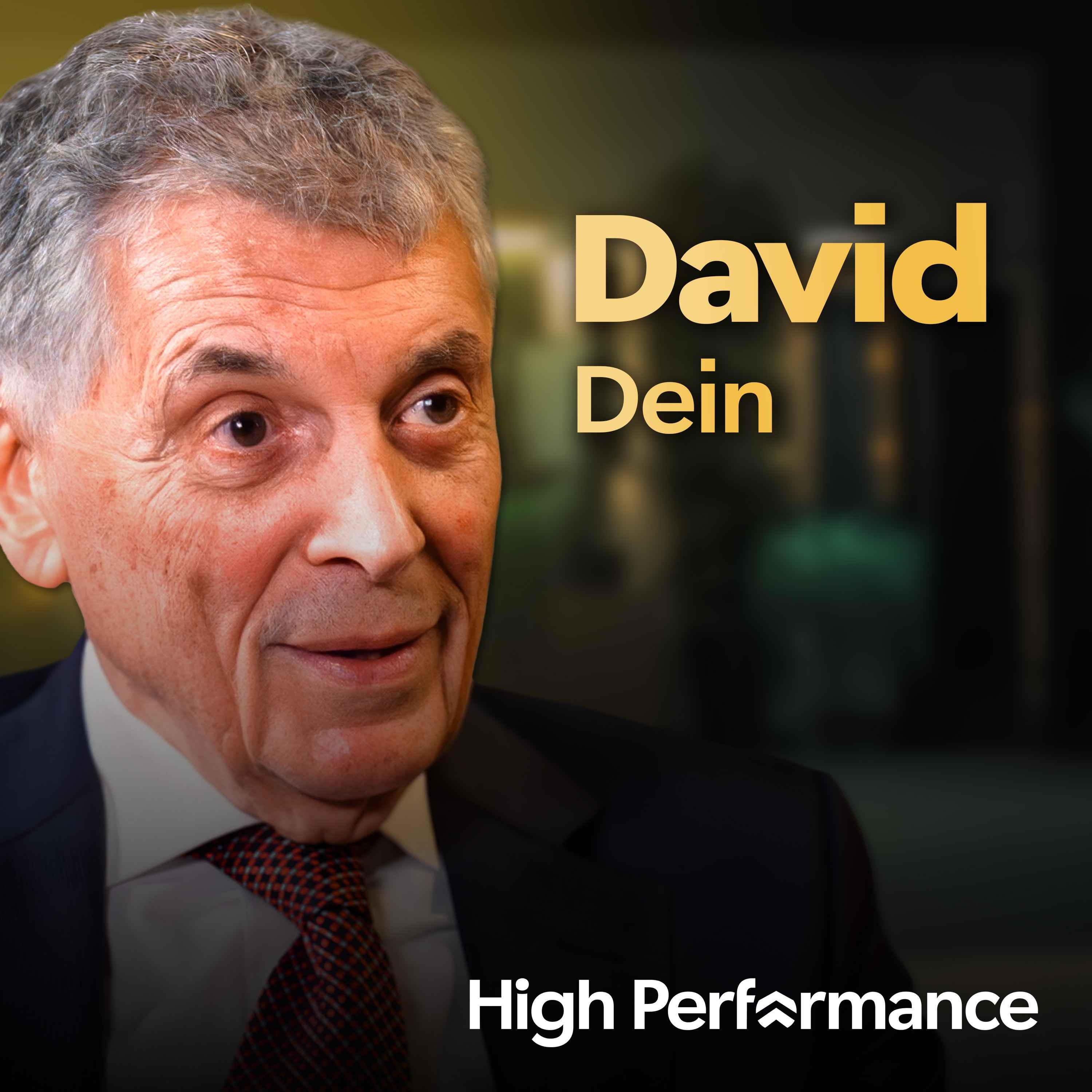
David Dein (Arsenal vice chairman, Premier League founder) recounts his shock exit from Arsenal on 18 April 2007, the financial strain of building the Emirates, and how he helped assemble the Invincibles era under Arsène Wenger. He also discusses player power, manager authority, transfer-contract risks, and the origins of the Premier League.
David Dein is a long-time Arsenal executive and one of the original Premier League founders. Host Jake interviews him on “High Performance.”
Dein says his departure was decided in a three-minute, no-dialogue board decision; he was told to leave and had his mobile number removed. He argues the stadium debt and need for external cash drove pressure, and he believed outside investment (the Cronkies) was necessary. He credits Wenger’s intelligence, emotional control, and player-by-player management for the Invincibles’ strength of character, including the “nod” ritual described by Gilberto Silva.
Ashley Cole’s departure over salary negotiations; Sol Campbell’s midnight garden lobbying; Vieira and Remy Garde being identified before Wenger officially started; Dein’s 1989 meeting with Wenger (via his wife); Premier League TV “cartel” break with Greg Dyke.
Written by AI. May contain mistakes.
David Dein shares his emotional departure from Arsenal and the events leading up to it.
“Learn more by visiting acast.com slash advertise.”
Discussion on Arsenal's financial challenges and board member tensions.
“What, you didn't have a meeting with the board?”
Reflecting on the emotional consequences of losing key players like Ashley Cole.
“So I had to drive home without having a mobile phone or to talk to anybody.”
Dein reflects on his legacy at Arsenal and the lessons learned from his departure.
“The day he was going to get his first cap for England, I was sitting on the FA International Committee.”
Discussion on the Invincibles team and hopes for a documentary project.
“I look back and I always like to think of the positives, Jake that I'm proud of what I created, the work I did there, winning the trophies that we did.”
Learn about the camaraderie and communication within the Invincibles team.
“Who's the busiest person on the Invincibles WhatsApp group?”
Discover the plans for a documentary about the legendary Invincibles season.
“we will actually have a documentary out about the whole, how it transpired.”
Understand the importance of character and teamwork in the Invincibles squad.
“obviously going down about half an hour after the game and congratulating the boys.”
Explore Arsène Wenger's unique approach to managing and motivating his players.
“So when anybody said, well, who was the best or the favourite or the most motivated?”
Learn about the dynamics of building a cohesive and winning football team.
“He would have a little bit of humour into it.”
Dive into the complexities of the high-profile transfer of Sol Campbell to Arsenal.
“what was the thing that you knew if you said this?”
Learn about the financial strategies behind Arsenal's transfer dealings.
“But over the years, you get to know somebody.”
Discover how a casual meeting led to Arsene Wenger's appointment as manager.
“Why was there a gap of seven years from first meeting him to him becoming your boss?”
Understand the reasons and courage behind choosing Wenger as Arsenal's manager.
“So it must have been in 19, so it was 1994 when George left.”
Explore the ongoing interest of Real Madrid in Arsenal's key players.
“the following day when we appointed him Arsenal who?”
Learn about the implications of changing player contract laws in football.
“Well, you know, Bosman was all about freedom of contract at the end of the contract.”
Reflect on the emotional aspects surrounding Wenger's exit from Arsenal.
“a player for four years, by year two, you've got to think about extending it again.”
Discuss the valuable lessons learned through difficult times in football.
“there was a split in with fans thinking that time was up for him to move on.”
Examine the erosion of authority among football managers in modern times.
“Well, I was seeing regularly we lived opposite each other.”
Debate the idea of reducing the number of clubs in the Premier League.
“He spent time with the offenders, went on their own, put some podcasts, he was sensational.”
David Dein discusses the rationale for an 18-club Premier League and its potential benefits.
“Because if there is empirical proof and I'm yet to see it that there are too many games Well, already France and Germany have gone down to 18 clubs in their Premier League.”
David shares the emotional meeting that inspired him to push for changes in English football.
“or the idea was mentioned to you of a Premier League?”
David recounts pivotal moments and key players in the founding of the Premier League.
“It's an amazing story in your book, which people can read about the real depths of how the Premier League was formed.”
David reflects on the global reach and financial success of the Premier League today.
“Sir Noel White was at Liverpool and so Philip Carter was at Everton.”
David discusses Arsenal's performance and potential as a top club in the league.
“It's got about five or six times the viewers of the Super Bowl.”
David explains his work with the Twinning Project and its goal of rehabilitating offenders.
“they can still find their own version of high performance.”
David provides insights on the financial benefits of effective rehabilitation for offenders.
“So Arsenal were twinned with Pentonville, QPR with Wormwood Scrubs, Manchester City with a local prison in Manchester.”
David answers quickfire questions about his experiences and insights in football.
“Well, I've got to give Sol Campbell a lot of credit for his move.”
Learn about the key lessons in high performance through David Dein's experiences.
“You know, what's his lesson for high performance?”
Learn about the key lessons in high performance through David Dein's experiences.
“Do you keep hearing podcast ads, like this one for example, but always wonder how you actually get involved with them for your own brand or organization?”

Get the gist, explore an idea or ask about something said.
 Claude
On The High Performance Podcast, what are the key points of this episode?
Searching your listeningAutomatic transcript. May contain errors.
0:00Could AI help you do more of what you love? Workday is the AI platform for HR and finance that actually knows your business. We help you handle the have-to-dos so you can focus on the can't-wait-to-dos. It's a new Workday.
0:30It's a super easy way to settle up because you can do it right in messages. Just tap the plus sign to get started. And the best part is you can spend the money you get right away anywhere Apple Pay is accepted. Every payment is secure and protected by Face ID, Touch ID, or passcode, and your transactions are never shared on a public feed. Set up your Apple Cash today in the Wallet app. Apple Cash services are provided by Green Dot Bank, member FDIC. Terms apply. While every other channel is fighting for your customer's attention, podcasts are where they've already given it. No one accidentally listens to a podcast for 45 minutes.
1:02They choose to be here. They trust the voice in their ears. And when that voice talks about your brand, it doesn't sound like advertising. It sounds like a recommendation from a friend. Acast gives you that trust at scale. Digital precision, post-read authenticity, and performance data that proves it worked. Don't fight for attention. Buy it with Acast. Learn more by visiting acast.com slash advertise.
1:32Every one of those guys would run through a brick wall for each other. We had fantastic skill. When I look at those boys, each and every one of them contributed. They'd given the best years of my life to Arsenal Football Club. I was just told literally on the 18th of April 2007 to leave the club. I think it was a combination of jealousy and fear. Well, David, welcome to High Performance. Thank you, Jake. This is a podcast that helps people unlock their own version of high performance. I really want to talk about your book. The chapter in your book that leapt out to me the most was entitled Life After Death.
2:10Yeah. When you walked away from Arsenal, did it feel like a death? Yes, it did. Tears in my eyes. 18th of April, 2007, 5pm. I won't forget that in a hurry. It was a shock. And it hurt because I'd given the best years of my life to Arsenal Football Club. And I still do because it's in the DNA. But it hurt because being in the inside track and seeing the club develop, and we just opened up a new stadium. A few years earlier, we'd been the Invincibles. There was a lot to do. So I remember the day the news broke that you were walking away. It was probably described as mutual consent, probably, the way it worked.
2:52I see already that you turn your nose about that. I remember reading the BBC Sport website, and this is what it said. Two days ago, there was a very secret board meeting at Arsenal where it was made clear to Mr Dean that he had to go. Can you take us into that meeting and that day? I know nothing about that meeting. I was just told literally on the 18th of April 2007 to leave the club. What, you didn't have a meeting with the board? No, not at all. When I analyse it, well, you read the book, you read the chapter, I think it was a combination of jealousy and fear. Perhaps because I was seen as the face of the club, perhaps that I had ideas about bringing in outside investment, which perhaps the rest of the board didn't like.
3:39They wanted to keep a bit of a cartel going there amongst themselves. And meanwhile, I felt the game was moving at such a pace with Man City, with Chelsea, we had to compete and we couldn't. None of our board members had the sort of financial muscle that could take us to the next level. And I was literally looking around to see, well, who else is there out there that can pump the tires up? So that day that you were asked to leave the club, did you just go to work as normal? You must have known something was going on. There must have been prior conversations. Well, it festered about a year earlier because there was a lot of strain on the club.
4:14We'd embarked on building a new stadium and we opened it in 2006, but obviously that took a couple of years of planning. And that exercise was a secret between ourselves and our underpants because we didn't have the money. And we had to get the money from somewhere. We're talking about finding the best part of 400 million to build the stadium. Today, to build the same stadium, it costs well over a billion, perhaps a billion and a half or more. But we had to find the 400 million. So in the end, we had to pledge ourselves to the Emirates, to our sponsors, because with 10 years up front, getting their income coming in, to our shirt sponsors, to Nike, and we found a little bit of cash ourselves.
4:57But it was always a strain, and particularly, and Arsene and I used to think about this, but we need money to fund the players, to pay the right salaries, the right transfers. So that's where we needed external cash. And so you had found the Cronkies, or met the Cronkies, and were thinking they were the right people to come in, is that correct? I'd met them once, yes. a couple of times beforehand, and I felt I identified them as being a possible purchaser or certainly an interested party as an investment. They had sports franchises, they knew how to run it, and they had deep pockets because I felt that's where we needed a muscular financial partner, which we didn't have on the board.
5:35So I fail to understand then why this led to your eventual departure. I mean, we can talk in a moment the fact that the Cronkies ended up owning the football club anyway, right? But when you go to the board and say, we've built a new stadium, we need money, and I found people with money, why did this lead to you having to leave? Believe it or not, Jake, there was never, ever a meaningful debate about me leaving. It was a complete shock to me. And I repeat, I think it was the fact that I was high profile and maybe I was going in another direction which they were worried about. But I felt it was the right thing to do.
6:12That day when you were asked to leave, who came to see you? The chairman at the time, Pete Hillwood, one of his colleagues, and a lawyer. And how did the conversation go? It was all over in about three minutes. The board of unanimous decided that you should leave now, and that was it. And then when I got into my car, my mobile phone wasn't working. It was my own personal number was taken from me. So I had to drive home without having a mobile phone or to talk to anybody. It wasn't easy. I remember that. I'll never forget it. It was tough. What were you thinking? Well, firstly, I felt for the club, actually, my first concern was that Arsene and I had a very precious relationship.
7:00We still had a lot of work to do. So that bothered me, that we were already talking about bringing new players in for the summer. This was in April now. So it was, I felt, was that the right move for the club? Would the club be damaged over it? Personally, I was obviously very hurt, wounded. I felt it was brutal, and it was. I was literally cut limb by limb. It's not dissimilar in a way to what happened recently with Daniel Levy after 25 years. You know, and I'd like to think that I created some of the value. I'm not taking all the credit for this by a long way because in the end it's Arsene and assembling the right team.
7:38But I played a part. So when Peter Hillwood comes to you and says, we've had a meeting that didn't involve you, we've decided that you're leaving the club, what did you say? I was shocked. I was absolutely stunned. Couldn't say anything. You know, I said, why? They didn't give me a reason. No reason. and look, Jake, it's done this. We're now looking at 18 years ago. I can still see how much it hurts even now, though. Well, it does, because it's a big part of my life. Did you feel betrayed? Traumatically let down because there was no dialogue, and there should have been, but it didn't happen. Is there anything that you could have done in that period leading up to that meeting differently, you think?
8:18I'm not sure I could have done anything differently. I am what I am. My character is my character, that's it. So looking back now, I'm not sure I could have done much more. You mentioned Daniel Levy. Have you called him to offer your... Yeah, yeah, sure. What did you say? I said it's cut and paste. I feel sorry for you. I'm still struggling to understand how they came to that decision. I'm just imagining rows in the boardroom and months of unrest. No, it was a report meeting. Don't forget, I was vice chairman for 24 years. So you'd think I should be a part of any decision, but I wasn't. Not that decision.
8:54But previously to that, when you were recommending the Cronkies or recommending outside investment... We never got to recommending anybody, but I felt, right, that the time was coming, particularly because we'd just opened up the new stadium and we were in debt and we needed money. I mean, the fact that we lost Ashley Cole for a few thousand was crazy. And to this day, I regret that. And I've apologised to him personally over that because it shouldn't have happened. but we were so tight for money that everybody was cutting back. The whole thing went wrong because Arsene and I both thought that what his agent was asking was actually there was a deal to be done, we could have cracked it.
9:34We went to the board and said, look, we're going to have to push the boat out a little bit and in the end the board said we can't afford it. And we had to, Arsene and I both had to tell him, I'm afraid, that it wasn't going to work. And then all hell broke loose after that because then he had, there was a secret meeting as you know and it was all unfortunate. But we shouldn't have lost him. He was an Arsenal boy. So difficult for you, I think, in those situations because you're an Arsenal boy as well. Yeah. You wanted the same thing as Ashley Cole. You wanted him to stay at the football club. Of course.
10:05Have his career there. I can remember. This is an amusing story. The day he was going to get his first cap for England, I was sitting on the FA International Committee. So I had the inside track that he was going to write And so I went to the training ground, and as he's coming off the pitch, I said, Ashley, I've got some good news for you. You're going to be playing for England. You've got your first cap. He looked at me, and I went like this. I looked at his forehead. He said, what are you looking at, Mr. Dean? I said, I'm looking at your head. He said, why? I said, I want to make sure it hasn't got bigger.
10:45And did it? No. He was very down to earth. I think he's a great guy. Great guy. And a lot of people running football clubs would be angry if a player ended up having secret meetings and leaving and going to another club. Were you ever angry or did you kind of understand that it hadn't worked out how anybody would have wanted? Well, no, obviously we were very angry the way that transpired with actually the way the secret meeting, because obviously in a way that, well, it broke the rules, but not only that, we wanted to keep it. But, you know, life goes on. So you dealt with the challenges of losing a player like Ashley because of the money spent on a new stadium You built the Emirates You hired Arsene Wenger You helped to create the Invincibles You were one of the founding members of the Premier League But none of that accounted for anything when it came to them making a decision about your future?
11:39Clearly not What's the biggest lesson you think you learned in that period? I look back and I always like to think of the positives, Jake that I'm proud of what I created, the work I did there, winning the trophies that we did. Don't forget, we won, well, Arsene Wenger alone. We had three trophies, three Premier League titles, five FA Cups at the time, and working with Arsene was fantastic. I always say this, time spent with Arsene is time well spent. I remember the day that you left. I was working, actually. I was on children's television at the time, and one of my colleagues was a big Arsenal fan.
12:18he said Wenger will follow David Dean out the door, mark my words. He wanted to. That night he came over to my house because we lived opposite. One of the things I ensured when he came to us, which obviously he did in 1996, although I met him in 1989, that's another story. So I'd known him for seven years before he actually became Arsenal manager. He came over to the house and he said, David, I want to leave as well. You know, we're a pair, we're a team. And I thought about it and I said, Arsene, you can't do that. He said, why not? The club needs you, right? The club will not be the same without you.
12:52You're important to the club to stay. But your first thought was for Arsenal. It was. An Arsenal that had just kicked you out. Yeah, I agree. It wasn't easy. And even now, I mean, I see I've got my own club seats, but I still go to the club, to the games all the time. I'll be at the game on Sunday against Chelsea. I went to Spurs on Sunday, which is another story. and I sit right next to the director's box. It's an out-of-body experience. It's such an interesting example for people who've never been involved in football that you can do everything that you did and it still can be that brutal, that swift, that final.
13:31Yeah, they say that. You find your true friends in difficult times, not in good times. And was there anyone that you may be, talking of that, expected to stand up and say something that didn't? Some of the players, obviously Thierry and others, stood up afterwards and said how sorry they were. And I felt it. And to this day, I'm still very friendly. I mean, the Invincibles, we've still got a WhatsApp group on everybody's birthday. We do. We're part of the family. I love that. How often is that busy? Who's the busiest person on the Invincibles WhatsApp group? They're all everybody. We all jump into it.
14:06As soon as everybody's got everybody's birthday, we wish each other and whatever it is, occasion, somebody gets, you know. What's the name of the WhatsApp group? It's called The Invincibles, funny enough. We're hoping to make a documentary short, which was actually, Jens Lehmann was very clever. He actually formally, he got registered the name of The Invincibles. So, and we took that on, so he's now been with all of The Invincibles now as shareholders, and we're hoping to do a documentary, which has never been done before. Don't forget, this is 2003-04 season, so we're now 22 years on, and it hasn't been done since.
14:41Shows how difficult it is. Jake, this season alone, by game eight, everybody got beaten. All the major clubs got beaten. Arsenal, Man City, Man United, Aston Villa, Chelsea, Spurs, right? Everybody got beaten by game eight, not game 38. That shows how difficult it is to be the invincible. So we're hoping in the next year or so, we will actually have a documentary out about the whole, how it transpired. So everyone has tried to do it since. And there's always a moment in a season now and then where people go, oh, could this team, could they go unbeaten? What did you have that no one has managed since?
15:17Strength of character, undoubtedly. Every one of those guys would run through a brick wall for each other, not just for themselves. There was such bonding. Jens Lehmann, Loren, he would have had a fight in a telephone box with himself. I mean, you'd be surprised. I mean, he was a strong guy. Loren Colo-Torre, Sol Campbell, Ashley, Patrick Vieira, Gilberto, Edu, Ray Parler, Thierry, Dennis, Canu, Robert Perez. We had fantastic skill. When I look at those boys, each and every one of them contributed. But they're also big characters, and sometimes you can create an environment of big characters and it just doesn't work.
15:59What was Arsene doing to get everyone moving in the right direction? I think what he assembled, handpicked all those boys, and he motivated them, there was no doubt. I remember, well, clearly whatever he did, you must ask them, it'll come out, I'm going to save this because it will be for the documentary. But I can always remember after each game, obviously going down about half an hour after the game and congratulating the boys. And Sol Campbell always used to say, I said, Sol, what do you think? He said, Mr. Dean, we've got to keep it going. And that was it. We had to keep it going. And there was that bonding between them.
16:36There was something very special, the chemistry. And that's what it is. it's teamwork. And you write in your book about the nod, these sorts of... Yeah, oh yeah, the Gilberto, that was fantastic. Tell us about that. Oh, that was, when he told me that, and Gilberto, we were in Sao Paulo during the World Cup in Brazil. This was 2014. We went out for dinner one night. There was Arsene and myself, the Brazilian boys. We had Gilberto, Edu, and Silvino, the three Brazilian boys together, asking myself, I was sitting next to Gilberto, I said, Gilberto, just tell me about the Invincibles for a minute, I'm always curious, what was it like in the dressing room?
17:16And he's very pensive and he thought, and he said, well, I'll give you an example. And he told the story, and you have to stand up, sorry, can I stand up for this? Of course you can. So there would obviously be Patrick Pierre as the captain in front, then And there'll be myself, Jens Lehmann, then Dennis and Thierry and the rest of the boys. And just before we were going out, Patrick would turn around to me, to Jens, and it would go with a strong nod. I would turn around to Dennis with that nod. He would turn around to Thierry with that nod. And it would go down the line to Ashley and to Lorraine and to all the rest of the boys.
17:56They'd all give each other, like choreographed, the nod to say, we're going to do it. then automatically we would look across at the opposition collectively and we could see fear in their eyes he said you know we gave ourselves that courage that determination that fire in our belly and you know that just little things like it's incredible you don't hear you don't think of that i just think it's so interesting that that tiny almost insignificant nod so much can be said we talk often on high performance about cultural architects you know people who are responsible for creating the culture the architects of it if you were to name a cultural architect in that invincible squad who is the player that you would look to and and why firstly i would say arsene winger not a player but he obviously i played my role but i mean he identified he had to has to be his choice who we're going to buy and indeed sell later on so he really assembled the team and then the team just gelled together.
18:58So when anybody said, well, who was the best or the favourite or the most motivated? They all were. They gave each other strength. That is the truth of that. The squad. Did you ever see something from Arsene where you watched a moment unfold and you thought, that tells me so much about how he's managed to do what so few managers can do? Well, he's highly intelligent and he keeps his emotions to himself. So he would never, ever display any deliberate concern or worry or fear. He's not that type, totally the opposite. He would have a little bit of humour into it. He's a consumer professional. What about if he wasn't happy with the standard?
19:38He would tell the boys afterwards for sure. And he was just saying, there's no secret. You know, he would have given an example about Thierry. I said to him, who is, you know, who do you have to spend most time with? And he said, well, the player I want to spend, I have to spend most time with, is Thierry, because he is such a phenomenal player, such an influence on the team, and he's so analytical, so highly intelligent, before the game, during the game, after the game. So he would, whatever time was necessary, he would spend with an individual player to talk them through any issues they had.
20:15And with a manager who is so in control of his job, like Arsene, what did that make your role? Well, we were a team. I mean, there was no doubt. I mean, he would identify a player. We'd just talk about Gilberto. So he was saying, look, I've seen this player in Brazil, Gilberto Silva. I think I'd like to get him. Over to you, David. than I had to go to Athletico Minero, to Belo Horizonte, to camp on the chairman's doorstep for about four days because he didn't want to engage with me. And that was tough. And eventually to literally almost handcuff Gilberto and take him to the training ground in Switzerland, or Austria, I think it was, for our pre-season tournament.
20:58So, you know, that's the way it worked. It was a great partnership. So once Arsene identified someone, your job was to make that happen? Yeah, I had to deliver. What's the secret? But immediately, because he was very impatient. Oh, really? He didn't have any time with Arsene. He said, I want him. When he wants it, he wants it now. So, Arsene identifies a player. What's the first thing that you would do in that situation? Well, obviously contact the club, by and large, and then work and then find out who the player's agent is, and that's when the fun starts. And when you say the fun, I'm really interested in the secret to selling a dream to somebody.
21:29What would you say to a player? There was a method where, when it came to it, we had to go and try and get the player. And in difficult circumstances, because very often the club wouldn't want to sell or would hang out for the highest price they could get, understandably. And we had to negotiate. And we didn't have a lot of money as well. We were really confined. It wasn't like today where there's a lot more money swishing around. We'll be right back after a quick word from our partners. On this show, we've learned from our guests, Small, consistent actions are usually what leads to the biggest results over time.
22:04And when it comes to running a business, shipping is one of those things. When your shipping runs smoothly, your whole business operates better. And that's where ShipStation can help. ShipStation is an end-to-end order fulfillment platform that handles your entire shipping workflow in one place. Order management, inventory, returns, all centralized and all connected. It plugs into over 200 online marketplaces and the tools you're already using, so there's no rebuilding anything from scratch. One million businesses rely on ShipStation. Honestly, if I was running an e-commerce brand, this is exactly what I'd use.
22:35And one of the smartest parts about ShipStation is it automatically compares rates across UPS, USPS and FedEx on every single order with savings of up to 90%. Customers have reported scaling fulfillment up to 40 times, while cutting costs by up to 30%. The sooner you switch, the sooner you can start saving time and money. Get started with ShipStation today and get 60 days free at shipstation.com with code HPP. That's shipstation.com code HPP. Shipstation.com code HPP. Taxes and fees apply. We've had guests say things on this podcast that genuinely stay with me long after the episode ends. Recently, I had a conversation with a guest where I ended up asking myself as they left the room, what does this mean for the way that I run things?
23:16So I opened Claude on my phone and simply typed out everything I was thinking. And I said to Claude, help me think deeper on this. And in a few minutes, I had a framework with new angles, sources I'd never found. and that's the thing with Claude. I just think it pushes you further. And for high performance, the research alone has been a game changer for me. Hours of prep have turned into minutes with connections across sources that I'd have completely missed on my own. It's honestly changed entirely the way that I work on this podcast. Claude AI is for minds that don't stop at good enough. It's the collaborator that actually understands your entire workflow and thinks with you.
23:50Whether you're debugging code at midnight or strategizing your next business move, Claude extends your thinking to tackle the problems that matter. And with CoWork, Claude moves from thinking partner to actually getting things done. Connect it to your tools, give it a task, and it works through it independently. Ready to have an AI that can tackle real work? Try Claude CoWork today. Claude.ai slash performance. That's Claude.ai slash performance. And check out Claude Pro, which includes access to all the features mentioned in today's episode. Claude.ai slash performance. What if the real question isn't where you're going, but the adventures you experience along the way?
24:22It's time to set your sights higher. On peaks still to be climbed, rivers still to be crossed, and greater dreams to pursue. It's time to embrace the impossible with Defender. A family of vehicles built around capability, durability, tested on some of the most difficult terrain, Defender defines tough luxury. And I should know, I've driven one for the past three years. I have the Defender 130, but from the compact confidence of the Defender 90, to the versatility of the 110, through to mine, the Defender 130, with seating for up to eight, there's endless potential. You feel it in the details as well, the rugged body design, the robust materials, all working together so you can head out with confidence.
24:59And inside, ClearSight technology helps you see the world around you in a new way, while the PV Pro keeps your navigation routes and playlists flowing seamlessly as you go. And with up to 89 cubic feet of cargo space, there's room for everything you need on your journey. Explore the full Defender lineup at LandRoverUSA.com. So without giving away all your secrets and telling us everything, what was the thing that you knew if you said this? then a player would suddenly be interested in coming and joining the Arsenal journey? Well, I mean, probably one of the most high-profile, and there's been a documentary on it as well on it recently, about the Sol Campbell transfer.
25:34I mean, that took several months to mature, and that was walking around my garden in Todtridge for about, right, every night at midnight for a few weeks to try and convince him. With him or on the phone to him? No, no, no, with him, personally. That was another thing, you know, you get much more done, but I always believe, and I tell this when I give my talks, you know eye to eye making making sure you meet somebody looking them in the eye and having a dialogue with them take us into the moment that you knew you'd got soul campbell how did you find out right at the last minute he kept and his agent a guy called sky andrew actually played it very professionally it wasn't easy he wouldn't let us know who who he who else he was talking to but we knew the whole world wanted him and that took some doing.
26:19What do you think was the thing that you managed to do with Sol that got that transfer to happen? I think it was a combination. It wasn't just me. I think Arsene deserves a tremendous amount of credit because I think Sol in the end realised that Arsene would take his career to another level. And a professional footballer, at best he may have, if he starts his career, professional career, somewhere between 18 to 20 years of age, may have 15 years, if he's lucky at the top of the game. Well, Sol was going to be a big move for him. And I think he realised that Arsene could take him to another, to reach other heights that he hadn't had before.
27:00And at what point would you bring Arsene into these discussions? Oh, very early, all the time, straight from the onset. He knew where I was every day of the week and I knew where he was every day of the week. I mean, that was the bonding between us. I love this idea that he wants a player and he needs you to get that player straight away yeah it's immediate gratification what was it like though because he wants to form a team he's got to he's got to assemble a team for the season yeah he can't wait months for a player if it's not going to be that one player it's got to be somebody else and how would it work then if you called Arsenal and said look I've spoken to the player it's five grand a week too much for Arsenal was Arsenal accepting of that or funny enough Jake we had a little game When we were discussing a player, we would both write on a piece of paper which we put down on the table what we thought the price should be, right?
27:52We were never, ever more than 10 % out. Really? Ever on value. So we were very much on the same wavelength. But over the years, you get to know somebody. Yeah. Like you're being with a partner, you know how they're going to react to a situation. The difference is that Alastair's not a shareholder right in the football club. But you'd think he could be. The club's money he viewed, right, he was responsible for the spending. Don't forget, we must have done well over 100 transfers. In the end, we came out on the positive side. You can't say that these days. See, that's very interesting because I would imagine, in my head, most managers would say, look, I don't care about the fact that it's more than you wanted to spend.
28:34I want the player because I want to win matches, because I want to win trophies. Arsenal always was looking for value. He wasn't frugal at all. He wasn't profligate. He was frugal, if anything. He would go on the lower side. He wanted, because the club didn't have the money. Don't forget, we were committed when we're talking now about building the stadium. We had to watch every penny. We had all the banks crawling over us, accountants, lawyers. Can't know what we were doing. Make sure that our spending was, we were not being stupid. You've already said that you met Arsene Wenger, but it wasn't for a long time after you met him that you finally made him the Arsenal manager.
29:10Why was there a gap of seven years from first meeting him to him becoming your boss? So I met him on the 1st of January 1989 in the Arsenal Cocktail Room. I don't know if you ever went there at the old Highbury Stadium, but there was a boardroom which was used for the directors and their friends at match days, and there was an ancillary room called the Cocktail Lounge where those who were not worthy to come in the main boardroom, so you had the scouts and you had others, right, and old players gathered in the cocktail lounge. So I always used to, because there was more interesting people in the cocktail lounge than in the boardroom.
29:51So always I used to come. And as I went into the cocktail lounge, my wife was actually speaking to Arsene Wenger. Believe it or not, he went up to her for a lot. In those days, he would smoke one or two cigarettes a day. He asked her, did she have a light? She didn't, but a friend did. At any rate. So can I just stop and say, so it's a myth that you discovered Arsene Wenger. Your wife discovered Arsene Wenger. She was the first one to speak to him. There we go. There you go. Congratulations, Mrs. Dean. Thank you. She deserves the credit. So as I go in there, so she's... So then I start to talk.
30:23I said, hi. Obviously, I knew who he was, but I'd never met him. I said, nice to meet you. I said, what are you doing? He said, I'm just passing through. I've been actually in Istanbul for a game. I'm going back to Monaco tomorrow. So then I said, well, what are you doing tonight? So he said, nothing. Now, I live, Jake, by my motto, which I used, by the way, this morning in HMP Isis, near Plumstead in the prison. I use it in schools as well. My motto is the motto of the turtle. The motto of the turtle is you don't get anywhere unless you stick your neck out. So I said, I'll sit. I said, look, my wife and I were going to a friend's house for dinner.
31:03would you like to come and join us? He said, I'd love to. That answer changed all our lives. So that night I had a friend of mine, a lovely guy called Alan White, I don't see him because he got separated, but we went to his house which was near where we lived and being in show, he played charades afterwards. You know, is it a book, is it a film, is it a play? And I said, Arsene, because he didn't speak good English much, didn't speak English particularly well at the time, I said to Arsene, do you want to play in French? He said, yes, okay. The next thing, he's acting out a Midsummer Night's Dream.
31:39And I'm looking at him, and I had this vision. Arsene for Arsenal. I'm not spiritual, but it's going to happen. Meanwhile, we were happy with George at the time. We didn't know it. But in May, we were going to win the league in spectacular style in Anfield 2-0. Nevertheless, I thought, I've got to watch this guy. And he spoke four languages, had a degree in economics. economics, not your average player has become a football manager. This guy's cerebral, he's a different quality. So I said, I've got to keep an eye on him. Well, I used to go to the south of France quite often. So he would invite me to see Monaco play.
32:13So I would keep in touch with him. So for seven years, we were always in touch. So it must have been in 19, so it was 1994 when George left. I proposed to the board that we should appoint Arsene Wenger. And it got turned down They said, no, no, we want somebody who understands Premier League football. We really want somebody like George who understands the lower leagues. And I got outvoted that day and we went for Bruce Ryok. When Bruce didn't work out, I'd still kept in touch with Al Sanberto, which time he'd taken himself off to Grand Passate in Japan. And I was still in touch with him. We decided, right, when I was obviously in touch with him, and I said, look, we've got a second bite of the cherry here.
32:57We're going to move on. Are you still interested? So he said, yes, I still would be. It was great for him to say that. So then I went back to the board again. I said, look, we lost first time. We can't, we don't want to do it again. Why did you believe so clearly that Arsene was the man? Because I'd seen him, he didn't realise this, but every time I went to Monaco, he was auditioning. I saw how he interacted with the players, with the board, with the press. What did you see? I saw somebody who was highly intelligent, very smart guy understood tactically very aware a different calibre guy and I felt he would be right for us for Arsenal and well the headlines the following day when we appointed him Arsenal who?
33:40Arsenal who? See I was going to say this takes courage because am I right in thinking he couldn't start at the beginning of the season? No he didn't he went it was I think Borussia Dortmund when you can go out back we went to he started in October So he couldn't start at the start of the season. The press were asking Arsenehu. The board had already turned him down once. The board didn't really know him in the way that you did. Meanwhile, he was already identifying players. So the first two players we brought in were Patrick Vieira and Remy Gard on the same day. Brought in when he wasn't the manager.
34:14It was remote control. So the lesson to be learned is, I guess, I come right back to my motto of the turtle, Jake. You don't get anywhere unless you stick your neck out. and you've got to take that, always, don't be frightened to have a go to blaze a trail. And you backed Arsene so publicly so often. Did you ever have any private doubts? Never. Never. Because I felt he had the ability. I thought he was so intelligent and I enjoyed spending time with him. And am I right in thinking that there was a period where Real Madrid tried to sign him as well? Every year. Every year? Yeah. Real tried to sign him every year.
34:51And Patrick Vieira as well, by the way. Oh, that was funny with Patrick, because every year we knew, I used to knew, because I was president of a G14 group, a club, which was misnomer, because it was 18 of the most powerful clubs in Europe. Their president, Ferencino Perez, used to say to me, you know, we like Patrick Vieira. What's your price? I said, there isn't a price, it was not selling. But obviously I knew that they were going to try and tap him up, so every year at the end of the season, I said, are you okay, Patrick? I said, where are you going on holiday? He said Guadalupe or Martinique or Maldives.
35:23I said, I'll be there. I did. Thanks to Patrick. I had some very nice holidays because I had to follow him and make sure that he came back. So you'd go on holiday to the same place as Patrick Vieira? Well, no, no. I would say, I'm coming with you to make sure that. I would just spend a day or two, right? So you'd pop out just to make sure he was happy? Yeah, but I would tell him that, sure, because we were part of the family. I didn't want him to leave. And I knew that, particularly Real Madrid, because they were always looking for him, But Arsene was very loyal in any case. When he signs a contract, it's a contract.
35:56Players have a different story today because they can move at the drop of a hat. And there's something going on at the moment with the Lasagna Diara case. That can change football. That is so dangerous. I don't know whether you're following that case. Explain. But you should. Well, you know, Bosman was all about freedom of contract at the end of the contract. Here we have something new developed where there is a player called Lasagna Diara who actually played for Arsenal and Chelsea who has been able to get himself out in contract. Now, going to European law, and it's being tested now with FIFA, if that goes through that a player could actually leave under certain conditions in contract, then the whole transfer system collapses.
36:42So, there's got to be some settlement made very quickly. Well, no one's going to pay 100 million for a footballer that can walk away. Absolutely, they can walk away in a year or two. Of course not. What do you think the answer is? It's got to be a compromise. It needs to be sorted out, otherwise there won't be a transfer system. But it has to be clear as well. Of course. Is there a real chance with that case that football could change? It could. Forever. It is a danger. Well, people didn't realise what was going to happen with Bosman. You know, you signed a contract and you automatically thought you could get the right to renew it.
37:14Meanwhile, the player is free at the end. there's no value at the end of a contract. So now today, if you sign a contract, a player for four years, by year two, you've got to think about extending it again. You're on a run into the danger period of the third and fourth year. And is there, and this is quite an interesting one, is there any truth to the rumour that when you were involved with the FA that you made sure that Arsene didn't end up as the England boss? No, but I would tell the FA that he's not moving. It was very simple, and you are saying he wouldn't. I said to him, are you interested?
37:44and he said, no, I've got a job to do here. So it wasn't a question. I didn't have to protect him. Right. But you were also looking after Arsenal a bit, right? Well, no, but his mind was made up in any case. I knew him well enough to know that he would not leave for another club or indeed a national association. And not only that, he got a great pleasure out of being a manager of a team that's going to play 50, 60 games a year. At 11 years after you walked away with tears in your eyes and got in the car and you weren't even able to use your phone and that was a really difficult day, it was Arsene's turn to walk away.
38:21If you'd have been there in 2018, do you think Arsene would have left in the way that he did? I can't say that. All I know is that we had unfinished business at the time, that is for certain. You know, it was bittersweet. There was a dichotomy. there was a split in with fans thinking that time was up for him to move on. And I remember, because I was hosting the games, the live games for BT Sport at that time, and we would turn up and there would be banners and there would be chants and there would be boos. How painful was it for you? Oh, it was terribly sitting there watching it. Very painful, because I knew what a professional he was and how good he was at his job.
39:00But, you know, the time comes, I think it lasts forever, and he left and now he's got the most powerful job in football. He's head of global football development for FIFA. That's for the world, for 211 countries. And that happened during the World Cup in 2018 when we were all in Russia together. Putting that together was funny. And you know what, as hard as it is for us, I think going through a difficult period can often teach a person an awful lot about themselves and about the world that it isn't wholly a bad thing. There's lessons in those moments, isn't there? Yeah, I think you learn more from defeat than you do from victory.
39:35Well, the pain of defeat lingers longer than the joy of victory, that's for sure. And in those difficult months for Arsene, what support were you able to offer him? Well, I was seeing regularly we lived opposite each other. And how did it impact him? It hurt him, of course. But, you know, he doesn't show emotion externally. He manages to contain it, which in a way is a strength because he never shows ever that he's worried or anxious and he feels he's got a job to do and he wants to always finish it off well. I want to talk about what football looks like these days. Gareth Southgate recently said the erosion of a manager's authority has been a gradual process.
40:17I wonder what your take is on this because you were involved in an era where arson was all powerful. Well, the statistic is, according to League Manager's Association, In the 92 professional clubs, the average length of time a manager is in a job today is 12 months. So the minute they sign the contract, they lose six games on the trot, they're down the job centre. They're out. They've got no time. Time is precious. There's no patience anymore. With modern ownership, they want immediate results. They want to turn the tap on and get hot water. It's not so easy sometimes. How do you build a culture if there's no time?
40:53Absolutely. And I think people are impatient. And Gareth is right. In fact, he came with me recently to HMP Leeds, you'll be pleased to know. Oh, really? And he spent the half, half a day with me there, and he was fantastic. He spent time with the offenders, went on their own, put some podcasts, he was sensational. I wonder, though, whether there's a manager who's used to having power can see the risk of players having more power. But I think if I was a player, I'd be saying, hold on, we want an empowered workforce. We want people's voices to be heard. Is it solely a bad thing that players have got more power than ever before, that a lot of players now have a hotline to a football club owner rather than a manager?
41:29Is it really a bad thing? Well, whether it's good or bad, that's the way it is today because there is so much money. Particularly, you only hear it at the top, Jake, of so much money swishing around. You go into the lower leagues, it's not the same at all. It's a different kettle of fish. You only hear it about the glamorous clubs right at the top in Europe. And, you know, I've got to be in my bonnet about the way people say the amount of games. There's too many games being played at the moment. and I mean you didn't ask me this question but I'm going to give you an answer in any case because when people tell me there's too many games when we formed the Premier League in 1992 it was supposed to be, it was mandated to be an 18 club league and I'm still fighting for that and I still haven't won the battle but I'm not giving up Why should it be an 18 club league?
42:17Because if there is empirical proof and I'm yet to see it that there are too many games Well, already France and Germany have gone down to 18 clubs in their Premier League. I'd like to see that in England as well. And in a way, when you consider the finances of it, you'd have 18 clubs sharing the money, the television money, instead of 20 clubs. So the clubs wouldn't be, right, they're not going to lose any games. Television will still go. Less is more sometimes. And it gives us, we want a proper mid-season break. We haven't got a proper mid-season break. I think it would benefit the England team.
42:51and that's why we should have gone down to 18 clubs at the beginning. But if it went to a vote today, it wouldn't go through because people, Turkeys don't vote for Christmas, clubs wouldn't vote for themselves to be relegated. So it has to come from another authority. Do you think it'll ever change? I hope so. I'm still fighting the battle. When was the very first time the idea came into your head or the idea was mentioned to you of a Premier League? I went to a Hillsborough inquiry and it all stemmed from, to me, it came on meeting Trevor and Jenny Hicks the parents who tragically lost two of their children Sarah and Vicky Hicks who went to my daughter's school haberdashers in Elstree and I went to see them a couple of days after the Hillsborough disaster and I spoke to them and they told me the horrific circumstance of having to identify their own daughter's bodies and I came out I spoke to them I said I was only going to go around there for five or ten I spent four hours than that evening.
43:48And when I came out, I remember being stunned on their doorstep before I got into my car thinking, football cannot be like this. It has to change. And that really gave me the impetus to rally out the other four clubs, chairmen who I knew very well, to say we're going to have to change football. You're a pioneer of the game and this is arguably one of your greatest achievements, being one of the original founders of the Premier League. So how, when you've had that very emotional conversation with those parents, how do you turn that emotion into genuine action? What did you do to then actually create arguably the greatest football league the world's ever seen?
44:28Well, we had to do something, Jake. Once again, the motto of the turtle. I had to get the rally up the others to make sure that what we were going to do, we had to do something dramatic, draconian, to try and change football in England. It's an amazing story in your book, which people can read about the real depths of how the Premier League was formed. What would you like to share with our audience about the sort of single pivotal moment that you realised your dream of a Premier League was going to happen? Greg Dyke, who was the chairman of London Weekend Television at the time, he realised, he opened up our eyes to the value and the bonding between football and television.
45:07At the time, BBC and ITV, there was a cartel. BBC and ITV deliberately kept football on virtually zero money because they thought they were doing us a favour and promoting our product. Meanwhile, Greg, who's a bit of a swashbuckler himself, he said, guys, I'm going to break the cartel, and he did. He said, I want to blaze our own trail. I just want you five guys. I just want to sign up your rights. And we said, Greg, we can't do that. We're starting a new league here, right? We've got to have everybody on board. There has to be 22 of us. and a cut-along story which he agreed to, but he opened up our eyes to the opportunity of football and television being in partnership together properly.
45:48So that was a seminal moment when we met at his offices at London Weekend. At the time, sadly, two of our five have passed on now. There's only Irving Scholar of the Spurs and Martin Edwards of Manchester United, sadly Noel White and Sir Philip Carter of Everton. Sir Noel White was at Liverpool and so Philip Carter was at Everton. They'd both passed on. And we went round the table saying, who's for it, who's ready to break away? And Liverpool were always very cautious as a club. And we were waiting for Noel White and he looked down at his notes and he looked up at us and he said, I'm in. And then we knew we had all five.
46:31At that stage, we had lift off. What do you think of the Premier League today? Oh, it's a runaway success. Very proud of it. When I think I look at the television figures alone, you just can't talk about money because you've got to talk about the product. Firstly, as a product, I think it is fantastic. The fact that I was on an airline, I don't know, a few months ago, flying from Turkish Airlines from London to Istanbul, I flicked through the channels, I picked up Arsenal Liverpool Live 30 ,000 feet in the air. What does that tell you about the product? The fact it's got 3 billion viewers overseas.
47:06It goes out to 189 territories around the world. It's been a huge success. The fact that it generates 4 billion euros more than Spain and Germany and Europe's competitors. And you've just got to keep it up there. You know the big Premier League match the morning after the Super Bowl in the United States? It's got about five or six times the viewers of the Super Bowl. That one match. What does that tell you? and, you know, football is so popular and you talk about the World Cup coming up in America and Canada and Mexico, it's going to gross$12 billion in four weeks. But the product itself has got to be good and everybody knows all the players in the Premier League.
47:51What about Arsenal today? You still go to games. I think if I cut you right now, you would bleed Arsenal. It's true. Are there echoes from what you're seeing at the moment of the foundations that you laid with Arsene Wenger? I think there's very positive signs and I think certainly they've got the strongest squad than I can remember for a long time. And, well, they're challenging on all fronts at the moment. They've got to put the lid on the bottle now. Now, you know what it takes to do it, though. Do you think you've seen enough to believe that Arsenal can win the Premier League? It's in their hands, that's all I'll say.
48:22What would you be doing if you were in the boardroom now to turn it from one good season into a dynasty? No, I think they're going in the right direction. I think it is looking very positive. One of the biggest challenges they've got now is that the stadium's too small. They've got 100 ,000, allegedly got 100 ,000 people on the way. When we were building it, we were worried about 60 ,000 people. Although having said that, I remember trying to promote at one stage Wembley because we had a problem with the Assignificant Council. And now we could do with Wembley at 90 ,000 people, but they need another 20 ,000, 30 ,000 seats.
48:53Before we just do a few quickfire questions, you know what I love about this conversation? Go on. is you've lived a life of thinking big. Let's move Arsenal to Wembley. Let's create the Premier League. Let's sign Arsene Wenger. Let's build a new stadium. You're an outlier. And with the Twinning Project that you're heavily involved in and vital to, I love the concept of unlocking performance in people for whom a lot of society have given up on them. Where have been the moments in your work with the Twinning Project where you've realized that just because someone's been incarcerated, they can still find their own version of high performance.
49:27They can still be of value to society. I think that's so true and they are forgotten. You're quite right, they are forgotten people. I've actually been round to every single prison in England and Wales, so 113 of them, and I've seen with my own eyes actually what goes on in prison. And there's not enough rehabilitation. And people get it wrong. They think prison is a punishment. I don't agree. Going to prison is the punishment. Where the offender loses first and foremost their liberty, they lose their self-respect, invariably they lose their job, and perhaps their partner. They've hit an all-time low.
50:03And prison really should be for rehabilitation, and that's what I've been trying to achieve with the Twinning Project. So if there was something that you would love the Twinning Project to achieve by the time that maybe you said, you know what, I've done everything I can do, what would you love that to be? How would you like prison life to look by the time you're done? Well, the first thing is to make sure that the offenders have a future because they are going to rejoin us in society at some stage. No matter what crime they've committed, they will still be coming out. And at that stage, they'll be rejoining society.
50:38So I think society has got a duty to make sure they're better people when they come out than when they went in. And that's really what the Twinning Project is all about, to give them a meaning, to give them hope, the great four-letter word hope. And that's what we do because clubs get twinned with their local prison. So Arsenal were twinned with Pentonville, QPR with Wormwood Scrubs, Manchester City with a local prison in Manchester. Norwich, where I'm from, probably Weyland or Norwich Prison? Absolutely. Correct. And so what would Norwich City do with Weyland? Their foundation will put their coaches into the prison to give the offenders an opportunity to go on a footballing coaching course so they can come out with an FA accredited certificate, probably the first time in their lives they've been successful in anything, and then start on a pathway to becoming a football coach or getting involved with the football club to be signposted to try and get a job.
51:35And that's the key element. So this is so fascinating for me because we've done over 400 episodes of the High Performance Podcast, and I've regularly asked the elite of the elite how much of their success is mental and how much is physical. What do you think the average answer is for people attributing mental capacity to their success? Oh, well, it's a big proportion. And any sportsman, much of it is mental. Of course it is. So 80 % is the average. I'm not surprised. And I then think of prisoners, and I think if you've spent a life where you might have the physical ability to do things, but mentally you've been told you're worthless, you're not good enough, you've no value to society.
52:14Imagine something that you've created with the Twentying Project where for the first time in their life, they have a sense of worth and a sense of value. Yeah, exactly that. And what you may not know, Jake, is that it's costing you and me and others as taxpayers £50 ,000 a year to keep an offender in prison. And for young offenders,£75 ,000 a year. Now, if we get one or two on our courses not re-offending, and the course, by the way, costs£10 ,000 a year for 48 offenders. If we get 10 % of those not re-offending for a year, that's, let's say, five don't re-offend, that's£250 ,000 saved to the taxpayer for an outlay of£10 ,000.
52:56That's not a bad ROI. That is not a bad ROI. Well, I wish you all the very best of luck in the world with it. Thank you very much. And we need it because we get very little support, I'm afraid, from the government and His Majesty's Prison and Probation Service. So we have to raise funds all the time. and we have to pay the clubs, so Norwich will have to be paid to go into Weyland or wherever they're going because they're putting their coaches in. Somebody has to pay for it. And so for people who've listened to this conversation with us and for the first time they've heard about the Twining Project, where can they get more information?
53:26Just go on the website. Here's a good plug here. www.twinnyproject.org, right? And the doors are open 24-7 and so is the bank account. Right, some quickfire questions for you, David. Who was mentally the toughest player? you ever signed? Well, I've got to give Sol Campbell a lot of credit for his move. When I think about that, that took a lot of guts and bravery and determination and courage. Who was the most talented player in your time at Arsenal and why? Well, that's... I mean, everybody would say Thierry or Dennis. And undoubtedly, technically, they both were sensational. But don't forget, we had a great team around them.
54:02So I think they were, don't get me wrong, technically, they were sensational. But don't underestimate the rest of that team who were with them. What's the secret to a great negotiation? Leaving something for the next man. What moment in your life has caused you to lose sleep? Well, certainly leaving Arsenal did. You know, there are times where you get reversals, where you lose games and you think, well, why did you do it? Yeah. Has success made you happy? Overall, I think so, but it's not just that. I think I'm happy domestically. I've got a wonderful wife. I've got three great children. I've got eight grandchildren.
54:36So I think of all my achievements, I think my family, I'm very happy with that. I'm very content. What have you had to sacrifice for football? Time. That's the biggest enemy always because you get driven away. I mean, a couple of weeks ago, I was at the African Cup of Nations in Morocco and then the other day, you know, traveling around, I was in the States, there was something else going on over there in football. With the World Cup, FIFA's new offices in Miami. Yeah, you've got to sacrifice your own time. And finally, what golden rule for living a high-performance life would you like to leave our audience thinking about?
55:15Be kind. There aren't many people that would give that answer from the football boardroom, I don't think. It's very important. It says a lot about you as a person. Thank you so much. Jake, it's been a pleasure. What an interesting man David Dean is. I hope that you enjoyed that as much as I did. And I think that there are two things that I keep thinking about that both start with an H. hero and heartbreak he is in many ways a hero because he is the guy who found arsene wenger who transformed arsenal football club he's one of the founders of the premier league which has transformed english football he is also a man who's experienced personal heartbreak when he was asked totally unexpectedly as he described to us to just walk away from the football club and that was it his love affair with arsenal was over and i think all these years later when i sit and have a conversation with him on high performance you can still see the pain in his eyes you can still feel the anger actually in his voice and of course heartbreak when he met the parents of those Hillsborough victims who inspired him to change English football for the better and I think so often you meet someone that has achieved what David has and they've done it through being tough and being hard and being aggressive and having a will to win but actually there's a real soft gentle side to David.
56:30You know, what's his lesson for high performance? Be kind. What's the secret to a good deal to leave something for the next man? When he talks about his time at Arsenal, he doesn't talk about the hard things. He talks about the soft things, getting to know Arsene, moving in next door to Arsene, going on holiday where Patrick Vieira was to make sure he stayed at the football club. He connects on a human level to people and I think that is the secret to success. so I hope you enjoyed the conversation if you love these chats with football administrators or indeed conversation around football or sport there are so many of them in the High Performance back catalogue you can watch them all delve into them, enjoy them but most of all thank you very much for watching if you can please hit subscribe you know most people that enjoy our content are not subscribers and it makes a world of difference to us if you can subscribe so please do that and I'll see you next time for another episode of High Performance
57:44We'll see you next time.
57:5620-volt max power tool when you buy a select 20-volt max 5-amp hour battery kit. Plus, get a free additional DeWalt 20-volt max 8-amp hour battery when you buy a DeWalt 10-inch 20-volt max dual-bevel compounded miter saw. Our best lineup is here at Lowe's. Valid through 624, while supplies last. Selection varies by location.
58:18Do you keep hearing podcast ads, like this one for example, but always wonder how you actually get involved with them for your own brand or organization? Well, it's easier than you think. We're Acast, and we give you the platform to do it all yourself. Browse thousands of popular podcasts, choose the shows that match your perfect audience, set your budget, and launch. And if you want a hand, our podcast specialists are there to help you launch with confidence. This is podcast advertising without barriers. Get started at acast.com slash advertise. Let's go see what it looks like. Let's get down here.
David Dein is one of the most influential figures in modern football, the visionary former vice-chairman of Arsenal F.C. who helped reshape the English game. In this episode, David sits down with Jake to reveal the decisions, relationships, and moments that defined one of football’s most transformative eras.
He tells the inside story of discovering Arsène Wenger, a seven-year belief that would eventually change Arsenal forever. From quiet dinners and long conversations to fighting a sceptical board, David explains how that partnership built a culture capable of producing legendary teams, a squad bonded not just by talent, but by rituals and belief.
David also shares the human side of football leadership: convincing Sol Campbell to make one of the bravest transfers in Premier League history, the painful loss of Ashley Cole, and the emotional shock of being suddenly dismissed from the club after 24 years of service.
This episode explores the leadership, belief, and defining moments that helped shape one of football’s most successful eras.
To find out more information about the Twinning Project, visit: https://www.twinningproject.org
Heights 👉 Get 20% off your subscription by using Code: HP20 here: https://highpfrmc.com/hpp_heights_au2
Randox 👉 Book a test today and save 20% on all health checks with the code HP20 at: https://highpfrmc.com/HPP_Randoxhealth_au
Visit Seattle 👉 Start planning your perfect summer of football by searching Visit Seattle on social media, or discover more at: https://highpfrmc.com/hpp-visitseattle-au
Hosted on Acast. See acast.com/privacy for more information.


