
 Ask ChatGPT


 The High Performance Podcast
15 Aug 2025 · 47m
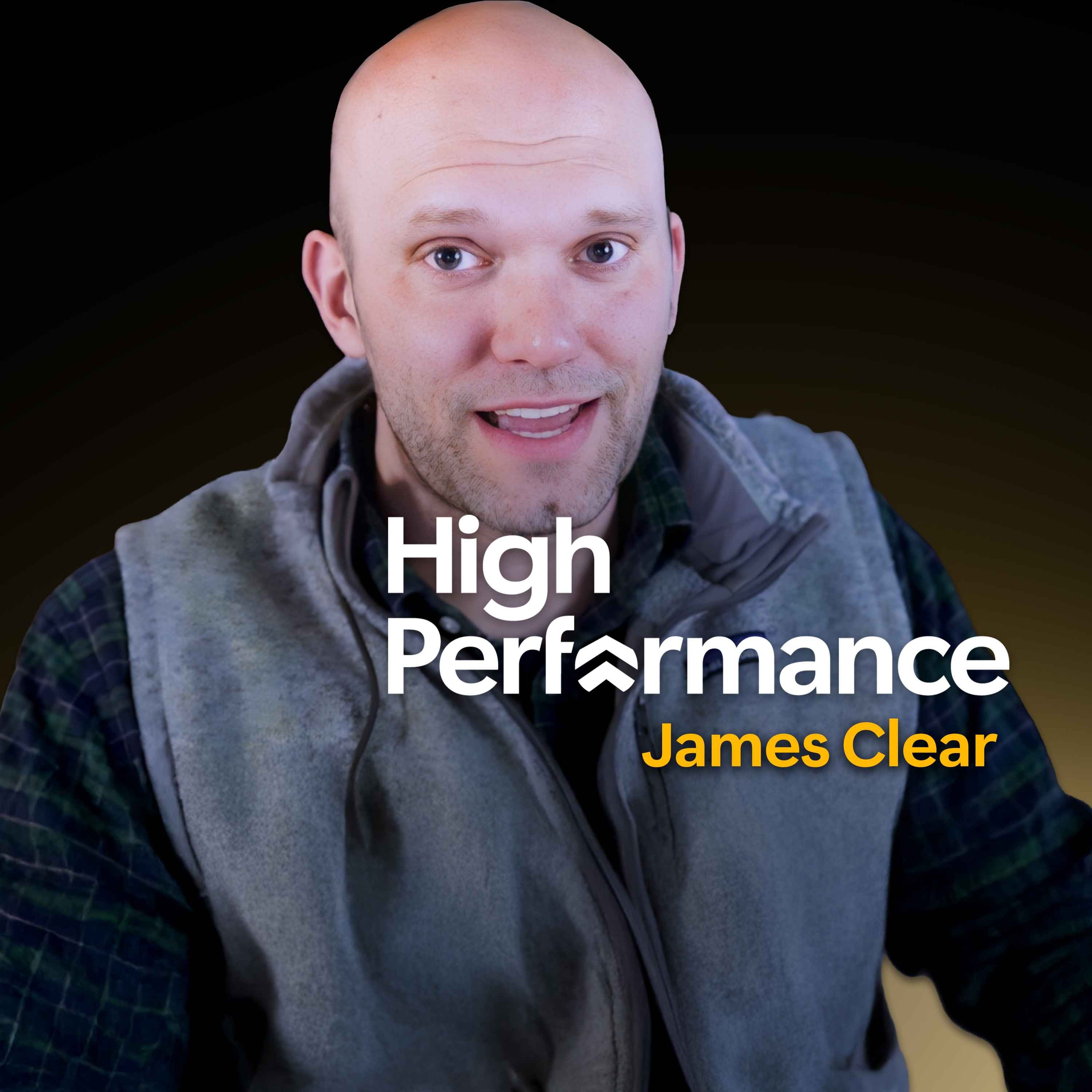
In this episode of The High Performance Podcast, hosts Jake Humphrey and Damian Hughes engage in a thought-provoking conversation with James Clear, the best-selling author of Atomic Habits. Clear emphasizes the importance of daily actions and habits in shaping one's identity and achieving long-term success.
Written by AI. May contain mistakes.

Get the gist, explore an idea or ask about something said.
 Claude
On The High Performance Podcast, what are the key points of this episode?
Searching your listeningAutomatic transcript. May contain errors.
0:00Watch it early on the High Performance App. Available now, Roman Kemp, the broadcaster, opens up a powerful conversation on success and mental health.
0:31the right buyers with LinkedIn ads. Spend$250 on your first campaign and get a free$250 credit for the next one. Get started at linkedin.com slash campaign. Terms and conditions apply. I'm no tech genius, but I knew if I wanted my business to crush it, I needed a website now. Thankfully, Bluehost made it easy. I customized, optimized, and monetized everything exactly how I wanted with AI. In minutes, my site was up. I couldn't believe it. The search engine tools even helped me get more site visitors. Whatever your passion project is, you can set it up with Bluehost. With their 30-day money-back guarantee, what have you got to lose?
1:08Head to bluehost.com to start now. This episode is brought to you by Opera Air, the first browser with mindfulness at its core. Now, most of us spend hours every day online, but how often do we pause to take care of ourselves whilst we're doing it? And that's where Opera Air comes in. It's a lightweight, fast, secure browser built not just for productivity, but for your well-being. With Opera Air, mindfulness is built right in. You'll find free breathing exercises, guided meditations, and soundscapes with ambient sounds, lo-fi music, and binaural beats, all designed to help you focus, relax, and even spark creativity while you browse.
1:48The process of behavior change almost always starts with self-awareness. If somebody could see you, but they could only watch your actions, what would they say your priorities are? Just noticing the gap between what you say you want and what you're doing, that alone, just noticing it will often change your behavior a little bit. What's the version of this habit that would be the most fun for me? What's the version of this habit that feels like it's the best fit for my style and my personality? That is the voice of best-selling author of Atomic Habits, James Clear, and this is High Performance, the podcast that turns the lived experiences of the planet's high performers into life lessons for us all.
2:28And we'll begin this episode with a simple idea from James. Every action you take is a vote for the type of person you want to become. And I love this so much because this isn't about willpower. It's not about motivation. It's about proving your identity to yourself. It's about a contract that you have with yourself. And it lives in one small habit at a time. The time you woke up, what you ate for breakfast, the way you speak to yourself, the way you speak to your friends, the time you go to bed, all those seemingly tiny decisions that make huge changes in your life. And look, by the way, James knows what he's talking about.
3:05Atomic Habits has sold over 15 million copies, been translated into more than 50 languages, and reshaped how the world thinks about behavior change. In this conversation, he shares how to make habits stick, how to think long term when everything feels so urgent and why tiny decisions compound into transformation. It's an episode about building better habits to become the person you want to be, as we welcome the brilliant, inspiring James Clear to high performance.
3:38Every action you take is like a vote for the type of person you wish to become. And I think this is the real reason, the true reason that habits matter. It's not because habits will help you make more money or reduce stress or, you know, get in shape. They can help you do those things and that's great. But the real reason that habits matter is that they reinforce your identity. It's like each one, each action is like a little vote, you know, building up some evidence for being that kind of person. So no, doing one pushup does not transform your body, but it does cast a vote for I'm the type of person who doesn't miss workouts.
4:14And no, writing one sentence does not finish the novel, but it does cast a vote for I'm a writer. And so take a little bit of time to think about that. Who's the type of person I want to cast votes for? What is the type of identity I wish to reinforce? And how are my habits shaping the story that I have about myself? And if you can get those two things aligned, then the results can kind of come as a natural byproduct. The process of behavior change almost always starts with self-awareness. So, you know, it's really, it's a conversation you have to have with yourself. And I also don't think that it's something that happens once.
4:46It's something that probably is a continual check-in. So having a process or habit of reflection review, whether that's once a week or whether it's once a year, whatever cadence makes sense for you, that can be really helpful. Basically, what we're just saying is, hey, you need some time to step back and think. I've done this a couple different ways. One interesting thing I did about a year or two ago, I woke up each day and for two weeks, I opened a blank page of my notebook. And the first thing I did was I wrote at the top of the page, what am I really trying to achieve here? And it's surprising how much my answer changed over the course of two weeks.
5:19You would think after like two or three days, you'd be like, you're just feeling kind of like a dummy and you're like, it's always just the same thing over and over again. But actually your answer changes a lot. You know, there were a lot of things that I wrote down early on that turns out that was just a middle step and it could have been cut out entirely. Or there were things that I wrote down that I thought I wanted, but actually if I gave it a little extra thought, it was like, well, actually, that's something my parents want me to do. That's something that my peers want. Like what, for example, James?
5:46The general idea is that I was writing mostly about what do I want to achieve in my personal life? So what, you know, we were building, we're like, I have young kids now, so we're in the middle of kind of building a family. So it was stuff focused around that. And then the second thing was, okay, I wrote this book. It's this bestseller. Now, what am I going to do next? And, you know, I kind of had to wrestle with that for a little bit because there's, on the one hand, you could just like chase whatever the book brings in. So you could say, okay, I'll do more speaking or I'll turn into a consulting company and we'll have an atomic habits certification and all that kind of stuff.
6:17And there are a lot of other authors that do that kind of thing. I'm not criticizing them at all. Like that may be the right choice for them. To me, that sounds like a nightmare because then I got to have a managing 50 consultants. I have like this huge team. I don't, I don't want to be a manager. I don't want to have a big team. And so if I was just writing down the obvious answer where it was like, oh, well, let me just grow revenue, then I end up living a lifestyle that I don't actually want. And man, you'd be surprised how often people are already making enough money to support their life, but then they choose to make more money, but live a worse daily life.
6:52And to me, that seems like a terrible trade. Now, of course, there's some threshold, you know, like you got to take care of your needs. But if you're already at that threshold, to choose to make more money and live worse days seems like an awful trade. And so often we talk ourselves into doing that. That's such a powerful point. Wow. I think that was something that helped me a little bit was that that process of doing that for two weeks. And I realized, you know what, what I should start with, and this is a line from my buddy, John, who's one of my entrepreneurial friends. He, he says, the thing we start with is how do I want to live my days?
7:26And then inside that box, I can ask, how can I make the most money? Or how can I reach the most people? Or how can we do the most interesting thing? But only inside that box, not outside of it. And if you start with that, you end up with a very different set of answers than if you just start by asking, how can we make the most money? Or how can we reach the most people? Or how can we do the most interesting thing? Ideally, the objective here is to try to design a business to design a lifestyle that you feel like serves you rather than feeling like, you know, you're chained to this thing that you created.
7:56I like questions like that questions that prompt self-reflection and get you to maybe think about it with, let's call them helpful constraints. If you have those helpful constraints, you often come up with a very different answer and I think often better answers. That reminds me, I remember reading years ago an interview with Jack White from the White Stripes where when he used to go in the studio, they'd sort of pull up different demands in a hat. It might be like you can only play certain chords or certain instruments and then you'd pull it out. And that would be the rule for the day where those constraints force them to be creative rather than just get into the usual habits and routines that stifle creativity.
8:36Oh, that's so good. I haven't heard that story. But the other nice thing about that is it gives you a place to start. And it's often better to have some kind of constraint to work around than to have a completely blank canvas, because then that can be sort of paralyzing. When I was working on 321, which is my newsletter now, and it's got 2 million subscribers, and this thing that's become kind of a big part of my business. But I started it in 2019, and I had already had a newsletter for years. And what I had been previously doing was writing two articles a week. And they were 2 ,000 words, and I would spend 20 hours on each one.
9:11And it was kind of a big lift. But then when I'm working on Atomic Habits and writing the book, I couldn't do that anymore. I was tapped out. I didn't have capacity to write the book and write the newsletter in that way. And so I was looking for a different way to have a newsletter. And I started with the constraint of, okay, let's imagine that I only have like two hours a week to do this instead of 20. What would I do? Then I threw an extra layer on it, which is, is there a way, if you could just imagine all the universe of possibilities for how you could create a newsletter, is there some version out there that I could do in two hours a week that is not just as good as what I'm doing now, but is actually better?
9:51than what I'm doing now, that actually people get more value out of than what I'm currently sending them. And I mean, I'm kind of optimistic about stuff like that, but I like doing thought experiments like that. And I have to think, you know, you're not going to be able to think of everything in the world, but there's got to be something out there that's better than what I'm doing right now and fits that constraint. And as soon as you accept that, as soon as you say, you know what, there probably is, then it's just this little quest to try to find what that thing is. And, you know, I don't know if I hit the mark or not.
10:22That's kind of for the subscribers to decide. But I do think 321 has worked so well that it is evidence that I didn't totally miss. You know, like there's something about it that's working really well in that format. And it's such a better fit for the time constraints that I have. We can't have you on high performance without talking about 1%. It's been mentioned by some of our guests, the focus on the 1%, making anything you do, everything you do. What questions should we be asking ourselves if we have the desire to be in that 1 % and we need to make sure that our actions are living up to our ambitions?
10:59What am I optimizing for? So that's up to you to decide, but you got to be clear about it. You know, it's very unlikely that you're going to just stumble your way into peak performance. You probably have to be at least somewhat clear about where you're going to spend your time and why. So what am I optimizing for? The second question is probably something along the lines of, can my current habits carry me to my desired future? And how do we know that, though? Signals of progress is probably the short answer. Some form of feedback. When I started out my entrepreneurial career, I started a bunch of different websites over the first two years, just tried a couple different things, see if they work.
11:36I tried an iPhone app. I didn't create it. I paid a developer like a thousand bucks to make it. And all of those projects, let's say, There were four or five different things over that two-year span. They were okay, but they didn't really do a whole lot. They were fine, but I could tell this wasn't the thing. But I did hone my skills, and I did learn how to build a website. I was picking up some things, but nothing was really taking off. And then I started writing at jamesclear.com. This was about two years in to starting my entrepreneurial quest. And I had just been doing freelance gigs on the side to make money and make ends meet.
12:10And within three months of writing there, it was pretty obvious that this was the best idea that I had had so far. Email subscribers were coming faster. People were more engaged. It just was clicking better. And most things that go well, they tend to have at least early signals of progress. It's very unlikely that it just completely falls flat. And then it's like, well, if you just stuck with it, it's going to turn out to be something. You know, it may not be what you want right away, but you've got some signals that things are going moving forward. So I think that's what you need to look for are signals of progress.
12:46And that depends, you know, differs depending on the thing that you're doing. If I take another example from my personal life. So I've been training in the gym for, I don't know, probably 15 years now. And then before that, I was an athlete. And so I was loosely in the gym with the team and stuff like that. So I've been around the gym and weights for a long time. And, you know, I think just the way that I got into it, my dad was kind of interested in Olympic lifting and some of my friends were kind of interested in powerlifting. So I did more of those movements when I got done with my athletic career.
13:17And it wasn't until like three years ago that I started doing more bodybuilding style stuff. And it took me a long time and it took me a decade before I stumbled into that. But my body just seems to respond better to that kind of training. I guess the two things to kind of wrestle with there to think about, first, you need to know what you're optimizing for. But then secondly, you need to be willing to experiment a little bit and try new things. And as you're willing to do that, you're looking for these signals of progress. And eventually you're like, okay, this is a path that's a little more fruitful.
13:45So I think, what am I optimizing for? Can my current habits carry me to my desired future? Related to that, there's probably a little bit of like a, you're almost being ruthless with yourself about where you're actually spending your time. So one little thought experiment I like is, let's say aliens came down and they can't talk to you, but they can just watch you throughout the day. If somebody could see you, but they could only watch your actions and not hear your words, what would they say your priorities are? So you can't convince them. You can't tell them any stories. They can't be sold on your reasoning.
14:19they can only watch your behavior. And if you ask yourself questions like that, you start to realize like, oh, I say that I'm optimizing for one thing, but actually my behavior doesn't match up with that as well. It's good to have a plan for how to change that, but just being aware of that, just noticing the gap between what you say you want and what you're doing, that alone, just noticing it will often change your behavior a little bit. So you're kind of like, first, you're kind of like narrowing your focus and figuring out, am I on the right path? and then once you're on the path, you're trying to figure out how can I move down it more quickly?
14:53How can I multiply the effort and the minutes and the hours that I'm putting in and so on? So they're all great tips on getting started. What stops us? What are the common mistakes that people make? There are probably a couple different ones, you know, and I'm sure there's more that I'm not even thinking of right now, but social constraints or social environment plays a huge role. So you might be able to do whatever habits you want to do for a day or a week or I don't know, a month or two. But if they go against the grain of the groups that you're around, if they create friction with the people that you're surrounded by or the people you work with, it's really hard to overpower that friction for a long time.
15:37Maybe you can do it for a little bit, but at some point, if people have to choose between, between, you know what? I have habits that I don't really love, but I fit in. I belong. I'm part of something. Or I have the habits that I want to have, but I'm cast out, monstercized, I'm criticized. I mean, a lot of the time people choose to belong, to fit in rather than choosing to like do the thing that they say they like to achieve. So what you really want is to get those two things aligned. You want an alignment between your desired outcome, your daily habits that you're trying to follow and the social norms of the groups that you're in.
16:14So if you can find groups where your desired behavior is the normal behavior, then you can rise together. So I think that's probably one of the biggest long-term things is can you surround yourself with people who also want what you want? And I'm not saying you have to do it for 24 hours a day, but at least for the amount of time that you're investing in your craft, can you be around them for that portion of time so that you're not trying to go against it when you're spending effort on it. What questions do you ask yourself for the people that get to have a seat on your bus? I don't really filter it like that.
16:47Uh, like I don't filter, I don't ask questions about the people around me. I'm like, Oh, can they have a seat or not? You know, can they stay around or not? Um, it's more like, I think about the project that I want to achieve or the thing that I'm trying to create. And then I asked myself, who are people that are already in that world? Who are people that are already doing that kind of thing? And can I hang out with them? So it's less about like, who's allowed to be around me and more about like, who would I like to expose myself to? Who would I like to be surrounded by or influenced by? As an example, when I started out as an entrepreneur, I knew I wanted to have a business.
17:23I didn't even really know that I wanted to be an author. But gradually, I started to figure out, oh, hey, I kind of like writing. I'd like to do that a little bit more. I didn't have any authors in my family. I didn't have any friends who were authors. I didn't have anybody around me who was doing that thing or building a business like that. So I sent a bunch of cold emails, reaching out to people, went to conferences, tried to meet some people. It took like probably two years or so, but gradually I got to know maybe, let's say, 20 to 30 people who were kind of doing that thing. And the best thing that I did was I started putting together these author retreats.
17:57And I would host like six or eight people and we would just split, you know, a house or an Airbnb for three nights. And then we would all get together and just talk about how to launch a book or how to build an audience or, you know, what we're writing on and just all the things that all the problems that we were dealing with in our businesses. And I tried to find people who were like a year or two ahead of where I was at. So I could still provide value because I was still doing the same thing. But I man, I learned so much from them. And I would always leave those sessions and I would have like six months worth of stuff that I needed to execute on.
18:32And so that's kind of what I'm thinking of when I say you want to join groups where your desired behavior is the normal behavior. You know, I would leave that session and then it'd be like, you know what? Now I know like six people who they're making a living doing it, you know, or like talk to a normal person and ask them, Hey, do you think you could sell a hundred thousand books that like, that sounds kind of outlandish, but now I could be like, well, actually like I know three people who did it, you know? So like, maybe it's not that crazy. I mean, at least I could look at their playbook and try to figure out how that could work for me.
19:03It doesn't guarantee success, but I think it does make success more believable or more palatable. It gives you a pathway. And once you start to see what it looks like, then you can start to piece it together for yourself and try to figure out a version that works for your life. So can I ask you about a guest that we've had on the podcast before was a guy called Russell Kane. He's a really successful comedian. here in the UK, James, and he spoke about a similar idea, but he introduced us to a concept called river jumping. So he was saying sometimes if you're in an environment where maybe comedians don't want to help other ones out, for example, how can you sort of go into different industries and look at the parallels of, say, it might be a fighter and how does a fighter prepare?
19:50So how he could then apply it to being a stand-up comic was the example he used. so what occurred to me in your case was that you're in pretty rare territory in terms of a copy of atomic habit sells somewhere in the world every 15 seconds so how do you surround yourself with people that are in that similar rare territory then um yeah like again i don't really think about it that way i mean i'm not like really worried about measuring you know my success compared to somebody else's or something like that it's more just like what cool thing do i want to create and who are people that i can be around there doing that kind of thing but I do like the idea of river jumping.
20:27I like the idea of diving into these kind of disparate fields, seeing what peak performance looks like there, seeing what other people are interested in and what can I learn from that? I think both strategies can be useful. So Mickey Stevenson was this a musician and a talent kind of coordinator, talent recruiter for Motown. And he was the one that got Stevie wonder and Diana Ross and the Supremes and like a bunch of these really famous artists to come to Motown and create their music in the 60s. And he told me this story that he, I can't remember who it was, but he was watching somebody perform.
21:02And at the concert, he was like, man, this is a really great show. And he gets about halfway through and he's looking around and he starts deconstructing what's going on. How many lights do they have on stage? How many musicians are up there now? How long between the sequences? Like how long does each dance routine last? And then when do they switch to the next one. He starts just looking at like, how are they assembling this really killer show? And that's something that I think is probably best done in your industry rather than river jumping. That's something that you look at the people who are really succeeding and then you try to deconstruct the things that you see that are cool.
21:35Whenever you see something that really lights you up, you should start to like pull that apart a little bit and see what the pieces are that it's made of. And you'll start to notice different things that you can do. I mean, There's this other story, Mr. Beast, the YouTuber who's got, you know, like over 100 million subscribers and one of the most popular YouTubers in the world. He's got this little clip where he talks about in the early days, like, you know, 10 years before he was this massive success. He and his friends would just get on YouTube. They would get on like a call, a Skype call or Zoom call for, you know, like six hours a day and just look at YouTube videos and talk about what does the thumbnail look like?
22:11How long in between transitions? How long is the video in total? Like, what's the lighting? They're deconstructing everything about it. How do you write a great title? And that deconstruction process is a really important part of succeeding. Because once you know what the ingredients are, then you can start to make your own recipes. You know, like, it doesn't mean you have to use everything that everybody else is using, but you start to see what the commonalities are, and you can start to put it together for yourself in a way that fits your style or your personality. So I think that is best done in your own industry.
22:42But once you've done that, once you've built this skill set where you've deconstructed what it looks like in your space, then river jumping is super powerful. Because you go and you say, okay, I'm just trying to become the world's greatest YouTuber and look at how do we produce these awesome YouTube videos. And you have all this insight on how they're deconstructed and what the elements are. And then you're like, hey, I'm going to go to this Formula One race and I'm going to look at their pit crews and see how they operate. and you pick something out about how that works where you're like, you know what?
23:10If we implemented that idea, we could probably upload two videos a day instead of one. And I'm so pleased that we've gone here because I think it plays into two things that we believe on this podcast are hugely important in taking your life where you want it to go, but are also under-celebrated and underspoken about. Patience and consistency. Neither are particularly sexy, but how important do you think they both are? Yeah, they're crucial. I mean, there are a couple different ways to gain advantages in life. You know, you could have like more money, you could move faster, or you could just be more patient.
23:43And being patient is definitely a competitive advantage. You know, a lot of people will choose the projects they take on or the style of work that they do or the way that they approach a particular problem based on time constraints. And if you're willing to be more patient about something, you can take on projects that most people would like avoid entirely. So patience can really be valuable. in order to execute on that, in order to capitalize on your patients, you need to have consistency. And so they kind of go hand in hand. Consistency, you know, there is some nuance to it. Seth Godin has a line where he says, what really matters is being better.
24:20And to be better, you often need to be different. But the thing about consistency is that being consistent is different. And so a lot of the time, the way to be better is just by doing the thing everybody else knows they should be doing, but doing it more consistently. That is different. That is better. And so in that way, the fundamentals do provide an edge if they're applied over a longer time span than usual. And so greatness can often just be being good, but over a longer time span, doing the reasonable thing, but over a longer time span. And if you can do that, if you can maintain that level of consistency, then you end up with a very different result.
24:59One of my favorite lines in your book, James, is the never miss twice philosophy. And I'd like to explore that with you because I think that one of the things we often talk about on the podcast is we embrace failure. Failure is where the learning happens, but it's about getting smart quickly as well. Would you tell us a little bit more about that philosophy and why it's so important? Sure. Well, first, just a little point on your thought about embracing failure. I feel like this is something you hear from a lot of people who talk about, especially like Silicon Valley startup culture, failure is almost praised, things like that.
25:40and there is an element of truth to it. I don't think that you should be scared of failing because then that prevents you from reaching that prevents you from trying. But I also think there's kind of an opposite side or another side of the coin that's important to emphasize, which is you're never trying to fail. Like that's not the objective, you know, just because it's not like we're okay with it in the sense that, oh, it's fine. Like I didn't get the result. I wanted that. Let's just stick with that. You know, like I'm, I am in fact trying to do my best every time. I am, in fact, trying to figure out a solution that works.
26:12I am, in fact, trying to get an exceptional result. Failure is never the objective, but I'm not scared of it, you know? Like, it's not going to prevent me from trying. And in fact, I would say that actually, many people, their fear of failure or their fear of how they'll be judged or what other people might think or whether it will appear impressive enough for, you know, what they're hoping to instill on the people around them. That general fear, that worry, whatever form it takes, it ends up becoming like a brake and it like stops the car. It prevents you from moving forward. And my encouragement is to say, listen, let fear be the gas pedal, not the brake.
26:56And so I have all those same fears. You know, I'm worried about what the people who know me well will think of the next project. I'm going to create. I, when I started writing, um, I still, this is even to this day, I still have never shared an article that I wrote on my personal Facebook page with like all the people who knew me from high school or college or things like that. Um, and why is that in the beginning? It was because I was worried about what they would think. I was worried that they would look at it and be like, Oh, you know, look at this dumb little blog this guy has. So that sense of belonging was powerful there then.
27:28Oh, for sure. I mean, it's power. It's powerful. Yeah. It's powerful for all of us. You know, I mean, we all want to belong. That's one of the deepest needs that we all have. This is why those trade-offs are hard to manage because we all do want to fit in. We all want to connect. And also sometimes people will say things like, well, don't, don't care what other people think of you. It can be useful in a context, but there's a very good reason why we care about what other people think of us, which is it tends to serve you very well when people think well of you. It's very beneficial to have friends, to have support.
28:00Not only does it feel good, it also provides you opportunities. It provides you love and affection. It provides you support in your life that you need. So to care what other people think about you is like perhaps the most natural thing in the world to do. The question is not whether to care, it's just when to care. rather than letting my worries about what other people think of me prevent me from writing or prevent me from creating. Instead, I just used it as fuel to say, okay, listen, you just need to get to work now. You know, like you need to put even more effort into this so that you can make it truly great.
28:34So you can create something that you're proud of. And if you use it as the gas pedal and not the brake, then it becomes a driver of creative output rather than a hindrance for it. the more that I kind of study or come across, read about people who are like peak performers in their particular industry, the more that you realize like everybody makes mistakes. You know, none of these people are perfect. And one kind of commonality across them is that they tend to be good about getting back on track quickly. It's not that they're good about never making a mistake. They slip up too. But most of us, I think, have felt this from going through life, which is, it's almost never the first mistake that ruins you.
29:13You know, it's like the spiral of repeated mistakes that follows. It's letting one mistake become a new habit or a new pattern. And then you turn around three months later and you're like, oh, I lost the last three months. But if you can never miss twice, if you can correct the mistake quickly, then, you know, you get to the end of the year and it doesn't really matter that much. The mistakes are just kind of a blip on the radar. So never miss twice is just a philosophy. It's an encouragement. it's a reminder to get back on track quickly to reclaim the habit and if the reclaiming of a habit is fast then the breaking of it doesn't matter that much can you tell me your opinion of of struggle please james because we think a lot of people come to this podcast because they think that learning from great people will free them from struggle and it will give them that sense of achievement which we all know lasts for a very short amount of time before you chase after something else.
30:04And, you know, it was Seneca who said, he was one of victory over the meanness of his own nature, and has not gently led himself, but has wrestled his way to wisdom. Seneca, they're talking about the fact that it's the struggle that we should embrace that, you know, the man who's walked through the shadow of the valley of death is the one who deserves admiration. What's your relationship with struggle? I probably lean more towards Seneca's style and approach. I think that being comfortable with challenge, being comfortable with struggle, seeking it out in pockets is a really good strategy. As you kind of go through life, we all get beat up by life a little bit.
30:41You know, we all face challenges. And, you know, like when my parents were my age, they had three young kids. My sister had cancer at the age of three. So they probably weren't trying to seek out struggle in that moment. You know, like life was giving them plenty to handle on their own. and that's fine. I don't think we need to try to act like we need to do more than that. You know, sometimes life just deals you a bad hand and you need to deal with it as it arises. But when life doesn't challenge you, I think it's great to challenge yourself because you kind of hone that ability. You hone that strength to manage some of those more difficult times.
31:18Also, this idea that, and I know that you don't believe this, but just based on how you asked the question, oh, let me succeed and then I'll free myself from struggle. I think there's this Alan Watts quote where he says something like, you know, the brightness of the stars is only visible because of the darkness of the space behind them. And so you actually need the contrast. You can't, without the contrast, you don't notice how bright the stars are. And the same thing is true for the good feelings that you want to have in your life. The reason it feels really good to win a Super Bowl or to launch a bestselling book or to get through some period of difficult trial in your life is because you had to struggle so much or put so much effort in ahead of time to get there.
32:01It's because it's so hard to do that by doing it, you can feel proud of yourself. And it's the contrast between all those dark periods that came before and the triumph that you're feeling right now that gives you the feeling of elation. If there wasn't any dark period before it, then there would be no contrast there and you probably would just feel like kind of neutral the way you do on most days. In that way, you almost can't have success without struggle because they require each other to provide the necessary contrast. There's so much about life where opposites are both true. It's not should you train or should you rest?
32:39It's well, you actually need both. And the question is, do I need to train right now or do I need to rest right now? And so it's really a question in most areas of life, not about what to do, but about what to emphasize in this moment. And I think that also is true when it comes to struggle and challenge. Sometimes struggle gets glamorized so much. We almost think like if you're the type of person who works really hard and you're very ambitious, you almost feel like it has to be a struggle. Otherwise, it's not worth it. There's a badge of honor to be worn if you're always struggling so much. Look at how hard I'm working.
33:14Look at how much I'm suffering, and so that must mean that I have value. I don't think it has to be like that either. There are going to be moments like that for everybody, and when you need to step up and have that kind of mindset, you better be ready for it and not scared of it. But that doesn't mean that you need to live your life in a state of perpetual struggle, in a state of perpetual suffering. There's nothing wrong with having peace and contentment. There's nothing wrong with stepping back and relaxing for a little bit. And in fact, it's probably the balance between the two and emphasizing them at different times that allows you to perform at an even higher level.
33:49So it's not a question of either or, it's both and, but it's just when. So is it okay to throw a zero some days? I think so. I mean, nobody's going to be perfect. It's not the objective, though. Again, it's very easy to get into this style where you're like giving yourself excuses. And you're like, oh, well, it's okay to not show up. What I've come to find, so I had a day like this last week, actually. There was a day, I think it was Wednesday or Thursday last week. I really didn't feel like working out. I've been on a really good streak where I haven't missed in quite a while. and I just, I went to the gym and I was like, I just really don't feel like doing anything today.
34:30And it would have been very easy for me to give myself a story about putting up a zero that day. But instead what I said was, okay, you know what? Like you can reduce the scope, but stick to the schedule. You don't have to do the whole thing if you don't want to. Let's just do the first set and see how you feel. So I did that and you know, I felt a little bit better. So I was like, I'll do the next one. And then I just kind of got through the whole workout that way. And I got to the end of it. And it wasn't like anything to write home about him. I didn't have an amazing lift or anything like that.
34:58But I didn't miss. And I told my wife when I came back afterward, I was like, you know, in a way, I almost feel like the bad days are more important than the good days. Because if you show up on the bad days, then you maintain the habit. And if you maintain the habit, then all you need is time. But if you only show up on the good days, you're not really getting any separation between you and the average person. Everybody shows up on the good days. In a way, greatness only reveals itself on the bad days. That's the only time that you get any separation between the average performance and the exceptional one.
35:34So you need little mental tricks to help you get through it. And it's not the objective to have a zero. It's fine. Everybody's going to have them occasionally. And I don't think you should berate yourself when it happens. but it's better if you can find a small way to show up than to do nothing at all. I love that, James. There's an example that really resonates with me as you're saying it about, I used to work in boxing and there was a young guy who was supremely talented who he would never set his alarm clock to run but he would run when he woke up or he'd always be five minutes late into the gym and he'd be building a distraction so that you'd never really call into task on it.
36:15And his talent got him all the way up to fighting for a title. And after halfway through the fight, he was winning the fight easily. But then it then came down to grit and resolve and being able to find a way through. And he'd never practiced those small habits of showing up on a bad day or getting through it. And he ended up losing the fight on it. And I remember his trainer saying precisely that to me. He's not lost a fight tonight. he's lost it over the last 10 years of constantly seeking like not showing up on a on a bad day that's an interesting um point it's a good little phrase you know he didn't lose it tonight he lost it uh over the last 10 years there are a lot of things in life that are like that you know where it's actually all the the sum of all these little moments before the sum of your preparation that determine the outcome in a lot of ways like the outcome of atomic habits was baked in months and years before it happened you know it was all the articles that built the audience it It was all the revisions of the manuscript.
37:12It was all the prep for the marketing and the launch that happened months before a single copy was sold. It was actually all of that that was just potential energy getting released when the book came out. And there are many different things like that in life. I also think it's worth saying, like, I don't know anything about this particular story other than what you just told me. But, you know, most people never even make it to the title fight, you know? So this guy was there. And that also should count for something, you know? People just have different personalities and different makeups, too.
37:40And that's okay. You know, like people have different things that they want to emphasize. And in a lot of ways, I think when you see truly fantastic outcomes, when you see really exceptional outcomes, it's this perfect matching, this perfect blending of personality and talent and situation. I heard a phrase one time grit is fit and their point is like when you are well suited to an environment when you are perfectly fit for the task that you're working on then yeah you're really gritty because it's the kind of thing that you're genuinely interested in that plays to your strengths that addresses your natural curiosities.
38:17And so in a lot of ways, that's kind of the first big hurdle, maybe the most enormous thing to try to figure out is what is something that is naturally aligned with what I really want to do or the way that I'm encoded, the way that I'm put together. And if you can find yourself a situation like that, then you're in a place where you're going to find endless ways to improve because you're just naturally interested in it. You'll always be unearthing and discovering new little things that you could tweak. If you're in a situation where you're not that well-suited to it, or you're doing it just because other people are telling you you should, or you kind of are being nudged into it, even the obvious improvements are going to feel like a hassle.
38:58So that's another question that I really like asking, which is, what's the version of this habit that would be the most fun for me? What's the version of this habit that feels like it's the best fit for my style and my personality? There's not like infinite ways to do things in life, but there's almost always more than one way. And so you should choose the version of that habit that feels best suited to you and your style and your personality. And if you do that, you're in a much better place to improve. So give us an example of that in your world then. A lot of people, especially in January when the year's getting started, they choose an exercise habit because they feel like, oh, I'm supposed to go to the gym or I want to get in shape this year.
39:35This is something I should do. But, you know, I like lifting weights, but not everybody wants to train like a bodybuilder. And that's fine. You know, like you could kayak or rock climb or ride a bike or do yoga or, you know, there's like an endless number of ways to live an active lifestyle. And you should choose the version of that habit that is most exciting to you. Another one, I did an interview with Tim Ferriss one time, and he was telling me that when he did his meditation habit for a long time, when he first started, his actual, his meditation was he would listen to a song from Prince and he would sit and meditate while the song was playing.
40:09Writing is another example. You know, I have gradually found that I like writing in shorter chunks. When I first signed the book deal to write Atomic Habits, the editors were encouraging me to write chapters that were like 6 ,000 to 8 ,000 words, but that's not really my style. Like, I like writing things that are 2 ,000 or 3 ,000 words. And so eventually, I was like, you know what? The structure of this book is just going to be different. And so what would this book like if it was going to be fun for me to write. Well, it's still going to be a lot of work, but it's going to be a lot more fun if I get to write in my style.
40:39So the chapters are short. So that's just, you know, there are a lot of different ways that that can express itself. But that basic idea of asking yourself, what would this look like if it was enjoyable? What would it be like to be someone who has fun doing this habit and then trying to find or structure the version of that? I think it just puts you in a much better place. And what habit have you stumbled upon that you'd share with us that has the biggest impact on the rest of your day. You know, on a personal perspective, the early morning allows me to bounce from thing to thing to thing. And I actually think that getting up early is one habit that maybe impacts seven or eight further down the line.
41:14Well, that's actually the key, I think, what you just mentioned, which is to ask yourself, which habit is upstream from other good things happening for me? And, you know, it's easy when you sit down and think about the habits you want to change, especially for ambitious people. it's easy to start to get really aggressive about it and be like, you know what, what would peak performance look like? Here's the seven things I'm going to start doing. And you know, you come up with this big plan. And instead I would say, how about we back out a little bit and ask ourselves, what could I stick to even on my bad days?
41:45Let's start there with the floor. And then we try to figure out what is the one or two things, just one or two little moves that if I do this each day, I tend to live a good day. So your example is waking up early, which is a good one. For me, my workout habit is the one that kind of anchors the rest of my day. If I work out, then yeah, I get the benefits of exercise and that's great. But I also, I have a post-workout high for like an hour or two where I get like really good concentration. I tend to sleep better at night because I'm tired from the workout, which means I wake up the next day and I have better energy.
42:19I tend to eat better when I'm working out. It's when I'm not working out that I kind of like, oh, who cares? You know, like I'll eat whatever I want. Now, at no point was I trying to build better nutrition habits or sleep habits or focus habits, but all those things kind of came as a natural byproduct of just making sure that I got the workout in. Some other common ones you'll hear people say, a lot of performers, comedians or basketball players or something like that, they'll have a visualization habit. If they do that before they step out on stage or step out onto the court, they're more likely to have a good day.
42:51Creatives will often talk about having a daily walk. That's kind of their anchor habit. They do that and the rest of the day kind of falls in line or the creative juices get flowing. So I think it's as simple as asking yourself, when I am really on, when I'm living a good day, what are some of the key parts of that day? And you'll probably come up with two or three things that work well for you. And I would say start there. You know, like, man, if you can knock down that one key habit that is upstream from a lot of other good things, you're living a lot of good days there if you can just get that done.
43:21And then once you've established a foothold and kind of mastered the art of showing up consistently with that habit, well, now you have a lot of things that you could improve or, you know, advance from there. James, this has been a masterclass. I thank you for being so generous and sharing it. We then have a quickfire of questions that we'd like to throw at you.
43:44What are the three non-negotiable behaviors that you and everyone around you must buy into? The part about everyone around me is throwing me a little bit. I don't really, I don't think about it like that. Like I'm really not trying to force people to do stuff, you know, like I'm just trying to, I'm just trying to keep my eyes on my own paper and focus on what I'm doing. So sleep is my big non-negotiable. I try to get, try to get enough sleep. It's hard when you got little kids, you know, like I got two young ones running around, but working out, which I already mentioned. And then for a long time, I would have said writing, but I actually think I'm going to put reading in that category because what I found is that if I'm reading consistently, the writing comes naturally.
44:23Those are three things that are really crucial for me to live a good day. What's one piece of advice that you'd give to a teenage James just starting out? Well, for my specific situation, I probably would have said, trust yourself and start earlier. You know, like there, there are a lot of things in life that your family and your friends often want you to be safe and you want to grow. And those two things are not always aligned. And so realizing that, you know, that if you do something a little bit different than what they want, it doesn't necessarily mean that it's bad. It also doesn't mean that if they don't support you in the way that you were hoping, it doesn't mean they don't love you or they don't want good things for you.
45:02It just is a difference in priorities. They want safety, you want growth. And those are two different things. So that's more for me personally, though. If we're talking about like, what do I think is good general advice for a teenager? Or what is something you would tell, you know, an 18 year old? I think it mostly comes down to focusing on getting started and being consistent. So I always encourage people to start with what in the book I talk about the two minute rule, take whatever habit you're trying to build, and you scale it down to something that takes two minutes or less to do. So read 30 books a year, becomes read one page or do yoga four days a week becomes take out my yoga mat.
45:37And the real key there is that you're encouraging yourself to start small because you want to master the art of showing up. You know, you want to become the type of person that does it consistently. There's that quote from Ed Lattimore where he says the heaviest weight at the gym is the front door. And, you know, there are a lot of things in life that are like that and encouraging yourself to find ways to make it easy to show up, to make it easy to open the front door, to make it easy to get started. That's where the battle always begins. And you can really get in your head about trying to theorize or come up with the best plan.
46:12I mean, we all do this. We want to come up with the best sales strategy or the perfect diet plan, the ideal business strategy. But we often do that because we tell ourselves like, oh, I need to learn more before I can take action. But the truth is, The best way to learn is often by taking action. The best way to learn is by getting in the arena a little bit, get started, gain a little bit of a foothold, try a few things out, see what works for you, and then improve and update and iterate from there. And so the two-minute rule kind of pushes back on that perfectionist tendency, gets you to master the art of showing up, and start to get some results.
46:50And the final question from us, this is your one last message to the people that have listened to this fascinating conversation. Thank you for being so generous with your time. what would you like to leave ringing in their ears, your one golden rule to a high-performance life? Well, we talked a lot during this conversation about what are you optimizing for? What are you trying to achieve? And I think a different way to frame that is around what kind of identity are you trying to build? Who is the type of person you wish to become? You know, for high-performing people, they often focus on results.
47:22And that's fine. Like, I get it too. You know, like, I'm really interested in results, and we all want to achieve great outcomes. But I think it's often better to start not with what do I want to achieve, but who do I wish to become? Of course, huge thanks to James for his time. He reminds us that success is not a single decision. It's hundreds of small ones made consistently and consciously over time. And if this episode gave you something useful, please do me a favor. Share it with someone you think would benefit and hit follow on Apple or Spotify. It's so helpful for us. don't forget you can also get early access to every episode plus exclusive content on the high performance app thanks for listening see you next time
As Atomic Habits author James Clear reminds us, the person you become is shaped not by one big decision, but by the small choices you make every single day.
In this episode, we revisit our insightful conversation with James as he explores how tiny, consistent actions compound into extraordinary results. He explains how every habit is a vote for the identity you want to build, and why aligning daily behaviours with your values is the surest route to lasting change.
Listen in as James unpacks the science of habit formation, the power of self-awareness, and the simple, repeatable steps that can transform both your performance and your life.
Listen to the full episode: https://pod.fo/e/16868c
Heights 👉 Get 20% off your subscription by using Code: HP20 here: https://highpfrmc.com/heights20
Hosted on Acast. See acast.com/privacy for more information.


