
 Ask ChatGPT


 The High Performance Podcast
28 Nov 2025 · 42m
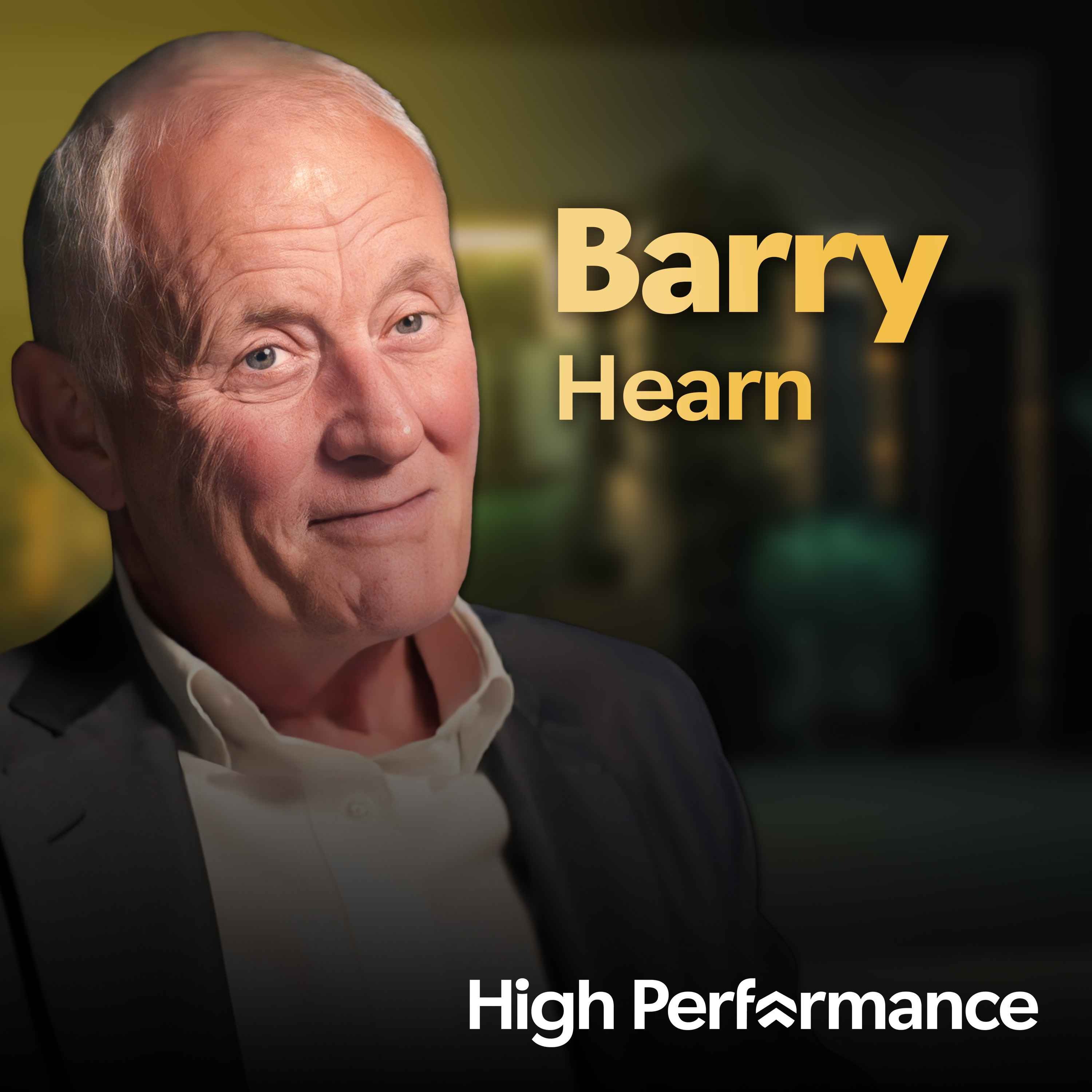
Description: Barry Hearn shares his journey from humble beginnings to becoming a titan in sports management. He discusses his work ethic, mindset, and the principles that have driven his success, including his 10 Rules for Life.
Written by AI. May contain mistakes.

Get the gist, explore an idea or ask about something said.
 Claude
On The High Performance Podcast, what are the key points of this episode?
Searching your listeningAutomatic transcript. May contain errors.
0:28Someone said once about me, dominant empires. This is a conversation about the fundamental laws of success and why for Barry everything's a competition. Listening as Barry lays out his incredible 10 rules for life and he shows us why being unbeatable is a mindset which you can choose not a skill that you're born with. He shares with us his think poor to stay rich philosophy and how pressure is only felt by those who fail. There's a brilliant story in here about how he nearly lost everything, standing in the snow on Christmas Eve 1988, one deal away from bankruptcy. It could have been written by Charles Dickens.
1:08But most powerfully, he talks about his mum, a working class snob as he calls her, instilled in him an unbreakable work ethic that still drives him today. We're going to start this conversation with that exact mindset, the chip on his shoulder, the hunger to build something from nothing and his refusal to let anyone else write his story. I'd like you to join me and welcome Matchroom founder Barry Hearn to High Performance.
1:39Your decisions are defined by your 10 rules for life and what we wanted to do with this conversation was to base it on the 10 rules and we'd love you to sort of put some meat on the bones for us. So your first rule for life is it's better to be born lucky than good looking. Well, it's so true. I mean, because without that little bit of luck, and no matter what you might think, how bright you are or how well qualified you are, we all need that bit of luck. We need to now to take advantage of that. What was yours? I've had a lifetime of God smiling on me. I can't tell you how many times I've had the most amazing bits of luck.
2:22I mean, whether it's a ginger kid just knocking on the door around and saying, can I play in one of your snooker tournaments, Mr Hearn? And it turns out to be Steve Davis. Whether it's B-Sky B coming over the hill when I was probably about to go skint, having lost millions of pounds, they were like the cavalry coming over in the sports world. It was that close for you, wasn't it? Yeah, I mean, yeah, historically. I made a lot of money in 1982, and I was going to retire. I was 34. I've been quite smart. I had a passion for sport. I was always good at everything and never great at anything. But it gave me a little bit of a head start in the knowledge and appreciation of what sportsmen and women do.
3:03And then a strange boxer with a lisp came into my life, just on an off chance as a recommendation from Len Ganley, the snooker referee. And things like that have happened all the time. Don't you think, though, that the difference between successful people and others is that the successful people are open to the luck because they're expecting the lucky break to come their way? And I think it's how you take advantage of that break. And entrepreneurs, which is a word used often, and there's not that many of them in truth, but we're risk takers. See, I never took a risk in my life because I had nothing to lose.
3:40My dad was a bus driver, my mum was a child lady. The worst thing I could have been was a conductor or, you know, I don't know, a window cleaner. And even that's not bad. I always think I've put my own kids under much too much pressure in a way. Eddie especially. I mean, my daughter is a technical genius, but she's not like me and Eddie. She's not a salesperson full of nonsense. But Eddie's been under pressure from day one to follow in the footsteps and to go further, which he's magnificently managed to do. much to my chagrin. But for me, I was never under any pressure. There was nothing to lose.
4:18So I think with me, being good looking is always nice, but you can't take away that bit of luck. And if you look at any successful person, there's a few key moments in their life where the good Lord smiled and lady luck dealt the cards and they were good enough to take advantage. And that's probably the key difference between everybody gets that bit of luck. Some people don't recognise it, and others don't take advantage of it. So how important then, Barry, do you think humility is? Because your answer there just reeks of humility that you've recognised. I don't take myself too seriously. I mean, you've got to believe in yourself.
4:53You've got to have self-belief. Of course you have, you know, because otherwise we wouldn't get up in the morning and do what we do. But at the same time, I think you've got to keep this sense of humour. You've got to realise you're not really that important in the bigger picture. so we're all going through this journey and if we can have a few smiles along the way and not take ourselves too seriously you build a little wall around yourself like that you compartmentalize things in your brain you don't get hurt by other people so much or by circumstance or facts go on tell us more about that well because you don't allow it you don't look back with any regret it's a total waste of time you can't do anything about it You've already learned the lesson of that regret anyway, because it happened.
5:41I'm tired of people saying, oh, I should have done this. I wish I'd have done that. Save your breath. You didn't. Move on. Look forward. Plan the future. Learn, of course, from mistakes, but don't let them change your life. So humility is a nice word to use. It's probably not quite, it's a bit more superficial than humility. So when you get bad things, you compartmentalize it and you lock it away somewhere in your brain. and if you're going to think about opening that box, you do it on your own and not in the public glare. So you never appear to be having a bad day because that really pisses off the opposition.
6:26Right, that takes us nicely, actually, onto your second rule. Tell the truth. Yeah. It's easier than telling lies. It is the most refreshing thing to be able to do. And I don't think I've always told the truth, by the way. I mean, I think it's a luxury that comes later in life with perhaps commercial success or a feeling of it's all going to end one day anyway, so what's the point, you know? But early doors, when you're out there grafting and trying to get somewhere, you do tell a few white lies. I don't know when I got to that stage of cutting off, but I think quite late in life. I don't think I was always like that.
7:05You know, I was a chancer early doors. Of course I was where I came from. I didn't have much excuse not to be. But when you do acquire that discipline of mind where you can actually tell people exactly what you're thinking and those that appreciate it will love you for it and those that don't, you don't really want to be in their company anyway. So give us an example of somebody that did appreciate your truth talking. Years ago, I got approached by some dot-com people from the States that wanted to buy my company. I was doing okay, not special. And they offered me a load of money. I think they offered me about 30 million quid.
7:43Oh, it's a lot of money. In those days, it was a fortune. Still a lot of money today. And I got involved. And I thought, this is it, you know. Business was quite tough. Let's get the money and get out of it. And I always remember walking around the garden with my wife, who was looking for a new house at the time. And she had a budget. My wife is old school. Proper, proper lady. Difficult. Impossibly difficult. 52 years married to the same woman. Horrendous. How she's put up with me, I will never, ever know. But I would be lost without her. And I decided to do what I don't normally do, which is take people into my confidence.
8:24I'm quite an insular person, other than direct family, because I don't think people deserve to be told my innermost thoughts. That's why they're called innermost thoughts. You don't share them. But I shared them with her that we had this opportunity and if she was looking for a new house, she might, do you want a bigger budget because there's a few quid to spare? And I told her the story and she said, well, why are you doing this deal? And, well, you know, it's a lot of money, blah, blah, blah. She said, and what about you? I said, well, you know, I'm going to have to stay on for a few years to help the process.
8:58And she said, how do you feel about that? And I said, well, I don't really like these. They're loud. They're aggressive Americans. They bang the chair and the desk. She said, is that where you've got to in life? That, you know, you would surrender your independence. Is that where you've got to in life? Yeah. And I thought, no, I think I've gone a bit beyond that. And the following day, I phoned them up and said, the deal's off. and they'd done all their due diligence and whatever, they went potty. They're only young boys. They said, why? And I told them the truth. I said, I don't like either of you.
9:38And I don't really want to work with people like you. In fact, I don't even want people like you in my world. The jaw dropped and they left and I felt cleansed. So lesson number three on your list of your 10 rules for life is sheer work ethic can make you look like a genius. Yeah, but isn't that working hard fun? I think it's... I get up in the morning, I'm excited. Every day. Now, it's embarrassing. I should be calming down. I'm getting worse. What are you excited about? I'm excited about deals. I'm excited about doing things. I'm excited about growing sports. I'm excited about changing lives.
10:11I'm excited about ratings. I'm excited about tickets. I'm excited. I'm pathetic. I am an anorak. My heartbeat goes up as I drive to the office. I'm supposed to be retired. I go in nearly every day. My wife's killing me. When are you going to spend more time in your house? I'm like, yeah, yeah, next week. I'll be back on to you on that. What's the secret then for people listening to this, for finding a life that makes them feel like your life makes you feel? Probably have a very small brain like mine. I mean, I'm no genius. I didn't go to university. I'm not a smart bloke. Do a crossword with me takes a long time, but I'm very good at numbers.
10:51A Sudoku, I'm great. Crosswords, I'm terrible. Probably just feeling good about yourself. Having conversations with yourself in the mirror in the morning is always a good start to the day. What do you say? Baza, you've banged it off, son. Let's go and have another day. So the work ethic is absolutely fundamental to it, of giving everything your best shot. Though I knew early doors, I was no genius. Someone said once about me, he's not the brightest candle in the room, but he burns longer than anyone else. And that's exactly what I do. I won't be defeated, you see. I don't think my ego will take it.
11:30I have to win. Everything is a competition, everything. So you go to my office and take my right hand drawer, you will see a list of the number of days I've been in the gym for the last 12 years. And every month I look at it and go, you lazy bastard. You're letting it slip, Baz. You're letting it slip. You're doing less than you did last year and so on. So you make everything into a game. And that's when you know you've cracked it because, like, I love sport, but unfortunately God decided I was never going to be great at anything. But it didn't stop me loving sport. So I thought, well, I'll make business into a sport.
12:12So my business is a succession of sporting events, and I want to win all of them. So I prepare diligently. I put in the dedication. I sacrifice. I put in the time. I create an environment where I'm the best I can possibly be. And then I put on my chartered accountant's hat and say, now really, how are we doing? Because people tell lies, but numbers never lie. So every year, I set out to beat what I did last year. and I will continue to do that until I'm pushing up the daisies. Let's talk about failure because lesson number four is pressure is only felt by those that fail. What that really means is that people make excuses for their own weaknesses.
13:03We've all got weaknesses, but it's very tiresome for me to hear people say, oh, yeah, I couldn't handle it. are. I'd rather keep my mouth shut. Firstly, I would never tell anyone if that was the case with me because that's something inside me to sort out. And secondly, it's probably lacking appreciation that we've all got an opportunity in life to do something and it won't always go right. So don't start crying around me. Go out and do something about it. And if you do fail, make it one time you fail and use that as a springboard to succeed. It's about character, isn't it? It's about what's inside you.
13:42Do you think we breed character enough into people these days? No. Sometimes it's frightening. I had this thing with my children about, I love them so much, but when it comes down to it, are they going to be good enough? In this world. Not, you know, when dad's not there. They were taken to school in limos. They went to private schools. All the things that I hated when I was younger because I had an inferiority complex about people who had things I didn't have. And you think, do you spoil them? And then you realise, maybe not. You see, I mean, Eddie's a great example. I can't believe how he's turned out.
14:17He's a credit to me and what he does. And he's got a tremendous work ethic. And he doesn't need to have. You know, he wasn't ever going to starve or go without. And yet there's something inside. And that's what everyone's got to find. They've got to find that inner strength that takes them past ordinary people if they want to be special. So what did you do then? Say, if we take Eddie as an example, so as a parent, what were the most important characteristics that you would have demonstrated or nurtured in him that gave him that drive? I think it's just lessons. I mean, everything in our house is competitive, tremendously competitive, viciously competitive.
14:59So even now, I play table tennis with my grandchildren on a Sunday. I don't let them win a point, not a point, not a point. They win a point, they've won a point themselves. And, you know, every now and again, Baza, can't you let us win one? But it's getting closer. The 13-year-old is getting closer. And it's only a matter of time. And I was like that with Eddie. You know, we'd play cricket. I wouldn't hold back. I was quite a quick bowl when I was younger. I'd bowl flat out to him. Don't matter what age he was. You want to be in this game? We'll find out. When I thought he was going a little bit too public school-ish, I took him, I famously took him down to the gym and we had a proper, what was supposed to be a proper three-round fight, a proper fight.
15:43And he dropped me twice in the second round. We never had the third round. I left happier than he did, you know, because I found out something about my son that I hoped was inside him. He didn't swallow it. Right. He had some character about him. And he took a couple, not many, and he handed it out, you know, and it was nice. He was just disappointed he didn't have a chance to beat me up in one extra round. But it's not something you can describe in a one page or a set of lines. All parents love their children and no children in the world are born bad. It's up to us. And sometimes we let our kids down and sometimes they surprise us with how good they are.
16:23And I've been very blessed. Number five is you will run a better business and a better life if you think poor. Do you know what? That is probably the greatest line I've ever read. and I use it all the time. There are lots of people that achieve short-term success. They get lucky, like it says, better to be born lucky, but they haven't got in them to be sustainable. And that's because they don't think poor. They think they've cracked it. And I think I might have got a little bit like that in the 80s, a little bit where I've made a load of money and you think I'm untouchable. you're never untouchable.
17:05You're never over the winning line. When the fat lady sings, that's the time you, what's the greatest song ever written, The Gambler? There's time enough for counting when the dealing's done. So up to that stage, you think poor, but that is a twofold connection. One, it makes you get value for money, even if you're stinking rich, even if you've got money coming out your ears. Do you really want to be treated like that person? Or are you going to think poor and say, I want my value? It doesn't make you a nasty person. It just means don't disrespect me. I'm thinking poor. Two, with the clients and the people that you're servicing, if you think poor, you're going to give them value for money because you realise that that customer will keep coming back to you if you've serviced their needs properly and you haven't taken liberties with them either.
18:00Sometimes there are people there that you think, oh, and again, I think this is an attitude that takes some time to evolve. I've no doubt I took people's trousers down in deals over the years. I've no doubt some people took mine down. But when you start thinking poor, it gives you a new balance because you're just, you're running it just on the facts of the situation, aren't you? Unusual things happen every day of your life. How you deal with them makes you unusual. Everybody in this world has got, well, not everybody, but pretty well everyone's different. They've all got a different DNA. I think the odds of having the same DNA are 14 million to one.
18:37So we all deal with things differently and we're all different and people have different approaches and different ways and different thoughts in their head, different circumstances. Everybody in the world is absolutely better than anybody else at something The sadness is most of them don't find out what it is because they don't get the opportunity. But nature says that they must be better at something than everyone else because they're different. When you get into a situation in life and you're on some sort of progression, you have to make a lot of decisions. And sometimes they'll come at you from really bizarre angles.
19:14And you can mix a lot of these rules, by the way, together. I'll tell you a little story. So I'm doing my conkers in 1989. For those of you who don't understand what your conkers is, it's not a good time. I'm losing millions of pounds. I owe the bank millions of pounds. And like a fighter coming out for the later championship rounds, I'm getting close to having enough. I learned more during this period, by the way, than I learned the whole of my life. I never shared that time with anybody, wives, family, anything. It wasn't their job to know. it was my job to fix and I had an event starting it was the European Snooker League I think it was starting in January 89 and Christmas Eve 1988 I had one last pitch I needed a sponsor for 300 ,000 pound and I didn't have one and I was losing so much money this was like for the first time I actually thought, I'm a chartered accountant, I can always get a job.
20:17So I wasn't going to starve, I wasn't going to be in trouble, but the dreams of what I was thinking about my life was going to be clearly wasn't happening. I got off at Slough Station to see Trust House 40. The managing director there was a guy called Alan Hearn. No relation, but interesting, same surname. Four o 'clock, I got off to train at Slough and it started to snow. It was like a Dickens novel. Walked into it. My heart wasn't in it at all. Got in to see Mr. Hearn. He said, what have you got for me? I said, and I started the sales pitch, which I'm generally quite good at, but this was awful.
20:52My heart, it was, I'd had too much of a battering. I'd lost too many deals. Finished it in 20 minutes. Quite honestly, I was an embarrassment to be there. And he looked at me and he said, it's Christmas Eve. It's 4.30 Christmas Eve. I went, I know. He said, you must really need this. And I said, tell the truth. I said, I do. I really need this. And he said, well, I've got no money. And that was like someone kicked me straight in the lower regions. I thought, well, that's it. I can't do more than I've done. I've given it the best shot. I've had two years of absolutely nightmares. And I've shouldered it on my own.
21:31Probably a mistake. So I just thought, well, I'll go out with some class. And I said, well, Mr Hearn, thank you very much for seeing me. I appreciate it's Christmas Eve. Let me wish you and your family a happy new year. I turned around to walk out the door and he said, but I've got hotel rooms. I said, what does that mean? He said, well, I've got no money. I said, no, I understood that bit. He said, but I've got hotel rooms, he said. And at that time, Trust House 40 had Sandy Lane in Barbados, Plaza Athenai in Paris, Waldorf in London. They're great hotels. He said, I will give you£300 ,000 of hotel rooms, but no money for this sponsorship.
22:08And we shook hands. I left. By the time I walked back to Slough Station, I'd sold the lot to mates of mine in the travel business at a 40 % discount for cash. I got 180 grand. That 180 grand saved my life, saved my business, and saved me, more importantly, show me that you're never completely finished. You know, while you're breathing, there's fighting the old dog. That was a 12th round knockout for me in my world. But it taught me lots of things. It taught me that when you're in situations like that, the situation will define you as a person as well as you will define the situation. And you learn more about yourself in adversity than you'll ever learn in success.
22:50Then you find out what you really are. I found out I'm unbeatable. I can't be beat. It's impossible. You condemn me. You can damage me. You're never, ever going to beat me. I'm too happy not to exist. Go on, tell us what that means. Well, that actually takes us nicely onto rule number seven, doesn't it? Life ends in tears. Yeah. So smile for the rest of your life. Just sums it all up. My father never taught me anything because he was, you know, he wasn't an active father. Yeah. But what he did say was, don't waste a minute, son. Yeah. Don't waste a minute. But everyone knows this. Everyone knows this already, but we all walk around obsessed with the tiny little things that get us down or frustrate us or missing a bus.
23:31or you've managed to get rid of those things. Like, how have you done that? Well, again, I think you just compartmentalise your brain into such a, what's important? What is important in your life? You know, you can make a list, couldn't you? Most important in your life, family, without a doubt. That's, don't want to plug my book, but business for close seconds is what it says on the back page. And that's exactly what it is. Everyone knows. But when it comes to Sunday lunch around my house, you talk dinner, my wife will pick up your plate and give it to the dog. End of story. no one disagrees the woman's in control you know she's in charge she's the matriarch of the family and that's how it should be because I've been used to that succession of times when my grandfather retired at 65 I remember him saying about a month before he retired to my grandmother Gladys I don't know what we're going to do when we retire because my pension is only going to be three or four quid a month a week or whatever how are we going to survive she said well we've always got our savings, Will.
24:31And he looked at her, I'll never forget his face. Savings? What are you talking about, savings? And she said, well, I've always put a few pound away. Have you? He had no idea. Been married 45 years, he had no idea. He said, how much have we got? She said, a little over 6 ,000 pounds. He nearly had a heartache. 6 ,000 pounds? I mean, that was enough to buy a little bungalow, by the way, when he retired in Shoebry Ness. And some change. Are you more aware of your mortality? Yeah, all the time. Do you sort of fear the end or not? I spend most of my time planning how I can get around inheritance tax.
25:07I hate it. You know, 40 % of government. That's a very practical way of looking at it. 40 % you've already paid tax on, by the way. I know, I know. Don't tell me, don't tell me. It's absolutely disgraceful. But then I start thinking about, there's other things we can do. I think there's three stages. Actually, there's five stages in life, but really three for most people. Number one is the selfish stage when you're fighting to get out of wherever you are, fighting to achieve you, whatever you're doing. You can be a rich kid. You're still going to be selfish. Poor doesn't change anything. It's an attitude.
25:40Perhaps you're not a nicest husband. Perhaps you're not a nicest father. You're so determined to succeed, you've got to run over people to get there. There'll be casualties. Then you get to a certain stage where you think, I'm getting there. Inside you start to relax, your metabolism slows down a little bit. I used to have a terrible temper when I was younger. That's gone. It's gone. The third stage is where you say, well, that's all taken care of now, so I can look at my community or where I come from and perhaps do a little bit of good to that. It does go to number four. We can say, I can look at my country and say, how can I do well for the country?
26:17And number five is, how can I do well for the world? but unless you're Jeff Bezos or Bill Gates or Warren Buffett, very rarely do we get to number five. I don't suppose I'll have a dramatic effect on the world but I can have an effect on where I came from and the community I work in and that is actually another target for later in life because the great thing about making money and being successful is the race is over when you've done that. there isn't a chapter on what to do with it so you might as well do some good with it let's talk about one of the reasons why the race has been successful even though you say god knows how you've given us your life lessons in this interview and number eight on your life lessons is nothing will change by sitting on the sofa well it's a little bit like the work ethic one really but sitting on the sofa comes in different stages you can start off by being lazy what worries me today, especially amongst some of the youngsters that I see, is that there's not enough get up and go.
27:20And a lot of that is society's problem. The kids weren't born like that. Maybe they didn't get enough parental guidance, maybe. Maybe they didn't get enough activities at school, maybe. Maybe they got in with the wrong crowd who'd failed earlier, I don't know. But for whatever reason is we need to get people motivated to do something. If the facilities don't exist, I'm a big believer in government spending on sport, which I don't think is anywhere near enough. I think we should be spending the same amount of money on sport as we send on defence. There's a percentage of gross national product that we allocate to overseas good causes, and yet we've got 30 % of children undernourished in this country.
28:04All these things I can't live with. I don't see the the rationale to it. But when you look at kids, it's depressing sometimes. And it may be not their fault, but it's very easy to get in that rut. Gang culture, peer pressure against kids. We talk about carrying knives and things like that. Hardly ever did I see a knife growing up. See, a lot of people were tough guys. A lot of people could fight, but they weren't. There wasn't the drugs and all that sort of stuff as much as there is today. And this is an issue that's got to be dealt with because these kids got, if you take away someone's dream, I had a dream, you had a dream.
28:41We all had dreams when we were growing up. What worries me about today's society is not enough kids have a dream and it's our job to give them that dream somehow or the other. If you were given 30 seconds or a minute in front of a bunch of young people, what do you say to drive that message home to them? I've done lots of things with young people. I used to do a lot of stuff in the East End London with the police on kids who are on second or third chances. And I used to ask some questions. They used to horrify me. First question was always, hands up, how many of you get out of bed before midday on Saturday?
29:16Six out of 20. How many of you have got a part-time job, a proper job, not running bits of paper around for bouncers to sell drugs to people? Proper job. Part-time or full-time? Six out of 20. And the worst, how many of you do active sport? Six out of 20. It's a bad percentage. When we were growing up, everybody tried to do anything. One of the things, you know, I always think about darts is, you know, not everyone can be a professional footballer, but kids can take a dart ball in their bedroom and smash the granny out of the treble 20 and come out and play on the developmental tour and win a few bob and be a hero in their community because they're not professional footballers.
29:59They're blokes that might earn 20 grand a year, are suddenly earning 200 grand a year, but they look like the bloke round the corner. So that accessibility is why boxing has always been so special, because you can come out of nothing, and just on your own efforts, you can become something. My job was, because I wasn't good enough, I mean, I would have liked to have been them. Looking back, I'm glad I weren't, because my job goes on forever until the good Lord takes me. But, you know, that extra ability to go that extra mile is what we've got to put in the kids today. And it comes down, like everything, to money.
30:36We spend so many billion a year on defence to safeguard this country, which I accept. But we're safeguarding the character of the country, and sport builds that character of that country. So my mindset says spend the same on both. It's not about inviting test match players or footballers to Downing Street for a photo opportunity with the then incumbent Prime Minister. I wouldn't go until you start doing something for grassroots that gets on my wavelengths where every kid's got a chance, not just private school kids. Equal opportunity, barriers to entry to be removed. Everything should be based on ability because life is a meritocracy.
31:20End of speech. Number nine on your list for life It's avoid being a secret. If you're good, admit it. If you're great, shout it from the rooftops. When I wrote that, I didn't realise how smart that was. When you look at sport today, it's more important to be famous than be good. That's a bit of a generalisation. But if you're not famous, you're never going to maximise your commercial earnings. So many great sportsmen have gone under the radar. Take Errol Graham, Bomber Graham, one of the greatest middleweights of all time. He wasn't particularly famous. he didn't have a style that was particularly attractive commercially and no one wanted to fight him because he was so good.
31:58He never made any money. Chris Eubank, Nigel Benn, I believe Errol Graham would have boxed their ears off. Yeah, yeah. He never got the chance. So it's about opportunity. It's about taking your chance at the right time. It's so important in today's world to be known. A huge social media following, you know, look at the YouTube boxes. I mean, good luck to them. Listen, good luck to everybody that makes a living. It's a tough old world. But don't tell me they're any good, because they're not. But they're very famous, and they make millions and millions of pounds more than a kid who's come up the hard way and paid it.
32:36You know, don't seem fair. When I was a chartered accountant, I was from a different area in those days. I was very lucky to become a chartered, to get in in the first place from where I came from was unusual. On occasions, not every day, I qualified very young. I was probably one of, if not the youngest fellow of the Institute full time. I was, I mean, I'm super smart. Don't tell lies. Tell the truth. I used to wear a white suit to work every now and again. Did you? Yeah. And people used to go potty. But everyone knew who I was. When it come up for thinking about jobs or promotions, they knew me.
33:19They wouldn't have known me otherwise. I'd have just been another faceless individual. But I turned up looking like John Travolta every now and again. And people would take the mick. I remember getting into a lift with a senior partner of my firm, one of the biggest firms in the world. And he looked down at his glasses, and I'm in this white suit, and he said, do you work here? And I went, yes, sir. I'm Hearn from such and such. Good Lord. He remembered me the rest of his career. and there's hundreds and hundreds of people in that office. So when you talk about boxers, we talk about personality as opposed to ability.
33:56Great if you've got both, but that's quite rare. But then you go, look, isn't that not the case in all sports? He's a cricketer better now than he was 20 years ago. Who knows? He's a boxer better. Who knows? He's a snooker player. How many people know Ronnie O'Sullivan in comparison? I mean, difficult to say that because Ronnie's been around for years and years and years. But the personality and what they say, the media work they do, how much they put themselves out. That's why I say to people, if you look back on the snooker era, I got eight snooker players in a room and said, right, we're in a soap opera here, boys.
34:30We all need a role. So I'm not going to change anybody, but I'm going to accelerate and accentuate your personality. So Dennis Taylor, you're the little lovable fat Irishman that tells jokes. Tell jokes all the time, Dennis. Griffiths, you're Welsh. so you think you can sing. So when you're playing snooker, have a little sing song every now and again and comb your hair all the time. Davis, you're the boring one. You wear a white shirt, black tie, you only drink water and you don't talk. Jimmy, you're the artful dodger. You can't read or write, but you can work a six-horse accumulator out faster than any man I've ever known.
35:07And we went through all of this. And then you just pick the same thing up in darts. Everyone gets a nickname. Everyone gets entry music. And they'll go out and live it. Tell the crowd you're happy to be there. Show them by your face you appreciate their support. Don't have a barrier. Embrace. And how do we move that into the real world, if you like, like into people's everyday lives who are listening to this? What do they do? And how can they be better? That's how you starve. Yeah. And it's not just being better at what they do. It's being better known for what they do. So you're doing a podcast.
35:44There's a couple of people listening to this podcast. The better you market your podcast, which is marketing you, the more successful you'll be. So, don't be a secret. By the way, if you're shit, be a secret. Final lesson is number 10. When you need a hand, you're more likely to get a kick in the nuts. When you need no help, there'll be a queue of people waiting to give you things, which is one of life's great mysteries. And it's more a mystery than a lesson, really, because it's what exists. When you need a helping hand, you find out who your friends are and you're surprised how few there are.
36:25That's life. You're much more likely to get a kick in the nuts. People around you really want to see you fail most of the time because your success reminds them of their failure. So tell us more about where you've observed that in your life. We have a habit in this country of building people up and then knocking them down. We've done it regularly over the years through the media mainly. But that's just part and parcel of our, we look on our own shortcomings and criticise those that don't have those shortcomings because we really want them to be more like the failure that we are in a bigger picture.
37:02So what you would find is on the way up, no one's going to give you nothing. In a way, that differentiates between success and failure. It's a greasy pole. Some people get up a greasy pole over and over and over again. Other people will slide down and say, I can't do it. When you get success, that's the scary bit. You don't pay for anything. I remember going out with Steve Davis years ago when snooker was massive in the 80s and we were mates. All of a sudden, people would just give you things. We used to go out to restaurants all the time and we used to toss a coin because we're mates. Who's going to pay?
37:39Heads, tails. When he had to pay, he would ask for the bill. Invariably, they would say, Mr. Davis, it's a pleasure to have you here. When I lost, I used to pass the bill. They'd give me the bill. After a few times, I said to him, look, let's not toss a coin. You ask for the bill all the time, which we did, and we never paid. It's bizarre. Final question for the people that have listened to this conversation, and it's been absolutely full of amazing gems and life lessons and wisdom. what would you want to leave people with? People from all walks of life and all ages and all backgrounds and all levels of success listen to this podcast.
38:17And it isn't a podcast about success. It's a podcast about happiness and self-worth. I think you do have a different attitude and I'm sure young people won't relate to some of the things I say as much as the older people. Because what I'm talking about is what your granddad might tell you or your great uncle or your dad told you when you was younger. the biggest lesson of all is just comes back to be the best you can be that's all you can do you can't do anything else so there's no pressure because you can't be better than you can be and try and do it with a smile on your face and don't take yourself too seriously because I'm not Brilliant
38:59Damien Jake I really enjoyed that I loved it I think the origins of it was I was reading his book in the summer and I got to chapter one where he went through his 10 rules. And as I was listening to it, I was reminded of our brilliant interview we did with Rick Lewis, where I just thought sometimes that list of somebody just distilling 30, 40, 50 years of wisdom in a list like that is so powerful. So I was really chuffed that he came on. What was your favourite bit? I love this fact that, you know, your life doesn't change sat on the sofa. You know, just get out there. that it'd be in the arena but fail try again reflect try again i think his whole life he wasn't presenting it as this linear journey to sit you know from a working class kid in in the east end right the way through to being this business titan is today he's talking about that christmas eve story of that you know literally his business was going under that that to me is a man who's got the scars and happy to share share them i liked the you know he said I never planned for any of this.
40:05I was just, what was he saying? I was just in a snook hall in Romford. Like, who knew where this was going to go? And that was really interesting for me as well because I think that people often feel they have to see the end goal to be able to go on the journey. But he did not see the end goal. He didn't have that grand plan. It was all about the process. It was about, as we heard in that, really hard work, incredible optimism, getting stuff done. I mean, I wish that the people listening to the podcast could see the energy that he brought to the green room to the studio afterwards when we were having a few photos the message he wrote in our guest book that we asked everyone to write like it was energy energy energy and these guys in his 70s you know i know yeah i wish i had some of that energy now that was looking at it but then you think where does the energy come from and it comes from her life of passion where does a passion come from finding the things that you really love and then pursuing them so that's a formula that any of us can take away and apply I loved it.
41:03Yeah, me too. Thanks, mate. Thank you for listening to this episode of High Performance with the brilliant Barry Hearn. This was a lesson in never waiting for permission, on betting on yourself and of making things happen, even when the odds are against you. Barry reminded us that success doesn't come from perfection, but it does come from persistence. If you found something valuable in this episode, please consider sharing it with someone who needs the same reminder. We bring you these conversations for free, but we can only make them bigger and better with your support.
Barry Hearn joins Jake and Damian for a no-nonsense masterclass in ambition, resilience, and the mindset that turned a kid from a council estate into one of the most influential figures in global sport. The legendary Matchroom founder opens up about the work ethic shaped by his formidable mother, the chip on his shoulder that fuelled his rise, and the Christmas Eve moment in 1988 when he stood on the brink of bankruptcy, before one audacious deal changed everything.
Across the conversation, Barry lays out his 10 Rules for Life: why “everything is a competition,” how sheer graft can make you look like a genius, why honesty is a superpower, and what it means to be “unbeatable” even when life dents you. He reflects on building empires in snooker, darts, and boxing, the importance of thinking poorly to stay sharp, and the role fire, fun, and relentless optimism have played in his seven decades of success.
This is Barry Hearn in full force, funny, fierce, and fiercely honest, offering the timeless laws of success from a man who refuses to be beaten.
Hosted on Acast. See acast.com/privacy for more information.


