
 Ask ChatGPT



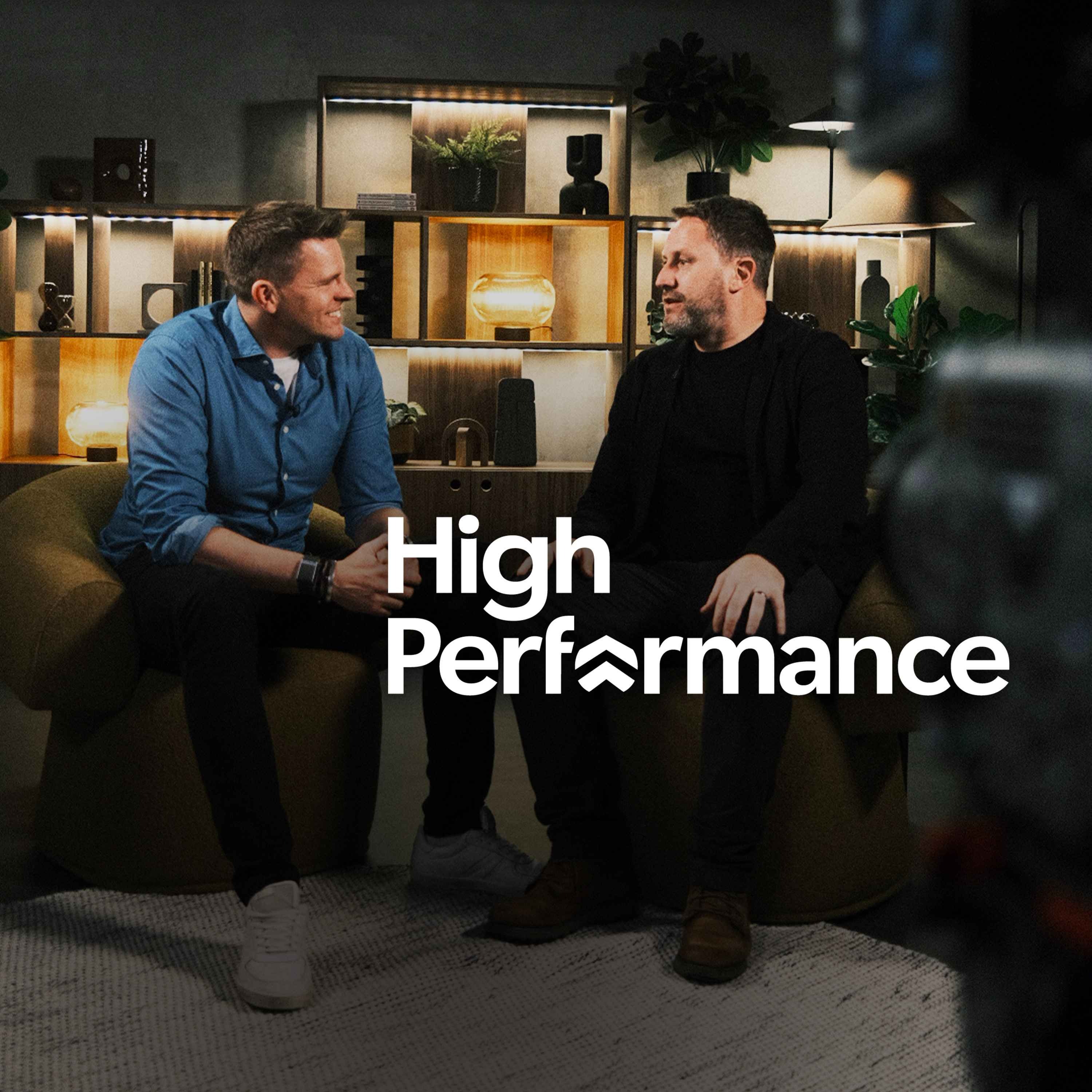
In this episode, the hosts discuss the idea that success often stems not from innate talent but from traits and behaviors anyone can develop. They draw on insights from notable figures such as Kevin Sinfield, Chris Voss, Jamie Peacock, Clive Woodward, and Marcus Wareing, highlighting essential qualities like consistency, communication, discipline, and attitude—traits that contribute to high performance without requiring inherent talent.
Written by AI. May contain mistakes.

Get the gist, explore an idea or ask about something said.
 Claude
On The High Performance Podcast, what are the key points of this episode?
Searching your listeningAutomatic transcript. May contain errors.
0:28Watch it early on the High Performance App. expert right when you need them. Work smarter and faster with Upwork. Go to Upwork.com now and find your freelance expert. That's U-P-W-O-R-K dot com. Post a job for free and get started today. When it comes to what your family eats and drinks, you know your choices matter. You're the expert because you know what fits your life. And getting it right starts with good information. That's why America's beverage companies are sharing more information about our ingredients, at goodtoknowfacts.org. No spin, no judgments, just the facts straight from the experts for more than 140 beverage ingredients.
1:09Visit goodtoknowfacts.org.
1:15This episode is brought to you by Opera Air, the first browser with mindfulness at its core. Now, most of us spend hours every day online, but how often do we pause to take care of ourselves whilst we're doing it. And that's where Opera Air comes in. It's a lightweight, fast, secure browser built not just for productivity, but for your well-being. With Opera Air, mindfulness is built right in. You'll find free breathing exercises, guided meditations, and soundscapes with ambient sounds, lo-fi music, and binaural beats, all designed to help you focus, relax, and even spark creativity while you browse.
1:52Hi there, welcome along to High Performance, one of our regular episodes where myself and Damien Hughes, hi. Hi, Jay. Get the chance to just reflect on some of the lessons and the things that we've learned after over five years and a few hundred episodes of High Performance. And so today we're talking about how you can be the best at everything that requires no talent to help you succeed. And the reason why we think this is important, Damien, is because so many people will never even take the leap because they go, well, I haven't got the talent. Because so often the world tells particularly young people, if you haven't got the talent, you won't be successful.
2:26But we have spoken to so many high achievers who consistently tell us that high performance or high achievement is something that is made, not born. Yeah, TNTs are something that you hear frequently cited by coaches of takes no talent. The idea of tiny noticeable things take no talent. I like that, TNT, tiny noticeable. I wish I could say it, tiny noticeable things take no talent. Yeah, the idea that showing up on time, you know, wherever you can, being respectful, being prepared, all these things, and not things that require a specific skill set. They just require you to be organized or disciplined or consistent.
3:05And that takes you an awful long way. I remember speaking to a guy called Cheeky Bagheerstein, who's just about to retire as the director of football at Manchester City. And before that, he was at Barcelona, and he had this great line that said, your talent will get you into the room. How you behave decides how long we'll keep you there for. So the point he was making is, in the sort of confines of elite football, you have to be good. That's not up for debate. But then it's about the consistency of your behaviours, your habits, and your conduct that's going to decide how long you stay around for.
3:39See, I get the talent thing when it comes to elite sport and other things. But what I think is really interesting is that when you move away from that and you move into the world of, well, basically the world of just life, like pretty much any job apart from being an elite sports person, for example. Like, I love the James Clear approach of every action you take is a vote for the person that you want to be. And I think if we all think about people that we know in our lives who are maybe struggling or they're not very happy or they're not in a place that they want to be. How much of the reason for that is because of one or two huge monumental poor decisions?
4:15Not very many. How many actually when you really look at it, is it the thousands of decisions that you make every single year, most of them you don't even realize you're making, that actually compound over time and take you to a great place? I love that phrase, anything above zero compounds. so the smallest most minuscule improvement if you just do that every single day that compounds to an incredible amount people often talk about 1 % well a 1 % improvement every day is an over 300 % improvement in the course of a year that's a pretty good improvement I like the work of a guy called Vern Gambetta he's like a guru in the world of fitness and sports science and one of the things he talks about is that so many people are looking for the marginal gains and he went, and they forget to be brilliant at the basics.
5:04So it's almost like we're looking for that silver bullet, the idea that, you know, there's some cure out there, there's some miracle cure that sort of gets us to be a high performer. And he's like, but most high performance is about just being brilliant and showing up on time, just doing what you're supposed to do and being excellent at the basics. And I think this is almost like the hidden skill that no one wants to talk about because it's boring. but actually this is exactly what so many of our high performers have told us and i think people might have started listening to this episode high and they'll immediately be going well yeah but you don't have to be a high performer like you don't have to achieve incredible things in life you don't have to find these marginal gains so you can be the greatest at this or the greatest at that and what i would say if your brain has started to ask you that question since you've been listening to damien and i having this conversation is that this isn't about being the world's greatest this isn't about being a billionaire, winning a trophy, lifting a cup, wearing a medal.
6:01It's actually about the things, the tiny things that change our lives for the better. So we had Dr. Tara Swart on high performance not too long ago. I'd love to have her on actually again. She put up a brilliant post I saw recently and I shared it on my LinkedIn that the way your brain operates is transformed after 20 minutes of walking. Now that is not about being the world's greatest at something, but it's about realizing that that tiny world-class basic habit of just going for a walk for 20 minutes at the start of a day or a new lunch break or whatever could be transformational for your life and i think maybe what we should do is run through a few clips that we've heard from guests in their history of high performance not so that people can be the world's greatest but so actually it can edge every single person listening to this episode closer to happiness closer to contentment closer to joy, closer to self-care, closer to this sort of sense of clarity and this feeling that, you know what, not every day is going to be perfect, but at least I'm focusing on these small things for myself, which can make a big difference.
7:07But why don't we start by introducing a clip from the person that first used the term, It Takes No Talent, on the podcast. Rugby league royalty and motivational speaker, Jamie Peacock. I always prided on myself when I got into the first team I thought I'm just going to do all those kind of little 1 % I'm smart enough to recognise what 1 % are pieces of action that don't require talent you just require effort to do that and I thought I can ace these like what, give us some examples just for example so in rugby league if you're defending your own try line you're all tired you've been defending 4-5-6 sets 4-5-6 tackles remember everyone's been involved it's high intensity because you're stopping them from scoring and they're quite close to your trial line.
7:50They kick through, ball goes over, they miss the kick. So we get the ball back, a tap on the 20. Being the first person there to take that carry, that's an effort area for me. So explain to us then how we can take the learnings and the lessons there from Jamie and apply them into the real world. Because let's be honest, I think 99.9 % of people listen to this, us included, are not playing rugby league every weekend. Yeah, well, Jamie talks about how he divides his day up into easy and hard decisions. So I'll give you a really simple example. He said, going out for a run, most people will put headphones in and listen to music or podcasts like us, hopefully, to distract themselves on the run.
8:29But Jamie's point is that that's an easy decision because you're finding some comfort in allowing your mind to be distracted. A hard decision is running without music and having to control your own thoughts and your own patterns. Because he uses a great line. He said, nobody's playing Rocky for me when I'm competing in a game. So dividing your day up into it of, am I going to cook a meal or am I going to get a takeaway? Am I going to get the bus to my destination or am I going to get off a stop early and walk and get that 20 minutes exercise in? Everything is an easy and a hard decision. And he would argue that making the hard decision takes no talent.
9:05It just requires a degree of commitment. And I think there's something else in this idea of making these hard decisions that we often miss. We think making the hard decision, the benefit is the thing that we did. So eating the good healthy meal rather than the takeaway, doing the walk from the bus stop for 20 minutes, that's the reward. But I think it's greater than that because making the hard decision is a daily affirmation and a daily reminder that you're the kind of person that can do things that are hard. Now, not hitting snooze on the alarm clock, taking the stairs rather than the escalator, eating healthy breakfast rather than unhealthy breakfast, they're not the hardest things in the world, but there's still a reminder that you can do them when they're required, that you'd love yourself enough not to make the other decision.
9:50But I think it also is a reminder that when life is difficult, and we all know that life has a habit of just suddenly being more difficult, the fact that you've regularly made these tougher decisions gives you this confidence that it's like, you know what, this is going to be a tough road for a little while now, but I know I can deal with it because I'm used to making decisions that are not simple and not easy. What is it they say? hard decisions, easy life, easy decisions, hard life. It's that kind of a mindset, isn't it? Can I take us to a conversation that I loved that we recorded really like at the very beginning of our high performance journey with the former FBI negotiator, Chris Voss.
10:25This is a really important thing because Chris talks to us about how you can impact other people around you, which again, is such an important skill because Damien and I have noticed over so many years of high performance, that those people that truly excel and truly flow and truly enjoy their lives are the kind of people that can relate to others, get on well with others, make others feel good. Life really is about collaboration. And Chris had some great advice for us about how we can all be better communicators, better collaborators, make other people feel great, which is a simple thing that takes no talent, but is also great for us.
11:00And of course, being a former FBI negotiator, when Chris talks about relationships with people, he refers to them as negotiations areas. There's very few good examples of actually really good negotiation and really good negotiation. You know, it's never marketed as great negotiation. Like I think Oprah Winfrey's might be the best negotiator on earth. Nobody thinks of her as a negotiator. You know, nobody does. Since I started talking about Oprah, I've run across a couple of people sort of behind the scenes in her world. So Oprah has taken some highly volatile people to the woodshed over their misbehavior.
11:41And nobody knows about it because of the way she handles it. She's got a tremendous demeanor. She's soft spoken. She's low key. What we refer to as a late night FM DJ voice. I mean, that's Oprah's default voice. and so i've had some very explicit conversations where basically she said it's my way or the highway to high-profile celebrities that are not used to being spoken to like this to start with how about a visible conversation her interview with lance armstrong by the way i i met lance armstrong on an airplane i consider him a friend i like the guy a lot she said look i'm going to put you on camera.
12:24I'm going to ask you a series of questions, bluntly asking you if you cheated, and you're going to answer yes or no. He knew that going in, and he still went on camera. That's a negotiation. Last impression is a lasting impression. The entertainment industry is infamous for in and a limo, out in a taxi. With Oprah, you're in and a limo, out in a limo. her overriding theme that they either express throughout her company is no matter what happens from beginning to end everybody we deal with has to feel respected and well treated and no matter what the argument is the last thing that Oprah said in those instances that I told you about she's always finished by saying no matter what you decide you have to understand that I will always love you and I will always support you.
13:21I love that lesson there about making people feel like they're leaving in a limo. And you remember when we were joined by Shane Parrish, the creator of the Final Street blog? Yep. And he spoke to us brilliantly on high performance about positioning. I think this is a really good example of positioning because what happens often is, let's say people are at work and they go to their boss and they want a pay rise or they want a promotion or they want something to happen and it doesn't come off. They think, oh, why doesn't my boss like me? Why haven't I got that opportunity? What's going on? And they think about that specific moment of, I didn't get the job because I didn't do well enough in the job interview.
13:53And what Shane would talk about is, well, how did you position yourself? Like what happened days, weeks, months earlier for you to get yourself into the right position? So when your kid comes home and doesn't do very well in a school test, it isn't about the fact the test didn't go very well. How were they positioning themselves for that test for the last few weeks? And this lesson from Chris about Oprah making people feel like they're leaving in a limo is a brilliant example of positioning. You know, when Oprah then wants to get someone on her show, or she wants to do a deal with a network, or she wants to create a new brand or a new product, or she wants to get people at home to buy the thing that she's created.
14:29Why do they? Why do these things happen for her? Because she makes everyone feel like they're leaving in a limo. It's similar to the advice we had about be the light in the room from Will.I.Am. This idea of being the light, being the radiator, lighting up a room, I think it leaves us in a position where really good things start happening for us. And often we don't even understand. Why do good things happen? Why do people keep saying yes to me? Well, it's because of the things that we've heard on this show, how you leave people feeling. Well, as you say in it, Jay, I've got light bulbs pinging in my head.
15:01I've interviewed that we did with Will Godera from the world's number one restaurant. at 11 Madison Avenue, that how do you leave people at the end of their visit to your restaurant? You want them to be seen, heard, and loved. What did Gary Barlow tell us when he designs a concert that sells out to millions? We'd take that, you know. You start big, take them to the emotional core, and then you end with everybody dancing to your greatest hits. You can see this pattern so often. It's about understanding really clearly the things that you want people to feel at the end of it. You know, like Chris said there, Oprah says, I want everyone to feel whatever you've done, whatever you've spoken about on our show, you walk away from here feeling you've been respected, cared for and loved.
15:43That doesn't take any talent to be able to design systems in your life to allow people to feel that impact. Great. Another clip. Let's go to the manicured lawns of Henley. A conversation we had with Sir Clive Woodward. In his back garden. During COVID, because we couldn't go in his house. Clive talks about an idea that allowed him and his England rugby team when they implemented it to achieve the highest performance of winning the 2003 World Cup. I am neurotic about time. You know, I'm never late for anybody, ever. Unless there's something massively happened out there, I can't be on time. But I'm never late.
16:22I think time says more about an individual or teams of people and probably anything I can think about. So I've had this big conversation with a player, so I set the whole scene. And I said, you know, I can see Johnson looking at me, so where's this going? in i said well i'm gonna leave the room now i want you to discuss time because i don't want to stand it for the next eight years going guys don't be late i want to just put it as absolute part of our culture so they kind of got it this is why i think johnson was a genius he kind of got this so they had a big chat about it he came back to me in a bit of paper said you know we we get what you're saying so we we're going to say time is is 10 minutes early so if you call a meeting to start at nine o 'clock tomorrow morning we'll be in the room at 8 50 and the key thing about this team shit rule jake you can only become a team shit rule if you get a hundred percent agreement so it's not a case of 99 or nine out of ten if you get a hundred percent agreement from the people in the room they then present it to you the leader you can still go yes or no if i don't like what i come back with i'm not giving away any authority here i actually don't believe in democracy too much i'm in charge of this team but what i do want is their thoughts on this i want them to all agree so that he came back to me said lombardi time sorry time 10 minutes early and I then read it, that's it.
17:29And then we think of a name. We call it Lombardi time after Vince Lombardi, a famous American football coach. You meet any, and you'll meet these players, just meet any England rugby players who go Lombardi time and they'll go 10 minutes early. So I think this is spoken about so often. We don't have to talk about it for too long. But for me, timekeeping is an expression of your respect for other people as well. So if life is about, as we've already said, personal relationships and communication and empathy and understanding, you kill all of that if you leave people waiting for you for 20 minutes and you just sort of rock up thinking that your time is more precious than theirs, therefore they can wait for you rather than you waiting for them.
18:04And it's also, you know, I often think if someone's late, can I trust them with other stuff? If I can't trust you to rock up at 11am when I ask you to be there for 11, I can't trust you with bigger things than turning up on time. Therefore, this isn't going to work. It goes back to your earlier point that Shane Parrish spoke about positioning, that why have you left it late? Why have you not planned for delays or other mitigating factors? Because maybe it's not a priority for you, which tells me something about your value set. There's so many different things that you can explore from this. So again, it's an easy lesson that anyone can understand the power of timekeeping.
18:41And of course, if you listen back to all the episodes that we've recorded, so often our high performers, when we ask them for their three non-negotiables, the first thing they suddenly go, timekeeping. Like, it leaves an impression on people. I think it's really important. And we've already said that, you know, this is about simple things that take no talent. Being on time takes no talent. Being on time leaves a huge impression. So if you're listening to this now and you're thinking, man, you're basically talking to me, make that your 1%. Don't think about, from this conversation, 15 things you want to improve in your life because it might be a bit too much.
19:12Just decide that from today, your timekeeping is going to be the thing that changes and it's going to make, I promise you, James Clear spoke about ripple effect habits, where you, you know, the ripple effect when you throw a stone in a pond and the ripples go on. Starting to be on time from today will impact so many other areas of your life. So it's one change that will lead to 100 changes. Brilliant. Is there another clip? Go on. Yeah, can I share Marcus Waring? It's a short one, but it's a good one. Here he is. Don't give up. Work hard. Be a good person.
19:47And look after your money. you know look after yourself you know look after what you're doing if you're going to work that hard don't throw it all away don't be going down the pub and bevying it up or getting you know all the things he used to say don't be going for going out and buying everyone around a drink see the wages that you've worked so hard you see if you want to go out have a drink and then get out go on don't waste your time with with people who love beer he always used to say that don't don't be going out socializing and and wasting time with with with nobodies surround yourself with shite you'll become shite is one of the things he'd say to you and that you know he's right and i and i and i think he's i love that about him he's you know he's he's very direct and very coarse but i think it's who i am it's what's inside me it's what's under my skin there he is the award-winning celebrated chef marcus waring explained to us that the company you keep has a huge impact on your life and you can talk from a from a research perspective because there's been a lot of research done into the idea of who you hang around with changes the way that you think the way you operate the way you live and the science backs this stuff up doesn't it the world's longest study on heart disease is called the framenghouse health study that was done in 1949 where it started in a small town and it basically validates that idea that you'll hear lots of motivational speakers say you are the sum of the five people you hang around with.
21:10The Framingham study gives you pretty much well-researched evidence that says that's true. Hang around with people that are overweight, your likelihood of gaining weight increases. Hang around with people that drink more than the national average, your likelihood of doing the same goes up as well. So lots of social behaviours are often normalised by the group that we spend our time with. So Marcus's point there of being really deliberate and intentional about who am I spending time with? If I want to get better at a certain skill set, am I hanging around with people that do it? If I want to run more, am I hanging around with people that go out running?
21:43If I want to read more, do I hang around with people that love books? Whatever behavior you want, start to curate and choose the people in your life that do that habit and it then normalizes it and increases your own likelihood. I think it's brilliant. The truth is, as we all get older and life gets busy, there are only so many seats on the bus, right? So you do have to think, who do I hang around with and I feel fucking brilliant. Equally, who do I hang around with? And I can't really explain it, but I just feel meh after I've been with them. You know, it's not always easy, but you need to limit the amount of time with those people.
22:16And some of them might be family members or longstanding friends. And so there's a bit of work to do there. You can't just cut them out of your life because that's causing more issues. But you do have to just be really intentional, as you say, about where you spend time with them, when you spend time with them and how you spend time with them. But if people are listening to this thinking, what's the single biggest thing I can do to change the people around me. I sometimes see you, there's a great thing you put up on your Instagram, isn't it? You can't change the people around you, but you can change the people around you.
22:44And the way that you do that is with optimism. You know, Bear Grylls said on High Performance, he's seen resilient people outperform talented people by a thousand to one. How do we be more resilient? Will we be more optimistic? Because resilience is just keeping going. It's coming back for more. It's dealing with the gut punches. Being an optimistic person is the thing that keeps you coming back for more. so if after listening to this you think right I'm just going to prioritize optimism I'm going to believe that great things are going to happen one of the best ways to do it right is you know the notes app on your phone go in the notes app and just create a note called amazing things keep on happening to me and all you do is every day you put one thing in there that's been a good thing and it doesn't have to be a huge thing but it just needs to be something like I had a great lunch with my friends or we had dinner with no devices or I spoke to someone I've not spoken to for years or bigger things but when you put every day a note into your phone under the title brilliant things keep on happening to me it creates this optimistic mindset and that then leads to more resilience and that then means that pessimists and negative people and naysayers and critics are threatened by your behavior and slowly melt away and suddenly before you know it you have changed the people around you i love that that reminds me of when we spoke to mel robbins and she told us a story about where she challenged her followers that sort of read the books and listen to her podcast to start seeing heart shapes wherever they go.
24:10And then to send in pictures of it. And what she described to us is the amount, the volume of people that were spotting it. Maybe it was in the clouds or it might be a leaf or it might be sort of the foam on top of your cappuccino. But they would see this heart shape and it was simply the idea of conditioning yourself to look for something that lifted you. So I love the idea of making that note on your phone to start finding amazing moments in your day, however big or small they are, and just capturing them. Right. Final clip. What would you go with? We started with the Rugby League icon. Let's finish with another one.
24:45Kevin Sinfield. Kevin spoke to us how his whole career has basically been characterised by a lesson that he learnt at 10 years of age, where talent wasn't the prerequisite of being regarded as a good player. there was something else that earmarks him out for the greatness that he's eventually achieved. I remember looking at my team thinking, I'm going to struggle today. I'm going to struggle to stand out and get in this side unless I can get the best out of these around me. So I spent the next 45 minutes of this trial encouraging, pushing, driving, motivating every single one of these players in my team.
25:22And we smashed everybody on this trial. I get picked and I get made captain. And I'm sure I got made captain because of how I spoke to these kids at 10-year-old right back in 1991. From then on, every team I played in, at some stage, I got made captain of. What a way to end. I mean, what a clip. What a conversation. Well, again, you know, when we hear that phrase, control the controllables, there's only a few things we do control. One of them is how we think. One of them is how we behave. but another one is just how we speak, what comes out of our mouth. That doesn't take any talent to be able to find the good things in people, to encourage people, the quiet word of motivation.
26:08Any of us can do that. And what Kevin said is that just recognizing that at the age of 10, earmarked him out as being somebody that people wanted to be in the company of. And then when you want to be in your company, people want to do things for you. And then when they want to do things for you, that's where, cumulatively, you can achieve high performance with others as well. I think it's great. And I think it's a real antidote to the modern world we live in where people just want to tell you about their own successes, their own achievements, and that they have the ability to make things amazing.
26:38You know, how often do you see people on social media calling out the team around them? Very rarely. And I love it when I see someone like Eddie Howe at the back of every photo that Newcastle take because it's the team who are in front of him. You know, what is it they say? that success has many fathers, failures and orphan. Nobody wants to be the person to go, yeah, that was me when something failed. Everybody wants to say, it was me when things are a success. But the truth is, you can't do this stuff alone. And that is the perfect, perfect way to end this conversation. And it plays nice into this, you know.
27:12I wouldn't be sitting here five years and 300 episodes down on high performance if I didn't have you by my side. Likewise, mate. It's great, isn't it? It's about lifting each other up. There you go. That takes no talent. Lovely. basically what we're saying is guys we've got no talent so thanks that's the subtext yeah so thanks for listening for the last five years don't forget if you want to hear in full any of those episodes that we've just discussed there you can do so in the show notes you can find them all thank you so much for listening for coming back for more from High Performance this show continues to grow continues to evolve more people listening than ever before and that's really down to you so thank you very much and myself and Damien we'll see you soon see you soon thank you
28:19The End Right before it ends. With McValue at McDonald's, get any size pumpkin spice iced coffee for just 99 cents until 11 a.m. And try our pumpkin and cream pie. They're spiced and priced, so very nice. Price and participation may vary. Cannot be combined with any other offer. At Capella University, learning online doesn't mean learning alone. You'll get support from people who care about your success. like your enrollment specialist who gets to know you and the goals you'd like to achieve. You'll also get a designated academic coach who's with you throughout your entire program. Plus, career coaches are available to help you navigate your professional goals.
29:06A different future is closer than you think with Capella University. Learn more at capella.edu.
Success doesn’t always come from talent, it often starts with traits anyone can develop.
In this episode, Jake and Damian explore the underrated qualities that can set you apart, no matter your background. Drawing on insights from Kevin Sinfield, Chris Voss, Jamie Peacock, Clive Woodward and Marcus Wareing, they highlight the power of consistency, communication, discipline, and attitude.
From showing up every day to mastering your mindset, these are the simple, game-changing habits that require zero talent, but make all the difference.
Listen to the full episodes of clips featured in this episode:
Kevin Sinfield https://pod.fo/e/b899a
Chris Voss https://pod.fo/e/d5dfb
Jamie Peacock https://pod.fo/e/14af62
Clive Woodward https://pod.fo/e/a7865
Marcus Wareing https://pod.fo/e/132116
Hosted on Acast. See acast.com/privacy for more information.


