
 Ask ChatGPT


 The High Performance Podcast
24 Feb 2025 · 1h 15m
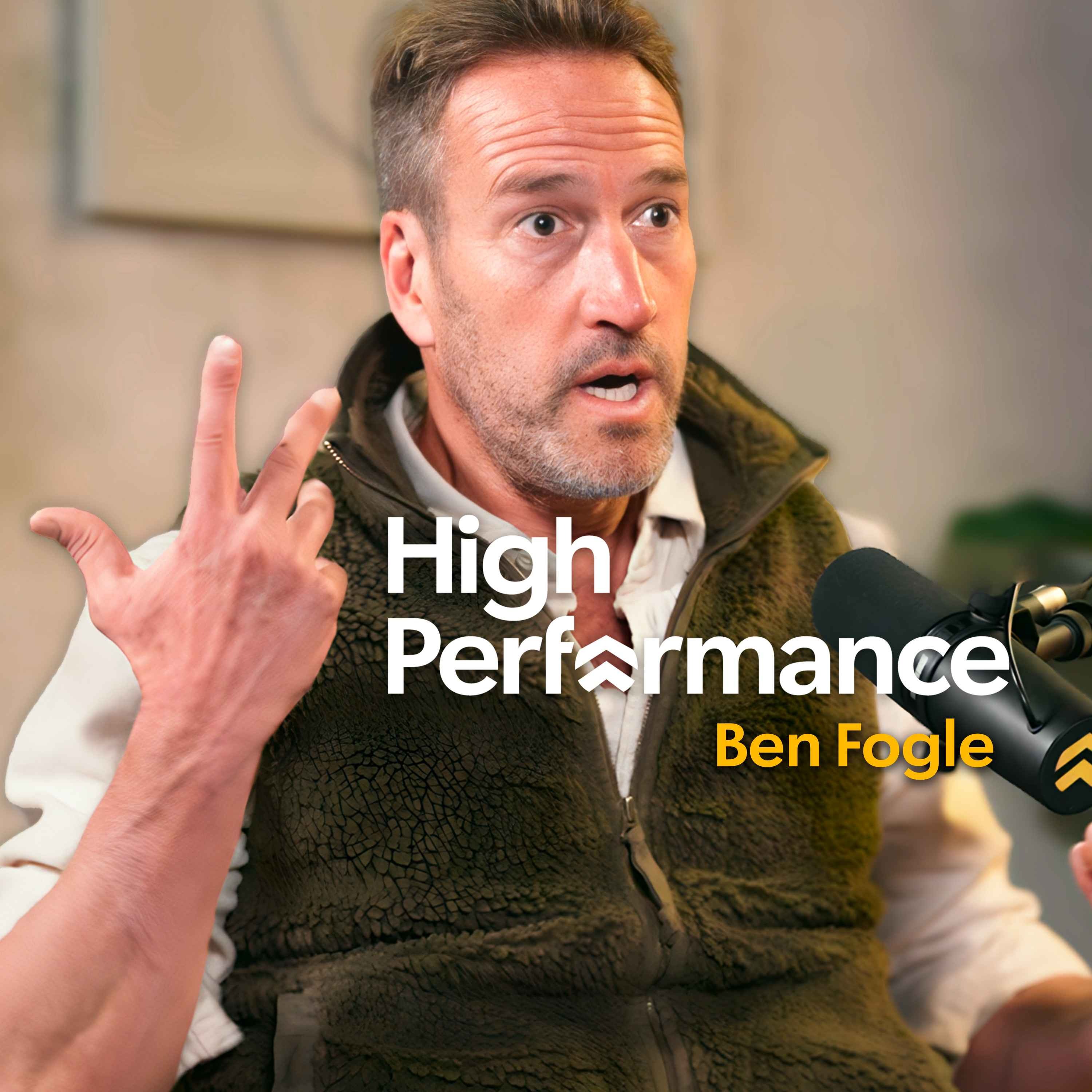
In this episode, hosts Jake Humphrey and Damian Hughes speak with adventurer, TV presenter, and author Ben Fogle about his journey through mental health challenges, insights from his global travels, and the importance of community and self-reflection.
Written by AI. May contain mistakes.

Get the gist, explore an idea or ask about something said.
 Claude
On The High Performance Podcast, what are the key points of this episode?
Searching your listeningAutomatic transcript. May contain errors.
0:00Watch it early on the High Performance App. Available now, Roman Kemp, the broadcaster, opens up a powerful conversation on success and mental health. I get offered an amazing opportunity to go to Papua New Guinea and then an amazing opportunity to go to China and then out of Mongolia. And I find it very difficult to say no to those things. I'd never knowingly had a panic attack. I was doing too much. I was expecting too much of myself. And I just burst into tears. The power of the beauty of the community, of the people, it surged through me. I can still feel that to this day. That is the voice of Ben Fogel, award-winning broadcaster, adventurer and best-selling author, who today sits down with me, Jake Humphrey, and our expert, Damien Hughes.
0:48Now, Ben is a man who has spent his life battling physical challenges from climbing Everest to rowing the Atlantic. But we begin this episode by discussing a different type of challenge, Damien. Ben describes to us how in 2023 a storm blew into his life and he describes the after effects of that as well as his journey back to happiness, the steps that he took that any of us can learn. Ben also pulls no punches when critiquing the education system, sharing his thoughts on social media trolls and what he's learned from his travels that might just change your life. It's time to welcome Ben Fogel to High Performance.
1:27Ben, welcome to High Performance. Thank you. I'm so pleased you could join us. I wanted to start with a quote, which is that vulnerability is the birthplace of joy, love, and belonging. And the more conversations we have on high performance, the more we lean into the important power of vulnerability. So with that in mind, are you happy to talk to us about what happened to you in 2023? Yeah. I mean, I have always considered myself pretty strong of mind, strong of character. I've always had a strong work ethic. I've always, yeah, just worked quite hard. And I think what happened in 2023 was that I overdid it.
2:11I didn't listen to some of the little warning signs that I think we all have. The body is an amazing thing. The brain is an amazing thing. And I don't think I listened entirely to what I was doing to myself. I was being overstimulated. I was absorbing too much. I was doing too much. I was expecting too much of myself. And I eventually popped burst. So listen, there's lots of ways you could describe it. I suppose it was a form of breakdown. What is a breakdown? I still don't really know. But it was definitely a chaotic period that I have completely got over. And this is, I think, one of the most important things.
2:56I think there's this taboo when it comes to mental health, because people somehow think if you have admitted to a fragility or a vulnerability, you must somehow be a very fragile egg and that people must go, are you okay? They talk in very quiet voices and pat you on the back. Are you sure you're okay? It's like, if you break your arm, you know, it's in a cast and in a sling maybe. And then maybe, you know, a couple of months later, you might say to that person, oh, you've got full mobility back again. Oh, well done. And then that's it. Yeah. Gone. And in some ways, that's kind of how I like to treat mental health.
3:33So deeply respectful of it. And I think the blip, the storm, whatever you want to call it, you know, I think everyone will define things in different ways, was something that I don't want to go back to. And I listened to it. But I have kind of, I've got through that period. And I think it has made me stronger and happier. And I think if people realize that you can show that vulnerability and share that vulnerability and come out of the other side, and it didn't even take that long, you know, it was, and I think it's still a work in progress, that that is how we can really help those people who are struggling.
4:22That's why results-driven companies are using Upwork to keep work moving. Go to Upwork.com today and start hiring proven freelance talent fast. No bulky overhead. No rigid long-term contracts. Just the right expert, right when you need them. Work smarter and faster with Upwork. Go to Upwork.com now and find your freelance expert. That's U-P-W-O-R-K dot com. Post a job for free and get started today. I'm no tech genius, but I knew if I wanted my business to crush it, I needed a website now. Thankfully, Bluehost made it easy. I customized, optimized, and monetized everything exactly how I wanted with AI.
5:02In minutes, my site was up. I couldn't believe it. The search engine tools even helped me get more site visitors. Whatever your passion project is, you can set it up with Bluehost. With their 30-day money-back guarantee, what have you got to lose? Head to Bluehost.com to start now. This episode is brought to you by Opera Air, the first browser with mindfulness at its core. Now, most of us spend hours every day online, but how often do we pause to take care of ourselves whilst we're doing it? And that's where Opera Air comes in. It's a lightweight, fast, secure browser built not just for productivity, but for your well-being.
5:38With Opera Air, mindfulness is built right in. You'll find free breathing exercises, guided meditations, and soundscapes with ambient sounds, lo-fi music, and binaural beats, all designed to help you focus, relax, and even spark creativity while you browse.
5:57Can I ask you about the language? Because you've used a few phrases there. You spoke about a breakdown, a blip, a storm. And I think sometimes that ambiguity confuses people. Would you mind telling us, what did it look like? The reason I don't think I have a specific word to use for it is that panic attacks, all those different anxiety, all these terms that are part of our everyday lexicon that everyone uses, I don't think I fully understood what any of those actually looked like or felt like. I'd never knowingly had a panic attack. Now, when I look back on certain little warning signs, I can understand that that kind of nausea and palpitation was not normal, if that makes sense.
6:41So when I use these kind of slightly ambiguous words, I don't even know if there is a clinical definition for what happened to me, because mine was fleeting. And it was losing control of my emotions. I think that's one way. So it was not what I'd call depression, but it was definitely sort of feeling out of control of how I reacted to things. And I think it was that lack of control that eventually led to a point where I just had to kind of press the pause button. So the pause button was like, okay, I just need to stop doing things. So simple measures I took, I deleted social media apps from all my devices, like everyone doom scrolling, you know, I think there's an assumption because of what I do.
7:30I'm constantly out in the wilderness, I'm constantly, you know, extolling the virtues of living in an analog world of switching off that I am somehow completely immune to that. But, you know, I spend an hour coming into London on the train, scrolling and looking and looking at the news. I learn a lot about myself through observation. And we can observe other people in cities, or in my case, you can observe flora and fauna in the natural world. So for me, I observe how animals behave, how different landscapes affect us. And if you think about it, if we go right back to kind of our very basics. Shelter, food, and safety are kind of the basics that we need.
8:21So when I am hunkering down in a jungle, the most important thing is that I'm not having rain on me, I'm trying to keep the leeches off me. I've somehow got a raised hammock above the canopy floor above the mud, and I've got something to eat. That's all I need. There's no other information coming in. There's no endless updates of homepages of newspapers. There's not a minute by minute recap of what's happening in Gaza or in Ukraine. There isn't endless timelines of other people. There isn't worries about finances and mortgage repayments. There isn't worries about popularity. And I think these are all things that we who are plugged into the system that we have created are overstimulating ourselves.
9:10So I hope that that's kind of explained to you in a weird roundabout way, because I'm quite self-analytical. I got through my blip. It's kind of, if you said, how would I like to describe it? I would just call it a blip. I mean, a blip is quick. And mine was quite quick. I don't want to, you know, it's, well, depends what you call quick. I think the whole thing probably lasted in its kind of storm-like period a couple of weeks. And then I'd say it took quite a while to kind of to clear that up a couple of months probably. What was the first thing you noticed, Ben, where you're like, I've had bits of anxiety in the past or I've had worries in the past, but this is new.
9:52This is something different. Should I tell you the big warning sign was actually when I went off. I spend a lot of time traveling and it's always been hard, especially as I've become a father. Contrary to popular belief, I really do love my family. You know, I don't go away to be away from them. I go away for work and it happens to be work that I love. And that's quite a dangerous position to find yourself in. It's a dream position, doing the job you love, but there is a risk that then you can almost become what we describe a workaholic, you know because I can't say no suddenly you know I get offered an amazing opportunity to go to Papua New Guinea and then an amazing opportunity to go to China and then to outer Mongolia and I find it very difficult to say no to to those things and I was doing a trip actually a series I did with my great friend Duane Fields in Antarctica and we were we were going to spend a month, recreating the journeys of Scott and Shackleton, wearing original clothes, wearing all those wool fibers.
10:55And on the lead up to that, it was over the Christmas period, I left on Boxing Day. And I was just agitated, a bit like if you have a dog and you just see the dog kind of walking in circles, you can tell when something is up. And I just, I felt restless and sick. And I couldn't, I didn't want to go. And I couldn't really put my finger on why I was feeling that way. Now, in hindsight, I realize it was probably what is sometimes described as a panic attack. I was stuck. You know, there were people relying on me. There were film crews already out there. People were being paid. You know, people were relying on the work opportunities.
11:33Me going out there, I'd made a commitment. I don't like going back on those. So I was kind of, I felt I was tied to this. I couldn't say no. I think I probably should have not done it, if I'm to be honest. I did it. And it's amazing how I got over that. I loved it. It was an amazing, amazing experience. And actually, I then came back and I was almost over-related. And I think this is one of the things that I can now analyze, that my emotions were going, seesawing up and down. And there was almost too much elation. It was almost like I was high. I felt so good after it and really loved it. And I think it was, that was the point of, of the sort of yo-yoing emotions that in hindsight, I realized were my body just saying, do you know what, you just need to slow down, stop being too hard on yourself.
12:24And, you know, again, being analytical, we suffered a family bereavement a number of years ago, my wife and I, we lost a son stillborn. And it's amazing that how you deal with a loss like that. And for me, my wife, Marina, was very raw with her emotions. Mine were much more kind of measured. And when I say measured, it doesn't mean I felt it any less, but I probably, I kept them within. And one of the big kind of things that happened to me was that I became obsessed about control because I'd lost control there. I was actually in Canada when it happened. And I had to take a flight to get back. I didn't know if my wife was going to survive.
13:07It was like one of the periods in my life. I've had a few, but it was one of the periods in my life when I had lost all control. And what my brain, this amazing thing did was it made me absolutely obsessed about control. And I wanted to control everything. I wanted to control how happy my children were. I couldn't bear it if they weren't happy. But as a parent, you'll know you can't, you know, there's only so many things. You can give hugs and kisses, but if a child is sad, it's quite hard. You can't just magic happiness. And I think when you try to control things when you're in the public eye and in modern life, that's really, really difficult.
13:49And that for me was also one of the problems. It was like a clash, a perfect storm of circumstances that all culminated together. And it's quite a few years ago that you lost Willem. Why do you think it took until now for everything to kind of come spilling out of you? Like I say, I think it was a perfect storm. I think it was a number of different scenarios that kind of came together. I was overworking, there's no doubt about that. You've always done that though. I've got a good strong worker, I think. My father is 81 and he still works five days a week. He's a practicing vet. He works just around the corner from where we are now.
14:32He's still in the surgery, lifting dogs onto the veterinary table five days a week. So I've grown up surrounded by people with strong work ethics. And I enjoy my work. And I have always worked pretty hard, maybe too hard. It's that classic trying to find the balance, isn't it? I think that's what we're all trying to do. But you also said that quandary of you actually love your work as well as having that strong work ethic. So what have you done differently since 2003 to maintain a better balance? I think about need versus want. So do I need to do that job or do I want to do that job? We can take that to consumerism.
15:16You know, when you go into a shop, do you need that jacket or do you want that jacket? And I think in some ways, I've kind of tried to strip back the work to not just having a default yes to everything. I am a yes man. It's got me into some fantastic encounters and journeys over the years. But actually sometimes saying yes to too much can, you know, go the other way. So first of all, I have been really careful at turning quite a lot of things down. I think I've become too obsessed with just saying yes. as a default. And also just having time to myself. Running is a massive part of my life. And I never really understood it that I don't like running with people.
16:00If you said, oh, I was going to go for a run, you know, after this, do you want to join me? I'd be like, nope. I always like running on my own. And if you then said to me, so how fast do you run? How far do you run? I hate that question because I don't run for speed. I don't run for fitness. I don't run for sociability, I run for my brain. And this is what I've kind of realized. It's almost like the analogy I sometimes use is it's almost like there's a dictionary of words in there. And they sometimes because I work quite for my brain works quite fast. I find it difficult to get all the words out.
16:37And for me running is it's somehow everything gets shaken into the right basket. It's like a washing line with all the pages of the dictionary out in the sunshine and the wind and all the pages are blowing and drying out and suddenly I can read everything. And I come back from an hour's run. I don't know. I might be the fastest runner in the world for all I know because I'm always on my own. I don't even run with a watch, but I know exactly what an hour feels like. And what I love is I will go off in, I was in Japan last week, I was in Thailand the week before, I go off without a map, and I just run and I get lost.
17:20I always look back so that I can actually find my way back to where I came from. But for me, that has always been important, and it's become even more important in recent years. Obviously, an extra kind of Brucey bonus is that it keeps me in good shape as well. But for me, running has been really important. Just being outside, walking the dogs. I never take my phone with me. So there's no risk of distractions, someone calling, checking up those emails, doom scrolling. And it's amazing the positive impact that it's had on me. And I really try, even now, when I'm on the tube or the train, I try to not look at my phone.
18:03I try to look at other people. everyone thinks I'm mad kind of eyes kind of gazing across but I think one of the general problems society is experiencing now when with the elevated mental health problems is that people are failing to communicate in in one-on-one you know we're here together now in a room together if you had suggested doing this over zoom I wouldn't have wanted to do that I think we are missing human contact and eye contact I think it's very important before you can get to the point where you find out the things that help you you need to be at the point where you are where you ask for help basically would you mind sharing with us the moment where you realized help was required i don't think there was a single moment if i'm to be honest i think it was it was lots of tiny little alarm bells and i think people my immediate loved ones could recognize that I wasn't myself, that I was becoming a little bit more introverted.
19:04I was kind of becoming a little bit less social. And I think it was just a moment. It wasn't a single moment. It was a period of moments where I just realized I needed to do something and to ask someone who perhaps was more knowledgeable in this field than I was. And I think, you know, especially I think as a man, sometimes you feel admitting to that vulnerability is an admission of sort of defeat. It's a sign of weakness. That's the presumption. I beg to differ. I actually think that by sharing those struggles that we all have, I think is actually a sign of strength that you can admit to the vulnerabilities that we all have.
19:55What did you do? I actually got proper kind of medical help. I saw a psychiatrist to kind of explain what I was feeling, how I was struggling a little bit. And again, it's very important because I think some people can start over-imagining what I'm trying to say here. Mine was never as severe as many other people. Mine, in the grand scheme of things, was controllable. but I definitely needed someone to kind of hold my hand and reassure me that I was going to be able to work my way through it. And was this the first time in your life you'd sought therapy? Which is really interesting when you think of the incredible trauma of losing your son.
20:41For a lot of people, that would have been the moment to go, right, I need some help here. So I wonder whether your opinion on therapy and the power of therapy has maybe changed over time. I've always been very self-analytical. I've had a lot of time, you know, on all those expeditions. I've had a lot of time in here, in my own head. And for those who are wondering what I mean by that, in Antarctica, eight weeks, skiing, 18 hours a day with just a rough to keep the heat in your face area. So no means of communication. So I was there with my friend James and our friend Ed, but you couldn't talk.
21:23There was no way of listening to anything. Batteries wouldn't last. So for 18 hours a day, for week after week, I was in my own head. And that's just one example. That's not even going into Everest or rowing across the Atlantic. I've had a lot of time for self-reflection. So I think I know myself pretty well. And maybe that's one of the reasons why I was able to identify strange behavior pretty swiftly. what I do know is that the brain is a very very powerful organ kind of obvious isn't it you know when you think about the the information it retains what it's able to do but I also know the power of its ability to be mischievous and and and I've seen that and we all experience the different elements of mischievous so so so it might be mischievous in that it's that little voice of doubt in your head, you know, that we all have.
22:19I've had it all my life. I was a pretty prolific failure when I was a child. I failed all my exams. I was never very sporty. You know, I was that kind of school dweeb. And I think when you are that dweeb, you do have that self-doubt. And I think that little gremlin, that little voice in your head can goad you in either way. And for me, it did lead to a lot of self-doubt, which is probably one of the reasons why I have forced myself to confront fears through rowing oceans or crossing deserts or taking on some big physical challenges that I'm not naturally, I don't think I am a natural fit for those things.
23:00You know, there are certain sportsmen and women that you will have met over the years that you look at and you'll see Usain Bolt and you'll go, okay, well, there is, that is a man who was built for speedy running. This, you know, I don't really stand out. I'm pretty average. You know, when if you look at my height, I'm exactly store average when it comes to clothes, height, weight. So there's nothing that sets me apart. But what I discovered was that I think because I have such a good understanding of my brain, I'm very, very good at long periods of boredom. And I'm very good at being in my own company.
23:37I'm very good at solitude. Lots of people are terrified of solitude. I think it's one of the most important things to experience in your life, to be comfortable in your own skin. Some people are absolutely terrified of those moments. But actually, I think it allows you to understand your own brain. And I think that's probably what helped me through that period was that I really knew, I knew my brain pretty well. So I was able to see when it was being mischievous and I was able to see when it was, when something really was a little bit broken there. And this is why I think you having this conversation with us is so important for people, because you are someone who has incredible self-control.
24:15I mean, I can see it now. You know, you're someone who is able to push himself to the limits. You're someone who's able to be comfortable with himself. Yet you're also someone who at some point in their life realized they couldn't solve their own problem. Do you know what, Jake? I've always, ever since I kind of started out, and when I say started out in our business, in the media world, you know, I started out in 1999. So it was 25 years ago. It was on a reality show. And that was when reality shows were reality. So I was my authentic self. You got what you saw. And I think ever since then, I have always been as authentic as I possibly can.
24:56So I've never tried to hide behind a facade. I think, again, my observations are that one of the problems in life today is that too many people are hiding behind a facade that they create on social media, on the various platforms that they may use of what they want people to see. But the reality then comes when they can't keep up that performance, if that's what it is. I think maybe one of the reasons that I'm kind of still doing what I do after 25 years is because I've never tried to be anything else. And I think by doing that, by being really, really honest, you know, sometimes gets me into trouble.
25:38It's sometimes I say things that maybe people are surprised that I'm willing to share, but I've always done it and I will always do it. And I think especially when you've made a career out of achievement, which is kind of what I've done with some of the big challenges, I think it's also important to share people the struggles that you've had because I think we all have failings and we all have vulnerabilities. And I think if you try to pretend you don't, then you're being pretty inauthentic. So as a guy that prides himself on this self-control, how did it feel to let go the first time you met that psychiatrist where you're not now in control what was the effect of that for you it wasn't entirely letting go because i i think i've always i even through that period i had quite a lot of self-reflection i could analyze things that i was doing behaviors that i could see were wrong what i needed was to have someone else say to me that wasn't a close loved one but someone else who I'd never met before to be able to go no that probably isn't completely normal I wouldn't say it was letting go entirely and and that's why I think it's important that I'm very honest that my blip was not as significant and as profound as other people and I'm really respectful of that because when we hit you know that there are other people that really do have life-changing breakdowns where where they are pushed right to the edge and mine never got to that stage.
27:11But I did, you know, I've always believed in seeking help where you need it. So whether that is training for climbing a mountain, I don't just go and do it without actually having experts around me. In the case of Everest, Kenton Kuhl, you know, I worked with for a number of years to teach me how to climb, basically. And the same goes, I think, when you see a psychiatrist, you know, a psychiatrist was something I had only ever seen on Frasier. I think you know it's the stuff of Hollywood films so the idea you know did you lie on a couch and you talk about your most innermost feelings it's not something I've ever needed to do before and is that what happened yeah no I didn't know I just sat in a chair and and just said look I've been acting a little bit strange and and reacting to things in a strange way and I don't think this is normal and she was able to validate that and go no it's not entirely normal and then you know through some talking therapy, I was able to say how I was feeling and then just get someone who has a better understanding to be able to tell me either reaffirm or give me guidance on what I needed to do.
28:24Now, I was really lucky because I could already, it was pretty obvious what I needed to do. And it was just to pull the handbrake on. You know, I was just going too fast. And I think, you know when you look at the number of people who exactly the same thing happens to we are all experiencing just too much yeah again just to add one other thing that i've really really done in terms of my own recovery from my wobble again another word for it now is spending a massive amount of time outside a massive amount i live in i live in the countryside i've got lots of dogs we've got the horses and i am probably outside what let's say of a 12 hour conventional day when i'm home we and the family are outside probably 10 hours of that even in the winter with torches out walking outside getting fresh air being close to trees and to mud on the ground and rain on our faces and i feel that is that is one of the most powerful therapies of all brilliant and what does that do for you i think it connects i think for me i feel a connection and i don't need to listen you'll speak to lots of hollywood people and they'll say you should take off your shoes and socks and walk bare feet so your feet are actually getting the cosmic rays from the ground for me it's It doesn't need to be as hippie as that.
29:52I don't go out hugging trees, but I do forest bathe. And forest bathing is just sitting in the woods. I don't actually take my shirt off and lie down unless it's a very hot day. But I'm very happy just sitting under a tree and just being. Because when you do that, you start observing the noises that you hadn't noticed. You'll see the little creature scurrying across the leaves. you'll notice tiny bits of moss growing on branches. And I think it's just that slowing down. It's like the dial that we're all living at is 100 miles an hour. It's up at volume 10. And we just need to turn that down. And what I've done, mine got artificially turned up to volume 10.
30:36And over since, so since 2023, I've been slowly turning it down, turning it down, turning it down. And I'm now at five. And I think five is a very healthy place to live. I spend a lot of time with people who are living it too. And there's a danger of going the other way where you can actually become quite apathetic and maybe you lose all sorts of creativity and ambition. But then when you're living a simple life like that, you don't need ambition. I think we need ambition to be able to thrive in the urban jungle. That reminds me of that, I think it's a Bertrand Russell quote that says most of our problems in life are due to man's inability to sit in a room quietly by himself.
31:17And you're describing that ability to embrace solitude, whether that's indoor or outdoor. Would you explain how you've learned to do that? Because I think there's many of our listeners and viewers and our audience that are intrigued as to how they can embrace some of the benefits of this. I think humans are divided into two. There are social people that just can't stand being on their own. My wife is never alone. Whenever I come home, the house is filled. And I love it, by the way. The house is filled with her sisters, family, friends. There's always people there. I'm one of those people that loves company, but I'm equally happy completely on my own.
32:00I don't know if I've always been like that. I think I probably learned a lot of those. I took two years out after failing my exams and not getting any places at university. I fled the country. I bought a one-way ticket to Brazil and I spent two years kind of mucking around in South and Central America. I helped out in an orphanage. I worked in a school. I lived with a family for bits of time. So it wasn't completely rudderless. I was kind of doing bits, but there was a lot of time alone, a lot of time alone. And I found it hard at first, but I kind of just, I don't know, I became very comfortable with my own company.
32:43And I found myself just really observing stuff. Because remember, this is, we're now talking about probably 92 to 94. So no smartphones or tablets or Kindles. You know, there was an old, you know, book, and being dyslexic, I was never very good at reading. So there was a lot of time just staring and looking and being. And I learned at that point, a great comfort in my own company. I took a boat, I hitchhiked on a boat down the Amazon. It was about six weeks and I slept in a hammock and I didn't speak any Portuguese. There were a handful of other Portuguese on the boat, but I was six weeks on the boat.
33:24I mean, do you know how dull that is? The Amazon, by the way, when you, I realized once I was on this boat, I had this romantic notion of, you know, literally jungle leaves passing by the boat and huge tarantulas and jungle creatures swinging from the trees. You know, I thought this was going to be Tarzan. The boat obviously goes in the middle of the river, which is like an ocean. So you're basically at sea for six weeks. And I didn't see anything. All we ate was piranha because they just throw nets into the water. And as an 18 year old, who'd hardly left West London or Central London, and I grew up, you know, W1.
34:01Suddenly, here I was, unable to communicate with people. I didn't even have a book with me. So for six weeks, I just sat on that boat. And I think that was a pivotal moment that would teach me very well. Because when I went on to go on Castaway, we were marooned for a whole year on the Isle of Tarancey for that early reality show. That's a long time to... I wasn't alone. There were 36 other people, but there was a lot of time alone. I really learned to cope with boredom there you know there was a lot of boredom and I think then moving forward to rowing across the Atlantic which was probably the next big seminal bit that was a very lonely experience I did it with James Cracknell who's a great friend of mine now it was a very solitary experience because there was only one of us rowing at the time so we were pardon the pun passing ships in the night one would row for two hours then you'd kind of knock on the door it's your turn the other person would get up row for two hours then you'd swap.
34:58So fleetingly, you'd kind of go, hey, you're so sleep deprived, you know, because you do two hours on two hours off 24 hours a day, seven days a week for weeks and weeks and weeks, but we never communicated. So that was 49 days of hardly talking. And I think if I look at the chronology of solitude that I've experienced, I think it was all like building blocks to where I am now, which means that I'm just very comfortable in my own skin. And I think a lot of people could really benefit from an experience like that. And if we look at spirituality, monks go and live, you know, people take a vow of silence and go and live in a monastery alone.
35:39I've spent lots of time on my series with hermits, hermits who were willing to let me invade their lives for a week. So they're probably not purist hermits, otherwise they wouldn't allow me to come along. But I've always been fascinated by the power of solitude and what it can do to us as individuals. Well, it was particularly taken with that line you used of you, you've learned to make a distinction between what I need and what I want. Would you mind explaining in more detail how you then make a decision now using that criteria? Yeah, so if you say to me now, you know, would Do you like to, I don't know, would you like to go kite skiing in Iceland?
36:20Yeah, I'd love to go. But do I want that or do I need that? Now, we need to break that down a little bit more because it's all to do with what else I'm doing. It's to do with my children spending time at home, what other work I'm doing. And I think for me, just what I have started doing, It was almost like I was just filling my life with so many experiences. So for lots of people, running the MDS, the Marathon Day Saab, might be a lifelong dream and a lifelong challenge and something that is the only big thing that they will do in the period of their life. And I've done it. It's a beautiful, hideous, painful experience.
37:08But that is enough to almost give you endless conversations, look back on it. But if I had a list now, and I'm not even going to try to, if you said to me, give me a list of all the big kind of things that you could chat about that you've done just in the last year, that would be a footnote in terms of all the different experiences I've had. And the problem is when you just run from one big experience to the next, you don't have time to digest it. You don't have time to actually enjoy it. So when it comes to need versus want, Okay, so last week I was in rural Japan with a Yorkshire rice farmer.
37:46Spoiler alert for anyone watching New Lives in the Wild. But, you know, I had this amazing experience. I went on the bullet train. I got to experience everything that Japan has, but from a really kind of intense local perspective. Okay, that's enough for my brain. I should be able to like just chat with my mates and my family and my kids about that for quite a long time. So do I need to go to Iceland next week to go kite skiing? No, I really do. I need to let my brain just enjoy this moment. So that's how I'm probably sounding really geeky and really weird with this, but that's how I think about how I'm going to digest the experiences of life.
38:30And the same though can be taken, you know, I think when it comes to consumerism, when it comes to how we live our lives. I think if you take your lifestyle, there is a general human tendency, which is borne out kind of through the animal kingdom as well, of always wanting a little bit more. So you've been quite successful, you're doing quite well, your podcast, you've got X number of listeners, but you'd like a little bit more, wouldn't you? Just a little bit more, because someone else has got a podcast that is doing quite well, creeping up the ranks and you know just behind you and I think human nature is okay we need to go up so you before you know it from that handbrake on you've gone to gear one then to gear two then to gear three and before you know it you're back into exactly the same problem that you were in before that although you have a very beautiful life you've got the house over your head the roof over your head in your house you've got the beautiful family you've got a great job that most people would dream of you still want more and i think it's about being able to recognize that and just look at actually the very basics that we need and you know i i'm very lucky because the series i do new lives in the wild that i've done for the best part of 14 years now i spend about half the year with people who live with the very very basics where their only needs in life are shelter food and security and if they've got that in the shape of a cabin in the woods or a little mud hut in the Sahara desert then their needs versus their wants are very very different because all they need is to make sure that those crops are not going to fail all they need is to make sure that the rain is not going to rip the roof off the head a huge vulnerability by the way but they have that absolute simplicity they're not worried about podcast ratings and they're not worried about the income and the house that you've got or the car that you drive or the clothes that you wear but we live in a society where how we sound how successful we are the metrics of success have become completely distorted and and i conflate all of this into my own little wobble by the way that just like everyone else i was chasing all those things you know i know i extol of i i my whole life has been about extolling the simplicity.
40:53Don't be too hard on yourself. Don't try to keep up with the others. Don't be envious of others. Don't be jealous of others. But it's, you know, we're all human. And I think, you know, as the owner of a Labrador, a Labrador will always be hungry. It will always want a little bit more food. And in some ways, we're all Labradors, however much we try to abstain from that. If you're still overpaying for wireless, it's time to say yes to saying no. At Mint Mobile, their favourite word is no. No contracts, no monthly bills, no overages, no hidden fees, no BS. I made the switch because I was tired of those ridiculous bills and sneaky charges from my old provider.
41:35With Mint, I'm paying$15 a month and getting the same high-speed data, unlimited talk and text and coverage on the nation's largest 5G network. Look, honestly, the quality is just as good, if not better than what I had before. And the best part, you don't need a new phone. You can keep your current one, bring your number and all your contacts. I use Mint Mobile and you should too. Ready to say yes to saying no? Make the switch at mintmobile.com slash HPP. That's mintmobile.com slash HPP. Upfront payment of$45 required, equivalent to$15 a month. Limited time new customer offer for first three months only.
42:09Speeds may slow up a 35 gig on unlimited plan. Taxes and fees extra. or see Mint Mobile for details. The market's uncertain. Revenue's tied and hiring on hold. That's why results-driven companies are using Upwork to keep work moving. Go to Upwork.com today and start hiring proven freelance talent fast. No bulky overhead. No rigid long-term contracts. Just the right expert right when you need them. Work smarter and faster with Upwork. Go to Upwork.com now and find your freelance expert. That's U-P-W-O-R-K.com. Post a job for free and get started today.
43:13ThePayPost.com to start now.
43:20I suppose the challenge you've got is you know all these things, but you're in the public eye. So the only way you can keep telling these stories is to have followers on social media to be popular, for the commissioners of your TV shows to go, everyone loves Ben. We know that the companies that you work for will be asking people, what do you think of Ben Fogel? Please tick a box if you like or dislike him. That happens, and that's not a very normal thing for a human being to have to cope with. You say it's not very normal, but let's be honest, this whole metrics is now, this has gone beyond just celebrities, those who aren't watching NVIDIA, now I did the inverted commas.
43:56I think those who are in the public eye obviously have an added, I don't want to use the word burden. You don't need to get your violins out. I'm so lucky. I've had a great career. I've earned handsomely. I'm incredibly privileged. but that comes at various costs of one form or another and I'm not going to get into the details of people needing to feel sorry because people don't need to feel sorry for me but there are those metrics exactly that there's going to be popularity things people are you know the metrics of everything I do every show I do every podcast I do are going to be measured and And your next job is going to relate to that.
44:38If you're a writer, which I am, the number of book sales you have. So we're back to metrics. And metrics for me were extremely debilitating as a child. I don't know if that word debilitating is right. They were very damaging for me. Because we as a society, we instill metrics into children aged 11 now through exams. so you as an 11 year old i think it's even younger now as an 11 let's take this as an as an 11 year old you'll sit down with a piece of paper you may be dyslexic you may have adhd irrelevant to those you might get a bit of extra time but you all have the same piece of paper and you will answer it in your own way now our brains all work in totally different ways as as we've explored already um today and it means that you will then complete that paper and then you will be given a letter.
45:31Okay, I think it's a number now, but I'm going to go back into my day when it was a letter. And you are either going to get an A, B, C, D, or E, F, or in my case, an N is what I got in some of my exams. How have we got to this point where we are defining an 11-year-old with a single grade that brands them for life? Because I still think about those failures, because that was all that was the only metric with which people could understand what kind of person I was at that point in life. So I think metrics have always been something I've absolutely hated. I'm completely against exams. I don't think it is a fair system of establishing.
46:17You might be brilliant at remembering information. You might be terrible at remembering information. If you think about it, that's all an exam is. It's an ability to cram that information in. Now, I'm really self-analytical. I'm hopelessly dyslexic. I'll get my B's and P's muddled up, but I've written 17 books, a million words. I've sold hundreds of thousands of books, and I'm still dyslexic. And that didn't put my publisher off because there is something called a sub-editor who's able to fix all my broken words. But in an exam, those broken words, And hopefully maybe that is, you know, things are changing a little bit.
46:53But those broken words and misspelling and bad grammar and inability to remember things meant that I failed all my exams. So when it comes to metrics, I tried to get away from those. Embrace a life of, you know, going off on expeditions. There's still a metric of success or failure, but that's on my own, you know, that's down to my own physicality and my ability to control the gremlins in my head. so I think the metrics of today are very dangerous because when I talk about metrics likes that you get on you know daughters sons who are on tiktok or instagram who want to kind of accumulate as many likes as many comments how many people have looked at this how many followers have you got metrics are coming into everyone's lives so it's not just those in the public eye who are going to basically have people go, I like you, I don't like you.
47:46And it's a really weird thing because that's not how life should be. Yeah, I might not like you. I do like you, Jake. But I might not like you, but I would never say, you know, human nature is that we should at least be cordial. And if you dislike someone, you should be able to sit down. We should agree to disagree. You know, when we talk about conversations now in politics, in almost any aspect, there's this absolute polarization that means you vote this way that means i must hate you and you must hate me and you agree with vaccines and you don't agree with vaccines that means i must like you or dislike you that's not how it should work but everything's become so binary this way or that way that i think again it's a really unhealthy thing that our brains are struggling to cope with and the metrics listen i've embraced a life where i'm always going to be tethered to metrics because yeah that's that's how the material world works i try to escape it you know by going into far away places where you're living in a very simple understandable relatable place and it's an interesting sorry i'm kind of i'm not even allowing you to ask questions.
49:06I'm on like a monologue now. But the way I look at the wilderness is that it is a very safe place. Yeah, I actually think the urban world is the scary one. But if you look at how society sees the jungle or the ocean, that is the scary place. Take I'm a celebrity, you know, you put celebrities and they endure, and they have to have insects put on them, and they eat disgusting things. And it's a battle between the person and the wild place. But actually the wild place gives us everything we need. It gives us food. It gives us shelter, as long as you're respectful of it. So I've always seen the relationship between me and the flora and fauna as one of a beautiful dance.
49:51It should be a place where it's an embrace rather than a fight. and I wish that more people realize that nature, and by the way, nature could be Hyde Park just around the corner, it might be your garden, it might be the wilds of outer Mongolia, but nature is our friend and we need to respect it and it will respect us. We need a symbiotic relationship between the two, but there's this huge disconnect. Not enough people are connecting. I think it's so fascinating and you live this life of extremes where you're thinking and operating in a mindset of solitude and then you have to delve deep into your reserves because you're climbing Everest or you're doing a huge physical challenge and then you then have the whole media world where you have to be a very different person.
50:43And I thought it was very interesting when you spoke at the beginning about what happened in 2023 and you said the first thing I did was turn off all my social media. As someone who's struggled with this himself, I'd love to talk to you a bit about the cost of not just sharing your life, but other people having an opinion about you and your life, which often isn't very nice. I have always been very thin-skinned. I should not be in this business, quite frankly. I look at people like Piers Morgan, and I am in awe of his rhinoceros skin. I'm in awe. Because, yes, he's got lots of people that absolutely love him, but he has a lot and this is no pierce if you're listening uh this is no no comment on on your personality it's just i'm using a marmite figure there are people that love and hate and when you're in the public eye the reality is um there will always be the haters taylor swift song isn't it i remember the late terry wogan um who i knew growing up actually because my parents um sometimes hosted his show when he was away.
51:53And I ended up working with him a few times in my life. And he once said to me, Ben, what you have to remember is the more people love you, the more others will absolutely hate you. And I'm a people pleaser. I kind of want everyone to like me. But I realize, you know, I've always had a bit of a complex about my posh accent. And I realized that for some people, they will just hate me for my accent. Public school boy born of privilege. I get it that's you know that's human nature is that unfortunately some people will judge you by that cover uh and and it's very and I've probably in some ways I go out of my way to try and disarm people uh but I've realized that there will always be haters and I think with social media when it started oh how much I loved it it finally felt I had a voice it wasn't just a newspaper writer who had ownership over my narrative, finally, I could take control of that narrative.
52:48The narrative is quite interesting now because, you know, when you're in the public eye, before social media, you lost full control of your narrative. I lost that on Castaway. You know, I went on that island. I didn't know it was going to lead to fame and fortune. I came back, the show had done very well. But what I'd lost was my anonymity and my narrative. the newspapers had written my character i was posh boy from tatler who'd been at public school who was now a reality show that that was my character that had been pre-written and i think i've worked really hard to try and change that narrative that was written 25 years ago to try and prove to people that i'm more than just a posh boy that was on a reality show and and i've done that through challenge.
53:35I've done that hopefully through some of the adventures that I've done, through some of the shows that I've made. And then when social media kind of was born, I'm trying to think when I got onto Twitter, I think it was probably X now, but I imagine it was about 15 years ago, I loved the power that I had of calling out mistruths that were written in the papers. And there's been a lot over the years. Again, I don't need to play my violin now, but there's been a lot of nasty things written about me over the years. You may be surprised to hear that because, you know, I do get a lot of positivity and a lot of positive comments, but I've had a lot of real rubbish done and have had to call in lawyers, you know, all sorts of things.
54:26And then suddenly, I had the power, the tool in my hand to actually correct that. And it was so much fun to engage with people and to be able to share kind of my thoughts on the world and politics and the environment and climate and what a happy four or five years, I think it was. and then obviously people realized that actually it was also quite a good place to manifest your jealousy and your envy and your hatred and unfortunately that has been something that's been fanned and nurtured by many different people and i find it quite a difficult place to navigate now and i've tried everything i've tried turning off comments i've tried turning off like counts I've done all sorts of different experiments.
55:14I've, you know, I've often thought, do I even need versus want? Do I need social media or do I want social media? Now, it's very easy when you're in the public eye and you've got TV shows that you want to tell people about, and you've got a theater tour that you want to tell people about. It's very easy to trick yourself into thinking that you need social media. I need those people because otherwise they're not going to know what I'm doing. Well, it worked very well pre-social media. So, and that's not, I'm not saying that that is the exact answer, but I struggle a little bit because I do dabble with the idea of actually my life would be a lot easier if I just, I didn't do any of that.
55:55But I like engaging with people who support me. You know, when I was on the tube earlier and a handful of people came up to me and they almost made me want to cry. They said such beautiful things about how posts that I've done have really moved them, how shows that I've done have given them great strength and hope. And I suddenly thought, well, I do kind of owe it to people to keep sharing my experiences. Otherwise, they're just selfish experiences. But the negativity parts of the human mind will always take you back to the negative stuff. And it's not dissimilar when someone says something nice to me on the tube or whatever about high performance.
56:35It's my wife they go, see, people are nice. Not everyone, because the experience on social media can feel so, like, I'd love to get your thoughts on it, but sometimes I just feel like I see some people who everyone just loves. And then you think, why is it a bit different for me? Maybe everyone feels that everyone else is liked and you're not. Do you know what I mean? But I can tell you that the answer to that is that those people who you are looking at, who you think are only receiving love, they're probably also getting just as much negative. But the negative for you might be 0.5 % of all those comments, 0.0005.
57:12But you'll only remember that 0.005. I grew up, my mother is an actress, and I grew up with her. And any actor will tell you that reviews are your biggest nemesis, reviewers, because you take it really, really personally. We all do, don't we? But I think when you're an actor, it's a real kind of vulnerability that you're exposing on the stage by playing a part. And I remember seeing my mother experience the highs and lows of good reviews versus bad reviews. Now, I've had good reviews and bad reviews for shows over the years. I've had some absolutely glowing reviews. And I've honestly had some.
57:55I remember when I first got my kind of first big show. It was on the BBC. It was just after I'd rode the Atlantic and I was given the main job with Claire Boulding to host Crufts Live. And it was a big show. I'm a doggy person. I grew up around animals. I'd been to Crufts all my life. Love dogs. So I kind of thought, you know, I think I can do this. It was about probably seven years into my TV career. And I thought, I think I've earned my way to doing a live primetime show. And half the people absolutely loved it. And half the people absolutely hated it. And I remember opening it was the sign.
58:34Isn't it funny how we can remember, you know, all these things, I talk about the power of the brain. How on earth does it recall all these things? But I remember opening The Sun, and there on page four, huge picture of me, Ben's a dog's dinner. Ben's presenting of Crufts is a dog's dinner. Viewers, viewers call out his terrible presenting. By the way, viewing went up like a million or something. So go figure. But I remember being really hurt by the barb of that. The reason I mentioned that example is that I think, for me, I have tried to harness the pain of those barbs. It's not easy. as in I haven't been able to ever fully accept that there will always be haters but there will that is the problem of being a human that there will always be people that will dislike you for whatever reason maybe they don't like the shape of your head or how your nose looks you know but people are just quite lookist and I think do love to make assumptions and I'm still struggling with that one.
59:52Yeah. Isn't it amazing though, all these experiences, all this travel and stuff and the opinion of a person you've never met can derail your day. It's a very strange thing. Why do we need that? I have a very, and this is where I must bring in kind of my greatest strength, which is my wife. and my wife is incredibly supportive naturally but she's also very thick-skinned and and i find her a very useful kind of foil to have around me because when when i get disappointed or upset by something she is able to be much more rational in how she interprets it what would she say if you went on x or instagram said look at all these people having her she would she would she would ask why you're looking in the first place.
1:00:45Yeah. And why? Good question. Are we simply trying, and this is, you know, we can come back to many of the topics we've touched on today. Is it for self-affirmation? Why do we need to look at all of those things? Why do we need to look at those? Why do you think? Well, I mean, I could dress it up and say, I owe it to my followers to look at the comments that they're making and to be able to respond. but I think it's, I think when you are in the public eye, whether you started wanting it or not, we crave kind of affirmation of some kind. And I think humans like affirmation. If we look at whether you're a singer, whether you're a model, whether you have a business, it comes kind of back to the metrics.
1:01:33And there's metrics of affirmation of someone going, you have, look at you you know when we look at how we define success now i think probably the first thing maybe people uh will look at is financial success somehow if you are the richest man on the planet you can do everything and you get access straight into the white house unelected it's i mean it's unbelievable isn't it just because you've made some money now there's some some people say yes but you've made money that means you're clever and you're clever because you're a good person and that's the ultimate aspiration. And we see that through The Apprentice, all these different shows.
1:02:14It's the business world is one that if you can achieve in, then that is something that we should aspire to. I beg to differ because I don't actually think financial accumulation should be a sign of success. So then moving on to the next one, fame. There's an obsession now with fame. And if you're famous, somehow you have succeeded in life. Well, I think we can all probably think of certain people who are famous who, I don't think I'd want my children to aspire to be like that individual. So I think we've kind of got our metrics of success a little bit confused. And to come back to that kind of need for people to like you, it's all born in trying to kind of keep up with the next person.
1:03:00It's hustling, isn't it? it's trying to stand out in a world of 8 billion people what are we 60 million people in this country so how do we stand out and what I've always tried to tell people through my own experiences it's just about harnessing your superpower and your superpower might be that you're a brilliant talker it might be that you're a brilliant singer or it might be you're a brilliant runner and you'll have met many of these people on high performance over the years which is why the podcast is so successful but i think when we all want to be everything and we all get those um metrics of success muddled up and uh and we start to consolidate them all that's when we all lose direction because we we try to be everything rather than just playing to our individual strengths correct can i pick up two threads that you've given us so far that i'd just like to explore with you Ben you're somebody that's like challenged labels whether that's the label you've been a posh boy whether it was the label you get scoring an N on your exam and you've also spoken about the benefit of just being able to observe and do that now we haven't had many guests on this podcast that have visited 160 countries like you have and I'm intrigued as how you've what are the observations you've made going to such a diverse collection of countries around the world that we could learn from that we're missing out on or that we're not necessarily adopting in our own lives how much time do we have I mean I could this is my baby for me travel is everything I've learnt everything every important lesson in my life has been observed through travel.
1:04:51And when I say travel, I'm not just talking about going to the Amazon, I'm talking about going to the Lake District and Scotland and the Outer Hebrides and Norfolk, you know, I've learned so much by visiting people and landscapes. Let me give you an example though, because I know we don't have too much time. So last year, I went to the Congo, it was a place I'd always wanted to go. And I went to spend some time with a group of people called the mjeli. The mjeli are formerly known as the pygmies. So, you know, compared to us in the West, they're a little bit shorter, and they live an extremely simple hand-to-mouth subsistence life.
1:05:32So, I traveled from Brazzaville North, maybe 15 hours, and then it was a walk for a couple of hours to join one of these communities that had invited me to spend a week with them. it was about 300 people all living together and i will never there's certain things a bit like that sun that that sun review saying i was my presenter was a dog's dinner there are certain things that we will just never ever ever ever forget and standing on everest reaching the other side of the atlantic ocean certain achievement having my children losing a child there are certain things that will always be there branded on my very sophisticated, if not mischievous brain.
1:06:14And one of those was arriving at this little village, where 300 people were all dancing and chanting and jumping and leaping and banging drums and warbling and whistling. And they enveloped me. It was filmed, but the crew was kind of, it was observational. So they were kind of standing back. None of this was planned. No one knew what was going to happen. and the heat of 300 people all quite far below me, you know, I was literally towering above, was, I've never sweated so much. And that was from human heat all around me. And I just burst into tears. I mean, uncontrollable sobbing and tears. The power of the beauty of the community, of the people, it surged through me.
1:07:01I can still feel that to this day. And once that kind of welcome had stopped. It's very tactile. Held my hands and took me to where I was going to be sleeping. They sleep in, they're a nomadic people. So there's no permanent structures. They're what we would call very basic. It's literally sticks and leaves on top. The way their society works is no one owns anything. Everything is shared and everything is done according to moment of use. there is no storage of food. So at breakfast in the morning, you will go and get just enough berries and fruits and honey, whatever you're going to eat for that breakfast for just the people you're cooking for.
1:07:44And then at lunch, you'll go and do the same. Everything is so counterintuitive to how we live with accumulation of stuff, get as much stuff, do the weekly shop, keep it in a fridge, buy all these things to do it. And everything is shared. So the cooking, the childcare, everyone is there and they sit and they talk and they make things and they talk and they communicate. And here's the best thing, which just, oh my gosh, I love this so much. In the morning, so basically no one goes to sleep, but everyone, they just doze. It was like being in a go there and make music, he would have even more hits because it was the most mesmerizing music I've ever heard.
1:08:33I couldn't sleep because it's just going and it's really, it's trance-like, the music. It's very rhythmic. And in the morning at about four o 'clock, everyone starts standing up and screaming at the top of the lungs the things that are annoying them about life and about their neighbors and about their partners and their loved ones and they'll just stand up and they'll shout and scream and then there's silence and then the music starts and then the next person will go and you've been really annoying me with the way you schmats when you chew your food and I can hear you going and it's it's so liberating and I think for me as an example when you say what do I learn from people?
1:09:20Well, I learn the importance of community. It's broken in this country. I think too many people don't know their neighbors. I don't want to make sweeping assertions. But I don't think we look out for one another as we should. I think it's quite interesting when I was looking at some of the politics in America and J.D. Vance, and he was talking about a chronology of caring. And he was saying there is, the Bible says there's a chronology of caring that you care for your loved your immediate loved ones first they're the most important and then your extended family and then your neighbors and then your countrymen and then other people i i don't believe that is the case i mean call me weird of course my family are my priority but i think we should like care and love everyone i think humanity should be that we really do look out for one another and what i saw with this community with the evangelie is that they all really care for one another.
1:10:15Everything is shared. It's not just a nuclear family. It's not just about that tight little unit. It's shared. So for me, that is one single example. And I've been lucky enough to spend time with people all over the world. So in a very long-winded way, Damien, I have learned so much through my travels, through people, through the landscapes. You know, I haven't had time to go on it, but Everest naturally climbing the highest mountain in the world. it's pretty life-affirming it teaches you a lot about yourself you force you're forced to confront mortality i think we live in an age where most of us like to think that there's immortality you know lots of people trying to hide to halt the march of time sticking rat poison in your forehead or whatever each to their own but it's interesting isn't it that we don't like to accept the fact that we're all heading in one direction.
1:11:07I'm now over 50, which means I've tipped the balance. But it's not, I don't see that as a negative. I just see that as, you know, not wanting to sound cliched, but it's about the journey, not the destination. Well, you'll be pleased to know when Bear Grylls was on the show and I said, you're now 50. His answer was, no, I'm not. I'm 25 % of the way through. So he believes we'll all be here till we're 200. Yeah, but listen, why not? I love the optimism. Age is just a number. And I think a bit like everything else, if you start to kind of believe the stereotype, when we talk about owning the narrative, my narrative of being 50 is that if I want to go and climb another, if I want to go and climb K2, I'm going to go and do that.
1:11:49I mean, with my family's happiness, but I don't see age as being any inhibitor. And actually, if anything, I think as you get older, maybe that skin does just maybe maybe a quarter of a millimetre of thickness goes onto that skin to protect it from those barbs of those awful trolls that say they don't like your shoes I love your shoes by the way maybe that quarter millimetre probably makes all the difference and after that sort of amazing you know run through so many elements of your life it leaves us with our quickfire questions
1:12:31Your three non-negotiable behaviors that you now believe are so important for living the life that you want. Happiness. Yeah. Happiness and happiness. Yeah. And when I say happiness, I don't mean like a Hollywood film rolling around on the floor being delirious with happy. Maybe I should describe it as contentedness. Contentedness just means that you're happy in your own skin. Yeah, so you finally accepted that this is me. I'm not going to change this now. This is my voice. This is my metaphorical book of who I am. And I'm not going to be able to rewrite that now. You know, I'm beyond that. Perfect.
1:13:14From all your travels, what's the most unexpected act of kindness you've ever received? I've experienced kindness everywhere. Absolutely everywhere. but I will say it was when I was in making a film in Chernobyl and I was in the radioactive exclusion zone highly toxic had lots of dosimeters to restrict the or not to restrict to calculate how much radiation I was absorbing and I spent some time with the resettlers these are elderly women who live there illegally and there was one called Baba Hannah and I went to her house and she hosted me. She had a little chihuahua. She played the accordion and she plied me with homemade puchin, you know, like a potato vodka that she had in her house.
1:14:05And I actually went back to visit her. Shortly after I first visited her, Russia had invaded Ukraine and they had ransacked her house. They occupied for about six months, held her hostage and they took all her supplies, everything she had. and I went back. Her kindness when I first visited was so beautiful and so honest and so authentic that I actually went all the way back. In mid-war, I drove a vehicle with supplies to replenish all those supplies that had been stolen by the Russians. So I said the answer there is that what comes around goes around. What's the best bit of advice you've ever received?
1:14:44To add life to your days, not days to your life. It was on the Amazon. It was on that really boring boat journey. And it was an American joined at some stage halfway down the Amazon, which was rather thankful to have a few days of English conversation. And they told me that I've never forgotten it. What's your biggest strength but your greatest weakness? I'm pretty stubborn. That gives me great strength because if I set myself a goal to row across the Atlantic, I will do it come hell or high water. but that stubbornness also means I will sometimes pursue something doggedly, maybe against better judgment.
1:15:27And the final question, your one golden rule that you'd like to leave ringing in people's ears for how to live a high-performance life? Listen to others and absorb other people's experiences and lifestyles. Yeah, just be open-minded.
1:15:50Damien, Jake it's very interesting that Ben gave us so much there but I still feel that he gave us so much but still on his own terms he's still a man who is in control and as he says since the tragic death of his son he's someone who needs to be in control all the time and I sort of felt that during the interview I think he gave us what he wanted to give us he took us places that he wanted to take us but I don't feel that the guard was ever dropped, particularly when talking about his mental health breakdown in 2023. Yeah, that's interesting. I took it that there's a concept from an author called Nicholas Taleb and he talks about anti-fragility and anti-fragility is after something's broken, we become even stronger as a result of it.
1:16:32And I wonder if for Ben, just acknowledging that bit of a breakdown, that wobble he said has just made him more anti-fragile. He's got a little bit of a thicker skin now. And also, I think the thing that came through for me in that conversation is the fact that we're all kind of trying to find the way that our life works on this earth. And the way that Ben's life works on this earth is that he has huge love for his family and his wife and being at home and being connected and grounded to things. But he also has a constant struggle with criticism and opinions on social media. He also has this innate wanderlust inside him to travel and break away from the world.
1:17:10he also has this need to push himself physically to the limits he also has as he's admitted this desire to control things in a world where you can't control everything because the world is uncontrollable so i think it's a great reminder that ben is just doing his best with his own unique set of circumstances to be the best dad partner friend broadcaster author and human being that he can be but it shows that even someone like ben who's achieved all the things that he's achieved it's still like a tightrope of am i getting it right or wrong and sometimes you fall off the rope yeah definitely and i think there's a reminder for all of us there as well that you know we spoke about sort of eschewing labels that he is just a posh boy that comes from a privileged family or he was the guy that failed his exams and i think sometimes we've got to get better at seeing beyond those labels and seeing actually as you say he's a bloke out there just doing the best he can you know for his family his loved ones and for his career you know and that's we really admired i think his honesty was was was really refreshing i found it really candid thanks for your time thank you for yours as always huge thanks for joining us on high performance don't forget you can watch these episodes on the high performance app or on youtube we've also got the high performance foundation you can check us out online but the only thing i ask is that you send this episode to someone that you think might just benefit from hearing Ben's wisdom.
1:18:36Have a good one and we'll see you again soon.
1:19:00at capella university learning online doesn't mean learning alone you'll get support from people who care about your success, like your enrollment specialist who gets to know you and the goals you'd like to achieve. You'll also get a designated academic coach who's with you throughout your entire program. Plus, career coaches are available to help you navigate your professional goals. A different future is closer than you think with Capella University. Learn more at capella.edu.
Ben Fogle is an adventurer, TV presenter, and author who has explored some of the most remote corners of the world. From navigating the wilderness to facing the challenges of mental health, Ben's experiences have shaped him into someone who values both physical and mental resilience.
In this episode, Jake and Damian chat with Ben about his mental breakdown in 2023 and the journey to recovery. He opens up about how it impacted him and the lessons he's learned in managing work-life balance, knowing when to say no, and asking for help when needed.
Ben also talks about the power of embracing solitude and how spending time alone, whether indoors or in nature, can be incredibly healing. Drawing from his travels to diverse countries, he reflects on valuable life lessons we could be adopting from different cultures, and how these observations could enrich our own lives.
This episode offers a deep dive into mental well-being, the importance of adventure, and the simple, yet powerful, practice of self-reflection.
🚨 Partners
Heights 👉 Get 20% off your subscription by using Code: HP20 here: https://hppod.co/20heights
Betterhelp 👉 Be at your best. Consider therapy with our paid partner, BetterHelp. Click https://betterhelp.com/PERFORMANCE for a 10% discount on your first month of therapy.
HP Foundation 👉Do you want to kick-start an evolution that will change the lives of millions of children? Find out more about the High Performance Foundation: https://hppod.co/foundation
HP Corporate Events 👉Click here to book High Performance Events: https://hppod.co/corporate-events
Explore offers and discounts through our other partners:
https://hppod.co/partners
Hosted on Acast. See acast.com/privacy for more information.


