
 Ask ChatGPT



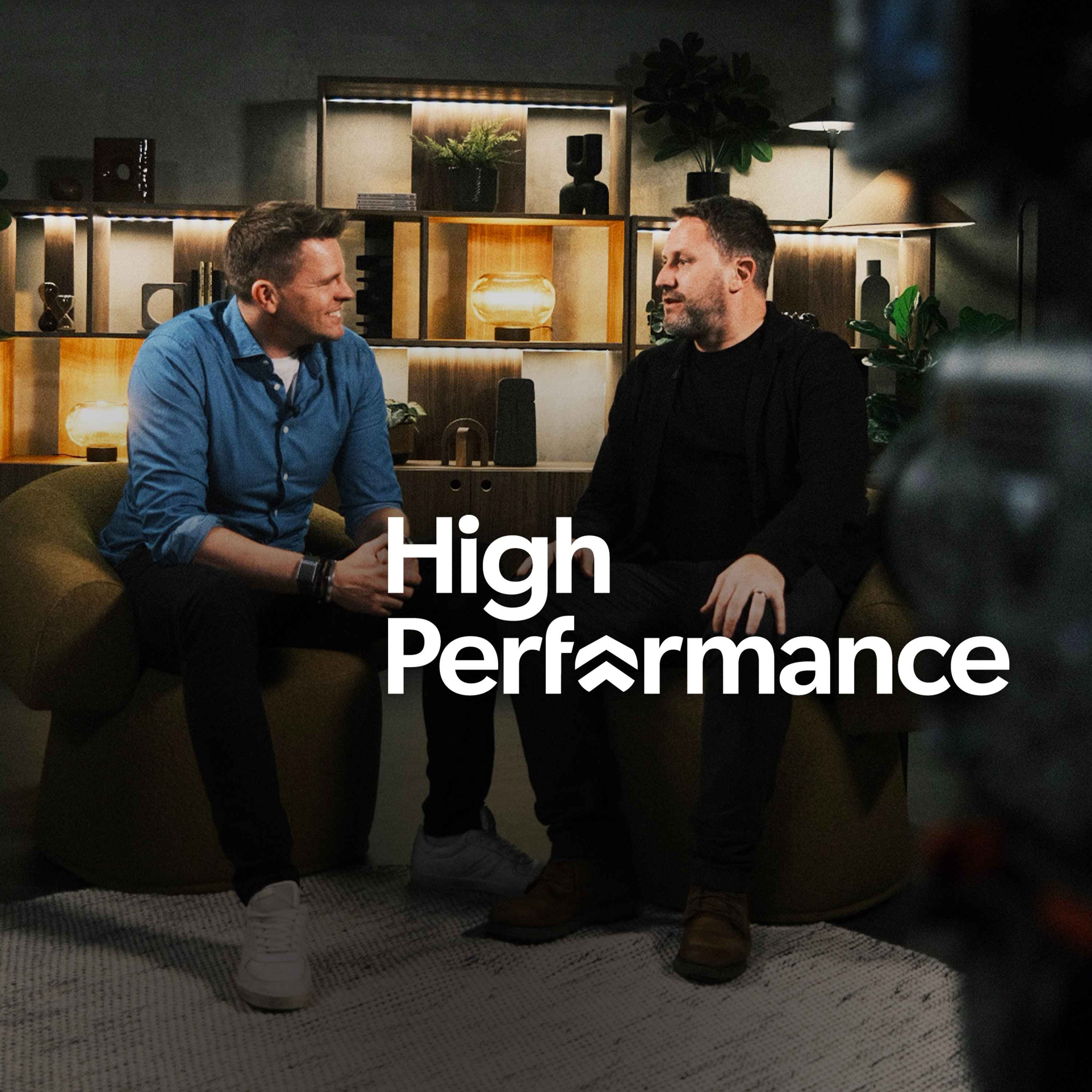
In this episode of The High Performance Podcast, hosts Jake Humphrey and Damian Hughes delve into the critical issue of men's mental health. They explore the societal pressures that discourage men from opening up about their feelings, despite growing awareness of the topic. The discussion features insights from notable guests like Jordan Henderson and Sir Keir Starmer, who share their struggles with vulnerability and emotional expression.
Written by AI. May contain mistakes.

Get the gist, explore an idea or ask about something said.
 Claude
On The High Performance Podcast, what are the key points of this episode?
Searching your listeningAutomatic transcript. May contain errors.
0:00Watch it early on the High Performance App. Available now, Roman Kemp, the broadcaster, opens up a powerful conversation on success and mental health.
0:31chopping, no weird leftovers, just delicious, easy to make meals. Get 20 % off your first two orders with code APRON20. Terms and conditions apply. Visit blueapron.com slash terms for more. The market's uncertain. Revenue's tied and hiring on hold. That's why results-driven companies are using Upwork to keep work moving. Go to upwork.com today and start hiring proven freelance talent fast. No bulky overhead. No rigid long-term contracts. Just the right expert right when you need them. Work smarter and faster with Upwork. Go to Upwork.com now and find your freelance expert. That's U-P-W-O-R-K.com.
1:09Post a job for free and get started today.
1:15This episode is brought to you by Opera Air, the first browser with mindfulness at its core. Now, most of us spend hours every day online, but how often do we pause to take care of ourselves whilst we're doing it? And that's where Opera Air comes in. It's a lightweight, fast, secure browser built not just for productivity, but for your well-being. With Opera Air, mindfulness is built right in. You'll find free breathing exercises, guided meditations, and soundscapes with ambient sounds, lo-fi music, and binaural beats, all designed to help you focus, relax, and even spark creativity while you browse.
1:52Welcome to High Performance, one of our regular episodes where we reflect on some of the guests who've joined us over the past few months, and we talk about a topic that we believe needs to be spoken about. Damien's here with me. Hey Damien. Hey Jake, how are you? Good thanks. So today we're going to discuss male mental health and ask the question, do big boys cry? There is so much talk about improvements and progress when it comes to encouraging men to open up, but we also know we are nowhere near solving the problem. We know many men listen to this show. Hi, nice to have you with us. If you're one of them or even if you're not, you need to know the stats.
2:26Men are less likely than women to go to college. Men are less likely than women to buy a house and men are far less likely to open up men make up 50 of the population but 80 of the suicides men are expected to be the strong ones that keep it all in yet at the same time we criticize them for not being vulnerable and we know that so much of the trauma and so much of the pain that men are suffering from is about them being unable to share what is going on inside them but damien we've had so many conversations about mental health on this show with many male guests. And I remember when we first started High Performance, we didn't think this show would go anywhere near a conversation about mental health.
3:06We thought it was about being tough and hard and keeping walking forwards and getting kicked in the guts and getting going again and winning medals and being praised and being on the front of the newspapers. That's what we thought High Performance was all about. We thought it was that Al Pacino speech, you know, every given Sunday, don't we, where... You've got to die for that inch. You've got to claw for that inch. Yes. And we sat there and anticipated that's the message we're going to get. And let's be honest, we were actually really looking forward to those conversations. And I think you're absolutely right.
3:36It's been a real revelation as we've sort of gone through 350 guests and we've been lucky enough to sit there as people have been so searingly honest with us and candid that actually it is about the struggle. It is about learning to feel the full spectrum of emotions and have the literacies to be able to articulate those emotions that actually frees and liberates people to go and give their best and achieve high performance on their terms. But you know what I think is that the men who come on this show, and we're going to hear from some of them in a minute, I think they don't talk about this stuff in their real lives.
4:10I think they come into this room. I think they sit down with us. I think they realise it's a safe space and there's an opportunity for them to positively impact other men by talking about their feelings. But I promise you, 90 % of them, when they leave the room, they clam up again and think well I've done that I've lanced that boil, I've had that conversation I've done my bit for male mental health I'll go back to being what men expect a man to be and it's killing men you know there is a death by suicide in the United States every 11 minutes and the vast majority of them are men and I think that from being little kids you know we tell boys hey come on toughen up toughen up you don't need to be like that and so we end up in this position where we have certain men who are happy to open up, but we have the vast, vast majority of men that are unable to do it.
4:57And we sit here with some incredible high achievers, right? And they open up to us and we praise them for it. But I think that we've got this back to front. I think that we permit high achieving men to open up because they've achieved a social status. They've achieved a level in society where we say to them, do you know what? You can share anything because you've been successful. It's a bit like the sort of Elon Musk principle. Elon Musk can have an opinion about anything and he gets lauded for it because he's been successful in business, right? And I think that is often the case with men. I think we look at successful men and we go, well done for sharing what you've got to tell us.
5:32It's brilliant. You've been so successful and now you're helping other men. I think men who haven't achieved what society believes to be success, men who are struggling, who don't have a job, who don't have wealth, who don't have a family, who don't have strong relationships, they are unable to open up, I believe, because the minute they do, they get criticized for it. they're the ones that need to be able to open up more than anybody else. Yeah, you're right. But I think that's something that we often remind ourselves, don't we? It's worth sharing with the listeners that we often wear a survivorship bias here, people that have achieved success and telling you that this is the way to do it.
6:06And Richard Osman sat down with us. He told us that, you know, if you've been successful in life, you have to acknowledge there's been a fair amount of luck in it. He said, because lots of unsuccessful people in life work just as hard as you and they haven't had that luck. So I think we need to be wary of this idea that you can only talk about mental health when you're successful. I think normalizing the conversation is really important for all of us to be able to do that. And, you know, I'll offer myself up as an example, Jake, that I think you're really good at being vulnerable and exposing your emotions.
6:42Whereas I think I'm a little bit reserved in that way. You know, I'm a lot more wary about, like, showing if I'm upset at something. I tend to guard those emotions more than what I think you do. But I think the impact that you can have on people that have listened to it over the years has been so much greater because of your vulnerability. And if we can get our message out that vulnerability is a strength, wherever you are in your life or your career, that's fantastic. It's kind of you to say, so why do you not feel able to open up? It's a good question. I think some of it is social, you know, like the social conditioning, like growing up in the sort of 70s and 80s, as I did, and growing up in a boxing gym, it was almost like strength was in the stoicism of not letting people know you're hurt in a boxing ring.
7:33You don't let people know that you're hurt or you're frightened or you're scared. You almost have to present a certain armour to the rest of the world. and I can say that and I can acknowledge the flaws in my wider life of being like that but equally you know it served me well in that context so I don't criticize that I can completely understand it but I think learning to let go of that armor I find it quite difficult to do just because it goes the conditioning has lasted for so long. Why do you feel more comfortable than you being able to express your emotions? I feel comfortable because I think because I've done something that I wish more men would do, which is see what happens if they open up.
8:14I think men are walking around with more issues and problems and fears and doubts than most people give them credit for. I still think we live in this world where men feel predominantly that they need to be the breadwinner, they need to be the source of power, they need to be the strength, they need to be the one that carries everyone else through, they need to be strong for other people. but I think that the strongest you can be is when you open up the strongest men are the ones who are able to say listen I've got all these burdens and all these fears and I can't deal with them on my own and I think that men fear that by opening up they get shut down and people say oh come on you deal with that deal with it better deal with it they'll be told to button it up or man up or toughen up all those sort of toxic phrases that we use so I think that they don't feel able to open up but I think that as soon as you start to open up you realise that's actually not my lived experience.
9:06My lived experience of opening up and being honest about stuff is quite the opposite. And actually, maybe we could play a clip from when Danny Gray joined us on High Performance and we had that kind of exchange where we discussed what I believe people who struggle with their mental health to be, the fact that I think they are the strongest people of all. Shall we have a listen? Just before that, Jake, I'd like to say that, in my experience from that, the amount of people that recount this clip we're going to listen to now has been huge when they come and talk to me about it and I've not had one person yet make light of it or treat it as frivolous.
9:44They've taken it really seriously so I suppose it's a validation for me that I'm passing on to you that this clip actually does carry real power. Love it, let's have a listen, thank you. Many people in your position would create wall paint for men and think right i can now be rich and relax and you want to do so much more than that you are completely purpose-driven but i think the biggest thing is you're brave man so brave and um i think people often think if you've got mental health problems then you're not brave and you're actually a wimp or you're weak or you're scared and um to have this conversation to remind people that if you're struggling you're strong because you have to be strong to deal with the struggle is um amazing sorry about that do you know what you don't have to apologize mate because it's just not and everyone's got it mate yes that's the point i just wish that i just wish people who are struggling right now would hear this and then react do you know what i mean because they don't have to like you know you probably you definitely threw away a couple of years you didn't enjoy probably 10 years and like that's that could be a quarter of your life do you know what i mean and like and there's so many people walking around really hurting and like it's the word though mate mental health is like attached as this thing where when we talk about these conditions everyone thinks that's what it is like but it's got to be something really bad but what i want to do with jack is prove that Mental health is every minute of it.
11:19It's everything. And you can't just... And it's not about just surviving. Like, you can fly. You can have mental health problems. Absolutely. And you can fly. You can have an amazing life. As long as you learn to manage it. As we said, that was really powerful. But how did you feel at that time? I think when we were speaking to Danny and he was opening up, I could sense from the way that he was talking that there was a fear and a doubt and a concern. And I see it a lot when men sit opposite us in the high performance studio and they start to open up. And I guess the message I was trying to put across to him about this idea of having a mental health issue is not a weakness, but actually it makes you incredibly strong.
12:01It's just simply what I believe and I wish more men could hear it. So I know 100 % there are men listening to this episode today about men's mental health and they think they're weak because they have mental health problems or they have anxiety or they have depression or they don't even know what they have but they're not happy, right? And I think the strongest and most powerful place that we can begin is by saying to those men that in my opinion and my experience as someone who's been through therapy and had some mental health challenges in the past is that it's the strongest person who is the one with the mental health challenges because they have to be the one that puts a smile on their face when they don't want to.
12:42They have to be the one that walks into a room when the anxiety to go in that room is overwhelming them. They have to be the one that opens the front door their kids and their wife run up to them and they have to put a smile on their face and go, I've had a great day, honey. Hey, kids, how are you? When they feel like they would rather crawl into a hole and cry, right? They're the ones that do cry, but they cry on their own in the dark away from everybody else. And all of that takes an incredible strength. You're not weaker for feeling like that. You're stronger for being able to cope with that.
13:10but the problem is that not sharing and not speaking will never allow you to solve the problem you cannot solve these issues on your own which is why our show is also full of incredible athletes who all have achieved incredible things by working with a coach well if you are an elite athlete if Lionel Messi needs a coach to make him better at football we all need a coach to make us better mentally you know it's so simple for me it's funny say that because again I don't know if this offers an insight to people that are listening to it but sometimes when we're lucky enough to meet a guest the relationship extends beyond just sat in the studio chatting and um you know where we'll continue a conversation later on and we recently had danny jones the lead singer from mcfly come on and we'd spoken and i sent him a book like one of my favorite things to do is give people books that have had an impact on me and i sent danny one that is one of my favorite books I've given away over numerous copies over the last 18 months by an Australian psychologist called Steve Biddulph.
14:14And the book is called Manhood, which is actually an exploration on what it's like to be a man. And there's some stories in it, Jay, that took my breath away. He tells a piece of research that was done by Mattel in the 1970s when they created a family of dolls, a daddy, a mummy, and two kid dolls. And what they found is that when the young people started to play with them, the father was left on the side and they played with the mother and the two kids. And when the researchers explored it, the answer they got off the kids was, oh, daddy's at work, he's not involved with the family. So what Mattel did as a response to that was they created action man dolls.
14:52So they gave men muscles, they made them warriors and gave them guns. And it almost speaks about that stereotype in society. And yet in the book, I just wanted to read a bit that took my breath away from the Steve Biddulph book. He says that when men shut down their feelings, it starts to kill them. A bereaved man is eight times more likely to die in the two-year period following a bereavement. If a child in a family dies, for example, in a cot death, there's a 70 % likelihood that the parent's marriage will not survive the loss. He writes, we simply and urgently must provide a means for men to express their grief.
15:30He quotes a grief expert called Mal McKissack, who believes that failing to feel one single emotion, in this case sadness, leads to a shutdown in the full spectrum of feelings, anger, fear, warmth and love. This passion is what most men have lost and it's also what most men stand to gain. I think it captures for me exactly what you've just said about the power comes from being vulnerable and being open to the full spectrum of human emotions. And that's why I'd like to listen to another clip of a man that's been incredibly vulnerable on the podcast, the most powerful man politically in this country, Sir Keir Starmer.
16:11Do you remember the moment when the emotion almost overtook him in that interview? When talking about his dad. Shall we listen to it? It's taken me much longer to work out my relationship with my dad because he was by nature more distant. and so bound up with how he looked after my mum and almost to retreat from the social scene because he didn't like that question, what do you do for a living? That it was never that, it didn't feel close.
16:54And I don't regret very much in life. But the last time I saw my dad, he was in hospital, dying. And I walked away. And I knew he was going to die. I just knew it. It was end-of-life stuff anyway. I knew I wouldn't see him again. And I didn't turn around and go back and tell him what I thought.
17:26And I should have died.
17:30And is this advice for my teenage self? I don't know. It's hardwired advice for myself in relation to my relationship with our children. So I've tried to make sure that is completely different and that we are together, we talk and we know each other. I mean, I'm sure they'll be sitting in a podcast like this in years to come saying, God, Dad used to insist on taking us to kickboxing or swing or whatever. If you had a turn back, what would you have said to your dad? I would have said I love you. I'd have also said I'm proud of you. I'd have tried to close that gap
18:11that was so important to him in his life. Now, I find that very interesting, Damien, because that's a male-male relationship. That's a father-son relationship. And it got me thinking, really, whether it's an innate trait in men, not to express emotions. And actually, I looked into some of the research and it's not true. Well, you've got a boy and a girl, I've got a boy and a girl. Which of your two children cried more? Did they both cry about the same? About the same, yeah. About the same. Because they both shared their emotions and they were totally happy to show their emotions. And I was reading on a Barclay University website article that said the studies of infants have shown that neurologically there is very little difference between boys and girls' capacity for empathy yet according to neuroscientists because girls are allowed to express their emotions at a very young age their ability to then identify and understand both their and their friends emotions cultivates an empathetic skill that goes beyond boys continuing into young boyhood the Stanford professor Judy Chu argues in her new book when boys become boys that it is culture rather than nature that incapacitates boys social and emotional skills and she was observing four and five year boys at that stage and it got me thinking well i don't think that's true when i think about my my kids right i don't think that we're spreading this issue to the next generation like if i ask you when rose comes home from school and when george comes home from school and you say how was your day how often does george tell you about fallouts and rows and issues that the boys have had and how one boy feels about another boy and the problem that he has relating to another boy how often does that happen rarely how often does rose come home and say well she said this and it all the girls said this and a lot more frequently yeah yeah exactly my experience with Florence and Sebastian yeah so then it leads us to be asking whether even when our own children even as two podcasters who are fully aware of the suicide rates of men fully aware that men are bottling things up fully aware of the cost of doing it what is happening in our own lives in our own homes in our own schools that already has our children acting in a completely different way around the the age of 9, 10 and 11.
20:27Well, that lends itself to, going back to the clip of Sir Keir Starmer breaking down with us, the only people I've ever heard come and say to me, was it real? Was he putting it on? Was it an act? Has been meant. And what that leads me... Is that right? Yeah. That's amazing, isn't it? But then that leads me to go, we need to be better. We can't say we want our politicians to be more authentic and then when they are, we decry them or we laugh for we become suspicious at why they do it i think we all need to be better at allowing people to express their emotions whether it's our boys when they get home from school or whether it's the most powerful political leaders in this country i think leaning into these emotions and accepting that they're part of the spectrum of just being human actually then creates that condition in that culture where people feel they can do it without worrying about being judged because of it and it comes back to something that you talk about quite often which is be better at asking questions i think it's about getting us to ask better questions right absolutely you know again we were lucky enough to sit down with charles duhigg the pulitzer prize within office super communicators what did he say ask deeper questions go and explore a little bit more behind a throwaway comment because it will often betray quite a deep well of emotion that lies behind it.
21:52And I think when we lean into that, we'll very quickly then start to see people as they are, not for how they want to be perceived. I read an article recently, which is on a website, all about encouraging children to read and share their emotions. And this was by a guy called Michael Reichardt. He's the founding director of the Centre for the Study of Boys and Girls' Lives at the University of Pennsylvania. and he's a clinical practitioner who's specialized in the behavior of boys and men. So if people are listening to this conversation thinking, well, how do I start at a young age helping my young man to open up so let's be honest they can get closer to their own version of high performance which is what vulnerability is.
22:31This is what Michael Reichardt said. Remember boys are doing their best to tell us what's going on for the design of their brains, the depth of their being. Boys long to be known and loved particularly by the ones they've taken into their hearts. They are, in the words of the psychiatrist Amy Banks, wired to connect. Number two, understand that boys' feelings are not always pretty. They aren't right feelings or wrong feelings, inappropriate feelings or inconvenient feelings. They are all just manifestations of distress, which is by definition irrational, seeking expression. Adults must keep in mind it's better for your boy to show they're experiencing difficult emotions than to hide them.
23:10number three know what you are and know what he needs as the ones offering attention care and listening what psychologists call a child's holding environment parents have what boys need when parents look for reassurance from their sons the implicit message to the boy is that once again it's less about knowing and loving him than taking care of his parents unsteady ego what a line number four offer them a light-hearted and open delight boyhood already seems heavy to boys just this week in a casual conversation with the 10th grader i asked how things were going he let on they were stressful so as he parted ways i said good luck with the rest of high school and he quickly replied i'll need it when we come to our sons fraught with worries and concerns we're inadvertently compounding they're already heavy emotional burdens and finally make a distinction between a limit and a domination, he says.
24:04Cut off from verbal ways to work through their upsets. Many boys tend to act them out. When we observe a boy whose behaviour is off, it's a sign they have feelings that have overwhelmed their mind and they're driving them to say or do things that don't represent who they really are. That's brilliant. And if anyone's thinking, well, how do we do all that? How do we remember what Jake's just shared with us? Remember the three H's. Every conversation is a hug, a hear or a help conversation, but all of them allow people to express their emotions on their terms not on the terms that we're trying to set for them.
24:36And let me just say, by the way we're not being critical of people who are unable to open up. We're not saying that everyone who sits in this chair as a high performer has learned the art of being vulnerable. I think we should finish with a clip from Jordan Henderson who was the Liverpool captain at the time that he was really struggling with his emotions and what he was struggling with was expressing them. Here's what he had to say. first season didn't go particularly well so that was a tough period for me met like mentally um to get through and again i just wanted to get through it on my own even i couldn't look looking back i think i mentioned it in my book as well like i probably didn't even open up to my wife you know i didn't want um which looking back i don't know how she stayed with us to be honest i don't know why she just didn't get what were you like to live with at that point then that's what I mean horrendous probably yeah I don't know how she didn't get in the car and drive to Sutherland and left I just I don't didn't know because I basically put everything into training you know do extra training do extra gym work come home late go and watch the telly in a dark room so doing everything you can just to not be thinking about the fact that yeah yeah just keeping trying to keep busy really just trying to and try to improve and prove people wrong wanted to get to where I needed to get to by just doing extra work, extra training, being stronger physically.
26:04So come home late, you know, watch the telly, bed, up, repeat. And that was it. But can you recognise now that what you considered to be selfless, of not wanting to burden other people, could be perceived by those close to you as being quite selfish in many ways because you're not letting them in, you're not allowing the people that love you and care for you to be able to offer solutions definitely 100 % um must have been difficult for my wife definitely at that period again me not opening up to her and she's having to basically go through and like you see and probably thinks i'm being selfish probably my best friend um who i went to school with since well since we're two two, three in nursery, probably thinks selfish.
26:54You know, why didn't you come to me? You know, I'm always here for you. Why couldn't you? But I didn't want other people worrying. You know, I didn't want my best friend, my wife, my mum and dad to worry about me struggling because of football. You know, there's much bigger things going on in the world. But for me, football was everything, especially when I was 21, I didn't have children. you know football was that was it that was my everything obviously when I've had kids yeah again changes a lot and everything's about them but yeah at that period in time football football football was the biggest thing in my life and it wasn't going particularly well so I suffered a lot I mean that was a wonderful chat with Jordan Henderson because he's somebody that's almost travelled the spectrum that we're discussing here today He was somebody that believed that the stiff upper lip, stoic response to problems was to take it all on your own shoulders.
27:55And eventually he learned that actually opening up is selfless, not selfish. In that clip, he spoke to us about the work he'd done with Professor Steve Peters, the psychiatrist. And it reminded me of when we spoke to Steve. He shared a great analogy that hopefully our audience can take away and apply in their own life. He said that at a conference once, he gave everybody some apples and asked them to juggle. and he said everybody could juggle two apples. Most people struggled when it got to three and virtually nobody could juggle four apples. And he used that as an analogy to say that that's how our brain copes with problems, that these problems will just exist in our head.
28:33So what we need to do is to be able to express them, whether that's to another person, whether it's in a journal, whether it's just being able to capture them somewhere outside our own head. That allows our brain to be able to then plan and be able to deal with those rather than let the emotion bottle up and overwhelm us. Brilliant. I think that's so powerful. And I think a lot of people, a lot of men worry about revealing their kind of imperfect, messy,
29:03scary, flawed thoughts, right? Yeah. Is a problem. But actually it's the total opposite of that because I think when we are able to open up in that way, I think what it actually does is it creates an environment where other people can open up. and I just wanted to finish with this quote from Chrissy Jami. To share your weakness is to make yourself vulnerable. To make yourself vulnerable is to show your strength. And we talk so often on High Performance about, tell us about your strengths. What have you done that's amazing? Well, you can't reveal your strengths until you can reveal your vulnerabilities and you can't reveal your vulnerabilities until you can open up to people.
29:40So we should all start. Maybe there's one thing that we'd like people to do at the end of this conversation. it's to pick up the phone if you're a man listening it's to choose to share how you're feeling with someone and if you're not a man listening to this it's to go to a man and say how are you really feeling what are the things going on inside you that i could help with that'd be lovely and again i'd also encourage anyone that one of the big things we did when we started this podcast was wanting to create a community where people can lift each other up where you can feel safe and we can help each other to our own definition of high performance So if people want to contact us, they want to share their own experiences of expressing emotion and being accepted, connected and belong for doing so, we'd love to hear from them.
30:25Yeah, please don't be a stranger. Don't hold it all inside. Reach out to us at High Performance. We'd love to hear from you. Thank you, mate. Thanks, mate. Love that conversation. And thank you very much for listening. And don't forget, you can hear the full episodes with all of the guests that you've just heard a small clip from. You can find the links in the description to this podcast. Thanks for listening.
30:56so
31:07it's almost fall and that means nordstrom has the best fall fashion under 200 dollars not only do they have the best trends like trench coats suede jackets but they also have the best brands like urban outfitters made well sporty and rich and obviously don't forget beauty they have anastasia beverly hills beauty blender kosis and nordstrom makes it so easy to get what you need and add it quickly into your daily routine they have fast delivery and risk-free shopping you can buy online pick up today or pick up tomorrow for a wider selection or you can pick curbside at Nordstrom stores and Nordstrom rack both options are quick and convenient Nordstrom also has two-day shipping and next day options so you can get all of your items even faster and if you need a little extra help Nordstrom has stylists for free and their experts will create looks and match your style with your budget shop now in stores at nordstrom.com or download the Nordstrom app Say what you want about AI, but it's here.
32:11And it's helping businesses get more done in a day. Wix's website builder is infused with AI so you can stay ahead. Create a beautiful, functional website just by describing your idea. Track how your site appears in AI search results. Create custom images on demand. Or launch an entire campaign in a matter of minutes. Wix gives you AI wherever you need it. Try it out for yourself at Wix.com. At Capella University, learning online doesn't mean learning alone. You'll get support from people who care about your success, like your enrollment specialist who gets to know you and the goals you'd like to achieve.
32:50You'll also get a designated academic coach who's with you throughout your entire program. Plus, career coaches are available to help you navigate your professional goals. A different future is closer than you think with Capella University. Learn more at capella.edu.
Men's mental health remains a critical issue, and despite progress in raising awareness, many men still struggle to open up. In this episode, Jake and Damian explore the ongoing challenges men face in discussing their mental well-being.
They revisit powerful conversations with inspiring guests like Jordan Henderson and Sir Keir Starmer, who openly share their struggles. Together, they discuss the deep-rooted societal pressures that encourage stoicism, the lasting impact of childhood conditioning, and the damaging myth that vulnerability is a weakness.
Listen in as Jake and Damian highlight the importance of asking deeper questions and fostering safe spaces where men can express their emotions, proving that true strength lies in vulnerability.
Listen to the episodes featured in this:
Danny Gray - https://pod.fo/e/145c8a
Sir Keir Starmer - https://pod.fo/e/16f84a
Jordan Henderson - https://pod.fo/e/166b5a
Don’t forget to send your questions and stories to [email protected] for a chance to be featured in future episodes!
Hosted on Acast. See acast.com/privacy for more information.


