
 Ask ChatGPT


 The High Performance Podcast
8 Aug 2024 · 47m
Written by AI. May contain mistakes.

Get the gist, explore an idea or ask about something said.
 Claude
On The High Performance Podcast, what are the key points of this episode?
Searching your listeningAutomatic transcript. May contain errors.
0:00Watch it early on the High Performance App. Available now, Roman Kemp. The broadcaster opens up a powerful conversation on success and mental health. Hey everyone, welcome back to the High Performance Podcast and another episode from our Experts in Their Field miniseries made in partnership with Salesforce. Salesforce empowers companies to forge unprecedented connections like never before by integrating customer relationships, AI and data. Salesforce facilitates stronger connections, enhances productivity and boosts profits. Additionally, Salesforce fosters innovation and trust to our organizations, enabling teams to work smarter and faster.
0:40Now, this is the mini-series where we bring in experts from across various industries to focus on one vital topic each week. And this week, Salesforce has set us up with the SVP of AI transformation at Salesforce, Mark Matthew, who's going to join us to talk about customer success. Now, Mark has formerly held positions as Chief Marketing Officer at Samsung, Senior Vice President of Marketing at Unilever, but today he works with the Salesforce team to change how brands acquire and interact with customers through AI. So what do we mean when we say customer success? Well, it's an approach to business that prioritises the customer experience and that we as the consumer are indeed getting our desired outcomes.
1:21And in this space, Salesforce are innovating with, you guessed it, AI. So with this in mind, enjoy this conversation on the battle every business faces to please the customer. How businesses can fight their fight today and how they might be able to in the future.
1:43Mark, thank you so much for joining us. Very glad to be here. So when it comes to serving customers as best we can, what do you believe high performance looks like in that context? Well, it really depends if you're looking for high short-term performance or high performance in the long run. I really think that very often, you know, businesses tend to think that high performance is, you know, right here, right now. When in reality, for me, the challenge of a business, a corporation, of a leadership team is really to deliver high performance, not even quarter after quarter, but year after year on the long run.
2:22and in a way delivering a higher performance tomorrow than the performance that was delivered by the generations previous. So how do you balance then delivering in the modern world on which we're in right now, but also with an eye on the future? Because every time we talk about serving customers now, the conversation naturally turns to AI. And I think it's a very relevant question indeed for AI because everybody's eyes right now on AI is actually focused on efficiency and productivity. Really saying all the way up to the CEOs, 80 % of them want AI implementation to be immediate and to deliver our right to the bottom line this year, this quarter.
3:08And the reality is AI, if we believe, is here to stay. AI is really not going to have its strongest impact on short-term efficiency and productivity. Yes, there is probably about 30 % of productivity. That's the average number that more or less everybody agrees that can be gained. And by the way, it's not an immediate gain. I always say the ROI of predictive AI is proven. The ROI of generative AI is in the making. It's probably going to take at least one to two years because as you start to prove some use cases, you need to scale them, you need to invest in new cases. So again, if you're trying to bring the productivity to the bottom line right now, it's not going to happen.
3:57But really, productivity is only the tip of the iceberg. To me, what's going to be fascinating about AI is when we're going to start to see really employee augmentation. when, and I say employee, but it's true for our everyday life. Teenagers today who have started to use ChatGPT or any other LLMs for their personal coaching purposes use it indeed as a coach. They don't use it for productivity, just to go faster, but they use it to give them a richer narrative, more confidence, the ability to do better what they would do otherwise and to do it again with more granularity, with more depth than they would have done before.
4:47So that phase of augmentation to me is where we're going to start to see higher performance to go back to your theme. And then the real high, high, high performance is going to come from business model transformation. I really think that AI is going to force us to rethink how businesses operate. Once we start to have autonomous AI agents that are going to start to coexist with physical workers, digital workers, physical workers, we are going to see totally new ways of serving customers. And that's what's going to be transformative. Can you give us an example of an industry that you feel is going to go through that kind of adaptation?
5:32What we see is maybe less industry, but functions. Clearly, one of the functions where we've seen very early on use cases, you know, work for lots of Salesforce's customers is the customer service. Customer service is actually a very easy team to actually focus on because it's basically you have a very, in a way, repetitive task and very repetitive sets of use case of problems. And it's a very tough job because there is a lot of demand on the customer service agents to, you know, deal with multiple calls or chats at the same time and find the answers to the questions and then, you know, answer and then a new question pops up, etc.
6:26And having the ability to have, in a natural language format, to have actually the service replies come to you so that you're able, I often say instead of talking about, you know, a pair of pants or a shirt, you talk about the collection, you talk about, you know, a whole higher order idea that enables you to have a conversation not just about the item that you're trying to answer from a customer service standpoint, but the other items in the collection, which means you're having a marketing conversation, a brand conversation, and suddenly you're much more keen to having a selling conversation because the person says, oh, yes, so this belt goes very well with the bag that I actually bought.
7:14It's part of the same collection. So to me, it's more this idea of some of the functions, service, sales, marketing are really starting to see the beginning of all those implementations because they take away a lot of the repetitive tasks, both of preparing in the moment and following up. at the end of, again, back to a customer service call, the ability to push a button and get a case summary. And again, both for the service reply and the case summary, the ability to, you know, still edit, you know, today so that you can actually say, yeah, I validate this, both to send this chat back to the customer or to file this in my, you know, call summaries to create a knowledge article, et cetera.
8:10So we're in that phase where people are starting to build that confidence of using it on use cases that I would say are relatively easy, can be easily contained because the service center is within four walls. You can train the people. A lot of the challenges, I'm sure we're going to talk about that, is going to be the reskilling that's ahead of us. We are going to have to re-skill basically every single job in businesses, in enterprises. And a service center is an easy place to start. Can I ask you about what people should be thinking now? We have so many people that listen to this show that work in business, as you do.
8:59And I think that they know AI is coming. They know that it's going to be disruptive. They know that it's the future, but they don't really know what questions to be asking themselves now to be ready for what that future looks like. I'd be really interested to know what questions you think we should ask ourselves. So let me go back a little bit. And before even talking about AI, we should have started talking about data. I mean, the reality is why are those LLMs so powerful? What's the LLM? The large language models. is because they fundamentally, they're called large for that reason. They have a large appetite, you know, and they take as much data as they can find to actually generate those texts, those images that we all receive on the receiving end and are marveled by.
9:54But it's all powered by data. And the big challenge for enterprise is that whilst for consumer AI, taking all the data that you can find in the Internet, first of all, there is plenty of it. And, you know, most of it is, you know, free. At least that's what most of the NLM companies assume. Whereas when it comes to enterprise, the data needs to be your data. It needs to be your enterprise data. And it needs to be basically that data, whether it's structured data or unstructured data, you know, a PDF, set of Slack messages, etc. all that structured and unstructured data needs to be put together, untrapped, unlocked.
10:45If you want to untrap, unlock the value that's ahead of us when AI really is going to start to be, with the development of more and more smart and performing models, if we want that power to come to the enterprise, you're going to need to have the data extremely clean and well in order because otherwise the AI will not produce the results. I mean, the AI fundamentally will only create, generate results based on the quality and the quality of the data, but it needs to be rooted in the customer's data, in the customer's strategy, so that it not only answers based on that proprietary data, but in a way that can be trusted, that would be as sharp and as responsible and as ethical as an answer as your best employee.
11:46Okay. So what would you say then are the critical measures that that data can offer us in relation to customer success? that? So again, I mean, the challenges of all of that, you know, data and all of that AI-enabled world is that we're going to need to totally rethink the measures, the metrics that we've been using. We've been thinking a lot about, you know, performance, top line, bottom line, as being very much the way you drive the result of all the teams in an enterprise. And back to the point about not just productivity and efficiency, but augmentation and transformation, there is no metric today for employee augmentation.
12:44How do you measure the quality of basically the homework that a child is going to do using an LLM versus not using it? And I truly believe that we are going to see an augmentation of the performance, of the quality of the work, of the output of the workers. And that's going to be true in the enterprise. It's going to be true also on some critical societal problems like medicine, like environment. I really think we're going to see an acceleration of problem solving when the AI is going to be able to access all the data, all that data that often has been trapped in silos. Because let's be honest, humans love silos.
13:38You know, information is power. We've all heard that. We've all done that. You know, so the reality, the AI is going to look to untrap all that data in order to augment us. And if we want to be augmented, we're going to need to let the AI access all of that data. And that's also going to be a KPI, back to your earlier point, which is the quantity of data, almost the ratio of trapped versus untrapped data is going to be, I think, a critical factor of success for an enterprise in the future. So do you have any ideas then of the kind of industries that are going to be untrapped in this new world, that AI is going to allow them to revolutionize?
14:29Back to the point about customer service, a lot of the service industries. So you see in the world of hospitality, in the world of travel, in the world of finance, in the world of insurance, the ability to actually serve customers almost at a truly personal level. And I often make the difference between personalized and personal because I think that the data and the AI together is going to enable us to really move from what has been an assumption that you can deal with any customer issue with a scale problem, with a scale solution. So either it's a scale like the Model T from Ford. Everybody got the same car.
15:21Then you started to do segmentation, and this group of people is going to have that product, this group of people is going to have that product. Tomorrow, you're going to realize that also because we're going to teach people to get what they want when they ask a chat GPT, they basically don't get the same thing as a Google search bar. The Google search bar gives them something that seems to be personal, but really it's something that is served back to them from, you know, somebody else who has uploaded it. Whereas the generative AI is actually providing you something totally unique, custom to you in real time.
16:01So we're going to get used not just in content and images and text and video, but also in service and experiences and maybe to more even in products to get individual product solution, individual experiences that are tailored to me at that unique moment in time. Can I ask you a bit about travel industry? Because I think that's almost the ultimate area of customer service because holidays are very precious to people. Holidays are very personal to people. So I wonder if we could look into the future and you've worked in this space and are so knowledgeable about it, what would that industry, for example, look like from a customer perspective in even five years' time?
16:47What would my experience be of wanting to book a holiday with generative AI as part of that experience? Well, already today, I don't know if you've done it, either using some of the most common LLMs or some specific AI travel LLMs, models. When you start to ask using AI where you could go based on some of your criteria that you're going to put in prompt, you get something much more personal, much more interesting. Even today? Even today, because you're able, instead of getting, let's be honest, a bunch of, you know, a menu, you get almost a, you know, personalized menu, which might not be, depending on how good you are at prompting and depending on how good the model that you're using is today, it may not be exactly what you want, but it still is, you know, like a personal coach, a personal assistant.
17:50that is actually giving you advice. And I think tomorrow we're going to have in our life a certain number of companions, you know, AI companions that are going to serve our unique needs. I believe we'll have at least one AI companion for health. We'll probably have one for wealth. I do believe that some people will have one for trouble. Some will have a more generalist for, you know, everything they do when they're not working. but I think that the idea of trusting a AI companion that over time is going to become truly personal proactive and persistent it will proactively suggest some ideas to you not just in terms of where you could go but when you need to go and it will have that memory over time which means that it will not tell you to go to that place that you hated but instead it will recommend things based on your preferences from the past.
18:54So we could have a world where AI uses the wearable tech that we all have to tell you that you're a bit stressed at the moment, that you need a holiday. It uses knowing what the weather is going to be like in two weeks time. It knows the place that you went and didn't like a few years ago. It knows the kind of food that your favorite food is. And it then offers up a recommendation to go to this place at this time to get maximum rest, wellness, and recovery? I think that, again, and the beauty of it is that if it all works out, then, you know, we're only going to work three days a week. Joking, I do think that...
19:29Do you believe that, though? I do believe that we will have AI, not the three days a week part. I think that, again, we always find time. It's part of our human nature. We love to keep ourselves busy. But indeed, what's going to be fascinating is that by the time what you just described happens, there will have been conversations between my, as a customer, personal AI assistant, coach, companion, and several other AI assistants from several travel agencies. and potentially hotel chains or boutique hotels, etc. And based on that, there will always be a lot of invisible work that will be coming to you in the form of a recommendation that will be more likely to be suitable to you, to your point, to your needs, to your wants.
20:32And I think that's going to be, again, that's why I talk about, yes, efficiency and productivity, but really the augmentation that's going to come from all of us being augmented by an AI agent, an AI assistant, and then the transformation that the kind of world you just described is going to imply. Why? Because if that AI understands your travel needs so much, you know, with the level of depth, granularity that you just described, why would it just sell you a trip? Why would it just recommend, you know, a hotel? It will suddenly package all kind of things, all kind of moments and experiences. and that's going to be, I think, again, the base of totally new businesses all grounded in data.
21:30And we probably won't even think that it's AI that's doing it. We'll just get a message or an email and assume that it's been tailored to our needs. The same way that, let's be frank, I mean, we are not thinking, oh, maybe the electricity is going to break down and this whole thing is going to, you know, shut down and we're going to be stopped in this conversation. No, we take it for granted. And I think that the AI is going to become a little bit like, you know, the Internet, like the electricity. We are going to become used to having it in our life. I know I have, you know, started to depend on it.
22:09I mean, the number of times that before I go and speak to an audience or go to a meeting or, you know, I think we're going to get used to having that companion. How often do you use it? I never. No, never. How often do you use an AI tool? I use it daily. Every single day? Yeah. Would you give us a couple of other examples where you use it and it's really helpful for you that we should think about? Again, if I'm going to make a speech, having that kind of coach that gives you a little bit of, again, it's this blank sheet of paper syndrome. Okay. You know, not starting from, hey, what am I going to say?
22:58How am I going to start? That's a very good way of thinking about it. Again, for summarization, asking anything, any event, the summarization, again, one of the functions that we implemented inside Salesforce in Slack was a simple button to just summarize the last seven days of a conversation or all the topics. It's fascinating. It's fascinating having within one button, one push of a button, a summary of everything that you may have missed and then the ability to drill down. and that's the beauty of it is the ability to go faster so that you can focus on the things that are more meaningful to you.
23:54I know you've got a great question. Hold that thought. We're going to take a very quick break and we'll carry on in just a moment. Now, before we return to our conversation with Mark, we're just going to take a really brief moment to talk about Salesforce, our brilliant partners for these episodes. Now, I thought you'd like to hear three examples of how Salesforce prioritizes the customer. So Formula One. In Formula One, the sales teams were working in spreadsheets and loads of manual processes, which meant quite simply their data was totally out of sync. And that communication often broke down between teams.
24:28But today, Formula One's internal teams use Salesforce to communicate daily through a sales process that everyone can understand. Now, the second great example, Heathrow Airport. So Heathrow was struggling with disjointed digital services across 45 back-end systems, which of course was impacting their customers' experiences. But with Einstein 1, Heathrow unified all departments, improving the experience for the traveller. And finally, the John Lewis Partnership. You know the John Lewis Partnership is owned and operated by over 74 ,000 employees. It's the UK's largest employee-owned business. But that brings challenges, because managing such a large and diverse operation requires data that's accessible, easy to use, and up to date.
25:13So Salesforce collaborated closely with the John Lewis Partnership to develop a clear strategy, set some measurable goals, and train their staff. In the first phase, 8 ,000 users were successfully onboarded and trained, bringing substantial business value worth millions of pounds. I think it's really interesting that this stuff is going on, and I know that it might be valuable for you. Anyway, let's get back to the episode. Welcome back and let's carry on Mark because we've been having this fascinating conversation about AI and you used the phrase just before we went for a break where you spoke about trust and Jake and I spoke about the fact that we rarely use it and yet you use it every day and I think it's because you're farther on the journey of trusting AI.
26:03So I'm interested if you could share with us how we can overcome that trust barrier that we can start incorporating it? I think that there is a trust factor. There is also what you expect from the AI. It's undeniable at Salesforce. I mean, we focus on trust. That's our number one value. And we've been spending a lot of time and a lot of engineering resources together with our ethics and human use teams to make sure that we understand, you know, how to deliver trust, both in terms of security and safety, but also in terms of equality, inclusion, diversity. I mean, making sure that everything, all that ethical aspect, is embedded in the AIs that we serve to our customers.
26:58So that's the first thing, making sure that you have, you know, the trust mechanism today. And importantly, tomorrow, I think the trust challenge is going to become more and more complex to solve. And so we are not only investing today, we're investing in the way we've done it for the last 25 years when we brought our customers' data into the cloud and then in predictive AI. And now we're working on what trust mechanisms will be needed. So just bring trust down for a second. What do you understand trust to be? So again, trust is making sure that, you know, we've all read about toxicity and hallucination.
27:44And the reality is making sure that when an AI gives you an answer, that you know it doesn't hallucinate. That, you know, the answer might not be exactly what you want, but at least the answer is not totally, you know, out of this world, totally false. Today we talk still about human in the loop. More and more we are starting to develop mechanisms for what we like to call humans at the helm, which means that if we really want the AI to do what the AI is going to do for us, we need to let it do it. We need to let the AI be autonomous. so that, again, it frees us up from all that mundane work. The same way that today a lot of people say you can gain 30 % productivity, I do believe that 60 % potentially of the work we do today honestly could be automated.
28:48But in order for it to be automated, that you're going to need to make sure that you trust that the AI will do what you want it to do, and also that you have the oversight, the intervention mechanisms, to make sure that when there is a question that's critical that requires your input or approval, or when there is a potential deviation that you want to, of course, correct, then you want to make sure that those mechanisms exist. Is there a balance that has to be worked out here? Because obviously, you know, this conversation is about serving the customer, right? And I kind of fear that as great as AI is, AI will use facts.
29:32And sometimes actually what you need is a really human, personal conversation. You want someone to pick up the phone and actually ask you what your day was like. And when you give an answer, they can relate to missing the bus or losing your wallet or stubbing your toe or having a cold. Whereas AI can never do that. I fear the growth of a lack of this kind of a relationship, this moment that we're sharing now. So I do think you're bringing a point which is close to my heart, which is as we are going to see more and more automation happen, AI to AI, it's going to force us to actually get back to, in our personal life and at work, in our work, on the things that are essential qualities of human beings.
30:20And, you know, relationships. The human, you know, again, relationship is about relating to one another, you know, and building a rapport. All of this, I think, is going to, you know, become more and more essential. And I think that the future will indeed belong to those companies that will know how to automate everything that can be automated, but at the same time, how to make sure that you have that human trust, you know, direct mechanism. Because to more, you know, if you're not available, I may actually trust your AI more than I may trust talking with him in real life. because I know that AI represents you, has been trained by you, has access to all the knowledge that you have.
31:18But again, I do think that focusing on the human values, on the human qualities, both in our life and in our work, is, at least for me, is one of the best outcomes that we can get from this AI revolution. So what are the best tools available then to be able to deliver that? Well, I would say, you know, Einstein One, which is our, you know, AI platform. But the reality is we're only at the very beginning. You know, we are really at the very, very beginning. I often like to cite, you know, at the beginning of the internet, Netscape or Friendster, which most people don't remember. You know, Netscape were, you know, the first browser, and Friendster was the premises before the Facebook, you know, invaded our life.
32:15So the reality is we are still at the very early stage of those tools. What's going to be interesting is as you start to see more and more LLMs, more and more powerful, more and more reliable, you're going to also see probably smaller, more specialized, more action-oriented models. Again, the same way that we're going to want to have almost journalist AIs and then specialist AI that will be trained and be extremely good at executing some much more simple tasks or tasks that are part of a very specific set of actions. And I think that you're going to see that model of agencies where you are basically going to have a generalist AI, kind of a chief of staff, delegate to small action models that are going to be less about giving instruction, but more about executing the tasks.
33:27So again, this focus, which today we are still thinking about generative because we're in this phase of the revolution, but I think we're going to start to quickly realize that it's not about generating more content. It's about executing more tasks. And what about the future for companies that decide they don't want to entertain the idea of AI. I think that there are some fantastic companies right now whose business completely depend on selling candles. But that's what it is. They use candle as a business. They sell candles. They don't use candles as a light mechanism. I think that we're going to need to realize that, again, AI is not a fad.
34:18Something happened when there was this AI acceleration, which had started way back. You could go back to Turing or to when Big Blue won a chess against Casparos to say this is the beginning of AI. We tend to date it about 10 years ago when the whole predictive AI started to get into the enterprise. Certainly, that's when we created our research team and launched Einstein, hired our first ethics and human use officer, thinking that ethics and human use is going to be critical in that journey. So, again, all of this is really, we are the very, very, very beginning. I think in many ways what you're describing echoes the conversation we had in this series with Mo Gaudart that spoke about we have the opportunity to almost create a utopia in our world where discrimination is eradicated and equality is fully embraced.
35:29What do you think are the biggest barriers against us being able to use AI to achieve those really admirable aims? I think that clearly the whole challenges of some form of regulation and making sure that indeed we have the discipline to make sure that we progress fast, but with a framework that is risk-based in terms of making sure that we don't take too big risks on some areas where the AI could be negative. Not just the AI, but the bad actors. I always say I'm more worried about the humans than the AI. There will be bad actors, by definition, that will use any new technology. I think that the question you're asking, which is interesting, is we shouldn't just have a risk-based, but we should have an opportunity-based framework.
36:34And really think about what are the real challenges of the world and make sure that nobody gets left behind. You know, I remember once Warren Buffett actually making a presentation at the commencement speech and explaining that basically the way you should design the world is even if you're lucky, you know, if, and he talked about himself, you know, he imagined a conversation between himself and God, and God had asked him to redesign the world because he was very smart. And then he said, the only condition is at the end of you redesigning the world, you see this little, you know, kegel? I'm going to put it back in this bowl with another 99.
37:31And then I'm going to steer it and I'm going to take one out. And that's going to be your new life. And you want to make sure that whoever picks the not so lucky ball doesn't have it that bad, that it's totally unacceptable to you. And do you think that AI can be the driver of equality? I do think that it's definitely in the design of AI, the way we constantly think about the old AI ethics committee and the way to design it. The idea that AI has to work for the many, not for the few, is to me a critical challenge and opportunity. I say challenge and opportunity because, again, we are this inflection point.
38:30We are this moment in time. And I think that all of us always need to think about AI, you know, a little bit the way the, you know, American Indians thought about seven generations, you know, thinking if I'm going to drink that water, you know, it needs to still be running seven generations to come. and I think we have to apply this seven generation mentality every time that we take AI decisions. Again, thinking not just about what's possible but also what's responsible. So what keeps you awake at night when you think of where we are at this inflection point? I'm an optimist. I'm an optimist and as I said, I'm more worried about the humans and the bad actors than I'm worried about the AI.
39:18I think that what unfortunately what keeps me up at night is more the possibilities, the enormous possibilities that are ahead of us and again how to keep up to date because it changes not by the week, not by the day, by the hour by the minute, there is not a single day when there is not something new that almost obsoletes what was the truth yesterday. And the pace of innovation, given the nature of how the AI basically trains itself and therefore constantly is on that journey of augmenting itself and its capabilities, is fascinating. So again, what keeps me up at night is really this ability to constantly play in the short, the middle, and the long term at the same time.
40:19Short term, which is now now. Mid term, which is now three to nine, maybe 12 months. And long term, which is one to two years. We've completely redefined what short, mid, and long term mean. And I love your mindset of exploration. What year did you first start out in business? Oh, I started way back. I started the past century. Got what year?
40:47It's a good question. Yeah, in the late 90s. So you've been in business for a long time. Yeah, I've seen basically all the development of the internet from zero to where we are today. But that's what I think is so interesting because I love how you explore. If you've been in business as you have for 30 years or more, it's easy to go, well, I've already seen the answers. I know how to satisfy customers. I know how to keep people happy because when I was working at Unilever, we did this. When I worked at Samsung, we did this. But now you're totally plugged in, I think, to the fact that the way that we serve our customers, the way we satisfy our customers, is going to be so different that actually the old thinking is old ideas.
41:31They're obsolete. There is one quote I often cite and I really like, which is, to pay proper respect to the future, you need to pay proper disrespect to the past. And I always find that finding that tension, you know, or the way to deal with that tension is critical. And indeed, having that beginner's mindset all the time and being able to really start thinking about the possibilities as opposed to thinking about all the objections based on, you know, what you've done before. And it's all the more true today because, again, there is, you know, totally new possibilities. And I really believe somebody was relating to me, again, presentations made at the graduation ceremony by several students who had all used AI to, you know, prepare and review their speeches.
42:36the level of confidence they had. Because again, they had a personal coach. And all those tasks that we've been unfortunately most of the time doing alone because they're boring, because we don't think we can ask anybody else to help, etc. All of this is going to really transform the way, again, we work the way we live, the way we serve customers. I love your quote there around a healthy disrespect for the past. And one of my favorite questions I like asking people is, and applying your seven generations thinking to this, Mark, is in seven generations' time, if people were to watch a documentary of life in 2024, what do you think they'd laugh at that we're doing today that AI is going to make seem ridiculous?
43:35I do think that a lot of the things that came from the last 150 to 250 years, which has been this model of the way we've done enterprises at scale, is going to be something which we will look back and we'll say, what were we thinking? we thought that the same way that today you would not drive a Model T because you would say why would I? I think that tomorrow the fact that we're going to really live in a world where data is going to enable everything to be personalized personal is the new scale and again this idea that we're all driving the same car we're all living in the same house we're all reading the same papers.
44:35A lot of this has already changed significantly. But again, what's going to change is the ability to deliver that at the scale of every single person on the planet. So interesting. Mark, thank you very much for your time. Thank you.
44:57Damien. Jake. I thought there was a really nice balance in that conversation between the fact that AI is tech and sometimes the conversation around it can be quite dry but important and the fact that Mark really spoke kind of from a very human level. And I think bringing the human thought process to the world of AI is probably going to be the answer for success here, you know. Absolutely. I mean, I really loved that story you told about the Native Americans thinking in terms of seven generations, hence is what we're doing today going to serve our grandchildren's, grandchildren's grandchildren just as well as it is us.
45:31And I think when that human element is balanced with what the rich capability of what AI offers us, when that combination happens, I think that's where it gets me excited. Do you think that you and I need to get a closer relationship with AI? Because I don't really have anything to do with it at all. And actually, when Mark talks, he's like, well, if you go on holiday, ask it questions. If you do a speech, use it as your personal coach. If you've got a challenge in your life, see whether AI has the answer to that. I feel like we're going to get left behind if we don't. Absolutely. And I think the bit that really ignited my interest was when Mark gave that example of it's almost like a coach for you.
46:10And we've seen it through our work in the media and in sport that having a coach, having somebody that's there as a guide by your side to just give you little bits of advice is invaluable. so why wouldn't you utilise it for other areas of our life? I absolutely think it's something we need to embrace. Well, I really enjoyed that conversation. I hope you did as well. On behalf of the whole team, thanks very much for listening to this episode of our mini-series made possible by the world's number one CRM, Salesforce, a business platform for change with their leading product, Einstein One. Your company can connect with customers in a whole new way.
46:46So create your company's Customer 360 with Einstein One. And thanks for listening. Thank you.
This episode is part of our ‘Experts In Their Field’ mini-series, presented by Salesforce.
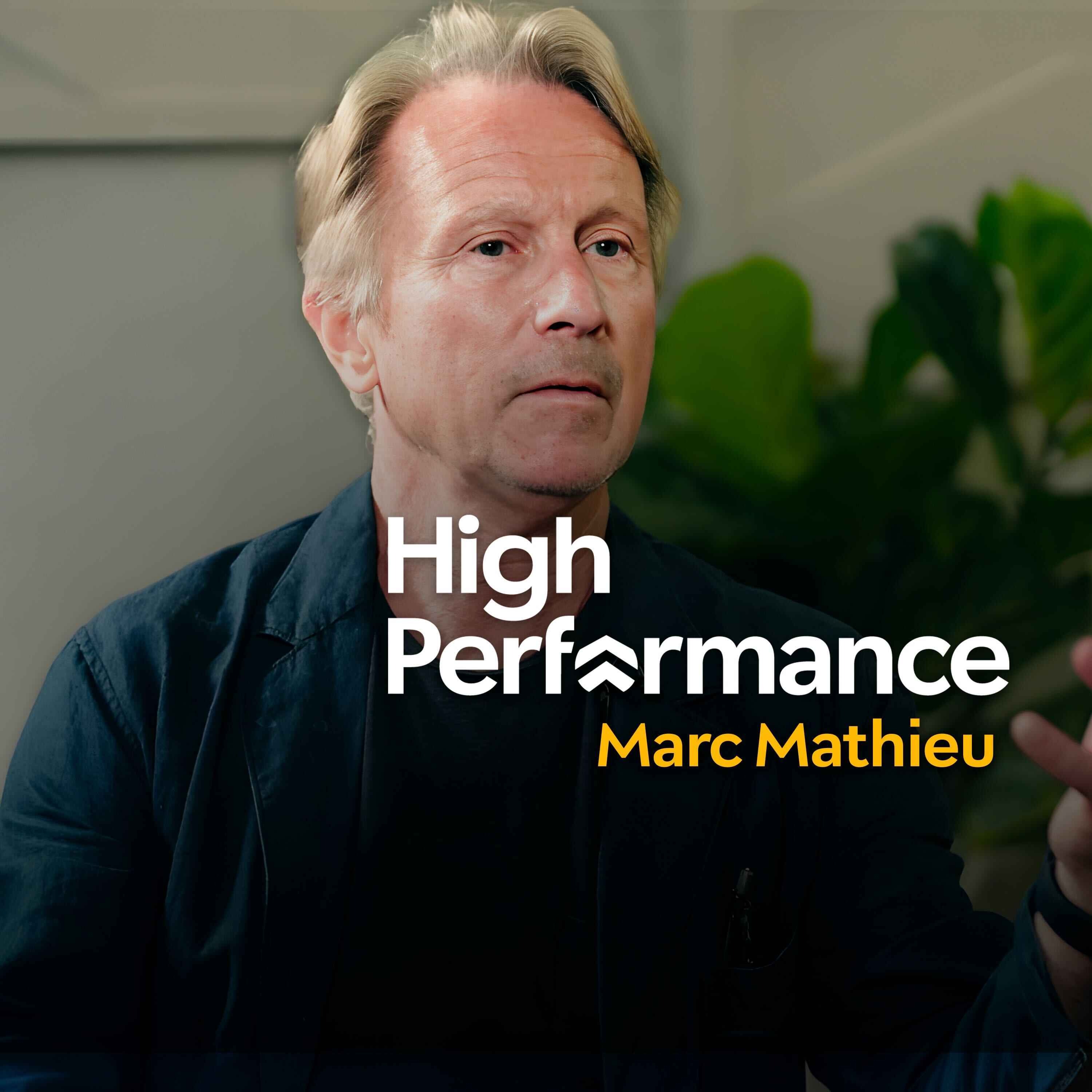
Marc Mathieu is the former Chief Marketing Officer at Samsung and Senior Vice President of Marketing at Unilever. He now brings his extensive expertise to Salesforce as the Senior Vice President of Strategic Customer Transformation and Innovation, where he focuses on transforming brand-consumer interactions through AI.
In this episode, Marc joins Jake and Damian to share his insights into customer success. He delves into the valuable lessons he's learned on delivering exceptional customer experiences, helping businesses thrive and seize new growth opportunities.
This episode is brought to you by Salesforce, a company that empowers businesses to build unprecedented connections with customers. By integrating customer relationships, AI, and data, Salesforce enhances productivity, strengthens connections, and increases profitability. They also promote innovation and trust within organisations, enabling teams to work more efficiently and effectively.
Hosted on Acast. See acast.com/privacy for more information.


