
 Ask ChatGPT


 The High Performance Podcast
3 Apr 2025 · 54m
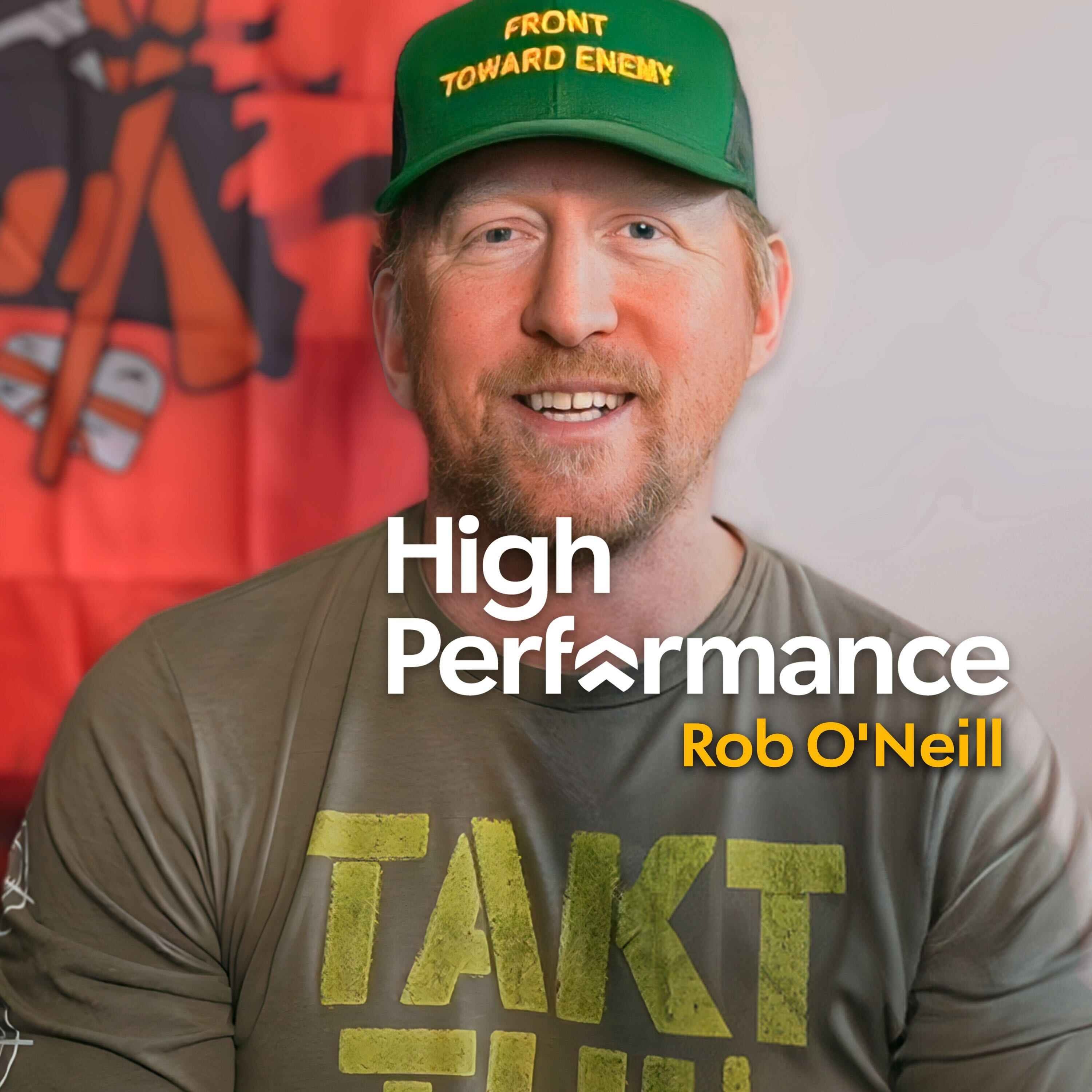
In this episode of The High Performance Podcast, hosts Jake Humphrey and Damian Hughes engage in a profound conversation with former Navy SEAL Rob O'Neill, who is renowned for his critical role in the operation that killed Osama bin Laden. Through Rob's experiences, the episode delves into themes of leadership, resilience, and the importance of living in the moment while providing practical advice and insights into high-stakes environments.
Written by AI. May contain mistakes.

Get the gist, explore an idea or ask about something said.
 Claude
On The High Performance Podcast, what are the key points of this episode?
Searching your listeningAutomatic transcript. May contain errors.
0:28Watch it early on the High Performance App. top of the stairs. He moved it. And because he went sort of left, I had to go right based on our tactics. And because I did that, standing in front of me three feet away was Osama bin Laden. That is the voice of former SEAL Team 6 operator Rob O 'Neill, the man who pulled the trigger to kill Osama bin Laden after a desperate manhunt that lasted a decade. Damien, I don't think we've ever had a conversation like this on High Performance. Absolutely, Jake. I mean, Rob Bob shares with us a really vivid description of the moment when he realised who his infamous target was, you know, the dynamics of that ever-changing mission.
1:03And there's a really heartbreaking bit where he kisses his kids goodbye rather than goodnight. Because as he tells us in this conversation, he thought this was the mission that would kill him. He talks about how one of the helicopters crashed on the way to Osama bin Laden's stronghold, how the whole mission nearly failed, the moment that he took the shot, and then that realization that his life had changed forever. And he is fascinating when we get into a deep conversation about how SEAL training equipped him for such a mission. As we welcome to High Performance, a former member of SEAL Team 6, Rob O 'Neill.
1:42Rob, welcome to High Performance. Appreciate it. So you're on the most high-profile mission of your life and suddenly standing in front of you is Osama Bin Laden. What are you thinking? Well, I can think back to right before we went up the last set of stairs. It was me and one other guy. He was called the point man, which means he's in front of me and I was referred to as the two man. And it wasn't planned that way. It's just that's how tactics work. As we were going up the last set of stairs with him in front of me, he was being brave. I was just thinking we're going to blow up for sure because Bin Laden's right behind this curtain.
2:18He's definitely a suicide bomber. I'm just tired of thinking about it. Let's get it over with. And when we went through the curtain at the top of the stairs, he moved it. The guy in front of me jumped on, kind of tackled people he thought were suicide bombers, which is incredible, because he jumped on a grenade that didn't go off. He gave his life for the guy behind him. He didn't know it was me. He knew it was one of his guys. And because he went sort of left, I had to go right based on our tactics. And because I did that, standing in front of me three feet away was Osama bin Laden. He had his hands on Amal, his wife's shoulders.
2:49She was right in front of him. He was maybe three feet away from me. And I remember thinking that he was a lot skinnier than I thought. That was my first thought. Skinnier than I thought. Taller than me. He was about six foot four. His beard was gray. I remember looking at his nose and thinking, that's his nose. That's definitely him. Based on his stature, he wasn't surrendering. So he's got to have a suicide vest on. And the way you handle a suicide bomber is by shooting him in the face. So I shot him in the face three times. And I've even heard people have a problem with that for facial recognition.
3:19but they've never dealt with a suicide bomber. I have before. And seeing a suicide bomber in person is very, very loud, very, very fast, and very permanent. So if you deal with it, it doesn't take them long to clack off a vest. So if you see a suicide bomber, better shoot them in the face. I hope no one ever finds himself in that situation. But if you do, that's how to act. So will you take us back to the moment when you realized that you were about to go on to this life-altering operation, Rob? Well, when we first were told, they recalled the most senior guys who were available, the guys with the most experience.
3:54And I was actually in Florida. I just finished a trip to Afghanistan. I was in Florida doing a dive trip. And they called me back to Virginia Beach. And they called other guys back to Virginia Beach. And the first time they sat us down in a room, all they said to us was, this is not a drill. This is real. And we found a thing. And this thing is in a country. It's in this house in between some mountains in a bowl. and you guys are going to fly in there and get this thing and you're going to bring it back and show it to us. And so our first question was, okay, what's the thing? Well, we can't tell you.
4:24Okay. Well, which country are we going to? Can't tell you. Okay. Where's this bowl? Can't tell you. How are we getting there? Can't tell you. All right. How much air support do we have? None. Okay. That's one solid answer. We were no air support. We don't know where we're going. So we assumed they were flying us into Libya and they didn't want to, because Libya had just, the Arab Spring had just started in North Africa right around March 2011, maybe a bit earlier in Tunisia and moved to Egypt and over to Libya. So we assumed we're going there and they didn't want to tell us how we're getting there because it would be on one of these planes called an Osprey off a flat top, like a carrier.
5:00And an Osprey is a helicopter that turns into a plane. It doesn't have a great track record, but that's what we figured. And then we just, we started getting our gear ready to do that. And they said they were going to bring us to a place to read us in on what we're actually doing. And when we asked them who would be at the read, and they started going down the list, and it was something like the vice president, the secretary of defense, the secretary of the Navy, the chairman of the Joint Chiefs. And we're just kind of like, wow, this is big. And they were going down the list. They said CTC pad will be there, which is the CIA's counter-terror desk for Pakistan, Afghanistan.
5:31And we're thinking, well, if we're going to Libya, wouldn't be there. So we decided it's got to be them. They brought us to a place to brief us. And that's when we met the bin Laden team, which is mostly women for the CIA. And a woman came up with the commanding officer of SEAL Team 6. And they said to the group of 23 dudes, the reason you guys are here is this is as close as we've ever been to Osama bin Laden. And to hear them say Osama bin Laden, nobody cheered. We were all experienced. We're just kind of like, all right, cool. Can we go now? We'll go right now. And they decided they wanted to tell us how they found him.
6:02And that was the first time I heard the word Abbottabad, which I've never heard of the city of Abbottabad, Pakistan. But hearing a primetime CIA target or say that, it's like, wow, this is legit. So they read us in. I think the brief took like five hours to the point like she got into so much detail. It's like, look, I don't even understand this stuff. I just believe you now. So tell us where to go. And we, you know, we were ready to go. We trained in that spot in North Carolina for about a week. And then we went out west to a super secret place that I can't say, but if you think about it, it's in Nevada.
6:34You can figure it out. We trained there for a few days. That's where we found out about the helicopters they were going to use, which is the first time in my life that I'm convinced, okay, there are aliens out there because there's no way a man invented this. And then we trained on the helicopters. The pilots had to learn how to fly them. We had the four best pilots in the world, but they didn't even know these helicopters existed. Wow. Why were these helicopters so integral and so special? The technology they had on them was it could avoid radar. And I don't know how it worked. And they were a little bit quieter.
7:07Helicopters make noise no matter what. But they just worked. And so the pilots that we had would actually fly them and hover them in front of pretty much the best sonar that we have. And the sonar couldn't see it. Sorry, the radar, not sonar. Sonar, sorry. But the radar couldn't even see it there. So we knew that they were kind of invisible. So that was a relief because we're going to fly into Pakistan for 90 minutes. And they have first world air defense and they could shoot us down. But that made us feel a little better. The pilots got good at them. So then we went over to Afghanistan and we kind of pre-staged there because we were one of five options.
7:41A couple bombs, a single bomb on the guy walking in the courtyard they called the Pacer who turned out to be bin Laden. And then us. And the way that I guess the decision was made, they didn't tell us then, but they told us later. President Obama was in charge, and he said, I was never convinced 100 % that bin Laden was there, but after seeing your team, I was convinced you guys could go in and find out and then come back out alive. And that's why he agreed to send us. Another option was a multilateral mission with the Pakistanis. And every SEAL Team 6 guy was like, yeah, you tell one Pakistani soldier what we're doing, and bin Laden will be gone.
8:22So they made the right call to send a team of us in there to see it. Like one of the options was something like 22, 2 ,000 pound bombs, which would have destroyed the whole block. And we'll never know if we got them. We'll never know who was there. And we'll kill a lot of innocent people, which it's not worth it. Just let us go check it out. And we did.
8:42The market's uncertain. Revenues tied and hiring on hold. That's why results driven companies are using Upwork to keep work moving. Go to Upwork.com today and start hiring proven freelance talent fast. No bulky overhead. No rigid long-term contracts. Just the right expert right when you need them. Work smarter and faster with Upwork. Go to Upwork.com now and find your freelance expert. That's U-P-W-O-R-K dot com. Post a job for free and get started today. At Capella University, learning online doesn't mean learning alone. You'll get support from people who care about your success. like your enrollment specialist who gets to know you and the goals you'd like to achieve.
9:25You'll also get a designated academic coach who's with you throughout your entire program. Plus, career coaches are available to help you navigate your professional goals. A different future is closer than you think with Capella University. Learn more at capella.edu. This episode is brought to you by Opera Air, the first browser with mindfulness at its core. Now, most of us spend hours every day online, but how often do we pause to take care of ourselves whilst we're doing it? And that's where Opera Air comes in. It's a lightweight, fast, secure browser built not just for productivity, but for your wellbeing.
10:03With Opera Air, mindfulness is built right in. You'll find free breathing exercises, guided meditations, and soundscapes with ambient sounds, lo-fi music, and binaural beats, all designed to help you focus, relax, and even spark creativity while you browse.
10:22Why you guys? Because I thought that there was like a group who was specifically training to go and take out Osama bin Laden when they found him. There's a couple of groups that I would have been comfortable with. Delta Force, the US Army, I would have been comfortable with. Special Air Service, Special Boat Service, you know, SAS, SBS, and then SEAL Team 6. And there are other units that would have been capable of it. But we were able to get the mission because of really good forward planning, forward staging. We put people in places along the border of Afghanistan. We were running sources in and out of Pakistan.
10:57We also put, myself included, we put guys into Washington, D.C., where we could work with the White House, work with the Joint Chiefs, work with the National Security Council, the State Department, stuff like that, just to give them a comfortable feeling that we knew what we were doing. So we had guys in place for years. So when the call eventually came, they would decide it would be us. And the guy that was in charge of Joint Special Operations Command, which is the parent command for SEAL Team 6 and Delta Force, was a guy by the name of Admiral Bill McRaven. And he's a Navy SEAL. He's a SEAL Team 6 guy.
11:29him in charge, our forward staging. And then two years prior, we had done the first national mission as far as hostage rescue at sea. It was the same team that jumped into the Indian Ocean actually on my birthday, Good Friday, April 10th, 2009. And that was the same team, my team that rescued Captain Richard Phillips from Somali Pirates because we pulled off that mission. I mean, no one ever thought of that kind of a mission. We pulled it off without a scratch and they were just comfortable with what SEAL Team 6 could do. And we had a good track record in Iraq in Afghanistan, Yemen, Somalia. So it was a smart call.
12:03It was a good call. And I was very honored to be a part of that team. So would you tell us a little bit about the training then, Rob? Because you already sound like you're operating at an elite level. I'm interested if you could detail a little bit of what the training looked like to prepare for this mission. We didn't need it. We didn't want it. We were training more to prove to the powers that be that we could do it. and that actually worked in our favor because we were able to talk them out of stuff. A lot of people have a tendency to overcomplicate stuff. Like they'll say, for example, an intelligence person might say, okay, when you get there, there's going to be five men and 10 women and 20 children.
12:43And I would say, don't tell me that. Tell me there's 35 people and I'll figure it out when I get there. I don't want you to tell me what you think. Tell me what you know and I'll figure the rest out. Don't tell me when I go through the front door, there's definitely a left-hand turn because there will be a right-hand turn. I don't want to hear something you think. So we were able to dumb it down for us to keep it simple. I mean, the way that we cleared it was, if the guy in front of me goes left, I'll go right. Just keep doing that over and over. So we were able to make it simple like that. We're able to give them a warm, comfortable feeling.
13:12We'd been in so much combat all over the world. I think each one of us had at least 400 separate combat missions. Training is one thing, but you learn in combat. You learn what works, what doesn't work. You change your rules, change your tactics, change the way you effectively communicate with your team. We just got really good. The difference between my first mission in Afghanistan to the Bin Laden raid, tactics were way different. Guys were way more experienced. We were just ready to go. I mean, we weren't even really excited. I mean, we were honored, but it wasn't even really butterflies. It's like, this is going to be badass.
13:45That was pretty much the extent of it. And even as far as fear, that didn't happen. There's nothing wrong with being afraid, but on this one, it was just more focus. But to go into this very specific compound, I'm wondering, was there any specific training that you did? No, just our bread and butter is the tactics that, you know, CO Team 6 had invented since 1980. And we've been fine-tuning those, and they're going to work everywhere. So, I mean, it was smart to get to know the lay of the land, get to know the history and the culture, what the exterior looks like, ins and outs, you know, infill, ex-fill, stuff like that, potential safe spots, safe houses, and where's the route to the mountain that I might need to climb to get back into Afghanistan in case the helicopters get shot down.
14:28So that was smart to know the exterior, which helped us out because everything went to shit. So I can see how when you're training with your fellow SEAL Team 6 members, you're in work mode. It's about the mission. It's about protecting America. It's about doing your job. But there also must be a moment where you have to say goodbye to your family. That was a tough one because we weren't allowed to tell anyone where we were going because we just finished a deployment to Afghanistan. We were supposed to be training around the country, around the world, different things, but not going to war, which is part of the reason they picked us because it wouldn't be a red flag.
15:02Leaving the house was tough. My youngest daughter, I think she might've been three at the time I had to leave and that was hard. I couldn't tell her where I was going. And I said, but I'll be back soon. So she went upstairs and she grabbed like a little teeny pink Hello Kitty carry-on. I think she probably put a pillow in it and she put it in front of the front door and said, well, I'm leaving this here, dad. And when you come home, you get to take me on vacation. And that's tough because you have to leave. You can't tell anyone, including my wife, where I'm going. And then when I got over there to Afghanistan, I hand wrote notes to my, I had three daughters at the time.
15:37Like my middle daughter was seven and I didn't write her, I didn't write the seven-year-old a letter. I wrote a letter to the 27-year-old woman. I'm really sorry I missed your wedding. I know you were beautiful and thanks for taking care of your mom and your sisters. But, you know, what we did was noble, kind of explaining, tears hitting the page to each one of my daughters and then to my family, another one to my family. And then the hard part after that was I had to put it in a manila envelope and I couldn't give it to a friend because if I die, all my friends are going to die with me. So I had to find someone on the base that was working in one of the intelligence shops.
16:08And I handed him this manila envelope maybe an hour before the mission and said, hey, when you see me tomorrow, I want this back. If you don't see me tomorrow, there are instructions inside the envelope. Do what it says. And he goes, well, how will I know? And all I could say was, trust me, you'll know. When you said to your daughter, I'll be back soon, did you believe that? No. No, I thought that was it. And that's the hardest part right there. Getting shot at is really easy. Getting blown up, I'm assuming, is really easy. But looking your kids in the eyes and you're both aware that this could be it.
16:44this might be the last time we ever see each other. And there's a huge difference between kissing your kid goodnight and kissing your kid goodbye. And I mean, two of my daughters, I've kissed them goodbye 11 different times wondering if this is it. And that was the second to last time. And it's just, that's a very hard part, especially when you can't tell them what you're doing. And you got to figure these girls grew up in a community where there's other SEALs, where there's Marines, there's sailors, there's soldiers. Some of the kids they went to school with, their fathers never came home. So they're familiar with it.
17:12This is not a, it's not abnormal. normal. It's weird that it became normal to go to a funeral. So, yeah, I mean, it's a lot of emotion in there. Did you think you were going to die on this mission? Yeah, I did. I mean, I thought we were, I thought we're going to get shot down on the way in. And then I thought if anyone's going to blow himself up and kill everyone in the house, including his own family, it's Bin Laden. And then we might run out of fuel because it's a long flight in and a long flight out. We don't have any resupplies. There's no refueling. So we might need to be running. We The Pakistan police might show up.
17:45The Pakistan military might show up. We'll either shoot it out with them or die in a Pakistani prison, which would be a miserable way to go. I mean, it was a very high probability this is the last mission we go on. And how do you park those emotions, Rob? That description of writing those letters is heart-wrenching. So how do you write them and then be able to get yourself into the mode to actually go and deliver? We talked about it. We talked about it every night. And I remember even the guy that I mentioned before that led me up the stairs, he said before the mission, he said, don't take this the wrong way because I'm going.
18:22100 percent, I'm coming on the mission. I just need to say this out loud so I can hear it. If we know we're going to die, why are we going? And we talked about that pretty much every night. And we decided that we're not going after bin Laden for the fame. We're not going for the reward because we'll never get that. we're going after Osama bin Laden tonight for the first Americans to fight Al Qaeda to the death toe to toe. And those were the passengers on United flight 93 on 9-11. You know, we're going after bin Laden tonight for the single mom who dropped her kids off at elementary school on a Tuesday morning, a beautiful morning.
18:53And 45 minutes later, she jumped to her death out of a skyscraper because that was a better alternative than whatever the hell's going on inside at 2 ,500 degrees Fahrenheit that we'll never know. And this woman, you know, she probably looked down and made a choice. She might have grabbed a stranger's hand. And her last gesture of human decency was holding her skirt down as she killed herself. You know, these people were never supposed to be in the fight. Navy SEALs are supposed to be in the fight. And that's why we're going. Wow. So at what point do you park all of that? And it becomes about doing the job.
19:26Was it when you were in the helicopter? Well, we got a brief from Admiral McRaven, which I'll never forget. And we didn't, we're experienced dudes. We don't need a motivational speech. But Admiral McRaven said, all right, guys, last night I watched my favorite movie, Hoosiers. And it's about this basketball team in Indiana, a small town called Hickory, Indiana. They've never left the small town. There's seven guys on the team. Long story short, they end up in the state championship. And the team walks in to this huge arena. And they're all starstruck. And coach recognizes that, played by Gene Hackman.
20:01And he said, all right, he put the smallest guy on the shoulders of the biggest guy and handed him a tape measure. And he's like, what's the measurement from the rim to the ground? And he goes, it's 10 feet, coach. Okay, now what's the measurement from the back of the rim to the free throw line? That's 15 feet, coach. And the coach said, yeah, you'll find those are the same measurements as your gym in Hickory. This is just a bigger audience. And he looked at us and said, gentlemen, you guys do this every night. This is just a bigger audience. and as we were leaving i pulled the admiral aside and i said admiral um i you're so busy right now i highly doubt you watched hoosiers last night but you were born to give us this speech right now and then we left that we're walking out i stopped by one of the spaces where there was a phone and i called my dad i would always call my father you know we i obviously grew up with him and he was my basketball buddy and uh i i would call him before missions on you know in iraq and afghanistan stuff And he, we'd, I'd say, Hey, I'm going to work.
20:56And he'd say, yeah, man, I wish I was going with you. And I'd say, I wish you were too, dad. On this one, he didn't even know I was overseas. I said, Hey, I, the call was weird. Cause I was, I wasn't talking current events. I was thanking him for teaching me stuff, how to be a man. And then I said, Hey, I got to go to work. And he said, I wish I was going with you. And I said, you know, dad, I'm with some great people. And I hung up and then I was leaving and we got on the helicopters. And instead of, instead of, um, handshakes, cause you know, we'd been to combat so much. we gave each other hugs and it's kind of like, all right, see you on deck.
21:26We'll have a good fight and see you there. And then the flight in is when it really sunk in because we got 90 minutes to fly in and we could be shot down at any moment. But worrying about that's not going to stop it. Like worrying about a missile is not going to stop a missile. So stop wasting your energy. And I, I tell people now all the time, like if whatever you're worried about right now, if your worry has nothing to do with it, you're wasting your energy, bro. Stop worrying about it. And so what I was doing is I was counting. I'm on the helicopter, 90 minute flight in, and I'm counting from zero to a thousand.
21:55I learned this as a sniper counting zero to a thousand, thousand to zero. I'm, you know, I'm alert aware I'm looking around, but I'm counting to keep my mind occupied. And I was, I was actually looking around the helicopter to see what my teammates were doing. Like Cairo, the dog, the Belgian Malinois right next to me, his handler, Will Chesney's right there. No ordinary dog is a book to read about him. Then I look this way. I'm trying to see what my friends are doing. Cause they're all in the helicopter too. And I'll never forget. I look at one of my guys, and we're always, for some reason, we're always in a good mood.
22:24One of my dudes put his headphones on, and he fell asleep. So this dude is asleep, and I look at him, and I'm like, you're asleep, like literally on the ride to Osama bin Laden's house. And then I kind of smiled, and I thought, you have ice in your veins, and I actually see why women find you attractive. And then we're flying in, but then it's a 90-minute flight. We banked to the south, So we're 10 minutes out and it's kind of, and I don't know why I remember this. I don't know how it's some sort of weird. It sounds Hollywood, but I'm counting and I'm like 556, 557. Freedom itself was attacked this morning by a faceless coward and freedom will be defended.
23:01And I don't know how I remember that. That's what George Bush said on 9-11. I was like, well, screw counting. I'm going to say that again. Freedom itself was attacked this morning by a faceless coward and freedom will be defended. And we're still flying. And then the air crew guy reaches over and he opens the helicopter door and they never get credit to the crew chief. Never. You know, the army guy, his job, the crew chief was to keep the helicopter flying and open the door. Like if we got hit with a missile, his family would miss him just as much. But they never mentioned like his to open the door.
23:29Imagine if we didn't know how to do that. Like we got two helicopters full of assholes can't get out. But he opened the door and I looked down and we're no longer in a training area in Nevada. I know there's a golf course. This is a resort town. and we're getting ready to hit it. And I remember this arrogant smile and all I thought to myself was, this is some serious Navy SEAL shit we're about to do. And that's when like the heart starts beating. I'm with my guys. And then that's when all hell broke loose. So describe what happened next then, Rob. Well, we came up with the perfect plan and we rehearsed the perfect plan.
24:02And the perfect plan was the first helicopter is going to fly and hover right above the yard in front of Bin Laden's house, like in between the guest house and Bidlon's house. My helicopter is going to go outside the 20-foot walls because the whole compound was surrounded by big walls. We're going to let the dog, his handler, a couple snipers and an interpreter out. And then my team is going to go to the rooftop. We're going to jump onto the roof. We're going to jump onto his balcony. So we're going to hit him probably through that window on his balcony. And then we're going to get on the team on the bottom, the team on the top.
24:31That's a perfect plan. But the first helicopter, when it tried to hover, and I'm not a pilot, but the pilot explained to me that it was like one or two degrees Celsius warmer. And there was an updraft because the fences, the walls were different than the fences we were training on. And the pilot immediately realized he couldn't hold a hover. But if he would have tried to power it up, he would have rolled it and killed everybody. He realized, and this all happened in less than a blink of an eye. He realized if he could turn it and pin the tail on that one of those big walls and pin the nose into the dirt, we might all live.
25:06And so he did that, boom. They all jumped out and they're starting it. When we let our guys out, our pilot saw them land. So he realized, so he went up to take us to the roof, but he realized if he couldn't hover, we can't hover. So he just went back down and basically said to my team, get out. So we got out. And so now we're supposed to be on the roof, but now we're outside. I'm looking over the fence. I can see Bin Laden's house, but because we did such great preparation, I know off to my left, there's a double door that goes into the courtyard. We can blow that up with a seven foot charge of C6 simple.
25:38So he went over there, put one on there, blasted it. And the double door opened like a tin can, but there was a brick wall behind it. And the dude that was in front of me that set the charge, he turned around and said, failed breach. This is bad. And I said, no, this is good. That's a fake door. And nobody does that. He's in there. Okay. Now I know there's a double door this way to my right. Cause we knew that it opened because we'd seen cars come in and out. So I came over. I didn't know they crashed yet. The way the helicopters worked was dash one and dash two. What I heard them saying was dash one going around.
26:12Dash one going around. What they were saying, because I assume they took fire and they're just going to do a quick racetrack, come back and engage. What they were saying was dash one going down. I didn't hear it. So I came over the radio, said something along the lines of, this is so-and-so. I'm going to blast the carport. And they said, no, don't blast it. We'll open it. And the carport, the two doors opened and a glove came out with a thumbs up with a glove that I recognized. So my guys are in there. I don't know how, but now I'm at a point in life where it doesn't matter why you're here. You just are.
26:41So I just went in there. There's a gunfight going on. And I, there was an explosion. I got into the, uh, bin Laden's house. My team had already killed three terrorists and they're working the first, uh, hallway on the first floor. So I got into a, um, I got into a room cause I always tell people when I tell the story, I hope you never find yourself in this situation. But if you're in a shootout in a house, get out of the hallway. It's just good business. So I'm in this room and my guys are in front of me. And I remember being so impressed because everyone ahead of me knows they can die at any minute.
27:12I'm even looking for bombs, but it's not bothering them. We're doing what we do. Slow is smooth. Smooth is fast. I was just proud of them. And the guy next to me in the room who was on the helicopter, the crash, he whispered to me, helicopter crashed. And I looked at him and I go, and we don't really talk on target, but he's told me that. I go, my God, what helicopter crashed? And he goes, bro, ours did. Like, it's in the front yard. I think he walked right past it. Like, okay, weird. So it's registering. That's how the guys got in here because they crashed. And as we're doing this, the sniper that we let out on the outside with the dog, his job was to run around the entire place, the big wall, twice to make sure no one escaped.
27:47But as we're having this conversation, I'm figuring out, being told that the helicopter crashed. He saw the part of the helicopter that the pilot pinned on the wall. So it's hanging over the exterior of the wall. He's running past it. He didn't know they crashed. So he came over the radio and he said, hey, guys inside, you got to be on alert. They're ready for us. They have a training mock-up of our super secret helicopter in their front yard. And the ground force commander came over and he goes, no, jackass, that's ours because we crashed. And the sniper, you hear him go, that makes a lot more sense than the shit I was just saying.
28:24Carry on. So that's a conversation we're having. And then we just we kept maneuvering down the hallway. and when I say that I don't want to know what you think the house looks like the woman that found bin Laden and she ended up being 100 % right on everything uh she said I don't know where it is but there will be a stairwell going to the second floor and you will run into Khalid bin Laden he will be armed and she was so dope she said uh and if you can ace him you get a shot at the big guy that was so cool the way she said that so we ran into him uh and it was quiet I was about seven guys back at this point because you know guys are peeling off and doing their job so i'm slowly making my way up the train we're going up a stairwell we saw khalid and he kind of jumped behind this uh banister so just so because the stairs go up and then they come back i'm seven guys back he jumps behind a banister and normally because we've been in combat in urban environments a lot normally i'm going to pull some dudes and take them to another place because uh if you're going up someone can throw stuff down on you uh like a grenade but i'm here and i remember watching this there's two grown men separated by a 10 inches with they both have automatic weapons and they're trying to kill each other i'm gonna die tonight anyway i gotta see what happens uh now what we're good at because of our experience is we don't talk at all so we're quiet we don't turn our lights on we don't yell anything like i hate when i watch movies they yell go go go go or fire in the hole it's like why don't you just yell here we come just shut up if you see your friend put a bomb on the door assume it's about to go boom you don't need to yell anything.
29:52Don't go near it. He's going to blow it up. So they're on the stage. And the point man, again, was so smart. All he did was say, he whispered to him. He said, Khalid. And he said, like, Irvai Deck, drop your gun, something like that. Come here. Anyway, he said something in two different languages that he knew Khalid spoke and that confused Khalid. So all Khalid did was he leaned his head over the banister and said, what? That's how that ended. And I was like, that's the coolest thing I've ever seen. I never would have thought of that. Brilliant. The guy's brilliant. So then we stepped over his body.
30:22Then we went to the second floor and it kind of branched out into different rooms, different hallways. So everybody in front of me went to the left and right. Cause you got to clear unknown spaces. There's unknown people. You got to cover them, all this stuff. And then that's how we got down to two guys. And then that's when we went up the last set of the stairs. And that was actually something too. Um, this is my part of the story. He might have a different story, but when I was holding him, uh, not holding him, I have my hand on his shoulder cause I'm just letting him know he's got a guy. And my job is to look back.
30:50His job is to look forward. But when I squeeze him, I'm telling him through effective communication, we have enough guys, but I got nobody. It's just two of us. And he's, he's sort of, he's pimping me like we got to go. Cause what he's saying is there's suicide bombers up there, but we can beat them, but we got to go now. Right. And I'm like in a spot where, and all of a sudden he said, Hey man, these bitches is getting truculent. And I remember this is going to be my last joke in my life. Cause we're going to blow up. I whispered in his ear. I don't think that word means what you think it means.
31:21And then we went up the stairs. What were your thoughts and emotions, Rob, when you realized that it is who you've come to find? Well, initially it was, well, okay. Initially I thought we were going to die, but then I shot him. And just because of what we do. So Amal, his wife had been shot in the leg before I got there. And I need to move her out of the way because I just killed Bin Laden at the foot of his bed off to my left. I want to move her now because other SEALs are going to come in. I don't want her getting caught in a crossfire because again, we're the good guys. As I'm moving her, I look down and as a father, I always talk about the humanity of these missions because it doesn't matter where you go, not everyone's a combatant and a lot of people just want to get on with their lives.
32:02They don't want a bunch of big soldiers with green faces in their house. They just want to live their lives. I looked down and his two-year-old son, Hussein, was standing there and I remember thinking, this poor kid has nothing to do with this. Like, why did he have to see this? So I moved both of them and then other seals are coming in the room at this point. And then I kind of stopped for a second. And one of my buddies, I heard Ben Laden take his last breath. I can hear him exhale. I can see how it's a very devastating head wound. And I'm just sort of standing there gathering my thoughts. And one of my buddies comes up to me.
32:33He goes, hey, man, are you good? And I said, what do we do now? And he got this big smile and he goes, now we find the computers, bro. We do this every night. Hundreds of times you've done this. Come on. I said, yeah, you're right. I'm back. Oh, my God. and his response to me was yeah you just killed Osama bin Laden your life just changed now get to fucking work and in that moment where you were saying what do we do now I don't think you would have said that very often before on a mission because you were working what had happened in your brain at that moment that kind of was a bit of a full stop well it's more of a we might live that we might pull this off and it wasn't like a it wasn't a long pause it was more of a you know it was long enough to hear him exhale I could see steam coming out of his head and then my buddy popped up but he's like, he was just kind of getting me like, you know, get back to, come on.
33:20And he had been downstairs and he saw how many offices and computers and hard drives and intelligence and raw opium and all this shit. Like, we got to get a bunch of stuff out of here. So get your bag. We got to put him in a body bag. We got, well, we got to confirm it's him first. We got some work to do before we can leave. And then we got a 90 minute flight out. So let's, you know, we wanted to be on, on target for no more than 32 minutes and we hit around 47. So you're in a hurry. One thing that is confusing for me in this whole thing is, why at this point was the house not surrounded by local militia or other gunmen?
33:52I mean, the noise, like, what was going on there? Well, we were able to, we brought a, and I'm not trying to keep a secret from you. I don't know who he is, but we brought a dude with us that spoke fluent Urdu, no accent. And so he was able to stand outside and tell people, hey this is a Pakistani intelligence mission just go back to your home and they kind of believed him they were getting riled up but they didn't know what it was he was able to convince them because they're so far from the war that people kind of like that makes sense and even when I got outside there was a dude out there live tweeting like he had a phone in his hand and he's tweeting and I could see his face like if if Twitter then was as big as X is now there would have been people all over us but this guy you can still read his tweets he's like why would they be doing a training mission on a Sunday.
34:42And I even remember looking at this dude thinking, this is when we're about ready to leave. If we're in Iraq and I just hit a target and some dude's outside on the phone, I'm killing him because he could be setting off a bomb. But I looked at this dude and I'm like, he's on social media. They have no idea we're here. We can still leave. Whoever brought the smart guy who I still don't know who he was, that really was key. And just that we, you know, I mean, we crashed a helicopter, we were blowing up bombs the whole time. Then we blew the whole helicopter up before we left. Then we had to call big, loud helicopter, one of them in to get us.
35:14So it was, I mean, divine intervention, proper planning, great pilots, probably all had a part of it. Well, but there's that famous picture from Obama and his cabinet and advisors watching this mission take place live. Were you ever in contact with these guys to get permission to go ahead? I personally was not. Admiral McRaven, whom I mentioned earlier, was his speech to us was awesome but he made one of the ballsiest decisions or calls right then because when we crashed that first helicopter admiral mcraven realized we might have just lost half the team uh we might not have but the one thing i know for certain is that the white house freaking out right now is not going to help so what he did is he came immediately when that so that picture was taken when we crashed when the other helicopter crashed he came over the radio and and contacted to them and said, look, obviously there's been a contingency, but we're going to continue mission because my guys can do this.
36:12And that calmed him down. He didn't even know, but he's like, well, I guess we're all in, so might as well go with it. And he made that call. And if you'll notice too, that wasn't even the situation room. If you get into the West Wing, the situation room's on one side when you walk in. On the other, it's almost like an assistant situation room. And that's where that general web was. He was setting up the computer in there. The situation room couldn't even get the feed he did then they all the cabin it all came over into that room that's why president obama is actually sitting in a folding chair and a one-star generals at the head of the table because he could fix it and president obama was just cool man he's like hey i'll sit here so were they were they watching the footage from did you have a body cam on is that what they no no we didn't carry body cameras nobody had a camera they just had something they had some assets above us watching from i don't even know the altitude i don't know anything about the assets but they were watching something yeah right so at what point rob having had to say goodbye to your children having believed that this was the mission that you were going to die on having had to compute the fact that you are the person that ended the life of osama bin laden at what point did you take a breath and realize you were going to be coming home from this mission this mission was yeah that was that was a tough one to um take at first because uh you know we had been joking about it with each other about who's going to be the guy that kills him and and after it was done everyone was asking even seals in the in the house that weren't in the room first thing first question they asked was who got him um and that was actually funny because i'm known for being able to tell a good joke and a good story and keep morale up and my so my nickname was nisro nsro people call me nisro navy seal rob o 'neill nisro sounds fun and i guess the common conversation was uh hey who got him nisro nah shit we're never going to hear the end of this but but we would joke with each other like the guys outside the snipers outside i said we're going to get to the third floor and he's going to pop one of those uh like emergency exits on a plane it's going to be a yellow slide he's going to slide right down to you're going to get the kill but then to get it and then to just to go back i mean it was a lot even when we got on the helicopter um when i got on the helicopter to ride out the sniper that rescued captain phillips was sitting right next to me that's how small this team is he the first thing he did was lean over he handed me his tobacco and said here take a dip now you know what it feels like to be a hero weird so seal team six another team came in on the helicopter that no one talks about the seal team six and the army rescued seal team six on the bin laden raid so i sat down next to that sniper and then another guy from a different squadron from seal team six and he's from new york he's actually from manhattan and he said to me i know the guy really well and he said hey who got him and i said uh i did and to have another seal look at me and go on behalf of my family thank you.
38:50It just, it's surreal. It didn't make sense. And then getting back, like I've always said, like the woman found him. She's the reason we're there. The pilots got us there. The team got me there. I just turned a corner because of the guy in front of me and I just pulled the trigger because of the tactics. And I don't need this pressure, man. This is a team effort for years. I just, you know, I was smart enough to carry a sledgehammer and a gun and I used my gun. I shot three bullets the whole mission. And it just, you know, it was a lot to deal with. And And then, you know, certain personal things like being at a SEAL Team 6 level where guys get through the hardest military training in the world where 85 % of the guys who try out don't make it.
39:23Then you get done with that. You got about six years as a Navy SEAL. Then you go through another year-long selection process where half of those guys don't make it to an elite unit. Then they pick out of that elite unit 23 dudes who are the best of the best of the best of the best. Then one guy gets the kill. it's like there's going to be a little bit of jealousy, I guess. And I just didn't want it. So we're dealing with those emotions. It's weird to see the name SEAL Team 6 and all the newspapers, all the websites. Then, so we did that in May and August, August 6th of 2011. We had a helicopter get shot down.
39:58We lost 31 Americans. We lost 17 guys from SEAL Team 6. We went from planning missions to planning funerals and morale just took a dump. So it was a point where it's like, that's when I kind of decided that was one shot and a bullet needs to be right once. I want to see my daughters get married. I got to get out. That's enough for me. So I did one more combat deployment. It was a weird time for everybody because Navy SEALs had never really been in the media until then. If you're still overpaying for wireless, it's time to say yes to saying no. At Mint Mobile, their favorite word is no. No contracts, no monthly bills, no overages, no hidden fees, no BS.
40:38I made the switch because I was tired of those ridiculous bills and sneaky charges from my old provider. With Mint, I'm paying$15 a month and getting the same high-speed data, unlimited talk and text, and the coverage on the nation's largest 5G network. Honestly, the quality is just as good, if not better than what I had before. And the best part? You don't need a new phone. You can keep your current one, bring your number, and all your contacts. I use Mint Mobile, and you should too. Ready to say yes to saying no? Make the switch at mintmobile.com slash HPP. That's mintmobile.com slash HPP. Upfront payment of$45 required, equivalent to$15 a month.
41:15Limited time new customer offer for first three months only. Speeds may slow up a 35 gig on unlimited plan. Taxes and fees extra. See Mint Mobile for details. You walk in tired and hungry. One bad dinner away from losing it. You don't like to cook. You don't want more takeout. You just want something good. That's why there's Dish by Blue Apron. Pre-made meals with at least 20 grams of protein and no artificial flavors or colors. From fridge to fork in five minutes or less. Keep the flavor. Ditch the subscription. Get 20 % off your first two orders with code APRON20. Terms and conditions apply.
41:52Visit blueapron.com slash terms for more. The market's uncertain. Revenue's tight and hiring on hold. That's why results-driven companies are using Upwork to keep work moving. Go to Upwork.com today and start hiring proven freelance talent fast. No bulky overhead. No rigid long-term contracts. Just the right expert right when you need them. Work smarter and faster with Upwork. Go to Upwork.com now and find your freelance expert. That's U-P-W-O-R-K dot com. Post a job for free and get started today.
42:30so the seals training rob is renowned for testing your mental toughness what did you learn about yourself when you're in the depths of that pain that struggle and that eight-month training program i learned that growing up in montana uh at 5 000 feet i was a lot more acclimated to sea level and I could run really fast. I also learned because I was from Montana that I didn't know how to swim. So don't be afraid if someone's better than you to ask them why they're better. And that even moved on to when I got to the SEAL Team 6 level. I would wake up every morning and be excited because I had the opportunity to go to work with people who were better than me.
43:10And when I would see people who were better, who outshot me at a competition or whatever, I would ask them questions. And I wouldn't undermine them because you're going to bring the team down. I wouldn't try to screw them over so I can get a promotion. I would ask them, what time do you wake up and what workout do you do? Why did you move that pouch to here? Why did you stop carrying water in a camelback and you switched to a Nalgene bottle? What's your thought process here? And I would absorb it. And they would do the same for me. And maybe as a team, we're going to come up. And as a team, if we move forward together, success takes care of itself.
43:37But I had an instructor at SEAL training, the initial SEAL training, eight, nine months long or whatever, where 85 % of the guys don't make it through. There's so much going on. SEAL training is so hard. It's not hard to understand. just hard to do. It's a thousand pushups a day, a thousand sit-ups a day, a thousand flutter kicks a day, 500 pull-ups a day, four mile ocean swims, tied up, hands behind your back, feet together, thrown in a pool, stuff like that. A lot of stuff to think about, a lot of timed drills where they'll kick you out if you fail, but don't overwhelm yourself with loose ends.
44:06Like make a list of what's important. And then at the end of the day, write a list of how you handled it. But the way that it was explained to me by a SEAL instructor, I don't know why he said this to me. He just liked me. He said, I know it seems like a lot to get from now to graduation day, but don't think about it that way. That's way too much. Here's how you get through SEAL training. Wake up in the morning on time, make your bed the right way, and then brush your teeth. You just started your day with three wins. That's a good way to start your day. Three victories. Make it to the 4 a.m. workout on time.
44:35As I'm beating you, don't think about the pain. Concentrate on your next goal in life, which is breakfast. After breakfast, your next goal in life is lunch. After lunch, your next goal in life is dinner. After dinner, do everything you need to do to get back inside that perfectly made bed. And because you took the time for yourself in the morning to make your bed the right way, regardless of how bad today was, and it will be bad, tomorrow is a clean slate. And when you feel like quitting, which you will, do not quit right now. That's emotion. Quit tomorrow. And if you can keep quitting tomorrow, you can do anything.
45:07So were you ever derailed by the success of others? Was I derailed by it? No, it was an honor to be there. It was like an everyday thing. I didn't realize I was going to graduate SEAL training until two days before graduation because SEAL training was so bad. I was, I remember thinking, I know I have a past. I definitely came from somewhere, but I don't have a future. I'm just going to be in hell and I'm just going to accept it. I'm going to be in hell. It's going to suck. Then two days later, you know, we're graduating. I'm like, oh man, now I got to be a Navy SEAL. I'm not even sure I know what that is.
45:36So, but just then you get to, I got to a team where there were more experienced guys and then just kind of follow their lead. And I learned more about humor, like the morale aspect. I saw dudes walking to the gym, like the first day I got there, my friend Scott Neal, God rest his soul, love the guy. He was walking into the gym, carrying a gallon of milk, like drinking it, like stopping and looking around. And I'm like, I have a question. Why the gallon of milk? And he goes, well, you're pretty skinny. You look like you're fast. If I get shot and I'm wearing my body armor, can you carry me home?
46:07I said, I don't think so. And he goes, then come to the gym with me. It's like, all right, I'll follow you. Where's my gallon of milk? I think one of the joys of your life is that you've managed to have a career where you find your limits. I would love you to take us to the moment in SEAL training where you really did find your limit, how it felt, how you overcame it. That would be in Hell Week, which is the hardest part of SEAL training. And that's where - It doesn't sound great if I'm honest. No, yeah, it's, it starts on a Sunday. Is the name accurate? Yeah. Yeah. You start on a Sunday and you don't sleep at all until Friday.
46:46You're doing training around the clock and you're wet and cold and miserable and salty and sandy. It gets so bad with the wet clothes and the running and carrying the boats on your head that not only do you have huge bald spots, but every part of your body that's touching cloth starts to bleed because it's been rubbing it, the salt water and the cloth. It's horrific. and there was a point where it's a whole thing where if you're having a good day, call someone, you're having a bad day, call someone. We decided that if you're having a bad time, tell someone because they might be having a good time.
47:15And if you're on a high, tell someone because you're with a boat crew the whole time. You're every, you know, there's seven guys together in hell week and someone might be having a bad day or whatever. And we were doing, um, it was Thursday night. So we're going to be done in maybe 12 hours and we're rowing the boats around Coronado. I looked back and I said, Hey, do you guys see that aircraft carrier right in front of us? And everyone goes, no, there's not a, there's not a carrier in front of us. Like there's nothing there. And I, cause I could see an aircraft carrier cause I'm hallucinating.
47:42I said, well, if there's no aircraft carrier in front of us, I'm, I'm assuming that's not a real fire breathing dragon on the flight deck. And they said, what the shit are you talking about? And I said, I'm just seeing this. I'm having a really good day, by the way, if anyone's having a problem, let me know I'm on a high. That was like the bottom and then the top and the emotions, but that was important to go through stuff like that, to push your limits. Because when we were on the mountain to rescue the lone survivor, Marcus Luttrell in 2005, we'd been awake for two or three days and it's a hundred degrees out at least.
48:10And it's June. We're on a mountain. It's a horrible place. And I remember looking at my guys and saying, this is why training is so hard. This is why you train so hard. If we wanted to quit right now, where are you going to go? There's nowhere to go. You're just here. So it's, I mean, it's worth it. And again, it's the whole saying that the more you sweat in training, the less you bleed in combat. One of the other factors of the SEALs, Rob, is just the team spirit, the dynamic of how people have each other's backs. Now, there's lots of people that may be not going into such extreme circumstances as you guys did, but what did you learn about being a great teammate and being part of a great team that you can share with us?
48:52It's the realization that good leadership doesn't come from Pyramid where like the CEO's up here and it trickles down. I was taught by some really good bosses. I'm thinking of one guy in particular right now that he said, if you could take some sort of like, almost like a putty or a Play-Doh and throw it against a wall and watch it kind of spread out and then put one of your guys at each of those weird points, whoever has the best physical position to make a decision right now is in charge. And we all need to recognize that. There's the guy who's like turned the corner pointing up the stairs. He's got the best position.
49:25So he's going to make the call. So what percent of the success in your career that you had, Rob, is down to your physical ability? And what percent is down to your mental ability? I'd say about 95 % mental. And with that is the mental ability to keep yourself in shape, to realize that maybe even though we hadn't done it in 29 years, we might need to be climbing a caving ladder from a boat onto a ship in high seas at night. So, you know, make sure your gear ready, make sure you're in shape, make sure you can do pull-ups. I've had people ask me, like keeping it simple, I've had people ask me, well, how do I get better at pull-ups?
50:01Like, well, you do pull-ups. Do more. That's it. And Rob, having been so close to death on so many occasions, whether it's like other people or you're having to face your own mortality, what has that taught you about life? That's a good question. Well, I mean, it taught me that every day is a blessing. It taught me that if, you know, I'm watching my morning news shows, but my daughter wakes up early, you need to turn off that crap and get with your daughter because she's only going to be that old. With my older daughters, it's like, don't blink because I got three of them in college and a one-year-old.
50:39So every day is a blessing. You know what I learned that's really important? If your parents are still alive and your phone rings and it says mom or dad, you answer it every single time because one day that phone call is not coming. So you take advantage of the little stuff. Don't be afraid to go to happy hour and enjoy yourself. You know, don't be afraid to hug your buddy. And just, you know, enjoy your life. Have fun. Try new stuff. Go skydiving. What do they say? If at first you don't succeed, skydiving is not for you. Great. Look, before we move on to our quickfire questions, Rob, I'm just really interested in what a post-military life looked like for you.
51:20You're someone who had incredible highs. You're someone who was used to structure. You're someone who was used to having people around you all the time. How difficult was it afterwards? It was difficult because in the U.S. military, you need to do 20 years to get a pension and to get health care. I decided I was getting out at 16 and a half years. And I even asked the Navy, I said, well, you know, I'm not at 20. I'm getting out today. Is there a grace period for my kids to have health care? And they said, no, it ends tonight. at midnight. And it's like, wow, thanks for, you know, thank you for my service.
51:53I guess I'm gone. And it's, you know, it was a point in my life where I would rather go back to war than fill out a resume and put on a suit because that doesn't make sense to me, but war does. So I went into the unknown and the unknown can be scary, but I mean, I went in there with a positive attitude. I didn't know what I was going to do. Am I going to sell sunglasses? I don't know. What do you think it means to be a man in 2025? To be a man, you don't need to bottle everything up and just let it eat you. Talk to someone. and it doesn't need to be a psychiatrist. I just, I pick a psychiatrist because I'm paying her so I know she's going to show up.
52:26But I mean, talk to buddies, see what they're doing. Bottling stuff up is the worst thing you can do. And one of the lessons I learned going over, I think I've been to 70 countries and some of the most generous, welcoming people I've met have been in Iraq and Afghanistan, which you wouldn't think. I've learned that it's a large planet, but it's a small world. And believe it or not, most people are actually really good. Most people want to raise a family and get on with their lives. Most people want to be a good neighbor. And there's nothing wrong with that at all too. Rob, it's been a fascinating conversation.
52:56We've got some quick fire questions.
53:01The three most important non-negotiable behaviors that matter to you and the people around you. Say what you mean. Honesty, integrity, and go to the gym. Like that. What advice would you give to a teenage Rob just starting out on his journey in Montana. Take the shot. Whatever it is, take the shot. And again, I mean, I mentioned this before too. The realization doesn't matter where someone else is from or what they do. No one's... I mean, you got the top one percenters, you know, Ronaldo, Beckham, Jordan, LeBron. They're better than me. Most people are not the one percenters. So most people can do a lot of good stuff and most people do get along.
53:42If you could go back to one moment in your life, where would you go and why? I'm trying to think of, you know what? There's, I have one regret. After the Bin Laden raid, I was invited to my friend's house. When I got back to Virginia beach, he was, he was at seal team six with me. He was a different squadron. Uh, and he invited me over. We're going to talk. And he, he asked me if I wanted a glass of wine. And I said, no, and I don't know why. I don't know why I didn't want a glass of wine with him. And we sat there and, uh, we were taught, we'd both been to, we went through training, a lot of training, a lot of combat together.
54:12And he was sipping his wine and he, he looked up and he kind of said, you know, one of these days, a lot of us are going to die on one of those helicopters. And then three weeks later, he was on that helicopter and he died. And if I could just go back and have that glass of wine with him, I would. Yeah. Well, I'm sure he appreciated you all the time, huh? And the final question, Rob, is what's your one golden rule for anyone that wants to live a high-performance life? I can't emphasize the truth enough. yeah always tell the truth if because again you don't need to remember the nonsense and just once even if you told a lie in high school someone like people don't forget and you got to keep remembering the lie keep living the lie when you it's so simple to tell the truth even in the hard conversations this is a this is what upset me and why and not and again don't get into the name calling don't burn someone's Tesla down just explain why you're upset maybe great way to end Rob thank you for your time I've had a blast I really appreciate you guys having me on and we should do this again Would love to, mate.
55:12If you're in the UK, please let us know. Would love to. Oh, I'm coming back. I might be coming back this summer. I will tell you first and I'm not, and I'm telling, I'm being honest right there. Well, Rob, we'd love to take you for a beer so please do let us know. It'd be a privilege. I'm going to be in touch after this for sure.
55:29Damien. Jake. I think my reflection on that conversation with Rob is really how capable the human brain and the human body is. Go on. Well, he was able to push himself to his limits during Navy SEAL training. He was then able to be given information about a mission that he believed he would die on. Not only did he not die on that mission, he had to perform to the highest levels he was able to find. And he secured the most famous recent kill in military memory. And then he had to come back and deal with suddenly being known and criticism in some quarters and the departure from the military, having to go and see a psychologist and a psychiatrist and suffering some dark times and then reinventing himself now as I go host a podcast and stuff.
56:19I just think it's a reminder that the human brain can do so much. He was having to play a constant game of acrobatics, of highs and lows, of challenges, of successes, of failures, of doubt. It's just amazing what he's experienced. I found it fascinating to talk to. I think the bit I took away from it was that those mental gymnastics you described, that he was able to do that with other people within the dynamic of a high-performing team. So I was listening to the cohesiveness, the communication they had, the trust that they knew that everyone knew their job and was going to execute it. And all that doesn't happen by accident, it's by design and the amount of hours that they were willing to invest in getting better.
57:00We're lucky enough, we go to lots of businesses and we hear people go, well, how do we become more effective teams? and we asked how much time do you actually spend training versus actually executing? And he was a great example of somebody that's investing hundreds of hours in getting better so they can go and execute when it really matters. And I think the way you explained that there was really quite fascinating. Yeah. I mean, it was a real pleasure. Thanks, mate. Yeah, thank you. Well, thanks very much for joining us. We'll see you again soon for another episode of High Performance.
57:35Thank you.
58:05to love for your car with lights that make it feel like day one. And built with a compact design for a DIY install, these fog lights are backed by over 100 years of lighting expertise to bring you LED ultra night vision and help you see better at night. It's time to fall for your car all over again. Sylvania, light that lasts. At Capella University, learning online doesn't mean learning alone. You'll get support from people who care about your success. Like your enrollment specialist who gets to know you and the goals you'd like to achieve. You'll also get a designated academic coach who's with you throughout your entire program.
58:42Plus, career coaches are available to help you navigate your professional goals. A different future is closer than you think with Capella University. Learn more at capella.edu. Dr. India Woods here. As a veterinarian, I demand a lot of my scrubs on the job. That's why I show up in figs. Figs are made for the sometimes crazy situations I find myself in. It doesn't matter if I have to squat, sit, bend, or even chase after one of my patients. FIGS moves with me and keeps me comfortable in the highest pressure situations. FIGS gives me one less thing to worry about. Get 15 % off your first order by visiting wearfigs.com and use code FIGSRX at checkout.
59:21That's wearfigs.com, code FIGSRX.
Rob O’Neill is a former Navy SEAL best known for being part of the mission that took down Osama bin Laden. With years of experience in high-stakes operations, he’s learned invaluable lessons about leadership, resilience, and the importance of living in the moment.
In this episode, Rob shares the mindset that helped him navigate both combat and everyday life. He talks about the power of small wins, how something as simple as making your bed can set the tone for success. He also dives into the importance of learning from others, embracing humility, and staying focused on what truly matters instead of wasting energy on unnecessary worries.
Rob also opens up about personal sacrifices, especially the toll military life takes on family. He reflects on the difference between saying goodnight and saying goodbye to loved ones, emphasising the importance of cherishing every moment.
This episode is packed with hard-earned wisdom, practical advice, and powerful reminders to stay resilient, appreciate life, and always answer the phone when your parents call.
🚨 Partners
XTB 👉 Download the XTB app today and start making your money work for you at: https://hppod.co/xtbhp
Heights 👉 Get 20% off your subscription by using Code: HP20 here: https://hppod.co/20heights
HP Foundation 👉Do you want to kick-start an evolution that will change the lives of millions of children? Find out more about the High Performance Foundation: https://hppod.co/foundation
HP Corporate Events 👉Click here to book High Performance Events: https://hppod.co/corporate-events
Explore offers and discounts through our other partners:
https://hppod.co/partners
Hosted on Acast. See acast.com/privacy for more information.


