
 Ask ChatGPT



Written by AI. May contain mistakes.

Get the gist, explore an idea or ask about something said.
 Claude
On The High Performance Podcast, what are the key points of this episode?
Searching your listeningAutomatic transcript. May contain errors.
0:00Watch it early on the High Performance App. Available now, Roman Kemp, the broadcaster, opens up a powerful conversation on success and mental health. You know, when you're someone like me, there's a lot of reputation. And it's quite fun when you walk in and blow people's minds by not being what they thought. In the beginning, when I was dressing up, my mum would go, look at him! And my dad would just lower his newspaper and go, if he wants to get beat up, let him go out like that. You're given a name and a narrative about who you are. And if you're lucky or a little bit different, you break away and you break the chain and become something else.
0:33You're Boy George. You created him. So treat him with a bit of respect. Well, that was the rather distinctive voice of Boy George who joins us on High Performance today. I'm Jay Comfrey. And on this show, we simply meet the most incredible people on the planet to learn how they've lived and find inspiration for our own lives. And I'm Damien Hughes, an expert in the world of high-performance cultures. I'm lucky enough to work with people to help them understand how to create environments that get the best out of themselves and others. So, Boy George, well, for a start, he's been famous for a very long time.
1:08Since the 1980s, he's someone who's lived in the public eye, rising to prominence as the lead singer of the band Culture Club. They've released some of the most famous songs ever written, providing a soundtrack to a whole generation. But this conversation, Damien, isn't about what George has done. it's how he's done it how he's lived his life and how we can learn from him absolutely and as you're going to hear George is someone who's lived a life unapologetically being true to who he is despite sometimes having to go through some pretty tough times to be able to live the life that he wanted I think the thing that really stands out for me in this conversation as you're going to hear is the powerful sense of curiosity and creativity which burns as brightly now at 63 as it did when he launched Culture Club in his early 20s Yeah, you're right, Damien.
1:54I love his mindset of exploration. You can also expect to hear someone talk about the fact that life is what you make it. Life is what you believe it to be. Your perception of the world is a really important part of how you live your life. I hope you enjoy this conversation. And by the way, Culture Club are on tour this December. So if you want to see George in the flesh, keep an eye out for tickets. But let's do it. Let's welcome boy George to high performance.
2:23George, welcome to High Performance. Thank you. I'd like to start with a quote of yours if you don't mind. I went to a lot of trouble to create Boy George and then I went through a whole battle for years about not wanting to be him but now I enjoy and embrace it in a way I wasn't able to as a young person. I'm finally learning to be George Alan O'Dowd from Eltham. How did you get to the point where you're comfortable with yourself? Well, I think I've always known who I am since even from the first day of becoming famous, I always thought I'm still George from Eltham. But I remember having a conversation with my then manager, Tony Gordon, because, you know, when you're like 17, you're like, I'll never change.
3:01Doesn't matter how much money I make. Doesn't matter how famous I get. I'll always be me. And I remember him saying to me, people will treat you differently when you're famous. Therefore, you won't be able to behave the same. It just won't be possible. And actually, that was really true because, you know, in my case, because, you know, when I'm not dressed up, I'm kind of like less recognizable. So I can slip by. I notice I go on the tube and the baths, I walk around pretty much freely. And I love that. But then when I dress up, it's a whole nother thing. People treat me like this in a totally different way to me and my civvies.
3:39And there's lots of interesting things that happen. And, you know, you like to think that you kind of get to see humanity and all its ugliness, you know, when people don't know who you are. And then, of course, when they do, they change. And it's hilarious. Sometimes you actually feel terrible for them because they have to do a quick about, you know, and it's, you know, I think being a Gemini, I feel like I like fuss, but it also gets on my nerves. So, like, if you don't treat me like I'm special, it won't annoy me. but if you overdo it, it will equally annoy me. So I feel like there's a balance.
4:13You know, it's the twins always looking for some sort of equilibrium where, you know, I've got a sense of who I am as a person. I'm not deluded but at the same time I'm not going to be treated with disrespect. So there's always a really interesting debate that goes on all the time with fame, you know. And I think when I was 17 or 18 or even in my 30s I used to walk around with a lot of anxiety about everything. You know, sort of people staring at me, and I'm in public, I'm in a restaurant, and all the rest of it. And I guess in the last 15 years, I decided to kind of turn off that part of myself that's, you know, I took away the anxiety.
4:54Not just, I mean, I practiced this thing called the three principles. Somebody taught me this way of rethinking the way I look at things. And it was absolutely life-changing for me. in fact from the first session I was just in bits of laughter going oh my fucking god I'm making it all up it's all in my imagination when you suddenly realize that you cannot possibly go out and say what an audience is thinking you know people come off stage they go the audience was terrible it's impossible how can the entire audience be terrible but it's the way that we think as human beings because I kind of always had these instincts from a kid you know I always had this way of different way of thinking but i wasn't able to analyze it and i think through practicing the three principles i suddenly went oh i've always thought this but i was never able to get here before i reacted right so it's learning to if you're about to send someone a text do you really want to say this is what you really feel right now going to be the same in 10 minutes generally when you wait five or ten minutes your whole attitude towards something has changed and i think i've always been able to kind of change my mind but i've got better at doing it faster do you understand me so instead of sort of um you know i used to walk around like i go into a restaurant with sunglasses on disaster sunglasses just cause more asking for attention yeah well it's it's not it's like you're hiding but you're also saying look at me it's like it's the weird thing and i think once you kind of decide that you're going to be relaxed about being who you are being a public person everything kind of shifts and it's just weird how people just behave differently because you're not dragging that anxiety with you you're not trying not to be seen you're not trying to be seen it's fine if it happens if it doesn't it's also fine so when people come up to me now i am entirely different not that was ever rude but if i wasn't ready if i wasn't dressed a certain way i'd freak out whereas now i'm like hi you're gonna get this version of me whatever i'm doing and i'm always friendly to everybody because i'd much rather somebody walked away and went wasn't he lovely then walk we'll talk about the three principles in a moment i'm sure damien will be very interested in that before we get there though who's in front of us today a mixture of the two i guess because i look you know like boy george but i'm still george i don't know doubt i mean i don't think of myself as a sort of third person yeah it's really just i understand dressing up comes with a certain responsibility so people will make comments about the way you look and you know if you're recognizable as something that people know they just behave differently you know so there was a funny thing the other day i was on the tube and there was this fantastic girl on the platform like outrageous like dressed outrageous and everyone was staring at her and I wanted to, but I was in my civvies.
7:52And what happens is that when you meet someone, like someone that's 19 that's dressed up, and I'm in sweatpants, they don't have a fucking idea who they're dealing with. Do you know what I mean? They don't realize. So a lot of the time, people make assumptions about you based on how you look. We're all guilty of that. If you look rich, if you look weird, if you look whatever, if you look too gay, whatever it may be, you know, you're always dealing with that all the time. And I think for me, I get a lot of those extremes. Yeah. You know, depending on what I'm doing, what I'm wearing, where I am, who's looking at me.
8:26It's a sort of constant conversation that you have with the world. And people assuming they know everything about you based on what they've read or what they think they've read. You know, it's kind of a lifetime's work, but I definitely am very good at detaching from everything. You know, somebody said to me just, I saw you in the jungle, I literally forgot about it two minutes after I was in there. I was like, yeah, next. I mean, I have this ability to kind of move on and not hold on to things. I've always had it. And it freaks people out because I don't tend to sort of moan about what's happened.
9:02I'm like, well, that's happened. Boring. Move on. So I think that's a good thing that I have. It's definitely been a rocky road, you know, but I feel like I've, even the shit that's happened to me, I've been able to kind of take responsibility for it and not feel like I have to blame the rest of the world. I feel like, well, you know, it's my own fault.
9:24The market's uncertain. Revenue's tied and hiring on hold. That's why results-driven companies are using Upwork to keep work moving. Go to Upwork.com today and start hiring proven freelance talent fast. No bulky overhead. No rigid long-term contracts. Just the right expert right when you need them. Work smarter and faster with Upwork. Go to Upwork.com now and find your freelance expert. That's U-P-W-O-R-K dot com. Post a job for free and get started today. Come to DSW for the shoes, stay for the fun. Because let's be honest, if shoe shopping isn't fun, are you even doing it right? So go ahead, try something new.
10:04Try something different, good different. Try something that feels like you, you know, the real you. And then definitely brag about it later. because at DSW, you've got unlimited freedom to play. With sneakers, boots, and everything in between for every style, mood, and occasion, you'll definitely find shoes that get you at prices that get your budget. DSW, let us surprise you.
10:28This episode is brought to you by Opera Air, the first browser with mindfulness at its core. Now, most of us spend hours every day online, but how often do we pause to take care of ourselves whilst we're doing it? And that's where Opera Air comes in. It's a lightweight, fast, secure browser built not just for productivity, but for your well-being. With Opera Air, mindfulness is built right in. You'll find free breathing exercises, guided meditations, and soundscapes with ambient sounds, lo-fi music, and binaural beats, all designed to help you focus, relax, and even spark creativity while you browse.
11:04What lessons have you learned from those difficult times and bad decisions? I think everyone's winging it. Like, no one really knows what the fuck we're doing. So we're all crawling across a rock, you know. So we're all crawling across this rock at the same time. And, you know, I suppose I always go back to the idea that, you know, when you're a kid, you're given a name and a narrative about who you are. And that's instructed by your family to a certain degree. And if you're lucky or a little bit different, you break away and you break the chain and become something else. but you also go back to all the good things about your family.
11:44Like, you know, I have a really interesting relationship with my brothers. You know, I love them all. They're brilliant, all of them. They're really funny, really different to me, but similar. There's some things about them I go, yeah, but there's this thing that they're all the same, really. Even my brother Richard, even though he's got a different dad, he's totally my brother. You know, he's the driest, funniest person you will ever meet. it's hilarious you know the sort of person you want to get cornered by at a party especially instead of drink it's hilarious and I think it's kind of knowing what's important to you as well like who do you love who do you care about who do you trust all that stuff I think is essential you know and um when my mum was alive you know no matter what I did she was always like she was always there to pick up the pieces and i remember when i got clean i was like i was at a meeting and something somebody was talking about their mom and it got me really emotional i was like sobbing and i went out to my mom and i was like oh mom i just watched this this share and i'm so sorry she goes oh don't be sorry just don't do it again and that was how she was you know but you really described that you were able just to move on things that happened to you and then you could move on and it sounds that's exactly what your mum was doing yeah i think so i mean you know but i think she put up with more things than i did you know like she definitely put up with more stuff i would never have put up with the things that my mum put up with but then if you think about it in the 1960s my mum had like a bunch of kids by the 70s she had six kids what was she gonna do there was nowhere for her to go if she went home to her mother she'd send her back home.
13:25Often we went to my grandma's and she put us back on the train the next morning because the view was you can't take kids away from their father. So there wasn't really, my mum didn't have any money, you know, wasn't free. You know, it was only when I got famous I was able to give her money and, you know, she went around the world and had the most brilliant time, went on cruises. She went everywhere. Russia, I took her everywhere. She always wanted to come. Even when my mum was ill towards the end, And faster than I'm going to Australia, she goes, stick me on the back of the plane, I'll be no trouble.
14:00She always wanted to go, even when she was not well. She just loved it, you know. Your early days are intriguing because we meet a lot of guests and we sometimes use the phrase that the ghost of your childhood that rattles around your adult body. A lot of it happens to you at that younger age. And you were a guy that experienced some pretty traumatic incidents in your life. like you're writing your book around coming home one day and finding your mum under the kitchen table and your dad brandishing a knife. You use a line that you say, it's hard to have sympathy for bullies when they're punching you in the face.
14:35Yeah. So you've gone through and experienced some of these things. What are the ghosts that are still there that you haven't quite practiced yet through the principles? I don't think there are that many, you know, because I'm quite good at forgiving. I forgave my dad a long, long time ago. I mean, I spent hours talking to my father sometimes through the night. You know, there were times when I remember coming back from a rave one night, high on ecstasy, and my dad was in my house, and I just sat there for like seven hours talking to my dad about his marriage. And I was thinking, has he got any idea that I'm off my nut?
15:08You know, and he didn't, you know. But I remember talking to my dad and sort of trying to reason with him, like, why can't you just get divorced from my mom and be a friend? Why do you have to carry this on? but that generation my mum too you know my mum was both Aquarians and Aquarians are martyrs you know and you can't tell them anything they were so similar when I was growing up I used to think that they were very different but later on I realized they were quite similar and they both believed in this idea of marriage even that was a really dysfunctional marriage they just couldn't let it go they couldn't be wrong and it was so insane because I would sit with my mum as well and just go, just leave him.
15:50Even when I was like 14, I used to say, oh, pack the bags. You know, I was always trying to get her to leave, you know, and she just wouldn't. She just believed in marriage. She believed in that sort of, you know, not particularly overly religious, but certainly enough faith to think that it was the wrong thing to do. But, you know, for me, I just forgave my dad, you know, because it was the only sensual thing to do. I had a thing a few years ago when I was doing the sound bath and the woman was like, you might have some things happening. And, you know, although I explore those things, I could be quite cynical.
16:23I was like, oh, I'm just going to be relaxing, you know. And while I was under, my dad appeared. And I had this whole 20-minute thing with my dad. It was just like a silent standoff. My dad was sitting there. I was sitting there looking at him. And nothing was really said. And then afterward, the woman said, did anything happen? I said, my fucking dad was there. And she goes, how did that feel? I said, it was kind of great. It was like nothing was said, and it felt like we were saying to each other, it's done. We don't need to have this out anymore. It's like, what's the point? You know, we're talking about ghosts.
16:58I'm having an argument with someone that doesn't exist, except in my memory. So my imagination wants to hold him to some of the things he did, because he was also amazing. When I first came out, he was totally relaxed. He was like, oh, you're still my son, you know, you're brilliant, you know, and all that, and don't talk about it. And, you know, there was a lot of things about my dad that were brilliant. You know, he was charming and funny. Everyone loved my dad. You know, he could walk down the street, everyone would shout his name out. All right, Jerry. It was like the Pied Piper. And yet he had this other side, which was insane, where he would literally lose it and smash the entire house to pieces and pull things over and just be like, what, over nothing?
17:43you know so that was an interesting thing to live with as a kid you know and how do you feel it has shaped your adult relationships i was seeing that kind of chaos or that uncertainty i'm pretty loyal i stay in relationships and friendships long whilst i sell by date because i was talking about this earlier i think if you want loyalty you have to be loyal you can't demand something that you're not prepared to give yourself. So I am quite forgiving. You know, I definitely will look at a person and say they can't help it because of what they've been through as a kid. You know, there are some people you think, I don't really want you in my sort of personal life, but I don't hate you.
18:25And I sort of have a sort of, you know, I don't want to mention any names, but there are certain characters in my life where I think you're part of my life. I'll always love you, but maybe I won't invite you to dinner. or, you know, with certain people, some friends don't go together. You know what I mean? If I was arranging a dinner party, there are some friends who think, maybe not that one, you know. It's all about choosing the right people. Can we talk about the courage of your convictions? Because I think if you have a father who at times can be overbearing or can share a strong opinion about how you should live and what you should do, for you to then create this incredible identity in at times what might have been an unforgiving house, correct me if I'm wrong, but definitely was an unforgiving world, right, where we all had to conform to a certain way of living and acting.
19:12Where did that courage come from to truly be you, do you think? Well, I think my mum, you know, because my mum was a bit of a rebel. My mum ran away when she was, like, 14. Is that right? She ran away to England from Ireland. And my grandmother sent her sister to go and find her. She was in Liverpool. No address, just sent her off. My sister was only a year older, so my mum was 14. And then, of course, my mum had a child out of wedlock. She was about to get married. The guy obviously ran away. And my grandmother brought up my brother till he was five. My mum came to England to try and raise money to take care of Richard herself.
19:49So I think my mum was very rebellious and very single-minded. And, you know, she was a typical Aquarian woman. She could do anything. if my dad didn't put the towels up my mum would do it she would lay her floor she just had that ability a lot of I know a lot of aquariums that are very you know good at getting on with it and my mum was one of those people if you wouldn't wallpaper the wall she'd do it herself and she did it good and what did she say to you in terms of the upbringing that gave you the confidence to be like you know what yeah I'm gonna dress like this I am gonna act I think because my dad stopped my mum from being glamorous my dad was very jealous so if my mum put on a good coat she was having an affair if she put on makeup who was she sleeping with so it was constant sort of pressure not to look glamorous right and of course as the kid you know being a little gay kid my mom dressed up was like heaven my mom you know with her eyelashes on and her hair done my mom was very stylish as well and she liked nice clothes but my dad suppressed her so i think when i started to dress up at first my mom was like terrified i was going to get beat up that was the big fear like if you go out like that you're going to get killed but then at a certain point when she realised I wasn't going to go out of it she sort of became my collaborator and she would make a lot of clothes for me and she would, you know, not encourage me but certainly she accepted it and even my dad to a certain extent my dad would like, in the beginning when I was dressing up my mum would go, look at him and my dad would just lower his newspaper and go if he wants to get beat up, let him go out like that so, you know, South East London I did a lot of running but when you're like 17, 16 you don't consider other people's opinions you don't think oh someone's going to be upset if I look like this and you kind of like it as well it's a double edged sword of eccentricity is that you kind of want to piss people off but you don't really want them to beat you up but you want them to raise an eyebrow it's finding that balance between being doing it for yourself but also enjoying the fact that people have got a problem with it, you know it's quite punk rock That leads me into the question about, you tell the anecdote about when you met Muhammad Ali and your dad had the picture of him and the Pope up.
22:02And he's writing the book that your dad said, I'm embarrassed about you, but I'm also proud of you. And they're two very conflicting emotions. And I'm wondering, how as a young man, did you reconcile them? I don't really know because, again, I think it's belligerence. You just think, cares what you think. you know so it's not your problem you know my dad used to during the punk times i used to nick a lot of my dad's like paint splash clothes and overalls and wear them out to clubs my dad could never understand why i was you know i was like these are authentic they're the real deal you know covered in paint you couldn't fake it and i think at a certain point they just kind of accepted that they thought i was going to grow out of it definitely they thought it will be a few years and they'll get a job and calm down.
22:50So when I started the band, that was like relief in a way because it was like, okay, that's what he's going to do. But up until that point, I think they were very despairing about my appearance. Can we talk about the three principles? Because I've read a few really fascinating quotes from you, but my favourite one when you explained it was you said that life happens through us and not to us. Absolutely. And that was an understanding that you came through. So would you explain for us and for listeners what are the three principles and how can we all use it? It's mind, thought and consciousness there's like collective consciousness what you think everybody else is thinking but half the time it's what they say to you is that if you have a partner don't look at your partner and think I should know everything about you that's very limiting what happens is that we get these narratives about ourselves about other people and we tend to stick to them so in a relationship somebody does one thing and you always react in the same way and then you wonder why.
23:48So give us an example of what you mean, Josh. Well, like just snapping at someone, you know, being impatient, being rude, you know, being anxious. It doesn't make things better if you can't have a rational conversation with somebody and not change what you think about it. Because, you know, sometimes you think, oh, it's all about me. They're doing it to me. I'm being attacked. You know what I mean? It's like, particularly in the public eye, you could take everything that's written about you really seriously. And I've had some vile things written about me. And I also look sometimes at the comments and think, fuck, you know, people are so nasty.
24:23You know, but I also laugh about it. You know, there's certain things that people have said about me 20 years ago that I laugh about now. I think it's hilarious, what people say. But in terms of the three principles, it's just nothing is set in stone. Nothing that you think has to be set in stone. And you don't always have to go down the same root when something happens. You know, when you're someone like me, there's a lot of reputation. Oh, it's difficult. It's bitches. This is that. Yeah. And it's quite fun when you walk in and blow people's minds by not being what they thought. It's about also learning to like when you do nothing to do it with absolute skill.
25:03You know, when it's watching some shit TV, eating bad food, it's about really doing that with a lot of style. Why does that matter? Because I like working, but it's also good to not do anything. I love my own company. I'm quite good with being alone. Yeah. But too much of that's obviously not good. But, you know, I like to work. So people will say to me, you never stop. What does that mean? You know what I mean? So I don't really get tired. I don't really get stressed. You know, people say, oh, it must be stressful. I'm like, well, maybe for you. You know what I mean? People tell you a lot of things about themselves, but they try and put it on you.
25:43You must be tired. You must be this. I'm like, well, no, I'm not. It's a bit like when people say, do you believe in God, right? If you believe in God, God exists. If you don't, he doesn't. It's like this whole Trump thing. It's like you could get everyone, let's get all hysterical about that or not. There's always somewhere else to put your head in terms of the way you think about things because what happens is everybody has this collective sigh and we're all supposed to join in. There's no other way of thinking. And I think the three principles teaches you that there's always other ways of thinking.
26:15There's a lot of words, there's a lot of thoughts, there's a lot of space in terms of what you can think about things. And, you know, weirdly, I'm born on the same day as Donald Trump. Really? Me, Donald Trump, Alan Carr, Paul O 'Grady and Che Guevara. There you go. We should start a fucking band. But, you know, it's funny because you think, well, you know, yeah, it is kind of a weird thing that's going on in the world, but like, so what? Yeah. I'm still me. Life is still going to go on. Do you know what I mean? People get so caught up in it. But you used a really intriguing word, George, earlier.
26:49You said, I practice these three principles. How could anyone listen to this, practice them? Listen to the guy that started, it was this guy called Sidney Banks. And again, loads of stuff on YouTube. Sidney Banks was the welder. So the Scottish guy. Yeah, it was this kind of interesting guy that he knew all these psychologists that worked with marriage guidance. in the, I think, 60s, late 50s, 60s. And he was looking at their success rate, and it was pretty bad. And so he came up with this new way of looking at, you know, kind of relationships and things like divorce. And there's a lot of people that do these testimonials online about how he saved their marriages, that they were literally at the end of their tether, they were going to fall apart.
27:33And just through learning to look at their partner in a different way, it changed everything. and there's a lot of you know I've met some of these amazing people there's a guy called Jack Pransky's in his 70s I met him in Boston two years ago and I remember saying to him what one thing would you tell me to do what would you tell me when he goes to listen and I just started laughing because I was like all my life I've been told you don't fucking listen and it's like about you know not jumping to the first response that comes to mind not texting the first thing that you think of not snapping back instantly to go and wait a minute how do i really feel about this listening to this now you sound almost bulletproof you know you had dad was very strong opinions you were having to kind of peg quick around the streets of elton to get away from people who didn't like the way that you looked or dressed or acted yet the truth is that when your music was released and you got some hard reviews on that some very negative critical reviews.
28:34I mean, you said, I can read again from here, you said you can still recite one of them perfectly. It was written in 1982. I mean, it's now 2024. Can you still... The only thing that Culture Club had got going for them was the hideously unfotogenic boy George, ignore the eyebrow sleeve. That was part of it. I mean, I knew that was crap because I knew I looked great on the sleeve, you know. Which you did, by the way. I did look good, and I knew I did, you know. Similarly, there was this hilarious article by Paul Yeats, who I knew quite well, but not at this point. Marilyn, my friend Marilyn at the time, this is before fame, Paul Yates did a column in Number One magazine and she wrote this really vile article about Marilyn saying he was a freak and a creature, but then posted this amazing photo of Marilyn looking like stunning.
29:18I was like, look at the picture, you look amazing. She's just jealous, you know. It's that funny thing of, again, you're back to that sort of, you kind of don't care what people think, because you're not just doing it for other people, but Also, you quite like the fact that they're a little bit, like, bothered. They notice you, you know. Even now, today, when I walk around, I get looks off people. You know, people, like, I don't know, like, you know. Is that right? Depends who it is, you know. I had some people moving stuff in my house the other day, and there's this one guy who was, like, really, like, looking at my art, looking at my, you could just see he was really bothered by who I was.
29:56And I was just like, fuck off. What sort of art is it? oh I've got like this stuff I've got stuff a lot of my stuff on the walls in my house the stuff I've made myself you know I've got this massive painting I did of Elton John in the hallway which is quite spectacular you know you can just tell that when people are uncomfortable around I think the problem is when you're comfortable with who you are what you are you know my sexuality is so uninteresting to me it's like as I said when I was 16 it's like eating a bag of crisps who gives a fuck you know because I can see that my straight friends have exactly the same problems I have.
30:32It's just different sex, the same thing. And I'm sure it helps the three principles comes to mind when you talk about being judged in your own house by someone that you've not just invited to be in there, but paying. Of course, you might be making it up. But sometimes people look a certain way and you think, you know, there's no other way to read it. If somebody's not friendly, because I'm very friendly. Do you know what I mean? I'm always friendly to everyone. So, you know, if they're not friendly back, you get the suspicion they might not like you. That idea that someone's opinion of you is none of your business.
31:02To a certain extent. If it's in your house, it is. Then it's a bit different. You're like, could you leave? So how did you learn to insulate yourself against criticism and negativity? Because the three principles is recent, and you were not going through this process back in the 1980s. No, I mean, I've explored lots of other ideas. I went to India and did this whole pilgrimage in India. and, you know, I've always explored, I've always been fascinated by religion or spirituality or whatever it may be, but also with the quite cynical side to it. Like, I'm always like, hmm. You know, because at the end of the day, I'm not sure what I believe.
31:41Do you know what I mean? I sort of almost believe in everything. Are you spiritual? I think saying you're spiritual is like, you know, you can have a dog collar on or a hijab or whatever. It doesn't mean you are that thing. You're just dressed like it. your behavior is what shapes your spiritual life, not what you say you are. Do you know what I mean? So people can dress how they like and wear what they like. It doesn't mean that they're embodying the principles of what they say they look like. So you're back to that whole thing of like, assuming just because someone looks a certain way, they're a certain type of person.
32:15Of course, that's absolute rubbish. So can we talk about the band? Because again, what really struck me, and I wasn't aware of this, was that you were a band of outsiders. Again, you had that line we had, an Anglo-Saxon guitarist, the gay Irish singer, a Jamaican bass player and a Jewish drummer. You literally were the culture club. Like, you were an inclusive. Yeah, I mean, it wasn't like, we didn't go out of our way to find weird people. It was just like, who turned up? You know, it was sort of potluck in a way. I was in this band called Bow Wow Wow for about three weeks. I got fired and Malcolm McLaren, who's the manager of Bow Wow Wow and the Sex Pistols, he still made an announcement in one of the music papers that I'd been fired.
32:59And there was a picture of me and Annabella Lewin and me, and it said, I was called Lieutenant Lush. It said, Lieutenant Lush's dreams of fame are over because he's been kicked out of Bow Wow. And it was such a brief experience, but I got the bug. I'd done two gigs of Bow Wow. And the first gig, I literally got shoved on stage by one of the tour managers. and once I got out there I was like oh yeah this is great oh I fucking love this so it was really just more of an accident I mean I've always loved music and I always wanted to make music but I never thought that I would become a musician I didn't think that that was possible you know I didn't plan the career that I that I've had yeah I would probably wanted to be in fashion or PR or something just anything that was to do with people I was really interested in working with people being around people yeah and the music thing was really just a bit of an accident really but we talk about diversity a lot in this day and age and how we need to value it but the group that you had literally was as diverse as you could imagine and ended up being incredibly successful and i'm wondering if you if now with the benefit of hindsight you can identify what was it that made it such a success i think in my case there was a kind of ordering and ordinariness about me that people found quite funny.
34:20Because obviously I looked a certain way, but they're like my mouth. And you could clearly tell I was from South East London. So it was that kind of like, a lot of my contemporaries carried themselves in quite a pretentious manner. Right. I'm wearing makeup, so I have to be all sort of snooty and up my own arse. It's never really been my thing. I've always been a bit relaxed about it. I mean, you are pretending to be something every time you dress up. And when you sort of believe it to the point where it overtakes your life, then you're in trouble. Because really, you know, if you see the way people are reacting like to drag queens now, I mean, it's just so ridiculous.
35:02It's just somebody in a bit of fabric. Do you know what I mean? But I've always known that, even from the early days when I started dressing up, that I was kind of pretending to be someone or I was dressing up as someone, whatever. I was changing the way I looked because I thought it made me look better. I didn't think I was that interesting as a sort of normal person. When I discovered like clothing and makeup and I was like, ah, fuck, you know, look at this. And, you know, I decided to see what was possible. And I never really grew out of it. It just kind of got worse, you know. And obviously when you're 17, you're definitely doing it for attention.
35:41but when you're 63 you're like i'm not doing it for you but how did you avoid yourself sort of starting to get high on your own supply of believing that like like i that i'm bored like baddies i think that there's lots of examples of me making mistakes and you know i've been on this journey you know i've done lots of stupid things i've been arrested more times than i care to mention in the uk and america one of my biggest fears was being arrested in america and i fucking did it and you know i remember at the time thinking i'm done i'll never ever be successful again i'm finished and it's amazing you know what you can get through you know um i think you know it's sometimes the things you fear are the things that you almost end up doing you know creating the worst possible scenario and i think that's about i think my case is just about learning to take what I do seriously.
36:41Not letting it consume me, but saying, well, your boy George, you created him. So treat him with a bit of respect. So I think it's more about, you know, learning that this actually can be a lot more fun than it was. You know, if I could go back and say, you know, of course I've had brilliant times and I've had a laugh and it's always been good, but it could be more fun. Right. And when you realize it could be more fun, without any effort. It's not that anything has to happen. It's literally the way you look at what you're doing. So when I was on Broadway last year, that whole experience was so different to anything I've ever done because I went to America and I decided to leave my insecure self in London.
37:29I thought, I'm going to America. They booked me because they think I'm amazing. Let's be fucking amazing. and I went in there with a very different attitude and even when I was going on stage every night I'd be like this is going to be great I did this thing called tapping as EFT so I would say this is going to be amazing this performance is going to be great instead of sitting there panicking about what if I don't remember my lines literally say to yourself you're going to be great this is going to be brilliant and even if you just think it it's amazing how you walk on and you forget that you've done it but you go oh that was fucking good because I told myself that it was going to be good.
38:05How does that compare to the George of 1985? I was much more insecure, much more difficult, much more, I'm not doing that and blah, blah, blah, blah. And, you know, I mean, somebody told me how to do choreography. I had to run a mile. Fucking dancing, you know, just instead of like, when you're acting, you have to not be yourself. You have to forget who you are, what you look like, what the clothes, you just have to forget it. And one of the things I was able to do in New York was become Harold Ziedler and actually forget that I was Boy George and forget that I didn't normally wear clothes like this.
38:44Because I think sometimes famous people try to shape everything into what they think they should be. And if you want to act, you have to forget who you are completely. And one of the compliments I got from my own brothers were like, I was so good, you were nothing like you. because they thought they were going to come and go, yes, my brother on stage, like, la, la, la, you know, doing what he does. And they were all quite impressed by the fact that I was able to become the character as much as I physically could. I think it's so powerful that you've reached the point where actually enjoying it is at the forefront.
39:20Then it's also interesting how many people have sat in that chair, high-achieving people who reflect on their careers and, like, I didn't spend any time enjoying it because the pressure to be successful was too great or the kind of mental gymnastics I was doing in my head just to exist in a world of fame was too great. And you've now reached this point, which I think is great. And we'll talk a bit more about how you got there. But going back to the boy George of 40 odd years ago, when you were making some bad decisions, right? When you were getting arrested, when you did have a bad relationship with drugs and other things.
39:54What was causing those decisions? Why were you making those? almost self-sabotaging. Sometimes it's proximity, you know? Sometimes you sit down at the table and people put food in front of you and you eat it because it's there. And I think sometimes with drugs, it's the same thing. You're around that world and somebody goes, oh, do you want to try this? And unless you're really strong-willed, you know, sometimes you're like, oh yeah, let me try it. And one thing I know about myself is I can't do one of anything. Right. One cigarette. Yeah. one you know meal one anything one anything is impossible for me and that's something you learn in recovery that you know you have no control over that impulse and that's why it's good to sort of you know have a program where you go actually i need to call someone because i feel like doing this or i'm feeling self-destructive you know um and again you still get those moments now yeah yeah definitely but i have so many people in my life in recovery there's always someone to tell you that you're acting out whatever it may be you know because you can replace drugs with something else attention you know arguing sex money all those things can become i mean everyone out there is kind of addicted to something everyone i don't think there's anyone out there that i know that isn't kind of obsessed with one thing or another but some things are more damaging than other things.
41:25If you're still overpaying for wireless, it's time to say yes to say no. At Mint Mobile, their favourite word is no. No contracts, no monthly bills, no overages, no hidden fees, no BS. I made the switch because I was tired of those ridiculous bills and sneaky charges from my old provider. With Mint, I'm paying$15 a month and getting the same high-speed data, unlimited talk and text, and the coverage on the nation's largest 5G network. Honestly, the quality is just as good, if not better than what I had before. And the best part, you don't need a new phone. You can keep your current one, bring your number, and all your contacts.
42:00I use Mint Mobile, and you should too. Ready to say yes to saying no? Make the switch at mintmobile.com slash HPP. That's mintmobile.com slash HPP. Upfront payment of$45 required, equivalent to$15 a month. Limited time new customer offer for first three months only. Speeds may slow up a 35 gig on unlimited plan. Taxes and fees extra. See Mint Mobile for details. The market's uncertain. Revenue's tied and hiring on hold. That's why results-driven companies are using Upwork to keep work moving. Go to Upwork.com today and start hiring proven freelance talent fast. No bulky overhead. No rigid long-term contracts.
42:40Just the right expert right when you need them. Work smarter and faster with Upwork. Go to Upwork.com now and find your freelance expert. That's U-P-W-O-R-K.com. Post a job for free and get started today. Come to DSW for the shoes. Stay for the fun. Because let's be honest, if shoe shopping isn't fun, are you even doing it right? So go ahead, try something new. Try something different. Good different. Try something that feels like you. You know, the real you. And then definitely brag about it later. because at DSW, you've got unlimited freedom to play. With sneakers, boots, and everything in between for every style, mood, and occasion, you'll definitely find shoes that get you at prices that get your budget.
43:21DSW, let us surprise you.
43:28So can we talk about your art then? Because we've got it on the wall here behind us, and I know that this is something that, yeah, when you said before, if you're going to do nothing, throw yourself all in and do it with style. You obviously decided to throw yourself into the creation about. Would you tell us where that came from? Well, I've always made art. To start with, I just did it to put on my own walls because, I don't know, I just used to think, I'd see things, oh, I can do something like that. Maybe I could do it better or whatever. I'll put my stamp on it. And at school, the only thing I really was good at was art.
44:03That was the only thing I got any good grades in. Everything else was like, you know, basically needs to try harder. if he stopped looking out the window, the only place where I was really allowed to be myself was art class. And my art teacher was a guy called Mr. Ridhock and he was brilliant and he was very encouraging and funny and personable and liked children. He wasn't one of these teachers that didn't like kids because I felt like when I was at school, all the teachers really hated you. Especially if you were from a known family like me. My brother Richard had been arrested for stealing lead off the roof of our school.
44:42So I went into school as a kind of named person. Oh, you're like your fucking brother. And I got a lot of comments like that. And, you know, there was a couple of punishment in my school. You got caned and hit and people threw blackboard rubbers at you and teachers hit you. In the 70s, everyone hit you. It was like neighbours hit you, everyone hit you. It was allowed. So for me, you know, going to school was just like hell, I hated it. But art was the one thing that I was good at. And in fact, when I got expelled, one of the last things I saw was a picture I'd done of my sister, Siobhan, a pencil drawing that had won a prize and it was on the wall.
45:18And I remember thinking I should have grabbed it when I was leaving. But, you know, I didn't think I would ever be doing art again. So I left it hanging there. They probably chucked it in the bin. But I remember also another time just before I got famous, I stood outside Radio 1 and I'd done this picture of Bowie at school. And I thought, I'm going to meet someone and give it to them. maybe Bowie, whatever. And the only famous person that came out of the building was Diddy David Hamilton. Do you remember him? And obviously I was like, oh, hello, nice to meet you. And I goes, I'm going to give you this picture of Bowie.
45:51And literally about nine months later, I would say, maybe nine months later, a year later, he was the first person to play Do You Really Want to Hurt Me? He didn't know who the fuck I was. I was just some little kid that walked up to him outside the station and went, here's a picture I've done of Bowie. Probably thought, what do I want this? in the bin. But weirdly, about a year later, he was the first person to play Do You Really Want to Hurt Me? Met his record of the week on Radio 2. So isn't that interesting that kind of, you know, sort of, I guess, the frequency of that always feels like quite poignant to me, you know.
46:23But it sounds like art was somewhere that you either rekindled that sense of being valued by your teacher at school or was a sanctuary for you. I feel like, you know, I've done a few art shows obviously over the last few years and, you know, I've sold quite a bit of art and there's something really exciting about selling a painting because you feel like, it feels like applause. Do you know what I mean? It's like when someone goes, oh, I love this, I want to put it in my house, you know. And, you know, a lot of the stuff I do, I mean, these are quite, these are screen prints, but I do a lot of, I bead my art, so it's all hand beaded and sewn and it's quite fashion based and it's definitely off the wall what I do.
47:01But I think there's something really interesting about the fact that, one, you're just backing yourself have to do it that you're not like looking for the rules of art you're just deciding to create and I think and it seems that there's a parallel of the creativity when you were writing music when you're performing on Broadway as well as this can you explain a little bit about the creative process of of how one of the things that's changed for me since doing the three principles and since the pandemic really the pandemic was the turning point in terms of me understanding how simple making music was.
47:35It's something that I've grown up with. People have mythologized it, like it's really difficult, blah, blah, blah. But having all this time during the pandemic, I was like, what am I going to do? Because I'm going to go crazy. So I started to kind of go back into why I wrote, how I wrote, what was my process. And, you know, I was on the internet a lot. And I just started to pull apart songs that I'd written looking at other people's songs. And When you start pulling apart songs, you realize none of it's Shakespearean and never meant to cause you any sorrow and never meant to cause you any pain.
48:11You know, as you take away the music and take away the person, it all becomes quite innocent and simple. And you realize that you can actually sing about anything. And so I think for me, I just, I was lucky enough to have a bubble with a friend of mine called Benny D. He was a writer and a producer. And we managed to keep on working all the way through the pandemic. And I just wrote and wrote and wrote. And I've probably got enough to release like 20 albums right now. You have to push yourself in terms of finding things to write about. And, you know, it's interesting when you work with like, when I work with young artists, you know, you see how frustrated they get because they feel like they have to wait for some divine intervention.
48:59it's not real and it's like nothing's fucking real yeah it's like so when I'm tweeting if I tweet something to someone and I think oh that's a fucking great line there was a thing last year I was having a row with some anti-trans people and I wrote Mind Your Own Existence and I thought it's a great hook and I've got a song out right now called Mind Your Own Existence which came from that conversation similarly with a piece of art I might say something you can go actually I'm going to do a painting called that whether it's the artwork whether it's the music, whether it was the clothes you wore in the early days, whether it's a relationship with your parents, whether it's what you did during the pandemic, whether it's your sort of relentless obsession now with writing music and creating stuff, whether it's deciding what clothes to wear today, it feels to me like everything is about exploration.
49:46And I'd love to just talk about the power of that for people that maybe have stopped exploring in their lives. What exploration does for you? There was an interesting moment in the middle of Moulin Rouge where I was kind of like, this is repetitive. if I did 112 shows. And in the middle of it, I was like, oh, God, I've had enough of it. And I just went online and I was like, what do you do when you're over it? And this thing popped up, well, you're it. So if you're over it, you're over you. And then I thought, actually, all right, there's still things I need to make better in the show. So it is, I think, a lot of the time about having conversations with yourself.
50:21You know, Eckhart Tolle, who wrote The Power of Now, he tells this great story about being on the tube and seeing this guy like talking to himself really loudly and everyone's looking and thinking he's the maniac. And he decided to follow this guy. And he went into his university and it turns out he was a lecturer. And then he realized we're all doing it. We just don't do it out loud. So the narrative that we have in our heads about you're this, you're that, you're in, you know, whatever it may be, you're the one that's firing that 24-7 and talking to yourself, which might sound ridiculous, you know, as soon as you wake up in the morning, I'm in a good mood.
51:03I tell myself, today's going to be brilliant. Walking into here, I'm like, this is going to be great. I tell myself, this is going to be a great interview. I'm going to be relaxed, you know. And maybe some people are lucky that they don't have to do that. But I understand that that's a really important process for me, that I have to remind myself to enjoy myself. And in the spirit of curiosity, which again sounds like a trait from your mum, I wanted to ask you about something that really jumped out when I read your book, was just the courage to go and get yourself a coach. You know, you said that you went and got yourself a performance coach.
51:39Acting coach, yeah. Charlie Walker-Wires. Yeah. I say I'm Charlie Walker-Wires these days. It was a really smart thing that I did. I didn't know why I was doing it. I did a gig for Chris Evans. I did Carfest. and I saw a clip of myself and I thought, I look like I'm just wandering around the stage like a lunatic. I looked like I didn't know what I was doing. And I remember being on stage thinking, oh, I don't know what to say. I felt like I was out of practice. I felt like, what's wrong with me? You know, I should be in charge of this. Had you been off stage for a while? Not really, but it had been a while since I'd done such a big gig.
52:13And I just thought, I'm a bit lost. What's wrong with me? And I thought maybe I should take some lessons in public speaking or something that's given me a bit of confidence. And I had a choice of two people. And because Charlie worked for Radha, I was like, Radha, perfect. I've heard of that. So I got him. And I have to say, you know, we would do like two-hour sessions. The first hour would be like therapy. In fact, I had a therapist. I got rid of my therapist. I was like, I've got this guy now. So what sort of stuff would you discuss? We would discuss everything from, you know, how I was feeling to what had been going on.
52:51Like if I'd had a band rehearsal, I might say I had a massive row with Roy about something and he'd say, how did that go? And I'd tell him what I'd said. And he'd go, oh, yeah, that's a bit harsh. I said this and I did that and he'd go, and how did that go? And I'd go, it was a disaster. He goes, hmm. It's when you get someone pointing out the sort of stupidity of what you're doing, but without judging you. They're saying, okay, what about if you tried this? So sort of saying like, what about if you seduce rather than dictate? What about seducing? Because he goes, you're really good at that. Look at how you are in every other situation in your life.
53:26But for some reason, when something's really important like this, you attack. Because there's always going to be people in your life that trigger you. I know it's a bit of a trendy word, trigger. But there's certain people that just are annoying. Roy is one of them. He's a Leo. But I love him as well. He's amazing. He's really talented. and we have this insane legacy together, but we still argue about everything. Like how things are going to sound, who's going to do what. He's kind of my nemesis in Culture Club. And he tries a lot to get Mikey on his side or try and get Mikey to agree with him on something.
54:04But I feel like I've just learned to communicate a bit better. And that was really what Charlie brought to my life. Not just that, but, you know, learning Shakespeare going into areas of movement, physical stuff, like how you stand on stage. One of the best bits of advice he gave me was when you walk on stage, instead of shrinking it to your moment, like making it all about what you're going to do, you know, you might sing out a tune or what if you're going to forget something? He goes, why not expand it? So walk on and look at the band, look at the crowd, look at the venue, look at everything.
54:40Take it all in and see the magnitude of it rather than shrinking it to a little petty drama about my throat and all that stuff. And I say, you know, I did 112 shows in New York, I didn't get a sore throat, because I think your mental attitude is so essential to, you know, personal happiness, like the way you think about things. I mean, everything is about the way you think about things, it doesn't matter what it is. And I think I realise that now. I'm not saying I always think about things in the right way, but I'll definitely try more now. I love your optimism as well for the world, but I wonder how you find the modern world, because we live in a world now where the discourse is not very nice, where it's all about having a polarised opinion rather than putting empathy first.
55:32Knowing we're having this conversation today, I was thinking about the tragic death of Liam Payne recently. And if you looked at the comments after that, felt so devoid of humanity, so devoid of care. So, you know, it was just really judgy about the way that he was living his life at the end. And it's like, there's a reason why that's going on. Why have we ended up in a place where we don't get under the surface? I think that in the old days, if somebody wanted to say something nasty, they had to write a letter, angry with Halifax. You know, I saw a boy judge on the TV and he's disgusting. I had a few of those, they used to make me laugh.
56:04But now people have got easy access to each other. and what's fascinating about the internet is that we have this amazing freedom to communicate with each other and all we're doing is criticizing each other or you know damning each other and it's it's spiritually we're supposed to be moving into this age of truth right which is why they say a lot of things are being exposed celebrity behavior things like this and i was thinking the other day you know obviously with the whole Trump thing it's like is it that people really secretly like darkness do you know I mean like they actually like the idea of you know hostility I don't know it's a strange one because you know I often listen to people and I used to be like it myself I'd gossip about people and I'm saying I don't now you know but I see it for what it is I see that it's just gossip and it's not based in any fact.
57:02In the case of like Liam Payne, you know, I'd watched him a few days before it happened. I remember watching online. I'd actually put a message under a post saying he's off his nut, which wasn't very nice, but I felt it. I felt like he was out of control. And when it happened, I just, yeah, it just hit me. The same way that Amy Winehouse hit me, you know, just because it felt so senseless. Yeah. You know, I was up at five in the morning and it came up on the American News and I literally was like, what the fuck? I was literally like, no, this isn't real. You know, I couldn't take it in. And I think everybody felt like that.
57:40And, you know, yeah, I'm always appalled by people's comments. You know, somebody tweeted to me, oh, you only care because he's good looking. And I was like, fuck off, you're an idiot, you know. That's all you care about. It's like, no, actually, I care about his family. You know, I watched the dad, heartbreaking. I mean, I just was, I was quite tearful about it. I actually really felt very sad. You've been there. You've been in the public eye. You've been famous at a young age. You've had challenges with substances in your own life. You now, actually, another parallel, you've been a judge on The Voice in Australia, right?
58:17You've been a, not a judge, because you don't have judges on The Voice. You've been a coach on The Voice. What do you think we can learn from his tragedy? There's that saying there, but for the grace of God, you think there's so many times when I could have come to a sticking end myself. I'm really aware of that, but I don't want to make what happened to Liam about myself. It's very separate. There are things about rock and roll that are cliches. And even growing up, even though I knew about Janis Joplin and Jim Morrison and all the other, Brian Jones and all these people, I knew what they went through.
58:53You don't really think about that when you're a kid. You don't take that into account, unless you're smart. You know, when I meet people who've never done drugs, I want to hug them. When I meet people who say, I've never taken a drug, I've never drunk, I'm always like, well done. Especially if they're young. You know, when you see someone in a meeting and they're like 22, you think, thank God they found this now. All of that stuff is a kind of game of Russian roulette. It's like people take drugs because they don't want to be here. It's very hard to connect with the universe for most people. You know what I mean?
59:29And we're not really... I think it's a shame that schools don't educate people more about spiritual things. That it's not such a religious idea that you talk about how to manage life. There's so many things you just don't get taught as a kid. So if you could go into a school today knowing what you've done knowing what you've seen and looking at the stories of people like Liam and Amy and Janice and all the many many others what would you want to tell those young people? The problem is they wouldn't listen If they did though They'd laugh at me and that's how you see it You know like what do you know about it because everybody thinks they know how to handle it you know and this is one of the funny things about fame every famous person thinks don't worry I've got this they all think it So why is fame so hard to deal with for so many people?
1:00:19Like, what is it? Because a lot of people chase it and think they love it. Well, what did Bowie say? You know, makes you loose and hard to swallow, puts you there where things are hollow. I think there's a lot of truth in that. It's a tough one because I've never relied on one thing in my life. Like, I DJ, I make music, I do art. if one creative door closes on me, I'll kick down the next door, you know, because I can't sit still. So, you know, for me, I have to do something with my hands. I have to be creative. And it's not necessarily about the money. It's more about I'm going to get bored. And, you know, when you do things for the right reasons, they can't pay off.
1:01:04You know, I don't know. I think it's really hard when you've been successful, like when you've been in a really successful band and then suddenly the record company lose interest in you people aren't so bothered about what you do and if you don't have that tenacity to ignore what you're being told you know people always say people are always telling me what I should do do you know what you should do you should make a record with this one I'm like I don't fucking want to you know I work with people because I want to work with them I don't work with them because they're famous. I work with people because, you know, on the internet, I bump into all sorts of people.
1:01:45And I'll say, oh, do you make music? I'll send me a track, you know, let's have a listen, see what I can do, you know. And it's really about the idea, not about whether someone's going to give you a leg up. Because, you know, when you do those sort of celebrity collaborations, they never, they're not as crap. You'll think, is that the best you can do? Bowie and Queen being the only example, the rare example of like, okay, that was brilliant. There's a couple, but in general, when you see what people do in collaboration, you think, Jesus Christ, is that all you could come up with? So what advice would you give to those young people?
1:02:17Get some therapy before you need it. I mean, that is, I think, I probably wouldn't have done a lot of the things I did had I had someone to talk to. You know, if I had someone to teach me some philosophy, open my mind up about what I was capable of, what the possibilities were and you know I think I do try to tell people but you know it's really hard to get people to listen when you start talking about spiritual things people glaze over people don't understand what they're capable of you know by just changing the way they think about things which sounds really simplistic but I really hope that they'll listen to this they'll see the place you're at in your life what you've done previously what you're doing now and think actually it's worth exploring.
1:03:08A handful of people you can listen to Neville Goddard who's this amazing kind of spiritual teacher who's no longer around from the 40s and 50s Alan Watts Eckhart Tolle I mean there's Andrew Uberman there's so many brilliant people online talking about neurology and you know healing and stuff and some of it's rubbish but a lot of it's really powerful. And we are such an anxious generation or live in such anxious times I think this is the stuff that can really dampen that anxiety. Yeah, but I think it's repetition. Because if you allow your mind to keep telling you the same things that are just damning you to this misery, it's good to have something that you go, instead of watching the TV, listen to a podcast, listen to some spiritual wisdom, persevere.
1:04:00Because as I say, there are things that I've seen on YouTube that have absolutely altered my existence, which sounds ridiculous. So I've read a book and it changed my life, but absolutely it can happen and it does happen. There's great people out there. Are you ready for some quick fire questions?
1:04:21The three non-negotiable behaviours that really matter to you. People that don't say hello. Okay, so rudeness. What is wrong with you? Do you know what I mean? You can't see me, I've got a massive hat on. like especially other famous people you think come on we're in the same business just say fucking hello unfriendliness gets on my nerves because I've been unfriendly but now I make a point of saying hello to people very good that's the first one timekeeping very good people that are late can't stand it fucking nose the fuck out of me and the third one going on about how long something's gonna take you know people go oh the train's gonna be four hours I'm like yeah we all know how fucking long the train is we're gonna spend four hours people just go on about stuff that isn't important like the weather or how long it's going to take or blah blah blah or what happened to them last night or they had a rather cab driving like you're still in the cab yeah they're definitely you know people that want to drag you to some boring place it's like oh shut up what advice would you give a teenage George Ella no doubt just starting out breathe breathe more breathe slower just yeah just and smile more that have more fun because happiness is a choice not for everyone but you know you meet people all the time that have got terrible illnesses and disabilities and they're so fucking positive and joyful and they make you feel better even though you know you meet people that are dying and they're just so connected and I've met kids of like 10 years old that are dying of cancer and their wisdom and beauty is just overwhelming you know what I mean like you go wow so I think just you know be a bit more conscious be more conscious and less self-conscious what's the single best piece of advice you've ever received and why my favorite saying is you teach best that which you need to learn so when you are pointing the finger at another person sometimes if you take a breath you go oh yeah actually I do that I'm as guilty as they are that's why it's annoying me because I really shouldn't be doing that, but I'm doing it.
1:06:31So yeah, I feel like, yeah, just, I feel like listen. Obviously, Jack Pransky said to me, listen. And in fact, I've had a lot of people say that to me, a lot of spiritual people. You know, you need to listen more because if you're listening, you learn. If you're not listening, you don't learn anything. And finally, George, your one golden rule that you'd like to leave people thinking about for living a high-performance life. No matter what other people do, So, you know, always be polite and kind. It doesn't matter what mood you're in. You know, you can always stop it and be friendly to people.
1:07:11Like, you know, I used to be such a Grinch. Not like as bad as like Madonna. You see her coming out of a hotel and she looks so annoyed that there's like 10 ,000 people outside her hotel, but she wants it. It's like I always say, you went to all that trouble to be no trouble, now burst your own bubble. So I feel like accept what you've created. That's always good advice. Like if you created something, treat it with respect and, you know, enjoy it and try to be as good as you can be. I joke about it a lot on stage. I say, you know, I try to be as boy Georgie as I can, whatever that means to you.
1:07:51You know, I try to sort of, you know, when I walk on stage, I just feel so much kind of joy now. And I feel like, all right, I'm going to get them, even if I'm going to sing like five new songs. You know, I never say it's a new song, ever, because it's like the kiss of death on stage. You just tell them what it's about. Maybe give them some of the lyrics. But that feeling of getting someone to enjoy themselves even though they don't know something, because you know it's good. So it's just a question of listening, because people are a bit lazy when they come to gigs. It's like, why haven't you done this?
1:08:25And it's like, well, I'm going to do that as well. But I'm also going to do this. And I think it's good. And I'm good at this, so let me do it. And I feel like, yeah, just if you're engaging with the crowd and you're kind and friendly, when I go and see a band, I can't believe people don't speak. Right. You go and see a band, they're all folks. I'm like, what the fuck? I'm the opposite of that, as you can see. I never shut up. What a brilliant conversation. George, thank you so much for joining us. Thank you. It was really good. It was a good fun. High performance, loved it. You too, thanks a lot.
1:09:00Damien, Jake, so what did you think? I thought it was brilliant. I love that story that you told at the end about seeking out a coach. That's a man that you'd imagine he'd been on stages for the last 40 years of his life, entertaining and performing and yet still seeking to get better. That's the growth mindset in action. What did you think? just it's a reminder to me of the power of exploration and i'll say to anyone listening or watching this go and explore because exploration has made him an artist it's made him a creative it's given him that incredible fashion sense it got him into trouble at various times it made him one of the most recognizable musicians in the world not just exploring the things that he does but exploring the way that he thinks as well you know like that moment where i said are you spiritually and he said well it's not being spiritual is not what you're saying i'm a It's how you think and how you act.
1:09:51But he clearly is. And I love the fact that the guy sitting in front of us at 63 years of age, despite the fact he looks 23 years of age, clearly is seeing the world in a totally different way to how he saw the world 20 or 30 years ago, but in a far more valuable way for him. He sees the world from a position of empathy and of realizing that none of this... I remember watching a Bee Gees documentary, right? Where at the beginning, Barry Gibbs said, what I've realized is none of it's real. And I was thinking, what are you talking about? None of it's real. It's all real. And then they went through the story of the Bee Gees' life when they were lauded and put on a pedestal.
1:10:27But equally, when they were told they were the worst band in the world. And he says, neither was real. We weren't the greatest band in the world. We weren't the worst band in the world. And I love the way that, you know, George kind of talks in a similar way that it's all just our perception of what's going on. And if we can improve our own self-worth, and if we can remember that the way that we see the world is how we see the world, not how the world is, then we remember that we're in control. And if we're in control, we can make it anything we want. And I think he's reached that point. And to use George's own line that life happens to us and not to us.
1:10:59And he's describing it perfectly. And I really like Boy George. Yeah, I did. I thought he was a real kind soul. Energy. Yeah, kind energy and just empathy and decency. You know what, though, actually, before we finish, I also think I bet his energy was very different a while ago. I bet he was a tricky, spiky, challenging character at some point. well again that was what I anticipated before I met him and I think the fact that he comes in and challenges those preconceptions is a good reminder for all of us that you know not to judge a book by its cover absolutely thanks mate thank you well that brings us to the end of today's show what a great conversation with Boy George and as you heard us talk about at the end of that episode he's passionate about the way that we talk to young people at school therefore I'd love to take a moment just to tell you about the High Performance Foundation.
1:11:50It was born from our high performance community and teachers reaching out telling us that the lessons from this show are really valuable in schools. Then we worked with a bunch of teachers to create a program that we believe is transformational for young people. We exist to enable them to thrive, no matter their background, to be able to write their own story and believe it's within. We've created something called Game Plan, which is going to help young people develop the skills and the tools they need to build resilience, confidence and well-being today so they can thrive tomorrow. But we can't do it on our own.
1:12:22So if you would like to join us on the journey and support the High Performance Foundation to change the way that young people are taught in schools and be pivotal in kick-starting an evolution that will change the lives of millions of people worldwide, please go to highperformancefoundation.org. That's highperformancefoundation.org. Thanks for listening and we'll see you again soon. Thank you.
1:13:16like your enrollment specialist who gets to know you and the goals you'd like to achieve. You'll also get a designated academic coach who's with you throughout your entire program. Plus, career coaches are available to help you navigate your professional goals. A different future is closer than you think with Capella University. Learn more at capella.edu. Hey, I'm Dr. Z and I'm a neurosurgeon. So that means long hours, early rounds, late nights, and everything in between. and through it all, I wear figs. They're comfortable when it counts and functional when I need them the most. So where do you wear your figs?
1:13:51On shift, on call, on the couch in the break room listening to this podcast, wherever it is, they fit right in. And now listeners of this podcast can get 15 % off their first order. Just head to wearfigs.com and use code FIGSRX at checkout. That's wearfigs.com, code FIGSRX.
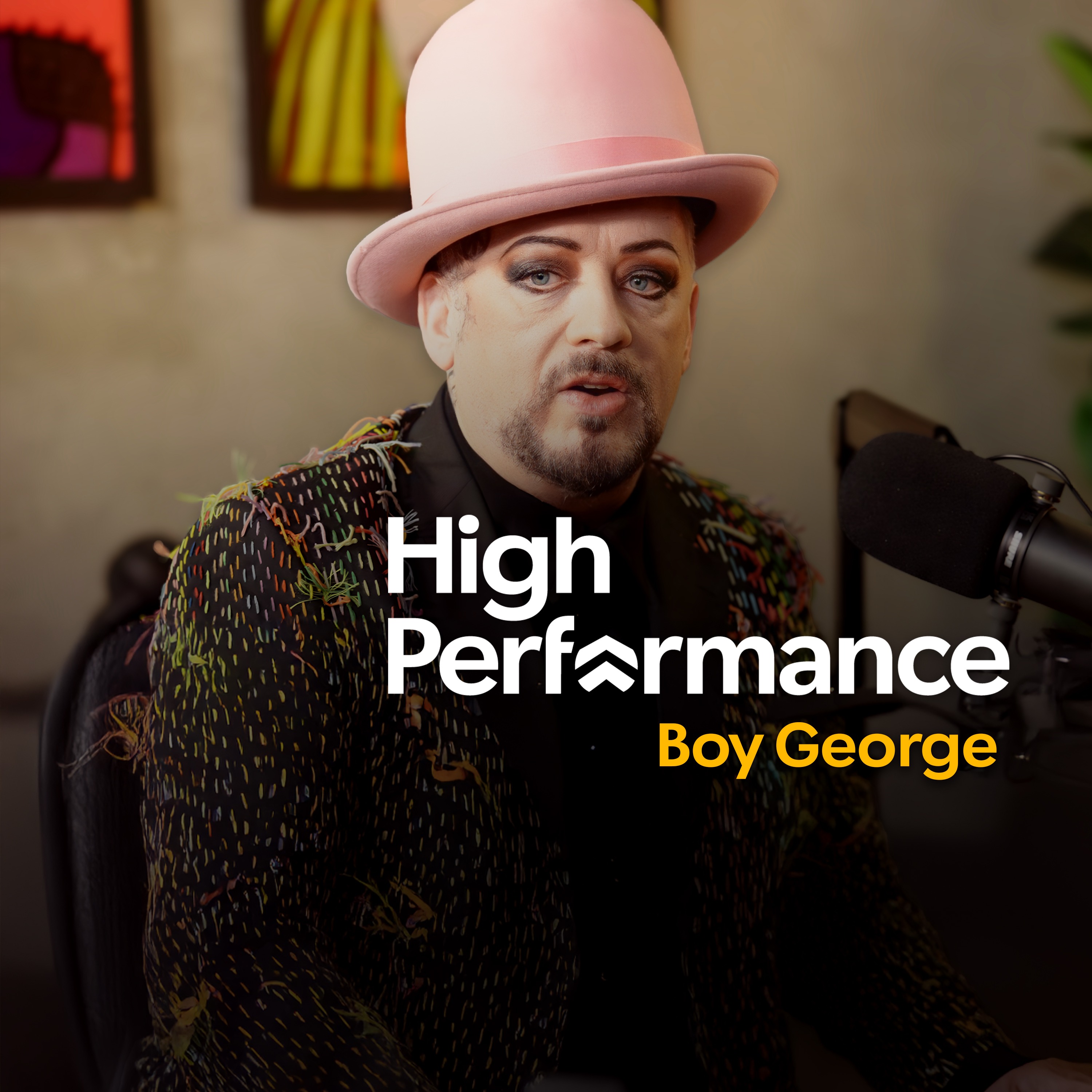
Boy George is the iconic frontman of Culture Club, celebrated for much more than his flashy style and soulful voice. Known for breaking boundaries in music and fashion, he became a symbol of self-expression in the '80s and is still going strong. Behind his unique look and bold personality is George O’Dowd, a man with stories of resilience, creativity, and self-discovery.
In this episode, George sits down with Jake and Damian to reveal the real person behind the fame. He shares memories of his early days and how challenging family dynamics, especially with his father, shaped who he is today. George also talks openly about his battles, from traumatic childhood experiences to struggles with addiction, and how each has led to valuable lessons in his life.
He dives deep into his philosophy of mind, thought, and consciousness, the core principles he credits with keeping him grounded and thriving. He also explains how he’s learned to handle public criticism, stay true to himself, and navigate life’s chaos. From joining his first band to forming Culture Club, George reflects on the magic of his musical journey and what made Culture Club so successful in a time of fast-changing culture.
With an honest look at the ups and downs, George offers insights on resilience, the importance of personal growth, and learning from both triumphs and mistakes. This episode is a powerful exploration of finding courage and embracing authenticity in the face of life’s toughest challenges.
Don't miss this unmissable opportunity to see Boy George and Culture Club relive these defining albums live. Tickets are on sale now via www.gigsandtours.com / www.ticketmaster.co.uk / www.ticketmaster.ie
🚨 Partners
Huel 👉 Get £25 off the Taster Bundle. Unlock your offer here: http://huel.com/highperformance
Heights 👉 Get 20% off your subscription by using Code: HP20 here: https://hppod.co/Heights
Payhawk 👉 See our sponsor, Payhawk in action here: https://hppod.co/Payhawk
FORA 👉 Claim a free day pass at any Fora workspace and find the perfect home for your business here: https://hppod.co/FORAHP
HP Foundation 👉Do you want to kick-start an evolution that will change the lives of millions of children? Find out more about the High Performance Foundation: https://hppod.co/foundation
HP Corporate Events 👉Click here to book High Performance Events: https://hppod.co/corporate-events
Thanks to Vanta for sponsoring this video! Get $1,000 off Vanta at https://vanta.yt.link/3KbQMbA.
Explore offers and discounts through our other partners:
https://hppod.co/partners
Hosted on Acast. See acast.com/privacy for more information.


