
 Ask ChatGPT


 The High Performance Podcast
21 Aug 2026 · 58m · 26 chapters
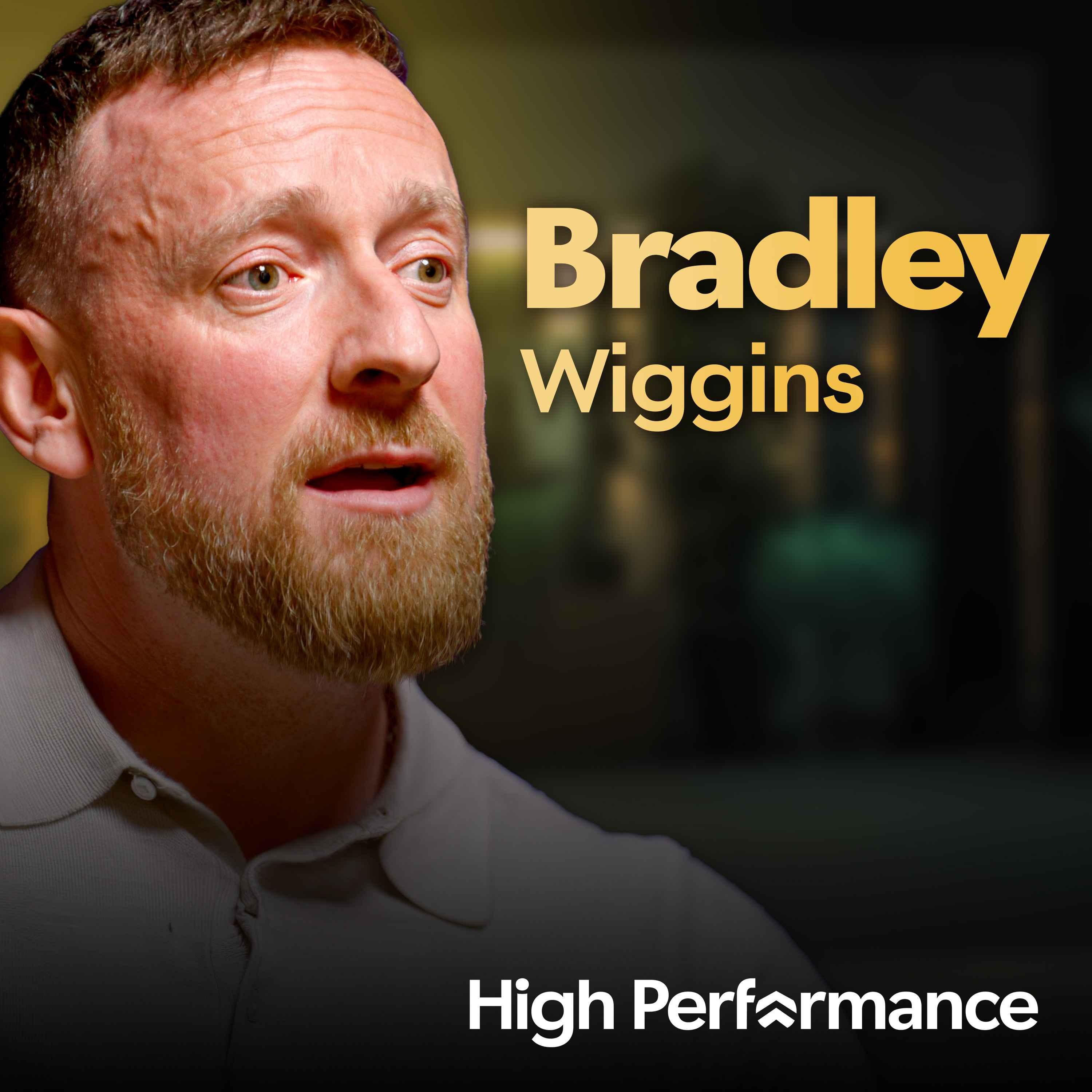
Bradley Wiggins discusses how childhood trauma, abandonment, and long-hidden sexual abuse shaped his elite cycling success, his later self-destructive period, and his current recovery and purpose as a father.
Bradley Wiggins is a British cycling legend with eight Olympic medals (five gold) and the first Briton to win the Tour de France (2012). He describes being sexually abused by a coach (ages 13–16) and having a father who left him at 1.5, returned at 19, and was murdered in 2008. The hosts are Jake and the podcast’s interviewer (High Performance).
He says he “played a caricature” in his famous years to hide insecurity; cycling gave him confidence but also became an avoidance strategy. He reports a hotel-room crisis where his son intervened, and he did not seek therapy. He frames success as “fuel” from trauma, and says he’s now building daily habits and taking responsibility.
Olympic finals execution despite being in a “dark room”; his son Ben intervening; four former club members later coming forward to corroborate the abuse; smashing trophies and discarding honors during a dark period; Ben drawing him as a superhero with a yellow jersey and medal.
Written by AI. May contain mistakes.
Learn about Bradley Wiggins' achievements and the struggles behind them.
“I very much think that I played a caricature when I was, you know, in my famous years, if you like, in order to hide my deep-rooted insecurity and self-worth issues.”
Explore the personal traumas that shaped Bradley Wiggins' life and career.
“Every so often a conversation comes along on this podcast that you find yourself consistently going back to.”
Bradley talks about his journey to taking responsibility for his life.
“But at some point, you know, you've got to take responsibility for your own life and accept that that's ultimately what makes you the person you are today.”
Wiggins shares details of his dark moments and the impact on his family.
“I mean, there were some really extreme moments.”
Bradley discusses his experience with sexual abuse and its long-term effects.
“was successful, because it was the greatest distraction I could have in those years.”
Wiggins reflects on his relationship with his father and its complexities.
“and, you know, I was just, you know, I was relatively unknown in the general public's eyes walking into the Tour de France in 2012.”
Bradley discusses how his parents influenced his cycling journey.
“Apple Cash services are provided by Green.Bank, member FDIC.”
Bradley Wiggins discusses his childhood and the influence it had on his cycling career and self-worth.
“I mean, it's just crazy some of the situations we're in.”
Bradley reflects on his transition from athlete to finding his identity outside of cycling.
“What's remarkable, Bradley, though, is listening to this level of insight and self-recognition, considering that you haven't gone and sought external help in that year since your son made the intervention.”
Wiggins explores the dynamics of coaching relationships and personal development in sports.
“You know, I was conditioned from a young age to be an avoidant and avoid all these things and not talk about them.”
Bradley Wiggins discusses the influential role of Shane Sutton in his life and career.
“not just, you know, and that was Shane Sutton.”
Wiggins shares how fear and insecurity shaped his drive and dedication as an athlete.
“Dave was like the big brother and Shane was like the dad.”
Reflecting on his peak performance, Wiggins explores the hidden costs of success in cycling.
“And after, you know, you get thanked at the end of your career and off you go into the world at 36.”
Wiggins reflects on the emotional void that followed his greatest achievements in cycling.
“So how quickly were you thinking, what do I do now?”
Wiggins discusses his journey as a father and the values he instills in his children.
“I mean, if we showed a video of someone in here when, like, 12 years, this was you 12 years ago.”
Wiggins discusses his journey as a father and the values he instills in his children.
“Mint Mobile's summer sale brings that feeling back.”
Explore how childhood experiences shape one's identity and self-worth.
“I mean, you know, it's not a bad thing back then, but it's not something I wanted to live, you know, live out to this day.”
Bradley discusses his role as a father and the effects of fame on family.
“that was feared, respected and revered what sort of father has Ben and your daughter grown up with?”
Discuss the importance of seeking help and understanding oneself.
“So spotting your avoidance strategy and you've got one of your heroes and a friend offering you a route to our access to support.”
Bradley reflects on Chris Hoy's diagnosis and the legacy of meaningful connections.
“The way I talk to myself when I drop something on the floor or I spill something on my shirt.”
Bradley shares key behaviors and principles of high performance.
“One that I've just learned in the last two weeks is accountability.”
Bradley reflects on his journey towards finding joy and contentment in life.
“and going for a process and apply them into my daily life.”
Discussion on how trauma influences success and the importance of seeking help.
“Uplifting and heartbreaking in equal measure.”
Exploring how painful experiences can drive success and the need to break unhealthy patterns.
“You know, for a long time I've heard people talk about trauma leads to triumph or post-traumatic growth and all that.”
Bradley's desire to be seen as 'just enough' resonates deeply beyond his accolades.
“Well, I hope you agree that was incredibly powerful.”
The importance of addressing past traumas while moving forward in life.
“And I'm pleased to say that Bradley was doing precisely that.”

Get the gist, explore an idea or ask about something said.
 Claude
On The High Performance Podcast, what are the key points of this episode?
Searching your listeningAutomatic transcript. May contain errors.
0:02I very much think that I played a caricature when I was, you know, in my famous years, if you like, in order to hide my deep-rooted insecurity and self-worth issues. But the contradiction was I could go up and execute Olympic finals like that. I was in a very dark place, in a very dark room for many days. I wouldn't change any of my journey up to this point because it's what we do with the things that happen to us that shape us, that make us the people we are. There's no time like the present to start being the person you want to be. Every so often a conversation comes along on this podcast that you find yourself consistently going back to.
0:37This is one of them. Bradley Wiggins is one of the most decorated athletes this country has ever produced. Eight Olympic medals, five of them gold. And in 2012 he became the first Briton ever to win the Tour de France. For one summer he was the most famous man in Britain. When Brad sat down with Jake and I, he told us what that had actually cost him He spoke really candidly about the father who left him when he was one and a half and then walked back into his life when he was 19 and then was murdered before the two of them ever finally made peace He spoke around the coach who sexually abused him between the ages of 13 and 16 and the 30 years he spent never revealing that or saying it out loud.
1:26And he also talks about a hotel room not so long ago where his son had to come and find him. What's truly remarkable is that Bradley doesn't tell any of this as a tragedy. He tells it almost like an audit, tracing exactly how the damage became the fuel and then how the fuel nearly finished him. just one thing before we start this conversation it contains discussion of the sexual abuse of children and of addiction so please listen with care i'd like to welcome to high performance sir bradley wiggins
2:07so much has been said about you written about you spoken about you over the past few years i don't heard your voice often enough so i'd love to start with finding out how are you how are you today i'm actually honestly in the best place i've been for 44 years of my life and that's largely down to the fact that i've you know been to the arse end of the world you know and i've been in dark places at times for various reasons i've experienced extreme highs with my success and other aspects of my life but i've also experienced like most of us the other end of the spectrum and I always put that down to the success at times I think I always blamed the success you know and um but I realize now it was multi-factual and there was there's many other things that contributed to that and I've I've spent the last five years really sorting that out in my head and um I'm in a better place for it now I finally took responsibility for my own life and I'm not in a sort of position now where I'm playing the blame game I think like most of us when you're trying to work these things out you know you spend a lot of the time putting it down to various reasons as to why you're like the way you are.
3:11But at some point, you know, you've got to take responsibility for your own life and accept that that's ultimately what makes you the person you are today. So, yeah. So what was the catalyst for taking responsibility? What was the catalyst? I mean, there were some really extreme moments. I was in a very dark place, in a very dark room for many days. And it was a hotel. And my son actually was the one who, who kind of intervened and, you know, kind of really made me realise, I think, recognise the self-destructive mode I was in and the damage I was doing to myself, you know. And there was a lot of reasons for that, you know.
3:55And I think where I'm at now, I look back, there always seemed to be something that was causing me issues and giving me a reason to not be happy. And there was always something on the horizon. But I've realized now that there's never going to be a sort of clear path. There's always going to be something that's happening. And these things, you know, I was one of them people that wallowed a little bit in self-pity, particularly after my career. Why has it always happened to me? Why is this? There's always something that's coming up. And I realized that these things only become interrelated if you let them affect your behavior, you know, because one thing knocks on to the next.
4:30And I was one of them people, you know, would drink and et cetera. And then I'd be late for something or not turn up to something. and so they become interrelated then because I let them affect my behaviour. But part of taking responsibility to my own life now is I've pulled myself right back in. I realise we're born into a struggle and it's what you make with that struggle this life. And I wasn't there and I refused to accept therapy. I was like, no therapist is going to be ever educated enough to understand what's going on in my head. I think also it was a way of me sweeping under the carpet the fact that I wasn't quite where I wanted to be by talking about it.
5:06I was projecting myself as some sort of martyr that I could talk about the subjects I was talking about and that I was there and I was through it and I could be a help to other people. And I think that was a distraction for me in being able to do that or thinking I could do that. The fact that I'm helping others, I'm not having to look at myself and help myself. Nothing's permanent, right? Nothing lasts forever and it's a constant journey. But the truth is at the moment, you look happy, you look healthy, you look in great shape. And a lot of people would have thought, well a year ago when your son intervened and decided that enough was enough most people would have thought well that's when therapy comes in but you've just to be clear you didn't go to therapy no no so how have you got to this point on your own because the biggest thing that's really impacted me and it's the biggest thing i spoke about a lot the last few years and it's the biggest thing i've come to terms with it's the biggest thing that caused me the greatest amount of pain that made me not want to be here was the fact i was sexually abused for three years by my first coach when I was between the age of 13 and 16.
6:02And I think when I started to accept that and having ignored it for 30 years, I realized that that was why partly had a huge part as to why I was successful, because it was the greatest distraction I could have in those years. But when I retired, I really resented cycling. And I said a lot of times I hated cycling. I'd fell out of love with cycling because I blamed cycling for getting into cycling the reason I met this guy. that was a real process for me you know the five years of going through that and um the interview i did with the times last summer four people came forward afterwards that were also in the club that it happened to as well and that that was like a weight off my shoulders because there was insinuation from some of the tabloids particularly the daily mail that i was lying about this because it was not you know because the gentleman was dead and things like that and that killed me you know but four people came forward one of which was hoping to come tonight i don't know if he made it um and he yeah it's been a long journey that what did that do for you when when you had that validation that this had happened to other people i think it was it was external validation that see i wasn't making this up you know because i was in a very mentally unstable place as well so i could see maybe potentially why i mean i i couldn't understand why personally but looking back now where i'm at now i i could possibly understand why some people might think that I've, this is quite a wild thing to say, having never said it for years, because, you know, I was, I was off my head, you know, but it's all intertwined, and yeah, it's very complex, you know, and it's, it's so, there's so multi-layers, it's connected with my father, you know, not having a father growing up, he got murdered in 2008, I always wished he was around, And, you know, I got into cycling because he was a professional cyclist.
7:48And he was respected and feared also because he was a bit of a loose cannon. But he's my hero. But as a father, I resented him, you know. So it's so multi-layered. The family I grew up in, you know, the things I witnessed as a child. And the abandonment. My dad left when I was one and a half. You know, I met him when I was 19. He walked back into my life because I was successful. and he couldn't handle the fact that I'd become as successful as him or heading towards, you know, and I was happy to stand on his shoulders and I've said it a few times, the famous quote he gave me, which drove me for years and breaks my heart to this day.
8:22He said after a week of meeting him when I was 19, don't forget you'll never be as good as your old man was, you know. It's funny and I think about this stuff all the time still as part of my recovery, you know, I still see this as a journey and as you said in there, you know, I'll look back in a year's time and realise I was in how much of a better place I'm in 12 months further down the line. And it's a constant thing. Two years ago, I thought I was doing well, but I failed to see that I was smoking and drinking and doing all sorts, and I thought that was all right. You know, so it's funny how when we look back, we always think we're in a good place where we're at.
8:51We've only got the facts we've got to deal with at the time as to where we're at. But I'm really on an upward journey now. And I feel like I've come full circle for 2012. I think, you know, lots of this stuff stems back to 2012 and what happened there. and, you know, I was just, you know, I was relatively unknown in the general public's eyes walking into the Tour de France in 2012. I'd won multiple races in France and Olympic Games. You know, I was well known in cycling circles, but in general public's eyes, no one had really ever heard of me. And I came back from that Tour de France with my sideburns and I was the most famous man in the country for a week, you know.
9:29And I won the Olympic Games in London, you know, And 20 years before that, you know, I was trying to get out of a council state in Kilburn wearing lycra and the bigotry I faced and, you know, because cycling wasn't like it is now, you know. It wasn't cool. And I ostracized myself from the group of people, kids that was, you know, inevitably fall into patterns of crime and things like that when you get to 12, 13, smoking, all those usual things. And I realized that I was way more ambitious than that as a kid and I always wanted more for myself. Plus I was terrified and petrified of the environment I was growing up in, you know.
10:04We were institutionalized to violence as a means of, you know, a way of life, you know. Knife attacks, you know, stabbings and things like that. It was as tough as it is now in some of them parts, you know. And it was very odd in the early 90s for a kid, a 12-year-old small ginger kid, to be into cycling and as obsessed with cycling as I was. And it was because my father was a professional cyclist. She came over from Australia in the 70s and met my mum and then left when I was one and a half. And I didn't see him for 17 years. But I always knew about him. She always informed me about him.
10:41Do you have an app idea you keep meaning to build someday? Well, someday just got a deadline. Ship-a-ton is back. The world's biggest mobile hackathon brought to you by Revenue Cap. It's simple. Launch a brand new app between August 1st and September 30th and compete for over$1 million in prizes. Win and your app could land on a billboard in Times Square, forever enshrined in app development glory. Join the fun at ShipATon.com. Hi, this is Becca Moore for the Girls Podcast. All right, a quick shout out to our presenting sponsor, Apple Cash. Summer is here, which means the group chats are already spiraling with festival and summer plans.
11:19And we all know the worst part of being the one who fronts the money for the passes or housing. That's why this year we're only using Apple Cash. It's a super easy way to settle up because you can do it right in messages. Just tap the plus sign to get started. And the best part is you can spend the money you get right away anywhere Apple Pay is accepted. Every payment is secure and protected by Face ID, Touch ID, or Passcode, and your transactions are never shared on a public feed. Set up your Apple Cash today in the Wallet app. Apple Cash services are provided by Green.Bank, member FDIC. Terms apply.
11:54How did she talk about him? She spoke about, she glorified him. She glorified him in a cycling sense and glorified all his bad traits. You know, he was abusive to her. He was manic depressive. He was an alcoholic. He was, you know, performance enhancing drugs, sold them to other riders as well, you know. And your mum told you this when you were growing up? Yeah, so she, yeah, she sort of, from as young as I can remember, you know, informed me about him. And when I took up cycling, when I was 12, I started going to bike races because he was so feared, respected and revered. People would say, oh, you're Wiggles boy.
12:32So in his absence, being in this world of cycling was like having the strength of a father in his absence because of his name. And I got respect from that point of view. But in his absence, things happened to me like coaches got their way with me, if you like, one particular coach and the grooming started and my mum wasn't savvy to it and didn't notice it. And because of his age and the type of gentleman he was, ex-military policeman, you know, he had some sort of status or, you know, kind of, you know, identity and people respected him from that point of view. So, you know... And can I ask you, you've just used three adjectives to describe your dad, of feared, revered and respected.
13:12How did you respond to this male figure in your life, in a world you wanted to be part of. Well, I loved it. I loved it. And that drove me. That's why, to this day, my dad is my hero, in a cycling sense. A complete contradiction. And I had a stepfather as well when I was growing up who came along when I was five and left when I was 18. And I had a stepbrother who was eight years younger than me who was not how I'd want to be with a stepson. He was quite handy with his hands towards me. And I took the brunt of a lot of his anger and violence. you know and was there a reason why you would lash out um i probably the the the wedge that was being driven by my mother the constant narrative of my dad must have been quite hard for him and i can see that now i can empathize with him and his you know i was the scapegoat in the dynamic between my mum my stepfather and my brother and i was trying to emulate someone who didn't live there anymore and was in in you know but it was a constant feature and so i think that kind of that that fueled that from that point of view um so that's just yeah it's like i said it's very layered yeah and i've only realized this this out in the last few years you know that um you know as my own kids my when my son started cycling at 13 it was the same age i started and my son's now world champion he's 19 so i've watched him you know that's where i started accepting my abnormal sort of childhood particularly within cycling when he started cycling you know going to a youth hostel in Devon, two 13-year-old lads with a 72-year-old man and sharing a dormitory with them, showering naked and things like that.
14:43It was very abnormal and not, yeah. I mean, it's just crazy some of the situations we're in. And I'm watching my own son go through that and the changes within safeguarding and the changes within the system and how kids go away with coaches now. Just how normal it is and how it should be. And I think that flagged lots. And I'd just retired when he started cycling. So I'm starting to assess my whole life and who am I? Because I'd only ever been so wiggo or wiggo before I got knighted, you know. And I very much think that I played a caricature when I was, you know, in my famous years, if you like.
15:20You know, I dressed, I adopted a veil that I perceived as cool in order to hide my deep-rooted insecurity and self-worth issues. And cycling was the only thing that ever gave me confidence. But me, the person, Bradley Wiggins, I'd never been given any self-worth. I was always going to be, you know, you're going to be a good cyclist if you do it. You'll be useless at everything else. This was the narrative I grew up with, you know. Because your dad was a good cyclist, you know, it's in your genes. At least you'll be good at something. So it was always down to him as to why I was good at it, you know.
15:50And I think that reflected in when I won the gold in 2012, you know, I adopted this veil of this sort of mod rock star and fancy suits. And I'd drink and things like this. I'd drink as sports personality. And I was quite contentious. I swore a lot. People were, I was very unpredictable. People didn't know what Bradley they were going to get on the night. And it was all because I didn't think that I was worthy of what I'd achieved. And it took away from what I was really good at and the perception I had. And people either loved or hated me, you know. But really underneath, there was an insecure, scared kid that hadn't really grown up from 13.
16:27And I was 32 with two children of my own. But any moment where I had to accept praise, like sports personality here, I started messing around with Susan and distracting people. You know, when I won the Olympic Games in Hampton Court, I sat on the throne and did that. And it was just anything to distract from having to be me in that moment. But the contradiction was I could go up and execute Olympic finals like that. I mean, I did it. I don't know how many I did. Five, six, you know. And I was happiest and freest on the bike, which takes me back to my childhood, you know, that, you know, escaping the environment I grew up in, finding an escapism but falling into another trap that was going to give me problems later in life.
17:08And I was happiest when I was out on my bike until I had to turn around and go back. And finding that escapism with this romanticised vision in my head that my dad's out there somewhere, I'm going to make him proud one day doing the thing that he did. Maybe one day he'll see. you know and because he was great i'm gonna be you know it's in my genes i'm gonna be great it was there was no doubt about that in my head it saved my life in many ways you know i don't know where i'd be today and cycling's give me everything you know it really has i wouldn't change a thing that's the important thing i wouldn't change any of my journey up to this point because it's what we do with the things that happen to us that shape us that make us the people we are you know and um I think my best years are yet to come yet in some way.
17:54I don't know how, but I'm not falling to the level of my goals at the moment. I'm falling to the level of my habits and creating daily habits that whatever's on the horizon I'll be ready for. What's remarkable, Bradley, though, is listening to this level of insight and self-recognition, considering that you haven't gone and sought external help in that year since your son made the intervention. Yeah, I don't. It's probably why I was a good athlete as well, because I'm very self-aware, and you have to be self-critical when you're an athlete, and you have to be coachable, and you have to be... That's what makes good athletes, is being coachable and listening, and being able to go through for a process, you know, of four years, whether it's Olympic cycle or 12 months to the next Tour de France, is about recognising what you're doing right and what you're doing wrong and being deeply honest with yourself and taking accountability and responsibility for your role as the athlete.
18:50The day you don't go and do six hours and you tell your coach that night you did six hours when actually you did five is where it starts to go wrong. And it's being deeply honest with yourself and recognizing, no, I've not done enough this year. That's why I failed. Or I've done too much this year and that's why I failed. And lots of athletes' egos get in the way of self-recognizing those things in order to make changes. And I was very good at that. And part of the reason I was very good at that was because I had people that weren't frightened to tell me, like Shane Sutton was one of them, weren't frightened to tell me how it is, you know.
19:23You're not going to like this, Brad. Your ego's not going to like this. But you've been skiving, you know, you've not done enough this year. You need to move abroad or whatever. And that would hurt and I'd listen to him though because I knew he was right. And I think I learned to adopt that myself because, you know, from a cycling point of view and that then in my ego, as a person, I had no doubt, I had no question about telling myself what I thought myself as a person. Right. And it still lingers to this day, you know. Well, let's investigate that then. What did you think of yourself as a person when you were 13, 14, 15?
19:56Because you were successful on a bike despite all of these sort of heartbreaking and tragic episodes that you'd been through until that point. I never felt loved as a child. yeah i felt yeah i was i think that's the overriding thing i stick by that um i used to share a bed with my mum when my dad left you know and and i've been thinking about this a lot recently because i've had to for writing a book actually and um we had one bedroom flat and we came back to london and i shared a single bed with my mum and i could still to this day remember being spooned by my mum i must be four years of age brainwashed to the sounds of lionel richie on cassette as we fall into sleep and um i can remember that just being heaven and feeling loved and that um and at the age of five my stepdad moved in and she moved into the to the living room and on the sofa bed with him and i never saw my mum again you know as i think back now my stepbrother came along then and i felt like i'd lost two parents you know and that was it really i never felt protected in childhood and i think a lot of that obviously is part of the coach i couldn't tell anyone i didn't think anyone would believe me um i we lived with this my stepdad was in the house my brother had a real dad i didn't and then i shared a room with my stepbrother who's eight years younger than me you know and um yeah i never really had a teenage life as as normal but that i i'm not i'm i don't complain about that by any means i from the from the age of 13 i knew what i wanted to do i watched chris borman win the olympics on the lotus bike in 1992 in barcelona and the night before a local lad chris limford christie had He won 100 metres.
21:30Sally Gunnell won the night before that. And when I watched the Olympic Games, when Chris won, he caught his opponent, Jens Lehmann, in three and a half minutes. And I thought, I would love to do that one day. And my mum made me watch it because she said, your dad used to do this. You know, so she pushed me. And I won that event 12 years later with Chris Bourbon trackside as my coach. And what was, like, your mum's reaction when you did start to be successful on the bike? She just said he was destined to do it. It was in your genes, you know. What I think is really interesting here is that, you know, we're, all of us sitting here are parents, right?
22:00There's many parents in the room. And we're all told there are certain ways to be a parent, right? The first thing you do is love your children and tell them you love them and cuddle them. That didn't happen to you. The second thing is you try and have a safe family unit where your children feel protected and cared for. That didn't happen to you. You try and avoid the parents breaking up. That didn't happen to you. You try and avoid your kids getting into situations where they're in danger physically. That didn't happen to you. Yet despite all of that, at the age of 17, 18, you're arguably the best cyclist that this country has ever seen.
22:32So all of those things that we're told can derail a young person, here's a guy on course to become the greatest in the world. How do you marry those two? Because I think there's a difference between being good at something and great at something. And I think greatness stems from adversity and a dark place. I've met a lot of hyper-successful people, and they all tend to be a bit fucked up, or had a time passed. And are very different and very unique. We've spoken to hundreds of them on this show. Yeah. Because I think if you have a normal upbringing, if you like, or what we consider normal and what we consider a good upbringing, stable home, etc., etc.
23:12But as long as it's a stability, I think stability is the thing I've lacked in my whole life. And emotional stability. You know, cycling was a great vehicle for distracting me from all those issues. And I've learned in the last 12 months, or certainly in the last six months, that I'm an avoidant. Is that right? All these years, I've never known it. I'm a sweeper under the carpet with anything. My attachment is avoidant. Even today? Well, I recognize it now, so I'm trying to change that. I'm trying to address things and have those difficult conversations, whatever that is. You know, I was conditioned from a young age to be an avoidant and avoid all these things and not talk about them.
23:49And as soon as something happens, put it in the past. However bad it is. And I've done that with everything in my life. Whether it was grief, whether it was death in the family, whether it was sexual abuse, whether it was abandonment, whether it was whatever. And at some point, you've got to pick those up again and deal with them. And I realised that they're quite... But no one around me ever really encouraged me to. And I think that assisted me and aided me in my cycling career. The ability to put disappointments behind you. The ability to not overthink too much about you know why you didn't perform this week my own sort of you know problems with my own self-worth and insecurity if someone who was in a sort of more hierarchical position in bc or team sky would say to me look you're not doing enough training you need to do this i'll do that you know i was i was a bit coachable it aided me to be hyper successful in cycling because i was very coachable and bradley could target these big targets and do them because i loved the process the process was the best part for me going for a four-year cycle or 12-month cycle or six months aiming for the big goal because I was free.
24:47The problem comes after those big goals. What do I do? I'm in my own head. And the problem that I never really anticipated was when I retired, you know, and I got an inkling of it when I did retire. I think like, you know, how do I define myself and how do I, what's the definition of me? And it was being Sir Wiggo and an athlete and a cyclist. And I didn't know how to be anything else. I didn't know what my worth was. So I took up rowing. I I thought I'd go to the next Olympic Games in rowing. Because when people would say to me, what are you doing with yourself nowadays? I didn't want to say I was on the jump, you know?
25:20I didn't want to be that tragic. You know, I wanted to... I'd say, I'll take up rowing now. I'm going to try and go to the next Olympic Games. I mean, just, you know... You had no concept of the fact that you were enough. Without the cycling, you were enough. I was so institutionalised, you know? And that felt normal to me, training for a big goal. And I probably wasn't ready to let it go. But I gave that up after a while. or a year or so, and I realised I wasn't going to make the standard. And then I had to sort of start dealing with who I am, who I am and who am I. Can I ask you about that avoidance strategy, though?
25:52Because during your career, you still have to open yourself up to people that you need to trust, that you have to believe have got your best interests at heart. How did you manage to square that circle? Well, I was very gullible as well, you know, and I believed what people said, you know, because I wasn't someone as I am now who thought for themselves much. I didn't have my own ideas of how I needed to do something. I've learned to do that and think for myself more and take control of my own sort of, you know, I'm like the CEO of my own, my athletic career. But back then, you know, Dave Brelstead and Shane Sutton, they were such dominating figures, you know, even in their presence and the way they spoke to the riders.
26:33And, you know, you ended up, it was like being in a sort of, you know, in a cult in many ways, particularly with Steve Peters' intervention and the whole brain chimp theory thing, you know, that was brainwashed into us and I thought it was a load of cobblers, to be honest. I could never get... I mean, I understand the science behind it, but it was not something I could adopt. You know, I wasn't that mad. I couldn't adopt this sort of chimp thing. So I fought against that. But it shows the type of... the level they were going to to get all these riders into formation, you know, and create a sort of, you know, centre of excellence in many ways of...
27:09Did it take that, though? Could they have done it in a better way? I don't know. I mean, I say this now as a normal person, but looking back, it served me well at that time in my life, the way I was. I would never have had the success I had without Dave and his team. I was in fear of my position a lot of the time because they would instill that fear. That was the way they got a rise out of me, particularly. Go on, what do you mean by that? Well, there was always someone else to take your position, whether it's Chris Froome in the Tour de France, whether it's, you know, Geraint Thomas on the track.
27:38my downfall at times, my naivety, was thinking we were one big happy family and, you know, I'm the team leader and there's no threat. So that, you know, that was an interesting thing when I observe now looking back. You know, I was naive at that time. And we all need different things as athletes. And I needed a father figure in my life, someone who I felt had my back in a macho way as well, not just, you know, and that was Shane Sutton. Shane Sutton knew my father when he raced with him. and Shane from a young age when I was 21, 22 when I met him fell into the role of you're like the son I never had he played a father figure for me and I thought that that was unbreakable this bond that means I'm always going to be put first no one's ever going to threaten me but that was just the way he got a rise out of me and they'd pick at people's vulnerabilities and he did the same with Victoria Pendleton and then she couldn't understand in recent years when she talks about the, with Shane, you know, Shane says, I can't understand.
28:38She capitulated in my arms when the big fallout of British cycling. And we were all manipulated in different ways. And I don't think there's any other sport that doesn't, it hasn't happened like that. I think it's genius in many ways, but it does cause you long-term problems depending what you tap into and what trauma you tap into to get a rise out of an athlete. And the one I needed was security and some sort of sense of belonging and a family. And Shane and Dave gave me that. Dave was like the big brother and Shane was like the dad. but to sort of operate in a fear-based environment like that given your background must have started to take its toll I'm not saying that everyone lived in that fear environment but when I look back that was my overriding emotion and fear it could all be taken away fear I could lose my spot so I better knuckle down here you know fear they'll cut my salary in half if I don't pull my weight so I became you know that fear drove me and that was the fear that I had growing up in a council estate wanting to get out of the environment I grew up in you know fearing it and the bike was always a way of throwing myself further into the bike and i had my character like the way my makeup from childhood lent itself to me doing that so people would say brad was you know you know in 2012 he was like a different animal you know he was um people would say this now you know you were just you know you talk to him in races you wouldn't talk back and you would just never seen anyone as focused to that my ex-teammates would say something like that to me in recent years i can't imagine being like that um because i didn't have to think about anything else in my life.
30:03I just think about the bike and I enjoyed the process. You've described yourself when you were in your peak as a monster on a bike. Yeah, I felt like that. Yeah. I was a dreadful person. I felt like it was, you know, it's not someone I can associate with today. You know, I think you have to be very, very selfish naturally and you're promoted to be. You're encouraged to be very, you know, lots of narcissistic patterns of behavior. You know, it's all about you and everything comes second. And people always say, you know, the sacrifices are worth it, aren't they? And I don't know if they are, you know.
30:35I just think you'd take a choice. I mean, it's no different to what most people do that go out and graft and, you know, for minimum wage and stuff like that. I actually think it's a privilege to do what we did, you know, and be an elite athlete, et cetera, et cetera. I just, part of me wish, you know, it's great hindsight, isn't it? You look back, I've got a lot more. I'm wiser now. I wish I could have, you know, know a lot more that I know now back then. but part of my part of my vulnerability back then flawed cat my flawedness you know the way I conducted myself in interviews etc was why I was so good on the bike and that was what I suppose you know I was such a contradiction you know do you think you'd have been successful as successful if you knew what you knew now no no I think I'd have walked away from the sport a lot earlier yeah because I'd have I'd have had some realisation as to what was really important.
31:30And I think, you know, part of having to deal with this all myself and many others have, Victoria's had problems, you know, lots of us have had problems away from the bike and sport in general that have retired, that have had a lot of success, is particularly in cycling, there's no sort of welfare. And after, you know, you get thanked at the end of your career and off you go into the world at 36. And I walked into that building in Manchester when I was 16 and walked out when I was 36. And, you know, They used to give me my clothing, my tracksuits, my underpants, pretty much everything, medical care, and that was it.
32:03It was out into the real world. So it's a funny thing, and lots of sports are like that. You know, we've had many people have sat in the chair that you're sitting in now, and they've said to us, the truth about being a high performer, an elite individual, a world-class athlete, the best business person there has ever been, they will always say to us, nothing comes for free. And I'm getting that sense all the time here, that you had the success on the bike, but it came at a cost, and you didn't realise the cost you were going to pay until 12 months ago when you were in that dark room in that hotel.
32:37No, you know what? I saw a quote about a year ago that summed it up for me. Someone asked Mike Tyson, what does it feel like when you knock someone out? And he said, it's like drugs. It gives you everything you want in that moment, but it takes so much more from you afterwards. that's what cycling was like for me. You know, win Olympic gold stand on the Rostrum, you know, certainly in Hampton Court, you know, having won the Tour de France 10 days before that, and walking away from that Rostrum as Olympic champion and thinking, what do I do now? And having to deal with that. So how quickly were you thinking, what do I do now?
33:15Well, yeah, but what do I do now? There was no other thing that was ever going to top that. I'd won the Tour de France. How quickly afterwards were you thinking? Five minutes. I did an interview with Matt Dawson live on Five Live, and he said, what's next? And I said, well, how do you, do I top that? How do I ever? That was the defining moment in my career as a sports personality in this country, as a cyclist, you know, the first man to win the Tour de France and the Olympics in the same year. I can only do the same. I'm never going to get London Olympics in my home in my lifetime. And it was...
33:45And from that day on, anything that went wrong, you know, as my career went down, maybe for the next year after that, I came back and did the hour record, won a world title and some other bits and pieces, another Olympic gold. But nothing was ever going to top that day from what it meant. And, you know, the millions of people on the roadside that day, the boom had happened in cycling, you know. The sun were giving out sideburns that day on the front of the newspapers, you know. I remember them. People were cutting out the surf. I actually think I sat in the BBC Sports Studio with sideburns stuck on my head.
34:13Ridiculous. And I remember the interview that I did with you. I came up onto the balcony the night I won Olympic gold. And they were chanting my name down. And when I watch back on that now, I'm really adolescent in my demeanour. I'm like a child, and I wouldn't put the medal on. If you remember, I had the medal on the couch. Do you remember you go, why won't you put it on? And I laid it on. I wasn't worthy of it. It was just like, oh, this medal, and I'm just this little Bradley, you know. And it's stark when I look back at that now. Is that what you were thinking? You weren't worthy of that gold medal?
34:43Even the way, my posture and everything. Because you know what I thought at the time? I sat next to you and thought, I mean, this guy is so confident. He's so on top of the world. He's so in control of things. He doesn't even need to put on a gold medal to feel good. No, no, it was just like, I just couldn't. And it was the total opposite of that. Once I was off the bike, I was like this sort of rabbit in the headlights, you know. And so the way I'd deal with that going forward after that was to have a drink. And I thought that gave me Dutch courage, you know. And it just made me look proud at times, you know.
35:09Yeah, it's just funny. It's funny now. And, you know, hey, I've had the beauty of being able to look back at all these sorts of things, videos. I mean, if we showed a video of someone in here when, like, 12 years, this was you 12 years ago. Look how an arsehole you look, you know. You know, on a mobile phone or something. God, don't talk about that. Because we all go through that, you know? And we should change. And I'm happy with where I'm at. So let me ask you this then. Are you proud of yourself? Yes. No, I'm proud of the person I'm becoming. I feel like a good father to my children. It's the things we do when no one's looking that really define us as people, isn't it?
35:45Can I ask you, your son Ben, he said a line to you that when he intervened that started this process of recovery? Yeah, I just realised that he did a podcast this summer and said that there was times they thought they were good. It was a period he went through where they thought he was going to get a phone call and say that he found me dead, you know. And I was oblivious to all this. I was very good at sort of disguising the fact I was all right and things, you know. But yeah, I mean, it's funny, isn't it? And when I go back to those times, I didn't realise just how bad I was because you always think you're all right, you know.
36:18it's only now when you look back you realize god and it's a learning experience you know it's for me it's now it's about i know it's incremental steps it takes a long time to get to that position don't just happen overnight it's the path that that you know it took six seven eight years coming into retirement not knowing where i was you know lack of identity mistake like confused identity as me the person yeah come back to another point you spoke about because you described the the work of steve peters and you said that it was the avoidance strategy if I'm not engaging in that. And yet when we sat down with Sir Chris Hoy, he spoke about he couldn't believe that anybody wouldn't engage with that in terms of coping with pressure.
36:58So what was it that put you in that? But Chris loved that. And some athletes liked it. Victoria Pendleton loved that. I just couldn't get my head around it. And I think that was my... Maybe I should have been more open to that. And to be fair to Steve, I think when I look back now as the person I was, I probably didn't want to discover things about myself that I knew deep down were there. And a lot of that was there was no hiding in front of Steve in terms of, you know, I've got to go in there. And knowing he's going to dissect you and your personality, and would that go against me when I went out the meeting and he would say to Dave, oh, Brad's a bit fragile.
37:34And I think that was a scare in itself. And that was probably one of the reasons why I didn't open up and conform on that. And that might have helped me be a bit more successful. It might have helped me get to some of my problems a bit earlier. I don't know, but there was definitely a way of, it was, I don't want to go and see this guy, so I'm going to rubbish his techniques and say that I don't need that. It's all rubbish because, you know, he might suss me out. So there was an element of that. I'd like to talk to you about what the future looks like now. I mean, you said you're proud of yourself and it's brilliant after the journey you've been through and the challenges that you've had for you to sit here and say you feel proud.
38:10And I think one of the things that you should feel most proud about is how you are as a dad. because often the abused becomes the abuser, the bullied becomes the bully, the tormented becomes the tormentor and you've obviously not become that. What would you like to share with our audience about how you've parented and the messages that you've given your kids, particularly your son who is following in your footsteps as a cyclist so that if ever he is on the top step of a podium, he doesn't have a joy that lasts a few seconds and suddenly there's a sadness. So with my son, when he took up cycling, he carried what I saw as the burden of my name on his back and the pressures that came with that and trying to replicate what I did.
38:53And I took a very stance early on with him that I'm not going to get involved in your cycling. And it didn't go down well to begin with. I'm his biggest fan. I'll mentor him. I'll tell him, give him whenever he asks me. But I wasn't going to coach him because people would say to him, you know, it must be great having Bradley Wiggins as your dad. and you've got the best coach in the world. But because of what I was going through and accepting the things that happened to me in childhood, the absence of my own father, the dynamic that I was coming to terms with still in late 30s with my dad and how much that had affected me in adulthood, it was as stark as ever.
39:26And I wanted to just make sure I was a father to him first and foremost. Because that was his hero as a kid, Ben. He'd go into school on a Monday, having done something at the weekend, and they'd say, draw a picture of your family. and he'd draw his mum, his sister and me with the yellow jersey and a medal on. That's how he saw me, you know. And he rode down the Champs -Élysées with me when he was seven. The dynamic and what I grew up with in terms of a father, I wanted to make sure that I had that with him. So I thought it far more important to make sure he had a father figure in his life to go through this journey with him that could stick an arm around him if he did fail and he didn't make it.
40:01And it's not about being better than me. It's not about replicating what I did. He's his own person and he knows his worth. He's enough as a person for me. He surpasses me as an 18-year-old boy in his social skills and what he'll be capable. If cycling doesn't work out for him, what he can go on to do in the world. And that's far more important. They're the things that I didn't have. What if the real question isn't where you're going, but the adventures you experience along the way? It's time to set your sights higher. On peaks still to be climbed, rivers still to be crossed, and greater dreams to pursue.
40:33It's time to embrace the impossible with Defender. A family of vehicles built around capability, durability, tested on some of the most difficult terrain, Defender defines tough luxury. And I should know, I've driven one for the past three years. I have the Defender 130, but from the compact confidence of the Defender 90 to the versatility of the 110, through to mine, the Defender 130, with seating for up to eight, there's endless potential. You feel it in the details as well, the rugged body design, the robust materials, all working together so you can head out with confidence. And inside, ClearSight technology helps you see the world around you in a new way, while the PVPro keeps your navigation routes and playlists flowing seamlessly as you go.
41:12And with up to 89 cubic feet of cargo space, there's room for everything you need on your journey. Explore the full Defender lineup at LandRoverUSA.com. You know, when I was a kid, summer meant freedom. No homework, no teachers, no school. Mint Mobile's summer sale brings that feeling back. Right now, every Mint plan is just$15 a month, even unlimited. And I tell you, it's so important for me to have unlimited data because I just use my phone in the summer all the time for planning trips or having fun. And you know, with Mint Mobile, it's so easy to switch. The service is so good. And of course, you're saving money.
41:48Mint took what's wrong with wireless and made it right. High-speed data, unlimited talk and text, all on the nation's largest 5G network. You can bring your own phone, you can keep your number, you can pick a 3, 6 or 12 month plan and say goodbye to that big monthly bill. To get your new wireless plan for just 15 bucks a month, go to mintmobile.com slash HPP. That's mintmobile.com slash HPP. Cut your wireless bill to 15 bucks a month at mintmobile.com slash HPP. And that's it. There's no catch. Upfront payment of$45 for three months,$90 for six months or$180 for 12 months plan required,$15 per month equivalent, taxes and fees extra, initial plan term only, greater than 50 gig may slow and network is busy includes up to 20 gig hotspot capable device required availability speed and coverage varies in mintmobile.com do you have an app idea you keep meaning to build someday well someday just got a deadline ship a ton is back the world's biggest mobile hackathon brought to you by revenue cap it's simple launch a brand new app between august 1st and September 30th and compete for over$1 million in prizes.
42:54Win and your app could land on a billboard in Times Square, forever enshrined in app development glory. Join the fun at ShipATon.com.
43:08But how did you feel? Like, because as you're describing that experience of Ben drawing the picture of you being the superhero, I'm hearing the echoes of your mom making your own dad in his absence a superhero and I'm wondering what's the impact on you. Yeah, it's not a bad thing. I mean, you know, it's not a bad thing back then, but it's not something I wanted to live, you know, live out to this day. You know, you must respect dad because he won the Olympics, you know, and I, you know, in my, one of my darkest periods, I smashed all my trophies off the mantelpiece because like, what are these things doing up here?
43:36You know, I threw my sports personality one out, my knighthood. The things that came with, you know, external validation that you were great because I had a real issue with, you know, the things I'd achieved that that meant that I had a hierarchical position in the household as to what team success was. And I was trying to make the point to him in the worst possible way off my head that this means nothing. It's just junk, you know. And there was various, you know, events like that. But the thing with Ben is he knows what his self-worth is as a person, you know. And I think first and foremost, before cycling, You know, take cycling away from him.
44:15The definition of him as a person is what's most important. And me, the dad now, the definition of me as a dad, not because I won the Tour de France Olympics and I can get away with murder and be entitled for the rest of my life. Do you know who I am, you know, and feel like I can walk through life living off the back of 2012. That's far more important. And we both know each other's worth. So if I ask you now, who are you? What answer do you give? I'm Bradley, yeah. I'm the person I've always been, you know, in many ways. I've just grown that person's finally grown inside now I'm still the same person on the outside but I've grown within and we're supposed to grow But you told us that you grew up with a dad that was feared, respected and revered what sort of father has Ben and your daughter grown up with?
45:00They've took more pictures of people in public with me than most people when we go out do you mind just taking a picture of me and your dad? I always do a northern accent when I say that it all seems to be a northerner but yeah it's just that they've grown up their dad's been you know as long as they can remember a celebrity in that sense or famous but apart from the you know the articles where I'm in the newspaper standing outside a pub smoking and stuff in my worst years they're they're not the things that I look back and think that's that makes you proud but the things I've been doing in recent years you know the things that the person I'm becoming the person I'm I'm I'm presenting that I want to be that it that gives me fulfillment is um you know someone that they can yeah who's had So, you know, was at the top of his game for a long, long time, you know.
45:47How would you like them to describe you as a dad, though? Just enough. We all just want to be enough. You know, I've got my faults and I haven't been there for them at times. But there's no time like the present to start being the person you want to be. And what have you learned, particularly about trusting people? I mean, I love your relationship with Lance Armstrong. I think that's pretty special. Have I read that right? Yeah, yeah. You know, Lance is, he's helped me a lot in recent years. you know we talk about therapy he wants to pay for me to go to one this big place in Atlanta I think it is where you go and stay for a week they take the phone off you and Lance was going to fund that for me he was he's a good man you know yeah he did what he did it's not to condone what he did we all know that you know but it's a bit disproportionate to what some people get away with in this world and Lance has got five children he's married and he's got a heart under there somewhere but he's also got an ego the size of a house don't get me wrong He's not the only one.
46:43Come on. The ego is why he won seven tours. Well, he didn't. We did. Who knows? So spotting your avoidance strategy and you've got one of your heroes and a friend offering you a route to our access to support. Yeah. What's your response to him then? Straight away, I don't need help. Yeah. I was like, how dare you? No, I don't. Yeah. But thanks for the offer. But that was six months ago, five months ago now. and I've actually considered speaking to him this week and going, you know, that offer's still on the table, aren't you? Not in a Northern accent, obviously, but I don't want to do that. But isn't it great, though, that even in those five months you've developed change and things have happened?
47:22I think the big part of that is I wanted to get back to a semblance of order myself, thinking there's something about you. Now, if you can come back from that yourself without sitting down with someone and then them being the reason you got back, you know, that bloke saved his life. Now I know what I want to talk to you about because now I've got much more of an idea about my behaviour patterns that I'm left with and what drives me and where do they come from? And knowing what I want to talk about, I didn't want to just go in there and go, sort me out, you know? So I've got a lot more understanding about the intricacies of me and the things, you know, that I do on a daily basis that have come from somewhere.
47:58The way I talk to myself when I drop something on the floor or I spill something on my shirt. I mean, if you want to hear the language I use towards myself... What do you say to yourself? I mean, yeah. It's all right. Yeah. You c***. You know, it's just that. I know where that comes from. That comes from childhood. My stepdad used to say all the time to me. But I knocked that glass, you fucking clumsy arsehole. You know, and I was just always just that. And that was grilled in me. And I've just recognised this week that I do that. The way I talk to myself. And I spoke to myself on the bike like that lots.
48:28You know, talking about therapy and talking about what your future looks like. A man that you shared the track with and the team with Sir Chris Hoy has had, you know, the news that none of us would want, which is a terminal cancer diagnosis. I think a reminder to you and to all of us, right, that while we're here, we deserve to do everything we can to make the most of these days. Yeah, I mean, that hit everyone quite hard, that. And those of us that know Chris know what an absolute gentleman he is, what a heart of gold, and it happens to the, you know, the worst things happen to the best people, and he truly is a great, great person, And, you know, I spent all my Olympic career with Chris when we were young.
49:09I remember sitting in dope control with him in Athens where we both won gold. He won the first night, I won the second night. And he was sat there in dope control and just won the kilometre. And he's going, do you want to touch my medal? And I said, no, Chris, I'm going to try and win mine tomorrow night. I thought it would give me bad luck. And he was the first person who congratulated me when I won mine in Athens. He came across the pen. And then when I won my fifth in Rio, he was there with Steve Redgrave at BBC Interview. And it's tragic, it really is. and he's one of our greatest in many ways, not just on the bike, because I think what he's doing and the way he's handled it is going to help a lot of people and his lasting legacy is going to be infinite.
49:50Time for some quickfire questions to round off our conversation.
49:57I'm so interested in how different these will be to the answers you would have given a few years ago, but as we sit here today, What do you believe are the three non-negotiable behaviours that are most important to you at this stage in your life? One that I've just learned in the last two weeks is accountability. Yeah. To tell the truth. People say, oh, I'm an honest person all the time and things, but to really tell the truth, be honest with yourself. And I don't mean for, you know, malevolent reasons, any like that, but just on a daily basis, it's much easier to address things that you pursue or for me being an avoidant create short term peace but ultimately not the problem down the road so that's one true honesty to tell the truth with myself on a daily basis and the third one is never forget the past and people say that you need to forget the past and focus on the future I think the past has been the biggest thing that's helped reform me is looking back.
51:00But what I have to do is not living the past, but change my relationship with the past. Because lots of people say, I can't think about that period of my life. That was horrible. I do, because that is the lesson where I learned there. And I changed my relationship with it. It's happened. And that comes from cycling as well in many ways. The disappointment of a race. You have to address it. You have to think what went wrong. What could I have done different? It was the most disappointing race of my life because I got second and I should have won it. But we have to dissect that because it's the only way we'll move forward.
51:29And that's the same one I've adopted in my life. What advice would you give to a young Bradley just starting out? The thing I've learned the most probably is not everyone who helps you is your friend and not everyone who hurts you is your enemy, you know? They all come in all different shapes and sizes and you've got to know yourself. People say it's very easy to get manipulated and people get one over on you. It's not if you know who you are and know what you want and ask the right questions. if you're out there focusing an extreme focus on something else, you pay people to handle that for you.
52:00You don't want to be seen if the mortgage is paid when you're out doing six hours. So there is an element of having to trust the people around you and stuff. But it is what it is, you know. What does high performance mean to you? High performance for me is discipline, really. And not rising to the level of your goals, but falling to the level of your habits on a daily basis. And that is a process. because you say, I'm going to focus on the Olympics, next Olympic Games in LA, I've got three years until you go out all super motivated for six months and then fall off the wagon. Because motivation plays a very small part in having to go out and do something on a daily basis.
52:38And it's discipline. Discipline is everything. Consistency, dealing with disappointments through a process, creating habits along the way where you're getting up and just doing it second nature without thinking about it. You don't think, God, I'm not motivated. I need some motivation to get out today. You just go out because you have to do it because it's part of the plan. What's your biggest strength and your greatest weakness? Probably my self-awareness. When I'm, you know, the contributing things that go into that self-awareness because we can all be very self-aware and delude ourselves and justify things, find things to justify why we're thinking in a certain way.
53:13But as I say, just learned in recent weeks, true self-awareness. And at times it's manifested in different ways. is people say you're too hard on yourself, you know, you're too self-deprecating, you're too, you know, you should be proud of what you've done. Because I've been quite brutal in my self-analysis at times in the past, and it sounds like you're not very proud of what you've done, and it's not now. I mean, you know, I've had to go through those brutal parts of myself to really dissect where I am. But we're all self-aware, just in different ways, you know. And your biggest weakness? My biggest weakness is probably the level of what I'm capable of and what I've achieved in the past.
53:50so at the moment, as I say, I'm trying to fall to the level of my habits because it's, you know, what do you want to do in five years' time? I would pitch for the stars, you know? And at the moment, I'm just trying to keep some consistency, an opportunity, I'm not sure what I want to do, but I know where I want to be as a person. And I think we reflect, and we, you know, things come to you by nature of the fact of the person you're being at that time, the opportunities that arise, like this, you know, you wouldn't have had me on here if I was drinking and smoking and in the papers a lot and controversy and stuff, because I've obviously got something to contribute to a conversation around high performance and having been on some journey.
54:29So that tells me I'm in the right direction. So yeah, there's lots of things like that. But I think that I've got to just keep doing what I'm doing at the moment and a goal will present itself, whatever that is. And I think that might not be something that's on the radar at the moment. You're talking about some of the issues I'm talking about, opportunities have arose from some of those that I never imagined or that I never started talking about because I imagined an opportunity like that would arise. So it's very interesting, you know. You create different avenues for yourself by being the best version of yourself.
55:00And that plays nicely into our final question, which is the thing you'd like to leave ringing in the ears of our audience that are listening or watching this conversation around the world, which is your one golden rule for living a high-performance life. If there's something that they could take from you right now, what would you like it to be?
55:19discipline i mean it's discipline is everything for me you know routine not searching for happiness i think there's this misconception that you know i just want to be happy you know i've been like that in the past um happiness is a short-term emotion you know and it can come and go but fulfillment um fulfillment is is is something that really i've learned is far more important because you can be doing something and it's not a happy period. You know, going through whatever you're going through, but you're having to deal with it. And it's not necessarily the most ideal sort of in terms of being happy, but I realised that the benefits of me getting up every day, having ticked another box, a bit like training.
55:59You know, I have to take all the great skills I had from training and going for a process and apply them into my daily life. Nights like tonight, you know, we got here, they said, would you like a bottle of wine before we start? I don't drink anymore because I make better decisions. you know I've got a better thought process I used to have to drink like this to come out in front of a room for a vehicle because I thought I was introvert and I took my anxiety away actually added to my anxiety you know um from that I think I I find myself stepping up the ladder daily listen Bradley it's been such a pleasure to sit and have this conversation for an hour you know whether you've understood it at the time hopefully you do now you gave true joy to millions of people throughout your career and I think the great thing about the last hour is that finally you're someone that is finding joy in your own life, contentment in your own life.
56:43And I think I'll speak for everyone in the room when I say we're excited about what the future looks like for you because you're a man who's exploring and I think when you're exploring you find incredible things. So on behalf of all of us, thank you very much. Best of luck. Thank you. Thank you for listening.
57:00Damien. Jake. Uplifting and heartbreaking in equal measure. I think it's a great reminder that Bradley is doing something that I think so many people are doing which is using a job or a career or something in their lives to dull the pain or to mask the issues they've got going on and it's only when that falls away that the truth really comes out and I would urge anyone who listened to that and thought man my story is different but similar to reach out and seek help now while again. Yeah definitely that's the one thing that I hope that comes out of our conversation with Brad that he starts to reflect that that avoidance strategy of not allowing anybody in through his armour is something that he can relax a little bit and get some help.
57:43I think he gets that now, doesn't he? I sense there was a moment in the conversation where he realised that his dismissal of getting access to the team psychiatrist in British cycling was part of his avoidance strategy because he didn't want them to explore some of his hidden demons. But recognising now that that really kind offer of Lance Armstrong to pay for him to go into therapy is something that maybe he can feel secure enough to go and explore because he's done so much incredible work by his own self-analysis of trying to uncouple some of these demons and what's driven him. I think he can only help him to get even more professional support.
58:22Yeah. You know, for a long time I've heard people talk about trauma leads to triumph or post-traumatic growth and all that. And I've sort of understood that it's a real thing because so many people talk about it, but I didn't really understand how it happens. but to hear Bradley saying to us towards the end when he said oh you've got to hear the way I talk to myself and then when he goes oh I did that on the bike up every climb it reminded me that on every climb in the tour I was just swearing at myself and being horrendous to myself those are the things that he was hearing as a kid he's repeating back to himself he's basically kind of almost abusing himself all over again with those same messages and what did it do?
59:00it pushed him on it pushed him up those hills it helped to win him the tour it helped to win him all those medals and have all those victories and it's the first time that for me as someone who hasn't been through that level of trauma as a young person I really can understand right you're literally linking you know awful messaging and abusive moments in your life to victory and success you can see it so clearly there he's used it as a fuel that has been incredible for him it's propelled him to an incredible first half of his life but I think now he can set himself up for an even better second part of his life by being willing to recognize that these unconscious patterns can be broken and I think you know he started to break that cycle himself in terms of being present for his own children you know being the father that he didn't have you know being the positive influence on them and I think that should give him plenty of inspiration for he can break even more patterns and allow himself to go and enjoy his achievements, but actually go and have a really fruitful second half of his life.
1:00:05Yeah, go and enjoy it with a smile on your face. Thanks, Damien. Yeah, thanks, mate. That was a real privilege, that one. Well, I hope you agree that was incredibly powerful. There was one line that stayed with me and it came right at the end of that conversation. I asked Bradley how he'd want his children to describe him as a dad and he said, just enough. We all just want to be enough. I found it really moving Here's a man with five Olympic golds and a Tour de France and the thing he's chasing now isn't another win it's simply being enough without one That discussion as well where he recounted going up those incredible climbs in France and hearing his stepfather's voice berating him was one that I found incredibly powerful I think for many of us that difficult things in our life can often help us propel forward, but they do need to be addressed at some stage.
1:01:01And I'm pleased to say that Bradley was doing precisely that. But listen, if this episode's landed with you, why not consider sending it to someone who might need it? And if you're not subscribed, please, just do it now. But above all, thank you for listening to us and being part of our high-performance community. Stay humble, curious and empathetic. and we'll look forward to seeing you next time on High Performance.
1:01:50Do you have an app idea you keep meaning to build someday? Well, someday just got a deadline. Ship-a-ton is back. The world's biggest mobile hackathon brought to you by Revenue Cap. It's simple. Launch a brand new app between August 1st and September 30th and compete for over$1 million in prizes. Win and your app could land on a billboard in Times Square, forever enshrined in app development glory. Join the fun at Ship-a-ton.com.
We re-visit one of the most emotional and gripping conversations we have ever recorded. Eight Olympic medals, five of them gold, and the first Briton ever to win the Tour de France. For one summer in 2012, Sir Bradley Wiggins was the most famous man in Britain — sideburns, gold medal, sat on a throne at Hampton Court. He couldn't bring himself to put the medal on.
Bradley takes us right back to the beginning: a council estate in Kilburn, a father who left when he was eighteen months old and came back only once his son was successful, and a coach who sexually abused him between the ages of thirteen and sixteen — something he didn't say out loud for thirty years. Then he traces, with total honesty, how that damage became the fuel that made him great, and how the same fuel nearly destroyed him when the racing stopped.
Moments that will stay with you:
He's unflinching on what drove him: that greatness often grows out of a dark place, and that isn't something to romanticise. That you don't rise to the level of your goals, you fall to the level of your habits. That fulfilment carries you further than happiness ever will. And his hardest-won lesson — not everyone who helps you is your friend, and not everyone who hurts you is your enemy. The answer isn't to forget the past. It's to change your relationship with it.
Contains discussion of the sexual abuse of children and of addiction. Please listen with care.
Hosted on Acast. See acast.com/privacy for more information.


