
 Ask ChatGPT


 The High Performance Podcast
11 Feb 2026 · 1h 5m · 28 chapters
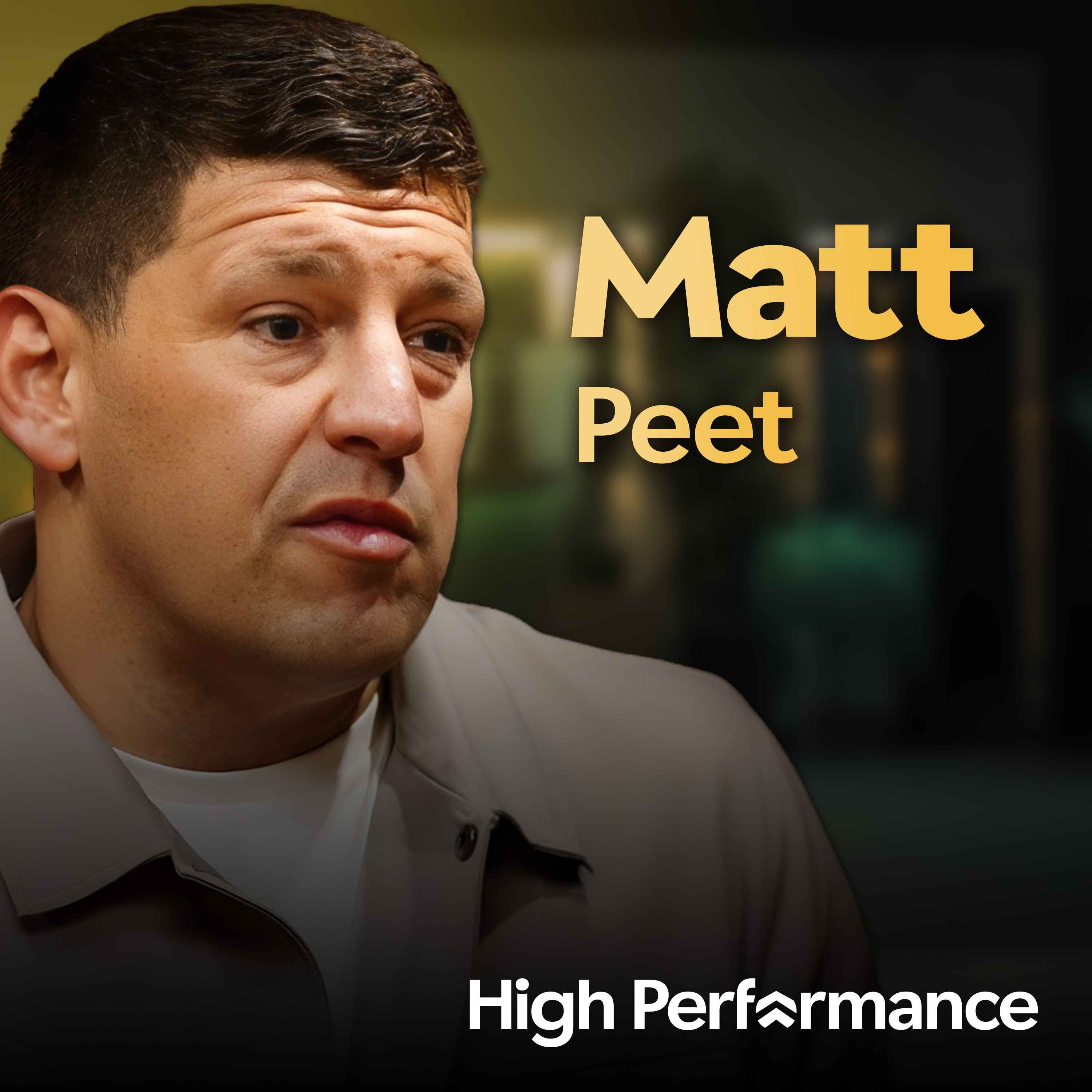
Description: Matt Peet, head coach of Wigan Warriors, discusses his journey from coaching youth to becoming a top coach, emphasizing the importance of culture over trophies. He shares insights on leadership, accountability, and the significance of a learning culture in sports.
Written by AI. May contain mistakes.
Exploration of Matt Peet's unique coaching approach and philosophies.
“and is a coach who's been compared to the level of Pep Guardiola.”
Discussion on Matt's early coaching experiences and their impact on his coaching style.
“looking after one another as a group, building that brotherhood or mateship.”
Matt shares how fostering a learning culture drives success within his team.
“and sharing books, leaving books lying around.”
Insights into how Matt builds a safe space for honest communication among players.
“one of the quotes attributed to you is you want Wigan or the organisation that you oversee to be the world's best learning culture.”
Matt discusses how healthy conflict contributes to team growth and accountability.
“saying things in the press and trying to create a bit of animosity between us and them.”
How personal connections among team members enhance performance and communication.
“or at half-time and then I'm reflecting and watching the game back, it wasn't quite right.”
Learn how to foster an environment where honest conversations thrive.
“A lot of small conversations about anything and everything so we'll go through the process in pre-season work, to build social capital, silly questions to begin with, not much depth to it, like surface level.”
Explore techniques for deepening connections through consistent communication.
“That stuff has its place but I think proper connection runs a bit deeper.”
Understand how team culture has shifted from ruthlessness to a more human approach.
“to go and join Chelsea and you recounted one of these sessions where you asked the players to talk about who'd done something for you that nobody knew about.”
Discover the importance of mentorship in coaching and personal growth.
“But just for someone to give you that welcome when you feel like an outsider, that it's something that I hope that I can do to help other coaches and always try and be open.”
Learn strategies for maintaining balance between coaching responsibilities and family life.
“So I think I've gone more towards the empathetic side, but then I think when you are challenging and embracing conflict, because it comes from that place of they know you've got your back.”
Discover how Matt Peet navigates the challenges of work-life balance as a coach and a family man.
“husband you can be I think it takes work doesn't it particularly in a role like I've got like many people have which is kind of can be all consuming if you allow it So how do you find that balance?”
Matt reflects on his personal development from a young player to a calmer coach, highlighting the impact of family.
“But how would you explain that for somebody that would be saying, what is daft?”
Learn how fostering a culture of gratitude can enhance team dynamics and community relationships.
“because I've done the work with Craig, you know, and been through my life inventory and drawn little links of where things have turned up in my life.”
Explore how community alignment boosts a sports team's performance and strengthens its connection to fans.
“We are just a small part of what is a fantastic community in British sport.”
Matt discusses the mental health challenges faced by players and the importance of support structures.
“From ownership, leadership, team, support staff.”
Find out how vulnerability can foster trust and openness within a sports team environment.
“I feel like I've done it a lot, spoke in front of teams a lot.”
Learn how maintaining emotional control impacts coaching effectiveness.
“Got two daughters now, so I'd like to think I'm a bit more aware of how I come across.”
Discover how a coach processes defeat and supports their team.
“So would you make a decision say you might think this requires me to lose my temper with the group here that would be a conscious decision to do that?”
Understand the importance of responsibility in coaching failures.
“So, again, what would you say to your kids if they lost a sports game?”
Learn how to foster an environment that enhances player performance.
“So I feel my job is to give the players the environment to be the best they can possibly be.”
Explore strategies to train teams to handle adversity effectively.
“I'm thinking in particular here of when we sat down with one of the old famous alumni Sam Tompkins who told us about the game review is never looking at the try.”
Learn how to train teams to handle adversity and improve communication.
“Do we just need to stay connected for a period?”
Discover the importance of team connection and culture in high performance.
“Or maybe just some other players in the team, right?”
Explore the key behaviors that foster a successful team culture.
“So if you had to summarise the three behaviours of a culture that you think are non-negotiable, what are they?”
Reflect on significant moments in coaching and their impact on personal growth.
“Caring about yourself, but caring about people around you as well.”
Understand the importance of compassion and self-improvement in coaching.
“You'd go into a final and kids were there.”
Learn the transformative mantra that emphasizes growth through challenges.
“for a life of high performance, what would that be?”

Get the gist, explore an idea or ask about something said.
 Claude
On The High Performance Podcast, what are the key points of this episode?
Searching your listeningAutomatic transcript. May contain errors.
0:28I take responsibility. of Matt Peete, the head coach of the Wigan Warriors, a club widely considered to be one of the most successful rugby league clubs in history. Matt led the Wigan Warriors men's team to an unprecedented run of success. He's won every major trophy in British Rugby League and is a coach who's been compared to the level of Pep Guardiola. And yet, his route to the top is anything but traditional. He's never played professionally, but instead, he's worked his way up through the academy system. What I found most powerful about Matt's success though isn't his trophy count, it's the deep philosophical culture he's built at Wigan.
1:05A culture that's based on an unquenchable thirst for learning, a deep community connection and a radical commitment to taking accountability. Welcome to High Performance, the Wigan Warriors head coach, Matt Peet.
1:24Your story's incredible in its own way, that you weren't a player. You know, you were a philosophy and an English graduate. He's now one of the most decorated coaches in UK sport. But you started life coaching under-12s in a gym. Yeah, I get asked about not playing a professional a lot and it is true. but I think you can lose sight of the fact that I did play rugby league from being five years old in Wigan to being 20 and when you go through that journey in a town like that and you play for the town team and the county and your friends at school, your mates at rugby a lot of them have gone on to play professionally and I was around high achievers and excellent coaches in quite a ruthless, even the schoolboy in amateur rugby in the North West.
2:22You know, you're around some good practice, some bad practice, and you absorb so much about what winning cultures, developing people and players looks like. So when I decided to stop and concentrate on my studies and coaching, it was still a lot of the philosophies that I'd absorbed and the big thing was I didn't want to give up was I'd started coaching this under-12s rugby team and I was developing a real passion for it never thought it would go anywhere but just had a connection and a bond with that group of young men and again a lot of the philosophies I was trying to instill then that I'd picked up from my coaches are the same as what I would preach now What were some of those philosophies?
3:13looking after one another as a group, building that brotherhood or mateship. That's what I really enjoy, driving. Particularly that when they were 12, 13, getting them to do things away from the game, getting them to be honest with one another, to share with one another, to work hard on the fundamentals of the game, to love practice. But what did that do for you? You know, like you've gone from being a player to now deciding that you want to develop these young players. What was it that it gave you? I think I've always been very interested in how you start something with a plan and then bring it together, bring it to life.
3:59So it gave me a chance to spend time thinking, come up with a vision for how I wanted that team to feel, act, behave, play, train, and then to bring it to life and give them the vehicle to improve, get physically fitter, make new friends, compete. Yeah. But I suppose what I was getting was, it was quenching my appetite to bring a vision to life. But I think there's something really special about your story, Matt, around this willingness to be a sponge, to constantly be putting yourself in environments where you can learn and observe and get better. Where does that come from? I've thought about this a lot.
4:43I'm not sure. I know that my uncles particularly were always reading and sharing books, leaving books lying around. My family have always encouraged me to learn and be better. But I just know that I didn't want to miss out. If there was something where I could learn to help my team or help a player who was coaching, I wanted to... I think my love is learning something so I can share it with other people. I think that can be an eye for people around me and I've had to learn when not to do it as well. Go on, explain what you mean by that. Well, if I read a book now, I would go into work and say, you've got to read this book, you've got to read this book.
5:29And what I've learned is not everyone's like that. So if they don't want to read that book just because I say it's great, then that shouldn't piss me off too much. And it doesn't mean that they're not curious and want to learn. They just have to find their own way. But I am obsessed with learning and trying to develop. And that brings its trappings as well. Sometimes you've got to, right, I've listened to enough now, I've read enough, get the work done. And also being comfortable in your own skin. Yeah. I met Andrew Farrell once and I asked him I asked him about study visits he'd been on and he said to me just be yourself and I remember thinking that's easy for you to say you know the career he's had as a player and as a man but I knew what he meant as well you've got to learn what you can absorb what you can but then trust your own intuition but yeah I would always absorb, I've had some great mentors over the years and I think that's been my path to success really is seeking out knowledge seeking out people who could guide and influence me and then I've been lucky that a lot of them have opened the door for me Well I want to come back and explore some of those relationships in a bit but one of the quotes attributed to you is you want Wigan or the organisation that you oversee to be the world's best learning culture.
7:04And I'm interested in how do you develop and nurture that love of wanting to seek advantages and be sponges in a wider organisation? It's the first thing we talk about and the last thing we talk about from the first day back when I get the team back looking towards next season. It'll be about what did we learn last year? And then we'll train and we'll say, what did we learn from training? you know where can we get better what are we doing well what did we learn what did we learn and that's probably the question I ask the most right and then we give them provide them with the resources the opportunities the space to learn and develop and to fail you know you can't ask for learnings without some room for mistakes yep I set the tone for that and there's no doubt Chris Radlinski, our CEO is of the same mindset we're always looking to dream big and be curious where can we take this I think when you speak about that we've got a learning culture there's no start and end to it it doesn't end at the last game of the year or the final whistle and it also takes the focus a little bit away from the the win-loss we all know it's it's the main thing in an organisation it's what you're all judged by but I think if you pride yourself on learning as you go through the journey of a week or a year winning isn't the be all and end all but it's also not enough like some weeks you win and you still want to be taking steps forward and developing So would that be the first question you would ask your team when you do a Monday morning review after a weekend's game?
8:59What did we learn from this? Yeah. It might be reshaped and redesigned and done in groups, done in, you know, might show a clip and then ask. It might be what did we learn particularly about our communication or our leadership. Okay. So can you give us an example of like an answer that you've had to, you've directed that question that has surprised you or that has produced success in the future? One with the group I've got now was I painted a picture of an opposition team disrespecting us, saying things in the press and trying to create a bit of animosity between us and them. And then after the game, we won the game, but the players said that they don't like it when we focus too much on the opponent.
9:56and maybe it would work with some groups, maybe it's a bit old-fashioned. I just thought that week that we needed a bit of a spark. So I tried to tap into the emotion and one thing I've learned about my team is they want to concentrate on our processes, on them doing it for one another, how much they care about one another rather than sticking one on an opponent. so that was one. There's been other times where they felt that we've not adjusted our game plan enough. We've gone out of a set game plan and whether it was the weather conditions or the way the game was, particularly slow games, we maybe have gone in there with the message of building pressure and the opponent will crack.
10:51But they probably shaped us to try and be more attacking early in games more often, rather than just waiting until the other team fall off a cliff. Which is fascinating that you're getting this feedback from your players. How do you handle that when they say to you, Matt, you got that wrong, or that was the wrong kind of messaging that you offered us? I work for them. they don't work for me and I want us to have an environment where we collaborate and we learn from one another and as long as the end goal is that we make this group better we all improve we don't care who comes up with the opinions there's certain things that I and we have learnt over the years that are non-negotiable but there's not that many there's not that many and particularly when you know the lads are coming from the right place.
11:50Yeah. A lot of the time you know yourself, you've reflected, you maybe had a few small conversations straight after the game with the lads and got a sense of it anyway. But it's always good to get it out in the open. But would you apologise to them or would you share what you would do? I have apologised to them in the past. Not so much maybe for something like that, but maybe if I've said something in the media, what I thought has put pressure on the group or if I've said something straight after the game or at half-time and then I'm reflecting and watching the game back, it wasn't quite right.
12:22But I thought in the immediacy it was. It's no big deal, me apologising, them apologising. As long as you move forward, best intention. I think we have an environment that's really safe. We get on really well, but we also fiercely want to get better and challenge one another and embrace conflict, healthy conflict, as long as it's done in the right manner. Go on, just pause there and tell me about healthy conflict. We have a really safe environment, really fun, a lot of sharing, a lot of vulnerability, and we have a lot of discussions about all aspects of one another's lives. And the reason we do that is I've been sat in teams and in team meetings where the only time two players might talk properly or with any substance is when one of them's ripping into the other one for not kick chase, hard enough, not filling the space, missing a tackle, which is okay, but that's so much more substance to it when there is a proper connection, a genuine connection.
13:36and you're actually giving that man that advice because you want him to be better and that makes the team better. Not just because it serves you. So that's the environment we try to create, get everything out in the open and some of it would appear brutal to an outsider coming in and listening to those conversations in isolation but when you understand the foundations that have been laid and that desire for your mate, your teammate, your coach physio strength and conditioning coach to give you that honest feedback with the end goal of improvement
14:19So tell us about creating an environment of vulnerability then to be able to eventually lead to those honest conversations what do you do? A lot of small conversations about anything and everything so we'll go through the process in pre-season work, to build social capital, silly questions to begin with, not much depth to it, like surface level. Right, lads, get in groups, you're going on a stack do this weekend, unlimited budget, design it, present it, you can go anywhere, take anyone, what are you going to do? Right, you've got, you know, the old question about the dinner table, four or five guests, who would you invite and why, discuss it.
15:01But then you start to drip feed questions of more depth. Last time you were scared, last time you cried, who do you want to make proud? And you can go on and on with that stuff. But it's the consistency of the conversations. Pretty much every morning there will be some sort of sharing like that. Every day before, so would they come into a train and that's part of their warm-up activities? It'd be after breakfast. Breakfast at Wigan is not just because I like my food but it's probably probably equal to the feel session really the most important part of the day 30, 45 minutes everyone's together I know the lads do the well-being checks on their iPads and all that but it's a chance to get a feel for the room for the individuals where's the energy level, where's the enthusiasm where's the confidence but then also to weave in conversations meaningful conversations tell us what you've been doing at the weekend properly share it with the group but something meaningful like did one of your kids achieve something was there anything tough going on wow and there's times in the year where a 20 minute block it might become 5 minutes and we might be flying so it might end up it might end up really fun you've got to gauge that through the year but it's important that we don't take that out because everything we do really is built on culture and connection so I don't think you can just go on an army camp or just run up hills or just get on the piss.
16:45That stuff has its place but I think proper connection runs a bit deeper. So would you mix the groups up every day with a different colleague different teammates? Yeah, mix it up and sometimes you might do the same question mix up your groups, mix up your groups no more than three or four in the conversation because we know what happens then there ends up some spectators and just make it part of your of your practice it's a bit awkward when you first start but certainly my group the challenge now of our group is keeping it they know that much about one another it's keeping it fresh Did you introduce it or was it something you inherited?
17:26I nicked it I nicked it from conversations I'd had with coaches from Saracens and then I did a bit of reading and it's become more commonplace now, I think. Right. Psychological safety seems to be... The buzzword. Yeah, but probably seven, six years ago, Saracens had a great culture and I learnt more about that. They were very open with me. I just think it becomes a healthier place to work. our training facility at Robin Park is outstanding in that all the offices are together the ladies team are around there's ladies in the office people can bring the kids in past players are knocking around we have all clubs stalwarts who some have paid positions some don't but there's a real fluidity about it and I think you can absorb what the club is about and it's probably a long way from the stereotypical rugby club of 20, 30 years ago.
18:27It's... Well, this is... I mean, when we were talking beforehand about Andrew Farrell's book, when he reflects on coming into Wigan as a 14-year-old boy playing with the men and how it was... He describes it, in his words, as a ruthless culture, where it was about that fairly hard-nosed feedback where you had to earn your status. Dog eat dog, he says, doesn't he? Yeah, yeah, he uses that kind of phrase. and yours sounds like it's still focused on winning but doing it in a more human way. Yeah, and there's a place for that. We have our 60 minutes on the field and we have our 60 minutes in the gym and there's no doubt you want that ultra-competitive nature about it all and that edge to it.
19:15I mean, the world's changed a lot in that time and I think we have a duty to create an environment that's got more depth to it, to the whole person, not just the player. Yeah. And it allows us to shape one another where we can have a genuine impact on one another's lives outside the 80 minutes and even outside the time you're at the club. I read an interview when Willie Issa left you to go and join Chelsea and you recounted one of these sessions where you asked the players to talk about who'd done something for you that nobody knew about. and his name kept being recounted. Yeah, it was brilliant.
19:56And that would be the sort of meeting I'm talking about, but the theme that week was probably around mateship or selflessness. And that was exactly right. The players were going round and before you knew it, he'd got two of them out of barroom scraps. He'd had one of them lodging at his house. He'd give a couple of them a lift, one from training. met a few of them for coffees when no one else knew lent someone some money that he didn't get back and they talk about cultural architects you want everyone to be that don't you really and the only words we have up on the walls that Wigan is culture first and I genuinely believe it it stops and starts with that and the wins will come after that.
20:49I've never seen a consistent winning organisation. Teams can win, but to win consistently year on year, all the ones we mentioned, we would all name the same ones. It's the culture which is basically the vision, the attitude and the behaviour is all lining up, isn't it? It's when there's a mismatch that things go off. tell us about your mentors though because I think the willingness to listen to others to open yourself up and admit errors when you've made it to the players and to constantly keep learning that requires you to curate a trusted set of advisors around you yeah I mentioned Chris Radlinski already he's the reason I'm in post now if you imagine you probably can't imagine meeting me when I was 22 and coaching 15 year olds and he saw something in me very early and challenged me I didn't know for a long time that he saw something in me to be honest he just gave me a lot of feedback and pointers I'd like to think I've absorbed a lot of it probably didn't understand it all at the time but I've said to him since that when I've got the job and I've got attention media and so forth a lot of the things I get credit for now are the things that he instilled in me.
22:17Like what? Like having recognition of other organisations and not being totally Wigan-centric, being willing to understand the game and the needs of the game, wanting the sport to flourish, being willing to give credit where it's due. It comes naturally to me now, but I wouldn't have understood that when I was 25. I was obsessed, ruthless with just winning. And I wouldn't say at all costs but I wouldn't give any thought to the opponent. Who else is in your mentorship group? Well, Sean Wayne was, from a coaching point of view and the one that gave me the confidence that I could work with senior players.
23:09just the time he gave up for me and it sounds I've told you that I would ask to attend everything but it got to the stage where I was Wayne was first team assistant and I would go and sit with him the day after the game while he cut the game for his reviews which probably meant it took him another half longer than it needed to but just quizzing him on the clips that he would show and the ones he wouldn't show and what he'd seen on certain things. But just for someone to give you that welcome when you feel like an outsider, that it's something that I hope that I can do to help other coaches and always try and be open.
23:54I mean, he's a good friend now, Wayne. Again, you end up where you're just friends and you speak to each other and you share ideas. But yeah, over the years, he's on my back, 100 % another one would be Craig White I don't know if you know Craig he was the S &C guy with the lions wasn't he and wasps yeah he was and he was a wigginer a lot of common friends and when I got the job or maybe when I was assistant to Lammy I reached out to him and I thought I was going to go and learn about performance sports coaching and from the first time I met him he opened my eyes that there's so much more to personal development and coaching and leadership than what I thought and what I knew.
24:45Again, we've developed into great friends, but we can provide him to me as a professional mentor, which is a massive part of my development. stuff me and him speak about and work on. He does a lot about men being more vulnerable and open, doesn't he? Yeah, and that's probably what I've learned from him, is to be a leader, in my opinion, you've got to start by doing the work on yourself, understanding yourself, and that makes it easy for me. If I know that me doing that work is going to help the team, again, improving myself, you know that's the best place to start to improve the group to improve the club is by me being more present more energized have more range as a coach yeah something we'll talk about a lot and the coaches that i admire you know they are fierce competitive ruthless but they're also compassionate, caring and playful so that's how I want to be as a coach, as a parent as a husband Well can we talk about those last two roles about being a parent and a husband because those qualities you just described of being a head coach being fierce and ruthless and competitive often don't seem like they're compatible with being compassionate, caring and vulnerable and yet you seem to have found this lovely balance between the two.
26:22Try to. I think that's the main challenge. That's where most of my head knows is balance. So balance between them three facets that you just mentioned. Yeah. Balancing myself. Am I being fierce enough? Am I being compassionate enough? Yeah. Am I, you know, sometimes you're at work, you think, should I be at home? You're at home. Should I be at work? You go to the gym. Should I be at work? Don't go to the gym. so yeah chasing that the pursuit of that balance I think is is where I'm at in my life now where I've developed as a coach is probably to treat it more like a family like you would treat your own kids till I had kids that's probably what I didn't understand properly right dealing with junior players and I've spoken about it before driving them constant thinking you're giving feedback but it could just be criticism maybe being too far that way and when I stop now, I think, if that was someone coaching my kid, I would have liked it.
27:23So I think I've gone more towards the empathetic side, but then I think when you are challenging and embracing conflict, because it comes from that place of they know you've got your back. Like your kids is in it. Your kids should know. I know my dad wants the best for me. so I'll listen and he's done all these great things for me he'll do anything for me so when he asks for this I know it's for my own good but yeah that's trying to be the best dad you can be husband you can be I think it takes work doesn't it particularly in a role like I've got like many people have which is kind of can be all consuming if you allow it So how do you find that balance?
28:14I don't get it right all the time I seek it. I seek it. One good thing that me and my wife have got over the years is we're blended with the club, really. We're blended with the job. So people talk about life balance, but I think we've gone about it a different way. They come to the games, they're invested, they've got a lot of friends at the training ground. My wife, Rebecca, does a great job of bringing the other wives together, communicating with them, which plays a massive part in the team dynamic when wives and girlfriends and mums and dads feel a part of the journey. So she helps me with that.
29:00And then you try and book things in, don't you? Whether it's one night a week, and I've seen something the other day you should do, one night a week and then one weekend a month. So we're probably not quite at that, but she has a really high-pressure job as well, full-time. So a lot of the time when we sit down together and the kids are asleep, we're both tired and you've just got to understand it's not one of them days you're going to have much conversation, but get things booked in the diary further down the line. What would she recognise, you know, that boat trip when you were 20 and you told her that you were stepping away from playing what qualities would she recognise from the Matt that told her that to what she sees now as head coach at Wigan and on the flip side what would she see as the biggest difference as well the biggest difference is I'm calmer I'm much calmer I used to be quiet is the word we'd say daft where I'm where I'm from daft Daft, yeah.
30:05That's how I understand it. But how would you explain that for somebody that would be saying, what is daft? Silly, reckless. Impulsive. Impulsive. Up and down. Probably all into whatever I was doing, whether that was training, coaching, drinking, partying, just all in to everything all the time, which is good when you're 20, 21. But I've probably mellowed over the years, particularly since having children. But I'd like to think that I've kept my curiosity and playfulness, my confidence. I think I've always had an inner confidence that I could talk to anyone. That was instilled by my parents. I could talk to people who supposedly high flyers and plenty of money and also people who are having a tough time.
31:07I love spending time with people from difficult backgrounds,
31:15disabilities, kids who've had a tough time and a bit off the rails. I've always had that passion for that. But that comes from your parents fostering children, doesn't it? I mean, that to me is really intriguing. It reminded me of when we interviewed James Timpson. His parents did something similar, and he talks about that was a real gift for him. Yeah, and again, I only recognise this now because I've done the work with Craig, you know, and been through my life inventory and drawn little links of where things have turned up in my life. But I was just brought up in a house of love and care and warmth, working class, both mum and dad worked hard all the way through, but never felt like we didn't have anything.
32:03Even more so, we opened our house up to kids who were going through a tough time. How old were you when your parents started to foster? I reckon I would have been six, seven. Wow. And I think it's called temporary respite or something like that. so many weekends a month we'd have a kid or two coming staying with us and in the summer holidays it might be they come for a week a couple of them and it just becomes the norm like most things if that's what you're brought up with I never stopped to think why are we doing this it just it wasn't my place it'd just been what I'd been brought up with and when the kids were with us they were part of the family and we looked after them the best we could and I didn't think about it too much then but now to look back I am very comfortable around meeting new people I enjoy having proper conversations when I meet supporters and you get to go out into charities and schools and stuff and that's something we've instilled in the team as well we do that all through the year to a high degree that we get out amongst it Why?
33:16It develops a culture of gratitude which is the opposite to entitlement isn't it really you make you feel good about what you're doing you understand that the club can put a smile on a lot of people's faces in lots of different ways it gives you a sense that you play for something bigger than just yourself well that reminds me you gave that lovely sports personality of the year you said it's not what the community can give us it's what we can give them and I think that's the job of a sports team really and I think Rugby League is a I don't know if it's the best but it's a great example of a community game you know the lads get paid but it's not huge sums the game is ferocious the most ferocious field sport in the world I believe but the teams are ingrained in their own times and every one of them look at the Super League and the Championship Clubs they have community outreach projects where the players are the face of it I've seen the things that most recently have the game United for Rob, Rob Burrows, Kev I think Rugby League does that better than anybody else and that's what I wanted to get across in that speech at the BBC I've spent so many years seeing Rugby League on for about 15 seconds I wanted to say something that represented the sport but certainly not just myself and my team.
34:52We are just a small part of what is a fantastic community in British sport. Well, I was recently talking to Kevin, who when I told him I was really looking forward to sitting down with you, the compliment he paid you to me was he said, you know, Matt is a coach that I would have absolutely loved to have played for when I was still playing. and you were telling me that you sort of transcend the tribal loyalties by you've got a picture of Kev and Rob up in the training ground. Yeah, it's the first thing that you see when you walk into our training ground is a picture of Kev and Rob embracing. It just says the best teammates care.
35:34And I think us having that up is even more impactful than the Nautilus Wigan players because we all want to win, absolutely we do. but when things like that happen what happens to Rob you understand that it is a game it is a game and the important part of it is the mateship the memories the lessons you learn that affect the rest of your life and I thought in RADS putting that open I thought it was a great statement of intent from not just what we want our team to be about but what I want our community to be about. But Kev saying that, yeah, it's, you know, someone who's probably the most famous rugby player, certainly in Britain at the moment, and what he's achieved in coaching as well.
36:28He's someone I have a huge amount of respect for, and if ever you want to meet a man who feels like, to make you feel like you're not doing enough in life, it's him. Let's go back and just talk about that community impact, because again, lots of people talk a game about, oh yeah, the fans are most important. What is it that you feel that the club gives you as a competitive advantage, or the community gives you and the team as a competitive advantage? I think a great sports club is aligned, isn't it? From ownership, leadership, team, support staff. But when you get the community aligned as well, it's almost unstoppable isn't it that isn't why we do it but I do think it has a knock on effect we do it to give but I also feel at the Brick Community Stadium that there's an energy when I go to events or the supporters I feel a genuine support not just noise but I feel like they know the team represents them and that's been the same through the wins and the losses and I think that is because they know that well it's our first week of pre-season alongside skills and weights and wrestling and so on, we have community engagement where we all get out in minibuses and we visit schools we visit community clubs, charities businesses, homeless shelters and so forth and that's every week and we'll do as many as we can during the season as well so I think it was a big step to move them sort of appearances into the into the timetable and schedule the players to give it the kudos it deserves.
38:13Right. And can you think of one of these community visits that has lasted in your memory? Yeah, there's lots. I went to the brick on Christmas... This was a separate one. I went to the brick on Christmas Day last year and there was a lad there. And he was a big lad. And he came down and started chatting. I made a comment that, if we could do, are you playing for us? And then when I looked, I knew him. And he was a past Super League player. I won't mention who it is, but... Sure. And I was just like, wow. It's such a fine line, isn't it? It's such a fine line. And we should never feel like, because we're doing all right, the players and the staff...
39:02And we had this discussion recently when we was talking about mental health as well. it's not a million miles away, like it's only one twist of fate and, you know, it could happen to any of us. But that was a really harsh lesson for me, or reminder. Sure. So for context, this was a former Super League player that's fallen on hard times. And likewise, I went to Andy's Man's Club, which is, they're everywhere, and I'm in sharing circles, and I think they're fantastic. and I went to one as an appearance the club asked me to go and I've been back since but I couldn't believe when I went home and it meant that I already knew and they were there because they'd fallen on not financial hard times, just some mental struggles and they were blokes with cash on the hip and solid families but life had thrown something up that they'd struggled and fortunately now there's places to go and share and do you offer that as a support to your playing group as well that ability to go and get mental health support yeah yeah uh i'd like to think that it's that ingrained in everything we do that it would be flagged up really early and right if we had to do something aside from the norm whether i didn't have the expertise or a welfare manager we are well resourced in that in that remit I really hope that the fact that we share so much with one another and we encourage it you know I share things with them about my life and that's really important and that's something that Craig always says to me like whenever you whenever you're setting up this sort of sharing and conversation vulnerability you have to set the tone for it yep they can't be what they can't see you know so if I'm saying you've got to be open my door is always open but I've always got my head in my laptop and I've always got a face like thunder then you're not going to get that sort of communication that you want from the players so How did that make you feel though to stand in front I've been in these dressing rooms I know that sometimes they can be quite intimidating places you've got 30 pairs of eyes staring back at you and the willingness to make yourself vulnerable, to share something personal, can feel like a huge daunting leap.
41:37Personally, I'm all right with it. Right. I'm all right with it. I feel like I've done it a lot, spoke in front of teams a lot. I think I'm quite an open person. Yeah. The important thing for me was doing it to set the tone for others and to set an example. I didn't find it particularly difficult, but that doesn't mean that some players won't and not everyone we've done some meetings where some lads have opted out of sharing which is absolutely fine so it should be there's also times in the season where we rein back the emotion of meetings and so forth because we don't want it to become an overly serious overly emotional environment every day but it is important to tap into it occasionally
42:29let's go back to another comment you made earlier where you said that becky your wife would describe you as far calmer than that 20 year old lad on the boat in thailand how have you learned this sense of calm lots of lots of different practices really spending more time in nature walking yoga breath work i don't meditate as much as i should stop drinking. At all? Yeah. Right. Got two daughters now, so I'd like to think I'm a bit more aware of how I come across. Yeah. I suppose you call it growing up, don't you? But I do do a lot of conscious practice around being in the moment, trying to remain calm.
43:15I know that if my sleep's good, I've been to yoga, walked my dog, all these other things will take care of themselves more often than not. When those practices and habits break down, then I'm more likely to say something stupid or erratic or without thought. That is, along with that balance, I suppose it comes back to balance, but seeking that balance in life, seeking it within yourself as well, being centred, and that allows me to be calm most of the time, but if I'm not being calm it's because I've decided not to be calm. Deliberately so? Yeah. Not doing it in reaction to something. Okay. So would you make a decision say you might think this requires me to lose my temper with the group here that would be a conscious decision to do that?
44:13I never want to speak to the players out of anger and they rarely have made me angry anyway but you might be raising your voice or passionate or enthusiastic. But that's more about an agreement you had with them more often than not and that they're not doing as well as they should or as well as they can. Right. Not because I'm pissed off, you know. But I'm always fascinated. When I see you in the coaching box of these intense moments of pressure, whether it's at Old Trafford for a grand final, Wembley for the Challenge Cup or the World Club Series Challenge that you won, you always do look in emotional control you always look calm and analytical what do you do before you go into that coaching box that gets you into a state like that?
45:01I think it's through the week mainly things I mentioned, yoga's been massive for me I have a pretty strict routine on game day where I'll go to yoga, walk my dog and then have a sleep I always find it's easier to do those things if you're at home, you know. Yep. Just being mindful that anything I do can impact the team. So if I lose control, and I don't get this right as much as I should, but if I'm slam-banging or shooting and balling, then can I really trust my team to have emotional control to make smart decisions? So that's the way I see it. I want to embody what I'm asking them to embody, you know.
45:47Yep. if I can't keep my calm when I can't affect the game can you expect them if one of them does something erratic or silly it's a reflection of me really I often really admire coaches that not only are successful like you but also how they handle defeat when that inevitably occurs and one of the moments that I thought stood out was how you did handle the end of the grand final defeat to Hull KR how do you process a defeat but still be magnanimous at the same time? I just know that I'm the leader and I set the tone for the playing group supporters the organisation and that's how I would expect a high quality organisation to act a few people have mentioned it to me I just saw it as very automatic to congratulate the opponent.
46:46I was proud of my teams. And I loved them to bits. And I knew they would be hurting, so I wanted them to feel that I was there for them. Yep. And I also know that my kids, our kids, our supporters are watching. So, again, what would you say to your kids if they lost a sports game? and you'd say, shake hands, keep your chin up, we'll learn, we'll get better, can't win them all. So I'm very mindful of that. Win or lose, I don't like carrying on when we win because I think there's a compassion for the opponent. You can do it behind closed doors, look wrong, and you should show some emotion. You should look like you're loving it and you don't want to look too sanitised.
47:35But I just thought in losing that game, it was an important thing to do and I also know that it's fuel for our group to go on to our next stage of improvement and evolution so to stand pitch side and clap whole KR fans clap whole KR team one they deserve it but two I think it's an acceptance of you know this continues it's not the end we want to be the best learning team not just the best winning team and is that the same philosophy then that again when I was looking I was struggling to find any instances where you blame the referee you know after a defeat or that you'll often attribute a loss to something outside of your control because I've often wondered as a coach how do you get your players to do the learning process if you've already given them the backdoor excuse of a referee's incompetence?
48:30Firstly when I have blamed the ref I've always regretted it I've always regretted it because it's weak. And then I think everything that happens on that field is a reflection of me. So I take responsibility. If a player's not playing well, have I picked the right team? Have I given them the right information? The right practice, the right development? If we make a bad decision, or we're not prepared for a scenario, or we look flustered by a scenario, ultimately I have control of the whole training programme who we sign who we play what tactics we play so I think as soon as you start to turn everything inwards on yourself it's a good habit as opposed to looking outside for things to blame and again I think it rubs off on your players then you know if they take ownership complete ownership of every performance I just think it's a healthier place to be how much impact do you think you have this is one of those age old conundrums that people want they see managers on touch lines at football or sat in the coaching box in rugby league and they often wonder how much influence do you wield if you had to give me a rough percentage it's a contradiction this because I do think it's all about the players yep but you can have the best flower in the world let's say but if it's in shit soil it doesn't grow does it?
50:04Yeah. So I feel my job is to give the players the environment to be the best they can possibly be. So much so that when they perform really well it looks so natural and flow state and so apart from me. I don't want us to look coach driven and I don't want my players to look robotic through instruction. but we as a staff which is led by me from a coaching perspective set the environment for them to to learn and thrive and grow and then if they're not doing if a player drops a ball and misses a tackle straight away I would think have I set up enough challenge too much challenge balance again you know have I given them the right message too much info not enough info everything out there really player body language lack of body language communication, lack of communication I have some somewhere during that whole year or two years or three I've known some of these lads for ten years somewhere maybe I could have helped a bit more that's got to be the question I ask myself isn't it was the message right before the game.
51:31Was the changing room too warm, too cold? You'll think about that level of detail. I would think about the changing room as being too warm, but that's just an example. I think owning it all is the best way to look at it. You can't control it all, but accepting that everything in the environment I have a chance to shape. I set the whole, ultimately I have the decision on, when we train, when we don't train, how we travel, where we stay. There's no excuses and I make the decisions, so I'd rather have it that way. Have you ever looked at a team and felt that is the perfect epitome of everything that reflects your culture?
52:17There's been certain games where I've had to overcome adversity. I remember one where Cade Ellis got sent off early in a game and we had to play it two minutes with 12 men. I think they're the ones you love you love as a coach because they're purely about mateship people do things they shouldn't they shouldn't be able to do they go that bit further and it was a hot day there's others listen this team since I've been in position they make me proud every day do you know what I mean but there's there's some performances, those back to the walls, late wins, where it's really about it's about the connection, you know.
53:05It's about connection and really caring for one another. So in a world where you get bombarded with stats and facts and data, what is it that you think cuts through that noise and tells you, I've got a team here that's ready? you can feel it around the training around the meeting and things but it's when a team bend but they refuse to break and when everywhere you look they're covering for one another at some point someone drops a ball but you see it in the body language of the reaction that we're almost glad you've dropped it because we get the chance to defend I'm almost glad you missed that tackle because I got the chance to make it for you.
53:52That selflessness you see yourself in sports teams where they were never going to get beat today. That's when you're in your sweet spot. So tell us about the game review. I'm thinking in particular here of when we sat down with one of the old famous alumni Sam Tompkins who told us about the game review is never looking at the try. It's going back and looking at the one percenters that nobody that no fan in the stand would naturally have their eye drawn to. Yeah, that's right. And I think there's never one thing, very early as a try conceded, because one thing, there's always been accumulation of things and opportunities as well to wrestle it back.
54:39Like I mentioned, someone misses or doesn't quite get a tackle around on play three and you concede on play six, so you can go back to play three. But also there's opportunities in there for you to wrestle back momentum and them are the really special players, you know, where you've got to reward. I think it can go even deeper than that where you show elements of body language and of communication and of responses to errors. Yeah. Go on, say more on this because momentum is one of these big, it's a buzzword, isn't it, that many coaches use and a lot of people go, what is it? how can I tell when momentum is shifting and how do you wrestle it back body language is a huge indicator on that you'll see it a lot in a game of rugby like a player can get tackled in touch and the team that's made the tackle all run over and celebrate and the team that's if you're not careful the team that's had the guy put in touch can all drop their heads yeah and it's a massive emotional win isn't it for one team or the other now that can happen in a game but how quick do you bring it back to to centred and balanced and ready to go again if your head stays down for six seconds instead of two then you probably miss the next play or two and that's when you end up stuck behind the post so again that emotional control recognising that everyone's a bit down here everyone's a bit pissed off because of that error right back to how can we swing it back Like, does it need someone to come out of the system and force the action?
56:21Do we just need to stay connected for a period? But you've got to see that small talk going on amongst your team. So do you train for that? Yeah, we train for it. We should do more. What are the kind of drills that you would use to train them to deal with adversity? I think the first thing is recognising it and showing some footage of it. discussing it maybe showing examples of other teams or other organisations outside sport you know they respond to adversity staying centred getting back to process then in practice you can reward little touches little conversations there's not so much you can do in practice you can do it in practice where one team is not allowed to have body language and not allowed to communicate for a little bit and then they're allowed to and they do it to a hyper state.
57:18I like that one. Yeah. Or maybe just some other players in the team, right? You can't talk, you can talk. Right, today I want you to be really mundane body language and they'll feel so awkward that the next time they... But then as well you can reward touch, reward micro-communication, not just talking but listening. It's an art in itself, isn't it? the communication, the body language. I think it's just having an eye on it. I think what stands out in this interview, Matt, has been that it's nothing to do with rugby league, is it? It's about bringing people together and creating a culture of connectivity where people feel that they belong, but they've got each other's back.
58:04Yeah, I'd say so. I mean, the rugby league is, if you came into the environment, the team meetings, it's hyper-analysed, it's very intense. But the players and my assistant coaches as well, we play 30-odd games a year, so there's a lot of repetition there, doing the basics really, really well, trying to improve attention to detail, data. I love the game. I love trying to unpick opposition teams and cover our weaknesses and our strengths. But I've just seen enough games, both codes of rugby actually, to know that in the end, the margins are so fine, that the connection of the group, particularly in the most intense games, the most intense games, I think, an ability to do the basics exceptionally well, a game plan that everyone's got clarity around, but all built on deep, deep connection and care for one another, I think it's a great combination.
59:15Tough to beat. So if you had to summarise the three behaviours of a culture that you think are non-negotiable, what are they? An appetite to learn. Like a real intense desire to improve and develop and get yourself better, but knowing that that's going to help the team as well. Consistency. Just doing what you say you're going to do. And I say that I think consistency is massively underrated. It's almost like people wouldn't be turned on by and described as consistent, but I think for a player, a coach, an employee, a friend, a dad, a husband, And it's a great thing to aspire to be, that people know what they're going to get from you.
1:00:09Yeah. And you do what you say you're going to do. So ultimately the consistency, because trust is so important. That's how you get trust. And then care. Caring about yourself, but caring about people around you as well. And the two sides to care.
1:00:28The funny, compassionate, playful mate, but also the current teammate or current colleague who will tell you straight, will embrace conflict in a respectful way just to help you and because they know you do the same for them. If you could go back to one moment of your coaching career, what would it be in my... I remember when we first... we won our first semi-final against St. Helens and in the Challenge Cup yeah in the Challenge Cup so we were miles off we were miles off being the best team but we'd just beat the best team and they'd been the best for ages then so it was probably the first time where I thought I wanted to beat them when I got a job I think they'd won for all the spin but that was when I knew we could we could do it and we'd done it and it was taking us to Wembley it was all new it was I'd been probably a bit scared of how it might unfold.
1:01:34So that was probably the one where I was like, big one. I weren't sure we could do it till then, you know. And then just everyone was in a great mood. You'd go into a final and kids were there. It was fantastic. I probably forgot some others, but yeah, that's one that always stands out for me feeling like, you know, I can do this. If you could go and visit that 20-year-old lad that was deciding to step away from playing and deciding to pursue a career as a coach, what would be the one bit of advice you'd pass on to him? I think the side that I've learned since having two daughters. I mean, it's hard to tell someone this, where it's a little bit more compassionate, a little bit more understanding.
1:02:17I wish I would have got that a bit earlier. So I'd be saying just try and be a bit more caring. You're a compulsive learner. what's the biggest lesson that you've learned from these field visits you've been to, the books you've read, the mentors you've been lucky enough to be mentored by? What's the one lesson you'd want to share? I think be yourself, but try and improve yourself. You can seek improvement, but then trust who you are, follow your intuition. And finally, if you could pass on just one golden rule, for a life of high performance, what would that be? I read a book called The Obstacle Is The Way, and I think that's a really good mantra.
1:03:08When you're in a tough time, I certainly have seen this over the last five years, from our biggest losses and hardest nights, has come our biggest growth and learning and development. So, yeah, keep me moving forward. obstacle is the way Matt honestly it's been an absolute privilege to get to sit and pick your brains and listen to you so thank you so much for being generous with your time and your insights No it's honour to be here I'm a big fan and yeah it's a pleasure Thanks mate Well thank you there to Matt for a properly rich rewarding and incredibly revealing conversation about what it takes to succeed at the very highest level if you know someone that you think might benefit from listening to this conversation please consider passing it on to them if you'd like to leave us a review well i'd be really grateful but above all we really hope you've enjoyed listening and you'll come and join us again soon
1:04:27you
Matt Peet is one of the most decorated coaches in British sport. In just three years as Wigan Warriors head coach, he's won seven major trophies including back-to-back Super League titles, the World Club Challenge, and a historic clean sweep in 2024 - all before turning 42. And he never played professional rugby league.
Rising from coaching 12-year-olds on muddy fields to leading Britain's most successful club, Matt has built a dynasty through an uncompromising philosophy: culture comes first, trophies follow. At Wigan, that means aligning vision, attitude, and behaviour, and building a team where learning, honesty, and care matter as much as winning.
In this episode, Matt sits down with Damian to reveal how that culture is lived every day. He shares why his most important question is always "What did we learn?" - even after victories - and how creating psychological safety allows players to challenge coaches, coaches to apologise, and everyone to grow.
Matt also opens up about ownership, vulnerability, and connection. From taking full responsibility for every error on the field, to sharing his own struggles with the group - he explains how shared responsibility and mateship show up when pressure is highest.
This is a masterclass in leadership beyond tactics. From a philosophy graduate who never made it as a player to the coach Sir Kevin Sinfield says he'd have "loved to play for”.
Our partners:
Heights 👉 Get 20% off your subscription by using Code: HP20 here: https://highpfrmc.com/hpp_heights_au2
Visit Seattle 👉 Start planning your perfect summer of football by searching Visit Seattle on social media, or discover more at: https://highpfrmc.com/hpp-visitseattle-au
Simba 👉 Jake believes better performance starts with better sleep. Discover Simba, start your 200-night trial today now:
https://highpfrmc.com/hpp-simba-au
Hosted on Acast. See acast.com/privacy for more information.


