
 Ask ChatGPT


 The High Performance Podcast
26 May 2025 · 1h 10m
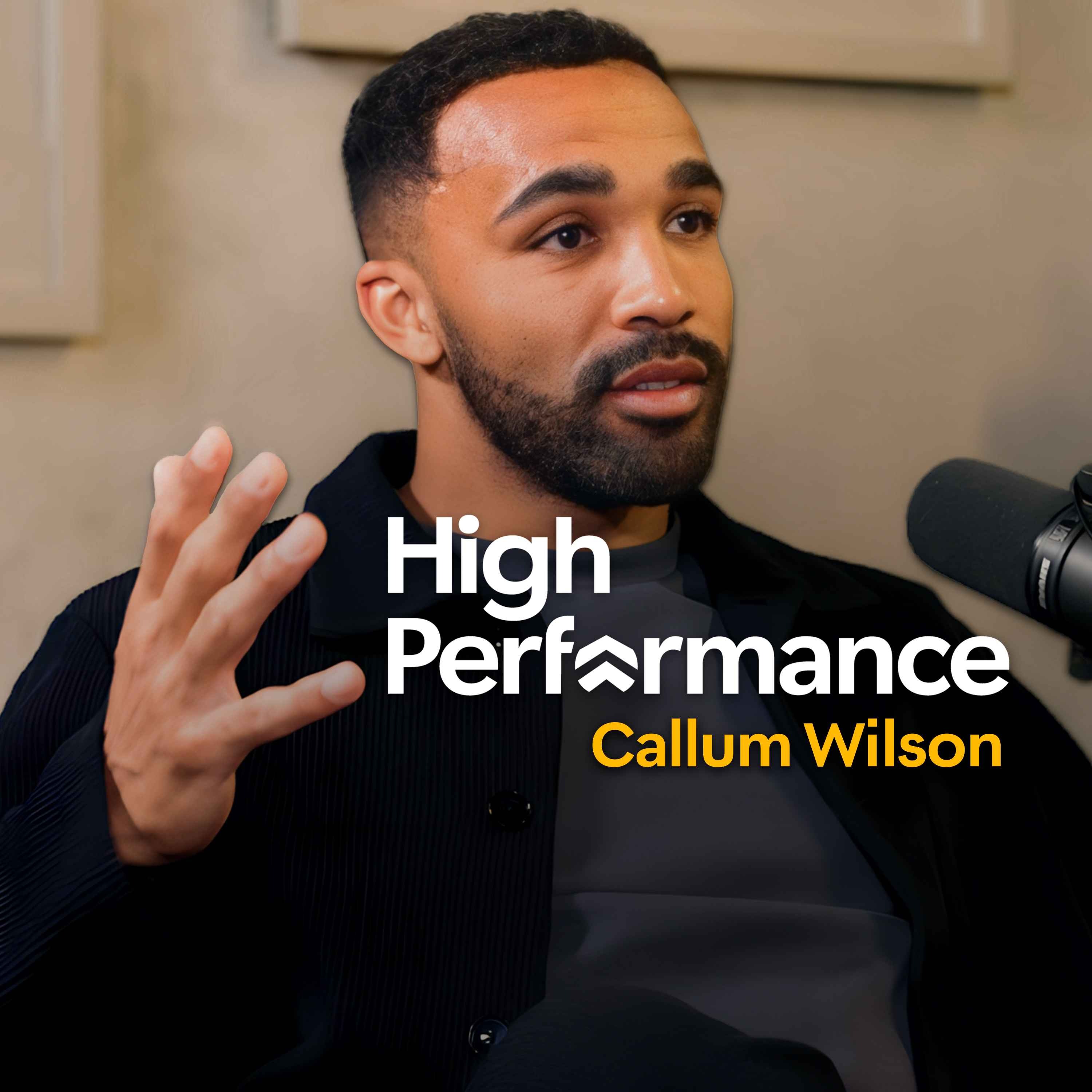
In this episode of "The High Performance Podcast," hosts Jake Humphrey and Damian Hughes engage in a heartfelt conversation with Premier League striker Callum Wilson. Known for his speed and striking ability on the pitch, Callum reveals the darker aspects of his life, detailing his traumatic upbringing, struggles with mental health, and the critical role football played as a source of escape and purpose.
This episode contains themes of suicide and trauma.
Written by AI. May contain mistakes.

Get the gist, explore an idea or ask about something said.
 Claude
On The High Performance Podcast, what are the key points of this episode?
Searching your listeningAutomatic transcript. May contain errors.
0:28Watch it early on the High Performance App. I was just praying to God, take me out of this environment. I want to become a footballer. Football really was my saviour, I think.
0:38That is the voice of Callum Wilson, who we all know as one of the Premier League's top strikers. But the story and the pain behind his journey is something that he's never spoken about until now. Look, please be warned that from the very start of this episode, we discussed themes of suicide and trauma. And in the description to this episode, you'll find links to platforms and people who can help you. if you or someone you know is struggling. It's conversations like this one, Damien, that I honestly believe move the dial for so many people when it comes to opening up about their mental health. Absolutely, but it's important to state it's a conversation about hope.
1:14Callum reveals how, from the depths that really moved us, he managed to find hope, resilience and a renewed sense of purpose. He also told us how he's now learning to find answers in therapy and what he'd learned around the challenges that he faced on the field as he had to battle back from two devastating ACL injuries. And crucially, you'll also hear Callum reveal to us that the bigger his struggles became, the bigger the smile on his face became. And you know what? We believe that is the lived experience for so many people. And actually, putting on a brave face when you're hurting inside is something that causes devastation for so many.
1:52But from today, Callum doesn't need to pretend anymore. and we thank him for his honesty and for trusting us with his story. As we welcome to High Performance Newcastle striker, Callum Wilson.
2:08Callum, welcome to High Performance. Hey guys, thanks for having me. Can we start where it all started for you, growing up as a young kid in Coventry? When I say growing up as a young kid in Coventry, where did your brain sort of automatically take you? It takes me back to the cages. It takes me back to playing on gravel stones at the garages with a painted gold on a gas building. And that was where the passion come, really. I played one bounce with all my uncles. They were a lot older than me because I'm from quite a big family. and then eventually on a grass field we started you know there was a local guy who would come and put goals up for everyone in the community and he said look you need to go and play with kids your own age now and put me into a youth setup and then things went from there really grassroots football was the start of my journey.
3:03Was it a happy childhood?
3:07it wasn't but i think it's what's made me who i am today i'm one of six single mom i've have a different dad to all my siblings as well you know it was happy in terms of i look back now and think through different lenses you know i look back and think right that is you know something that i never want my child to experience basically without going into too much detail there was things like you know foster care safe houses receiving food off food banks and the local church lots of different scenarios and stuff happened domestic violence at home so so yeah i guess that's kind of my journey really yeah what were you coping strategies to deal with some of what sounds like traumatic events cry myself to sleep at night sometimes well i got to about 12, I think I was, 12, 13.
4:00And no one really knows this, to be honest. And I was debating whether to say it, but my wife said, you know, just be open and tell people your story. And there was like suicidal moments, basically, where I've walked alongside the train track and building up the courage to jump, basically, in front of the train, tied cables around my bedroom rail and my playstation remote and my controller sorry and um yeah I was seeing if it was strong enough to hold my weight and things like that and ultimately when I say I cried myself to sleep I was just praying to god like take me out of this environment I want to become a footballer but I wanted to to do something and achieve something in terms of financial gains at that time to get me out of the environment that I was in basically my mum don't even know that to be honest but it was something that now as I'm older and I'm a dad myself and you realize it probably was a trauma that I'm working with therapy as well so.
4:58And what stopped you? Thinking that I have too much to offer in terms of life you know so young at the time and just thinking that this can't be all that life has to offer basically you know there's more out there for me there's a higher power that was kind of calling me and football really was my savior I think it was my escape my mum never drove so I'd always get picked up from my Sunday league coach from my front door and drop back again but when I would leave my home environment I was going into like a family feel it felt like with my with my peers you know the coach was fantastic he had a nice family and stuff like that and they'd always sometimes you know get me food on the way home fish and chips and stuff So I got that love and care that I probably wasn't getting as much at my house.
5:42And that was not by choice. No fault of my mum's. It was just the environment was dictating who I was becoming really and what was around. And basically, yeah, football was kind of what helped me get away from it. Listen, first of all, thanks for sharing that. Because I'm sure it isn't easy. But I also think it is really important. Did you say you were 12 years old? Yeah, I would have been 12, 13. I can't remember too clearly because it's something that I have this ability in my brain to just block stuff out. And I thought it was a superpower. But when I'm speaking to my therapist of late, she says, you know, that's your coping mechanism, basically.
6:19And it's something now that we're going back to work over to then, you know, clear it out to become better for it. Because ultimately, bottom line is you just want to be a better dad than what I ever had. And a better parent than what I ever had. So any way impossible that you, you know, it can improve on myself is what I'm trying to do, yeah. What was happening in your daily life that led you to feeling like that then? You know, like I say, life was a struggle. It was my mum on her own, all my siblings in the house. We had a three-bedroom, council house. Food was sparing to come by. In terms of like, you know, Christmas time, they'd come around with hampers and I was the oldest.
6:58So I felt like I was the dad of them, but also the man of the house. and as soon as the food would come through the front door, I would have first dibs on what I wanted out of this food hamper. I'd always go for, now I look back, the tinned fruit and the cherries and stuff like that. And I was probably subconsciously the athlete in me that wanted to stay healthy as possible. Yeah, that alongside a bit of turmoil. My mum was going for a difficult time, bless her, through no fault of her own. And I think that was it really, the circumstances. So your mum was a victim of domestic abuse. And you're the eldest.
7:35And you're the son. You're the man of the house. So I guess that also leads to these feelings of you probably feeling in some way like you need to solve the problem or be responsible for trying to help but feel so helpless at the same time. Like what can you really do against a fully grown man? Exactly. And I feel that it was my brother's dad, the one below me, who was the guy who... Perpetrator. Yeah, the perpetrator. the demon so to speak and um I was a bit younger at this point when it was happening then you know my mum would end up in hospital we'd end up in me and me and my brothers going to foster care but separately so we'd get split up because it was just the two of us at the time and then eventually I went to live with my auntie she pulled me out of there but then you know things around people that you love and you know think that you they care for you and stuff then you're still not in the hands of people that really have your best interests at heart you know so you go to live with someone who's used to having a freedom and single life and not really having anyone else having you know someone that is relying on you it was just carnage so to speak and I think then that goes into your brain and you have carnage and then school was going downhill then eventually as I got older but I probably went to six seven different schools just from moving from a safe house.
8:56My brother's dad would find it. The police would have to come, put us into another safe house and just keep moving around. And it was almost like you're on the run from your own brother's father, basically. And things like that. And obviously being the oldest, you carry that a little bit. You feel like you're the protector of my brother. But then obviously, eventually when he went to prison, my mum found a new partner, settled down, had kids. And then she started to become a little bit happier. But I think she had a bad choice in men to be honest and same cycle not domestic violence but he was an alcoholic then and then you had that kind of to deal with in the house someone who's coming in steaming all the time falling over causing carnage shouting so it was just an absolute mess and I look back now and for me I'm always there for my siblings but I just I took my family away and basically just want to protect them and make sure that they don't have any experiences of like what I had
9:54The market's uncertain. Revenue's tied and hiring on hold. That's why results-driven companies are using Upwork to keep work moving. Go to Upwork.com today and start hiring proven freelance talent fast. No bulky overhead. No rigid long-term contracts. Just the right expert right when you need them. Work smarter and faster with Upwork. Go to Upwork.com now and find your freelance expert. That's U-P-W-O-R-K.com. Post a job for free and get started today. I'm no tech genius, but I knew if I wanted my business to crush it, I needed a website now. Thankfully, Bluehost made it easy. I customized, optimized, and monetized everything exactly how I wanted with AI.
10:37In minutes, my site was up. I couldn't believe it. The search engine tools even helped me get more site visitors. Whatever your passion project is, you can set it up with Bluehost. With their 30-day money-back guarantee, what have you got to lose? Head to bluehost.com to start now.
11:20and soundscapes with ambient sounds, lo-fi music and binaural beats, all designed to help you focus, relax and even spark creativity while you browse.
11:32It's a story of survival in many ways you're describing, Callum. And I'm interested in when you go into six different schools, when you're going into foster families and you're going through such turbulence, how did you learn just to adapt to those environments? probably with a smile on my face i think you ask many people now that know me it's like callum's always smiling and sometimes i'm not even happy when i'm smiling but it's like a mask really that you put on a smile and um just be positive and i never really had any meaningful friendships relationships because i was always on the move there was one of a friend that i had growing up that his mum was in the same environment.
12:15So we met in one of the safe houses and then we was at the same school and then we kind of, our paths just crossed again at secondary school. But, you know, he was a good lad, but just the environment had dictated who he'd become and he'd let it take him the wrong way. And basically, when you're hanging around with people like that, you start to tread down that path as well. Unfortunately, yeah, I think in terms of coping, for me it was always just try and overwhelm the negativity with positivity. What would you say are the ghosts of that childhood past that are still present in you today then?
12:50I think you probably have a lot of aggression from that point but football was a place and a space that I could be aggressive in my position on the pitch and it'd be okay so it was like a release really sometimes letting out um i never wanted to become what i'd seen um around so i made sure you know that i'm always calm but i probably have a shorter temper than i'd like but in terms of ghosts really you know you go through spells of coping mechanisms like gambling and and things like that but i feel that i've armored my brain so much now that things are harder to get in so anything that had gone before you know I've managed to kind of think right that was then it's not going to dictate who I am now and then leave it in the past really.
13:39That period when obviously things were dark and really difficult when you were 12 13 years old what did you do to stop those thoughts of suicide or those that desire to end it all and get rid of the pain? I think at about 12 I had a season in the academy at Coventry and I was going in with one of the parents from my Sunday League team because her son and his son had a year contract at the same time. So I kind of had a purpose then and I went in for a year, didn't like it. The family feel that I had from my Sunday League, I was missing in this kind of high performance environment really. And I don't think I was ready for it at the time.
14:24And I did one season and come back out and went straight back to the to my grassroots team really and yeah I think that kind of season there I've seen kids who are also in the same industry as me but really want it and what it means to them and what you need to do to to stay and sustain at that level really and I think then I just committed to right okay I'm gonna I'm gonna try and be a football player and you say like you've had therapy recently you're having therapy now when did that begin probably about a year ago so so you've had to live for 20 years with those thoughts and the trauma of what you went through as a young kid without seeking therapy yeah and i think what i've realized is is when football's going great when life's going great you can kind of block it out and i had a period over the past 18 months where i had setback after setback and And things just got on top.
15:23And basically, it was too much to suppress. And basically, it just all rose to a head. And I was like, I need to go and seek therapy now. And I'm at a point where I'm starting to go back down the wrong path. Little things are creeping in, like gambling and this and that. And I was like, you know, for me, I don't want to become that person. So I need professional help. And yeah, I think it took a bit of bravery, to be honest, to realize that as strong as I feel that my mind is at times, you also can speak. And even just speaking to her was a great help. And I appreciate how hard it can be to talk about this, particularly when you've lived now for 20-odd years and having never spoken about it.
16:06And now, you know, you're deciding to share it. But it would be so good for so many people to hear you talking in this way. Would you take us to that period just maybe a year or so ago when you knew things weren't quite right, how it felt and how the behaviors were kind of showing themselves what was going on so i was in the gym at the football club and um i was spinning on the bike basically in the outer chamber spinning away just come off the pitch and um i had to put my heart rate monitor on and basically the heart rate monitor is connected to an ipad and then you can see how much your heart rate's increasing you have to hit a certain score and then you're able to to leave the altitude chamber.
16:46So I've come in off the pitch and I'm spinning on the bike and basically my heart rate's not going up. And I says to him, my heart rate's not increasing. And he's like, it's fine. The iPad's fine. Just keep working. You're not working hard enough. Then that obviously triggered in me, you know, it probably was taking someone just to say something. And I don't know, I obviously flipped a little bit. And then he's obviously, you know, he's got a fighting background. He used to do combat sports as his youth. so he's not a quiet character basically so he's then said his piece and in the end we've just come into a head and I've got off the bike I was so like angry and you know just walked off and basically was almost crying with anger but I love him to bits and I just didn't want to basically fight with anybody so I just took myself into the dressing room and he'd come in and I was like honestly get out like not now and the manager called me and is everything okay and I says yeah like obviously I'm fine blah blah blah and then I thought that is unlike me and the manager said Kyle that's unlike you and I was like I don't know but like it's just it's just happened in the moment you're still putting a front on at this point yeah I'm in denial so to speak and then the physio about two weeks after was like you know really close with him he's helped me do my ACL rehabs he's been there for me for many years now and he said Kyle you're not you're not yourself and I was like what do you mean and I got my back up straight away I was like I'm absolutely fine blah blah blah and he's obviously got a good relationship with my wife spoke to her as well and was like is everything okay with Cal at home she was like yeah yeah he seems okay like obviously you know I'm able to kind of put a smile on my face even though it's not but home is sometimes where you can kind of let it out a little bit and I was probably getting a little bit more snappier with the kids than I would have liked and less patience and then he basically pulled me aside and was like look I think you need to see somebody who did the physio and said like I've got somebody that basically I've worked with in the past and I think you'd really benefit from it so I was like no no no and then he was saying have you spoke to her have you spoke to her I was like no I don't need anybody and in the end I just took myself away and just spoke with her and yeah you know learning a lot about myself now and in ways that I was able to cope throughout the years or little traits that I have were obviously triggered by things as a kid You know, for example, in Bournemouth, I had a jet ski when I lived down there for many years.
19:16And some people would think, oh, jet ski, you know, footballer, blah, blah, blah. But for me, the jet ski was a release. I'd go on the water and I'd be free. Nobody could get near me. Like the ocean was there. It was clear, therapeutic. It was therapy for me being on the water. And I realized I love the water. And it's the same with cycling. You know, I'd go on my bike and I'd just go off on my gravel bike and be on my own. And it was that sense of freedom that no one could get near me, no one could harm me. And that was probably how I've coped over many years is sometimes isolating myself in different situations like that.
19:53So what happened then from you telling the physio, I'm not going to therapy, to you picking up the phone and calling a therapist for the first time in your whole life? yeah so i dropped a message to her and um why did you suddenly feel the need to reach out what changed too many people were asking me if i'm okay and then i questioned myself am i okay what are what little traits am i showing that are unlike me and i'd find myself having a little gamble here and there a little bit more and i'm you know i don't mind playing cards and this and that but it was probably coming a bit more frequent and then for example the outbursts of aggression which I'd release on the pitch like I say at times and anybody that plays against me is probably like this guy's an ass you know but if you see me off the pitch like oh what a nice guy because that's where you know I put a poker face on and I'll change my character basically on the pitch but I was unable to do that because I was injured so I wasn't playing and I wasn't getting that release and then unfortunately the people that I really get along with I was starting to harm and I was like maybe I need to take myself away and just speak to somebody even if you know we have a conversation and it doesn't go anywhere but then once I started speaking and revealed everything that I'd been through in life she was like wow how have you got to this point already without not seeing a therapist and you know we could talk off air about many other things and situations that have happened in my past as well but you know I think for the purpose of the podcast you know I think what I've revealed is is more than enough and um yeah I feel that she was baffled as to how I've got to where I am today.
21:37And thank you for sharing it it's really humbling that you have done so thank you. I'm interested in the fact that you decided you wanted something different you know like you spoke about that other boy you'd met in the foster system who went down the wrong path in many ways and I'm interested in what was it that allowed you to focus on going down a path of freedom of responsibility of being in charge of your own future rather than allowing somebody else to do that that's a great question and there was a specific event that I remember to this day I was 15 at the time and I was in the youth team at Coventry had just been signed and I was playing for the Inder 16s trying to get myself a scholarship there at the club and Friday night and we got a game the next day I can't remember the team now and I hung around with a lot of people that were older than me so I thought I was you know mature Jack the lad so I was out on a Friday night day before a youth team game bearing in mind this is a dream of mine that I really really wanted to fulfill I'm self-sabotaging it by being out on a Friday night and one of my friends he was probably I'd say four years older than me really really good basketball player but got to the vital ages and started smoking weed and for him that was like career ending he wasn't able to to fulfill his dream and he come to me in the alleyway you know you're doing things that you shouldn't having a drink and so on and so forth and he takes a drink out of my hand and says what are you doing?
23:13and I was like what are you talking to? like I'm having a good time he's like Cal he's like you've got a game tomorrow he's like you have so much potential he was like do not ruin your career how I ruin mine and from that moment he was like go home and I was like you know thinking I was the big lad I was like who are you talking to like I'm not going home I'm out having a good time he's like go home and I went home and from that point honestly I never looked back in terms of you know on that path to success really. And, you know, I thank him today, you know, for them comments because ultimately without that and if it had been encouraging of it, I would have thought I can get away with this.
23:56And, I sort of forget the next day on the Saturday I went and scored for the under 16s and then they called me down to the under 18s pitch. I went and scored on there. So I'm thinking, this is perfect. Like, you know, I've had a drink and stuff the night before and I'm flying. So this could be the way that I could go on. having a good time whilst also you know trying to achieve my goal and then on the Monday morning word had got out that a few of us was out on that night to the to the youth team manager so he's pulled us in suspended us for a week and took a week's apprenticeship wage which you know 90 pound at the time was life-changing I was like Jesus Christ and then basically he pulled me and said Cal I understand you know who you hang around with and what you do and stuff like that and he's like hang around with people that are like-minded and want to be successful like you and at the time I'm thinking he doesn't know it all you know he's talking and this is a guy called Greg Riok whose dad was Bruce Riok right and he was coming from a great place and I thought he's been there seen it through his father and himself so I thought I'm going to take this advice on board and I started to hang around with the youth team players and you know on a friday night i would say oh what you're doing should we go out no i've got a game tomorrow and then all of a sudden i'm thinking that's the way you've got to act i didn't have a father around so i had no role model and no older male figures tell me what to do i was left to my own devices so i could be out until whatever time my mom would just be like not bothered really because she's got other ones to worry about I could stroll in at midnight on a Friday night before a game and she wouldn't even care, you know.
25:36But it's not for her choice. She's got so much else to deal with and she thinks I'm big enough to handle it myself. What was the reaction amongst the group that you'd originally been hanging around with when you choose to take a different pathway? They move on quickly. There were so many of them, you know. There's probably 18, 20 guys would all hang around on a Friday night, go to the park, drink out of a little£5 bottle of vodka, mix it with other things and stuff and just go from part to part all just guys girls and this and that so one person not being there at the time because I wasn't really a big character I was one of the younger ones anyway was fine they didn't really you know notice so to speak and I was kind of able to just slip away and in terms of the kid who just three or four years ago was really struggling how was your mental health at this point when you were finding some success on the football field it felt like like I say that was my escape originally and I got a little taste of success and I thought right things are working in the right direction I feel good I feel happy so then I just committed fully to doing the basics really and that was just getting myself to bed on a Friday night knowing I've got a game ready the next day and getting my kit out the night before games just fully immersing myself in football and I feel like that was you know that was probably the key to me at that point was just committing to a goal that I wanted to achieve, set my mind, set my focus and didn't let anything get in the way.
27:07And it's probably the first time I was at a point where I was unable to be took off the path that I was going down. I think it's an amazing story. And it's one that obviously in those difficult times, your resilience is being built without you really knowing it. You know, as far as you're concerned, it's painful. But actually in years to come, you realize that, man, you were able to deal with some really dark and troublesome times because actually football isn't plain sailing all the time, right? And in recent seasons, you've had some pretty horrendous injuries, you know, rupturing both your ACLs, one and then the other straight after.
27:40I wonder how much those early challenges gave you the resilience to get through those tough times in later life. They were the key. Really? Without me knowing, lads like Jamal LaSalle, Sven Bottman, have come to me recently and said, Cal, how have you done two ACLs? I've done one and I'm pulling my hair out to do two, you know, and still be playing at the level. They're obviously baffled as to how it's happened. But I think when you've been through such trauma as a kid without realizing things like that are irrelevant, you know, they don't even touch me. And because my mind is so focused on, you know, staying so far away from Coventry, so to speak, no disrespect to anyone in Coventry, but staying so far away from there.
28:26Yeah. that I know that if I don't recover from this knee injury could result to me going back there. It drove me through and doing it again. And the way that people then started to write you off because you've done the second ACL injury and people don't recover from one. Now you've done two. Is it going to be the same player? Those question marks, that proving people wrong, that was the next thing that kind of taught me to the next level really because from early years, my drive and motivation was financial gains to try and get myself away from the environment. That's not sustainable. So once I got to a point where, you know, in the youth team had competition, I had to prove people wrong.
29:12I had to show that I was better than them. As you've got older, people writing you off, prove them wrong. You know, I spoke with Eddie Howe the other week and I told him, I still hold a grudge from the beginning of last season and he put me on the bench for the first game. And that's, you know, we can have a laugh with that, but basically that's just because that little grudge that's on my shoulder helps motivate me sometimes. And you sometimes need stimulating in different ways, you know, to get the best out of you. And I feel that, yeah, those little things like that is what I've used to try and help me elevate.
29:50So let's talk then about some of the specifics when you've got injuries as severe as doing your anterior cruciate ligament. For people that don't understand, how long is that out of the game for each one? So an ACL injury, typically you're talking 9 to 12 months. They say you don't fully get back to the level that you was playing at until 18 months after that. So I did my first ACL in 2015. I got promoted to the Premier League, first season in the Premier League and life was good. you know five goals six games hat trick away at West Ham thought I'd cracked it to be honest you know talks of England calls up and things like this then stoke away bad tackle horrendous tackle everything changed What did it feel like?
30:38It felt like to do the ACL injury well it was a scissor tackle I was outstretched I had no way of getting out of this challenge whatsoever so I was sitting duck really and leg went in heard like a pop or crack and basically I've gone down and the physio's come on and I says to him my knee have I broke my leg? he says no I was like right I'm going back on and I honestly stood up jogged up and down the side of the pitch and went back on the pitch and now when I look back I think how on earth was I allowed to go back on the pitch because I've gone back on the ball's gone back to the centre half he's played a long ball up to me and I'm running towards the ball but as I've stopped to try and turn my legs just give way it honestly felt like someone had blew it off with a shotgun honestly and I went down again in agony and just said get me off this pitch now and as somebody that had found an escape in football for so long what was it like when you can no longer go to that place?
31:45it was challenging it was challenging and having a good, stable family at home was the key really. You know, my wife is a fantastic person and I think without her and without my kids as being a purpose, you could have easily got into bad habits. But you go home from a hard day's rehab and you're able to switch off because you've got a family there that you have to provide for. And yes, you're a footballer for six hours a day, but the rest of the day I'm a father, you know, I'm a husband. And I think that's, in my mind, was more important than feeling sorry for myself in that moment. What's it like being a long-term injured footballer?
32:26What is a sort of a day or a week like? Because I've spoken to, you know, ex-players who say, man, you don't even want to turn up. You don't want to be at training at the same time as the lads who are playing because you feel like almost like a burden because you can't do what you're paid to be doing. Yeah, it's challenging. But I think you have to, in your mind, try and fall in love with the process of returning from injury you know but ultimately what defines us is how well we rise after falling really and I think for me it's a quote that I always live by it's on my screensaver and it's not ideal of course not you know you're coming in a little bit downbeat lads are coming in buzzing I tried to schedule my week where on a Friday I was not in just solely because if I was in a negative moment and the lads are preparing for a game in a positive moment I tried to not be you know dampen their glow so to speak so Fridays I would either come in later once they've gone or try and stay away from the building but amongst that you know I faced everything with a smile so you ask most people in the dressing room when I did my knee injury they were like I can't believe how positive someone is that's out for so long you know and I think that was the key really to enjoying the process of right I'm going to be back stronger than what I've left this pitch which gets you through.
33:45You earlier described that going into foster care and going into these different schools, you put that smile on even though your heart might be breaking. How much was that the same? Any time that I was in, in a negative moment, I would overly smile. And I only realize it now that I didn't want to, you know, I'm so, when I'm involved in the team, I do everything for that team. I'll die for that team. So I didn't want to bring them down and I would be so positive with people, pull over the injured lads and speak with them and try and uplift everybody else, even though inside it's probably I need uplifting, but no one can see that because they think, oh, actually, he's fine anyway.
34:28But I think that's where you go home sometimes and, you know, you may be a little bit quieter at home or your wife can pick me up, you know, whereas when I was in the club environment, I tried to pick everybody else up and overcompensate just because I was probably feeling not great myself, to be honest. Who would you tell about how you're really feeling? Nobody. Nobody. I wouldn't want to burden my wife because she had so much going on with looking after the children. The manager, I knew I could always speak to at any moment if I wanted to. But I tried not to because I didn't want to blur the lines and let them know too much how I'm feeling because as you get closer to fitness or you are fit, it can alter team selections.
35:09I just didn't want to blur the lines there. When you say blow the lines, you mean you didn't want them to see that there was any kind of, in your mind, like a mental weakness, if you like? You could say… A vulnerability? Probably a vulnerability, that I'm not up to the task, you know? So I just wanted to make sure that workers were at work, they thought everything was okay, my family environment was okay, and then anything else, I'd try and deal with it myself, you know? And that would be just self-care things that I knew that worked for me. Like, for example, going on the water, going on a paddleboard, just doing different things that I think when I'm in that moment, isolating myself is what gets me to a better place.
35:48Music is so powerful that it just takes me to a different place and I can come back down to a level kind of. So are you experiencing loneliness in these situations? When you're injured, it is very lonely. but I would say I'm quite an introverted person anyway. I really enjoy my own company at times. So I think for me, I can handle it. I can handle being on my own. When the family goes away, I love them to bits but it's nice to have a few days breathing space. My wife always jokes when she goes away, she's like, you get to relax now. But I do enjoy my own company so I don't mind the loneliness side of it.
36:24I try and just work even harder in those moments and they say you work in the dark where no one's watching and that is what I live by really. I love being in the gym when it's empty and just going so hard and making so much gains. And it's probably why every pre-season you can ask the manager, I come back in unbelievable shape because I work in silence really. And yeah, I love it. The moment that I was in when I did my second alley injury wasn't a good place. Said I wanted to leave to the manager. I'm on the bench. We brought new strikers in. So I knew now that you have to put yourself first, Calum.
37:00Otherwise, you know, your career is going to be flashing before your eyes. And basically, yeah, I just made sure that I did everything right. And even in that moment, the strongest mindsets of, you know, I felt you can wobble slightly. And I got myself into a routine of every morning, whilst brushing my teeth, I would play Eric Thomas's motivational videos, brushing my teeth. and there'd be three minutes, four minutes of motivational speech comments and things like that. But there would probably be just one line that I would take from that video that morning that would get me through one of my sessions that day when I was going to face a challenge or I thought I don't want to do this bike session today or I don't want to do this HIIT session today.
37:48That one line that I've took from brushing my teeth in the morning would power me through. Can you remember any of them? I wouldn't be able to remember them off the top of my head, but just in terms of when you want to succeed as bad as you want to breathe, things like that, and that's what it takes to be successful. They were the kind of videos that I would be watching, and it would be talking references of lions, and every lion's a scar, and all these kind of different things, and some people would think, oh, it's a bit too much, but that one line and it would change day to day and it could be a different line each day sometimes I'd watch the same video and he would talk about if you had an injury and you couldn't remember what you was doing or who you was when you come around from that injury and someone told you you was a pianoist you would act differently to if someone when you come around told you that you was a navy seal you would carry yourself differently you would handle yourself differently and they were the kind of videos that I would be listening to.
38:51Have you ever heard any of them? Eric Thomas. So I'll have a listen to the sort of stuff that Cal's talking about. I don't know, but I don't have days where I don't feel like it. Why? Because I'm counting on me. My wife's counting on me. My son's counting on me. I don't have days to waste. There's nothing wrong with the opportunity. You're not giving 120. You're giving 70. You're giving 60. You're giving 50. And you won't put these people who've given sweats, who's given blood, who's given tears. You want what they pay for and it ain't free. You don't want. How does it feel hearing that? Like I want to get up and just run through brittles.
39:30Does it take you back though? It does take me back because, you know, even now, I take the kids to school every morning and each day or each, every other day, I'll put on a motivational video and my daughter wants to play songs. My son wants to play songs. So if we can't decide, I say, right, Like, Daddy's going to choose. And then I'll put on a motivational video like that, one that's not got any swear words in, and just say to them, guys, I want you, before we get out of the car, to tell me one thing that you've took from this video today. And they will then say, this is the part that I remembered, Dad.
40:02This is the part that I remembered. And I was like, okay, now implement that in your day and go and have a good day. Mate, I love this. I love this. Because I think people roll their eyes at this sort of stuff. Do you know what I mean? They go, oh, motivational videos. It works. Like, you are proof. your testament for the fact that it has an impact. And I love the fact you're sharing it with your kids. And I suppose I kind of think about this kid in Coventry, crying himself to sleep, having really dark thoughts, doesn't have a dad, lacking a role model, making bad choices. And then I fast forward to this guy who plays this stuff to his kids on the way to school.
40:39And I just think all the stuff that you were denied means you're so desperate to give it to your kids, doesn't it? exactly that and you know i never wanted all the past you know i didn't want this to even come across as in like oh you know this is the story sub story blah blah blah become successful i love simple things in life i go to the tip i jet wash my patio like i love just doing basic things but it's also teaching your kids good morals and you know work ethic and instilling in them things that I had to learn to instill in myself I didn't get gifted them I wasn't guided those and I just want to become the father that I never had basically and that's my drive it's my wife's motivation as well that we both have and both share is to to give those guys a better platform than what I started from ultimately they can do it and be good characters and good people and so that matters and when you hear Eric Thomas they're saying you're giving 60 % and you want what they've got and they've given her 120%.
41:39Take us into your ACL rehab, the second one. What did giving 120 % look like? What were the things you were searching for? What was your schedule? What was a day in the life of Callum Wilson in that time? So for me, when you have a knee injury, it's a small part of your body, even though it's an important part of your body. In the terms of the body it's a small part so I can still work on everything else possible in that day so I would go in in the mornings for example I would get treatment on my knee I would get breakfast with the lads then I would have some sort of cardio to do and I would have some sort of leg exercises anybody who's seen anybody with an ACL injury or has done one will know how much muscle wasted you get from an ACL injury and it's you can't prevent it it's you know impreventable and um it's about rebuilding it back again but whilst doing that whilst thinking right okay any imbalances in my body you know I want to work on as well so you'd work on your core you'd work on your upper body strength you'd work on any niggles that you might have had and you're getting to work maybe 8 30 and you're leaving probably around four o 'clock five at 4 30 in the day and I know people with nine-to-fives will look at that and think you're a footballer you should be working those days and and rightly so i just feel that um my kids were such a young age that i sacrificed so much in that second acl injury even to the extent of missing the birth of my daughter really yes yes how did that leave you feeling it was for the greater good you know i needed to make sure i come back in the best possible shape and how things happened you know timing I wasn't the best timing but um I was having a three-week work period in Philadelphia with Bill Knowles and basically it was you know he's a busy guy he's a renowned you know rehab specialist and I had to you know committed to those three weeks to work with him and basically um I knew that if I missed that slot I might miss my opportunity to work alongside him and him help me in the next phase of my rehab which was to start back running again so my wife's due she's due a week a week before I'm due to leave anyway and yeah my daughter's taking her time isn't she so we've tried everything under the sun possible to make it happen beforehand and I even delayed my trip by you know a few extra days to go out there so I started a bit later but then I was eating into more time out there which is like I say vital time to get back running again so I left and then once I was there three or four days later she comes doesn't she and I'm in that moment I share the picture with Bill and say look my daughter's just arrived he's like what are you doing here oh my god amazing and that was the extent I had to go to I feel to to achieve my goal and I'd been there for my son.
44:46My wife didn't want me anything to do with it. She wanted her mum beside her. So I was like, I'm just going to be a spare part anyway. So I meant to be, you know, working away. And then, yeah, got back home when my rehab block had finished and had an extra family member there waiting for me. But as someone that had grown up without a dad, that carries a bit more weight not being there for such a seminal moment. What kind of conversations did your wife and yourself have around that? My wife's amazing and she, you know, she was so supportive of the, the situation I was happy to stay and I said I need to miss the block I really if you want me there I'll miss the block she said go like my mum's here and you know I don't really like you being a part of too much anyway so no problem I said okay I'll go and it was a joint decision it wasn't just I'm going and you've got a lead you're left on your own I'd never do that so you know it was a joint decision and she was very supportive and was almost you know willing me to go so.
45:45And how has your upbringing informed the kind of daddy you want to be? So I want to give my kids a much better platform, better life experiences but I also want to instill the work ethic in them as well because I know that they'd be in a little bit more of a privileged position than what I was but I still want them to strive to be the best they can be, to be good people and yeah, I just feel that I'm learning on the job. As a father for me, I am learning on the job because I've not got no one to moral my father skills on and ultimately, my wife's guiding me. I do some research now and again through books and things like that but I am learning on the job and I have my son now, he's nearly 13.
46:35He's almost as tall as me. you know and I'm into a different phase now where do we become more like friends do I keep the boundaries father and son because he talks to me like sometimes we're friends and I'm such a young dad I had him at 20 years old so I was a kid with a kid and um yeah it was the best thing best thing that could have happened to me so and you ever have you ever told him your story snippets um he This is my mom and my siblings. And we had a family meal a few days ago, actually, to be honest. And with the work that you've done recently with your therapist, you know, obviously you would speak about your upbringing and the challenges when you were a kid, but also about your mindset now.
47:18What are the things that your therapist has said that have been really, really valuable and helpful for you that if people are watching this and maybe they're also in a struggling place, in a difficult place, might be valuable for them to hear? Yeah, so I think I mentioned earlier about having this... ability to just block things out and as hard as it is I sometimes can just cut people out of my life and I do it sometimes without even thinking or might push people away without even thinking but it's because deep down I know what's right for me and you know I need to keep them kind of people at arm's length really and I obviously like I said thought it was a superpower of mine but it's actually a coping mechanism and that is sometimes the way that people cope and you know I'm no advocate for mental health but I feel that someone speaking to somebody working with a therapist and just even sometimes just talking to her helps you know so if people are going through difficult times I said it to one of my brothers he's going through a difficult time as well and I offered to pay for a therapist for him and said like honestly like if you want to speak to somebody like please do but it's just taking that first step and it's not a weakness I feel like I'm the strongest person and people would look at me like, Cal has an amazing mindset.
48:31But sometimes, you know, you've got to show that bravery and not feel like you've lost just by going to speak to somebody. And I feel that that's basically a key thing, really. And when you first sat down and had your first therapy session, how did it feel? Like a weight was lifted. Just being able to speak to somebody that I knew had great confidentiality could never speak to anybody else who wouldn't judge me and just basically reveal all you know tell her everything that was going on and to be able to speak to somebody you know I speak to my wife about it but I didn't want to blur the lines with relationship and you know she's not my therapist she's my she's my wife you know and the mother of my children so I didn't want to burden her with problems, so to speak.
49:23And you can speak to a therapist and it does feel a sense of relief afterwards. You also feel that it's a lot of hard work to go through, but you also sit back and reflect where you've come and where you've been. And I feel personally like I've won the lottery just sitting here today, being able to do what I do. So when people say oh calum injury prone calum this that it doesn't even enter my mindset because i'm just like i'm so happy to be here at the moment from that point to this point that i wouldn't change speaking to a therapist and i would speak to one all the time and it's an investment in yourself and it's more than more than worth it if you're still overpaying for wireless it's time to say yes to say no.
50:11At Mint Mobile, their favourite word is no. No contracts, no monthly bills, no overages, no hidden fees, no BS. I made the switch because I was tired of those ridiculous bills and sneaky charges from my old provider. With Mint, I'm paying$15 a month and getting the same high-speed data, unlimited talk and text, and the coverage on the nation's largest 5G network. Honestly, the quality is just as good, if not better, than what I had before. And the best part? You don't need a new phone. You can keep your current one, bring your number, and all your contacts. I use Mint Mobile, and you should too.
50:44Ready to say yes to saying no? Make the switch at mintmobile.com slash HPP. That's mintmobile.com slash HPP. Upfront payment of$45 required, equivalent to$15 a month. Limited time new customer offer for first three months only. Speeds may slow up a 35 gig on unlimited plan. Taxes and fees extra. See Mint Mobile for details. The market's uncertain. Revenue's tied and hiring on hold. That's why results-driven companies are using Upwork to keep work moving. Go to Upwork.com today and start hiring proven freelance talent fast. No bulky overhead. No rigid long-term contracts. Just the right expert right when you need them.
51:24Work smarter and faster with Upwork. Go to Upwork.com now and find your freelance expert. That's U-P-W-O-R-K.com. Post a job for free and get started today. I'm no tech genius, but I knew if I wanted my business to crush it, I needed a website now. Thankfully, Bluehost made it easy. I customized, optimized, and monetized everything exactly how I wanted with AI. In minutes, my site was up. I couldn't believe it. The search engine tools even helped me get more site visitors. Whatever your passion project is, you can set it up with Bluehost. With their 30-day money-back guarantee, what have you got to lose?
52:01Head to bluehost.com to start now.
52:09I want to talk about another relationship with Eddie what has that relationship been like for you then? it's been good it's been fantastic you know lads joke now and say oh your dad Eddie and things like this yeah they do how is your dad? as they say he said oh you know obviously so they call me the son and stuff like that you'd laugh it off you know But I think from the moment we met, I first sat down with the Norwich manager and I sat down with the Bournemouth manager who was Eddie at the time. And it just, yeah, blew me away. His work ethic, his mentality, his drive, the character that he was, showed me on a screen the first time we met how I'd fit into their team and how he can see me playing.
52:56And it just took me away. And I was like, I feel wanted. You feel like, you know, loved and supported straight away. So I joined and never looked back really. He's a great person in terms of he's a coach and he's there to help you develop as a player, but also as a person. I remember him giving players a parenting book when they first had their child and just little things like that would pull you in. And he has this ability to just know you're not right when you're not right really in terms of, I gave an example earlier about how I had the outburst on the bike and he was like, that's not like you.
53:38And he pulls me on other occasions sometimes, like, is everything okay? And it might not be, and I might not want to reveal it to him at the time, but I'm just like, how's he sensed that something might be up? And I think it's probably just having that connection, you know, and I've got a great relationship, him and his staff, and I've worked together for many years now, and even when he was out of work and he was having some time out. Our sons are the same age. So they were playing in the same team at Bournemouth Academy. So I'd actually see him on the side of the pitch. And that's when we'd started, you know, we'd just talk and he would reflect and be like, I was watching games and give me like an analysis really from an outsider's point of view on how I looked.
54:17And, you know, your penalty was good, this and that. And then it wasn't until he was starting to get rumoured with the job, I'd turn up to my son's football and he'd be the other side of the cage and I'd be like, why is he avoiding me all the way over there? I've done something to upset him and that's when I knew RK is going to become my manager again. So he's putting that barrier back up between player and coach. Brilliant. Is it one bit of advice or a moment in your relationship that you feel encapsulates the strength of it? He's created a family feel. I think that's probably what brought me to Bournemouth in the first place.
54:54It's what brought me to Eddie and what he created there. and he's done the same thing at Newcastle. He's very family-orientated. So we now as a team are like a brotherhood and even the staff and players are so close. Every department is all so close. And I think he brought that in when he come because we had fantastic players but we're all individuals within a team and he's brought that team work ethic. Throughout his career, I've noticed sometimes he'll take players that might not have the best ability and the best talent but have unbelievable work ethic and are willing to learn and be sponges and turn them into great players.
55:40I think for example of late, Jacob Murphy, you've probably seen one of the biggest turnarounds and that's just solely from him investing in time in him, giving him the confidence and he's flourishing now which is fantastic. And is there a difference between Bournemouth Eddie and Newcastle Eddie? Yeah, there is. he's a little less intense in terms of at Bournemouth it was almost like we were kids and it was like a school teacher that's in charge of us you know like a whereas Newcastle now it's a bit more like men what was it like for you when he got ill recently as someone who is so important in your life and such a father figure yeah I mean it's concerning of course because someone that's in every day, someone that is instilling standards, driving standards there every day is unwell and it sounded quite serious.
56:35You're just, you know, I sent a text in response and just said, don't reply basically because you know what it's like, he could have been bombarded with messages. Once I sent him back again, it was almost like, yeah, good to see you back and he just said thanks for the message and then he's back to work again. Straight back into it. Yeah, straight back into it, yeah. I'd like to talk about this season because for someone who has battled hard been through two ACLs so for someone who's desperate to get that 50th goal for Newcastle you're on 49 at the moment this has been a frustrating season for you right no Premier League goals and just one start how do you deal with a season like this from a from a mental perspective yeah this has been probably hands down the trickiest season for me it started off on the wrong foot in terms of you know I worked unbelievable over the summer and done so much work and then sustained an injury that's kept me out, you know, and setbacks.
57:27Then coming back, Alex is on fire. So it's difficult to then get back into the team. You're coming on for five, ten minutes per game. You're used to starting or you're used to playing 30 minutes at least. So it's been a big shift in terms of what I've been able to contribute, how much I'm able to contribute, and also not being fulfilled in terms of scoring the goals, doing things that you love, really. So it's been probably the most challenging season. And I know that my role has changed slightly because you go from being first-choice striker to then being second-choice striker every game. There's not even a contest or who starts at the moment.
58:08And rightly so, in my absence over the last 18 months, Alex has just gone to another level, which is fantastic for the team. It's helped us improve so much. But then obviously my role changes and you have to then put your pride to the side, put your ego to the side and put the team first and know what the team needs in that moment. So, you know, if I can't be a big part on the pitch, what can you do off it? How can you help other players? How can you still be you without acting, without being disappointed, you know? And it's difficult, but I think I'm getting the balance right at the moment. I've gone through dips and all sorts of emotions through the time, especially being out of contract in the summer as well.
58:55So there's a lot of emotions throughout this season that has been different challenges to face and new challenges that I've never faced before, really. But I'm working my way through them. For a long time, football's been your... You've almost medicated with football, right? Because it's taken you away from some of those early challenges. There's a strong chance, not that you won't be a footballer, but you won't be a Newcastle footballer in just a few short days or weeks time. How do you get comfortable with that uncertainty in your life? How are you with that? I'm comfortable now in terms of, you know, financially, thankfully I'm stable.
59:32So that's not an issue that I need to go back to where I've come from. So I know that I'm still able to provide for my family and put food on the table for them. I know my worth, I know my value, and I'm still so hungry inside that even though I know Alex is scoring goals, I'm still frustrated when the team sheet comes out that I'm not starting. So I know that I'm not ready to leave football yet. And I would love to leave football before football leaves me. I'd never let an injury stop me from playing. And I think I've been fit now four and a half months, but I only probably played like 250 minutes, 300 minutes.
1:00:07And that side of things is frustrating because you don't want the last few years of your career to just fizzle away from you. especially when you've worked so hard to get to that point. So yeah, it's all new for me at the moment. But I'm just enjoying life, enjoying football, playing with a smile on my face and what's meant to be will be. So do you still have ambitions left in football? Yeah, massive. For me, in my mind, there's no reason why I can't play in the World Cup again next year. That's the kind of mindset that I will have. I think the previous World Cup, before it was announced, we had an international break in September and I'd picked up an injury and I'd missed the camp.
1:00:53And people were like, oh, you were so close, you know, you would have got into the World Cup squad if you hadn't picked up this. And I was like, that's not going to stop me. So then throughout my rehab of that injury, that was my driving force was to get to the World Cup. and people would say, oh, what are you doing over the winter break? What are you doing over the winter break? And I was like, oh, I'll be at the World Cup. And they were looking at me like, this guy's dreaming. He's injured and he's talking, he's going to the World Cup. And in my diary at home, over the dates, I put Qatar, that I'd be in Qatar during that winter break and I never booked anything.
1:01:28And I come back, scored six and six or something like that and ended up playing at a World Cup. So I feel like, yeah, why not? keep setting your goals high and if you fall short you fall short but at least you're striving to something and I think I need to set challenges and that's the kind of character I am I always try and set the bar so high that even if I don't reach it I'm still falling not too far short of it So have you got USA pencil then for next June? Not yet because that's a different diary isn't it? On the 1st of January job number one is the right USA If my wife buys me my Christmas diary it'll be in there yeah for sure I love it Before we move to our quick fires, I think the final question before we do that is, how happy are you at the moment?
1:02:11Because I think once someone finds an opportunity to have a bit of calm, to do some therapy, to talk about what they're feeling, I mean, even the fact that you're able to come onto a show like this and for the first time in your whole life talk about the experiences you had as a kid, I think it's an indicator for us of the kind of headspace you're in at the moment. Yeah, I'd say I'm really happy. Obviously, football and family life is two different things I judge it as. And sometimes when football's not going great, your family life will pick you up. And when your family life's not going great, your football will pick you up.
1:02:44At the minute, you know, football's football and family life is amazing. Everyone's healthy and fit. And yeah, I just feel that even coming on here, sharing stories, there'll be many people that won't be able to resonate, but there'll be a few people that will. And if that one person can resonate and change their life for the better in terms of, you know, in the way of therapy, then so be it. And I'm at a point now, probably where I'm content and I'm willing to share and give back. As a striker, you're very selfish throughout your career. You have to be, I feel that, you know. And I'm at a point now where even Alex Isak sometimes, throughout his time at Newcastle, give him tips and he's been showed clips of me and Willa Sula now is there, who are more so helping and things.
1:03:34Whereas in the past, I would have never done that. I would have just been so single-minded and so for me that I'm like, you know, I'm not helping. I ain't got time to help anybody else. I've got one goal. I think that's probably where, like I said, my role's changing. I'm looked at as a senior player now and a leader, but also being content and happy with yourself. You know, I'm kind of still hungry. I still have goals and ambitions, but I'm at a point where I'm giving back a little bit more. and have you reached the point where you're happy to come on to a show like this talk about your life warts and all tell us everything and not have a fear about it not worry about how it gets perceived in the game or by your manager or by other players no not at all because that's what's led me to this point and I think probably now I'm at a point where I'm proud of the person that I was and the person that I've become I'm proud of the journey that I've been on I've embraced it and like I say if someone is on that you know that part of the journey or is going through that process that can take back from it then so be it but yeah I'm content you know and I think that's probably a key word for me is that whatever people think of the start or where I'm at now and anything in between no problem but that is me and you know it's Callum Wilson.
1:04:50When we met Eddie Callum he told us about the timeline exercise that he does with the squad how much of this have you shared in your timeline story? Yeah, you have a 10 minute window and I've not really touched on much. I tended to base mine on Korea, my loan spells, non-league, you know, League One Championship, the journey that I'd been on through football really, as opposed to actually like general life stuff. I've said like, I've got siblings, I lived in Coventry, and I'm one of six and this and that, but no one really would ever know how close we are, wouldn't know half the stuff we've spoken.
1:05:33I mean, yeah, it's one of those things where it's good, it integrates everybody into the squad, and it's important, I feel, because you see people in a different light. Everybody has a story, and everybody's facing challenges is that you don't see day to day. And it's not until people do timelines, you know, he's had it tough or he's had it good. And that explains this. And you could start piecing bits and bobs together, you know. I think that's probably why now I'm at my point where I'm always polite to everybody because you don't know what battle that they're facing, you know. And I have this quote where anybody that's, don't trust anybody that's rude to the waiter because if you was in that position, they'd treat you the same.
1:06:17and any of my friends that I'm out for dinner with if they ever be rude to the waiter I'll pick them up on it and be like come on show respect you know and yeah so it's just little things like that really live by it's great I wonder what your teammates will make of this conversation when they hear it yeah I mean they know I have a strong mind and a lot of them you know kind of will ask me questions and stuff like that but nobody knows why and how you get a strong mind and the story behind things and stuff. And I guess it's probably me sharing mine with everybody, yeah. I think it was time. Yeah.
1:06:53So, yeah. So it was, yeah. It was. Thank you, mate. Right. Quickfire questions. Yes.
1:07:01The three most important non-negotiable behaviors for you. Self-respect. Quality family time. Hard work. If you could go back to one moment in your life, what would it be and why? It would be the 12-year-old me and putting my arm around myself and just telling myself everything will be okay, you know. Everybody faces adversity and challenges throughout life. Obviously, it's how you deal with them. But that unknown back then, I would love to have gone back to that point and, you know, nurtured me, cared me, loved me a little bit more. that would have stopped all the experiences you had to go through to get out of that.
1:07:50What would that 12-year-old say, do you think? Probably just smile. You know, actions would have been louder than words at that point, I think. Just needed a father figure, you know, a good human around you at that point to just guide you away from where you was. I think, yeah, probably just I would have been grateful. What's the greatest piece of advice you've ever been given? So the best advice I've been given is never chase the money. There was a situation when I was younger. I was at Coventry. Stephen Prezzi was the manager. Transfer embargo. They offered me a one-year contract and I said, Gaffa, honestly, I'm grateful, but I need like£50 a week a bit more.
1:08:33I've got a son on the way. I need to be able to buy nappies and things like that. And he said, no, you sign it or leave it. and my friend who's now my agent now said to me you know Tom were offering me double the money down the road but they were non-league and he said don't chase the money the money will money will come it will follow you but stay in the football league and that's what I did I made that decision and you know I'm so grateful for that piece of advice that he gave me because like I say now we work together in a different capacity but without that I probably would have gone for a quick fix down the road and might not have been sitting here today.
1:09:11And the final question, Cal, is what's your one golden rule for people that want to live a high-performance life? I would say look internally rather than externally. I'm probably my biggest critic, so no matter what anybody else says, I don't really search social media for validation of how well you've played, how bad you've played. I always will analyse myself, look at myself and think, what could I have done better? in this situation or how could I finish this chance better or, you know, if my movement was a little bit different here, would I have got a better outcome or a better opportunity?
1:09:46So I always do that and I think it's worked for me throughout my career is, you know, being honest with myself really. Sometimes you can lie to yourself, can't you, and think, ah, it's somebody else, short pass or this and that. No. What could I have done? Could I have changed something? And then if I couldn't, okay, then it might have been an external factor in that moment but I'll always look at myself first. Thank you for your time. No, thank you for having me. Cheers, guys.
1:10:15Damien. Jake. I think that's a really, really important episode of High Performance, arguably one of the most important that we've ever done. Yeah, breathtaking. You know, the old saying, be kind, people are fighting battles, you know nothing about. That's a really great example. You could look at Callum on the surface as having it all and yet you realise what he's had to endure. humbling in the extreme, but, you know, a real privilege that he chose to share that with us. And, you know, one of the saddest things is that Callum isn't alone in waiting so long for therapy. You know, on average, men wait 10 years before speaking to a therapist when they're going through trauma.
1:10:50So that's 10 lost years of someone's life. In Callum's case, it was 20 years. So I think when he talked about, like, the relief, the weight lifted off his shoulders, you know, I get messages regularly from people. I had one today actually saying, like, I'm really struggling at the moment and I don't want to talk to anyone in case it means I lose my job or I get judged. You know, Callum and so many other guests that have been on the show exist as a reminder that talking is often the scariest thing, but it's always the greatest thing. Yeah, I mean, that's been a consistent message that every guest that's come and revealed that they've sought therapy or sought support, they've talked about that personal sense of liberation that they've had.
1:11:27But also what's interesting is how they often find that it enhances their performance. And I think if conversations like Callum shares with us can help people reframe it in their head, it's not a weakness. It's actually a strength to be able to do that. And it helps others do it. That's amazing. And how often do people say, I had no idea that person was struggling? And it's confusing sometimes because you think, how could you have not known what they were going through? But what did Callum say? The more pain he felt, the bigger the smile became. And that's the problem. It's putting on a front that means others can't help because they don't know, but also like leaves you so lonely.
1:12:03The cost of that is huge. Well, you know, we spoke about the timeline exercise that Eddie does at Newcastle and how when we asked him, have you revealed this in that timeline? He went, no, no, I just gave the football highlights. You say regularly, Jay, don't you, about leaning into people. Just go and be curious about them. Well, what about your origins? What about your parents? What was the impact of growing up? And just taking that interest in people can often start to peel back the layers. and everybody's got an amazing story if we're willing to lean in and listen to it. Absolutely. Thanks to Callum.
1:12:37Yeah, thank you. I've really enjoyed that one today. Thanks, mate. Wow, what a conversation it was today. Thank you so much to Callum for coming on to High Performance and being so honest and so open with myself and Damien. If you've been affected by the themes in the episode, there are links in the description to this podcast so that you can seek help if you or someone you know is struggling. Thanks for listening. and we'll see you next time.
1:13:22Say what you want about AI, but it's here and it's helping businesses get more done in a day. Wix's website builder is infused with AI so you can stay ahead. Create a beautiful, functional website just by describing your idea. Track how your site appears in AI search results. Create custom images on demand. Or launch an entire campaign in a matter of minutes. Wix gives you AI wherever you need it. Try it out for yourself at Wix.com. At Capella University, learning online doesn't mean learning alone. you'll get support from people who care about your success like your enrollment specialist who gets to know you and the goals you'd like to achieve you'll also get a designated academic coach who's with you throughout your entire program plus career coaches are available to help you navigate your professional goals a different future is closer than you think with capella university learn more at capella.edu
Callum Wilson is a Premier League striker known for his sharp finishing and explosive pace on the pitch; but off it, he has an equally powerful story.
Warning: this episode contains themes of suicide and trauma.
In this episode, Callum opens up about the darker side of his upbringing, including dealing with suicidal thoughts as a teen and the emotional scars that came with growing up in chaos. He reflects on how football gave him a sense of direction and purpose when everything else felt unstable.
He also shares the impact of Eddie Howe, who became a father figure, and how therapy helped him face long-buried trauma. From two ACL injuries to mentoring younger players, Callum reflects on resilience, growth, and staying grounded.
This episode dives into mental health, fatherhood, football, and the power of second chances.
If you, or someone you know who's struggling - please call Samaritans on 116123 or CALM on 0800 58 58 58.
🚨 Partners
Heights 👉 Get 20% off your subscription by using Code: HP20 here: https://hppod.co/20heights
HP Foundation 👉Do you want to kick-start an evolution that will change the lives of millions of children? Find out more about the High Performance Foundation: https://hppod.co/foundation
HP Corporate Events 👉Click here to book High Performance Events: https://hppod.co/corporate-events
Explore offers and discounts through our other partners:
Hosted on Acast. See acast.com/privacy for more information.


