
 Ask ChatGPT



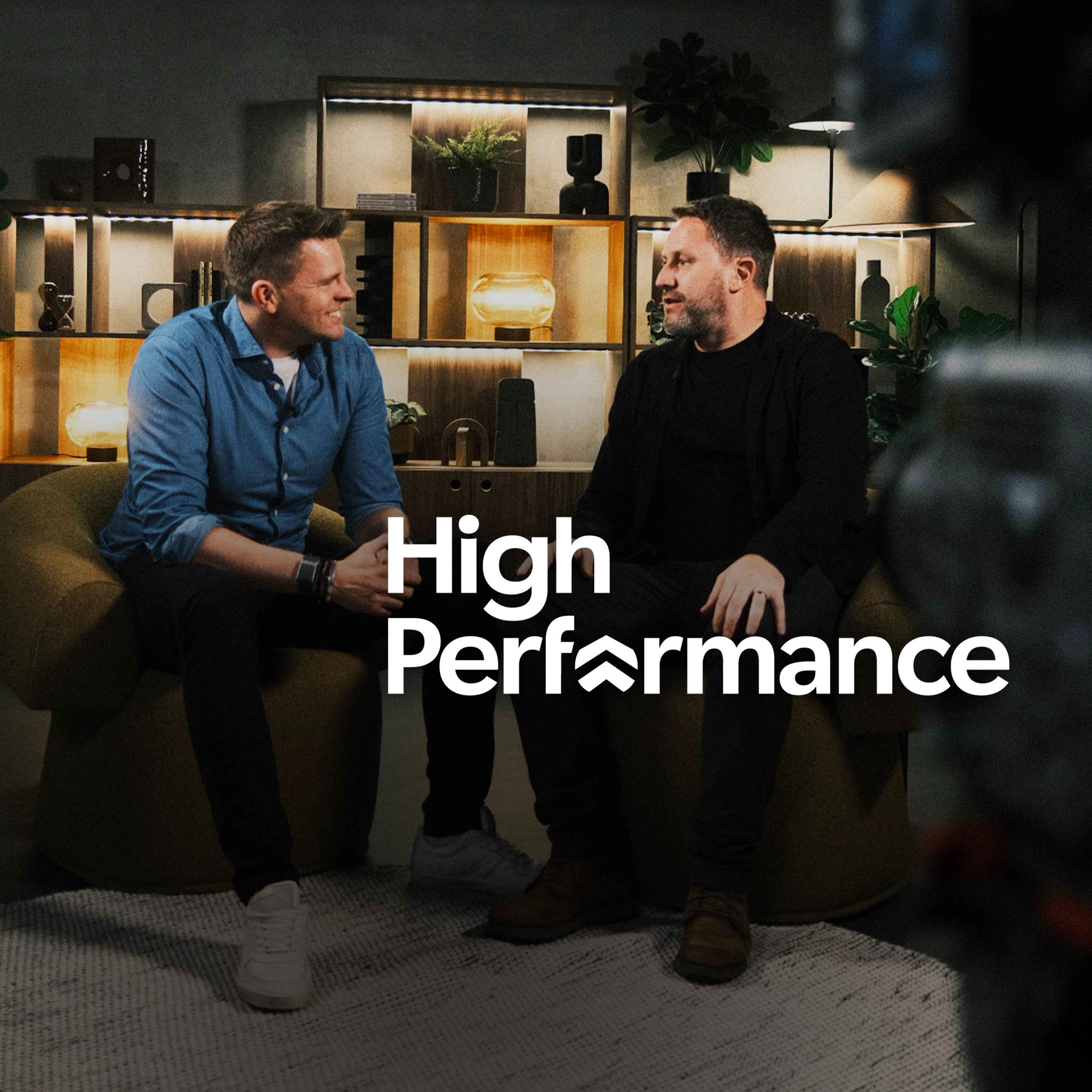
Hosts: Jake Humphrey & Damian Hughes
This podcast explores high performance through conversations with remarkable guests across various fields, uncovering the secrets behind achieving the best version of oneself.
In this episode, the hosts delve into the complex relationship society has with alcohol. They discuss the challenges and benefits of leading an alcohol-free life, particularly at the start of a new year. Featuring insights from experts Ruari Fairbairns, Matt Willis, and Oli Patrick, the episode emphasizes the negative health impacts of alcohol and proposes steps toward reducing alcohol consumption.
Written by AI. May contain mistakes.

Get the gist, explore an idea or ask about something said.
 Claude
On The High Performance Podcast, what are the key points of this episode?
Searching your listeningAutomatic transcript. May contain errors.
0:28Watch it early on the High Performance App.
0:42I'm no tech genius, but I knew if I wanted my business to crush it, I needed a website now. Thankfully, Bluehost made it easy. I customized, optimized, and monetized everything exactly how I wanted with AI. In minutes, my site was up. I couldn't believe it. The search engine tools even helped me get more site visitors. Whatever your passion project is, you can set it up with Bluehost. With their 30-day money-back guarantee, what have you got to lose? Head to bluehost.com to start now. This episode is brought to you by Opera Air, the first browser with mindfulness at its core. Now, most of us spend hours every day online, but how often do we pause to take care of ourselves whilst we're doing it?
1:24And that's where Opera Air comes in. It's a lightweight, fast, secure browser built not just for productivity, but for your well-being. With Opera Air, mindfulness is built right in. You'll find free breathing exercises, guided meditations, and soundscapes with ambient sounds, lo-fi music, and binaural beats, all designed to help you focus, relax, and even spark creativity while you browse. Hey everyone, welcome back to High Performance. How are you doing, Damien? Good, Jake. How are you, mate? I'm really well, thank you. So, myself and Damien, our resident expert with all things high performance.
2:00We're about to talk. That's a heavy lift in that. That title does a lot of heavy lift in that. Yeah, it says everything about you, our high performance expert. We want to talk to you today about going alcohol free. The reason is because when we talk about alcohol on this podcast, so many people react to it. We get lots of questions on our socials about this. We know that people's relationship with alcohol is changing faster now than ever before. So we want to start with this clip from alcohol-free expert Ruri Fairbairns, who joined us on the show. Everything you want, everything that you want in life, to be happy, to be healthy, to have longevity, to be running around the garden with your grandkids, to build a successful business, to have productivity, clarity, to leave a legacy.
2:47Everything that you want is actually being taken away by alcohol. And when you see that really clearly, and you see it from your perspective yourself, not some bald guy on a podcast preaching to you evangelically, but you see it for yourself, then most of the time you will choose not to drink. We talk about keystone habits. Regularly consuming alcohol is a negative keystone habit. So it means it propagates other poor habits. So you probably don't exercise. You probably can't be bothered to look after yourself. You're not meditating. You eat shit food. You're all of that tired, sluggish. You've got anxiety.
3:26So it holds all those things in place. But similarly, taking a break from alcohol actually puts a keystone in place that holds up all these positive things. Now you're exercising. Now you want to meditate. Now you want to look after your body. Now all of a sudden, these things are so much easier to do. So the transformation is exponential. It's not you drinking versus you not drinking. It's you drinking and self-sabotaging and doing all these bad behaviours versus you doing all of these good things that come as a by-product of not drinking. So that's Rory Fairbairns. The question is, naturally, does the research back that up?
4:06Well, I've got some of the latest information here. Would you like to hear it? Yeah, go on. Okay, so there's no physiological case for alcohol anymore. This is from the British Medical Council. The science is a bottle of wine gives you the same increased cancer risk as up to 10 cigarettes a week. And this is backed up by a World Health Organization study from 2022 that said no level of alcohol is good for our health. Now, I'll talk about my own journey with going alcohol free in a moment. But what I do notice is that I'm still under massive social pressure to have a drink. So let's start with why is it so difficult for people to get their heads around the fact we don't want to drink when they're so happy to accept that we don't want to smoke cigarettes or take drugs?
4:47Well, it's almost stitched into every aspect of our society. If you think about the hatches, matches and dispatches, the key moments of our life and look at how alcohol is woven into it. We pop a champagne cup when somebody gets married, when a baby's born, when we go to wakes, when we're seeing somebody off at their funeral. Alcohol is pretty much everywhere and it's woven into so many key moments of our lifetime. You see, I've, as you know, stopped drinking this year and it was driven by health-related concerns. But actually the truth is that I had this idea that alcohol for me was a reward.
5:23So if I had a busy week, I'd have a few drinks. If I went out, I mean, I love a Negroni, as you know, but I would do like four or five Negronis, no problem at all. Certainly during COVID, I was like thinking about what wine we're going to drink for dinner at three o 'clock in the afternoon. and so the reason why I decided to stop actually was that the early part of last year I was getting really awful heart palpitations I went to the doctor and he said right I want you to cut down on drinking caffeine so as you know I went caffeine free I have like one caffeinated coffee but it was still there and I went back again I said I don't know what's going on and he said well I want you to track when it happens and I promise you I would write down when I was getting heart palpitations 90 % of the time it was after having more than one alcoholic drink and as you know I have a wearable tech that measures my heart rate variability and I would do exactly the same thing as I've done on previous days but have only one or two glasses of wine and the way my heart's beating which is what heart rate variability is the way the heart's beating would be through the floor so I was thinking oh a couple of drinks isn't having an impact yet the tech that I wear was feeding back to me that the impact physiologically was huge So I stopped drinking from a health perspective.
6:36But I often think about when Ruri said to me, once you stop drinking, you will realise that what you thought was a 10 out of 10 year is like a three or four out of 10 year. And I feel like that. I've now been not alcohol free, but limited alcohol for 12 months. And the last 12 months, I would give as a nine out of 10. And the previous year that I thought was a nine out of 10 feels now like a three out of 10. It was impacting me in so many ways that I didn't even realise. Well, that's what we've seen so often on the podcast, Jake, is a ripple habit and a ripple habit can either be positive or negative so you speak about the positive ripple habit of maybe getting up a little bit earlier you know having time to plan your day eating a good breakfast and how that has the knock-on effect throughout your day of eating better feeling better your relationships are better but then you think about how alcohol can be a negative ripple habit so you drink a lot in an evening you don't you get up a little bit later you feel a little bit dusty when you wake up the next morning, you probably don't feel like exercising.
7:36You then probably eat, stodge to soak up the alcohol from the night before. So that one catalyst moment creates a ripple habit that actually leaves you feeling worse off. But we can choose not to have alcohol and that can be the catalyst moment that has a positive ripple effect throughout our day. It's very interesting hearing you talk actually about these ripple effect habits because I assumed that the increase in my heart rate variability, which by the way has gone from in the 30s to in the 90s, right, almost every day, I thought that was due to not drinking the alcohol, but it isn't, is it?
8:11It's the fact that I'm not drinking alcohol is leading to better decisions, better sleep, better relationships, so everything gets lifted. And I guess the same is true if you have a bad relationship with alcohol. I reckon we should play a clip actually from the Busted singer, Matt Willis, who joined us on the podcast, and he shared a really honest story about the cost of having a bad relationship with alcohol. Should we hear him? Yeah. Well, that was the changing moment in my life, you know, because I can't really, like I said, I never meant to be in a band. I never meant to go to drama school and be an actor or anything, but I kind of, I always wanted to be a dad.
8:48You know, when I think back to everything in my life, the only thing I ever wanted to be was a father. I had the image of them in my head. I kind of could imagine myself being a dad. I knew what I wasn't going to do, you know, a very strong opinion on what I wasn't going to do and what kind of father I was going to be. And I had my daughter and she was about eight months and I missed her crawling for the first time and my wife's birthday party because I was out getting fucked. and the next day I kind of um I woke up and Emma came in she didn't shout at me she didn't yell at me she just told me what I'd missed and that she wasn't gonna stand for it and and it it hit me all of a sudden that I was gonna be a terrible father and it was the the one thing that I had always planned not to be the only thing I'd ever planned not to be and I was gonna do that and I was going to do that to this little person who I loved more than I'd ever felt in my entire life and I was going to repeat that cycle of shit and it made me drop to my knees and ask for help for the first time ever and mean it.
9:59I was always kind of mitigating damage. I was always kind of trying to keep people, keep all these fucking plates in the air. But at this point I was like, I have nothing that I can do, you know, because everything I do is not working. I need help. And it was, and it really, and I asked for help and I was given it. And that was the real turning point in my life with addiction. Let's be really clear at this point, Damien, that we're not demonising alcohol. We're not saying that nobody should ever drink again. because actually there are some benefits, right, to going out and having a social drink with your mates.
10:41Well, it's that social glue that we recognise is a really critical part of it. So we know that there's evidence that says that loneliness is an emotional state and, you know, feeling lonely can be as severe as smoking 15 cigarettes a day. So if all your friends are going out to a pub, for example, or they're meeting for a social drink, the idea of excluding yourself from it can also have negative connotations. and you've already spoken about ripple effect habits I think people might be listening to this going well how do I solve this problem then I think what I would say is small steps in the right direction you and I both know that high performance is not about the big leaps it's about making small changes every action you take is a vote for the person that you want to be so if someone is listening to this and they want to be someone that drinks less alcohol I would start by placing a vote every time you go out with your mates that your first or your last drink is an alcohol free drink or just swap to alcohol-free beer.
11:37Like I am a connoisseur, by the way, now of alcohol-free beer. And I promise you, I believe alcohol-free beer is as good as alcoholic beer. It's better than it's ever been. And it means you can still be sociable. You can still have a drink. I don't even tell people a lot of the time that the beer I'm drinking is alcohol-free. Because I'm having a beer with my mates. It just so happens to be beer with no alcohol. So there are ways around it. And I think taking that small first step is probably the most important thing. James Clear told us the heaviest weight at the gym is the front door. So let's push open that front door by just starting to bring less alcohol into our lives.
12:12Yeah, I mean, one of my favourite interviews we did was with the British Lions rugby great, Sir Ian McGeehan, who spoke about how going to the bar with his teammates was a really important way of showing you were somebody that could be relied on, the guy that would shout you round. so I like the idea of not demonizing this stuff but actually just recognizing that I think it was Oscar Wilde that said all things in moderation except for moderation and I think this idea of having a healthy relationship with it like anything is probably what most of us would like with alcohol there's that start that said only six percent of people that have been surveyed on this, want to stop drinking.
12:56So there's 94 % of people out there that say, I can recognize the benefits it gives me as long as I have that healthy relationship with it. And if you're interested in understanding more on this, I'd encourage you to listen to a whole episode on this from our sister show, The Energy Equation. Let's listen to the physiologist, Ollie Patrick, who hosts the show, explain a little bit more. The reality of alcohol is it does make us feel good. It does remove that brake pedal on our behavior. It removes our ability to sense check ourselves. And of course, you can see the positive and the negative of that.
13:30What we have is an ability to feel relaxed, ability to feel less shackled by our inhibitions. So that's a challenge. And we have to look at well-being holistically and say, something may be bad for my physiology, but it might be good for my emotional well-being. And we know those connections, those relationships have as important role on health as potentially doing steps and sleeping and eating a nourishing diet. And I think in many ways, that's the perfect way to end this short episode of the show, because we have to look at everything holistically. The whole point of high performance is that it's about empathy, not opinion.
14:04We know that there'll be people listening to this that want to drink less. We know there'll be people listening to this that love their relationship with alcohol. And there'll be many people that are just curious as to what a change in their relationship with alcohol could make to their lives. And I think that's really all we're saying we're not judgmental right on this show but we are saying the facts tell us it isn't great for your health but the facts also tell us that sometimes it can be great for social connection so if high performance stands for anything it stands for exploration so why don't we start by challenging people to just explore their relationship with alcohol i agree jake i feel more comfortable with that as a position i think we always avoid this idea of telling people you must do this you have to do this but encourage people to ask the question and go and explore what the answer is on their own terms.
14:47Brilliant. If you want to hear the full episode of The Energy Equation, then you can find it in the High Performance feed. You can also listen back to the Ruri Fairburns episode that we recorded a while ago. You'll find that as well on High Performance. You can listen on the app. You can watch on YouTube as well. And don't forget, if you've got questions about improving your heart rate variability, drinking less alcohol, ripple effect habits, or any of the other topics that we cover on High Performance, this is your community. You can reach out to us on our Instagram broadcast channel. you can send us a DM but please get in touch because this show is your show we'll see you again soon for more from High Performance
15:44How many times have you wished you could be in two places at once? With Wix, you practically can. Wix's website builder is packed with powerful AI tools to make running your business online easier. Build a full site just by talking with AI. Get an AI agent to manage your sales and marketing. Or work like a 10-person team, even if it's just you. So you don't need superpowers to get everything done. You just need Wix. Try it out for yourself at Wix.com. At Capella University, learning online doesn't mean learning alone. You'll get support from people who care about your success, like your enrollment specialist who gets to know you and the goals you'd like to achieve.
16:24You'll also get a designated academic coach who's with you throughout your entire program. Plus, career coaches are available to help you navigate your professional goals. A different future is closer than you think with Capella University. Learn more at capella.edu.
Alcohol is deeply ingrained in many cultures, often seen as a way to celebrate, socialise, or unwind. But what happens when we take a step back and question our relationship with it?
In this episode, Jake and Damian explore the challenges and benefits of going alcohol-free in the new year. Drawing from conversations with experts like Ruari Fairbairns, Matt Willis, and Oli Patrick, they break down the science behind alcohol’s impact on health, its links to serious health risks like cancer, and why it can be so challenging for people to accept a life without it.
Listen in as Jake and Damian break down practical steps for reducing alcohol intake, emphasising self-discipline, small but meaningful changes, and the importance of building a healthier relationship with drinking.
Listen to the episodes mentioned:
Ruari Fairbairns: https://pod.fo/e/21baaf
Matt Willis: https://pod.fo/e/186e2b
Oli Patrick: https://thehighperformanceapp.com/episodes/3E7NOm3n8Cxq2Zh7M1aBhX
Hosted on Acast. See acast.com/privacy for more information.


