
 Ask ChatGPT


 The High Performance Podcast
4 Aug 2025 · 1h 7m
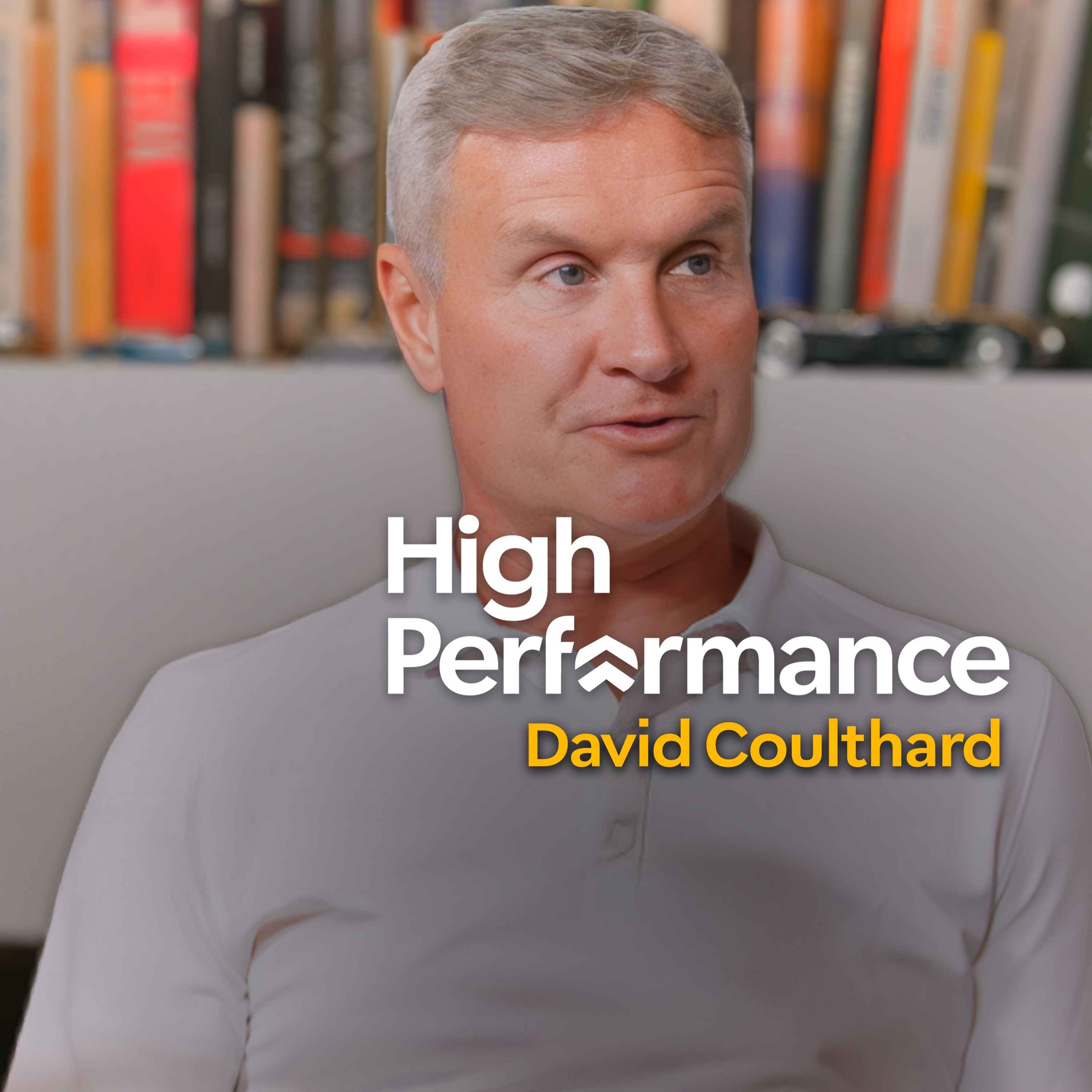
In this episode, David Coulthard, a 13-time Grand Prix winner and former F1 driver, shares insights from his career in Formula One, reflecting on pivotal moments and the lessons learned from the sport. He discusses the emotional challenges, the pressure of racing, and the mindset required to excel in such a competitive environment.
Written by AI. May contain mistakes.

Get the gist, explore an idea or ask about something said.
 Claude
On The High Performance Podcast, what are the key points of this episode?
Searching your listeningAutomatic transcript. May contain errors.
0:00Watch it early on the High Performance App. Available now, Roman Kemp, the broadcaster, opens up a powerful conversation on success and mental health. I was always looking for perfection. And when I got perfection, I could meet Michael, Mika, and all those guys. And there's a few examples in my career where I was world class. Red Bull came very late into the equation. Mr. Marischitz came to the test. He said, first, we get credibility. Then we win the world championship. We said hello to the pilots. got on board and an hour later we were crashing in Lyon with a single engine failure. That could have been it.
0:35All over. 30 years old. Done. That is the voice of David Coulthard. 13-time Grand Prix winner. A man who raced alongside the very best in one of the most competitive eras in Formula One. A guy who's gone wheel to wheel through Eau Rouge with the likes of Michael Schumacher, Micah Hackinen and Damon Hill. He's a guy who spent over a decade at the top of his sport competing for Williams and Red Bull. He's the longest serving McLaren driver in history. And this is the full story of what it really took to get there and stay there. I'm not really sure how it's taken 350 episodes to get DC on. Like, you know that my friendship with him goes back a long way.
1:14But there are things that we speak about in this chat that we've never discussed before. David reveals the realities of life at the sharp end of Formula One. His pursuit of perfection and how sometimes it's held him back. The honest truth about why he never became world champion. The impact of losing Ayrton Senna and stepping into his seat just days later, and how surviving a devastating jet crash forced him to reassess everything. He also talks about his battle with bulimia as a young racer, and why even in a world full of engineers, data and detail, it's actually the emotional discipline that separates the great from the good.
1:48This is a raw and revealing insight into the mind of an elite competitor. And look, you don't have to love Formula One or sport to enjoy this. as many of you know David and I along with our co-founder Sunil created a company called Whisper Group it's grown into one of the biggest production companies in the UK and I promise you a massive reason for that is the mindset the lessons the learnings that David brought to us in the world of business so this isn't just about sport this is about how you can find your own version of high performance thanks to the amazing things that David's experienced and the really clever way that he shares them with you in this conversation remember hit follow on Apple or Spotify so you never miss an episode from us.
2:27And we can bring you even more exclusive conversations like this as we welcome to High Performance, David Coulthard.
2:38David, welcome to High Performance. How's it taken two friends and two business partners this many years to sit down and have a conversation? Well, because we are busy running a business, aren't we? And you like to talk more than I do. so it just didn't really align but you've come to Monaco thank you for that and hopefully you've had a nice welcome and we're in I think probably the best place of this conversation the ACM so this principality this venue this racetrack has played such a big part in my life so it's great we're finally doing it and the Automobile Club Monaco has seen many great drivers over the years we're kind of on the start finish straight of the Monaco Grand Prix here would you put your two moniker wins as the top of the top for you in your career the second one i would because i feel that was more of a earning the victory uh the first one michael was leading i think he had a suspension failure something to do with maybe the gearbox overheating part of the the suspension so that's inherited now i know a win's a win but i from a very young age and in karting used to give myself marks out of 10 and my performance and sometimes i'd win a race and I would give myself five because I didn't feel that I performed in every area as best I could.
3:53And therefore applying that little notebook technique I had when I was a kid, the first victory here would be a five. Now you get 25 points, you get the champagne, you know, you get all the adulation. But in terms of inner peace, inner feeling of I did something that was at the top of my game against other high performing sports people, then the second one, I think, Yeah, I give myself 9 out of 10 for that. So what happened in that second one that meant it was a 9 out of 10? I didn't have pole position. I started second, but I out-launched Juan Pablo Montoya. Grand Prix cars only generate downforce with speed, and he's a chubby little fella, so probably a bit sluggish off the line, so I was able to jump him into the first corner.
4:36And then I had to manage the tyres. Back in those days, we had groove tyres, which were a bit frustrating to drive with, because the groove would open up when you get graining. And you could work through it, but it took several laps. So at that point, you have to really manage the car, not make a mistake and all that. And then once the graining was clear, I was able to push ahead of the pit stop, maintain the track position. And then you pray until the end to the racing gods that the reliability is going to be there because my era of Formula One, which was V10s and V8s, was quite unreliable. So you expected not to finish probably four Grand Prixs a year in a time when you had, what, 18 Grand Prixs.
5:17So it was a lot of attrition. Whereas nowadays, if a car breaks down, you're like, oh my goodness, what happened? Because they're so reliable. I'm so interested in this little note-making thing. So at what age did you start rating yourself? I would say probably about 12. I started racing at 11. And like we did in those days, you just got a cart and you went to the racetrack and you put a novice plate on and that's it. Nowadays, of course, you would be testing a kart from six years old. You would start racing at eight. By the time these kids get to 14, 15, moving into cars, they've done thousands of races.
5:54Thousands of scenarios have been built up in their mind. And they are, let's say, as high performing as they can be for their age. My generation was a lot more hobby-based racing. So in the beginning, it was purely that. it was a fun thing to go and do and then in my second year you win the Scottish Championship and it's like oh okay that's good for Scotland now we have to go to England because there's a bigger pool talent pool and racetracks and then you start that journey so it was just this evolution of as my skills were growing my need to analyze and understand where the performance was either not there or where I could improve became a natural thing for me.
6:39And was there a cost at a young age of being that focused on your own performance and trying to be the best you could every single race? I've often heard about the sacrifices that young sportsmen and women make. And I'm like, did I sacrifice anything? I wanted to do it. It was brilliant fun. It was emotional rollercoaster because you don't win all the time. Sometimes you make a silly mistake. Sometimes somebody takes you off. So there are frustrations, but I think that's the same in everyday life. And growing up in the southwest of Scotland, we didn't have a town centre where there was all of the facilities that you could entertain yourself with of an evening.
7:21This is obviously pre-internet, pre-downloading. Three television channels became four television channels. Betamax, VHS, it was all this sort of thing. So it was a very different era. And it was a simple life in many ways. And I guess that simplicity allowed me the focus to be fully dialed in to thinking about racing. And I think the more that you are playing over in your mind scenarios, even when you're away from the sports event, you're just building memories, aren't you? Whether they're real memories or whether they are fantasies of what might happen. The little building blocks in your mind of future success.
8:05You open the fridge. There's nothing there. So what's it going to be? Greasy pizza? Sad drive-thru burgers? Dish by Blue Apron is for nights like that. These are the pre-made meals of your dreams. At least 20 grams of protein. No artificial flavors or colors. No chopping. No cleanup. No guilt. Keep the flavor. Ditch the subscription. Get 20 % off your first two orders with code APRON20.
8:57Upwork.com now and find your freelance expert. That's U-P-W-O-R-K dot com. Post a job for free and get started today.
9:08This episode is brought to you by Opera Air, the first browser with mindfulness at its core. Now, most of us spend hours every day online, but how often do we pause to take care of ourselves whilst we're doing it? And that's where Opera Air comes in. It's a lightweight, fast, secure browser built not just for productivity, but for your well-being. With Opera Air, mindfulness is built right in. You'll find free breathing exercises, guided meditations, and soundscapes with ambient sounds, lo-fi music, and binaural beats, all designed to help you focus, relax, and even spark creativity while you browse.
9:46So what did being fully dialed in at 12, 13, 14 look like in terms of your behaviors and your mindset? Just everything was prepared as it should be. So race equipment, race kit bag was emptied completely, cleaned, everything checked, cleaned, put back in. So I knew everything was there. I could pick that bag up and I am a rent-a-racing driver. Just give me a vehicle and I'm good to go. I was responsible for emptying and cleaning the motorhome because we traveled to the races in a motorhome. We all slept in that motorhome together. I was responsible for cleaning the cart. so during the course of my week every night after school there was something that was around stripping rebuilding prepping and then picked up from school on the friday night and off you went racing so my parents could get in that motorhome and know that as long as they'd taken the items they need everything else was taken care of that was my responsibility so if we turn up some somewhere and something's missing it's very clear who that was that had that responsibility so it give you a sense of responsibility at an early age and it gives that gives you ownership and if you've got ownership i always an app that we're here in monoco because i wanted to be first out on track on thursday as it used to be back in the day because with thursday then friday was a day off but now it's aligned as a normal race weekend so friday would be first practice but i wanted to be at the end of the pit lane first so when i went out on the racetrack there was nothing in front of me.
11:15I had ownership of the racetrack and it didn't actually help your first run in practice because you were sitting there, your tires were getting cold. But I was prepared to trade the optimum amount of, you know, tire prep for an outlap when you drive the track for the first time that year for a clear racetrack. The first time I'm passing the marshals, they're waving, you know, doing their practice waves at me. And it just gave you a sense of first foot forwards has gone to you and not your opposition. So all of the childhood scenarios of prepping for a race weekend was about, I'm doing something more than my opposition, or I'm doing it better, or I'm doing it sooner.
11:56I'm not putting it off. And mentally that gave me the ability to turn up against exotic Englishmen and take on the battle as a wee boy from a village in Scotland. As a young kid, you had suffered from bulimia, right? Yes. Was that a direct result of the pressure, do you think, of the world that you were in? I didn't see it as pressure. I saw it as a necessary thing to make weight. Jockeys, we're familiar with jockeys having to do saunas and whatever, to lose the body weight, to be on weight, to do whatever the event is they're doing. Boxers, I'm sure there's other, you know, gymnasts, I assume.
12:32And there'll be others who have bulimia or anorexia as a result of, I don't know the exact terminology is it body morphology dysmorphia because they don't see in the mirror what they feel is a reflection of them as an individual I would step on the scales and I was you know a pound overweight that was going to affect my performance so every night well I weighed myself twice a day as a teenager morning when I got up completely dry and evening before I went to bed because then that gave me my average weight and I could tell a few days out whether I was in the right area for the race weekend. And I, although we're not as tall as you, I was tall for my generation of drivers.
13:14So making weight, you know, the junior weight in karting was 11, or the age was 11 to 16. Now it's 8 until 10. And then I think they've got 10 until 12. And then they've got 12 until 15. So I was in a group where when I was 11, I carried a lot of ballast on the kart because I'm racing against fully grown, you know, the men. They've gone through puberty and they're shaving and everything. And then there was a point where I'm 15, 16 years old, I'm tall. The weight is accommodating for an 11-year-old. So it was more of a compromise. So it was a necessary evil of which I didn't discuss with anyone.
13:50I just knew that if I was overweight, then whatever dinner I'd had that night was not going to stay inside me. And how did you resolve that? Because that's not something that's sustainable. Yeah, well, I guess you could do it for your whole life. I don't know, but when I went into cars, suddenly I was relatively light for a 17-year-old when I went into cars because I'd kind of starved myself through my late teens. And therefore, I had room to grow into my body. So, and then in higher level car racing, of course, there's a minimum weight. Formula One, I think it's combined weight of driver and seat of 80 kilograms.
14:31so that means that people like Max Verstappen can race against people like whoever the smallest driver is Yuki Sonoda who's probably 60 kilos Max must be high 70s so in Alain Prost's time he used to negotiate with the Formula 1 teams and say look Nigel Mansell's my teammate he's 78 kilos I'm 58 kilos 10 kilograms is 3 tenths of a second how much would you spend in performance to get 3 tenths of a second So he could guarantee he was half a second quicker than his teammates based on weight without pushing. So that was how he negotiated his salary to be paid more because he was a good driver and he was small.
15:13Then they combined the driver's weight late, no, early 90s it must have been, late 80s, early 90s. The driver had to be a minimum weight and then an advantage. Although Alan went on to win another world title in 93 against Dame and his teammate, but he didn't have the advantage he had in his early career. So it was really a way of you trying to find an early edge or trying to make sure that you were doing everything that you could to go racing and race successfully. Yeah, well, it was also, I'd say the other way, it was making sure I didn't have a disadvantage because if I was overweight, I had a disadvantage.
15:47An edge would have been if they didn't include, you know, a weight and I could have got even lighter. But of course, yeah, you're always looking for every advantage you can. And if it's psychological, excellent, if it makes you feel good, if it's a physical thing then why would you not and you know i was involved uh with w series which has morphed into f1 academy when i look at the talent pool at that time and some have gone on to have professional careers and it's great to see that and others have gone on into television and it's great to see that although racing didn't work out for them it was a launch board for female talent and you know the reasons why through my sisters in her memory why i wanted to to help women and just for people that don't know okay you know you kind of have a bit of guilt about the fact that your parents put all their weight behind david because your younger sister was a few years younger and she kind of had to sit and watch right yeah yeah she was six years younger she did cart she did win some races she did have good talent you know she grew up with two older brothers so i think the expression is tomboy you know we we all had little motorbikes and we all had little buggies and you know we're in the countryside so she embraced all that and she was naturally better talented.
16:56But as my career progressed, the focus went on when I was 17, winning in cars. I won 22 out of 32 races in my first season and got signed to Paul Stewart Racing by Jackie Stewart. So my sister's now 12. And I drive a Formula One car for the first time a year later. She's 13. And then her racing stopped because we were all off as a family, including her watching me look like I could take a hobby and make it a profession. So when she passed, you know, 14 years ago now, it really sort of entered in my mind that I wanted to do something in her memory that would make it highly unlikely that any other young, talented girls out there who've got either an older brother or a younger brother, because no one really saw the route for girls to make it a motorsport, then they would be supported.
17:45And not in a tokenism way, put someone there because they're female. On talent, on merit, all of the science shows there's no reason why women can't compete at the highest level against men in cars. The numbers would suggest it won't happen because we haven't had a number of women do it. But there's a lot of things that happened for the first time in the last hundred years. So in the next decade or so, I expect to see a very talented female racer in Formula One. And had you ever had a chance to talk to your sister about how you felt before she passed away? I spent a lot of time with my sister.
18:19You know, she had her own difficulties later in her life. You know, a sense of where she fitted in. She saw my brother. He runs the family business. He was married with kids. I was, you know, at that time successful Formula One driver. So she struggled a little bit in the, you know, the slipstream of my brother and I, where she fitted into all of that journey. And she came, I always said to her, you're welcome anywhere where I go. Never nicely put a condition, but there was one condition. And the condition was, you've got to move at my pace because I'm on a mission. I've got an opportunity. I cannot wait for family to sort of keep up.
18:59You know, the family created the opportunity, but there was a certain point where I've surpassed their knowledge. I've surpassed their experience. You go from being a boy to being a man. Okay, you're a young man, but there's a certain point where you've got much more knowledge of the industry that you're in than your mom and dad who created the opportunity have. so there's a point where you naturally are now the lead and on that basis they naturally fall in not wanting to be in the way but there can be a moment where you're trying to get somewhere and they're slightly behind you and i like and for me a team walks together a team is like a front line you know like a military like an army going on the front line of course you need someone calling the shots and making the decisions but do you really want to be arriving at the attacking army as the very first person, maybe by the tip of your sword, but we use, you know, warring as an example.
19:50But ideally, you want your team arriving on the front line with you together. So you've got to move at the same pace. That so reminds me of when we very first started working together. And it was me, you and Eddie Jordan moving up and down the pit lanes of the world, which few people were doing at that time. Do you remember that all the Canberra crews were in the paddock and no one was in the pit lane? And I remember you going, Jacob, keep up. That's my awful Scottish accent. But you'd be, but the speed at which you walked, and even if someone goes, David, can I have a photo? You were always very polite.
20:16Absolutely. But we don't stop walking. We carry on at the pace that we're moving. So I'm interested where this energy or this need to operate at this speed came from. You know, I understand that now your desire for equalizing, you know, women's opportunities in motorsport comes from the death of your sister, right? Or the lack of opportunities that she got because of your success. But where did this fire burn from as a 12-year-old marking yourself, cleaning your car, cleaning the motorhome, cleaning the bag. Where do you think this need to do all this came from? Well, it comes from your family.
20:50Ultimately, my brother, who's three years older, had the opportunity to go racing. He was naturally talented, good at motorbikes, good at driving. He didn't have the competitive need. I enjoyed the competitive side. I enjoyed gauging myself against others. I was also fascinated by my shared passion to watch Formula One with my dad, you know, we'd go into the optimistically named sunroom in our house, you know, where we are in Scotland, but everyone in Scotland has a sunroom. And that's where we would be sort of sent off to watch Formula One, where my mother was watching Coronation Street or whatever her preference was.
21:27But I'm watching Monte Carlo on the television. I'm watching Suzuka in Japan. I'm watching Adelaide in Australia. I was always keen on geography at school the one higher i have from my my school is geography so i've got eight o levels and a higher which surpasses the family combined i think you know so i could end my father's dyslexic my brother's dyslexic his two kids are dyslexic i somehow managed to scrape through without being uh you know diagnosed with that condition but it took me two years to pass my english o level so there's obviously a bit of difficulty there when it comes to you know that sort of base level but I think my father lost his dad at 14 and was sent off to boarding school.
22:09He was a Scottish carpenting champion. Suddenly he was no longer able to go racing because his mother didn't enjoy it. But he threw himself into sport because he was no good at anything else at the boarding school because of his dyslexia. And it wasn't really a condition that was known or you're just stupid. My mother's the eldest of eight children. Her father was a train driver. Her mother was a nurse. So she basically ended up bringing up most of her siblings. So they both had an inner work ethic, an inner drive. And father comes from a slightly more fortunate family in terms of financial status.
22:44He inherited the transport company that was started in 1916, but was always a bit of an outsider because of not being academically strong. Played in a band, found a bit of solace behind the guitar, took over the family business, fell in love with her mother. three kids later and a work ethic instilled in us that work hard play hard now you you as you know we i like to have have a good time you can play hard yeah yeah but that again come my mother and father were always entertaining customers they were always you know annual dinner dances and things like bring people together celebrate success reflect on areas we can do better and then, you know, reset and go forward.
23:26So it was always there. I just, being good at something I get is difficult. Having a motivation to try and not try, I just don't get because it's free. It's free for everybody to try something. Worst case scenario, you find out you're not very good. You know, I'd love to be a singer. I can't sing, but I tried. You know, the odd karaoke night with a few drinks, I'll try again. but you've got to give things a go. So let's talk about what that speed of living looked like for you when you said to your sister, if you're going to be with me in F1, you've got to move at my pace. What was the pace like?
24:03And what was the adult version of cleaning the bag and cleaning the cart? Like the attention to detail that you believe was vital in your time in F1? Well, I think it's still there in the way I prep everything today, getting ready in the morning, where my toiletries are, tidying up afterwards. I never leave home with plates in the sink. If I've had time to use them, I've got time to either wash them and dry them and put them away or put them in the dishwasher. If I'm just on my own, I'm not going to put them in the dishwasher. It'll take me a minute to clean up the dishes myself. So, you know, I'm the sort of person that makes my bed in a hotel room, checks the rooms all neat and tidy before leaving the hotel for the last time.
24:46Because why would I want to leave a mess for the cleaners to come in and work on? You know, I'm not going to hoover and do all that, but just this adult version was the same as the young version, just with a bit more maturity in preparation. If you unpack your bags when you're at home, get the laundry on, get it all organized, you're now reset. You're reset, ready to go. So I got back two nights ago. No, a night ago. and immediately my travel bag which has my passports my computer and things toiletries because I always travel hand carry I haven't checked a bag in for years just a waste of time and that includes if I'm you know doing I did Australia this year went to New Zealand fell off a motorbike broke my collarbone flew to Shanghai did the Grand Prix and then flew back to London so that was what best part of two and a half three weeks one little travel bag and just launder just get you the clothing launder that you have and I wear variations of blue and white, so it would be easier for me than it would be for a lady, of course.
25:47But it just saves so much time when you're traveling. So I just like efficiency. Just do things properly. And with such a focus on attention to detail, the natural talent you had as a young racing driver, when you reflect back on your career, why do you think it is that I'm not sitting here talking to a friend of mine who's also a Formula One world champion? In the end, when the opportunities came, which was 98, 99, Mika was better placed in those years you know, in seven years Mika and I were teammates I can't remember exactly but there was certainly let's say three of the seasons maybe more that I finished in front of him in the world championship they weren't world championship years so he got it right at the time when the opportunity was there so I was at Williams 94, 95 did eight races, 94 shared Picard with Nigel Mansell 95 I was really just making it up as I went along in as much that I knew the team well.
26:45But we didn't have simulators. The first time I drove Monte Carlo in a car was in the Formula One weekend. So I turned up and on the first day on Thursday, I was 18th in a Williams. Friday, I'm looking at the data. I'm trying to understand, okay, this is a pretty scary place in a Grand Prix car. Come Saturday, I qualified third. So I made progress, but I was learning as the Grand Prix's were coming at me. and then I went to McLaren for 96 and then 96, Damon won the world championship 97, Jacques won the world championship and then 98, Mika, who was my teammate and McLaren won the world title so that Williams two years that I could have stayed there but went to McLaren I wasn't in the car and then by the time we had the car at McLaren Mika was just, he was better at qualifying he was more accepting of that's the car, let's just get on with it.
27:39I was always looking for perfection. And when I got perfection, you know, I could meet Michael, Mika and all those guys. And, you know, for those, I think the expression is the haters. For those out there who don't rate me as a driver or don't rate me as a person based on what I do in television today, if you put all that to one side, the results don't lie. And there's a few examples in my career where I was world-class beating world champions, sometimes in the same car. I never raced the same car as Michael, but Mika clearly is a revered two-time world champion. But I didn't have the consistency.
28:15And I worked with sports psychologists. I worked with having my brain waves analyzed. Today I can trigger my alpha wave by tapping my leg, saying alpha now, and my brain frequency will go to alpha, which is a very receptive frequency for visualization and deployment of visualization. You still have that? Yeah, because once you learn how, it's a bit like juggling. Once you learn how to juggle, you can't unjuggle. When you don't know how to juggle, it's really difficult. When you've had your brain frequencies monitored and the frequencies displayed to you on a computer program, you know, there's so much chatter going on with our brain frequencies, noise and everything going on.
29:00But you can bring yourself, and it would be for people who meditate, they're probably in that state without calling it the alpha wave. They just call that meditation. But that is a very receptive way for taking in information. And so, you know, I can put my brain into that level. And when would you go to that state in a Grand Prix weekend? Prior to qualifying, prior to the race, visualization, even if I just wanted to chill and be calm for some moments. So I believe that I tried everything to be the best version of me. But I'm pretty sure that, I'm very sure that Kimi Raikkonen has got no idea why he's so fast.
29:41He's just fast. But let's use tennis. I'm not sure if a Nadal or a Djokovic or a Federer, they know they work hard. They know how hard they've worked. But how can, when they're stretched and the ball's there, and you see photographs of them hitting a ball where they're not even looking at the ball because they're under so much pressure to get that ball returned. To do that would bring the racket here. To do that releases the racket. They are instinctively and intuitively sensing, based on the last time they saw the ball, where it's going to be. And nine times out of ten, whatever the number is, they get the ball back, or at least they get to the ball.
30:21Where maybe the other guys that are just on the cusp of the top ten can't take their eye off the ball, therefore don't quite get to the ball or something. I don't know if that example makes sense. They're instinctively made to be good at tennis. And that's why I don't think you can manufacture a miracle to take a line from a Robbie Williams song. You can make average better, but I don't think you can make good exceptional. I don't. I think that anyone that you've spoken to in this chair had the exceptional gene in them. Yeah. You know, I didn't have it, but your Mika's, your Michael's, your Lewis's, your whoever the great champions are.
31:03And I'm sure it's the same in business with work ethic. What was it that they didn't see the danger? They saw the opportunity. Was there a time you were on track with one of those drivers and saw something and thought, wow, okay, that is just another level up? I can't say that I saw it. I could see it in the data. And that's where your teammate, you get a direct comparison. So if you've done a lap and you go, right, that's as fast as I can go, and your teammate is two tenths quicker, and you look at the data and you go, and two tenths around an entire lap is a tiny amount of time, but in racing terms, two tenths is a gobbing.
31:42You know, Formula One today, regularly pole position is by half a tenth or something like that. It's incredibly close. The winning distance between Hussein Bolt and the guy, whoever it was, who finished eighth in the Olympics, as a percentage, was larger than the difference between first and 20th for, I think it was a Shanghai Grand Prix qualifying. So that's over six kilometers. The percentage difference, it was tighter on the Grand Prix grid involving lots of corners, lots of distance, engines, gearbox, aerodynamics, than eight incredible athletes running 100 meters. And the only person who remembers who finished second is the family of the person, if any second, which you don't remember.
32:26Unless you're an athletics commentator, you only remember the winner. That's the sort of margin you're dealing with in elite sport. So did the Schumachers and the Hamiltons and maybe the Raikkonens, did they have a thing that you would see time and time again on your light, right? There's something there that's separating them. Yeah, medium speed corners. It's low speed. I would put myself up against any driver. big stop into a hairpin or big stop into a chicane. I was good on the brakes. I was good at judging 200 odd miles an hour down to 40 miles an hour and feeling the car in that situation because this is all very much on the car.
33:05If you imagine, I'm trying to think of like in skiing, you know when you're feeling a little bit on your toes, you know when you're a little bit back on your heels and you know when you're perfectly centered on the ski and you come over a rise and you dance over the rise and you feel talented, even though you know you're a little bit beyond your skill set for that speed, but you just know it feels right. I think those guys were able to live in that middle part of the ski more often, where I was very good if I was all on the front axle. I was not very good in medium speed corners because a medium speed corner is still quite fast.
33:41Let's say it's 100 miles an hour. So you're turning into a medium speed corner. Very quickly, you're leaning on the left rear tire. That's just the nature of a medium speed corner. You're not on the front, you're not completely on the back, and you're not in the middle. At high speed, you will be on the middle because you're aerodynamically balanced. I think they were very good at that transition from front axle reaction to suddenly squatting and the rear tire moving. I would be a bit, you know, I'd be, is it there or is it not there? They just went, yeah, it's there. And that would often give them the advantage.
34:15And I think I've never seen anyone else describe what I've just described. I've never had anyone else explain that to me in a way that I've just explained it to you. I've seen lots of people talk about they can watch a car and watch the differences in driving. And to a certain extent, I can relate to, I call it the body language of the car. You can see when a car's hustling and you can see when a car's docile. But other than that, I don't think I'm able to watch it and go to you. he's going through there at 102 miles an hour or he's doing 98 i'll leave that to others but in terms of having used that 15 years as a driver and looked at the data against some of the great drivers i think they just exploit the potential of the machinery and the tires in a more consistent way than someone like myself i remember you describing it to me as spare capacity yeah there'll be an element of that as well where the point at which you overload and go that's the limit they just have that little bit of room to go, is it the limit?
35:15It doesn't mean they don't make mistakes. And we've seen Michael crash and we've seen Lewis crash. Of course, they get it wrong occasionally. But I think their spare capacity to exploit potential opportunity is there. When the word potential is one of the most overused words in business and in sports, gets people excited about what might be around the corner. This business opportunity has got lots of potential. yes yeah one of the things which always amazed me actually i remember the first time we did tv together i had reached my own limit just hosting a television program and i turned to you and i said what a buzz that was and you said to me son do you remember this son i've been through rouge wheel to wheel with michael schumacher being on the tv is not a buzz what i used to do is a buzz but you seem to have this ability to deal with highs and lows and not allow either to really impact you too much.
36:10You know, I remember you explained to me once that you, as a driver, you would watch your mechanics celebrate a win far more than you were celebrating a win. Or if you crashed out, they'd be utterly devastated and you had this ability to kind of move through. And I guess, you know, your career in Formula One started from a tragedy, the death of Van Zena, which gave you your opportunity. And if you'd spent too much time dwelling on the tragedy or the pressure that that was going to suddenly give you, it would have done you no favours. I think so. I think also I'm conscious that whatever works for you works for you.
36:44So I don't believe in this sort of dictatorial, you must do it this way, otherwise you won't be successful. Whatever works for you works, but sometimes we need a bit of guidance. And what I would say is the less you show emotion, a bit like a poker table, poker is a game of good fortune and it's about hiding your hand and playing the percentages and a little bit of hope and a little bit of luck and those sorts of things. So you have to have that poker face, I think, to be strong in a sport like that. I never have played poker, by the way. I'd probably get a good hand and be sitting there going to completely throw out of what I'm about to say.
37:29But I would say to my son when he was racing, just don't show you the emotion if you've had some success and don't show too much emotion when you've had disappointment because this is all little building blocks of knowledge for your competitors and it's your tell and I used to sit opposite this like this opposite Mika or opposite Damon or opposite Kimi various teammates that I had I'd have my engineers they'd have their engineers and you're listening to your guys but you're definitely listening to their conversation because you're wanting to get intel where are they with their car where are they with their setup You'll get the information at the end of the day, but anything that helps give you a bit of guidance, are they in a happy place?
38:07Are they a bit nervous? Being competitive means you want to know the form of whoever it is you're competing against and build up that knowledge to your benefit. So, yeah, I think I was always a little bit shy to celebrate because it always felt like it was showing off. I remember when I had my first podium, my manager was a guy called Tim Ride from IMG. And he said to me, were you happy up there on the podium? And this was in Estoril, 1994. And I went, yeah, I was really happy, thank you. And he went, well, next time, can you tell your face? Could you look pretty miserable? Because his perception was, oh, this is amazing.
38:44We've just finished second in a Grand Prix. And I'm like, well, I didn't win. Let's keep in perspective. We're there to win. Yes, second is a podium result. that's an important result in the building block, the stepping stones too. But if you go big time on a second, what have you left yourself when it comes to the win? And I'm always the optimist in life that the best moment is coming. You know, I often get that, what was the best meal or the best movie or the best day? and I'm like well I understand the question but I just I hope not in a greedy way that more's to come but I just hope the best is going to be whatever the end of my journey is that will be the best day You're an optimist Yes Where were you when you got the call about replacing Ayrton for Williams?
39:42The day he died I was at Silverstone I was doing the bank holiday Monday race for a team called Vortex the team manager was Ronnie Meadows, who is the sporting director now at Mercedes Grand Prix. And the tyre supplier for Formula 3000 or Formula 2, as it was at that time, was called Avon. And there was one truck, their truck, and it had a television that had the Grand Prix on. And I was just watching on the telly when the crash happened. And I think I had still to go out and qualify for my race on the Sunday. And then we raced on the Monday. And I saw the crash and thought, that doesn't look good.
40:16and I spoke to Ian Cunningham who was working at Williams and he obviously explained, you know, everyone's gone. And my manager who was there, I was asked about it straight away, you're the test driver, will you be going for it? And I said to my manager, we don't call Frank Williams, we don't call Patriot, we don't call the team. They know who I am, they know where I am. I've been testing for them for two years. If I'm the person that they want, I'm available, but I don't want to be that guy phoning up saying, oh, you need a driver. The other drivers did. And the following week, I finished second on the Monday, by the way, which was the best result the team had had.
40:55I think Gilles de Ferren, my buddy who sadly passed away a year or so ago, won the race for Paul Stewart Racing. And I went to Jerez to test for Williams. And I was told that during the course of the test, a driver would be coming or a number of drivers would be coming to be evaluated, to be put in for the Grand Prix seat. And come the final day, no one's turned up. It's still me just testing. And Frank, I was told, was coming to the track. Did you think at that point this might happen for me? I don't recall thinking that. I was quite, when I made a decision on something, I don't have a problem peeking into Christmas presents the night before.
41:35Once I've decided I'm not looking or I'm not making, I stick to that. So it's quite interesting when you sit with people in restaurants, if you're facing like a door and they're not, and if you go like that, if I'm that person, I will not look over my shoulder. But very often I'm with people. Because they'll go, well, what are you looking at? Is it more interesting? Is it more exciting? It's a natural curiosity. But I've disciplined myself not to be that guy. I'm having a conversation with you. Just because you keep looking over there at the ladies' toilets, I'm not going to look. You know what I mean?
42:09So a bit like once I made a decision, I'm not going to ask the team. we'll see what the decision is. And anyway, Frank arrived. As he arrived in the track, I damaged the Williams car. I'd never damaged the car in testing, but I clipped one of the bales, damaged the car, get back to the pits and they bring the car back and Frank's there. And he went, despite the fact you just crashed one of my cars, I'm here to tell you, you'll be racing in Barcelona. And I went, okay, thank you, Frank. And he was like, would you like to know what I'm going to pay you? And I was like, oh, well, okay. what are you going to pay me?
42:44And he went,£5 ,000.
42:48And I'm like, it was such a random conversation, such a random number. Because Ayrton, the greatest, I believe was on like a million a race or something. It was almost like the smallest number he could justify signing a check for, for that race. You weren't going to say no though? No, of course not. I didn't even think about the money. I've never been someone that's been motivated, money first. It's always the opportunity or what is the event? Who are the people? And then if all of that makes sense, if there's a financial reward, then of course you want to know what it is. You might want to negotiate, but it's never been a primary.
43:26There's some people, and I'm sure you've come across them as well in your life. Some people wear the old expression, you know, every pound's a prisoner. In Scotland, it's every penny's a prisoner. But there's some people where they cannot just chill in business because every pound is some kind of prisoner to them. I just don't want to be on that rollercoaster. You know, I've got buddies who, in the stock market, they'll wake up and you'll be able to breakfast with them and they'll get the paper and they'll go, and I'll go, what? And they go, no, stock market. What a way to live. And I'm like, I don't want that emotional rollercoaster.
44:01I want to be my own disappointment. I don't want to be somebody else, you know, somebody else be the source of my disappointment. If you're still overpaying for wireless, it's time to say yes to saying no. At Mint Mobile, their favourite word is no. No contracts, no monthly bills, no overages, no hidden fees, no BS. I made the switch because I was tired of those ridiculous bills and sneaky charges from my old provider. With Mint, I'm paying$15 a month and getting the same high-speed data, unlimited talk and text and coverage on the nation's largest 5G network. Honestly, the quality is just as good, if not better than what I had before.
44:38And the best part, you don't need a new phone. You can keep your current one, bring your number, and all your contacts. I use Mint Mobile, and you should too. Ready to say yes to saying no? Make the switch at mintmobile.com slash HPP. That's mintmobile.com slash HPP. Upfront payment of$45 required, equivalent to$15 a month. Limited time new customer offer for first three months only. Speeds may slow up a 35 gig on unlimited plan. Taxes and fees extra. See Mint Mobile for details. You walk in tired and hungry, one bad dinner away from losing it. You don't like to cook. You don't want more takeout.
45:16You just want something good. That's why there's Dish by Blue Apron. Pre-made meals with at least 20 grams of protein and no artificial flavors or colors. From fridge to fork in five minutes or less. Keep the flavor. Ditch the subscription. Get 20 % off your first two orders with code APRON20. Terms and conditions apply. Visit blueapron.com slash terms for more. The market's uncertain, revenues tied, and hiring on hold. That's why results-driven companies are using Upwork to keep work moving. Go to Upwork.com today and start hiring proven freelance talent fast. No bulky overhead. No rigid long-term contracts.
45:55Just the right expert, right when you need them. Work smarter and faster with Upwork. Go to Upwork.com now and find your freelance expert. That's U-P-W-O-R-K.com. Post a job for free and get started today.
46:14so you said yes you then race for williams how did you cope with the the sort of huge interest all of a sudden in your racing career in the the mental pressures that came with it yeah well very simply because the great thing about youth is you don't know what you don't know yeah the benefit of life and age is you've gained experience and therefore you do know quite a few things. And that is why as you get older, maybe you take a bit longer in some decisions and some other decisions, it's completely clear it's the right thing to do. But I didn't see it. I didn't know what it was to be a Grobtree driver.
46:51But one thing I did learn on the job at the very first event was, because often people will say to you, don't change when you have success. And I think I've discussed this with you before, where actually, we should change constantly through our life. We should evolve. We shouldn't evolve into an arsehole, hopefully. You know, let's come in peace. Let's be kind. Let's be as generous as we can. But obviously respecting the fact this is our lives. We are at the control of it. So you can't keep waiting for others. At some certain point, you've got to get on and make your own decisions. But people that I'd worked with at Williams, who'd said previous two weeks before, David, do this, do that, went at the first Grand Prix, would you mind?
47:36Could you possibly do the following? They went from treating me like a test driver to treating me like a Grand Prix driver, which meant they asked permission rather than telling me. So people change around you as well. And you get used to that. You go, oh, I don't have to do, previously I thought I have to do it. Now I realise it's a choice. And you go, I'd rather not. And they go, okay, yeah, that's fine. So life evolves in that respect, not in that first year reform, one but then in the subsequent years suddenly you're earning you know millions and your that wealth gives you decision making capability instead of sharing a house with some mechanics which I loved by the way suddenly you got your own place and instead of being in Milton Keynes I'm in Monte Carlo sunshine and security and when you leave home not someone's not breaking in you know in the UK if you're when I had my my place in the UK when I first started in Formula one.
48:29I got broken into twice in my first year. Once I was at the Brazilian Grand Prix and once I was at the Australian Grand Prix, because I was a young driver. I didn't have security standing outside my property. And people knew where you were. They didn't know you're live on the television in Australia. So things like that were a bit frustrating, but for the rest, yeah, you evolve as life goes on and you see some drivers who evolve well. You see others that get affected by the success and that affects their trajectory. I think, you know, Daniel Ricciardo would be an example of that. One of the bright young talents around Formula One, one of the best overtakers of his generation.
49:07Always exciting to watch. And then just suddenly, you know, as he left Red Bull, Renault was okayish. McLaren, Lando outperformed on both years, even though Daniel won a race. And then it never really worked out again at Alfa Tauri and now he's happily retired, I assume. Wealthy individual. but it all felt like it was condensed into too short a period. When that's happened and you've loved the fame and if that was indeed what it was for Daniel Ricciardo, when you go, actually, I need to sort this out now and you try and go back to how you used to be, why couldn't he find the speed he once had towards the end of his time?
49:43Life, you gain baggage as you go through life. If you're poor, that's a Tesco bag with a few clothes inside. If you're rich, it's a Louis Vuitton. Other bags are available. But it all has to be carried. So whether it's baggage of wealth and success or whether it's baggage of poverty and difficulty, it's got to be carried to try and get to the next opportunity. And for some people, maybe they're not able to let go and actually take themselves back to the moments that was the freest point that saw their performers at the highest level. And as we evolve, some people evolve into another phase of life where they don't have that need, they don't have that desire.
50:27It was our buddy Martin Brundle that used the expression that you don't lose the speed, you lose the need. And I liken it to a boxer. When they're young in their career, I'm going to imagine every boxer has been knocked down at a certain point, whether it's in training or in an early fight. When they're young, they're up and their eyes are everywhere, but their need to succeed is so strong, it overcomes that hurt. They get a bit older and they've got wealth and success and they go down and you see them and you go, did he say five or six? I'll just stay here a bit longer. Oh, he didn't make the count.
51:01Ah, okay, well, I earned the money. I don't want to get punched in the head anymore. They've lost the need to take the punches. I think there's something else that happened in your career, which again was a tragedy for someone else, but was maybe a valuable moment for you. And you came into Formula One through a tragedy, the death of Anzena. And then I think you probably entered this part of your career where you were loving the money and you were loving the power and you were loving the fame and you were loving the trappings that come with it. And then you were involved in a plane crash that was fatal for both of the pilots.
51:32And I wonder whether that was a moment that, as tragic as it was for them, it was actually very important for you because it made you reassess things. It definitely did. I was about to turn 30 or had just turned 30. I was engaged to get married. I was in London. I was, the aircraft I normally used was, let's say, booked at two o 'clock or something. I woke up early, asked my office to move the flight time, but it couldn't for whatever reason. And I was like, get me another plane. You know, a bit needy, a bit whatever. They find another aircraft. I could leave Farnborough late morning. I went there, arrived, aircraft that was belonging to David Murray, who was a Scottish entrepreneur, a Ewan Rangers football club at a certain point.
52:20And there was a Scottish flag on the back. I thought, oh, that's kind of nice, you know, being nationalistic and what have you. Said hello to the pilots. Got on board and an hour later, we were crashing in Lyon with a single engine failure. And seconds later, I'm getting out of that aircraft because fate had decided that although they both lost their lives, pretty sure instantly upon impact, fate decided that myself, my fiancé at that time, and my trainer and my fiancé's little dog all survived and got out of the aircraft. And you're standing there looking at a smouldering broken aircraft on the side of an international airfield waiting for recovery vehicles to get to you because they don't, you know, you always see it in the kind of movies, the recovery vehicle's there as the aircraft is coming in there was no assumption the plane was going to crash on a single engine landing that is something pilots train for that's something that should have happened So you weren't aware that you knew there was something going on right?
53:24But you didn't think you were crashing when you came in to land in Leon? As we came in I remember looking out the window and the windsock was hanging like that and I made the silly joke the windsock's hanging like a used condom and we were at the tree line obviously some way away from the side of the airfield. And I went, even if we crash now, we'll be fine. Because with a single engine, the fire warning had gone off, the pilot closed down the engine. We knew we were in an emergency. The pilots told you what was going on? The pilots didn't initially. And then maybe after several minutes, because I could see into the cockpit, it was a Lear 35.
54:04And I'd grown up around small aircraft, so I'd taken controls when I was younger. So I had basic flight knowledge without ever having a pilot's license. So I knew that the engine had been switched off. I knew it was a left engine because I was sitting in front of it. And I knew we were on a single engine approach just by the throttle. The co-pilot eventually turned around. I didn't want to disturb them at that moment. Me going up and saying, all right, lads, here we go. Let them do their job. And when they've got something to say, they'll see it. So eventually the co-pilot informed those single engine we're going to land at Lyon.
54:36and I was reassuring Heidi, who was my partner at that time, and Andy, it's fine, you know, these guys train for this all the time. Obviously going to slow down our journey back to Monaco, but it's going to be good. And then the pelvis area happened and bizarre things that stick out in your mind. I remember handing the dog out to Andy, who was a fit trainer, and I remember him kind of tossing it away like one of the best rugby players you've ever seen, you know, tossing a ball to his teammate and this little dog kind of flying through the air. It was a little Maltese terrier. And I remember looking out the aircraft because it was kind of nose up and obviously the fuselage was gone, thinking, God, that's bizarre.
55:23And then helping Heidi out at the aircraft with Andy and then I was getting away from the aircraft as this little dog's jumping in the long grass, trying to make its way back to the aircraft. It was very bizarre. and anyway after I don't know a minute or so the police arrive and I asked the policeman straight away the first thing he asked was passports and I was like don't aircraft I forgot to take my passport and then I asked if I could borrow a mobile phone to phone my parents because then they could phone and McLaren phone none of us had taken our mobiles out of the aircraft and And he went, is it international call?
56:08And I went, yeah, it's a call to Scotland, but I'll pay for the call. It's just kind of bizarre set of circumstances. And then the realization, of course, I knew the pilots were dead. That's horrible, tragic. Their families have lived with that. They were married, they had children. Their lives were changed forever in that moment. And I was given, along with Piety and Andy, a second opportunity. it. And that was a Tuesday before the Spanish Grand Prix. And we got driven back that night from Lyon to Monaco. We got home late and I remember lying in bed, you know, sometimes you get that kind of shiver through your body.
56:44I had that little shiver and I went, God, that could have been it today, all over, 30 years old, done. You're just a footnote in a, you know a column somewhere and i was like right how have i done so far and what are my aspirations going forward and it put in place a lot of changes you know i i became less needy yeah get me a plane so what answer did you get when you asked yourself what i wanted to race i wanted to race it was so i was so driven it was so i was in the journey that i was not not going to barcelona i had broken ribs but that's fine just take a painkiller i had the ability to drive and if you're committed you don't take a sick you know a day off like you were racing at mclaren at the time right one of the biggest things you did in terms of informal was to explore the red bull opportunity mclaren to red bull you can't get much bigger changes in culture between those two teams when did you first realize that there was this project that red bull were undertaking and and it would involve you.
57:50Verily. Martin Brundle, who was my contractual manager for 10 years after I left IMG, after he retired, we had a meeting in my office here in Monaco with Mark Gillen, who was head of engineering at the time. And I think Martin had met with Tony Purnell, who was the team principal at that time. I remember having sat in my apartment with Martin and we did an A4 piece of paper, got the pros and cons of Jaguar. Cons. Get me another piece of A4. Pros. Still a Formula One driver. I just didn't believe in the program. And I've mentioned two names there. It's not about singling out two individuals. A team is hundreds of people.
58:35But the ownership structure in America with Ford, they had to communicate, go there, do presentations, come back to the team. I'm used to Ron Dennis going, let's do this everybody does that yeah that doesn't work no problem we tried let's do this you know he just made decisions he trusted his engineers and he wasn't the designer but he was a leader of the team he sourced the funding brought the people together he made decisions and actioned those decisions very quickly and that way of working was instilled in all of the senior people they were empowered to make decisions own it if it works well done if it doesn't work explain why you decided that rather than what were the other options there were no other options excellent we made a decision we found out it didn't work let's now think of what another option could be Jaguar I didn't feel were going to be anything more than just another racing team of which I could be a racing driver be a Formula 1 driver so I decided that I wouldn't race for them I'd rather stop be a test driver somewhere and to that end I reached out to Jean Todd Flavio Bidiotore Patrick Hedding Frank Williams spoke to them all about the possibility of being a test driver in 2005 rather than racing to find, prove that I still had potential, that overused word, prove that I was still hungry.
59:58Did you know at this point that any chance of being a Formula 1 world champion was gone? No, because that's your inner belief when you're on the journey. But at that point, I'm now, what are the opportunities going forward? Because that's, what, 11 years into my Formula One career. And Red Bull came very late into the equation. And Martin, I knew Christian from before, but he was appointed just at the moment. You know, he was brought in. Tony Pennell was led out and his coffee cup was still warm on the table. It was kind of, you know, change of ownership, change of management. All happened at the same time.
1:00:40and then Martin spoke to Helmut Marko. And I don't think Helmut really thought I was that interested or represented Red Bull, the older generation and everything. And he made an offer, which basically, you know, my cost of living was more than what they were offering to pay. So we did a bit of negotiation. They wouldn't budge on the numbers, but I got a whole bunch of badges on my race suit and my helmet, which have value, of course. and we agreed that I would go and test what was the Jaguar car in Jerez at the end of the season but just stickers on it saying Red Bull and I was meant to do two days and Mark Gillen was still there as head of engineering and on the morning of the first day I'm coming out of my motorhome and he starts shouting at me get in the car, get in the car I'm like this guy's a bit uptight and he's like we've got to be first out at nine o 'clock a little different in testing to what I said about Monte Carlo during the Grand Prix weekend.
1:01:39Testing in those days, you had a helicopter, you had four or five marshals, that was it. Testing was pretty bare, not safe or anything. And of course, the track was dusty as hell on the first one. Everyone would do one installation lap. So you didn't want to be first out, you wanted to maybe be 905 or something. So you didn't pick up stones or debris and it's all the car. So I do the installation lap, get out of the car, phone Martin and say, get me out of here. I will not test this car tomorrow. So I've done one installation in the newly owned Red Bull. And Martin, well, you said you would do the two days.
1:02:16I said, well, I'm not contracted. I'm doing today. I'm going to discover about the team, but I'm out here. I'm not going to have someone shout at me like a deranged, whatever, lunatic. For whatever their issues are, we can deal with that down the line, but I don't need this here. and anyway Mr. Mannership came to the test I met with him discussed what I thought the undertaking would be in terms of investment and time he was like absolutely first we get credibility then we win the world championship that was his he said that right back in 2005 absolutely he said I want to win the world championship it's going to take time I get that that's why we have you with your experience within the team so get away from there fly to sign the contract because I hadn't signed a contract at that point in Austria with Mr.
1:03:04Mattis so I'm sitting having lunch with him I take him a Theo Finnell silver Red Bull can with no top on it because I thought what can you give a billionaire? I thought a little Red Bull can beautifully engraved he can put pencils in it he can use it for toothbrush because some gifts you get you're never going to use them but that is something you can put somewhere thoughtful and I went we should address the fact that I've got all these badges on my suit because in the contract it says I can have any sponsor that doesn't conflict with a team sponsor. So I said, I've got EasyJet, I've got Pink Elephant Parking, I've got Yellow Bananas Aros.
1:03:39I just dreamt up all these names of colorful companies that the badges were going to be all over the suit and on the helmet. And I went, I think we should focus on trying to build a winning team. I don't think I should spend time going out selling these spaces, entertaining these companies to give them value on the sale of those spaces. I want to focus 100 % on driving this car, understanding the team, and hopefully building future success. And he went, absolutely. I said, well, should we use, there's a company called Nielsen, which gives sort of visual reports on how visible a suit is or a driver or a car is.
1:04:17Should we use their report to give a valuation on those numbers? And he went, yep, that's fine. He said, go and agree with Christian Horner. so I did that sold all the spaces back to the team took away a distraction from my life brought the salary to a point I could actually put beans on toast on the table and that began the journey that led to all the future success that started after I retired but you started the journey is it true that you were the person that said you should hire Adrian Newey no it was Christian Horner Christian went do you think Adrian would be interested and I was like god that's I never even thought about Christian because it was it was so like who who do we have so in the initial part of the journey I was getting to know the engineers some people at Mark Gillen didn't stay you know other people that didn't feel like they had that winning mentality that team you know understanding what you have to then understand what you need.
1:05:19And so Christian, I guess, being a step back, because he'd never been in Formula One, he never might run a Formula One team. So he thought, what do you think of this guy? What do you think of that guy? And so I went, okay, Adrian, yeah. Well, the way to Adrian is Marigold, his wife, manages his career. So why don't I set up a dinner with us all? So set up Marigold, Adrian, Christian and I. We met at the Bluebird on King's Road, which was conveniently close to my apartment in London. And we met in the private room there, sowed the seed, brought him out to Austria to meet Mr. Manischitz a period of time afterwards.
1:05:54And initially, Mr. Manischitz was like, when he understood what the investment would be in one individual, said that he felt that was too much for one person. And to which I said, well, you would pay that for Michael Schumacher and more. All he does is drive the car. if you have a car that is the best in class then you can have average drivers win Grand Prix and anyway that point was taken he agreed to sign Adrian and that started another phase for Red Bull's future success what a story and it's been lovely to have this potted history of what your life has looked like in Formula 1 and outside of Formula 1 you now have Dayton racing in GB4 across the UK what is the one piece of advice that you're taking from your life in this sport and handing it in everything matters so i always say to him everything matters if you go that doesn't matter why doesn't it matter it's come across your your table your desk it's come across your mind so if it's something that in some way influences your day or influences your preparation then it matters even if it seems insignificant if you take care of everything there's nothing to be taken care of you just polish it then so uh i always say that to him and the other thing i say to him if he's polite and respectful he will get almost anything he works for brilliant david how nice to finally have a conversation on high performance uh i've got a few quick fire questions before we wrap up wonderful
1:07:34What do you believe is your greatest ever race? Maglicore 2000 Why? Because the hunger, commitment, belief to overcome both Ferraris give Michael a little wave as I passed him to overcome what I felt was unsporting at the beginning and to do it the right way was just a sense of pride I was at my fittest I was at my most focused I was at my hungriest lowest point in your career? well career you can take life if you'd prefer life is easier certainly being in a plane crash was a low because two lives two families were changed forever and the headline is Formula One driver walks away from a plane crash you know just I understand it and I understand the nature of the world we live in, of course.
1:08:33But it just seemed, it just seemed so kind of unfair. But life isn't fair. Best bit of advice you've ever been given? Do what you say you'll do. If you turn up when you say you're going to turn up and do what you said you would do, then you're employable. You're employable because a lot of people will turn up a wee bit late or not quite doing. All these guys that go, I'll have it to you by four o 'clock on Friday and you're chasing them on Monday morning. Get it there at four o 'clock on Friday. Just meet deadlines. Don't make false promises. Of course, if something happens that makes it impossible, deal with it straight away.
1:09:13So I think that would be what I would pass on is deal with difficulties head on and as soon as you can because it ain't going away and it can only lead to misinformation or misunderstanding. So just be nice. Just do what you say you're going to do. I think that's a great way to finish. DC, thank you so much. Thank you. Well done, Tom. Massive thanks to DC. Listen, if that conversation moved you, impacted you, or made you reflect on your own definition of success, please share it with someone that you think could also learn from this. Don't forget, hit follow on Apple or Spotify so we can keep on growing.
1:09:53and if you love F1 we have an incredible back catalogue the likes of Carlos Sainz Toto Wolff Lando Norris George Russell Christian Horner so many more available for you right now and you can get bonus content on the High Performance app thanks for listening and we'll see you next time
1:10:53We'll be right back. and help you see better at night. It's time to fall for your car all over again. Sylvania, life that lasts. You're invited to spend an evening on Fremont Avenue. For generations, this house has been home to soulful music, good food, and cutthroat card games, saints and sinners, unexpected laughs and unspoken truths, good times, hard times, and of course, family. Always family. So pull up a chair and join us at Fremont Avenue, a world premiere play only at Arena Stage. Performances start October 8th. Tickets at arenastage.org. For a limited time at McDonald's, get a Big Mac extra value meal for$8.
1:11:36That means two all-beef patties, special sauce, lettuce, cheese, pickles, onions on a sesame seed bun, and medium fries, and a drink. We may need to change that jingle. Prices and participation may vary.
David Coulthard is a 13-time Grand Prix winner and former F1 driver for Williams, McLaren, and Red Bull. Known for his sharp insights and calm exterior, he’s lived through some of the sport’s most intense moments, on and off the track.
In this episode, David opens up about that life-altering day before the Spanish Grand Prix, walking away from wreckage, losing two pilots, and the brutal clarity that followed. He speaks candidly about how that moment stripped away the noise, made him less needy, and more certain about what he wanted from life and racing.
He also shares what it was really like inside McLaren, a team where decisions were fast and pressure was high. He explains how that no-nonsense culture shaped the way he thinks and works.
This episode dives into what it takes to survive in F1, mentally, emotionally, and physically.
🚨 Partners
Heights 👉 Get 20% off your subscription by using Code: HP20 here: https://highpfrmc.com/heights1
HP Foundation 👉Do you want to kick-start an evolution that will change the lives of millions of children? Find out more about the High Performance Foundation: https://hppod.co/foundation
HP Corporate Events 👉Click here to book High Performance Events: https://hppod.co/corporate-events
Explore offers and discounts through our other partners:
https://hppod.co/partners
Hosted on Acast. See acast.com/privacy for more information.


