
 Ask ChatGPT


 The High Performance Podcast
31 Mar 2025 · 1h 5m
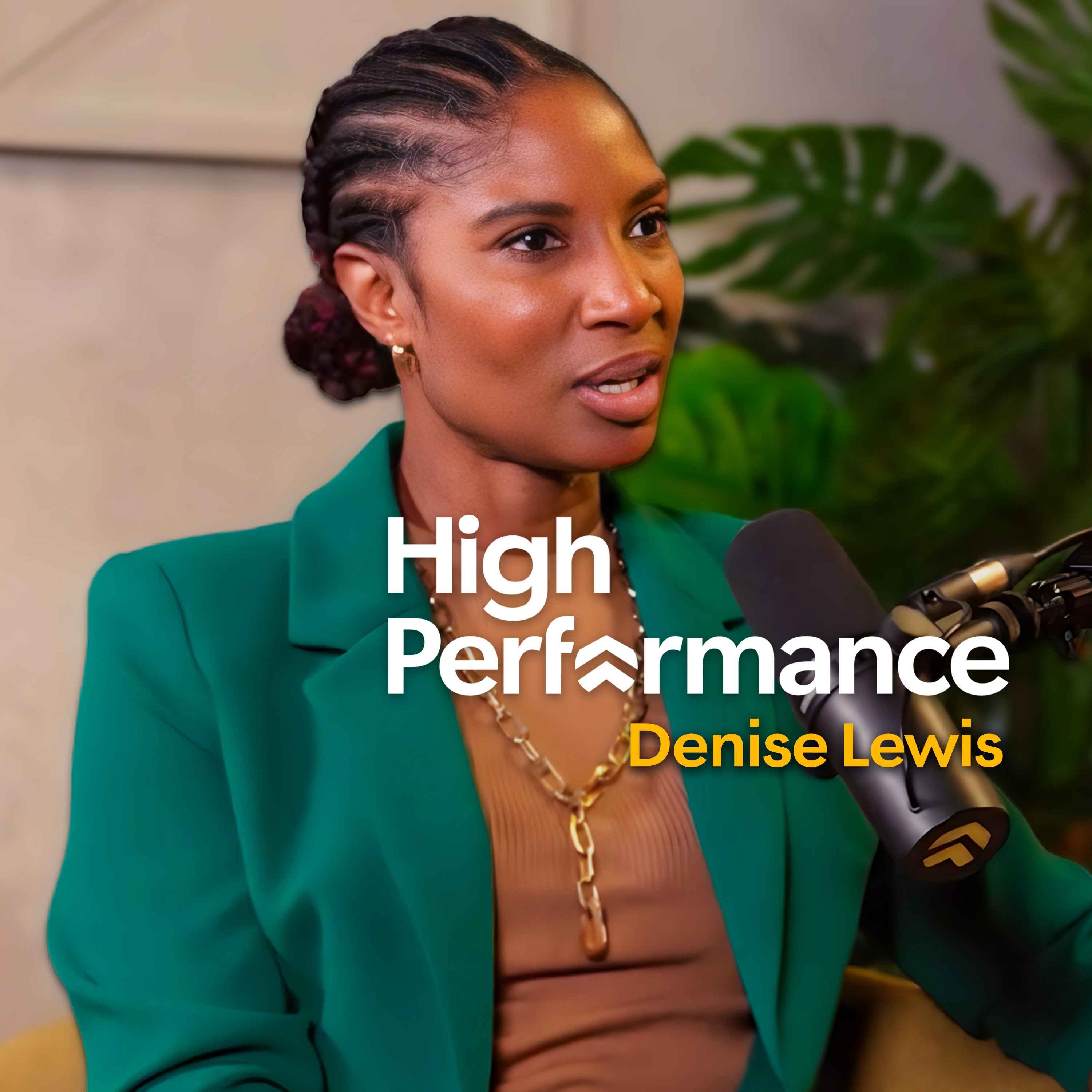
In this episode of The High Performance Podcast, hosts Jake Humphrey and Damian Hughes welcome Denise Lewis, an Olympic gold medalist in heptathlon and a respected broadcaster. Denise shares her experiences of resilience, self-investment, and personal growth, emphasizing the importance of mindset and adaptability in overcoming life’s challenges.
Written by AI. May contain mistakes.

Get the gist, explore an idea or ask about something said.
 Claude
On The High Performance Podcast, what are the key points of this episode?
Searching your listeningAutomatic transcript. May contain errors.
0:28Watch it early on the High Performance App. of the food chain. I reached out to Baroness Sue Campbell. She offered me that lifeline to just start working again. I just reverted back to where do I think I could add value? That is the voice of Dame Denise Lewis, a pioneer who paved the way for others when she became the first ever European athlete to be crowned Olympic heptathlon champion at the 2000 Sydney Olympics. Now Damien, I wasn't with you for this one. Why was it so special? Well, Denise is the embodiment to me of grace and elegance. She grew up as the only child of a single mum who was a windrush migrant.
1:04And that shaped both her independence, her desire to scale the heights, and also built up her incredible levels of resilience. In this episode, she's going to talk about how she lost her identity in what she calls the wilderness years post-retirement. She'll explain how the Olympic gold medal has given her a lifetime of confidence. and she's going to show how she's taken her gold medal mindset to being a mum to four children. Now, the whole point of this show is delving into the lives that others have lived so we can find our own version of high performance. And I wasn't with you for this conversation, so I'm actually pumped just to sit back and listen and see what I learn as we welcome Denise to the show.
1:44And do stick around for the end of the interview because we've got a short but helpful chat for any of you listening to this keen to grow your business overseas. We've teamed up with the UK Government Department for Business and Trade and their free training programme, the UK Export Academy, to help you take your business to the next level. But first, let's welcome Olympic legend, Denise Lewis, to High Performance.
2:10So Denise, welcome to High Performance. Finally, hello, I'm here. Well, it's an honour to have you here. Would you tell us, how would you describe that Denise sat here with us in the studio today? Oh, she feels great. 52. I feel more confident than ever before. There's something about aging that I like. I know it might terrify most people, but I think when you've invested in yourself, so I'm nutritionally sound, I exercise still, I'm constantly evolving, it kind of renews you. And so I feel very rejuvenated and good about myself. Which is nice to hear because I'm also conscious that you spoke about in your post-athletics career that most people know you.
2:59There was a three-year period that you describe as the wilderness years. Yeah, the vacuum where your identity is just gone. Or it feels that way anyway. I would say that I didn't stop my career on my terms really. I still thought there was a bit more to give physically but mentally I was spent as well yes I did have a small injury but I just felt I tiptoed away from the sport as opposed to it being triumphant if you like but I'm interested in if you could share with us how did you find a way out of that period of feeling lost that vacuum to being able to say now that you're as happy as you've ever been?
3:39I think it's reaching out to people. I think when you're in any, when you're having setbacks or you're feeling alone or not, just lost as you call it, you know, you've got to reach out, you've got to seek help. And those are those first tentative steps of rebuilding confidence and a pathway to being a better version of yourself or at least taking on something new because it is quite scary. It is a lonely place when you are sort of in the doldrums and feeling miserable about yourself. And so I reached out to Baroness Sue Campbell at the time. She was head of Youth Sports Trust, chair at Youth Sports Trust.
4:24And she offered me that lifeline to just start working again. You know, something that I hadn't done for many years. I'd been an athlete. I'd been at the top of the world and in that moment I felt like I was the bottom of the food chain and you know when you have someone that can listen to your concerns your fears and basically signpost you back to health you know it's it's a good thing and what were those fears just that I would never hit new heights that I wouldn't love in the same way I wouldn't find my passion again that I was insignificant. Right. And, you know, these are all going around in your head.
5:10I'm sure that, you know, on reflection now, the perception was very different for others. But for me, at that moment in time, I felt very, very low. So what was the first step that you took then, after you'd contacted Baroness? It was going into her office, talking to her. She said, come and be an ambassador for us at the Youth Sports Trust. You know, what are your passions? And I just reverted back to, okay, what are my passions? What do I enjoy? Where do I think I could add value? And for me, I remembered the eight-year-old self and the young girl that was just feeling free when she went on the playground and was doing sport.
5:54So I told her that and she said, well come and work in early years. You just crafted a position for me within the organisation and at least I got to hear that magical sound of young people at play which is the bedrock of I think just growth and happiness and optimism when you're that young and I wanted to be part of that again. I mean that's powerful so take us back to the eight-year-old you then. Describe her for us? I would say essentially happy, enjoying life, despite my sort of circumstances. I loved going to school. I embraced every aspect of school life, but I love sport and I was one of those children that was very capable.
6:41And so I looked forward to break times, breakout times that I could just run and feel free. I've read that you said that you used to set up races in the playground. is that right? Yeah I did and lunchtime was literally my mini Olympics so it was you know we got how many different classes you know and it was like okay who's the fastest boy and girl you go off and race and you'd organize the races culminating in the champion of champions right the fastest girl the fastest boy bring it on head to head and yeah I loved it. And what was it about that that you loved though? Just knowing that I was good and I was going to beat everybody So I guess, you know, the word that we're kind of working towards is competitiveness.
7:22I was a natural competitor. I liked to race. I looked forward to sports day where I could just show people just how good I was. Where you could shine. Yeah. So you made reference to despite the circumstances. Would you tell us a little bit about what those circumstances were? Well, I grew up in Wolverhampton, a single parent family, a lonely child. And I don't remember feeling lonely, you know, because I had a lot of love for my mom. But I was in nursery very early because she had to work. It was just me and my mom. We were a team. And I think I had to grow up really quickly because she needed me to be, yeah, she needed me to be a happy, but also, I guess, to take ownership of that relationship.
8:11She was going to have to work. I was you know eventually had to be that latchkey kid so I had my house key from a very young age and I walked myself to school some days and walked back so I was quite independent yeah so watching I shadowed my mom I would say throughout my early life so where she was I was she's cooking I was in the kitchen helping. If she was washing up, I'd be drying. So it was a lovely bond that I think we had despite the circumstances of challenge financially and not being a homeowner.
9:07proven freelance talent fast. No bulky overhead. No rigid long-term contracts. Just the right expert right when you need them. Work smarter and faster with Upwork. Go to Upwork.com now and find your freelance expert. That's U-P-W-O-R-K.com. Post a job for free and get started today. If you're a maintenance supervisor at a manufacturing facility and your machinery isn't working right, Grainger knows you need to understand what's wrong as soon as possible. So when a conveyor motor falters, Grainger offers diagnostic tools like calibration kits and multimeters to help you identify and fix the problem.
9:43With Grainger, you can be confident you have everything you need to keep your facility running smoothly. Call 1-800-GRAINGER, clickgrainger.com or just stop by. Grainger, for the ones who get it done.
9:59This episode is brought to you by Opera Air, the first browser with mindfulness at its core. Now, most of us spend hours every day online, but how often do we pause to take care of ourselves whilst we're doing it? And that's where Opera Air comes in. It's a lightweight, fast, secure browser built not just for productivity, but for your well-being. With Opera Air, mindfulness is built right in. You'll find free breathing exercises, guided meditations, and soundscapes with ambient sounds, lo-fi music, and binaural beats, all designed to help you focus, relax, and even spark creativity while you browse.
10:36you wrote in the book one of the key lessons is around resilience and that chapter could almost been dedicated to your mum like her story is one of resilience and survival in many ways very much so very much so very much a story of resilience and tenacity and not cowering in the circumstances is where I'm sure at times she felt, I don't know how I'm going to afford to pay my bills at some stages. But she kept going, she kept working. And when she couldn't afford life, if you like, she got a second job. So she did all of that pretty much on her own. Yeah. And because of her lived experience, trusting others to take care of herself, She just wouldn't do.
11:27So she wanted to own that space for herself and rely on her own abilities to generate income. And I'm not saying that we had to dip into the state, you know, because we were entitled to, you know. So I was that person in the free school meals line and going to a certain shop in Wolverhampton to get your free uniform. I was that girl hating the A-line skirts and wishing I could have, you know, a nice pencil skirt instead. But that was the life. And so I admired my mom. I knew it was tough for her, but that admiration just grew and grew to, you know, I think her being able to talk about her story and just how difficult it was.
12:13Probably only in the last five or six years, really get a lens on that level of resilience. You wrote really powerfully in your book, and I found it incredibly moving, the story of where she'd come over from Jamaica to the UK at the age of 10, and by 17, she'd found herself pregnant with yourself. And then her mother and her stepfather insisted she went to live in a hostel. Is that right? Well, they didn't insist that she went to live in a hostel. I think, you know, anyone who's found themselves booted out of home at a younger age, which used to happen in that era, and probably still does, where you find yourself pretty much alone.
12:57That was the alternative. She had to be in a hostel with a newborn baby and work out how she was going to mobilize herself. And it wasn't easy. And that's a story that she's only decided to share in the last few years, is that right? I think it's not that she hasn't told me her story. It was that she's owned it without shame. and I think that's the key. Yeah, because that was the key bit that you write about it and what comes across is that sense of shame that would have been felt by her. In the 70s, you know, a young woman, let me rewind, you know, as coming from a Caribbean heritage, you know, there was an immense sense of pride going to England at that time to make a better life for yourself.
13:49So imagine being 17 and not seemingly making that better life for yourself, just making it more complex wouldn't have been viewed very well. And so I think fast forward back to, you know, me writing the book is really with a lens of how we own that shame. You know, women own shame and they live with it when they're not living the lives that other people assume they should be. turning that narrative around, you know, hers is a real story of resilience and strength of character, determination, and conquering, you know, those societal viewpoints, I think. Yeah, yeah. But you're almost describing the characteristics that many people would attribute to you as well when they see your success in athletics and then in your post-athletics career.
14:46So I'm interested in, they're the positive characteristics that you've taken, that willingness to own it. But what are the ghosts of your childhood from that period that still rattle around 52-year-old Denise today? Are you assuming that they do? I don't think I have any ghosts. I think my ability, my strength is to compartmentalize and say, that belonged to that era. The ghosts aren't there, but what I have done, and this really leans into the book, is look at the generational trauma of the past and go, okay, I don't want to own that. I want to accept it. I don't want it to continue and be a label for me.
15:28And I know that from a very young age, I just wanted to be better and have, I don't want to work that hard. I want to work hard, but not like that. And so I wanted to move the generation forward. And I think I've done that in the success and the opportunities that have come my way. And therefore, I'd like to think that I've set my children up to just understand that you can mobilize yourself. And it takes a certain mindset. And tell us about that mindset, though. Because there'll be lots of people listening to this that maybe have their own traumas, whether it's generational or it's more specific.
16:13What have you learned about being able to compartmentalize and move on to be able to thrive as you and your mum obviously have? I think it's the ability not to get stuck. And yes, have a period of time where you're processing what went wrong or what happened or why have you found yourself in a particular situation. But the ability to reach out, move out of that situation with very small steps first step is usually the hardest step and that you don't have to be defined by any perceived mistakes in your life you can move forward and move out of those with the right tools I always look for the light I think that's probably one of my greatest strengths I try not to focus on the negatives too long I recognise them I own them so that acceptance piece is massive once you accept that okay I feel crap or that didn't go well but what else can I do what else can I own at that moment to make me feel well and better because as soon as you start feeling well about yourself you have better clarity you make better decisions for yourself and that sounds remarkably like a technique that you used when you were an athlete as well with the shoe box?
17:35Absolutely. Yeah. The shoe box or the shoe analogy, I call it, which is, you know, seven events and heptathlon, seven different pairs of shoes. When you want to move from one event to another, I used to use my shoes. As soon as I put on the next pair of shoes, I become that next individual mentally, physically. So surrounding myself with the words of that event. So let's say high jump, second event of the heptathlon. As soon as I take off the old shoes, all the baggage, all the positive or negative emotions that were wrapped around the first event of the hurdles become the past. So you stay in the moment, you become that person in the moment.
18:20So, you know, you're using those tools and life can be like that as well. You move from motherhood to where you're texting or getting a message from, you know your partner that they can't find you know the joggers for the your child that morning you compartmentalize you move and you just transition into the next thing there was an incident from your career i wanted to explore when i read about the shoe analogy i think it was at the 96 olympics in atlanta where you were you were coming in about seventh and then the javelin competition came and that to me was a really interesting example where you were able to park what had gone and focus on where you were at that moment.
19:00I'll build on that because it was actually comments from my physio, Kevin Lidlow, at the time. So imagine in between events, you go back to the restroom, you have some light massage, and I was literally down in the mouth after the long jump. In fact, I was in tears after the long jump and wanted to quit. You know, I just thought I'd let so many people down. It was not that feeling of the first Olympics, you know, it didn't go my way. There were so many bad events that took place. My physio at that point said to me, okay, well, if you throw really well, you know, I'll run around the stadium naked.
19:38And it just made me laugh because I know he's not going to do that. He's not that kind of person. It wouldn't have been the right arena either. So I said, yeah, right and instantly you break the mood you break them the negative spiral into something light and bright and I was able then to focus on okay I'm going to throw out the stadium because I want to see him see if he honors his word and so when I was in the arena all I could think of was just the technique I want to throw really well here and that's what I did so it's reaching out someone can change someone else's mood in an instant. And I think that is a powerful tool.
20:23When you don't feel you can do that for yourself, someone else will be able to give that. So let me cast forward then now as a mum of four, because you write in the story in a book, and I think any parent, their heart goes in the mouth when you've described your son suffering with stage fright. Oh, it was awful. It was awful. because I sat there with his older brother and, you know, he was in year four. So still quite young. But he had this role. He was supposed to be some cat or something. So I remember, you know, he's got the black eyeliner and I'm sitting there waiting for him to come out because I've been rehearsing his lines.
21:04I know it's his time. And he kind of shuffles out and looks around the little auditorium and I instantly, my heart sank. I'm thinking he's something's wrong and he delivered he whispered his lines but I could see that he'd been crying and his brother said to me mom I think he looks like he's been crying what's oh gosh this is awful and you know I think back to to that moment and you know you just you you know yourself where you feel like you want the ground to swallow you up and I talked I spoke to him after the performance and he just like, I really, as soon as I saw the whites of everyone's eyes, I just froze.
21:46I couldn't do it. But the positive from that is we got him lessons, drama lessons, and he conquered his stage fright. I felt that you must have been able to relate to it given your own imposter syndrome that you've spoken about when you get invited to go and pitch for the London 2012 games in Singapore in 2005. Would you explain to us what was going on in your head when you had your own equivalent moment? Yeah, quite an interesting time because 2005 was probably a low ebb for me. And again, I had a phone call from Seb Co inviting me to be part of the presentation team that was going to bid for London 2012.
22:32and I just thought, I don't think I can do that. I don't think I can stand there and deliver a speech. Why not? Because I had been that child. I loved English at school, but I hated reading aloud. Absolutely hated it. And so I didn't want to have that feeling again, ever. And then fast forward, you know, 2005, I've been asked to present in front of the IOC members at such a critical time for sports, you know, for our country. You know, are you going to be able to help deliver this hope? But I did. And at what stage did the panic from eight-year-old you come back when you realised that was what you were going to have to do in Singapore?
23:21Well, it's an initial feeling because you go back to a moment where you felt out of your depth and you go back to that moment and think, oh, freeze. But at that moment, you have to pause and think, hold on a minute, you've won the Olympics. You've had a career where you have been out of your comfort zone for most of your, you know, teens and, you know, 20s. You know that you can do it. So are they going to coach you through it? Yes, they are. Will you get the tools to equip yourself to do it? Yes, you will. So you can say yes and know that you're going to do it. And it's that shift in mindset that allows you to just go for it.
24:05But sometimes it does take that beat to pause without panic. But then there's something really interesting you described there, Denise, about you had to go and search for successes. We often talk on the podcast about success leaves clues and you've got some incredible clues to pick up on. Your Olympic gold medals, all the other achievements that you've done, strictly dancing and all that but how important is it then that you almost capture them in an easy to access place that gives you the confidence to go and take on a new challenge yeah i mean they're there you always have to look for where in your life you've had to demonstrate resilience and it does require you just doing that deep work and that self-reflection because you can just bounce along and think okay I can't do this and so you veer away from that stepping out and stepping into something different but because I do have a very good mindset and I am I have had those experiences where I have had to demonstrate on many occasions I have those access points they are quite vivid for me and so it helps shape the decisions I make going forward I trust my instinct and I talk about this a lot in the book that you have to just remind yourself of the the life lessons that you've already overcome and achieved in order to pivot and do something different when you're required to step out of your comfort zone I'm conscious in this case it It might be about being a mum these days where you're thinking about your own children and encouraging them.
25:51Like what examples of resilience does your brain reach out to to remind you that you've got this? Well, with the parenting piece, it really is for me understanding. And this I think maybe is maturity because I am a different competitive animal. You know, in sport, you're very much about yourself. you only get an insight when you're having to deal with more people. So, you know, your teams. And I think that's where I go to with my children. They're all very different and they think differently. They feel differently. The environment they're in is very different to me as a young Denise. You know, they have a lot.
26:36I didn't have as much as they do. and so when I parent my kids it's remembering that they haven't had the same lived experience and so I have to take time to to listen more intently and what their needs are and so I just access you know my coaching team very different individuals but how do I extract the best out of each of those individuals by a certain question or giving them space to think a bit more and remembering that when I was, if I crossed the line and walking back with my coach, my then coach Charles Van Comene, sometimes that silence is enough. You need to give people time to process their own emotions and then pick a more appropriate time to have a conversation.
27:27And it's those little things that you kind of have to do with people, no matter where you are in your workspace, you have to understand, really get to know people, how they think, how they tick. And when you can do that, you can extract the best out of an individual. Can you give us some tips then on how you do get to know somebody at a level where you can help them? Take time. It's really simple. There is no magic. It's spend time with people as much as you can. Take yourself out of the environment, the workspace, you know, go for a warm drink, a coffee, whatever it is, tea, spend time with people above and beyond just work.
28:06You know, ask them about their experiences, how they feel about certain situations, open the door for conversation, essentially. And I think that then gives you a better opportunity to think, okay, this person doesn't like when you're in their face. You know, you have to find a different type of language to extract information from them. So can you give us an example of where you did that in your career and it paid dividends for you? Well, I think people know that I've mentored and been in the wing woman for Katarina Johnson Thompson in her competitive career. Definitely the last eight years for sure.
28:47and I just think you know reaching out to her and her trusting me enabled me to start having dialogue with her about her hopes her fears what was in her head at the times where she was in in the most need of someone to listen and I think that enabled me to to sort of signpost her better understanding her character what makes her tick where she feels in her safe space to share and I think that that brought a better athlete that's for sure helping her unlock her potential and giving you know just helping her make choices about coaches environment and that's only because you spend time with someone and you get to know them and if you don't mind me asking about you write that two of your children are neurodivergent, which is a very specific skill set of understanding how to speak to them at a level that they would understand.
29:56Yeah. I hope I'm not being clumsy in the way I face it. No, it's not, because what you find is that no one gives you a manual for parenting. And, you know, sometimes you bumble along, you parent with your own experiences or things that shaped you. So mine's very much of structure and discipline, you know, pushing forward, being competitive for a large part of my career. And I know that certain behaviours lead to results. And, you know, I talk in the book about, you know, my daughter sometimes needing time to think about what's happening tomorrow she needs to plan that you need to have that conversation with her and I was really late to that understanding I just thought I had a difficult child who just wanted to go against the grain all the time so that was a failing and that's again understanding where you make mistakes it helps you and serves you better in the future when you're dealing with somebody who might not appear to be receiving information the way you expect it to be received.
31:14And so, you know, allowing her the time and space to work it out for herself and whether she needs to write a list or set an alarm for something really helped in the end. But I had to go through some very difficult situations with her in order to get to the relationship that we have today. Because, you know, when you're a busy mom, you're working, you're always in a rush, you're always moving at 100 miles an hour. And sometimes you just have to slow down and be on someone else's pace in order to get them across the line. I've heard a great line, though, that I think that I found really helpful that you've delivered is, don't get angry, get smart.
31:58and you're describing challenges whether it's in motherhood or just in life in general where sometimes frustration can get the better of us which which stops us being able to make that time to understand how have you learned to get smarter rather than angrier? Through mistakes it is essentially that you you know I'm I want to know yesterday what happened you know how's it going um and I do think that is from my sporting life you know making those quick decisions about how to be better. But as I said, it does not work for everyone. And so I've had to adapt my parenting. I've had to adapt the way I think and manage my expectations of others.
32:43And that doesn't mean that you can't be ambitious for individuals. It means that sometimes it might just take a little bit longer. You have to find a different way of communicating. sometimes it means you have to step back and let someone else direct and I think that is my biggest growth is not expecting to be the leader all the time and controlling a certain narrative you know it can serve me better to have these sort of offline chats with my husband or with a friend and get the message via another avenue and that can be more successful but you have to not have ego you've got to lose the ego go on tell us how you do that well you do you just do because ultimately it's not about you in that moment it's about the the person that you're trying to get across the line and so you have to just say okay what do i need to do what do I need to do?
33:50Who can be the best person to deliver this information? It doesn't always have to be me. And you've used this technique, it seems, again, you write about it when you think about in your own personal relationship where you wrote about that exercise of writing down all the tasks that you do without being thanked for. Oh my goodness, don't get me started on those invisible tasks. Go on, tell us about it. I have Eve Rodsky to thank for my enlightenment. You know, the invisible jobs that we take on. As a woman, particularly, I find writing those lists for me was an awakening for how I need to do things better.
34:34You know, the mind, the mind is a powerful tool, but it needs some rest as well. and you need to get people to take ownership of certain things. But it just was incredible how many invisible jobs I took on per day. And we all take them on. It's not just me. The emails to the teachers, the buying the teachers gifts at the end of the year, it's writing your child's Christmas cards because when they're young, there's like 20, 30 cards that you've got to write out, especially when they're still forming their letters. So it's things like that and the washing or cleaning the football boots that because the boys are so damn lazy, you end up doing the things that are inconceivable to me.
35:25You know, I would clean my own boots, you know, or javelin boots or what have you. But, you know, the kids are a little bit different. Well, as you say, they're living in a different time. You didn't have anyone that was around to be able to clean your boots or to do these tasks. But I'm interested in how did you resolve that? Because I sense the frustration of it, but I'm interested in how you... The resentment of it. It was resentment. I actually was like, this isn't how it's supposed to be. And no wonder I'm a bloody grumpy woman. Because I'm literally doing everything. I'm thinking for you.
36:03And not just one, two, three. You know, I'm a household of people. I'm just doing all the thinking space. And I resolved it by just writing it down. I remember writing it down and showing my husband, oh, these are all the other jobs that I do, as well as prepping for world championships, buying all the groceries, doing the shops. These are all the things I'm doing as well. And I only have so much brain capacity. And I'm using probably 60 % on everyone else's jobs. And what was the reaction? Oh, yeah, I can see how that's an issue. See why that's a problem. And yeah, for a period of time, it worked where, you know, everyone was trying to step up a little bit.
36:53And also, I've just given myself a break. Like, okay, so I don't need to do the washing at 10. I don't have to put a wash on at 10 o 'clock at night. It can actually wait for later on in the week where I'm more free. It reminds me, we were lucky enough to sit down with Alain de Botton, who's the founder of the School of Life, who he encouraged us to lean into those difficult conversations, not lean away from them, because the richness that follows from it can really be a catalyst for change in our lives. Now, you obviously work with coaches in your career to help you change behaviours, change patterns of thinking.
37:31What were some of the attributes of great coaches that actually successfully helped you do that? I would say it's having clear boundaries of what's the culture that you're trying to create. And I think I would say accountability of your own actions. I think the more you can own what you're trying to achieve and how you do it, the greater chances are for success. So Charles Van Comeney, you've referenced him. in the, I think it was the 1997 World Championships. He sat you down and said you didn't win a silver, you lost the gold. And yet three years later, you come back and win a gold. What happened in that three years then that allowed you to grow, to be able to achieve that?
38:19Raising my performance outside of the competitive arena. So can you give us an example of what that looks like then? It's the preparation and visualization of what could go wrong. So it's dissecting all the performance aspects of, you know, if you're in this arena, you know, you might find yourself in this scenario. So it's living those scenarios before you actually get there. So that preparation, mental preparation is really key. And so we did that during training. So, and even if, you know, your time zone competitions where you're going to be traveling outside the time zone, you know, we do that preparation before we even got on the plane.
39:04So adapting the training to, you know, tomorrow you're going to wake up at four o 'clock and feel what that is like. You know, can you get alert? Can you wake your nervous system up enough so you're alert and ready? one of the examples I give in my book is you know throwing with the opposite arm or the non-dominant arm so javelin or shot put can you reproduce something or some semblance of what a throw is supposed to look like stepping out your comfort zone with throwing with your non-dominant arm I suppose the bit I'm really interested in is when you talk about the visualization because there seems to be an interesting balance here between visualising for success but also preparing for the worst as well.
39:54Yeah. What kind of balance did you have between those two? I don't know, could I give it as a percentage? I mean, you know, mindset just feels like everything to me. And the visualisation at that time as a high performer was every day. So that was, felt like sort of 70, 80 % of what I'm doing, you know. And as you said, that preparation for the what ifs, equally, equally high. But rest is also important. You know, we haven't talked about rest and recovery and stillness of the mind, stillness of thoughts. You know, those things are equally important when you're making decisions for yourself. you've got to find that stillness.
40:46Tell us about stillness. What does it give you, first of all, before we talk about how do you find it? Rest, recuperation, reframing situations for yourself. It's a key part to growth. We grow, our children grow when they're sleeping, don't they? You know, when they're little. And it's a tool that I lean on. when I'm upset or uncertain and I can get to lie down. That's what I do, just to give myself a moment to feel calm. There's a phrase that your grandma used back in Jamaica, wasn't there? We should have cropped this off air. I don't want to misappropriate this phrase. Go on. But it was a patient man rides a donkey.
41:33Patient man ride donkey, yeah. She did. identity phrase that's used in Caribbean a lot, in Jamaica. And I love it because I do believe that's one of my life philosophies, which is, you know, the power of patience. You know, you will get there steady, crafting where you want to be. And, you know, with the right level of patience, you'll find your way. But how do you teach that to this younger generation? that like you say the instant gratification the 24-hour access to stimulation means that we often want everything now or yesterday what can you teach us about being the patient man who rides a donkey i'll say it's not easy if this generation like you've highlighted just want to be they want to be on there they they are constantly looking for that gratification there is a time where i I think young people will receive the lessons or the learning.
42:38I try so hard with my kids to extract that device from their hands. And so what you can do is invite an experience where you take them away from the scrolling and living with the phone as much as possible. Try to engage them in dialogue that they're interested in so they can engage you as opposed to just looking downwards. If you're still overpaying for wireless, it's time to say yes to saying no. At Mint Mobile, their favourite word is no. No contracts, no monthly bills, no overages, no hidden fees, no BS. I made the switch because I was tired of those ridiculous bills and sneaky charges from my old provider.
43:25With Mint, I'm paying$15 a month and getting the same high-speed data, unlimited talk and text and coverage on the nation's largest 5G network. Honestly, the quality is just as good, if not better than what I had before. And the best part, you don't need a new phone. You can keep your current one, bring your number and all your contacts. I use Mint Mobile and you should too. Ready to say yes to saying no? Make the switch at mintmobile.com slash HPP. That's mintmobile.com slash HPP. Upfront payment of$45 required, equivalent to$15 a month. Limited time new customer offer for first three months only.
43:59Speeds may slow up a 35 gig on unlimited plan. Taxes and fees extra. See Mint Mobile for details.
44:25Work smarter and faster with Upwork. Go to Upwork.com now and find your freelance expert. That's U-P-W-O-R-K.com. Post a job for free and get started today. If you're a maintenance supervisor at a manufacturing facility and your machinery isn't working right, Grainger knows you need to understand what's wrong as soon as possible. So when a conveyor motor falters, Grainger offers diagnostic tools like calibration kits and multimeters to help you identify and fix the problem. With Grainger, you can be confident you have everything you need to keep your facility running smoothly. Call 1-800-GRAINGER, click grainger.com or just stop by.
45:02Grainger, for the ones who get it done.
45:12Your husband Steve works in music and one of the artists that he worked with was Liam Payne from One Direction. you wrote quite a moving tribute to him after after his death last year i'm interested in as someone that's been at the apex of high performance when you see some of these younger people being thrust into the limelight what are the kind of lessons that you would want to be able to impart to them to be able to cope with the pressures that they face i think it's hard being um it's hard being in the limelight you know i think you know anonymity is it's really sacred and when you don't have that i think it's really hard um i think young people just have to realize that you know that there is so much life out there um and it's not always i've talked about the devices you know it's it's you need to find uh find your purpose which is is not always easy for some people, but, you know, for kids particularly, you've just got to keep guiding and shepherding.
46:22Someone at high performance, it's finding your why, finding your purpose and being consistently just doing that. So what would you say your why is now then? To live the best life that I can, you know, to create opportunities for myself, to give back, to be helping others. I get a lot of pleasure out of seeing other people shine or do better than I did in a certain situation. You know, I think one of the greatest gifts we can give ourselves is the act of giving. We know that I really do believe in humanity. And so I try to give back where I can. So whether that's knowledge whether that's networking whether that's just being at the end of a phone and not to offer advice it's it's it's a good feeling and you've spoken about the power of having a network of people that you that give you but you that you can give to them as well would you tell us something around how you allow people into your inner circle what are the lessons that you've learned about surrounding yourself with people you can trust gut instinct some people you you let in and that you don't have your best interest at heart at heart so you know you've got to lean into your gut feelings and how how you feel around certain individuals if you feel that you can relax and open up that that's great but there will always be that one person that you think oh I heard that did I hear that correctly I might have to watch that that's not quite what I thought it was and that's listening to you that's being self-aware and people aware so what I tend to do is you know I have a very hardcore nucleus of really good girlfriends really good male friends that they just keep showing up for me when I need it and it's the ability to to give advice and not catastrophize situations they make me think differently as an only child in this world I've really leaned heavily into my friendship groups they're really important but that's why I'm asking because I think your social antenna as an only child is really highly attuned that you know who who I can trust and who I need to tread carefully so what are the traits of a great friend?
48:57Honestly it's got to be integral to the hold that relationship and through honesty breeds trust and someone who sees all of you you know in terms of how you you think they understand that you know you can take your pauses you can take time away but essentially you're still the same people and no matter how many different layers that get imposed on you through life that there is that intrinsic self that is throughout and your friends really see that. Charles Van Comenie once asked you, what are you willing to sacrifice in your pursuit of success? What was your answer to that? To work hard. Yeah, I worked hard.
49:45And what was I prepared to sacrifice? I think at times I was prepared. Was it a sacrifice? No, it's to be better. There was no sacrifice. It was, can I think and be better? can I just keep showing up for myself and can I put as much energy into my betterment as possible and I think largely I did that you know we it's funny we sit back and we look because I've seen Charles very recently and he does comment that you are that I was an exceptional athlete in terms of driving myself forward or making the most of my situation. When I was feeling mentally secure in my environment and who I was, I was able to drive that forward.
50:36Yeah. So when you look back then on those days, how much of it was about the mindset, the environment and the stability of the support you had around you and how much of it was down to just your raw talent, the eight-year-old girl that was dominating the races in the playground, just choosing to do it on a world level? I think it's a combination of those two elements. I think I've always had a sense of something else out there And I think understanding my place in the world, you know, that you've got a finite time on this planet and wanting to A, be a good daughter for my mom and give her something back.
51:34or as possibly always being within me. I think that's true looking back. I always wanted to make her proud and that must have been the driver, one of the drivers. And I think that's just grown. How much can I extract from life? I don't know that I'm an eternal optimist, but maybe I am. But I do really like challenges. so I think it's just that ability to want to keep pushing forward and learning something new there's two questions that come from that response first of all do you feel you did make your mum proud yes was there ever a moment that your brain goes to when you think about achieving that?
52:29I think when she, she will look at my whole life with the mistakes and where she was fearful at one point where she's like, oh my gosh, it's going to just be a car crash. It's going to be, you know, there's no sense of direction and that's probably at school when I was a little bit wild. But we can pass on that. But, you know, once she could see my level of commitment to athletics, she was like, okay, she's serious. And she just, I guess, hoped that I would become a success. And I think the evolutions where I keep growing gives her a sense of pride. You know, in one sense, I feel like I've got it all.
53:13I've got a wonderful family. They are challenging at times because that's just the role of kids and family. We've got different dynamics. um I've had successful careers um I'm still here I'm healthy you know these are very basic and simple things that you can be very grateful for and I think largely I'm I'm grateful because I understand the bigger picture so my second question then is how much more is there in life that you want to squeeze out? I think there's still, you know, I think by 60, I think I may, she says quoting here, I may want to slow down a little bit, retire and play golf. I keep citing that and maybe I'll make that a reality.
54:01But for now, I'm really content in who I am. You know, I'm not, listen, things aren't perfect, but really in that deep part of your soul and your spirit, I'm happy. I'm happy with who I am, what I've learned about myself, what I continue to learn about others. I think I'm better at knowing when to pull back. Yeah, and I'm not fearful. I think, you know, that victory, the medal, Well, winning the Olympics gave me an inner security. You know, that little bit of pension that you can draw on in terms of confidence. Okay. Whatever I take on, I want to do my best, but I have that added layer of security.
54:50We've spoken to so many people that have stood where you did on that gold medal spot, on the number one rostrum, and have told us that it wasn't what they thought it was going to be. Alistair Brownlee said he said I've done it twice and I can assure you that it's not worth the effort it takes to get there so you have to enjoy the journey to get there rather than waiting for the payoff of that moment I don't think anyone can think that I don't think you know until you know at the end and I loved the journey because it has taught me a lot about myself and what Endeavour looks like. I would say that the medal is, it's more symbolic of the journey and the lessons learnt in that, you know, to be able to deliver on that one day means that if you prepare, you work hard, you can find a way through stuff, life.
55:54You know, I prepare, I've got better as a journalist because I prepared more. it bought me more and in my current role with UK Athletics I think the more I learn the more I prepare the more I understand my teams I hope I'll be better in my workplace and that's confidence you do have to have confidence to believe that and how do you it comes back to where we started you know those access points along the way where you know that you can just gives you more confidence to step forward so I don't know what Alistair means by that really I think what he was saying if I can paraphrase him was that it was almost don't wait for the payoff don't think that if you don't enjoy the journey as you've said don't think winning a gold medal is going to suddenly validate the journey it's the process of just loving what you do in the first place yeah and I did love what I did and you know the the fear we talked about that as well is will you love again yeah but you have to be open for that and as i said you know it's it's that more than compartmentalizing it's being just open to to receive and to to seek new pastures and to evolve in that new role so we come back to the book adaptability have you and can you be adaptable in order to thrive and i think i've demonstrated that so what's your final message then for anyone that does have that fear that fear whether it stops them trying something new whether it's the fear of opening up to a new relationship the fear of just even letting go of the past what's the final message you'd want to share with those people, Denise.
57:52What's your fear? Because that's the question you have to ask yourself. What's the fear? And write it down. Talk to yourself. What's my fear? What's that born out of? Where does it come from? What can I do to help conquer that fear? Or at least take me out of that feeling and that headspace? and then things just start to shape. Ah, okay. So that feeling comes from something that's happened in the past. But how did you overcome that? Ah, okay. Yeah, I did this and this and this. So you have a route map that we all have. And if you don't have it, look harder. Look deeper. Investigate. and I guarantee you'll find your way.
58:50There's one question I wanted to get in, but I couldn't find out where. Okay. Tell us about Astrid Cumbernos. Astrid, good old Astrid. Yeah. We talk about visualisation, right? And we talk about, you know, how do you change a negative experience into a positive? And that power of almost becoming the embodiment of what you want to be is a really strong thing. And so I did this in the Sydney Olympics when I'd had a crappy event, you know, in the high jump. And, you know, that could have really cost me the gold medal at that point, even though it was the second event. And I remember going back to my room, you know, kicking myself and, you know, just having that moment of calm again and getting ready for the shot put, which is the third event of the heptathlon.
59:45And for some reason, I just thought, I know I need a good event. So I need to be bigger, stronger, bolder, fearless in this next event, which was going to be the shot put. And I thought of Astrid Cumberness, who was the world champion at that time. And I just thought, yeah, you are Astrid. You're going to be Astrid. You're going to be strong and powerful like Astrid. And I scraped my hair back. That's my power hair, you know, gel back, strong, ready to get it. I remember my coach was going to come and knock my door at 4pm because we had to take the bus down to the stadium. And I remember him knocking the door and I opened it with such vigour.
1:00:30And he was like, okay and I'm like you think you see Denise Lewis here but I'm Astrid Cumberness and he burst out laughing because he knew what that meant it meant I was ready to go that's fantastic and I'm sure there's going to be thousands of young girls around the country that are channeling their own inner Denise Lewis not Astrid Cumberness yeah absolutely on the back of this but let's go on to some quick fire questions if that's okay dun dun dun What are the three non-negotiable behaviours that you and everyone around you are expected to buy into? Integrity. I think... So it's a word I'm looking for that's about engagement.
1:01:18It's authenticity. That's the word. So integrity, authenticity. We're going to have to have honesty. What advice would you give to a teenage Denise just starting out on this journey? Why not you? Yeah, why not you? Just be authentically yourself. Yeah, for so long I worried about, you know, I don't look like this person. I don't sound like this person. I'm getting muscles that I didn't think I was going to have. And, you know, I'm not as smart as X, you know, so it is be your authentic self. what's the greatest piece of feedback you've ever received and why own your own space which is a chapter of my book why and why because you have to understand that no one else really does look like you they can't they can't they can't be you so i think owning your own space and being confident in who you are and what you're about is everything.
1:02:24And the final question is, what's your one golden rule for living a high-performance life? Embracing change. And being adaptable. He knows. And being adaptable. Yeah. Learning how to pivot life and just going for it. Yeah, that's what I'd say. I think it's that ability to be adaptable, to pivot, and yeah, going for life. That's amazing. Thank you. and thank you for writing such a powerful book as well Denise I think it is you've offered us a route map here of how people can change and adapt and be able to thrive in the world around them and I think your own example speaks volumes it's been a real privilege Thank you Thank you Huge thanks to Denise for joining us make sure to follow or subscribe to High Performance wherever you're listening to this stay up to date with all of our latest episodes because we've got some guests coming up that you will not want to miss Don't go anywhere because High Performance is proudly sponsored by the UK Government's Department for Business and Trade.
1:03:32As I'm sure you've heard over the last few episodes, this podcast is currently sponsored by the UK Government's Department for Business and Trade and their awesome free training program, the UK Export Academy, which is a brilliant opportunity for business owners or anyone working in a business who are keen to have a global outlook and find new customers. I've been speaking to various entrepreneurs, business owners, employers, employees over the last few weeks. And I'm really pleased to welcome to the show today, Liz Lamb, to talk about her business, the Data Escape Room. Liz, how are you doing?
1:04:03I'm good, thank you. Excellent. Lovely to meet you. First of all, tell me and everyone listening a little bit about the Data Escape Room. It's a gamified learning product. And what it does, it addresses the need of data literacy in organizations. data literacy is the ability for people to understand, read, work and analyse and use data ethically to solve challenges. Now, this is a, that sounds big, that's a real big problem within organisations at the moment. People are frightened, they don't know how to deal with the data that they've got. So we've designed something that actually tackles the problem head on, but in a really fun and engaging way.
1:04:46This is about bringing people together to collaboratively learn and solve data problems. So if the data escape room didn't exist, where would people be getting that knowledge from? Well, they could just go to some of our competitors who've got standard e-learning, click, click, click, get to the end of it, guess at the end of the quiz, and they may or may not succeed in passing. Right, but you go deeper than that. The fact that it's an escape room makes it a bit more fun, a bit more engaging, a bit more immersive, yeah? Yeah, Jake, to the point where I've had some really senior people come into the escape room.
1:05:15It takes them away from the world. It takes them away from their business problems. And whether you do our pro product, which is where you're facilitated for three hours, or whether you do our auto product where it's a 90-minute automated version, I've seen them because I've done observation and I've also been part of the facilitation. They're punching the air because they're actually doing something that is creating that level of fun and interest and intrigue and curiosity all around the data. And they're also learning that potentially the way they do things, there's room for improvement. And have you worked with the UK Export Academy?
1:05:50No, and actually, engaging in this has really opened the door to what support there is out there for me. I didn't know this existed. I've been trying to navigate myself through the export with America. I've got no clue what to do. You've got to fill in this WD form, and I'm like, WD what form? What do I need to do? And then you realise, right, you can now sell into, say, the Florida area, but you can't sell into California or you can't sell into New York. So it's like, hey, and I can spend all my day trying to navigate through all of this when I'm trying to actually drive the business forward in, you know, in a sales capacity.
1:06:25I think that that is really exciting, though, because I think lots of people are like you, not knowing which way to turn. And that's really the idea of the UK Export Academy. It's not telling you what the answers are. it's kind of listening to what's going on with you and it's giving you some advice and giving you a little bit of guidance. And I'm the same as you. Before I started having these conversations, I didn't realise this resource was there. I was looking around it yesterday and I was like, wow, okay, let's find the product. Let's find something that aligns to what I've got. And let's actually start to think about how I can engage with people.
1:06:54You can tell I really, really like people. So if I can actually start speaking to somebody who's going to give me the answers because I definitely don't think I've got those answers, you know, that's like a huge resource, an untapped resource. What is it about international trade that you think is the single most exciting thing? Scope. How wide we can go? In what different locations can I have people play in the data escape room and punch in the air? What do you think will be the biggest challenge that's going to lie in front of you? Understanding the regulations, the complexity of the regulations and that market dynamic around it all, notwithstanding the cultural angle to what we're selling.
1:07:34do people in that country even want to do something that's gamified? Or does that put them off? Understanding those differences, which I do think the team can help me with. And what would you say is the one piece of advice that you'd give to someone else who is thinking about taking this leap to international trade? Ah, look at the website. Look at the great website that is there and use that resource. Don't try and make it up yourself. Takes too much time. Absolutely. Well, let me give people that web address then, Liz. Thank you so much for joining me, by the way. Thank you. And if, as Liz said, you want to check out the website and you're keen to get a head start, please do take a look at the free training and resources available at the UK Export Academy.
1:08:13Just head to great.gov.uk slash global or click the link in the description to this episode. And as you've heard from Liz, she already has a successful business, but she is ready to go on a journey with the UK Export Academy. So why don't you do the same thing?
1:08:50We'll see you next time.
1:09:04to floor scrubbers. Plus, you can rely on Grainger for easy reordering so you never run out of what you need. Call 1-800-GRAINGER, click grainger.com, or just stop by. Grainger, for the ones who get it done. Introducing new Sylvania LED Ultra Fog & Power Sport lights. This powerful upgrade delivers cool white clarity and crisp visibility on the road ahead, so you can reignite the love for your car with lights that make it feel like day one. and built with a compact design for a DIY install. These fog lights are backed by over 100 years of lighting expertise to bring you LED ultra night vision and help you see better at night.
1:09:43It's time to fall for your car all over again. Sylvania, light that lasts. You're invited to spend an evening on Fremont Avenue. For generations, this house has been home to soulful music, good food, and cutthroat card games, saints and sinners, unexpected laughs and unspoken truths good times hard times and of course family always family so pull up a chair and join us at fremont avenue a world premiere play only at arena stage performances start october 8th tickets at arenastage.org
Denise Lewis is a former Olympic heptathlete, gold medalist, and now a respected broadcaster and mentor. Known for her resilience both on and off the track, she has continued to evolve beyond her athletic career, embracing new challenges while inspiring others to do the same.
In this episode, Denise opens up about confidence, ageing, and the power of self-investment. She shares why she feels stronger than ever in her 50s and how taking care of herself, physically and mentally, has kept her energised and ready for whatever comes next in her life.
She also reflects on overcoming difficult times, the importance of mindset, and learning how to pivot when life throws obstacles in the way. From parenting to personal growth, Denise emphasises the value of listening, adapting, and taking small steps forward, no matter the situation.
This episode is a powerful reminder to embrace change, trust the process, and surround yourself with people who will uplift and support you.
🚨 Partners
XTB 👉 Download the XTB app today and start making your money work for you at: https://hppod.co/xtbhp
Heights 👉 Get 20% off your subscription by using Code: HP20 here: https://hppod.co/20heights
HP Foundation 👉Do you want to kick-start an evolution that will change the lives of millions of children? Find out more about the High Performance Foundation: https://hppod.co/foundation
HP Corporate Events 👉Click here to book High Performance Events: https://hppod.co/corporate-events
Explore offers and discounts through our other partners:
https://hppod.co/partners
Hosted on Acast. See acast.com/privacy for more information.


