
 Ask ChatGPT


 The High Performance Podcast
9 Jun 2025 · 1h 21m
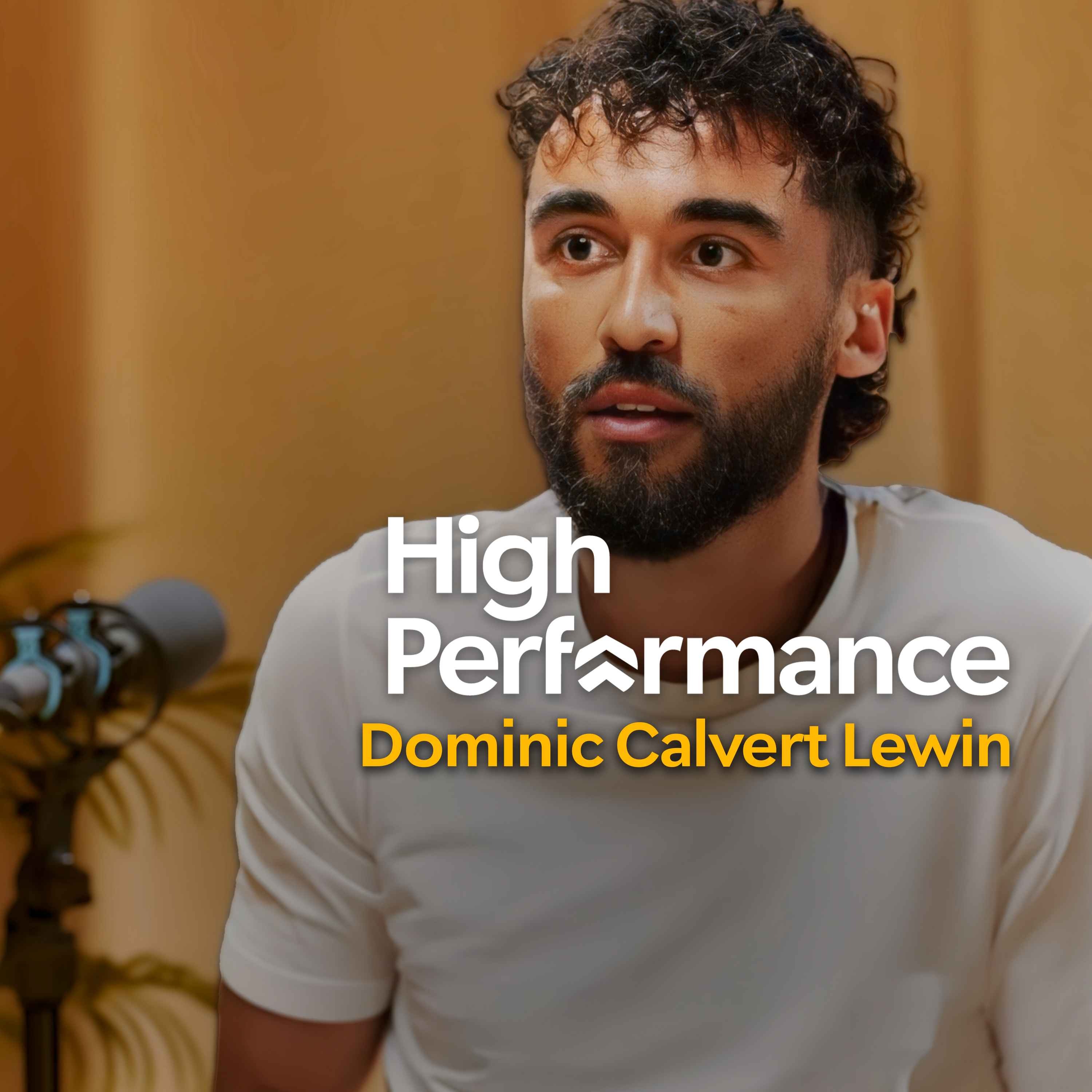
In this episode, hosts Jake Humphrey and Damian Hughes sit down with Premier League striker Dominic Calvert-Lewin, who plays for Everton FC. Calvert-Lewin discusses his journey through injuries, personal challenges, and the mental resilience required to navigate the pressures of professional football. He opens up about the importance of emotional expression, his support system, and the lessons he has learned from his experiences.
Written by AI. May contain mistakes.

Get the gist, explore an idea or ask about something said.
 Claude
On The High Performance Podcast, what are the key points of this episode?
Searching your listeningAutomatic transcript. May contain errors.
0:28Watch it early on the High Performance app. seasons, it's been a lot of survival. Wherever I play, I want to win and I want that environment to be a winning environment. That is Dominic Calvert-Lewin, Everton's leading man through some of the club's toughest times. A player who's faced down injury, battled self-doubt and felt the weight of expectation, yet he kept on coming back. Today, Dominic opens up about Everton's hardest Premier League period. How a new manager reignited his passion for the game and the relentless work it takes to recover from the physical and mental setbacks. I found it really fascinating, Jake, how rare it is to hear a current footballer talking about crying on the bedroom floor.
1:10And what about when he mentioned the mistakes that he'd made in quite high-profile circumstances and how he'd never make them again? You're totally right. I mean, I think at home you're going to be moved as Dominic talks about how he's changed over the years, how fatherhood improved his mental health. And as we speak, his contract is running down at Everton. Yet he explains why actually he's quite comfortable with the current situation and how he'll go about making the next big decision for his career. You know what? This is why the High Performance Podcast exists, to turn the lived experiences of people like Dominic into your life lessons.
1:43Before we dive in, we'd love you to help grow the show and all you need to do is spend a couple of seconds hitting follow on Apple or Spotify. If you can do that now, it helps us out so much. as we welcome to High Performance, Dominic Calvert-Lewin.
2:02Dominic, welcome to High Performance. Thank you. Thank you for having me. What does High Performance represent to you? Good question. I think for me it's consistent, deliberate action towards your goal that you've got for yourself, I think. Or whatever you're aspiring to. I think, you know, working towards that, making the right choices and doing the right things in order to get there. Well, can we talk then about some of the deliberate, consistent actions that you take in your life to perform at the highest level? Nutrition, sleep, recovery, being a student of the game, and my dad, so, you know, spending my time with my daughter as well.
2:41I think that's, you know, it's not always your profession where you have to perform highly. So there's numerous different aspects that you have to take into account. I think if you, like I say, you've got a goal or you're performing at the highest level, You have to keep high standards. And how long have you had this definition of high performance? My whole life, really. I think football's all I've ever known. And I've been playing since I was six or seven. And my earliest memory is wanting to be a footballer, you know, and wanting to play in the Premier League, wanting to represent my country.
3:11So I'm very grateful that I've been able to achieve that. And I think there's certain moments where I look back and think, I made decisions which were for this goal, you know, for becoming a Premier League footballer when I could have easily made decisions that were maybe going out with friends on a Friday night when I had a game on a Saturday, you know, when you're 15, 16, 17 and things like that. And just staying focused and holding that close and continuing to strive for it and keeping it in the forefront of your mind. Can we talk about labels and how footballers are so often labeled? You know, you say, here I am today talking to you.
3:50And I think the interesting thing about where you are today as a guy who's in his late 20s, who has a kid, who is married, who is probably in a very different headspace to the kid who drove through the gates of Finch Farm almost 10 years ago. How would you describe where you are today on your football journey? I would say I'm in a very good place. And I would also say I feel like I've lived probably three or four different lifetimes already in the stages that I've been through. but it almost feels like I'm at the start of almost a second career because everything that I've done and achieved already, I've had my setbacks, I've had my comebacks and now I feel physically and mentally in a very good place where I'm, it's like the mountain analogy, you know, you climb one mountain and then you've always got another one to climb and I feel like I'm at the bottom of the next mountain ready to climb it, spiritually, physically, mentally in a very good place and ready for whatever comes at me, you know.
4:49So what have those difficult times done for you? I think it's built character. It's allowed me to know myself better and better understand the way I am, control my emotions, and you go through things in life and it gives you perspective. It's just helped me evolve not only as a... I'm a footballer, you know, but I'm also a human and it's helped me evolve as a human and as a person. to be a better father, to be a better husband, better son, all these kind of things. And I think everything's like a, it's a learning opportunity, you know, and that's the way I've always seen it. Not always in the moment you realise that, because tough times are tough times, you know, but I think when you can sit back and reflect and look back and think, why did I go through that or what have I learnt from that?
5:37I think that's always an important thing. Otherwise, it's a wasted opportunity.
5:45The market's uncertain, revenues tied, and hiring on hold. That's why results-driven companies are using Upwork to keep work moving. Go to Upwork.com today and start hiring proven freelance talent fast. No bulky overhead. No rigid long-term contracts. Just the right expert, right when you need them. Work smarter and faster with Upwork. Go to Upwork.com now and find your freelance expert. That's U-P-W-O-R-K.com. Post a job for free and get started today. Fall is all about cozy comforts, but when you're prioritizing your health, it's easy to feel like you're missing out. With Hero Bread, you can enjoy all your fall favorites because they're made with Hero Bread sliced bread loaves, tortillas, bagels, dinner rolls, and more.
6:29Try their all-new Hero Noodles with 12 grams of protein and just 80 calories. You won't believe Hero Bread's options have 0-5 grams net carbs and are high fiber from the taste and texture. They've even got small batch drops of indulgent favorites like the popular Hero Croissant. And right now, Hero Bread is offering 10 % off your order. Go to Hero.co and use code FALL25 at checkout. That's FALL25 at H-E-R-O dot C-O. All figures are per serving of Hero Bread. Contains 2 to 18 grams of fat per serving. See the product nutrition panels on Hero.co for more information. This episode is brought to you by Opera Air, the first browser with mindfulness at its core.
7:08Now, most of us spend hours every day online, but how often do we pause to take care of ourselves whilst we're doing it? And that's where Opera Air comes in. It's a lightweight, fast, secure browser built not just for productivity, but for your well-being. With Opera Air, mindfulness is built right in. You'll find free breathing exercises, guided meditations, and soundscapes with ambient sounds, lo-fi music, and binaural beats, all designed to help you focus, relax, and even spark creativity while you browse.
7:40when we talk about a tough time would you take us to what you consider to be the toughest I don't know what year it was but it was the year of my first kind of season of injuries and you know when I was well I'm talking about climbing mountains I think that for me represents the season I had under Carlo getting myself in the England team living my dream you know it's where I'd always wanted to be and I was so high just high off life you know scoring goals enjoying life everything's going well and then start the following season off the back of the Euros and I'm thinking you know I've got the game by the scruff of the neck here I'm going for it I want that England number 9 shirt and then start the season I actually broke my toe and this is I guess another layer to the story but I played the first three games with a broken toe broke my left big toe and I was having like numbing injections and I scored three and three.
8:41So the fact that I was scoring made me think I could keep doing it. You know, it's almost, it's not sustainable. I was training on a Friday, running out on a Saturday, scoring, winning, and then not training for a week. And I did that for three or four weeks and then got called up to that England squad and had to pull out because I like, you know, I think I even texted the manager at the time and said, this is not me pulling out because I don't want to play. I've genuinely, I've broke my toe. but the reason I pulled out sorry was because I'd it was the start of like a series of quad injuries right and that was kind of what triggered it and then I had that season where I think I was out for the first half of the season six to seven months I was out for and I just remember feeling I was putting loads of pressure on myself because I was thinking it was almost like it was getting away from me how do you mean getting away from you like you know when you're young you're in a rush and you think you've got no time and I was thinking like I need to get back fit I need to get back fit I would I would go into the training ground everyone would ask me when you're back when you're back you know man on the gate when you're back when you're back fit don women in the canteen when you're back when you're back manager how are you feeling so it's just a constant like when you back when you back so that then made me put added pressure on myself to get back fit and rush myself and I look back now and think I probably wasn't protected enough as a young lad just eager to play, eager to prove, eager to do.
10:09That set off like a series of events where then I ended up having two seasons of on and off injuries but just to go back to your question the toughest time for me was and I think it's something I've never spoke about actually. So at the end of that season I put out an Instagram post where it was just like an outburst of emotion I can look back in hindsight now and reflect on it and what it was so I scored the goal against Palace to keep Everton in the league and that feeling I'll never be able to describe it it was the weight of my own pressure the football club everything that I felt you know I quite an emotional person so I put that responsibility on my shoulders you know I kind of like thought it's my responsibility to save everybody, save people's jobs, you know, because it's a lot to put on your shoulders.
10:59So when I scored that goal, it was just like a relief, biggest relief ever. And on my birthday, which would have been four or five weeks before I scored that goal, that was a low point for me because I can't remember why, but I think it was just built up emotion. I ended up crying, you know, I was on my own on my birthday, crying on my bedroom floor for whatever reason. feeling a little bit sorry for myself, but I think it was just not knowing how to express what I was feeling in that moment. Like I said before, feeling like things are getting away from you, feeling that you've got all this pressure of the football club on your shoulders and you just want to go out there and play.
11:38And at that moment, I couldn't play because I picked up another injury and it was just like overwhelming. But I remember thinking to myself, like, this is a rock bottom moment for me. In my mind, I was thinking, it doesn't get much worse than this, you know, you need to pick yourself up and go again. so that was a catalyst for me really because I felt better after I cried you know let out that emotion let out all that kind of pressure I've been putting on myself and thought right you know this is I'm going to save Everton Football Club you know which in turn I ended up scoring the winning goal and then I put out a post at the end of the season which was all that emotion put into words but what you got to bear in mind is you know I'm 22 23 you think you know it all and you think you know everything about life at that stage and you quickly realise that you don't and I phrased it in that talking saved my life and when I saw the response I regretted it because talking changed my life and I quickly realised that the media outlets they took that as the tagline and it was on Sky Sports News and I was thinking no this was me showing emotion to help kids, you know, help the next generation to know that I've been through a difficult journey and I've still come out on top.
12:55It was taken the wrong way. And I had 50, 60 journalists at the time, you know, calling my agent. We want to speak to him. We want to speak to him. And my agent at the time kind of said, you know, you want to put out a statement, you know, or something kind of to correct, because the way I phrased it made it seem like it was a lot worse than what it was. And I didn't want to do a disservice to people that, you know, that do feel like that so I was conflicted but I also thought you know that's this is my story you know I don't have to go and correct myself or explain myself to anybody so I never have I've never spoke about it so that's something that I guess I wanted to get off my chest because hindsight's a beautiful thing and what that actually did was then almost put more pressure on me because I went and put myself in the spotlight for not really for a footballing reason but for what for what I tried to do was just kind of say like look I've reached a certain point to the average person or to the normal person that sees me or doesn't know me thinks that you know he's got loads of money drives whatever plays in the Premier League everything's great you know which you know I'm grateful I'm not complaining but I also have problems so we all have problems and that's what I was kind of trying to portray and give to the next generation of like look you might go through tough periods, tough times, but you can still come out on top.
14:15How does it feel to release that? You've been holding that in for a while as well. Yeah, I think so, yeah, because I wanted to wait for the right platform to say it, because things can get lost. You know, you do a lot of interviews and you talk a lot about football, but often the person is overlooked, you know, the human side is overlooked. So, yeah, it feels good, you know. I'm particularly taken, Dominic, when you spoke about being a young boy growing up in Sheffield, you spoke about the freedom that playing football gave you and that was why you wanted to pursue it. And then you used the line, talking about that period when you were coming back from injuries, where I need to do this rather than I want to.
14:55So it obviously started to become a burden, worried about people's jobs, the survival of the club. Was there something about finding a sense of freedom in that emotional outburst on your bedroom floor that helped you? I think so yeah I think it was it was just purely suppressed suppressed emotion and I didn't know I was going to bring that up today really but I think you know I wear my heart on my sleeve I'm not afraid to kind of show who I am but yeah it was just suppressed emotion and a release that it was a big thing at the time around mental health as well and more awareness was getting spread that it's okay to kind of feel a certain way or be open and it doesn't make you weak.
15:49So I was probably trying to be particularly strong and put on a brave face every time I went into the training ground because I had to. You know, it was almost a poker face of like, you know, yeah, I'm good. I'm getting back fit, you know. But really I was, you know, mentally I was in a bit of turmoil. Yeah. So after that point and I released all that, it did give me a sense of freedom to kind of like go. And how do you maintain that now going forward so you don't find yourself back in a situation where it's building up? I'm thankful that I've got a very good line of communication with my wife.
16:25You know, we're very close and we share everything with each other. So I think having that support at home for me and being a father as well, is an outlet in itself. So it's naturally become an outlet. So I always think things happen when they're supposed to happen. And I became a dad probably right at the right time. I met my wife right at the right time. And it gives me almost a sense of freedom and confidence that, you know, the team that I've got at home gives me the confidence to go out into the world and be myself and not get into that cycle of overanalyzing. And because I've been through that, and it's like I said before, it's an experience that you have to learn from.
17:07And if you don't learn from it or you do make the same mistake, maybe you can make a mistake twice, but three times, then you're not learning. So I think for me, in going through all that, I've realized that the most important thing is action. You have to act because whether you're going through a good time, bad time, more so the difficult times, if you sit there and think about it and dwell on it and let it almost fester and manifest itself, then it'll only get worse. So you have to make a plan and go and execute and go and act upon it. Look, I get that you wish you'd said, talking changed my life rather than talking saved my life, right?
17:49But I think the sentiment still rings true that talking, that communicating was the thing that made the difference for you when you were going through that injury spell. So would you mind, first of all, sharing with us actually what a long-term injury is like psychologically for a footballer, but also then what did talking do and who were you talking to? Because I always think like almost the hardest place in the world to go when you're struggling a bit with your mental health and you've got an injury is a football dressing room, right? So I guess the first question is, what actually is it like psychologically to be an injured footballer with so much expectation?
18:28not just washing around you but from what you've said in your own head it's difficult very difficult especially when you've got less experience you know you're a bit younger depending I guess on what stage of your career you're in can affect you in different ways but I think it you think that it only happens to you you know you think you think that you're the only one that's ever been injured and the expectation of you to get back fit and you're thinking you know I'm not this is not me you know I'm a fit, healthy, strong player you know I can play every game which is what I was until I kind of went through that period of injuries one injury in isolation is not so bad it's repeated injuries that plays on your mind I think because then you start to question yourself and you question what everything that you're doing am I doing the right thing?
19:17is this the right thing for me? what am I eating? you know how am I sleeping? you put your aura ring on you check your I don't wear them things anymore because it just is too much so you can become overwhelmed by trying to control everything. And that's a stage that I got to, which is not a stage that I'm at now. You know, like I say, you know, I've evolved and learned from those things. And I've learned that you can do everything right and things can still go wrong. So that gives you almost a sense of peace that, you know, if something does go wrong, it's not the end of the world. And having a good foundation at home obviously helps me with that now.
19:52But yeah, I think for the young boys that go through injuries and the behind the scene things that you don't see, can be difficult because you know what the perception is. Either you're getting paid all this money and you're injured all the time, you're weak, this, that or the other, which no professional athlete wants that perception of them. Yeah. And you can't then come out and go against that, do you know what I mean? You have to kind of just be silent, deal with the rehab, get back, and then actually only years later can you finally have a conversation like this where you say yeah like that you know we said about labels it wasn't the truth that you were weak or that you were you know you were just an injured athlete absolutely but what about your identity because you've as a young boy growing up you've identified as being a footballer and then you can't do the very thing that that has defined you how did you cope with that that's probably was probably one of the tougher things for me i think because it happened over a duration of time.
20:57It forces you to look in the mirror, you know, and go, you know, who am I? Because you've always had football as a distraction or football as at the forefront of your mind. And like I said before, up until that point, I was just going, doing this, this and this and this, reaching the checkpoint, going again, next checkpoint, you're in the England team. So you reach the summit and then it feels like the rug's pulled from you. so I'm grateful for every experience that I've had good and bad because it's helped me know myself better now well let's pick up on that you said you have to look in the mirror and ask who am I what was the answer that you came back with my answer is that I think you never truly know who you are because you're constantly evolving you know I'm not the same person I was when I was 23 24, 25 and I probably won't be the same person I am when I'm 30 because you you experience and it becomes knowledge, it becomes wisdom and you make decisions and choices based off that.
21:55So you're never the same person you were a year ago, in my opinion. So the person you're looking for doesn't exist. You know, we've spoken to Johnny Wilkinson on this show who told us that he got to a point where doing jobs at home like the washing up, he was able to get to a point where they were as important as being a rugby World Cup winning rugby player. Can you relate to that? Are you at a stage in your life where you've sort of developed mentally so much that you could understand where he was at when he told us that? At the time when I listened to it, couldn't understand it. Yeah. But at the time, now, I understand it more.
22:30Because it's just, it's just how you frame things. And, you know, you connect the emotion with whatever you're doing, you know. It's internal and external representations. So it's an interesting concept. but for me it's freedom it's freedom yeah I mean it's freedom if you can experience that doing a chore I guess you would call it a chore at home then unbelievable place to be and I guess it's in a nutshell it's just inner peace you know he's by the sounds of it found peace what I love though about this particular story is it ends with such an incredible high and we can just go yeah he scored a goal that you know meant Everton stayed in the Premier League but I want to go into that can you take us through the emotions of that game and of that night and particularly waking up the next morning with all of the hard stuff that you went through to get to that moment knowing that actually you scored the most important goal that season it was unbelievable like I say it was just like everything rolled into one and to score that goal and I've never heard a stadium erupt like it in my life how much do you remember of the actual goal?
23:38I remember the ball coming in I remember heading the ball feeling like I lost sight of the ball looking back up and it's gone past the keeper and it was just you know eruption and it was like a noise that it was almost still it was that loud it was like silent if that makes sense it was like everything just faded out and I remember just wheeling off running I don't know what I was doing and it was near the end of the game so then obviously the final whistle's gone everyone's flooded on the pitch and it was just like the most euphoric thing I've ever felt in playing football. Hard to put into words, you know, it's quite hard to put into words.
24:18The mad thing is that it probably felt better because of what happened for the previous few months. Well, I think that's what, yeah, that's what I'm trying to say. I think that all fed into it. It was like the kind of the tough times, the problems that I'd faced in that season. And almost like for myself, you know, not only for everybody else in the stadium, but for myself to know that I had the resilience to go through that, come back, perform at the highest level, produce a big moment. And it was a nice moment for myself. It was almost like I say, like I felt that I'd done what I came to do.
24:55Just picking up on one quick thing, in a lot of your work that you do with elite athletes, that you know that like evidence leaves clues, right? Yeah. So I wonder how important it is actually in Dominic's journey that that goal was scored. Because if there's a subsequent low point or a subsequent injury or a subsequent issue in his career, he's able to look at the evidence that was, well, I've been worse than this and still managed to have the highest moment of any given season. How important are those moments for athletes? Confidence is built on evidence, isn't it? For you to believe you can play at the Premier League, you need evidence that you can succeed at the Premier League.
25:29So that's where you then become increasingly confident. So for you to believe you can overcome any obstacle, your brain will go, give me evidence of it. And you've got something really powerful and tangible there. But I'm taken with the comment you made about just your social awareness of recognising that that goal was going to keep the club up and the impact that that would have on people's jobs as well as the fans and their support of the team. It was almost like the social impact for other people. That goes against the narrative that we often assume that footballers have to be selfish. They don't worry about anybody else outside of their bubble.
26:06Would you expand a little on that? It's a view and a perspective that people have on footballers, you know, and it's, like I said, you know, they forget that there's also a human side behind the player. And that human side for me was one that recognised what was at stake. Despite and contrary to what probably Everton fans maybe thought about me in that time because whether I like it or not, it was also my own doing that added to the narrative that maybe football wasn't as important to me as what it was because of some of the commercial stuff I was doing at the time, which again, your young hindsight is a beautiful thing.
26:49So what do you mean by that? So I probably missed times alongside the injuries. You know, when you do commercial things as a player, if you're doing well on the pitch it's always received in a good way no one cares what you do as long as you're scoring goals but the moment you stop scoring goals or things start to go not the way they were before it's perceived in in not in a not so good way it's it's focus on football get back to training do you know what i mean so i was playing scoring doing some commercial stuff it wasn't a problem and then i did some commercial stuff that was put out at a time which wasn't in my control so i'd already done it months before and it was coming out on a specific time when I was actually injured at the time and I remember this feeling of like dread thinking oh like this is going to come out and I know what it's going to be met with and probably didn't really need to do that and I look back and think well I'm not really sure why I did it you know um well I should tell you why you might have done it which is that if your whole life is consumed by football it's actually unhealthy and you've already said that when you're injured the pressure you put on yourself sounds like it's even greater than the pressure of the fans and the staff and the management and your family put on you.
27:56You know, you sound like you're your greatest asset. And if I'm being honest, also your own biggest enemy, because you are so desperate for you to be a success. So I think sometimes the best thing is to not be just at a training ground or not just thinking about the game. And my personal opinion is I think football needs to evolve to a point where we understand that players having interests outside the game is actually good for those players. It's good for the game. But I also see that you're in a world where other people's view of you matters, right? yeah of course we're in a game of of opinions and the reason why I was touching on that is because I think it made Everton fans feel that they could relate to me less which going back to your point of like fans not thinking that I would be thinking the way I was thinking about the state that the club's in and you know how I would go home and think about that and think think about how it's my responsibility to make sure that this doesn't happen so it was probably like I say things that I did which then added to them not being able to relate to me in a way which was probably more so my own doing and not showcasing myself in a way which I am now you know not too dissimilar to how they are or how they think What would you say to those fans who still see those kind of stereotypes of oh he's into fashion and he's you know he likes doing other things what would you say to those fans about the way you feel about football the way you feel about Everton the way you feel about your job of wearing number nine on your back?
29:25I'd say it's okay. I'm okay with any opinion now. And like I said, I'm in a different stage of life and people will always have opinions and you do things, some people will like it, some people won't like it. That's the nature of the beast and that's the nature of living in the spotlight, you could say, or doing things in the spotlight. So you can't please all the people all the time and I'm okay with that. Maybe once upon a time I wasn't okay with that and it was a little bit harder to take. But whereas now I have a different perspective on it and like I said, people just want to relate to you.
30:02You know, they want to see themselves in you. And, you know, I'm in a privileged position where people look to me and they probably want to see the human side more than the footballer, you know, the flash, the front pages and things like this. And how do you find that sweet spot then between caring about the fans and caring about the club and the people that work there and not allowing it to consume you where the pressure of relegation then ties you up and stops you performing. Where's that sweet spot? I don't know where the tipping point for me was, but I can say now that I care a lot less about what people think than I previously did.
30:44And I think with that comes a freedom and a power to go and be able to execute and do your job to the best of your ability. If you're concerned so much about what's going on in the ether, you know, externally, then it can dictate sometimes how you go about your day, how you wake up in the morning, and ultimately how you perform. So I think you have to have that mental toughness and that resilience to know that, like I said, you know, not everybody's going to like what you do, like what you say. And ultimately that's not the objective. the objective is to be yourself and do what you think is right in the moment and go from there I think your authentic self you have to be that the other thing that you have to be is a person that puts the ball in the back of the net right?
31:31correct talk to us about your love even now after 20 odd years of being a footballer you were signed by Shiffles United before you'd even turned 10 you were like 8 years old or something right when you joined Shiffles United here we are 20 years later how strong is that love of scoring goals still compared to that eight-year-old kid. It's the best feeling ever. You know, yeah, yeah, you can't beat it. Scoring goals and consistently scoring goals, it's a great feeling because it's like instant gratification, you know. You're going out there, you're doing your job, you're scoring a goal, you're winning the game and everyone's happy.
32:08You know, the objective of the game is to win the game and when you're the centre forward and you score goals, you know, you can't beat that feeling. We did an interview recently with a data analyst who worked at top Premier League clubs, who told us an interesting story that we hadn't really thought about of working with a top striker who one season had scored 20 goals and everything was great in his world. And then the next season, he'd scored 10 goals. But on all the data measures, he was actually playing really well. It was just that he wasn't getting the same amount of chances or he'd come up against some freakish goalkeeping performances.
32:44what else do you measure your effectiveness against other than just the amount of goals you score? So, do you love the stats? I like stats and in my game and where I play there's only one stat that really matters and that's how many goals you score. You will be judged on that no matter how well you play at the end of the day. But there are other measures for me in what I do and for me as a player and my makeup, I have to be a handful. I have to be tough to play against. So if I'm not going to score, then I have to give the two centre-halves a tough day, a tough day at the office. And they have to come off the pitch thinking, And how do you do that?
33:30By being physical, aggressive, smart. And it doesn't always come off, but I think if you go into the game like you always go into the game wanting to score but whether you will score or not is not guaranteed but you can guarantee that you can be a nuisance be aggressive be also in control of your movements be aware concentrate these things that you can control give you the foundation to then maybe go and score a goal What do you do early in a game to let a centre half know that they're in for a tough afternoon? So I like to try and win my first duel. I think if I can win my first duel comfortably, then the centre-half knows he's in a game because he might be thinking, you know, I was miles away there.
34:20And usually we start the game by, you know, it goes back to the goalie. If we've got a kick-off, it gets pumped up to me and I go and run and try and win the flick on. Sometimes Pickers booms it miles away and I've got no chance. But when he does give me a chance, I like to think that nine times out of ten, you know, I'll go and win that header. And even though it's just something small like that, and I think that comes from sprung to mind actually my dad I used to be a centre midfielder and when I was a kid my dad used to say you know in his own way go and iron him out you know go and iron your opponent out meaning go and smash the other centre midfielder in the first minute of the game and let him know he's in a game so I used to go out and that was my only thing on my mind right I need to lay a glove on this on this player here so I guess it's kind of like still the same thing because you I always know if I set the tone for myself and I start the game well, chances are I'm going to have a good game.
35:11But take us back to before the whistle blows and how do you get yourself in that emotional state where it's a controlled emotion to go and be aggressive but do so with your emotions in control? I always like to, I guess, like close my eyes before the, just like a certain moment before the whistle goes and you can have like where everyone's kind of like in position. it's maybe 20 or 30 seconds and I like to like shut my eyes and just kind of like be with myself take some breaths and like listen to my surrounding and that's almost like I guess an anchor for me to right I'm in a game now I need to go and win this header and it's something as simple as that really and I think doing it over time my body knows that you know it's game time what do you tell yourself in that moment?
36:03I have a little mantra that I say which I'm not willing to share Why not? I don't know, it's just something that's personal to me but there's like a series of words that I say to myself which I've been saying for years and I guess I repeat them over and over and over and over until I'm ready to start the game And without revealing what the words are this is about you reminding yourself that you've got this, you're good enough you do it, you've done it before? Pretty much yeah, it's just positive self-talk in the moment to kind of get myself ready for the game. And then 30 seconds later, you go for the first header and you miss it.
36:39A minute after that, you sprint for the ball and you get beaten by the centre half. What are you then doing? Because this is when it gets really interesting. How are you then going, right, now we go again. Here we go. Let's hit reset in this game. Next action. You know, just focusing on the next action because the easiest thing is to, and I'm guilty of it at times, you know, you think, I need to get the next one, but I've just missed the last two. but it's a high level sport you can't afford to dwell on what's been and gone it happens quick I might be calling to action 10 or 20 seconds later and I need to be there and hold the ball up and I never like to like you say miss two actions in a row I think like it starts to what's the word compound compound yeah compound in the wrong way whereas if you win the first one or you win the next one and you can compound in a good way from there.
37:31Well, that reminds me of when we were lucky enough to sit down with Dan Carter, the New Zealand rugby grey. He spoke about that that idea of next action wasn't something that came natural to him. He said his brain would either replay the mistake he'd just made or it had fast-forwarded into the future and imagined that today wasn't going to go his way. So it took him a lot of work with support from experts to help him be able to be in the moment rather than allow his brain to time travel. What have you done to improve that ability? I've done a bit of, I guess you could call it, mind coaching over the years in bits and bobs.
38:14I'm not doing anything in specific now, but it's quite relatable actually, you know, what you just said there, because it's easy to get in your own mind and I'm a player that if I start to think too much, I start to make the wrong decision. I need to not be in my head. I need to be in my body and trust that my body knows what to do because I've done it millions of times. So that's what I'd say to myself, you know, before games even, your body knows what to do. I can think about a scenario or visualize a scenario in front of goal as many times as I want, but the chances are it's not going to be that specific scenario in the game.
38:53so I think there is a place for visualisation 100 % but when there's so many unpredictable things that can happen in football if you start to think too much then all of a sudden you think oh well I've just put that one in the bottom corner I've just chipped the keeper in that one there's too many so I've found that what works for me is simplifying those thought processes and just thinking repetition my body's done these things been in these positions hundreds and thousands of times I already know what to do so in the moment I trust that I will know what to do I don't remember the season it was right but back when I was hosting football we came to Everton four or five times in that season and you were on fire and I remember a couple of occasions where the ball came over the centre half and I think it was with Rio Ferdinand you hadn't even got to the ball yet and he went that's a goal because you were in such a great place and that's sometimes the moment where a striker will struggle where the ball comes over the top they beat the centre half to the ball they then got six or seven seconds to get towards the keeper and make a decision can you take us through the the mental acrobatics that happen to a striker when an opportunity presents itself or whether you are just like ice cold in that moment and not really thinking about anything yeah it's flow state when you're in flow and you're not thinking, overthinking and you're trusting your body that's when you're getting behind and put it in the bottom corner but equally it's a constant thing that you have to work at well for me it's something that I have to consistently stay out of the head because I'm probably more naturally to go into my mind and then start to overthink certain scenarios and situations so you pick up the ball right and you're heading towards goal take us through if you were in that moment now what goes on everything slows down so you feel that you've got all the time in the world so particularly like for example on a 1v1 you know you're running through I think a one that I scored in the cup against Villa I nicked it on the halfway line and I had the whole half of the pitch to run.
40:54And I was in flow in that time. So I didn't really think too much. I'm just thinking, right, touch, touch, touch to the edge of the box. Kind of like looking at the keeper in my peripheral vision up here and then ended up reversing it into the bottom corner. But there is a such thing as having too much time, they would say, wouldn't they? You know, because you see sometimes you have a chance and you've got all the time in the world and you make the wrong choice. It's because you overthink it. so I feel that's really interesting is there any fear? I wouldn't say fear but for me it's expectation but my own expectation that I expect myself to put the ball in the back of the net 100 % of the time so then when I don't I do get frustrated or I can get frustrated so my battle is not getting frustrated with myself because I set myself a high standard I think we've noticed that in the last half an hour that you set yourself a high standard but you should though because you carry the number nine shirt the most famous shirt at a football club at one of the most famous clubs in the country in the greatest football league in the world it doesn't get much higher than this would you talk to us about the pressure of a number nine shirt firstly it's a great privilege and I recognise that and I think what helped me recognise that was also working closely with Duncan Ferguson because he's a respected number nine at Everton Football Club Everton legend you know and I think being able to, when I first got the nine shirt, have him in my corner, and he used to say to me all the time, you're the man, lad, you're the man, and that like, just for no reason, just be walking out to training, you're the man, lad, and I think what that did for me was just give me a subtle, added belief and added confidence that I was the man, or I am the man, so to speak, and it kind of like alleviated the pressure that I might have felt sort of think back to them but I've always had self-belief I've always believed that that was where I belonged you know so when I took the 9 shirt I know probably a lot of people thought at that time it might have been a bit too soon because of the pressure and responsibility that comes with it but for me it was like I asked for it the season before you know I think Marco Silva was the manager and Sandro Ramirez ended up getting it and I was like just give me the 9 Did you go and ask the manager for the number 9?
43:14Yeah yeah What did he say? He was like, oh, he was a little bit non-committal at the time. I kind of put it on his toes a little bit. But then the following season, I don't really think we had a centre-forward going out. It was not really, he couldn't deny it me, you know. So then I finally got the nine shirt. I was like, this is it now. This is kind of the chicken and the egg scenario. I've got to go and, that makes sense, you know. I've got to go and live up to that expectation now. There's no excuses. And I'm exactly where I want to be. So it's something I've always pressured. that kind of pressure is a privilege you know for me and I enjoy that pressure and when I don't have that pressure it's or the pressure to perform I don't know I enjoy it you know.
43:56But tell us about the journey up until that moment then because you're coming as a young boy from Sheffield you're coming into Everton when did you start to feel this is the place where I belong? if I'm being totally honest after my first training session with the first team because I joined Everton as an under 23 really for the under 23s team and I trained with the first team probably after about two months and my first training session was confirmation that I could compete at that level why? because I felt so comfortable we did like a possession drill and I felt like I did myself justice and we did mini games and I trained well and I thought like you know you always want to test yourself and this is the elite level this is it this is the Premier League and I thought you know after my first session I can compete so that gives me like the confirmation and the confidence that right this is where I belong I want to train with the first team all the time and then I think a month later I made my debut so it happened a lot quicker than I thought it would but because I had that sense of belonging but also wanting to kind of go after the number nine shirt to start, you know.
45:11I was hungry. But we've spoke to some athletes, like Phil Neville, for example, who said that what happens with a lot of young, talented players when they go into that first team training session, they often play it cautiously and they don't show their very best. You know, they're more focused on not making a mistake than gambling and trying something different. What was your attitude when you went into that first team session? I would have described myself then as I had a chip on my shoulder. So I felt like I had something to prove. From what? I'm not entirely sure. I think a lot of that attitude comes from my dad and how he raised me in a football sense.
45:54You know, my mum was more nurturing and loving it in that way and my dad loved me in a different way. but he always kind of set a high standard for me or made me keep a high standard only would let me know when I'd not played well or when I had played well and he gave me an air of confidence almost arrogance I would say to be like doesn't matter where you're from who you are you know you're good enough and you can compete so when I went in I just felt like I as opposed to being a little bit obviously respectful these guys are premier league footballers so i was raised as a young footballer you know you you shake everybody's hand in the morning morning morning morning so i never wanted people the lads to think that i was rude or i was arrogant in that sense but put me on the pitch and and it was a different story you know i'd be trying to like lay a glove on people or trying to impress the manager to to play and that was always my take on it you know there's an opportunity here and I intend to grab it with both hands and how did you impress the manager it was Ronald Koeman at the time right I mean we're talking there about legendary status footballer apart from training hard did you make any special effort to go and tell him that you were ready to play because it's interesting since that he said hasn't he I think he was I think I put Dominic in too young but I don't think you'd necessarily agree with that from what you've said no I mean bear in mind he put me in on left on the left wing the right wing I'd never played on the wing in my life.
47:25So I'm going in, I ended up making my debut and I'm playing in the Premier League. I think I made 10 appearances that season. And I'm thinking like, I don't know what I'm doing here really. You know, I'm just going off raw energy and vibes. You know, I'm just trying to impress. But I didn't say anything in specific to kind of make him make a decision. I just tried to train well and work hard and show no fear in that sense to show like, I'm ready if you want to throw me on, throw me on. and he did and thankfully you know the rest is the rest is history really what's the key when a new manager comes through the door to make sure that you're a player they spot fast what do you do in that situation i don't i mean i don't have to change myself too much but do you go and talk to them day one know what you want or what's going on or are you quieter than that i'd probably say i'm a little bit quieter than that um at this at this point you know i let that happen a little bit more naturally instead of going and banging on the manager's door and usually when managers come in they they want to speak to you as and when I think when our current manager came in he was he came in at a time I think we had a two a game in two or three days so it was a bit hectic for him but in time you know he got through the players and pulled each player individually and had a chat and as you do so I'm not really one to rush that but I think they'll always come in with the pre, I've been in the Premier League long enough now, the goalie's going to come in with a preconceived idea of who you are as a player and as a person.
48:56But I guess when they get to know you up close and personally, everybody wants to train well, everyone wants to play. And it's not so much a clean slate, but it is in a sense because the manager's coming in with new ideas and new things that he wants to do and you have to make sure that you're the one that he's picking. You've been through quite a few in your years at Everton. When you look back, which manager has come in and, has immediately made the biggest impression on you? Carlo. Easy. Carlo Ancelotti, what a man, what a manager. And I have to give Duncan Ferguson some credit as well, because he come in for three or four games before Carlo came in, and he almost ignited my goal scoring from there.
49:40How? So because he got the manager's job, I had such a good relationship with him. I'd never really had a manager until that point that backed me fully. I always felt like I was not first choice. But then Dunk, the day after he got the job, he was like, you're my number nine, lad. You're my man. How did that feel? Unbelievable. I scored two against Chelsea the day after. Do you think as simple as your manager saying, you're my guy, leads to you scoring more goals? 100%. And I think it depends how you are as a person and what your makeup is. And I think football people, sports people might, will understand that I'm probably someone that likes an arm around them.
50:24Because I like to feel a connection with the people I'm playing with, the people I'm working with. So if I know a person a little bit better, I feel like that helps me perform or helps me communicate with them. So I think that's where Carlo was, that's his biggest strength. that's why you can manage egos at the highest level because he comes with such a decorated record and commands respect straight away but the humility that he also has and how he communicates he got the best out of me straight away I think the first thing he did he came out in the press and said that I was one of the best strikers in Europe at the time which obviously you see that and I'm thinking that's Carlo Ancelotti saying that and obviously I already believed in myself already but when your new manager comes in, your young lad, got everything to prove and you hear that, you're thinking, you know, nice, I need to go and back it up now.
51:20And he just had a subtle way of being, like I said, relatable, you know. And I guess he doesn't have to be but that's what makes him such a good manager because he's a good man manager. I think of an example, just things of, I'd be sat with one of my teammates and it was probably Tom Davo at the time and we were probably the last in, in the canteen, having a coffee and Carlo came in and he would sit with us and he'd spend like five or ten minutes just, he'd start a story and you know, I once had this player and he was this, this, that and I told him this and I told him this. That player was Alejandro Pato or that player, you know.
52:02And he'd just rattle off somewhat like a great player from back in the day and you'd just chuckle to yourself and then you'd just go, okay see you later like see you later lads but he'd just rattle off stories after stories of like experiences that he'd had and you just got to know him a little bit better and it's just that it's just a little bit beyond that working relationship and you build that rapport and then you receive information better you know you communicate better and what did he ask from you as a footballer the first thing he said was stay in between the 18 yard box basically the opposite to what I'd been doing so when you when you're young you have to run everywhere it's almost like it's you need to do more than everyone else and do all the you could call them like the I can't the rubbish bits better you were going to say the shit bits yeah the shit bits I didn't know if I was allowed to say that because you've always got something to prove you know but then he came in and was like look I I don't want you running out there you're not going to score goals out there stay between the 18 yard box and finish on one touch that was my only instruction that he gave me beyond that was like obviously bits of tactics but in terms of direct information to me it was just and I was like oh this is great I actually get to focus on scoring goals instead of thinking I need to hold the ball up you know out near the corner flag and run channels and be so far away from the goal and it just it just went like that and all of a sudden I think I scored 16 goals all off one touch that following season in the box there's something really powerful about a coach keeping things really simple yeah there's so much information that you that you're computing all the time so if you I think if you can have too much instruction it can obviously cloud your mind a little bit and you're thinking I need to be here I need to be there but I think being a centre forward is slightly different to the rest of the pitch which I think centre forwards and goalkeepers, in terms of the frame of mind you have to have, are quite similar.
54:12Because you can decide football matches more so than anyone else. It's more so your job. Keepers can decide a game by stopping a 1v1. I can decide a game by scoring a 1v1. There's more and more information in football now than ever. And you need information. You need instruction. You need tactics. You need all of that. But when you're actually going out to perform on the pitch, it needs to be simplified in a way which doesn't alter your decision-making, I think. That's my personal opinion. So the fact that the instruction was so simple for me, I was like, oh, that's all he wants to do. Carlo Ancelotti, that's all he wants me to do.
54:48Just stay in the width of the 18-yard box and score goals. Class, you know. Can't ask for more than that. I remember that brilliant scene where Everton score an amazing late goal and he just stands there with his coffee. It might have been you scoring the goal. It might have, was it Hammers? I can't remember. But anyway, this goal gets scored. You've seen the footage. and he just doesn't even move. I can't remember what goal it was. He doesn't even spill his coffee. He's got Sliple, wasn't he? The stadium is going off and he's like that. Coolest man ever. The coolest man ever. So what's the coolest man ever like though?
55:17Pre-match in the dressing room or half-time in the dressing room. I wonder how he... Because he doesn't seem like a kind of Duncan Ferguson type figure, let's say. Do you know what I mean? He's not a chess beater. No. He's, before games, very cool, calm, collected. Chewing gum, raised eyebrow. just a little bit of instruction if the work's done in the week go out and play there were times when he raised his voice because it was necessary but never a lack of control it was always warranted when he did kind of and when someone's consistent with how they are when they do then get angry it kind of it hits more because it's a little bit out of the ordinary so he wasn't someone to lose your head as you would say but he knew when he needed to put his foot down.
56:09Did he ever have to put his foot down with you or not? Not in a direct way like that no or anything personal. I thought that was such an exciting time though for Everton because I remember during the COVID season I think it was like covering a game where you were either top of the league or close to the top of the league you had a really good looking squad and you remember this period? Yeah we were flying. I suddenly was like are Everton going to suddenly win the league under Carlo Ancelotti would you take us to that period when you say yeah we were flying what was that like everything was just clicking personally collectively it was just clicking and I think we just brought James in and another thing just before he came in Carlo called me at the side of training or walked up next to me he's like I'm going to bring in a number 10 for you so you'll score lots of goals and just subtle things like that you know what I'm saying I didn't tell you it was James?
57:00No, no, I didn't have a clue it was. He was just like, I'm going to bring in a number 10 for you. He'll create lots of chances. He was good. James was unbelievable when he first came. And the reason why we fell off was because James got injured, in my opinion. He was kind of, there was me, Richie and James, the front three. And it just clicked, you know, James was getting turned. Me and Richie were running off. Thoroughly enjoyed playing with Richie. Missed playing with Richie. You know, we had a good partnership, really. Didn't talk a whole lot off the pitch. but when we got on the pitch I knew where he was going to be he knew where I was going to be and we had this mutual respect for each other that we were going to go and win the game And when did you hear that Carlo was leaving?
57:40I was at the Euros actually it was the summer of the Euros I was gutted How did you find out? I think it might have even been media because yeah I think I just found out like if Carlo's going to Madrid I was like no way you know so it's just how it goes sometimes don't know what happened but I guess when Madrid come calling he's not going to say no is he and look what he's achieved since then well look mate as we see here now you've got a contract running out soon he's at Madrid still so you never know you never know I wonder if his number still works maybe you should try his number can I just jump in with a question because there's two stories you've told there that I just want to explore if you don't mind Dom you spoke that lovely story about Duncan Ferguson just quietly saying here, you're the man.
58:28And then you've just spoken about Rich Allison and we don't really speak off the field, but we click on it. What does make a good teammate? If you're still overpaying for wireless, it's time to say yes to saying no. At Mint Mobile, their favourite word is no. No contracts, no monthly bills, no overages, no hidden fees, no BS. I made the switch because I was tired of those ridiculous bills and sneaky charges from my old provider. With Mint, I'm paying $15 a month and getting the same high-speed data, unlimited talk and text, and coverage on the nation's largest 5G network. Honestly, the quality is just as good, if not better than what I had before.
59:07And the best part? You don't need a new phone. You can keep your current one, bring your number, and all your contacts. I use Mint Mobile, and you should too. Ready to say yes to saying no? Make the switch at mintmobile.com slash HPP. That's mintmobile.com slash HPP. Upfront payment of$45 required, equivalent to$15 a month. Limited time new customer offer for first three months only. Speeds may slow up a 35 gig on unlimited plan. Taxes and fees extra. See Mint Mobile for details. The market's uncertain. Revenue's tied and hiring on hold. That's why results-driven companies are using Upwork to keep work moving.
59:45Go to Upwork.com today and start hiring proven freelance talent fast. No bulky overhead. No rigid long-term contracts. Just the right expert, right when you need them. Work smarter and faster with Upwork. Go to Upwork.com now and find your freelance expert. That's U-P-W-O-R-K dot com. Post a job for free and get started today. Ah, DSW, birthplace of the humble brag. Here, the shoes are so good, no one would ever know how little you paid. If you didn't go telling everyone that is. And with never-ending options for every style, mood, and occasion, all at really great prices. will definitely give you something to brag about.
1:00:23So go ahead, stock up on fresh sneakers from your favorite brands or try those boots you always secretly knew you could pull off. Find the shoes that get you at prices that get your budget at DSW stores or DSW.com.
1:00:42I think when you can look to the side of you, you know someone's going to go to war with you. and maybe that's a bit of like a an old-fashioned mentality you know like going to war but with with me and Richie it was a partnership where we often like we shared the load so it wasn't like I don't want to run here because he's getting he's scoring or he doesn't want to run there because I'm scoring we both did equally the the shit bits which then resulted in us both profiting you know with the good bits he'd set me up probably more than I'd set him up actually just because of our role but he scored goals I scored goals and that what makes a good team mate just being able to trust and you build that trust I guess either on the pitch or off the pitch in the changing room out on the training pitch and sometimes it just clicks So what are the trust killers that often derail the dressing room?
1:01:38I think it's simple things that you learn when you're young if someone's not a team player, you know, not willing to... When the going gets tough, I'd always think like when the going gets tough, who's going to be there putting a shift in? And who's going to be there next to me still having a go? And those things you're aware of. And do you vocalise if you're not happy with someone's performances? How do you deal with that? I'm not necessarily someone that would go out of my way to vocalise that because I like to think someone knows if they've not had a good game or they've not put a shift in.
1:02:14If it becomes a more consistent thing, then I wouldn't have a problem saying it or calling someone out on the training pitch or something like that. And they're not maintaining a certain standard. But yeah, it's not really in my nature. I know players that it is in their nature and we have them in the Everton dressing room. So that also can dictate how vocal you need to be in a dressing room. If you've got players that are naturally like that, then you don't always need to go and add another voice to that just to be heard. So I take that approach really. So the phrase we love using is cultural architects, the people who set a culture in a work environment, in a football club.
1:02:51Who are the cultural architects in the current Everton dressing room? And why? The biggest cultural architect at Everton is Seamus Coleman. And, you know, what a man he is. And he deserves all the credit that he's got from people and all the plaudits and positivity that is associated with him because he really is that guy. And it's often, you know, some players or people might put on a, put the gravy on a little bit to look a certain way, but he really like lives and breathes it. You know, he, I was talking about feeling a relegation battle before, but he feels it tenfold to me. You know, he, I don't know.
1:03:32It's just the way he is. You know, he's emotional in the sense that he loves Everton Football Club and I think that's quite rare these days because football is also business and sometimes football doesn't love you back so it's, I wouldn't say gone are the days where you have those childhood stories that players stay at the same club but it's a little bit different now whereas Seamus has been at Everton and I think he still appreciates the faith that Everton put in him when he was a young lad and nobody can argue, you know, what he's done. And people obviously forget that probably in Everton's history, the last three years, the points deductions, relegation battles has been the toughest, the uncertainty, you know, maybe higher up and things like that, which do filter into a dressing room and affect your performance when an environment's unstable.
1:04:27You do have to stay focused and stay as a unit. and Seamus has been the main driver of that just through sheer passion and love for the club. And as you can tell, I respect him a lot. What do his daily behaviours look like that are so impressive? He just does everything right. He doesn't cut corners. So, simple things, you know, he's on time. And he's very aware of how people perceive him in the environment. so he knows that people will go off how he acts also. He never loses sight of that. So if we're going through a sticky patch, he'll make sure he's the first on the training pitch or first in the gym or first to training because he's setting the example.
1:05:12And for me, he's been a great leader to learn from because that's all I've ever known. I know Seamus like I know Everton. So yeah, cultural architect, the main one. And as he ages and he plays less, which is like the way football works, Did anything change from the kid that was playing every single week, every single game? Or did he remain central to the conversations? Because some players do, don't they? They shrink back if they're not. I think he's naturally evolved in that way. But you wouldn't believe some of the stuff in moments of need that he stepped up and spoke in the dressing room. I can't think of an exact moment, but he'd just be able to he's able to recognise when the team needs a kick up the arse there's not a specific game you can remember where he was like right this is like everything now you lot need to I wish I could yeah but if you can think of a game where we were backs against the wall chances are Sheamus was there you know rallying the troops and what would he say?
1:06:15I've heard him do a lot of speeches over the years he won't mind me saying that but his go-to is always there's people in those stands that are paying a lot of money to come and watch us you know they're working all week and this is their outlet to come and watch and to see us win and to see us bare minimum give our all something along those lines you know without saying too much he speaks about the people he speaks about the football club he's almost able to like disassociate himself as famous to footballer and he's able to place himself as Seamus Everton Football Club and you feel it you know it's like it's captivating as well so you go out ready to run through brick walls and there's managers that have been and gone in that period of time but he's been you know he's a captain as well he's had to deal with a lot in terms of internal politics of points deductions he's talking about this he's talking about that this person that person and still he's out there giving 110 % on the day.
1:07:20Would you share how those difficult times, and there's no doubt in your period here, there's been some great periods, but there's also been some real turmoil, as you said, points deductions, ownership situation. What does that look like from a footballer's perspective? It's just relentless. Like, equally for the fans, it's the same for us. Same for me. I think that I can't speak for everybody because not everybody's the same, you know what I mean? Or I think I had an added, or there's a handful that probably had an added connection to it because we've been at the club for so long. I think if you're a new player coming in, you probably don't know how it feels, but I identify with the football club, you know, and the people and the people that come to watch, the people that work there.
1:08:03You know, I can relate to them because I've been there a long time. And there were times where it's just stressful because if you're in a relegation battle and, you know, you lose, it's right we need to win the next one we need to win the next one and it's just that that expectation it's just the the pressure that you feel to win you just have to win and it's you can't really know what it feels like until you're in that situation to know that you know this football club can't go down it's been in the Premier League as long as it existed I can't be the one that's wearing the number nine and this club goes down you know I can't have that on my CV.
1:08:46So for me, that was how I always viewed it. Did you ever fear that would happen? There were times where we were on the ropes, you know, we were close. And what probably always got us through was the togetherness. We always pulled together at the right moment and we won games at the right time. What did Frank do in that sort of last ditch survival season?
1:09:16He was good, you know. I think that was the first season that we were in it. And I probably think it was maybe the first time he'd been in that situation as a manager and us as players and as a football club. So it was a new scenario for us all, I think. And the pressure that we all felt to make sure, you know, this can't be us. We're not going to be the ones to take this club down. And on that last day when, you know, he was as happy as anybody, as you would be. What was his message before that game? I try to remember. But it was... It would have been something along the lines of leave nothing on the grass.
1:10:00You know, leave everything on the grass. We can't, like... It was second to last game of the season. And it was the game, obviously, that we went mathematically clear. And it was like, we don't want this to be going down to last game of the season. Nobody wants that. so it was just pure elation when we survived that. And how far into a season do you come to recognise that you could be in trouble? I think you can always kind of look mathematically where it's a 40-point mark, isn't it? If you get to 40 points, you're generally safe. But do you ever start a season thinking we could, this could? No, I've never started a football season thinking we could go down this season, ever.
1:10:42But in recent seasons, we found ourselves in that situation midway through you usually I think you get to December and you get a gauge on like right what are the upcoming fixtures how many of the top six do we need to play and we need to get out of this because we'll get sucked in and it's like sucks you in and you don't want to get sucked into a relegation battle and be hanging around there because once you are it's extremely hard to get out because it becomes a collective we're in a relegation battle you know from fans people club and that impacts performances? It's probably subconsciously. I can't say it affected me immediately, but probably subconscious you feel it, you know.
1:11:23It's a different expectation to, I guess, you know, you're trying to win something or you're trying to survive something. It's survival. It's often said, Dom, that the best managers are almost like the best psychologists. They know that you've, like you describe yourself as, I love an arm around my shoulder. So you know what gets the best out of you that gets you in that flow state. How often do managers try and build those relationships to understand your psyche and what makes you tick? Depends on the individual, I think. Depends on the manager. Are there any that have done that particularly well?
1:11:55I think I'd just say Carlo. Because I've also gone through different stages in my career and Carlo was exactly what I needed in that stage of my career. I maybe need that a little bit less now. Right. Because I'm a bit older, you know, more experienced. and I just want to say like if I don't have an arm around me it doesn't mean I'm going to down tools I think that's also important it doesn't mean that I'm going to throw my toys out the pram it's just everybody has a preferred way of being coached I guess you've been in football long enough to know you have to caveat almost everything you say these days I could just see that I know I wasn't trying to catch you out with that no I know but what I'm interested in is sometimes that from the outside looking in you think there'll be people listening to this it like, well it's obvious, go and speak to him try and understand something about who he is, what drives him, what his motivators are, to be able to get the best out of him and sometimes I hear stories where managers don't do that and I'm just wondering You'd be surprised that maybe you'd be probably more surprised at what doesn't happen as to what does happen and the certain expectations that you would think and would have that that's not always the norm and you might think it's with every coach or player or whatnot they are a certain way but that's not always the way and for what reason that is it depends on where the coach places their emphasis and their importance on do I need to get to know the players on a personal level is that important to me or do I want them to just play in a certain system and do their job So with the amount of coaches that you've played under what do you think is the best balance the coaches that focus on the human coaches that focus on the tactical the technical what's the balance in your experience i think yeah you you have to have a balance because there has to be an air of also fear i think maybe whether the fear is the right descriptive word respect because you don't want to be too friendly because at the end of the day you're not friends it's your boss it's like any workplace it's your boss so you respect your boss and all those kind of normal things if a coach can find the right balance of being relatable because ultimately if you can make a player feel good then you probably might you might get an extra 10 % out of them so therefore in my opinion why would you not want to do it but everyone's not that way inclined and also not every player needs that I don't necessarily need it But I find in difficult times it helps.
1:14:39That's it. I've really enjoyed this conversation. And the most interesting thing has been how different the Dominic Calvin Lewin is that started his career to the one that joined Everton and how different the one that joined Everton is to the one who took that time in his life to really love other things maybe and now how different he is to the guy that sits in front of us today with so much knowledge, so much experience, a fit, healthy body and a real desire to still make a mark in the world of football. I think it feels to me like you're at almost the best place, right? That you've ever been?
1:15:11I would agree, yeah. So let's talk about where you are before we wrap things up. You're also at a very interesting phase. We're talking to a 28-year-old striker in the Premier League whose contract, as we sit here today, has, I don't know, five or six weeks left to run. Something like that, yeah. How does that feel?
1:15:28Surprisingly, I'm okay. You know, you would think that maybe there's a lot of uncertainty around it and I'm effectively unemployed in six weeks' time, you know. But it's all right. It's a new situation for me, new scenario, a place that I've never been before. And look, I have to be careful what I say because I'm still contracted to Everton and I've got a long history with Everton and a big respect for the club. And it's largely a lot of what I know in my adult life. But I think my family keeps me grounded. I can't necessarily control what's going to happen.
1:16:08So, why, you know, I can't give too much thought. My biggest focus has been getting back fit, getting back on the pitch. So, I'm really interested just in this decision-making period because it's kind of rare to be in this position as a footballer and actually it's a really important moment. You know, you might have two or three contracts left in your career, right? So, how do you go about making big decisions in moments like this? do you allow other people to do it and take no involvement? Are you quite analytical and you sit down and you go, right, these are the things I want to look for for my next club, whether it's Everton or another one.
1:16:43These are the parameters of Champions League football. Who's the manager? What are the facilities? What's the history of working with strikers in my position? Are those all the questions you ask yourself? I guess so. They are things that cross your mind. I think the main thing for me is I want to win. Wherever I play, I want to win. and I want that environment to be a winning environment. After like the last three, four seasons, it's been, like you say, a lot of survival. So I want to make sure it's a winning environment. That's the main thing for me. When I started my career, I wanted to play in the Premier League.
1:17:23I wanted to represent England and I wanted to go to major tournaments with England and I wanted to play in the Champions League. I've been to a major tournament with England I've played in the Premier League I haven't played in the Champions League so there are still things that I would like to achieve before my time is done so they are the main factors that come in I have an opportunity to decide potentially where that place will be and if it has those things that gives me the best opportunity, the best environment to win and score goals and ultimately with that will become the return of me getting back in the England team, playing in the Champions League.
1:18:06And I think that's always been my driver to perform at the highest level possible in whatever I do. And my representation of that is Champions League football, World Cups, Euros, and getting into that bracket of elite players. Before we finish, can we talk about those England aspirations? There's a new head coach. he's been travelling Premier League matches watching strikers he's wondering what his future front line looks like what would you love him to hear from you? That when the time comes I will be ready it's something I've been striving towards for a long time and right now I might not be close but one thing I've learned about football is it doesn't take long to snakes and ladders so you know a good period next season I'll be right back in the mixer and I can't see why not you know I've played there before I know I can play at that level and for me it is about proving to myself that I can do it you know to face setbacks to lose that momentum but to build that momentum again and get there will be a big achievement for me and something I'll be proud to achieve and I do believe I will achieve it Have you got unfinished business with England?
1:19:23Absolutely yeah Like I said before, I think that it was cut short through circumstance. So I've got the bit between my teeth, you know. Have you spoken to Thomas Tuchel? I haven't, no. I haven't, no. And I think that's probably largely because I might not be in his mind at the moment. That's okay. But I will get back in his mind and give him something to think about. I love that confidence. Are you ready for some quickfire questions? Yeah. Okay.
1:19:55The three non-negotiable behaviours, the three behaviours that you believe are the most important ones that we can all bring to the table. Consistency. Yep. Discipline. Action. Nice. What's the best piece of advice you've ever received and why? Stay in the width of the 18-yard box. If you could go back to one moment in your life, where would you go and why? My England debut. reason being it was a life's work rolled into one moment scoring the goal on my England debut should I say it was everything I'd worked towards rolled into rolled into one what advice would you give to a teenage Dom just starting out on this mountain climb continue to make decisions that your future self will thank you for well Dom and the final question for people that have listened to this absolutely brilliant fascinating conversation your final golden rule if you like for living a high performance life what do you want to leave ringing in the ears of people that have watched this I guess I could use the sentence that I've just said if that's allowed yeah continue to make decisions that your future self will thank you for because I think that that's high performance you make the right choices compounds and you achieve what you set out to achieve brilliant thank you so much I love that idea there's only two people in the world to impress right the seven year old you who was going come on mate make a career out of this game and the 95 year old you who was sitting there going what did you do what did you do with yourself that was brilliant mate I loved that thank you so much that was amazing thank you very much
1:21:43Damien Jake you know I really hope that people stay with that conversation for the whole thing because I think that as the conversation progresses, you realise that the guy that we're talking to is so different to the guy that first joined Everton. And I think whatever happens in his future, and as we record this, his future is up in the air, I think that someone is going to get not just a great footballer, but I think they're going to get a great bloke. I don't think he's so different. I think he's gone back to where he was. You know, that young boy in Sheffield talking about playing football just for the love of it, not to escape anything, but to go towards a future that his future self could be happy with.
1:22:20And I think as we heard him talk about that mountain analogy of climbing it, I think sometimes the love of that can be lost by the need to do things, you know, the pressure of the game around it. And yet I think he's found that sweet spot of being able to enjoy what he does, but still recognise how privileged he is. I think he's found it now, but I reckon only in years to come, when he maybe stops, will he actually be able to say that there was probably large chunks of his earlier career that he didn't really enjoy. Because when he talks about the pressure he puts on himself, the pressure to perform, the pressure of the number nine shirt, the pressure of a big club, the pressure of being injured, the pressure from the fans, the pressure from the staff, it's like, imagine having that weight on your shoulders.
1:23:04And I'm so pleased for him that he finally was able to reflect on the end of that season where he was crying on the floor of his bedroom. And then managed to come back from that moment and score the goal that is one of the most important goals in the history of the football club. I think an admission like that from a professional footballer currently in the game is hugely powerful and important. Yeah, definitely. But I think the outcome of scoring that goal shouldn't detract from the journey he went on, the input he's done to recognise that he's a dad, he's a partner, he's a son, he's a good teammate, he's a good friend, that there's lots of other identities that make up Dominic Kelvin-Lewin.
1:23:44and, you know, he just happens to be a really impressive footballer as well. And there will be people that came to this with the expectation, oh, this is the guy that wore that skirt in that photo. This is the guy that had that huge period out of the game injured. You know, they will have come with expectations and I hope that they feel at the end of that that they know Dominic Calvert-Lewin the person, not just Dominic Calvert-Lewin the footballer. Yeah, I hope so. Thanks, mate. Cheers, mate. Huge thanks to Dominic for trusting us and for speaking so openly. If you took something from today's episode, please hit follow on Apple or Spotify.
1:24:17It means we can keep growing this show and we'll also keep you in the loop with every new episode. And if you want extra exclusives like some really cool masterclasses from some very well-known people, download the High Performance app so you can get closer to your own version of High Performance. Thanks for listening and we'll see you next time.
1:25:11We'll see you next time. business, launch a new campaign, or test new ways to make more money without slowing down. Think it, build it, scale it, all with AI on Wix. At Capella University, learning online doesn't mean learning alone. You'll get support from people who care about your success, like your enrollment specialist who gets to know you and the goals you'd like to achieve. You'll also get a designated academic coach who's with you throughout your entire program. Plus, career coaches are available to help you navigate your professional goals. A different future is closer than you think with Capella University.
1:25:50Learn more at capella.edu.
Dominic Calvert-Lewin is a Premier League striker known for his athleticism, drive, and key role at Everton FC. But beyond the goals and headlines, he’s also faced a tough road of injuries, personal setbacks, and intense pressure.
In this episode, Dominic opens up about some of his lowest moments, times when injury left him feeling broken and lost. He talks candidly about the pressure to bounce back quickly, the mental toll of feeling stuck, and what it really took to dig deep and keep going.
He also reflects on the importance of having a strong support system, especially the role his wife and family play in keeping him grounded. Dominic shares how communicating openly about his feelings, even when it meant shedding tears, was a crucial step toward healing and growth.
This episode is a raw and real look at growth, mental toughness, and finding strength through struggle.
🚨 Partners
Heights 👉 Get 20% off your subscription by using Code: HP20 here: https://hppod.co/20heights
HP Foundation 👉Do you want to kick-start an evolution that will change the lives of millions of children? Find out more about the High Performance Foundation: https://hppod.co/foundation
HP Corporate Events 👉Click here to book High Performance Events: https://hppod.co/corporate-events
Explore offers and discounts through our other partners:
https://hppod.co/partners
Hosted on Acast. See acast.com/privacy for more information.


