
 Ask ChatGPT


 The High Performance Podcast
16 Oct 2026 · 55m · 23 chapters
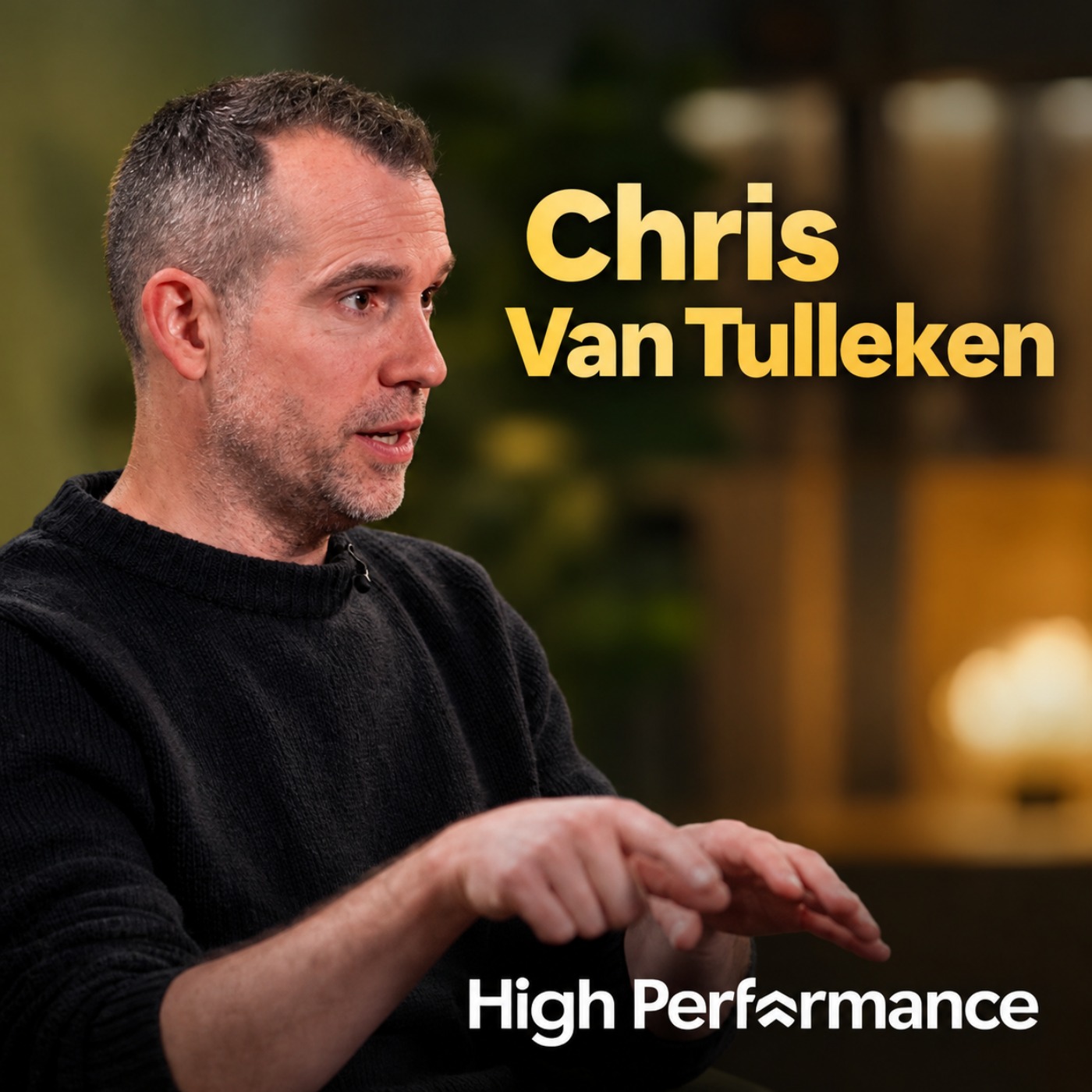
Ultra-processed food (UPF) and junk food are argued to harm physical and mental health, reduce “agency” (control), and be engineered for excess consumption. The episode compares food industry tactics to tobacco, claims regulation is weakened by industry influence, and proposes warning labels (octagons) plus conflict-free government advisory bodies.
Dr Chris van Tulleken, NHS doctor, associate professor at UCL, advisor to the World Health Organization, and author of Ultra Process People. Background example: he ran a UCL pilot study eating an 80% ultra-processed diet for a month; he reports irritability and conflict with colleagues/family, then improvement 48 hours after stopping.
UPF increases depression/anxiety risk (citing Harvard, Journal for Molecular Psychiatry, British Medical Journal). Food additives may disrupt gut mucus/microbiome (e.g., synthetic emulsifiers like polysorbate 80; modified starches like maltodextrins; xanthan gum). UPF is designed to bypass satiety via texture, salt/sugar, and A/B-tested formulations.
“food swamp” in Leicester (fast-food chains dominating access); “blue bowl” of junk in his kitchen; warning-label proposal using cereal brands (e.g., Kellogg’s Cocoa Pops) with black octagons; alleged industry-funded press events (Science Media Centre) and “buy my silence” contracts.
Written by AI. May contain mistakes.
Explore how ultra-processed food correlates with mental health issues and societal injustice.
“Whether I'm researching food or communicating about health, what I'm really trying to do is not deliver advice.”
Understand the misleading narrative that links ultra-processed food consumption to socioeconomic status.
“So I think a lot of the problems with the food are about a lack of agency.”
Learn about the concept of food swamps and how they affect access to healthy eating.
“And what's really important to say in all these discussions is for many people, this is the only affordable available food, right?”
Discuss the need for regulation in the food industry to protect public health.
“So on that Maslow's hierarchy, how can you learn if you can't, if you're going in cold or wet?”
Discuss the need for regulation in the food industry to protect public health.
“So the main focus of my academic work and my advocacy is trying to change the food environment and trying to essentially get a bit of regulation on these corporations.”
Learn how junk food contributes to metabolic diseases and addiction.
“But it's also got phosphoric acid and citric acid and flavorings and, you know, it has no nutritional benefit.”
Explore how food marketing and formulation lead to addiction-like behaviors.
“So the first thing is the kind of totality of the food.”
Understand how food choices impact mental well-being and emotional health.
“and the satiety signals between the brain and the gut that say, okay, you're done now, you can stop eating.”
Discover how food additives can harm gut microbiome and overall health.
“We are constantly, inside our bodies, we're constantly breaking ourselves down and rebuilding them, okay?”
Hear about a personal journey on an ultra-processed food diet and its effects.
“Okay, it's a slime, a bit like the slime.”
Examine how societal norms influence our relationship with food as a treat.
“It was a pilot study done with colleagues at UCL.”
Explore the book's aim to reduce shame around food and empower readers.
“It's because that's what society is telling us.”
Learn about the characteristics and impact of ultra-processed food on health.
“And they're suddenly like, wow, I, you know, ex-smokers are often like, did I ever do that?”
Uncover the systemic challenges and proposed changes in food regulation.
“There's a lot of sort of nutry nonsense where there's a huge amount of money to be made out of all this.”
Understand the personal and systemic pressures faced when critiquing the food industry.
“And I don't think that's, that shouldn't be controversial.”
Learn about the violent tactics used by the food industry against activists in South America.
“It feels violent to me getting a bit of abuse on social media.”
Explore the differences in food regulation approaches between South America and the UK.
“where the policymakers, the doctors, the scientists, and the charities start to go, oh, we probably shouldn't take money from companies that harm people.”
Discuss the connection between ultra-processed foods and eating disorders, and the need for balanced public health messaging.
“that doesn't want to wait 40 years before the environment shifts?”
Discover ways individuals can make informed food choices while navigating the challenges of the food industry.
“And I think my sort of axiom is you cannot solve a problem that you profit from creating.”
Reflect on the importance of personal agency and the value of information over advice in achieving high performance.
“Ready for a few quick questions to wrap up.”
Dr. Chris van Tulleken shares his perspective on the challenges of giving advice.
“Because advice in my context with the patients I see and this is true with my friends and my family, advice is really hard for people to follow.”
Chris discusses what high performance means to him, highlighting circumstances that shape individuals' lives.
“And he's asking for two changes, warning labels on the worst food and no food industry money on the government committee that advises us on what to eat.”
Hosts encourage listeners to watch the podcast on YouTube or access ad-free episodes.
“He just gives you the information and says, it's up to you to decide.”

Get the gist, explore an idea or ask about something said.
 Claude
On The High Performance Podcast, what are the key points of this episode?
Searching your listeningAutomatic transcript. May contain errors.
0:02We've reached the same threshold of understanding as we did with tobacco, that it's not merely associated. You know, we know that this food causes physical and mental health problems. The thing about the food companies is they're not just similar to tobacco companies, they were the tobacco companies. When the Government Scientific Advisory Committee on Nutrition has such close relationships with the food industry, it's little wonder we have light regulation. You cannot solve a problem that you profit from creating. Here's a question I want you to ask yourself next time you pick something up in the supermarket.
0:36Was this made by someone who loves you? Well, it kind of sounds simple, doesn't it? But ever since Damien and I sat down with Dr. Chris Van Tulleken, it's a question that I've realized you have to ask every time. So Chris is an NHS doctor, an associate professor at UCL, an advisor to the World Health Organization and the author of the best-selling book, Ultra Process People. Now, he once spent a month eating a diet that was 80 % ultra-processed food as part of a study with his colleagues at UCL. And what happened? He says everyone around him suddenly became unbearable. His colleagues, his wife, his kids.
1:07He found himself snapping at the people he loves the most. Then 48 hours after he stopped, the clouds parted. Now, just think about that for a second. How many of your bad moods, your short fuses, your difficult days, your I-just-can't-stop-eating-this moments might not actually be you at all? because the message at the heart of this conversation is if you struggle to put this food down, it's been designed that way. We're bringing this one back because it's changed the way that all of us on the team look and think about food. Welcome to High Performance, Dr. Chris Van Tulleken.
1:42Whether I'm researching food or communicating about health, what I'm really trying to do is not deliver advice. It's about trying to change the system so everyone really has the same opportunities that I did. You know, as a kid, I ate amazing food. I'd like the best diet you could possibly imagine. My mum edited cookbooks. The best cooks in the world would come to our house and cook us dinner. I mean, it was ridiculous. So I was given this incredible nutrition that probably accounts for two inches of height, okay? Probably accounts for 20 points of IQ. You know, opportunities that people in different households don't get.
2:18And that's terribly unjust. So the world is very, very violent towards some people. And it is a form of violence. It harms them psychologically, physically, socially, mentally. And the world shouldn't be that way. I still don't think, despite your incredible bestselling book, the range of interviews you've been on, the fact there is now finally a conversation about ultra-processed food, I still don't think that the true messages are getting through. And so we wanted to start this with some recent studies, a Harvard study that says, ultra-processed or junk food, especially sweeter food, may increase the risk of developing depression.
2:54I mean, that is a huge headline. The Journal for Molecular Psychiatry, junk food creates systematic inflammation, and you can explain what that is to us. The British Medical Journal, 48 to 53 % increased chance of developing anxiety if you have a junk food or UPF diet. And Dr. Amelia Lake, drinking energy drinks is linked to an increased risk of anxiety, stress, depression, suicidal thoughts, and psychological distress among children. Its consumption also showed an increased risk of poor academic performance, sleep problems, and unhealthy dietary habits. Amelia's work is incredible. She's been so important.
3:32The question that the food industry want everyone to ask about these studies is to go, well, yeah, it sounds worrying, but we have to remember that, you know, ultra-processed food is eaten by people who already live in disadvantage. They may have problems with gambling, homelessness. They may smoke too much. They may live in poverty. And so it's probably not the food. It's probably all that other stuff. And the food is merely associated with anxiety, depression, mental health problems. And clearly, the project of the team at Harvard, what they're very skillful about is going, is this an association or is there a cause?
4:10And we now have a very, very big body of data. In fact, I would say that we've reached the same threshold of understanding as we did with tobacco, that it's not merely associated. You know, we know that this food causes physical and mental health problems. When it comes to mental health, the disentangling it is really complicated. So we now have, you've listed a few studies, what we now have when it comes to ultra-processed food, but it's bigger if we look at things like high fat, salt, sugar food, or, you know, different ways of defining junk food. We've got meta-analyses. So we've got analyses of analyses that show there's an association between these negative health outcomes and ultra-processed food.
4:54I think the question to ask about this is to say, is it plausible that eating a diet made of molecules that, some of which are entirely synthetic, don't exist naturally on earth, Eating a diet made of formulations that you've never encountered in your evolutionary past. And eating a diet which has been deliberately designed to drive excess consumption. And I know this because I've spoken to dozens of food industry scientists who will say this. Is it plausible that that food would not cause mental health problems? That it wouldn't cause you to feel that you're out of control? So I think a lot of the problems with the food are about a lack of agency.
5:35I mean, you know from so many of the people you've spoken to that one of the most important things you have to have in life if you're going to feel good is agency, is control, is direction. If there's a goal over there, you can actually put together the steps to get toward it. And there are certain things in all of our lives that interrupt agency. There are things that we don't control. And anyone who's got any addiction of any sort knows whether it's alcohol, tobacco, gambling, or food, and food addiction is very real, that that strips away agency from you. And you don't have to have a formal addiction for that to be true.
6:07So, you know, my kids, we had until recently in our kitchen a big blue bowl of junk. And I would show it to journalists as a way of proving that, you know, I'm sort of man of the people, my kids eat this food too. But it being in the kitchen, it was up on a shelf. The kids were constantly drawn toward it. It was this distraction. They wanted the stuff from it constantly and they had a lot of it. And it stripped away a bit of control from their lives. It was eating away at them. And when we got rid of it, actually, everything became easier at dinner times. They weren't nagging us for the food. And I think the food environment is a bit like the blue bowl in my kitchen.
6:44We are surrounded. From the second you get up in the morning in your houses, everything is selling us food that's designed to reduce our agency and make us buy it and consume it. See, before the book came out, Chris, we were lucky enough to speak to you and hear you present the research you were doing. You used the phrase that I went back and repeated to my wife, which was, you said, we're living in a swamp, and the best thing we can do is just try and get our head out of the swamp water. Would you explain a bit more about what you meant by that? So this, people are familiar maybe with the idea of a food desert.
7:20And these are more common in America where, if you don't own a car around you, the places you can walk to, you will not be able to buy real food. You won't be able to buy like a banana or a pint of milk or a piece of raw meat that you can cook. There will only be fast food and packaged ultra-processed food. In the UK, we have food swamps. So I went with a group of young food activists to Leicester. And if you stand at the clock tower in Leicester, I want to be careful I get this right, you can see two Greggs and there's like a third just around the corner. And you can see every single major fast food chain that you can think of.
7:55Burger King's there, McDonald's is there, KFC's there. There's also a supermarket where you can go and buy a banana and an apple. But that food is in a swamp in the sense it's submerged in the swamp of ultra-processed and junk high-fat salt sugar food. So the hard thing is accessing it. And what's really important to say in all these discussions is for many people, this is the only affordable available food, right? Ultra-processed food, part of the reason it's so popular is it's cheap, it's addictive, it's convenient, it's affordable, and it's available. and if you don't own a stovetop cooker or a deep freeze, you can't batch cook.
8:30If you don't own expensive Japanese knives and lovely wooden cutting board and a load of pots and pans, it's actually really hard to cook real food. It's cheap for me to cook real food because I can batch cook it all, I own Tupperware, I've got a deep freeze. You don't have to be really wealthy to be able to cook real food, but for millions of people, increasingly at the moment globally, it is out of reach.
8:56This message is brought to you by Apple Card. Ah, fall. That cozy season where we swap the swimwear for sweaters and sunnies for scarves. But before the Halloween decorations are put away or Thanksgiving table has been set, there's already holly jolly music playing in the grocery store, reminding you that the year is coming to a close. Time to kick end of year into high gear. When you use Apple Card with Apple Pay, you earn 2 % daily cash back on all purchases, including food, decorations, gifts, and more. Get a head start on your end of year purchases. Apply for your Apple Card in the Wallet app on your iPhone today and start using it right away with Apple Pay.
9:28Subject to credit approval, Apple Card is issued by Goldman Sachs Bank, USA, Salt Lake City Branch, terms and more at applecard.com. Mr. Monopoly here. Miss me? Monopoly is back at McDonald's with millions of prizes. A 2027 cheap charity, a Carnival Cruise vacation, gift cards from DoorDash, and Best Buy. He'll then play in the McDonald's app. Get your bag. No purchase necessary. 50 US and DC age 18 plus. See play at mcd.com for rules and play at mcd.com slash AMOE for info and playing without purchase by mail by November 2nd. Chance card game ends November 8th. Game ends November 22nd, 2026. See rules for prize details.
10:02Monopoly is a registered trademark of Hasbro. What if the real question isn't where you're going, but the adventures you experience along the way? It's time to set your sights higher. On peaks still to be climbed, rivers still to be crossed, and greater dreams to pursue. It's time to embrace the impossible with Defender. A family of vehicles built around capability, durability, tested on some of the most difficult terrain, Defender defines tough luxury. And I should know, I've driven one for the past three years. I have the Defender 130, but from the compact confidence of the Defender 90 to the versatility of the 110, through to mine, the Defender 130, with seating for up to eight, there's endless potential.
10:41You feel in the details as well, the rugged body design, the robust materials, all working together so you can head out with confidence. And inside, ClearSight technology helps you see the world around you in a new way, while the PV Pro keeps your navigation routes and playlists flowing seamlessly as you go. And with up to 89 cubic feet of cargo space, there's room for everything you need on your journey. Explore the full Defender lineup at LandRoverUSA.com.
11:06So I run a charity in Manchester which equips kids that go to school without a school coat, and it just gives them a coat. So on that Maslow's hierarchy, how can you learn if you can't, if you're going in cold or wet? And I also think the same thing is about how can you go and learn if you're hungry? But the shadow work of the poor means that often it's difficult to go and access this. So they're in the swamp and feel they're drowning. And I'm interested in what you've learned about how people can get their head out and breathe the fresh air. So there are two answers. I mean, I want to give people watching and listening to this a bit of hope.
11:48There are things that individuals can do. But we also need to change the system. Essentially, at the moment, the food environment, so we know there's some hard facts. Poor diet has overtaken tobacco as the leading cause of early death globally, right? That's not just a sensational stat for a podcast that I'm making up. This is global health observatory data. This is World Health Organization data. The WHO say it's about equal, actually. This is a huge problem. Everything we consume, so particularly children who are kind of the most vulnerable, because all children, even children from relatively middle class and affluent households, are poor.
12:24Children don't have money. So they get their Spotify, they get their YouTube, they get all their apps and games. the way those things are made accessible to them is they're sponsored, and they're mainly sponsored by companies that sell harmful food. So there is this sort of 360-degree control. So the main focus of my academic work and my advocacy is trying to change the food environment and trying to essentially get a bit of regulation on these corporations. The thing about the food companies is they're not just similar to tobacco companies in terms of their incentives. They were the tobacco companies.
12:58So in the mid-1980s, Philip Morris and R.J. Reynolds, two biggest tobacco companies in the world, bought Nabisco, General Foods and Kraft. And they took all their flavour molecules from the labs and they took all their marketing techniques and they used it to create the diet that we now eat, that grew in the States and that we now consume in the UK. So that these foods are somewhat addictive and marketed in this very aggressive way with loyalty campaigns very directly to kids, it's not very surprising. it all came from the tobacco industry. So we need to kind of deeply understand that. And when we look at tobacco control, we need to take those lessons and say, yeah, the food is addictive.
13:36It is essentially unregulated. And we need to have some regulations that mean that my six-year-old can't walk into any shop with her pocket money and buy any old thing she wants, and there's not even a warning on it. I mean, if you think of a can of cola, you don't have to believe the evidence on ultra-processed food to agree that that's harmful, right? So a can of cola is a mixture of sugar, which everyone agrees will destroy teeth, create inflammation, drive weight gain, and cause metabolic disease. That's indisputable. But it's also got phosphoric acid and citric acid and flavorings and, you know, it has no nutritional benefit.
14:10There is no warning on a can of Coke in the UK. It's wild. How has this happened? It's got caffeine, an addictive drug, and the energy drinks, you know, Amelia Lakes work, the energy drinks are even worse. It's not proposing anything too wild that we should start to regulate this industry. If you buy a pack of cigarettes now in the UK, you pay the tax on it, it's got a warning label, it's in a plain pack, behind a counter, you sort of know what you're getting into. We have anti-smoking campaigns. I want that situation with food. I don't want to limit anyone's choice. I don't want to ban food. What we want to do is create choice and opportunity and drive down the price of real food.
14:47And obviously we do that through knowledge, right? So people have their eyes wide open when they eat certain things. So would you explain to me why, and you had a 30-day junk food diet, didn't you, how that affects our brains? So in terms of the mechanisms, we could point at a number of very plausible ways that we think this food drives harm. So the first thing is the kind of totality of the food. Every single product has thousands of properties. It's got softness, texture, smoothness, fattiness. It's got a colour. It's got smell. It's in a particular package. It's got an advertising jingle. Every single one of those properties has been optimised over decades in some cases.
15:28You know, the cereals we ate as kids, our kids are eating. And in my case, my dad used to eat the same cereals that my kids now eat. These are 60-year-old cereals. All of them have been optimised to drive excess consumption. So that's how the food is made addictive. How have they done that? Partly by A-B testing. So we get, forgive me, Damien, but we get A version of the breakfast cereal and B version of the breakfast cereal. We feed them to 100 people. And the two things that are measured, two of the most important things that the companies measure, how much do you eat and how quickly do you eat it?
16:01And if product A is the one that you eat quickest, that goes on the shelf. Now, next year, we reformulate it, A versus C, add a bit more sugar, slightly cheaper emulsifier. Can we drive down the price of the ingredients whilst making the food more palatable? And we don't care whether you enjoy the food. We just care how much did you eat and how quickly did you eat it? Because one of the best evidence things about food is it's soft food that's high energy, that drives addiction, and that bypasses our evolved mechanisms that say we're full. When you eat real food, particularly kids, Essentially, if kids eat traditional human food, meat, cheese, eggs, milk, vegetables, fruit, they really maintain a healthy weight.
16:46Very, very few kids will live with excess weight. Okay? And that's because they have an internal mechanism that says, I'm done, I'm full. We all have this mechanism. Ultraprocess food has been engineered to get around those satiety hormones and the satiety signals between the brain and the gut that say, okay, you're done now, you can stop eating. And loads of us will have the experience. You'll be eating, you know, crisp soda pop. You know, you'll have ordered an ultra-processed takeaway. You'll be eating a burger and chips from a high street chain. And you won't really, you won't be enjoying it.
17:20So it's a bit like cigarettes in that sense. You're not loving it, but despite the jingles, get the lawyers to look at that. And yet, you will just keep doing it. Once you pop, you can't stop. And so the companies, the companies are really aware they're doing this, right? We have a breakfast cereal called Crave. We have jingles like, once you pop, you can't stop. All of the mascots of the breakfast cereal are addicted to the cereals, if you think about it. Some of them are like destroying houses to get to the cereals. So are people actually addicted to this stuff? So that's been a matter of some controversy.
17:52I think, you know, addiction is very straightforward. If you want to know if you're addicted to something, you ask, I mean, Demi, you understand this extremely well. Do you have a relationship with it where you know it's doing you physical, mental, psychological, social harm. You're trying to stop consuming the substance, and yet you find yourself consuming it anyway. That's the basic definition of addiction. We can refine it and ask more questions. There are more detailed questions there, but that's how we discover it. We don't put people in a scanner or do a blood test. We just ask them questions.
18:22And so people who live with alcohol addiction find they are not in control of their alcohol intake. They want to stop. They know it's harming them, and they can't. Go and speak to people who live with food addiction, and I would say I am on that spectrum toward the addicted end and they find it impossible to stop. I have many patients who live with enormously excess weight. They live with metabolic disease. Some of them have had amputations for type 2 diabetes and yet they're unable to stop eating the food. So the evidence, and this is research coming out of Yale, Princeton, Oxford. This is not weird niche science.
18:59Really important to remember, the food is often compared to cocaine, tobacco, and alcohol. Now, and that seems extreme. If we give 100 people cocaine, tobacco, or alcohol, only around 10 out of 100 will develop a problem relationship. Loads of people try those drugs and they're fine. Loads of people can have one beer on a Friday night, never think about beer on a Monday morning. Food is the same. It's about 10 % to 15 % of people that once they try the food, they can't stop using it or they struggle to stop. and always the products seem to be ultra-processed products. No one is addicted to their mum's pasta bake.
19:35So I understand all of this, I think. I still don't really understand the link between the mental health. So when we get to, so that's one, there's the addiction stuff, which is one way it just damages your mental health. Remember when we eat food, okay, it's not just energy. We are constantly, inside our bodies, we're constantly breaking ourselves down and rebuilding them, okay? We do it less as we get older, but kids particularly are constructing their bodies from food. So it's doing these two things. Now, if you start eating molecules that don't really exist in nature, but are very similar to the molecules in your body, you start building your body from these molecules.
20:12So when you're food, there are certain additives that are particularly concerning. Now, some of this research is from animals. I want to be really clear about that. But when we get animal data about food additives that we don't need, it seems really important to me that we go, well, if the additives aren't necessary, we should pay attention to that animal research and probably not put them in the food. We should be precautionary. So if we look at the emulsifiers, synthetic emulsifiers are probably one of the best studied examples. So these are in everything. Emulsifiers are molecules that bind oil and water together.
20:46So when you make a salad dressing or a mayonnaise, the egg is an emulsifier, the mustard is an emulsifier. and you can thicken a gravy with flour. It acts as emulsifier. So those are all fine. We eat them as part of our diet. Our body's full of emulsifiers. But our food is now full of very chemically modified emulsifiers or synthetic ones that thicken our dressings, stick the flavours to breakfast cereals, keep food smooth, or they just replace eggs. So if you're a food company, using eggs is insane. Like, don't use eggs. They're really expensive. They might have bacteria in them. They're very hard to handle at different temperatures.
21:23They go off. Just use polysorbate 80 or carboxymethylcellulose. They are like chemical compounds. Yeah, they're chemicals that bind fat to water. They create smooth... Are they made of food? Some of them are derived from animal fats or plant fats, but they're very chemically modified. Some of them are nearly entirely synthetic, so they're just laboratory chemicals. So we've got natural emulsifiers in food. We've got synthetic emulsifiers in food. But the other set of emulsifiers we all know about is soap, right? Soap binds water to fat. So if you hadn't got greasy hands, you wash the fat down.
21:55You scrub a dish, you get the butter off the dish. The emulsifiers in our food seem to be acting a bit like detergents in our gut. So they're scrubbing out the gut. In rats and in some human studies, we can show they thin the protective mucus. So all the way from your mouth to your bottom, your gut is coated in a layer of mucus that is a barrier. It's really, really important. It's full of antibodies. It seals your body and it's protective. When that mucous layer gets thinned, we get leakage of bacteria into bloodstream, we get inflammation. And when your gut's inflamed, your whole body's inflamed.
22:28So the emulsifiers are very worrying. The non-nutritive sweeteners, even the naturally occurring ones seem to be doing similar things. And then we've got all these modified starches, maltodextrins, carboxymethyl cellulose, and the gums. And they also seem to interfere in slightly different ways with the bugs in our gut. So xanthan gum is a very common ingredient. It's a bacterial exudate. Okay, it's a slime, a bit like the slime. You know when you clean the filter out of your dishwasher and it's slimy? That's a bacterial slime. It's a biofilm. Xanthan gum's a bit like that. So it's used by the oil drilling industry to thicken mud, to extract oil, and it's used by the food industry to thicken breads and pastes.
23:07It's in everything. Now, is it poisonous? No. It's safe in a sense. It doesn't directly harm you. It does seem to promote the growth of bacteria in the gut that you don't find in populations who don't eat xanthan gum. Do we understand if these bacteria are harmful? No. Is it really safe and sensible to start messing around with your microbiome, eating things that you don't normally eat? I would suggest not. The ticklish thing about xanthan gum is it is quite important for patients with celiac disease who can't eat gluten. So I do want to say, I don't want everyone panicking about xanthan gum, but it's just one of a set of these compounds that mess around with our microbiome.
23:44Now we know the microbiome, what it does is when we eat fiber, one of the things it does, you eat fiber, you can't digest fiber, but the bugs in your gut, in your colon can. They take the fiber, they eat it and they produce these short chain fatty acids. And the short chain fatty acids are little molecules and they smell great, it's what makes silage smell great. But they go around your bloodstream and they're really important food for your brain and your heart and your immune system. And the biggest part of your immune system is these bugs in your gut. So when it comes to maintaining the health of your whole body, keeping the bugs in your gut healthy and feeding them the food that they need, real fiber from fruit and vegetables, is just so important.
24:25So the effects of the additives, the sugars, and the odd fats on the microbiome seem really, really important. And we know that the microbiome affects our behavior, affects our mood, our emotions. So we've got the effects on the bugs in the gut. We've got a lack of control. But then we've got the effects of the food as a whole on our whole body. So I did this diet, not just for the book. It was a pilot study done with colleagues at UCL. So we were doing it really formally. We were collecting all this data. And I went on this 80 % ultra-processed food diet for a month. And what I noticed is for that month, what was really weird is all my colleagues at work and my family and my kids, my wife, became unbearable.
25:07They chose that month to start annoying me and kicking off. And I just found myself screaming at everyone. I couldn't understand, like, why did everyone pick this month? As soon as, of course, I stopped the diet, everyone stopped being annoying. I was like, maybe it was the food. But it's really hard in life. And I think we've got loads of psychology understanding of this. When we're inflamed, exhausted, we don't locate the problem necessarily with the food we ate two days ago. We locate the problem with you. You're sitting there. You're annoying me. So I found myself kind of screaming at my kids.
25:39But when I stopped eating the diet, it was 48 hours later, the clouds parted, the sun came out, and I was like, I'm so sorry. I've just been unbearable. In addiction therapy, they often talk about the acronym of HALT. If you're hungry, angry, lonely, or tired, you're likely to regress. So one thing I found eating the diet is this food is incredibly salty. It's incredibly sugary. So you have a big meat and you overeat it. So for dinner, you'll have your microwave pizza and cover it in sauce. You've eaten so much salt that you're thirsty. So you drink loads of water. Then as I'm 45, I get up in the middle of the night, I've got to pee three times.
26:17I can't get back to sleep. I'm exhausted once I'm up. And then I find myself at the fridge eating more of the food. So I'm tired. I'm also constipated. So we don't want to get in too much detail. but the saltiness, the food lacks fiber. So you get constipated. So you've got these bum problems, you get piles, you get anal fissures. So your bum hurts, you're exhausted. All of this is driving hungry, angry, lonely. In the middle of the night, it's a lonely period of time. So you eat more food because you've got high levels of cortisol driving you to eat more junk. So the food often feels like the solution to the problem, just like a big glass of booze or a cigarette or doom-scrolling social media, they often feel like the solution to the immediate pain of the lives that we're in.
27:05And what's really hard, Joe Wicks is really good at this. He's like, you've got to treat yourself to not doing that stuff. It's quite a nice inversion. We're sold something that's a treat that's actually an addiction or a quasi-addiction. But no, I think that's right. The food helps to create the vulnerabilities that drive both food addiction and then vulnerabilities. So you're You're often eating bad food, engaging with addictive social media, whilst consuming alcohol. The things, that all goes as a package. I think we have to be really kind to people. I think you are, actually, the way that you talk about this.
27:43Because, you know, my son plays football. And when they win, you hear other parents go, brilliant game, come on, let's get a treat. Let's go to McDonald's. You've done brilliant in your exams. Come on, let's have a treat. Let's go to the shop and get you a bag of sweets. but that's not because we're born thinking sweets and junk food and fast food and ultra-processed food is a treat. It's because that's what society is telling us. Well, that's what the food industry is telling you. So one of the, I hope, I hope the book doesn't drive shame and stigma. The number one goal of the book is to reduce the terrible shame that we all feel around food, diet, our bodies.
28:20You know, 60, 70 % of the UK population lives with overweight and hates it. So I'm trying to take some of that shame that people are very good at heaping on themselves and go, no, no, no, heap it on the companies. Heap it on the politicians who take the money from the companies, on the doctors, on the scientists who are helping the companies avoid regulation. But the other thing is the book doesn't have any advice, I think. There's an invitation at the beginning instead to actually do what I do, which is eat the food, right? You're surrounded by this food. Like, you can't control this. This food, I mean, the scientists I was speaking to at the companies, right?
28:58These are men and women with PhDs who dedicate their entire lives with almost unlimited budgets to making food that you can't stop eating, right? You're somewhat powerless. So my proposal is really eat the food. Like, get it out of the packet. Read the ingredients list, yeah? You can read my book. If you can't afford my book, you can listen to the podcast or you can read the free articles in the press about ultra-processed food and ask yourself, you know, is this really food? And often we know that addiction and disgust sit quite close to each other in the brain. So I was given this gift midway through the diet.
29:33In the book, I was speaking to this scientist in Brazil who's a friend and colleague. She's called Fernanda Rauba. And every time I mentioned the food, she'd go, it's not food. And I'd be like, yeah, okay, Fernanda. And we'd keep talking. She'd go, no, no, it's not food. It's not food. It's an industrially produced edible substance. it's designed to take your health and turn it into money for institutional investors it is not food food is about love and community and health and family and this isn't food and i sat down that evening in the book it's a turkey twizzler but in in reality it was kfc you know when you write books you've got to shuffle things around so they make sense in order it was kfc hot wings and i could not eat them and she just flicked that switch where it was it was like falling out of love where I, you know, people have this experience with, with people and with other stuff they're addicted to.
30:22And they're suddenly like, wow, I, you know, ex-smokers are often like, did I ever do that? And so ever since then, I, I sort of really don't want the food. And that, that is the kind of gift I'm trying to give to the reader. I'm also cautious. I'm not selling anyone a lifestyle, right? I don't, I don't have an app or a platform or a subscription service where you can join my weight loss, UPF-free life. What is this about then for you? The book is trying to create a grassroots movement that empowers the reader who feels addicted to the food or like they're struggling. It gives you a tool where hopefully just eat along, learn about the food, and it may become disgusting to you.
31:04I don't guarantee it, but lots of people have found that. So I have two big goals, right? The first thing is warning labels on food. Okay, can I show you? so we can put this up on the screen but um so at the moment if you look at a pack of kellogg's cocoa pops or uh almost any breakfast cereal it's covered in health claims right there are 12 health claims on a box of cocoa pops all right now whether you worry about fat salt and sugar or you call it ultra processed it's not a healthy way of beginning the day it should have big black octagons on it warning about excess salt and sugar if food has octagons right can't have health claims, can't have a monkey on the box.
31:45So Kit Kat, Nestle's Kit Kat cereal, will get three warning octagons. What other warnings? Sugars, saturated fat, salt. And in Mexico, food can have up to five warning octagons and two black boxes. So it has warnings for calories, non-nutritive sweeteners, sugars, saturated fat, fat, and then caffeine and colorings. Okay, so lots and lots of warnings. And what this means is it gives people choice. You know, there's frubes, okay, calcium, vitamin D, good stuff inside. There's a cartoon character. Yeah, this has, according to our agreed national guidance that's 30 years old, really high levels of sugar and salt.
32:25So people need information, and all the octagon warning labels do is give you information. They don't restrict your freedom, but they stop companies being able to kind of lie to you. So once you've got octagons on food, then it's quite easy to go, well, we can't sell octagon food to kids. The worst octagon food we could tax. You know, Kit Kat breakfast cereal really should have a tax on it. You know, it should be at a higher price point. But we've got to be very careful about things like that. So one of the unique features of ultra, you know, people are very obsessed with what does the maltodextrin do or the synthetic emulsifiers?
33:00The only food that is advertised almost with, I think really without exception, is ultra processed food, okay? And we know we've got great studies done by Emma Boyland, who would be an amazing person for you to speak to, proving that advertising drives increased consumption. So you don't even have to make the food particularly tasty. You just have to put a cartoon character in a fancy jingle in the ad, and kids want to eat it.
33:30This message is brought to you by Apple Card. Ah, fall. That cozy season where we swap the swimwear for sweaters and sunnies for scarves. But before the Halloween decorations are put away or Thanksgiving table has been set, there's already holly jolly music playing in the grocery store, reminding you that the year is coming to a close. Time to kick end of year into high gear. When you use Apple Card with Apple Pay, you earn 2 % daily cash back on all purchases, including food, decorations, gifts, and more. Get a head start on your end of year purchases. Apply for your Apple Card in the Wallet app on your iPhone today and start using it right away with Apple Pay.
34:03Subject to credit approval, Apple Card is issued by Goldman Sachs Bank USA, Salt Lake City Branch, terms and more at applecard.com.
34:15I'm interested in terms of what you're trying to bring around in systemic change. Like, where are we? So I'm trying to sit in a place. There's a lot of sort of nutry nonsense where there's a huge amount of money to be made out of all this. and I'm trying to sit in a place as a credible academic. I take no money from the food industry, although they're trying to shower me with money. Have they? And so the kind of journey of the book was it was published and we had this sort of brilliant golden period of a few months where I was just, because ultra-processed food resonated with people, right? People feel gaslit by the food system.
34:54And they're like, I haven't, what is all this? And then ultra-processed food, it's just terribly clear. It's like, okay, it's just stuff with weird ingredients makes me gain weight. Yeah, that makes sense to people. So the book sort of met a very, you know, there was very fertile ground for it. And then the food industry got their act together. And two things kind of simultaneously happened is there was a press conference in September last year where all of these headlines suddenly appeared going, ultra-processed food can be good for you, say UK health officials. Scientists agree that ultra-processed food can be healthy.
35:25So these were reported. It was a new scientist magazine. There was a big piece. And it really sounded like the government had issued a declaration saying UPF was fine. In fact, the press conference, there were five scientists that spoke. And only The Guardian reported that four of them had financial relationships with the food industry. One of them had been the senior scientist at Nestle for many years. These weren't people who were like given a few quid. These were like food industry employees, some of them. And the conference wasn't held by the UK government. It was held by something called the Science Media Centre.
35:59Now, this is a press clearinghouse. And the Science Media Centre is funded by Nestle, Procter & Gamble, who make Pringles, and Food Drink Europe, which is funded by Coca-Cola and lots of other... So we've got a food industry-funded press conference with food industry-funded scientists speaking at it. And it then took a few days for the British Medical Journal, and I sort of worked with them to do an investigation about how will this work and how will this worked and published it. Now, some of the scientists at the press conference and who work with the Science Media Centre also work for the leading food charity in the UK, which is called the British Nutrition Foundation.
36:36Sounds very official, full of professors, advisory professors, big, big advisory board. So they're majority funded by ultra-parasite food companies, including McDonald's, all the major supermarkets, Coca-Cola. How is that allowed then? The British nutrition, well, I mean, that's an amazing question. It's like, well, it's just allowed. Their healthy eating week last year was sponsored by Coca-Cola. Now, even if you don't believe the evidence around ultra-processed food, I think we can all agree that Coca-Cola do not have a healthy product portfolio by any definition, okay? So we've got the charities, we've got the Science Media Centre, We've got academic research departments funded by Pepsi, Mars.
37:21And then kind of most troublingly, we've got the Scientific Advisory Committee on Nutrition. So this is the government committee. It's got 14 members and around half of them have relationships with companies like and including Coca-Cola. So when the government Scientific Advisory Committee on Nutrition has such close relationships with the food industry, it's little wonder we have light regulation. So my two asks are octagon warning labels on food and that the government committee should not have financial relationships with the food industry. The government committee on tobacco doesn't have relationships with the cigarette industry.
37:57Those are my two asks. The government advisory committee needs to be conflict-free. And I don't think that's, that shouldn't be controversial. And this is a really interesting point, is that everyone has morals until a large check is waived in front of them. So this is the other really incredible thing that happened. So there's this press conference. And a few people mentioned me at the press conference as kind of, I think one of them said he's, you know, he's a, they'll say like he's a children's television presenter, which is true. I'm very proud of presenting children's television. I'm also an associate professor at UCL.
38:27And I, you know, have a research group. I've got PhD students. You know, I'm an NHS doctor. Like, am I the most esteemed academic in the world? Absolutely not. But I'm, you know, I'm a respectable person. I'm a WHO advisor. So meanwhile, the food industry, so they pay all these people to introduce me and then they offer me loads and loads of money. So to speak to a supermarket for a couple of hours, you know, 20 grand. And these are offers coming in every week. There's, you know, 20, 30 grand. So the best one was, can I read this out? Yeah, I've got this. This was my favorite one. I haven't shown anyone this, so this is kind of a world exclusive.
39:06I'm so proud of this. So this is from the Senior Director of Menu Innovation at Global McDonald's. And they asked me, hello, I'm a newly appointed Senior Director for McDonald's Global Menu Innovation. I'm interested in understanding whether Chris Van Tilken carries out speaking engagements. So we're pulling together a nutrition workshop in October at our headquarters in Chicago. But we also want to combine a speaking engagement with our senior leadership team and stakeholders. So I get to speak to the board. I'm keen for an inspirational, thought-provoking, yet realistic ambassador on food and nutrition.
39:43So McDonald's are like, so I was, this is amazing. So I said, look, I really can't take money from McDonald's. I haven't taken any of this money, by the way. I said, I can't take any of this money, but I will go ahead. But you'd love to talk to the board. Oh my, exactly. It's just fascinating. I'd love a little trip to Chicago, a little break. But that's a chance as well for you to speak to the people that are making. Right, exactly. I'll pay for my own flight. It won't cost you a penny. And the opportunity just went away. They said, oh, no, no, don't worry. We changed our mind. We'll be back in touch.
40:11They want to pay me. With the supermarkets, I was like, why are all these food companies offering me money? Because the truth is, the best stuff in my book is from food company insiders. There is some science about the food that the academics know. The people who know the most of the companies. So I couldn't understand why they want to speak to me. The contract arrived from one of the big supermarkets and buried in the middle of these five pages of legal text. And I don't have some team of lawyers to read all this, right? It's this line that says, in exchange for this money, I will not ever say anything that damages the reputation of this company or their products or their customers.
40:47So for an afternoon's work and a few thousand pounds, they buy my silence contractually. And they create a thing where if I were to ever speak out, if I took the money from one of these big food companies and then I started critiquing them, they go, well, didn't mind taking our money, did you? So it also reduces my credibility. So it's one of the big challenges has been trying to say no to all the money. But I'm surrounded by kind of, you know, my wife's a very principled person. But that to me sounds like you've moved them from stage one of ridicule to now the violent stage of let's actually go after it.
41:22Yeah, it's fun laughing about it. And it was nice writing the extra chapters for the paper book because it was quite cathartic. But it's been incredibly stressful because on social media, which isn't always the friendliest place anyway, after everything I post, there are food company scientists who you don't know. They just seem like professors of nutrition at legitimate departments at good universities. What's really uncomfortable for me is to have to go, look, I know this person's criticizing me. All of their research is funded by Pepsi and Mars. Like, I just don't want to do that. And I don't like making things personal.
41:53So it's actually been quite unpleasant and stressful. I mean, my colleagues in South America have been talking about violence. It feels violent to me getting a bit of abuse on social media. They've been threatened with physical violence. You know, their cars have been stopped at traffic lights and the windows smashed. And, you know, people in South America, where they've brought in the octagons to get that done, the food industry really went to town on the activists and threatened their lives and, you know, and would call them up in the middle of the night and threaten to destroy them. So that was true violence.
42:25So from a systemic point of view, like where was the resilience in that example in Chile, for example, that gave the government or the decision makers the resolve to see it through and actually go through with the octagon idea? So that's such a profound question. And I think the reason it's happened in South America is after the North American Free Trade Agreement, where the sort of barriers in trade were removed, there was this sudden influx of American food. And so a colleague of mine at Cambridge, Yanaina Chavez-Ugalde, and she's an academic there, but she worked for the food industry previously.
42:59She grew up in Mexico. And she said in her village, it went from obesity being unknown. I mean, just no one lived with obesity to suddenly everyone knew someone who'd had an amputation for type 2 diabetes in about two decades. And everyone could see there was these new products that everyone felt addicted to. And it was really the most harmful food. It was the soft drinks and the biscuits and the cakes and things. So in South America, it was very easy to suddenly go, it's that, and that's what we need to regulate. And there was this massive grassroots movement. So it gave the politicians a mandate.
43:34In the UK, it's been this trickle where this is our food culture and the food that we feel quite loyal to, the stuff that we ate as kids, so how bad can it be? That's the stuff we need to regulate. So we've got to be very careful about when it comes to putting warning labels on food, you can't just slap them all over everything in the supermarket. We're going to need a very technical way of doing this and to do it in an organized way so you don't lose suddenly all that food over there it all gets an octagon people like well this is just rubbish isn't it i'm going to keep eating it so we we need we need to to be building the population support at the same time as saying to the politicians you know don't believe the food industry but to to me the place to start what we did with the tobacco industry is we made the industry money dirty and it's a cultural change where the policymakers, the doctors, the scientists, and the charities start to go, oh, we probably shouldn't take money from companies that harm people.
44:31I mean, that kill people. This is where I'm at the bit where people sometimes go, you're a bit of a lunacy. If you start saying, well, the food companies are killing people, I mean, they are honestly driving early death in a really unpleasant way, and they know they're doing it. But that still feels quite transgressive to say that, doesn't it? Sort of point at the companies that service all the food we love and go, you're killing people. But that's the truth of it. So it's getting everyone to a stage where they're like, oh, we should stop taking the money. Lawsuits also, we're going to, I mean, there are teams of lawyers in the States where these things happen a bit more readily who are just like, just rubbing their hands, going this, we've got so much evidence now.
45:11We're going to start seeing class action lawsuits, just like we did with tobacco, where they're going to say, what's going to happen is the States are going to say, you've caused so much of a budget increase for the healthcare bill, we're going to sue you for that. So we're going to sue you all. And that's what happened with tobacco. Wow. And can you see that in the next decade? I don't know. Am I a mocked? I mean, tobacco, remember, everyone was sure about tobacco in the late 50s. Proper regulation. When did it come off the Formula One cars? Late 90s, early 2000s. It's like, you know, and it's…
45:44Took 50 years, probably. 50, and the proper stuff where it's in a plane pack behind the counter, which we don't need to do with food, I want to be clear. It took 60 years, basically. Now, I think food will happen quicker because I think people understand the links between food and tobacco. I think people feel addicted. And you can have industry scientists say, it's not addicted, that's absurd. But I think the lived experience of so many people is, I am addicted and I want it taken away from me. And I think people do feel like that about addictive substances. So, again, I'm listening to it and I feel a mixture of optimism and frustration.
46:22So when I heard you launch the book, I remember coming home to my wife and recounting what I'd heard. And we were both like, yes, we recognize it, but the frustration of what can we do about it? We've got two children. How can we educate them better? So have you got any top tips for anyone listening to this that doesn't want to wait 40 years before the environment shifts? I live with my mother-in-law, who is an incredible woman. She's a PhD in psychology and she's also a psychoanalyst. She spent years as a therapist. And her kind of strapline is advice is an uneasy commodity. And she's so big on do not give anyone, she won't give me advice.
47:03But she's happy with information and it's had a huge impact on kind of what I do as a clinician. So I feel that not forbidding things, not restricting freedoms and creating choice and opportunity as the sort of framework within which we're working. So there are going to be lots of families who, once they're empowered with knowledge, can start to get this food out of the house if that's what they want to do, even before it's labeled. And who can make some simple switches? You know, you can switch from the worst breakfast cereals to better ones or to porridge or to fruit and nuts and things. But some people are just going to feel angry.
47:40And I think that's useful. And it's taking you have to take that anger. and I'm trying to be part of a coalition of charities that we're going to take that anger and send it in the right place. Because at the moment, it's so easy for someone to pick up my book and just feel angry at themselves for being unable to resist the food. And I think we have to take it and direct it toward policy and activism. So that's what I'm trying to do. And that's a knife edge, isn't it? How comfortable am I making everyone anxious and angry? and I haven't squared that circle. A big concern has been eating disorders.
48:19If we demonise food, do we create eating disorders? So this is the work I'm doing with the Royal College of Psychiatrists Eating Disorders faculty, and they've published early data that the only food that people seem to really struggle with with binge eating disorder is ultra-processed food. So it's not a massive leap of logic to go, is food that's engineered to fiddle around with our brains, could that be driving some eating disorders? So it's always this balance. And it's been true with smoking, with all public health campaigns. What stigma do we risk tolerating in order to be able to truthfully discuss harms?
48:55And there is no perfect solution. The only thing you can do is separate yourself from the money that causes the problem. And I think my sort of axiom is you cannot solve a problem that you profit from creating. And that needs to be for the charities, the policymakers, and it's true for me. If I want to try and solve the food system, or I work on tobacco and alcohol as well, if you want to solve those things, you cannot take money from the people who cause them. If someone was to watch 30 seconds, 40 off seconds, one minute of you talking to us about what it is, what it does, and how you can eat less of it, what would you want them to hear that you, from experience, is the most impactful?
49:39I'd want them to ask themselves a question. I'd want to offer reassurance, not advice. And the question I'd ask them to pose when they're eating a product is, look at the packet, read the ingredients and ask yourself, was this made by someone who loves you, who cares about your health? Is this food that will bind you to your community? or is this a substance made by a transnational corporation with relentless obligations to institutional investors that mainly wants to take your health and turn it into money for those investors? And the answer to that question might guide not what I think you should do about the food, but it might change the way you feel about the food and what you want to do.
50:19Because I don't care what you do. This is your problem, not my problem. I want to give you information. So that's the question. And the other thing I really want to say is if like me, you're someone who struggles with this food, just remember that this has been designed by teams of geniuses, okay? If you struggle to stop eating it, that's not an accident. That is not you, okay? That is your social and genetic and environmental vulnerabilities meeting a multi-billion dollar industry with unlimited budgets. And so if you're struggling, it is not you, it is the food. Ready for a few quick questions to wrap up.
50:54What are the three non-negotiable behaviours that really matter to you? I struggle with this one I try not to ever lie and I've come to that from being someone I guess who was pretty comfortable stretching a truth you know the little lies I'm on my way when I haven't quite left the house and my wife is fastidiously truthful and has just sort of shown me that not lying is just there's such freedom in not lying so that's one if you're trying to solve a problem don't take money from the people who are causing the problem If you're interested in climate change, you can fill your car at the petrol pump, but don't get involved with institutions funded by industry.
51:36And as a doctor, that's just really, really important to me. In my personal ones, I am a bit of a negotiator. So maybe my third is you've got to try and sit at the table with everyone. So in parallel to the second question, I don't take your money, but I'll sit down with you and try and understand your constraints, whether you're a food multinational. I speak to pension funds. I speak to CEOs of food companies. I speak to policymakers. You sort of have to be at the table. And having everyone at the table is great, but it's that financial link you have to sever. So my third non-negotiable is I'll kind of negotiate with anyone.
52:17I think it's really important to sort of stay in the room. And I sit in that. There's some people who are like, I will not speak to you. Those people are quite important in the world to have people who are like rigid and absolute and like, I won't discuss things with you, but I'm pretty flexible. And that's maybe, that's why my first one has to be there as a kind of, I won't tell you any lies. I'll try and stick to truth because it makes it uneasy being at certain tables if you won't tell easy lies or, you know, white lies. What's the single best piece of advice you've ever received and why? A colleague at the UN, a nutritionist who works for UNICEF, said to me, children should only drink milk and water.
52:59And if there was one single public health policy we could enact and mandate worldwide, that would have a bigger impact on death and suffering than any other kind of public health intervention. Everything else that kids drink is pretty harmful for them. Your biggest strength and your greatest weakness? my strength is is that i was born in a particular country in a particular place in a particular household with a particular family and that that that is my my strength and i i didn't i don't deserve it i didn't earn it but but that gives me enormous kind of freedom power and opportunity and i'm trying not to misuse that my my weakness is i'm i'm organization focus and time keeping monstrously difficult.
53:45And part of that is the structure of my life, that I do academic work, I see patients, I present kids telly. So there's a bit of chaos, but I find it, let me do this. It's probably saying no to things that I'm learning very, like it's in my forties, I'm learning the power of not doing something is an opportunity that allows you to do this other stuff. And my focus is clearer and clearer. So I'm trying to now do like my broadcasting is about how companies affect human health. And my research is about that. And my book is about that. And when I deal with my kids, that's what I'm aware of. So I'm trying to bring in the focus and say no.
54:23Saying no is my weakness, yeah. How important is legacy to you? I think fundamentally, I'm a biologist. So my PhD is molecular biology. I'm a lot of genetics. Our legacies get diluted, right? My kids are only half of me. My grandkids will be a quarter of me. my great can kids will only be an eighth. I've got to split them with these other seven people. I only know one of those other seven people at the moment. And so there's a kind of really uneasy idea in the world that I think it's a kind of billionaire idea. You've got to propagate and you'll have these descendants. And it's like, no, we all get diluted.
54:57So I suppose if at the end of my life I could have contributed to creating a little more justice in the world than there was when I began. I'd feel very pleased about that. I think there is such a thing as justice. I think we can imagine a world that is fairer. We can design a world as if we didn't know where we were going to be born. And at the moment, most of your success in life, for most people, is what house were you born in? How much money was there? How did your parents treat you? It's that stuff. That's important to me. But I don't want any, I don't deserve any credit for it and I don't want any credit for it.
55:36So I don't need a blue plaque on the house or anything. And the final question, your one golden rule for living a high-performance life, something you'd like to leave ringing in the ears of our audience. My golden rule, and this is very specific to me, is I don't give advice. And I've really, like everyone, I love giving advice, right? I'm a doctor, and doctors just, that's what we do. But my, even as a doctor now with my patients, I don't give advice. Because advice in my context with the patients I see and this is true with my friends and my family, advice is really hard for people to follow.
56:11And there's something when I give you advice, I take a little bit away from you. I take a bit of agency. I'll say, oh, good, go do this thing. It might be really sensible, but if it messes up, you get the downside and I don't. So for me, advice is very uneasy. And in all my broadcasting and being a clinician, I try and steer away from that. There are loads of people I go to for advice. this podcast some other podcasts I get advice and it's incredibly useful but that's that's not my vibe I'm about have some information and and your problems are your problems and I will refuse to touch them because if I touch them I contaminate them and you have to hold on to your problems but I'm happy to help I love that listen that what you're doing is really important and it's having a big impact so thank you very much likewise thank you so where does that leave us well we asked chris what high performance means to him and his answer was kind of the last thing that we expected really blind luck like the family like the right family the right school the right food on the table and so much of his work is about trying to give everyone else that same start in life and that's because so many of us live in what he calls a food swamp like real food is out there but it's buried under these fake ultra processed products that have been tested and tweaked literally to make you eat more and more of them faster and faster.
57:30And he's asking for two changes, warning labels on the worst food and no food industry money on the government committee that advises us on what to eat. And for the rest of us, well, Chris doesn't really give advice. He just gives you the information and says, it's up to you to decide. Don't forget, you can watch this and all of our conversations on YouTube or ad free episodes are now available on your podcast player of choice. Thank you so much for listening to high performance. Stay humble, curious, and empathetic, and we'll see you next time.
58:21This message is brought to you by Apple Card. Ah, fall. That cozy season where we swap the swimwear for sweaters and sunnies for scarves. But before the Halloween decorations are put away or Thanksgiving table has been set, there's already holly jolly music playing in the grocery store, reminding you that the year is coming to a close. Time to kick end of year into high gear. When you use Apple Card with Apple Pay, you earn 2 % daily cash back on all purchases, including food, decorations, gifts, and more. Get a head start on your end of year purchases. Apply for your Apple Card in the Wallet app on your iPhone today and start using it right away with Apple Pay.
58:53Subject to credit approval, Apple Card is issued by Goldman Sachs Bank, USA, Salt Lake City Branch, terms and more at applecard.com.
59:26See rules for prize details. Monopoly is a registered trademark of Hasbro.
Dr Chris van Tulleken is a doctor, scientist and one of the UK’s leading voices on ultra-processed food. An associate professor at UCL, an NHS doctor, World Health Organisation adviser and author of the bestselling Ultra-Processed People, he has spent years investigating what the food industry is really putting on our plates.
But the truth about what we eat is far more unsettling than most of us realise...
In this eye-opening conversation, we revisit why Chris believes the evidence linking ultra-processed food to physical and mental health problems has reached the same threshold we once reached with tobacco. He reveals how the world’s biggest tobacco companies helped shape the modern diet, how food is engineered and tested to make us eat more and eat faster, and what certain additives may be doing to our gut, our mood and our brains.
He shares what happened when he spent a month eating an 80% ultra-processed diet, why so many people are living in “food swamps”, and the eye-watering sums of money that he has turned down from fast food companies to protect his integrity. Chris also sets out the two changes he believes could transform our food system: clear warning labels on unhealthy food and a government nutrition committee free from industry money.
This is a conversation about agency, justice and taking back control, and a powerful reminder that if you struggle with this food, it’s not your fault.
AG1 👉 Grab the Autumn Wellness bundle at http://drinkag1.com/highperformance - Get a free welcome kit and shaker, a month's supply of Omega 3 capsules, a bottle of Vitamin D3K2 and five travel packs, plus an extra £10 off
Vitality 👉 We've partnered with Vitality because our philosophies align perfectly: healthy habits build high performance and can lead to a healthier, longer life. Find out more about health and life insurance with Vitality: https://highpfrmc.com/vitality-hpp-au
Hosted on Acast. See acast.com/privacy for more information.


