
 Ask ChatGPT


 The High Performance Podcast
27 Mar 2025 · 1h 4m
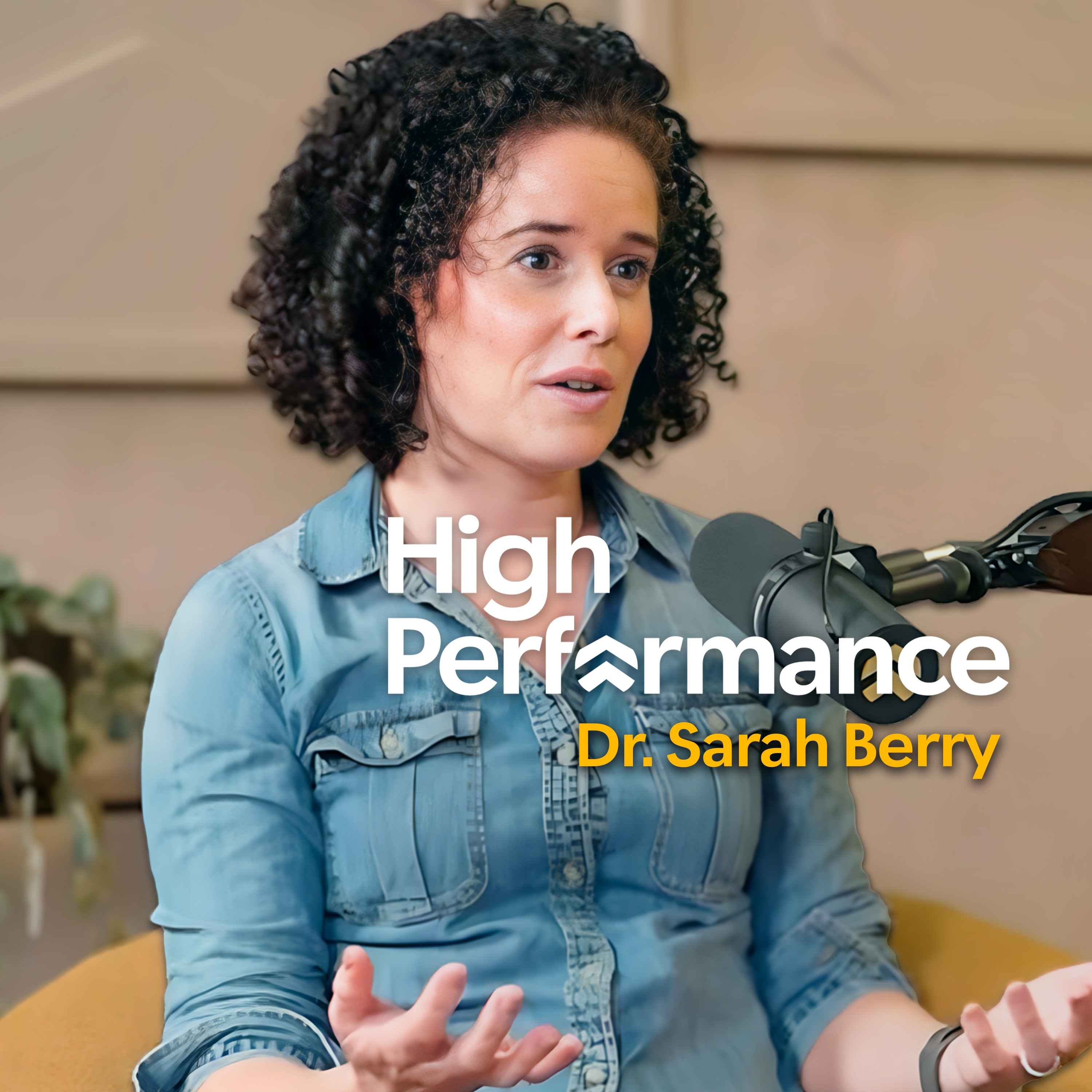
In this enlightening episode of The High Performance Podcast, hosts Jake Humphrey and Damian Hughes engage with Dr. Sarah Berry, a leading expert in nutritional science. The episode delves into common myths surrounding nutrition, the importance of enjoyment in food, the evolving nature of nutrition science, and practical tips for healthier eating habits.
Written by AI. May contain mistakes.

Get the gist, explore an idea or ask about something said.
 Claude
On The High Performance Podcast, what are the key points of this episode?
Searching your listeningAutomatic transcript. May contain errors.
0:28Watch it early on the High Performance App. to transform your eating habit that still brings you pleasure. Food is there to be enjoyed, not to be feared. And if a food is too healthy to be enjoyed, it's just not healthy at all. That is the voice of Dr. Sarah Berry, Professor of Nutritional Sciences at King's College London, Chief Scientist at Zoe, and the Lead Nutritional Scientist on the world's largest nutritional research programme. Dr. Sarah was fascinating, telling us about the myths that have sprung up around our metabolism, when and how to eat, and also about the benefits of snacking. She also, which I thought was brilliant, Damien, she just told us about some of these flaws in mainstream nutrition advice, the fact that so many of us are seeing things that aren't true and then believe in them, and it's not healthy for any of us.
1:13And also she had these critical warnings, if you remember, about deceptive food labelling, and most importantly of all for me, very helpful with my late night... Crispy tea. Yes. Listening for that one. Sadly, that is still going on, but I'm doing my best. Right, let's do it then. And I think this is a really valuable conversation, as always, from High Performance, a conversation that you can trust with a lead nutritionist. As we welcome to the show, Dr. Sarah Berry.
1:43Sarah, welcome to High Performance. Thanks for having me. I'm very excited to have you on the show, as is Damien, because we feel that everywhere we look at the moment, we're getting conflicting information. We're getting sort of clickbait headlines. we're getting not very nuanced conversation about nutrition and i would love if possible for us to start by talking about this do you feel that with more conversation than ever before about the way we eat what we eat and how our bodies process what we eat that we're in a better place for that or not i think we're absolutely in a worse place i've been in nutrition science for the last 25 years so looking at the relationship between what we eat and our health running clinical trials teaching in this area.
2:26And the change that I've seen in how we communicate about this is phenomenal. You know, with social media, for example, we all eat, everyone has an opinion on food. But people who have no idea of the science are talking about it in a way such that people think they're the experts. And people don't want to listen to people like me. You know, I'm a scientist. I'm not trained in how to do exciting headlines and, you know, that captures everyone's interest. The story we have to tell is quite simple when it comes to food and health. And so we don't get the exposure that these people that put out these crazy headlines or, you know, things about some latest silver bullet that's going to make you live for 30 years, etc.
3:09So what would you like people to hear you say right at the very beginning of this conversation? So I would like people to listen to the experts. We have to have a platform though, as experts and we have to as experts be able to communicate which is difficult to communicate the nuance of science in a simple way but I'd also love people to realize it doesn't have to be complicated eating you know thinking about just the basic principles of following a healthy diet having minimally processed foods having lots of plants lots of fruits lots of vegetables lots of beans lots of pulses and just having everything in a bit of moderation with a bit of variety then you're on to a really good start rather than worrying about this like extra little percent gain that you might get that actually ruins all the pleasure of food because food is there to be enjoyed and i always say to people if a food is too healthy to be enjoyed it's just not healthy at all and so try and follow a diet that is pleasurable and you can do that just by following some really basic principles break down your cv for us in in a minute right and then i'd love you to tell us what the lived experience is like of someone with your knowledge, experience and background in the modern world?
4:25Frustration. So I studied physiology as an undergraduate and then I went on to do a master's and PhD in nutritional sciences at King's College London. And then I started as an academic researcher at King's College London about 20 years ago. So I've been running clinical trials and I'm also the chief scientist at Zoe and have been there since before it was Zoe when it was just this amazing idea of pushing the fast forward on nutrition research. Okay, so an incredible CV, loads of experience. And what is your lived experience now of sharing that knowledge in the public space? So my lived experience is that there's so much misinformation, there's so much miscommunication, there's so much damaging information as well.
5:10And there is so much information that is encouraging people to make big changes or difficult changes to their diet and lifestyle that I think moves away from the simplicity of how we can actually eat and encourages people to do things that actually either have such minimal benefit or actually can even be harmful. So can you give us some examples then, Sarah, of some of these silver bullets that are being fired that are damaging? So nearly every week there's some new fad diet or amazing food that's going to make you live, you know, 20 years longer or look 20 years younger. You know, if that was the case, I wouldn't be sitting here.
5:52I'd be on my luxury yacht somewhere in the Maldives, as much as this is nice to sit and chat to you. But there simply isn't a superfood. There isn't simply a silver bullet. And so that's the first thing. But then there's this misinformation. And so one that I often talk about is seed oils. So if you were to go now onto social media and put in seed oils, 95 % of what will come up is these big things saying seed oils are toxic, seed oils are going to kill you. It's nonsense. There is no evidence around this. And yet people that I speak to, educated people are like, oh, I don't touch seed oils. They're so bad for you.
6:28Have you heard, you know, from this person or that person? These people aren't scientists. These people aren't nutritionists that are putting out this information and they're misinterpreting the evidence that's out there.
6:42The market's uncertain. Revenue's tied and hiring on hold. That's why results-driven companies are using Upwork to keep work moving. Go to Upwork.com today and start hiring proven freelance talent fast. No bulky overhead. No rigid long-term contracts. Just the right expert right when you need them. Work smarter and faster with Upwork. Go to Upwork.com now and find your freelance expert. That's U-P-W-O-R-K dot com. Post a job for free and get started today. If you're a maintenance supervisor at a manufacturing facility and your machinery isn't working right, Grainger knows you need to understand what's wrong as soon as possible.
7:21So when a conveyor motor falters, Grainger offers diagnostic tools like calibration kits and multimeters to help you identify and fix the problem. With Grainger, you can be confident you have everything you need to keep your facility running smoothly. Call 1-800-GRANGER, clickgrainger.com or just stop by. Grainger, for the ones who get it done.
8:05where mindfulness is built right in. You'll find free breathing exercises, guided meditations, and soundscapes with ambient sounds, lo-fi music, and binaural beats, all designed to help you focus, relax, and even spark creativity while you browse.
8:23So what is the evidence that's been misinterpreted? Because I think if we can understand that, we can understand how we get to these weird places. So if we take seed oils as an example, our consumption of seed oils has increased 100 fold over the last 20, 30, 40 years. So we're eating a lot more seed oils, but that's because they're in these heavily processed foods. They're used in a lot of ultra processed foods, so lots of prepackaged foods. At the same time that our seed oil intake has increased, so has rates of cardiovascular disease, type 2 diabetes, people living with obesity, all of these kind of modern diseases from this kind of obesogenic environment that we live in.
9:00And so some people say, oh, look, you know, if you draw a graph of all of these diseases on one axis and seed oil intake on the other axis, look, you've got this like linear, you know, increase that as your seed oil intake is increasing, so is your risk of all these other diseases. Well, look what else has changed over the last 50 years, how sedentary we are, how we're eating more of these older processed foods, how there's all of these additives and malcifiers, all of these other things it's not down to the cedars and then there's also misinterpreting published evidence so the cedar haters as i call them and i will probably get hate mail after this where do you actually get criticism oh yes absolutely and so i was doing an instagram live recently that had a wellness audience and on instagram lives you can see at the bottom comments and i was talking about studies i had run looking at the health effects of cedars so clinical trials that I have run and I was saying what we had found and all I could see popping up at the bottom is this woman hasn't got a clue what she's talking about this is all wrong everything she's saying is wrong and this is from wellness people that are perhaps sitting on their sun lounge or somewhere just you know banging out this and I'm just presenting the evidence but the kind of evidence that people are putting out there for example about CEDAWs is misinterpreting the scientific literature.
10:18So for example, there's this Sydney Heart Study that's often used as a way to justify why CDWs are bad. And I can explain a little bit about this study just to understand how it is a little bit nuanced and how easy it is to get it wrong. And so this is a study that took place in the 60s. And men who had had a heart attack were asked to reduce their saturated fat intakes. Around that time, we became quite aware that saturated fat's bad for our health because increases cholesterol. And they were told, can you reduce your saturated fat intake by changing that to seed oils? And in this case, it was mainly a safflower oil.
10:56So this is a particular seed oil, very similar to sunflower or rapeseed oil. And they were given this seed oil in the form of either cooking oil or in the form of a margarine. Now, those that went on to have this higher level of this seed oil went on to have worse health outcomes more heart attacks the problem is is that when they were given the seed oil in the form of the margarine they were given the seed oil that had gone through a process called partial hydrogenation which is a process that was used in from the 60s up until the 90s that produces a harmful fat called trans fats that you might have heard of trans fats aren't made anymore but it was a process that was used by the food industry to change a liquid fat like seed oil really cheaply into a hard fat and so the majority of the fat that they were eating from the seed oil wasn't actually the seed oil itself it was the modified seed oil so they were eating loads of this terrible trans fat and yet that's the kind of studies that used to say seed oils are bad they're going to kill you and yet if you'd have like if someone had gone into the nuance of looking at the study design and looking at the methods of the paper, which is really boring when you're reading scientific literature, then they wouldn't have made the interpretation that's out there.
12:15How can we all become better at being able to interpret? What should we be listening to and what should we just discard? I think it's really hard. I think it's really hard because scientists or academics like myself have been traditionally discouraged from doing this kind of thing. You know, there's lots of snobbery in academia. and you know I'll admit to that myself until recently I'd never done a podcast and you know I'd stick my nose up a bit like you know that that's uh not something that we do and there is that snobbery that exists and so we have a responsibility as scientists so research active scientists like myself who are running the studies or academics we have a responsibility to be able to communicate good messages we're not trained to do that so that's also quite difficult that you know there is the problem that a lot of the time the way we communicate about the science is really dull and so that's the first thing that we need to do is making sure that the scientists are communicating and making sure people therefore understand and can hear from the you know from the scientists themselves and the problem is though is that it's those kind of sexy titles those click baits those like you know one-liners that as scientists we're never going to say they're the they're the things that gets the headlines i don't know how we overcome that but i think there's something in it for us as the audience to be better when we had keir starmer on for example on the podcast and people make criticisms it's like but we can't ask our politicians to be human and then criticize them when they are human when they share something about it so it's incumbent on us the audience to be better at being willing to delve into the new one surely than expecting you to give us those clickbait headlines yeah but i think some people talk with such conviction who are spreading some of the misinformation and i don't think they're intentionally doing it and i've recently listened to a few very high profile podcasts that have had people on where i've sat there and i'm just like my god everything they're saying is wrong and but they're saying it in such a convincing way that about halfway through i'm like well maybe i'm wrong maybe my 25 years of training is wrong that even I question myself because of the way it's communicated so then I think it's really difficult for the you know general public to take ownership because of if there is that miscommunication out there and apart from it being frustrating for you and leading you to even question all of your years of academic research and work what's the cost on us so I think there's some benefit to the fact that nutrition is being talked about a lot and so I do think we need to recognize that because I think it's really putting it to the forefront of people's mind that 20 years ago we weren't talking about as much that people are starting to understand just how important what they eat how they eat when they eat how that can impact their health I do think though it's in some instances causing people to over worry over focus I think people lose the pleasure a little bit of the food that they have lose the simplicity you know and lose at the end of the day what we eat it's part of our culture it's part of our emotions it's part of our social environment it should bring us pleasure and i do worry this kind of you know laser focus on certain foods or certain aspects about eating that's out there especially if it's wrong but even if it's right that laser focus we're losing just the simple pleasure of food i'd like to start by talking about cardiovascular disease if that's okay as a 46 year old man and a 48 49 year old man i'm sitting in the middle i'm 47 it concerns us understandably you know it's responsible for almost a third of deaths in the uk um the highest it's been for over a decade what could myself damien anyone listening to this be doing today to try and prevent that as much as possible through the diet that we we take so I think diet and lifestyle advice for cardiovascular disease is similar to diet and lifestyle advice for nearly all health related morbidities whether it's cancer whether it's type 2 diabetes or cardiovascular disease so I think that there's some specific things you can focus on more but there's just the general simple things of obviously being physically active minimizing stress I know that's easier said than done so it's very challenging you can do something about being physically active or most people can, focusing on your sleep.
16:50So when we think about disease or cardiovascular disease we don't realise actually the importance of sleep. Why would sleep impact that? So sleep is really important because it impacts our metabolism it impacts our mood, it impacts our food choices it impacts so much of how we respond to food how we choose the food that we do as well as the other things like our stress, our desire to do physical activity. We know that short sleepers, so people who sleep less than seven to six hours a day, short sleepers have a significantly increased risk of cardiovascular disease. They are 50 % more likely to be living with obesity than someone who is a normal sleeper.
17:33And this is... What? It's phenomenal. So there's almost a graph that shows that the less you sleep, the heavier you can be. yes i mean it's not linear but there is good evidence now coming out that if you are sleep deprived is a term that you know i know we often use but if you're a short sleeper that you are sick you have a significantly higher chance of living with obesity significantly greater cardiovascular disease risk it's a new emerging area of research it's because sleep impacts things like our food choices so if we've had a poor night's sleep there's like little reward centers in our brain that are heightened.
18:12So if you've had a poor night's sleep, you know, in the morning, you'll be, the reward centers will be saying, oh, Damien, you know, don't have that healthy breakfast, go and have that pastry or, you know, go and have that quick fix. You also change the next day. And we've seen this with our own Zoe Predict research. So big clinical trial that we've run that if you have a poor night's sleep compared to having a good night's sleep, the day that after you've had a poor night's sleep, the way you metabolize your food is different. So you have a big blood sugar peak followed by a dip even if you had exactly the same breakfast to when you had a good night's sleep just by changing your sleep if we control for everything else and people don't think about this and this is you know a really interesting area of research which is how we eat what would you tell us then about metabolism because again for those of us that are not well versed in this that's a fascinating fact that your metabolism processes food in a very different way have to sleep would you explain a little bit about that um so i don't fully understand the mechanisms of why it changes after a poor night's sleep what we do know is if you've had a poor night's sleep your different hormones uh you know it changed like stress hormones cortisol these sorts of things which we know all impact our metabolism all of the processes in our body are controlled by so many different factors and so if you just set one thing out of kilter like your sleep it has knock-on effects on so many different areas like how you metabolize food for example so what can we do in that instance we know we've had a bad night's sleep we have to kind of just be aware i guess that our body is going to try and force us down a road we shouldn't go down i think it's about being mindful exactly so i think it's about you know you've had a bad night's sleep and being mindful that do you know what my reward centers are going to really push me towards unhealthy foods and when i eat those unhealthy foods i'm going to go on this roller coaster or glucose peaks and dips, that then we know if you have a glucose dip, for example, two to four hours after a high carb meal, we know that you're more likely to feel hungry 30 minutes sooner than if you didn't have a dip.
20:16We know that on average, if you have a glucose dip after a carbohydrate meal, people that do have the dip eat 300 more calories over that day compared to a day where they don't have a dip. And so it's kind of being really aware of, yes, I'm going to be driven to worse food choices, but also I'm going to respond badly to those few choices that if I, whatever my response is in the morning is going to set me on that roller coaster through the day. So I think if you know that, I think you'd be galvanized a bit more, not all the time, but to make a good choice, better choice. I think it's brilliant.
20:50And I didn't expect to start having a conversation about how much we sleep. But do you know what though? It's a really good, it's an interesting place to begin because it's a good reminder for people that there are all of these things impacting not just what we eat but how our body does things with what we eat that we don't even think about i don't think do we yeah and i think for me this is such an exciting area of research so i often talk about how we eat instead of what we eat and the importance of how we eat only just being uh you know understood so eating speed is a great example we know that on average we're eating too quickly particularly if it's like heavily processed unhealthy food the texture is quite soft you can eat an ultra processed meal of the same calories as an unprocessed nutritionally equivalent meal 50 % more quickly we know if you eat quickly you consume more calories so for example if you just slowed down the pace at which you had your lunch by 20 % so how long would it take you to have your lunch well it depends you see when I'm here at work we get some brought in salads and sandwiches and we have busy days and I'm not joking when I say three or four minutes probably I would I would do a little pot of salad at home if it's a Saturday or on with, you know, a Sunday lunch, for example, two hours sitting at the table on a Sunday catching up with the kids talking about the week.
22:08So that is how vast the difference is. And I bet a lot of people watching this would relate to that. Yeah, so lots of people now are eating their meals in that rushed way, you know, between meetings or while on a Zoom call. So they're not even mindful eating or even aware when they're full. Usually standing up, rarely sitting down. Yep. And so on average, people are eating lunches, dinners, maybe in 10 minutes. Research shows if you can extend that by just 20%, i.e. change it from 10 minutes to 12 minutes, without even thinking about it subconsciously, you reduce your energy intake by 15%. And...
22:41What, you eat less food? Yeah. Just by changing the speed at which you're eating. Why? So various reasons. One is because it takes a while for your fullness signals to come to your brain. So if you're wolfing it down in your three to four minutes, it's hardly even got your stomach where there's stretch receptors that tell you whether you're full, how hungry you are. Never mind it getting to the part of your intestine that has all of these receptors that say, hey, you know, I'm full now, you don't need to eat anymore. So the slower you eat allows the hunger signals to go. Also like hormonal responses like insulin, etc.
23:18that all play a role as well. And that's just one example of how we eat. So there's also other areas like the time of day that you eat. This is like a really fascinating area of research that we know that the time of day that you eat your food impacts your health response to that food as well. What for example? So what we know is that the later you eat in the day, if we're thinking about fullness and hunger, the later you eat in the day, the less your fullness and hunger is stimulated. So if I was to have, let's say a croissant in the morning, that would make me feel fuller than if I was to have exactly the same later in the day.
23:54We also know that every cell in our body has its own little clock. So we call this the circadian rhythm or we call it in nutrition chrononutrition. It's about the timing of eating. And these clocks control how we metabolize the food, how we use the food, etc. And we need to eat according to this clock, according to our body clock. If we eat out of sync with our body clock, it changes how that food impacts our health. So we know that if you eat late at night, firstly, you'll feel less full. You'll actually wake up more hungry the next day. And there's research showing this, that ironically, if you eat later, you wake up more hungry.
24:31But also if you eat later as well, you metabolize the food and you respond in such a way that results in greater inflammation over a period of time. You have greater blood pressure, greater blood cholesterol, higher visceral adiposity, so the fat around your tummy. and we've seen this from our own research late night eaters are far worse off particularly in relation to cardiovascular disease risk factors so all of the risk factors that we know diet can impact like blood pressure like cholesterol like insulin sensitivity like fat around around the waist and changing the time that you're eating can actually help minimise some of that.
25:09What is a late night eater? So there's no clear definition of a late night eater. We see in our research, if you're eating after eight o 'clock at night, that's where you start to really see an impact, a negative impact of timing of eating on health. So in an ideal world, I would say to people, if it fits in with how you're living your life, and I know that some people aren't able to do that, if they're shift workers, night workers, etc. But for people that have a nine to five job, or the few people that have that now, I would say to try and avoid eating after eight. Definitely avoid eating after nine at night.
25:48We see in our own research that 30 % of people snack after nine o 'clock at night. You know, that's a lot of people. Yeah. And have you been able to track definitively what the impacts of after nine o 'clock at night does? So in our research, we've been looking at what we call cross-sectionally so we've been looking at people at one point in time and looking at those that snack after nine o 'clock at night they tend to have worse metabolic health worse cardiovascular health so they tend to have greater inflammation poor insulin sensitivity worse blood pressure you know they tend to have a higher bmi so they tend to be more more overweight there are trials not that we've run but that other people have run looking at timing of eating where they will randomly allocate half of the people to follow like an earlier eating pattern and the other half to follow a later eating pattern follow them over a period of time and then look at health outcomes the main thing that they see is a difference in hunger levels if you're eating later you tend to feel more hungry but you also see a difference in some of these other health measures that we talked about like cholesterol for example what do you reckon i'm about to talk about you're stuck at at crisps love crisps but you know what happens i don't i never eat them early but about half eight nine o 'clock at night often when the kids are going to bed it's just this voice i can't ignore right are you and you know i say to myself i say well i've eaten well all day so a couple of bags of the kids hula hoops isn't gonna cause a problem right are you saying that by if i eat those same hula hoops at or any other crisp brand at nine nine thirty the impact on my body's different if I had them at 10 o 'clock in the morning.
27:24Now the impact is going to be small and I do want to emphasize that but over time it can build up and the reason I want to emphasize it's small is going back to what I said at the beginning I do think everyone just needs to take a bit of a chill pill about how they eat what they eat. I'm really excited by this kind of research because I think it's exciting to kind of bring lots of different tools to our toolbox and so yes absolutely it will make a difference but the difference will be small but yes over time who knows and again this is nutrition research is still in its relative infancy we're only just learning the importance of things like how we eat and this is partly because our food landscape and how we eat and our lifestyle is the last 20 years is changing beyond all recognition so we're kind of playing catch up on the science to how we're eating now versus how we were 50 years ago which we didn't snack 50 years ago as much as we do now right you know snacking now accounts for 25 % of our energy intake.
28:20So a quarter of our calories in the UK, on average, comes from snacks. But it's part of our, it's part of how we live. I mean, my kids have school lunches, right? But the schools say, pack them a snack for break time. So are we saying that breakfast is not good enough and lunch isn't good enough? So therefore our kids need, so my children will grow up believing that what you're doing between meals is eat food. Yeah. You don't even think about it until you have a conversation like this and you think, well, why do we feel the need to provide that? But I don't think it's bad for us to snack. I mean, it does raise the question, well, how did we survive for so many centuries with three meals a day or even one meal or even two meals a day?
28:58What is it that we're doing differently that means that we need to snack? But we've published some great research at Zoe looking at snacking habits and looking at whether the frequency of snacking, as in how many times people snack or the quality of snacks or the timing of snacks, what's the most important? because there is this question that we are a nation of grazers we are a nation of snackers and on average now people have two to three snacks a day on average in the UK and so the question is is snacking itself bad i.e constantly putting something in our mouth or is it more about the food that you're snacking on and what our research shows is the act of snacking i.e grazing having multiple eating events the evidence shows as long as it's on healthy snacks that's not bad it's snacking on the unhealthy foods and it's undoing also the good effects so you said for example you eat really healthy breakfast lunch and dinner and then you're you know having those crisps in the evening we see gorging you were about to be gorging i was i thought better of it it is completely the right word okay i will it i well you did say there are multiple packs i would do something other than hula hoops say but interestingly we see in our own research that 30 % of people who are doing really well with their main meals are then having really unhealthy snacks.
30:18Because snacking accounts for a quarter of our energy intake and because our research shows that snacking per se isn't what the problem is. The problem is that 30 % of people snack after nine o 'clock at night. Loads of people are snacking on unhealthy foods. But what our research shows is if you're snacking on healthy foods, it can actually really be a way to boost your diet. It's a really simple, single strategy to improve the healthfulness. And we've run a clinical trial about 10 years ago at King's where we asked people to switch from typical UK snacks or have nuts, assessed snacks. And what a typical UK snack is?
30:57So we actually did a lot of research looking into what the typical UK snack is and then we fed people kind of the reformulated typical UK snack. so this is a snack that's higher in saturated fat salt and sugar so imagine it's a bit of your um uh hula hoops it's a bit of a pringle it's a bit of a kit kat it's a bit of a mars bar you know and we randomly allocated half of the people to have muffins that actually had the nutrient composition of the typical snack profile in the uk so a bit of all of these different things and then the other half of people we randomly allocated them to have 20 % of their energy from nuts and then we followed them just over six weeks and we said don't change anything else just carry on with everything else it's normal and at the end of the six weeks we did lots of different measures to do with cardiovascular disease cardiometabolic health so blood pressure cholesterol insulin sensitivity and we also did a measure that we do to look at blood vessel function so it's like this dynamic measure where you kind of can see inside on the helpfulness of someone's blood vessels.
32:02And the improvement that we saw in the people having the nuts versus those having the typical UK snacks in their blood vessel function equated to a 30 % reduction in cardiovascular disease risk. That's just from changing snacks just over six weeks. So whilst we might demonize snacks saying, oh, you shouldn't snack, actually it's a single simple dietary strategy that we can use to improve our health. For people that have listened to that and think I'm like Jake I'm a snacker I earn healthy snacks but let's say they have a nut allergy what can you tell us in terms of like what should we be looking for for snacks what should we be snacking on?
32:39So I think the first thing I'd say to someone if they're a snacker that as long as you're snacking on healthy foods and I always say within reason it's very boring but within reason it's okay to continue snacking if it's unhealthy foods try and avoid snacking after eight or nine at night and the go-to snack I think is nuts. But if you have a nut allergy, seeds are great. But also having snacks that you might not typically think about as snacks. So you could have leftovers from the meal the night before. You can have things like eggs. You could have cheese with some healthy whole grain crackers, etc.
33:11Having a snack that's not high in what we call refined carbohydrate. So it will keep you full for longer. So not having a really sugary snack is the best snack to go for. So any kind of snack that's got plenty of protein and healthy oils hence why i mentioned things like like eggs or cheese those kinds of yogurt some veg and hummus veg and hummus they're all great kind of snacks that you can have right you've just transformed my snacking life sarah on this show well sarah you use the phrase there about healthy and unhealthy which is often labels that that many of us hear around food and i'm wondering if you could break down like how different food nutrients affects our body, so proteins and fats, etc.
33:56Yeah, so I think when we think about a healthy diet or a healthy food, we need to think beyond what we've traditionally thought about. I do think lots of people are thinking beyond this, but just for those that aren't, typically we've thought about food in terms of four main macronutrients, so fibre, fat, protein, carbohydrate. And so typically we've always thought about whether a food is healthy depending on those nutrients. We now know that food on average contains about 72 ,000 different chemicals per food. And all of these chemicals interact with each other, interact with our body to modulate and impact the helpfulness of that food.
34:36We also know that the structure of food is really important when we're thinking about the helpfulness of the food. So I've spent many years studying what we call the food matrix, which very simply is the structure of food. So when we're thinking about whether a food is healthy or unhealthy, I think we need to think about not just the macronutrients, we need to think about what other chemicals are in there. And there's simple ways you can do this by looking at the food. And if it's very pigmented, i.e. very colourful, you'll know that it's got lots of these amazing chemicals like polyphenols, for example.
35:09So these are chemicals that we call non-nutritive bioactives because they're not traditionally considered a nutrient, but they have these bioactive properties, i.e. they have these beneficial properties in our body. So a top tip is if it's really colourful, it's going to be packed with these kind of bioactives. The other thing is to think about the form of the food, and this is where that food matrix comes in. Does the food even resemble the original form it came in? And this again is quite a new area of research. It's something I've been looking at for about the last 10, 15 years. And when we say 10, 15 years in science, that's quite new by the way.
35:46And we're now understanding that the form that a food is in actually also has a really big impact in modulating its health effect. So you could have one ingredient that's in two different forms that has quite different health impacts on your body. So why don't we use nuts, given that we've already been talking about nuts. So what we know firstly is when you eat nuts, because of the structure of the nuts, you actually excrete about 30 % of the calories. So you only absorb about 70 % of the calories of nuts. So people often say, oh my gosh, nuts are really high calorie because they've got loads of fat.
36:23Actually, 30 % is just coming out the other end. And that's because of the structure, this matrix that the nuts, you know, in their natural format have. So really simply, nuts are full of cells, just like any plant, just like us, we're made up of cells. And it's the cells that contain the nutrients in any food and the cells are covering them is a very rigid cell wall structure and within that cell wall is where you have all of the fat all of the nutrients etc now when you chew nuts you swallow when they're about one or two millimeters in size so we do these awful studies they're called chew and spit studies i handle poo i handle blood everything but saliva is just horrible.
37:09And we get people, you can try this at home. So you can chew almonds and then at the point at which, and the same applies for lots of plant feats, the point at which you're about to swallow, you can spit them out and you'll see there's giant chunks. They're about one to two millimetres at the point at which you're about to swallow. You can also see them in your poo. So you might not want to look at your own poo, but if ever you've given your kids nuts and as parents, we often look at our kids' poo. And you'll see particles of nuts coming out. So we're swallowing these big particles. Now cells in plants on average are tiny, they're smaller than a grain of sand.
37:45So the cells that are encapsulating this fat, a lot of it isn't exposed, a lot of it's not broken up. And so it's coming into our gastrointestinal tract. Sometimes the enzymes can break down these cell walls a little bit and release some of the energy. But actually a lot of the time it's just coming out. And that's because of the structure. Now, if you then go and grind that nut really finely, and I don't mean kind of grinding at home, I mean the kind of grinding that would need an industrial kind of processor to do, and you're breaking all of the cell walls, so all of the fat, so to say, is bursting out, then you absorb 100 % of it.
38:22So you could have these two foods that have identical back-of-pack labeling, because it's the same ingredient. One's ground, one's whole, but they're impacting our energy level they're also impacting how we metabolize it they're impacting things like the inflammatory levels after etc and we see the same with carbohydrate rich foods so we've done studies with oats for example where we feed some people whole large oats so you know like the old-fashioned kind of steel cut oats that that you know our grandmother got or you can still get in the supermarket or we go and grind them and so we'll just grind them in our lab or the clinic and then one day we will give to our participants the large oats and we'll measure things like their post-meal glucose responses their hormone responses their fullness responses their inflammatory responses the next day we give them the ground oats so same backup labeling same ingredients entirely different metabolic responses so just because you ground them what that means is you digest them a lot more quickly so you metabolize them a lot more quickly you feel less full so within 30 minutes you're starving the large ones they empty from our stomach more slowly you metabolize them more slowly you absorb the blood glucose more slowly you feel full for longer and so we're now realizing when we think about the helpfulness of the food it's the nutrients but it's also the structure and this is one of the reasons that ultra processed foods are bad for us it's not just all about it's got this additive or this emulsifier or it's high and sugar it's because ultra processed foods they don't look like the original food that they came from they tend to be soft they tend to be all mushed up it's so hard though isn't it because florence that's my oldest daughter she's 11 we were in the supermarket the other day and she was badgering me to get the you know those packets of like a cracker and cheese and ham yep all in the plastic oh my kids love those yeah and i was sort of trying to explain to her that that cheese is actually a bit different to like some real nice vintage cheddar.
40:27That ham actually is really different to a bit of ham cut off the bone. Those crackers actually are quite different to, you know, something that you might make in your own kitchen. And that's the challenge, isn't it? Because it's easy to go, well, that's cheese, ham and a cracker. That seems healthy. Yeah. It's trying to explain to people the tricks that are being played on all of us by the food industry to not let us, you know, the use of the word protein now on every single food product that you ever see on the shelves immediately makes you go, oh, that must be healthy for us. So I think it's important just to talk, before we move on to inflammation, which you mentioned, which is an important topic for us to discuss, the kind of tricks we need to look out for, I guess.
41:04So you'll find most nutrition scientists won't use the term ultiprocess because food is a bit more nuanced than classifying it into a category. And so to classify whether a food is ultiprocess, there's a classification system called the NOVA classification system, but it's very subjective. And it also doesn't take into account all of the kind of health aspects of a food. And you could have an ultra-processed food that is healthier than an unprocessed food. So for example, lard is unprocessed, but we all know hopefully that lard's not really very good for us. and yet you can have a food that would technically be classified as ultra processed but actually might have plenty of fiber in it some whole grain in it and actually could be quite healthful for us and so the the actual classification system doesn't get through some of the nuances of food and i think it also detracts a little bit from us just focusing on we've just got to think about the overall healthfulness of a food this kind of laser focus on ultra-processed food.
42:14You know, let's stick a warning label on it. It's not that simple because of the misclassification. So I think the focus should be, instead of demonizing all ultra-processed food, trying to understand what is healthy and what isn't healthy. But it's really challenging for exactly the reasons that you said, because it is so nuanced. And when, you know, after I asked my son to watch this program with me and he was saying, oh, mummy, is that ultra-processed that bad? Is that... There were some things that I've been a nutrition scientist for 25 years, and I was struggling to explain to him why this food is not quite as good as that food.
42:50And I knew it because I knew it. But I was like, I don't really know how to explain to him. Obviously, he's 12. But even if he was an adult, I would have struggled to explain. And so I think it's really difficult. Now, there's some things that you can look out for. So I do think that there's a lot of health halos out there. I don't know if you've heard that expression. So this is where food can be packaged in beautiful like matte packaging. So it looks so natural. It has protein on it, like you said. So it has fiber on it. So of course it's going to be good because they've added fiber. I mean, who knows what the mush is, the rest of the mush in it.
43:27It says low, no or reduced in it. Well, probably it's low, no or reduced sugar, but they've added in shed loads of some kind of sweetener that we've got no idea how that's impacting our health. and so I think I'd be cautious if it looks too good to be true. You know, going back to it, it probably is. If you're still overpaying for wireless, it's time to say yes to saying no. At Mint Mobile, their favourite word is no. No contracts, no monthly bills, no overages, no hidden fees, no BS. I made the switch because I was tired of those ridiculous bills and sneaky charges from my old provider. With Mint, I'm paying$15 a month and getting the same high-speed data, unlimited talk and text, and coverage on the nation's largest 5G network.
44:13Honestly, the quality is just as good, if not better than what I had before. And the best part? You don't need a new phone. You can keep your current one, bring your number, and all your contacts. I use Mint Mobile, and you should too. Ready to say yes to saying no? Make the switch at mintmobile.com slash HPP. That's mintmobile.com slash HPP. Upfront payment of$45 required, equivalent to$15 a month. Limited time new customer offer for first three months only. Speeds may slow up a 35 gig on unlimited plan. Taxes and fees extra. See Mint Mobile for details.
45:03the right expert right when you need them. Work smarter and faster with Upwork. Go to Upwork.com now and find your freelance expert. That's U-P-W-O-R-K.com. Post a job for free and get started today. If you're a maintenance supervisor at a manufacturing facility and your machinery isn't working right, Grainger knows you need to understand what's wrong as soon as possible. So when a conveyor motor falters, Grainger offers diagnostic tools like calibration kits and multimeters to help you identify and fix the problem. With Grainger, you can be confident you have everything you need to keep your facility running smoothly.
45:39Call 1-800-GRAINGER, click grainger.com or just stop by. Grainger, for the ones who get it done.
45:52Would you give us the latest understanding of sweeteners and what they're doing to us? And is it simply a case of we still don't know, therefore we should avoid them? So I think generally in nutrition research, there's so much we don't know. I think sweeteners is a great example. Additives are a great example and emulsifiers are a great example, which is what's being talked about a lot to do with, you know, older processed food, our modern food environment. We know that some sweeteners seem to have a negative impact. So sweeteners like sucralose, for example, we know that some sweeteners like stevia, for example, doesn't seem to have the same negative impact.
46:30Most of the research on sweeteners, though, has been done on mice or rats to date. There hasn't been that many studies done on humans. What we do know, though, from human studies, is that if you swap a full sugar drink for a drink that has sweeteners in it, it doesn't end up reducing your overall energy intake. So if people are doing it in order to lose weight, what the studies do show is that you just compensate for it. Why do? Because our bodies are so clever. Our bodies are so clever in maintaining the set point in your energy intake. We have evolved not to live in the food landscape where we can go, I can walk out this door now and probably down the road within a few minutes, there'll be four, five, six places that I can go and get food like that.
47:16That's not how we've evolved. Our bodies haven't caught up with the food landscape that's out there. We've evolved for famine. we've evolved for you know being a hunter-gatherer and you know as a stated yes it sounds me saying this because i know we've heard this for many years this is the truth so what that means is that our bodies have evolved to conserve energy and so if we are you know reducing our energy intake whether it's through having a sweetener or going on a diet to reduce our calorie intake then what happens is is suddenly that again that clever amazing place in our brain saying whoa hold on you know i'm not having the energy that i normally have and your hunger signals go up and over a long period of time as well if you're in a calorie deficit your metabolic rate goes down now not hugely but it does go down so just by sitting here if i had been on a diet for the last month versus if I hadn't I would be burning more calories sorry I'd be burning less calories if I'd been dieting i.e reducing my calorie intake just by sitting here which makes dieting hard right this is why like 70 percent of diets fail people can lose the weight but it's the maintenance of weight loss that's the problem because our bodies are so clever our bodies are so clever to maintain weight.
48:44And that's what's really hard. So for every kilo of body fat that you lose, the reward centers, these hunger centers in your brain, they just go up a notch each time. They're pushing you to compensate for the loss of energy, the loss of body fat, but they're pushing you to compensate beyond that, which is why what often happens is when people lose weight and they rebound, which sadly 70 % of people do, they rebound to a higher weight so you often hear that with yo-yo dieters don't you that not only yeah it was great it's easy i lost the way you know i because for three months i could fight against these awful you know this change in hunger signals um you know i was working towards that dress for the wedding or my bikini on the beach or whatever but then you can only fight against that for so long based on the current evidence i think the key is slow weight loss really slow weight loss is weight loss that you're likely to maintain i think also recognizing what you need to do in the weight loss phase versus the weight maintenance phase is a little bit different and it's really important i do caveat this by saying i'm not a weight loss expert as scientists we always want to say what we don't know by the way rather than what we do know the evidence shows that during the weight loss phase it's really important thinking about how much energy you're eating and this is where you can bring in the kind of tools that we've talked about slowing down the pace that you're eating thinking about the timing that you're eating also obviously making the right food choices as well during the weight maintenance phase this is where the evidence shows actually physical activity becomes quite important as well and that as well as being mindful of what you're eating the physical activity starts to play quite an important role in maintaining that.
50:31During the weight loss phase, physical activity seems to be less important. Why? I'm not sure. We get bombarded with a whole heap of different bits of information and seeing we've got you here as the expert, we'd like you to just help us uncouple what's true from what's not true. The first one then is around intermittent fasting. So we've got some titles from, The title here is Intermittent Fasting, Handle the Health Problems the Natural Way. When we talk about intermittent fasting, there's a couple of different things that we can talk about. There's the intermittent fasting where you might have like five days on, two days off sort of style.
51:10And that's inconsistent eating. So you might have a couple of days where you're on a really low calorie diet and then a few days when you're on a high calorie diet. I think the evidence for that is less convincing, but that's because we're also starting to understand going back to the how we eat that consistency in eating patterns quite important and there's some fascinating research that's only just coming out now showing that if you switch from your normal pattern that that can impact our desire to eat our hunger how much we eat for example so if like me you're a grazer so i eat lots of times throughout the day and i was to suddenly switch to only having three meals that could negatively impact me like over a period of time I would adjust.
51:52If, for example, like my husband, you were someone that just had your three main meals, but then he was to eat the way that I eat, then that would negatively impact his health. So the type of intermittent fasting that encourages that, you know, swapping day to day, and wasn't it Sadiq Khan, for example, that there was someone recently that said, you know, he only eats however many calories a few days a week or something. but that kind of intermittent fasting i think yes it reduces your calorie intake but i think that the evidence shows it's not really beneficial overall for your health because of that inconsistency the other type of intermittent fasting that i think is a lot more common now is what we call time restricted eating which is where you're eating within a certain what we call eating window so a certain period of time the evidence for that shows that yes there's some benefit it's not huge and it's variable between different people but what's quite good is you start to see the benefit quite soon so at Zoe we ran this study called the big if study the big intermittent fasting study and we had 150 ,000 people sign up to this and what we asked them to do is we said okay can you just reduce your eating window down to 10 hours so that you're eating within a 10-hour period so if you have your breakfast at 10 in the morning you have your last meal at eight and the reason we did this is because we wanted to see if what's seen in these very tightly controlled metabolic studies that are done in a clinical setting that show if you eat within a six hour window it has x y and z benefit whether it actually plays out in a noisy way we live our lives because this is really really important that you know again on social media i could say oh if you eat in a four hour window you know you will live forever um well you won't but you'll you know you would live a lot longer but who's going to live a life where you eat with a four in a four-hour window well i certainly would never want to um so we know from those tightly controlled clinical studies if you eat within a shorter window you reduce your inflammation you without even thinking about it reduce your energy intake by about 300 calories with that per day without thinking about it you can reduce other health outcomes as well as inflammation like you can improve insulin sensitivity etc but i think the most important question is how does it play out in the noisy way we live our lives because most people are not going to sustain that and this is all these things have to be sustainable so with our big intermittent fasting study what we ask people to do is eat in a 10-hour window tell us how easy it is tell us how you feel tell us what your body weight is after just two weeks people were losing weight we told them carry on doing everything else that you normally do they just reduce their eating window on average by about two and a half hours so most people were having an eating window about 12 to 13 hours so would be having their breakfast at eight maybe their last meal at nine just reducing it down to 10 hours had benefits in terms of their body weight their energy intake their mood their energy their hunger they felt less hungry they had better mood they had better energy and then like i've said the tightly controlled clinical trials also show it has these other the health metabolic effects like on blood pressure inflammation it is highly variable though so it does work for some people better than it works for other people for some people it's not going to be something they want to do i couldn't do it but that's because i want to eat all the time um but some people find it easy and what we also saw was going to your point that you do what we would call late time-restricted eating we also saw that people who practiced early time-restricted eating i.e finishing a bit earlier in the day their meals so let's say they're doing their 10 hours from 8 till 6 rather than let's say 11 till 9 we find that those that are doing it earlier have greater benefits and that goes back to what i was talking about earlier about our body clock, about our circadian rhythm, how we're better off eating our foods early in the day.
55:53But the people practicing it later in the day, so Jake, like you're practicing later in the day, still did better than not doing it at all. Right, okay. So it's still going to be some benefit, but doing it early is even better. So intermittent fasting is okay, or eating in a time window is great, time-restricted eating, but the earlier you can be eating and the earlier you can stop, the better. And you don't have to do extremes. Again, it goes back to that thing that we were talking about earlier. you know I just think who really wants to live a life where you're having you know you go out for dinner with your friends and like oh sorry I can only have tap water and maybe if I eat a treat I might have a slice of lemon in it okay the next one don't worry about what you eat just take a Zen pick it's the golden bullet
56:36so you can take a Zen pick and you can lose lots of weight and you can have lots of added benefits so the evidence coming out for added benefits of a zempic improving blood pressure including insulin sensitivity improving your blood cholesterol reducing inflammation reducing your risk of other diseases there's great evidence emerging around that it's new evidence we need to do more trials there's lots of side effects to a zempic but you can't you know they often say you can't outrun a bad diet it's the same with a zempic just because you're losing weight you still have to have a healthy diet. It's so important.
57:14You have to have fiber in your diet. You have to have certain nutrients. You have to have certain oils. You have to have some of these phytonutrients and polyphenols. And so it doesn't mean that you can go and eat your crisps all evening just because you've had a Zempick. And I think this is something that's really important. I think for some people, a Zempick has a great role to play. Losing weight is so hard because of some of the mechanisms we talked about because of the built environment around us because of there's so many unseen barriers to do with weight loss and for people that are living with obesity and morbid obesity i think it's great in those instances to help but you still have to have a healthy diet so you can you can take a zempic and be thin or you can be thin generally but you still need to be thinking about what's in your body so you can kind of be an unhealthy thin if that makes sense oh absolutely yes absolutely and so food doesn't just impact our weight it's not only weight that causes us to be healthy or unhealthy so you could have you could be as slim as anything but if you're eating the wrong foods you're still increasing your cholesterol you're still increasing your blood pressure you're still increasing your inflammation you can be increasing your risk of cancers of cardiovascular disease of type 2 diabetes it's not just about weight yeah and that's really important because I think that there's this myth out there that oh if you're skinny you can eat what you want you know I'm naturally slim but I'm really mindful that actually you know I still have to be really careful about making sure I have a moderately healthy diet yeah before we move on to our quickfire questions to wrap things up we we'd like you just to talk a little bit about the importance of fiber and the importance of of our gut health I know that it gets discussed a lot It's something that, Zoe, you're all very passionate about.
59:03We don't want to sort of understate, if you like, the importance of looking after our gut health and what it does for our overall well-being. Yes, so gut health is another quite new emerging area of research, again, over the last 10 years. And I think it's something we're going to see more and more about. So when I talk about gut health, I'm talking about the microbiome. So this is the colony of thousands and millions and trillions of different bacteria that live in our gut. And we're now starting to understand that the microbiome has a really central role in our health. It has a central role in how we metabolize some food, how we respond to some food.
59:41It has a central role in our risk of many diseases, etc. And we now know that we need to be making sure that we feed our microbiome, that we allow our microbiome to grow into the beautiful garden that it can be. And this is where fiber becomes so important because fiber is one of the main nutrients that can help our microbiome grow and grow into a healthy microbiome composition. Right, some quickfire questions.
1:00:13You get home after a busy day, the kids are keeping you busy, everything else is going on. What do you want on your plate to know that you're having a good end to the day that we could maybe replicate in our own lives? Something easy. Yeah. You know, being a full-time working parent, something pleasurable and something balanced. So it's not so much about the individual food. I want to make sure there's healthy oils there. Which are? So extra virgin olive oil or fat-rich foods like avocados, those sorts of things. I want to make sure there's a diversity. so we know that all different plant foods has different kind of chemicals and making sure you have a diversity so having a colourful plate is a really great start I do like meat so I will often have and fish so I might have chicken I might have fish I think oily fish is really important not every day but to have some of that some you know a protein source a healthy protein source but you can get you know good quality protein without having meat as well very good what's one single piece of advice you'd give to someone looking to transform their eating habits i would say find a way to transform your eating habit that still brings you pleasure that is simple to fit in with the way you live your life because that will be the only sustainable one if i was then to pin it down to a suggestion if someone was like well can you just tell me something to do.
1:01:44I would say either change your breakfast or change your snacks, given that they are generally under our own control. What I eat for my dinner is dictated by what my fussy kids will eat. What I eat for my lunch is dictated by where I am at that point in time. I pretty much have autonomy over my breakfast and my snacks. They account for a good proportion of our energy intake. And so choosing a really healthy breakfast or transferring to healthy snacks, I think is a really single simple strategy we can't just overhaul our whole diet and stick to it because you know our food is so much like i said earlier part of our culture it's part of our emotions and i think it's important to recognize it's actually really hard to change the foods that we eat what are you most optimistic about in the area that you work and what is the thing that keeps you up at night with worry in the area that you're working that's a really hard one what am i most optimistic about i'm most optimistic i think about the growing awareness of actually how challenging it is to change your diet that i think there has been a bit too much emphasis on oh just do this and just this and i think we're becoming more aware as a community a research community or a community of people giving advice that actually it's really difficult and so I'm optimistic that we will find behavioral ways to improve people's diet what keeps me up at night um not much but what would what worries me is our food landscape that we live in now we live in a food landscape that we haven't evolved biologically to handle we live in a food landscape that is pitted against us and we live in a food landscape that is changing at such a rate that not only can evolution keep up with, science can't keep up with.
1:03:33So when I'm running studies, sometimes by the time I finish the research trial, it's not necessarily even relevant to the products that are out there now. So that worries me that will we ever be in a place where food industry, government, scientists get together and solve for what is really a perfect storm rising against us with the food landscape that we have what's the one golden piece of advice you'd like to leave ringing in our listeners ears i would say that food is there to be enjoyed not to be feared and if a food is too healthy to be enjoyed it's just not healthy at all sensible honest advice and i know the frustration about trying to go up against the world of the algorithm and the clickbait and the sexy headline but those kinds of conversations that we've just had will provide real value for people so thank you so much damien jake right uh things in that conversation then that made you go wow well first of all i would say that i love the nuance i love the idea that there's no hard and fast rules so just saying that why would you want to deny yourself or avoid something exactly and you know what i think that sarah is obviously bothered by the the way the model world talks about food but it's only by having conversations like this that we can start to change it right yeah absolutely so i took that away uh the idea of anything that asks you to avoid something it's probably just to be avoided in its own right yeah what about you the amount of sleep you get changes the way your body processes the exact same food if you've had a good night's sleep and also the way that if you've had a bad night's sleep it changes the kind of food your body's telling you you need yeah i didn't know that i've always thought it's absolute bs this idea that people who drink low-fat drinks have the same amount of calorie intake as people who drink full-fat drinks i just thought well they're just people with no willpower i didn't realize that the brain was making you get the same amount of calories so that if you have a low-fat drink at lunch you then need a snack an hour later whereas if you've had a full-fat drink you don't need that snack i'd had no idea about that i honestly thought margarine was the devil in the kitchen i had no idea about that i didn't realize that if you snack late at night it hugely increases by a big margin your risk of cardiovascular disease there's just there's just things all the way through that conversation that were like wow wow wow but the biggest thing for me is that i feel happy that we've had that conversation because she's an academic because she's done the work because she's knowledgeable my fear would be if that person left the room and we went not sure they've got any qualifications to tell everybody that information yeah that's that's the problem so i'm very proud of a conversation like that yeah me too and i think the final thing i'd say to anyone that's listening to this that's thinking what can I do is that is that idea that Sarah said of if it happens fast chances are it won't last it's the idea of take it slow do small incremental changes and you're more likely to be able to maintain the changes that you're ultimately looking for should we go out now and eat a very slow dinner before 8pm that would be a fabulous idea thanks mate thank you get a good night's sleep thanks so much for listening to this conversation don't forget we've got a whole raft of great high performance chats with people in the nutrition space if you're interested in finding out more so you can make the right decisions for your health from myself damien and the whole team thanks for joining us and we'll see you soon
1:07:53We'll be right back. you never run out of what you need. Call 1-800-GRANGER, click grainger.com, or just stop by. Grainger, for the ones who get it done. How many times have you wished you could be in two places at once? With Wix, you practically can. Wix's website builder is packed with powerful AI tools to make running your business online easier. Build a full site just by talking with AI. Get an AI agent to manage your sales and marketing. Or work like a 10-person team, even if it's just you. So you don't need superpowers to get everything done. You just need Wix. Try it out for yourself at Wix.com.
Dr. Sarah Berry is a leading expert in nutrition science, passionate about making healthy eating both accessible and enjoyable. In this episode, Dr. Berry dives into why food should be a source of joy, not stress.
She explains how nutrition science is always evolving and why it’s important to stay open-minded about new findings. From snacking smartly to optimising fat intake, she shares simple yet effective ways to improve overall health without overcomplicating things.
Sarah also sheds light on the growing field of circadian nutrition, how the timing of meals can impact your body’s response. Her insights challenge conventional dieting wisdom, focusing on sustainable changes rather than quick fixes.
This episode is packed with practical tips, science-backed insights, and a refreshing take on how to build a healthier, more enjoyable way of eating.
🚨 Partners
XTB 👉 Download the XTB app today and start making your money work for you at: https://hppod.co/xtbhp
HP Foundation 👉Do you want to kick-start an evolution that will change the lives of millions of children? Find out more about the High Performance Foundation: https://hppod.co/foundation
HP Corporate Events 👉Click here to book High Performance Events: https://hppod.co/corporate-events
Explore offers and discounts through our other partners:
https://hppod.co/partners
Hosted on Acast. See acast.com/privacy for more information.


