
 Ask ChatGPT


 The High Performance Podcast
24 Jul 2023 · 1h 12m
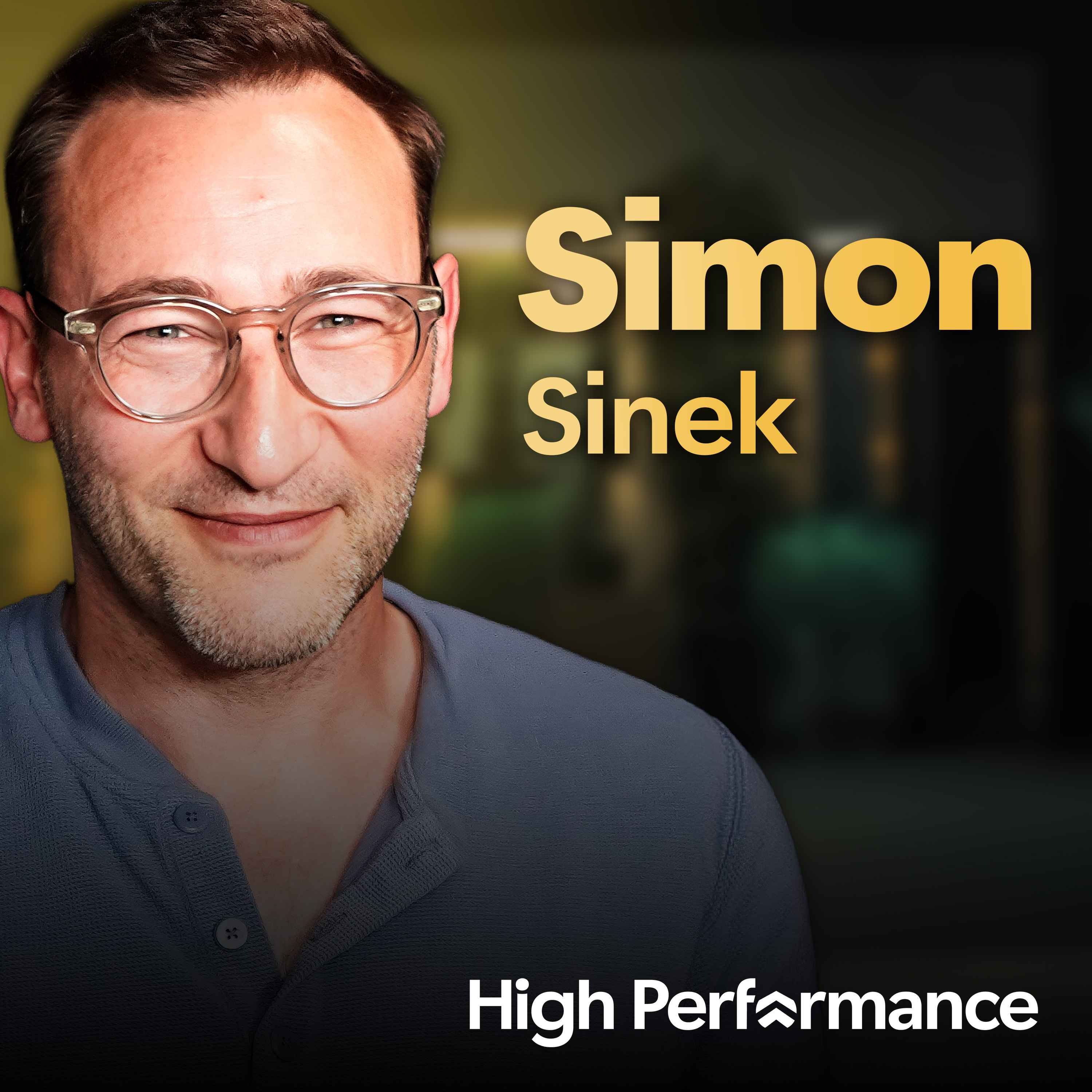
In this episode, Sinek discusses the importance of identifying one's purpose, or "Why," to achieve high performance. He emphasizes that strong leadership and high performance are not solitary achievements but are deeply rooted in understanding and communicating one's purpose.
Written by AI. May contain mistakes.

Get the gist, explore an idea or ask about something said.
 Claude
On The High Performance Podcast, what are the key points of this episode?
Searching your listeningAutomatic transcript. May contain errors.
0:00Hi there, you're listening to High Performance, the award winning podcast that unlocks the minds of some of the most fascinating people on the planet. I'm Jake Humphrey, and alongside Professor Damien Hughes, we learn from the stories, successes, and struggles of our guests, allowing us all to explore, be challenged, and to grow. Here's what's coming up today. I have a vision of a world that does not yet exist, a world in which the vast majority of people wake up every single morning inspired, feel safe wherever they are, and end the day fulfilled by the work that they do. The experiences you had growing up make you who you are, make me who I am.
0:35your why is fully formed by your mid to late teens and it doesn't change for the rest of your life you have only one why you are who you are i don't think you can be high performance by yourself i don't think it exists and anybody who does is they're either not as high performing as they think they are or they are high performing but a tremendous cost i live for the desire to spread a message in a way that i can die with confidence that other people carry the torch without me Every year, the goal is that if I were to get hit by a bus, I can say with pride that the work will continue. Because it has to, because it must, because the vision is bigger than all of us.
1:17So today we welcome author Simon Sinek to High Performance, one of the most requested people. We're getting messages from you all the time saying, please get Simon Sinek onto your podcast. And so we've done just that. Simon is an inspiration. He may well be best known for his TED Talk on the concept of why it's been viewed over 60 million times. His video on millennials in the workplace reached 80 million views in its first week. And he continues to be an inspiration through his global bestsellers, Start With Why, Leaders Eat Last and The Infinite Game. And we speak to Simon on this podcast about how you can find your why, about why why is so important and so much more.
1:58I've listened to a lot of conversations with Simon. I've read Simon's books. I feel I know a lot about him. Or shall I say I felt I knew a lot about him until he came on High Performance because I think this is a really fascinating insight into the person behind the concept of why. And I think when you hear the way Simon talks, why becomes so much more valuable. And for anyone that downloads the High Performance app, you will get some awesome exclusive content from Simon as well. Simply search for High Performance in the App Store right now and then use your exclusive code HPAPP to get in. So let's get to it.
2:34Simon Sinek on High Performance.
2:47Simon, welcome to the show. Thanks for having me. We're very excited about this conversation. The first question for you is, how would you define high performance? I think high performance is more of a feeling than an accomplishment, right? I think high performance is being in flow. When I feel like I'm performing well, I'm actually having fun, no matter how difficult the work is, no matter how stressed I am. even if I work late at the end of whatever I'm doing that day I'll walk ago that was fun and so for me high performance is probably this intersection where you like the thing that you're enjoying and the thing that and you're being productive sort of collide I think it's more of a feeling than it is a calculation so what are the things that get you there well as I said you know fun is a big part of it for me and and the way that I I make sure that it is fun is that there's a context for everything.
3:44So I'm very, very purpose-driven, cause-driven. I have a vision of a world that does not yet exist, a world in which the vast majority of people wake up every single morning inspired, feel safe wherever they are, and end the day fulfilled by the work that they do. And as long as whatever I'm doing is moving towards that, and I don't even care what it is, and I can either feel or measure that I'm working towards that, then I will much more easily find myself in that state. So for example, if I know something doesn't, so let me give you an example. Like if some company calls me and says, we'll offer you a ton of money to come and speak to our top 30 salespeople at a company that I don't really respect, that their culture is something that I wouldn't write about, but they just offer me a ton of money, you know, to go do it.
4:33I will turn it down because the feeling of being there will feel like work. Whereas when I get offered to go somewhere where it pays a lot less, but what they tell me that their company does or the way that they lead their people, I find interesting. I find inspiring. I actually want to learn from them and then showing up with them and the conversations I have with them and the feeling that I get that I'm contributing to whatever it is they're doing, that brings me tremendous joy and flow. So it's really about having a filter and using it. I think a lot of people talk about cause and purpose, but they use it as a punchline.
5:08You know, it's copy on a web, on a website and if you're too metrics driven it's much harder to get that feeling because metrics don't produce that feeling ever i wonder though whether those sort of three key principles of how you would love to see the world whether you could get there even quicker if you went into these businesses that didn't understand the way you think or didn't have these values and almost open their eyes to what they could be oh yeah make no mistake i don't just preach to the converted Yeah. I mean, my team knows I call it belly of the beast, which is I will say yes to things where I know that they don't.
5:45You know, I'll go into a big bank that I think has done damage and I will show up as a preacher for sure. But then I have to have scale. Right. So the example I gave was 30 of our top salespeople. I'm not moving any needles that day. Right. But if you say it's the top 30 CEOs from the biggest venture capitalist firms, banks, whatever, oh, yeah, yeah, I'm going to do that. But I'm coming with a different agenda. I'm coming there to preach. So I've worked with many dysfunctional broken companies. The difference is there's at least a few people, a few executives who know that change has to happen.
6:23And they welcome my message when I go in there. In other words, there's hope. I'm not going to go preach to a brick wall. You know, there's literally no point. There has to be at least somebody in there who has interest. There's a famous saying then that all progress depends upon the unreasonable man. So when you go into these environments where you're preaching these messages, how do you cope with the idea that sometimes it isn't what they want to hear? Well, I don't think they're going to invite me. If they're inviting me, somebody has at least told them that this is going to happen. And it's happened a few times where they didn't do their homework.
7:00You know, maybe they just, you know, somebody said you should get this guy and they did. And I remember there was a company a bunch of years ago and I'll leave out the names to protect the guilty. But the CFO came, he was, I was waiting in the green room waiting to go out. And he came into the green room and said, listen, I have a favor to ask. Don't talk about layoffs. I said why not he goes well we're planning on having around in a couple of weeks and I don't want you to talk about that that's bad for business I said but it is bad for business it's bad for a corporate culture he goes yeah no but don't talk about it I said well I'm not gonna not talk about it like I'm not gonna I won't bring it up I'm not gonna be spiteful and I'm not gonna stab you with it but if it comes up I'm gonna talk about it he goes no no I know but I'd really appreciate it if you didn't talk about it I'm like yeah I'm not gonna make that promise so that has happened a couple of times but again i think most people i've got enough work out there that if they know that i'll always speak my mind and if they're afraid of that i did have somebody cancel on me once there's a big brand who i had a meeting with the the senior executives before i went to visit them and um we had a very honest conversation they uninvited me the reason i ask you is because there will be people that are almost advocates for your message that are in those organizations that want to get the message across.
8:15Sometimes you can be the messenger that delivers it to a certain level of leadership. So I suppose my question is more aimed at what advice or tips or techniques could you offer for those people that are in the belly of the beast that are trying to make it happen without having the platform that you do? One of the mistakes that people make, and by the way, folks in my position as well make this mistake, the well-intended insiders who want to affect change, they come guns a-blazing. You know, they get the chance to talk to the executive and it starts off with sometimes the words, but at least the mentality of, let me tell you what's wrong.
8:52Or let me tell you how to fix this thing. And nobody wants to hear that. Like, can you imagine if I sat down and said, can I just tell you how to make your podcast better? Can I just spend 10 minutes and like tell you what's wrong with your podcast? I haven't even said anything already. you're shutting down, right? You're like, no, don't tell us that, right? But if I talk about vision and I talk about where I want to go, and I talk about the world that I imagine, I think a lot of it is language. And it has to start with curiosity. Can I talk to you about some of the things that you are imagining for this company?
9:25What do you envision for this company? And if somebody shows curiosity for the ideas of somebody else, then and only then are they open to your ideas. If you make somebody else feel seen and heard and understood, then they want to return the favor by making you feel seen and heard understood. So very often, I don't actually think it's the point of view. I think it's the way in which we present the point of view to those in power. Almost always. I saw it play out recently in front of me. Very senior executive went up to his boss and basically said, let me tell you what's broken and what's wrong.
9:54And I saw his boss just shut down. As opposed to going up to be like, hey, how are you? It's been a stressful few weeks. I just want to check in and see that you're okay. day. And I pride myself on that. I think that was the coup of start with why, to be honest. I'm not the first person to talk about purpose at work. But back when I started talking about the why, if you talked about purpose at work, you were some weirdo hippie, you know? And so talking about purpose at work, you're literally only preaching to the converted, this very small group of people who believed in it. And the coup of start with why was the language, which is I found a neutral language that made those who needed to hear the message hear the message it also was new language that those that were struggling to tell their bosses now had new language and I got that in the early days of start with why the number of people who came up to me and said thank you you've given me language that have that is helping me tell them the thing I've been trying to tell them for years so the once again it goes back to to language so So let's talk about Why then.
10:56Yeah. It's the global bestseller. Many, many copies around the world have been and continue to be and will continue to be sold. But I'm also sure there might be a few people listening to this that are thinking, hang on a minute, Start With Why? What's that about? Or even people who maybe have heard of the book or might have read some of the book, but would love to hear more from you about it. So could you explain the concept of Start With Why for the uninitiated? So very simply, every single one of us knows what we do. the products we sell the services we offer the jobs we perform yeah some of us know how we do we do the things that we think make us stand out or distinguish us from others who do similar things to us but very very few of us can clearly articulate why we do what we do i don't mean to make money i mean what's your purpose what's your cause what's your belief why did you get out of bed this morning why does your organization exist and why should anybody care and what i learned is that the great leaders, the most inspiring leaders, everybody from Mahatma Gandhi, Martin Luther King, Steve Jobs, you know, all these great leaders, these inspiring leaders, every single one of them thinks, acts, and communicates the exact same way.
12:07And it's the complete opposite to the rest of us, where we start telling people what we do, they start telling you what they believe. And what they do simply serves as tangible proof of what they believe. And the magical thing about this little idea is it's not my opinion. It's based on the biology of how the human brain makes decisions. Go on, tell us more about that. There's a part of the brain called the neocortex, which is our homo sapien brain. It's the newest part of our brain. It's responsible for all of our rational thoughts and language. It's just not responsible for decisions. This is where the what exists, right?
12:38It's very rational, easy to see, tangible. The limbic part of our brain is responsible for all of our feelings, like trust and loyalty. This is where gut decisions come from. It's also responsible for all of our behavior, but it has no capacity for language, which is why it's hard to put feelings into words. This is why we use analogies and metaphors all the time. So when we start with why you're actually talking to the decision-making part of the brain, that's why it feels inspiring. This is why you light up or get goosebumps when you hear those kinds of messages or feel like somebody's talking directly to you, as opposed to describing a product which you can understand and it's all very rational and most people lead with the rational they're trying to make a tangible or a rational case why you should or shouldn't do something or buy or not buy something the great leaders inspire us to buy and again it's just the biology so i love that point you make about how like the neutrality of a language it's a there's a phrase that i heard an educational talk about the language that is psychologically privileged that you can get ideas in so if there's somebody listening to this that maybe wants to start exploring their why what's the kind of language or the questions that they should be asking that sort of open up these kind of conversations for themselves well let's talk about for themselves initially and then maybe talk about how they can do it with teams that they're part of sure so um to do it for someone's for yourself to learn your own why um first of all understand that a why is basically an origin story it's where you come from.
14:11We are the products of our upbringing. The experiences you had growing up make you who you are, make me who I am. Your why is fully formed by your mid to late teens, and it doesn't change for the rest of your life. You have only one why. You are who you are. Now, whether you're living in balance with that is a different conversation. Whether you're making the decisions that are of high authenticity, and that's all that authenticity means. Authenticity means the things that I say and the things that I do reflect who I actually am. That's all it means. That's a different conversation. And so when you know your why, the ability to make those choices becomes a lot easier.
14:45You know, we've all had the feeling of flow and things like this, except it's a little bit like a roulette game. Like sometimes it happens and sometimes it doesn't. It's like, I've done the same thing a thousand times. How come it doesn't feel good anymore? So here's a fun way you can learn your why. It's called a friend's exercise. Do this with a best friend. Do not do this with a spouse. Do not do this with a sibling. Do not do this with a parent. it doesn't work. Best friend, somebody who loves you, who will be there for you, they'll pick up the phone at three o 'clock in the morning and you would do the same for them and ask them the simple question, why are we friends?
15:15And they're going to look at you like you're nuts because the part of the brain that controls that deep feeling of love and trust doesn't control language. It's a difficult question to answer. And so they'll say, I don't know. Of course they know, they just don't have the words for it. And so you actually stop asking the question why, and you ask the question what. What specifically is it about me? Come on, what specifically is it about me that I know that you would be there for me no matter what? And they'll hemmel and they'll ha, and they'll struggle, and you can't help them, and you can't let anybody else help them.
15:46You have to let them go through the process. And they'll start describing you. I don't know. You're smart. You're loyal. I trust you. And you play devil's advocate. Good. That's the definition of a friend. You have that with lots of people. What specifically is it about me that I know you would be there for me no matter what? And again, they'll go through a few rounds of complaining and describing you. And eventually they'll quit and they'll start describing themselves. And this is what my friend said to me. They said, I don't know, Simon. All I know is that I can sit in a room with you. I don't even have to talk to you.
16:18And I feel inspired. And I got goosebumps. In fact, I'm getting them right now. It happens every time. Because what they did is they put the value that I have in the world into words. And I had the emotional response. And that's what will happen. Somebody will say something that you will either get goosebumps or you'll well up or something will happen. That's when you know you've hit it. Because the thing that you give to the world that you should be working to give to the world consistently is the reason those people love you. It's the reason why you're not friends with everyone. And if you do this with multiple friends, the amazing thing is they will say very similar, if not the exact same thing, because that's the thing you give to the world.
16:54That is your why. It is the reason you get out of bed in the morning. It's a really fun exercise. With teams, it's slightly different. But even for companies, a why is still an origin story. You know, where the company came from, the founder's story is the why of the organization. For teams, it's a little different. In those cases, you want to tell specific stories that reflect why we love coming to work every day, right? And by the way, you asked before, like how do I communicate my way to other people? Just remember, I'm not smarter. I've just been doing this a lot longer. So I'm practiced, which is why I can sort of wax on about a, about a vision or something like that.
17:31It's just because I've, it's taken me many, many iterations to get it right. The easiest way to do it is to simply say to somebody, let me tell you why I love working here. Not like, love, you know, like is rational. I like my job. I like the people, I get paid well. I like my job. Love is emotional. It's like, you know, the question is like, do you love your wife? Yes, I like her a lot. You know, it's a different standard, right? Love is a higher standard. So when you talk about what you love, it's profoundly different. I'll give you a silly example. Trying to communicate your ideas to someone, whether it's selling a product, selling yourself in an interview, or just in a meeting with people, just you want to you want people to quote unquote buy your ideas right um it's the same as dating and think about it you sit across the table from somebody and you hope to make the sale you hope to make the deal right that's what you want so let's make a dating analogy let's take um let's call him brian and we send brian out on a date and he sits down at the table with this girl that he was set up with and this is how he starts the date he goes um i'm incredibly rich i'm very successful I'm on TV a lot which is great because I'm quite good-looking.
18:43I know a lot of famous people and I have a beautiful house you should come by sometime. Now the question is how well did that date go? Instinctively we all know that was crap right but think about how people sell their ideas or how companies sell themselves. It's like we're a very very successful company. You may have seen our advertising on on TV. We're very we're very good at what we do. We have beautiful offices you you come by and see them sometime. Well, if we know the date was crap, why would we think that that would work any better? The answer is it doesn't. Now let's send Brian back out again.
19:16And this time we'll arm him with his why. And we'll say he doesn't know his why, but he can answer specific questions about love, right? He can give specific examples. So he sits down again and he says, you know, I absolutely love my work. Just three days ago, one of my team members was struggling and I just, I had the opportunity to like, I was walking down the hall and I was in, I was late for a meeting, but I thought, you know what, this is more important to me. And I sat down with them and like helped them figure out a problem. And then, then I just went to my meeting and showed up late. And when I explained why I was late, everybody said, yeah, yeah, yeah, of course you did the right thing.
19:58And I got to tell you, it is the most magical thing in the world to come to work every day in a place where I get to do that. And it's so appreciated. And the best thing about it was I made a lot of money because of it. And I got to meet a lot of famous people. I get to go on TV all the time, which is really great because I'm good looking. And, and I got, I got to buy a beautiful house. You should come by sometime like all the same rational stuff is there, but how different did that feel? Right. And so now the rational stuff is the proof, but it's not the reason to buy. So if you can tell a specific story of what you love, and it's a high bar, you have to love it.
20:35It's a way to attract people who love the same thing. And the best thing about it is it's a filter because there are some people listening to that story and think that's cheesy. We're not going to do well together in business. So it's a fantastic filter that it attracts the right people and it repels the wrong people. brilliant now at this point in the conversation simon offered to help me find my why here's a small example of what we discussed you had that experience of sitting in the back of the car yeah your mom probably trying to keep your dad awake you know was there something in particular about this one or is that just one you found to try and capture the general the general memory um i think it was because my parents were really busy so my dad used my dad was a charity worker but also was doing a degree while we were kids my mom was a full-time teacher so there wasn't loads of like we weren't a family that did loads of stuff actually mom and dad were like they worked basically and then the weekends were a list of jobs saturday and sunday and they're still like that even now in their 70s they just have you go in the house they have a list of jobs all the time and i think it was just like that was gone and it was just we were just together at those moments so that's why that stands out far more than being at home really like i wouldn't really pick up on anything so it's the the joy of going on the adventure with the family yeah or maybe two people who are more adult than you yeah yeah kind of like the formula one example yes right so those stories are very very similar which is wasn't you standing by yourself in the pit lane right it was you said it was these two people that you're standing with you know a race car driver and a and a multi-millionaire team owner you know kind of like mom and dad you know a charity worker and a teacher who are highly qualified people but in that moment you're just a family and you're a part of that family and you may be the youngest least qualified person but you're still a part of the family yeah and uh those those two are exactly the same story that incredible sense of like oh my god like this is it i love this i'm in the car with them yeah you know this is this is it and everybody's relaxed and we're enjoying ourselves and i'm i'm a part of this you know and they see me as equal yeah yeah you know they didn't look down on me and you said i feel like i've arrived you feel like i'm here but it was also that they treated you that way yeah you know and so your why is very much your why is is very much about um um feeling a part of the family feeling a part of the team um and i would venture to say that you're at your happiest when you are working with people in common cause to do something together and where you struggle is when you're asked to do things alone and to hear that in full download the high performance app for free right now and you can hear the full conversation as simon guided me through finding my own why simply search for high performance in the app store right now and then use your exclusive code hp app to get in right back to the conversation so if we turn the lens onto yourself how did you come to discover your why then?
23:34So I, um, it was, I reached a point in my career where I had fallen out of love with my work. Um, superficially my, my life was good. You know, I owned my own business. We had amazing clients. We did amazing work. Doing what? I had a marketing consultancy, um, in New York and, uh, I didn't want to wake up and do it anymore. I was done. And was that a sudden realization or a dawning one? I mean, you know, these things always feel sudden, but they've been, You know, that's a slow boiling frog until you realize the water's boiling. So the answer is, who knows? It showed up, you know? Like, how long does it take to feel depressed?
24:13You know, I don't know. And I was deeply embarrassed, feeling bad, because I shouldn't. Look what I'm doing. Look at the things I'm getting to do. Like, I shouldn't be depressed or, you know, not want to go to work. And so I kept all those negative feelings to myself, which really is stupid. And the feelings got darker and darker and darker and they feed on themselves. And that's the problem with keeping negative feelings to yourself. They fester and grow. And it got to the point where I was in really a dark place. But all of my energy went into pretending that I was happier, more in control, and more successful than I really felt.
24:51So nobody knew. And it wasn't until a very dear friend of mine came to me and said, there's something wrong. There's something different. I don't know what it is, but something's off. And I, for whatever reason, I opened up and came clean and it was cathartic. You know, it was a weight lifted off my shoulders and all of that energy that went into lying, hiding and faking every day. I now had new energy, renewed energy to actually find a solution. I'll spare you the long drawn out story, but I had already articulated this idea of the why and the golden circle to explain why some marketing worked and some marketing didn't.
25:25And it was the discovery of the human brain, the limbic brain and the neocortex, which I learned at a dinner party of sitting next to somebody who their dad was a neuroscientist. I mean, it was just like polite conversation and like bells started going off. And I realized it didn't explain why marketing worked. It explained why people do what they do. And I realized this was my problem. I knew what I did. I knew how I did it, but I couldn't tell you why. That's what I needed to find. And I couldn't do it for myself. And so I brought in an outsider who had objectivity and took me through some sort of version of his process and mine, um, that really helped.
25:58But the more important thing was I figured out how to help my friends find their why. And that's what I started doing. I started helping my friends find their why. There's an element of your story there, and thank you for sharing it, that I think takes courage to do that. Whether it was that friend of yours that has just spotted that something is off with you to ask you that the courage to open up and be honest and be vulnerable with them is something that I think doesn't get referred to enough. Thank you, but I disagree. Because? I think my friend had the courage, not me. I think it's really hard when your friends say to you, there's something wrong and you go, no, everything's fine.
26:36And then they let it go. Or they're not even willing to say something's off. They just kind of, it's too uncomfortable. You know, we don't like discomfort. We certainly don't like causing discomfort and we certainly don't want to create tension or a fight. And so we just leave it. And I think the courageous friends, the friends who truly, truly, truly love you are the ones who will lean into that tension and go, I don't care what you say. And I know you're lying to me. I love you to death and I know something's wrong. And I'm going to keep asking you until you tell me. And more importantly, whatever it is, I got you.
27:15I love you. You're safe. I don't know what it is and I don't care what it is. Just know that I'm your partner and you are never alone. And the friend who helped me, that became the way we said I love you to each other. We used to say you're never alone because that's how it all started. She said to me, you're not alone here. So I think she had the courage to get me to open up and then I just stepped into the safe space. So if we accept that courage was present there. For sure. I just won't take the credit. That's very noble of you. But I think the reason I'm asking that is because for anyone listening to this, Simon, I'm interested in you articulating what are the benefits of being prepared to ask these questions that are often unanswered.
28:03Yeah, I mean, you know, human beings are, despite our own self opinions, we're not that strong and we're not that smart. But in teams and groups, we're amazing. And so trying to solve your own life problems by yourself, I've got some really bad news. You can't, which is why addiction exists. Because I can't solve these problems myself. I can't overcome the stress myself. So I'm going to drink, you know, or I'm going to do something else. that's harmful to myself, my family, and my relationships, as all addictions are. Whether you're addicted to your cell phone, addicted to alcohol, addicted to drugs, you're going to destroy your relationships.
28:42You're going to destroy yourself. There is tremendous value, and it does take courage, you're right, for somebody who loves you to say, I got you. I'm here. Let's do this together, or for you to call a friend and say, I think I'm struggling and, and I think I can't do this alone. Can you help me? It's humiliating, but it is perhaps the single greatest lesson that any human being can learn, which is to say, I don't know, and I need help. And if you can learn that and you can do it in the worst of times, you can do it all the time. You can do it with silly things. for those who know my work you know i regularly call myself an idiot you know um and i do think of myself as an idiot because i have no problem saying i don't know can somebody who knows who's smarter than me explain this to me i i'm under no false illusion that i have to present myself as the smartest person in the room because i'm not you know and where i'm good i might know a sliver of something but my goodness everything else we're talking about i know nothing um and i think being comfortable with asking for help and saying, I don't know.
29:51It turns out we're surrounded by people who want to take care of us and help us, but they don't because they didn't think we needed it because we were too busy presenting ourselves as perfect and having all the answers. So they just didn't, but they would if we just asked. And, you know, I have a, I have a small group of friends where, you know, we, we have a deal and, you know, I have a couple of friends that are super senior, super high performing by all traditional definitions. And I remember the first time one of us called the other and said, I'm stuck, which is really difficult to do because you want to look smart and strong to people who you respect and they're so smart and strong.
30:26And I have one of my dearest friends, he's in the military. He's a senior officer in the US Air Force. It's active duty still. I remember the first time he called me brother, which in the military is a big deal. You know, you and I have colleagues and coworkers, they have brothers and sisters. And so they call each other brother and they call each other sister. And it's an amazing thing. And I remember the first time he said, all right, brother, I'll talk to you later. Or, hey, brother. And I was like, that means the relationship was different now. And he's a warrior. I mean, he's a hardcore. He's an amazing human being.
30:58And when we get off the phone, he'll say, I love you. Or he'll text me and say, I miss you. Not just miss you, I miss you, which is way more vulnerable. And it's deeply human. And he and I, we call each other and say, I'm struggling or I'm stuck. And sometimes it's business. I just need your opinion, but sometimes it's personal. Sometimes it's frustration. Can I talk to you? I'm so freaking frustrated. But to foster those relationships, and those relationships take a lot of work to get to. They don't just show up, and they do require risk. At some point, you open up a little bit. But to have those kinds of friendships, I think, are absolutely essential to being what we would call a high-performance human being.
31:36I don't think you can be high-performance by yourself. I don't think it exists. And anybody who does, they're either not as high-performing as they think they are, or they are high performing, but at tremendous cost. They're lonely. They need pills to start the day. They have other issues. They'll have health issues later in life. I think if you choose to be quote unquote high performing by yourself, it comes at a cost that I think is not worth it. And can I just applaud that message? Because I think, particularly for young people now listening to podcasts, logging onto social media sites, Instagram all these other things we seem to lord the self-made success story and everybody wants to tell us they did it on their own yeah I think it's so good to hear this yeah I heard this amazing uh story from Steven Spielberg where he said uh that he hears his name he gets thank yous like people thank him from the stage when they're receiving an Oscar that he actually doesn't know and has never helped.
32:38But the people who he's actually helped don't thank him. Because there's this fear that if I thank Steven Spielberg for helping me, that somehow it devalues the fact that I earned an Oscar, which of course is nonsense, it doesn't. But there's this deep-seated insecurity that I can't thank anybody or say that I got any help, that I'm the, I'm the, look how great I am. And the reality is, is not a single person in the world made it without advice from someone a favor from someone a door open from someone a shoulder to cry on from someone someone to vent to you know at the end of a difficult day anybody maybe negative like even i don't know people that cause problems in your life bullies at school like yeah they're all collaborators they're all collaborators because they've built your resilience your understanding of human nature like nothing's a solo journey in this world and to thank people who really did thank you is i think humble yeah right and anybody who presents themselves like they're the lone wolf that triumphed and won these awards and achieved this wealth and power and fortune or whatever it is the joke is we know you're lying if you're a human being i know you're a liar right so why not just come clean and i'll actually think really highly of you there'll be people listening to this now that think man this guy's got it together he understands himself he understands the world he understands business understands leadership when you found your why Yeah.
33:59Does it take away the doubt and the fear and the bad days and the insecurities? No, of course not. It helps me understand the times when things went well, why they went well. It helps me understand the times that things went badly, why they went badly. And it helps me make choices so that I put myself in a position of strength more often than not. So for example, I hate the conversation about strengths and weaknesses. What are your strengths? what are your weaknesses? I think it's a stupid conversation because everything requires context, right? You don't have strengths or weaknesses. You have characteristics and attributes.
34:35And in the right contexts, those things are strengths. And in the wrong context, the wrong environment, those things are weaknesses always, right? So it's better to know who you are and then look for the environments in which those things will be advantages. So for example, if somebody came to me and said, Simon, your work's amazing. We're going to offer you 10 million pounds to do whatever work for us. And we're going to lock you in a room by yourself for three weeks and let you get at it. Right now, superficially, most people would be like, amazing. But I know that if I say yes to that deal, one of two things is absolutely going to happen.
35:12One, I suck at working by myself. Right. I know this. This is an attribute. I like being on a team. It is an attribute, not a strength, not a weakness, an attribute. So if you make me work by myself, one of two things is absolutely going to happen. The quality will suck. So I'll give you work and they go, wait, no, we didn't pay for this. Right. Or the stress that it's going to take me to get some sort of decent product, it'll destroy my health and myself and everything, right? The stress is just tremendous. If anybody ever came to me with that offer, I would say, thank you. but I would like a team of people, please, that I get to choose and you can lock the team in the room for three weeks and we'll come up with the product because now I'm taking my attribute and I'm putting myself in a position of strength.
35:56And so one of the things that when I learned my why and I learned my how's, it helped me better navigate and create the environments that make me more likely to be in a position of strength than not. That's all it is. And if I couldn't make it work. At least I went in with eyes wide open going, this is going to suck, but at least I'm going to do it for a short period of time. And I think the cost is worth it. Um, cause I always weigh the cost of everything. Everything comes at a cost. There's a, there's a cost for the money you make. There's a cost for your career. There's a cost for your relationships.
36:29And there's nothing wrong with that. Just like there's a cost to buy a cup of coffee, right? The question is, was the cost worth it? You know, was this coffee worth five pounds, right if the answer is yes spend it if the answer is no find somewhere else to spend it or look for something cheaper and so i always weigh the cost and say is it worth the cost and if the answer is yes i'll do it if the answer is no i'll i'll work very hard not to today's podcast is brought to you in association with ag1 and it is one of my non-negotiables one of the things that i make sure that every single day i bring into my life so basically let me just explain very quickly AG1 is an all-in-one multivitamin.
37:11It has all of the nutrients, it has all of the goodness that I think my body needs in any given day. I know there's loads of different supplements out there, trust me, I've tried most of them. I ended up taking about nine or ten different tablets at one point. But what I love about AG1 is that it's over 70 high quality vitamins, probiotics, whole food sourced ingredients, and it's a kind of 10 second part of my daily routine that makes a day-long difference to my life. So I grab the powder, I put it in a shaker, put a bit of water in, shake it, drink it, and that's me done. And I promise you, when I'm not taking AG1, I notice the difference.
37:46I'd love you to give it a go. And if you're looking for a simple, effective investment for your health, try AG1. Honestly, it is incredible. Me, my wife, a lot of my friends, we all swear by it. And I've got an offer for you. You can get five free AG1 travel packs and a free whole year's supply of vitamin D with your first purchase. If you want to take advantage of that offer, just go to drinkag1.com forward slash high performance. That's drinkag1.com forward slash high performance. It's been a game changer for me. It just might be for you. Check it out. I mean, this is fascinating because we've done over 200 of these interviews, Simon where we often come back to the teaching of Howard Gardner the educational psychologist that has that great line of don't ask people how clever they are instead ask them how are they clever and a really good example of that was when we interviewed Jo Malone she she's a perfumier and she spoke about how in the school environment she came from a broken home so she was working extra jobs over evening and weekends she was dyslexic it hadn't been diagnosed so in the school environment when she was yawning because she'd been working the night before she was diagnosed as being lazy when she couldn't understand the work she was diagnosed as being stupid and she said it was when she took herself outside of that environment that she realized she had this amazing ability to take ingredients and create beautiful smells so we're seeing this pattern remarkably frequently amongst our high performers that you're describing i'm interested in how again our listeners could could identify their characteristics and their attributes so that they can put themselves in environments where they thrive um i mean you have to be honest with yourself as one which is you know you don't have to beat yourself up but you don't have to rationalize and make sure that everything's good which is most people have some sense of self-awareness you know you know do you work better by yourself or on a team you can answer that one you know do you work better under stress or do you need like time you know are you the kind of person who you know you get good grades but you need to study a lot or your grades are fine but you didn't study that much like i always believe grades should be ratios you know it's like the the the grade achieved over number of hours studied right you know so if you need a first and you're willing to give someone 50 hours that's your person but if you're willing to sacrifice quality a little bit, but you need it done in an hour.
40:15I got somebody else for you over here. Not better or worse. Different. Right? And I think what we have done is we falsely assume that high levels of achievement is the most important. So if you get the top grades, it means you're the smartest in the room. But again, not if it took you 50 hours and I need somebody who can work under pressure. Right? So most of us kind of know that. How do you learn? can you skip class and just do all the reading and you'll do well on the test or do you have to go to class because you have to hear it like are you an oral learner or are you a visual learner you know um how do you take notes you know all of these i think anybody who's a little bit introspective can figure out where they did well like i i cannot go and i'm i have adhd so reading is pointless to me right it's literally pointless and so i still have to pass school and so i'm a great believer that the solutions we find to the struggles we have as children become our strengths as adults.
41:12So I'm at school with ADHD. I can't read. I mean, I can physically read. I just don't comprehend. And had it been diagnosed? No, no, no. I didn't get diagnosed until an adult. And so many similar things, you know, hyperactive kid who was accused of being selfish or didn't care about people because I was absent-minded. I forgot a lot of things that I was supposed to remember. If you believe a lot of that stuff, it'll destroy your self-worth. And there were definitely moments where that happened. You know, I'm like, oh my God, I'm a selfish, horrible human being, you know, but thank goodness it wasn't diagnosed because even though there were difficulties that came with it and there was definitely struggle, the hacks that I figured out because I had to pass school was I had to go to class, couldn't skip class.
41:51I needed really good teachers who were good at explaining things. I couldn't have them teach from a book because I, because I had to enjoy myself in class. I had to go after class and talk to the teacher because the conversation helped me learn and then I did fine you know and so I got really good at asking questions I got really good at listening well look what I do for a living all of those skills were formed and so why am I good at connecting patterns with just a couple of examples well that comes from my childhood because I had to pass the test so I needed to get as much information from as short a period of time as I could because I got to figure this stuff out like doesn't make me smarter it just means I figured out a life hack and I think you know in this modern day and age we're so afraid of our kids being in positions of discomfort that were removing all the struggle.
42:36You know, we're putting them on big pillows and saying, let me make this as easy as possible for you. Now, of course, every parent wants to make life easy. But if you talk to the quote unquote, high performing people in the world, I mean, there's that very famous story about Richard Branson, where his mom would drop him off three miles from home and say, see you at home. And he'd have to figure out how to get home. And she would always tell the funny story how this, whatever it was, you know, half an hour, 20 minute walk would take him three hours because he kept stopping to like look at all the flowers and look at all the bugs and and now you understand a guy with a tremendous ability to solve problems and with insatiable curiosity well duh you know like go look at how he was raised and you talked about it in the bully at school like you know adversity is is the best teacher in the world um and if we over coddle and oversimplify then we're not allowing people to learn who they are what they're made of and i'm not just talking grit that's too obvious i'm literally mean like the thing that makes you you yeah and every single one of us you talk to anybody who's what we you know the world would consider high performing assuming that they're healthy you know um they they all overcame something.
43:49Every one of them. You know, Elon Musk was horribly bullied. There's lots and lots of stories of ADHD and dyslexia and, you know, tons of those. Yeah. In the entrepreneurial world, especially. We've had many on this podcast. Yeah. People who've suffered huge physical injuries or childhood traumas and this sort of sense of, you know, post-traumatic growth. Yeah. It's very common in the conversations that we have. And again, that's perspective, right? Yeah. Everyone will go through stress. Everyone will go through trauma. Yeah, 100%. And trauma will have side effects. I believe the world is always balanced.
44:23Yes, there are costs, but there's also benefits. And so if you go through trauma, yes, there will be costs and there's also benefits. You know, go back and look at COVID and say, you know, when people talk about lockdown and, oh, this is what happened and how awful it was. And this is what... Now ask yourself, and what was good? And I bet you can come up with an equal number because it's always disbalanced. The question is, are you looking for it? I guess maybe because of natural disposition or just learned, who knows. But my natural disposition is to look for the benefits. I acknowledge the costs, but I look for the benefits.
44:56Could we please talk about leadership? You've reeled off a few names. Why were those names in your mind? Why are those considered good leaders by you? all of them outlived their own lives meaning that we've forgotten a lot of the people who may have accomplished great things along the way but for some reason we remember them and they weren't the only ones doing it the only ones leading their organizations or their movements they certainly weren't the first but there was something about them that sort of inspired people to believe in something bigger than themselves i mean when steve jobs dies here's a multi-billionaire who lives a lifestyle that none of us can relate to.
45:34And we laid flowers at an apple shop after he died. What? Right? That's ridiculous. But the only reason we did that is because for some reason we connected with what he stood for. He made a certain group of people feel seen and heard in a way that others didn't. The fact that he ran a tech company, that was what he did. but why he did it was something quite different there's a reason why young people and creative people were attracted to that because he was he was a rebel he was an iconoclast he stood against the status quo you know he and steve wasniak that's what creative people and young people like to do yeah you know it's not an accident so yeah all of them outlived their uh you know sort of lived lives that that that lived on beyond them by the way just as an aside every one of us has a deceased grandparent, a friend who has passed, who we continue to invoke their names to this day.
46:34And so you don't have to have led a big company or a social movement to have had an impact on people's lives where they will literally tell your story and carry your name for the rest of your life. You know, my grandfather was extremely important to me. And his name shows up in funny places. You know, I use his name as passwords and, you know, things like that. So why was he so significant for you then? So he was completely unique. I mean, he was a complete weirdo. Very few people got him. But I saw a side of him and he sort of opened up to me in a way that he didn't open up to other people. And he basically showed me that you have permission to be your own weirdo self, even if other people won't get you.
47:14How did he do that? He just didn't give a shit what people thought about him. He just cared zero. I remember I was a little kid and there was a politician on TV saying something or other. And my grandfather just sort of, we were watching the news, you know, and my grandfather goes, I'm not voting for him. And I said, you don't like his policies? And my grandfather says, I don't like his hair. I said, you can't not vote for somebody because you don't like their hair. And he said, I cannot vote for somebody for any reason I want. And I was like, yeah, I guess. He just did his own thing. Some people loved him and some people didn't.
47:47And he definitely drove my grandmother nuts. but he just did it his way. Do you care what people think of you? Basically, if you want to achieve anything in this world, you have to get used to the idea that not everybody's going to like you. Like you just have to get used to that. And if you want everybody to like you and that's inconsistent with making an impact of any sorts, it's just doesn't work that way. But I made a deal with myself that if people didn't like me because they disagreed with me, I was okay with that. And if people didn't like me because they were intimidated by something I said or did, or I was okay with that.
48:18But if somebody that I respected didn't like me, I have a problem. And that I have to take accountability for and I'm doing something wrong. And that's sort of the deal I made with myself. And so that goes to this day. You know, like, so if I go, I have friends who won't read the reviews of their books and won't read them. And I always, I go read them because I find it, because if they're helpful, I want to know. So if there's a critical review that explains in a really neat, nicely organized way that where one of the things I wrote faltered it didn't work. I actually like, yeah, that's a good point.
48:49That's a good point they're making. I'll take that one. Whereas somebody just calls me an idiot or an Neanderthal, like somebody literally called me an Neanderthal. I'm like, what am I supposed to do with that? Like, this is the worst book I've ever read. I'm like, okay, compared to what? Like, I don't know. That's not helpful to me. Give me something helpful. So bad reviews or bad criticism, like, again, if it's helpful, I really welcome it. But if you're just throwing stones, I actually don't know what to do with it. So tell us the best piece of feedback you've had then if we talk about you as a writer so we get specific because your work is invoked um and and will outlive you yeah you know like the impact is significant across uh the globe so i'm interested how did you get there and what was the kind of fit what was the best piece of feedback that's allowed you to be able to write so succinctly and powerfully so when i wrote my first book nobody thought i could write including me the longest thing i'd ever wrote prior was like 15 20 pages you know paper for school that is brilliant for people to hear though because i think people see someone like you and think i must have been incredible from the age of 11 writing all sorts of amazing things no i think that's so powerful no i think like if i'm really honest with myself probably the longest thing i wrote was 10 pages because it was 30 it was probably shite so where did the courage come from then to even begin or to think i'm gonna write a book it's not really courage it's i had this idea and a friend of mine said you should really write this down.
50:11And I was like, okay, you know, and somebody made an introduction. And again, when I say somebody, it's not because I was well connected. It's because I believed in starting with why, and I was really good at it. And I believed in the law of diffusion of innovations, which is I only talked to early adopters. And so the right people always made introductions for me. I was dogged about only talking to early adopters. So I basically, the, my blueprint for actually how my career went and how I built Start With Why is written in Start With Why. Like that is literally what I did. And I didn't have advertising or PR firms.
50:47I didn't game the algorithms. I didn't drive any numbers on, I didn't have friends write fake reviews. Like none of that, all the tricks of the trade. I didn't do any of them. That book is my blueprint. I just wrote what I did. So somebody introduced me to one of the great business publishers and, you know, and I had a 29 minute meeting with him and he, three days later, they offered me a book deal. He just took a risk on me. Again, starting with why you connect with the right people. For some reason they take risks. They don't know why either, you know? And then they told me I should get a writer.
51:21And so my agent at the time introduced me to a guy he knew and said, this is the perfect writer for you. And I went out to Portland to meet him and I brought the contract and these contracts always say you know whatever the numbers are 25 up front 25 upon delivery whatever they are you know 50 up front whatever it is and the way that really works in practices you sign the paper and like freaking three months later they send you a check right and i and i went you know i'm a i'm a nobody i got no following i got no nothing but i'm i i it said upon signing 50 so i we signed the contract ceremonially at his house in portland this was about a weekend to work together.
51:59And I handed him a check for the first, for the first half. And the first thing we did was get in his car and drive to the bank to cash it, which was a little weird, you know? And then he kept trying to challenge my ideas and change my ideas. And I was like, oh my God, this guy wants to write his own book, not help me write my book. And he was very difficult and sort of kept shooting down my ideas. And remember when I wrote Start with why. I'd already been out there talking about it for two and a half years. Like I knew my stuff. And I went back to my hotel room that night and I'm like, this is not going to work.
52:33And I called him up and I fired him. I said, listen, hey, I think, I don't think you and I are a good connection. And he started screaming and yelling at me. I will mention that before I called him, I called the bank and stopped the check. Of course. And I told him that. I said, just so you know, I've stopped the check, you know, and he started screaming, yelling at me and threatening to sue me and all of this stuff. And the good news is all contracts, if you haven't done anything, there's no damage done. I'm not in breach because he hasn't, hasn't done anything yet. You know, all contracts have a little cooling off period.
53:03And so I said, I explained to him, I'm like, you know, your threat, A, the way you're responding, you're just made life a lot easier for me. Uh, you've reinforced my decision. If you were a gentleman about it, I'd really start questioning if I'd made the right choice here. So thank you for that. Um, and I moved on and And of course he didn't sue me. But now the problem was I had a book to write. And so it's kind of amazing what a deadline will do. When a company gives you a ton of money, it says, you owe us. And I started writing, but I started writing the way I speak. And so the book is very conversational.
53:35It's a very easy book to read. I don't use big words because then I don't, I'm not trying to make myself look or sound smart. I'm really just trying to and because I have ADHD I don't like reading books and I actually don't read a lot of everybody thinks I'm really well read and I like to joke that I've actually written more books than I've read which is true um and so the great thing about being the writer is if I'm reading my own work and I'm bored out of my skull I just cross it out and so if you notice in those books they're pretty short sections and they're pretty punchy and there's a lot of stories because I had to enjoy reading it too.
54:11So I wrote a book that I enjoyed reading for somebody with ADHD. So there's no simple answer to your question, but I didn't try and write to a standard of other people. I tried to write a book that I wanted to read and it turns out it's a really nice, simple, sweet little book, which is what I like. Well then, as you've gone on and done your other successful books, you must have had feedback that people then, well, it's that old saying, isn't it, that failure is often born an orphan but success has got many fathers yeah so lots of people then must want to offer an insight or a comment or a critique i don't show my work to anybody except about one person who's that so my friend jen hallam uh she's been with me for years she's the only person i trust i don't do any of my stuff alone ever um but i work with the people that i want to work with and it's usually one person i don't give my manuscript to 10 people and say what do you think but how do you choose the people around you like how do you choose the people that you let in because you will live a life you're very well known there'll be many people who want to be i'll be friends with simon i can talk about my why every day i imagine that's very attractive to a lot of people so how do you choose the people in your circle i mean i don't think i don't think it's particularly unique and i don't think it's any different than anybody else like how do you choose your friends how do you choose your friends like i like i make friends like anybody else you like i meet somebody sometimes you're introduced to them sometimes you meet them somewhere you get along you have a nice conversation you sort of like each other you go out once you like each other again or you don't and you never talk to each other again you know you both let your guards down a little bit you both end up a little bit you realize you've got a lot of shared values i mean my friends are the same as everybody else's friends i mean one of the things that i do notice about people you know um who sort of had some sort of commercial success especially the ones who had it young is their guards go up because they live lives i mean i had an experience where somebody gave me incredibly bad advice that hurt me and it was somebody in the inner circle uh who i work with a work colleague who gave me incredibly bad advice that turned out was advice that was serving them but not me and it was self-serving advice they gave me and it was very costly for me it was very hurtful and painful and i called up my friend i called up a friend of mine who's been in the public eye since like 20 years old he's like 60 now you know um and i said how do I deal with this?
56:34Like, how do you deal with it? He's like, yeah, he says, you're a product now, like, get used to it. This is like, it never goes away. Like you're going to live a life where you're not a hundred percent sure. And it's like, I understand why celebrities marry celebrities. You know, I kind of get it because when you start to meet people and I've gotten burned, that's by the way, one of the things that where leaders last come from, came from, which is, yeah, you know, everybody knows this when you achieve any kind of commercial success whatsoever all your jokes are funnier and you're much better looking right it's just what happens yeah and if you believe it you're you're you're dead if you believe your own press and you believe what all the smoke that people blow you know up your ass then you're it's a short it's going to be a short existence yeah but if you i mean there's a story that i've told before as that i live by it's a former undersecretary of defense who is uh giving a speech at a big conference thousand people or something and while he's standing on the stage giving his prepared remarks he stops and interrupts himself and smiles and says you know last year i spoke at this exact same conference and last year i still the undersecretary last year they flew me here business class there was somebody waiting for me at the airport to take me to the hotel somebody already checked me in when i got to the hotel i came down in the morning there was somebody else waiting in the lobby to take me in another car to this same venue they took me in the back entrance they took me into a green room and somebody offered me a cup of coffee in a beautiful ceramic cup.
58:01He says, I flew here coach this time. He says, I checked myself into the hotel. This morning I came down and I took a taxi to the same venue. I came in the front door. I find my way backstage. And when I said to somebody, do you have any coffee? They pointed to the coffee machine in the corner and I poured myself a cup of coffee into this here styrofoam cup. He says, the ceramic cup was never meant for me. It was meant for the position I held. I deserve a styrofoam cup. And I think every successful person on the planet is given ceramic cups. They hold doors open for you. They give you perks. They give you free products, you know, whatever it is.
58:38Then they tell you you're beautiful and they tell you you're funny and they tell you you're smart and you feel great. And it's no problem. Enjoy it. Be grateful for it. It's definitely fun. It's definitely surreal, but they're not giving it to you. They're giving it the position that you currently occupy. And then the next person, they'll give it to them. And there's a guy I know who's a big CEO who retired recently. And there's a big fancy party that was being thrown. There's a true story. It was a big fancy party. And he was talking to a friend of his like, hey, did you get your invitation? And the guy goes, yeah.
59:07He goes, I didn't get mine. It must have gotten lost. He didn't realize that they were never inviting him to the party all these years. They were inviting the CEO of this company that happened to be him. he completely missed the plot and so like I said enjoy the perks but they're not meant for you and I think the people that think that they deserve the ceramic cup they've missed the plot we all deserve styrofoam cups but is that when that happens in your life does knowing your why become ever more important because it's something to keep you grounded and keep you coming back to there's a combination of things definitely knowing your why is a part of it definitely surrounding yourself with people who tell you you're an idiot is important you know my sister is the first person to be like get over yourself you know yeah i mean you know i i can't get away with anything you know which is correct you know um she's known me her whole life um i'm older so i've got a couple years on her but i think the other part is the way i view career which is and this is the importance of vision and cause which is you know when i got started and i said wouldn't this be amazing if work worked like this you know and people were like i think you're completely unrealistic.
1:00:15I'm like, no, no, I think I have an idea. And an idea is an iceberg beneath the ocean, which is you're the only one who can see it. That's literally what an idea or a vision is. It's a figment of your imagination. And if you do some work that brings that idea, some tangibility, some life, I gave a talk, I wrote a book, whatever it was, I did some consulting, whatever it was, just added a little bit of tangibility. That's like a little bit of iceberg popping up. So there are a few people who'd be like, oh, I see what you're talking about now. and so throughout my whole career somebody be like hey nice job i'd be like tip of the iceberg and then as my career progressed did more things more iceberg and people like oh it's amazing what you've achieved they're only looking above the ocean yeah i'm still looking beneath the ocean and i would always go tip of the iceberg and to this day if you if you no matter what compliments you'll pay me i'll be grateful and i say thank you but what's going through my mind is tip of the iceberg.
1:01:07And so I'm humbled by the tremendous amount of work that is still yet to be done. And what, what reminds me of, you know, what keeps me going is sort of like the original founders of the women's suffrage movement in the United States. Every single one of them had died of natural causes before the first woman voted. Right now, I'm sure they would have loved to have lived to see a woman vote, but I can guarantee you that they died proud and with smiles on their faces, knowing that they built momentum that other people could see what they imagined beneath the ocean and would carry the torch without them.
1:01:38And that's sort of what I live for. I live for the desire to spread a message in a way that I can die with confidence that other people will carry the torch without me. And, you know, I look at somebody like Oprah and I, as remarkable as she is, and she put her face on every cover of every magazine. The magazine is named after her. Everything is named after her and she's on. And if she dies, it dies yeah i mean a remarkable human being who's done remarkable good in the world but it's her yeah and i've worked very hard to make it not about me you know we changed our company from to the optimism company and you know we remind our team that you know they're optimists that's what they are that we call our team optimists and like every year you know i don't think we're 100 there yet but every year the goal is that that if i were to get hit by a bus I can say with pride that the work will continue because it has to because it must because the vision is bigger than all of us I wouldn't say that's an optimistic way to finish talking about getting hit by a bus but I think it's it is a brilliant optimistic way to finish but to know that the momentum will carry without me that's great I love that and it will we could talk for hours would you come back sometime I'd be honoured thank you it was really interesting thank you before we let you go though we have a few quick fire questions we'd like to run by you okay chocolate oh sorry you haven't started yet It's correct answer.
1:03:03Off you go. The three non-negotiable behaviors that you and the people around you should buy into. Integrity, honor, not the same thing. Explain that one. Sorry. When you say honor. So honor is a word that still exists in the military that seems to have fallen away in polite society. You know, chivalry is gone. You know, there was a time where your word was it. And you wouldn't violate your word because then if people knew that you violated your word, no one would want to do business with you. Right. Like it really honor mattered. I love that. And I'll give you an example. You know, for me, what honor has nothing to do with reliability or intelligence or even honesty.
1:03:47You can have people who are honest and reliable and not and dishonorable. Doing something that's dishonorable is taking advantage of somebody else's bad situation for personal gain. That's dishonorable. And if you're willing to put aside your own interests, ego, ambition, because somebody else is struggling, then that to me is honorable. And this happens all the time. Like when a company is struggling, that an employee walks into their bus and say, I want my raise now. Like now that's when you're going to ask? Because somebody told you you have leverage or you have the cards. It's dishonorable.
1:04:22I want them out I don't care how much more I'm going to have to suffer I want them out whereas if they knuckle down and help us get through the really really hard times and then come and say listen I was there with you through all the hard times I'd really think I'd like a little more I'd be like yeah cool let's have that conversation but doing it when someone is struggling I think is dishonorable so for me honor is really big so integrity doing the right thing high ethical standards um honor and uh and i think willingness to take yourself on is the third one um it's very difficult being a human being you know cats don't have to work very hard to be cats but humans have to work very hard to be humans and um every new member of our team gets a phone call from me and says a you're part of something bigger than yourself always remember that and b i have one expectation of you whether you stay with this company for a short term or a long term um i expect you to leave you're a better version of yourself than when you started.
1:05:19I expect you to take yourself on. We'll give you some of that education and some of it I expect you to seek out by yourself, but you've got to take yourself on. And I think that's a non-negotiable. If you could go back to one moment in your life, what would it be and why? It's a very difficult question because I think now is the best time to be. I'm grateful for all the experiences I had, good and bad, throughout my life, but I don't really want to go and relive any of them. So I don't actually know how to answer the question if you could give one piece of advice to a young simon what would you say you don't have to know every answer you don't have to pretend you do i wish i learned that lesson earlier what's the most valuable piece of advice you've ever received i mean the most valuable i don't know but i can give you one or two very valuables you know get over yourself you know when i'm complaining about something or and somebody leans over and just get over yourself like that's way up there another one that i got that i live by i was young young young in a big company and the senior client came in and my job was i got to be in the senior meeting with all the senior people from my company and senior people from the client and my job was to work the powerpoint like that was my job and like i just had to make it go next but i worked on the account every day so sometimes they were talking about something because i was in the weeds and they weren't i would offer up some answers not because i was trying to impress anybody it's just because I actually knew what was going on and they didn't.
1:06:40And at the end of the meeting, this woman who was like my work mom, she was one of the senior partners of the company, she put her arm around me, she walked out the door, and she looked at me and she goes, you know, three quarters of an answer is better than an answer and a half. And that has stuck with me to this day. Like when I'm sitting in meetings and I could offer more and I just don't. Three quarters of an ounce is better than an answer and a half. Love that. For people listening to this who feel content and happy and okay and stable, but they don't know their why, what would you say to them?
1:07:11Well, you could do the Friends Exercise, which is really fun, and it's a really fun way to do it. And, you know, I've tried to produce resources to help people in what suits them. So the Friends Exercise is one way you can do it. I wrote a book called Find Your Why, which if you want to go through a workbook, we have ways to do it. If you go to simonsynic.com, you can have one-on-one somebody help you, you can take a course, you can do it with a group. I've tried to do it in as many ways as possible because I want everybody to learn their why. And so I've tried to do it in all the different ways, whatever works.
1:07:41But yeah, do one of them. Great, yeah. And the final question, Simon, is what's your one golden rule for anyone seeking to live a high-performance life? The golden rule is it has to be for the benefit of others. High performance for the benefit of yourself, I don't really know what that means because at some point, I want to make a million pounds. I want to make two million pounds. You're going to keep just moving the goal lines and it'll feel like a treadmill. at some point it's you you're gonna you're gonna crash it's gonna happen um but when you live a high performance life for the benefit of others it's it's infinite you can do it forever and it's rewarding until the day you die sam thank you so much for coming on high performance thanks so much for having me this is really really a wonderful conversation thank you it's been a privilege thank you damien jake right let's pick the bones out of um a stunning episode of high performance what stands out there's so much but if we if we start with the conversation about why and the and just go into what the conversation you and simon had where he helped you unpick what are those moments and give you the goosebumps and then understanding what are the patterns that you're looking for what are the moments and what do they mean is really significant and i really hope that people do download the high performance app it's totally free and they can hear that section in full and what i would say to people is i think the very best way to try and find your why is to listen to simon helping me find mine and then just find someone to ask you those same questions because i think that the best ideas are the simple ideas and actually it's simple it's common sense questions and then it's relating those threads and it might take well it will take people longer to get there than it took simon to get me to that place but it's certainly an exercise worth doing yeah that friends test is is invaluable like i was thinking about i i was answering it about you while he was doing it and i was thinking like the moment for me that distinguishes when i think of you is that there was a couple of years ago where um you defended me in a room where i wasn't and i only found out about it afterwards right and that to me spoke volumes for me that it was the fact that you stood up for me when I wasn't in the room so you weren't doing it for any other reason than being a mate and things like that I think if it brings you back to those moments where you go actually yeah that's that's really significant that reminds you of why you stick together why you look out for each other I think it's really powerful and that's what the conversation did with me thank you mate that's really nice of you to say so and I think that actually that plays into what Simon spoke about at the end of there which is the big takeaway for me actually from that conversation and isn't it funny you can talk for an hour and a half you can have these really fascinating chats and learn a lot but then what i took away was something you mentioned right at the very end honor and honor is not something that we talk about anymore but actually what you've just described there which is me having your back in a room where you don't even know i'm having that conversation it's the first i've heard about it that's honor like that's looking out for people looking after people protecting those people around you and doing it in an honorable way i think yeah i love that because that's different like you said than integrity so honor is just doing the right thing even when nobody's watching i think in this world of contracts and deals and all this sort of stuff we've lost the art of honor yeah and actually it matters more than anything else who cares what's written down like what's your intention and so if people are listening to this thinking what like what can i take away from it it's about valuing and putting a i'm putting a premium on the human side of it the emotional side of it the the friendship side of it the trust side of it all the things that we might badger soft skills but they're human skills and they're the things that distinguish us thank you so much for sharing that episode with me privilege thank you i loved it well listen thank you so much for tuning into this don't forget you can download the high performance app if you want to hear myself and simon talking about why um it's totally free and as well as that exclusive content you can also get episodes before anybody else and you can get a daily boost from High Performance straight into the palm of your hand so click the link in the description to this podcast or head to the App Store download the High Performance app and then use your exclusive code HPAPP to get in thank you so much for listening and we'll see you again soon for more from the team behind High Performance
1:12:15Thank you.
Simon Sinek is an author and inspirational speaker. Simon is known for his books ‘Start with Why’ and ‘Find Your Why’, both of which focus on how to find your purpose and help those in your life find it too. Finding your Why, is the idea that “everyone knows what we do, some of us know how we do it, but very few of us can articulate why we do what we do.” Great leaders think, act and communicate in the exact same way, which is completely different from everyone else. They tell people why they do what they do, rather than what they do. In this episode, they delve into how Simon found his why, after becoming unfulfilled in work and life whilst at career high point and how he helps others find their why too.
They also discuss how you cannot be a high performer on your own. He shares language is crucial when giving feedback and how to shape criticism so those in power will respond well to it. This episode is a deep dive into finding your purpose, using your best attributes to their fullest and what makes a great leader.
Listen to Simon help Jake find his ‘Why’ exclusively on the High Performance App.
Download The High Performance App by clicking the link below and using the code: HPAPP https://www.thehighperformancepodcast.com/app-link
Find Simon’s book ‘Start with Why’ here: https://uk.bookshop.org/p/books/start-with-why-how-great-leaders-inspire-everyone-to-take-action-simon-sinek/239994?ean=9780241958223
Hosted on Acast. See acast.com/privacy for more information.


