
 Ask ChatGPT


 The High Performance Podcast
22 Aug 2025 · 36m
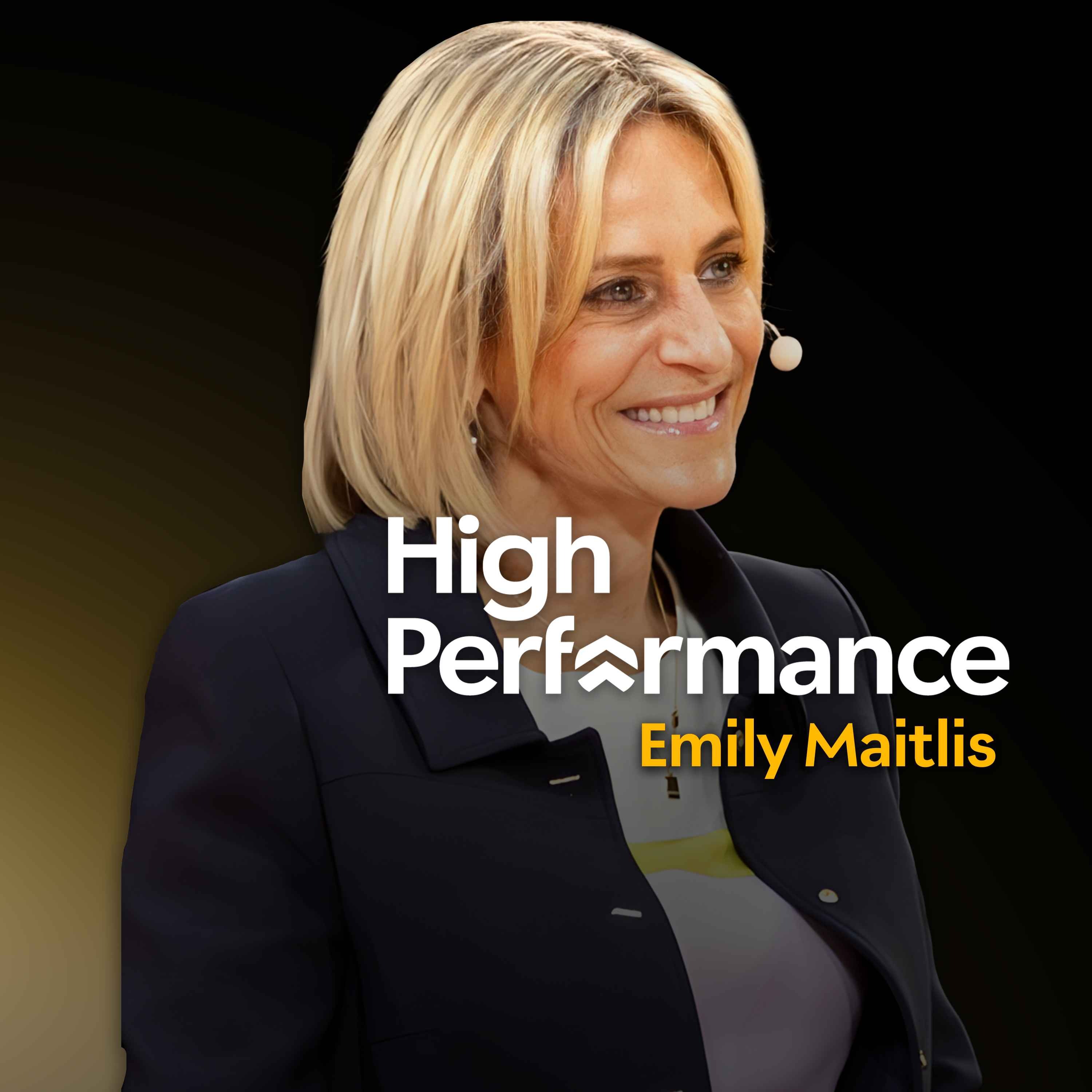
The High Performance Podcast, hosted by Jake Humphrey and Damian Hughes, delves into conversations with top performers across various fields, aiming to uncover the behaviors and lessons that contribute to their success.
In this episode, renowned journalist Emily Maitlis shares insights from her iconic interview with Prince Andrew, discussing her preparation, the tension surrounding the event, and the lasting impact it had on British journalism.
Written by AI. May contain mistakes.

Get the gist, explore an idea or ask about something said.
 Claude
On The High Performance Podcast, what are the key points of this episode?
Searching your listeningAutomatic transcript. May contain errors.
0:28Watch it early on the High Performance App. Right when you need them. Work smarter and faster with Upwork. Go to Upwork.com now and find your freelance expert. That's U-P-W-O-R-K dot com. Post a job for free and get started today. Ah, DSW, birthplace of the humble brag. Here, the shoes are so good, no one would ever know how little you paid. If you didn't go telling everyone that is. And with never-ending options for every style, mood, and occasion, all at really great prices, we'll definitely give you something to brag about. So go ahead, stock up on fresh sneakers from your favorite brands. Or try those boots you always secretly knew you could pull off.
1:06Find the shoes that get you at prices that get your budget at DSW stores or DSW.com.
1:15This episode is brought to you by Opera Air, the first browser with mindfulness at its core. Now, most of us spend hours every day online, but how often do we pause to take care of ourselves whilst we're doing it? And that's where Opera Air comes in. It's a lightweight, fast, secure browser built not just for productivity, but for your well-being. With Opera Air, mindfulness is built right in. You'll find free breathing exercises, guided meditations, and soundscapes with ambient sounds, lo-fi music, and binaural beats, all designed to help you focus, relax, and even spark creativity while you browse.
1:50I was literally there sort of going, am I making this choice depending on how big the tragedy is? I don't want to start thinking like that. And he said, I went to his house. Maybe I was too honourable. And I just thought, I'm not sure that's going to sound how he wants it to sound. I was the one person in the world at that point who could ask the questions that the women wanted answering. That is the voice of journalist Emily Maitlis. And this is High Performance, the podcast that turns the lived experiences of the planet's highest performers into life lessons for all of us. I want to start this podcast at a particularly crucial moment.
2:38Emily is in the toilets at Buckingham Palace, five minutes before the cameras roll on the most talked about royal interview of our time. There's no team around her, no script to follow, just silence and a single question running through her mind. How do I speak for the people who'll never get the chance to ask? Now that's exactly where we start this fascinating conversation, at the moment that pressure, preparation and purpose all collided. From covering trauma on the front lines to walking away from a 20-year career at the BBC, Emily Maitlis shares the cost of clarity and the power of learning to trust your gut when everything's on the line.
3:23This is the story of Emily Maitlis and the five minutes of silence before a life-defining interview.
3:35I hid in the loo. Did you? Yeah. And I'm not really joking about that because the one thing I would say is that a good interview is made in the five-minute silence that you spend on your own before it. And I think that is golden time. For me, it's golden time. And what do I mean by that? That as soon as you're shown into a room, particularly an overroaring room, like a Buckingham Palace ballroom, which was where we were, everything starts. You know, there's people kind of checking makeup. There's lights. There's somebody micing you up. There's people coming to shake hands. There's somebody who introduces themselves.
4:17There's like, do you want to teach? They're all lovely. It's all helpful. but you lose your silence right and actually at that point you've got your game face on and you go oh hello lovely to me oh no oh that's kind of you oh no i would no sugar um you know you're starting to be somebody that is that is sort of playing the social game right and i suddenly realized that i just wasn't ready i just wanted five minutes on my own so i excused myself and i I just, I said, you know, is there a ladies? I mean, it's not, you know, a ladies, it's a Buckingham Palace Lou. I mean, it's sort of amazing. And I just locked the door.
4:55And I remember just sort of sitting in the corner going, right, where's my head? How do I find clarity? How do I just let everything go silent? I don't want to be saying hello. Don't want to be shaking hands. Don't want to be fiddling around. Don't want to be checking buttons. I just want to know where my head is before I go in and do this interview. What did you find? You wait for a single note. That's what you do. And sometimes you have this blinding clarity. I can't explain it any other way. But you've got this fog of questions in your head or on your sheets or your notes. You've got like 30 questions.
5:40and then you think what's the question that you're asking what's the purpose right and we always say that in news with headlines if you can't write a headline if you can't tell a story in sort of five words it's probably not the right story it's probably not the right headline once you've got the clarity and that single note sound which is like what am I going in I'm just going in to find out. And that was the moment when I realized that the only role I had, you know, wasn't to trip up, it wasn't to, wasn't to confuse, it wasn't to, I was the one person in the world at that point, who could ask the questions that the women wanted answering, right?
6:26That was all. And so actually, I found a place of relaxation, because suddenly you're just the conduit. And you take your own mind out. It's not my ego. It's not my questions. It's not, I'm just trying to get to a place where the questions that everyone has been asking, that have been, you know, ricocheting around the press and, oh, why did he do that? And what was that about? And how did he go back? And why was he still friends? And should he have known about the thing? That's all I had to do. I just had to be the cable that asked the questions. And the truth is, if we hadn't got it, no one would know.
7:05So you've always got that to hide behind. No one knows, right, until you actually do it. But you're palpitating because you are thinking, this could be the biggest thing I ever do, professionally, journalistically. This could be the biggest thing I ever do. And if it goes wrong, it will be the worst thing I ever do. And you never think, this will be the best thing I ever do, because that's not, I don't, that's not how I'm wired. right? I think this has all the potential to be a car crash, which it was, but not necessarily in the way I was sort of thinking. And so, yes, I think you try and protect yourself from the fear by saying, oh, you know, lots of things going on.
7:56So that's the sort of neurological feeling, which is, I'm really nervous. I'm really scared of this. And that's when you need a brilliant team around you. Because your team is the person who says, of course, you're going to knock it out the park. Of course, it's going to be brilliant. And we're going to get to that place. Right? And it's never you on your own. It's brilliant camera people. It's brilliant lighting. It's brilliant sound. It's the person who is role playing with you across the table, right? who is being the prince, who is putting you through your paces. And I can honestly tell you that my editor, Esme Wren, played that role and she was way tougher.
8:36I mean, I was terrified of her by the end of our hour because she would push back at me in a really sort of hurtful, incisive way that left me sort of stuttering. And actually, that's the next thing, isn't it? It's preparation. You want to be so clear and just learn it in a funny way. It's a weird word, but you know what I mean. You want to know your dates. How did you know what to learn, though? What was the focus of your preparation? I went through every bit of research I could find. So I treated it like a school project, right? Type in the name, read everything that has been written, watch every documentary, go and follow all the different splits on the trees.
9:20Who's that person? Who's Stephanopoulos? Who's that? Who was at the party? What were they doing? Who's Virginia Dufresne? What's her connection to him? What's their connection to them? What's the date? Why does it matter that that was Florida, not New York? What's the difference between the jurisdiction in a Florida court versus, you know, a little St. James Island? You are trying to, again, insulate yourself from mistakes, right? I wanted to be word perfect. I couldn't tell you those dates now but if you'd asked me that I would have done it like a mastermind candidate you know contestant I would have said no that was 2017 not 2008 you know or that was the 18th birthday not the 21st birthday that was the time he went there sorry no no I'm interested because I love the depth of research you do but before you start that do you have an objective for that interview if you had to define what success would be for you?
10:14It's a really simple objective, actually, which is that you want to get the most out of your interview and out of your interviewee, right? It's as simple as that. So if I'm doing an interview that leaves people confused, I've failed, right and if I'm doing an interview which has interrupted or cut somebody short or not got to the bottom of something I've failed and so the way we prepared for it was I sort of think you know in Lego like when you're just freestyling Lego you build your blocks if I'm making a house you get your foundations in place. You don't just build one tower up, right? Oh, I'm just going to follow this one thing I've learned until it topples over.
11:07You go, first question, second question, third question, fourth, where's the bridge between that one? How am I building on that? And so there's a series. If you go back and look at the interview, I was just trying to get things confirmed. So did you go there? Did you go to the Manhattan house? Yes, I did. Did you go to the island? Yes, I did. Were you on the jet? Yes, I did. Because if at any point, the answer's no, then 10 questions you've got don't work. So if he'd suddenly said to me, I was never in the house in Manhattan, I was never in the Epstein house, suddenly I'm thinking, oh, blimey, I've got to rethink that.
11:47And you've got to recalibrate really quickly. So part of an interview is you explaining to the audience what you're doing. I'm just checking that I've got my facts right on that. I'm checking I've got my facts right on that. Then you did that. Is that right? Yes. Then, I think it was 2018, you did, you know, whatever it is. And you're building, you're building the structure of the narrative that everyone understands. So all that, it's not difficult stuff, but it is, it's slow. And if somebody had said, at that point, you've only got five minutes, the whole thing would have been over. because I couldn't have ever got to a place where I was asking the bigger questions, you know, the fundamental questions, the allegations that I was putting to him only worked once you had the whole structure sort of solidly in place.
12:37So when the interview goes on then and it gets to where you've established the facts, you've built the foundations, then you have to ask those searing questions. What was going on there? Was it still the process of just asking the question or did you have a pause for thought to maybe check yourself and go, do I dare to go in with this? You're listening so hard because the trouble with questions is if you're not careful, you're sticking to them, right? And as you both know, sometimes that's the worst thing you can do because you miss what they've just said, right? So the most essential bit of that whole process is your ear.
13:24Like, has he just told me that? That takes bravery though, doesn't it? I think the whole thing takes a different mindset, which is, do I know what I'm trying to ask here? And it's not that you're not asking the questions that you sort of want answered, but you are listening. and there were certain points in the interview where I thought, oh, that's interesting. Oh, gosh, I wasn't expecting that. You know, just little phrases that were used, which told a whole story in themselves. Like what, for example? Like when he said he'd been too honorable, right? That was one of the phrases he used. I said, why didn't you tell Epstein after he was convicted of paedophilia?
14:15paedophilia that you couldn't maintain a friendship with him. And he said, I went to his house. Maybe that was wrong, but maybe I was too honorable. And I just thought, oh, that's going to strike a really weird note. I'm not sure that's going to sound how he wants it to sound. And so that was one. And then there was another point where he talked about, I said, didn't you hold a party for, you know, Gilead Maxwell? And he went, no, And I thought, oh, my God, I've got this wrong. Because I had my notes and I'd checked and I'd done all the research. I was like, no, my research is crumbling. And then he looked up and he went, it was a straightforward shooting weekend.
14:57And that was the point where I just thought, but I get it. We're on different sort of visions of reality here. Like for him, a party is 500 people. You know, it's a ball. and the straightforward shooting weekend was kind of 16 people staying in a country house. He's not going to watch in llamas, is he? Right. It's just, I mean, it's... And the trouble is, I'm not... I totally got it. I got the fact that within his context, that was totally different, right? But it didn't mean that when I'd said there was a party, I was wrong. it just meant that you know for me a house party with 20 people is quite a big deal right for him if it's less than five fewer than 500 that's not a party and so it was just sort of recalibrating kind of understanding that genuinely from his own position you know from his own exalted very different childhood he came at things very differently and so there were just those moments where I had to sort of just tweak my brain a bit and understand that he was he thought he was you know he was clarifying and he was but it's there were just these odd turns of phrase yeah so let's talk about um the reaction then to the interview because I think that in the modern era particularly in the social media era the interviewer is as under the microscope as much as the interviewee so the interview comes out and i'd love to know how you react to other people reacting to your work you know how are you with scrutiny and all that sort of stuff it went out on saturday night and i had my friends staying and we always um we always do a run to queue right we do like a long sort of 10 mile run and so next morning sunday morning we got up and did our river run.
17:00And she said, Oh, God, we got to talk about this. We got to talk about this. And I was like, No, I don't actually, I don't want to. I was really happy with it. It was all fine. It had nice feedback. But I didn't, I just didn't want to talk about it. I was like, No, when I'm panicking about something, then I want to talk, right? My running chats are really important, because they help me sort out my head and my brain. And Oh, I don't understand this and am I getting this wrong once I've done something I'm like yeah let that go I was very happy to let it go and I remember we um we ran all the way and then we got to our little coffee shop you know stop for coffee and just a couple of people said oh like the interview but that was it and so I actually came away thinking oh that's it was actually quite quiet it's sort of it's all been quite quiet you know I hadn't seen any of the and then obviously the press over the next few days just kind of took off.
17:53I think I'd expected it to be a quieter landing in a way. And you are under the microscope. Of course you are, you know. But I think at that point, I was happy with the job we'd done. And I also knew that they had been, we'd been very careful each step of the way that we were including the palace, you know, and his team in what we were doing, what time it was going out, checking after it had gone out, you know, were they happy? There hadn't been any ambush, you know, there hadn't been any moment where it was like, oh, just slip that one out. It had all been done rigorously in accordance with what they knew was happening.
18:35And so actually, I sort of walked away from the noise at that point, because I sort of thought, yeah, you know what, I'm going back to the start. In my head, I'm happy with that. It, you know, I was fair. They knew what we were doing. No code of honor was broken. And so it was sort of, it was fine, actually. And it was good. But I think going back to your question, what we've seen now, and it's really interesting on interviews like Andrew Tate recently on the BBC, or Elon Musk, who also did the BBC, that there is no automatic authority for the journalists. And what do I mean by that? That in the halcyon days, in the olden times, you go with your cameras and your mics and you've got your platform and you are the sort of authoritative, I'm the journalist, I'm the broadcaster and I'm interviewing you.
19:31And now, particularly Elon Musk, he's got his own platform. So as soon as he does an interview, he whacks it out. So there is no sense of the journalist dominating the interview. Same with Andrew Tate. He recorded the whole thing. He puts it out to his, you know, what is it? 8 million or 16 million, you know. So you as a journalist feel seriously scrutinized because you are their interviewee just as they are your interviewee. And I think that does change the whole dynamic. It makes it very tense, actually. Well, it levels the playing field. It does. How would you describe high performance? I think it's about getting yourself to a place where you are happy with who you are.
20:21And it sounds very obvious, but actually, whether it's about what you look like, what you feel like, what you sound like, whether you're getting up each day to do a job that you like, love, rather than something that sort of terrifies you or defeats you or frustrates you. I think it's about finding your inner place where you can say, I've actually got to somewhere where you're going to have bad days. You're going to have really bad days. But broadly, you sort of think you like who you are. You like what you're doing. You like what's around you. And I suppose that for me is quite important. It's a mental place rather than a sort of a grades place.
21:05Yeah. I think that some people think high performance isn't about that. I think it's about success, right? But what value does success carry if you're not happy, if you don't have that inner peace that you've just spoken about? So would you mind sharing with us how you got to that point, what the journey looked like, and perhaps some skills that you employ that other people listen to this could? I think it's about working out for yourself what's going to result in you feeling like the day's gone well and it sounds really sort of silly but you know I did a job that I absolutely loved right I worked at news night BBC news night for 20 years and I loved it and it was very satisfying like you know mentally challenging intellectually but it really took its toll on me and it took me a long time to admit that.
21:56There were times I was living off vodka and caffeine. And it sounds crazy, but the one was to wake you up when you were too tired to think, and the one was to send you to sleep when you were too wired to sleep. And I just look back to that. There was a sort of crazy period, I'd say around 2014 to maybe 2018, I was traveling a lot. I was covering really traumatic events. I remember getting off a plane, having been on a sort of circuit campaign following Donald Trump, you know, around sort of America in 2015. This was, you know, before he'd been elected, before we even thought it was, you know, sort of a proper sort of chance.
22:41And I'd done two weeks, literally, where you change beds every single night, you know, and you're flying internally every single, you know, and you spend all your time in sort of aeroplane air that you can't breathe, eating rubbish food, all the rest of it. And I came back and I remember my phone had broken. And so you can't operate as a journalist without a phone, right? It's just sort of rule number one. And I remember thinking, it was Friday and I was like, oh, should I just leave it for the weekend? I'll just be completely switched off. Yeah, it doesn't matter, it'll be fine. And then I just had this niggle and I was like no I've landed I'm going to go straight into BBC I'm going to get somebody to check it out they gave me a sort of you know replacement I got something got the sim card I was like okay well fine I've done that but I'm not bloody switching that on and then the Bataclan attacks in Paris kicked off it was the 13th of November remember that really well because it was Friday the 13th.
23:37And I remember hearing my phone at two in the morning and just thinking, I can't deal with this. I've literally, I haven't, I don't even know what country I'm in, what bed I'm in, what city I'm in, what time it is. I was, my time zones were completely shot. And I literally sort of reached out. I think I'd taken a sleeping pill as well and just like shoved the phone under the heaviest book I could find. It was about like war strategy, you know, a thousand page two. I was just like, I'm just going to sink whatever's happening there and not deal with it. And I just turned it off. You know, I was just like, I couldn't deal with it.
24:12And it kept ringing. And at 6am, I was like, okay, there was something telling me to get up. And it was my editor saying, get on the next train, you know, to Paris. And I remember asking this dreadful question, which every journalist recognizes and no human being ever wants to ask, which is how many yeah and I I was literally there sort of going am I making this choice depending on how how big the tragedy is like I don't want to start thinking like that that's an appalling way to think but that I think reflects what I was sort of going through physically and mentally I just couldn't deal I couldn't I hadn't had a proper night's sleep I hadn't had my phone working I hadn't you know I'd been sort of I drug myself to sleep and pulled myself awake and they just said, you know, we think it's more than 100.
25:03Get on the first train. And you haven't really got time to think, right? So you just, I always have a grab bag ready. The trouble was my grab bag had already been used because I'd been grabbing to go to America. So I had to sort of start all over again, you know, where are your clean underwear? Where's the, you know, where's the bits and pieces? And I remember getting on the Eurotunnel, Eurostar, and an email came through and it was an advisory and it was meant to be a really helpful advisory from the BBC and it said anyone traveling to Paris beware of an unmarked black Renault which is packed full of explosives and I was like Jesus like it's unmarked like it's a black Renault like how what am I you know and I remember thinking that's not helpful because you know How can I be aware of an unmarked black Renault, you know, that might be full of explosives?
25:59And so all it does is sort of fuel your paranoia more and more and more because you're going towards this place that was still alive, that was still full of terrorists that hadn't been tracked down, that had 130, I think it was, dead by that stage. and you've still got to do a professional job, you know. And so I think just having, recognizing just the toll that that is taking mentally on your head and on your body. And I remember, you know, sort of turning up sometimes at vigils in the US, a lot of awful school shootings and, you know, gun crime events. And I would turn up there and I'd go, right is the vigil six or seven and I thought no one should know the pattern of a U.S.
26:48school shooting vigil that well that they know it's either going to be six or seven like I shouldn't I don't want to know the drill that's not a drill I ever feel comfortable you know being able to kind of plan around that's not the person or the journalist I wanted to start off being and so I realized I was getting into this slight, you know, mindset where I was just covering trauma, almost like a really normal thing. Okay, come on, I think the video will be at six, it might be at seven. But if it's at seven, then we'll just get, you know, Starbucks first. You know, you don't, you don't actually want that to be your mentality or your head.
27:25And of course, you know, the adrenaline of it and the sense of a story well covered or an interview well done, or a sense of being in the place and hearing the voices of people and the tragedy that they were feeling, people telling you their stories is very flattering. You know, it's very emotional and it's a sort of trusting sense. And so it's great in the sense that you think, yes, I've delivered something back to base. I've done this. But I'd be lying if I said it didn't actually take its toll in a sort of human way. So can we ask you about you as a journalist now as opposed to a BBC journalist?
28:01because you've made the decision to walk away from the institution. That seems like quite a brave move. It seems like it would have almost been a bit of a comfort blanket to have been surrounded by that. Would you tell us a little bit about your decision to do that? I think I don't really believe in a job for life, actually. And, I mean, great if it works, you know, great if you're happy. I'm not saying that everyone has to change job, But actually, for me, I'd done 20 years. And that's a long, it's a big chunk of your life, you know, in one place on one show. And particularly a show, you know, as I mentioned, that doesn't get you to bed before one in the morning.
28:46You know, I was raising kids, going to bed at one, getting up, you know, getting kids off to school at sort of 6.37, then running, then having to catch up on everything for the day and then start all over again. And it does take its toll, actually, on your body and on your sort of brain. And I think I decided that 20 years was enough or going to be enough. And then actually what happened was I'm just obsessed by US politics. and we had the best, like most extraordinary election, you know, of 2020 in the US where it was the COVID election, Biden versus Trump. And then Trump wouldn't acknowledge that he'd lost.
29:28And then he brought all the lawsuits. And then we had the whole thing with the hair dye and the, you know, garden center and the press conferences. And then it culminated in the January the 6th riots. You know, it was a kind of, it was an attempt to overturn democracy. And actually the idea that I would leave during that whole period was just crazy. And so I kept on staying for the next bit and the next bit of the story. You know, it's like not being able to sort of walk away from the story. And so I suppose really it was once we got to the end of what felt like the end to me of that whole thing, which took us into 2021, that I started thinking, okay, now it's, yeah, now it's probably time to you know look for the next thing and I don't linger on goodbyes I've noticed that about myself if I say I'm going my friend always says I'm terrible at parties because I have this sort of like quit while you're ahead you know just go enjoy it and then just get out so I don't unlike my mum you know my mum says goodbye and she's still there an hour later normally with exactly the same person that she's just said goodbye to.
30:41And there's nothing more frustrating than going, Mum, I think we're done. I think they're trying to... They booked us a cab. People who don't say goodbye at parties say five years over the course of their lifetime saying goodbye to people. Is that right? What am I going to do with that? Look what you've done with it. Fill my coffee pot with socks probably. I'm not big on nostalgia. So once the decision was made, and it really helped me that I was leaving with mates, right? So we always describe it as a sort of Thelma and Louise moment, you know, I mean, without, hopefully, you know, kind of suicide.
31:16But, you know, fingers crossed. But we left in what felt like a fast car with the roof down and our hair blowing in the wind. And there was something quite exhilarating about that, you know, because we weren't leaving out of, you know, anger or umbrage Cambridge or even, you know, boredom or anything. We were leaving because we were like, I think we've got a plan here. And yeah, I've got that thing again when I sort of talk. I'm like, oh my God, this could all have gone, you know, belly up, could have gone really badly wrong. But we thought we had a plan. And actually, you have to be prepared to fail, right?
31:55You have to be prepared to fail. And if I had failed at that point with what we want to do next, I like to think I would have gone I had great successes I had great stuff I wrote a book I did the interview I you know did stuff let's see what comes next but I think it was really helpful for me to know that yeah I'm going towards something I didn't ever feel like I was walking away I wanted to walk towards it yeah in many ways signifies a lot of your career like incredible bravery just making sure there's that small comfort blanket of having in this case someone with you but you know doing the preparation all those other things you always looked for something just to give you that little parachute if you needed it but journalism is very team you know it's very team orientated so i suppose that is that's really key to how it's very easy to be brave when you've got you know people that are helping you quietly taking the mickey you know yeah certainly we're just about out of time but we'd just like to very quickly run through our quick fire questions with you oh no three non-negotiables that you and the people around you need to buy into um i don't like diva behavior no divas okay i hate people telling me to relax okay i hate that because it normally means that they're they're not doing something that they probably should be doing and the third thing is I hate lateness I'm very punctual generally and I had a boyfriend who reminded me years after we broke up that I had a 15 minute rule and if he was 15 minutes late I'd just gone so rather than get angry or shout or grump or anything I just go and again I've saved a lot of time not waiting for people there you go what's the single best piece of advice you've ever received?
33:46ask for things particularly for women. There's this great line, I'm going to quote Caitlin Moran, who says, from the Bible, the meek shall inherit the earth. And then she puts in block capitals, women, this does not apply to you. And it's such a good piece, because, you know, a lot of women in their professional lives sort of think that they'll just be recognized. You know, oh, it must be my turn, it must be my turn. They don't realize that all the blokes in the room are going up and sort of going, can I have that? Can you send me there? can I cover that story and actually be the person that is prepared to ask for things because otherwise they never know that you want them right so I'd say that's been really helpful to me brilliant and does that tie in with the question what one piece of advice would you give to a young Emily just starting out her career well the thing I'd give to like any teenager anyone starting out actually is learn a language put in the time when you're 14 even if it feels boring and frustrating and embarrassing, you will never regret that.
34:49You know, it opens the world to you. So I'd say, yeah, learn a language. It's the thing I'm weirdly most proud of for myself, that I can open my mouth and blurt things out and not feel embarrassed about that. And I like that. And the final question, Emily, is what's your one golden rule to live a high-performance life? Get enough sleep. Yeah, don't shortchange yourself on sleep. For me, it's sleep and exercise. And the other thing I'd say is, on your days off, I stay in my gym kit because I get so much more done. So if I don't have to put my work clothes on, I run around in trainers, I run around in, you know, swimming kit, gym kit, I get more done.
35:37Brilliant, I love that. You never get invited anywhere, but that's fine. No problem. You leave early anyway, so it doesn't matter. look honestly thank you so much for that we could have spoken for hours i think for people who like the whole world does from the outside have an opinion of you and your job and the life you've lived you know to hear actually the strains and the stresses to hear the detail that you go to to hear what it's like in the public eye when an interview like that comes out but then also to understand a bit about a really brave decision to walk away from the bbc which let's all be honest 20 years ago, nobody did.
36:12Maybe even five years ago, nobody did it. So a really, really interesting insight and we can't thank you enough for sharing that with the High Performance audience. Thank you so much. Emily Maitlis, ladies and gentlemen. Thank you. Thank you very much.
36:28Thanks for listening to this episode of High Performance with Emily Maitlis. This wasn't just a story about one interview. It was a masterclass in preparation, pressure and acting on purpose. Emily reminded us that real high performance isn't about looking like you're in control. It's about actually being in control when it matters the most by doing the work, asking the hard questions and learning to stay calm in the chaos. If you've found this conversation valuable, I'd appreciate it if you'd share it with someone who needs to hear it as well. And don't forget to follow or subscribe to make sure that you never miss an episode.
37:08We'll see you next time.
37:31My dog, Max, loves chewing on my favorite pair of shoes, almost as much as he loves his Blue Buffalo Life Protection Formula dry dog food. Seriously, he never leaves a crumb. And I love it too, because it's made with high-quality protein, antioxidant-packed fruits, and nutrient-rich veggies. Blue Buffalo Foods are made with the superior ingredients your dog needs to thrive. Can your dog food say that? Visit FeedBlueFood.com to learn more.
In this episode, we're joined by renowned journalist and former BBC newsreader, Emily Maitlis, who takes us behind the scenes of her iconic interview with Prince Andrew, sharing how she prepared for the encounter, the tension in the room, and the aftermath of a moment that became a defining chapter in British journalism.
She reflects on the teamwork, editorial precision, and personal focus required to deliver an interview that captured the world’s attention and reshaped public discourse.
Listen in as Emily Maitlis recounts the build-up, execution, and legacy of one of the most extraordinary interviews ever broadcast.
Listen to the full episode: https://pod.fo/e/19028a
Heights 👉 Get 20% off your subscription by using Code: HP20 here: https://highpfrmc.com/heights20
Hosted on Acast. See acast.com/privacy for more information.


