
 Ask ChatGPT


 The High Performance Podcast
18 Mar 2024 · 1h 11m
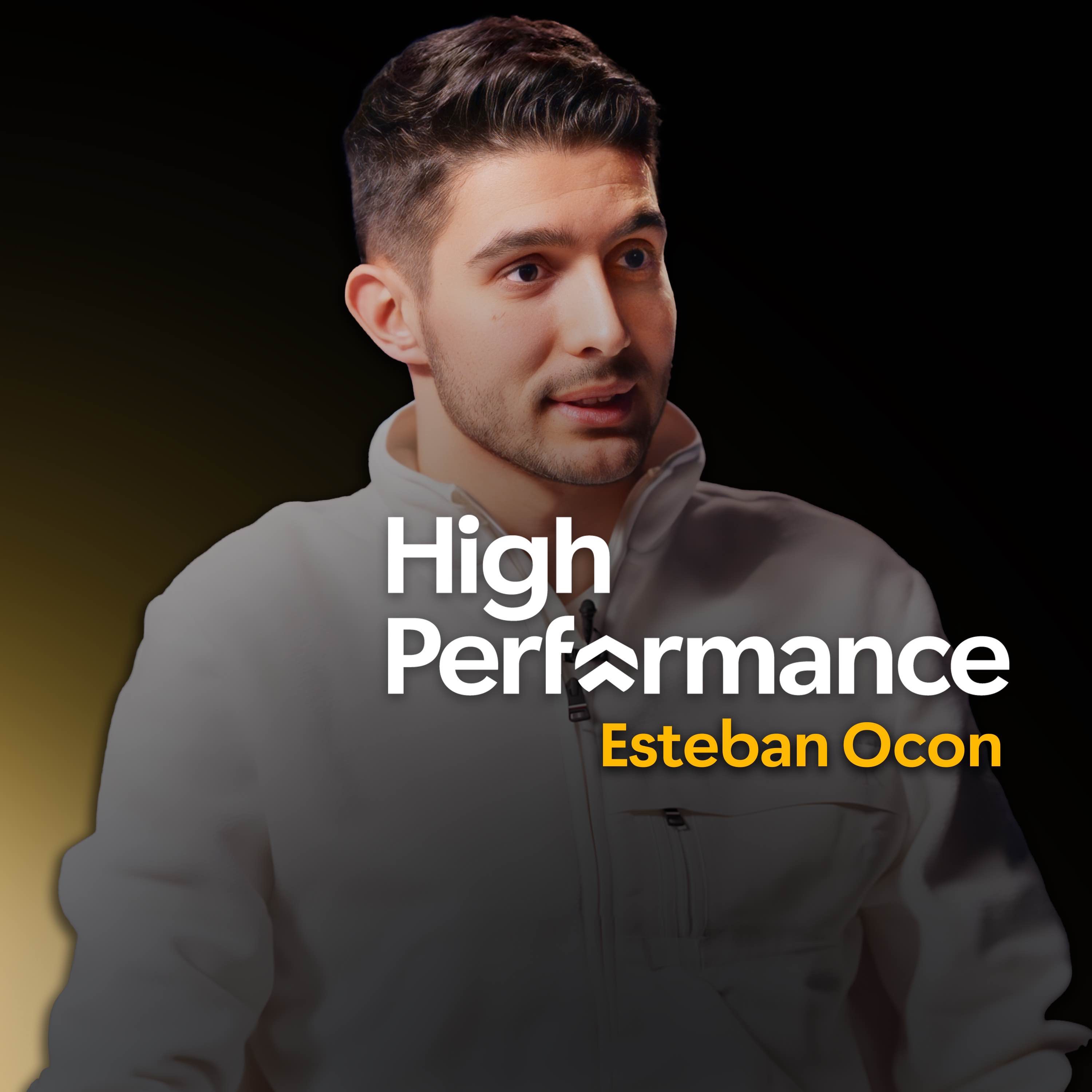
In this episode, hosts Jake Humphrey and Damian Hughes engage in an insightful dialogue with Esteban Ocon, a French Formula 1 driver for the Alpine F1 Team. Ocon discusses his journey to F1, the sacrifices made by his family, and the pressures he faced throughout his racing career. He emphasizes self-belief, respect, attention to detail, and how one can turn pressure into motivation.
Written by AI. May contain mistakes.

Get the gist, explore an idea or ask about something said.
 Claude
On The High Performance Podcast, what are the key points of this episode?
Searching your listeningAutomatic transcript. May contain errors.
0:00Watch it early on the High Performance App. Available now, Roman Kemp, the broadcaster, opens up a powerful conversation on success and mental health. Everybody's human. It doesn't matter who it is, two feet, two hands. If he's capable of doing it, you can do it as well with work. I had a lot of weight on my shoulder, very young, with the amount of sacrifice that my parents put. You know, we are living in a caravan, basically, dedicating our life to racing. And did you ever lose belief? No. all the pain that we had it was just all worth it just for that moment that is formula one driver Esteban Ocon and this is high performance the show that unlocks the minds of some of the most fascinating people on the planet I'm Jake Humphrey and alongside our high performance expert Damien Hughes we learn from the stories struggles and successes of our guests, allowing us all to explore, be challenged and to grow.
0:56So Esteban is an incredible talent and it's his talent that's been vital in propelling him to the top of the motorsports world. A talent that you're about to hear is matched by an unwavering self-belief and a remarkable ability to withstand pressure. The kind of pressure that comes your way when your whole family press pause on their own lives to help you live your dream. When we sat down with Esteban at the start of the 2024 season. There was plenty of uncertainty with the car struggling for performance, a contract with only a year to run, and almost every F1 team looking at a driver change in the near future.
1:29So how does it really feel when you're in the eye of the storm? Let's find out as we welcome Esteban Ocon to High Performance. However, before we hear from Esteban, a few messages from our valued partners who allow us to offer you this content totally free.
1:51The market's uncertain. Revenue's tied and hiring on hold. That's why results-driven companies are using Upwork to keep work moving. Go to Upwork.com today and start hiring proven freelance talent fast. No bulky overhead. No rigid long-term contracts. Just the right expert right when you need them. Work smarter and faster with Upwork. Go to Upwork.com now and find your freelance expert. That's U-P-W-O-R-K dot com. Post a job for free and get started today. For a limited time at McDonald's, get a Big Mac extra value meal for$8. That means two all-beef patties, special sauce, lettuce, cheese, pickles, onions on a sesame seed bun, and medium fries, and a drink.
2:34We may need to change that jingle. Prices and participation may vary. This episode is brought to you by Opera Air, the first browser with mindfulness at its core. Now, most of us spend hours every day online, but how often do we pause to take care of ourselves whilst we're doing it? And that's where Opera Air comes in. It's a lightweight, fast, secure browser built not just for productivity, but for your well-being. With Opera Air, mindfulness is built right in. You'll find free breathing exercises, guided meditations, and soundscapes with ambient sounds, lo-fi music, and binaural beats, all designed to help you focus, relax, and even spark creativity while you browse.
3:18Well Esteban, welcome to High Performance. Thank you so much for welcoming me. What do you believe High Performance is? I believe High Performance is a mix of a lot of things. I think a good routine, that's one thing. Good sleep, all the parts of building basically and preparing to perform at the moment. You know, it's all the part, the iceberg that you can't see. And it's not just at the moment that you have to perform and you call it high performance. It's all the rest that you need to put together and be happy with to be able to perform at a high level. So that's what I believe high performance is.
3:59And I wonder how much sacrifice plays into high performance for you. Because from all the people we've spoken to and all the research we've done about this conversation, sacrifice was a word that cropped up time and time again. What do you think about when I say sacrifice? Yeah, for me, sacrifice has been part of my whole life, really. For some reason, it kind of had to come all the time at one stage. In my career, when I was young, with my family doing go-kart at a national level, things were about to stop. So my family decided to sacrifice their own life for me to be able to succeed, continue to pay the rest of my career.
4:44And luckily, you know, I got support from Formula One team, Formula One management, you know, to continue. But then a bit later in 2014, when I won the Formula E3 title, again, you know, things were about to stop. and I was about to go back to work with my dad as a mechanic. And all of the sacrifices that we had to do were on the edge always, but made us manage to continue the story and to continue the story where we are today. There's no regrets to have. I had a very different life than most kids, but there would be nothing now that I would change it for. So no regrets. So when you say you had a different life than most kids, can you give us an example of that?
5:35Yeah, different life than most kids. I never went to ski on holidays, for example. We were going on racetracks, driving on the wet, driving on ice. That's what we were doing. I never really went to birthday parties of other kids. We were rarely going on holidays or weekends with my parents. It was all about going onto the racetrack, training. Yeah, everything was going into there. So that's why I say, you know, I had a very different life compared to kids. I had a lot of weight on my shoulder very young because with the amount of sacrifice that my parents put, I had no rights to fail. Basically, I had to succeed.
6:23Otherwise, we are going to be in big trouble. So, yeah, it's a different life. Being adult at a very young age is not an easy thing. But, I mean, where we are today, I think everyone in my family and everyone close by of us is proud of what we have achieved and could have gone to the other way, to the wrong way. But we've always believed it was possible. And I'm glad that we thought like that. So for those people that don't know your story, you made reference to at the age of eight, your parents decided to put their life on hold to support you. Would you tell us a little bit of the detail of what you mean by that?
7:05Yeah, so when we were doing the national championships, you know, some kids, you know, had the luxury to be able to be in race teams or in factory teams, all of that to be in the big, you know, tents and have, you know, mechanics, a lot of different engines. and all of that. I had one new chassis, two used engines that we chose carefully. And we were recycling tires at testing, you know, going to the bin, taking some tires from other kids that were still warm but still in very good condition, putting them on testing. So just practicing like that. And then we knew that arriving to the race itself, We would be having the same tools as the others at the time.
7:52But yes, I mean, we didn't have the same amount of money when we were younger compared to some others, but it didn't stop us from doing things well. And, you know, my dad and my mom, they were doing the job of 10 people with, you know, the catering, the tent, the go-kart, the engine, everything. You know, we are living in a caravan, basically, for five years, going around all Europe, training and practicing and basically dedicating our life to racing. What was their job then that they stopped doing? Yeah, so my dad was a mechanic and my mom was working with him to our little garage, let's call it.
8:37So my dad was repairing cars and yeah fixing cars selling cars when when I was younger my mom was doing all the paperwork helping him to to to do that business but there were only two only both of them yeah and and they stopped doing that sold the garage sold the house the house and the garage was the same place anyway that's where I grew up they sold it to support your racing yeah for the racing yeah at what age That was in 2009, I would say. 2009, 2010, yeah. So you were how old? Well, I'm born in 96, so yeah, 12, 13, yeah. Do you remember the day that you kind of had this conversation with your parents where they said, Esteban, we're going to sell the house so you can raise?
9:24Yeah, I never really had that conversation. And I think that's where it was a good thing, is that I was realizing how much work they were putting in. you know, for me to be able to continue my passion. I was doing homeschooling as well on the side, you know, in the car and sending, you know, the exams and everything by post wherever we were. So it was quite crazy. But yeah, I mean, I knew it in a way, but they protected me super well, you know, from that pressure. And I was just enjoying everything I was doing. I still have a memory. I remember we are doing the Monaco Kart Cup race. and obviously we couldn't park in Monaco with a caravan to sleep.
10:08So we were parking on the IS Monaco parking lot and I remember opening the caravan door and having the sea view in front of the caravan. And I remember at that time thinking, yeah, I'm going to be racing in Monaco in go-kart, you know. And so it was just great memories, tough memories at times for sure. Very tough moments we've been through. Are you aware of that research that child psychologists often talk about when you've described you experience pressure? And child psychologists often say that as children we experience three types of pressure. We talk our stress, they talk about there is a toxic stress where it feels intolerable.
10:49There is a tolerable level of stress and then there's a positive framing on stress. I'm interested in what your parents did to protect you from that toxic level of stress to enable you to go out there and cope with the pressure of having to deliver results. I think they were probably protecting me in a way that all the stuff that I had to do was really the on-track thing. They were leaving that to me and they were taking all the maximum of the weight on their shoulders in preparing everything, the truck, getting the caravan ready, getting the go-kart ready, all the loading, thinking about all the parts that we needed, going to talk to the right people.
11:36And I was then sat in the go-kart having to think only about the racing and that was the main part that we had to do, obviously. But it was always a positive pressure. There was times, of course, where it went a little bit into the second stage of pressure that you mentioned. I remember we were in Portugal and at some stage we were doing two or three days of testing at the time and we saw another driver that was going running around the track in the evening. And at the time I was quite skinny, quite lean and my dad was like I've prepared you the bike so you go around the track and you go cycling.
12:20And I was very tired because we did three laps of the track. And I remember at the time he said, no, you still, you go, you know. And I've seen in his face that, you know, he was afraid that I would lack something, maybe physically or something for me to get there. So at the time that also transferred a little bit of the stress to me. So I went, I was very tired, but I didn't really say that to him. I took it on me and I went to do the laps, you know, around the track. And I was, what, 13 at the time. So I went cycling because I couldn't disappoint him, couldn't disappoint the people that were working so hard with me.
12:59And yeah, we had to make it happen. We couldn't fail. So living in a caravan, though, I imagine there's not many places to go and hide from each other, from your parents. And there must have been moments where you did need to process disappointment or anger or all those other complex emotions that as a teenager you're navigating your way through. how would you do that without exposing those emotions to your parents? I don't need to hide. I mean, I'm very happy to share the emotions. And anyway, the emotions that we have, myself and my parents, are the same ones. They're always linked to what's happening on track, what's happening with my career in general.
13:44And it's still the same thing. We don't need to even have a chat about that. We know if something didn't go the way we wanted, we are going to feel exactly the same way. So there was no need to hide. We're just talking about it and then figuring out the solution. It was always the same process that we were going through and it's still the same process nowadays. Can you talk us a little bit about hope and belief? Yeah. So when your parents, as they would, told the village, the family, the friends, we're selling up, we're going to buy a caravan and travel around Europe supporting Esteban. How many people doubted them?
14:22It's a good question. Everyone, for sure. Everyone. People thought, yeah, that's crazy what you guys are doing. Even if I go back to it now, I mean, the strength that my parents had to do something like this, it's nuts. you know, if I was in their position now, I would probably not be doing that, taking that much risk, you know. But they saw something in me that they believe it's worth taking the risk, I guess. And as I say, we are proud about the outcomes and how it went now. But I can give you an example. There was that teacher that one day at school, that teacher basically said, yeah, Esteban, And you should probably stop, you know, because it's like tennis, you know, a backhand and everything can be over.
15:15It's not nice to discourage somebody that young. I think it should be the opposite. You should try and motivate and say it's good what you are trying to achieve, like best of luck. You know, not saying, yeah, don't even try. You know, where we come from is not possible because that's not true. So tell us about your own self-belief then. you've got the added pressure that no one else has that you're racing against with the decision your parents have made so how did you keep believing and did you ever lose belief? No it was coming in coming out but describe that though because lots of people would love to be able to do it I think it's harder when you are you know older to make that go through and pass and make it go away but when I was younger I had that I had that capability even more to be doing that And the only thing I was dreaming about is drive that go-kart on the weekends.
16:11You know, seeing my dad working on it and just go back on the racetrack. That's where I felt good, you know, in that little four by three meter square tan that we had with all the tools and everything and the dog and the van. And that's where I wanted to be. So when you were taking tires from bins of your opponents that they'd discarded, how much of it did you use that as fuel to say it's about my quality behind the wheel rather than the quality of my kit yeah but that's that's one thing you know it's not because we had second hand chassis or second hand engine that it was worse than the other in the race teams for example um like my dad is probably the best mechanic i know clearly i can comfortably say that one day I would love for him to work in Formula One I think that's probably a tricky thing but he would be definitely capable straight away to be working in Formula One but he had this magic in his hands that I knew my go-kart would never fail for example there was always a safety in it he was the one for the hardcore go-kart fans or people that know a little bit he was the one creating that safety you know on the sprocket with the chain to have two bigger sprockets on the side never have the chain jumping you know like the bicycles you know when you have the chain going off we had the double safety so when I was going on the curb the chain was never jumping and now people I've seen are selling this device because my dad had no idea you can put the rights on it and then people had to buy stuff from him but he basically made that first we're making them the best out of what we had in hands i think it's the most incredible story and i love the fact that your face lights up when you talk about the memories of that time and it's easy to you know discuss the the people that didn't believe it or the challenges of being in a caravan or the pressure that was on you or the loneliness of not being able to go to kids parties but the caravan was nice you know but look at the way you talk about it now and have you have you taken the opportunity to just say to your parents like wow like you did this for me and i'm so grateful um maybe i should no we i mean we chat about the good old times and you know sometimes i i just arrive i give them a hug um i think an action is probably more acts more than words for us in our family.
18:46We don't need to talk. That's what I'm saying. We just need to look at each other, give a hug, have a little laugh, and we know. What was important to me is to give them back all the hard work they've done, everything they've done for me. I'm proud now and I can say that I'm giving back what they've done. They've got a house now. I've helped rebuilding a house for them. They are working for me now. The garage, it was very tough. My dad was doing 20 hours work a day on cars. He was by himself. So even if he's a superhero to me, there's only so much a man can do. And yeah, they are now working for me.
19:37and for the right things. And yeah, it's better that way. So I'm giving something back to them. They will have lost a lot of time in their life working the way they did to me. But I'm happy that now they are in a good situation. I want to talk about the actual racing now because I think this is really interesting. I know a lot of people will talk about the fact that the first time you came across Max Verstappen, who's the big rival in Formula 1, was when you were racing together in the junior categories. and in go-kart it was those years you know when we were with my dad against you know him and his dad you know his dad had the experience before because he raced in go-kart so they had a little bit of an advantage on that side but my dad and his dad at the time you know they were doing a little bit of similar similar thing so really hats off to them as well for what they've done absolutely and so what was that rivalry like then between you and him and between the two dads as well because I've seen the go-kart world it can be fiery yeah it was it was very fiery but everybody was was a little bit scared you know of Joss and Max at the time because Joss was driving Formula One before so he's new for his how fierce and how you know scary can be you know talking to to other young kids and all that on go-kart tracks but But, you know, my dad and myself, we were never scared because we just wanted to race, you know, and wanted to race hard.
21:06And we've raced hard. We've raced really hard. And at times we cross lines, you know, at certain go-kart races. What do you mean by that? Well, what we mean by that is that we sometimes didn't finish to the places that we were supposed to finish because of how hard the fights were, you know, in go-karts. But all of that, you know, made me learn a lot on how to race. And I hope, you know, it made him learn, you know, a good amount as well. And then we've met again in Formula 3 later, you know, from go-kart in 2011, three years break. And then we met in Formula 3 racing for the title as well. And there I was hard racing as well.
21:49So I've enjoyed, you know, the racing with Max. I've always enjoyed, I think, you know, tough racing. is always cool to me. You know, racing side by side, being very close. That's what racing is all about. There's nothing else that makes me that exciting. So when you raced for the title in Formula 3 together, who won it? I did, yeah. I did. But the following season after that, he moved to F1, right? Yes. And you didn't? No. I'm very interested in exploring that moment from your perspective. You know, you beat the guy and he gets the nod. How was that? Yeah, I mean, it's things that were out of our control, let's say.
22:35And that's the moment where I was actually about to go work with my dad as a mechanic as well. Yeah, because the program I was in, which was called Lotus F1 Team Junior and Gravity Sport Management, had no money for me to continue at the time. And in this transition from 2014 to 2015, I was on the phone constantly calling Toto at the time and asking him, you know, if there was any solutions for me. Or because I've met him during that year because I won with a Mercedes engine in Formula 3.
23:12And with Gwen, Toto and Fred at the time, Fred Vasseur, we found a solution for us to be able to continue racing. to race in GP3 and I won the title as well. So I got in the Mercedes junior program. From there on, it was back on route. But, you know, from Max not winning the title, finishing third, and then going into F1 and me not having even an option to continue racing, that was tough to swallow for sure. And I was very pissed off in those times. And how did you deal with that? Yeah, that was difficult. That was very, very difficult because to me it was not fair. Not saying that I would go to F1 because I always believed that my time would come.
24:05That if I put hard work enough, got the results, my time would always come. But in those moments, I wasn't sure that I was going to even continue racing. And for me, that wasn't fair. and I'm glad that you know Toto Gwen Fred all these guys saw that it was not fair and found solutions for me to continue but what did you I'm always interested in the quiet moments where you said you were always emailing Toto and phone calling looking for solutions but I'm interested when you go back to your parents home in Normandy at that stage what are you saying to them what are they saying to you that keeps your spirits up and stops you falling into despondency.
24:48Yeah, well, did you call Toto? Did you have him on the phone? So we get them to come up with solutions. Yeah, yeah, exactly. It was always about trying to find a solution. But imagine, you know, I'm 17 years old at the time. And, you know, I'm calling constantly one of the biggest faces in Formula One, you know. But I remember just being honest, you know, and saying, you know, if you don't have a solution for me, that's it. I'm going to be stopping racing. So you are my only chance. That's what exactly I had for words to Toto. And I remember him saying, yes, okay, we wait a little bit. If your current program doesn't have a solution, I will find you a solution.
25:36He said that and days have gone. you know 10 days 20 days 30 days and we're arriving in two late moments and I remember thinking you know Toto has only one word and he's going to call back and he did call back and he said okay we found your solution. What have you learned then for how to deal with pressure when it really applies itself to you? I think I need that pressure now that's the thing if if there is no pressure and everything is easy, I don't think I'm able to perform as well. So I'm in need of that little pressure that's going to boost me a little bit more to be able to perform. I think it's gone into that way now where to get the best out of me, I need to set myself a high challenge.
26:32And if the high challenge is there, then I'm going to be able to perform. But if it's all chill, all easy, yeah, I'm going to be 98 % instead of 102%, you know? So a lot of people talk about the fact that Michael Schumacher used to create challenge and create obstacles and create friction because he knew it would make him perform better. And I've sort of watched your career unfold, you know, whether it is the early races against Max, whether it is the time that you clashed and then he pushed you after the race, whether it's the stuff going on with Checo even your current teammate when you both got paired together all the papers were writing everyone knows they don't get on with each other and all this sort of stuff so I wonder whether you've throughout your career had to do that to get the best out of yourself whether you've gone looking for a battle rather than looking for friendship No, I think that's not necessarily the right way to say it I think the challenge, you know, it comes from more, you know, not knowing and uncertain about the future always.
27:40Yeah. That's what I've been growing with basically my whole time. And it's always been, you know, that's it, you know, I'm going to have to fight, you know, for that. and not being settled has been a strength of mine in being able to perform at a better level always so I don't fear that a lot of drivers would fear always these issues and for sure it's not a nice position to be in but I know that once I'm on track and I got the chance I will be able to perform if I get the right pressure and that's going to be pushing me But no, the teammate things and the fights with Max, we've never been able to be fighting on the same league, let's say, because in Formula One, because Max had a winning car and I had a midfield car.
28:38So those are circumstances that's never been on the same page. You always want to beat everyone that you race against. You need to work well with your teammates, you know, for the team to be able to get the car to a better place. but on track, yeah, you need to finish in front of anyone that you can. It doesn't matter if it's your teammate or someone else that you are fighting with, you need to finish in front. And I like to be a tough opponent. That's it. So explain what you mean by I like to be a tough opponent. How do you go about being a teammate in Formula 1? What's your approach? Yeah, no, teammate in Formula 1, what is important is to have a good relationship inside the team.
29:20And whatever people write about, you know, if it's with Pierre, if it's with Sergio, if it's with Fernando, whoever, you know, inside the team, it's always been, you know, good atmosphere. We've always been chatting, sharing setups, sharing ideas and moving forward with the team. It makes me laugh sometimes when I read, but it's really what people want to hear. On track, it depends what target you want to have. Of course, you can't collide with your teammates, that's not good, but I like to have good battles. That's what excites me. It's cool to have you know cool racing doesn't matter who it is you know with if it's your teammate if it's someone else you want to beat everyone but to be able to fight cleanly and to fight close and and have a proper battle you know no one likes team order you know we are we have to obey to the teams that's normal and sometimes it doesn't make sense because you know we're on different strategy and stuff but what's good is to be you know having the same tire age same strategy and then race you know that's what we all love otherwise it's it's a fake sport and uh and that's what i grew up with watching tv is is fighting you know fighting on track you know having the the switch on the exit different lines little bang of wheels you know that's cool that's what i like you know that's that's what excites me about the sport brilliant there's research that says what you're describing there about having a rival can actually enhance performance it makes you more motivated it they've done studies with athletes where you run faster if you've if you've got somebody as a target that you're going or competing against who do you regard as your rival that gets the best out of you and it's true that you know any teammate that i got you know there's always something that i've learned you know with doesn't matter who it was in junior categories in Formula One I've always learned something and that's important you know as a driver if you want to grow you need to always pick up something because if you don't improve the others will and your level is going to be obsolete you know you are going to be going backwards instead of staying at the same level so it doesn't matter who it is you need to pick up the right points try to add them to yourself and then the things that you see that he's not doing as well obviously you leave them on the side but you can't just be blindfolded go like that and not look on the side towards what they do because it's important to watch learn and then put it in place So when you had this rivalry with Max in Formula 3 what was the biggest thing you learned from him?
32:21Yeah, well I was not in the same team at the time so it's a little bit harder, it's a little bit more away but the good thing is that I knew how Max was racing always you know in go-kart and I knew from go-kart you know how not to attack him, where to attack him I knew how he was going to be closing the door there or not closing the door there So, you know, I knew how to race against someone when you are racing for a championship is very important. And it's something I miss now because I'm racing against many guys because I'm not racing at the front. So I look forward to be able to do that again.
32:59We shall talk about that in a moment and what your future might look like. But I want to rewind a bit to your time at Force India because I'm fascinated by towards the end of the Force India period. You knew the team were in financial trouble. you were given the message don't crash but at the same time you know you've got to push yourself to the limit to make sure that any potential team that might be looking decides that you're the guy and there was so much uncertainty outside of the car i'm really interested in what your mindset was like in in that period in your career yeah it's it's been a very strange period that one because the on-track performance was was very decent i was performing super well in qualifying good in the races well got a bit unlucky at times so the championship order didn't finish the way it should but the pace itself was there and and a lot of teams have seen it what looks very dramatic shouldn't have been you know dramatic because you know i'm not going to say the whole story there but we had two contracts on the table and two options and we knew i was not going to stay at force india That was very clear at the time.
34:11But we had two contracts of teams. One was signed, so I just had to sign it. I was going to race for the team in 2019. But yeah, we decided to not go to this one and go to the other. And it didn't work out with the other. It was for a misunderstanding between parties and things that I was not in control of. And that again goes to the point where it's not fair, you know, because it's not on performance, it's not on merit. You know, if I had a bad season and, you know, the performance wasn't there, I would have understood, you know, for me to be on the sideline. But the fact that that was not the case, again, goes back to the point of 2014 where, you know, this is something not in my control, it's not normal.
35:01We have to find, you know, solutions. So in the end, I didn't lose a year because I've learned a lot, you know, with Mercedes in 2019, being reserved, they were dominating. And there are still plenty of things that I use now and makes me more of a complete driver when I came back in 2020. But yes, I've missed driving so much. And that gave me, I would say, the love of the sport even more because I've realized how lucky I was, you know, to be racing in there. And when you are so focused on performance, performance, performance, getting everything around you forget how lucky you are to be driving one of those cars and when I came back in 2020 I really I said okay now you're not going to take the smile away ever from my face when I'm driving a Formula 1 car so that's why I'm always happy that is a crazy story you've got to drive because you're driving for full senior at the time plus you've got another drive lined up and all you have to do is sign it and then you've got another team that wants you and you end up with no drive at all exactly Yeah, that wasn't really well executed.
36:07When was the moment that you realized there was going to be no drive for that year? Well, I found out it was not going to happen by the end of 2018. It was clear that everybody was signed and that was it. And then turning up at the first race and speaking to Mercedes of when was I going to be testing the car, and they said, oh yeah, you are going to test in three or four months. Then I came back in the car back then and I cried in the parking lot. I remember. And yeah, luckily we found a solution to come back again. Was that one of the lowest or was that the lowest point in your career? I think that was the lowest, yeah.
36:48Australia 2019 because I was super happy for the team also and the success that they were having because I was part of that. I was contributing with the simulator work, all the development. but I was like, you know, what if I was driving that car, you know, on the races as well? It's so dominating. It's so fast. Yeah, I was seeing myself but not being there, you know, on track and yeah, that was quite tough. If you're still overpaying for wireless, it's time to say yes to saying no. At Mint Mobile, their favorite word is no. No contracts, no monthly bills, no overages, no hidden fees. No BS. I made the switch because I was tired of those ridiculous bills and sneaky charges from my old provider.
37:35With Mint, I'm paying$15 a month and getting the same high-speed data, unlimited talk and text, and the coverage on the nation's largest 5G network. Honestly, the quality is just as good, if not better, than what I had before. And the best part? You don't need a new phone. You can keep your current one, bring your number, and all your contacts. I use Mint Mobile, and you should too. Ready to say yes to saying no? Make the switch at mintmobile.com slash HPP. That's mintmobile.com slash HPP. Upfront payment of$45 required, equivalent to$15 a month. Limited time new customer offer for first three months only.
38:09Speeds may slow up a 35 gig on unlimited plan. Taxes and fees extra. See Mint Mobile for details.
38:27Proven freelance talent fast. No bulky overhead. No rigid long-term contracts. Just the right expert right when you need them. Work smarter and faster with Upwork. Go to Upwork.com now and find your freelance expert. That's U-P-W-O-R-K.com. Post a job for free and get started today. Come to DSW for the shoes. Stay for the fun. Because let's be honest, if shoe shopping isn't fun, are you even doing it right? So go ahead. Try something new. Try something different. good different. Try something that feels like you, you know, the real you, and then definitely brag about it later. Because at DSW, you've got unlimited freedom to play with sneakers, boots, and everything in between for every style, mood, and occasion.
39:10You'll definitely find shoes that get you at prices that get your budget. DSW, let us surprise you.
39:24I guess it makes it harder when the car is so fast right yeah for sure and you just sit and watch yeah and then of course smile in front of the media smile in front of the two drivers that are driving the car for sure and try and be the ultimate professional in the garage definitely definitely yeah what was that like having to do all that yeah tough but it's my job you know that's what I have to do. I have to be, I have to get all the information from the simulator, being able to have clear feedback to them, tell them what was best for them to be able to put that on the car on Saturday before the qualifying.
40:02And yeah, then seeing them, you know, doing pole and wins, which was great because, you know, that valued also my work and how much I was doing good choices with the simulator work that I was doing with the whole team. But yeah, that was tough. You must have been feeling frustrated and angry and the sense of injustice. Where did you go to? What did you do to be able to process those feelings and move on? I think you always need to think how privileged we are, you know even if that was not the situation that I wanted you know if I for example put my dad in that position you know that he would also want to be in a better position and be driving but if I put it there you know I could have been working with him you know in the guy and I was still getting paid you know to be at the races to be working with the best engineers in the world to be developing the car in the simulator and there is always a perspective to have you know and i think that helps a lot in saying you know look open your eyes could be a lot worse you know you could be not there in the formula one world at all you have the past for the whole year you are you know all the team bosses everywhere we are going to find solutions you know there's there's the whole thing that was waiting for me and that's I think what helps to combat that frustration.
41:34What did you learn about you, about the sport, about the people around you that was really helpful in that time? Yeah, it's super helpful. I've learned that it's not only the results that can lead to a good future or an opportunity. You need to take the lead on all these contract negotiations. You personally? Me personally or my team. I have full trust in my team and that was not because of them that things went wrong. It has to be straight conversation. You can't go into a couple of messages or whatever. It has to be a very clear conversation and you need to take the lead and you need to be in advance.
42:21you know, having chats like that. So those are things that you learn. I've learned that this is not my favorite subject in racing. Clearly not. I hate it, I have to say. I think it's... Some people like these challenges. You mean on the business side? Yeah, because what I like about the sport is the performance, is the on-track, is the cars. All the lines on contracts. This is not what excites me. It's not fun. What did you learn most from standing at the back of the garage of at the time the dominant, most successful team in the sport and seeing how Toto Wolff led that team? Yeah, that was incredible to see.
43:03And I've learned what a team needs from a driver basically in those times. and how a team works from the inside, who communicates with who, at what stage, and how it can be quite chaotic at times as well. How do you mean? I mean that everybody thought, you know, it's easy for Mercedes. You know, everything is perfect procedures. Everything works super fine. They are going to win every race. they are going to have no argument during the races or stuff like that but trust me on the inside it's fire you know people sometimes are shouting to each other and you know there's crucial moments you need to take a decision, people are not sure but it's how they overcome these moments and learn from these that made them as strong as they were at the time and as strong as they are still now and you know everybody's human and that's where you can see that everyone can be achieving these things because you can't expect someone to be so much better than you, two feet, two hands, as my dad always said.
44:26It doesn't matter who it is, two feet, two hands. If he's capable of doing it, you can do it as well with work. So was there a moment where you watched the work that Lewis Hamilton did aside from his natural ability and thought, that's incredible? Is it something that you remember seeing? Yeah. What was that? Definitely. I remember Louis coming from different marketing events and all these things in the race weekend. Louis is a very busy man. Apart from racing, that's some of the differences compared to some drivers, which are more focused into the racetrack. He's got a very busy life in general.
45:03and seeing how he switched his focus from one thing to another, for me, that kind of amazed me. That he was straight away on point, back with his engineer after something completely different and he didn't take 10 minutes to refocus and rework with his engineers because you don't have time to do that. And he always had his paper boards with notes and he was always having notes, not to forget things from one year to another or from one session to another. And this is what I do as well now. Did you make notes before then? No, I was not doing notes before then. And now I got all my notes inside here, always inside my phone.
45:51So when would you make these notes? You know, performance meetings, problems to fix, you know all of the points that we have to go through that I've put basically as an example and then I've just phrased things to then being able to retransfer to the engineers at the right time but if I don't write them at this at the exact moment that I'm going to come out the car I will not remember exactly or they are going to be much more vague you know if I go to a marketing event on the left and then come back and I'm like, I had something very interesting, but I don't remember it. Imagine how much that would cost, basically, to us, to our performance.
46:34I love that phrase, you have two hands. Yeah. It reminds you that everybody else is on the same starting point as you. Do you have anything else that you use just to remind yourself to be in the moment and go and perform? I think no regrets is the important thing as well, you know, to arrive to a race and and think that I've done everything that I can in my power and my capability to be able to be ready before a race. So there is no regret. I think that's a super important thing. Imagine if you retire from your career and say, what if I would have done this or that? I think living with regrets is probably the worst thing ever because there is a certain time in your life which is crucial.
47:25That's probably when you are between 18 and 30 or 35, then your life is probably done. That's probably very rude to say, sorry. We're done. It's all over. We've been gone a long time. No, but your career is settled, you know what I mean, from there. And if you don't take the opportunity, guys. It's all right, no offense. But if you don't take the opportunity when it rises up, or if you don't think that you've done something right, if you live with regrets, yeah, I would not forgive myself. So do you regret the mistakes that were made that meant you had a year out of Formula One? Or have you learned to process that and take the good things?
48:10I don't think so anymore at the time, yes, for sure. but I think now looking at it I've learned a lot definitely I've met some awesome people at the time some people that I'm working with now for example that I've joined my team as well
48:33yeah no because I had a different you know path after that of course what if you know that that year was and I would have driven, I don't know what it would have led into. But let's not live in the past, let's live in the future. That's what I believe. Do you think Alpine got a better driver because of that year that you sat and watched? Probably a more complete driver, yeah. Why? Because I've learned things that I would not have learned if I was driving at the time. I've learned to have an outside eye, see how a team works, see how a team needs his driver to operate in certain moments. And I was able to bring quite a lot of things to Renault at the time as well.
49:23And I think because of that, I was much more complete for sure. And do you think that the fact that you had that realization that it could fall away like that, I mean, it's over in an instant. that also changes your mindset. I look at someone like Daniel Ricciardo now and I think like you know how quick this can be over. I think it almost re-energizes the driver back. For sure, for sure. And that's what I'm saying. You know that you are not going to take my smile away when I'm on the racetrack because I'm racing the fastest car in the world and I'm extremely privileged to be placed in one of these seats.
49:59And when you are so focused into your thing you kind of forget that sometimes. So talking of a smile, let's talk about the smile on the day you won your first race in Formula One. I say first because not last, right? Thank you. First. Thank you. I want to just go through that day with you because I was rooting for you at home. I know loads of people were like, it's amazing when a driver gets their first win in Formula One. And I knew your backstory. I knew what you'd been through to get to the sport. And I remember like Sebastian, man, constantly. He was looking down all the time, wasn't he? He was constantly sort of faking.
50:33Yeah, I know. And I was thinking, what is it like in that cockpit right now? It was long. It was a very long race, but yeah, what a moment. First thing, a decent qualifying. A decent qualifying because we qualified in the top 10. We qualified 8. You know, unexpected then to get closer to that than 8 because 8 was really, there was not more that we could have done with the car we had at the time. But seeing the rain coming up and the opportunities that it could bring, I remember, oh, there's maybe something good to play here. And yeah, arriving into turn one, chaos arrived. I'm coming out second after the first corner.
51:25What are you thinking at that point then? I'm thinking at that point, you know, okay, you know, that's going to be an interesting race at that time. Lewis was still in front so I knew I couldn't get Lewis, I could not have gone closer or been able to overtake him but red flag straight away. So red flag, we see the track still wet so everyone goes back on inters then going out on track again everything's dry and I'm like but now we have to box but I've never experienced anything like this where you are not racing but you need to box to change tires so i'm second there so imagine thinking about losing that place to box but it is the right thing to do so what do we do you know and then i see seven time well yeah seven time world champion not going in the pits and i'm pitting and i'm like but they usually don't take the wrong decision so am i taking the wrong decision then i look behind everybody's on that and i'm like okay you know that's good exiting george goes in front but he did he was not allowed so i was going to be racing uh george at the time or nicholas i don't remember if it was george or nicholas and then um i received the message from my engineer saying you are leading the grand prix and then i'm like i didn't think you know i could hold the lead for the whole time because we are not the quickest on track but i thought a strong podium position is possible so head down let's get into it you know and then and then you haven't got to the main bit no i haven't got to the main bit and then and then yeah seb is behind um i know how aggressive seb is in a race and how he studies you know where the other car or where the other driver has a weaker spot and quickly I realized my weaker spot was turn one which is not good because that's the overtaking.
53:28How did you realize that? Because he was catching up so much more into turn one so I knew that was the place that he would try something and he was catching up, be breaking later every lap compared to me and I was ready to just close off last second you know was going to be coming in. And yeah, I've managed to hold him off. Good pit stop, really good pit stop. I've managed to pull a gap at the pit stop, which was a crucial moment. And then the other scary moment for us was the blue flags when there was another car in front of me because I was losing lap time and Seb was really pressuring. But yeah, we've done enough to hold him off and then yeah, unbelievable.
54:12We won the race. When did you think I'm going to win this? On the last two laps How did that feel? Well not good because then I'm like stop thinking about that you know something's going to happen you know there's a phrase in France that says yeah don't think you are going to win until you win because that brings to bad moments so then I was refocusing again and going again into it but yes when I crossed the line it was just Yeah, revival moment. And I really saw all the hard moments that we've been through, me, my family, and all the people that are close to me. It was just all of these difficult times, all the pain that we had, it was just all worth it just for that moment.
55:03So, yeah, beautiful. And how long did the moment last? I had a good holiday because it was exactly summer break after that so I was the last winner for a month and your parents weren't there were they? no they were not there but I called them very quickly on FaceTime I remember all my family turned up to my house and they all you know cheers for me with a glass of champagne so yeah it was great front page of L 'Equipe yeah front page of L 'Equipe it's cool it's not something that I've dreamt as a kid but it's awesome to see and it was a very nice page so thanks to that I'm interested you described that ability to drive with a smile on your face to appreciate how lucky you are to be doing it was there any time during that particular race where you gave yourself a moment to just appreciate that you were leading a Formula 1 race did you ever consciously do that?
56:04No, at the time, I didn't have that thought. I thought, let's do a proper job we enjoy after. No, at the time, honestly, the focus was that that is my chance. I cannot seize it. And talking about regrets, I got one regret in Formula One at one race. That was Baku 2018. in Baku 2018, I could have finished on the podium very clearly, but I had that touch with Raikkonen to turn three and I was probably, I didn't see him on the right spot and I've touched him at the time and we both retired from the race, but that was a chance that I didn't seize and I always thought if there are chances like that coming up you cannot not take them it's not possible you need to seize the moments when it arises and that is something I'm trying to remember all the time Amazing and what did it do for you as a driver to be a race winner?
57:19I think it really boosted the confidence that you are capable of winning a race. I always believed in myself being able to do it but you never have the full proof. So that was the confirmation, the proof. Also the fact that we are doing a good job as a team, we are doing the right things. And that is super powerful in giving you confidence for the rest of the year.
57:49And yeah, all of that obviously brings calmness piece inside the team. And when you are about to take a crucial decision, you know that it's the right one and that it's the right thing to do. And I'm interested in also what it did do for the team. I mean, I love the fact that a French driver wins in a French car for a French team. I mean, that's a great story in itself. But actually, for the people that are working in the team, they've now got a race winner driving their car. Did you notice a difference with them? Because I think people from the outside I don't understand that you were, what, 25 then?
58:2624, 25 when you won that race? And you're trying to lead a group of mechanics, a group of engineers, a group of technicians, as the leader, you're the driver as the leader. You're now leading them as a race winner. Yeah. So did you and they feel that? I think our team always trusted us as abilities and being able to do a good moment. And I think that's very important also for a team to believe that, you know, they have the best driver in their cars, you know, to be performing. And I didn't see a huge change, you know, in that way. Because, you know, I've seen images of them, you know, cheering and those moments.
59:11And it's like if they kind of knew that it was going to be okay, you know, when I had the opportunity. and that's great you know to have such a trust you know from your team to be able to see you know how much joy it brings to them you know after such hard work and and every time you know we we have these moments in the team i can re-watch the images after because i was racing obviously and i see how much it means to them and yeah that means the whole world really nice well let's talk about your confidence then ahead of the new season um how do you describe 2023 as a season first of all 2023 has been a season of a little bit up and down, I would say.
59:53It hasn't been the smoothest season on all means. We've had some very good moments, but tougher ones at times. We've seized a podium in Monaco. That was amazing. As a team, we've seized another podium in Zandvoort as well, which has been great. but we, I felt, didn't improve as much as we did from 21 to 22 and as much as I would have liked from 22 to 23. I think we kind of went a little bit backwards on many things and that's what we're gonna be working on this year to try and maximize our potential on and off track in a way and I hope that this is going to be successful for us. And what about you personally when you reflect on last year?
1:00:44What would you like to do better in this coming season? Yeah, there's a lot of things that I would like to do better. I think I've never really been 100 % happy with how I felt inside the car. It hasn't been as straightforward as it has been in 21 or 22. And I want to get that feeling again, to feel that we move forward every time we do a session. Because I look at 2024 and I think in so many ways it's the perfect season for Esteban Ocon. We'll see about that. Because you're a driver that thrives when your back is against the wall or when the pressure's on, right? You've got one year left on your contract at Alpine.
1:01:2375 % of the grid are out of contract at the end of this current season. We know that one of the most coveted seats at Mercedes is available. We know you've got a great relationship with Toto and you remain a part of the sort of Mercedes family. So if ever there was a time for you to deliver, 2024 is the time, right? Yeah, I mean, every year is important in Formula One. That's the political answer. No, but that is true. You're only as good as your last race. That's what we say in Formula One. But yes, it is an important year in my career, that's for sure. And I want to do the best I can. And I don't want any regrets at the end of the year.
1:02:05It's going to be a lot of work on and outside the track. There's going to be chats, obviously, because I'm in my last year of my contract. Have those chats begun already?
1:02:18Come on, we like the truth on this podcast. Yeah, I know. Yeah, for sure. Things have started already, but for everyone, it's normal. And how are you dealing with them differently? you said you said they hate these chats yeah I'm not a big fan I'm still not a big fan of these chats but you know I'm in a different place that I was back in 2019 you know I know a lot more about these sports I've done a lot more races I'm a race winner I'm a podium finisher yeah there's a lot more arguments that goes into into my favour but yes the most important is the job that you do on track always and And I believe in that.
1:03:01I believe the political side is secondary and I hope that it will remain. And I know you've also got the Human High Performance Centre at Alpine as well, where you're looking for those little 1%. I'd love you just to explain to us the kinds of things that you do in your day to find the edge, like the food you eat, the exercises you do, the time you get up in the morning. What does a day look like for you pre-season now when you're fully ready? Yeah, pre-season happens for me not in the HPC anymore. That's when I was younger. It happened there at Enstone. And I've learned a lot there. But I do train in a center called 3-to-1 Perform.
1:03:41And, you know, together with my coach Tom as well, we link with the center there. And we work on all the different aspects. You know, there is the coordination side of things, the eye tracking side of things, the reaction work, the balance work, the mental side. And every year it evolves in a way that every year we find different things to work on, on how to get better. You know, the things that I need to work on now are different than 2018, for example. And that takes us probably 50 % of the time compared to the normal training, which are the other 50. The other 50 is the normal gym sessions and physical, the cardio and all the core work, the neck work and all that.
1:04:33But it's, yeah, you would be surprised to see how much goes into the mental side and how much goes into the cognitive work, basically. Because we need to be fit, yes. We need to be strong, especially in case of crash. and we need to have a good cardio, not to feel dizzy or blurry after half of the race, but we need to react quicker, we need to be more sharp on our reactions, on our decisions, we need to talk clear to the engineers, we need to remain focused for 24 races. And all of that, it's a big work. It's the part of the iceberg and the part of the high performance that I was talking about, is that if all of that goes perfect, then you are able to perform well on track.
1:05:20And that's what I call high performance. And is there one particular mental exercise that you do that you feel gives you an edge? Yeah, we have an exercise called working on the pressure. And that's an exercise where realistically you can't get 100 % wins. So that's the pressure. because it's going to be too fast for you. It doesn't matter who you are. But you need to respond as well as you can to this pressure and make as little mistakes as you can, for example. So if, for example, you do a mistake, you need straight away to be back to your focus zone, not to be doing more mistakes. Because if you judge yourself, for example, after doing one mistake, you are going to do two or three more.
1:06:11and that's an exercise that we do quite a lot listen I've loved this conversation before we finish we've got a few quick fire questions no problem can we run through these I think you'll enjoy these apart from you who do you believe is the most naturally talented driver on the Formula 1 grid at the moment
1:06:30Charles Leclerc Max Verstappen why? I've raced with them since what Charles 2005 Max 2010 and it doesn't matter what conditions we were, you know, always neck and neck or in the top three, always. So, them. Who is the greatest driver of all time and why? Michael Schumacher. Why? Because he was the more complete one. If you could see one driver, apart from yourself, win the title in 2024, who would you choose? I think Max is going to win again anyway. Yeah, and the year after as well. I don't know about the year after, but this year, yeah. I think he's a favorite for sure. What pre-race rituals do you have?
1:07:19There are a few things that I always do. I always jump on the same side in the car, always on the right side. So that's one of the things that I will do. Superstition, I don't know. It's things that I feel better in doing. What message would you give to a teenage Estaban who was just starting out on his motorsport journey?
1:07:47Probably, don't worry. Everything will be alright. I think if I knew things would have been alright, I would probably enjoy even more the things. You know, there are times where even if we had, you know, enjoyment and all that, it was tough times, you know, this caravan period. But yeah, everything will be all right. It will work. So enjoy. What's the best piece of advice you've ever been given? Probably from my dad at a very young age. probably that nothing is unclimbable or if you want it to be achieved you can you just need to put the right mindset into it and the right effort that is probably a very valid you know point from him and it's a different topic but you know my dad told me recently that because he was a cyclist and he was when he was younger he's been you know very good but he didn't have the chance to continue He didn't have the right people around him.
1:08:57He told me that one day he was 15 or 16, knew his career was over. He went on his bed like that and thought, if one day I got a kid that wants to do a sport, I'm going to do everything that I have in my hands that I'm capable of for him to succeed and not have the failures that I had. So very early on in his life, he had set a plan for me to get to where I wanted. So, yeah, it's a different topic, but I had to say it. That's quite moving, actually, isn't it? All those years ago, your dad thought that and it happened. And look, it's been a great conversation. The final question is, what would you like to leave our listeners and our viewers thinking about?
1:09:41What is your golden rule to living a high-performance life? I think there's one golden rule, first of all. It doesn't matter where you get to, if you succeed in anything. always remember where you come from. That's the most important. Don't forget the people that have helped you and don't turn your back ever. It's important to be respectful to everyone around. It doesn't matter who it is. That's a golden rule that I always put in myself and that's how I've been born and raised. But yes, to have a high-performance life, take care of every little detail. that is the most important thing any details that you can think of even if they are not the most important in the end they will make a difference listen I think that everyone that's listened to this conversation will have you if you're not their favourite driver already you'll be their second driver for the grid this season it's been a great story and a great conversation thank you guys thank you
1:10:46Damien Jake what an interesting conversation with a fascinating person who feels to me like he's taken all of those remarkable experiences of the last 15 years of his life and channels them into the guy that sits in a cockpit of a Formula 1 car every weekend. Yeah, it was fascinating, but the bit that sort of jumped out for me on reflection was almost the survivor bias of his early story, the idea of his parents putting him under that almost inordinate amount of pressure of selling their home, investing everything of their career, their lives, and channeling it through their son. That, to me, is a fascinating story.
1:11:26It's not one that I necessarily felt comfortable with, but it's one that was intrigued. Because it's the survivorship bias, because we can look back on, Estabend now is a Formula One driver, and we can look back and go, well, it worked for him. But I'd be interested in the hundreds of other parents that maybe would have followed that pathway, that their child wouldn't have reached the apex of that. And they're living with those regrets or the consequences of that decision. But I love the idea that his dad had when he was 15, going, if my son or daughter wants to do something, as a parent, I will do everything in my power to make it happen.
1:12:02I mean, that is moving. I think it's magical. I also think we have to give them credit for the fact that whatever they did, they obviously did it right because, yes, the pressure would have been inordinate. They sold their house. They travelled around in a caravan. They homeschooled him. He didn't go to birthday parties. He clearly didn't have very many friends because he was travelling all the time. But they did something to insulate him from that. And he says that quite clearly, doesn't he? He goes, look, I didn't feel the pressure. I think the single-mindedness you see today from the 27-year-old was probably there when he was eight, nine years old, wasn't it?
1:12:34Sure, yeah. And like we referenced, child psychologists often do say that children perceive stress in those three ways. It can be toxic, tolerable, or positive. and he's somebody that obviously thrived in that environment. And so I think there's lessons for us all to learn, especially those of us as parents, of how we can nurture and create an environment for our kids to see pressure as either tolerable or certainly positive. But what we're not saying is if your kid's good at go-karting, don't sell the family home necessarily. No, and again, I think we owe it to this, that for all of the high performers we're lucky enough to meet, there is also a survivorship bias that they did achieve high performance and they can look back and join the dots.
1:13:16It makes sense to them. But that's not necessarily the formula that would advocate for everybody else to do it. Take the bits that work for you, but don't necessarily try and copy their working out. Tell you what, though. What a story. Oh, incredible. Yeah. Thanks a lot, mate. Oh, real privilege. Thanks, mate. And that brings us to the end of today's show. Thank you so much to Esteban and to Damien as well. I really hope that you've enjoyed it at home. Please continue to spread the learnings you're taking from this series. Just to send this conversation to one person might just make a huge difference for them.
1:13:50If you love Formula One, then you can go into our back catalogue on the High Performance app. There's loads of great Formula One conversations there. Or you can check them out on YouTube as well. But thank you for your continued support of High Performance. Remember, stay humble, curious and empathetic. And we'll see you next time. Thank you.
Sharing the experiences from his remarkable journey to F1, Esteban emphasises the significance of self-belief, respect, and attention to detail on the road to high performance.
Esteban Ocon is a French Formula 1 driver racing for the Alpine F1 Team, and is regarded as one of the most talented on the current grid. In this episode, Esteban shares the reality of racing from a young age and the astonishing sacrifices his family chose to make to support his dream.
Esteban reveals the pressure he was under throughout his youth and how his childhood was vastly different to his peers. His parents decided to sell their home and working garage to finance his career, in order to chase his dream of racing in Formula 1. He shares the impact this has had on him as an adult and the immense gratitude he has towards his parents today.
Reflecting on his rise through the ranks, Esteban opens up about the scrutiny and criticism he faced as a young driver. Rather than letting this impact him, he shares with Jake and Damian how he used this as motivation, transforming the negative feedback into inspiration. They discuss his 2019 hiatus from Formula 1 and the invaluable lessons he learnt during this time, observing the workings of the Mercedes team from the sidelines.
This episode is a deep dive into what achieving your dreams looks like, exploring teamwork, self-belief and why trust is so crucial.
Hosted on Acast. See acast.com/privacy for more information.


