
 Ask ChatGPT


 The High Performance Podcast
23 Mar 2026 · 55m · 19 chapters
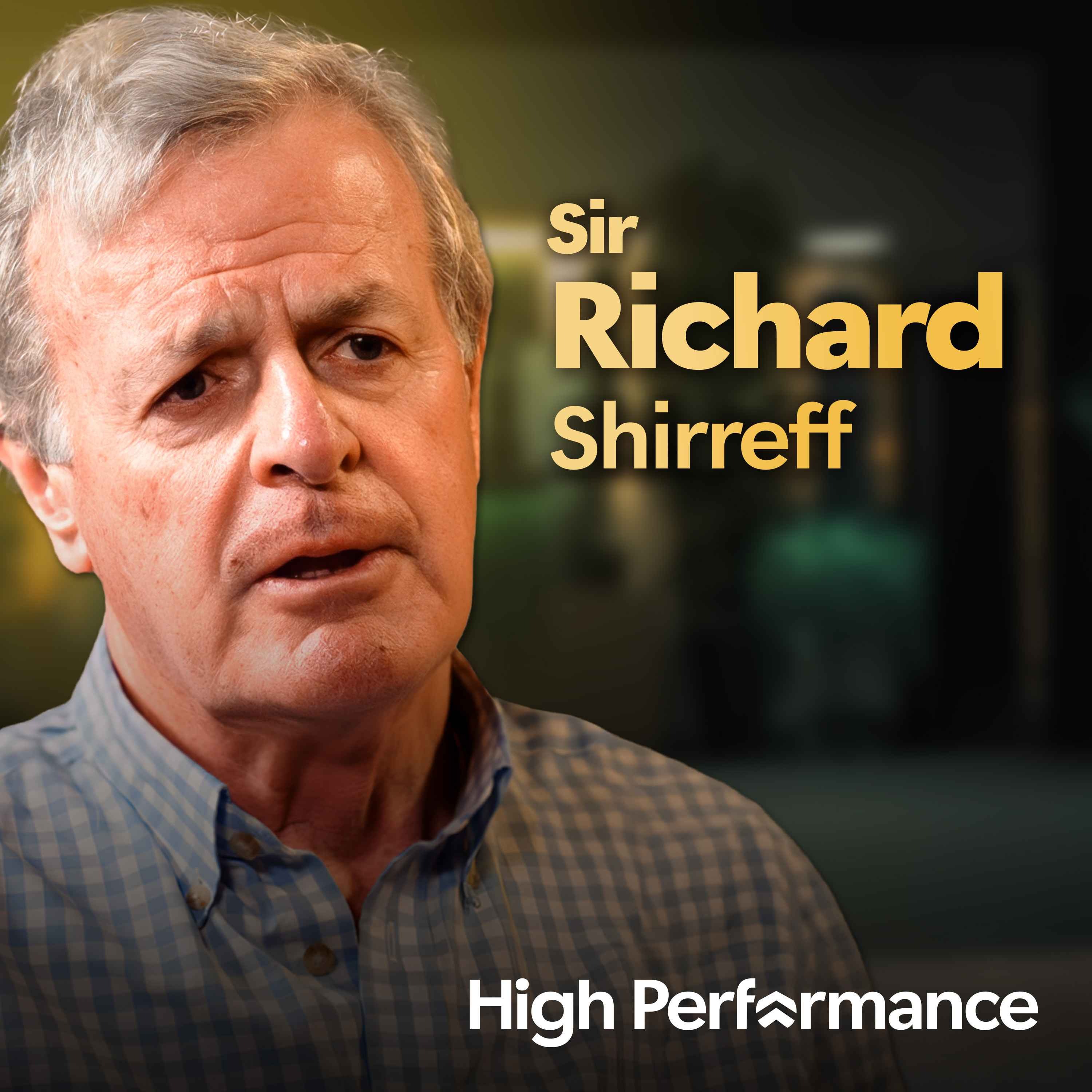
In this episode of The High Performance Podcast, hosts Jake Humphrey and Damian Hughes engage in a candid conversation with General Sir Richard Shirreff, a former Deputy Supreme Allied Commander of NATO. Shirreff shares insights from his 37-year military career, emphasizing the significance of leadership, preparedness, and morale in high-stakes situations. He discusses global instability, particularly in relation to current conflicts involving Russia and Iran, urging listeners to consider unconventional approaches to military readiness.
Written by AI. May contain mistakes.
Understand the current global tensions and the implications of Putin's actions.
“I think the dynamic of what is happening now is in danger of being uncontrollable.”
Examine Trump's military decisions and the resulting complexities in the Middle East.
“Donald Trump has launched this attack on Iran to prevent nuclear war.”
Analyze the ongoing conflicts in Iran and Israel and their broader impacts.
“And you've got effectively two wars going on.”
Explore the difficulties faced by the US in executing military strategies.
“They've got a marine expeditionary unit steaming all the way from Japan to join the fight.”
Learn about the importance of wargaming in preventing strategic failures.
“And that is, frankly, it's Billy basic stuff.”
Hear insights from Richard's experiences commanding British troops in Iraq.
“I don't really understand, though, how we've ended up in a position where the so-called leader of the free world, Donald Trump, the commander-in-chief of the American armed forces has not fully war-gamed this.”
Learn about the operational challenges and strategic failures during the Iraq campaign.
“And that was a surprise and a shock for me because my first operation tour was Belfast, 1978.”
Explore the three components of morale and their importance in military operations.
“didn't succeed because not because i don't think we we don't we were never never bettered in any street fight because the British soldiers are just second to none, frankly.”
Understand how political backing affects military initiatives and morale.
“And when we were planning the operation and before we launched it, I spent most of my time out, I mean, not in my headquarters.”
Analyze the political conditions leading to the emergence of Trump and Putin.
“of the so-called liberal orthodoxy order.”
Explore the historical context of NATO and Russia's aggressive stance towards Ukraine.
“I read it in English transcript the next day and it sent a chill down the spine because I knew then that he was going to go to war in Ukraine.”
Insights into the decision-making processes of military leadership in crises.
“And I think what you'd find is regular communication, regular meetings in the Cabinet Office briefing room, the so-called COBRA meetings, assessing the situation and looking at options.”
Discussion on the current state of the British military and comparisons with Finland and Norway.
“We had home defense that had been thought through, civil defense, we had, et cetera, et cetera.”
Exploration of the benefits of conscription and citizen service for young people.
“Now, the flip side of that is that we don't need the same sort of mass.”
Analysis of the need for bold political decisions to enhance military strength and societal contributions.
“the position that the government have at the moment just makes it something that is very unlikely to happen?”
Guest shares insights on personal experiences in the military and views on high-performance life.
“Are you ready for some quickfire questions?”
Discussion on the strengths of the modern generation and the value of service beyond warfare.
“So I think back on that as nobody wants to fight a war, but if you've got to fight, that was the sort of war to fight.”
Explore the role of national service in fostering selflessness among youth.
“And I think actually, as he said, this applies to leadership in real life as much as it applies to, you know, leadership in the military.”
Discuss insights on leadership drawn from military principles and experiences.

Get the gist, explore an idea or ask about something said.
 Claude
On The High Performance Podcast, what are the key points of this episode?
Searching your listeningAutomatic transcript. May contain errors.
0:00Hi, this is Matt from P1 with Matt and Tommy and this episode is sponsored by eBay. The cars you'll find on eBay are just different. They come with a story that you can't wait to share. Like this 1973 Dodge Charger on eBay that has been tucked away in an Arizona barn for over 40 years, only 55 ,000 miles and somehow in great running order. It even has a rare sunroof. Suddenly a car that was hidden for decades is being delivered in just a few clicks with eBay's secure purchase. all the paperwork handled. There are thousands of cars on eBay, from unique finds like the Pontiac Grand Prix SJ to daily drivers, and now with a new way to buy them.
0:39eBay, things people love.
0:47If you've used Babbel, you would. Babbel's conversation-based technique teaches you useful words and phrases to get you speaking quickly about the things you actually talk about in the real world. With lessons handcrafted by over 200 language experts and voiced by real native speakers, Babbel is like having a private tutor in your pocket. Start speaking with Babbel today. Get up to 55 % off your Babbel subscription right now at babbel.com slash acast. Spelled B-A-B-B-E-L dot com slash acast. Rules and restrictions may apply. Dell PCs with Intel Inside are built for the moments that matter, for the moments you plan and the ones you don't.
1:30They're built for the busy days that turn into all-night study sessions, the moment you're working from a cafe and realize that every outlet's taken, the times you're deep in your flow and the absolute last thing you need is an auto-update throwing off your momentum. Well, that's why Dell builds tech that adapts to the way that you actually work. Built with a long-lasting battery so you're not scrambling for the closest outlet and built-in intelligence that makes updates around your schedule, not in the middle of it. They don't build tech for tech's sake. They build it for you. Find technology built for the way you work at dell.com forward slash XPS.
2:02Built for you.
2:09So Richard, welcome to High Performance. You're one of the most senior retired NATO generals. You spent 37 years commanding British soldiers. And you have said that you believe we could be living through the opening of World War III. Why do you believe that so strongly? I think the dynamic of what is happening now is in danger of being uncontrollable. First priority, the first major issue we cannot ignore, and it's up front, is the reality of Putin's genocidal war in Ukraine. That is, and the fact that Russia is at war with Europe now, it's not a conventional war, but it's a covert war. below the threshold of conventional.
2:52What's happening now in Iran, with Iran and the Gulf, is sucking in the United States. And we'll see where that goes. What does that give the rest of the world? Well, firstly, it's a massive opportunity for Putin because he's watching while the oil price goes through the roof and that all goes into his economy. And he's struggling his economy, so this is just what he wants. and then go to the Far East where we know that Xi has said that Taiwan will become Chinese and that's fact, you know, it will become Chinese but this might just be his opportunity. I think he would probably have hesitated to launch a military operation but with American attention focused in Iran then that is his opportunity.
3:40And then the global destabilization, the impact on the global economy So I think we are in a really dangerous place. That's such a scary five minutes. And my brain is saying to me, well, hold on, Donald Trump has launched this attack on Iran to prevent nuclear war. That's the message that we've all been given. They need their nuclear weapons to be removed from active service. Therefore, let us go and do that. But what you're saying is this almost feels like this pushes us closer, not further away. I'm not sure what Donald Trump launched his war for. I think it's a war of choice. It's absolutely a war of hubris.
4:18And he has flip-flopped between regime change, destroy the nuclear weapons, remove the mullers, remove the missiles. And the consequences, this is another war without a clear end state, a clear design, a clear strategy, and a clear statement of how this war ends. And you've got effectively two wars going on. You've got the Arab-Israeli bombing campaign, which is awesome, which is industrial scale aerial bombardment. It's destroying the Iranian military. It's decapitating the leadership. The Ayatollah has been taken out. And from a sheer perspective, he's now become a sainted martyr as a result, like it or not.
5:16Larry Jani, the security chief, interestingly, probably the only guy, one of the key guys who might have been able to negotiate an end to this. As we heard this morning, he's been taken out as well. So I'm not sure what his aim is um but the iranian war is pretty canny because they know they can't match america and israel for strength but they've still got a whole lot of cheap drones which they're launching you know they've generated he's generated trump has launched a regional war here with the israeli iranian response whacking gulf states willy-nilly but now of course as well just by closing off the Strait of Hormuz, Trump doesn't know what to do.
5:57He's got two options. One is launch a major military operation to reopen the Gulf. Boots on the ground. I can't see how you do it without. I mean, I really, how do you control? I mean, you've only got to look at the TV shots. I've not been there, but you've got to look at the TV shots of that rocky coastline, desert, uninhabited, really inhospitable. All it takes is a couple of guys with drones to close it off. Yeah, we heard last night that they've been bashing the missile batteries. Do we know about that? The only way you achieve really decisive effect in war is on the ground. And yet again, you see, the Americans and Israelis thought they could achieve all this by regime change.
6:46I think the Israelis are pretty simple. They just want to hammer Iran. They don't give a damn about what the consequences for Iran are. And if it turns Iran into a failed state, the Israelis, they know that Iran has been an existential threat to Israel ever since the revolution in 1979. So they're not fussed about what comes out of Iran. They just want to see Iran basically neutralized and, if necessary, destroyed. I don't think the Americans believe that's in their interest. But the consequence of bombing, I mean, you're not going to achieve regime change by bombing. What's happening is the mullahs are hunkering down.
7:21the IRGC and the militia are establishing even tighter grip on the population and if you were Iranian and you'd seen what the regime did to you and your friends and your family in January when thousands were massacred are you going to stick your head above the parapet? you haven't got any means of doing it you've got no leadership you've got no organisation probably not so that's why I say the regime is however damaged it is it is hunkering down and it's surviving and you know this is no surprise I mean you've only got here we are in London what happened in London in 1940-41 with the blitz British spirit London of spirit became even stronger the same happened when the allies tried to destroy German civilian morale in the alliance in the bombing campaign later on in the war it didn't break German morale and look at what's going on in Ukraine that's not breaking Ukrainian morale either so coming back to your question I can't see how you can you can open the gate to the Strait of Hormuz without a major combined arms operation, which could easily require boots on the ground, troops, and indeed, what are the Americans doing?
8:31They've got a marine expeditionary unit steaming all the way from Japan to join the fight. So, what we've got here is America surprised by the Iranian response. And that says to me, there's been a fundamental failure by the Americans to war game the impact, the likely impact of their operations. And that is, frankly, it's Billy basic stuff. Any military commander knows that before you launch an operation, you war game it. You set up a red team to represent, to role play the enemy or anybody else who can screw up your plan. And you put your most free thinking and anarchic people into that team.
9:10And they ask the really difficult questions. If I do this, well, this is what we're going to do to you. And the Americans don't appear to have done that because they haven't fought through the impact of a regional war. And they clearly assumed that did not think that the Iranians would close off the Strait of Hormuz. The other alternative, the other course of action is Trump just walks away. He realizes he's over a battle over a barrel. He declares victory and he walks away. The only thing is it won't be victory because while the Iranians hold the Strait of Hormuz, they've got all the cards. They're winning.
9:47And if Trump walks away from this, he will be seen as the man who was defeated by the Iranians.
9:53Jake Humphrey: I'm intrigued by the wargaming reference that you made there. Would you explain a little bit around what effective wargaming is? It's a tried and tested military technique. And actually, it's just as relevant in business as well. Okay. And what it does, I mean, you have a, it's about, you do your planning, your plans support a strategy, and it may look wonderfully sophisticated. and you sit back and think, well, I've got a great plan. But as we know, as Mike Tyson said, everybody's got a plan until they get punched in the mouth. And Trump's been punched in the mouth here. So what do you do to avoid that?
10:30Nobody can foretell the future. And you might have the most sophisticated risk management process with lots of charts and spreadsheets with risks colored in red and amber and green and mitigation measures, et cetera. but nobody can tell the future. Nobody can crystal ball unless you're a sort of, you know, a seer or a prophet. So what do you do? War game. And that's where you set up a, it's quite a, in the military, it can be quite a formal process or it can be a relatively simple whiteboard process. But in the military world, you'd set up a red team, normally led by the intelligence, the head of your intelligence organization, who'd bring in a number of people from within the headquarters to represent the, to think enemy, because that's what it's about.
11:20It's about thinking, if I do this, what's the enemy going to do to screw up my plan? And then you go through the plan in a systematic way, a bit like a chess game. I move here, right, if you move there, red team, the enemy, role play, say, well, if you do that, this is what we're going to do. And then you realize, hey, that's not clever. He's caught me out. So I go back to my planning and think, well, in order to avoid that, this is what I've got to do. And it's a brilliant way
11:53of testing your plan in a safe-to-fail environment. It doesn't matter if you get it wrong. In fact, it helps if you get it wrong because you can then put in place measures to ensure that when you do it for real, you don't get it wrong. I don't really understand, though, how we've ended up in a position where the so-called leader of the free world, Donald Trump, the commander-in-chief of the American armed forces has not fully war-gamed this. It is such a human condition to underestimate your opposition or to underestimate your enemy. Did you ever suffer with it in your career? And if you did, how did you ensure that you prevented it from...
12:28I experienced strategic failure. And it's relevant to the Middle East, of course, because this is Iraq. It's 2006.
12:40And I was commanding the 3rd Division, and the divisional headquarters were sent to be the divisional headquarters commanding the multinational division in southeast Iraq, which covered the four provinces of southeast Iraq, Basra, Muthana, Mezan, and Dekar province. And, I mean, I went out and we took over in July. I went out in May with my close team from the headquarters. on a reconnaissance to get a feel for what was going on. I mean, the task was to establish security in those four provinces in order to establish security and then hand them over to the Iraqi authorities for all aspects of governance and security.
13:33When I went out in May, I was pretty surprised, if not shocked, by what I saw because take Basra, this is a city of 1.3 million people. And any movement around the city by Kirlish and troops, we had British, we had Danish in Basra, involved a fight. It turned into a battle because we didn't control security. And that was a surprise and a shock for me because my first operation tour was Belfast, 1978. in West Belfast, where the army had effectively a brigade of three battalions, so call it 3 ,000 people, 3 ,000 soldiers on the ground in West Belfast to counter the IRA. I'm not going to get into the where's and why falls of this, but this was the way it was.
14:32And the security was tight. It was really, you know, we didn't get shot at every time we went out of barracks. We, yeah, the IRA were absolutely trying to do that. But because security, there was, you know, the area had been flooded by troops, which must have been a nightmare for the locals. But that's the way it was. So Basra was completely different. And I remember coming, and everywhere I went, I picked up that, you know, and it was listening and talking to people. It was talking to the RAF aircrew in the back of a helicopter while I was flying up to Baghdad. It was talking to soldiers and NCOs on the ground.
15:12It was talking to commanding officers on the ground. We just didn't have the troop levels. And there was a sort of defensive hunker-down spirit as if we weren't prepared to get stuck in and establish security. So we came back and we worked through a whole lot of plans with my small team, and we decided that the only way we were going to regain security was by launching an operation to regain security because otherwise we were facing mission failure. And it wasn't going to be a question of just blasting in because you can't do that. You've got to think it through quite carefully. And we worked it through with establishment of security.
15:53And then, of course, what you've got to do is try and win the hearts and minds. You've got to recognize that everything you do has got to be looked at through the eyes of the people you're operating amongst. Because if you alienate the people you're operating amongst, you're gifting the advantage to the adversary. And the adversary here in Basra at the time was a highly organized, Iranian-backed, Iranian-trained, Iranian-equipped militia. And this was a proxy war against Iran in Basra. So, you know, we put together this operation for which we needed reinforcements in order to surge. but we were having to at the same time persuade cajole our uk chain of command that this was needed and there you had and this is why i feel so passionately about the failure of strategy in iran because iraq was a failure of strategy there was no clear thinking about what happened after the invasion by 2006 there was really you know and if you think back to those days.
17:00You had a government, Tony Blair, Gordon Brown, not a happy relationship at that time. This was not a campaign which was supported by the British people. You remember the demonstrations on the streets of London of over a million people saying, don't get involved. And you can't operate like that, because if there's no political support, there's going to be no strategic support and therefore you know it's the guys who are trying to try to mend who are trying to mend what is being broken who are trying to do it without any tools and that's where we found ourselves um and so we we launched the operation etc etc but it did not succeed and it didn't succeed because not because i don't think we we don't we were never never bettered in any street fight because the British soldiers are just second to none, frankly.
17:59I can't speak highly of them. But because we didn't have the resources, because we were not given the political cover, there wasn't genuine political will to resolve it in Whitehall, we ended up with a bit of success, but not as a bit of tactical success. But I'm afraid the consequence of not regaining security properly in Basra then led to everything else that followed and the withdrawal from Basra under fire, handing it over to the militia after we had left. And then ultimately, for the British Iraq, I'm afraid was a strategic failure. And I find it ironic now that who are the oil companies operating in Iraq?
18:45Well, the French are all over it. Certainly a bit of Southeast Iraq. and I don't know if there are any British old companies there, but anyway, others have benefited from it. But, you know, we... And, of course, that experience, I think, of Iraq and then subsequently Afghanistan, which was also a strategic failure and it needn't have been a strategic failure, the precipitate withdrawal, again, the rug pulled under that NATO training mission by the Americans in 2021, led, you know, it was... I think there's a linkage with what happened in Ukraine subsequently. But that was a failure, despite the absolutely sterling efforts, extraordinary courage and resilience and bravery shown by not just British but NATO troops, our allies, the Danes, the Canadians, and you name it.
19:39And that, I think, has scarred the British psyche. And they're not going to forget about this because it was, you put boots on the ground and look where it got us. and I think it's understandable that it did. And so I think that sort of reluctance, the reluctance to getting involved with what Trump's little, what he calls excursion in Iran, is a direct consequence of that.
20:06Jake Humphrey: Can I ask you, I mean, that story about Iraq is intriguing. How do you go about leading a team when you feel that sense of helplessness, that you feel you're on a doomed mission? I didn't feel I was on a doomed mission. I was determined we could do it. You've got to show confidence. You've got to be clear. I mean, and it's about morale. And if I can just, you know, the great field marshal Slim, who commanded the 14th Army in Burma, he said there are three components of morale. Number one is spiritual. And that's not in a religious sense. But there's got to be a purpose that inspires people to do what needs to be done.
20:47You know, it's defeat Nazism or, you know, whatever. There's got to be a purpose. Well, our purpose was to establish security. The second aspect is intellectual. There's got to be a plan that can succeed. And people have got to have confidence that the plan that they're undertaking has been thought through professionally and can work. And I think we have that. And the third aspect of Slim's components of morale, interestingly, was physical last, but important. People have got to feel looked after. Conditions have got to be as good as they possibly can be. And that's ironic because sometimes in the military, morale is highest when conditions are at the most demanding.
21:35So I used to, you know, and it's about being able to communicate that, what you want to do. And when we were planning the operation and before we launched it, I spent most of my time out, I mean, not in my headquarters. I was out with the units, with the guys, with the troops visiting, walking, talking. And I would tell them, if I came across, you know, if I met a patrol of 12 guys about to go out, I'd explain what we were trying to do. If I met a new battalion which came in, which had come in to relieve another, we'd assemble everybody we could in the cookhouse and I'd talk to them about it. It's about talking and communicating.
22:16Jake Humphrey: So if you apply Slim's three principles of morale, how do you, to the current situation with the American military, how does it square up? Well, number one, never underestimate the importance of the position of the commander-in-chief, the president. you know he is the commander in chief of the american armed forces and i don't know if they swear an oath but they swear an oath to the constitution and therefore the president is head of all that so they'll do what he told what they'll do what they're told and if the president says we are here to regime change or we are here to destroy the nukes or we are here to destroy the missiles um however confuse the message it'll be right as uh we'll go along with it So they will feel that they're doing the right thing?
23:05They'll be certain that they're doing the right thing. I wonder where this leaves the British armed forces, though. Because if... Is it inevitable, do you think, that we will see American troops on the ground? No, it's not. But possible? It's absolutely possible. Or likely? I think, as I said, if you boil it down, it's either declare victory and get out. Yeah. leaving the Iranians holding the Strait of Hormuz. Now, if you're in a fight and you walk away, you might declare victory. I think none of us in this room expect Donald Trump to take that route, right? No, but if he does walk away, if there's a playground fight going on and one walks away, he's been defeated.
23:54It's victory to whoever's left holding the floor. So the alternative to that is escalation. Yeah. Because I can't see a stalemate going on indefinitely. And then I wonder what the impact is then on the British armed forces because the Americans will be getting the message that they get from their president and from their people that this is the right and proper thing to be doing. I think the message that the British armed forces might be hearing from our media and from our conversations and from our prime minister is quite different. So what happens if our armed forces get sucked into a similar position and we have to put boots on the ground, NATO has to get involved in this conflict?
24:36Well, then you're into the sort of... If the prime minister says and the government says, we're going to get involved, then the British military will turn to the right and get on with it and do the best they possibly can. And every soldier, sailor and airman will do what he or she has been told. Will they believe in it? Question mark. I mean, the poll I saw yesterday, 70 % of the British people do not believe we should be getting involved in this war. So how hard is that then for the current leadership in the British Armed Forces?
25:22it's it places them in you know this is the challenge of of high command yeah it is the duty and the task of the chiefs the chief of defense staff the chief of the general staff and the others to advise principally through the chief defense staff to advise the government about the feasibility of the use of the military. And you have to be ready to lay out the consequences of going to war. I mean, if we do get involved, I'm really concerned that this would be a repeat of the mistakes made in 2003. How do you think we've ended up in a position where the two most powerful men in the world are Trump and Putin?
26:12We've ended up with Trump because of the failure of the so-called liberal orthodoxy order. Why have people voted for Trump? Because current systems in America failed. that people felt this is exactly why we ended up with brexit people felt the decisions were being taken over their heads that they didn't have by they weren't being brought in and you've only got to look at the politics of this country you know with with reform high in the polls with the greens becoming the sort of you know radical party of the left labor in you know and labor and the tories in bits. And the same applies in France with National Rally, Germany, AFD.
27:08So I think it's a real, real worry. And until and unless you've got bold leadership from the center that has real solutions for the problems, whether it's defense, immigration, you know, all these sort of issues which worry people on a day-to-day basis. Putin, We've ended up with Putin because we didn't. And we've ended up with both of them, in a sense, more broadly, because we've not changed our frames of reference. Right. With Putin, we didn't listen to him. He said very clearly in Munich, security conference 2007, laid out his thinking. He absolutely laid out his thinking the day that Crimea was incorporated in the Russian Federation.
28:01I remember it very well. I read it in English transcript the next day and it sent a chill down the spine because I knew then that he was going to go to war in Ukraine. What had he said in that? He said the policy of containment that happened in the 18th, 19th and 20th centuries is still going on. They promised, they, NATO, promised not to move to our borders and they did, which is nonsense. NATO never promised. If you press the spring, it will push back something you must remember. Oh, he said that? Yep. 90 % of the Russian people believe we should look after the interests of all Russians, even if it will make us unpopular with some countries.
28:40In other words, Russian-speaking minorities in the Baltic states. Coming back to Putin, why have we got Putin? Because we've let it happen, we didn't listen to what he said, and we continued to cut and cut and cut our armed forces. So Putin thinks I've got an open goal here. The West is weak, the West is soft, NATO's a busted flush. And I said all that in the book, in the forward. I also was pretty critical about our politicians, and the Tories were as bad as anybody, because they wrap themselves in the Union Jack, talk about our brave boys and girls, and then promptly shaft them, you know. What do you wish people would have done differently
29:18Jake Humphrey: in terms of taking your message seriously? Well, what I wish is to say, right, right, the only way we maintain peace is through strength. You know, it's the old Roman maxim adage, if you want peace, prepare for war. And to say, right, we need strong defense, and enough is enough. And if we'd started, and back in 2014, not, if, where was Cameron in negotiating the so-called mince deals? He was hiding behind the sofa. Despite the fact that Britain and France and America with Russia signed the Budapest Memorandum in 1994, under which Ukraine gave up their nuclear weapons in return for guarantees to protect Ukrainian sovereignty.
30:06So where was Cameron? Nowhere to be seen. And that's what I wish people had done differently. I wish our leaders had freaking well led instead of hiding behind the sofa. I wish our leaders had stepped up to the mark and said, we've got a real problem with defense. and we're going to do something about it. I wish our leaders had said after 2014, if we don't build up Ukraine, this bastard's going to attack Ukraine. Instead of which, Obama withdrew American support from Ukraine after 2014. And I wish our leaders had listened to what Putin was saying. Instead of thinking, we're really happy with all the Russian money flooding around London.
30:51You know, I'm a real estate agent. or a banker or a lawyer, and I've got lots of Russian funds in my account, instead of saying, we've got to see Russia as they are. Don't get me wrong. Russians, individually, great people. Absolutely. I mean, I remember a Lithuanian general who had been a Soviet conscript in the strategic quarters before my first visit to Moscow as a Dzeko. And he knows the Russians. You won't find anybody in the Baltic states who's not had family deported to Siberia. And he said, remember, yeah, he said, remember one thing, you will never have a better friend than a Russian.
31:31He'll laugh with you, he'll cry with you, he'll drink with you, he'll give you his last Kopech if you run out of money. But as a nation, they are horrible. So all of that. And meanwhile, we've just been in bloody la-la, never-leather land. You know, just thinking that we live in the best possible world without realizing that the wolves are snapping around it. And the only way to keep the wolves at bay is through proper defense. We'll be right back after a quick word from our partners. Parles-tu français?
32:05Jake Humphrey: Hablas espanol? Parle italiano? If you've used Babbel, you would. Babbel's conversation-based technique teaches you useful words and phrases to get you speaking quickly about the things you actually talk about in the real world. With lessons handcrafted by over 200 language experts and voiced by real native speakers, Babbel is like having a private tutor in your pocket. Start speaking with Babbel today. Get up to 55 % off your Babbel subscription right now at babbel.com slash acast. Spelled B-A-B-B-E-L dot com slash acast. Rules and restrictions may apply. Security and compliance done wrong is a giant headache.
32:46Security and compliance done right? That's Vanta. Vanta helps you earn trust and speed up growth. No spreadsheets required. For startups low on time and resources, Vanta becomes your first security hire, using AI and automation to get you compliant fast and unblock big deals. For enterprises, Vanta is your AI-powered hub for compliance and risk, bringing together data from across your businesses and automating workflows so you can prove trust at any moment. Vanta scales with you at every stage. That's why top companies from startups like Cursor to enterprises like Snowflake choose Vanta. Do security and compliance right.
33:23Get started today at vanta.com slash TED Audio. Hi, this is Matt from P1 with Matt and Tommy, and this episode is sponsored by eBay. The cars you'll find on eBay are just different. They come with a story that you can't wait to share. Like this 1973 Dodge Charger on eBay that has been tucked away in an Arizona barn for over 40 years, only 55 ,000 miles, and somehow in great running order. It even has a rare sunroof. Suddenly, a car that was hidden for decades is being delivered in just a few clicks with eBay's secure purchase. All the paperwork handled. There are thousands of cars on eBay, from unique finds like the Pontiac Grand Prix SJ to daily drivers, and now with a new way to buy them.
34:06eBay. Things people love.
34:36armour sitting on his own in a room thinking about whether to get involved or not right this is this will be him taking all the information from his senior commanders is that right in the British armed forces so would you give us an idea of what is actually going on right now behind the doors of number 10 Downing Street that is informing the prime minister are they meeting where are they meeting what happens once they make a decision I can't really take you behind the doors because I I worked for the Chief of Defense Staff as head of his private office. So I can base it on that experience. And I think what you'd find is regular communication,
35:21regular meetings in the Cabinet Office briefing room, the so-called COBRA meetings, assessing the situation and looking at options. And I've no doubt that there will have been, the MOD would have been pretty busy looking at what the potential courses of action are because they'll have been told by a dining street, give us some potential courses of action, what are the options? And they will have done that. if you decide to do this, this is what we could produce, these are the pros, these are the cons, etc., for every course of action. But ultimately, of course, it is a political decision. And that is the essence of civil control of the military in a democracy, and that's what it's about.
36:13This is the moment where the prime minister, you know, this is what the prime minister's paid to do. He's paid to lead. And leading is about making decisions. but he will have absolutely taken wide counsel, not just from the chief of defence staff representing the military, but his political advisers and his cabinet colleagues.
36:35Jake Humphrey: So will you tell us, as somebody that's led troops to 20 ,000, when you make a decision like this, you take all the information in, you red team it, and you go through the processes, what are the kind of questions you ask yourself before you make a final decision. People think the military is a very sort of hierarchical, if not dictatorial, and the big boss says, this is what we're going to do. My experience, it doesn't work like that. It is about talking and discussing as a team. And when we were putting together this operation in Basra, we start with a reconnaissance. I go out with my immediate team, chief of staff, deputy chief of staff, two or three staff officers.
37:24And we'd meet every evening. We'd all go off and do different things. Then we'd share our thoughts at the end of the day. And gradually, we're beginning to realize that this situation is turning into a crock of what's it here. There's only one way we can sort it out, and that's to regain control of Basra. And so we formalized that. When we came back from that, We sat down for a proper divisional estimate process where we sat around a table with all the key staff and we talk it through. And then when we go back, then we come up with a series of courses of action. Staff will go away and drill into those courses of action.
38:10Pros, cons, advantage, resources required, risks, et cetera, et cetera. When we got out into Iraq, the first thing was to establish, has the situation changed? And that requires getting out on the ground and going through almost the same process. And then, no, we say, right, okay, no, it's very clear, the situation has not changed. Our original estimate process was right, we need to mount an operation. So we go through the detail of that, and that is a consensual process. where everybody's around a table and it doesn't matter what rank you are. You can be a major, you can be a major general. I mean, the rule I always used to say is that rank has no privileges in this discussion because you're trying to harness the brains, the genius of everybody.
39:01Barack Obama used to speak about the rule of 51 % because he could never have certainty in a lot of his decisions. So he'd say as soon as 51 % feels like the number, as soon as it's more one way than the other, that was enough for him. How would you judge after all the information has been disseminated and everyone turns their eyes towards you in the room and you have to make a decision? What would you decide internally to come to the right decision? I think so much of it is based on intuition. I mean, there's a great line from T. Lawrence, Lawrence of Arabia, in his book, Seven Pillars of Wisdom.
39:37And he was, you know, He was an archaeologist and an Oxford academic who co-led the Arab revolt. He had no military training at all. But he said nine-tenths of tactics is teachable in schools. That's the science of war. That is how you do it. But the elusive tenth, the test of generals, is like a kingfisher flashing across a pool. I think it's just brilliant that, because it is that intuition, sudden flash, got it. And that's how I made decisions. The intuition, the flash, that sort of sense of, yeah, that's what we've got to do. Are we going to be in a position where the prime minister needs to make a big decision about conscription?
40:28Now you're getting on to a really tricky one. The only way we maintain peace in Europe, for our generation, for my grandchildren's generation and your children's, is through effective military deterrence. Nobody wants a war. We've got to do everything we can to avoid a shooting war. We see what a shooting war is doing to Ukraine for the last four years. We've got, and let's be clear, if Russia succeeds in Ukraine, they will try it on in the Baltic states. And if that happens, we're at war. The only way we deter that is through effective military deterrence. And that means we've got to demonstrate to the Russians that we are ready for anything they want to throw at us.
41:14And this is a regime defined by war. Putin came in as president in 1999 on the back of arguably engineering the destruction of the blowing up of apartment blocks by so-called Chechen rebels, probably done by the FSB. Chechnya, Syria, Georgia, Ukraine, Crimea, and now Ukraine. And he's got to continue the forward movement. And you then say, okay, if we need effective deterrence, what does that mean? It means we've got to be ready for war in every respect, rather as we were in the Cold War. Life went on in the Cold War, of course it did, and we flourished and had peace, but we had a military that was strong.
42:00We had home defense that had been thought through, civil defense, we had, et cetera, et cetera. We've got nothing like that. The British Army, Air Force, Navy. As you saw, I mean, HMS Dragon has finally got to Gibraltar two weeks later. In 1982, with the Falklands, the Navy got 140 ships out of the door within four or five days. You know, that's how things have gone. The British Army is a shadow. I mean, the soldiers, don't get me wrong, the quality of the soldiers, the quality of the leadership is second to none. And I'm sure it's much, much better than it was in my day. Brilliant guys and girls.
42:39But do they have the kit? Do they have the sustainability? Have they got the endurance? The answer is no. Spares, kit, bullets, bombs, all the stuff. Manpower. Army have meant to be pegged at 70 ,000, but they can't, you know, they can't, they're having struggling to attract recruits for that. So I have said on a pretty frequent basis that I think we have to think the unthinkable. Now, I know this is anathema to any professional soldier, and nobody wants conscription. But when you look at the way the Finns do it, a population of just under 6 million, they can get 280 ,000 soldiers out of the door at short readiness because they have universal male conscription and everybody who serves for whatever it is, nine months or a year, depending on whether you become an NCO or an officer, has a reserve liability.
43:36So you can get 280 ,000 soldiers ready to fight. The Finns could deploy 200 of the latest variant of Leopard 2 tank at short notice. British Army couldn't begin to do that. You look at the way the Norwegians look at it, do it. They don't have universal conscription, but what they say is the Minister of Defence issues an annual quota, say we need 10 ,000 school leavers for a year. They start with asking for volunteers, and people volunteer because they know that if they do conscription, firstly, they've got to be selected. So the MOD, the Army, Navy, and Air Force, will take the very best school leavers.
44:19Everybody registered. They'll look at their school reports and say, well, I want him, him, her, and her, because they're the best. So they do their year's conscription. They then go on to university after that. And when they leave university and look for jobs, because they've got, I did conscription on my CV, that's a badge of honor. Employers say, well, I want you. You did conscription. You must be better than him or her, because he or she didn't do conscription. You said, I mean, we don't... I think the natural British default setting conscription, it's hairy battle dress, peeling spuds in some Nissen hut in Catterick in a freezing wind, you know.
44:59We've got to be more intelligent than that. So I think we've got to think about it. Now, the flip side of that is that we don't need the same sort of mass. I'm not sure. You know, this is, warfare is bloody and it's expensive, and the Ukrainians are facing chronic shortages of manpower. But it's also true to say that with the sort of weapons and technology that characterize warfare today, you can be more economical with your manpower. use of robots, use of drones. You know, you're moving into a different world, but it's also a world where there is still a requirement for legacy equipment, guns, tanks, ships, planes, etc.
45:52Is there not also an argument that we are naturally negative about the concept of conscription, yet at the same time we talk about young people needing more resilience, about not putting themselves at the center of their world and putting others first, about creating unity, about leaning into other people, about emotional intelligence, about self-control, about the importance of hard work. Is there not an argument that actually conscription would deliver all of those things for young people who are leaving school in the UK? I think there is. I think citizen service is absolutely a concept we should be thinking about.
46:30I'm fully engaged. And I think that all those things, you know, you look at, But, I mean, I just, look at the British Army. Our guys and girls, you know, they can come in as a, they might join as a 16-year-old, go to Harrogate. They might come in as an 18-year-old. And let's be clear, some of them, you know, many of them come from some pretty difficult areas.
46:58You know, and life has been quite tough for them. if they do 22 years, or maybe they do longer, they've grown as people. And these are, you know, and they're quality people coming in. But my goodness me, after 22 years, they've become even more, you know, they're even greater. And I think you could come up, if you go down the Norwegian line, of say, we'll have a quota that goes to the military, but you could as easily say, we'll have a quota that goes to the NHS, will have a quota that goes to, I don't know, farming, or you name it, different sections of society. Because I think the notion of giving back is something that...
47:42I mean, I'm not one of those who say, generation, whatever it's called nowadays. No, again and again and again in history, our British young people have risen to the challenge. Oh, we've always said, I think, in history, the current generation's the weakest. That's always been the narrative, and it's nonsense. I don't subscribe to them. I think they're bloody brilliant. But they just have a different way of looking at things. So I think we've, you know, but giving an opportunity to contribute will make, you know, stronger society, a more inclusive society. I mean, if you talk to people who did conscription in the 50s and 60s, you'd find, I mean, you talk about, you know, social,
48:28everybody's sort of getting together. You'd find a chap from Eton bedding down in a barrack room next to a miner's son or a train driver. You get everybody mucking in together like that. I think it's got to be good for society. And is there a way, do you think, of finding a route to that? Or do you think that the modern world, the modern way of thinking, the position that the government have at the moment just makes it something that is very unlikely to happen? Well, at the end of the day, it is a political decision. And it's going to need political leadership and boldness. You know, Britain used to be the pace setter in NATO in Europe.
49:08We're no longer. Our allies will have been looking at what happened with H. Miss Dragon and thinking, oh my God, what has happened to the British military? And this is the problem that Prime Minister Starmer faces. Yeah, I'm sure saying and doing the right thing by saying to the Americans, no, we're not going to join this war of choice. It has not been authorized by the UN. This is not NATO Article 5. And we're not, we don't trust you and your strategic thinking because you haven't got a strategy and you haven't thought through the... So he's right there. But where he stands on really thin ice is the fact that the Americans and every other NATO ally knows that the British armed forces are not, I just don't have the oomph, the strength, the power.
49:57If he had strong and capable armed forces, as Maggie Thatcher did in 1990 when Iraq invaded Kuwait, she was able to deploy and then John Major took over. We deployed really strong armed forces to the Gulf. We put into the desert a strong armored division, which I was a junior commander in it. And I remember meeting the American corps commander when I was working for General Guthrie after the war. And we went to America, and he was meeting the guy who commanded it. And he said, the British were absolutely, that first division, first armored division was relentless. us. We were setting the pace in a way which the American divisions couldn't keep up with because we had such capability.
50:49That's all gone. Can we make people feel optimistic about the world at the moment? I mean, one of the things that we love to do on this podcast, as you know, you've listened to episodes, is we love to make people feel empowered. We love to remind them of their superpowers. We love to educate them and inform them, but we don't want to leave them feeling helpless uh i absolutely we can be optimistic because we've got people you know we've got we've got the capabilities we've got the genius of you've just got to look around the creativity and ideas and genius of british society whether it's you know whether it's arts whether it's media whether it's sport, whether it's technology.
51:35And you've only got to look, I mean, just in a military context, some of the creativity and ideas going into tech startups that are producing some absolutely world-class systems, military systems. It's all there. It just needs bold political leadership. So I think we, as a population, need to be making it 100 % clear to our leaders that we expect bold decisions. We need to be given clear direction to meet the challenges. And we can meet those challenges. I've no doubt about it. But we've just got to force our leaders to lead properly. Are you ready for some quickfire questions? What are the three most important non-negotiable behaviours, do you think?
52:25I'd say courage, integrity, respect for others. Very good.
52:29Jake Humphrey: What's the greatest piece of advice you've ever received and why? Don't die in a ditch for everything. Not advice I've always taken, though. What's your biggest strength? You'd have to ask my wife, but she'd probably say stubbornness and determination. And your greatest weakness? Stubbornness and determination. Leading with my chin. What advice would you give to a 12, 13-year-old you? Take the King's shilling, sign up as a soldier, and it'll change your life for the better. If you could go back to one moment of your life, what would it be and why? I'd go back to B Squadron 14th, 20th, King's of Tsars during Operation Granby in the desert 35 years ago.
53:11We were a brilliant team of blokes. It was exciting. It was challenging. And it's particularly relevant now because that was a war that we fought 35 years ago with a clear strategy, proper resources, strong, bold political leadership, and a limited aim which we succeeded with minimal casualties. So I think back on that as nobody wants to fight a war, but if you've got to fight, that was the sort of war to fight. And finally, for people that have listened to this incredible conversation, what would you leave them thinking about what a high-performance life looks like? I think it looks pretty ordinary, really.
54:05You know, we are... Anybody who's high-performance is a human, and I don't necessarily count myself... I can't begin to count myself among the luminaries and the people you've had on this. So I'm a bit surprised to be here. But no, it's about family. It's about strong family, close relationships, friendships, and feet firmly anchored to the ground. Brilliant. Thank you so much. Thank you for having me. Damien, Jay, I really enjoyed when Richard was talking about a conscription in a weird way because I see so many people talking about the weakness of the modern generation, and therefore they need something to toughen them up.
54:47Whereas actually the message he gave us there was, the modern generation are amazing. They're talented, they're hardworking, they're creative, they have strong self-esteem and mental strength. All of the things that will actually make them brilliant additions to serving the nation. And this isn't about just getting loads of young people ready for war. This is about become a farmer for a year, work in the NHS for a year, contribute to society and I think there is a huge benefit to having a period of your life where your contribution is more for others than it is for yourself and I really enjoyed that part of the conversation.
55:24Jake Humphrey: Yeah I did as well I hadn't thought of conscription as anything other than being prepared for battle or the sort of physical preparation for fighting but all the evidence tells us that that like the psychology of the help is high when you give something to other people you feel better about yourself as well as helping other people feel better about themselves so that idea of conscription and thinking about how do we give back to the society we belong to i really enjoyed it was there any other bits you liked um well it reminded me of the fact that as parents to young children as both of us are young-ish children we keep finding ways for them to sort of give back or to do things that that mean they put other people first and actually it did make me feel that national service is just the answer because not everyone is lucky enough to have parents pushing them down the road of trying to give to others you know and there's a the world that young people are growing up in now is so self-centered it's so about personal success it's so much about me yeah i think to almost have something that's non-negotiable and it's going to come to you at some point in your early or late teens where you you spend a year doing something but someone else i think is great i think the other thing that stood out to me was when he spoke about the three pillars of a successful battle, which was to be spiritually ready, mentally ready, and physically ready.
56:42And I think actually, as he said, this applies to leadership in real life as much as it applies to, you know, leadership in the military. And I think about, you know, something like creating high performance, you know, the very beginning, the spiritual thing was for you and I, coming up conversations that leaves the world in a better place for our young people. And then it becomes about the mental element, which is how can we create a strategy that sends us as many places as possible. And when you look at the amount of effort now that we have to put into YouTube and the RSS feed and our thumbnails and our titles and our socials and trying to play the game of the algorithm, we're kind of having to do that.
57:15And then the final one is a physical readiness. And both of us, you and I and our guests and everyone that works on the show, we've all had to decide not to do other things to do this. Nothing comes for free. So I can see exactly how there's a parallel with what he was speaking about there and the real world that we live in.
57:31Jake Humphrey: what about you i love the techniques i love the idea of having to make decisions under pressure like the the like the war gaming element of inviting somebody to come in and play the part of the people that you're going to be opposing and yeah did he challenge your thinking on anything yeah i think that bit there about the intuition when he spoke about the idea that you can teach nine-tenths of uh of planning but there's an element where you've just got to allow that freedom that intuition that experience to be able to be part of the process i really like that i was surprised to hear a military leader like richard admit that sometimes that is the difference that makes a difference and also what he said about having a strong armed forces it's like why we've got a strong armed forces are we going to war or something no we've got a strong armed forces so we don't go to war and i think that is a way of thinking that maybe people need to understand as well yeah i thought it was really rich i thought it was really balanced uh you know he was he was insightful but i was really taken by his humility yeah and he's walked the walk you know i spend a lot of my time as you know on the internet on social media on youtube looking at other interviews and other bits of content and the number of times i see people with a strong opinion about what we should do as a nation and they've never done it whereas this guy's walked the walk therefore he can talk the talk thanks so much enjoyed it as always me too and i hope you enjoyed it as well if you did then there are loads of other military conversations which you can enjoy here on high performance and loads of incredible leaders as well so feel free to take a look through the back catalog and find more of those and if there was something in this conversation that you really think someone in your life would benefit from please just ping it across to them send them the clip send them the whole show and just tell them that there is a show called high performance which might be the one thing they need in their life.
59:21So thanks very much for watching and we'll see you again soon.
59:37If you've used Babbel, you would. Babbel's conversation-based technique teaches you useful words and phrases to get you speaking quickly about the things you actually talk about in the real world. With lessons handcrafted by over 200 language experts and voiced by real native speakers, Babbel is like having a private tutor in your pocket. Start speaking with Babbel today. Get up to 55 % off your Babbel subscription right now at babbel.com slash acast. Spelled B-A-B-B-E-L dot com slash acast. Rules and restrictions may apply. Security and compliance done wrong is a giant headache. Security and compliance done right?
1:00:17That's Vanta. Vanta helps you earn trust and speed up growth. No spreadsheets required. For startups low on time and resources, Vanta becomes your first security hire, using AI and automation to get you compliant fast and unblock big deals. For enterprises, Vanta is your AI-powered hub for compliance and risk, bringing together data from across your businesses and automating workflows so you can prove trust at any moment. Vanta scales with you at every stage. That's why top companies from startups like Cursor to enterprises like Snowflake choose Vanta. Do security and compliance right. Get started today at vanta.com slash TED Audio.
1:00:57Shipping, billing, admin, payroll, marketing. You're managing all the things. So why waste time sending important documents the old-fashioned way? Mail and ship when you want, how you want with Stamps.com. Print postage on demand 24-7 and schedule pickups from your office or home. Save up to 90 % with automated rate shopping. That's why over 1 million small businesses trust Stamps.com. Go to Stamps.com and use code PODCAST to try Stamps.com risk-free for 60 days.
When global instability dominates the headlines, it can be hard to know what to think...or how to lead. This week, Jake and Damian sit down with General Sir Richard Shirreff, former Deputy Supreme Allied Commander of NATO, to cut through the noise.
With 37 years commanding British soldiers, Richard has led through some of the most complex and high-stakes environments imaginable - from the streets of Basra to the corridors of NATO headquarters. And his lessons aren't just for generals.
In this episode, he breaks down the war-gaming mindset that every great leader needs, explains why the best decisions are built on intuition as much as information, and shares Field Marshal Slim's three components of morale — a framework as relevant in business as it is on the battlefield.
Richard also makes the case for thinking the unthinkable - conscription, and challenges the narrative that younger generations lack resilience, and ends with a genuinely optimistic vision for what great leadership could unlock.
This is a conversation about courage, preparation, and the kind of bold decision-making the world needs more of right now.
Our partners on this episode:
Heights 👉 Get 20% off your subscription by using Code: HP20 here: https://highpfrmc.com/hpp_heights_au3
Visit Seattle 👉 Start planning your perfect summer of football by searching Visit Seattle on social media, or discover more at: https://highpfrmc.com/hpp-visitseattle-au
Hosted on Acast. See acast.com/privacy for more information.


