
 Ask ChatGPT



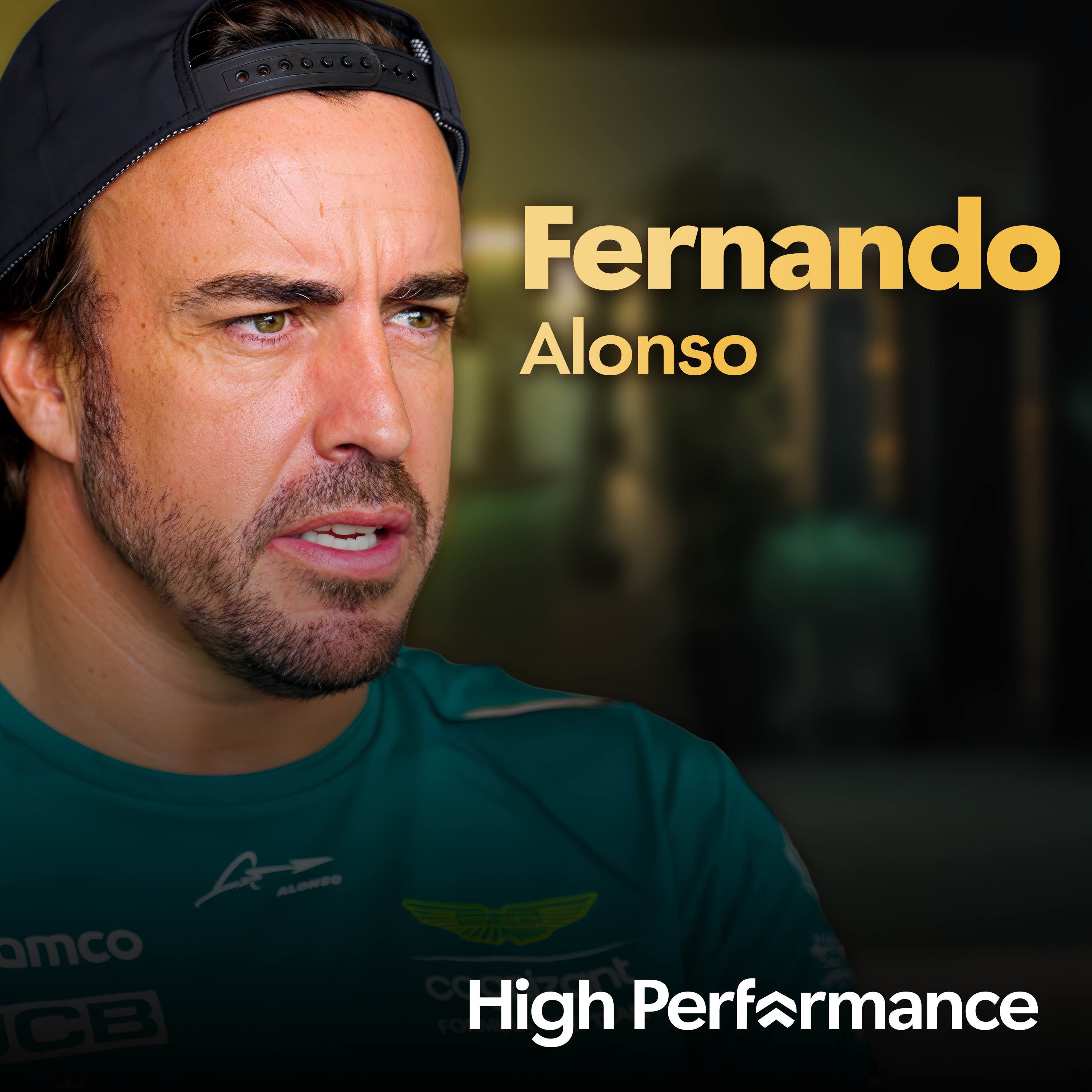
Fernando Alonso reflects on the real pain of losing and how he stays high-performing through discipline, failure, reflection, and planning. He describes his “robot” execution mindset in races, why he barely remembers winning championships, and how he processes disappointment (including strategy vs. personal mistakes). He also explains his early competitive upbringing, risk perspective, and why he explored other motorsport disciplines after Formula One.
Fernando Alonso is a two-time Formula One world champion (Renault) with 32 Grand Prix wins from 360 starts. He’s known for technical, detail-driven preparation and for later competing across motorsport (e.g., Le Mans, Dakar, Indy 500, 24 Hours of Le Mans). His family includes a go-kart driving father and a mother who worked in a perfume shopping mall.
Losing is “extremely painful” for hours; failure is necessary; he plans 80% execution and 20% contingency (plan B/C); humility and confidence are non-negotiables; he regrets not enjoying more moments, not changing results.
Winning karting/Spanish pressure at age 13; a go-kart mechanic telling him “second is your first loser”; his Minardi F1 debut advice from his father (“maybe it’s your last race”); extending tire strategy after a rival’s bad pit stop based on pre-race scenarios.
Written by AI. May contain mistakes.
Fernando discusses what high performance means to him and how he strives for excellence.
“So together, let's welcome to high performance, Fernando Alonso.”
Fernando shares his early experiences in go-karting and the support from his family.
“So Fernando, you started your driving career at the tender age of three.”
Discussion on the perception of risk in motorsport and the support from his family.
“for sure there is this risk factor that you have to know how to deal with it.”
Fernando discusses his competitive nature and how he manages expectations and pressure.
“So can I go back though and ask, is there a particular moment that you remember that you had to win, that that competitive fire was inside of you?”
Fernando shares his relationship with self-doubt and how he navigates challenges.
“That could be a good way to explain it but probably not only motor racing it's a way of living as well.”
Fernando Alonso discusses his limitations and the importance of self-awareness.
“I mean I know my limitations but as I said before knowing my limitations I try to avoid those things So what are they then?”
Alonso shares his experiences stepping into different motorsport disciplines post-Formula One.
“There's an interesting observation here that you often look at who's the best in your field, whether it's a Michelin star chef, whether it's Michael Schumacher in Formula One.”
Alonso reflects on the importance of humility and family values in the high-pressure world of racing.
“I have to learn, you know, private between them and myself because everyone expected that the Formula One driver will be very fast in any other car.”
Alonso discusses how his family helps him maintain perspective amidst racing pressures.
“I loved the images of you on your knees at two o 'clock in the morning, banging away at the suspension rods and stuff.”
Alonso reflects on his father's advice and the importance of enjoying the journey in racing.
“you know, in their lives, they have this confidence of what they are doing.”
After stepping away, Alonso shares his insights on the sport and its fan appreciation.
“I think also it allowed you probably to see Formula 1 through a completely different lens that you'd seen it through for the previous 20 odd years.”
Fernando Alonso reflects on his return to Formula One and how time away changed his view on the sport and its elements.
“So I thought that it was much less interest, but I was surprised of how much love I received from people.”
Alonso discusses the importance of enjoying one's career while striving for success, sharing insights on personal reflections and experiences.
“Because we speak to loads of former sports people who say, I didn't take one moment to enjoy my career because I was too focused on winning.”
Alonso shares his approach to handling disappointment and how failures can be essential for growth.
“You've moved to teams as they've designed cars that are disappointing in their performance.”
Fernando Alonso discusses the balance between planning for success and mistakes, along with his regrets in racing.
“What proportion of your planning then is based on executing successfully?”
Alonso reflects on the importance of enjoying the process of racing and cherishing memories over titles.
“So the first one is the three non-negotiable behaviors that you and the people around you need to buy into?”
Alonso shares valuable life advice and insights on self-confidence and adaptability in high performance.
“It's not that you train and you are here at the simulator or at the races or whatever to finish seventh.”
Discussion on personal growth, the changing perspective over time, and Alonso's commitment to future challenges.
“Do you enjoy having these sorts of conversations?”

Get the gist, explore an idea or ask about something said.
 Claude
On The High Performance Podcast, what are the key points of this episode?
Searching your listeningAutomatic transcript. May contain errors.
0:02I won the championship in Brazil in 2005 and 2006, and I hardly remember anything from those afternoons and nights, which is sad. There is only one way to see the checkered flag faster. Executing the race as a robot, it is extremely painful when you remove the helmet and you are not on the podium and you see others celebrating. and it is something that you cannot digest sometimes for a few hours. Every driver who's ever sat on a Formula One grid will tell you about fear. Fernando Alonso, however, will tell you he doesn't really have any. Two world championships, 32 Grand Prix wins from 360 starts, which means by his own count, he's lost 90 % of the races that he's ever started.
0:49And at over 40 years old, he still believes he's the best driver he's ever been. When he sat down with us for a conversation, Fernando lifted the visor metaphorically for what might just be the most honest conversation he's ever given, discussing the importance of failure, reflection and the discipline to grow. He told us he can barely remember winning the world championships and has no real memory of the podiums or the celebrations because by the time the race was over and he'd landed back home, he was already texting his engineer about the next weekend. He also told us about a go-kart mechanic who pulled him aside at 13 years old after the best result of his life and told him, second, his first loser.
1:28What's really striking, though, about this conversation is that Fernando isn't here to burnish his legend. He's here to perform a clinical debrief on his own life. He speaks with the same technical detachment that he uses in the cockpit, weighing the unlimited search for perfection against the humour moments he was simply too busy to actually experience. So together, let's welcome to high performance, Fernando Alonso.
1:56Thank you very much for joining us. Thank you. So when I say high performance, what do you think of? I think many, many things. First of all, Formula One, because it's the expression of high performance in motorsport. But for me, it's maybe delivering higher than expectations and having that extra something on everything you do. and that probably for me means high performance. You see, everyone dreams of delivering a little bit extra, a little bit more. How do you go about finding that little bit extra? Well, I think we all try to give that little bit extra. As you said, it's something that we all try to achieve, but it's a little bit relative and especially in a sport, is you have the comparison with your main competitors.
2:53So it's doing that little extra compared to them and finding the best version of yourself, which is an unlimited, probably, search because every day there is something that you can learn and you can improve. So it is a difficult task, but it's something that you pursue in life and in sport as well. So Fernando, you started your driving career at the tender age of three. Yeah. Tell us a little bit about your family because I'm interested in your family's motivation to allow you to get behind the wheel of a go-kart at such a young age. Yeah, my first race was at the age of three, which at the moment right now is not legal anymore.
3:37I think the driver's license for go-kart started at eight now. So that's good to not have kids at three years old behind a wheel. But back then, my father was a go-kart driver, just driving around my region, never on a national level or not international for sure. And yeah, more for fun than anything else, created a small go-kart handmade for my sister that is five years older than me. so my sister was eight. My sister didn't like the go-kart on that first couple of days that my father tried. And then, yeah, eventually he put me in the go-kart and, you know, I like it. And, yeah, as I said, I did my first race at the age of three.
4:27It was a street circuit. I don't remember anything, of course, but I have the videos and the photos of that day. And I think the race was 15 laps and I did two of them. So I got lapped 13 times. in 15. But yeah, they told me that I won the race, so I was happy after all. And yeah, that's how I started. But I'm interested in their perception of risk and what that taught you, because as you say, the rules have changed now when you have to be eight at least to get behind the wheel of a car. Can you remember anything around the advice that they gave you? Not really. And I think the speed of that go-car obviously was like five or six kph.
5:09You could walk alongside the go-car. So it was not fast at all. And the risk maybe for my parents was not a risky thing to do. But I think it's something that especially families in motorsport, they have to deal with it. They have to have a different perception of risk because every time we jump on a racing car, anything can happen. You know, now the cars are very safe. The circuits are very safe as well. We are in good hands with our teams, the FIA. Everyone is trying to protect us. But anything can happen. So I think if I put in the shoes of my parents or anyone that is racing, for sure there is this risk factor that you have to know how to deal with it.
6:02So what did your parents give you when you decided to make this something you wanted to pursue? I mean, I love the fact that you didn't come from a billionaire family with millions of pounds worth of backing from the very start, you know, really humble origins. But your parents, like, they must have done something, this competitive spirit, this will to win, even just the emotional confidence they gave you to go out and try your best. Yeah, it is a very interesting question because I spoke many times with them, with my parents and with my family in general because they are not at all competitive.
6:38So I don't know how, you know, I can be that competitive in everything I do. they still remember when we were playing games at home or cards or anything at home you know I was so competitive and I was so upset with them I could maybe not talk to them for for one day if I was not winning all these kind of things and they never understood why you know I was like that because no one in the family you know had this approach so yeah still unknown at the moment. So what do they say when you when you ask them like how did this happen what's their answer? For them, it was more a fun thing to do on the weekends.
7:18Obviously, they had to work on the weekdays. My mother on a shopping mall just selling perfumes, and my father on an explosive company just doing an explosive for the mines in my region. So the weekends was kind of a fun weekend with other families, this motorsport enthusiasm with the kids, driving go-karts, but with no expectations at all that that could become one day a professional thing. So, I don't know, all started like this. I won the Spanish championship in 94, and then one Italian mechanic showed me there in the Spanish championship and said, you have to come to Italy and race in your European championships and world championships.
8:12And my father answered, we can't afford to travel to Italy and those kind of things. So they said, OK, I will speak with the factory and they can help you. So, yeah, it's how I started.
8:29Hey, it's Paige from Giggly Squad. Summer gave your home a workout. Cookouts, long weekends, probably at-home improvement lists that never quite got finished. And now it's fall's turn. And Lowe's is making the changeover easy with their Labor Day deals. Right now, save up to 45 % off select major appliances. So if something's been on your list, this is the time. Doing laundry? You can save an extra$100 on select laundry pairs. And if you're getting the yard ready for fall, head over and grab three bags of Miracle Grow 0.75 cubic foot garden soil for just$10. So don't miss these Labor Day deals at Lowe's, valid through September 9th while supplies last.
9:07Selection varies by location. See Lowe's.com for more details. Soil offer excludes Alaska and Hawaii.
9:19So can I go back though and ask, is there a particular moment that you remember that you had to win, that that competitive fire was inside of you? from what i remember it was like a spanish championship i think back in 97 i won the world championship karting world championship in 96 and then i went to and i stopped racing in spain for a few years so i went back in spain for the spanish championship in 97 and that was the first time that i felt the pressure of winning or the need of winning because everyone expected that if you won the world championship, how you will not win the Spanish championship the following year.
10:03And we were not that fast that we can. And I remember to be a little bit tense or nervous before that start, because I had to win that day. Eventually I did, but probably my first memory of, okay, now I need to deliver. Everyone is expecting a result from me. So would you explain a little bit then about how you managed that expectation and how you channeled it, what your thoughts were, how you approached it? Well, it is something that is very individual for me. When I have this pressure or when I feel that I have to deliver high expectations, I try to calm myself. I normally have a lot of self-confidence.
10:49I think that's very important to have confidence on what you are doing and what you are capable of. That releases a little bit of pressure and you are able to over deliver if you have that confidence on yourself. But then I'm a very technical person as well. So I want to know everything about what I'm doing. When I'm not in my environment or in my comfort place, I get more stressed for sure. So one way to be calm before a race or whatever is to know everything about the strategy, everything about the tires, hearing from the engineers, from the strategies, two, three, four times, what is the plan, you know.
11:34So that's my approach to the race, to be confident on what we are doing. Then maybe it doesn't work, but it's not coming from myself or whatever that I'm in doubt. but I think this is a very individual thing how we approach these moments. But it sounds like your approach is to make sure that when the visor goes down and the lights go out you feel like you have done absolutely everything possible to give your best in that race. Yeah, I think so. That could be a good way to explain it but probably not only motor racing it's a way of living as well. So when I'm at home relaxing and I made a plan for the day or I go to the gym or there is a tennis match or whatever, I treat that tennis match like a Formula One Grand Prix.
12:22So I have to know everything about with who I will play. If he's too strong, maybe I skip that day the tennis because I hate losing. If he's too weak, maybe I do extra sport before because that tennis match will not require too much of activity from myself, this kind of thing. So every day is very well organized on my head. So when do you begin planning then for, say you've got a rest day, when do you begin planning to maximize that rest day? Well, in advance, yes. I know my body, I know my head, I know everything that I need to perform on my job. So when it comes a long trip or a busy week of events or marketing or whatever, I know that I will need extra days of rest.
13:17So I plan everything well in advance. I try to also travel as efficient as possible with the calendar that we have now. So you learn from your mistakes in the past and your previous years and experiences. Can we have a really honest conversation about self-doubt? Because I think when you're doing well in karting and you're winning a lot and you're moving through the ranks, your self-confidence grows. Suddenly you end up in Formula One where you are up against the very best people in the world. So you have to create techniques to deal with fear or self-doubt or seeing others that might have different or better skills than you.
13:57What is your relationship like with self-doubt? Not much. True. Yeah. I mean I know my limitations but as I said before knowing my limitations I try to avoid those things So what are they then? What would you say even at this age are your limitations? I mean many many things I don't know how to cook I don't know how to play golf I don't know there are many things that I see people around me that they do and I try to avoid those things I skip those things because I know that I'm not good at and I don't want to compare myself against them because they are better. One day if I train or if one day I do a cooking course or whatever, then maybe I cook for someone else or something like that.
14:44So I'm just doing, let's say, what I know that I can do. And on that specific thing, I don't have much self-doubt or I don't have many problems. It's true that you arrive to Formula One and you see, when I got to Formula One, Michael Sumacher was dominating the sport, but I never thought that I was slower than him in a way. Maybe it was just a kamikaze approach to Formula One and to the start of my career, but I never doubt of having the same car. Maybe I could challenge him one day. So that's how all my career went so far. There's an interesting observation here that you often look at who's the best in your field, whether it's a Michelin star chef, whether it's Michael Schumacher in Formula One.
15:36How does comparison work for you then? Even when I stopped Formula One in 2018, I remember I have to try different things in motorsport because my head was just telling me that I have to go a little bit out of my comfort zone in Formula One. I've been for many years, I was a bit tired of traveling, tiring of not having the possibility of win anymore and the Indy 500, the 24-hour Oleman, the Dakar Rally there were other disciplines in motorsport that I thought they were appealing and in a way self-rewarding because I never considered myself a Formula 1 driver I just considered myself a driver in any kind of motorsport it's not just a specific Formula 1 driving style So by attempting those, I felt that I had to learn a lot of things from the beginning.
16:29So I went to the Le Mans 24 hour and I had very experienced teammates alongside me and I have to learn a lot from them, but not publicly. I have to learn, you know, private between them and myself because everyone expected that the Formula One driver will be very fast in any other car. But I was just not knowing all those techniques. same with Dakar Rally imagine from Formula 1 to Saudi with a Dakar Rally car it cannot be more opposite driving styles with the left foot and in the brake all the time all this kind of thing so I have to do a lot of tests I have to learn a lot but never doubting that I could be as good as the best one in each of the disciplines and that was just a test for me but you know that test that it was rewarding and I was happy So did you choose those for the experience or did you choose them because you felt you could be successful in them?
17:28Because I was thinking that I could succeed, yes, on those categories. And because I think in motorsport, there were no precedents of those kind of challenges. Maybe in the past, in the 60s or the 70s, there were drivers, Formula One drivers, they were driving different cars and attempting Le Mans and things like that. But now in the modern motorsport, you develop certain skills from a very young age to drive in that specific discipline. So if you are here in Europe and you are interested in Formula One, you start in go-karts and then Formula Four, Formula Three, Formula Two, Formula One eventually, which are all the same techniques and circuits and these kind of things.
18:12if you are an American boy, you know, you maybe develop your skills in oval racing, in dirt racing and these kind of things. So it's very difficult at the age of 30 or 25 or 35 to move, you know, to a new discipline and be as quick as them because they just born into that environment. So that was something that was appealing on my head. And maybe I didn't need that, but it was just a kind of let's do something that it could be a legacy also for the future. Because in a way, a driver that cannot succeed now and get to Formula One, they cannot be frustrated because they didn't make it. They are just phenomenal drivers that they will find their way in different disciplines and they still fulfill a little bit their dreams.
19:03So what was the biggest thing you learned about yourself then when you went into those other disciplines? That I was still able to learn, and Formula One didn't block my senses of learning things, and also the humble approach to many things, which in Formula One is very easy to lose as well, because we live in this bubble that everything is good for us, everyone is taking care of us, we travel in the last day, we do our job, we go back home, we have all the privileges. And then when you go in Dakar and you are two weeks in the middle of nothing on a tent, obviously you are not anymore in a five-star hotel, you don't have all the privilege, and you still need to change your suspension, your tires, and cleaning your wind stream.
19:57I loved the images of you on your knees at two o 'clock in the morning, banging away at the suspension rods and stuff. Why is being humble important? I think because my family, and coming back to my family, this is probably the first and only advice they gave me always, to stay humble, to stay who we were always in our family and taking all the advantages that this life can bring us, economically and the status and everything that is part of Formula One circus. as well but from time to time also I go back to Spain I spend one week with my family and that week is kind of a reset you know the last two weeks that was an unreal life you know and this was a bubble but now we go back to the base and you know we go to the supermarket, we see friends we just chat, we play cards, whatever, this is the life that I will live you know for the next 40 or 50 years of my life and the life that is also that I want to live in the next 40 or 50 years.
21:06So would you describe to us then Fernando a little bit around that inner circle, those people that do reset you? What are the kind of characteristics and values that they hold there that seem to resonate with you? I think they have this humble approach of everything, yes, but also they have high discipline on everything they do because they had to in the past, you know, to get their jobs, to finish the universities, to be on time on an interview for a job. You know, they have to work hard for their things. So that discipline, that self-confidence as well, which I think they have in their things, you know, in their lives, they have this confidence of what they are doing.
21:56yeah I think the values that we all grew up in our families that sometimes in professional sport you can lose them because as I said you are just living a life on a speed that is unreal you know because we go from one place to the next within 24 hours we do 7 or 8 different things on a single day so at the end of the day driving the car is the least time of the day. We are one hour and a half sitting in the car, but then we have 14 or 15 hours of different activities acting, photo shooting, meeting prime ministers, you know, things that we are not able to deal sometimes. At the age we get to Formula One or to professional sports and these kind of things are just dragging you a lot of energy.
22:47And can you recount an incident that your family have ever had where they've had to give you feedback where they feel that maybe your head has been distracted by all these amazing experiences i'm sure yes i don't remember maybe specifically one now but from time to time they they are very honest with with things that you may think or comments that you say or things that for them they are not that important and even sometimes i I remember they had to deal with a lot of media attention, even at the front of the door of their house or paparazzis when we go summer together with my parents or whatever, these kind of things that I may get stressed as well because I don't want that they get disturbed by all these things.
23:41But from time to time they tell me, this is not a problem. They are taking a picture. You know, we are just sitting here having a good time. So if they are happy with that picture, you know, it's their life and it's their job. And maybe sometimes I don't see it that way, you know, because it's like they are stealing, you know, our privacy and our family time. But I understand what they're saying as well, because it's like, OK, this is life. And Fernando, calm down. You know, you cannot do, you cannot change the world. You cannot make justice on everything that you see in our days. There are things that are like this and you have to live happy with those.
24:20But is there a piece of wisdom or a piece of advice that your parents have given you that you will sometimes remind yourself of when you're in the middle of the whirlwind? Yeah, sometimes I think they are, because they are less, let's say, less competitive than what I am. They are often, you know, happy with anything that happens on a race weekend or in my life or whatever problems that I have. They normally are a good balance for me because for them is, oh, I feel that it's less important. So when I get stressed about, you know, whatever, a small thing about the race or about losing two points because we did this mistake or it happened that thing or that incident or whatever, I see from them and I hear from them that this is very good, still very good.
25:14And I remember the first ever race in Formula One, my debut in 2001 with Minardi, that I called my father on Sunday morning of the race. And I said, OK, it's two hours to the race. So, yeah, let's see how it goes. We start with the soft tires and then we will stop in lap 15 for the refueling because back then it was the refueling in Formula One. and he said, okay, I don't care. Whatever the strategy is and the team thinks is the best, for sure is the best, try to enjoy because maybe it's your last race. And I said, what do you mean? And he said, we never know. This is your first race. Maybe you are not delivering or you are not quick enough or the team is not happy with you at the end of the race or whatever and then you will always be able to say that you race one Formula One Grand Prix.
26:04you know you are a Grand Prix driver and so that's the kind of approach that my family has that sometimes for me is very valuable and very helpful when I get the stress and for them everything is just a gift it's just an extra and this is very good I think that's really interesting actually and probably still is useful now right even after all these years can I talk about your mindset of exploration because you talked about leaving Formula 1 to explore other areas. I think also it allowed you probably to see Formula 1 through a completely different lens that you'd seen it through for the previous 20 odd years.
26:44So when you stepped away from Formula 1 and suddenly overnight you're no longer Fernando Alonso, Formula 1 driver, you're a former Formula 1 driver and you no doubt watched the sport, what did you learn that you simply couldn't see when you were in it? I saw a lot of things. first was the love that the people had towards my career and my job. Because when I stopped in 2018, I was tired of traveling and all the things around Formula One. And as I said, not being able to compete for high things. But I didn't have any perception or anything that maybe people thought about the sport or myself in general.
27:27But when I stopped, the only thing that I received every time that I was meeting people or any fan or people at the airport or in the hotels or whatever, it was, you need to come back. You need to come back. You know, this kind of thing. So the people, it was a surprise that they loved what we were doing, you know, because for me, the last few years before I stopped, it was like, you know, we are nearly anonymous here. You know, this is not, no one is seeing us and the sport was not maybe great as it is now with all this drive to survive and Netflix and all these things. So I thought that it was much less interest, but I was surprised of how much love I received from people.
28:09And then, yeah, I saw Formula One, which is in motorsport, very different than other categories, much more selfish, much more glamorous in a way. but fake in another way. I think it was more pure motorsport, Le Mans or Indy or Dakar for sure. But yeah, Formula One had this appeal. You know, the people want to attempt to the races, wanted to watch on TV. I was watching also on TV the Formula One races. I appreciate a little bit more all the stuff that as a driver I didn't like before. So the national anthem, the parade lap, having a little bit more access to the media and the cameras, which when you are a driver, you hate those moments.
28:57But when I was just in my living room, I was missing those moments. And if one or two drivers were a little bit more smiley or a little bit more accessible, I think it was appreciated from home. So when I came back to the sport, I think I took a step more relaxed into those things and I was taking care of fans and TV and these kind of things because I understand the importance of it. And that was able only because I was two years out of Formula One.
29:36Hey, it's Paige from Giggly Squad. Summer gave your home a workout. Cookouts, long weekends, probably at-home improvement lists that never quite got finished. And now it's fall's turn. And Lowe's is making the changeover easy with their Labor Day deals. Right now, save up to 45 % off select major appliances. So if something's been on your list, this is the time. Doing laundry? You can save an extra$100 on select laundry pairs. And if you're getting the yard ready for fall, head over and grab three bags of Miracle-Gro 0.75 cubic foot garden soil for just$10. So don't miss these Labor Day deals at Lowe's.
30:12Valid through September 9th while supplies last. Selection varies by location. See Lowes.com for more details. Soil offer excludes Alaska and Hawaii.
30:27And what about for you personally then? Because we speak to loads of former sports people who say, I didn't take one moment to enjoy my career because I was too focused on winning. Same. Same. I regret that. I regret that. When I won the two championships back in Renault, my Ferrari time, I mean, it was good. But you are so focused on the next race, on the next weekend. You finish one race, you may win the race and you go to the airport. And when you are in the plane, you are thinking about next weekend. So you land at home and you text your engineer, you know, we need to test softer at the rear because, you know, the traction was very bad in this race.
31:08You know, at the end of the race, these kind of things. and I think with age and now at this point of my career it's like the podiums of this year it seems that when I re-watched the race on TV I seemed the happiest in the podium and I just, I was third and two times second but it's because I'm able to enjoy more those kind of moments and celebrating every weekend is part of my thing now Did you think before you had that time out and before you had this new approach that you could either enjoy it or be successful, not both. And now maybe you realize that actually you can. Yeah, yeah. I had that feeling.
31:49And that if I was enjoying too much, it was like I was not professional or I was not wanting that success. But you realize with time and with maturity that you can do both things and you can work hard, you can be very professional, but at the same time you have to give back something to the people that work for you and the people that are supporting you. You know, if it's your team or your marketing guys or your media or just the fans on the grandstands, you know, they are there for you and you need to give something back. So can I ask you then around being in the cockpit? Because speaking to some of your colleagues here, they say that you have this remarkable ability to be able to spot details in the race, not just related to your car, but what rivals are doing or what else is going on there.
32:43And I'm interested in understanding how do you develop that ability to see details? Do you see patterns or are you looking for certain tells? I think it links a little bit with the preparation and the way that I approach things and races, you know, the level of detail that I need to be calm before the race, asking five times about the strategy and possible scenarios. What if I lose one place at the start? How this will transform our strategy? What if I gain one place at the start? We will stop one lap before, one lap later. Which ties will be good to have on the car in that scenario, in the other scenario?
33:27Because I have that quantity of information before the race, when I see that one car, you know, had a bad stop, I immediately go back to what we saw in the morning and that car having that bad stop and losing a little bit of time will maybe give us the opportunity to maybe do extra three laps with this tire because we are not under pressure or there are no threats from behind or whatever. So maybe I comment that on the radio and they are surprised like how, you know, Fernando can, after a bad Ferrari P-stop, think that we can extend three laps our next stop. It's not that I realized there and I processed all that information.
34:09It's that the information was inside already from Sunday morning when we review strategy possibilities. And because it's a communication between the team and me, we know that we are talking in the same page. So it's not that they didn't know that and they are surprised and my suggestion is going forward. Actually, it was their suggestion and it was their strategy and it was their information. I'm just remembering what we saw a few hours ago. And have you, at any time in 22 years of doing this job, ever become lazy or complacent and gone into a race without that level of detail? No, no. I could be a little bit lazy or not lack of motivation, but yeah, a little bit not fully, fully on it.
35:04Maybe during the week of the race, maybe the training or the preparation. Sometimes we receive a document on the week before the race about the circuit changes, about all these things. Maybe I didn't read it in detail or something like that because I was not motivated to that weekend. But always that changed when I started free practice on Friday. When I start the free practice on Friday and you see yourself 12th, you want to be 10th because you think that that's maybe possible. If you are 7th, okay, you know, the P5 did a mega lap today. He maybe doesn't repeat that lap tomorrow. We can be top five.
35:43So very easily you get motivated during the weekend. And so by Sunday when I close the visor and the race starts, I've been always 100th and ready. Can you just give us a small bit of insight into what's going on in your mind, your final thoughts as you're closing the visor, as you've done the parade lap, as you're pulling up on the grid? What's the process at that point? It's just executing the race as a robot, basically. As a robot. No emotion? No emotion. And just there is only one way to see the checkered flag faster. than any other possibility. Drive as efficient as possible, taking care of the tires, the battery.
36:30We have very complex hybrid engines on the cars and these kind of things. So when I closed the Vicer, I remember everything that we spoke on Sunday morning with the team, with each of the areas that are important in terms of performance, the engine, the tires, aerodynamics, strategy. and just I tried to deliver what they told me that is the most efficient way to see the checkered flag. So they did their part. They studied the strategy, the simulations and all the tools we have, run millions of possibilities and scenarios, and we chose one, we picked up one that will be the fastest for us. So I take that responsibility to deliver that job and as the last chain in the team.
37:22And I try to have no emotions. Said that, you know, when you're racing, there is this high adrenaline, there are overtakings, there are things that they don't go as planned. And in that moment, obviously, you are very emotional and you are at 180 heartbeat on your adrenaline. So still a human behind and very enthusiastic about what we are doing. So that's the beauty of the sport, that even if you want to do something with no emotion, everything comes alive in certain moments of the race. So what's interesting here then is how you've had to deal with the emotion that everyone has, which is the emotion of disappointment or feeling let down.
38:08because what we've talked about here is an incredible attention to detail, a relentless discipline, a laser sharp focus for well over half your life for one goal, which is to win a race. You've moved to teams as they've designed cars that are disappointing in their performance. You've had moments throughout your entire career where you've been seconds away from something incredible and it hasn't happened. So what advice would you give the people listening to this for how to deal with disappointment? Well, failure is needed in life. And you have to have down moments. You have to learn from many things.
38:47And 90 % of the times you will not succeed. Or 99, you know, it's enough if you succeed one to be worth all the things that you've been trying for many, many years. And I think not winning and not delivering what you will love to and things like that are essential for any human being to really get better every time. So you need to have that level of confidence and that level of discipline, as we said before, to separate what is a disappointment to what it can be a lesson, you know, and get better for the next time. But would you tell us how you do that? I like the idea of you being a robot when you get in the car, but as a human being, when you step out of it and you go through those reflections, what are the kind of questions or processes that you go through that our listeners could use and adopt in their life?
39:46It is extremely painful. It's real pain when you remove the helmet and you are not on the podium and you see others celebrating and it is something that you cannot digest sometimes for a few hours until you get at night at home or you have to sleep and the next morning you try to process everything that happened. If it was a mistake from yourself or if it was a strategy mistake or if it's just in our sport that the car is not fast enough, how to make that car as fast as the competition? And I think it's just, you know, you need to have again a plan and you have to have a program in your head that you are willing to respect.
40:38And you have to start with your self-respect and then to your team and to your teammates and everyone that is working in the team, knowing that, you know, there is a plan to achieve certain goals. There is a plan to get better physically. There is a plan to get better on the straights. There is a plan of having less mechanical issues because we are getting stronger on the real-ability side. We are hiring two new people. We are building these new facilities to have a stronger gearbox for the future. Once you get that on your head, I think it's very easy to keep going and to keep delivering your best.
41:19If you have any doubt or if you don't have not confidence on your team or you lost the trust of your mechanic or if you have two bad pit stops and you never talk about that or you never put in plan an improvement to the system because definitely there are some weaknesses on the system. If you don't do that, for sure, it is very difficult to get the motivation or to deliver. You need to find and to search for excellence in everything you do. And once you have that, then you have to respect that plan and to achieve that. But what I found particularly interesting in your earlier answer was that you have a plan in place of what you want to execute, but you also seem to plan for what could go wrong.
42:09And how do you mitigate against it? What proportion of your planning then is based on executing successfully? and what proportion of it is planning for mistakes, for failures and errors? Yeah, 80 % is just about executing everything. 20 % of the time and in your head is just plan B, plan C. So you go to your plan initially, but yeah, because if something goes wrong, you need to have something and don't panic. And you have a plan, but that's not the optimal. So you don't want to spend too much time in the suboptima. And as you reflect on your career, what remains the biggest disappointment that you used as fuel at the time to push you forward?
42:56I will probably, if you go back in time, you know, you change things. Winning a championship with Ferrari, that will be probably the first thing that I choose. If I can go back in time, 2010, 2012, we were within a few laps to winning a championship. And that probably could have changed a little bit the outcome of many things and the history behind a few things. And I was disappointed for sure to miss those. And then, as I said, you know, because this is difficult to change and you never know. and you depend on many other people and other teams as well and performance of the cars and things, it's difficult to regret something because this is out of your hands.
43:44What I regret for sure, and we touched before, was not to enjoy more my time, my career. I know that I'm at the end of it and there is a new life in a few years' time for me without driving. and when I will look back to my career, I will see a lot of good things and good friendships and incredible experiences. But it's like I should have enjoyed more and if I had the opportunity to live my exact life once more, maybe I don't change anything on my teams or my choices or this Ferrari maybe title or whatever. but I will just change to live a little bit more all those moments and try to have more memories from those moments.
44:37I won the championship in Brazil in 2005 and 2006, and I hardly remember anything from those afternoons and nights, which is sad. So these are the kind of things that I will change. Every time I hear or see an interview with you, people obsess about the third world title, right? But when we sit here and talk about this sort of new mentality, you've got towards racing, I wonder whether, of course you'd love to win a third world title, but I wonder whether for you it is actually just about enjoying the process and maybe that makes you the best driver you've been in your entire career perhaps. I don't know what you think.
45:12Yeah, exactly like that. I would love to win the championship once again, but it's not the highest priority. I think I'm enjoying the process of, especially now with Haaston Martin, to become a contender for the future, I'm loving the time with the team, how we are all growing up in many different areas. I will try 99 % Dakar again. It's not that the third world title is less of a priority. It is a priority. But winning Dakar one day, it is a high priority for me as well. Amazing. Right. We've reached the point for our final few questions, our quickfire round.
45:54So the first one is the three non-negotiable behaviors that you and the people around you need to buy into? I would say discipline is one. Integrity. And confidence. I like the people that have this power of convincing you when they talk about something because they are so sure of what they are doing and this is very powerful. If you could go back to one moment of your life, what would it be and why? I will go back to my school time because, I don't know, when you are young, you are free. You have endless possibility of doing whatever you want in the future and with your life. And this is kind of a feeling that you miss later in your life.
46:48So college, I think, is a beautiful time. What is the hidden cost of your achievements of living the life that you live? Nothing really. I think you lose your privacy. This is a very, very important thing and you have to deal with. And we are all different in terms of dealing with this thing. And for me, it is not easy coming from where I come from and things, losing your privacy and not being anonymous anymore in any place in the world and constrain yourself to do certain things at certain times just to avoid, you know, stress that's a high price to pay. What's one piece of advice you would give to a young Fernando starter now?
47:32To enjoy more, as we said, to take care more about your friends, family. It's not that I didn't take care, but it seems that you always want to spend more time with them. My grandparents, they are not with me anymore, these kind of things. If you could have a conversation with yourself a few years ago, you will advise these kind of things. How happy are you? From what? One to ten? Yeah. Nine, 9.5. That's good. What's the most valuable piece of advice that you've ever received? On the personal life, my parents are always giving me, you know, the sense of being a good person, humble, trying to take care of yourself and the others.
48:31I think this is something that I always appreciated and my parents are always giving me the best advices on the professional side of things. I remember when I was in go-kart, I was 13 or something like that, and I finished second in the world championship the first year that I attempted. And I was so happy. It was my second international race in the podium in the world championship. That was just incredible. And I arrived to the team and it seemed that I was the only one happy. So the head of mechanics back then in Gokar and my team came to me and put me in one of the sides of the tent and he said, be happy, enjoy, but there is not much to celebrate.
49:22Second is the first losers. In a sport, you win or you don't. to finish second, seventh, or eleventh is the same. There is only one guy with a trophy and it's not us. So I understand your emotion, but this is nothing to celebrate. It was shocking because I was 13 and I thought that that was really rude and that was really bad for a kid. But then with time, I understood that that was a good advice in general, especially in the sports or when you are competing for something. you win or you don't. It's not that you train and you are here at the simulator or at the races or whatever to finish seventh.
50:05And seventh is the same as 17th. There is only one guy winning. And the final question, for the many people that have listened to this of all ages, all backgrounds, what would you like to leave ringing in their ears? Your one golden rule for them to find their own version of high performance. I think self-confidence, being prepared for everything you do in life. You know, you cannot underestimate even the easiest thing in life or something that you do every day in your job or whatever and you get used to. There is always something that will change one day. Technology will change, something will change and you have to adapt to that and deliver that extra again because there is a new way of doing things.
50:54The world is changing. You have to adapt and you have to deliver something extra. So you cannot be happy with anything. You have to always search for something better. That's really good. That's fantastic. Do you enjoy having these sorts of conversations? Because most of the interviews you do in your career are simply about the racing. I do like reflecting. Well, listen, thanks. Thank you very much. I think this team have got you at the perfect time. Because I think Fernando, 15 years ago, wouldn't have actually cared about a project, would he? He would have said, I don't care. I want to win today.
51:28And I think you're now a man who sees the bigger picture, sees the journey, sees what you can do when you all pull together. And I think it's the perfect team at the perfect time. Would you agree? I do agree. And yeah, I think it is in life. It's not only in sports in general. I think when you are 20, you see life in a way. And when you are 40, you see it in a completely different way. Brilliant. Thank you so much.
51:55Damien. Jake. I obviously worked with Fernando for a few years in Formula One, and in that time not only worked with him, but studied him to learn about him. The man who's just sat in front of us is a different person to the guy that I used to work with without question. And it's a great reminder to people listening to this how change, how a break, how stepping back, how seeing things through a new lens can do so much for us. Well, his final answer is one golden rule captured that very point, Jake, around. You've got to adapt. You've got to keep changing and keep embracing change, not fearing it.
52:31And that's a man that's obviously done that and had the humility that his parents instilled in him to not lose sight of that, to be willing to keep looking at himself and reflect it. I think there's so many fascinating things to take away from that. I mean, I love this conversation about when the visor goes down and we all have this idea that he's living in the moment, that he's studying the race, that it's a very kind of, like a very alive experience during a Grand Prix. But what he's just told us is that it's about the preparation. So that actually it's almost mathematical. You know, he describes himself as a robot during the race.
53:08And I think there's, again, a great lesson for people that if you get your preparation right, it allows you to do the most incredible things in the heat of the moment. But marry it up with what he said, that 20 % of that preparation is about, let's plan for plan B and plan C. So we all must work out, we know what we want to do, but how are we going to deal with and adapt to change as and when it happens? I think there's something valuable for all of us in life. Well, there we go. Fernando Alonso, as he has rarely seen and heard. You know, the line that stays with me came near the end there when we asked Fernando what he'd change if he lived his career again.
53:47And he told us he wouldn't touch a single result, not a title, not a team, he would only change how much he let himself enjoy it. And I think that's so important. This is a man with two world championships, right? And he can barely remember winning them. I think what we learned today is that even for a legend like Fernando, the process of growth simply never stops. He isn't looking back. He is continuing to look forward to the next challenge, whether that's building a future with Aston Martin or his higher priority of winning the Dakar Rally, a race that he said he's willing to attempt for another eight to 10 years if that's what it takes.
54:19And I think Fernando's golden rule is so simple for all of us. Never underestimate even the easiest task, whether it's a career-defining race or just a simple daily job. The world is always changing and high performance requires the self-confidence to adapt and the discipline to always search for something better. Look, if this conversation landed with you, if there's a Formula One fan in your world that needs to hear it, please feel free to send it to them or just hit like, hit subscribe. And by the way, if you're not subscribed, I'd love it if you would do that right now thank you so much for listening to the brilliant fernando alonso on high performance make sure that you remain humble curious and empathetic and we'll see you next time
55:45We'll be right back. exclude Alaska and Hawaii. See store at Lowe's.com for more details. We have the tech to get food delivered in 15 minutes, but we all have horror stories about buying tickets. The GameTime app gives fans the advantage. Get amazing tickets in just a few taps. Fees are included, so what you see is what you pay. And the GameTime guarantee means authentic tickets at the best price every time. Take the guesswork out of buying tickets to concerts, sports, comedy, and more with GameTime. Download the GameTime app and create an account for$20 off your first purchase. Terms apply.
Fernando Alonso spent his career chasing victory so relentlessly that he rarely stopped to enjoy it. Two Formula One World Championships, 32 race wins and countless podiums later, many of the moments that defined his career are ones he barely remembers celebrating.
Behind the visor, Fernando learned to switch off emotion completely. A lesson at 13 that "second is first loser" fuelled an obsession with what came next, often leaving little room to appreciate what he'd already achieved. Today, his perspective has changed: some second and third-place finishes mean more to him than victories once did.
Fernando reveals what a lifetime of competition has taught him about ambition, fulfilment and the danger of always living for the next result, while explaining why, even in his 40s, the desire to improve has never disappeared.
Hosted on Acast. See acast.com/privacy for more information.


