
 Ask ChatGPT


 The High Performance Podcast
6 Feb 2026 · 57m · 27 chapters
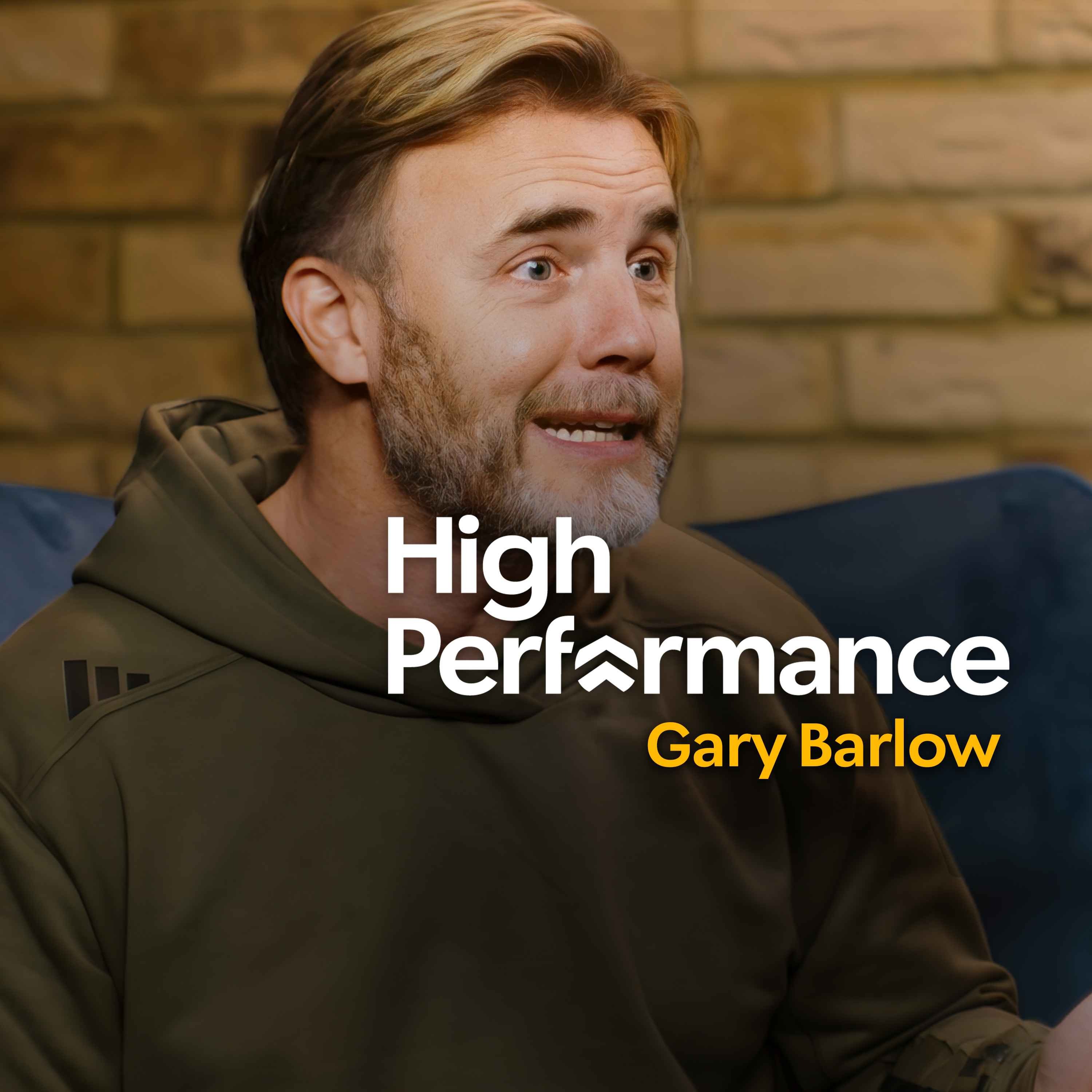
In this episode of The High Performance Podcast, hosts Jake Humphrey and Damian Hughes engage in a deep conversation with legendary Take That songwriter Gary Barlow. The discussion navigates through Barlow's experiences of failure, shame, and ultimately, his journey of rebuilding himself after a significant period of personal and professional challenges.
Written by AI. May contain mistakes.
Gary discusses his internal struggles during Take That's peak and split.
“It just played itself out as badly as it could.”
Gary recounts a pivotal pre-Grammy party that turned disastrous for him.
“It was a real moment that night because we'd had all these years, we've played through the clubs, joined this band, the band's been successful, we've been all over the world, it's gone so crazy that we've split up.”
He shares the feelings of fear and inadequacy during a critical performance.
“I'll see you next year at the pre-Grammy party because this isn't right.”
Gary reflects on the fallout from his disastrous performance and feelings of isolation.
“I can hear him introducing me on the stage.”
A deep dive into Gary's years of struggle after losing his record deal.
“The rehearsal for him was his only way of...”
Gary discusses the delicate nature of creativity and how doubt can hinder it.
“What could I do that would be useful to anything?”
Exploration of how public scrutiny can deeply affect creativity and self-worth.
“Yeah, it's because it all ends up up here.”
Discussion on using weight gain as a method of coping with public scrutiny.
“It doesn't exist, creativity, until it comes out.”
Examination of how media portrayal can exacerbate feelings of shame.
“And so this really answered a whole heap of questions for me.”
Analysis of public shaming through personal anecdotes and societal examples.
“You could do anything, say anything about anybody.”
Reflections on the journey to reclaiming personal control and identity after public ridicule.
“What stage did you start to own your successes and refuse to allow yourself to be shamed?”
Insights on how reconnecting with bandmates fostered healing and collaboration.
“but everyone went through something in those years off.”
Discussion on how overcoming trauma can lead to personal growth and better relationships.
“And it was just, you know, those first sort of six years, they were just sublime, you know, up to Robbie coming back, you know, the perfect end to the story.”
Gary discusses the transformative power of overcoming difficult times.
“because the rise back's been so worth it.”
Gary shares his journey from self-loathing to regaining purpose.
“It's just been the making of me, those horrible, horrible years.”
The importance of exercise in Gary's personal and creative revitalization is discussed.
“was coming back into our band again, because all of a sudden I knew I couldn't be, I couldn't do this anymore because I had a purpose again.”
Gary reflects on the joy of reconnecting with music after a long hiatus.
“I think exercise, I cannot advocate it enough of how much good you get from it.”
Hearts and struggles are transformed into songs, particularly the song 'Patience'.
“And so, again, it was a little bit like putting the trainers on.”
Gary talks about the importance of support from loved ones during tough times.
Gary discusses coping with loss and how it can bring families closer.
“Like what really helped you to eventually come through it?”
Insights are shared on maintaining a strong relationship through adversity.
“It's actually brought us closer as a family.”
Gary Barlow reflects on his happy childhood and the importance of lifelong partnerships.
“But, you know, I think if I was to study it, which I try not to, I'd probably go back to my childhood.”
Gary discusses his passion for music and achieving a balance between work and home life.
“And yet here I am still standing, still performing, still a dad, a husband.”
Gary talks about his criteria for accepting projects and the importance of authenticity.
“I look at something and think, that's a pain in the arse, that.”
Gary shares his non-negotiable behaviors and the importance of teamwork in his career.
“Somewhere in there is a relationship to what I do and who I am and my hobbies.”
Gary discusses his biggest mistakes and the lessons learned regarding trust and perfectionism.
“Yeah, the team thing though, that's a big one.”
Gary reflects on family time and the importance of pursuing what excites you in life.
“You know, I'd put myself somewhere in that period of the early noughties because I'd love my kids to be young again.”

Get the gist, explore an idea or ask about something said.
 Claude
On The High Performance Podcast, what are the key points of this episode?
Searching your listeningAutomatic transcript. May contain errors.
0:02So I went through this whole period then of being unhappily overweight but kind of happy because it was doing something for me. Yeah, he was a great coat of armor. And I'd killed the pop star. So it was like I'd controlled something for the first time in ages. And it sounds incredibly dark, what I'm saying here, but that's the way I was thinking at that point.
0:30That is the distinctive voice of legendary singer-songwriter Gary Barlow. Now, if you're a fan of Take That, or even if you're not, you will, of course, know the story by now. and I hope like me you've enjoyed the recent Netflix documentary that has charted the highs but also the lows of their time together including the big split and the comeback. But I guess what the cameras couldn't capture was the internal collapse of just one man during the band's darkest period because Gary was the songwriter, he was the leader, he was the kid who grew up dreaming of being a musician. He's the one that everyone expected would then go on to have the huge solo success Yet the reality is that he was drowning whilst Robbie was soaring.
1:11The band had split. Robbie was enjoying this unprecedented solo success. And Gary, well, he was trying to launch himself in America with a cover version that he hadn't written on a remix he didn't understand. At a pre-Grammy party he wasn't ready for and didn't want to be at. And what happened next would define the next seven or so years of his life. This is a remarkably honest conversation. one of the most open we've had about failure about shame about the fragility of creative confidence what it actually takes to rebuild yourself when you've lost everything that defined you if you love take that if you don't if you've watched the netflix documentary even if you haven't this is going to give you an insight into a man who really bravely and brilliantly opens up to us as gary takes us from that despair in new york when he actually thought that everything was over through seven years of darkness to find his way back through the very thing that had defeated him which was the band and isn't it great to see Take That and Gary flying once again as we welcome Gary Barlow to High Performance
2:13It's the perfect press story that two guys from the same band are coming out one's making great music we're hearing from someone we've never even we've never even heard his voice before this guy you know we've never heard him write songs before and they're great songs versus this guy who is now a watered-down version of who he was before he went to America. It just played itself out as badly as it could. And so by the time we'd sort of released two records that didn't do anything from that album, RCA dropped me in 1999. That was the end of a seven, eight-year relationship. Will you go back and tell us about that incident with Clive Davies that you recount in your show?
3:02Because, you know, that opening night party to introduce you to America. Because what really resonated with me in your retelling of it was the wisdom of your dad from Connors Key Working Men's Club that came back and reminded you to show you that it doesn't matter how big a stage you are, common sense is common sense. Yeah, yeah. It was a real moment that night because we'd had all these years, we've played through the clubs, joined this band, the band's been successful, we've been all over the world, it's gone so crazy that we've split up. and I've just played on every stage at this point and I've been in every situation.
3:43I'd worked my way through all these different things and I'd got to here. Flying to America, I had a single that I didn't write. It was a cover version, but Clive was happy. This is the big launch. Great, great, great. And you're going to be on my pre-Grammy party tonight. So this is a party that happens before the Grammys happen. so now I'm like Grammys, New York, Clive Davis, this is it. So I get on the Concorde, they fly me over, I land there and as I land I go into Clive's office because we've got an afternoon rehearsal and he says it's going to be amazing, you're going to launch yourself tonight, we're going to play the new song however I've got a remix of it so the word remix straight away because you know I'm a I'm in a pop band I'm not in a dance band I'm in like a pop band I'm used to like radio music so on comes this mix and literally the slices of my vocal in this track like that pieces have all been moved and the verse is where the chorus used to be and it's all jumbled up and I'm sat there listening and I'm thinking this is not right but he's Kyle Davies I'm just a guy from Frodsham what do I know I think I've got I've got to do it this is the doorway to America I've got to get on there tonight so we go to this rehearsal and I'm stood on the stage and and and the mute the backing tracks on and I'm thinking where the hell is I just don't know where anything is and I know what I should have done.
5:23I should have said, I'm going home. I'll see you next year at the pre-Grammy party because this isn't right. But I didn't. I thought, I'm going to learn this thing and I'm going to go on and I'm going to kill the audience tonight, like I always do. So thinking I had two hours then to spare so I could learn this thing, they dragged me into this room where it's like a reception for this pre-Grammy thing and there's like 500 people and the record label literally wheeling me around, you know, like the boss of MTV America. Hey, nice to meet you. And I'm, I'm loving this, the boss of MTV America, you know, VH1, oh, nice to meet you.
6:03You know, it's like literally a who's who, Aretha Franklin and her manager, nice to meet you. I've realised two hours has gone by. I can't even remember what this bloody track starts like, nevermind finishes. So I literally like grab someone from the label. They've got a cassette of the backing track. I go into the dressing room and I start, I played it once, twice, round and I'm just thinking, there's no way out of this. It doesn't make any sense. I'm not joining the dots here. And as I'm thinking that... Which is so alien for you. No, this is just something I never do. I'm like, I'm the guy who rehearses for six weeks before one song's performed.
6:46It's just like, what am I doing here? And I was trying to think, how do I get out of this? And at the point I'm thinking, I need to just go. I can hear him introducing me on the stage. And I realised that I've got to go through this now. And I just thought the magic was going to come to me. I just thought I've had so much luck over the years. Something's going to help me get through the next three minutes. And of course, everything was wrong. I was singing in a bit where I shouldn't have been singing and the music was playing notes that it wasn't playing, that my voice was singing. It was just the worst, the worst three minutes, I think, of my whole life, where you just want the ground to swallow you up.
7:32And also realising that this is the end. There's no coming back from this. There's no second performance to launch yourself in America. This was it. This was what every artist wanted. And I got it. And this is where I am with it. And I remember wandering off the stage and thinking, that's the end. That is it. I'm going home. And it was very telling because the whole day I'd been in New York, I had minimum eight to 12 people around me. You're great. You're going to be good tonight. Great. Let's get to know each other. Let's exchange numbers. when I walked off the stage, there was nobody. And I walked off the side of the stage, into the reception at the plaza, through the doors, and walked all the way down Fifth Avenue to my hotel, and there was nobody with me, and it was raining, and it was like, that's the end of that.
8:29And what was that words of advice that you remembered that your dad had given you at that moment? Well, my dad always wanted me to rehearse. The rehearsal for him was his only way of... Because my dad was a working man, so he had like two jobs. And his only way of relating work to what I did, because it's not work what I do, was the rehearsal. When he used to see me in that bedroom for hours upon hours, that's his relation to work, putting the work in, that lad is. So when those words come back to me, you'd never do anything without rehearsal. That's why you need to rehearse. it's why you need to prepare and I hadn't done any of it just expecting the angels to rescue me and it doesn't work like that it was the beginning of the end that was that was really the start of when I said earlier about the confidence once you someone chips a piece off that piece becomes many pieces that slowly fall off so you're now in this period where the guy who was who's become your rival Robbie is having superstardom you've had this awful episode in America you've come back home like I'm guessing at this point if you've lost your record deal you don't have a record deal so you're not performing you're not working you've lost everything that is kind of your North Star that you understand yeah what was going on in your head at that point well I'll take it year by year because it went went across about seven years this did.
10:07So the first year I was blaming everybody else. The second year I was blaming myself. And the third year it was becoming real that that was the end. There was no way I could ever see myself recording or singing. I'd stopped singing completely. Stopped playing on a piano and I hadn't done anything for like three years I'm going to say. and it was driving me crazy. So what's your day look like at this point in your life? So it was an interesting one, because as my sort of career life went down the toilet, my personal life was on and up, because we'd had two kids. And so life outside the studio was great, and so I'd do this thing where I hear this a lot, where I'd say, all right, I'm going into the studio now, everybody.
11:05And Dad would go off to do his day's work and I'd literally sit in there and I'd just be looking around the room thinking, what am I going to do? What could I do that would be useful to anything? And I'd sit in there and I'd look at the clock and I'd come out at four and go, anyway, that was a good day. And I'd act this day of being in the studio, pretending I was doing something. I was doing nothing. some days just sort of watching the piano thinking i used to write big hits on that thing and i just it was it was it was slowly going insane really really yeah felt that bad oh it was it was really dark really dark all that work all that time and and you realize also with music that it just qualifies you for absolutely nothing in the real world.
11:58Nothing. I was qualified for nothing. I couldn't get a job in a petrol station or on a till or, I mean, stacking shelves or there was nothing I could do. So you were in this beautiful house. You'd had all this great success, but you were totally empty at this point. Because I wanted to make music. I love music so much. I wasn't even listening to music at that time. I really detached myself from music. So what did the piano represent for you then at that moment? You said you looked at it and thought... Well, the piano was the enemy because the piano was... Remember, the piano is the vein to all things good because when I sit at the piano, magic happens, you know, because this song that I'm making today will go on a record and people will be singing it in stadiums and piano's a good place.
12:49Now it wasn't because piano didn't get... I couldn't even play it properly. It was just like a different language at that point. And it was just, it was so frustrating. It was because it was totally out of your control. And also it wasn't, it was also a time when, you know, if it happened now, I could probably just sit on Twitter and go, hey guys, how you doing? And you'd get lots of message, hey, lovely to see. You could have a false sort of reading on. it just felt like there was nobody listening. There was nobody out there. And of course I do know now that there was lots and lots of people out there.
13:29Did you truly believe it was the end then? Oh yeah, completely. Completely. There was no way back. There was no way back.
13:41What surprises me about that is almost like the fragility of your confidence. you know because the bit up until take that as you're describing you built your confidence on really strong evidence you've done your 10 000 hours you've sat on the stages you've watched the audience then you've had somebody that's bolstered your confidence in the world of commercial pop yeah but then you've got lots of evidence again that says you can do this stuff and And I'm just really intrigued as to why that one incident, as horrific as it sounds, was able to dismantle all the evidence that you'd accumulated prior to this.
14:23Yeah. Yeah, it's because it all ends up up here. It defeated me. My mind left me completely. And it's a funny thing, creativity. And it is delicate. It is very delicate. And it's why I said earlier about the managers, If you're a manager of somebody or you're a partner of somebody who's creative, it's just like you've got to be so careful around them because that line of feeling confident about what you're doing, it's the only way you can create. I just don't believe someone who doubts themselves can create wholeheartedly. It just doesn't work without that belief. It's not something that's tangible.
15:06It doesn't exist, creativity, until it comes out. And it has to come out of a vessel that really, truly believes in what it's doing. So what was the thing then that derailed you so much in that period? Was it that for the first time in your whole life you had failure as a musician? Was it the success of Robbie? Or was it the fact that, I mean, I remember this period, like the public reveling in it. people enjoying the collapse of someone who had been such a huge star? The shaming was hard because it's a very public thing and it made going out very hard because people would say things like they'd say, Robby's doing great, isn't he?
15:52You know, or there's a number of phrases I could, you know, and soon as that happens, that's now three months of being at home without leaving. That's what it would be for me because it was just so excruciating to, you just wanted to crawl into a hole. And sort of mentally for me, the one thing that I was being very clever with is that I was putting weight on. And the more weight I put on, the less people recognize me, which meant people weren't saying things. so I went through this whole period then of being unhappily overweight but kind of happy because it was it was doing something for me yeah it was a great coat of armor and I'd killed the pop star so it was like I'd controlled something for the first time in ages and it sounds it sounds incredibly dark what I'm saying here but that's the way I was thinking at that point what were you eating at that point what was your relationship everything really oh yeah everything yeah it's a full-time sport so was it a relationship with food thing or was it a an issue with a body like a body image thing or i think it all spurred from the shaming really i think it all came from that i wanted to go out but i didn't want to go out because of the thing you know and also we were you know kid the kids were going to school and things and i wanted to go to school and be part of the football practices and all these things.
17:24And as I was, I couldn't do that. And so this really answered a whole heap of questions for me. And I felt incredibly proud of myself at the time. I thought, this is fantastic. You know, I've hidden, you know, this is brilliant. I can go anywhere and do anything. You can't hide from yourself. No, no. That's such a powerful word, that shame. shame and I think it's worth exploring it because I think that's what like it comes loaded with so much fear yeah you know like even as you're saying it to me I'm I it feels quite a foreboding thought what was it that was causing you shame we we were in an era of media where there was no hold barred You could do anything, say anything about anybody.
18:13And I specifically remember a few headlines that were in newspapers at the time, particularly I had a bad relationship with a guy that wrote at The Sun who really, really went for me in a big way. And his headlines would be, you know. Do you remember the headlines exactly? Relight my fryer, back for pod, and there'd be pictures of me overweight, you know, coming out of a pub or something. but the big thing was the Robbie success because the Robbie success was like Channel 5 made a documentary on it and of course I saw it all and watched it all and recorded it all and watched it twice I don't know I don't know you just yeah you were obsessed with it the whole thing when Rob went on the Brits and said I was the talent all those things I watched them all and yeah it's just that was the shame for me it was just like you're just like the butt of a joke and Rob talked about it years later and he actually said that it became something where it wasn't me it was just a great way of if he was in a room and he wanted to make them all laugh he'd make a joke about me he said I'd get a reaction he said it wasn't about you it was just the fact that I was nervous and I wanted to get this room on my side and you were the thing I reached for.
19:37So that went on for years, that did. So that, for me, was the shame. Have you ever read that book by John Ronson called So You've Been Publicly Shamed? No. Because it's a fascinating book that I think, as you're describing it, I'm hearing bits that he writes about where there was a couple on it that were smoking a cigarette outside the no-smoking side of the Arlington Cemetery in America and these people got put through the ringer because they were seen to be disrespectful to veterans at a place like that. And he speaks to people whose lives have been ruined. You know, there was one lady who'd made a comment when she went to Africa of, I hope I don't catch AIDS.
20:21And in the 12 hours that she was in the air, her life got dismantled by people on sort of social media. And one of the interesting things was, he says, the people that have almost survived that public shaming are the ones that refuse to allow themselves to be shamed. So he talks about when Max Molesley, the Formula One guy, got caught up in a sting with prostitutes, and he came out and said, I do like visiting prostitutes, I'm not ashamed of it. And it was almost like they couldn't bring him down because of that. What stage did you start to own your successes and refuse to allow yourself to be shamed?
20:59What was the process of you coming out of that? I'm not sure I've ever felt like that, though. where I refuse to be shamed. I mean, yeah. Yeah, I don't know. I don't know. I mean, A strange thing though with what you went through is that you actually must have felt a real sense of injustice as well. I think those people, you can go, that wasn't a great thing to do. Like, what had you done to deserve this? You must have been thinking that, I guess. Yeah, but celebrity was very, you know, pop stars and things. It was just an easy target. And it was such a, it was a story with a bow on it, right?
21:31That two guys leave a bag. It was just made for, you know, and to the fact that I wasn't that likeable at the time either. So I think a lot of people were like, yeah, yeah, take, get, cut his, you know, cut him down. You know, it was a, and funny that it did need to happen for me. Maybe not as brutally as it did, but, you know, when I came out of that and started to work again, And I came back with a whole new mind full of what I knew how things should be and really needed things to be on my own terms because otherwise I wouldn't be able to do them. It changed from the guy in the 90s, I'll do anything.
22:15Just point me in the direction and I'll do it. I'll deliver. It was more like, oh, no, I can't do that. unless we do it this way, that you come back more, you know, when we started working together again in 2005, which was when the band sort of reformed, we all had this hesitance because, you know, I'm just telling you my story, everyone had a story around that time. And maybe some of them don't sound as dramatic as mine did, but everyone went through something in those years off. and so we all came back with a real hesitancy and a sort of like you know we don't want to put our hands too close to this fight you know and it was good that we did we second-guessed a lot of things and did you discuss it and have a bit of sort of group therapy very much so we discussed was that we discussed in that first year we talked more than we'd ever talked in the 90s as people, as brothers, as humans.
23:17So what was like the most telling observation that you heard from your bandmates during that time that you still hold on to today? Well, a band is an interesting thing because, you know, I've known those guys longer than I've known my wife. You know, we've got a very, very close bond together. And I think that, you know, the one... I'm safe to say that I didn't really want to join a band in the 90s. I didn't really want to... I enjoyed it, but I was always looking forward to going solo. When I came back to the band in 2005, I really felt like I was in a band for the first time I'd ever been. I'd never really been in the band the first time round.
24:01When I came back, I felt the strength of other people who were like me. You know, we've all been through something, and only us know how it feels like. And it felt so strong. So if you fast forward a few months, we stood on a stage together and I'm looking down the line and I'm like, wow, this is just the best thing ever. You know, it's so, it's always felt like such a safe environment, the band, and went on to be even more safer as the years went on. But it just felt so healing and so, like I say, safe. if it felt like the first time had been in a safe place for a long time. See, the very term there that you describe about feeling safe, I find significant.
24:46We've had lots of leaders on this podcast that have spoken about the importance of psychological safety to create a space where people can make mistakes, make cock-ups, admit errors without feeling. You're going to be castigated or made to look silly for it. So how did you go about creating? and I appreciate it wasn't just you, it was your bandmates as well. How did you go about creating an environment where you felt that word safe that you've used a few times? It wasn't forced, interestingly. It wasn't forced at all. One of our big leaders, who was a silent leader in the 90s, but he became more of a leader of us when we came back as a group, was Jason.
25:33he was one of five brothers so he was used to the family pyramid and a band is a family pyramid and as one leaves or one leaves the room you all reshuffle position it's very interesting and he came back with a real he was wise he told us a few things and a few situations appeared and he resolved them I mean, he was someone we all came to look up to a lot. Me, especially, has been the one who was always leading. I always felt that pressure of, I've got to look like I know what I'm doing, even though I don't know what I'm doing. You know, it was shared all of a sudden. And also, for me, valuing the people around us then as well.
26:20We all said when we got back together, right, let's lose all the dickheads this time. Let's just have the good people back. And we did. We got all the good people back and they were valued. That's where we brought them into our circle. It wasn't us and them, it was us. And that's where we really started going up and the gigs were getting bigger. It was no surprise that. It was no surprise that it was good what we were doing and it was real. The music we were making was music being made by a band. It was being made by a team. The concerts we were doing were being made by a team, not one person.
26:58and it was just, it was the antithesis to what it was in the 90s. And it had to be, you know, we were adults now. We were men working together. And it was just, you know, those first sort of six years, they were just sublime, you know, up to Robbie coming back, you know, the perfect end to the story. Rob comes home, you know, we all get to stand equal together. They were just amazing, amazing years. The best years of any of the years in the band were those years. And would they have been the best years if you hadn't had to go through what you went through? I guess the question is, were you able to make peace with the trauma of that really difficult time?
27:40I think so. I think so. Yeah. Yeah. I don't look back on it with fear anymore. I look back on it and often think, especially when I'm telling it in this, that I never want ever people to feel sympathy because it was all my own doing a lot of it. It really was. But it's still an interesting story to tell because the rise back's been so worth it. It was worth those years of pain because the person that comes out of the other end of it is, I think, a better person, a nicer person to be around, a nicer person to be in a band with, a nice person to be married with or be a father to. It's just been the making of me, those horrible, horrible years.
28:25And for people who are still in the difficult place at the moment and are maybe struggling with their self-worth and their own confidence, the one thing we haven't told, the one part of the story we haven't touched on is how you went from taking the mirrors down in your house because your self-loathing was so great to being able to be back on stage with the band. For someone listening to this, what was your first step to recovery that could perhaps be theirs? a lot of these roads we're talking about were never sort of parallel. They seemed to happen at different times. It was almost like phases I was going through in those years where I wasn't on the screen and on a stage.
29:04And the sort of non-stop eating thing was towards the end of that. And I really think the thing that led me out of that was coming back into our band again, because all of a sudden I knew I couldn't be, I couldn't do this anymore because I had a purpose again. I had people I had to turn up for. And I also knew I'm not meant to be this guy. I'm not meant to be this. I'm better than this. I need to sort this out. I was a big smoker at the time as well. I was like a lot of, and almost that was one of the hardest things to get over the cigarettes was so tricky. But I knew I had people I had to deliver for.
29:49And I knew that I had to get out of bed and be, I couldn't carry on with this. And so that was a big part of me sort of, you know, really putting that to bed. Do you remember the first thing that you did? Yeah, I went for a run. That's the first thing I did. With all the weight and while smoking? Yeah, I hadn't done exercise in such a long time. And I have to say exercise is so much a part of my everyday. I'm a different songwriter when I exercise. I'm just a different person. I think exercise, I cannot advocate it enough of how much good you get from it. And it could be a walk. It just could be a stroll.
30:37It comes in many forms, exercise does. but the first run I did I was so out of shape I was so hilariously big at the time that I shouldn't have been running to start with but it felt brilliant to run it felt brilliant to move to feel air going across my face for my knees to be lifted it just felt so ridiculous and funny is that I just remember giggling to myself walking back thinking I've got a lot to do here but you know what? It's all right because I'm on the road now. You know, I've put the shoes on for the first time, turned up. And I think that once I'd done that, I felt so good instantly.
31:20A minute later, I felt so good. I thought, well, I've got to do this again tomorrow. And I did. I run every day for the next two years. And slowly this guy disappeared in my trail, in the dust. I was losing big parts of myself in this in this you know this did you have therapy and stuff I didn't you know really no I didn't I didn't music was the place I was turning to music was helping me get it out when was the moment then where the piano was no longer the enemy and you thought oh yeah I can write music again that must have been really special it was so great it was really great there was a little period where, so even a pianist who's played for years and years, when you go back to it after not playing for so long, you're really bad at it.
32:12Right. And so, again, it was a little bit like putting the trainers on. The first time I lifted the lid up and started to play, I played some of the old songs. And I was reminded of some of the, you know, the things I'd written over the years. And I got some music books out and played some sight reading, really enjoyed it. and suddenly my days of saying goodbye at 10 o 'clock in the morning and going into the studio were meaningful now because I was going in and I was playing and my fingers were sore at the end and it just, it was like the sore feet running. It was worth it. It was just so rewarding to go in and play this beautiful instrument, you know, that had been a friend to me for so many years and, you know, helped me have this life, this one instrument had made this whole universe for me.
33:05And it was back friends again. It was just so beautiful. And what did you write about that period? So that was the patience period. Patience came out very early on in that period. That was almost like a song that had been trapped for 10 years inside, that was. and that came out with like a just it was just it was like a cry of hallelujah that song when I first sang that chorus it was just so uplifting and like I said these things that when they come from a real place like this people get it people connect with it they feel it and that's what music's all about so a lot of that first take that album they came from yeah that period And what about your wife and children at this time Gary because you made the comment there about that you felt you had that sense of purpose again getting back on stage what difference did they see in you as a partner and as a parent Oh my wife was so happy when she saw me back on stage again because she knows how happy I am to do that and be involved in music and she has this she has this habit she does so when when she first came to watch a live show she doesn't sit in the audience she sits by the the monitor man the guy that does so i have ear things in when i uh they're calling ear monitors and in those monitors i get my own private mix so i get the mix no one else hears not the band or i get my own mix where my voice is loud i have the guitars panned one way the drums in the middle the keyboards over here and she loves to sit listening to my mix so she's the only one experiencing what i'm experiencing and uh yeah she loved it she's just so proud and and you know still is but but at that period she she knew it's what i needed do you mind me asking what what she did for you in the dark days for people who are listening to this and maybe they are a partner of someone who's struggling what what was the thing she did to help yeah she was amazing you know because she didn't um she never grilled me she never pressed me about anything she never she probably knew i was doing nothing in the studio all day but she never you know she was never confrontational about any of it no no nothing at all nothing at all you never question you know what are you doing why aren't you doing you've never any any of that at all even now though you know the the this is the thing with music is that even when you're not doing it it takes up your mind you know because you're thinking about not doing it and is that i can be distant you know and that's the only point she'd ever go hey put that phone down now come on get in here why distant because music takes so much it's not like coming home and putting a briefcase under the desk and not thinking about work till the next day.
36:12Music follows you around, you know. So as I'm having dinner, I'm thinking, oh, that's the end of that line. It's just so, it's so annoying for everyone else. But it, you know, it doesn't, creativity, it doesn't happen between 11 and four in the afternoon. It just happens when it wants to happen. So often for me, it can be in the middle of a holiday or, you know, and it can just happen at the worst times. So what advice would you give to anybody that maybe have a partner or a friend that's struggling? Like what really helped you to eventually come through it? A lot of people often ask me like what's, because we've been married for a long time.
36:53We've been together for a long time and we've had lots of ups and downs for our lives. And people often say, you know, what's the secret and all the rest of it. And I don't, I've never, I don't think there is a one thing, but the only thing I would say is that, and it's very simple this, but it's just be nice to each other. Just try and be nice to each other. Because if you really do that, things are great. you know of course it's impossible to always have that but like if you if you go into the day saying something nice or I just think it's a very simple thing it's just like support who you're with it's you know it's like the last couple of weeks we've been in the studio together and we've had different roles and if you sit there going that was great well done brilliant more of that it's just so helpful to hear that it's and it sounds sorry it's very simple but it's just something we've always tried to do is be you know be nice to one another it's great and you know you needed her in those difficult times for you and i know that she would have needed you after the yeah very sad loss of your daughter poppy you mind talking about that no no just for a moment because um it's the most moving moment of the of the stage show yeah that we came to watch and you You know, you really are able to make the audience feel how you were feeling at that time.
38:19Yeah. What was the process that you went through to be able to write that incredible song about her and about the whole period? Well, I'm always desperate to put things into music because, like I said earlier, my therapy's always music. And also, you know, for anyone who's been through what we went through, by the way, over the years I've realised it's so common. it really is, it's tragically more common than you think, is that you have so little. You have so little. You don't have any memories. You don't have any photographs, very few photographs. You have so little, so you try and make as much out of what you've got as possible, and the music was such a big...
39:03Because I look back, actually, at that whole album, and that's her in there, captured forever. And so, for me, when I go out every night on a stage and say that again it's an extension of of what she gave me in that brief time that's what that's period's been like for me it's it's about adding to things that we never got the chance to experience and the more I can do that the more I can either put it into music or talk about it or it gives more light to to her um simple yeah that lyric fly high and let me go it is kind of ah I mean it's it's moving but it's painful at the same time isn't it that message to her and I didn't want it to be painful I wanted it I wanted it to feel because there's parts of it that isn't painful there's parts of it that is so like I say the good things that an experience like that leaves is as good as the bad and what are they well I think it's definitely a togetherness because one thing me and my wife were told when that happened because we did some grief therapy after that, is that some crazy figure like 97 % of couples split up after that, which you can understand, but it hasn't been like that for us.
40:25It's actually brought us closer as a family. And so there's so many great things that have come from that. And, you know, it's amazing what it does to you as a person. And, you know, the adversity is, I just think it's a terrible thing to go through at the time, but you do find positives in it. What an honour to be able to sing her song in front of those. I mean, that must be for you. What a moment. And it's also a moment when I do just a music show and it's just a song in the set. People are jumping up and down to that. So it's a massive reaction and you play it late in the evening, you know, and it's just I look out and go, there's the light right there it's so beautiful really is
41:15we had a guest on the podcast called steph reed who'd gone through the process of she was involved in an accident where she lost a leg yeah and she told us that when it happened that people that go through this trauma there's a good chance their parents will split up right and she spoke about how that manifested itself in her life and her parents did end up divorcing. So you've defied the odds again there. So what can you teach us about how do you come out of it stronger in relationship terms? Because you've gone through it with the band in less dramatic circumstances as well as personally. I think there's an awful lot that you can teach us on this.
41:58Yeah, me teaching people's never a good thing. But, you know, I think if I was to study it, which I try not to, I'd probably go back to my childhood. I lived in a very happy house. I don't ever remember my parents arguing. It was such a happy place. I mean, they were married for 43 years, my mum and dad. They were such a happy couple. And I think that when I got married, it was just like there is no second marriage. There's no, this is it. And, and you, you know, you, we've always treated this thing as something that's just like so important to us. You know, having a lifelong partner is something I want.
42:43Um, you know, we're very, very happy couple and we'll get through anything and, and we've got through a lot and, and we're still here as happy as ever. And I just don't believe there'll be a day where something will beat us. Brilliant. I've really enjoyed this conversation. I get a real sense of like a freedom now because, you know, you've been through all these things. You've learned from all these things. It's almost like it does create that suit of armour that, well, what can affect me? Because look at what's come my way. And yet here I am still standing, still performing, still a dad, a husband.
43:16I suppose my question really, before we move on to the final quickfire questions is, what's it all for now? Like you've had a great career. You've made your money. You've had your children. Wonderful. there's so much always going on with you i always see like seven or eight gary barlow projects happening why are you always so busy i love it though i love it so much i do what's the not to love it's great if i tried to take a i remember i heard you once being interviewed you said i'm going to try and take a year out did that ever happen i did though i did do a year out covid it was before covid but even that you were doing those sessions weren't you where i saw you doing it so much the online stuff where you add other artists yeah i love it so much i love it so much and music so you know it's just like there's just nothing bad about it it's just such a and also you know it's a time of life thing i think as well like you say i don't have a list in a file of facts anymore i've done most of the things i've wanted to do this is the this is the good stuff now you know this is the stuff where you get to say no to things where you decide what you want to do it's brilliant it's just great and if there's a little bit more success to come brilliant if there's not fair enough you know let someone else have a bit you know it's just i love it i love it i mean this is fun for me you're talking about music's as good as making it and uh yeah i just i'm very very happy in what i do i've got a great job do you leave room for the things that you really want to do because i don't want to sound morbid but you never know what's around the corner yeah like do you make sure that you carve that out now i think so yeah it's taken me a it's funny when i meet other artists whether you know you're on a concert or somewhere whenever you meet artists the first thing everyone always says is what about your balance between work and home is it good yeah it's always one of the first things that comes up and i've definitely got it wrong over the years but i feel like i'm getting it right at last at this point i'm definitely not as hard on myself as i used to be i'm definitely not as serious as i used to be because that's i think i think you've got to have a humor with what you're doing you've you've got to have a if everything's just like you know oh my god we've got to get it's just i've definitely taken the stress out of my world and it's just left all the enjoyment which is lovely so how do you do it i'm desperate to know that for myself in a selfish point of view so So tell us your criteria of how you make a decision to go, I'll do that, but I won't do that.
45:51What's... I look at something and think, that's a pain in the arse, that. It's going to be this, this, this. When you look at, you're like, we want you to make a musical. Oh, that's four years. It works. Oh, no. This, oh, 45 minutes. Oh, yeah, I'll do that. It's like, if the level of pain in the arse is here, someone else can do that there you go three things profit, passion or purpose I think if it fits into one of those three things then you can consider it but other than that the purpose thing is definitely a big one for me what's yours? I've tried to always never do anything that isn't related to music, so for instance I wouldn't be on a quiz show, it's not related to music so whenever I've done tv things or whatever as long as it's rooted in music then i probably know what i'm talking about anything else i probably don't so don't don't include that i'll give you a good example um this whole wine escapade's been hilarious for me because when we started talking about i love wine by the way but when we started talking about making my own wine it was just like you know 100 bottles a couple of my mates have a case each and i have a bit for christmas and it's just all a bit of a laugh i think we're approaching 800 000 bottles of wine we've sold now and it's just like this has got out of hand because it was never meant to be this it's it's funny but there's no seriousness of like we've got to make this quota we've got to achieve this it's not come from that it's come from a passion of a hobby you know you can watch a concert and drink a nice glass of wine.
47:42Somewhere in there is a relationship to what I do and who I am and my hobbies. So authenticity. Authenticity. Needs to be at the centre of it. Right, ready for some quick fire questions? Uh-oh.
47:55The three non-negotiable behaviours that you and the people around you should be buying into. Buying into? Yeah. Well, I think the thing I talked about earlier about being nice to one another is definitely a big thing and supportive as well. And that's been a journey for you from the early days. Yeah, and also I have a team around me as well. So, you know, music team and being supportive and embracing, here we go, other people's ideas. Imagine that in the 90s. I'm big on that. I love people coming up with ideas and, you know, getting them into seeing their work for them come to life. is nearly as good as seeing my own ideas come to life.
48:43But yeah, working as a team, big one. Second one? We need three non-negotiables. We need three. Working as a team. Did I do... Have I given you two? I think that was one. Was that one? Was it? Yeah, the team thing though, that's a big one. Okay, I'll get a second, yeah. Yeah, that's a big one because the team has been massive for me in the last sort of 16 years. Let me do another one. well the fun because the thing is with any of this is that I try and always remind everybody around me is that we're in the entertainment industry it's got to be fun right if it's starting to feel like we're pulling teeth we should probably start what we're doing you know and you know what I love about those three if we'd have gone to a 21 year old Gary Barlow and said three non-negotiables fun teamwork and kindness probably wouldn't have existed yeah brilliant what's your biggest weakness and your greatest strength?
49:37I think my greatest strength is experience. I think that I've definitely put my hours in over the years. And that's not being... I'm stating a fact here. I have. I've spent thousands of hours on stages, millions of hours in studios. You know, I've definitely put... I think experience is a real strength. I think if you're interested in something, do it. And then when you've done it, do it again and keep doing it because at some point then it's going to just be like a muscle and work for you. Weakness. Let me have a think about this for a second.
50:21I must think very highly of myself because I can't think of a weakness at the moment. I am still, I do still take some things too seriously and I have to remind myself of some of those things we just listed. But less so nowadays. That's probably the, you know, taking things too seriously is always there on my shoulder somewhere. Where do you think that comes from? I think it comes from the perfectionism, which I've tried to lose over the years, because, of course, we all know nothing's perfect. But it's hard in music. I always look at Elton John as a perfectionist. He is someone who is completely obsessed by music.
51:03I mean, you know, he's on a whole other level to me. You know, all he wants to talk is music and football. But it's still, you know, at his age where he should be, you know, just basically having a good time, he is still listening to as much music. You know, as I think I've got to the end of a good year and I've done 150 gigs, I look and Elton's done 250. I mean, he just puts us all to shame. Your biggest mistake and what you learned from it? Well, I think my biggest mistake comes from the Clive Davies area, is not trusting the small man in a voice, because that's who I was then. And I should have trusted all those years I'd done what I'd done, because it led to such a catastrophic turn of events that it possibly could have gone a different way that day.
51:53So I didn't listen to my gut instincts, and I've never, ever not done that again. And that period where you had the issue with your tax, that was from trusting other people. I just wonder whether that, in that moment, you thought, oh, no, I don't want to lose everything all over again, how big a moment that was for you. Well, that was a different thing. I was more disappointed in myself that I hadn't asked more questions and I never really ever, like the lead up, it's hard to explain this because I'm always misquoted when I talk about this subject. But the lead up to that whole story and the thing going to court, I never lost any sleep over that.
52:36It was always laid out like an investment that was just some of the lots of people did. So I never ever, until it was viewed as it was, I never thought it ever could be. So it was more of a disappointment in the fact that I hadn't asked enough questions. If you could go back to one moment of your life, what would it be and why? You know, I'd put myself somewhere in that period of the early noughties because I'd love my kids to be young again. We'd give anything for our kids to be little again. I felt like I could have got more out of those years than I did. I was sidetracked with what was going on in my life.
53:23it's the only regret I have in all that time was I could I could have been around more as a dad than I was the final question your last message really for people that have listened to this fascinating conversation your I know you don't like giving advice or your own learning so you're too modest for that but this is your kind of what you'd love to leave ringing in people's ears your one golden rule for a high performance life? Well, I think it's finding what really gets you excited. And for some people it's stamps or, but just find it and not be like, just embrace it. Don't care what anyone thinks about, you know, it's just like if it lights your day up, then just jump inside it and enjoy it.
54:11Because there's plenty of, you know, There's plenty of things that, I've found this with music over the years. To do the bit I love, there's all this bullshit around it, which you've got to do as well. There's part and parcel. I've come to terms with that over the years. But there's so many things to take you away from music. Don't let it. Stay in there. Enjoy it. And get as much out of it as you can. Because I'm a better person at the end of the day when I've been in the middle of that bright light. I just, I just, it's such a love of my music. So whatever you love, get in there. Love that. Gary, thank you so much for that conversation.
54:53Like, I just think it's so easy when you're in the moment to think, I don't want all of this difficult stuff. I don't want the negativity. I don't want the challenge. But look what it's given you. Look at the freedom, the experience, the learning, the wisdom that you now carry to really enjoy every minute of every day. Like many people never get to that point. So I'm so pleased for you. Thank you. Thank you. I think I'm there I'm close we're all a work in progress yeah absolutely yeah but thank you it was lovely to speak to you both oh what a cool conversation without doubt one of my favourites from one of my favourite people I think what struck us most was that journey from like shame to freedom you know that seven or eight years where he couldn't touch the piano he couldn't sit in a studio he was pretending that he was working to his family he was gaining weight and his weight was kind of his armour so people didn't know who he was and the only way out of that situation is really complicated.
55:45It was, you know, putting on those trainers, going for that first run, lifting that piano lid. He kind of couldn't ignore the things that were causing him so much pain and I think in the end the message from Gary is clear. Find what lights you up and jump inside it. Don't let all that bullshit that's around it keep you away. As always, thanks for listening. Please, if you've taken something from this conversation, hit subscribe and if you want to, please share with someone who needs to hear this conversation. I can't wait to see you next time on High Performance.
Legendary Take That songwriter Gary Barlow joins us to share the most honest account of failure, shame, and rebuilding we've ever recorded on High Performance.
The recent Netflix documentary charted Take That's journey - the split, Robbie's solo success, the comeback. But what it couldn't capture was Gary's seven-year internal collapse. The songwriter and leader everyone expected would conquer solo stardom was drowning while Robbie soared.
After a catastrophic American launch performance, Gary walked alone through the rain with nobody from his label. What followed was seven years where he couldn't sing, couldn't play piano, couldn't even listen to music. Seven years of sitting in his studio pretending to work while doing nothing. Seven years of deliberate weight gain as armor and public shaming.
Key moments include:
* Trust Your Gut Over External Authority: How ignoring his instincts for industry pressure led to catastrophic consequences he never recovered from
* The Fragility of Creative Confidence: Why someone who doubts themselves cannot create wholeheartedly - and how one moment can dismantle years of evidence
* Understanding Shame vs Accepting It: Why he deliberately gained weight as armor and what it teaches us about controlling the uncontrollable
* Small Steps Over Grand Gestures: His first run while overweight and smoking - giggling at how far he had to go but knowing he was finally "on the road"
* Creating Psychological Safety: How Take That's reunion principle of "let's lose all the dickheads" transformed their worst years into their best
This is a conversation about the fragility of creative confidence, how one moment of not trusting your gut can derail everything, and how the way back isn't through therapy or grand gestures - it's putting trainers on, lifting the piano lid, and just turning up.
Our partners on this episode:
Simba 👉 Jake believes better performance starts with better sleep. Discover Simba, start your 200-night trial today now: https://highpfrmc.com/hpp-simba-au
Hosted on Acast. See acast.com/privacy for more information.


