
 Ask ChatGPT


 The High Performance Podcast
26 Aug 2024 · 1h 8m
Written by AI. May contain mistakes.

Get the gist, explore an idea or ask about something said.
 Claude
On The High Performance Podcast, what are the key points of this episode?
Searching your listeningAutomatic transcript. May contain errors.
0:28Watch it early on the High Performance App. or 28%, that is your inherent superpower. So what's happening is over the next five years, you're going to see three centuries of medical advancement happen in the next five years. That is the voice of Gary Brecker, human biologist and biohacker, the latest guest here on High Performance, the show that delves a little deeper into the stories and ideas of some of the most extraordinary people in the world. I'm Jay Comfrey. And like a lot of you, I'm simply fascinated by unlocking a better version of myself by discovering not just how people achieve great things, but the why that drives them.
1:04And Gary Brecker has had an incredible rise to prominence in the last couple of years. And quite simply, he believes two things. One, you have a superhuman inside you. Two, you're likely currently operating at about 50 % of your true capabilities. And as a former competitive triathlete, and then with a career in mortality modelling, where he worked for an American insurance business, predicting to the month, yes, to the month when customers would die, he transitioned into changing the lives of individuals and he now wants to change yours. This episode offers practical advice for you on enhancing sleep quality, how you can maintain both physical and mental well-being in a challenging world, the things you're getting wrong and the simple changes that Gary believes you can make to get it so right.
1:52And look, Gary isn't without his detractors, okay, we have to be open about that, But we push him and we question him on his methods, his success, his beliefs and his values so that you can make up your own mind. And there are things that Gary says that I have taken into my own life since this conversation and I've genuinely felt the benefits. So come to this with an open mind and let's see what we all learn as we welcome human biologist and biohacker Gary Brecker to High Performance.
2:23Well, Gary, welcome to the show. Thank you so much. I'm excited to be here. We're excited to have you. When I say high performance, what do you think of? I believe that every human being has a superhuman inside of them. And most of us are walking around. In fact, your audience, I would guess 50-60 % of your audience is walking around at about 50 % of their true state of normal. And by that, I mean we've accepted such an erosion of our baseline sense of normalcy that we think there's consequences of aging that are just a part of life. Like we're supposed to have a little bit of brain fog. We're supposed to have some water retention.
3:01We're not supposed to sleep that well. We're not supposed to have particularly really good short-term recall. Our waking energy is supposed to be off as we're busy as an entrepreneur. And none of that is true. These are consequences of missing raw materials, not the consequence of aging. They're not the consequence of our environment. They're not the consequence of stress. that the consequence of missing raw materials. So high performer, in my opinion, would be somebody that has put the raw materials back into their body so that it can perform its best. Well, we're going to go through and talk about what those raw materials are.
3:33Okay, sure. But before we get there, let's just ask a question for the cynics because there will be people that are one minute into this podcast and already thinking of switching off because they think, come on, look, that's not for me. I can't be an elite person. I just am the way I am. Life is just tough. I am just tired. I have got a busy job. and two kids, I can't optimize any further because it takes time and energy and effort and money that I just, I don't have. So before we get into the weeds of optimizing ourselves, what would you say to those people? Well, what I would say is that if we thought about humans the same way that we thought about plants.
4:04So for example, let's say that you have a leaf rotting in a palm tree and you call a true arborist a true botanist. We don't have palm trees here in the UK, an oak tree, right? And you call a true arborist or a true botanist out to look at this oak tree. They won't touch the leaf, right? They'll core test the soil. And what they'll do is they'll say, you know, there's no nitrogen in this soil. And they'll add nitrogen to the soil and the leaf will heal. So if you're walking around right now and you say you're about to shut the podcast off because you're like, well, you don't understand. I'm burning the midnight oil.
4:38I have an incessant travel schedule. I have two kids. I'm a single mom, a single dad, or maybe I'm in a relationship. My spouse works as much as I do. I'm starting a company. I've got a lot of financial stress. You actually need to pay more attention, right? Because what happens is the more stress we put on our body, the more nutrient deficient. And we'll get very specific about this. And I'm not talking about expensive testing. I'm not going to recommend that you go get fancy testing. I'm not going to recommend that you spend any more than a few dollars a month on supplements. I'm not even going to recommend you get the supplements from me.
5:09What I am going to recommend is that you put certain raw materials back into your body so they can function the way that it was designed. Human beings can take enormous levels of stress. We have a process in our body called hormesis, which is where you apply stress and the body strengthens in response. In fact, I think we need to stop looking at stress as a negative, right? Because there are some stresses that are actually very, very good for the body. In fact, I think that aging is the aggressive pursuit of comfort. I think the more aggressively we pursue comfort the faster we age. We need to stop telling grandma not to go outside, it's too hot, not to go outside, it's too cold, just to lay down, just to relax, just to eat at the first pang of hunger.
5:51And entrepreneurs don't realize that they can actually get strength from the stress that they encounter. Much like loading our bones. If you don't load your bone, it won't strengthen. If you don't actually tear a muscle, it won't grow. If you don't challenge the immune system, it will weaken. So there are adaptations that we make to stress that actually make us stronger, that improve our processing speed, that actually improve our resilience, that improve our focus, our concentration. You know, look at some of the greats of the world, like a Tom Brady, for example. He didn't stay in the league an extra five or six or eight years because he was the strongest, the fastest, the biggest, or the most athletic quarterback.
6:25He stayed because his timing was the best, right? So the stress that he was under, what he did was he honed his timing, right and and i think he would probably tell you the same thing and and you know we can go through great after great after great and we can say well was that person under a lot of stress i mean does lebron james or um um does christiano ronaldo have a lot of stress in his life um how does he maintain that level of performance so it just depends on how you look at stress and so take cold water immersion for example most people are like well it sucks it's painful i don't like it I don't enjoy the cold.
7:05My fingers and toes stay numb for a while. And so what kind of benefit could I get from, you know, submersing myself in cold water? Well, you know, you get four main benefits, right? You get a peripheral vasoconstriction, right? So remember, your vascular system is smooth muscle. Your arteries are smooth muscle. They can constrict and they can dilate. And so you get a peripheral vasoconstriction, which forces all the blood into the core, liver, lungs, pancreas, kidneys, you know, your diaphragm into your brain. You also get the release of something called cold shock proteins. This is what I mean by the body undergoing stress and strengthening in response.
7:42So your liver will release a special class of proteins called cold shock proteins. If you want to really have some fun, just Google around about cold shock proteins. These things are fascinating. Specifically, LIN-28A and LIN-28B. And these specific cold shock proteins will actually improve your insulin sensitivity. They will reduce free radical oxidation in the blood. they'll improve the rate of protein synthesis, which is muscle repair. And then you activate something called brown fat, which is different than white fat, visceral fat. Brown fat is what exchanges a calorie for heat. So it turns a calorie into heat because there's a cost to regaining your body temperature.
8:19If your core temperature drops, there's a cost to getting it back to your 98.6 degree temperature, and that cost is calories. And so when you put the body under stress, peripheral vasoconstriction dumps the blood into the core in an effort to save your life, floods the brain with oxygen, floods the liver, lungs, pancreas, kidneys with oxygen, releases cold shock proteins, which scour the body of free radical oxidation, increase the rate of protein synthesis, improve insulin sensitivity. What's protein synthesis? Protein synthesis is muscle repair.
8:55The market's uncertain. Revenue's tight and hiring on hold. That's why results-driven companies are using Upwork to keep work moving. Go to Upwork.com today and start hiring proven freelance talent fast. No bulky overhead. No rigid long-term contracts. Just the right expert right when you need them. Work smarter and faster with Upwork. Go to Upwork.com now and find your freelance expert. That's U-P-W-O-R-K.com. Post a job for free and get started today. No one knows your business better than you. So who better to create your website than, well, you? Wix's website builder puts it all in your hands.
9:35Create a beautiful website just by talking with AI or choosing from thousands of templates. Customize every detail with simple drag-and-drop tools and get everything you need to start running business your way. Build more, think bigger, and do it all yourself on Wix. Go to Wix.com. This episode is brought to you by Opera Air The first browser with mindfulness at its core Now, most of us spend hours every day online But how often do we pause to take care of ourselves whilst we're doing it? And that's where Opera Air comes in It's a lightweight, fast, secure browser Built not just for productivity, but for your well-being With Opera Air, mindfulness is built right in You'll find free breathing exercises, guided meditations and soundscapes with ambient sounds, lo-fi music and binaural beats, all designed to help you focus, relax and even spark creativity while you browse.
10:32Download the High Performance app right now. There's loads of amazing content on there. It's the best place to enjoy our show. And right now you can be the first person to hear our conversations with KSI and former England and Manchester United legend Andy Cole. Download the High Performance app right now.
10:52We had someone come on the podcast. I won't name them because we had a conversation afterwards about this, but they said that they were looking really ripped, really buff. They look great. I said, what have you done? They said, oh, ice baths. I said, I don't know why. And they still don't know why, but they said ice baths has totally changed the way that my body kind of processes itself. I'm eating the same. I'm exercising the same. But the only thing I've changed is ice baths. Absolutely agree with that. What's happened there then? Well, I mean, I'm going to get attacked by the haters for saying There is no peer-reviewed, randomized, placebo-controlled clinical trial that directly links ice baths to fat loss.
11:25However, if you look at the data in totality, what happens when I get into an ice bath? Well, first of all, my body temperature drops. There's a cost, as I was saying earlier, to returning your body temperature to normal. You don't get yet to freely go from being in the 70s or 80 degrees going back to normal body temperature. That's not free. There's a cost. The cost is calories. In fact, the definition of a calorie is a measure of heat, right? It's measured in joules. It's the amount of energy that it takes essentially to raise one cubic centimeter of water, one degree centigrade. So if a calorie is a measure of heat, then when heat is leaving our bodies, what do you think is leaving our bodies?
12:06Calories. Calories are leaving our bodies. In fact, most people don't realize that fat loss is done by respiration. we actually breathe out the carbon byproduct of fat loss, fat metabolism. Fat doesn't come out to the skin, doesn't magically turn into energy, and it just goes into the abyss. We actually breathe the byproduct of it out. So you drop the body temperature. Now you activate brown fat. Brown fat takes calories, turns it into heat, and starts to warm you back up. You also activate these cold shock proteins. And I've only now been deep down the road of cold shock proteins because I'm fascinated by the body's chemical ability to save itself.
12:50When you put the body under certain stressful situations, fasting, for example, cold water immersion, what you see is a panacea of scientific phenomenon that are really fascinating, that we're only really beginning to understand now. And so when you start to link the fact that you have muscles contracting, you raise your metabolic rate, you increase dopamine and endorphins, which elevate your mood, you improve your circulation, you improve your insulin sensitivity, which means you're less insulin resistant, the main impediment to weight loss, all of that points to the same thing, fat loss. And we see the same thing.
13:30We see about 20 ,000 new patients a month in our clinic system nationwide in the US. And we have hundreds and hundreds and hundreds of patients that are ice bathing on a normal basis. And the ones that are doing ice bathing on a normal basis, the vast majority of them report the same thing. Dramatic fat loss. And I see every time I log onto my social, someone trying to sell me another ice bath, right? Can I get this benefit from having a shower in the coldest setting? You can get the majority of the benefit from a shower. There's very little, if any, evidence at all that colder is better or longer is better.
14:04You see, like a lot of biohacking techniques, more is not necessarily better. We're not trying to become cold adaptive. You're trying to cold shock the body. And there's no evidence that I have seen that colder is better or longer is better. 48 to 50 degrees Fahrenheit. So we'll convert that to Celsius. So that's about 10 degrees Celsius, I think. Okay, so 10 degrees Celsius. Three minutes minimum, six minutes maximum. That's it. As you make the temperature colder and you stay in longer, you're becoming adaptive. You're not cold shocking the body. You're cold adapting the body. And you also have to remember that our brain is only this far in the side, the surface of our skull.
14:39It's not good to freeze it, and it's not good to bake it. So I see guys that are getting in, again, Fahrenheit, 220-degree saunas for 40, 60, 90 minutes. I go, that's insane, right? I mean, just take an egg and put it on a cookie sheet and put it in your oven. If you can even get your oven to go down to 180 degrees Fahrenheit, some ovens won't even go that low. Just put it in there for 10 minutes and take it out and see what you've got. You know, that hard-boiled egg is very similar to what you're doing to the dura of the brain. So cold-shocking the body, three minutes minimum, six minutes maximum, 48 to 50 degrees, whatever the equivalent is, Celsius.
15:17And you will get the maximum benefit. Now, you can get a very similar benefit from cold showers. There's no reason to not do cold showers because you can't afford a cold plunge. in fact I tell people that your morning routine should be free and the reason why your morning routine should be free is not to save you money it's so that it's portable because if your morning routine costs you a lot of money then whatever that that device is that you're relying on is not portable which means your morning routine will not be portable which means you won't be consistent and consistency robs your performance when you are on the road you should be able to take your routine with you.
15:55And therefore, it should be free. Things like sunlight, grounding, breathwork, cold showers, an eye mask to sleep at night. Those things that allow you to maintain consistency in your environment. You mentioned breathwork there, which reminds me of something I once heard you say, which resonated for a long time with me. You said, the presence of oxygen is the absence of disease. There is no more truthful statement than that statement. There is no more truthful statement than that statement. You know, in 22 years of mortality research, we did not find a single disease etiological pathway, not one, that did not have its roots in a lack of blood oxygen.
16:39Not a single one or was not exacerbated by this. Most of us think that we get energy from the food we eat or the water we drink or the air we breathe. Most of us think that, you know, the clean food that we're eating is giving us clean energy. and that's actually patently false. Eat your carbs to get energy, eat your protein to build your muscle. That's the thought process. Right. There's only one reason why we eat. There's not a single cell in your body that can use any of the components of the food that you're eating. So in other words, you're not eating to feed yourself. You only eat for one reason and that's to feed your gut bacteria.
17:15They are the only thing in your body that can take the food that is coming into your body and convert it into a source that your cells can use. So in other words, what happens if you think about it very simplistically? As I eat a piece of steak or fish or chicken or vegan or vegetarian or what have you, and I put this fuel source into my gut, let's just say it's a piece of chicken, and that piece of chicken is going to get broken down into amino acids, and those amino acids are going to get further broken down into something called nucleotides. But the bacteria is going to break this down. Once the bacteria has broken this piece of chicken down, portions of it are going to cross what's called the luminal wall of the gut, and they're going to enter the bloodstream.
17:52Once they enter the bloodstream, they're going to be further metabolized. They're going to pass through the wall of the cell. And once they're inside of the cell, they're going to be further broken down and they're going to pass through the wall of something called a mitochondria. And the mitochondria is going to turn this into an energy source called ATP. And then you have energy. You see, you're not powered until the mitochondria have spit out their energy source. So if we really want to get down to the root of all evil, if you will, right, and we want to boil it down to its simplest component, anything that feeds the mitochondria feeds our energy source.
18:30What's mitochondria? Mitochondria are the powerhouse of the cell. You have about 110 trillion of these in your body. 10 % of your body weight is mitochondria. Every cell in your body contains several thousand of these. They're little batteries. And essentially, if you were to go inside of a cell, I mean, walk through the cell wall and you go through what's called the cytoplasm of the cell. And you were to find this little battery called the mitochondria. And you were to go through the wall of that battery and look inside. You would see that there's a motor. And this motor is spinning around. It's called the Krebs cycle.
19:00Every time this motor makes one revolution, it has two choices. It can either create two units of energy or it can create 36 units of energy. Those are its only two choices. Two units of energy, two ATP, or 36 units of energy, 36 ATP. So it is either 16 times more powerful or it's 16 times less powerful. Those are the only two choices. So what determines whether or not it spits out 16 times more energy versus 16 times less? The presence of oxygen. So if I can get oxygen into the mitochondria, which you can, then I'm going to get 16-fold more energy from that mitochondria. This is what powers human beings.
19:44This is what allows cells to eliminate waste, to repair, to detoxify, and to regenerate. This is the genesis of aging. Mitochondrial dysfunction is the genesis of aging. Mitochondrial dysfunction and a metabolic shift in the mitochondrial function is what causes metabolically healthy cells to become metabolically sick cells. We develop such a misnomer in this world around disease and pathology. We think that it's something that happens to us. It's not. It's something that happens within us. If I had cardiovascular disease, it doesn't matter how close proximity you and I are or how much time we spend with each other, you're not going to catch it.
20:18If I had cancer, you're not going to catch cancer from me. We are not, as we've been told, inheriting disease from our generations. We've developed the fallacy in medicine that because diseases run in families, for example, that they're genetically inherited. So you have high blood pressure. It's the first thing the doctor asks you when you go to the doctor. What's your father have? Your mother have? What's your medical history? Yeah, what's your medical issue? What's your family's medical history? Because you know why? Because he's looking to explain the unexplainable. 85%, let's just take high blood pressure, for example.
20:4985%, look this up, of all high blood pressure diagnosis, when you're diagnosed with high blood pressure, it's called idiopathic, which means it's of unknown origin. So 85 % of the time when a physician diagnoses you with high blood pressure, they don't know the source. So they call it idiopathic hypertension. But one of the ways that they make up for this 85 % unknown is they say, well, you know, oh, your uncle on your mom's side has high blood pressure, right? Your mom's brother. Your grandfather had hypertension and your grandfather's brother had hypertension. Your great uncle had hypertension.
21:21Now you have it. So it's familial. It's genetically inherited. You know what I would say the next time a doctor says that to you? I would say, just out of curiosity, what gene did I inherit from my ancestor that gave me the hypertension? You know, if it's genetically inherited, what gene did I inherit? And watch their face go blank. Because that gene does not exist. Same for type 2 diabetes, same for depression, anxiety, same for hypothyroid. All of these conditions that do run in families that are not genetically inherited disease. And I'm not saying there's no diseases that are linked to genes.
21:57The BRCA, the predisposition for breast cancer is a very real predisposition. But the majority of disease and pathology that runs in families is not inherited disease. It is an inability. What you inherited was an inability to refine a raw material, which causes a deficiency, which leads to that disease. And that deficiency can be fixed. So for example, there are genes that every human being has an amino acid in our blood called homocysteine. Okay, every single one of us does. Homocysteine is a normal amino acid. What the body does is it takes this homocysteine amino acid and it breaks it down into another amino acid called methionine.
22:40And that methionine is used to quiet the mind, amongst other things. So if you have a genetic predisposition to be poorly or unable to metabolize homocysteine, homocysteine starts to rise. As homocysteine rises and it's cruising by the inside lining of your arteries, it irritates your artery. And when you irritate an artery, it clamps down, right? Arteries are smooth muscle. You have 63 ,000 miles of blood vessel in your body. It doesn't take much arterial narrowing to drive pressure up. So now what's happened is you didn't inherit high blood pressure. You inherited high homocysteine. And because you can't lower homocysteine, your vascular system is contracting and your pressure is going up.
23:25So now you're diagnosed with hypertension, high blood pressure. You're told that your high blood pressure was inherited from your family. And there's nothing you can do, therefore you've got to take medication the rest of your life. But the truth is, if you would just use another amino acid, try methylglycine, and you would take that capsule, you would begin to metabolize homocysteine. the vascular system very often will relax and your pressure would return to normal. You didn't inherit a disease, you inherited a deficiency. And I could go through hundreds and hundreds and hundreds of examples like this.
23:57This is, in my opinion, the greatest industry that modern medicine has become, which is a symptom maintenance and disease management industry. And how does all of this relate to the statement at the beginning, the presence of oxygen is the absence of disease? Because whatever deprives the mitochondria of oxygen, deprives the body of its most valuable energy source, which is ATP, adenosine triphosphate. What is that? So ATP is what powers human beings. You're only powered by one energy source, ATP, and it is produced by the mitochondria. And if the mitochondria can be fed oxygen, what does that mean?
24:36That means that now there is more ATP. There is more power in the system. When my system has more power, my immune system is sharper. And what happens when my immune system is more acute? Well, the immune system as we know it doesn't just only protect us from pathogens and viruses and bacteria. That's part of what it does. The majority of what the immune system does is police our own cells. It polices our own community. And it looks for cells called senescent cells that are metabolically healthy, that are becoming metabolically sick. All cancer, regardless of its form or origin, was at one time a healthy cell.
25:14It didn't happen to you. It happened within you. So something caused a healthy cell to go from being metabolically healthy to shift its metabolism to being metabolically sick. And during this shift, the immune system of everybody that's listening to this podcast right now, at some time you have had this shift going on in cells in your body. And your immune system spotted it and it literally ate that cell. It's called cellular autophagy. In our world, it would be akin to having like a chief operating officer that was a cannibal. And as soon as he saw a lazy employee, he literally ate that employee and replaced it with an employee that would do their job.
25:52That's exactly what the immune system does. It finds cells that can no longer perform their function and it breaks them apart into their components, amino acids, and gives those back to the other cells for energy. This happens in a heightened state when you're fasted. My whole point is that oxygen going into the mitochondria gives the mitochondria 16 times more energy. What does it mean when a cell has 16 times more energy? It has 16 times the energy to eliminate waste, to repair, to detoxify, to regenerate, to protect itself, to divide, and also to find other cells that are not doing their job.
26:30So if you want to get to the real, the deepest tip of the root, the presence of oxygen is the absence of disease. All human beings die of exactly the same thing. We all die of hypoxia. The definition of death is lack of oxygen to the brain. When you can no longer sustain brain activity, you don't have enough oxygen to sustain brain activity. That's the definition of death. So we all die of the same thing. Now, we might get there different ways. But we tend to think of death as an event, a gunshot wound, a boss, a stroke, a heart attack, a car, what have you. But the truth is that death is a predictable curve.
27:05The better you are at managing oxygen, the slower you are accelerating towards the grave. The worse you are at managing oxygen, the faster you are accelerating towards the grave. The reason, for example, that sedentary lifestyle is the leading cause of all-cause mortality. Sitting is the new smoking. Right. Sedentary lifestyle. It's that bad for us. It's that bad for you. And why is that? Because what happens when we sit and we're immobile? Our respiratory rate drops. What happens when our respiratory rate drops? Our O2 saturation, our oxygen level drops. What happens when our oxygen level drops?
27:41The energy that the cell has to defend itself, to repair, to divide, to live, to perform its function drops. And as that drops, waste builds up. And I don't mean waste by stool and urine. I mean waste by cellular waste. And as cellular waste builds up, cells become more sick. And as they don't have the energy to fight that off, then we slowly succumb to conditions we never should have had. In Sardinia, in fact, their life expectancy was directly related to the grade of the slope. The steeper the slope, the longer you lived. Watch the, you know, look at the Blue Zone research. So you got 92-year-old men and women that are hiking up a 37-degree slope to 10 blocks to go to church.
28:20or, you know, and so mobility is super important. Why? So when you hear people go, you're in your 60s, don't overdo it. You hate that advice. That's horrible advice. I believe that aging is the aggressive pursuit of comfort. I truly believe that the more aggressively we pursue comfort, the faster we age. We have to get used to stress being a benefit to us. My point is that the presence of oxygen is the absence of disease because the presence of oxygen is the fuel and that gives our body the capacity to defend itself.
28:56If you're still overpaying for wireless, it's time to say yes to saying no. At Mint Mobile, their favorite word is no. No contracts, no monthly bills, no overages, no hidden fees, no BS. I made the switch because I was tired of those ridiculous bills and sneaky charges from my old provider. With Mint, I'm paying$15 a month and getting the same high-speed data, unlimited talk and text, and coverage on the nation's largest 5G network. Honestly, the quality is just as good, if not better than what I had before. And the best part? You don't need a new phone. You can keep your current one, bring your number, and all your contacts.
29:31I use Mint Mobile, and you should too. Ready to say yes to saying no? Make the switch at mintmobile.com slash HPP. That's mintmobile.com slash HPP. Upfront payment of$45 required. Equivalent of$15 a month. Limited time new customer offer for first three months only. speeds may slow up a 35 gig on unlimited plan taxes and fees extra see mint mobile for details the market's uncertain revenues tied and hiring on hold that's why results driven companies are using upwork to keep work moving go to upwork.com today and start hiring proven freelance talent fast no bulky overhead no rigid long-term contracts just the right expert right when you need them.
30:13Work smarter and faster with Upwork. Go to Upwork.com now and find your freelance expert. That's U-P-W-O-R-K dot com. Post a job for free and get started today. Say what you want about AI, but it's here and it's helping businesses get more done in a day. Wix's website builder is infused with AI so you can stay ahead. Create a beautiful, functional website just by describing your idea, track how your site appears in AI search results, create custom images on demand, or launch an entire campaign in a matter of minutes. Wix gives you AI wherever you need it. Try it out for yourself at Wix.com.
30:58So how does your average person, and I'd consider myself just to be an average guy, busy, few businesses, couple of kids, I don't live in London, I commute in, Time is a precious resource for me. How can I increase the amount of oxygen to make a tangible difference to my physical health? So you do three things. Number one, learn to do a simple breathwork technique. I use a breathwork technique called Wim Hof. I believe I've gone well over four years without missing a single day. The breathwork is the one thing that I will absolutely not miss. Not once, not ever, not for any reason. I will miss a commercial flight to not miss breathwork.
31:36That's how important it is. My technique takes about eight minutes. It's actually not mine. It's Wim Hof's. It's free. It's portable. It's one of those things, like I say, your routine should be portable. It can help reset your circadian rhythm. It will elevate your mood. It will elevate your emotional state. It will improve your memory. It will improve your circulation. I read a statistic the other day. I don't know how true it is, so I don't have a study to back this up. but it said that an estimated 95 % of the world's population after age 30 will never sprint again they won't sprint they won't find themselves on the occasion to do a dead sprint I'm 46 so I don't know why I last sprinted I'm trying to rack my brains I know I am too I'm trying to find out where's my last sprint because so if it's not 95 % maybe it's 85 % but anyway it's a big number how old are you Ben?
32:24that's fine when did you last sprint? at least five years ago there you go we've got to set So in this room, I've only sprinted since I heard the statistics. So the host, the guest, and the camera operator. We're part of the statistic. We're all part of the statistic. So what this means, what does that mean? What it means is this was the last time that you really engaged your auxiliary muscles of respiration. Right? Our intercostals. Right? Because we can voluntarily take over breathing or we can leave it to the autonomic nervous system. Right? You haven't thought about breathing since we started this podcast.
32:58But you could think about it now and you could override it. And so when you sprint, what happens is you engage these secondary muscles of respiration, what's called auxiliary muscles of respiration. You get oxygen deep into the lobes of the lungs and out of the apex of the lungs. And one of the things that happens when you raise the oxidative state is you raise your mood and you elevate your emotional state. If you think about it, every elevated emotional state, passion, elation, joy, arousal, libido, like all of the upper tier emotions, if you were to actually look at their molecular structure, if you were to say, what is happiness?
33:33What is joy? What is elation? What is arousal? You would see that it's a collection of neurotransmitters bound to oxygen. Oxygen is a part of its structure. If you look at negative emotional states, things like anger, despair, jealousy, resentment, you will see that oxygen is actually not a part of those molecular structures. Those are readily available emotions. You can access those emotions all the time. The upper tier is reserved for people that have high oxidative states. Do you talk us through the breathwork? Because I think that, again, it's confusing for people. They hear someone say, oh, breathwork will change your life, and then it seems so complicated.
34:13It's so, so simple. So what you're going to do is just sit comfortably. Please don't drive or do it in the shower or be standing up when you're doing it because the oxygen tension can change very quickly in your tissues. And if you change the oxygen tension, you can get very lightheaded. Okay. So can I tell you something? Yeah. In the research for today's conversation, I tried this on the train down today. And you're about to explain, but I did 30 breaths in a breath hold. On the breath hold, I think I nearly passed out. Yes. Very careful. Why? Because you went too far too fast. So I would have people start with three rounds of five breaths.
34:48Work your way up to three rounds of 10 breaths, three rounds of 15, three rounds of 20. Don't rush it, right? It's just a simple technique. So start with three rounds of five breaths. The reason for that is that when you change the oxygen tension too quickly in the tissues, you can get very lightheaded. Your fingers and toes can get numb. Your lips can get numb. Those are good signs, by the way. Eventually, you will not get lightheaded from breathwork, right? When I started doing breathwork, I believe I could hold my breath for 30 to 40 seconds between rounds. Now I'll hold my breath for four minutes between each round.
35:21So you do the 30 deep? Are they deep breaths? Yeah, like this. And they're obnoxious. You want to really engage your intercostals. You want to really, I'm pretending like they can see me, but maybe they can. Well, they can. They'll be watching. Oh, they can. Hey, guys. Watch on YouTube if you're listening. Watch on YouTube. If you're wondering what Gary's doing. If you're listening, I'm just sitting up very straight right now. Check out the app. Grabbing my ribs. But basically, you're going to sit comfortably and you're going to breathe in. When I say obnoxious, I mean like you've been underwater for two minutes and you didn't think your head was going to break the surface.
35:50And you just broke the surface of the water. And that's your first breath. You're going to raise your shoulders, breathe all the way in, expand your rib cage, and then just relax. Don't force the air out. So breathe obnoxiously in and relax. Now, what happens is when you exhale, don't force the rest of the air out like that, carbon dioxide will begin to build up. We want carbon dioxide to build up because carbon dioxide is the main vasodilator in the human body. Most people think it's nitric oxide. That's not true. Nitric oxide is actually a caustic gas. Carbon dioxide is the main vasodilator.
36:29When we get vascular in the gym because we're working out and we look down and we're all vascular, That's because of the carbon dioxide going back to the lung. Okay, that's why you're vascular. So you want the carbon dioxide to build up so you get a vasodilation. So you want to exercise your vascular system. So you do, let's say, five deep breaths. So you sit really comfortable. If you can do this outside, if you can do it with your skin exposed to sunlight, and if you can do it while gazing off into the horizon, you're just putting the whole entire experience on steroids. What do they do? I prefer that you do it outside and that you're doing it during first light because most people think that the sun is killing us.
37:07And the truth is most of us are not getting enough sun. It's not that we're getting too much sun. I think we're undersund. We are very photovoltaic beings. If you understood the physiology of what light does for the body, it actually has some direct, very positive physiologic impacts. It doesn't just age your skin. That's what UVA and UVB rays do. But in the first 45 minutes of the day, there's a very special type of light called first light. And that first light has high amounts of healthy blue light, not the kind of blue light you get from your screen, but healthy blue light, which helps to reduce your melatonin level and raise your cortisol level naturally, which is what you want in the morning.
37:45Cortisol is a waking hormone. The second thing that it does is it starts the production of vitamin D3 called colocalciferol. When light passes through the skin, it causes cholesterol to engage in this process through the kidneys, which turns cholesterol into, in my opinion, the single most important compound in the human body, which is vitamin D3. The only vitamin that human beings can make on our own. We only make one vitamin. Despite the hundreds of vitamins in our bloodstream, we only make one. And also, that vitamin has a receptor site inside of every single cell in the human body. So just pause for a second and think, how important must something be to human physiology if it's the only thing that our body makes on its own, only vitamin we make on our own, and if every cell has a receptor site for it?
38:33So imagine if you're in the morning, and I want to give people things that are free and portable. So expose your skin to sunlight. You gaze off into the horizon. You do three rounds of five breaths, obnoxiously deep.
38:45And on your fifth breath, just exhale and hold. And the reason why you want to hold is you want that carbon dioxide to build up. You want your system to vasodilate. And you can't hold any longer. Take an obnoxiously deep breath in and hold that breath as long as you can. And then exhale and start again. I ask people to try to commit to doing this just for seven days and see if it does not change the trajectory of your life. Can breath work improve immunity? No question. See, so what is immunity? When you say immunity, and I convert that to physiology, I say immunity is my ability to ward off pathogens.
39:25You can actually measure your immunity by looking at certain biomarkers in the blood. On a CBC, there's an area of a complete blood count. They'll have neutrophils, basophils, eosinophils, monocytes. It'll have all these different blood cells. So you can actually look at the strength of your immunity. And there is no question that oxygen is powering the capacity for the immune system to defend itself. And can it regulate body temperature? It can regulate body temperature. It actually can regulate vasodilation, vasoconstriction, right? So Wim Hof proved this when he took over his sympathetic and parasympathetic nervous system.
40:04There's an amazing Netflix special called The Iceman. And you can see all the science behind it. But he was able to actually regulate his body temperature by regulating the oxygen tension in the tissue. So are we saying that it can slow down the aging process or even reverse the aging process? There is no question that it can slow down the aging process. Remember that aging is two things. Aging is the aggressive pursuit of comfort. It is increasingly becoming more hypoxic. Remember, the end destination is hypoxia. You are dead when you can no longer sustain enough oxygen to the brain to sustain brain activity.
40:43Okay. The question is, how fast are you getting there? Other little things like a contrast shower. Forget a cold plunge. And just at the end of your shower, take your warm shower, lather up, do your thing. Step out of the shower, turn it as cold as it will go, and then step into that stream and just deal with it. Deal with it for 30 seconds to a minute. Right? And then you will be hormetically strengthened when you get out of there. dry off and start your day. Hydrate with mineral waters. I think that the majority of people, especially high performance, are missing one of the three basics. It's the absence of the basics that causes the deprivation of performance.
41:22You'd be so astounded by how many super athletes that I work with. I'm working with Michael Chandler, for example, to prep him for his, well, I was prepping him for the Conor McGregor fight. Conor just stepped out. He's not deficient, but I'm saying a lot of these super athletes that I work with are missing one of the three simple basics of eight essential amino acids, two essential fatty acids, omega-3 fatty acids, 91 essential minerals. You can get a simple full spectrum amino acid supplement, eight essential amino acids, a very simple black seed oil or fish or plant-based omega-3 fatty acid, and you can get a mineral salt.
42:02My favorite is called Baja Gold, B-A-J-A. I think it's the best$5 biohack you'll ever have, and that bag of salt will last you 15, it will last you five years. And it has all 91 trace minerals in it. You remineralize the body, you put the sodium, the potassium, the magnesium. You just put it into water, dude? Yeah, you take a half a teaspoon, you put it in eight ounces of water first thing in the morning, you stir it, and you whack it back. And that's the first thing you do in the morning. Mineralize and hydrate the body. Then take two fatty acids, the two EPA and DHA fatty acids that you need, and then make sure that you supplement with an amino acid supplement, not a protein supplement.
42:41Because most people think that amino acids are proteins. They're not. They're the building blocks of proteins. We've also been lied to that we can target direct protein, right? Like we can take collagen, for example, to grow collagen in our skin, right? That's kind of a... That's not true. We don't eat our nails if we want to grow our nails. You wouldn't eat your hair if you wanted to grow your hair. Why would you eat collagen to grow collagen? Because really what collagen is usually is, is the ground up hides and hooves and nails of cows. And you think you're going to eat that and grow your skin.
43:13Your skin is made from amino acids. So any protein will grow collagen. Eating collagen, it's going to go through the same route as a whey protein, as a piece of fish or a piece of chicken or a piece of plant protein. What's going to happen is that protein is going to go into the body. It's going to get chopped up by the liver into amino acids. And those amino acids are going to go to collagen, elastin, fibrin, your muscle. It's going to become a natural killer cell. Yes, your immune system is made from protein. Your red blood cells are made from proteins. So they all go through the same route.
43:43But marketing has led us to believe that we can put collagen in and our hair, skin, and nails are going to strengthen. What's strengthening your hair, skin, and nails? Not the collagen. It's the amino acids. So skip the middleman and take an amino acid supplement. If you did just that, you would find that the majority of people stop chasing the exotics. Most people are supplementing for the sake of supplementing. They're not supplementing for deficiency because they don't even know what their body's missing. And so they think, well, resveratrol is really good. I'm going to take that. Ashwagandha is great.
44:14I'm going to take that. CoQ10. I read something about CoQ10. That's good. I'm going to take that. I'm going to take a men's over 50. I'm going to take vitamin C because vitamin C is great. And then the next thing you know, St. John's wort. And you're just on and on. And CBD is good for sleep. And the next thing you know, you're just lost in the myriad, the soup of great supplements. Instead of saying, you know, what is my body deficient in? We all need the same three basics. You can start with the basics. If you're missing one of the basics, you're going to chase one of the exotics. Because you're going to lack something like energy, focus, concentration.
44:47You're going to have things like attention deficit disorder or OCD or anxiety. So say the basics one more time for people that have just... So the basics are three things. 91 essential minerals, which you can get from mineral salts. Celtic salt is a great one. My favorite is called Baja gold, B-A-J-A gold, sea salt, just because it's tested down to 250 parts per billion. It's dirt cheap, and it has all the basic minerals. The second is a fatty acid supplement, omega-3 fatty acid. Make sure it has EPA and DHA. Those are the two that we desperately need. There are omega-3s. Most of us are deficient in the 3s, and we have an excess of the 6s, right, which are pro-inflammatory.
45:31You can get those in a plant-based version, like a black seed oil, or you can get them in an animal-based version, like a fish oil, clean fish oil. And I'm not even saying you have to get these from me. I mean, it's all in the UK, so I have no supposition here other than to tell you what years of research has led me to find out. And the third is the amino acid supplement. I take something called Perfect Aminos, which is the eight essential amino acids, and it won't even break a fast. You can take a scoop of this and put it in water. Your body will have all eight of the essential amino acids it needs, and it won't even break your fast in the morning.
46:09If you're working out in a fasted state, you have to take that. No question. Can we talk about nutrition? Absolutely. I think I represent a lot of people. I'm 46 years old. I don't really eat too much junk food. I think I eat relatively well. I never wake up hungry. I don't really eat breakfast. I do get the nibbles late in the evening. But this here has appeared, and it's so hard to get rid of. What is going on? So what's going on is, as we age, our metabolism begins to drop. And so this is why I think you need to get data on your bodies, right? Because it's very hard to take action or give advice without data.
46:52And the problem is that there's such a myriad of opinions out there. I never give even my opinion without data. So I think every human being should do two tests. Number one, you should do what's called a genetic methylation test. I know it sounds complicated, but it's very easy. It's usually done by cheek swab. You send it into a lab. They look at five genes. And these five genes will tell you exactly what your body can convert into the usable form and what it can't. Once you know that, for example, let's say that you have the most common gene mutation in the world, which is called MTHFR. It's called the motherfucker gene.
47:28So I happen to be a motherfucker, so I can say that. So MTHFR gene mutation, one of the most prevalent gene mutations in the world, this allows somebody from converting folic acid into methylfolate. Now, this doesn't sound like a big deal, right? Until you realize that folic acid is the most prevalent nutrient in the human diet. So now you can't convert the most prevalent nutrient in the human diet into the most necessary raw material, one of the most necessary raw materials in the human body, methylfolate. The reason why you do this test is you do it once in your life and you will never for the rest of your life ever guess on what your body's deficient in.
48:07It will tell you exactly what you can't produce and you simply supplement for that deficiency. So now you're supplementing for deficiency, not the sake of supplementing. And then the other thing that you do is you look at three things in your blood work. You look at your what's called glycemic control. I would almost guarantee that this is related to a decrease in free testosterone and an increase in your estrogen ratio. Men and women both have estrogen and testosterone. It is more important to maintain a certain ratio than it is to maintain a certain level. The ratio of hormones to one another is more important than their levels.
48:4570 % of the time, when you have hormone disruption, you do not need hormone therapy. You need nutrients. The majority of men and women are deficient in testosterone, for example, because they're deficient in the raw material DHEA. And they're also deficient in D3. So when you get information on your body, you look at your hormone balance, your glycemic control, your blood sugar profile, and your nutrient deficiencies. You just look at those three things in the blood and you supplement for those three things. Magic will happen in your body. Mental stress. It's a big part of my life. There's a lot going on.
49:21what are the danger signs we should be looking out for or the things we should be thinking about when it comes to our physiology linked to? Yeah. So first of all, when you say mental stress, it's like when people say anxiety, right? I ask people all the time, what is anxiety? No one has ever been able to give me the correct answer. Not even a physician, right? I asked 14 or 1500 people in a room yesterday. I was here at the Health Optimization Summit. I said, how many of you, just by show of hands, how many of you either suffer from or know somebody that suffers from anxiety yeah 70 of the room so so five six hundred people raised their hands and said i either suffer from or i know somebody who suffers from anxiety i said well what is anxiety everybody describes the characteristics it's and i'm not picking on you because you just asked about stress but you're not telling me what stress is so i'm going to tell you tell your listeners unless we know what it is it's very hard to give an answer to how to address it right because what's happening is people are going well you you know, I'm under a lot of stress.
50:19What does that mean? What is that? Because if you don't, if I don't tell you what it is, I can't tell you what to do. So first I have to tell you what it is. It's like when people say, you know, I have a lot of anxiety. Well, what does that mean? What you'll tell me is it means I feel fear without the presence of a fear. I'm anxious about the future. I worry that things are going to happen that usually don't happen, that usually have never happened, but it still doesn't stop me from worrying that it's going to happen. Right. So to identify the best way to address this, we have to understand what it is.
50:48So I'll tell you what stress and anxiety are. They are a rise in a class of neurotransmitters called catecholamines. So in other words, there are four neurotransmitters. These four neurotransmitters are involved in fight or flight, right? There's the same four, fedrin, epinephrine, fedrone, and dopamine, okay? When these four neurotransmitters rise, you feel fear. You feel the presence of fear. So in other words, if you drove home tonight and you got out of your car and somebody was standing in front of you with a knife, that's a very real threat, right? Catecholamines would dump into your brain.
51:27Your body would flood with adrenaline and dopamine. And what would happen is your pupils would dilate, your heart rate would increase, your extremities would flood with blood. You would start having a fight or flight response, right? Because the presence of this fear caused a dump of catecholamines. So let's take another scenario where you drove home and you laid down in your bed at night and you just started thinking about getting eaten by a shark. You really ruminated on getting eaten by a shark. You could have the exact same reaction. How is it that you could have the same reaction to the presence of an actual fear as to one that was entirely imagined?
52:04Because both are exactly the same thing. At their core, they're both a rise in catecholamines. So now we know that when catecholamines rise, creates this heightened state of stress. It creates a heightened state of awareness. It will cause your mind to race. It will usually cause you to consider only worst case scenario. It will keep your mind awake at night. So one of the things that stress does, which is a rise in catecholamines, is when you lay down to go to sleep at night, your body tired, but your mind is awake. So when you say somebody is suffering from stress, let's just define it. somebody suffering from excess catecholamines.
52:43When they're suffering from excess catecholamines, instead of going to bed at a two, they're going to bed with these levels at about a six. So what happens? Well, you're not having a fight or flight response, but you are laying in bed awake, ruminating about your day. Did I get everything on my grocery list? Did my belt match my shoes today? Should I return that email? What about that Instagram post I forgot to do? Just whatever the thought of the day is. This is happening. Stress is causing this wake and stay because it's causing an elevation in catecholamines. So the enemy here is the elevated catecholamine.
53:13This is the cause of anxiety, right? So now we have an enemy. We know that when catecholamines rise, I feel fear. And I don't need the presence of a fear. Somebody that's truly suffered from anxiety, if you ask them these three questions, you will quickly find out that it is not coming from a cluster of symptoms. It's coming from their physiology. If you say, have you had this on and off throughout your entire lifetime? They'll say yes. If you say, can you always point to the specific trigger that causes it? They'll say no. I could be on a podcast, sitting in a room calmly, just like this. There's no reason for me to be fearful.
53:50And I could be overwhelmed with anxiety. Somebody that suffers from anxiety knows exactly what I'm talking about. And all of the reasoning in the world will do nothing to talk them out of anxiety. All of the, there's no reason for you to feel that way. There's nothing for you to be afraid of. Why do you choose to act like this? That will do nothing. In fact, that will really upset them, right? So now we know we have catecholamines. How do we break down catecholamines? We break down catecholamines with the complex of B vitamins. The majority of people that suffer from chronic stress or chronic anxiety are deficient in a B complex of vitamins.
54:30Pyridoxine, riboflavin, thiamine, niacin, panathenic acid. We don't want it to be this simple, but very often it is. When you deprive the body of certain raw materials, B-complex of vitamins and a very specific form of B12 called methylcobalamin, you get the expression of catecholamines. What is the expression of catecholamines? Fear-based neurotransmitters. What are fear-based neurotransmitters? Stress, anxiety, anxiousness. So is it possible that we are experiencing heightened states of stress and anxiety and anxiousness because we're nutrient deficient? Absolutely. And I think the majority of us are not handling stress well because we're not handling catecholamine rise as well because we don't have the nutrients to break them down.
55:18And so this is why you can take two entrepreneurs and you can step back and look at their life and go, holy shit, this guy should be really stressed out, right? He's running a big hedge fund. He's got four kids. He's traveling all over the world. He's on CNBC all the time. He's in the public eye. He's actually quite fit. His company is global. You just look at them and go, he's got to be under a lot of stress. And he's actually calm as a cucumber. Cortisol levels are normal. Hormones are fine. Sleeps like a bear. Got the waking energy of a tiger. Chases his wife around like a freaking high schooler, right?
55:58And he's not responding to the stress. He manages catecholamines. And then you got what I would call your divas or hypochondriacs or drama queens, whatever you want to call them, that have relatively little going on in their life. And they're an absolute ball of stress. They are a complete freaking mess, right? And these two don't fit. The difference is that one is managing catecholamines and one is not.
56:36The final pillar that I really want to talk about is sleep. Because for a long time I thought I was the guy that could do without sleep and it wasn't going to be a problem. so how important is getting our sleep right and what does right sleep look like do you think so it's so important that if you don't get sleep right nothing else really matters right it is our human superpower and um i believe that sleep is the first thing to be compromised meaning we schedule meetings and travel before we schedule sleep and exercise. I mean, one of the things we were talking about before we got here was, one of my favorite things to do is, sometimes I'll go on these really, really busy, aggressive trips where I'll do nine cities in 11 days.
57:29And they're on opposite sides of the world, right? I'll go to Saudi Arabia and I'll go to Abu Dhabi, Dubai, then I'll fly to New York, I'll catch a connection in New York, and then I'll go speak in Salt Lake and then I'll go to Denver and then finally make my way back to Miami. So multiple time zones, multiple countries, multiple flights, multiple hotels and I'll post a sleep score every night from my whoop and show how you can still get 97 to 100 % sleep scores even though you're changing time zones. Even with jet lag and everything else? No. Because you don't get jet lag? Because I have a sleep routine and that's what most people lack, I think.
58:07If I ask most people, what's your exercise routine? Even most young entrepreneurs, women will say, well, I do yoga three days a week. I run. I do weights. I have a trainer. I do Zumba. You ask guys, they're like, oh, I go to CrossFit four or five days a week or I do chest and tries on Monday. I do back and bodies on Tuesday. I do legs and shoulders on Wednesday. They have a routine for their exercise. They have a routine for their job. They have a routine for getting to work, getting the kids to school. If you ask them what their sleep routine is, I just go to bed. When do you go to bed? Whenever the day allows me to go to bed, sometimes at 10, sometimes at 1.
58:48That's why you're not sleeping. Because you haven't prioritized sleep and you don't have a sleep routine. Most people have poor, what I call sleep hygiene. What's really dramatic, in my opinion, about sleep is that it's very easy to change. It just takes a routine that you maintain some consistency with. So for example, I schedule all of my meetings and travel around sleep and exercise. The reason why I moved your podcast today was so I could nap. Why does it matter so much? Well, it matters because there are three things that are happening during sleep that a lot of us are not really. Obviously, we know that sleep is restorative for us.
59:24But what happens is there are two waste elimination systems in the body. One is called the lymphatic system, which is essentially in the body. It's a static system that eliminates waste. And that's why your lymph nodes swell when you get sick, right? You can feel them in your neck or in your axillary region. There's a separate lymphatic system in the brain called the glymphatic system. And the glymphatic system is how the brain eliminates waste. When the brain eliminates waste, it then enters the stage of repairing, detoxifying, and regenerating, right? And nearly every degradatory function in the brain is degraded by the level of inflammation that's in the brain.
1:00:05So if we're not eliminating waste, if we're not activating this lymphatic system, whether we believe it or not, we are causing inflammation in the brain. Hangovers are inflammation in the brain. Brain fog is inflammation in the brain. Alzheimer's and dementia are prolonged decades of inflammation in the brain that leads to neurofibrillary tangles and hemorrhoid plaques. So if we could regularly take the trash out in our brain, then that sensation of waking up refreshed, like if you're somebody that tracks your sleep, you will find whether you use an Aura or a Whoop or your Apple phone, every time your sleep score goes up, what else rises?
1:00:42Your recovery rises. Your strain decreases, meaning your ability to take on stress decreases. So you actually see a correlation between all of these other metrics in performance just tied directly to sleep. As sleep goes down, recovery goes down. As recovery goes down, strain goes up. You have less ability to take on stress. So sleep is our superpower. So there's five things that you can do for free that will dramatically improve your sleep. And just try to focus on these for the next seven days. Number one, just set a bedtime and go consistently to bed at that time. Our bodies crave routine. Our circadian rhythm and our clock crave routine.
1:01:22So if you're not traveling, set a bedtime, 10.30, 11 o 'clock, and for seven days go exactly to bed at that time. If you're one of those people that ruminates at night, meaning you spend a lot of time thinking, take a magnesium supplement at night. There's a couple that I like, magnesium three and eight. There's one by BioOptimizers, which they sell here in the UK, called Sleep Breakthrough and Magnesium Breakthrough. These are magnesium supplements. They're not melatonin. A lot of people don't do well with melatonin. It will help quiet your mind. The third thing I would do is I would do a contrast shower before bed.
1:01:56So I would actually get in the shower, take a warm shower. I would get as hot as it will go. I would step out of that stream, get as cold as it will go, and only stand in that cold water for 30 seconds. This will shift your state. You see, most people carry the state that they're in into their bed, and it's that shift change that takes them a long time to go to sleep. If you shift your state quickly, the two or three minute shower, and then get in bed, you're decreasing the amount of time to fall asleep because you've shifted. You've already changed your state. So that shower is important. Darken the room as much as you possibly can.
1:02:32I mean, spend some time and literally surgically remove light from your room. If you have a fire alarm, like that little light right there, take a piece of tape and put it over that light. Even that little light like that could make a difference. You'd be shocked the little amount of candle wattage that it takes passing through your eyes to raise your cortisol level. Cortisol is very responsive to light. I would get an eye mask if you have an issue of darkening the room, you know, the$6 little soft eye mask. I would also decrease the temperature in the room, 68, 69 degrees Fahrenheit. So we'll convert that to Celsius.
1:03:06Then the last thing I would do is I would do no screen time. No alcohol on the nights that you really want to get good sleep and stop eating two hours before bed. Once you're in bed, there is a breathwork technique called natural Xanax, which is very simple. It's a visualization and breathwork technique where you take a six-second inhale in through your nose. You hold for three seconds. And then you take a six-second exhale out through your mouth through an imaginary straw.
1:03:39This is going to sound hokey, but if you imagine yourself taking the thoughts from your head and breathing them down into your lungs and then breathing them out of your body. So when you breathe in through your nose, draw all the thoughts of your day down into your lungs. When you breathe out through your mouth, breathe them all out through your mouth. Just add this visualization technique. What I'm trying to do is take you off of the rumination of thoughts from the day. none of that will cost you a dime if you apply that sleep routine for the next seven days you will dramatically improve your sleep score by day three your sleep score will be up 28 your average sleep score if i can improve your sleep score 28 that is your inherent superpower i'm really interested in where you see the state of humanity because there's part of me that goes all i hear on the news is negative stories this conversation about our immunity is at an all-time low we've We had the COVID pandemic and depression, anxiety.
1:04:39We're at an all-time high, and we're no longer communicating with each other. We're obsessed with mobile phones. We're more sedentary than we've ever been before. But then at the same time, I think, well, 30 years ago, nobody was talking about breath work. People weren't taking ice baths. We weren't using eight-sleep mattresses and root bands, and we weren't going on high-protein, low-carbohydrate diets and fasting first thing in the morning, and no one had home gyms. I mean, my parents tell me when they were growing up in the 60s, nobody went for a run. There wasn't gyms and gym membership. So I don't know whether we should be fearful about what the future of human health looks like or optimistic about it.
1:05:13Oh my gosh, we should be so optimistic. We are about to live through the greatest revolution in all of modern medicine. If you're alive five years from today, I believe that you will easily live to between 120 and 140. And the reason for that is the entire modern medical system is about to be circumvented in the most incredibly positive way. What I mean by this is that we have the convergence going on right now of big data, artificial intelligence, and early detection. So for the first time, voluminous amounts of data, hundreds of trillions of possible outcomes can be analyzed and an actionable step can be derived from that.
1:05:56We used to say, well, if we could detect cancer at an earlier point, we could save so many lives. We can actually detect cancer before stage one now. We can predict the onset of cancer because of artificial intelligence. So what's happening is over the next five years, you're going to see three centuries of medical advancement happen in the next five years. So the wheels of progress have fallen off and they've been replaced by jet engines. And the regulatory environment is not going to be able to keep up with this. But you should be able to, as a citizen scientist, navigate these waters fairly easily and really extend your lifespan.
1:06:32So you're optimistic? Super optimistic. I'm like, I hate sleep and I hate not being awake and I hate freaking vacations because I'm so excited for this that it's just going to be the greatest time for humanity over the next five years. Love it. Right, time for some quick fire questions. Yes, of course. The three non-negotiable behaviors that you think have the biggest impact on our lives, what are the three things we really must do after listening to this conversation? Number one is to be selfish. There's a reason why they tell mothers to put their own oxygen mask on before they assist their own child.
1:07:10The truth is you're less of a benefit to yourself, to your community, to the world around you, to your spouse, to your kids, to your co-workers, to your partners, if you are not selfish enough to take care of your temple. And a second non-negotiable behavior, in my opinion, would be to practice gratitude. The last thing is I would really engage in edifying people around you. Find something good to say about your peers, your competitors, your industry, your compatriots, because it's astounding how edifying that message helps propel your own. And how much has that bothered you as you've had this quite meteoric rise to success with some incredible people that others have seen as an opportunity to take pot shots or bring you down or be critical?
1:08:00Yeah, you know, I don't take it personally. You know, what I find very odd is that a lot of these people will profess to be anti-bullshit, right? I want to correct the record. You know, I want the facts to come out. But you say, well, how authentic is that statement? because if you find something that fits your narrative and you propel it without validating it, then are you really concerned about the facts or are you just concerned about the narrative? You've worked with some very famous people. Here in the UK, we're big fans of David Beckham, as you know. How can you optimize a human being like David Beckham who spent his whole life at the peak of physical fitness competing at the top level?
1:08:44Well, you know, it's folks like that that they still have that be the best mentality. It's never left them. They care really deeply about their health. They invest a lot of time, a lot of effort, a lot of money in staying healthy. And so I admire the greats for that. They haven't sort of thrown it in neutral and said, we're just going to ride the fame and the fortune out here. They're diligent about it. What is your biggest strength? What's your greatest weakness? is? My biggest strength is that I can, I think God bless me with the ability to take the ultra complicated and make it simple. And I believe that my message is for the masses.
1:09:27I really try not to sort of sit here and impress people with how smart I am. I really wanted to, I don't want to be the ultra woke biohacker just talking to other ultra woke biohackers. I want to be a messenger for the masses so that a small amount of education can inspire somebody to make a change because i realize that you don't make any impact in the world by educating people you only make an impact in the world if that education inspires them to change something in their life and the final question from this amazing conversation your one golden rule the one thing you'd love to leave people thinking about at the end of this conversation to live a high performance life?
1:10:12I would say the golden rule is consistency. Develop a, in my opinion, for bio-optimization, a morning routine and a sleep routine that are consistent and that are portable. Those are the two things. It should be free so that it is portable and it should be consistent, capable of being consistent. And that way, it's always with you. I think that all of us have some level of what's called caregiver syndrome, which means that we have a tendency to put so many other things in our life before our own temple. We don't filter things before they get to the temple. So we allow our temple to be the filter.
1:10:55So that would be my advice. I wasn't ready for that one, but that was a good one. Incredible. Thank you very much. You're welcome, brother. Love that conversation. It was amazing. I had a great time.
1:11:07And that's it for today's show. If you enjoyed the conversation with Gary, there is so much waiting for you in the back catalogue of high performance. I mean, there's some remarkable episodes with Tim Spector, the creator of Zoe, the neurologist Tara Swart with the most remarkable conversation about how your brain operates and what you can do to improve it. Chris Van Tulleken talks to us about the risks and the dangers of ultra-processed food. There's also an episode with Ben Bergeron who's the world's number one CrossFit coach. All of those amazing guests are waiting for you. So check out some of the previous episodes of High Performance and find something that works for you.
1:11:45Listen, I'd love to hear from you. I'd love to know what you made of this conversation with Gary. And we'll see you very soon. Bye for now.
1:12:04Thank you.
1:12:34sell or what you aspire to be. You can do it all yourself on Wix. Go to Wix.com. At Capella University, learning online doesn't mean learning alone. You'll get support from people who care about your success, like your enrollment specialist who gets to know you and the goals you'd like to achieve. You'll also get a designated academic coach who's with you throughout your entire program. Plus, career coaches are available to help you navigate your professional goals. A different future is closer than you think with Capella University. Learn more at capella.edu. Dr. India Woods here. As a veterinarian, I demand a lot of my scrubs on the job.
1:13:16That's why I show up in FIGS. FIGS are made for the sometimes crazy situations I find myself in. It doesn't matter if I have to squat, sit, bend, or even chase after one of my patients. FIGS moves with me and keeps me comfortable in the highest pressure situations. Figs gives me one less thing to worry about. Get 15 % off your first order by visiting wearfigs.com and use code FIGSRX at checkout. That's wearfigs.com, code FIGSRX.
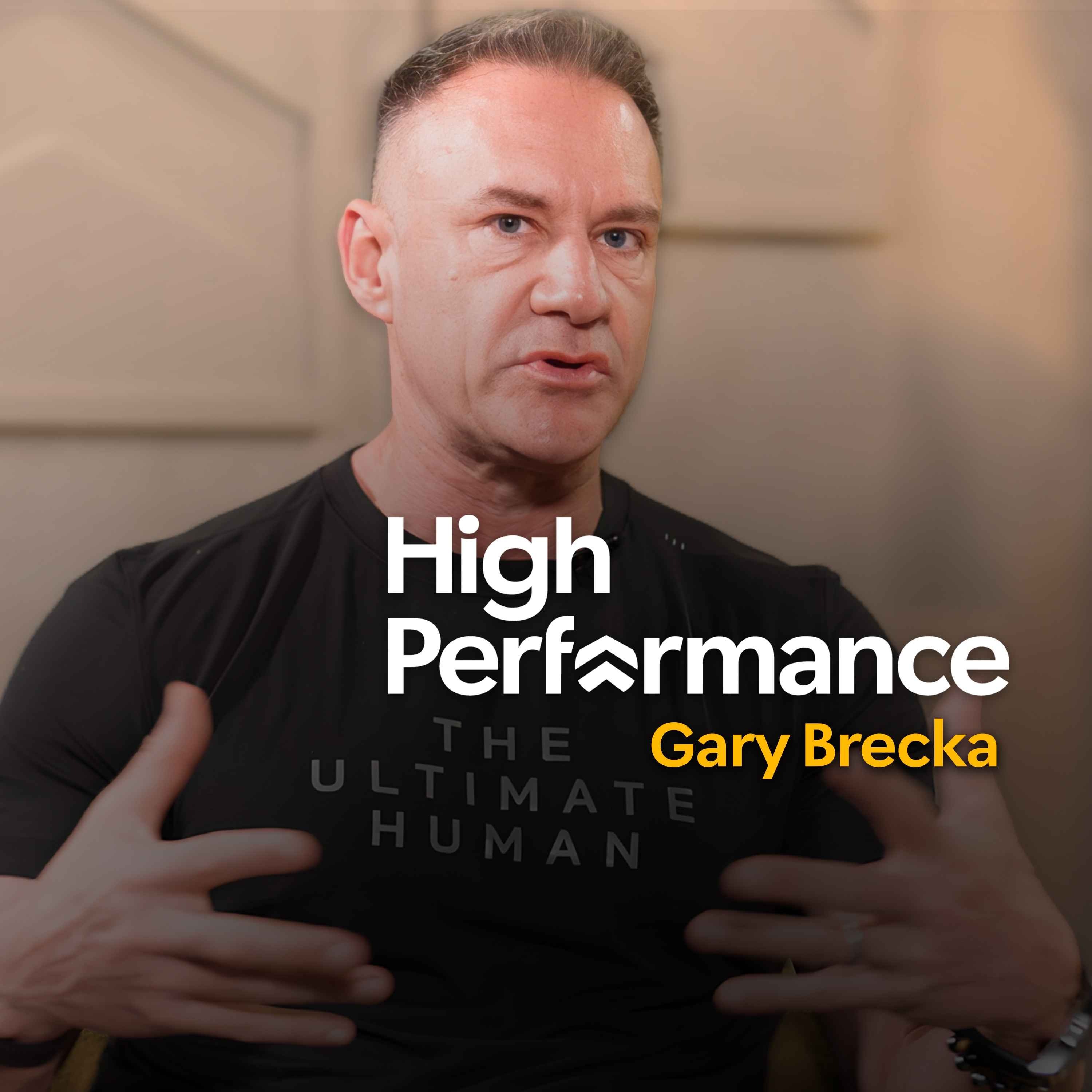
Gary Brecka is a renowned human biologist and expert in the science of human performance. With over two decades of experience, Gary has become a leading voice in the world of biohacking, dedicated to optimising health and extending lifespan through science-backed methods.
In this episode, Jake welcomes Gary Brecka to dive into the fascinating world of health optimisation. Gary shares his insights on the powerful benefits of ice baths, explaining how they can drastically improve physical health. He offers insights into breathwork techniques, discussing how they can bolster immunity, regulate body temperature, and improve overall health.
Gary also breaks down the science behind his famous quote, “the presence of oxygen is the absence of disease,” and discusses how increasing oxygen levels in the body can lead to transformative health improvements. Beyond physical health, Gary addresses crucial topics like nutrition, mental stress, and sleep. He provides actionable tips for better nutrition and shares warning signs of mental stress that could impact our physiology.
This episode offers practical advice on enhancing sleep quality and provides a holistic approach to maintaining both physical and mental well-being.
🚨 Partners
Huel 👉 Claim your FREE t-shirt HERE: my.huel.com/hpblack
Discover all 154 health benefits at uk.huel.com/benefits
Heights 👉 https://hppod.co/heights
FORA 👉 Enjoy 25% off your first meeting room booking at a Fora workspace HERE: https://hppod.co/FORA25
Explore offers and discounts through our other partners:
Hosted on Acast. See acast.com/privacy for more information.


