
 Ask ChatGPT


 The High Performance Podcast
20 Feb 2025 · 57m
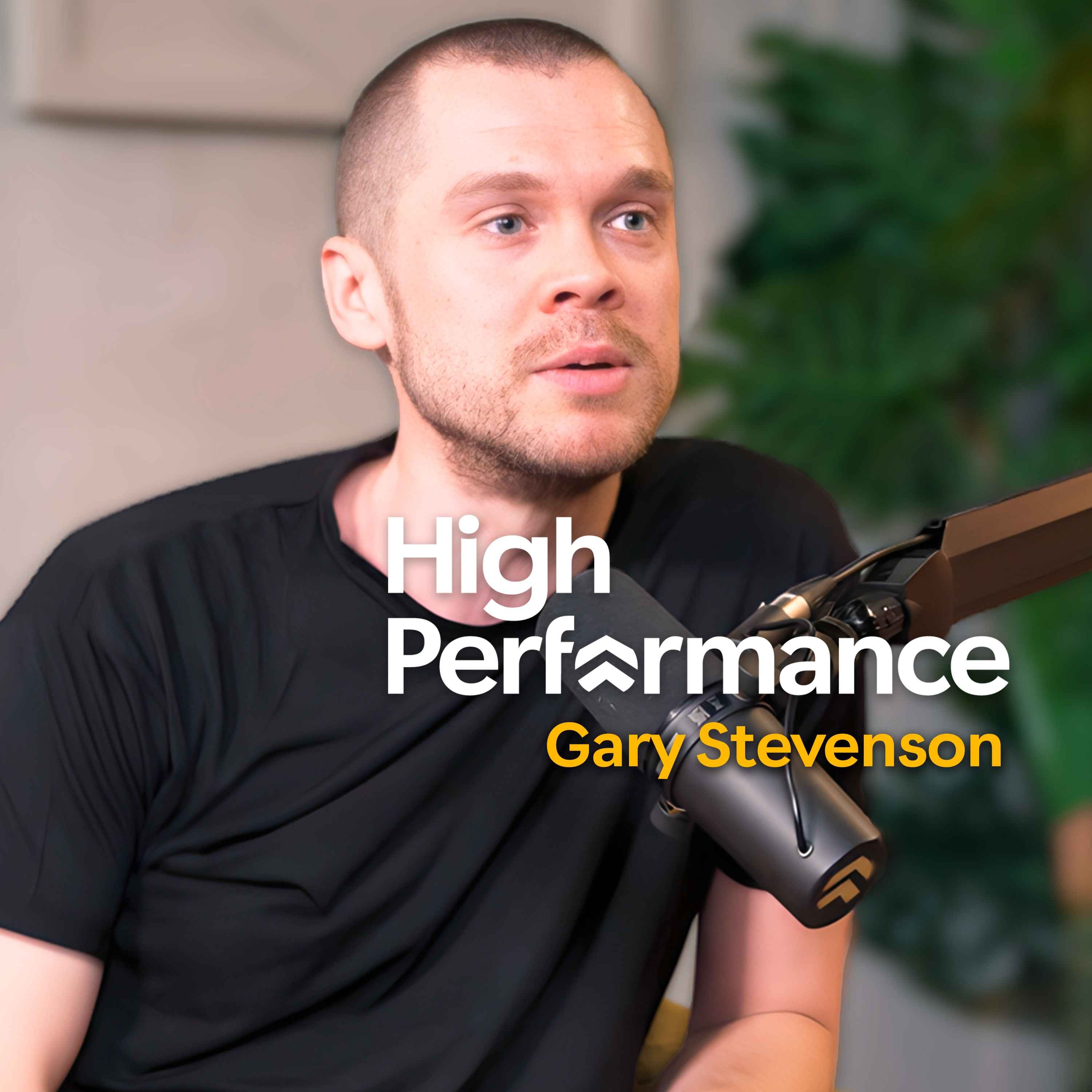
In this episode of The High Performance Podcast, hosts Jake Humphrey and Damian Hughes engage with Gary Stevenson, a British economist and former trader. Stevenson gained recognition for predicting the 2008 financial crash and subsequently left high finance to expose the flaws in an economic system that perpetuates wealth inequality. The discussion centers around the rising poverty crisis, the inadequacy of traditional work ethics in resolving financial difficulties, and the urgency of addressing growing inequality.
Written by AI. May contain mistakes.

Get the gist, explore an idea or ask about something said.
 Claude
On The High Performance Podcast, what are the key points of this episode?
Searching your listeningAutomatic transcript. May contain errors.
0:00Watch it early on the High Performance App. Available now, Roman Kemp, the broadcaster, opens up a powerful conversation on success and mental health. I'm not just saying this. The inequality is still getting worse at a rapid rate. And we need to do something if we want to stop that from happening. Kiss Tom and Donald Trump are not going to fix it, so whose f***ing job is it? We live in a society and a culture that very often tells young men, you are what you make. How can you then be surprised when you see the growth of Andrew Tate and Donald Trump? Two things. If people understood, one, the rich are getting much, much, much richer, and that's the cause of their growing poverty.
0:33And two, if this is left untreated, it will grow and get worse. They would demand change. That is the voice of Gary Stevenson, the youngest trader at one of the world's biggest banks. A financial prodigy who cracked the system, cashed in big, making millions by predicting economic collapse. At that point, though, he walked away. And you're about to hear why. This guy was paid to gamble on the direction of the economy. Knowing what was happening to us financially is how he earned his money. A few years ago, he was the most successful trader in the country. So what is going to happen to the financial markets in the US, the UK and the world economy this year?
1:10Why is there so much disparity? How can you protect yourself? What does Donald Trump and Elon Musk really mean for you? And why the answers you're seeking to these questions won't be found in a classroom or a textbook. Open your ears and your minds as Gary Stevenson joins High Performance.
1:30Gary, welcome to the show. Thanks for having me. What are the key things that we can expect to happen over the next 12 months or so that will directly impact the amount of money in our pockets? I don't think you can expect things to get any better. Interest rates will start to come down. How quickly? We're not sure. Could be half a percent, could be one, four percent in the next year. That's great if you need to refinance your mortgage. But I think the big thing that will cause is we'll start to see house prices go up. They're already going a bit. I've been saying since the beginning of COVID, this is going to cause a massive crisis and house prices rising.
2:05People might be surprised to hear me call that a crisis. But if you're sitting there owning your own home, house prices going up might seem great. But for people my age and younger looking to buy their first property, it already costs half a million quid in London. If that becomes 700, 800, I think it's worth thinking about what that does to the younger generation. So what data do you look at to work out what's going to happen? So I work professionally as a trader for a long time. I look at the markets pretty much all the time. I look at the markets every day and I use them to try and understand what's going to happen.
2:35But I also talk to traders, people I used to work with. And really, as a trader, you don't make money so much by understanding what's going to happen. You make money when the popular perception of what's going to happen is wrong. Because that's when the prices are wrong, basically. So I'm always looking for popular misconceptions. and I think there was a really big popular misconception that happened during COVID which was that everyone is worse off in COVID because the economy is shut down. I'll ask you a question. Do you know how much money the UK government has given out since the beginning of COVID?
3:16And what I mean, to be clear, is the total UK government deficit since the beginning of COVID? No idea. It'd be a total guess. Go on. Go on. It's£1 trillion at this point, which is£1 ,000 billion. So adult population of the country is about... Where's that money gone? Well, this is the question, right? Adult population of the country is about£50 million. So we're talking about£20 ,000 per adult. Enormous amount of money. And your question is exactly the right question, right? If the government gives out£20 ,000 per adult, somebody somewhere accumulates£20 ,000 per adult. So for anybody watching, anybody listening, If you are not£20 ,000 cash better off now than you were before COVID, someone's got your£20 ,000.
4:02And my history as a trader, as an economist, was kind of understanding that distribution matters, that inequality matters. So when I see government giving out this huge amount of money, which we knew was going to happen at the beginning of COVID, we knew this in like beginning of 2020, who's going to get that money? It's so much money. Who's going to get that money? And my analysis was that it's going to end up with richer people. because what COVID is essentially, what a lockdown is, is you're basically banning rich people from spending money. So I come from quite a poor family, an ordinary family.
4:34My parents' expenditure didn't really fall during COVID because their expenditure is, you know, 95 % mortgage, food, bills. And that's most people. Most expenditures rent mortgage food bills. You still have to pay that during COVID. The people whose expenditure collapsed during COVID was rich people because they can't go on holiday, because they can't go to restaurants, because they can't go to the theatre, because they can't go to fancy bars, and they can't hold parties. These are the guys whose expenditure collapsed. So what you saw during COVID was the expenditure of the rich collapsed. That means if you work in the service industry, you've lost your wage.
5:09And what happened was, then the government essentially prints the money and replaces that money, which used to come from the rich. So now the government prints money, goes to working people, they use it to pay their rent, to pay their mortgage, to pay their bills. But where does that money go? To the owners of the houses, the owners of the mortgages, the owners of the corporations go to the rich who can't spend it. So the economy is only a disaster for people with no money. Yeah, that is the point that I try to make all the time. That's why I do the work that I do. Yeah, you look at the wealth of the richest.
5:39I think the average US billionaire doubled their wealth in the first one year of COVID. The first year of COVID was easily the best year ever in terms of total wealth for the richest people all over the world. And once you understand what happened, which is the government poured this enormous amount of money in to basically replace what used to be the spending of the rich then you realise it's obvious it's obviously what's going to happen and I think what is worth doing is if you accept this has happened and we can discuss whether it's happened or not if you accept that we paused the economy for three years and in that time massively increased inequality what do you think would happen to living standards when you unpause after you do that?
6:19I think you know if I were to say to come here 10 years ago say what do you think would happen if we paused the economy massively increased inequality and then unpaused it well the obvious consequence is well the rich will be much richer and the living standards will improve and everyone else's living standards will decrease and that's exactly what happened and what I do the work that I'm doing the work I do on my YouTube the story I'm telling in my book is really all about trying to explain to ordinary people if you don't watch inequality and you let it get bigger and bigger and bigger that is not immaterial to you.
6:50That is why your kids won't be able to get a house. That is why your kids will live in poverty. And I say poverty, I don't say that lightly. You know, what has happened in the last five years in this country, and it's happened in a lot of other countries as well, this is a real significant material increase in poverty. And not just for the bottom 10%, not just for the bottom 20%. Half the country now struggle to simultaneously turn the heating on and feed their kids in the winter. And that's new. and the message I want to give you, give your audience is that's not going to get better because inequality is still getting worse at a rapid rate and we need to do something if we want to stop that from happening.
7:31The market's uncertain. Revenue's tied and hiring on hold. That's why results-driven companies are using Upwork to keep work moving. Go to Upwork.com today and start hiring proven freelance talent fast. No bulky overhead. No rigid long-term contracts. Just the right expert, right when you need them. Work smarter and faster with Upwork. Go to Upwork.com now and find your freelance expert. That's U-P-W-O-R-K dot com. Post a job for free and get started today. I'm no tech genius, but I knew if I wanted my business to crush it, I needed a website now. Thankfully, Bluehost made it easy. I customized, optimized, and monetized everything exactly how I wanted with AI.
8:14In minutes, my site was up. I couldn't believe it. The search engine tools even helped me get more site visitors. Whatever your passion project is, you can set it up with Bluehost. With their 30-day money-back guarantee, what have you got to lose? Head to bluehost.com to start now. This episode is brought to you by Opera Air, the first browser with mindfulness at its core. Now, most of us spend hours every day online, but how often do we pause to take care of ourselves whilst we're doing it. And that's where Opera Air comes in. It's a lightweight, fast, secure browser built not just for productivity, but for your wellbeing.
8:50With Opera Air, mindfulness is built right in. You'll find free breathing exercises, guided meditations and soundscapes with ambient sounds, lo-fi music and binaural beats, all designed to help you focus, relax and even spark creativity while you browse.
9:09There's a brilliant speech that you quote in your book by a colleague, the Scouser Bill, that hasn't gone to university. Yeah, yeah, yeah. And he's sort of, like, risen up the ranks in the city. Yeah. And you tell the story, I'll let you tell it better than I do, when you bring in your textbooks. Yeah. Yeah, so I lost a lot of money. It's the only time I ever really did lose a lot of money, in, like, early half of 2010. And I was so young, 23 I was. And I did what, sort of, any economic student would do, right? You know, I started economics, at London School of Economics, I started bringing in my textbooks and reading in, like, how did that happen?
9:44How did I lose money? And I was really lucky as a trader that I worked with this guy in the book. He's called Billy. Scouser, working class background, didn't go to university, worked his way up from being a cashier at Halifax. And he just sort of, like, watched me, like, one day, like, staying in late, reading these books. Next day, watched me again. Third day, just slaps these books out of my hand straight into the bin and I'm like, what the fuck are you doing? How old are fucking you? Do you think you're fucking still at university? Look around you. Look around you. Does this look like a fucking library, mate?
10:16This is not a place to read books. If you want to understand what is happening, look with your fucking eyes at the economy. Go home. Speak to your mum about her financial situation. Look at the advertisements on the tube. You know, walk down the high street. Look at what shops are closing down, what shops are opening up. Is there more homeless people? Is there less homeless people? Talk to your friends. Talk to your friends' mums. Understand what is happening. If you want to understand the economy, you have to look at it. And that I describe in my book as the most important thing anyone ever said to me, basically.
10:45I think this is a big part of the problem that we've got. You know, I come from a working class background and then I studied at LSE. And then I worked in the city. And then I studied at Oxford. And now I exist in the media and I try to lobby politicians. and in the world of economics, you will hardly ever meet a single person whose family financial background is at least not pretty comfortable. Yeah. And these guys don't fucking understand. It's all fucking numbers to them. It's all fucking. And then, you know, I'll remember. So after I quit trading, I went to do a two-year master at Oxford. And I don't know if you've spent much time at Oxford.
11:26Everyone has their own designated castle. That's your castle over there. That's where you live. Fucking Harry Potter shit. And I was having like my mid-year review. This is true. For your mid-year review, you have to wear a cape and a bow tie. So you go into your designated castle, this like wood-panelled room with your cape and your bow tie with these like three econ professors who are also wearing capes and bow ties, by the way. But their capes are red. And they were like, you know, what do you think of the course? And I'm not one to mince my words, you know. I said, I don't think the course is very good.
12:00those weren't my exact words and they were what do you mean what's wrong with obviously they're Oxford they think they're the best and I was like you're not talking about anything why don't you talk about the housing crisis you know why don't you talk about why kids can't get good jobs why don't you talk about how people are getting poorer why don't you talk about things that happen in the economy and these guys they sort of looked at each other and then they go what do you mean the economy's getting better and you couldn't help but hear these like two missing words bouncing off of the wood panelled walls right the economy's getting better for us.
12:31Now, this is the problem. And I thought increasingly, we live in such a divided society where basically everyone in the conversation about economics is from a rich background. Let's talk then about what we can do, right? The first thing that we've understood from this conversation is we can get together. We can rise up. We can make our voice heard. What about today? You know, you've already given a great example of the fact that you need street smarts, not book smarts to get on. So if you're 15 and about to leave school in the next year or two, what should you be doing? If you're a parent like the both of us with young kids what should we be saying to them?
13:04What can we do right now to change the game for people? This is such a difficult question for me because I know, okay I could turn around and tell you like you know, reduce your spending you know, don't buy into all that consumerist bullshit you know, keep your spending limited and of course you know, kids if they want to achieve financial security of course they should be working hard at school and they should be, if what you really care about is financial security you should try and go into like fields like mathematics and economics and computer science and these kind of well-paid fields. You should try to go to a good university.
13:34You should try to get a good job. But truth is, I was a fucking smart student. I had very good grades. I got into a London School of Economics, which is a very prestigious university. And I had a few friends who got into a place like Oxford at Cambridge, right? Almost none of the kids from poor backgrounds, even of the ones who went to LSE, got the best paid jobs. And I was one of the top students at LSE. I got first, I had guaranteed first after two years. I didn't even need to do anything in my third. That's how good my grades were, right? And the way that I got a job, this is a story in the book, is by cheating in a fucking card game.
14:08Because the way the jobs were given out was based on your CV and cover letter before you've got your fucking grades. Your CV, what's your CV when you're 19? You know, I was working in DFS in Beckton, fluffing pillows. These guys from rich backgrounds, they'd been playing the clarinet at the Royal Albert Hall and they'd founded a charity that drove dirt bikes through the Sahara Desert, they were president of the Junior United Nations, right? So the truth is, I could tell you, work fucking hard, get to the best university, get the good job. The truth is, if you come from a poor background, even if you study hard, go to the best university, you probably won't get the best jobs.
14:41And I'm sorry to say that. I'm sorry to say that. So what I want to say, that doesn't mean, that doesn't mean you don't study hard. And it doesn't mean you don't work hard. But what I want to say is, listen, I've been there, I've been, I come from a very poor background, and I've been in basically the best job you could get, right this system is designed such that almost nobody is able to jump upwards you have to work hard just to hold on just to buy a house work hard do your best but understand this system is designed for you to lose and the reason i say that is because i've got friends they work so fucking hard they work so fucking hard and they come from poor backgrounds and then they even like they work hard, really all they're able to achieve financially is keep the roof over there, keep the lights on.
15:26You know what I mean? That is normal life now. And they look, I went to a grammar school and then in the grammar school, there's a lot of sort of middle class kids and some working class kids, right? These working class kids, they look at the middle class kids we went to school with that have nice big houses and they think, what the fuck am I doing wrong? Well, I'll tell you what you're doing wrong is that middle class kid, when he went to buy a house, his mum gave him 500 grand. That is how middle class people buy houses, right? So what I want to say is, yes, work hard, save, don't waste your money, don't spend frivolously.
15:59Understand the system is rigged because as it is, the message we send young kids, if we focus too much on you need to work harder, you need to do it, the message that sends is your outcomes are your fault if they're bad. For me, I think the first steps and where we have a chance is, I think most people still do not understand or accept or believe that the reason they're getting poorer and poorer is because of growing inequality and the growing wealth of the rich and especially the super rich. I think most people haven't made that connection. I think they know they're getting poorer because of inequality.
16:30I don't think they have yet realised the super rich are getting richer because of the inequality. Yeah, they don't connect these things. What you've seen in the last sort of five years, this massive, massive increase in government debt, this massive increase in poverty, coupled with this enormous increase in wealth of the super rich. And people don't really connect them. And you can't blame them because things like I've mentioned here, like the fact that stock markets are at all-time highs, there's been massive increases in wealth of the rich. That doesn't really get reported that much in the newspapers.
16:55And also your average person doesn't know any of the super rich, right? So you don't see their wealth exploding. There's a lack of visibility on it. But I think two things. If people understood, one, the rich are getting much, much, much richer and that's the cause of their growing poverty. and two, if this is left untreated, it will grow and get worse, they would demand change. So really, you only really need the public to understand those two things. And that is why, I'll go back to you, that is why Elon Musk and Donald Trump are spending so much money to point their finger at foreigners, because the foreigners stand between you and understanding that.
17:29So I think we've been here before. We've been here before. I talk about Charles Dickens a lot, big fan of Charles Dickens. 150 years ago your average British person lived in abject poverty that is the truth we've been and not just your average British person your average Spanish person your average American your average French, Italian, German your average Japanese person and we got out of it and we got out of it because people got together after World War II and so listen we've just spent the last six years developing our entire economy to fucking killing each other and in that time we were still able to provide people in our countries with education, healthcare, housing, food.
18:10Well, we're not fucking letting go of that. We demand education, housing, healthcare, food. And what did they do? They raised the top rate of income tax to 95%. They raised inheritance tax to 90%. And what happens suddenly, fucking lo and behold, ordinary people get good quality housing and good quality education and good quality healthcare. And people like my dad can work for the post office in support of family. You know, we've done it before. So it's not impossible, but it requires working together. And listen, last time it took two fucking world wars and I don't want that to happen again. What I enjoy about your work, Gary, is the depth of your thinking.
18:41So you use COVID as the example for most of us. We were responding to the immediate events and you were thinking of second and third order consequences. So when you think about the 12 months that we're about to experience, would you share with us how you think, say, for example, Donald Trump coming into power is going to have an impact on ordinary people's lives? Yeah, it's so hard to answer that question because what Donald Trump says has not a huge amount of relationship to what Donald Trump does. When I saw Donald Trump, it reminded me so much of a lot of the people I used to work with when I was a trader at Citibank, especially some of the senior management.
19:21So there was a period that towards the end of my book when I was trying to quit and all of the senior management at Citibank were trying to keep me. and for about two weeks I would have like three or four meetings every day and those meetings would be with like different like formations of senior management you know maybe it'd be a one-on-one and then it'd be like four-on-one and then it'd be like these three guys and every meeting there'd be like a different strategy and sometimes you'd have good cop bad cop so I'd be in there me with two guys like you and one guy be shouting in my face you know Alex Ferguson hair dry treatment for like an hour.
19:54And then you go straight into the next meeting and it would be six guys, senior management. And they'd all be saying, we believe in you, we support you, we're going to give you everything you need. And there'd be the same guy there in that meeting who was shouting at my face in the last meeting. And what I realised when I saw this is really powerful people, not all, but a lot of them, they don't care about the truth. They go into a meeting or they go into, in Donald Trump's case, it's a press conference or, you know, on social media, when they say a thing, it's not because they believe a thing.
20:27They go into these situations, they want to get something. What do I need to say to get the thing that I want? The line I use in my book is, there's no dishonest moves in chess. You play in a game, you know, you play in Monopoly. If you lie to your mate in Monopoly, is that a lie? You know what I mean? People lie to win games. Well, these guys, life is a game for them. Life is a game for them. So Donald Trump, in my opinion, what I see is somebody whose rhetoric is calculated to drive deeper the divisions which we're seeing in society. I mean, you see he's supporting reform, he's supporting Tommy Robinson, he's supporting Nigel Farage.
21:05And it's not just in the UK, he's supporting anti-immigrant political parties across the whole world. Why is he doing that? In my opinion, the reason he's doing that is, if he's smart, and I think we're reaching a point now, I think for a long time in the last sort of 20 years, in my opinion, the economy's been getting worse for 20 years now. But for the first 10, 15 of those years, people believed it's going to turn around. It's becoming increasingly clear it's not going to turn around and things are going to just keep getting worse. So if you're somebody like Donald Trump, like Elon Musk, you're thinking, well, we need to tell the public a story here.
21:38Because if things keep getting worse and worse and worse, the pitchfork's come out, right? It's happened in history, right? And there's people like me saying tax the rich. People like Elon Musk and Donald Trump are rich. They obviously don't want me to win. They need to sell an alternative story. And what is the alternative story? What is the most popular alternative story? It's not us. It's not the billionaires. It's the migrants. It's the foreigners. So what they need, hatred of migrants and hatred of foreigners is so good for Elon Musk and Donald Trump because it's the migrants and the foreigners that stand between Donald Trump and Elon Musk and higher taxes.
22:09because people want something different. And there's a quote from the old, he's dead now, American economist Milton Friedman. At times of crisis, the change will be chosen from the ideas lying around at the time. The two biggest ideas lying around at the time are by far the biggest is the problem is foreigners. And the second biggest, it's me and my lot saying tax the rich. So if you're Elon Musk and you're Donald Trump, you are going to put a lot of money behind the guys saying hate the foreigners because if they don't win, we win. and if we win, those guys pay higher taxes and they don't want to pay higher taxes.
22:41And is tax the rich the answer? I think it has to be, you know, I should be clear when I say that, right? Because I know when I say that, there'll be people out there that are earning 60, 70, 80, 100 grand a year. They're like, oh my God, this guy's going to come tax me. And I think people have been trained, when they hear tax the rich, to think about income tax, all right? Listen, I come from a poor background. I made a lot of money. I made millions of pounds working in the city. I paid my, it was 50 % top income tax when I was working. At the same time as I did that, Duke of Westminster inherits£10 billion, pays nothing.
23:13When I say tax the rich, this is not about you, your uncle who's a doctor who's earning£70 ,000 a year, you know, your son who's just got a job in the city. This is about mega rich families who have hundreds of millions, billions of pounds, and they don't work for it. They don't work for it. They get it because their dads had it. Listen, if you don't tax these guys, they are going to buy the houses your kids need. I always use Rishi Sunak as an example, right? So Rishi Sunak, he didn't exist on the Times Rich List. He becomes Prime Minister, suddenly he pops up 700 million quid. I don't know where he was before that.
23:47What I want people to realise is, if you're Rishi Sunak and you have 700 million quid, what's your passive income on that? These guys make 5 % conservative, they probably make more. 5 % of 700 million is 35 million quid. This guy's making half a million pounds a week. For doing nothing. Yeah, that's the passive income. That's just for what he owns. Just for what he owns. And bear in mind, his father-in-law is much, much, much, much richer than he is, right? That money is going to come down. These guys, you know, Rishi Sunak and Elon Musk and Donald Trump, they can only live in five or six houses.
24:17They can own a thousand. These guys are competing for the ownership of the houses and the resources that your kids need. And if you allow them to get richer and richer and richer and richer, they will take a bigger and bigger and bigger share and your kids will end up with nothing. And this is why we're seeing young people can't afford to own property. And that will be the future. that'll be the future ordinary people you go back you know read your dickens back 150 years ago ordinary working people could not afford property that is the truth in a lot of the poor places in the world you know you go to a lot of places in China a lot of places in sub-Saharan if you think housing in London is unaffordable go to Mumbai go to Shanghai go to Hong Kong go to Johannesburg and see what ordinary people get for an ordinary wage over there things can get a lot worse and any place you go that is horrendously unequal good quality housing is unaffordable because you're competing with the rich for that.
25:08Do you think it could get that bad in Western society? I think it will get that bad. I think the only thing that stops it, what I will say is there's no economic fail-safe because as the rich get richer, they own more, you own less. That means you spend more time renting. When you get a mortgage, you get a bigger mortgage, you pay more interest. the more assets that they have and the less assets that you have the more you have to pay them to do things like live in a house to get energy to eat food right so that the cash flows it's it's it's accelerating right because they get richer you're paying more interest which means they get even richer what we're seeing now is ordinary families my parents generation my dad worked for post office for 35 years right he never earned even the average income owned his own property got a pension relatively secure retirement.
26:01My generation, they don't have that. So what you see there is families lost their homes. You know, ordinary families lost their homes. Generationally, they lost their homes. But if they couldn't protect their homes when they own their own home, well, they definitely can't protect when they don't own their own home. So it will get worse. Economically, it will get worse. But what is not certain and where we have some hope and where we basically have some power and we have to exercise it is the politics. I lived in a very small terraced house backing onto a railway in Ilford I shared the room with my brother there's a video on my YouTube called Ilford Ilford where I'm from Ilford hometown glory my dad worked for post office 35 years my mum worked for social services for about 5 or 6 years I don't want what I see what I see for my friends who work so hard and all they are able to get out of it is a roof over their heads and they're because we send this message out like success is all about what you put in when in reality success in today's society and you know we're a bit older than the kids today success in today's society for the younger generations is 90 % dad I'm sorry to say that but it is and of course there's a 10 % which you put in but it's 90 % dad there is a risk from my perspective then that survivorship bias plays a big part and actually plays a big part on a lot of the guests that come on our show who sit in the chair that you're in who also come from difficult backgrounds but have been really successful and I think we have to recognise that survivorship bias is a real thing You know, I remember once they did some psychological study of like, what is the number one, like, most overrepresented personality trait amongst billionaires?
27:36And they found that the most overrepresented personality trait amongst billionaires is risk taking. And they're like, okay, well, if you want to be a billionaire, take risks. Well, I'll tell you what, that's going to be a fucking high rate personality trait amongst homeless people. You know what I mean? Of course, it's impossible to become a billionaire without taking risks. Of course, right? But you only become a billionaire if the risk pays off. The risk doesn't pay off. It's absurd. You know what I mean? Of course. So how do you feel when you see all these hustle culture Instagram accounts, hustle culture podcasts, work harder than everyone else, take bigger risks than everybody else?
28:07I feel fucking sad. Because I know what that does to the mental health of young men. Listen, we live in a society and a culture that very often tells young men, you are what you make. That is your value. if you don't make money you are worthless and if you don't make money it's because you didn't hustle hard enough you need to work harder we send that message to young men in a society which makes it increasingly extremely difficult bordering on impossible to make money what is it going to do to the mental health of young men to simultaneously tell them you're worthless if you don't make money the amount of money that you make is based on how hard you work and make it impossible for them to make money.
28:54How can you then be surprised when you see the growth of Andrew Tate and the growth of Donald Trump? These people are fucking angry because we fucking lie to them. Tell them the truth. Tell them the truth, which is, listen, we, your elder generation, fucked it and gave you almost no chance and you need to work super, super fucking hard. And if you do that, if you work hard and you feed your kids and you put a roof over their heads, be fucking proud because we made it hard for you. Tell them the truth. Tell them the truth. And then they should be proud of themselves. They should be proud of themselves because it's hard nowadays to have a family.
29:24It's hard nowadays to have a family. And me personally, people ask me why I don't have a Rolex and why I don't have a fancy car. I don't want to be waving these shiny baubles in front of young men who will never be able to afford them. Because I was that young man once and I know how it feels like. And listen, I've got nothing against people who work hard and make money. I did it myself and you do it for your family. Don't lie to the kids because I've seen it. I've been to LSE. I went on to the city, right? You know where Canary Wharf is, right? It's in Poplar, right? I went on there. I worked on the trading floor.
29:58I'm from Ilford, East London. Someone asked me, where's your fucking accent? That's an interesting accent. Where are you from? It's in fucking East London. There's nobody there from East London. There's nobody there from East London. If you're telling kids that success is about hard work and intelligence, then you're telling me every single person in East London is stupid and lazy. Where the fuck are they? I've been there. I've been there. I grew up with them. They're fucking smart kids. And there's smart kids everywhere. You know, the story that we've told ourselves about what makes a society great and what makes a society wealthy have changed over time.
30:28You know, we had this big shift in the 80s towards individualism. We had Thatcher. There's no such thing as society. And I want to make it clear, you know, I'm not against individualism. I'm not against, you know, one person going out, I'm going to make money, I'm going to get rich for me and my family. I'm not against that. But if you look at history, take the big sweep of history. This last 70, 80 years that we've lived through since World War II, it's not normal for ordinary people like my dad and I presume your parents as well to work regular jobs and be able to live in a nice house and take their families on holidays and to have retirements.
31:02This is not normal. Most of history is a tiny super wealthy elite and a bunch of impoverished peasants, right? To protect your middle class, you need to stop the rich from growing and growing and growing their wealth because eventually they eat your wealth. You know, these things are connected, but at the moment, the story we have about what is a rich economy, what is a wealthy economy is about individualism, is about entrepreneurism, is about every man for himself. And I think there are good sides to this. But the fact is, the only power the poor and the ordinary working people have ever had to protect themselves and the rich is power in numbers.
31:39And when you make ordinary people extremely individualistic, they lose that. Listen, I've got a YouTube channel that says very clearly, listen, your kids and your grandkids are going to live in really bad poverty. And the only way to stop that is to fight together to tax the rich more. I've been doing that for years. And the number one most common comment I get on the YouTube channel, by a million miles, do you want to guess what it is? How do I make more money? How do I make more money? Is it? It is. And I think this is the most powerful thing the rich can do to protect themselves from the mass of ordinary people and to keep the mass of ordinary people poor is to make people selfish.
32:19I honestly think there's nothing more powerful you can do than that. To show you the dream that you can be like them if you don't stick together. Because if the poor, listen, you ever watch any of those Bruce Lee kung fu movies? What does he do? He goes into a room, fights 100 guys one at a fucking time. These guys are fucking rich, right? If we fight one-on-one, they'll take everything. If your kids go out there and try and outbid Rishi Sunak's half a million pound a week, passive income kids on a house, his kids get the house. The only power the poor have ever had to protect themselves from the rich is power in numbers.
32:51And if the poor are selfish, trying to fight one at a time, running at Bruce Lee, one at a fucking time, then they'll get taken out one at a time. They need to work together. And we, we as a country, but not just us, you know, Americans and Europeans, need to remember how hard our grandparents fought to get rid of that poverty that our great-grandparents and our great-great-grandparents lived in. And they recognise you have to fight together. And it's hard. It's hard in this individualistic society. And the job I do is hard. But I think people still have it in them. People want to work together.
33:23We have to rediscover that, I think. If you're still overpaying for wireless, it's time to say yes to saying no. At Mint Mobile, while their favorite word is no. No contracts, no monthly bills, no overages, no hidden fees, no BS. I made the switch because I was tired of those ridiculous bills and sneaky charges from my old provider. With Mint, I'm paying$15 a month and getting the same high-speed data, unlimited talk and text, and coverage on the nation's largest 5G network. Honestly, the quality is just as good, if not better, than what I had before. And the best part? You don't need a new phone.
33:58You can keep your current one, bring your number, and all your contacts. I use Mint Mobile and you should too. Ready to say yes to saying no? Make the switch at mintmobile.com slash HPP. That's mintmobile.com slash HPP. Upfront payment of$45 required, equivalent to$15 a month. Limited time new customer offer for first three months only. Speeds may slow up a 35 gig on unlimited plan. Taxes and fees extra. See Mint Mobile for details. The market's uncertain. Revenue's tied and hiring on hold. That's why results-driven companies are using Upwork to keep work moving. Go to Upwork.com today and start hiring proven freelance talent fast.
34:38No bulky overhead. No rigid long-term contracts. Just the right expert right when you need them. Work smarter and faster with Upwork. Go to Upwork.com now and find your freelance expert. That's U-P-W-O-R-K dot com. Post a job for free and get started today. I'm no tech genius, but I knew if I wanted my business to crush it, I needed a website now. Thankfully, Bluehost made it easy. I customized, optimized, and monetized everything exactly how I wanted with AI. In minutes, my site was up. I couldn't believe it. The search engine tools even helped me get more site visitors. Whatever your passion project is, you can set it up with Bluehost.
35:18With their 30-day money-back guarantee, what have you got to lose? Head to Bluehost.com to start now.
35:29It is an individualistic society. So everyone's out for themselves. Yeah. That's going to be a very hard thing to change. And I think if you turned around tomorrow and said 90 % tax, 90 % inheritance tax. Yeah, yeah. Everyone with the amount of money to leave the country would leave the country. And then you would end up in a country with no super wealth. Yeah, well, I want to be clear. I don't think a 95 % income tax is probably the right choice, especially... Even if you made it 60, I think a lot of people, I think actually even now with the changes Labour have made, a lot of people are looking at Dubai, looking at the south of France, Monaco.
36:03Therefore, a huge amount of tax leaves the country. What I make it clear is, I actually am not looking to, and I'm not campaigning for raising taxes on income. For me, it's about raising taxes on wealth. And I think this is sometimes hard for people to understand because for an ordinary person, your income is what matters. You know, your work income is what matters. Most people are not sitting on 10, 20 million, 100 million, a billion pounds of wealth, right? These rich families are sitting on enormous amounts of wealth, right? So say we turn around to, and I want to make it clear what this wealth is.
36:31This is assets. This is property. This is buildings. This is mortgages. This is your mortgage. This is government debt, right? I was a banker. I worked, I was quite a good banker. I was quite successful. I made quite a lot of money. You turn around to me and you say, okay, we're going to charge you 90 % tax. I can go to Dubai. I can go to Singapore. Say I'm a wealthy person with 100 million pounds worth of British assets. British mortgages, British debt, British properties. Then you say we're going to tax you on the assets you own. Well, I can leave the country. The properties are still fucking here.
37:02It's your mortgage. So if we talk about passive income, who pays that passive income? You pay that passive income. You pay that passive income when you pay your rent, when you pay your mortgage, when you go to the supermarket. You know, the profits of the corporations and rents and interests. And when you pay your taxes, a lot of that is paying government debt interest, right? If I own£100 million of British mortgages and I move to the Cayman Islands, where's my money coming from? The UK. British people paying their mortgage. And we can choose to tax it. Listen, I guarantee you, the government of China would not allow me to own£100 million of Chinese assets, live in the Cayman Islands and pay no tax.
37:42They wouldn't. Why does the British government allow it? Why does the British government, whose recent Prime Minister was worth£700 million and his father-in-law was one of the richest men in the world allow rich people to not pay tax just by pretending to live in Dubai. Go on, you will. Tell us. Because the politicians are super rich. Okay, not all politicians are super rich and I don't want to contribute this idea that all politicians are evil because ultimately, if you want to change things, we are going to have to find ways to work with politicians. But... You know what? Obviously, you're talking there about Rishi Sunak.
38:13He's history. We now have Sekir Star Marine who does come from a working-class background. he sat in the chair that you're in right now he listens to High Performance if he was to listen to this episode what would you want him to hear? I want Keir Starmer to understand if he does not deal with rapidly growing wealth inequality there is no way he can prevent living standards from falling I want him to recognise that and you know I've been on TV I've gone on Politics Live and all this stuff and I've told these guys that's what's going to happen and they say no and I say remember today because unfortunately and I wish it wasn't true I don't think Keir Starmer's Labour government is going to do anything to stop wealth inequality from growing.
38:50And that means that living standards will fall. And he might not believe that, but, you know, write it in your calendars. Come back in two, three years' time and see what's happened. Because, listen, I'm not just saying this. I'm fucking betting on this. And I bet a lot of money. And I've been betting on this for 14 years now. And I've got a pretty fucking good track record on this. This is going to happen. You know, I could walk into any bank in the city and get paid£2 million a year betting on this because I'm fucking good at this. inequality will grow if you don't stop it, and living standards will fall.
39:20You cannot, I think it's so unbelievably naive to think you can allow this tiny minority to take all of the wealth, wealth that used to be owned by our parents, our grandparents, our government, and not expect the rest of society to be impoverished. Can I ask you then about what you just said there, about your betting on inequality rising? Because in your book, it seems like there's a period where you discover your moral compass when you're working in the bank, in the city, and you seem to then realise that your moral compass isn't pointing in the right direction. So how do you sort of square away the fact that you're betting against these outcomes?
40:02I'm not going to stop betting against it because that's my power. That's why people listen to me. You know, that's why people listen to me. But, you know, I'll talk a little bit about, I worked as a trader from 2008 to 2014, and it was sort of about, that was the period I started working just before 2008 crisis. And when the crisis hit, everybody thought, similarly to COVID actually, everybody thought it's going to be like a couple of bad years and then this like roaring comeback because we've cut interest rates to zero, we've done all this quantitative easing, we've done all these measures to fix it.
40:31And you know, 2009 didn't happen. Okay, next year will be great. 2010 didn't happen. Okay, next year will be great. 2011, I'm sitting on the trading floor with a bunch of rich guys. again everything's going to be great and that's when I start realizing you know you're looking at your friends and your family who are just doing worse and worse and you start realizing these two things are splitting apart and it's not going to work and I started realizing actually things are going to be great for these guys here but the real economy is just going to get worse and worse and I started betting on it so 2011 I started to bet really aggressively the economy would basically get worse forever and this is the story in the book and at the end of that year 2011 11 I was Citibank's most profitable trader in the world on the base of this unbelievably pessimistic bet and it's such a crazy thing to experience because on the one hand like that was my job and that was my training you know I studied economics at the London School of Economics and I was like you know killing it got paid a load of money you're like the guy on the trading floor and what you made your money on was like betting on disaster basically.
41:34There's a story though again in your book that I think does capture something of the risk taking for somebody that had nothing and it's the one that stood out for me was when you turn up at LSE and yeah Colonel Gaddafi's sons yeah in your class and some Chinese politicians kids are there yeah so you're amongst like the real wealthy elite and you choose to go and sit in that lecture room on the front row right front and centre yeah and ask the questions and make sure that you get what you want out of it and that to me is yeah is a real act of courage that any of us could do so I lived at home for uni right i couldn't really afford to live out and um i went in as you said lse like has a massive like 1000 seat lecture theater and i just went in every day in my echo track seat front seat and i just asked the lecturers questions it didn't even really occur to me that i was making a big statement if you talk to my like friends now lse they were like we thought you were mad we thought who the fuck is this kid going to sit at the front but um i was expelled from school in uh in sixth form and also like not in sixth form in year 11 just for my GCSEs and the thing I didn't have a desk in my house right so when I was at like A levels you have to get it in the class you know there's nowhere really for you to study at home you get it in the class obviously I wrote the book and I go back and I read the book sometimes and it does what occurs to me is that when I was a kid I was a little bit mad I didn't really realise it like I was so what do you mean by that?
43:04I was obsessed with winning Obsessed with winning I was convinced That I was the smartest kid And I was kind of aware That the game was a little bit rigged against me And I was like I don't fucking care I'm going to take it I'm going to take it And I was mad But you know also I was fucking good at maths and shit like that I won like a few maths competitions When I was a kid right I didn't have a desk at home You know what I mean and I never did a single piece of homework. I'd turn up at a math competition and win. So hard work and this kind of insanity pays into it. I wrote my book and I didn't really realise I was doing it at the time, but there's a number of points in the book where I do things that are a bit crazy.
43:49You know, you mentioned going to the front of these lectures, but then also to win this trading game, I stopped going to lectures for like three weeks, just obsessed about playing this one game. And then there's one really crazy story. So I got hired, this is in the book as well, I got hired by this sort of big senior trader. And after like nine months, he quit. He retires and go live the dream. And a new boss comes over one day and everyone's gone home. Because I was a desk junior and I'm just like doing some admin stuff. A new boss comes over to the desk and he's this absolutely like giant, like six foot six Canadian guy.
44:21And he's just like, hey, how's it going? And he hadn't been announced as a new boss yet. And he just like introduced himself. Yeah, I'm Gary. And then he goes to me. So what do you do on the desk then? and I was like, this guy's like a new boss, right? So he's a big guy. Surely he knows what my job is. And because the old boss had gone, I was like part-time covering his job, which was he was a Swiss franc trader, which is like quite a junior, like quite senior role. The old boss had it. And there was a moment where I looked at him. He asked me, what's your job? And I kind of like tried to like balance him out.
44:56I was like, is he like shitting me? Is he like bluffing me? and I just thought I just I'm the Swiss franc trader just I thought because it was kind of true right because I was covering it but I mean it wasn't and then he kind of looked at me Swiss franc and you could tell he was kind of thinking this guy looks about 18 I was like oh yeah Swiss franc trader alright see you later and that was it that's how I became the Swiss franc trader it's like I sort of you take these mad chances and then also like putting my first massive trade on which turned out to pay I didn't but you know what none of these things were things I realised I was doing at the time for me the book in a sense is a story about obsession and I think it it covers in a sense I like to think both the positive and the negative sides of obsession which are me I'm the kind of guy I fucking love games I love games if you drop like a really good game in front of me I'll wake up and it's six months later I won't realise what's happened like I'm in it I'm just in the game and that's when I was working as a trader when I was young I was like that I was in it I was obsessed I was obsessed I was obsessed but then the flip side that that is like you can lose yourself you know i mean you can lose yourself in the game and you know the second half of the book is about depression because you know my obsession with trading led me to realize that the global economy was going to collapse and like there's no like bell you can go ring you know you can't pick up the phone to fucking david cameron man global economy is going to collapse you know i mean and then what do you what do you do when you realize that how did it feel being the person that has seen the global economy is going to collapse fully believing that you're right and saying that no one else around you has spotted this?
46:31I'll tell you what, it doesn't make good dinner party conversation. You're up there and you're kind of thinking, you're getting paid£2 million a year to bet on this, right? And you, first year you bet on it, you make£2 million. You think, probably I'm right. But you don't want to believe you're right. You kind of, you have this cognitive dissonance where to be a good trader, you have to back yourself. So you back yourself, you're right. But also, you don't want to believe the global economy is going to collapse, right? So you kind of split it. And also, you tell yourself stories. There's one good scene in the book where I talk to another junior trader, Australian kid from a very rich background, and I say to him, do you think we should do something?
47:14And he's like, what do you mean? And I'm like, about global economy collapsing. He's like, well, we already put the trade on. And I'm like, yeah, I don't mean the fucking trade. I mean like do you think we should do something and he's like do you think we should do more and I'm not talking about the fucking trade do you think we should do something and he doesn't even understand and then eventually the penny drops for him and he realised like I'm talking about should we try and stop it and he just pisses himself laughing he's like mate you can't fucking stop it like what are you going to do you're going to become fucking president you know you can't you know you know so it's and it's true because you know I've been out here fucking 10 years now I haven't stopped it fucking yeah I'm doing my best here you tell yourself stories like well it's not my job mate I tell you this right now I'm not the only fucking person telling myself that story you know increasingly more and more of us see it's fucking collapsing and so many people in this country and across the world tell themselves but it's not my job it's not my job that's fucking that's Keir Starmer's job that's Donald Trump's job well I tell you this now Keir Starmer and Donald Trump are not going to fix it It's like, whose fucking job is it?
48:25Can we talk about the mental health challenges? I think the two things that I'm getting from this conversation is a passion for what you talk about and where you've been, but also a deep obsession as well. So what is the cost of thinking and acting in the way that you do? I pushed everyone away from me. I had a really great girlfriend who was really worried about me, and I was pushing her away. And I moved to Japan partly to get away from my girlfriend in a way, because I just didn't want people to be close to me. I just wanted to cut everyone away. I wanted to cut everybody loose and I moved to Japan and then I had nothing didn't have my friends around me I hated the job I hated the guys at work I tried to quit and they basically threatened me you know you can't quit for me my depression was you don't give a fuck you just don't care you don't care about whether you don't care about first you're eating goes you're sleeping goes you're sleeping all hours you're eating like I was in Japan I didn't know anything He was going to fucking read anything.
49:24You know, I lost about, I dropped down to about eight and a half stone. Yeah, which is not a lot. I'm a small guy now, but now I'm probably about ten and a half. You know, I was fucking skinny. The mad thing was I was still exercising, like mad. There's one, like I was trying to, I was running 5K on the treadmill. I was trying to get my 5K down to 18 minutes. Just smashing it. If I look back, it's kind of like almost quite masochistic, like trying to hurt yourself. And then I quit the bank in this insane way. Like I didn't have a plan. And I just walked into the office, I'm quitting. And they're like, what the fuck?
49:55They're blowing up. And they had all these meetings. I spoke about these meetings I had. I would walk into this meeting and it'd be a one hour long meeting, two hours, I wouldn't say a word. Just stare at the floor. Yeah, it was really just like, I wasn't talking to no one, letting go of anything, letting go of everything in a way. But I think for me in a way, I don't want to talk undermine depression. I think I needed to go through that depression to let go of the things that weren't important and reconnect with myself in a way because I was so obsessed with these abstract things like games and the economy and trading.
50:32And then suddenly, like, I was fucking thankfully, I was able to get sick leave and like a really nice Japanese doctor. The bank tried to make it hard for me. A really nice Japanese doctor wrote me sick leave. At the end of the day, I was in Tokyo and it's such a mad place. And then I threw myself into, I'm going to learn Japanese. I'm going to learn Japanese. I'm going to study every day Japanese, Japanese, Japanese. and then most people in Japan don't speak English. But so as you learn Japanese, the country kind of starts, it's a difficult country to get into, but it starts to open itself up to you a little bit.
51:00And I started to try to, like, care about things like food, you know what I mean, and things like music. And I started to draw. I was trying to draw a picture of the Beatles. So it was kind of like, and I started to go to this English language conversation cafe and just, like, talk to people. just like just like it was kind of like a second I think that depression it was horrible and I think when you look back at a thing like depression I think we often don't it's easy to romanticise and forget how actually tough it was but I think I needed that to just reconnect with like important things like my body like I was really physically sick I had this really bad heartburn really bad heartburn all the time and the doctors kept giving me pills for it and it wasn't until I sort of cut away from the job and relax, that heartburn stopped.
51:48And I just reconnect, you tried to build things up from the ground. And, you know, I'm not like a psychologist or anything, but anyone who is suffering from depression, I know it's fucking hard. I think that that basic structure, eating, sleeping, exercise, talking to people, you've got to build, you've got to base it on that. And that's what I try to do. And even now, you know, it's funny, is people sometimes ask me, because the book talks a lot about depression and my mental health. People sometimes assume like, oh, well, you're cured now. But the truth is, like, I still have difficult times.
52:25I still have difficult times. And whenever I do, it's that it's food, sleep, exercise, talking to people, you know. And what are the warning signs for you now when you can sense that you might be going into a dark period like that? Not wanting to talk to people is a big thing for me. The thing which I really have to do is to force my, I'm very instinctively like, bam, putting the walls up. It's me. It's Gary versus the world, pushing people away. If I don't want to talk to anyone, then I know things about it. I mean, if the sleep's going and the food's going, you know, if you're not sleeping, you know, then you know, that's like a big obvious sign.
53:00If you're not sleeping, if you're, you know, for me, it tended to be losing weight, but it might be you're compulsively eating and putting on weight. It's a tough one because that kind of anxiety is part of what drives my work. but I think you know I've been doing doing therapy on and off for a long time and I know when it's too tense and I take time off you know I had the YouTube down for four months just now and I go traveling getting back to Japan helps because I think I didn't really realize till I lived in Japan how like London I was how much London had got into my skin like this is a city it's competitive and it's about money and it's people and it's expensive you know and uh Japan has its own problems but the culture is a bit different in that I cycled all the way across japan this year in the summer so i try and get out i try and get time away but you know it's still a thing it's still a thing that i battle with to some degree and it probably always will i bet we're about to move on to our quick five questions to wrap up okay before we get to those though for people that have listened to this amazing conversation what would you like them to do as soon as they finish listening to this episode i mean i would love them to go and watch my youtube videos uh understand what's happening you know watch the most popular videos in the channel but also the first video really explains it's called how the rich got rich from COVID-19 um think about and try and understand this idea that maybe the reason we are getting poorer generationally is because of growing inequality you don't have to believe it but consider it watch some videos um and if you do if you are convinced tell your friends tell your family you know I rely a lot on on word of mouth if everybody convinces one person we get everyone I'm just one guy but if enough people get behind this we can make change so listen educate yourselves speak to your friends and family and if you don't believe it just keep talking to people around you because I don't think we will win this as individuals we need to work together so be there for your friends be there for your family check out my stuff consider that inequality might be the problem and if you do believe that support it and share it very good right ready for some quick fire questions yes let's go
55:04the three non-negotiable behaviors we need when it comes to looking after our finances oh sensible you need to be sensible don't don't buy all that consumerist nonsense um i think community is important i think community is important you need to speak to people you know You're not going to win this by yourself.
55:27And be calm. Don't try and get these 100%, 200%. If someone's offering you 100 % a year return, they're probably a fraudster to stay away from it. What's the single best piece of financial advice you've ever received? Look at the world. Look at the world with your eyes. As I said in the book, your eyes and your ears and the people you speak to are your best way of understanding what's happening. But I'll probably add to that, if it sounds too good to be true. probably is that's very important to understand what is the one habit financially financially that you would love people to adopt financially financially one habit financially i mean obviously it's good to save regularly if you can but i know a lot of people can't do it um one good financial habit this is a tricky one actually because i don't want to tell people not to to enjoy themselves I would say don't beat yourself up don't beat yourself up it's a hard world you live in do your best take care of your family but don't beat yourself up because if you get involved in that negative mental spiral of it's my fault it's my fault it's my fault that can lead to a bad place and I've seen it happen brilliant what's the single biggest financial mistake that we can all avoid that's shooting for the moon nonsense you know listen is very, very, very difficult to get rich.
56:48But it's possible to provide stability for your family. Don't jeopardize the stability of your family for the dream of getting rich. And finally, Gary, what's your final message to our audience for living a high-performance financial life? Listen, you have to work hard. You have to be sensible. Try and stay away from all of this nonsense. honestly for me it's more and more about taking care of the mental health of yourself and the people around you because the easiest way to let yourself collapse financially and I think almost all big financial fuck ups are rooted in mental health collapses speak to your friends and your family don't go mental shoot for stability build over time yeah, slow and steady wins the race but take care of yourself and the people around you.
57:42Brilliant. Gary, good luck on the mission. Thank you.
57:49Damien, Jake, what did you think of that? Loved it. Loved it. I love anyone with passion, with that sort of righteous indignation system and somebody with the intelligence to explain why you feel so angry. I thought it was really powerful. What about you? Slightly conflicted. I love, like you, the passion and the energy that he has for his subjects. And I think it is important that we understand that the system is not rigged to work in the favour of 90 % of people. But I do also think that we can't give people the message, hey, there's no point doing anything because the system's rigged against you as it is.
58:29You know, the city that I live in now and have grown up in is the second worst city in the UK for social mobility. So it's the place where you don't change the game. Yet I still passionately believe that every young man and woman growing up in Norwich can change their situation, can move forwards in a way. So what I would really like people to think about is to really listen carefully to what Gary had to say, to try and understand the system, the way that the rich people are operating, the way that politics is up against us, the challenges of the next 12 months, the fact that the cost of living crisis and the disparity from rich and poor is greater than it's ever been.
59:04but at the heart of it if you find something you're passionate about if you work hard if you get great people around you if you have a plan and a focus you can still do incredible things I think for me it's a balance of those two things Well I think that balance is absolutely appropriate Jake I think he gave us the proportion of 90 % of the system is rigged against you but there's still 10 % that you can do something about and I think regardless of your circumstances or your situation how do you maximise that 10 % so like Gary's example if you're going into a classroom where do you sit? Do you sit at the back and disengage or are you the person at the front maximising the knowledge that's being offered?
59:41If you go into any situation are you obsessed about understanding your craft so that when an opportunity comes along you can make the most of it? That's all part of the 10 % and that to me is where Gary was really powerful about offering so many insights on how we can all do the best we can with what we've got in the moment we're in. And the final message really is, you know, he has had mental health challenges from his obsession. So the only thing to remember is nothing comes for free. If you have those deep obsessions, then there's all the price to pay. Thank you very much, mate. Thank you, mate.
1:00:14Thanks very much for listening. Don't forget you can also watch these conversations on YouTube as well as the High Performance app. I'd love you to pass this episode to one person that you think could really benefit from hearing what Gary had to say. And we'll see you next time for another episode of High Performance.
1:00:31Thank you.
1:01:00Just tell AI what kind of site you want to build or choose from thousands of templates. Change whatever you want, whenever you want, and get everything you need to start running your business your way. No matter what you sell or what you aspire to be, you can do it all yourself on Wix. At Capella University, learning online doesn't mean learning alone. You'll get support from people who care about your success, like your enrollment specialist who gets to know you and the goals you'd like to achieve. You'll also get a designated academic coach who's with you throughout your entire program. Plus, career coaches are available to help you navigate your professional goals.
1:01:40A different future is closer than you think with Capella University. Learn more at capella.edu. Hey, I'm Dr. Z and I'm a neurosurgeon. So that means long hours, early rounds, late nights, and everything in between. And through it all, I wear figs. They're comfortable when it counts and functional when I need them the most. So where do you wear your figs? On shift, on call, on the couch in the break room listening to this podcast? Wherever it is, they fit right in. And now listeners of this podcast can get 15 % off their first order. Just head to wearfigs.com and use code FIGSRX at checkout. That's wearfigs.com, code FIGSRX.
Gary Stevenson is a British economist who made his name as a trader predicting the 2008 financial crash. But instead of staying in the world of high finance, he walked away to expose the deep flaws in the system that keeps wealth in the hands of a few while leaving most people struggling.
In this episode, Jake and Damian sit down with Gary to break down the rising poverty crisis and how the economic system is designed to benefit the wealthy while keeping everyone else stuck. He explains why working harder isn’t the solution and how the financial rules are set up to make it nearly impossible for most people to get ahead.
Gary also dives into the impact of major political shifts, including what Donald Trump’s return to power could mean for everyday people. He shares insights on the economic changes coming in the next 12 months that could directly affect the money in our pockets, and why young people need to rethink how they approach success in today’s economy.
Through his own experiences in banking and his personal battles with mental health, Gary offers a raw and honest look at the cost of understanding the truth.
🚨 Partners
Payhawk 👉 See our sponsor, Payhawk in action here: https://hppod.co/Payhawk
XTB 👉 Download the XTB app today and start making your money work for you at: https://hppod.co/xtbhp
FORA 👉 Claim a free day pass at any Fora workspace and find the perfect home for your business here: https://hppod.co/FORAHP
HP Foundation 👉Do you want to kick-start an evolution that will change the lives of millions of children? Find out more about the High Performance Foundation: https://hppod.co/foundation
HP Corporate Events 👉Click here to book High Performance Events: https://hppod.co/corporate-events
Explore offers and discounts through our other partners:
https://hppod.co/partners
Hosted on Acast. See acast.com/privacy for more information.


