
 Ask ChatGPT


 The High Performance Podcast
24 Oct 2025 · 51m
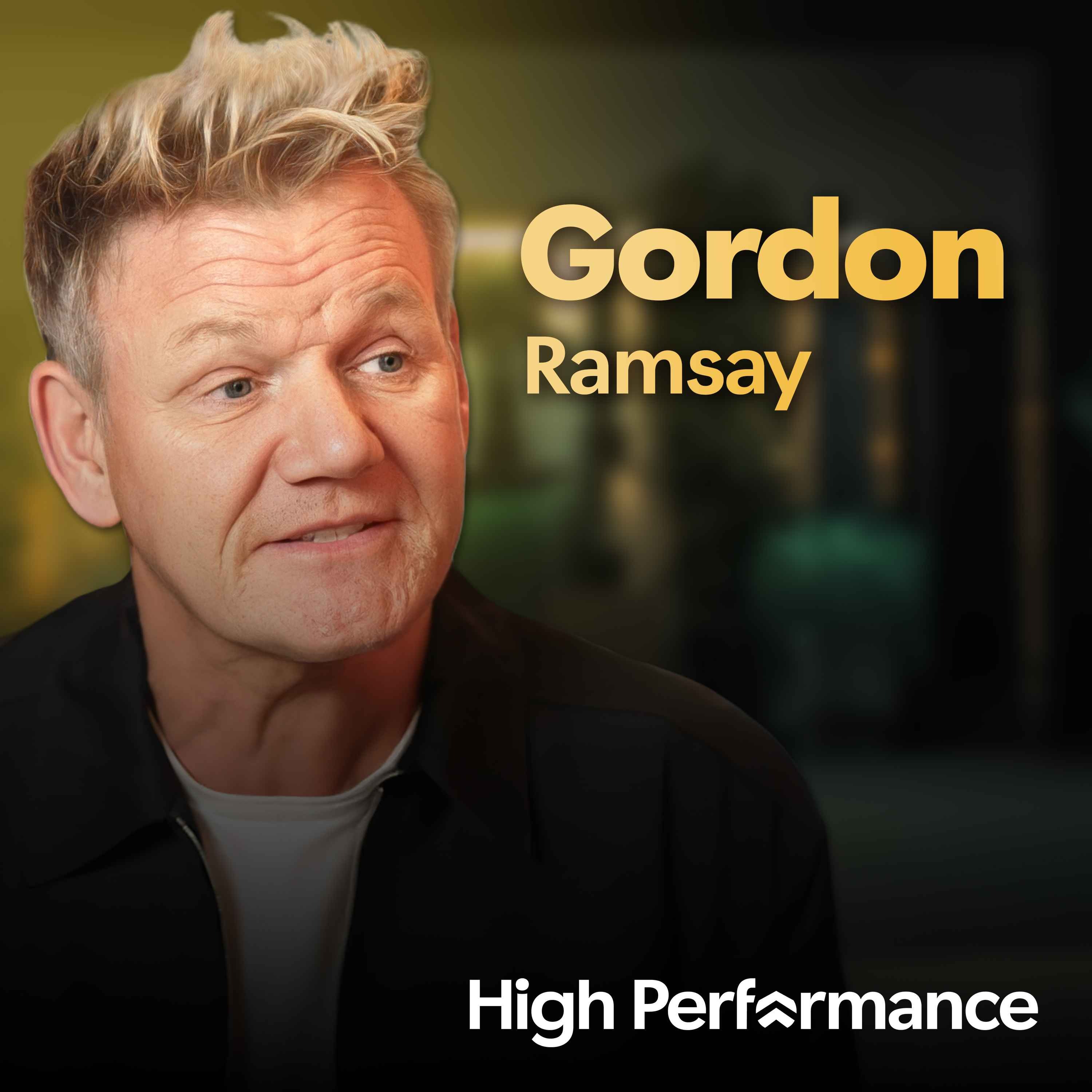
Hosts: Jake Humphrey and Damian Hughes
In this episode, Gordon Ramsay shares his insights on high performance, delving into the struggles that shaped his relentless drive for excellence. Beyond the celebrity chef persona, Ramsay discusses his early life challenges, the sacrifices he made, and the lessons learned along the way.
Written by AI. May contain mistakes.

Get the gist, explore an idea or ask about something said.
 Claude
On The High Performance Podcast, what are the key points of this episode?
Searching your listeningAutomatic transcript. May contain errors.
0:00Unlock your next dose of inspiration early on the High Performance App. Available now is our latest episode with motorsport trailblazer and managing director of F1 Academy, Susie Wolfe.
0:15I'm done with that bullshit about staying in your lane. I want to own my lane. That is how this conversation starts. No warm-up, no fluff, just Gordon Ramsay as you would expect him. Raw, honest, totally unapologetic about what it takes to succeed. And I think this is one of my favourite ever conversations on the show. Gordon opens up like you've never heard, like I wasn't expecting. Of course, we know he's a perfectionist. We know that he's relentless. We know that he's had to make sacrifices for his success. But the drive that you see from Gordon Ramsay didn't come from seeking fame or fortune.
0:51The truth is it actually came from struggle, from growing up with nothing, being embarrassed at school, losing his dream of playing football, turning all of that into fuel. And sadly, you weren't available to have this conversation with us, Damien. but when you listen to it, I mean, there are a few things that stood out for you that you really think are important, right? Well, there's some really special moments. Like, I love the brutal personal cost of perfection that he describes and the critical philosophy he's had to adopt to survive his darkest moments and become a solution solver. And finally, the bit I encourage you to listen out for is his rule for dealing with brutal criticism and the crucial difference between earned confidence and the arrogance that will destroy you in a high-pressure kitchen.
1:33This is an all-time classic episode of High Performance and what it takes to own your lane in any field. Please hit follow on Apple or Spotify and you'll never miss an episode as we welcome Gordon Ramsay to High Performance.
1:51I'm done with that bullshit about staying in your lane. I want to own my lane and that's high performance on a daily basis I need that shot I think it's one of the most exciting industries to be in as a restaurateur chef, cook, whatever you want to call it but there's also the shit end of the stick there's the double shifts and defrosting frozen food and sticking shit in a fryer, that's the lower divisions of food and I was determined to get the fuck out of there early because when you start in this industry, you go through those divisions. I remember a chef back in Stratford-upon-Avon, where I grew up, was showing me how to make a roast potato.
2:37And he was peeling the potatoes, blanching them in the deep fat fryer and then sprinkling fucking bobble dust over the top. And that was the roast potato. So that scared the shit out of me. And I think you need to have both ends of the spectrum to understand high performance. but it's about climbing that division and owning it. So I'm interested where the understanding of what you're capable of comes from. Can you remember the first time that you saw, almost saw the possibilities that life can offer if you actually go for something? Yeah, that's a good question. I think when I stood alongside Marco, Marco Pierre White, for two years, side by side, 16 hours a day, relentless, because I was in that pursuit of perfection.
3:24And this guy put food on a plate like Picasso. And I wanted to get that level of discipline. And so Marco was up north with some food critic away for the weekend. And for some unknown reason, I can't remember, but he couldn't come back to the restaurant to open it after the holidays. And all of a sudden I was in charge. And he was on the phone every two minutes explaining what to do. But I knew what to do, but I'd never been given the reins. and at 22 when you're dropped in the shit like that it's sink or swim so I didn't really understand the amount of pressure I was under at that particular time but what I did see was empty plates coming back from the restaurant and it was a high octane two mission star establishment and every customer was licking their lips every customer couldn't quite believe how good the food was and it was that moment shit, Marco's not here but what he's given me and taught me I've just replicated now I need to become individual I need to step away from what he's shown me and I need to search for my own DNA but you already though had something because you don't end up in a Marco Pierre white kitchen unless you're already grafting chasing perfection thinking that you actually deserve to be there like even further back I know you played football as a young guy like was this mindset that Gordon was destined for something there when you were 12, 13, 14, 15?
4:46Oh, that's a tough one. I was hungry. I was in pursuit of something to better myself. It's interesting when you grow up with a disadvantaged childhood, at the time you don't know it's that bad. But there is embarrassing moments at school where you're called out to do the photographs and you've got to go with the family because I had my brother and my sister at the same school because you weren't allowed to do it individually because your parents would never pay for that. And then there was the embarrassment every day when you went into the refectory for lunch, we had luncheon vouchers and there was a separate queue.
5:20And so it was like council house kids on the left hand side and posh kids on the right hand side. And that gave you a complex, that gave you a sort of a stern warning to get your shit together. So I think that's what helped shape me for that level of hunger to get focused because I wasn't embarrassed about what my mum put on the table. I was embarrassed about the way it was segregated in the way that you were made to feel separate from the classroom because your mum and dad couldn't afford to give you any money for school lunch but also a lot of people will see you as the hugely famous hugely successful chef yeah and not maybe know that story when you when you think about how hard those days were where does your mind take you back to if you're happy to share yeah actually how difficult it was.
6:09Yeah, I'm grateful. I'm grateful for those moments. There was no distractions in those days. So you sort of clung on to anything that's shiny. And spending time with my mum at work, getting into this little tiny restaurant, helping her prep vegetables was a godsend. That was before football practice. That was after school. But also just growing up and watching her handle three jobs. Christmas morning, one of the most exciting mornings for a kid. across the years should be that moment, seeing your mum and dad. But I didn't see my mum because she was out working. So you then understand just how hard life can be.
6:47And you don't walk around looking for a pity party. You just want to better yourself. You want to put a new benchmark under the name Ramsey and create something different. How did you take the mindset of, you know, because anyone that has that early on, there is a moment where they think, why is this my life? Why do I have challenge? How did you go about turning those negative experiences into positive action? Yeah, I've always been a solution solver. I've never sat there. Even at that age? Even at that age. Because I got involved with sport early on. And so I was super fit, good at what I did.
7:23And I think having a chance to get involved with football at a high level, and that's been taken away from you, was a big blow. And so you don't sit there and become bitter for the rest of your life. is just dust yourself down. Mom always told me, you know, deal with it. Get on it early. Get your priorities right. You know, focus on what you want out of life. And so those traits still sit there daily. Even today, what do you want to have today? What's the solution when we get problems? So growing up and watching the destruction that my father was creating, and he taught me in many ways how to become a great father by doing the opposite of what he showed me.
8:03And so I was desperate for that chance to get out of that mess and create something special for myself. What sort of father was he? Didn't really get on with him in a way that he, in many ways, was maybe some fair to say a failed magician, but he was into music, played with the Marty Wilds, had these banded records, etc. But I remember on multiple occasions we're going in and out bars, lumping gear every Saturday night and then sat watching him. and it was never a fun evening because as the drinks got bigger, the room got feistier and all of a sudden, you're sort of rushed out in the back of a transit van and you're sort of disappearing.
8:46So I never really had that connect with him. We never really bonded. We never really spent a lot of time together. So, you know, I make up for that now, having two sons, you know, Jack and Oscar. And so we learn from the defaults, don't you? And mum was my mother and father because that's how strong she was. And that's admirable from a woman. That was the connect that I didn't envisage because I never thought I'd be looking towards my mum for dad's incompetence. And she filled that void beautifully. And that's an amazing bond when you got that with your mum.
9:26And you mentioned football at an early age. You were playing at Rangers. Yeah. And you said it gets taken away from you. your career was ended really early on by injury, right? Rapidly. Yeah, I was fit as a fiddle, you know, six foot two, naturally left footed. Very, very few individuals got past me. And so I was, yeah, I was a steam train. I remember playing at a testimonial for the first team, got my first call up. And then of course, he'd just broken into the first team. He was playing for Scotland under 21s. I was 18 at the time. Dave McPherson just got his first big call up. And so all of a sudden you're in this amazing team.
10:04You're on the sheet. Your name's there, number three on the back of the shirt. And I went in for this 50-50 tackle and it was crunch. And I laid there in such pain, tore my crucial ligament and smashed my cartilage. Then we didn't have private healthcare. You didn't get whisked off to Germany for the latest surgeon. You're on the rubbish heap. You're in the scrap heap. Because there's four or five guys behind me instantly to take my place. that was devastating then I came back down to Banbury in Oxfordshire and I lived in a council flat with my sister and then got into college, got into catering as a way of becoming independent and moving further away from the upset that was in my mind on a daily basis How painful was that?
10:50Brutally painful especially when your mates are making it and they're progressing and you're seeing the headlines, you're purposely not watching the news, you're purposely not finding out the scores at five to five on a Saturday afternoon because you want to move away from that. So it was that moment that my mum taught me, dust yourself down, pick yourself up and go again. And then that freedom with the connection with food all of a sudden started to really resonate the sort of the breadth of what you need to understand. And then I got to London. I had to head to London. I had to go into somewhere unique in order to learn unique things because if you want to be one of the best, you need to work with the best.
11:30And it's not about money. It's not about hours. You just need to work with the best. Whatever they do, you need to follow suit. That's a short-term investment for a long-term gain. I wonder, you know, whether as difficult as those early years were with your relationship with your dad, and, you know, as you said, basically humiliation at school. You're in the poor kid's queue, right? Yeah. I wonder whether actually those experiences equipped you for, at the end of your football career, to kind of find a way forward. You know, people get derailed for years. after that kind of... Yeah. Well, I had a similar parallel because I could see my father not making it and breaking out in music and not being sought after.
12:08He couldn't earn a living and look after the family full time. He swam for Scotland at the age of 15 and so he had this incredible, strong sort of sport background. But I could see this failed music guy that wasn't making it. Money was getting less and less. The gigs weren't coming in and all of a sudden, you know, he ended up playing in crappy bars and sat there with a little pile of CDs, which was embarrassing. So I witnessed him clinging on to something that was never going to happen. And it was to the family's detriment that they all struggled because of him hanging on to something that didn't provide for the family.
12:47And so in many ways, with that shock of having football taken away and witnessing my dad clinging on to something for too long, it made me more decisive. and in business you need to be decisive. And so from an early age, I was super on it to what I needed to do to get out of the mess that I was born in. Who was the first person that you met, the first chef where you thought, that is what I want to be? I'd say Marco Pioi. When we came down to London for a big exhibition in the industry, it was called Hotel Olympia. And we came down for the weekend from Banbury and we never got anywhere near a famous chef.
13:28The closest we got was to a neckerchief belonging to Anton Moselman that was in a glass box outside the fucking Dorchester Hotel. And we'd drive by this hotel and we were sort of told to get off the bus and go and look at Anton Edelman's white starched hat and his neckerchief. And that was the closest we got. And so think about that, you know, and then standing next to someone like Marco, you're grateful, but you're going to be one of the most talented sponges he's ever had by his side. So you process it quickly when you're on that drive for success. And at this point, what is the drive? Is the drive I want to become successful?
14:11Is the drive I want to escape where I've come from? Is the drive I just absolutely love food? No, I saw a chance. I saw a chance of becoming unique. I think we're all blessed with that in our lives somewhere. How did you see that though? I could sense it because it made me ignite. I could see this incredible beginning of something unique. And I think when we look at individuals, figureheads in our lives, and we want to aspire to become them, but when they give you what they've got, all of a sudden there's this treasure chest of uniqueness. And so that was unfolding weekly. And then there'd be new kids starting in that kitchen and within 48 hours, they were gone.
14:48They couldn't handle the heat. How did that make you feel? Stronger. Yeah, because we thrive on other people's weaknesses in that business. And that's a selfish thing to admit, but I'm going to be honest with you. We thrive on other people's weaknesses, especially in the kitchen. That gave you hype. And it gave you the chest-beating moment where you can stand tall. And I used to laugh because we were short-staffed. We'd operate Monday to Saturday, 16, 17 hours a day, Sunday off. you're fucked. I mean, I used to wake up on Sunday midday and I was fucked. I mean, just physically, mentally exhausted.
15:28We'd live on Lucas A, the Mars bars. And then Marco would say, hey, look, we've got four new members of staff starting on Monday. Don't worry. We're going to cut your hours. We're going to start taking half days off during the week and we'll get down to five and a half day a week. You think back then, five and a half day a week. And that was the dream. But these four guys and girls would walk in on Monday morning and we'd have bets who'd be there within 24 hours. They just disappeared. They could not stand the heat. And so it made you stronger. Was there ever a moment where you thought, this is relentless, this is ridiculous, this is not what I thought it was, I can't handle the heat, I'm going to get out of the kitchen?
16:05Never. Not once? Fuck no, never. I wanted it. I absolutely wanted it because I could see this opening of escape. I could see the grind, the grit, the determination all paying off. And I was becoming better, don't forget. So you got to sort of self-reflect a little bit because all of a sudden I'd mastered a tortellini. I could make beautiful pasta. I understood how to braise, you know, short ribs. And so that's the payoff. And when you're not getting that substance back and you're not learning on that level, then it's time to quit. but I was learning so fast. I mean, it was just, it was incredible to what I was gaining.
16:49You know, when I was a teenager, I lost my grandma to suicide, right? Which was so difficult because we were, about as close as you can get grandma and grandson. And then I was wondering why did life change so much for me straight after that? And I saw a quote not long ago saying, people who've gone through trauma have a fire lit inside them that people who haven't can never quite understand. I'm sort of, There's a sense of that now, I think. Yeah, there is. I mean, trauma is a tough word. I mean, I think I put that down to experience because it didn't take me out. I also had the parallel of my little brother, 15 months younger than me, as a heroin addict.
17:29And so I had to constantly remind myself that him and I were mates. Him and I were sleeping in a bunk bed in a council house on multiple occasions. and this kid was always underneath me and messing around and lifting up the bunk bed and literally with his feet moving the fucking thing to the left and half past two in the morning shaking it. And so we had fun. And so you have to remind yourself that if I don't stay on the straight and narrow, I don't get out of this shit mess, I don't climb that ladder, I don't get good and I don't start earning my own keep. If I can't get my own property, if I can't invest in bricks and mortar, that's the result.
18:07And so it's a very fresh reminder on a daily basis to win your ears. Get your shit together because close to you, there's an addict that's on the verge of killing himself. That's your little brother. And then I saw mum's frustration, never having a chance to own her own house. And so I think for any woman and guy, you know, security's in bricks and mortar. And we were, we never, they never owned anything. And so when dad was, you know, incredibly drunk, could turn the place over and then mum would be left getting super glue putting all these vases together her favorite bits of you know uh china and so at the age of 19 i bought my first flat a tiny little one bedroom flat in banbury and that was my payoff i i felt then that shit you know i'm proud i've got a mortgage i've got a flat and um i've got a mate staying in there but I'm also progressing my career.
19:03So I was almost in this cycle to sort of better myself too quickly because of the sort of letdown I felt for my father. And brilliant that you were able to take those steps forwards, which is kind of that stretch and reward thing. You were getting stretched, you were getting the rewards. Tiny rewards. Yes. It's a speckle, but it gives you hope. It gives you confidence. You're becoming more into it. And all of a sudden, you're starting to calculate the benefits because you're outsmarting the shit standing behind you. And then you're sort of, you're feeling better. And even at 19, 20, 21, no matter what happened, I had more security at the age of 19 than my father ever did at 55.
19:47And while you were having these small steps forwards, you've also had this, I guess, a North Star for you at the time, Marco Pierre White in the kitchen, guiding you, challenging you, probably no doubt pushing you to your limits. You've spoken so much about him over the years. Yeah. Did you love the idea of arriving green behind the gills, inexperienced in Marco's kitchen, and then having in your head that one day I'm going to be a better chef than you? Yeah, because he wanted you to. He pushed you to the extreme. How did he do that? He drummed it in. You know, if you're going to do it, do it to your best.
20:18And if you don't want to do it to your best, get the fuck out of here. Don't waste my time and certainly don't waste yours. And I think it's a lot of life lessons early on because you're getting structured, you're getting hungry, you're getting knowledge, and all of a sudden, you're becoming a beast because of the monster he created and the monster you're working for. And so I see those environments all the time. And I say to the individuals, stay in that environment, get what you need and get out. And when the shit hits the fan, learn to dance in the storm. It's a great place to be in. Because somewhere down the line, there's going to be a shit storm on your radar, and you're going to stand tall in that storm and you're going to get through it.
20:57And when the storm would come to you in the kitchen, what was the best way to get out of that storm? Solution. Because I was experienced enough to handle that. And I'd know there wasn't any area in that kitchen, restaurant, bar, wine cellar that I hadn't tackled. And so that's where you go and search off. And I knew my weaknesses. And that's why stepping into Le Gavroche, I'd never baked before. But if I'm going to have my own business, I need to understand how to bake a poin poland, a sourdough, for catch. I need to understand that. But I came out of Harvey's under Marco's tenor, going into Le Gavroche.
21:31I was, you know, posted to get on the fish and the meat, the top two sections. But no, I wanted to become a baker because it was one bit that I hadn't understood the chemistry of baking. So on that trajectory, you've got to still find those weaknesses to enhance, you know, that platform to make sure it is solid. So when that shitstorm comes, you are not depending on anybody because you've got it in your itinerary. Were you getting arrogant at any point in this period needing to be slapped down? Or did you remain humble? I think arrogant is the wrong word. It's called confidence. And that's misconstrued to those that are lesser talented than you.
22:06Look at that arrogant twat. He doesn't like being told, no, dude, I've got my shit together. I know my shit. You're a dreamer. And in this industry, like many industries, is there's dreamers that want it, but haven't got it to commit, haven't got it with mindset, haven't got it with their broad shoulders, and haven't got it in their attitude. So yeah, I'm going to put that down to confidence, not arrogance. There's a big difference, Jane. So what's arrogance then? Is arrogance... Arrogance is mouthing off you can do it and not living up to the fucking potential. Can we talk then about hard work, attention to detail?
22:43Yeah. Because everywhere you look, everyone tells you, I work really hard, I pay great attention to detail. Take us into those early years as a chef. What did hard work actually look like? Yeah, hard work was that relentless fifth, sixth gear, standing in front of a tiny team and remaining as an example where you're focusing on their weaknesses, offloading everything you've got, and then still finding gears that the team around you never thought you'd have. certain examples first in last out being more personable with the staff in a way that you're showing them how good they can become but they need to commit to being good for as long a period as you can get out of them and that takes a lot of convincing because when you're learning it becomes so much more crucial when that that teacher is inspirational so you can't shut down So I learned to open up early on.
23:43And then there's this level of unselfishness. Chefs are precious, dainty little souls that are guarded with everything they've got. They don't want to give much. So I understood the importance of opening up and talking and showing. And then when the shit is the fan, here's why it went wrong. This is what we're going to do. Dust yourself down, bounce back. And that journey on the way back is so much more rewarding than sitting on top. And I said to them, the mistakes you've just made, I've made a thousand of them, but never the same mistake twice. Hard work is just that. And then hard work is about beating competition.
24:17It's about being in front of the industry. And in our industry, you move it or it moves you. And customers vote with their feet, Jay. No one rings you up and says, you know what, wasn't that good? I'm not coming back. They vote with their feet. So as a stern indicator, I used to look at the waiting list every day and see the waiting list. I'd have made sure there's a waiting list equivalent to the entire dining room. So we never dropped the ball. And it was just a message to everybody around me. Look, we've got 45 booked for dinner and there's fucking 45 on the waiting list. Understand the importance of making sure you've got a backup.
24:55Plan B. Everyone needs a plan B in life. And sometimes there's a plan C in your head, but you never want to talk about it. But you do need it. That's interesting. I want to play you a clip when you mentioned giving back and sharing. Yes. Marcus Waring has been on the podcast before. Okay. So this is when he joined us and he spoke about you. He'd just spent three and a half years with Marco White at Harvey's, the rock and roll kitchen, the kitchen that was unlike no other in anywhere in this country that I'd ever seen, anyone I'd ever seen before. And so he came into Gavroche with that training, that tasting, that attention to detail, that perfection on the cutting of the fish, that brilliance of putting food on the plate, taste, taste, taste.
25:34you look around the kitchen people weren't tasting food they would just go through a process and that's the one thing that was a point of difference so that was when as I focused on him I added that into my arsenal just kept adding and adding and adding and just loved it and mimic it because he was mimicking Marco but Marco was I never had the chance to work with Marco interesting yeah mimicking is a good word I mean I suppose I was grateful and fortunate that I was given that uniqueness from him and that's going back to what you said earlier about the arrogance That's why it is, in many ways, it looks, oh my God, how cocky is he?
26:08No, trust me, there's a price to pay for success. You can't buy it, but you can be taught it. And I'm done with all that bullshit. Well, it's got to be in your DNA. You need a nonno, your grandma needs to be a great chef. That is absolute fucking bullshit. But like anything successful, you can work at it. And I can prove that on multiple occasions. I have a different technique with young chefs today. I teach them how to taste first before I teach them how to cook because they don't understand how it tastes to perfection. They shouldn't be cooking it. So let's talk about the taste factor. Let's close your eyes.
26:41Tell me what that tastes like. And so then there's multiple taste tests that is called an education on the palate. And then we go to cook. So they understand what it tastes like at its absolute moment of perfection. Then we're going to cook it. And too many chefs cook first and they start tasting. No, taste the fucking thing first. Register where we're going with it and then go back. It's the opposite way around, but it works brilliantly. And I think when we discuss this story of relentlessness and attention to detail and focus and drive, and am I right in thinking that there was a moment where you had to, did you take time out and go and walk on a boat?
27:18Yeah, I sort of crammed this sort of six-year, incredible culinary uniqueness. Two-star, three-star, three-star, two-star establishments. I was beaten to a pulp. And I was fucked. And there's that moment in your mind, right, time out. I was 25 years of age. Didn't have a pot to piss in, by the way. I had to reverse charges calling my mum, which was always embarrassing. I felt so fucking bad. But I said, mum, I'm reversing the charges because I'm skint. So what are you doing? I said, I'm going to go work on a boat. I said, what? Why are you going on a boat? I said, I just need some time out. So I got down to Monaco.
27:58and there's a sort of yachty world down there. And it's a beautiful thing to do, provided it doesn't suck you in. And it's a little bit like the raw below deck. If you thought below deck today, you should have seen it fucking 20 years ago. It was ridiculous. And I got onto this amazing boat with this wonderful owner, a private man, beautiful man called Reg Grundy. At the time, he had Sailor the Century and Neighbours as his big hits, he's Australian, and he was based in Bermuda and he wanted a personal chef. So it was the most glorious 12 fucking months of my entire life because what I was doing in this tiny galley, two hours a day, was a fraction of what I was doing.
28:40But all this knowledge was going back to him and he didn't want fine dining. He just wanted really good food cooked beautifully. Here I was in this situation, cash positive, but it wasn't enough on this glorious yacht working for this amazing owner. I wanted then to be put to the test. I needed to be under the spotlight and that's why I came back and I opened my first restaurant Aubergine at the age of 27 and that was set up through Marco's contacts they had these Italian partners and I got given 25 % of a restaurant I knew jack shit about a P &L I didn't understand how to run a business but I could certainly cook and so it turned out I'd been given 25 % of debt because this restaurant failed massively and so you learn quickly But man, this tiny little bistro at the back of Beyond of Fulham Road went from this little shithole to this two-star Michelin, six months fully booked and advanced restaurant that was just a little powerhouse.
29:37And then I started pissing people off the bigwigs in the two - and three-star Michelin establishments in these hotels because this tiny little restaurant with a basement kitchen was like a fucking hellhole. Half the size of this thing, but nowhere near as glamorous as this. And it was powerful. We went from zero to two stars in three years. What was the secret? The secret was the lightness. I had garnered this technique of cooking odd cuisine with very little cream, very little butter, but delivered something unique. And nobody was doing food like that. No one was along that style. We were uniquely individual because it was, you know, using beautiful poaching methods and then grilling them after.
30:18We were aerating sauces and it was just, it was light, it was unique. and it was attractive, really attractive. There's a recurring theme as well here, though, about following your instincts, following your gut. You know, the football doesn't work out and you go down and you enroll in technical college and you sort of follow your gut there and then you go and do various culinary jobs, meet Marco, and your gut tells you there's something this guy can teach me. You knew when to take a step away and go walk on a boat. You knew when to come back to London to do this and you also very cleverly understood what people wanted on their plates at that point.
30:49And you also had to follow your gut when Aubergine ended, right? Yeah, I mean, I wanted security for myself. You know, we couldn't be any more successful with two-star Michelin on the verge of getting three. But I had no ownership. And then I realized that I'm fucking done working for other people. I've got to commit and I want to work for myself. And then you risk it all again. Tana and I bought our first flat together and I had to convince her that I need the money, the equity to give the bank security because there's only a three-year lease at La Tonde Claire, the restaurant we were buying for restaurant Gordon Ramsay.
31:26And the banks told us to fuck off. There's no way we've got security on that. There's no head lease. There's no validity in this thing. So it doesn't make sense. I said, no, it will do because I've got all this knowledge. I'm going to get three stars. No, no, you're unproven. So that really got me riled to come back with an answer. Fuck it. I'm going to put everything I've got into this business and it will work. So that was the moment where I asked for patience from Tana. We just had our first baby, Megan, and it was shit or bust. And there's that moment again. But I've been there several times in my life.
32:00How did you know it would work? Because I've been there several times in my life. I had bounced back from adversity as a youngster. I was faced with shit and embarrassment going to see my parents. I was protecting my mum unbeknown to my father. And so all these little caveats make this big, meaningful purpose that I knew I was going to make it. To walk away from that restaurant, to risk your flat with your wife, with your newborn child, there's a lot on your shoulders at that point. I'm interested in where the little dissenting voice, the doubt, the imposter syndrome, the fear, what role were they playing?
32:40Success needs an underlining level of jeopardy. and there's no success anywhere in the world that hasn't got jeopardy. I strive for perfection. My life is about high performance and when I haven't got that high performance, I need to up the jeopardy because that's what creates. And when I go into these situations and it's all safe and easy and a piece of cake, I'll turn it upside down purposely to create a little bit more drama, a little bit more jeopardy to keep me on my toes. That's self-perpetuated. So you'll never see that because you won't know what level I'm turning it up or dialing it in or dialing it down.
33:20You know, though, there's a conscious decision like I need to put something in my life here. I want that because I don't want it all plain sailing. I think that's the bit that I was never in doubt. I had five years success at Aubergine and so Roller Hoster Road was definitely going to work. I didn't take things for granted. I just wanted to prove the point because I had disgruntled backers that were screwing me at the time. I had 25 % of the success that I created that was getting sort of trodden on. And I had nothing to show for it. So again, you turn it up, dial it in. And I remember going to the bank, I think it was the Bank of Scotland, and I said, look, we're going to operate Monday to Friday, just like the Tom Clare.
34:01And these four guys and two women said, you're closing Saturday, Sunday? It's your busiest days. I said, no, fuck off. Monday, Tuesday, Wednesday, Thursday, Friday, are going to be my busiest days. I know, but there's no restaurant that will ever succeed unless it's open for Saturday and Sunday lunch. I'm like, Sunday fucking lunch? Who's cooking Sunday lunch? I'm going to be off. So that's why they literally ignored the business plan, didn't want to invest in it, didn't want to give me... I think I was only asking for like half a million pounds. I'd saved something like 350 ,000 pounds, which doesn't seem a lot, but back then it was fucking huge.
34:33But Pierre Kaufman, this amazing Frenchman, he let me pay half the money on year one and the second half of the money year two out of cash flow. One of the most generous strokes I've ever seen by a Frenchman. And so I never forget that moment. No, because they're tight bastards. And they are tough. But there's that mentorship thing again, that someone's stepping up for you. Incredible. And had he not done that, I would have been fucked. I'd never have made it. So there was the double-edged sword of, you know, paying him back and not him getting access to the lease again. And so there was so much jeopardy.
35:01I'll go back to the point about I enjoyed the jeopardy because I needed that level of shit. It's got to work. So that propels you even more with the velocity of jeopardy. And it's really important in our lives to keep that jeopardy because it really does make you perform automatically. And very few businesses understand the word jeopardy. Is that why TV was attractive? Because it was another challenge? Oh, fucking hell, hold on a minute. TV for me back then, it was boiling point. That was not TV. That was brutal. That was a documentary, you know, following the pursuit of trying to stand on your two feet.
35:37By the way, I decided to watch that before this. Shit, no, Jake. Jesus Christ, you've got too much time on your hands. Was it anywhere you didn't let the cameras go? I mean, that was proper reality TV. I mean, it was ironic because an amazing lady called Pat Llewellyn who founded The Naked Chef and Two Fat Ladies and Kitchen Nightmares, she said, look, what do you want me to do with you? There's Boiling Point and there's The Naked Chef. You've got this Essex kid sliding down a fucking banister, lovely jubbly, throwing the tray and fuck off for a game of golf, come back and stuff your face. And you got you running around like a fucking idiot with your head cut off, screaming at everybody.
36:13I said, yeah, but I'm searching for three stars. I said, you need to stick to what you're good at. And that's perfection. And so it was interesting because I was so naive. I had no idea what that fucking microphone meant because I forgot the cameras. And people say, why do you get so upset? I said, no, that's the same. We're on or off camera. That's me. I'm not going to play up for the sake of it. I'm passionate about what I do. Did you need that to get the three stars? Or if you did sit and watch it back now, would you be going, I didn't need to act like that to be successful? ITV called me into a viewing a week before Boiling Point was going out.
36:53And it was on Channel 4 then. The ITV studios were making it for Channel 4. And I sat in this. It was like a little fucking mini cinema. There was like teas, coffees, biscuits. I had a packet of figs. I thought, shit, this is amazing. and then I turned around, I'm in the room on my own, there's a booth with a glass wall, and I could see a couple of execs back there, so I fucking sat back in this chair, fucking screen opened up, and then fucking the opening credits went, I went, oh my God, that's enough, thank you very much indeed, I'm out of here, and I, yeah, I think I shat an egg roll, I literally shat my pants, I couldn't quite believe just how raw that thing was, and I was naive I was you know half stupid but I was in pursuit of something I'd strived for and there was nothing that was getting in my way because everything was depending on it we were in temporary lodgings we had a tiny little studio Tana had stopped working then because of Megan we couldn't afford any home help and so every dish I was sending I was focusing on that jeopardy again it's the jeopardy that keeps me buoyant to creating a high performance mechanism.
38:08Some may say that's a little bit too far, but I didn't know any different. I'm not blaming anybody because that was all my own self-doing. But boiling point, Jesus Christ. What a moment. And it led to what is now an outstanding media career. With my background, I find it particularly interesting. I remember you bursting on the scene. And as you say, not just very different to Jamie Oliver, right? Like, you were different to everybody. And I wonder, as it started to go and producers started talking to you about formats and personalities and having an impact, like, how much did you think about your TV persona?
38:47I didn't. Not at all. I didn't give a shit. So even when you were going on track shows and, like, saying outrageous stuff or dropping in the odd swear word, that wasn't... I just... You weren't thinking, how can I have the most impact in this next 10 minutes on this track show? I never had those preconceived ideas, Jake. You don't go in there with that. I mean, my first breakthrough was Kitchen Nightmares. And I'd go into these restaurants and they'd let me off the lead at the front of the door like a fucking sniffer dog. I'd go in there and there's the cameraman, the sound and producer. I turned that place upside down.
39:23I took those things incredibly personal. And so we'd spend 10 days in this business turning the chef around, redecorating the place, launching it. and then I'd go back a fucking month later. This is for somebody else's business. That's the point. Because I can understand why you care about your... Why did you care about their business? Because it wasn't a format for me. It wasn't about IP or format or success. Remember the first program? It was 5.8 million viewers. Channel 4, fucking kitchen nightmares. And so then all the intrusion started. Then everyone wanted to know who you were. What was your background?
39:55What makes this guy tick? I'm like, I'm the same on or off. There's no... And I always say there's this celebrity chef moment that we're not, and we're a real chef that works on TV. And so these restaurants then get put back on the map. They go out. Viewers flock to them. These restaurants get so successful. But then when they don't work, you get blamed. When the Meg's successful, you don't get any thanks. And so, yeah, Kitchen Nightmares was an important one for me because I think you got to see the sort of nuts and bolts of the industry on how stupid some of these owners are. And I just called it out.
40:32I literally called it out. But yeah, and so that's me, by the way. But then I think back to the bollockings I got with Marco, Albert, Guy Savoy, Joe Robichon. They taught me well. They taught me really well. And coming back to the double-edged sword, the TV career goes amazing. Things are flying. You've popped in the States, which as we all know, every broadcaster in the UK would love to do and very few manage it. But then at the same time, Some of the reviews are tricky. The Harden's that had some of your restaurants in the most disappointing country experiences. There was a huge profit drop, loss of a star at Claridge's.
41:07I'm very interested in how Gordon Ramsay dealt with that. I don't think it's any different to a critic critiquing Man City winning the treble or Man United finishing fourth. You've got to put up with that shit. Yeah. What you do need to learn in life, anyone in high performance, is that you're judged by individuals that know less about food than you do. And so it's the nature of the beast. Because I don't give a fuck. Never have done, never will do. But when it starts getting personal and they're launching these guides on the back of your name because they want to nominate the most disappointing meal, that's easy mud throwing.
41:45Had you taken your eye off the ball, do you think? Or was it just... No. You were there to be shut down, maybe? Do you buy the Hartle's Guide? No. Is it still printed now? I wouldn't know. I've never looked at it. Nor would I. Makes two of us. But this Michelin star would have hurt. We're talking about a completely different caliber of recognition here. Yeah. A global, iconic guy that visits these restaurants incognito. So, Jake, I sleep at night with both eyes closed. Don't you fucking worry about that. And 23 years at three Michelin stars. Trust me. I'm a happy boy. Good. let's talk about happiness then where does family fit in to that happiness for you?
42:28the balance this industry is an absolute bitch if you don't control it because it's lost too many good chefs to depression, suicide it's lost too many phenomenal individuals because they've been sucked in and beaten by the industry they can't let go the minute I won my third Missionary Star I learned to delegate I learned to offload and I learned to become unselfish and get those individuals to share the success that we were building to create thoroughbreds, a breeding stable and Manchester United of kitchens that can go on and win and lose on a weekly basis but still be renowned as one of the best in the world I think before we wrap this up I've read and watched and listened to a lot of stuff.
43:20And I just want to talk about Tana for a moment. There, right when you were at the center, the epicenter of your seriously busy life, still there today. I know you went through a personal trauma losing a child a few years ago. I'd love you just to tell us the secret to a long-term marriage which has its highs and its lows. Yeah. The amount of time you don't see is hard. And so we worked out very early on in life that the time we're going to have is make it quality. So I committed to those two days off, Saturday, Sunday, and she knew I was exhausted and shattered. But you need to work in harmony.
44:04You need to get that level of support. You need to be on the same page. So the secret of that relationship is communication. And then dealing with the trauma of losing, you know, an amazing tiny little baby. and just watching that devastation unfold and everything happening, you know, live and you're there, you value each other. We started off as best mates and we were young, we were stupid and we were skint. I remember going to ask her father if I could borrow 20 grand for the deposit for a flat that we fell in love with. and I thought this was all going well, lunch is good, I'll pay for lunch and I said, oh by the way, Chris, about that deposit, Tan and I, we've got half of it, we need the other 20 grand, I'll pay you back in a year.
45:01He said, okay, yeah, here's what I'll do. I'll have another lunch with you when you sell your Porsche. I thought, you fucker. but you clever fucker here I am driving around in a flash fucking 911 911 turbo conversion and Tal and I loved the car and we didn't even have a fucking house didn't even have a flat didn't even have a roof over our heads it's the best advice he ever gave me sell your fucking Porsche I did sell it and 10 years later I went and bought it back same car? same fucking car yes how'd that feel? It felt amazing. I get embarrassed with the toys because I used to be embarrassed with my father dropping us off at school with his Vauxhall Viva.
45:55There was more fucking rust on the inside than there was on the outside. And so you start getting into sort of 10, 11, 12 years of age. And because three of us were in the same school, we'd asked to be dropped off way before because this beaten up fucking car was barely working. So we'd constantly go to car auctions and buy all shit cars and start the most from there, alternates from there, a seat from this one and this thing looked like a fucking scrapyard going to school. So I get embarrassed with what I've invested in now as a collection of amazing supercars. But it's amazing when you can't stop thinking about the sort of the beginning of this journey and then you sort of, you don't want to indulge but you want to enjoy the sort of fruits of your labour.
46:33And before I quick fire questions, that's actually where I want to end. You know, having those cars is a real clear message for people who are maybe listening to this and maybe they are in the same place that Gordon Ramsay was when he was 12, 13 years of age. What would your message be to those young people that feel that life has dealt the cards in such a way that they're never going to be sitting in the chair that you're sitting in right now? Yeah, you've got every chance of success. It's never around money. There's a level of success you can get just by getting out of a tiny situation you're in.
47:11and then you climb that ladder one week, one month, one year at a time and you pat yourself down that you've done well. Don't look for other people to do that for you. And so there is a strong chance to do well. It depends on you and it's finding gears that you never felt you had in your wheelhouse and self-motivation is critical. And somewhere down the line, we're all going to get dealt a dysfunctional card in life just by situations. And the earlier you get dealt a dysfunctional card in life, the fucking better because it gives you a much stronger hand when you come to play it. Beautiful. Quickfire questions, Gordon.
48:04Please.
48:07So let's start with your three non-negotiables that you and the people around you must buy into. Three non-negotiable behaviors. First one is, you need to be a sponge. Yeah. The best listening device is you. Sponge. The second one is, take it professionally, not personally. I can't stress how important that is. getting told off is fucking good really healthy but take it professionally don't take it personally and the third one is thick skin you're never going to please everyone stop worrying about keeping everybody happy in the room fuck it, it doesn't exist remember that your advice to a young Gordon just starting out stay hungry and stay fit and the final question your one final message really to the people that have listened to this fascinating conversation thank you for sharing so much with us your one golden rule if you like to living a high performance life my one golden rule to living a high performance life is never fear a storm learn to dance in the rain it's got me through so much shit in my life I'm so happy when people tell me be careful it's stormy out there I fucking love it well there you go I told you at the start of the conversation it's one of my favourite ever episodes I hope that after you've listened to that you understand why I just wasn't expecting Gordon to take us to the places that he did and you know what I often look to his success and I thought where does that drive come from where does the energy come from how can some people have a need to have such an impact in the world and that answered all those questions for me I hope it did for you as well And don't forget, we've got loads of conversations with megastars from the culinary world, from Heston Blumenthal to Tom Kerridge to Marcus Waring, and they carry so much value.
50:10I think there's so much that links the high-pressure world of a kitchen to the world of high performance, and I'd love you to listen to those episodes. Don't forget to hit follow or subscribe. You can also get early access on the High Performance app. Thanks for joining us. Myself and Damien, we'll see you next time.
50:31Thank you.
In high performance, we often celebrate success, the awards, the headlines, the restaurants, the fame. But for Gordon Ramsay, the real story lies in the struggle behind the spotlight.
In this episode, Gordon Ramsay explores the true meaning of high performance, and the price of perfection. From growing up in a council house and losing his dream football career to standing beside culinary legends like Marco Pierre White and earning Michelin stars around the world, Gordon opens up about the relentless drive that shaped him.
With raw honesty and trademark fire, he reflects on failure, family, and the hunger that still pushes him forward.
Hosted on Acast. See acast.com/privacy for more information.


