
 Ask ChatGPT


 The High Performance Podcast
24 Apr 2023 · 1h 4m
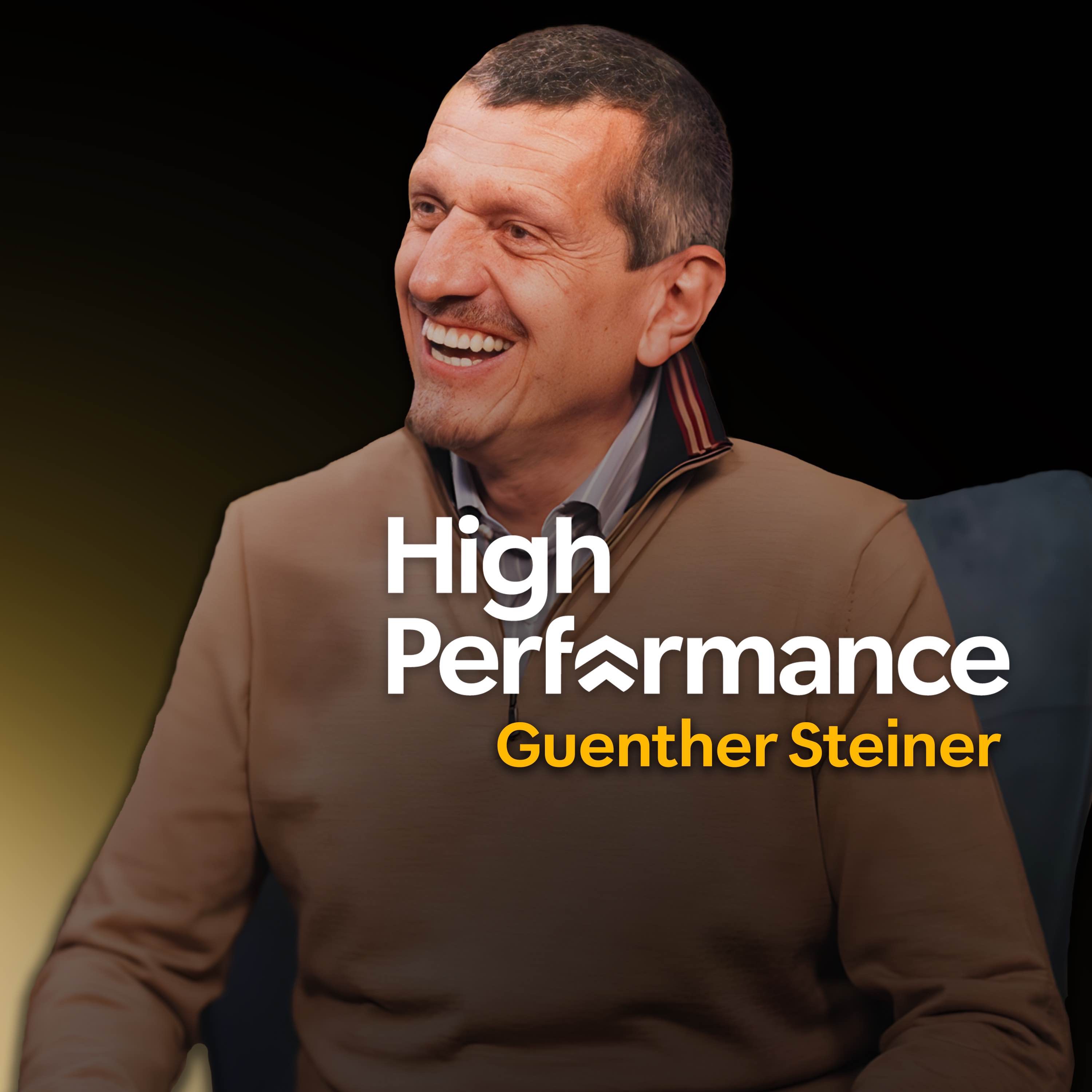
In this episode, hosts Jake Humphrey and Damian Hughes engage in a captivating discussion with Guenther Steiner, the Haas Formula One Team Principal. With over 30 years of experience in motorsport, Steiner is celebrated for his management style and candid personality, notably featured in the Netflix series "Drive to Survive." The conversation explores his journey into racing, leadership principles, team dynamics, and personal experiences in high-pressure situations, including a serious crash involving a driver.
Written by AI. May contain mistakes.

Get the gist, explore an idea or ask about something said.
 Claude
On The High Performance Podcast, what are the key points of this episode?
Searching your listeningAutomatic transcript. May contain errors.
0:01Hi there, I'm Jake Humphrey. This is High Performance, the award-winning podcast that reminds you that it's within. as always thank you so much to our listeners right across the world who tune in to us every single week so that we can be your armor we can be your partner we can be your guide in a world that so often feels negative divisive and confused listen we really want these conversations to remind you of your power to remind you of your potential and what you're capable of so right now allow myself and professor damien hughes to unlock another fascinating mind so that they can be your teacher.
0:36You might think you know this person from what you've seen on TV, but you're about to meet the real person. This is what's in store on today's High Performance Podcast. If they've got an opinion, it's fine, but does it anything to me? No, because it isn't a parody. And obviously, it is maybe hyped up a little bit by writing a book by Netflix that they get you in these situations because it has become a little bit, I would almost say a trademark, but you know, I'm not in control of it. So I'm not telling them to use it. Drivers in a team, if you've got two drivers, there doesn't need to be the big friendship.
1:14They don't need to be big mates. I think that is actually on the racetrack counterproductive. But there needs to be respect, you know, for the job the other one is doing. I know if he's not out in the next 20 to 30 seconds, he's not coming out. There's no chance that he comes out. You know that. When I saw him coming out, he can have a broken leg, a broken hand. I mean, he's okay, you know. The only thing, he needs to survive here. Because in my position, you know, if this car is on fire and the guy doesn't jump out of it, he will be done. So here we go then. Gunther Steiner, the team principal at the Haas Formula One team, joining us on the High Performance Podcast.
1:53And so many of you will know Gunther from Drive to Survive, which has just taken the world by storm. And he's been absolutely the star of that show. but do you really know him? Or do you know the things that you've been allowed to see? Do you know the caricature? Do you know the swearing? Do you really know Gunther Steiner? Because you're about to. We talk about the challenges of being a leader in Formula One. We talk about the loneliness of traveling the world. We talk about the challenge of managing drivers. We talk about how you can deliver difficult news. We talk about how you can get people to say yes.
2:26We discuss Gunther's superpowers, we discuss his failures, we discuss his successes, but I promise you, this is the truth about him. This is the truth about life in Formula One. This is the truth about being Gunther Steiner, traveling the world, and in recent years, becoming very famous for it. How has he dealt with that? You're about to find out. Thanks for joining us for another episode of the High Performance Podcast. Here we go then. The team principal of the Haas Formula One team, Gunther Steiner.
3:06First of all, welcome. Thank you so much for joining us on the podcast. What is your definition of high performance, Gunther? For me, the biggest thing is the persistence to want to achieve something. And then I think the performance comes. And I see that in people as well. And in myself, I always try. hey, if I want something, I go after it until I get it. Okay, so let's talk about that then, because I think lots of people that listen to this podcast, they want things, they're desperate for something in their life, but often the behaviors don't marry up to that. What do you have to sacrifice to be relentless in your pursuit of high performance?
3:41I think you need to give it all, and all for everybody. I think it's different between different people. When I say for all, you obviously have to look after some things in your life, which is your family. I think you've got one most important thing that I've got is my family, you know, but the rest is just like this persistence to achieve something. You know, you get up in the morning and you never give up. If you want something, you need to go for it. And as long as you can say, I tried the best, you can fail. But when you say I did the best I could to get there, I think you get there maybe in a different way, but you get to something else.
4:18You know, it is not like if you want to get somewhere and you get something else, which maybe it's even better you're still on the right track so tell us about the origins of how you discovered that passion in yourself to want to be persistent and how can our listeners ask similar questions of themselves to discover it in their life i don't remember a moment in the life and i discovered it i think it was just a transition at some stage i wanted to achieve something and i think i could go back i come uh my background i come from south tyrol which is in the mountains a beautiful area you know and I was having a good life I have a good family you know behind me and I always loved racing cars I start with that one you know and at the time I wasn't aware of what I'm actually doing and there is no culture of racing cars where I come from skiing ice hockey that's it you know there is no car race there and none in my family is in car racing and I did my military service because I had to in Italy and after that one I wanted to work in racing but i didn't know how to start because i didn't know anybody and you know it's not it was in the 80s you know and the world was a lot smaller then you know so uh and and i just applied uh for a job which was in a in a magazine and got the job and i persisted to go into racing because the job was a mechanic in a rally team i went to belgium and i left my home place at 21 you know now these days if kids leave at 21 it's pretty normal but in the 80s and especially where i come from to leave home at that age was something i wouldn't say special but it was not something a lot of people did but i wanted to do this but at the time i wasn't aware that i was persistent in doing this because when i i drove actually to the interview from my place to belgium to brussels to to get an interview because i mean i wanted this you know how far was that that's about uh 1500 case you know yeah it's all across europe you're going to need to go through germany and then into belgium you know it's a long way away and in the 80s you know that is the difference now these days it's nothing you know go to belgium but there was no cheap airline or nothing you know there was like you needed to drive or go by train so and but obviously i wasn't aware of that that that is but when you ask me now that i think could be an answer that there where i started to be persistent and what were the kind of messages you were getting from your family and your friends that because you're doing something as you said that nobody else was really pursuing my family My mom, my father passed away already at that time.
6:42My mom was very supportive. She came from a valley, moved to a city, opened her own business, you know. So she was like, yeah, if you want to do this, we support you. And my friends, obviously, there is always a lot of doubters. You know that. I mean, there is people, there is more naysayers than yesayers in life. I mean, I learned that one in my life. It's easy to be negative about things. It's very difficult to be positive, you know. And there where you need to be persistent. It's just like, don't ignore them. Listen what they say, but don't not take their nay as I'm not going to do it. No, I hear you, but I'm still going where I want to go.
7:20Well, let's talk about management because I think this is what's really interesting for people. You know, many people will get a job as a mechanic or, you know, low down in a business. Very few people will end up running it. So let's talk about leadership and management. How would you describe your leadership style? I give a lot of freedom to people which work for me. I pick my people. I don't micromanage. I want to know what's going on, but that doesn't mean I manage them. I just want to know what's going on. And normally I find people which know exactly how much I need to know. I find it sometimes weird how I find these people because I don't want them to call me every day, tell them what they're doing, but they know exactly when they need to call me.
7:59I give them freedom. I trust you to do the job, but if you need me, I'm here. But don't call me to tell me what you're doing on a daily basis because I know that and you should be doing it. You don't need to tell me about it when you do your job. And with Haas F1, I'm very lucky because Mr. Haas is exactly the same for me. I don't need to call him up every night and tell him this is what I did today. He has no interest to hear that. He just has interest to hear if I've got an issue, I know he's there and I can talk with him about it. I give that to my people as well. I give them a lot of freedom, but they know where the line is where the freedom ends because it goes into something they need my input but they want it they don't feel like they have to ask me they want to ask me and i always try to do go that far it's a very strange way to do it and you need the right people to be able to do this see but that's not an accident that as you say you find people that understand how to communicate effectively with you and that's an issue that so many people listening to this will struggle with about how to communicate with bosses or people around them.
9:01So you use that line there that they know where the line is. So what are the principles that you do instill as a leader that allow people the freedom, yet equally that accountability? It's honesty. Everything is based on honesty. Never tell a lie or I never tell my people something. You know, sometimes in the business, you cannot tell everybody what you're planning and what you're doing because, you know, there is some things because they are not ripe to communicate. but otherwise I always try to keep them informed what we do as a company and that I think gives them the line where they know what I am doing, which way I am pushing.
9:37So they just need to bring their, because they normally have a team working for them, to that level. They need to deliver, explaining exactly what I want out of them and the team which is working for them. And then sometimes the biggest struggle I find sometimes that the people, the managers, I call them now, which report to me, they understand that, but they have difficulty to give the same thing to the people which work for them, you know, to work like this, because some tend to micromanage because they get scared, you know, and that is normally a process where I try to manage them to say, you need to give people a little bit more freedom.
10:11And if they mess it up, you know, then we need to do something, but you need to give them the opportunity to show that they can do it. Do not do it for them. If I have to do my manager's job, why do I employ him? It's very simple for me, you know. and then the other thing what I what I live with if if you lose somebody and I learned that from Niki Lauda if you have nobody doing the job you need to do it yourself until you find somebody who can do it you know and you need to jump in and I think I'm a little bit fortunate there in racing I've done a lot of jobs so I'm not as good as the specialist but I can jump in because I can do it at 75 percent of their knowledge you know and that is good enough over a period of time.
10:49So how do you deal with people who you bring in you think they're right and it turns out that they're not, how do you then manage them? First of all, you try to bring them along and to explain them. And otherwise, as brutal as it sounds, they need to change career. Because you cannot, if somebody cannot come along to the principle of how you want to work and how the company wants to work, it's not about me. It's about the company. If the whole company is set up and you've got one person which is not doing what the company expects it to do, you have to change. And you try to do in a positive way, obviously you give first people the chance to align.
11:23You know, you cannot be brutal because sometimes people coming from big corporates or big teams like in Formula One, they are used to something different. And when they come to us by how we work, it's a little bit different, you know, and you need to give people the chance to understand fully how we do. It's all about responsibility because if you've got authority, you're also responsible for it. You know, you cannot say I make the decisions, but you're responsible. That doesn't work for anybody i think and it shouldn't work because it's failure uh it's accepted you know so i i i don't do that but you try to bring them along and you work with them but if people don't like it they normally move on on their own let's talk about recruiting those people then because i think every business is a recruitment business before you manage them you've got to get them in the door what questions do you ask of the people that you want to bring into your team to make sure they're right?
12:13How I do normally my recruitment is, again, a strange thing. I do it maybe different than a lot of other people. I let my managers and managers interview the people if they can do, I call it now technically the job. And it doesn't need to be a technical job, but if the people are qualified to do the job. And then I actually have a last interview with each of them at Hasef1, which doesn't have to last long. Some last 15 minutes, some last half an hour, because I just want to see their character and if they fit into the team what i just explained before yeah and i rarely say don't take this guy i just say if i feel that somebody isn't right i just say have you checked this and this and then they go back and re-interview them going a little bit deeper and if i had doubts normally or three-quarters of my doubts the other people pick up as well what questions do you ask then in those half an hour i just try to to to get a character i just ask very simple question where do you live what they need to explain what they did in their life before a little bit i just want to hear them talk i can see arrogance i can see laziness when they speak with me and if you ask me now how do you see this describe it put in a piece of paper i would struggle to do it it's it's just a feeling yeah it's instinct yeah i get things wrong as well honestly i sometimes uh employ people which didn't work out you know but then again i sort that one out myself you know i'm i stand up and say hey we need to fix this this is not working i made a mistake you know it's it's as simple as this reading through your new book which i would recommend anyone to do not just a formula one fan but anyone that wants to understand more about what has been a fascinating life there's a line where you say you're a glass half full kind of idiot what do you think is so important about being an optimist otherwise you don't achieve anything how can as a pessimist how can you achieve i mean you achieve something but you don't achieve something big, in my opinion.
14:05I always think positive. It will work, you know, but I don't hope I make it work, you know, because if you just hope, it's not going to happen. You need to work at it. You cannot just say, oh, this will be fantastic. And I think when I see this will work, there is a reason. And again, is it maybe instinct? Is it positiveness? Because you've got very good people which are always negative. And they are still good people. I think they're still good people, but they just cannot get over that hurdle to say it will be okay. hey, I don't know if they're scared of it, that it could be a failure, but I always think it will be good.
14:38And then if it isn't good, I'm going to sort it out anyway, you know? So what's the problem, you know? Because if I don't even start, how can I sort it out? Because I never get there, you know? You say, this is what we're going to do. And if it doesn't happen how I planned it, there is always, you can do it a different way. Failing, you learn a lot as well in life, in my opinion, you know? Failing is not something people should take as detrimental. I failed once, Now I cannot do it anymore. No, I failed once. I failed more than once, by the way, you know. What's your biggest failure? I don't know, but I think it's more in life that you just didn't get it done how you wanted it, but you got something else out of it.
15:13I mean, that's what I always feel, you know. By what, for example? I sense in your career it's rich enough that there's a really good example there that you can offer our listeners. Yeah, for example, when I went to Red Bull in Formula 1, it wasn't what it should have been, but then I went to America for Red Bull, and what came out? has have won you know i'm in a better position than before tell us the story then of of your relationship with red bull and what happened there uh i mean i started when they when they voted i knew mr mattershitz from a long time and i started there and it just didn't work the chemistry wasn't there so mr mattershitz asked me to if i want to go to the states to uh open up because chemistry with with who uh with the with the management there uh uh i mean i don't want to say persons here you know we don't go down to names and it just didn't work and but you have to accept that it doesn't work it didn't it didn't hurt me you know but in the in then I went to the states Mr.
16:07Matherschitz asked me I did what I did there you know and I think I was on a good track and then again there came some problems there from that side and I said I'm done but I'm going to do something different and I stayed in the states to open up my own company and now we've got that company it's got 200 people while i was doing that company i started off with a business plan to do half f1 i got that one going and that one is going now i mean there is always because of optimism exactly because i was not like sitting at home dwelling over it because something didn't work out as it was planned you know no just keep on going you know it's it's fine the same at jaguar when when i went to jaguar it was a mess when i got there obviously i i'm not blaming nikki or me on that one because we were not given the time.
16:51It was too messed up. They let Nicky go and I was offered to stay there. I said, I don't really want to stay here with the people I'm around because I don't see I can be successful. I'd rather move on. And I moved on. And I decided myself, instead of just staying somewhere to have a job, you need to say, hey, it was fine. I learned a lot. I've got a lot of possibilities. I just move on. I don't force myself to do something. And I was a little bit lucky I think in my life in general that I always had the job I like to do I never kept the job I didn't like either I was moved or I move you know in both ways I'm not saying that is always my choice but I never regretted it even if I was moved because it was the right thing to do so can we explore those two examples you offered there about you described the chemistry at Red Bull wasn't great then you described the Jaguar experience of you didn't feel you could be successful what are the qualities the traits the characteristics of a team that you feel need to be successful you always need to be transparent and honest that is what you need you know and if you don't have that trust in other people you better move on that's my opinion because then you're always just uh fighting your own what i call your own team and in any anywhere competitive what you need to fight is the other ones i mean now fight in a good way i mean uh you No, not punching each other or shooting each other, but fighting in racing on the track.
18:12That is where your energy needs to go, not internal energy, who is who and who is doing what. So you use that word trust there that so many of our guests that we've had on this podcast have spoken about being the magic ingredient of a high-performing team or culture. beyond honesty and transparency that we've heard you share how do you go about engendering and fostering trust in a team that allows it to flourish sometimes it's not easy i mean it's a good question how you do it but i think you need to lead by example and when you see in your team you've got for example i've got about eight direct reports do they all work perfectly together between them maybe not but you just jump in if you have to fix something you know you have got two good people there.
18:59You don't want to lose either, but between them, they then get on. I always try to find a way that they collaborate, that at least they don't fight each other, you know, that at least they work with each other. They don't need to be the best friends. And I say this always for drivers, drivers in a team. If you've got two drivers, there doesn't need to be the big friendship. They don't need to be big mates. I think that is actually on the racetrack counterproductive because both get lazy, you know, because they're big mates, but there needs to be respect, you know, for the job the other one is doing, you know, there needs to always to be trust between, and the same is in management.
19:34If you can trust, if you don't like the guy you work with for different reasons, because there is millions of reasons why you could not like a person or no, no, no, not like, or just not be a perfect match, you know, but you still trust him that he can do his job right you know and that's good enough for me and you just need to keep a closer eye on that so christian horner when we had him on gave us a great example with his two drivers that were at loggerheads and he arranged for them to have a team meeting in a room at the great ormond street hospital and his rationale was that the drivers had to go meet the sick children that morning before they came in so they came into that meeting with a sense of perspective and able to put their their problems and their difficulties within a wider context which i know a lot of listeners really found that valuable the understanding of how you can manipulate a culture or an environment what sort of tips and techniques could you share about how you deal with difficulties and because i love the idea of you being close enough to intervene and work with them give us some practical tips on how our listeners could do that i think what christian did there is i mean i never thought about this it's a great idea because sometimes we need to remember that we are actually privileged people you know and it's a good come down to come together you know i think i never heard this but it's i think it's it's a good way to do it i give you an example i had two drivers before they they crashed into each other every time and at some stage i actually got sick of it and i just sat them down and said guys i cannot tell you how to race because i'm not sitting in the car you need to sort that one out but could you come together between you two to find an agreement not even gentlemen just find an agreement there doesn't need to be a gentleman agreement how you're competing because otherwise you two will be losing out both of you you know because i need to make some changes otherwise because this is not sustainable for the team what you're doing you know because it's not you guys missing out it's the whole team missing out trying to make them understand that everybody in the team is looking up to them and if they mess it up they're saying why should we work hard if then these two guys cannot figure out between them not to crash into each other why was that happening do you think you know race car drivers the the teammate is their first opponent you know that they want to beat him first and maybe it happened because there was too much pressure onto them but by me telling them it's no need to do this but i think they both wanted to show who is the better one as simple as this sometimes things are very simple you know and race car drivers sometimes are very simple and i i just told them guys i'm done with talking with you up before each race because i mean i'm not at the start i cannot influence anymore you need to understand that this guy with the same car as you the same colors as you have got is the guy to avoid to crash into it obviously can happen at in a start situation in formula one that you crash into each other but not when you're out there racing for seven eight corners you need to find a way to coexist, you know, and we as a team will support you because if somebody gets an advantage, we will give the advantage back.
22:37I explained that as well, but it's just like trying to make them aware that they are just part of a team. They are not racing for themselves. They are racing for the team. You know, it's the same, like we said before with the managers, if they don't work together, if they don't have the respect of each other, they are counterproductive and we waste energy in the team if they fight. And what happened in that situation? They found a way to coexist and they sat down together and I said, guys, I don't want to tell you what to do. You two need to know and tell each other what you're going to do because I'm not a race car driver.
23:09I'm sorry. You know, I can tell you what I expect from the team, but how are you going to do it at the racetrack? I cannot say if you are in front of me at turn seven, I go in. That's not my job, you know, because I'm not going at 300 k's per hour. You know, you need to find that yourself. Can we talk about Mick Schumacher? Yeah. because that was a very different situation he wasn't crashing into a teammate but he was regularly finding the wall or causing a lot of damage to the car and then when you didn't retain him at the team i saw you know as you did as well i'm sure a lot of the criticism on social media that he wasn't supported enough he wasn't helped enough he wasn't managed or guided enough would you really just share with us what you did with him to try and solve that problem i think a relationship depends on two people i cannot make a relationship work if you don't want to have a relationship with me.
23:56I don't think he didn't want a relationship. I honestly think he didn't know any better. He's very young still. And I wouldn't say that I'm an easy character as a person. I would never classify myself as easy. I'm pretty tough, but I'm very fair. And some people cannot deal with that or have difficulty to understand that. I'm not saying something with always something in the back of my mind to do different. No. I'm sometimes straight out. I I tell you what I think, you know, if you like it, fine. If you don't like it, still fine. I can agree to disagree. I have no problem. And I've got that a lot with drivers.
24:30I think our relationship was okay, but with hindsight, I'm one of them. I could have done things better, and I think he could have done things better, you know, and I don't want to blame him for this. It's just like sometimes you don't click, but then being critiqued by people, well, how I should do my job is like, okay, I'm doing this quite a while now, you know, I've got my way, you have got yours. but not one needs to be right and one wrong it can be different because if you look in the business world in the racing world there is a lot of different characters and different styles having success you know there's not one recipe for success otherwise it would be too easy there was a couple of lines in your book about mick that i'd love to go into a bit more detail i want to know how you dealt with these you said that he said he was a team player but you questioned whether he truly was and then you said he tries to play mind games as well can you give us more information on those two i think i don't want to go too deep because then we got the counter reaction i mean i'm very honest here of him you know but there is always i felt sometimes he you didn't get the full story when he said something that was my feeling can i prove it maybe not but i i have to say that to the people so at least they know that there could be something you know and as i said i think he tries to i think when i say i think it doesn't mean i know i don't want to go into any particular occasion because then it seems like, you know, water under the bridge now and then we just start a conversation because I don't wish Mick any bad things in life because I think he's a nice kid, you know, and I really hope that it works better for him somewhere else, you know.
26:02I think we had two years, they were not fantastic, but they were not bad at all because he got the opportunity two years to drive in F1, you know, with us and I think it wasn't all bad. I always go back to when I was critiqued, you don't get anything out of Mick how you manage him. When he got points, Nobody said, oh, he got points now. That is because you managed him, you know. And I don't want that. I don't need that. But it's like the same people, you know, they just see always the negative. But going back to negativity, I was happy for Mick that he got points, that his confidence came back, you know.
26:31That is because I'm the first ones who want him performing because he's part of the team. And me being blamed, I don't want him to perform. I actually call it pretty stupid, you know, because I run a team and Mick is a big part of the team. So my biggest wish is to keep her form. So it's not difficult to understand. It's very interesting, though, this, because we talk often on this podcast about we live in a world now of opinion, as you see, with the rise of sort of social media anger, particularly around Formula One. Whereas we often talk about empathy. You know, if you can find an understanding, find common ground with someone, understand the life they've lived.
27:08and I wonder whether a bit of that, maybe that shield or that barrier that Mick has or had is perhaps because of the name on the car, like is because he's a Schumacher, because he's grown up in the spotlight and the glare and they're naturally a very private family. I wonder whether, like you are just, like you describe yourself as searingly honest and dangerously forthright, right? Not everyone can be that, can they? Some people have to protect themselves by having a barrier in front of them and maybe that was the situation there. Absolutely, you could be right. Because, I mean, having that name is a curse and a blessing.
27:41You know, it's not only a blessing. You know, there is also negative things coming with it if you're born into something like this. And I think that is part of it because he never was used to this openness, you know, because he always had to put or was told to put a shield up, you know, because of his name and the history of his father. So can I ask you about what jumps out for me in your book, because I think it's a superpower that you have that I think you can teach the rest of us, is the ability to deliver bad news to people. You describe it as something that you're incredibly good at. I wouldn't say that I like to do it.
28:17I wouldn't say that I'm particularly good at. I'm very honest about it. I'm not afraid to deliver bad news, you know, and sometimes a lot of people say a lot. Some people say I'm too direct, but I think sometimes the directness helps because you get over it. Because if you have to deliver bad news in little bits and pieces, it just tracks out the process and you feel bad over a period of time. If you get hit with it, you get hit and to deal with that you know and then you can ask for help if you get hit with bad news you know that's what i always see it and i wouldn't say that it's always perfect because as we just discussed here not everybody's the same in getting bad or good news you know i i just cannot bring myself to not delivering bad news uh because i'm afraid of it i mean i have to do it i do it in the best way possible but also a very short period of time did you have to learn that i mean i really struggle with delivering bad news because i think too much about how the other person will feel and actually nine times out of ten when you do deliver the bad news it's not as bad as you as you think it's going to be you know absolutely correct i think for sometimes if you overthink it and therefore i try to do a quick because you overthink it then you drag it on and it actually gets worse for the person that's what i always feel because if somebody has to tell me bad news tell me and i can deal with it but don't tell me a little bit and then i'm like is it bad or is it not bad.
29:37I know that not everybody thinks the same as me, but I'm not afraid of bad news. I don't like them, but I'm not afraid because then you have the chance to do something different or do something against it. If somebody doesn't perform, you rather tell them you don't perform than saying, I don't really know if you perform or not. And in the end, when it comes to it, when I made my mind up, I go to the people direct. When you are thinking about it, what to say, I think it, I'm not brutal with it, but once the mind is made up where I want to go or the company wants to go, because it's not about me, it's about the team, I need to tell the people honestly why and try to explain it to them as well.
30:14So can you give us a good example of the best delivery of bad news that you've ever done? I don't know if it's the best one. It's one when I had to let Kevin and Romain go in 2020, I think it was. It wasn't nice because they became my friends as well. But it was two phone calls, which not even person to person. And I was just like, guys. How did you deliver it? What did you say? I just told them, guys, I need to change because the circumstances and the teams have changed. And this is nothing against you personal, guys, because you both delivered what we wanted, but going forward, we need something different, you know, for commercial reasons.
30:53You know, we need to make a change. And then I said, and maybe you don't want to be here next year because we don't develop the car. So I said, you're struggling already this year where we have no developments in 2020. It wouldn't be better in 21. Actually, I think it's getting worse in 21. And how did they take the news? Did they ask you to reconsider or? They knew their decision was made. Yeah, yeah. They both know me very well as my character. And again, I wasn't like, you know, trying to debate it because once the decision is made, why would I go and debate it? Because then at least I gave them the news and they can then think what they're going to do next.
31:29Maybe there's other opportunities for them. I see it always as that a little bit as well, you know. And then you decide to bring Kevin back into the team. Yeah. What was the thinking behind that? It's just because we knew him and we had only two weeks to go. And as I said, we were very happy in 2020. It's just like he didn't fit anymore because the whole team's finances changed and everything changed. He wasn't sustainable, not because of his driving, because we needed something different commercially. So to bring him back in because we had a good relationship before and we knew he knows the team.
32:01We know him, which is always an advantage if you are happy with somebody. But that is the thing. Once I let them go, these two guys, we were still on speaking terms afterwards. You know, I mean, do I speak a lot with Romain now? No. But I, for example, saw him in February in Daytona and we had a chat. I mean, obviously Romain is not happy because I called Kevin Beckham, not him. But that doesn't mean that he's upset with me. You know, we still speak. You know, we're still talking. And I think, as I said to you before, some people, when I was like, oh, I'm not getting upset about it. I just move on.
32:31You do something different. And I think Romain now moves to the United States. He apparently is happy as he can be. You know, one door closes, another one opens.
32:45Give us an insight into the modern relationship between a team principal of a Formula One team and a driver because I grew up watching the sport when it really felt like Eddie Jordan, for example, had a close connection with the driver or David Coulthard had a personal relationship with the people who he was driving for. It now feels like there's so many people around these Formula One drivers. I'm just interested in how you navigate that. I think you're right there. In the old days, it was a lot more, but we see each other so much now with 23 or 24 races, how many there are. So in between the races, I mean, with Kevin, for example, I spoke with him on Friday.
33:22I called him up because I needed to ask him something, you know, completely out of race, not completely out of racing to do with racing, but obviously, because otherwise I have nothing to speak with him about. But I always say, guys, if you need something, just call me up. It's no problem. Or text me. You know, we have got a relationship. But on the race weekend, if I see one of the drivers sitting there and I have got 10 minutes, I just sit down with him and have a chat very informal, you know. But we get on very well, but we are not like sticking together maybe like in the old days when it got very friendly.
33:49But as I said, I've got a good relationship with most of the drivers I worked with, you know. But Nico, I haven't spoken with him since the last race, for example. But during the race weekend, we had actually a lot of opportunities to chat in Australia. So it's no point that I call him up asking about a lot of nothing, you know, because he has got better things to do and I've got better things to do. So it's as long as that trust is there. It's not about the quantity time. It's about the quality time you spend with these guys, you know. Do you sometimes feel that you're kind of on your own trying to manage these situations?
34:24Because there's a moment in your book where you say that, you know, lots of drivers now are surrounded by yes people. So those people are around telling them they're doing brilliantly all the time and you're the only one trying to give them bad news. Their managers are puffing them up and building them up when they should also be helping to actually manage them rather than just make them feel great. Yes, and how I confront that, I try to speak with their managers or the person close to him and just to try to explain how as a team we work. They are not there just to be a megaphone for the driver.
34:55if they need to help the team and the driver to find a compromise. That's what manager means in my world. A manager needs to find a solution. A manager is not just like, oh, the driver doesn't want to do this, so I go and tell Gunther or whoever he doesn't want to do that. That's not good enough. That's not a manager. That is just a messenger. And they need to find a solution. If they say, hey, he cannot do this and this at this and this time or day or whatever, can we do it or not? He needs to find solutions. He's the driver's manager. And that's what I always try to explain to them as well to do.
35:27And most of the guys get it, you know. Do we achieve it all the time? No, we are not perfect. But that is how I try to manage that one. You know, there is situations, you know, it's a hectic schedule for them, for example, on the weekend. And if there is an issue with something, I go and speak direct with the driver I'm not afraid of. Or if they have got something, you know, they want to speak, they come direct to me. You know, in the commercial world, they cannot find a solution with our marketing manager or our commercial manager. then they come to me and what I try to do then find a solution which suits both of us and I explain why we cannot do it how they suggest it but we could do this that and the other you know but the challenge that I hear from Jake's question is that the manager's job is often to tell their driver what they want to hear your job is to tell them what they need to hear and that doesn't always meet in the middle so how do you deal with that when you've got a manager that doesn't want to convey your message they want to just tell them that the driver's great even though the evidence might be otherwise ah first of all i want to go just a sidestep here i always want people which work for me not to tell me what i want to hear but what they think and sometimes if you hear people which work for me speaking with me you would be thinking hey this guy is pretty brave but i ask them for that because if if i think i'm the smartest and i know all of it why do i need other people.
36:50You know, I need people which tell me the truth, how it is. And then obviously, if I don't agree with it, we can discuss it, not debate it, because debating is something different for me than discussing it, and then find a solution between us. And as I said before, I sometimes agree to disagree with my people, but I never ask them to tell me what I want to hear. I actually hate that. You know, I hate when people tell me what I want to hear, because that's not good for me and for the team. I always want their honest opinion about things, how they see it, And then we talk about it and try to find what is real.
37:19And the same goes for the driver, going back to your question. If I see that there is an issue, I just go and, as I said, I just interfere and go and speak with the driver direct and give him my personal opinion about it and explain it why. And then I say, we need to do it like this and this because this and this, even if he doesn't like it, he's going to do it because in the end he's an employee. And we agree to disagree, but we still move on. And I sometimes need to say, okay, I don't like what you're doing, but just go and do it because it doesn't hurt me i think it's the wrong thing to do for you but as you know the team has no uh consequences of your actions just do it how you want to do it i would do it different you know i'm pretty easy to deal with that one like what have you got an example i've got one but i don't want to bring that one up here it's too controversial go on no no no no don't convince me you know uh just do it without the name no no no it's too obvious the name you know it's too obvious when it comes up you know it's too obvious for everybody you know so you don't want to cause yourself some unnecessary heat right exactly some unnecessary work to deal with you know because it's like what you say and what you think you know because as we said before i'm not known to not say what i think you know but i don't need to uh rock every bolt here you know so but what you're saying is your management style is you will be honest you will be forthright you will say it like it is you know the phrase we use here in the uk sugarcoat you won't sugarcoat the message but then they're also allowed to be like that with you yeah absolutely and you can ask and you won't get offended if someone comes to you and goes you got that wrong what you read my email inbox about people tell me sometimes on an email it's like you would say whoa this guy's brave but they know that they can be because as long as it's honest and for the right reason i have no issue with it you know i can see immediately if somebody has got an agenda or something but they all know that i i don't want to sound too smart here but i can see something if somebody tries to pull the wool over my eyes you know and how do you make sure that in a culture where people can be as honest as that that there's also room for kindness and understanding and making sure that everyone fits you know it's a very good question because it's it's sometimes i i come over as being rude and too direct or too direct is rude you know but i'm never afraid if i say something wrong to apologize and i try always to tell people you know if you say something wrong and if you overreact because as you say, I sometimes overreact in the situation, the heat of the moment, especially during racing, but I'm never afraid if I did something wrong or offended somebody, not wanting to offend him, but realized I actually did because I know myself pretty well, you know.
39:50I'm never afraid to apologize for something, what I did wrong. And I tell my people, never be afraid of. And I sometimes, we have got some people which this management style tends that people, to their people, they are sometimes a little bit, direct means rude, you know. because you're asking that one that i sometimes say guy just tone it down a notch here you know because i do not speak to to you like this you know so i expect not you to speak to the people which report to you like this you know so it's not very often that i have to do it because people have got a good balance there but sometimes it's happened you know so to avoid that to answer your question is that when i when i get the feeling i just try to just slow down a little bit you know And how do you avoid an issue that, when we were watching the TV programme and reading your book, is what I imagine is a danger that's coming your way of almost the point of parody?
40:44So I've read Barry Gibbons, he's a management writer, who talks about the Elvis Presley problem, where when Elvis first started curling his lip, people screamed, so he curled his lip every time, and then it almost became a parody. It was easy to do it. And when you see you on the TV program using the F word. Which word? Yeah. And even in your book, you know, I was talking to your publisher that the F words included 356 times in it. How do you avoid it where people then almost want you to do it for the humor rather than just the authenticity of who you really are? It's not easy to do because it happens.
41:23What you explain is real. you know people ask me are you doing this on purpose just to get attention or something like this but for example i've got sometimes i wouldn't say a lot of people you know with their cell phone can you swear for me and i video it i don't do it right i mean you hear here and i don't have to really avoid to use the word it's it comes natural to me but it's a different situations where i use it and obviously what you say is right but i always feel like if you some people don't like it and I respect that you know if you don't like it you know what you do don't read it don't watch it because I normally if I don't like a book or I don't like a movie I don't watch the whole movie and then say this was bad I stopped it before the same as with the book you read the first 10 pages you don't like it I put it aside move on if they've got an opinion it's fine but does it anything to me no because it isn't a parody and obviously it is maybe hyped up a little it by writing a book by Netflix that they get you in these situations because it has become a little bit, I would almost say a trademark, but I'm not in control of it.
42:28So I'm not telling them to use it. So I don't feel guilty of it, to be honest. So you can choose what you read and what you watch. And that is not me choosing for you. Do you watch Drive to Survive? No. Why not? For the simple reason, if I see myself, maybe I would act differently the next time, you know and then you don't get the real me and i think drive to survive has opened formula one a lot of people because they see the real people there you know if i would be an actor i would watch myself you know because then i can do my job better you know because i watch myself what do i do next but i'm not an actor i'm not acting i'm doing my job and that is where people have sometimes a problem to understand you know it's like i'm not they don't tell me what to do i just do my job and they film me this is who i am you're as famous if not more famous than your drivers these days how does that sit with you i don't really care about that i mean it's maybe too simple of an answer but i don't care i'm not going in the internet and see how many uh clicks they have and how many i don't care i mean i'm social media i'm not active at all personally you know the team is obviously but i have no social media account if i do something stupid you know you get people telling you about it you shouldn't have done that mainly my wife you know and then you get uh you know from some instagram thing or something like this what people had to say but It's very rarely, you know, it's not more than 10 times a year that I go and watch what I have done or what I'm on the internet.
43:49See, I'm interested in what we were talking about before we recorded about you've been married for 29 years to your wife. You have a daughter who's 14 years of age. And you also made a comment that intrigued me when you were talking about your other successful business you set up after you'd left NASCAR, where you say I don't interfere with it I can't give it the time and energy and attention they need I'm interested in what have you learned from your career since leaving Italy that you've you've led such a rich varied career that you do use both at home with your daughter but also in the business that you set up as well what what are the transferable skills I lived in different places in the world, you know, in complete different places.
44:34And I always try to learn the culture of people to know how people do business. I call it now business, how people are. And we are all different. You know, we are all the same, but all different how we do. I grew up in a place where you speak Italian and German, both of it. So I grew up as a kid with different cultures. So when you deal with the German, do not try to be an Italian because it will not work. I moved to the States and, you know, you come from Formula One, you go to NASCAR, you think you know it all. i get there and actually i thought i actually know nothing here because this is a different world to me and i step back and watch them six months to learn about how they do things and i'm not saying one is better one is worse it's different that's what i learned wherever you are try to live like the people in their culture you know and then you will be successful you know if you try to do business in america like you do it in england you will not be successful in my opinion And what about life as a husband and as a father?
45:29You know, I'm one of the rare people that walked away from Formula One to be with my children and my wife. How does your wife and child deal with your travel? How do you deal with being a dad and husband who's away a lot? I think I've got one. When we got married, I was already a traveler, call it like this. You know, I was already on the road all the time. So my wife knows that one as well. It's not ideal. I mean, would I say I'm the perfect father? by no means you know i try to make up when i'm at home that uh you know i spend time with them and they know that uh when i'm away i work hard you know and i work for the right reason you know so they respect what i do i always try to find a way to make them miss them as little as possible you know you said in your book that you've had to become your own best friend over the years i just wonder whether there's a loneliness to the life that you live that people don't understand necessarily yeah it comes with it you know because uh you know you've got people which which work with you for you and uh but uh i'm one of the persons i know that they don't want to be with me all the time and i respect that because uh you know a lot of people say because you work with me you need to go for dinner with me no i don't ask them i say if you want to but you can say no, you know, but I don't force people to surround me and entertain me.
46:51It can get a little bit, I wouldn't say boring, you know, you're lonely, you know, it's like, why the hell I'm doing this, you know, my family is sitting at home watching TV and I'm sitting in a hotel room watching TV, you know, instead of being with them, but it's part of the job. So why are you doing it? Because I love what I'm doing. It's a simplest test, you know, I love both sides of it and I try to integrate my love what I'm doing in life, my family as well. You know, I try always to do the best, but obviously I cannot say nothing is perfect. You always have to make compromises, whatever you do.
47:23I think one of the times when you're probably most lonely is when something big happens and the buck stops with you. You know, Gene owns the team, but he's in the States. He's separate. It's all about you. The two moments that spring to mind is COVID. When you didn't know whether the team or Formula One even was going to survive. Yet your only job is to try and tell all of the staff that everything will be fine. You have to take the pressure. And probably even more stark than that was Romain Grosjean's huge crash when I guess you're watching on the pit wall, possibly fearing the worst, knowing that you're the person, that whatever happens next, you have to be the person to make those decisions and deal with that.
48:03Tell us what that's like. The two scenarios are actually very good scenarios, but they're completely different. With Roman, I start with that one because it's a shorter one. It's like, you know, I do racing a long time, as I said before. When you see what you see on TV, and I don't see anything different than you guys see, you know. I know if he's not out in the next 20 to 30 seconds, he's not coming out. There's no chance that he comes out. You know that. And then while you think that, how I deal with that, because obviously you have to think about it, he's out. So it is very tense. But in that 30 seconds, which it happened, it was over pretty quick.
48:39And then how we deal it. When I saw him coming out, he can have a broken leg, a broken hand. I mean, he's okay. The only thing, he needs to survive here. Because in my position, you know if this car is on fire and the guy doesn't jump out of it, he will be done. Because he just cannot survive it. It maybe sounds brutal how I say it, but that's what it is. You know it. You're not hoping, yeah, but maybe he could know. There's no chance. He comes out, everything is good. He survived. Now we have to deal informing his family, you know, and again, I get my people around me, which at the time was the director of comms.
49:14We said, how can we get the message out that everybody or as many people as possible know that he's okay? Because that is the most important thing because there are friends, there is family. There's a lot of, and if you want to call them up one by one, it takes you a few hours because everybody wants to give you the story. So obviously get a TV channel here, the biggest one you can and give the message because then everybody else knows. And that is what you try to do. So obviously we got lucky there and we had to tell good news and not bad news, you know, but it is, you're lonely, but it is over pretty quick.
49:44The other scenario, COVID, it was a never ending story. It was every morning I had to get up and keep on hustling to make it happen. But you just, as I said before, if you want to do something and if one solution doesn't work, go and find the next solution, you know, just keep on doing things, trying to make it happen. You know, the plan in the beginning was different than it ended up to be. But in the end, we found a solution because Gene was pretty clear. I said, he said, I don't think we can continue here if you don't find a solution. He doesn't say what the solution is. And I respect that because in the end, I'm in charge of it.
50:18He gives me the freedom to run a team. So I have to find solutions. I'm not upset that he doesn't say, oh, I'll give you all the money you want now, you know. What was the solution? Just finding out that money, you know, to finance it and trying to keep as many people on board as possible. there's a lot of small things but the big thing is just trying to find the financing to keep on going so can i just ask you a bit about self-belief and backing yourself i mean there's a few lovely examples of this you deciding to create a u.s formula one team right most people wouldn't even begin because they think oh that's just crazy then there's a lovely story where gene says i need to get a super license and you say leave the super license to me with no idea whether you can get a super license to set up the house formula one team and then when it comes to the super license someone says you better get some lawyers and you're like nah nah nah i haven't got the time or the money for lawyers i'm going to do it myself and then gene rings you during covid and says if you can't find money i shut the team down how on earth throughout all of these moments do you find the mental strength to back yourself i think this is great for people because people get derailed all the time and i think whatever you do to not be derailed is really valuable for people i don't know how I do it.
51:26I just, I believe, and obviously it has to do with experiences, what you made in life, you know, you know, you can do this, but also, for example, if Gene would have not wanted an F1 team, would my life have changed? Yes, but I would have been still in a good place, you know, because I was okay. I didn't put myself under pressure of survival at that stage, you know, when he says get a super license, I was pretty sure I can get a super license because there is ways and I knew enough people, you know, you just get that feeling, you know, the confidence in yourself. And there is one problem, you shouldn't get overconfident.
52:00And that is the thing. If it is not achievable, I say it is not achievable, you know, but once I made the commitment to Gene that I get the license, I needed to get the license because otherwise I call it failure, but I had enough confidence that I can get the license because at that point I had spoken enough people how to navigate it, you know, to get the license. The same when we had in the, as you said, in the COVID period. I wasn't sure to find a way out of it, but I was pretty sure, you know. You never can be sure until you have done it. I mean, because that is arrogance, you know. And I don't want to come over as arrogant, you know.
52:35But it was hard work and the pressure was high, you know. I got up every morning with pressure. How we navigate this, you know, it's like it wasn't easy. But it also has to do with determination. If you want to do something, I think people can do a lot more than they think they can do. And are you patient? Because I think all of these things take time. I mean, look how long it took you to get that pole position in Formula One, which I'm sure was an incredible moment. But patience is something that we don't talk about often enough, maybe in the modern world where everything happens quick. I think I've got long-term patience, but sometimes my short-term patience is not of my best.
53:09My family tells me that sometimes, you know, you need to be more patient. You know, I get, you know, little things, I'm very impatient, but long-term patience, I think that is more a strategy, you know, and there you need to know that you will achieve it, you know. So how long-term do you think? For me personally, not very long-term. Honestly, I don't think what is Gunter doing in five years, he doesn't know. I don't really care. But for the team, I think long-term because I feel responsibility. It's the same for my company, for these things where I know other people is involved and they need to have a long, mid to long-term plan.
53:43I feel more responsible for that than for myself i'm now late 50s you know so you think okay i will be okay one way or another you know but there is people which are building a career up and you need to help them and give them the possibility because we made a promise once you put a company in place you made a promise to people that they will have a job they can have a family which they can count on a job to feed their family you know that is responsibility so i i think in that things mid to long term mid at least if not the long term but on myself you know whatever happens i will deal with it you know right we've reached the point where we have some quick fire questions we've covered a few of these actually but let's get into them what are the three non-negotiable behaviors that you and the people around you have to buy into honesty accountability you know that they know that that they're accountable for it and hard working what is your biggest weakness and your greatest strength my biggest weakness can be some sometimes uh being impatient you know in the short term i sometimes and my coming out because it goes over to people get almost scared when i have my blast you know and my biggest strengths uh i think my determination to get something done what is the thing that people get wrong about you or misunderstand most about you do you think they think i'm not approachable which i am actually as a human being you know i'm people are almost scared sometimes of me, which is, and I don't know if it is maybe to do also with my looks, you know, because I can look very angry, I know, you know, it's like people get afraid of it.
55:18Do you see your angry face again? No, I don't do it. It was a little frown. Nah, that's not scary. What advice would you give to a young hunter just starting out on your journey? Be adventurous, you know, take opportunities, you know, as they come along, you know, it's always make sure you've got the plan B, but never be afraid of anything. how old were you when your when your father passed away uh 18 right what would he have made of the life you've lived and the things you've done i think he would be proud of it i think he would be proud of it what i would have achieved you know where do you think this drive and this energy and this kind of constant need to work and graft where do you think that comes from because could you trace it back to anything in childhood because often you know we find that people come on this podcast then it is a trauma or it is a setback or it is a hard moment that gives them the fire in their stomach that maybe other people don't have i i don't think it was anything like a trauma i think my whole family i grew up in a family which my parents came from the valleys and and had to open their own business and i know how they worked hard and i always had to help when i was a kid and i i never shied away of it you know i was always and i think that just came when seeing that one i grew up in that environment and i think it just it's copy paste so your version of of hard work what is that like what time are you up what time do you work till that could be completely different and i older i got i don't define my uh work life as how many hours i'm in the in the office and and i started not to define it with people which work for me how much how long they are in the office because that is something you can be in the office doing a lot of nothing that doesn't make you good.
56:59I think I could be in the office early because I'm jet lagged and I go in early. I could be there late, but I could also be leaving early because I can see I'm not productive anymore. It's no point to sit in an office doing a lot of nothing, a better rest. But I also, when you are somewhere, and as you said before, when you're sitting somewhere alone, I do a lot of thinking work. You know, I need to think a lot of stuff for the future, you know, and you need time for that. And I use that time. And do you count that as working? I would say so, you know, if you try to do something. So that's what I say.
57:31It's very difficult to say. I'm not the guy which is at six o 'clock in the office and leaving at 11 at night. No, that's not me anymore. And I maybe did that in the old days, but I don't define myself. But how much time I define what do I achieve in a day? That is more what I do. And my biggest satisfaction is, it's very strange, is we all do jobs we don't like to do. I have jobs to do I hate to do, you know, as well, you know, like administrative jobs and things like this. But at night, I'm proud that I've done them because the easy jobs, the things you like to do, they are easy to do. So they're not really work, but I get satisfaction.
58:06Oh, I got this one done even if I disliked it to do. We have a high performance book club. Is there one book or a book you would like, apart from your own, that you would recommend our listeners or viewers read? A book that's maybe been good for you? On the road, you for sure know, Jack Herowiak. I mean, the last time I read it was maybe 20 years ago, if not more. But that was a thing like, I'm not saying the circumstances in there are perfect, what they do. But it's more like get going, you know. And finally, what's your one final message for our listeners to understand how to live a high-performance life?
58:44To never give up. It's as simple as this. You always keep on pushing, you know. Keep on doing what you like to do. Enjoy it, you know. Enjoy what you do and keep pushing. Thank you so much for coming on. thank you so much for sharing all that and thank you so much for not swearing no you don't have to thank you i told you i can do that you know yeah you didn't listen you see so you're not a high performer you didn't listen to me yet that was great
59:12damien jake there's loads to pick out there i mean i think the biggest thing is you know we see a certain gunter steiner when we watch drive to survive and actually i think we saw the person behind the caricature there you know there wasn't the swearing there wasn't the bombastic you know sometimes quite over the top management style there was actually a carefully considered thoughtful person who you know admits that it's a lonely life and a lonely job but when you're making big decisions and dealing with big things like he is that's the truth about management it's a really good example to me jake as i was listening to him of context of understanding it It's like that old analogy we spoke about before, that when somebody cuts you up driving, you would just assume that they're a dick.
59:56But when you cut somebody up, it's because you're in a rush that we're great at justifying our own actions. And I think that, to me, was a really good example of not judging a book by its cover, that you can see somebody on Drive to Survive and assume that, like you say, they're belligerent or aggressive or bombastic. And yet, that was a considered, thoughtful, really decent human being sat in front of us, the opposite of it. So I think sometimes understanding the context in which people operate allows us to get beyond a judgment and get into that empathy, understanding and the more subtle nuances around who a person is.
1:00:31And I think he also understands that, you know, in 2023, you can't have an environment, even in, you know, elite motorsport, that is constantly like just the unfiltered truth and just the kind of really hard push, push, push for success. You know, like when we spoke about that, he understood that actually it does take all sorts. And I think, you know, if he ended up with a business with only people like him, he actually ends up with a bad business. you know that cognitive diversity that difference of opinion that difference of thought all absolutely vital for for has and for him to be successful well i thought your question was a cracker when you asked him about kindness and decency and he immediately understood that and and the importance of just admitting when you're wrong and apologizing quickly you know we spoke about the bad news and as you said i don't enjoy doing it but sometimes just doing it with empathy and understanding is really is a really powerful concept i really enjoyed that and i really hope that you know people feel that they know gunter steiner and know the power and the importance of consistency hard work but also operating on instinct which is what he seems to do i hope they understand him more than ever yeah i'd love that i think another area worth exploring is the way that he makes those decisions when we're talking to him about dealing with covid or trying to get the license for the team i think there's three things that he really spoke about that is worth people remembering if they're having to act on instinct first of all there's the expectations so he said he managed the expectations of people he didn't promise something that he knew he wasn't able to somehow deliver then he relied on his abilities that he went back into i've done this before so i know i can do it again but then he was also conscious of the consequences of knowing that he had a plan b he was always another way of doing it and i think when we can manage expectations manage consequences and then focus on our abilities that's where we can operate from instinct in a really powerful constructive manner i enjoyed it mate me too thanks mate well as always huge thanks to you for listening to today's high performance podcast and i really love it actually when we can allow you to see someone in a way that perhaps you didn't and you know no matter the world that you live in i really hope that your knowledge and your understanding of him and the way he manages people and the way he manages situations the way he deals with trauma and difficult moments as well as dealing with triumph i really hope that that's valuable for you in your life don't forget you can also watch these episodes on youtube as well as listen to them wherever you get your podcasts and there's only one thing that we really want you to do please just simply hit subscribe.
1:03:14It makes the world of difference to us. If you can hit that subscribe button, it means that more people can find these episodes. It means that we can attract bigger names with better conversations than ever before for you because we're really ambitious for the High Performance Podcast over the next few years. Thanks very much for listening. On behalf of Damien and the whole team, we'll see you soon.
1:03:42Thank you.
Guenther Steiner is a renowned motorsport engineer and team manager, best known for his current position as the Haas Formula One Team Principal. With over 30 years working in motorsport, Guenther is highly admired throughout the community and has become a leading figure in popular Netflix series, ‘Drive to Survive’.
In this episode, he describes how he found his way to a career in racing, his approach to management and how he nurtures his relationships with drivers and team mates to help push the team forward. In addition to this, Guenther shares how it feels to watch one of his team suffer from a serious crash, and the burden of hoping to see them emerge from the wreckage.
You can read more of Guenther's story in his new book. More information is available at https://www.penguin.co.uk/books/451686/surviving-to-drive-by-steiner-guenther/9781787636279
- - - - - - - - -
We're on tour! Grab the last tickets for our live theatre tour coming to Nottingham, Oxford, Northampton, Glasgow, Cardiff, Guildford, Leeds, Salford - https://www.thehighperformancepodcast.com/live2023.
Watch all episodes on YouTube: https://www.youtube.com/highperformancepodcast
Hosted on Acast. See acast.com/privacy for more information.


