
 Ask ChatGPT


 The High Performance Podcast
7 Jul 2025 · 1h 26m
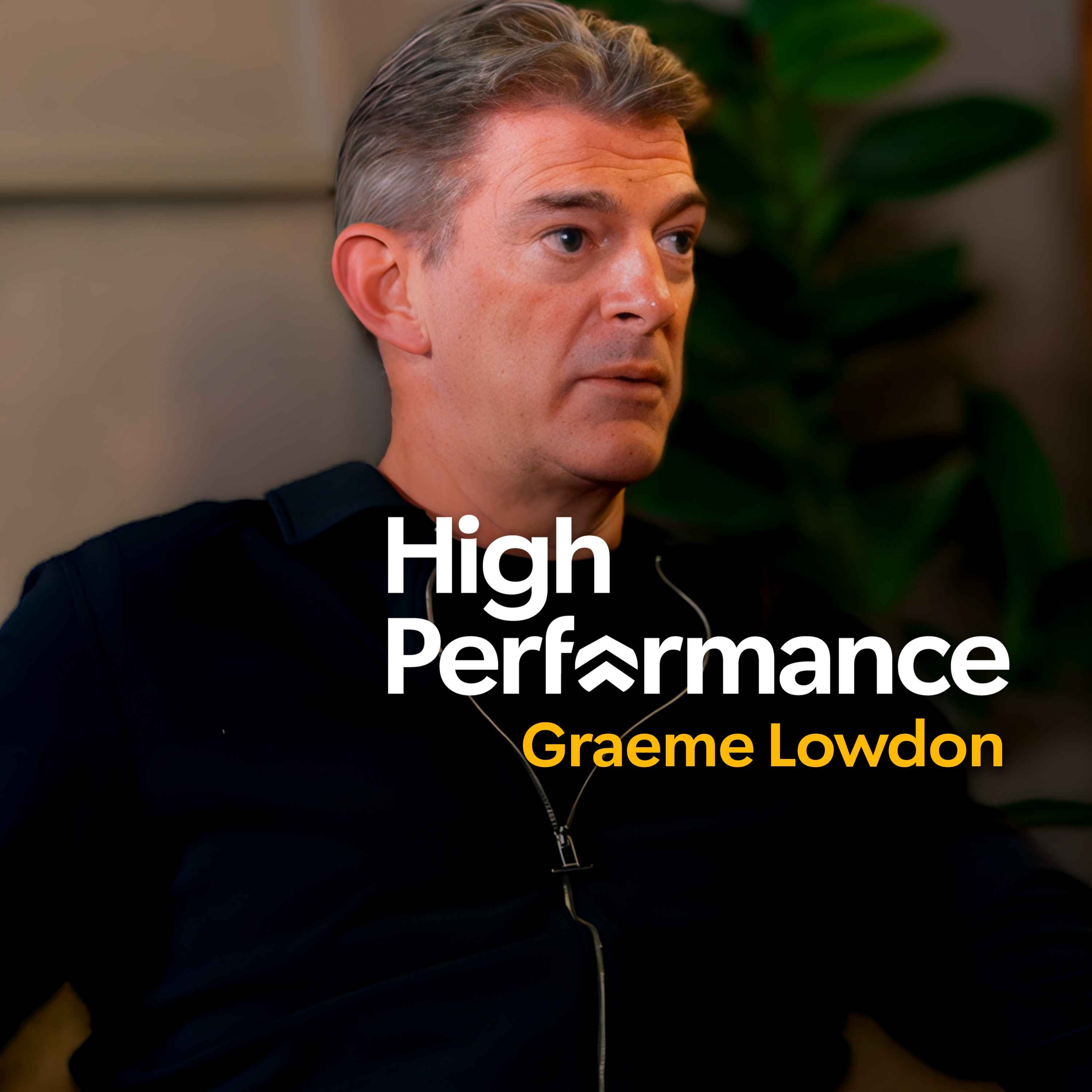
In this episode of The High Performance Podcast, hosts Jake Humphrey and Damian Hughes engage in a deep and insightful conversation with Graeme Lowdon, the team principal of Cadillac's Formula One team. Lowdon shares his extensive experience in motorsport, particularly in building a new F1 team from the ground up, and reflects on both the challenges and emotional moments he has faced throughout his career.
Written by AI. May contain mistakes.

Get the gist, explore an idea or ask about something said.
 Claude
On The High Performance Podcast, what are the key points of this episode?
Searching your listeningAutomatic transcript. May contain errors.
0:28Watch it early on the High Performance App. raining and I knew that jewels had gone off. As soon as I saw that, I thought, this isn't going to be good. You know, you learn a lot from stuff like that. That is the voice of Graham Loudon, the man leading one of the boldest projects in modern Formula One. In fact, as you're about to hear him describe to me, no one has ever taken a bigger gamble in Formula One than the US-based Cadillac F1 team. And Graham is about to open up about that gamble about the process of actually creating a Formula One team from scratch when there isn't a book on how to do it.
1:02He talks about the multi multi-million pound gamble that had to be taken even before Cadillac knew if they'd be on the grid and in this conversation Graham and I also get very emotional as he opens up about losing driver Jules Bianchi after his tragic crash in Japan and the deep impact that Jules left on him and many of us Formula One fans. He also tells us how that experience changed the way that he leads forever. We'll then discuss nearly losing the team, the incredible story, and it is incredible, of fighting to stay on the grid against the odds as the team's assets were sold around him. And he also shares what real leadership looks like in the hardest moments and why purpose, not position, is what keeps people going.
1:45This is a classic Formula One conversation from a man who has been there at the sharp end and experienced true highs and the lowest of lows. As we welcome the Cadillac F1 team boss, Graham Loudon, to High Performance.
2:02Graham, welcome to High Performance. Thank you for having me. So your alarm goes off every morning and as soon as you wake up, you remember it's another day less that you've got to be ready to be on the grid at the start of 2026. As you wake up, what is the thought that keeps flashing through your mind so that you keep on risking everything to make Cadillac in F1 happen. Well, thanks for reminding me there's one day less. Well, actually, you know, in the factories that we've got, and we have a number in different places, we put a countdown clock on, and it's counting down from now to the start of free practice one of the first Grand Prix of 2026.
2:39And that's primarily to remind everyone that, although it seems a long way off at the minute, it'll come around pretty quick. And, you know, as you know yourself, you spend a lot of time in Formula One garages is every garage has a countdown clock in the garage for all the guys working on the car and they can see it's 20 minutes to go or 30 minutes to go. And at some stage, we will reach that 20 minutes to go or 30 minutes to go. At the minute, we've got a few more days, but they all count and we've got a fair bit to do. So I think about it a lot, but equally, I see it that time ticking away and we've just got to use it wisely and get a team built that we can be proud of.
3:16And what's the biggest thing that wakes you up at three o 'clock in the morning at the moment? Well, normally a phone call because of the time zone difference, but nothing really. It's the honest answer that, you know, the way to do this successfully is to get good people. And I'm super happy with the people that we're getting on board. A lot of them I've worked with before, which helps, but not all of them. And, you know, we're just trying to, you know, get the right player in the right position on the pitch and know that they can do the job well. And that's the thing that really removes a lot of the stress.
3:50What does the right person look like for you? Well, they're all different. You know, I've said this many times. I think Formula One's the greatest team game in the world. And there's a thousand players on each side. All shapes, sizes, all sorts of different backgrounds, all sorts of different skill sets. And you need the best of the best in all of those positions. And they vary enormously. You know, that's what I love about F1 is, you know, you can have a technical discipline, but be on a team and excel and have that team spirit and everything else. Or you can have a physical excellence and a mental capability, you know, all the things that a Formula One driver needs and be there as well.
4:32And everyone has to play their part. So we have all these kind of different sorts of people all coming together. and personally I'm going to sound like some kind of mad fan here but you know that's the attraction seeing the team come together is really special teams are really special in my in my view and they have value and I don't mean financial value I mean seeing how people interact and businesses need plans and stuff like that but people need purpose I think humans react well to having a purpose. And teams provide that. They provide a sense of community and a sense of purpose. And seeing that grow is, for me, that's really rewarding.
5:12And when someone is meeting with you to join the team, what do you tell them the purpose is of Cadillac? That's a really good question because people often ask, what's the target for year one or whatever? And it's pretty difficult to distill that down because rather annoyingly, there's a bunch of other teams that are also doing exactly the same. thing and they're very good at it as well so it's pretty difficult to predict you know what the you know what the kind of technical purpose is if if you like but i think what we try and convey to them is is that this is a team that has a you know a really unlimited ambition you can see how it's set up you know we've got a big automotive manufacturer behind us we've got two owners we've got a group called twg who bring a lot of business knowledge but they also bring a lot of sporting knowledge because they have investments in other team sports and general motors as well.
6:06So you see the background of the people behind the team and that gives us all the attributes to really have unlimited ambition. So really when we're talking about purpose, we're talking a little bit more about the ambition of the team. And I think people want to hear that there is a, you know, not specific objectives, but a kind of sense of what can we do? What can we do together? if you join this team, here are the things that we can go and do. And rather than giving people an absolute measure of what the target is, we want to be doing this, we want this kind of market share, we want to do that.
6:41It's more a sense of if I join this team, how much can I grow as a person? And what are the team's ambitions? And the ambitions are really unlimited. And I think that's very attractive to a lot of people.
6:58The market's uncertain. Revenue's tied and hiring on hold. That's why results-driven companies are using Upwork to keep work moving. Go to Upwork.com today and start hiring proven freelance talent fast. No bulky overhead. No rigid long-term contracts. Just the right expert right when you need them. Work smarter and faster with Upwork. Go to Upwork.com now and find your freelance expert. That's U-P-W-O-R-K.com. Post a job for free and get started today. There's nothing like being in the stands, cheering on your favorite team, and the GameTime app gives fans the advantage. Digital queues and prices jumping at checkout can get in the way of you and a great seat.
7:41GameTime is your hack to unlocking amazing tickets in just a few taps. It's easy to use, and the GameTime guarantee means you can trust you'll get 100 % authentic tickets at the best price. Fees are always included, so what you see is what you pay. You can snag new ticket deals before anyone else by following your favorite teams or get a panoramic view of the view from your seat, all right from the app. Plus, you can save even more with zone deals by choosing a section and letting GameTime choose the seats. No matter what, your purchase is covered with the most flexible customer service policy in the ticketing industry.
8:17Take the guesswork out of buying sports tickets with GameTime. Download the GameTime app and create an account to start searching for tickets to upcoming games and events. Swipe, tap, ticket, go. GameTime.
8:50With Opera Air, mindfulness is built right in. You'll find free breathing exercises, guided meditations, and soundscapes with ambient sounds, lo-fi music, and binaural beats, all designed to help you focus, relax, and even spark creativity while you browse.
9:09Let's talk about the gamble from the owners of the team. When did they first make a decision they were going to commit to trying to be on the grid in 2026? Well, I got involved in the project, I guess, spring 2022, I think. I had a call from Andretti Autosports, and they were looking for some help in understanding, you know, just how do you enter Formula 1? Because there's no guideline anywhere. There's no, nobody knows how you, you know, how do you actually do it? Is that right? Is there not like a specific route in? Email this person, submit this? Yeah, but there is a way of doing it, but you can't find it anyway.
9:50It's not on the internet or anything like that. That's wild. It is, yeah. So I'm forever grateful for the call because it's turned out to be quite an adventure. But I guess I had this really quite narrow skill set at the time as not many people have done it before. So there's not many people who know how to do it. And so the initial questions are very much, how do you actually enter? So I explained how the process works. what you need to do at that stage. The first thing that has to happen is the governing body have to open up the entry process itself because you can't enter otherwise. And so the first thing is obviously to create a reason for them to open the process.
10:33And so that was kind of the first step. And as I said, there aren't that many people who've done it. So kind of step one was, well, this is how it works. You need this, and then there's an entry process. What actually is step one? What did you tell them step one was? Well, step one is very much giving everyone a good reason to open the process, first of all. Because nobody, back in 2015, the FIA opened a process for new teams to come in and nobody applied. And people forget about that. The sport's changed beyond all recognition. You do have to demonstrate a little bit in advance that if they open the process, and not just us, it made sense for other people to do the same, that there were genuinely teams that would come and add value to the championship.
11:17That's step one. Step two is the process itself. And that involves multiple stages. And what I learned first time around, our entry was successful first time around, was you really don't take that stage for granted. You really treat it seriously. So, I mean, what we submitted was a massive dossier and it covered everything, everything to show that, to give them confidence, you know, to show that we know what we do. Things like what? Well, we went right down to, you know, listing what parts we would put in sea containers to go to Melbourne for the first race. You have to show that you know what you're doing.
11:53And there's other things in there. Well, everything you can think of, from the financial structure to the technical structure. We described in absolute detail how we would design the car, how we would build it, where we would build it, who would build it. Hundreds and hundreds and hundreds of pages. you have to do all of that but the second piece of advice that i gave to them which i think people don't kind of realize from the outside is if you're going to build a formula one team the best way to give comfort to the people who are evaluating it is to just start just get on with it so i said look this process is going to take some time you can't wait until you get the entry you just have to start building the team now it's going to take a few years and it's expensive and hats off to the owners.
12:40They took the advice on board and that's what we did. At that stage, my role changed from advising them on how to enter. They said, well, look, if we've got to build a team, you seem to know how to do it. So can you get on and do that? And so a couple of years ago, we started building the team and hiring people. And it doesn't take long before you can easily be spending $30 million a month easily. and that's before we even had an entry. So that, to me, showed commitment. And it also, you know, some people talk about, you know, which when the successful bid was announced from our team, some people will say, well, you know, there were other teams looking to try and get in as well.
13:27And I don't know what they were doing, but I know in our case, both Formula One and the FIA could see we were serious about it because we'd already built a factory before we got the entry. And that's a few hundred million. So you were committing to spending tens of millions of pounds a month before an entry was even awarded. How long ago was that? Well, it started a couple of years ago. And obviously it ramps up. But as well, as I said before, teams are all about people. And that's the most attractive thing about running a team is bringing the people together. But we had to get people to join a project.
14:05That had no entry. So we couldn't call ourselves a Formula One team because we don't have the rights. And as you know, Formula One protect the rights very much. We couldn't put any job adverts out there mentioning Formula One because again, we don't have the rights to do that. So we put job adverts out saying, you know, wanted, you know, all these roles, top tier motorsport opportunity. And we got really, really, really good people applying. And when they heard about the project, we actually found it reasonably easy to get people on board. but I didn't take that lightly because we're hiring people for a project where we've got no certainty at all.
14:41So the day we got the actual final entry confirmation, I think our headcount was up to about 320 or something like that. So we kind of did a slightly old-fashioned thing, which is wrote them all a letter on paper, shock horror, instead of an email thanking them. Why did you want to do that? Because they'd all made a commitment. And, you know, they don't have to come and work here. And there was some uncertainty. The proposition that we were giving them had real uncertainty and they trusted us to get the entry. People didn't join because they wanted to be in top tier motorsport. They were joining because they wanted to be in Formula 1.
15:21And we couldn't guarantee that. So they took a risk. It turns out they've got very good judgment because they've all ended up in Formula 1. But it was a risk. and I thought it was important to thank them personally, you know, every letter is addressed personally and, you know, with sincere thanks because they took a risk. They didn't have to. I think, you know, it's important to show that we care about that sort of thing. Talking of risks, roughly how much money to this point with still seven or eight months till the season starts do you think has been spent to try and get this team to this point?
15:58You'd have to ask our CFO. Hundreds of millions? Yeah, and it will be. And I generally have no idea. And the fact I have no idea shows that it must be a big number. Because if it was a small number, I'd know exactly what it was. You see, I don't think that any Formula One team has ever taken a gamble this big in the sport. Correct. no one's done it before and I'm excited about the prospects of the team because we're bringing a new set of people into the sport who have that kind of belief in the sport and that kind of belief in Formula 1 I think it's a good thing and it potentially opens up more avenues for F1 I'm a Formula 1 fan first and foremost for me the biggest asset that Formula 1 has is it's fan base it's massive, it's global, it's well informed, the media inform it well, they're passionate, and without them we don't have a commercial sport at all.
16:55If there were no fans, there's no sport, so they are by far the most important asset. So if we can add to the show and bring them something different or something new, which I think we can, in my view it's got to be a good thing. So what do you bring them that's new? Well, you know, there's the obvious things. this is really the first truly American team backed by an American automotive OEM. There's that angle to it. But I think as well what we're bringing is it's kind of the attitude and the energy of the owners, both on the TWG side and the GM side. They are fan-focused and they do want to invest in the sport.
17:40And they've got learnings from other sports as well. So TWG are involved in basketball and baseball and Premier League, actually, and all sorts of other things. And so there's a lot of ideas, I think, in how do you make the sport even better for the fans? We've been in this sport for a long time and you see how fans will keep coming back even when the conditions are really bad and the facilities weren't that great or whatever. and here's an opportunity to just kind of go on another level, I think. And I think that's what we bring. But also, you know, the grid should be full as well. I'd never seen a Formula One race for quite a while because I'd always been sat on the pit wall, you know, actually taking part.
18:27And for me in 20... I'm trying to think when. I didn't watch any Formula One in 2016, actually. I left at the end of 2015. It's not an easy sport to step back from. and the best way to do it is just stop. So I didn't watch a single race, I think, that year. But 2017, I remember kind of going along to watch something, and I thought, blimey, there must be some cars missing here, because the grids just look tiny. 20 cars wasn't enough for me, certainly, and if it's not enough for me, I'm sure it wasn't for other people. So, you know, if nothing else, we're adding a bit more to that mix. So if there's a fan watching this and they think, well, I like the engineering brilliance of Mercedes, or I love the heritage of Ferrari or I like the sort of madness of Red Bull or the re-emergence of McLaren.
19:18What would you say to them to tell them that maybe they should take a look at Cadillac and give you some support from 2026? Cadillac itself is a brand. It's a super cool brand. I've been learning a lot about it over the last two or three years. A lot I didn't know. It's steeped in innovation. Most people, when they think of Cadillac, to think of the sort of heydays of the 50s and 60s and it's chrome and wings and all the rest of it and style. And there's a fantastic history of style in Cadillac. You look back at these old pictures and there's Elvis and Monroe and Muhammad Ali and just all these iconic people in their field and they all choose the Cadillacs.
20:00So there must be some reason. But also people, I think, don't realize there's a big history of innovation there as well. And I went to Cadillac House in Paris and had a tour around there and they've got this timeline of innovations. And the lady that was showing us around from Cadillac was showing us these innovations. And I said, what's your favorite innovation? Strange question, but what's your favorite innovation? And interestingly, she said, oh, back in whatever time it was, I don't know what it was, Cadillac invented the electric starter on a car. and I said, well, you know, why is that your favorite?
20:35And she said, oh, well, it completely freed up women motorists because prior to that cranking the engine, I don't know if you've ever cranked an old car engine, but, you know, it can blink and take your arm off if you're not careful. I think we can bring a cool mix of history, style, elevated style, and innovation as well. There's more to this team than, you know, than just the chrome. I think we can offer an interesting mix to the fans. Is your car going to be pink? Well, according to the song, it should be, but I doubt it. Have you had a thought yet about the color of your F1 car? People probably know there's quite a science to it all, as well as just the look.
21:17Tell us about the science to it. 2026 in particular, there's a massive regulation change. Targets for the new cars are a real challenge, and one of the biggest is the weight limit. Super, super, super difficult. and white cars are heavier than black cars. You know, buy a few grams, and a few grams makes a difference in Formula 1. So my guess is that there'll be a lot of dark-colored cars in 2026 if the engineers win the day. So it might sound strange, but the weight of the color makes a difference. Cars are either painted or wrapped. And if you wrap black carbon, you need heavier vinyl if it's a light color than if it's a dark color.
22:01And then the heat rejection from the cars differs from year to year. We've got a new power unit coming in 26. And so it's difficult to have light colors where there's a lot of heat going on because it tends to discolor. Some colors go well with the transition to dark, but others don't. So in sort of quiet moments of sat on an airplane, it's nice to think about, you know, what will the car look like? Because again, just going back to the sort of fan thing, I want to have in my mind when we roll those cars out for the first time on a grid we want fans to look at them and go, you know, that looks great and when I was a kid my dad got us this poster so this would be in the 70s I guess a Formula 1 poster and you could fill in the winner of each race and I remember looking at some of the designs of some of the cars and some of them looked great and all that and I've always remembered that and I always thought whatever we do with a car it should pass the 12 year old boy or girl fan test that's the car they want to put a poster on their bedroom wall and that's the team they want to follow and when I'm looking at the graphical design of a car I always think of the young kid will they put it on the bedroom wall first and then you've got to think about all this stuff heat rejection, weight can we get sponsor logos to pop in the various positions and stuff like that but if it doesn't pass the poster test then, you know, nobody wants to run around with a car that looks rubbish, do they?
23:32You want the best looking car on the grid? Yeah, absolutely. Why not? Have you made a decision on any driver yet? No, no. It's very clear. Everyone wants to know who's going to drive. And, you know, it's the number one topic. From the day that the entry got confirmed, my phone got, you know, reasonably busy from driver managers and this and the other. and it was very clear very early on that everyone wants to drive a Cadillac. That's absolutely for sure. So as we see it today, how big is the pool of potential drivers? How much have you narrowed it down to, do you think? Yeah, it's probably, you know, I would say six to ten, you know, good candidates.
24:12Yeah, yeah. We're out of sync with the other teams at the minute. Yeah. You know, which means that there's a pool of drivers there that, you know, they can't come and say, well, I'm going to go and drive for this team if you don't want me or whatever. but there's just a bunch of extremely good talent available. And, you know, and obviously we want to get the best combination is key as well. How many drivers on the current grid are out of contract? Oh, very few. Right. So it's likely to come not from the current crop of F1 drivers or? Yeah. So, you know, the few that will be out of contract that are currently on the grid, their teams are saying that, you know, they'll, you know, they're saying publicly, I'm not, this is not a scoop.
24:51That they'll get a deal. Like a George Russell type of thing. Yeah, exactly. Toto said that there's a timeline they're going to do their deal or whatever. So it's primarily the ones that aren't on the grid at the moment. And although the phone's been busy, the answer to everybody has been pretty much the same, which is we've got a bit on. We've got to build some cars. Before we build the cars, we've got to design. We've got to manufacture the bits. And before we do that, we've got to design them. And before we do that, we've got to hire the people to design them. And before we do that, we've got to have the buildings to put the people in.
25:25It's a big job and there's only so much management bandwidth. And so we're focusing on ensuring that the cars are there and putting a high-performance team together in everything that we do. I said before, it's the greatest team sport in the world. And that thousand players, you're hiring different people with different skill sets into it. So there is a time to have the driver conversation. It's funny, you're getting a thousand people. into a factory that didn't exist until not very long ago to build cars that don't yet exist or are being built. And yet all we're thinking about is who are the two people that are going to drive it?
25:58The one reserve driver that's going to sit and watch and wait for an opportunity. Have you met drivers? Oh yeah, yeah, yeah. But meet them all the time. And what sort of conversations do you have with them or what are the questions that you want to ask them to work out whether they're the right driver for your team? So when we start that process, because up to now the meetings that we've had now is pretty much to tell them all to ignore what they're reading. we haven't signed anyone, don't get too frustrated or whatever. But from now, we'll start getting into significantly more in-depth discussion.
26:29And primarily, I want to know, what is their motivation? Why do they want to come and drive for Cadillac? What can they bring to the team? Understand their characteristics. What are they doing at the moment to be prepared for, I said before, we started a couple of years ago to be ready to go racing. So if anyone wants to be driving these cars, you kind of want to know, what are you doing already? Even if it's just gym work, karting, keeping yourself sharp, all of that. Yeah. And everything. What are you eating? Every single thing we want to know. So can you describe for me the dream driver in, I don't know, three words?
27:15What would you want them to bring to the team? that's a tough one so the thoughtful answer is you know all this stuff about you know bonding people together and da da da da this that and the other the bottom line is you know in F1 is everything is down to the clock so in reality you can not so much forgive you can put up with all sorts of things if the performance is delivered on track and when I say performance I mean if it's a driver who can extract everything, every single thing then you can kind of brush over the you know what you know so normally what people say well you know they've got to be a team player they've got to bring this out and the other you know their job is incredibly specific and that is to extract the maximum from that car so you can kind of use any word you want to to explain what that is but that's that's what they that's what they need to do you know all sports need heroes and quite rightly in formula one the drivers are the are the heroes and you know so they have that role in the team but they can't defy the laws of physics if if the the other 998 people haven't produced a car that can go around the corner faster than the other guy's car you're not going to win but what the driver can do is extract that maximum so all we ever look for is what are the traits that are going to deliver that and if If there's some quirks and whatever that go with it, you can get over all that.
28:43And will you get a chance to get these guys in a car before the season starts? Yeah, we'll start testing something. Don't know what yet, but we'll start testing after the summer break. Because as well, you know, we've got a garage full of mechanics who need to be able to do pit stops as good as the best teams in the world. And we've got engineers who need to know that all of their systems are going to be working and everything. So we'll be building the entire garage that will be in Melbourne. We'll be building that reasonably soon this year with all of its facilities and all of its infrastructure.
29:20And then we'll be packing it all up as we would do. And we'll move it to a circuit somewhere, probably Silverstone because it's pretty near. And we'll be running some kind of car around the track. With some drivers. With some drivers. It might not necessarily be the race drivers at that stage. It depends. because we don't want to get to Melbourne and for it to be the first time everyone's interacting. So again, as a high-performing team, I'm a big believer in very thin layers of management, but you do need management. You don't put a bunch of people together and then just expect things to just happen.
30:00So management is super important, but keep it as thin as you possibly can. And kind of my philosophy on management is managers only have to do three things. They have to provide structure because humans tend to operate well if they kind of understand there's a structure. They have to provide focus because everyone needs to know what they're doing. They need to understand, you know, what is the mission? People often describe racing teams using military terms. It's a military operation. The garage is structured like a military thing or whatever. And quite often, certainly historically in the past, military structures are command and control.
30:44You have central control. You tell people what to do. My view is that that doesn't work in the complex world of not just racing teams, but in business. So instead of command and control, mission control is significantly more important. Everyone needs to know what the mission is. we're hiring these people because they're the best of the best. We get the best people we can possibly get. As long as they know what the mission is, I don't need to micromanage and tell them what to do. So if they've got a structure and they know what the mission is, and then the third thing, which is actually the most difficult thing, is energy.
31:20It's management's job actually to give people energy. And we're presented with difficult tasks and we've been presented with difficult tasks in the past. And if the energy's not coming from management, then where does it come from? It's super important to do that. And if you kind of bring all that together, then you will have a team that's performing, I think, at the highest level that it can, given whatever task it can. I love your passion to go racing again. I'm so excited for you. Can I just throw a few quick names at you and get an initial reaction? Because our audience will never forgive me if I don't.
32:00Mick Schumacher, he's out of work at the moment? Yeah, yeah, you know, we're talking to Mick. Daniel Ricciardo, the American audience loved Daniel Ricciardo. Yeah, actually, I think he's publicly said that he's not interested in Formula One, I think. Would you want to convince him otherwise? It's not my job. If I need to convince someone, then it's the wrong person. You never need to convince a Formula One driver to jump in a car. How does it make you feel? When you hear someone say they've got doubts, would you just not go there? Yeah, I have no problem. Everyone can make their own mind up. But you wouldn't want to convince them to come and get a go?
32:38No, definitely not. Valtteri Bottas? Yeah. You speaking with him? Yes, I know Valtteri really well. And I think he might have some... There's a sense of unfinished business, actually, with both Mick and Valtteri Bottas, isn't there, in the sport? you know they both proved you know a whole bunch of things everyone wants to prove something else again our team is not there as a vehicle for someone to prove a point you know our team is there to provide a position on the pitch if you like for someone to prove what they can do for sure the driver's there to do the best that they possibly can for their team and they should be motivated for the team around them as well so yeah I'm less keen on people who kind of want to prove a personal point.
33:26Sergio Perez. Every name that you're going to read out, we're talking to everyone because everyone wants to drive. And have you spoken to anyone that's never driven in Formula One? Yeah, you know, there's a bunch of young... When we say never driven, never competed in Formula One, yeah. So, you know, there's some really good F2 drivers, you know, Filipe Drogovic, Fred Vesti, the list kind of goes... You know, when we're saying we're talking to a dozen... Arvin Lindblad, I think he is brilliant. Yeah, Arvid's a really good guy. He's doing a great job. He has Red Bull. What about someone like Colton Herter, who's US-based?
33:59You would consider someone like him? Yeah. Different drivers have got different attributes and positives and also restrictions as well. So in Colton's case, it's the super license issue, but you can certainly drive a race car. and what about a crazy move like go and get Lando speak to Max and say come and drive for an American team, would you consider like a real proper Hail Mary signing well it's my job to explore every single avenue no matter what it is and so that's kind of what we do but everyone does that everyone does it 99.999 % of the time you never see the outcome but you've always got to have the conversations whenever they arise.
34:46As I said before, we got a bit on just building the cars and stuff so I don't spend my time chasing Formula 1 drivers all the time. I don't blame you. Can we talk about that period where you said you stopped being involved in Formula 1 completely in 2016 and didn't even watch a race? Yeah. That was after a really difficult couple of years, wasn't it? It was, yeah. So, most difficult time I've had in the sport was definitely 2014 and then leading into 2015, actually the whole of 2015. You know, we'd had a difficult time in 2014 when there'd been a testing accident with Maria de Villotta. But I wasn't there on that test day.
35:29But obviously it was our team and she'd been injured. That already set the tone a little bit. And she was on a test day and she drove into the back of a truck with the tail down or something. Yeah, yeah. So... And injured her. And yeah, it was a head injury. And, you know, Maria was, you know, she's a great girl, lovely person to have along. And so that hit the team, you know, quite hard. Nobody wants to see anyone get hurt for sure. But I wasn't there that day. I remember it was, I was at home that day. So, you know, you get a call from the test track saying that there's, you know, there's been a problem and stuff like that.
36:12it's not pleasant and what happened had she lost control of the car I don't fully know all of the you know all of the detail for sure it was nothing to do with you know any of the cars or the systems or the safety things or you know everything was completely in order but it just shows that you should always strive for better and better safety because even with every single thing in order you know she's a good driver all the rest of it something can still something still happened you know that set a bit of a tone but then you know really the worst worst thing i think can happen in this game without any question thing with formula one that you know the highs are high and the the lows are desperately low it's not about losing a championship or anything like that it's when people when when people get hurt and um and it can happen not just drivers you know but we're dealing with a large number of people traveling around the world, when someone in your team is hurt, it's horrible.
37:14We end up in Suzuki in 2014, very challenging weather conditions, and Jules Bianchi had his accident there. And quite quickly, we're in a scenario where you've got a driver very badly injured. When did you first realize that this wasn't just another driver sliding off a racetrack and then being able to get out of the car? So I was sat on the pit wall. I don't know if you recall, but the weather was appalling. On TV, it looked as if you could see these cameras are super clever at kind of making everything look like a sunny day or whatever. The visibility was poor. It was raining. and on the pit bull we get a camera that follows your car and it's these GPS to switch from camera to camera but these are trackside cameras, they're not like broadcast quality cameras or whatever.
38:16But you're kind of watching your car go around almost like if you're watching security camera type CCTV stuff and I knew that Jules had gone off and on the previous lap or two laps or whatever, that Adrian Sutil had gone off in a particular position. And then I knew that Jules had gone off, but the GPS was still tracking past where Adrian had gone off. And so I didn't think, you know, I just thought, okay, you know, he's gone off. But then quite quickly we could see that there'd been some kind of impact with a trackside vehicle. And, you know, nothing should be on that racetrack apart from race cars.
38:55Certainly you shouldn't have massive, great, big tractors, you know. When did you first realise that he'd made contact with that vehicle? I can't remember if I rewound it on the CCTV thing or whether there was a replay or something, but all we could see was that big, heavy vehicle moved a lot. It kind of got lifted almost. Yeah, and as soon as I saw that, I thought, this isn't going to be good at all. You really have no idea what's happening at that stage. Did you try and talk to him then on the radio? Yeah, and we get no reply, which, again, is not good. But equally, the car could have been switched off or something like that.
39:37So you still don't know completely what the outcome is then. I remember jumping off the pit wall and going to the medical center quite quickly. And the medical center at Suzuka is pretty easy to get to, actually, which is good. But everything was kind of shut down. We couldn't get in. nobody could get in. When we knew it was bad, we knew we'd be transferred to hospital. And we knew we couldn't get into the medical centre at all. So myself and John Booth, who we ran the team with, jumped in a car and headed off to the hospital. And I remember talking to Bernie on the way there. Bernie wasn't there that weekend, but he's always there on the phone.
40:25What did he say? you know he'd obviously been watching what was happening and he you know he pretty much said look Graham you know whatever whatever you need whatever you need tell me and and you and it'll be sorted I've got a lot of respect for for Bernie um most of the respect comes from the fact that he you know he's a racer and you know he's he's run teams and he's got close to drivers and then he's lost people as well and I think you know I always recall reading about how how he reacted to in particular I think Joachim Rind's accident and I know he knows what this is like, he's in a position where he can help and that was super helpful for me as well you know we didn't know what condition Jules was in other than it was bad and we knew that if it was bad we needed to get Jules' family out there quickly and so having help from someone like Bernie is super helpful for stuff like that yeah was he able to help play on a plane or something to get them out there yeah so the family came out and you know I'm a parent and I still think of it now you know what would they think when they're getting on the plane in you know back in France and then heading out to Japan.
41:50It takes a long time to get there. Even when you land in Japan, there's another journey. It's quite different from Europe. And I honestly can't remember. I couldn't imagine what it would be like for them kind of heading out to the unknown. So there's a lot of responsibility when you're in that position. And I remember when they arrived at the hospital and you know they were you know just
42:26I can't as a parent I can't imagine what they could be thinking and yet they come in the room and all they're concerned about is you know how are we you know really it was you know it was I've never talked about it actually
42:50you learn a lot from stuff like that and obviously you would have felt really helpless at the circuit being unable to get into the medical centre were you able to get access to the doctors at the hospital quickly and get a better picture of what was going on? yes we had to do you know my number one priority then was the family um i'm not a doctor it's for you know when something like this happens you know you think why you know why did i study engineering i cannot help and you feel helpless can't help i wish i was a doctor i wish i could go and fix this there's perfectly good doctors there but you don't think that way at the time emotionally i mean this is not logical thinking this is just emotional thinking and i remember thinking you know i wish as a doctor did something else completely here's somewhere where you you know at the minute the only people who can really help jules are the other doctors but i guess we you know you think well you know what can we do and what we could do is you know just try and ensure that the family we're given the number one key thing is is information accurate accurate information and so i think we threw ourselves into into that role to ensure that family were fully informed that they had the reassurance that they had the best medical attention and everything else.
44:16And just some of the basic logistics, somewhere to stay. I don't think we left the hospital for a few days. We found a corner just like this and slept on the floor. And I remember leaving a few days later. I still had my team kit on from race day. and you walk out into the sunshine and you kind of, you know, it's actually, it's only then that things actually hit home about, you know, Jules was in a really difficult position and we just had to do everything we possibly could to help him and help the family and what have you. What made it even more difficult is it was back-to-back. You know, we still had a team to run.
45:00It was back-to-back race with Sochi, the first ever race in Russia. So we were going to somewhere we didn't really know. So I delayed my flight. I went, I traveled with the Ferrari team manager. The two of us flew together on Wednesday, I think. And John stayed back in Suzuka, which I'll always be forever grateful for, you know, for his support and his actions in all of this. Because we decided that, you know, we still had to run a team, but we had an even bigger obligation in Japan. That's John Booth who you ran the team with. Yeah, and so John volunteered to stay with the family in Japan. I guess I had the benefit of having a different focus for a few days which was we still had to go and run a Grand Prix.
45:51We didn't know what should we do with the second car. Should we put a reserve driver in? We didn't have an obvious reserve. driver at the time but also we had a team of people who'd all packed up and left uh suzuka and they've got a teammate in hospital and so you know we've got 100 job people now in sochi you know they want to know what what's happening as well so so i went to sochi a couple of days later than planned and uh quite quickly we decided that we didn't want to run the second car and instead we wanted to send a message back to Jules that the team were going to prepare the car for him and the message was here's your car you know we're ready for you you know you fight you do what you need what you need to do and that gets me now because I remember seeing the the built car yeah in the garage like stationary and yeah it was you know and another reason for doing it is we got an entire car crew there and it's Jules' crew, you know, and you form such strong relationships with your driver and so we wanted them to have something to focus on as well otherwise we've got a car crew faced with a lot of time on their hands to think about stuff so that car was prepared immaculately you know, that was ready to go on the grid and race in a Formula 1 Grand Prix and as I say there were two purposes one was a focus on the team because we needed to look after these people and one was to send a message to Jules obviously Jules is in a very critical state so I don't want people to think he's sitting there looking at a picture that never happened but you get my drift it's like there's a message and the media could see that so they could see that we're trying to send this message and we had a sign on the pit board saying we miss him because we did.
47:54When we first got to Sochi, we got the whole team together, everybody told them exactly everything we knew because again, we owe that to the team. It's important that they care about Jules. When you left the hospital, was there hope for him still at that point? It didn't look good, but again, I'm not an expert at this, So it didn't look good, but we didn't, you know, we knew this was very, very serious. But equally, we knew that we didn't know all of the detail about how this, you know, how this is going to pan out. Other than we knew it was really bad. And we had to inform everyone in the team about that as well and look after the team.
48:40Because different people dealt with it in different ways, you know. So we had some people who I thought would really struggle who used whatever coping mechanisms they used with and were fine. I had other six-foot-five garage technicians, 140 kilograms or whatever of drinking machine or whatever who really struggled in floods of tears and you've got to go and help everyone in the team. and get time to be and what about your coping mechanism because in that situation you're the leader but you probably wanted to collapse like many other people not so much collapse I just wanted it to be right you know I just wanted you know you want to wind the clock back you know however you know however many days and you just it's just not a scenario you want but you've got you know you can't change you can't change time and so you just you know what can I do you know, I often say every day, you say, what can I do to make the team better every day?
49:48What can I do today to make the team better? In that moment, it was like, you know, as I said, I'm not a doctor. I can't fix the fundamental issue. But what can I do in the next hour to make something better for somebody in the team? Doesn't matter who it is. Just everything has to be positive. Focus on every tiny bit and it'll all add up. And, you know, we just got to help everyone as much as we can. So whether it was, you know, not running the car took quite some doing. You wouldn't believe it. But, you know, there are rules and regulations in Formula One. So I spent a lot of time with Charlie Whiting trying to work out how do we actually do this, you know, without causing some sort of strange penalty to the team or whatever.
50:34I'm sure he was super helpful, though, in that situation. He was massively helpful. People like that had been in Formula One when it was significantly more dangerous than it is now. And, you know, thankfully the accidents are much fewer and far between. But, you know, I was happy to use my skill set of how to enter a team. But some of the things I learned in 2014, I hope I never have to use again. But, you know, the other problem that we had was straight after the Sochi race, the majority owner that we had in the team, which was also linked to our main sponsors, kind of just pulled out of everything as well.
51:12So we had financial difficulties. So the team was suddenly in a significantly dangerous position. And I remember that following week. And don't get me wrong, what trumps everything in terms of concern and stress and everything is when someone's hurt. There's no question about it. But the business was now hurt as well. And we had to find a new owner very, very quickly. Myself and John were on the board of directors. so we were in a position to get the team put into administration quite quick because it needed protection. That's kind of how it works in the UK with a company that's at risk. And in doing so, we had some breathing space to try and find a new owner.
51:58As I said before, teams are special for me. You don't throw them away, you don't do anything because it's more than just the business, it's the people involved. and we were desperate to save a perfectly good race team, perfectly good race team with some really, really good people. So we spent some time, things have changed a bit now. You can sell a Formula One team in a blink of an eye now. How much money were you losing at this point? Or what was the debt looking like? Well, in current conditions, very little, actually. But it doesn't matter. If you're losing one pound more than the threshold, then you have to stop.
52:36contrary to popular belief at that time the team hadn't breached any agreements or rules or anything it wasn't insolvent or anything like that if it was you fall out of the Concord agreement and you lose all prize money here was a team that because of Jules' success at Monaco in 2014 the team had scored points you know we went from that high elation of scoring points in a very difficult situation where the championship stacked against any new team like big time those points effectively secured an income stream that would run the team for free pretty much for another couple of years that's how big a difference and that's how important those points were and equally in my view that's another reason why the team needed to save be saved because everyone in the team jewels included had secured its future yeah you know i almost thought it it was inconceivable well it wasn't going to happen the team was going to survive.
53:32And we had rocky few months trying to find an owner. I remember we reached the stage on Christmas Eve 2014. I got an email from the FIA to say look, we've kept the team's entry open but the entry fee needs to be paid today. How much is that? It was half a million dollars. I didn't own the team at this stage. It's in administration. I worked very well with the administrator, Jeff Rowley. He's really It was a learning curve for me business-wise, but we had a conversation. He explained that in his role as administrator, he can't pay it, but anyone's free to pay it if they want. So I sat down with Wendy, my wife, and we had a conversation, and we paid it there and then on that day.
54:21If we hadn't, there was no team. What was Wendy's reaction when you said, I want to take some of our life savings and put them into a team that's in administration and doesn't have a guaranteed future? She said yes. Is that right? Yeah. Wow. Yeah. Great support. You know, because she, yeah, no, she could see the importance of it and I didn't have to explain too much. And if we hadn't have done that, the team would have no entry and then it drops out of everything. It's out of Concord. All of that prize money that, you know, that Jules had effectively secured would have gone. And for me, that, and Wendy, that was, well, it just wasn't going to happen.
54:56We had to find a way to do everything. so that bought us a bit more time I have to say the FI were fantastic at that stage they understood the commitment we were making and they made it as easy as they could and I have a lot of respect for them because of that I think they could see as well what we were trying to do was honourable we weren't trying to flip something make money from I could have bought the team if I had the money but the thing with the Formula 1 team or any business is it's not just the money to buy it It's the money to ensure that it can stay and continue. Anyway, luckily we found a buyer and the team continued in 2015.
55:39It was an enormous undertaking to get the team back up and running. You know, it was literally... So people stopped working while you were in administration? Yeah, yeah. And then we had to... So you're then months behind the curve? Yeah. And also, yeah, we had no engine. I went to see Sergio Marchione, who was running Ferrari. We're in a separate meeting together on something else in Geneva. And Sergio's passed away now, but I'm sure he wouldn't mind me telling the story. So he's a smoker. And so in the break during the meeting, I said, you know, can I have five minutes of your time? He said, yeah, I'm going out for a cigarette.
56:20So everyone talks about the elevator pitch. and we were literally in the elevator going down. I had one cigarette's worth of time and I had to say, look, we need a Ferrari engine to compete in this season. Can we do a deal? And that was the pitch in the elevator. We got outside, had to shoot my hand and said, yep, we'll sort it out. And so we did a Ferrari engine deal. They had to get bits together. I went to Paris and sat with Charlie. we worked out how can you run a one-year-old engine under the regulations, and he worked out how that could be. So Ferrari gave you a year-old engine? Yeah, because they didn't have any of the new ones.
57:03We were literally getting bits. And did you have to pay for it? Oh, yeah. Yeah, no. So, you know, here's the commercial deal. We'll pay X million. We'll do this. And so we had an engine deal. We worked with Charlie to find out how we could run that engine legally, and we found a way to do it. and I'm forever grateful. You have to remember, any one of these steps, if there didn't work, no team, end of. And as I said before, the importance was more than, I didn't have any ownership of it by that stage. I did previously. So, you know, this wasn't for the money. This was because that team, it was not going to stop.
57:39So we found a way to do it. But, you know, all the other teams were building new cars. Well, they built new cars by this stage. You know, we're now into early 2015. so everyone was building their new cars i mentioned before about the administrators so their job was to do that the best that they could and um with the assets that the team had and very early on in the administration and there was a half a chance that we would get to the last grand prix of 2014 and so we packed up all the freight we you know literally we're calling people up you know there's a chance to get the team together we think we can do it let's get a car crew together have enough people and and let's go we booked the flights we we brought everyone into the i remember and brought everyone in the canteen of the factory and there was a there was a real buzz you know i think as well in people's minds every you know we weren't just doing it for ourselves jules was still in hospital yeah he'd been transferred to nice and i think everyone was kind of thinking you know this wasn't logical but life isn't i think everyone's kind of thinking thinking if the team's going to be okay, then, you know, maybe Jules will be okay as well.
58:51There was a kind of sense of that. I certainly felt it. If you're still overpaying for wireless, it's time to say yes to saying no. At Mint Mobile, their favorite word is no. No contracts, no monthly bills, no overages, no hidden fees, no BS. I made the switch because I was tired of those ridiculous bills and sneaky charges from my old provider. With Mint, I'm paying$15 a month than getting the same high-speed data, unlimited talk and text, and coverage on the nation's largest 5G network. Honestly, the quality is just as good, if not better than what I had before. And the best part? You don't need a new phone.
59:28You can keep your current one, bring your number, and all your contacts. I use Mint Mobile, and you should too. Ready to say yes to saying no? Make the switch at mintmobile.com slash HPP. That's mintmobile.com slash HPP. Upfront payment of$45 required, equivalent to$15 a month, Limited time new customer offer for first three months only. Speeds may slow up a 35 gig on unlimited plan. Taxes and fees extra. See Mint Mobile for details.
1:00:15with Upwork. Go to Upwork.com now and find your freelance expert. That's U-P-W-O-R-K.com. Post a job for free and get started today. This episode is brought to you by Nordstrom. When fall is finally here, you're ready for a wardrobe refresh and Nordstrom has you covered with the best of fall fashion. Stay ahead of the hottest trends and discover new favorites from top brands like Reformation, Veronica Beard, Favorite Daughter, Free People, Mango, Madewell and more. And the best part, free shipping, free returns and easy in-store pickups. So get ready to shop in stores on Nordstrom.com or download the Nordstrom app today.
1:01:01Well, everyone's looking at that point for what's my motivation. and if that's what they find. Exactly, yeah. That's what they find. So this is the final race of 2014. Yeah, final race of 2014. So you hadn't stopped racing that season though. So we missed one race, I think. You can miss three races without losing the prize money. So that was the key. What turmoil you're in though. You're missing races. You've got a driver injured in hospital. You've got huge financial problems. You know, the team is almost dead and you're just trying to keep it going. Yeah, and you know. Every day, not knowing if you'll make it through that day.
1:01:34Yeah. People talk about stress in sport and stuff. And I often look at it, I see the stress that Toto and Christian were under when they're trying to win a world championship. And it looks intense, for sure. But if you want intense stress, go and try doing this. It's a different level. But what's great in these moments is, we put a call out, we need an F1 team full of people back. and you know it was almost like meeting the canteen at four o 'clock on this day we're all going off to Abu Dhabi to race and so we we got everyone back you know we got some team kit to everyone and we did everything and then the arrangement that the administrator had with the guy who was going to fund that particular race fell through and so we couldn't go and so we had then had to tell everyone you know sorry you know it's off and that was that was super difficult but interestingly enough it proved to be the savior of the team because what we had done when we brought everyone back is we packed everything you need to run an f1 team into all these freight containers um to go to be flown out to abadabbi so it was all the key stuff the cars you know all the stuff that's without it you you can't run a team yeah so subsequent to that there was this gap you know i mentioned before you know there was this gap where there was still no new owner, we had to pay the entry fee, all that kind of thing.
1:03:00And the administrators quite rightly had to start auctioning off the assets of the team. But because we packed all the essential stuff to go to Abu Dhabi, we had an agreement with them that they'd auction that lot off last. And they'd start with all the stuff that basically had been, you know, filling in the corners of the factory and lying around for a bit, you know, so it was endless boxes of team kit and, you know, whatever else. And it was all getting auctioned off. And each time there was an auction, I'm thinking, oh God, you know, I hope the main stuff gets kept. This story is incredible.
1:03:34And it did. It was literally on the eve of the final auction where all the good stuff would have gone. You know, we were able to kind of save the team. And it meant we had the core of what we needed. But it was all 2014 stuff. So we had some 2014 cars. And we're going to go racing in a few months' time, a very short few months' time. to 2015 regulations. But you know at this point you can't be competitive in 2015. No, but that wasn't, you know, the point was saving the team. There's plenty of time to be competitive at another time. But, you know, if the team goes, it goes. And I remember John McQuillum, who's now our chief designer at Cadillac Formula One team.
1:04:20He was our chief designer at Manor. And so I sat down with John and I said, right, you know, here's the problem. we've got a 2014 car. Here's the 2015 regulations. We need to have a 2015 car. How are we going to do it? So he said, well, you know, give us a day. Anyway, he rang me the next day and he said, I've worked it out. And how he worked it out, I have no idea. I'm an engineer. What he came up with was just... And what had he done? From 2014 to 2015, the chassis had to be different length and all sorts of stuff like this. And I'm thinking, well, you know... Not possible. It's not possible.
1:04:53But he found a way that we could do it. we created this extension thing that got boldened on the front. It was so clever. Because you couldn't manufacture a new chassis, right? No time to manufacture it, yeah. New rear and front wings or anything? Basically all the bits to make it legal we could do, but the chassis thing was, you know, I'm looking at it from an engineer's point of view and think, I don't know how we're going to do this. All the way along we're getting these hurdles thrown in, the entry fee or whatever, and then, you know, can we get an engine? Oh, we've sold that. And then it was like, oh no the chassis regs have changed how we're going to solve that and John came up with this brilliant idea the team saved we got some cars everything we got an engine we head off to Melbourne we got there before the team kit got there you know because we needed to need all that um I remember you know it was all being dished out on the sort of Wednesday night I think in in Melbourne and then even then I then got a call from I think Charlie or Joe Bauer I think it might maybe in Charlie, to say, look, one of the teams is going to protest your car, try and keep you out.
1:05:57I don't believe it. After everything that's happened. Yeah. What team? I won't. Come on, I want to know the team. I won't say. That means the team boss is still in Formula One and you're looking after him. No, he's not actually. Is that right? Oh, that narrows it down. But the team is still in Formula One. Yeah. On what grounds? John's very clever fix. they thought oh you know they didn't know what we'd done but I think their view they were banking on the fact that there's no way there's no way anyone can do this it can't be done you know the 15 regs are like this it can't be done and I know from talking to other people in teams that were a bit more friendly a lot of the teams had already factored in to the budget for that year that they would get our prize money effectively because if you're not there you don't get the prize money it gets dished out to everyone else and that creates the dog eat dog kind of situation.
1:06:50So I get this call and it was like, they haven't protested yet, but they've told us they're going to. So do you and John want to pop down and just talk? So we met up with Charlie and Joe Bauer and talked them through exactly what we did. John McQuillan was back in the UK, so we ring him at three in the morning, get him out of bed. And so, right, John, get your thinking, explain what we've done here. Charlie and Joe were perfectly happy with it. they said look we're going to tell this other team that if they protest they're going to lose their money for the protest because what you've done is perfectly good you know they're free to protest if they want to but we already know what the answer's going to be because you've explained it and it's great and that was massive relief because you know we're there you know I genuinely thought we'd you know we covered every single base and then at the 11th and if we'd missed that race game over because we would have missed you know three races or whatever and that would have been it you'd have been thrown out of the championship.
1:07:48Yeah. So we then go into that 2015 season and I started the season worn out, really worn out because it had been such a job trying to save the team. Although the team had survived, which I was really, really pleased about. Jules was still in hospital in Nice this time and so we used to fly down there and go and see him, go and visit him in hospital. and I thought it was important to tell him what we were doing. It's kind of one-way conversation but I think it's really important. You did that, did you? Well, yeah. He's on the team and so we reached Monaco of 2015 and there was a lot of media attention about Monaco because everyone knew how important it was.
1:08:42Without Monaco, the team wouldn't be there. Without Monaco 2014, the team wouldn't be playing in 2015. So we thought, this is going to be quite emotional for everyone on the team. What can we do to help everyone in the team? Do we get everyone together for something? In the end, we decided to do these wristbands for everyone on the team. And only the people on the team. We didn't give them out. we got them made and it says Monaco 2014 P8 anyone who looks back on Google you'll see P9 because we did get a penalty our view P8 changed the regulations since then and then it says hashtag JB17 we gave everyone on the team these and the idea was if you're a mechanic working on the car you know at that race we want to perform as well as we can for the drivers we had then but everyone working on the car can just have a little look down whenever they need to and just have a a reminder that, you know, that we're thinking about Jules.
1:09:43He's in hospital only a few miles away. That worked very well within the team. It meant, you know, it showed that we had some respect, but the team has to go, has to continue. It has to, you know, it has to go on as well. And then I remember later that year, I went down to see him and I'm going to go and see him and normally stay over and then fly back the next day or whatever. and went down to see him, made the journey back, got home. And I literally just got home and I got a call from John because he passed away. And that was difficult. But I'm pleased I was in a position where I could tell him the latest on whatever was going on within the team.
1:10:32And something that's really important to me, because the sport's gone on, the sport's grown, but it shouldn't forget the people who have, you know, there was a lot of talk when we were coming in as a new team about, you know, the existing teams need to be rewarded for how they've built the sport and this, that and the other. My view of the sport's being built on things way more than the teams. It's people, and some people have given everything, everything. And again, you know, my thoughts always go back to Jules' family. You know, they're still here. they still see the sport on TV all the time.
1:11:08And I think it's super important that people don't forget Jules because it's a fantastic driver, a great teammate, someone who had so much more to give as well in the sport. And I think it's important that the sport remembers this. And I know from his family, they don't want people to forget there's a foundation, they do a lot of good work for karting events for young kids and stuff like that. And that kind of thing is important. So I've never taken this off since 2015. And if you look in the paddock today, you'll see other people in other teams because I left the team at the end of 2015. I was completely worn out.
1:11:53We'd saved it, but it had a new owner now and he wanted to take it in a certain direction. It didn't jive with me at all. you know so there's times where you just have to kind of walk away from it and then i got a call the end of the following year 2016 from the administer same administrator you know saying you know they're just the owner's going to kind of just shut the team down and for me that's just it's unforgivable it's a team you do everything you possibly can to save it and how was that for you after fighting so hard to keep that team going that uh it's just you know at the end of the day it's not my team so whoever owns it can do whatever they want with it but for something to stop like that I just think is wrong just kind of throw it away if it doesn't work for you yeah you know I don't know I'd distanced myself by then we'd gone off and we'd set up our own you know I couldn't not race so you know as I said I didn't watch any races in 16 but we went and set up a sports car team up I've always loved them on I think it's the greatest challenge in the world it's something really special and I've been going as a fan for years and years and years I only stopped going when we were in F1 because we'd be in Canada normally that weekend when Le Mans on.
1:13:05So we set a sports car team up when we went sports car racing as Manor, the real Manor. And it was great, competition again and everything. And we kept JB17 mark on the car. They decided not to keep that team going in F1, but we could still keep our team going and kind of run it how we've always wanted to run it. Tell us about Jewel. Because I think as parents, if we were parents in that situation, we wouldn't want people to remember the guy that got injured at the racetrack. We'd want people to remember the person that they were. There were people on the team who knew him a lot better than I did.
1:13:45We got a lot of people on the team and you've got more than one driver. So you only get to know them a certain amount. I really liked him. I liked him a lot and he could drive. He could drive. And when you run the team and your car goes out the pit lane for qualifying or whatever and you know that every ounce of what everyone else in the team has put in is being extracted by the driver. It's a special feeling. And you sat down the pit wall and have these timing screens and anyone can look at them at home as well. And a lot of it means nothing to people. but when it's your car and you know what it's capable of and then you start seeing the green sectors or in some cases purple sectors appear.
1:14:33So that basically means it's the fastest lap or the fastest sector or whatever. And when you see it appearing at a level where you think, right, there is nothing else left and then you can be happy. We talked earlier on about expect what success looks like. Well, that's what success looks like. Your team and your driver are getting the maximum. It might not be the fastest because you can't change what other people are doing. And there's limited tactics here. This is just speed. And that used to happen a lot with Jules. And me and John used to sit there and have so much respect and time for John.
1:15:10He's been in this game forever. He has a special eye for drivers. And also Mark Hines, who I've worked with a lot and still work with now. He has an eye for a driver like I've never come across before. or he can spot talent a long way. And I think the three of us just used to sit there and just think, right, well, nothing was left on the table there. And there's a feeling that's really great, but that's from a sporting point of view. From a person point of view, I remember going for dinner a few times afterwards with Philippe, his dad, and just thinking to myself, you know, I've got a son, and I'm hugely proud of both my kids.
1:15:49You know, I love them, and really proud of them. and you can see Philippe was the same with Shul and he was the kind of kid you'd love to be able to see, that was my son sort of thing. Just a great guy and a fantastic race driver as well and I think everyone on the team's got really good memories of stuff and you can have fun with them as well and everyone's got some fun moments with all the drivers we've had. I think the key thing for you to always hold on to is that you made that guy's dream come true. I mean, I remember when I was working in Formula 1, he was like a reserve test driver for Ferrari.
1:16:31He was, yeah. And it was after the Singapore Grand Prix, which is always a great race, isn't it? Because the time shift means you finish work at like two o 'clock in the morning. So you remember the Amber Lounge? Yeah. Amber Lounge in Singapore was always the best party to go to. And I have this weird memory of being in this Amber Lounge with a lady who was like a Marilyn Monroe lookalike, like sitting there with Jules. And like, she was probably nearer my age, certainly a lot older than him. And he was looking like a little bit petrified. And I remember chatting to him and I said, I said, how's it going?
1:17:04And he wasn't like, there was some of the drivers there were drinking and having fun, letting their head on. It was the end of the Grand Prix weekend, absolutely fine. And he was drinking a Diet Coke or a water or something. And he just looked a little bit forlorn, a bit frustrated, slightly haunted. You know, the fun of F1 was going on all around him and he wasn't where he wanted to be. And I said, how are you? And he went, I just want to drive an F1 car. And then I was just a presenter right for the BBC. He goes, is there anyone you know I can talk to? Like, just tell them how desperate I am to do it.
1:17:35And I was like, look, not really. I don't have that sway or those sorts of contacts. But it was lovely. We had an evening, had a few drinks. But his desperation to not be the reserve guy was so palpable. Yeah, he wanted to show people what he could do. Exactly. And I remember when we signed him, because we signed another driver first. Is that right? Yeah, it was a highly commercially driven deal, this particular one. I won't say who it was, but needless to say, the commercial side didn't appear. This is all pre-season. So we were in Barcelona, I think. We were in Barcelona paddock, and it was clear that the commercial promise just wasn't there.
1:18:17And this happens in this game, less so now, but it certainly happened back then. People would create a commercial situation and it doesn't matter how many guarantees are in place or whatever. They're trying to do it to get a team into, or potentially get a team into a position where there's no going back and then the drivers get in there. Anyway, we weren't having any of that. When the commercial thing didn't happen, we're like, right, terminate that driver contract and we want to get the best person that we possibly can. And I remember being on the phone with Stefano Domenicali, who was team principal at Ferrari at the time.
1:18:52And the whole conversation is, can we get Jules? And Stefano was very, very keen. We were keen. And, you know, we were in the Ferrari engine. So we did a deal there and then. And, you know, a few hours later, Jules turns up. It was chucking my rain in the paddock, pitch black. Went to meet him. I knew him a bit in any case, because, you know, In the earlier days of even F3, you know, he was with ART. We were running MANA in F3. So, you know, you know who all these drivers are. Sorted all the admin, the paperwork, and this, that, and the other, and then took them across the garage. So this is a Ferrari reserve driver that anyone who knows anything about motor racing knows that this kid's going to be good.
1:19:41You know, we see it from the junior formula. this is a proper driver and so I'm thinking I wonder how he's going to react to walking into the garage for the first time is it going to be I'm a prima donna and this is just a stage I'm going through or whatever or is he going to engage with the team because that's really what you want and if you're professional and anyway he goes in shakes the hand of every single mechanic you know asks what their name is he looks at the car with that look in his eyes of, right, I'm now going to show people what I can do. In that one sort of minute, I knew we had a brilliant team member and that year was going to be so different from what it would have been in 2013 or whenever it was.
1:20:34And it was, and he could show immediately what he could do. So his approach, exactly what you saw, I think, exactly what you saw in the Amber Lounge. It's why he was so popular as well. I've never known anyone say a bad word against him. Yeah, no, exactly. And everyone on the team loved him and the reaction to what happened would have been the same no matter who the driver would be. But it's even more so when it's someone like that. Everyone in the team felt they had a special relationship with him and everyone has their own memories. Different people take a different view over this because it is a difficult subject.
1:21:13But the reason why I would talk about it is we can't forget him. That would be the worst thing in the world. Him losing his life means other lives have been saved. When you walk into your garage in Melbourne for the first time and look at the Cadillac car in 2026, from the halo to the high sides in the car, everything about the safety requirements of that Formula One car is the sacrifice of people like Jules. Yeah, it is. And, you know, you see subsequent things that happened where some of the learning from the accident is, you know, one of the biggest things is you don't see massive heavy vehicles at the side of the track anymore, you know, quite thankfully.
1:21:55You know, there's a greater use of flags in particular, red flags in particular. You know, that's been really noticeable. Sadly, the halo wouldn't have helped Jules because of the characteristic of the accident, but it certainly helped subsequently look at Grosjean in Bahrain I mean that was pretty terrifying as it was one of the great things about this project now with Cadillac F1 is it's meant I've spent quite a bit of time with Mario Andretti and the guy is a legend and when he won the championship in 78 he'd already been racing for quite some time and racing in a time where you know it's just a different world level of danger you sit and talk to people like that and you get a true appreciation of what people have risked in the past it's unbelievable when you look back Will you work with Andretti to try and track down the drivers that you want for your new team?
1:22:52Will he be part of that process? Well, you know, I'm a great believer and, you know, every day I try and learn something every day so, you know, I learn a lot talking to Mario but I learn a lot talking to other people as well. Look, I've loved this conversation. I honestly think that you're a master of not just spotting an opportunity, but seizing an opportunity. And the lovely thing about it is I think too many people feel to be popular or successful or victorious in Formula One or in sport generally, you then have to be cutthroat, you have to be mean, you have to be cruel, you know, you have to be tough to deal with.
1:23:29What would you like to leave us thinking about in terms of the biggest lesson you can leave us about how to build teams, about how to guide people towards success, but to do it with a heart and with compassion, with understanding? I would never like to be seen as hard or cutthroat or whatever, because I see all that as a weakness, genuinely a weakness. You see people in the paddock whose persona is colorful, I think is the word that's often used or whatever, you know, they're really hard or whatever. My view is that's just a cover up, a weakness in some way. So I would hate to be seen like that.
1:24:02Teams and team games are all about people, full stop. and people have, you know, as I said before, people have certain traits, you know, humans like to have purpose in life. And so, you know, I think it's important to see that and respect it and build purpose and, you know, and as I said, you know, clear direction and stuff like that. That's way, way, way more important than, you know, just a load of shouty, sweary, arm waving and whatever. I don't get any of that at all. You know, I want people to come and join our team. so when previous team that I ran was no longer there the people were still in Formula 1 you still see people with these wristbands and they're in Mercedes and they're in Ferrari and they're in Red Bull and I love it when I see that those people are there, a lot of them started their careers with our team and they're clearly very very good because they've found positions in other teams and I love the fact that now some of those people, not all of them but some of those people are coming back to our team because they know what they'll get or at least i hope i hope they'll get which is a team that's built around built around people that's how we maximize the best you know that we want to get the best out of everybody i think it was john wooden that you know everyone everyone refers back to these these these mega sports sort coaches and this and the other he had a brilliant quote which i can't remember word for word but it was something down the lines of you know if something comes along easily then it's probably not worth having yeah and my experience of teams and then you know we look at you know took years to get this kind of like everyone thinks it's a new team but it's taken years to get to this position and it wasn't easy and so based on john woodden's infinite wisdom because he's right on most things, that means it's worth having.
1:25:57And so, you know, hopefully this is a team that's worth being in. Brilliant. Quickfire questions. All right.
1:26:06The three non-negotiable behaviors that mean the most to you? Integrity, hard work, honesty. If you could go back to one moment in your life, where would you go and why? Birth. I've had a great life and, you know, I hope it continues. But I'd love to live it all again. Not to change anything. You know, just enjoy it all again. So if I can have that free one, that's great. You know, I've only seen Newcastle United win one trophy in that time. You know, but I wouldn't change anything. If you could give one piece of advice to a young Graham just starting out, what would you tell him? Enjoy it. Take time to enjoy it.
1:26:47I didn't do enough of that, that's for sure. And again, I wouldn't change anything in the past. I don't do regret. But looking back, there were times where I was, you know, focused too much on the, what if this happens, what if that happens. If I could give the advice to the younger self, it would be, you know, just enjoy some of that. You have to pinch yourself sometimes, you know. When you've got your Formula One, you know, back to the time when we owned part of the team, it's your Formula One car on the grid at Monaco or something like that. It's special, special. But, you know, you're more worried about, you know, is the hydraulic system going to fail or whatever, you know.
1:27:21So yeah, enjoy it a bit more, I think. Best bit of advice you've ever been given? What I've found in having any job in sport is everyone gives you advice. And I mean everyone. Everyone tells you what you should be doing, either specifically or otherwise. Best bit of advice? Probably try and learn something every day. I think that's, you know, certainly from a business point of view. Brilliant. And the final question, your golden rule, if you like, for living a high-performance life, the kind of final message from you you'd like to leave ringing in people's ears after this great conversation? I don't really have a golden rule as such, but, you know, if I was looking at traits that I think are, you know, probably good to have, certainly from my experience, it's tenacity.
1:28:10You can learn a lot from a terrier.
1:28:15And that won't be the greatest business line in the world. But if I look at what we've achieved, not just this, you know, I had another parallel life in the tech world, you know, and I did some tech startups and stuff like that. And what I learned was, you know, having belief, get the best people you can get, you know what I mean? And I mean the best people you can get, who you can really trust and work with. But just stick at things, you know, things happen. And, you know, don't expect handouts and freebies. in fact actually going back to one of your it's not very I'm not doing the quick fire thing terribly well because I'm going back to one of the previous ones but you know that was something I learned off my parents you don't get anything in this life for free and working hard for stuff it does have its rewards Brilliant what a great conversation and thank you so much for you know your vulnerability and talking so beautifully about Jules as well you know I know that his family will really appreciate that and so will many Formula 1 fans I hope so I'm always nervous speaking because for me, the family is the most important thing there.
1:29:24But I do know that, you know, the wanted memory to be, to continue. And so it should. Huge thanks to Graeme for joining us on today's episode of High Performance. If you loved that, check out other episodes. And there are so many on this show from the world of Formula One. Landa Norris, Fernando Alonso, Alex Albon, Olly Behrman, Toto Wolff, Christian Horner, Claire Williams, James Fowles, and so many more. Look, I think what Graham is building with the new Cadillac F1 team is extraordinary. I can't wait to see them on the grid. I wish him and the team the very best of luck. And if you have a Formula One fan in your world that you think would love to hear this conversation, please just ping them the episode.
1:30:01Let them have a listen. It's also important if you can follow High Performance on Apple or on Spotify. It helps us grow. It also means that you never miss an episode. And for early access to all our future shows, check out the High Performance app. Thanks for listening. We'll see you next time. Thank you.
1:30:46specialist who gets to know you and the goals you'd like to achieve. You'll also get a designated academic coach who's with you throughout your entire program. Plus, career coaches are available to help you navigate your professional goals. A different future is closer than you think with Capella University. Learn more at capella.edu. Dr. India Woods here. As a veterinarian, I demand a lot of my scrubs on the job. That's why I show up in figs. Figs are made for the sometimes crazy situations I find myself in. It doesn't matter if I have to squat, sit, bend, or even chase after one of my patients.
1:31:23FIGS moves with me and keeps me comfortable in the highest pressure situations. FIGS gives me one less thing to worry about. Get 15 % off your first order by visiting wearfigs.com and use code FIGSRX at checkout. That's wearfigs.com, code FIGSRX.
Graeme Lowdon is a seasoned motorsport executive best known for co-founding the Marussia F1 Team.
In this episode, Graeme dives into the heartbeat of Formula One as the ultimate team game. He shares how success isn’t just about speed or strategy, but about having a diverse group of talented individuals united by a common purpose.
Graeme also opens up about the difficult moments that come with the sport, especially handling loss and uncertainty. He talks candidly about the emotional impact when a team member is hurt and the importance of resilience and trust during those times.
This episode offers a rare, honest look at what it takes to build and lead in one of the toughest environments in sport.
🚨 Partners
Heights 👉 Get 20% off your subscription by using Code: HP20 here: https://highpfrmc.com/heights1
HP Foundation 👉Do you want to kick-start an evolution that will change the lives of millions of children? Find out more about the High Performance Foundation: https://hppod.co/foundation
HP Corporate Events 👉Click here to book High Performance Events: https://hppod.co/corporate-events
Explore offers and discounts through our other partners:
https://hppod.co/partners
Hosted on Acast. See acast.com/privacy for more information.


