
 Ask ChatGPT


 The High Performance Podcast
29 May 2026 · 43m · 17 chapters
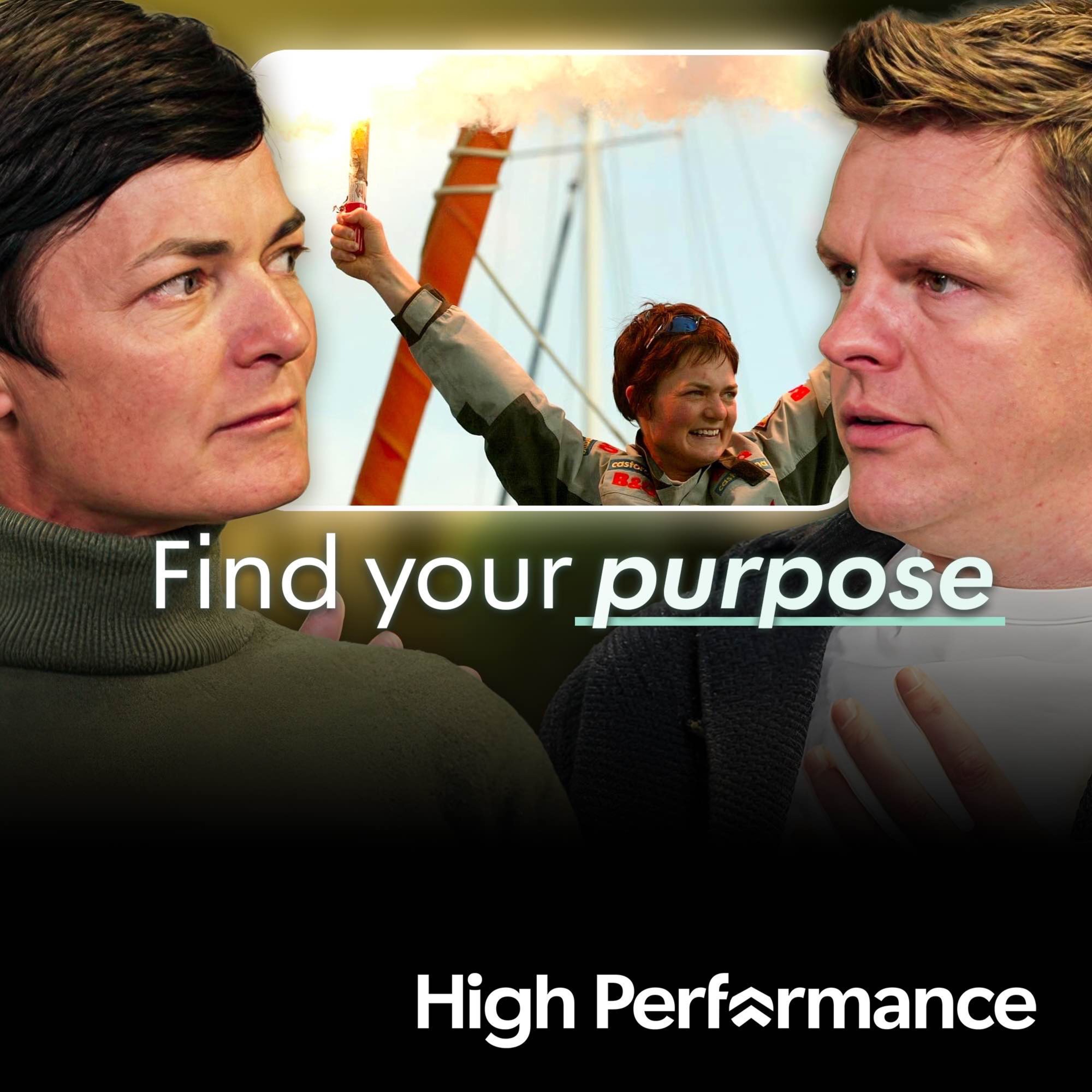
How Dame Ellen MacArthur and the Ellen MacArthur Cancer Trust use sailing trips to rebuild purpose, confidence, and mental wellbeing for young cancer survivors, supported by Postcode Lottery players.
Dame Ellen MacArthur, elite solo sailor who created the Trust after sailing with a French cancer charity (Achac en Son Cap). Frank Fletcher, CEO of the Trust; previously worked with young people in the outdoors and has long supported the organisation. Josh Rands, diagnosed at 19 with synovial sarcoma; underwent chemotherapy, radiotherapy, and extensive leg-salvage surgery; later became a Trust volunteer.
Sailing isn’t the point—freedom, teamwork, and young-person-led conversations are. Charity support is crucial because unrestricted funding enables core operations and measurement. Many young people don’t get an “all clear,” so recovery is about rebuilding life and identity.
Josh’s “no all clear” surveillance reality; young people arriving quiet and leaving unable to shut up; fertility discussions at sea; scar-care tennis-ball tip; Trust’s Warwick-Edinburgh wellbeing scale showing ~72% average wellbeing improvement and sustained effects after 3 months.
Written by AI. May contain mistakes.
Dame Ellen MacArthur, Frank Fletcher, and Josh Rands share their backgrounds and connection to the Ellen MacArthur Cancer Trust.
“and that day will stay with me for the rest of my life because it had such a profound effect on me and as a result of that I created the Ellen MacArthur Cancer Trust.”
Dame Ellen discusses her transformative experience sailing with young cancer survivors.
“I'd never really worked with young people before, not as Frank has, for example.”
Dame Ellen contrasts her experiences of challenge with the bravery of young cancer survivors.
“You know, journalists, what's it feel like?”
Ellen elaborates on teamwork and support in her sailing achievements and their relevance to the Cancer Trust.
“And if it's hard, it's kind of on your head, be it, because you wanted to do it.”
Frank Fletcher shares insights on the challenges of running the Ellen MacArthur Cancer Trust.
“We've created a foundation from high performance because I believe that charity is so vital, but it's so hard.”
Josh recounts his journey from diagnosis to recovery, emphasizing resilience and support from the Trust.
“but Josh is now a volunteer as an adult.”
Josh elaborates on his treatment experiences and the importance of kindness during his recovery.
“I never thought I'd be the person who got cancer.”
Hear about the profound impact of cancer treatment and recovery on young survivors.
“And I'm sitting there thinking, oh, crikey, this is, you know, quite a serious thing.”
Explore the challenges young cancer survivors face when transitioning out of treatment.
“But equally, for me, when it came, it wasn't something I was afraid of.”
Discussion on how cancer survivors seek normalcy and independence post-treatment.
“It almost kind of takes you out of normality.”
Discover how young cancer survivors find joy and connection through shared experiences.
“What do you see happening between the young people when you're observing them quietly on the boat?”
Explore the emotions of loneliness and relationship dynamics faced by young cancer survivors.
“we would speak a lot about loneliness for people who are going through this journey.”
Learn about the importance of data in measuring the impact of support for young cancer survivors.
“Because this is obviously incredible anecdotal evidence of a young person saying, I did it and it was really helpful.”
Understand how essential funding has transformed the Ellen MacArthur Cancer Trust's operations.
“So we have a live dashboard where that data goes up.”
Discover the significance of connecting young cancer survivors with adult mentors who share similar experiences.
“As you say, everything great starts small.”
Reflection on what high performance means in the context of life and helping others.
“and the power of that, the power of bringing people together who've been through the same experience, able to share it.”
Discuss the importance of purpose and kindness in achieving high performance.
“I think my definition of high performance is putting the most you possibly can into life to get the most you possibly can out of it.”

Get the gist, explore an idea or ask about something said.
 Claude
On The High Performance Podcast, what are the key points of this episode?
Searching your listeningAutomatic transcript. May contain errors.
0:00We talk a lot on high performance about adversity, about what it takes to come back from the lowest moments of your life. Well, today's conversation is about a different kind of adversity. Young people who face illness, identity and recovery all at once at the exact moment they should be stepping into life. My guests today are the legendary sailor Dame Ellen MacArthur, Frank Fletcher, CEO of Ellen MacArthur Cancer Trust and Josh Rands, who's been helped by their charity. Between them, they've lived every side of the story, and they know what it means to build something that genuinely serves other people.
0:30And we're here talking about the support that's been possible thanks to players of Postcode Lottery. I think maybe we should just begin with each of you giving us maybe 20 seconds about yourselves and why you find yourselves sitting in the High Performance studio today. My professional life was sailing, and through sailing I met a French charity that took young people sailing and recover free from cancer and leukemia. and that day will stay with me for the rest of my life because it had such a profound effect on me and as a result of that I created the Ellen MacArthur Cancer Trust. Frank? So I've worked with young people in the outdoors for almost all of my working life and then I knew Ellen many, many years ago before Ellen went around the world and then we talked about the Ellen MacArthur Cancer Trust and I got involved and it's been one of the greatest things in my life to be involved in this amazing organisation.
1:23So yeah, I'm incredibly lucky. I wake up every morning and I'm excited to go to work. That's true high performance, right? Hey, Josh. Hiya. So for me, it was about getting diagnosed with synovial sarcoma, which is a rare soft tissue cancer at the age of 19. And yeah, going through different forms of therapy and treatments to try and have a positive outcome. And then it was about meeting these great group at Ellen MacArthur Cancer Trust to then start rebuilding my life and really finding my confidence after nearly a year of quite a tricky time. And mate, that rebuild is so fascinating. We're going to talk about that in detail.
2:01But maybe we should then begin, you've already mentioned it very briefly, the kind of moment where this entire journey started was you sailing with those young people. Take us back to that. It was year 2000, I think, wasn't it? Yeah, so I was actually the first person we ever employed in my sailing projects years ago. This was back in probably 1998. her brother had had leukemia and he had become involved with a French charity called Achac en Son Cap and that took young people in recovery from cancer sailing and because I knew Maureen and I got to meet her brother she said would I go sailing with this charity and I remember going to France it was in Brest actually my first time there was a group of boats all with young people on and I remember going down there and I jumped to the chance and I said yes I would but as I got there I felt really really nervous because my French wasn't brilliant these were young people that, you know, I was in my early 20s.
2:48I'd never really worked with young people before, not as Frank has, for example. So that was a bit different for me. And these are young people who were in recovery from cancer. And I was so nervous. I thought, what am I going to say? How am I going to, you know, how am I going to be with the young people? I'm going to be able to communicate with them. And literally within five minutes of setting foot on that boat, I was having more fun than I'd had in so long. They were amazing. They were such an inspiration. it was just an absolute joy and privilege to spend time with them. And it had such an effect on me that I kept in touch with many of those young people.
3:22And were they young cancer survivors? So they're young people who were finishing or had finished treatment. So predominantly post-treatment, somewhat ongoing, but predominantly post-treatment. And they were just the epitome of bravery for me. And so I kept in touch with many of them when I went around the world the first time in the Vendee Globe. lots of them came down from hospitals in France to the start we had a competition designing a boat like mine but you know the young people all painted the boats they all came down to see that I had a plaque on the boat with a hundred of their names on which I sailed around the world with I communicated with them whilst I was at sea and then when I came back the last thing I did before I went to bed the day of the finish was to go on a coach with probably 50 kids from Strasbourg hospital and they'd come all the way from the hospital with the doctors and nurses to come and see me finish the Vendee Globe and I went on to this coach to see them and I'll never ever forget that it's the last thing I did before going to bed on the day of the finish of the Vendee Globe it was amazing absolutely amazing what was it that you'd seen in these young people that moved you so much um you know when you when you're doing what I did you get asked lots and lots of questions.
4:33You know, journalists, what's it feel like? All the time. And, you know, so many people say, you know, you're so brave. You're so brave. And what I felt was, well, you're not, no, you're not brave when you choose it. If you choose it, that's not bravery. It's perhaps stupidity. It's a crazy thing to do, to go around the world on your own. There's a high chance that you might die. And, you know, it's a dangerous thing to do. And if it's hard, it's kind of on your head, be it, because you wanted to do it. Those young people, they didn't choose it. they didn't choose it at all and to go through something that you don't choose that's harder than you can imagine and come out the other side and smile that's bravery and that really hit me really really profoundly and you you made your name by doing stuff solo right by being on your own by having isolation by being cut off from the rest of the world which is why people would have described you as brave yet you've taken a bunch of young people and you've almost done the opposite with them right you've put them into an enclosed space you've given them something they can't escape from you've got them with a bunch of other young people as well what did it what do you think that experience of sailing might have done for them um well first of all it's not really about sailing and you use three words there and i was using them just maybe you were talking about confined space it's not it's freedom because it's the sea it's all that i mean i see the opposite you see confined space i see oh my look at that world it's all around we can point the boat in any direction that's why you do what you do and i do what i do quite probably but um and also but two things.
5:54One is, although what you saw of what I did was me on my own, the reality is absolutely the opposite. You work with an incredible team of people to design a boat, to build a boat, to prepare a boat. You communicate with them whilst you're at sea. You really are with a team. And to such an extent that when I finished my second round the world and crossed the line, I felt nothing, nothing until I got on the boat because we'd done it together. I hadn't done it on my own. And when they got on the boat, we could celebrate what we'd achieved but me alone nothing really nothing it was i felt deflated actually relief totally it was incredible but then when they got on the boat it was euphoria it you could not have kind of changed things more i wonder why you felt deflated at that moment it's you're so exhausted you've put everything in you've made it and you just sit down and you're just like i can't believe i've you know i can't believe i'm still here i can't believe we've done it it's just this relief this overwhelming relief.
6:50And then we celebrated. And then it was euphoric. It was absolutely euphoric. It was just an amazing feeling. So that team, that's what we get on the Cancer Trust boats. You're with a group of people who get it. For me, having done the Round the World, those team members, they got it. They really knew what had gone into it. They really knew how hard it was. Just the same as those young people on the boat. They get it. Everybody on the boat gets it. And And just being amongst that group of people who really get it is so, so precious. Because no one has to say anything, but if they do, it's understood.
7:21So interesting. And I'm pleased that we've actually stumbled across this conversation about teamwork in a world where you've become famous for doing things solo, right? You're telling us that you haven't really. And teamwork is where all the magic lies right in this life. We've created a foundation from high performance because I believe that charity is so vital, but it's so hard. And you need so many people around you all the time. and that's where you come into this conversation, Frank, as the CEO of the Ellen MacArthur Cancer Trust. I'm really interested in getting the truth from you about what it's actually like running a charity because Ellen can have this great idea.
7:55She can be moved by these young people. You can have this grand vision for how you want to help change the world. But then there's the daily grind of actually the demands of being in the charitable sector. What would you want us to understand about that? So it is really hard, you know, and it's particularly hard. you know at the moment and it has been for you know if you look back at all the things that have happened in the world in the last five ten years you know every time you feel like the world's getting a little bit calmer something else happens um but i think just coming back to what i said at the beginning in the introduction i think it is slightly different because it matters yeah so i think if you um you know there's this there's this vision that running a charity is really easy and we're all really gentle and we go in every morning and we have meditation and then we're all very nice to each other and you know we'll leave at three o 'clock and go home and actually I think charities are leaner and um you know are more focused than most businesses because we have to be um so for us our big challenge is funding um because actually that's what makes the difference if we have more money we can work with more young people so 12 young people today will hear the news that they have cancer and there'll be 12 more tomorrow and 12 more the day after that and 12 more the day after that and you know the the challenge for us the first challenge for us is to raise the funds to to um to be able to support those young people and then there's lots of other challenges as well and that's really helped by organizations like the postcode lottery their funding is unrestricted that makes a real difference when people come to you and say we trust you we know that you know what you're doing so we're going to support you but we're not going to support you and tell the you that you have to spend it on x or y actually we're going to leave you as the experts you know it's there's a very famous analogy about you know people want to buy you know someone comes along to a charity and says i want to do x and i always use the tablecloth analogy which is someone comes along and says i want to buy you a tablecloth and you're like yeah but i haven't got a table yeah but a tablecloth looks really nice so i'm and they give you a tablecloth and they give you a tablecloth and they say, there's that funding, but it's restricted and you have to buy a tablecloth with it.
10:06And actually what you need is you don't need the tablecloth, you need the table underneath. So, you know, running charities is hard, but I think, you know, charities make a difference and when you make a difference, that gives you that motivation to work really hard at all of the little bits that build up and make it. And again, you know, Ellen talked about team. Actually, it's all about team. You know, we have an amazing team at the Edmund Carf Cunch Trust, but we also have an amazing team of volunteers. Volunteers like Josh, you know, Josh was supported by us as a young person, but Josh is now a volunteer as an adult.
10:40And we have over 250 of those volunteers. We have a, you know, big team of about 24, 25 people. And it becomes a team effort and that makes a really big difference. Amazing. Well, I wanted to have this conversation because I believe, as I'm sure all three of you around this table do, that charity is what can make a genuine difference to people's lives, right? It's there when other people aren't and other services aren't. And you know from personal experience, Josh, how that feels. Would you tell us your story? Yeah, so my story started that, you know, I'd left school and got a job and it was kind of what would consider the traditional path, what you thought, you know, growing up and being an adult was and, you know, what the everyday success looks like from the outside.
11:24and then started to have some symptoms of issues in my leg and then went to a specialist and then got referred to the specialist specialist. And then at that point, you start to think, crikey, this is probably not going to be, even if the best outcome is probably not going to be a good outcome. So yeah, after significant tests and all of this. Were you doing poorly for a while? No, I was probably the fittest and most healthiest I'd been, but I had a growth within my hip and pelvis in my leg. So, and it started to show it and being kind of, yeah, 18, 19, I'd kind of thought there's more important things like, you know, next promotion at work and that kind of life goals were more important.
12:02However, that kind of traditional view on what was important came crashing down. and then diagnosed with synovial sarcoma, which is very rare, soft tissue cancer, and it was all interweaving into my hip and into my bone in my leg, which at the time I thought this is quite unusual. I never thought I'd be the person who got cancer. I never thought I'd be in that fight, and fight is a really bad way to put it, but there's no good way to put it. that fight for your own life but everyone else on the outside is suffering more than you in some ways because they're seeing you go through it and I think through my chemotherapy and that which was quite quite brusel at times you know I set myself 10 rules that you know cancer won't define me things like I shaved my own head because I wasn't going to have the chemo make me lose my hair I also had thing about always being kind to the staff you know they don't want to be poking you and prodding you more than you need to be.
13:02So, you know, always be kind, even really small things like bringing in a box of donuts for the nurses because actually they're watching you go through it. They're seeing you, you know, suffer as well. They don't want you suffering and they try and make it as easy as possible. So about being kind and also some other ones around just not letting, you know, no special diets. I found everyone and, you know, all aunties, uncles and friends of the family that you haven't heard from that suddenly appeared going, oh, you need to try, I don't know, avocados every morning. they'll make you feel better actually the challenge was just to eat just to have enough to to get through the day um and then yeah through chemotherapy and then radiotherapy every day at the hospital and then again you learn to you get focused so much on the day just get through today you know find the little joy in today like it might it might be a really bad day you might feel really sick and actually at points I couldn't be sick it was just dry heaving for hours which was um yeah quite a testing on the resilience and then you know radiotherapy and then I had very extensive surgery to salvage my leg so at the hospital um which was amazing surgeon all that very fortunate and it was all through the NHS very fortunate to have that support there and the surgeon gets the document and says the risk and he says you know if it goes well you'll still have a leg if it doesn't go well your your leg's coming off and I was sitting there in the ward waiting and it was an adult ward and I was sitting there as, you know, 19-year-old and pretty much everyone on the ward of 12, everyone had had surgery and they were missing arms, missing legs.
14:34And I'm sitting there thinking, oh, crikey, this is, you know, quite a serious thing. And then through then surgery, you know, I never expected, you know, you think as a three, two, three-year-old you learn to walk, but I was having to relearn to walk at the age of 18, 19, or 19, 20. And it's not something I'd ever put in my head. And, you know, waking up from surgery, there was about 20 doctors around him poking me, prodding me, telling me that they'd removed a six to seven kilo tumor that had been interweaving in my nerves within my arteries and veins. So, yeah, that was kind of then the rehabilitation post-surgery.
15:11It was all very much like, I know I have to get through today. If I get through today, there's tomorrow. And it was always about looking for tomorrow. However, then once you finish this treatment, you then just have this day and you go, well, what's tomorrow? There's no agenda. I'm not at hospital. I'm not anywhere else. And suddenly what had been your life for six months, a year, just stops. And then reality starts to then set in. This is the element that I really want to talk about with you. I mean, for a start, we've had over 400 conversations, right, on high performance. And I'm often asked by people, what's the one thing that links together all of the people that have been on your show?
15:45And I say they are optimists. They are the light in the room. They believe that regardless of how hard a day is or how hard a week is or how bad the news is they've received, that they'll be okay, that they'll get through it. But they do it by spreading it to other people. They walk in this room, they walk into our production office and you know when they're a guest on the show who've done incredible things because they just have that energy about them and you have exactly the same energy. And I love hearing when you were in your darkest moment that you got your joy or your optimism from doing things for other people, which I think is such a great lesson for people listening to this, if you can be of service to others, it can remove so much of your own anxiety.
16:22But then for someone that hasn't been on the journey you have, I would think to myself, the moment that someone says you're all clear, that's just pure joy and that joy never leaves you. I think it's really important that we talk about the fact that that's not actually always the reality. So let's go a bit deeper on this moment then. When you are given the all clear, it doesn't maybe feel like you thought. Yeah, especially I think a lot of other people that I've spoken to don't actually get an all clear. They just go, you know, the surgery was good. The margins were good. You know, we'll see you in three months.
16:53There was never an all clear. There was no, you know, you talked about that kind of feeling of deflated and, you know, there was no celebration for me. It was like, oh, okay, you know, there's no big bell to ring for me. It was just we'll see you every three months for the next three years and then we'll see you for the next five years after that every six months. And so there's never this, because it was so rare and so complicated, and the probability of it coming back was quite significantly high, probably higher than some other tumors, that, you know, there was never an all clear for me. And it will always be there as something that may come back.
17:31And, you know, through the surveillance and that, hopefully, you know, it'll be picked up early if it did. So there was no euphoric party. And I hope other people do get that euphoric moment. But for me, it wasn't reality. Reality was you're still in recovery. You then need to start building back your life, building back your confidence, finding who you are because suddenly what you thought doesn't exist anymore, the values you had and what you thought success was, suddenly just comparing to nothing because it was about fighting the fight that no one ever wants to fight and you don't choose to be it.
18:07But equally, for me, when it came, it wasn't something I was afraid of. it was about just looking forward and taking the days and taking the steps and trying to not show the suffering so then no one else had to suffer as much and it's about just always being positive and looking forward so there was no all clear and still today you know I see the surgeon regularly for checkups and it's all positive but I also understand that when I first started my first chemotherapy there's a amazing young lady who started it on the same day as me and then unfortunately the prognosis for her wasn't as positive as mine was and that's also reality not everyone gets an all clear and that's something that I think you know it's easy to kind of feel there and say oh I got through it but actually you also need to remember that you know I don't believe in luck but my dice rolled that day and through my treatment it came out positive for me and that's not always the case.
19:04I think what Josh talks about about at the end of treatment is something that we've heard so much over the last 23 years, which is actually for a lot of young people, the whole focus of their life during treatment is to get through treatment. So if you're a boy and leukemia, that treatment might last for three years, or it might be shorter if you've got a solid or soft tumour. But actually for that moment, all you focus on is, I have to get through treatment, I have to finish, I want to get through treatment. and actually the reason the Ellen MacArthur Cancer Trust there, one of the reasons we're there, is so many young people get to the end of that and go, and, you know, Josh and I have talked many times about this and, you know, we've seen it so many times, people get to the end and go, what do I do now?
19:48Now what? Yeah, exactly, Ellen, now what? As Josh was talking, I was thinking, when you're going through treatment, you have so much structure around you. Yeah. You know, structure physical in support from those close to you and the nurses and the doctors, but also structure from a diary perspective. You know, you're going to be here then, you're going to be here then, you're going to be here then. And not just you, but your whole family working around that. And once your treatment ends, that structure doesn't completely fall away, but it starts to fall away because suddenly it's a big gap now until the next thing, and you've been so kind of driven as completely the wrong word, but you've been...
20:25Focused. Yeah, focused, and everyone around you, and family and friends, how's Josh, you know, how's Josh, how's Josh, and actually not kind of so much, you know, how are you or what have you done today or what did you do last weekend? It's almost the normal conversations. I've heard this so many times. They're just not there because everybody wants to focus on how Josh is doing. But what Josh wants is a bit of normality. He wants to talk about the football or whatever he's interested in. You know, it's that. It almost kind of takes you out of normality. And is that what the trust did for you when you first got the opportunity to be with them was a bit of normality, a chance to have different conversations in a different setting with maybe people that you could relate to?
21:03Yeah, so I was supported by Young Lives vs. Cancer, which is a great charity as well, and doing very different but similarly pathway aligned to Ellen MacArthur Cancer Trust. And my social worker, Laura, was coming to the end and we did the mental health kind of well-being and we looked into it and she was like, you know, you've had all your independence taken from you because suddenly, you know, hospitals were picking your diary. You were then, you know, my Christmas over, one of my Christmases during treatment was that I had Christmas and Boxing Day at home. Then on the 27th of December, went into hospital to have some chemotherapy as an inpatient.
21:40And then I managed to come out just the day before my birthday in early January. And so then suddenly your diary is just dictated to by hospital and you've lost all this independence and confidence. And then what was nice was Laura said, she said that, you know, why don't you try this trip? And I was very much against doing a cancer club activity. I'd turn down other things. It just, I wasn't willing to be defined by cancer. And Laura just said, what have you got to lose? You've been through enough. You know, your worst day on the Ellen MacArthur trip can't be as bad as the other days I've seen you have here.
22:15So why don't you just do it and see what happens? And from the first meeting other young people, it was actually a sense of belonging. And you just check your cancer at the door because it's a known. Everyone's been there. Everyone understands it. and everyone's journey is so different. But everyone understands that, you know, you've had a rough ride, but actually you're still a human under there. And actually, you know, your parents asking you how you're feeling every hour in case you're going to be sick is gone. It's suddenly this independence back of actually I can help myself, I can meet new people and I have a community that understands me and that sense of belonging.
22:52I think I've never found it anywhere else. Success isn't just about one big headline moment, right? It's about the thousands of small victories happening every single day. And that's what Postcode Lottery is all about. Just by playing, you're making a real impact across communities, whether it's a breakfast club helping kids start their day with the fuel they need to learn, a youth program building confidence in young people, or mental health services supporting someone when they need it most. These are the moments that matter. These are the moments that make a real difference to real people. When you play the Postcode Lottery, you're not just supporting a lottery.
23:26You're helping fund these life-changing programs. You're part of a bigger movement of shared victories, of communities winning together. If you want to see how this funding is making a difference in communities, click the link in the description to learn more about powering hope together. Postcode Lottery manages lotteries for 20 charities. A minimum of 30 % of each ticket price goes to charity. 18 plus conditions apply, not available in Northern Ireland. What do you see happening between the young people when you're observing them quietly on the boat? I think the most incredible thing is seeing a young person arrive and leave.
24:01So you see a group of, not always, but often, introvert, quiet, unsure, not so much confidence arrive, barely speaking or quietly speaking. Four days later when they leave, can't shut them up. It is unbelievable. They are so full of joy and life and laughter. And so often over the years, and we've been going well over 20 years now, we'll get a letter from a parent saying, thank you for giving us our son or daughter back. Wow. You know, in less than a week. And because they found themselves again. And as Josh said, you see these young people step away. They step out of it. They cook on the boat.
24:50They clean. We're living on a boat together. The young people do the cooking. We do sailing. You can get involved or not. It's not about sailing. but the environment that exists on that boat with a group of young people in quite an intimate space really works. And some trips talk about the cancer, some trips don't. The outcome is irrelevant. And do the young people decide what gets discussed? Totally. There's not someone on the boat, now we're going to have our work. And that's really important. There is no sitting around with beanbags talking about cancer. And I think what Ellen says and what you've picked up on, and Josh, I know you'll have a view on this, it's really important that young people decide.
25:23so you know I've been on trips where you know young people have had really important conversations and I remember many years ago I was I had my back to a group of young people I was doing the washing up and they were having a conversation about fertility which is a big issue for young people after cancer treatment and you know they didn't need an adult in that conversation in fact the last thing they needed was an adult in that conversation and definitely a well at the time I'm a 40-year-old man, now 50-year-old man involved. But actually, equally, I wanted to make sure they were all okay. So I had my back to them and I spent an hour washing up one mug because I wanted to make sure they were okay.
25:59But I also wanted to leave them to have that conversation because they were having the conversation. They were all in their early 20s. You know, they knew all the facts, but they needed to have a conversation with other people who really got it. But then equally, you'll have young people who come on a trip and they don't want to talk about their cancer. They want to talk about everything else. And that's led entirely by the young people. And that's incredibly important that that is young person led, that actually our team don't make that happen or not make that happen. Actually, we just support young people to create this environment where they can decide.
26:32I don't know if you see that, Josh, when you volunteer now or whether you felt that at the time. Yeah, massively. And for me, it was about these conversations with other people. They understand you and the trust is there as kind of a safety net that if it gets too much, there's always other, you know, guidance and support that they can offer you and push you in the right directions. But, you know, it's when you're sitting around having a cup of tea and you're sitting there sailing or something and someone starts to go, it might be something really benign. They'll start talking about a pain or something they're finding more difficult.
27:04And then suddenly it would open up into a conversation about different people's experiences with cancer, as well as also coping mechanisms and other things that they've found that might have worked. So for me, there was a conversation I had with someone who also had a sarcoma and they'd had surgery and they would find they had issues with their scar and it was about rolling a tennis ball on it, which can help soften up the scar. I'm no medical expert either, so it worked for me. And, you know, things like that where you're talking about cancer, but, you know, it's about other parts of you as well.
27:35And, you know, I think it also most happens around UNO and things like that. UNO is a great opportunity to break down anything. I've had quite a few rows over UNO as well over the years, I'll be honest. The rules. You can't do that. Yes, you can. What? What UNO rules are you playing by? I know also, because I've worked for a long time as a vice president of Young Lives vs. Cancer, or Click Sergeant, as it was before, we would speak a lot about loneliness for people who are going through this journey. Over 80 % of young people experience it. Did you? And was this trip a moment that really brought you back into the fold?
28:11Yeah, I think loneliness is something that I definitely suffer from, and maybe not at the time because you're so engrossed in it. You know, friends, either I cut them off or just went vacant. And actually, you soon learn that actually most of the people in your life are, sounds awful, but passengers on a separate journey. And then the few core people are always going to be there. And very fortunate that, you know, I had a really great best mate who flew in, who lived overseas flew in just to turn up to take me away for a couple of days and kind of keep some kind of you know young lad culture and kind of it didn't let that kind of didn't give me a day's rest with the banter and things like that so that was really important as well but also it struggled with relationships suddenly you know my relationship at the time just fell apart because I was so focused on getting better and that and it was like actually I have the energy to do one of these things fully but I can't do both of them so loneliness and also you know isolating yourself because you don't upset other people and bring other people in and whereas on the trips you suddenly find actually you've been through this you understand it you might have lost relationships or had tensions and things like that and it's about for me what the trust does what that first trip did was to take you away from the cancer as well as you know people saying about mental health mental well-being it also then gave me the courage to then someone else talked about their struggles gave me the confidence to then go back and say actually I think my mental health's been affected by it and then also you know look at it and then say yeah okay I'm willing to now ask for help whereas I think before I never would have asked for help I would have been like okay that's the cancer door shut close the garage door lock it up and life goes on and then actually everything had changed, but I wasn't willing to admit it probably as much until I came on the trip.
30:06And so other people had been through it and had taken themselves further than I was willing to take myself at the time. Can we talk about mental well-being then? Because this is obviously incredible anecdotal evidence of a young person saying, I did it and it was really helpful. But I know as a charity, it's so important for you to evidence the impact that you have on young people, to document that evidence. Because again, people that are going to fund your work, They want to know that this genuinely works. So what data do you have that this makes a genuine difference to the lives of young people?
30:36Yeah, so it's been a really important part of what we've done over the last five years. So I think if you go back before that five years, we had what I call vanity metrics. So we had a big tagline that said rebuilding young people's confidence. So we'd bring young people down for four days. We'd put them on a boat that said rebuilding young people's confidence on it. we had it written on the wall where they did the welcome, it was written on all of our clothing, and then at the end of the week we'd ask them, have we rebuilt your confidence? And surprise, surprise, 98 % of them said, yes, we've rebuilt your confidence.
31:09And it was a completely, completely, you know, it had no basis. No scientific. No scientific basis. And it didn't teach us anything, it didn't teach us anything. But you felt it. Yeah, you did feel it. You knew it. You knew it, but you couldn't prove it. If you could touch it, you knew it. Yeah, absolutely. Because it sounds like, you know, because you could, you know, the first trip you could feel it immediately. Yeah, so you could feel it, but you couldn't prove it. No, you're absolutely right, Ellen. It's important. It is really important. And if you brought Thunder down and you showed them it, they'd get it.
31:39But you couldn't prove it. So about five years ago, we started to think about, actually, one, we need to prove this, but also we need to improve it. So we do slightly different types of trips, and we do trips up on the west coast of Scotland in logs, and we do trips in cows and then we do some other trips all around the country. And we didn't know whether our trip that we were running here in this way was any better than what we were doing here and what we could learn from this. So we've been for the last five years using something called the Warwick Edinburgh Wellbeing Scale, which is an academically rigorous tool and it's used by lots of people all around the country.
32:15And you have to use it under licence and you have to do things in a very specific way. but that actually measures you know it was created by warwick and edinburgh university that actually measures the improvement that you are making or not making in young people's well-being and so we see you know an average improvement 72 percent of young people improve their well-being most of them by about 12 percent but what's really interesting for us is now we've got five years data we can now look at it and go what we're doing here we're seeing a difference here from here and it allows you to be curious and and you're right and you can feel it but as we've grown it's not possible for us to be everywhere at once so what we're now able to do is to look at this data and go why are we seeing that why are we seeing that this is having more of an effect on this bit of well-being because we've got enough data now and what could we change up here or what could we do differently um so yeah so we use this warwick um erinburgh well-being scale and we can really see the difference and we can use that one to improve what we're doing and secondly to prove what we're doing and actually we see a sustained impact so we actually go back and we ask people the same we use the same tool three months later and we are still seeing a positive effect three months later which for a you know an intervention that lasts four or five days is actually very unusual so valuable and the other thing we did with that day is we we're completely transparent.
33:47So we have a live dashboard where that data goes up. So ellenmcalfcancerstrust.org forward slash impact and anyone can go and see the data and we don't touch the data. So it literally, it goes straight there and anyone can go and dig in and you can filter it and you can see the difference. And I think that being transparent about the difference you're making and not just having those vanity metrics that make you feel good but don't prove anything and don't show anything is really important. But yeah, you could feed it, Ellen. You're absolutely right. It's not that we've changed what we're doing.
34:19We've just changed how we're measuring it and how we're making sure that we're still making that impact year on year. And, you know, what if we twist this a little bit? What if we do this slightly differently? Can we improve it? And we can try that here and then compare it to what we're doing here. And that really allows you to keep improving what you're doing. Well, that is another key tenant to high performance, right? The idea of constantly exploring, wanting to be proved wrong, realizing that what looked great a week or a day or a month ago might not look great in a day a week or a month and celebrating the fact that you're evolving all the time and I think it is really important when we talk about charities in this way that it's not a case of them helping you to do things slightly better or slightly differently or allowing more people to come on trips it's like this stuff doesn't happen without without funding without the money um I love that you've stumbled across something that is totally different.
35:13And I sort of felt like all my years in charity, I'd seen everything you can offer young people. As soon as I read a few weeks ago about your trust, I was like, now this is doing something totally different. So we should just call out the Postcode Lottery and really be clear about what they've actually allowed you to do. I was just going to say, it's been a really long-term relationship with the Postcode Lottery. I mean, when we started off working together, it was sailing clothing and a van. You know, now it's truly game-changing. Everything great starts small, right? But we've grown with them.
35:44They were only just set up here in the UK, and we've got to know them very well over the years. But that funding is utterly game-changing. As Frank said, core funding is so hard to get. Everyone will support, well, not everyone, but it's easier to get funding for a shiny project. But just to run the organisation, which is behind all of the measurements, all of the metrics, getting the young people on the water, what we do is harder to fund. and that funding underpins everything we do. It's our insurance policy. It enables us to plan for next year in a way that without that, we just couldn't. And we've done some really exciting projects because of it.
36:20So we have a base now on the West Coast of Largs and we would never have opened that base on the West Coast of Largs without Postcode Lottery. That was the big, you know, they'd done some really great support of us in some quite small ways. As you say, everything great starts small. And then actually we were, you know, we were taking young people from, you know Glasgow, Edinburgh, Inverness and we were putting them on an aeroplane flying them across some of the best sailing in the country on the west coast of Scotland bringing them down to Southampton to then put them on a bus to then put them on a ferry to then put them on another bus to get them to our base in Cowes on the Isle of Wight it was madness but we would never have opened our base in Largs if it hadn't been for postcode lottery and the other thing that we've done with them you know Josh talked about the fact that when he went in for surgery you know he didn't know whether he would come out with his legs still in place and be pleased Josh, you had such a great outcome.
37:13But we have lots of young people who have external prosthetics because actually very sadly the first way to treat a sarcoma is surgery and actually the most effective way sadly is surgery for a sarcoma, particularly in young people. So we have lots of young people who have external prosthetics and actually through the postcode lottery, we now have two yachts that we have adjusted quite specifically for young people with those needs of being able, how do they step on and off a boat with a prosthetic leg? How do they get round the boat with a prosthetic arm? On their own. On their own. On their own.
37:51Absolutely, Ellen, 100%. Which is crucial. Absolutely. And there's no, you know, in the past, it was like people would have to help them. And, you know, that's not what they want. That's not what we're about. That's not what we do. It's so important, Ellen. It's about what you can do, not what you can't. So maximizing what you can do. Absolutely maximizing what you can do. And how are you doing today? Yeah, I think it's a really tricky question. You know, I think I'm in a good place. I think that, you know, coming back as a volunteer gives new purpose to what I do in life as well and gives new energy.
38:25I think the lessons learned through both the Trust as well as through my life's journey kind of leads me in a strong place. And I think, you know, looking forward, it's about, you know, sailing with the Trust, the Ellen MacArthur Trust in a few weeks in the Isle of Wight, which is going to be great. Again, coming back as a volunteer. And as Ellen said, you take these young people on the day one, the bus is quiet. Coming back on the Thursday or Friday, you're there as a volunteer, trying to have a half hour sleep between service stop you know they've not stopped talking and i think you know if you'd be willing why don't you come down for a day as well come down and see the magic we talk about it but i think as well from from donors perspectives that you know it's easy to look at the brief and go crikey they do an amazing thing until you sit there on a boat and you could just sit there at the back not say anything all day and just sit there having cups of tea at the back of the boat and then you'll see the magic for yourself I think if you've got time in the summer sounds amazing I think you should do it and you know I'm sure it's easy to make happen and yeah see the magic for yourself just don't let me fall in guys you won't fall in no you won't fall in your question's early you'll be all cooked up on a boat exactly I'll stay inside yeah did you have something you want to say I just think when Josh talks about coming as a volunteer and he's coming back to sail with a cancer trust I think there's something really, really important that I've witnessed in that.
39:51When we started, young people would come on the boat and they would be with young people and adult volunteers, doctors and nurses and sailors, like Frank and I skippering the boats. What we now have is volunteers who are adults who had cancer as a child. Now, kids with cancer or young people with cancer, they meet other young people with cancer, but they don't meet adults that had cancer as a child. And just being able to look forward and go, there's Josh. He was where I was. Look at Josh now. You know, that just, with no words, it says so much. And that's something only as you mature as an organisation you're able to do and see the benefits of.
40:30That's so cool. I can see your passion as well as you talk about it and what it means to you. And about four years ago, for the first time, we had a boat and I watched it go. And I have to be honest, it was quite emotional. You know, the skipper was an adult who had cancer as a young person. the medic on board was an adult who'd had cancer as a young person and the crew leader was an adult who'd had cancer as a young person and there were five young people on that boat and honestly I mean I feel amazed we'll even talk about now it's like that is what it's about it was eight people going off and they weren't confined because it doesn't feel confined but they were going off and they were together and they'd all been through the same thing and they all understood that and the power of that, the power of bringing people together who've been through the same experience, able to share it.
41:16You know, we've seen it. It makes such a difference. The work you're doing, all three of you and everyone else involved in the trust is incredible. To bring things to a close with everything that you've learned, whether it's in your period as an elite sailor, making headlines around the world or the dark times or the bright times or in your period, helping to grow this trust. From all the things that you've learned over your years on this incredible planet, what would you say is high performance to you? So I thought about this because you know the questions coming, don't you? I always listen to people's answers to this.
41:52I'm a coming tweet. I don't think it's about... I think it's about enabling other people. So for me, high performance is when the young people I interact with at the Ellen MacArthur Cancer Trust, enabling them. It's about the team that I work with, and I include in that the like 250 volunteers. It's about enabling them. You know, before we started, we were chatting about being a dad. It's about enabling my kids. I mean, they're both adults now, but enabling them. So for me, high performance is about enabling other people to get to where they wouldn't have got without your help. And that would be my definition of high performance.
42:30I love it. Ellen? Mine's simple. I think my definition of high performance is putting the most you possibly can into life to get the most you possibly can out of it. Amazing. I think for me, it's about having the purpose to drive on, even in adversity and through and with resilience, as well as being ruthlessly kind. Oh, what a way to end. Listen, thank you so much for your time, for sharing so much with us. I'm so proud of the work that the Postcode Lottery is enabling you to do. and the lives that you're changing. And thank you very much. Thanks for giving us the time.
What happens when the medical system tells you you’re clear, but the hardest part of your recovery is actually just beginning? In this special roundtable episode, brought to you in partnership with Postcode Lottery, we explore the unseen side of living through and beyond cancer.
Joining Jake in the studio are legendary solo sailor Dame Ellen MacArthur, Frank Fletcher (CEO of the Ellen MacArthur Cancer Trust), and Josh Rands, a young survivor who rebuilt his life after a rare cancer diagnosis at just 19. Together, they share a raw, open conversation about why true bravery isn't always something you choose, the reality of life when treatment structures suddenly fall away, and how reclaiming independence on the open sea can give young people their futures back.
It’s a powerful look at resilience, the daily grind of running a purpose-driven charity, and why finding a genuine sense of belonging is often the ultimate medicine.
Postcode Lottery 👉 Discover how Postcode Lottery players are Powering Hope Together. Click here to find out more: https://highpfrmc.com/hpp-postcode-au
Postcode Lottery manages lotteries for 20 charities, a minimum of 30% of each ticket price goes to charity. 18 plus, conditions apply, not available in Northern Ireland
Hosted on Acast. See acast.com/privacy for more information.


