
 Ask ChatGPT


 The High Performance Podcast
26 Jan 2026 · 1h 1m · 27 chapters
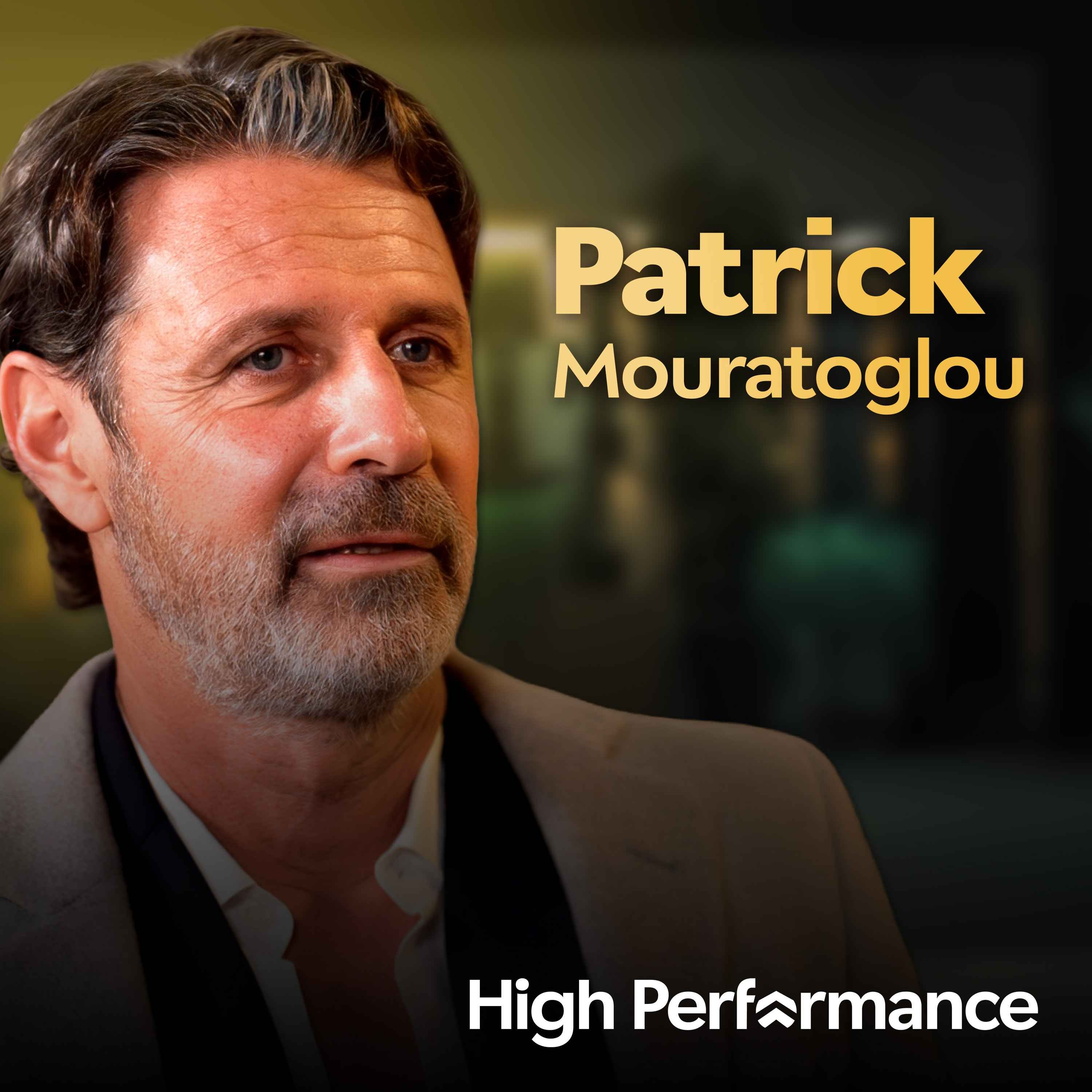
How I Coached Serena Williams to 10 Grand Slams & Built Champion Mindset | Patrick Mouratoglou
In this episode, Patrick Mouratoglou, a prominent tennis coach, shares insights into his coaching philosophy and experiences, particularly his long partnership with tennis champion Serena Williams. He emphasizes that greatness stems not only from talent but from mentality, discipline, and professionalism.
Written by AI. May contain mistakes.
Patrick discusses the importance of mindset in achieving dreams.
“With Serena, I told her things that nobody on that planet would have told her.”
Exploring the difference between great players' mindsets and their skills.
“Tap subscribe right now and keep growing with High Performance.”
Patrick shares an inspiring story about Serena's resilience during a tournament.
“So from the hotel room, not from, from the hotel bed to the center court of Rangaros.”
Discussing how experiences shape a player's confidence and mindset.
“If that's what you can do, if your mindset is right, how can we all build a mindset like that?”
How past experiences shape confidence and the ability to perform under pressure.
“The champions, they have experienced many times being in trouble, being down a set and a break, and finally winning the match.”
Patrick describes his coaching relationship with Serena and the importance of trust.
“Tell us about your relationship with Serena then because you had a long successful...”
Learn about the crucial role mindset plays in coaching and athlete performance.
“now if you ask me what's the most important i mean of course it's the head it's the mindset by far, miles away, anything else, for sure.”
Discover how Patrick established trust with Serena Williams from their first meeting.
“And even in that meeting, I already showed who I was to her.”
Explore how Patrick set rules to cultivate respect and communication with Serena.
“There is no reason to lose those matches.”
Understand the importance of tailoring coaching styles based on individual athlete needs.
Learn how clashes between coach and athlete can lead to growth and understanding.
“It was easy for her to be, because she never had a compliment in her life, only criticism.”
Hear about the difficult decision to part ways with Serena Williams and the reasoning behind it.
“obviously you also walked away from working with Serena Williams which is a huge decision right how did you come to the decision that it was time for you two to part ways and for you to go and take on new challenges?”
Patrick shares the critical moment when he chose to coach Serena after her long absence from the game.
“And I really felt I was back to life after eight months without...”
An exploration of Patrick's realization of his misjudgment regarding Serena's situation and what she truly needed from him.
Patrick discusses the importance of zero judgment and instilling a strong work ethic in children to help them flourish.
“And when you listen to parents, oh, he's not good at that.”
Insight into how protecting children from hardship can hinder their development and the importance of allowing them to face challenges.
“If they're confident, first of all, they will succeed.”
Patrick discusses how his own struggles shaped him into a better coach and a more perceptive individual.
“And I was looking at every detail of each of them, looking at their face expressions, their clothing, their body language.”
Exploration of techniques to instill passion and self-belief in athletes, especially those who initially lack enthusiasm.
“Because life, I think life is a lot about understanding people.”
Learn how passion influences coaching and helps players believe in themselves.
“But the second reason is the fans, the original fans of the 70s and the 80s are still fans today because, you know, it's for life.”
Discover Patrick's personal journey from shyness to confidence in coaching.
“What I would do, I would embark with you on the journey.”
Explore the pivotal moments and decisions that shaped Patrick's self-confidence.
“One, when I was 16, I was really under control, which is normal with my parents.”
Understand the importance of therapy and determination in overcoming shyness.
“This gave me a really boost of confidence.”
Uncover the belief in personal potential and the role of confidence in achievement.
“because of my shyness I spent one year going every week to see this guy.”
Examine how tennis evolves and the current generation's impact on the sport.
“I mean, if I had the power to give something to someone that I love, it would be confidence.”
Learn why tennis is considered one of the most complete and demanding sports.
“Well, I don't like to compare because I feel it's degrading for the previous generation.”
Patrick shares his core values and insights on life and coaching.
“thousands of things to say so such a difficult and complex sport.”
Discussion on the importance of trust, respect, and communication in relationships.
“Go on, like what bits resonated out of that?”

Get the gist, explore an idea or ask about something said.
 Claude
On The High Performance Podcast, what are the key points of this episode?
Searching your listeningAutomatic transcript. May contain errors.
0:01With Serena, I told her things that nobody on that planet would have told her. I said, you know what I think? I think you're an underachiever. There is what people think and there is what people say. I always define my job as I don't listen to what people say. I hear what they think. Protecting your children is the worst thing you can do. Never kill the dreams of your kids. Never. That's their dreams. Respect them. Let them do. You're listening to High Performance. Thanks to everyone who's already subscribed. If you've not, right now is the time because you'll get new episodes the moment they drop and your support helps us bring more world-class guests onto the show.
0:41Tap subscribe right now and keep growing with High Performance.
0:49Patrick, welcome to High Performance. Thank you. I'm very happy to be here. We're happy to have you here. We would love to go straight in to how you managed to do what you did with Serena Williams. You took her to 10 Grand Slam titles. we want to know what separates the great tennis players from the greatest tennis players well only one thing and people make the mistake to think it's about talent it's about weapons some players have bigger weapons than others and it's has nothing to do with that it's only the mindset and i think the best example of this it's novak djokovic because he's the greatest of times.
1:30I mean, there is no discussion. The only discussion is because people are fans of other guys, but he is. I mean, in terms of achievement, he did more than any other player in the history on every level. And if you look at his game and you look at Roger Federer's game, you look at Rafael Nadal's game, he doesn't have half of what they have. Roger is a genius. He has, I mean, hits the ball and the ball flies so fast he has genius volley he has so many things rafa is a physical monster uh his forehand is like bouncing like crazy so difficult to control if you think of novak i mean he does everything well but he doesn't have anything outstanding and he's the greatest of all times because he is the most professional by far attention to details unbelievable and he has this extra thing that makes him really different in terms of he wants to dominate, he wants to be the best.
2:38He came to tennis at a time when Roger and Rafa were winning everything and all the players were thinking it's impossible to win a Grand Slam. And he came in and he said, I'm going to beat those guys and actually he had bad press at the start because everybody said, who's this guy? Who does he think he is? is cocky and actually a bit later he answered that because he's been asked he said no i'm not cocky but i have an incredible confidence in myself which is one of the qualities mindset wise incredible ambition as i said attention to every single detail you know now that you have a lot of technology so you have new things coming out whenever anything is coming out is the first want to buy it test it can i use it is it going to make me even 0.1 percent better if yes he's going to use it so yeah the the mindset the i would say the confidence in your own abilities is one of the things that differentiates them from any other player and if you look at the evolution of the guys in terms of ranking the guys who are going to be at the top of the game they go straight to the top which means that they don't see any player better than them because those mental boundaries that you have they're going to stop you they're going to not slow you down you're going to lose matches not because you can't win them but because you see the opponent as maybe a bit better or maybe you might think at some point in the match you know soon I will beat potentially this guy but for the moment it's not for me I mean the champions never think like this and I give you one example that I I lived was with Serena 2015 Rangaros since the first day of the tournament she has 40 degrees fever not 39 40 she's in the bed and she just cannot get out of the bed impossible so we don't practice we can practice before the tournament she's dead she has to play a match so we go to the stadium I don't know how she gets out of the bed but she goes to the stadium cannot warm up zero go straight to the center court.
4:49So from the hotel room, not from, from the hotel bed to the center court of Rangaros. She plays, she loses the first set because she cannot play. And then there is this rage inside her that tells her, you're not going to lose that match. Impossible. And she finds a way to win it. Spends one hour crying in the locker room because she's completely exhausted. Goes back to the bed. Day after, no practice. She can't. Day after, Match again, 40 degrees fever, straight from the bed to the court. She did the whole tournament and she won it. Is it possible? No, but she did it. If that's what you can do, if your mindset is right, how can we all build a mindset like that?
5:37Is it something that you think is available to anyone? I don't think so. I think those people, because of their education, because of their experiences they went through, because you know what you think about yourself and what i think about myself is the result of one how you were raised how your parents were seeing you and and then all the experiences that you live every single day in your life you have i don't know 20 50 experiences little ones per day that gives you an opinion that you have about who you are what you're able to do what you're not able to do and i'm not saying this is static it's dynamic like you can change you can evolve and that's my job when i work with a player my number one focus is to make their mindset evolve in the right direction but to think like sirena i mean she's a thousand miles away so are you going to reach that level of thinking probably not and if i refer to tennis because that's a sport that I know the best.
6:40The champions, they have experienced many times being in trouble, being down a set and a break, and finally winning the match. It happened one time, two times, three times. And because it happened many times, when they're in trouble, they have this voice telling them, you're going to find a way. And they keep believing. And most of the time they end up winning. Where all the other players had so many experiences of being down a set and a break and losing so when this happens again they think oh it's not my day or anything else yeah and it's funny i had this question that was interesting do you think that sinner alcaraz would beat roger and rafa and i answered this if i if i look at the level that they play today yes they would beat them the level they play today because tennis evolves so the level if i compare just the level they are better I think I can be wrong but I think they're better than Roger and Rafa and Novak but if they would have played at the same time I don't think they would have been as good as them because I don't think that Rafa and Roger would have led them what I mean is a few years back Alcarazino were not playing that level they were great but they were not they're playing that level because they've won so much so they have this feeling inside that the only way to think this way is to have experienced it and they have when they were coming up if Rafa and Roger and Novak were there they would have beaten them because they were beatable at that time and because they would have beaten them at that time those two guys would have never reached the level they have today and this happened with many generations in the past you know Roger, Rafa, Novak were winning everything.
8:36And a lot of generations of great players, Dimitrov, Raonic, Nishikori, I can name a lot. They're not as famous for sure because they never could reach that level because they were stopped by them. So they never get the confidence that they were able to play that level and win those tournaments. So they never did. So it just comes back to what I was saying. Experiences that you go through gives you a feel of who you are, what you can achieve, and have the confidence to do it. But, you know, it has to start somewhere. So some young players, some young people have a level of confidence about their ability to achieve big things that is way bigger than others.
9:21And actually, when I scout young players, I don't scout so much their forehand, their backhand. No, I look at how much driven they are because I think the best people in the world, I mean, the best in what they're doing, whether it's tennis or anything else. And how would you define driven? The more passionate, passion. I think the biggest musicians, they just live for their music day and night and that's an obsession. The best tennis player, same.
9:56Tell us about your relationship with Serena then because you had a long successful... And we also had some bad moments. But yeah, so you were exposed to her at those two moments of success and difficulty. Yeah, and she always tells me, you are the person in the world that knows me the best by far. I mean, I don't know now, I don't want to say now because she's married, she has kids, so I guess her husband knows her really well. But I mean, she always told me more than my parents. I know her better than her parents know her. because I really heard her. You know, I heard what she thinks and what she feels.
10:35What did you hear when you first worked with her? Because she'd just been beaten in the first round of the French Open. Yeah, and two years without winning a Grand Slam also, it's long. For Serena, it's very long. So what did you find when you first worked with Serena? First of all, I feel, it's funny what I'm going to say. I always felt I knew her before I knew her. I mean, she was a public person and she was an incredible tennis player before I started to work with her. She had 13 Grand Slams. I always was extremely impressed, always. I valued her a lot before knowing her. For me, the values of high level, she had all of them.
11:13And, you know, when you think about champion mindset, she's the ultimate champion in terms of mindset. Crazy. so I had this opinion already because I felt I knew her and I always thought one day and I had this dream one day she's going to knock at the door of my academy and she's going to enter and I could see the scene really I could see it and believe it or not but it happened exactly that way she called me after the French Open lost in the first round and she said can I come to your academy I want to get ready for Wimbledon and she didn't know me I mean, barely. We spoke one or two times, but five minutes.
11:54We know, everybody knows each other on tour, but not really know. She was in Paris. My academy was in Paris. She knew I had an academy. She called me. I said, yeah, sure, of course. So she came to my academy. She entered the academy exactly how I imagined it in my dreams. Wow. That was crazy. And then she just asked me to have a court, two guys to hit with, and that's it. I said, sure. so I give her the court and the two guys that's it and I was just standing out of the court because it was my tennis academy so I wanted to be sure everything was right and she didn't need anything or you know what's Irina come on I had to be careful that everything would go well so maybe she would come back the day after so she hid for 45 minutes she sat down she turned to me I was out of the court she turned to me and she said talk to me and I talked to her for 10 years what was the first thing you asked or said first of all I watched her 45 minutes practice and I saw she was struggling as I saw the match she lost in Rangaro's first round and she same mistakes I just that's what I said I said I watched your match and I watched your practice and you're doing exactly the same mistakes so it's not going to go it's not going to go any better if you keep doing the same mistakes I knew I was a bit provocative but I did it on purpose I knew she would react well to that so she said what I said you do this and you do that so you should do this and this instead and then she said can we do it sure so I stepped on the court took the basket and I said okay let's do it and we did it that's exactly how it started completely unexpected was the issue her tennis or was the issue her mind at that point everything is always come together you can't that's the mistake that people do a lot saying what's more important in tennis is it the mental is it the tennis is it the physical everything is linked you can't separate things if you have a technical problem this will have mental consequences or and maybe probably physical consequences but it's true i mean everything's connected now if you ask me what's the most important i mean of course it's the head it's the mindset by far, miles away, anything else, for sure.
14:11But you've described her as the CEO of her career. So how did you come in here as an equal rather than seeing yourself as being a subservient? Well, the most important to coach someone, and I always explain that to coaches who jump too fast to other things, is to have the confidence of your player, that the player trusts you. That's number one. If you don't have that, you can't work. Because you can give the best advice in the world. If the player is not convinced that what you're saying is right, it's not going to work. First, she's not going to do it. And even if she does it, she's not going to believe in it and it's not going to work.
14:51And sometimes it's better to give a bad advice, but to have the player believe in it 100 % than to give a good advice that the player believes 50%. So the trust, you have to create the trust. And how do you do that? Lead by example. first of all I showed that I was not someone that would accept to be dominated and she tried for example she always does that because she's I think she's feeling comfortable when she dominates that's why she became who she became also but she likes to dominate she likes to be in charge, to be the boss so she's at the very start, so that was at my academy but there was no plans of coaching I was coaching Grigor Dimitrov at that time she was coached by her father since she was a kid so well she just asked me for help i did but then wimbledon comes and she calls me she's still in the u.s right because after being in paris with me for practice she went back to the u.s i'm already in wimbledon with dimitrov practicing for the tournament and then she calls me from the u.s and she says i'm arriving tomorrow can we meet i said yeah sure we're gonna meet the day after tomorrow i said no i said no I arrive tomorrow we meet tomorrow okay so we went to a a cafe and and she said to me I would like I would I really love the the week that we had I never trusted anyone else and my father but I can feel that I can feel that maybe I can win another Grand Slam with you so I would like to try Wimbledon with you are you prepared to do it so I said I'm gonna ask Grigor because I'm with him so is it okay that I do both of you at the same time if not I'm not gonna do it because I I have to be fair.
16:29Grigor said yes. And even in that meeting, I already showed who I was to her. So she asked me, what do you think about my game? What do you think about me as a player? And I told her things that nobody on that planet would have told her. Nobody would dare saying this to her. Like what? I said, you know what I think? I think you're an underachiever. She had 13 grand slams. She was shocked. I said, yeah, I think you're an underachiever because you're so good. How can you lose so many matches every year? You should not. There is no reason to lose those matches. So imagine you would have won all of those matches, maybe not all of them, but the majority of the ones you lost.
17:14How many grandstands would you have today? And it's funny because 10 years later, she said to me, if I had met you 10 years before, I would have 40 grandstands. I don't know if it's true, but that's the feeling she has. Because when I said this to her, she was shocked, but she thought, oh, this guy, sorry to say that that way, this guy has balls. First of all, he sees me so good, which I believed what I said, I would not say something I don't believe, unless I think it's very helpful for the player. A good lie is better than a bad truth, by far, if it helps the player. But I really meant it, and I have no problem.
17:54I have Serena Williams in front of me, and I tell her she's an underachiever, which sounds crazy, but she liked it. And then we went on the court because Grigor said yes, so I went on the court and when she entered the court first day, she's right in front of me. I say, good morning. Good morning. She doesn't look at me. She doesn't answer. Then we start practice. After 10 minutes, I tell her something about her game. She doesn't look at me. She doesn't answer. She's just telling me, I don't care about you. She wants to take the power. That's what she's trying to do. So I was tough. How did you deal with that moment?
18:30Well, same. I thought I need to build the trust. If I show that I accept that she treats me like this, she will never trust me. She will never respect me. So there will be no trust. I mean, I'd better stop now to coach her. It's not going to work. She has to respect me. If she respects me, if she likes me, if she trusts me, we're going to do something incredible. But if one of those three things is missing, not going to work. so when I'm gonna do what I did at that moment on the moment she's not gonna like me but she will like me because I'm really likable and I really like her so she's gonna like me I have no doubt I can take that risk and if I don't take that risk I'm gonna fail anyway so she sat down and I she had a cap and I really hit the cap really hard not her head but the visor of the cap so the I mean it almost fell the cap I did like this and I looked at her and I said I have rules and you're going to respect the rules rule number one when you enter the court every day you look at me and you say good morning rule number two when I speak to you you look at me and you answer me and I said is it clear and then she said and what's rule number three and I forgot the rule number three so I said I don't remember but I'll tell you when I remember that was it but a few months later she said when you did this you had me can you share an example though say working with Serena where you watched her in a game and you thought that's my input rather than just her talent, her ability all the lessons that had shaped her to be who she was I mean it's so complex that I cannot say it's my input, you know what I said when I started with her, I did a lot of interviews and the journalist was telling me what an achievement to work with Serena and I said every time I was saying no it's not an achievement I'm lucky I'm blessed that she chose me but you can talk about achievements if her results with me are much better than her results before I was talking about someone who had 13 grand slams but I really meant it and you look at all the statistics when I worked with her they are way way way better than before she was never more than 8 months number 1 in a row before 3 and a half months 3 and a half years in a row when we were together I mean 10 Grand Slams in 5 years 13 in 12 years and the statistic number percentage of matches won way higher so she did better now in details yeah I saw this we worked on stuff like that yes of course the thing I'm very happy with is that she won Rangaros because that was after coming back to number 1 so 2012 we start 2013 she's back to number 1 having won Wimbledon US Open and the Masters and two Olympic gold medals sorry in six months of time and then she says to me I can't win Rangaros you know I won it only once in 2002 we're in 2013 and I still won it only in 2002 so 10 years without winning it I can't can you please I mean I'm struggling she never says I can't she always thinks she can can you please make a plan for me to win Rangaros and we did I did a plan we worked and in 2013 not only she won Rangaros but she didn't lose one match on clay the whole season unbelievable a dominance on clay like this I don't think this ever existed for I mean we're talking about someone that all the tennis world and journalists would say oh she's not good on clay she didn't lose one match the whole season on clay and she ended up winning Rangaros and winning it again in 2015 with 40 degrees fever she did well go on I'd like to talk about that moment where you hit the cap because it's an intense moment right it's physical it's confrontational it's quite aggressive and i think that we always think if we're going to get the best out of people whether it's our partners or our children or our friends or our tennis players it all has to be kind and friendly and smiley and in flow and everything's great but really what you're saying there is that clashes are okay you clashed with serena two powerful personalities and that was all right we did clash a few other times huh we had some clashes it's part of life i mean if you have a wife you never clash with your wife you do do you love your wife of course you do it's part of life it's okay to clash of course what is bad would be to feel to think this person doesn't understand me it's different you said oh everybody thinks has to be gentle and nice and no everybody's different and like i would say in most of the cases you have to be positive and think positive and and value your player and and yeah of course but in some cases it's not true and i had this with one player because she had been educated completely differently and i found out that when i was positive she would lose confidence and when i was negative she would gain confidence i know it sounds crazy but it's true and i can explain you why i give you one example so this player same same top 100 all her life like between 60 and 100 24 years old and suddenly we start working together and she did the best 8 months of she earned more money in 8 months than all the rest of her career combined she played so well but because I understood her she started to play crazy good and whenever I was congratulating her or saying oh this this was really good she was feeling oh I'm doing well it's enough and she would lose her motivation.
24:15It was enough for her. It was easy for her to be, because she never had a compliment in her life, only criticism. And she associated criticism with respect for her potential. She associated nice things said to her or positive things said to her to, you're not that good. And this example you're going to understand. So she beats Justin Hennin You remember this player? First round, Masters 1000. First round, she plays her and I tell her, great, perfect. Bad luck for her. That's what I said. She beats her. At that moment, I know how to speak to her. So I tell her, okay, I'm not happy with that match.
24:59I said this to her. I'm not happy, not a good match because you were not disciplined. At 40-30, you didn't do the tactics we said. This was wrong. I mean, the percentage of first serve is not big enough and it's just up to you. just slow down the pace and all the things that she did wrong I said you know what she thought I know exactly what she had a smile she couldn't control while I was saying all those negative things she was so happy because she was thinking I beat Justin Hennin and I didn't even do the right thing and I didn't play well fuck I'm so good that's exactly what she thought I know it sounds crazy but if you don't understand the person you're not going to do the right thing after eight months I stopped with her she was number 12 in the world she beat number 1 number 2 number 3 number 4 number 5 in the world and won a Masters 1000 beating Justin Hennin and Venus Williams in the final I stopped because she doesn't want to work anymore she's not prepared to do the same efforts and I said to her this is my rules if you start to do things like this I stopped so I did exactly what I said 8 months later she's completely dropped in the ranking and she calls me and she says my coach doesn't believe in me I said why would you say that and she said this listen carefully she said because I lost the match and she told me I played well she was trying to be positive so if I lose playing well means I'm not good so interesting what you said there about you realized she wasn't making the effort and you walked away obviously you also walked away from working with Serena Williams which is a huge decision right how did you come to the decision that it was time for you two to part ways and for you to go and take on new challenges?
26:44Well, I mean, with Serena it was a complicated situation because, you know, she didn't hit a ball for eight months at that time. Yeah. She was 39 or 40 years old. She didn't want to play. And three times during this eight months I called her and I said, do you want to retire or do you want to keep playing? You have to take a decision. I don't know I said you don't know but you're not playing you're not hitting a ball so if you stay too long in that situation it's a retirement and it's better to say okay I'm done I don't know one time two times three and for me it was tough because that's my passion I want to coach I don't want to be here waiting I can be patient but eight months without hitting a tennis ball it's a lot and a player came to me and I said I can't I'm coaching Serena, sorry, but she was at my academy.
27:41So she was practicing there and she said, at least can you just come and watch? I said, okay, I'll come, but I stay out of the court and not giving advice, nothing. So that's what I did. And I had a connection with this player. And, you know, I did this a few days and then I entered the court and I just gave her one or two advice. And I really felt I was back to life after eight months without... so I said okay I'm gonna call Serena so I called Serena and I said I'm coming to see you she was in LA at the time as far I was in south of France no problem so I came we sat we had lunch and I said tell me what's the situation so still same I don't know I said listen Serena I want to coach that's my passion that's my job it's not about money at all it's just about I want to I I want to do my job.
28:33I want to, I want to, you know, it's my passion. So if you tell me you want to play, I'm with you a hundred percent without any doubt. But if you don't, I want to keep coaching and I want to work with other players. And she didn't want to answer me. She can be really difficult. I said, listen, eight months without playing, there is Rangaros coming, Wimbledon coming, US Open, you know, it's such a short period of time. you will need at least 8 weeks to be ready especially after not playing for 8 months Monday next Monday it's 8 weeks away from Rangaros I wait for you Monday at practice if you don't show up I consider you retiring and I'm gonna I consider myself free to work with somebody else if you're here I'm with you 100 % she said I won't be there okay that's how I took the decision was it a good decision?
29:30no it was not a good decision I make a lot of mistakes this was a big mistake and I didn't understand her at that time even though I know her so well because I was also excited with a new challenge to be honest if I'm honest with myself that was the truth and we had after that we had a long long discussion with Serena and I realized I didn't understand her at that time and I didn't do what I should have done so it was a mistake and what should you have done? I should have said during those eight months before eight months I should have said okay we have to practice I should have showed up in Florida where she lives and say okay tomorrow nine o 'clock let's go on the court and she would have practiced and maybe she would have won a few or the grand sims who knows but I didn't do it so and that's what she expected because she needed it at that time not that she needs it in general because she's you know she's incredibly driven but it was a period of time it was difficult for her and she needed a push and I didn't give her the push.
30:31So can I pick up then and combine a few areas that you've spoken about, Patrick, that we were looking at a survey around the role of parents and the progress of young tennis players where the stats indicate that 36 % of parents negatively affect a child's progress in the sport. So my question to you is that if you were designing an education parents for parents and we have lots of them listening what are the three top tips that you would pass on that would allow a child whether it's in tennis or not just to flourish and achieve the confidence that you eventually found well first of all i would probably tell parents uh don't have any kind of judgment on your child zero and we all judge because everybody judges around us all the time has opinion on people has even certainties about people.
31:27And when you listen to parents, oh, he's not good at that. Oh, he's good at that. It's judgments. Why you judge them? Let them do. That would be number one. Zero judgment. Zero. I would say second, instilling them the value of work, which is the only one that is worth. Never value talent. Never, never. And I would say it's even worse to have talent. I feel bad for people who have talent. I really feel bad. Because talent gives people who have it a feeling that they can achieve things without working. Which to a certain point is true. But when you look at the big picture, like really big people, it's never true.
32:12It's not about talent. And they never really work. Because first they have this feeling from all their experiences. Again, we come back to experiences that okay it's working even if i don't work why would i work and second talent defines them people who are talented since a young age what do they hear about them wow you're so talented wow it's so easy for you they hear this and they like it and they hear it all the time they think i am talented that's that's my identity i'm a talented person and because it's something that values them that's how they see it they're scared to lose that label of being talented if they work and it doesn't they don't succeed maybe they're not talented anymore if they play a player who's not talented and they lose maybe they're not talented so what do they do?
33:07they don't fight at matches most of the time they give up very easily and after they can say yeah I didn't try so there is a voice to protect themselves yes it's protection all the time so talent is dangerous So I would tell parents, to come back to your question, never value people who are talented around your kids because they will want to be talented too. Value people who work. Value people who fight, who are resilient. All those qualities that are the most important to succeed in life in general. So that's a trap. So I would say that. What I see from a lot of parents is they're trying to protect their children by saying, no, you can't be a professional footballer because no one makes it as a professional footballer.
33:46Oh, no, you can't dream of that job. You can't be an astronaut because the chances aren't very likely. They are doing it because they love their children, because they want to protect their children, because they don't want their kids to be disappointed that the thing they dreamed of never happened. Huge mistake. Never kill the dreams of your kids. Never. That's their dreams. Respect them. Let them do. You know what? If they're confident, first of all, they will succeed. But even if they don't succeed, if they're confident, they can do anything in life. No problem. They'll do something else and they'll be successful.
34:17Actually, I had this discussion with the father of Serena and Venus a long time ago. And he told me my job was to make them confident. That's all I worked about. That was all about it. And once I knew I succeeded, and they were both incredibly confident people, I knew that whatever they would do, they would succeed. And he was right. So, yeah, don't never kill the dreams of anybody. Anybody. Protecting your children is the worst thing you can do because they need to experience life. I have a lot of friends who come from a very poor background, made incredible success in business, for example. And they tell me, I don't want my kids to go through what I had to go through.
35:05And I said, why are you saying this? You are who you are because of what you went through. You think that if you make things easy for them, you're going to help them? for sure not you're gonna feel good you're gonna feel like oh they're happy I make their life easy yeah but you're hurting them when you do this I'm not saying you have to torture them at all but life is life you know of course when you're four years old you cannot show all life it has to be according to but don't make things easy for them because if they if it's difficult you know they have problem at school they can solve something if you do it for them they're not learning first it gives them the impression that they're not good enough to do it because you do it for them imagine they they fight to solve a problem they have and they end up winning I mean it's a boost for their confidence let that that happen don't don't make things easy never I mean all the champions they had a tough life all of them and I will tell you something that is very interesting when you are in the most difficult position there are so many opportunities that you don't see because you're suffering from your situation for example i mean this is not that bad but losing a match or losing several matches in a row and feeling like oh wow i i'm struggling i don't know how to win anymore etc this is great opportunities during covid like all the companies were in big trouble like really big trouble opportunities and i know it by experience so whenever things are going bad i'm happy i think okay i'm gonna have a great opportunity so when i was young and i couldn't speak to anybody i could not i was going to school every day because i needed socialization like we are humans we need this and i couldn't have what i was doing to have some kind of socialization was to look at people interact.
37:03Two people were talking. I was listening to their interaction. I was, of course, not with them. I was back, but I was listening. And I was looking at every detail of each of them, looking at their face expressions, their clothing, their body language. And I was thinking, what does these people think about what the other guy is saying? And I was trying to put myself in the shoes of one, then in the shoes of the other one, et cetera, et cetera. And I was doing this all day long because I was not speaking. By doing that, I learned to read people. I didn't do this for that at all. I did this because I needed to survive and I couldn't have interactions.
37:43And that was my way to have some kind of interactions. And I developed an incredible ability that was so useful after when I started to coach. So imagine, I'm in the worst place I can be i cannot talk to anyone and i develop something that not many people have because in real life i see you know how people perceive the other people's emotion and i think they're completely wrong i mean i had so many experiences like we do an interview with i'm with a guy like high profile profile gal who's working with me we finish the interview and i say what do you think about this guy and he says oh he's he's like this he's like this he's like this not at all he said for example he's very humble I remember this one I say why do you say that because I think he's zero humble which is okay but he's not humble this is wrong so I say why do you think this oh because he said it and do everybody say what he thinks no there is what people think and there is what people say it's two different things and I I always define my job as I don't listen to what people say I hear what they think that's my job so I developed this ability at a moment when I could do nothing so I would not be so your trauma became your superpower in many ways yes
39:11just expand on that really beautiful line though I don't listen to what they say I hear what they think how do you do that I look at every detail and I I try to listen listen beyond the words we all know we live in a society where people don't say what they think you think they say what they think I mean on social media zero like zero is probably the opposite of what they think they just say what people want to hear all the time but even in interaction even with friends there are things they don't want you to know they want to show their best face probably a lot of them so they don't say what they think and if you don't know what they think and feel you don't know them It's not to judge that you have to know.
39:54It's to understand them. Because life, I think life is a lot about understanding people. When you understand people, you stop judging them. When you don't understand, you judge. And you have a completely wrong impression about life and people. And the people that you know. And the people that you see on TV or on social media. You have a completely wrong opinion. But if you really pay attention, it's not easy to do. And it takes time. I don't know people in two minutes. That's not true. It takes me sometimes a month. My players, I always say it takes me three to six months to really know my player.
40:30When you see how people deal with situations, you get to know them better. And my business partner, who's like my best friend for 20 years now, always is an unbelievable coach, by the way. He's not in sports, but he's an unbelievable coach. Always tells me, and he's right. You really know people in two situations, when they have success and when they're in trouble. the real personality will show up, will show up then. Otherwise, it's easy to kind of lie about who you are. But when you're in trouble, really, then the real you will show up. And when you're successful, also you'll see people change a lot.
41:07You said, Patrick, that you see your role as being almost a mindset coach as well as a tennis coach. And those two qualities of having that passion and the drive and then almost that high level of self-belief. how can you enhance those qualities well passion is not easy because some people don't have a passion so you have to make it very interesting i've worked with players who are not passionate about tennis in the past so i was going to the matches with them i was explaining stuff to make it more and more interesting for them because i think it's easy to get passionate about tennis because, I mean, the fan base of tennis, when you fall in love with tennis, it's for life.
41:50And the fan base of tennis is 61 years old average and there is a reason for that. There are two reasons. The first one is because the format of tennis is not appealing to the young generation. It's too long, it's too slow. It doesn't fit the criterias. But the second reason is the fans, the original fans of the 70s and the 80s are still fans today because, you know, it's for life. So it's easy to love tennis, but for that you need to understand how subtle it is there are a lot of things that people don't get so I would spend time with the player tell them stuff they didn't think about and then they would say oh wow that's great you know and also I think it's contagious the passion if you live with someone who's passionate and you have a great connection with that person I think you can get more and more it works or it doesn't work but passion is one thing the second thing I think I think it's more interesting how do you help people believe in themselves more as i said earlier it's all about your experiences and most of the people have had bad experiences they lost a lot of matches in their life and when it comes to real life not tennis you know one day you had to make a speech in front of four people and you were so scared and you messed up and then you think i'm very bad at talking in front of people because this bad experience made you think that or parents told you and people around all parents do it oh my son oh he's good at this but this oh no it's not for him you go back to where you're not supposed to be good and you have a positive experience so i i basically do this with them i was on the nick curious podcast a few months ago and he said to me okay if you had to coach me tomorrow, which advice would you give me?
43:41And I said to him, I don't give advice. I'm not a professor giving a lesson. That's not me. And I don't think it's coaching. It's called masterclass. It's not coaching. What I would do, I would embark with you on the journey. We're going to have, we're going to go through good, bad things. There will be challenges. We're going to find solutions together. so we basically embark together life gives you the challenges and most of the challenges is because you have mental limits in some situations because of what you went through and because we're together we're going to go through it and we're going to change the outcome compared to what the previous one and then slowly you're going to change your opinion on yourself I did it for myself when I was young from the least confident person in the world.
44:36I cannot say from the most confident because it's not the case. There are many people way more confident than me, but I think I am confident in myself. I couldn't even speak to someone because I was so shy and my opinion about myself was so bad. I was always thinking when I was young, if I open my mouth, they're going to see how not interesting I am. People will be listening to this thinking, hold on, Patrick couldn't even talk to people because he had such challenges mentally as a child. And now he suddenly believes that he can win a Grand Slam as a coach. Please explain what the moment that that changed or the journey from one to the other, because there were people listening to this who are where you once were and would love to be where you are now.
45:20Taking decisions. I took big decisions. That gave me a lot of confidence. Like? One, when I was 16, I was really under control, which is normal with my parents. My parents were controlling me a lot, which is normal. We control our kids. We don't want them to do stupid things. Nothing bad about it. But, you know, I was dominated. And I was even way more dominated because I had no confidence. So, you know, I was like a soldier. Okay, I go right, I go left. I couldn't do well in school, even though I was trying. So I was very sad because I know I was not doing what my parents would expect me to do, even though I was trying so this didn't help my confidence so at some point I thought it's enough I'm going to take control it was easy because it was my parents I mean when you say I'm going to take control of you know in a situation where you don't know the people it's more you need more confidence but and this was maybe one of the biggest decisions I took I was 16 and I never went out you know parties and this zero because I was focused on tennis I didn't care about going out but when my parents took tennis away from me because they didn't want me to become a professional tennis player because they thought no it's better to study I felt they took my life away from me and I was angry really angry so I started to go I wanted to do all the stupid things on in the world like a revenge yeah and I used this anger to you know dominate my parents rather than to be dominated when I was 16 this anger helped me a lot to do it so I said to one One night after dinner, I was in the living room with my brother and my parents and I said, I'm going to go out tonight.
47:02So my father looks at me and said, I don't think so. And I said to him, you see the door behind you? I'm going to stand up. I'm going to walk. I'm going to open the door and I'm going to get out of this apartment. And if you don't want me to do it, you will have to stop me. But if I was you, I wouldn't try. He could feel that I was not joking. I stood up. I walked. I opened the door. Game over. I had control. This was big for me. This gave me a really boost of confidence. Then one year later, I was still very shy. It was, I mean, more than shy. When you spend your whole day talking to nobody and literally hoping nobody's going to talk to you because you know you're going to panic.
47:48You even try to not cross anybody's eyes because if you cross somebody's eyes, the person might start to talk. so I was looking at nobody also I went to my mom and I said okay I cannot live like this all my life I want to do great things in my life I can do nothing so this cannot be my life what can I do she said go see a psychologist actually was a psychoanalyst so it was a deeper thing than psychologist so I said okay whatever I have to do I'm going to do so I started this which was so difficult for me because of my shyness I spent one year going every week to see this guy. For one year, I couldn't say one word.
48:31One year going every week, sitting like this in front of the guy and not one sound was getting out of my mouth. One year. You must have been so determined to change your life because not many people would carry on doing that for a year. I think you're right. And I think there was a voice in me telling me I have something special. but I just cannot express it, I can't. I carry way too heavy burden to be able to express what I have inside. And I have to find a way to express it. You know, since I was very young, I knew we would, I mean, we all know we're going to die one day, but I have this feeling really deep inside me when I was six, seven already.
49:14And I was terrified by the idea that I'm going to die one day. It's scary, I think for everyone. And I thought it's going to be very short. it's going to go fast. I mean, I knew it will go fast. And now I'm 55 and I can tell you, because I see you much younger than me, it's fast. It's crazy fast. So I thought, you know, it's so fast. It's going to happen once. You have one life. That's what I think. Can't be wrong, but that's what I think. So it has to be something really special to me. I always thought that. But I just couldn't do it. But I think this voice gave me the strength to win battles that I would not even try to win if this voice didn't push me.
50:00But I don't think it's me. I think really that everyone can do things that they don't even think about. People don't have any idea of the potential they have. Zero idea. Why? Because they don't try. They just don't try. And they don't have the confidence. I mean, if I had the power to give something to someone that I love, it would be confidence. with confidence you can do anything. We've almost reached our quickfire questions to round off the interview, but we can't have you in the chair and not just talk for a moment. And you've already mentioned their names, Alcaraz and Sina. How impressed you are with what they've done and how they've taken the game seemingly on to another level.
50:38I mean, they're crazy impressive. The quality of the tennis they play is unreal. Tennis is funny because after Sampras won 14 grand slams, the entire tennis industry said, this record will never ever be beaten. Next generation, three guys not only beat him, but destroy him. More than 20 Grand Slams, three guys, 20 or more. So that's crazy. And after those three guys, everybody said, nobody's going to play tennis like this ever. They reach heights that are impossible to reach. Next generation, boom, two guys play. I think they play better tennis because tennis evolves. I don't think they would have been better than them if they would play at the same time but I think that because tennis is always evolving I think they play faster I mean if you look at Wimbledon at the time it was final Roger Rafa and now you look at Wimbledon final this year they play faster I think they play way faster and if you look at them one after the other one you see it so that's crazy the level they play And what is crazy also is their domination.
51:50The points they have says it all. So, you know, it's the ranking is because of the points. So you have Alcarziner, they have almost the same number of points. I mean, very close, very close. Number three, Zverev. The difference of points between those two guys and Zverev is as big as the difference of points between Zverev and number 1 ,000 in the world. That's nuts. Nuts. Is it good for tennis? I think the rivalry is unbelievable for tennis. The level of play is great. The fact that they dominate so much the field, it's not a problem. They're so exciting. I mean, Roger, Novak, Rafa, they dominated the same way for a decade.
52:30Was it good for tennis? Everybody was saying it's the best time ever for tennis. So I think the quality of what they produce is so huge and their personalities also, they're so different. I think that brings the rivalry to a point that is extremely exciting and the level of play is just unreal this Rangaros final is best final of all times to me by far and best match this year by far also on tour and prime Alcaraz and prime Sinner do they beat prime Federer prime Djokovic prime Nadal prime Borg prime Samprev Borg I think so it was a different era a different era but you think in their prime these are the two greatest we've ever seen?
53:14Well, I don't like to compare because I feel it's degrading for the previous generation. I think they would win. Alcaraz and Sinu would win. But I think if they had played at the same time, I don't think they would have played that level because I think the three others would not have let them play that level because they would have beaten them a lot so they could never reach that level. and I think if they play better than the previous ones were playing it's just because again tennis evolves and probably the next generation is going to play better than Alcaraz and Sinner probably because sports is moving all the time look at the records of 100 meters you think it's impossible to beat it and then next generation the guy run faster we'll talk about other sports given the sort of physical and mental demands of elite tennis players do you think they're the greatest athletes on the planet?
54:11Yeah, I think tennis is the most complete sport on the planet, yes. I think so because I think mentally those individual sports are the most difficult. I think the battles are long and you have to keep catching up with your mental strength for so long. So mentally I think it's one of the most difficult sports, if not the most difficult. frustration is crazy and you have to deal with so many emotions and keep your focus when people criticize players who lose it I always think, come on, those guys are normal, the other ones are not normal the ones who don't lose it, and they're exceptional they're just normal they show that they're humans so this, the physicality is crazy it's you need to have a crazy good cardio you need to be able to be fast moving every kind of direction you need to jump high you need to be on the first two three steps you need to be explosive with the lower body and with the upper body I mean it's one of the most complete sports I think that needs so many different qualities it's an incredible technical game I mean for all those who have tried to play tennis before one year you cannot hit a ball I mean that's why Paddle is so successful because you take a racket and you have fun tennis you take a racket for the first time you don't have fun you need to cover the court you're not going to cover it and you need to hit the ball on the other side it's going to go and if you hit the ball good job but to hit it inside the court so so technical and so tactical it's so interesting tactically there's thousands of things to say so such a difficult and complex sport.
56:06That makes it so interesting, by the way. I think you quite like tennis. I think so. Right, we've got some quickfire questions.
56:18What are the three non-negotiable behaviors that are most important to you? I mean, respect, number one. Honesty, but being honest, like not cheating or lying. or you can lie but for the good of the person not for your own benefit not stealing you know you need to be able to trust the person so honesty so what did I say first I forgot it already respect honesty kindness yeah very good if you're not a kind person I mean actually I was happy to hear from Elon Musk that's what he said someone asked him what's the biggest mistake you've made? He said to hire people for their talent
57:07and didn't pay attention about their kindness. And coming from him, who is all about efficiency, that was a good call. And I 100 % agree. Love it. What's the greatest piece of advice you've ever received and why? Don't fight every battle. Choose your battles. What is your biggest strength? My enthusiasm. And your greatest weakness? I'm better at talking about my qualities.
57:38And I never like to show my weaknesses. I don't show my cards. But I'm going to try to answer the question still. My greatest weakness to not wanting to see my weakness. Very good. What advice would you give to a 10-year-old, Patrick? Follow your dreams. and finally what's your one golden rule to live a high performance life be yourself everybody else is already taken well you've done that you've done it successfully and for people that haven't read it both of us would highly recommend your amazing book champion mindset so much of the things that you've spoken about today they can read about more in the book is it's a brilliant insight into your career and on behalf of all of us thank you so much for sharing so much value thank you very much for the invitation and i had a lot of fun it was really cool very interesting that's right damien jake one of those rare moments where we get to go inside the life of one of the greatest athletes alongside one of the greatest coaches and i particularly loved actually the lessons about life not the stuff really about tennis or grand slams or coaching, but how to talk to your kids better, how to relate to your partner better, why trust really matters for people.
58:55Go on, like what bits resonated out of that? The thing about making your kids dream big, because again, we just spend all our time telling Florence she's probably not going to be on the West End as an actor and tell Sebby's probably not going to make it as a professional footballer. And now I listen to that and think, what shit information I've been giving my kids. Like, what's the point telling them that stuff? He said, don't kill their dreams. Yeah, I see that. As a son of a coach, I love this trifecta of like, trust and respect. The best relationships are getting the best out of anybody. You have to like them first of all.
59:26Then you have to respect them. And this is all two-way. But then you have to build that trust up where when you give, you know, like there's little kernels like a good lie is better than a bad truth. You know, sometimes you do need to give somebody confidence. We could actually make a really good 10 biggest lessons from Patrick Moratoglu, couldn't we? for our socials or for somewhere and do a real like breakdown of his one-liners, which were amazing. Yeah, but what I love about it is that this is a real privilege. You're taking into the Holy of Holies that this is a guy that's, that wisdom is hard won.
59:59You know, going into Grand Slam finals and those conversations with Serena Williams when you tell him the truth that nobody else is prepared to do. That takes real courage. So for him to share that is a real privilege. And look at the challenges he had in his own upbringing. and I thought that's, you know, that frames his whole story. Thank you so much, mate. Loved it, mate. Thank you. What a story. And as Patrick said, you need to follow your dreams. And if you don't have the confidence to start, start anyway and build one small victory at a time until you become the person you need to be. I thought it was a real honour, a real pleasure to have that conversation.
1:00:36If you enjoyed it, please make sure you hit subscribe so you never miss an episode from High Performance. We've got so many incredible guests lined up for you this year from the worlds of sport, entertainment and beyond. People who have reached the absolute peak of their fields and yet are willing to sit down with us and share what it really has taken. Don't forget we release new conversations every Monday. You can find us on YouTube or wherever you get your podcasts. Thanks for listening.
1:01:14Which people have cated me What they feel We don't get again And It I think
Patrick Mouratoglou is one of the most influential coaches in modern sport, renowned for developing champions through mindset rather than raw talent. Best known for his long partnership with Serena Williams, Patrick believes greatness is never about gifts, it’s about mentality, discipline, and professionalism.
In this episode, Patrick joins Jake and Damian to unpack his core philosophy that champions are built, not born. He explains why Novak Djokovic became the greatest of all time without Federer’s natural genius or Nadal’s physical dominance, and shares the extraordinary story of Serena Williams winning the 2015 French Open while battling a 40-degree fever, bedridden between matches, yet mentally unbreakable on court.
From the famous cap-hitting moment that established respect with Serena on day one to calling a 13-time Grand Slam champion an “underachiever,” this conversation is a powerful insight into elite performance, leadership, and human potential, and a blueprint for anyone serious about building a champion’s mindset.
Our partners:
Heights 👉 Get 20% off your subscription by using Code: HP20 here: https://highpfrmc.com/hpp_heights_au2
Surfshark 👉 Go to https://surfshark.com/highperformance or use code HIGHPERFORMANCE at checkout to get 4 extra months of Surfshark VPN!
Visit Seattle 👉 Start planning your perfect summer of football by searching Visit Seattle on social media, or discover more at: https://highpfrmc.com/visitseattle-ut-au
Hosted on Acast. See acast.com/privacy for more information.


