
 Ask ChatGPT



Written by AI. May contain mistakes.

Get the gist, explore an idea or ask about something said.
 Claude
On The High Performance Podcast, what are the key points of this episode?
Searching your listeningAutomatic transcript. May contain errors.
0:28Watch it early on the High Performance App. or colors. No chopping, no cleanup, no guilt. Keep the flavor. Ditch the subscription. Get 20 % off your first two orders with code APRON20. Terms and conditions apply. Visit blueapron.com slash terms for more. The market's uncertain. Revenue's tight and hiring on hold. That's why results-driven companies are using Upwork to keep work moving. Go to upwork.com today and start hiring proven freelance talent fast. No bulky overhead. No rigid long-term contracts. Just the right expert right when you need them. Work smarter and faster with Upwork. Go to Upwork.com now and find your freelance expert.
1:07That's U-P-W-O-R-K.com. Post a job for free and get started today.
1:15This episode is brought to you by Opera Air, the first browser with mindfulness at its core. Now, most of us spend hours every day online, but how often do we pause to take care of ourselves whilst we're doing it. And that's where Opera Air comes in. It's a lightweight, fast, secure browser built not just for productivity, but for your wellbeing. With Opera Air, mindfulness is built right in. You'll find free breathing exercises, guided meditations and soundscapes with ambient sounds, lo-fi music and binaural beats, all designed to help you focus, relax and even spark creativity while you browse.
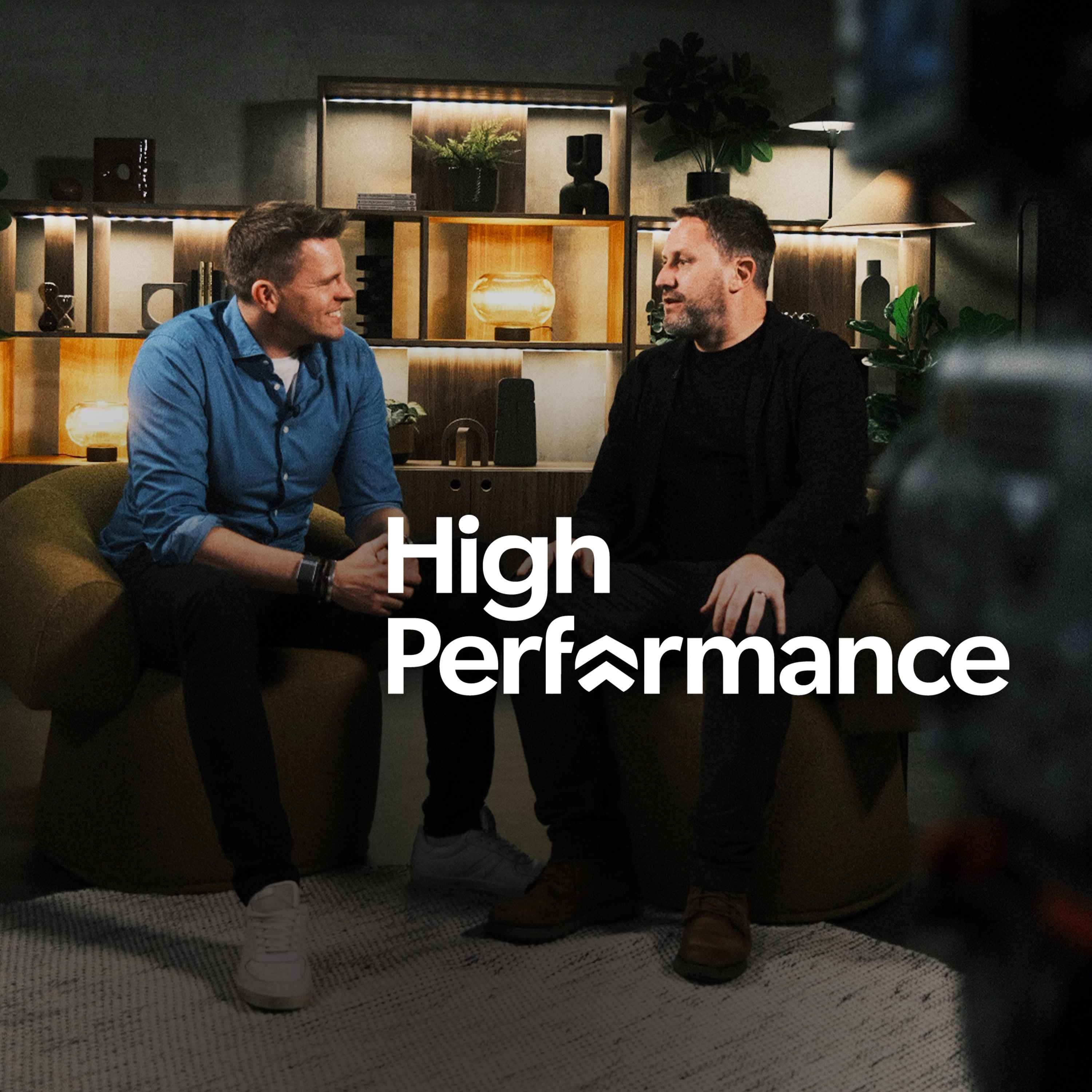
1:52Hi there, you're listening to High Performance with myself and Damien Hughes. How are you? I'm good mate, you? Yeah, I'm really good. I'm excited because I love these conversations where we have a slightly shorter episode, we look back at some of the biggest and best moments of the last few years on high performance and hopefully give people listening to this some real direction for their own lives. And today, myself and Damien are going to help you be better at making decisions. Because for people listening to this, their life isn't made up of one or two big decisions. It's made up of thousands of tiny decisions.
2:22I mean, life is basically how good are you at making decisions, isn't it? Yeah, of course it is. It's estimated about 10 ,000 decisions every single day. And now the vast majority of these decisions, we don't even know we're doing it. Like I read one report that said about 236 of the decisions are based just on food and drink that you consume. Now, when you first read that, you go, hang on, how can it be that many? But think about a visit to a coffee shop. Think about we walk in and they say, what size cup do you want? Type of coffee bean would you like? What star do you want the coffee made and do you want milk with it and then think of all the decisions there soya full fat almond skim semi none at all you want syrup sugar sweetness with it and all those decisions come at you before you've got to decide whether you're going to even give the barista your real name or not right so that all comes at you so think how quickly it scaffolds up now the vast majority of these decisions are what jeff bezos talks about two-way doors that if you make a mistake ordering a latte well it doesn't matter you can go back and order a cappuccino know if that's what you prefer very few of our decisions are what he calls the one-way doors where once you make them you can't go back you have to live with the world as it is now you've made it and i think for most of us we won't make these one-way decisions too regularly it's the small decisions that eventually position us in a place to go and do our best i mean do you remember for example jake when we spoke to somebody we're going to hear from later on shane parish when he recounted the conversation with his son about exams and his son was like, I did my best.
3:51And he was like, well, did you go to bed early for the last three nights you got off sleep? Did you eat the right breakfast? And he talks about all the decisions that position you to go and deliver your best. See, this was a real big one for me because it's really changed the way I think about things. So as you just mentioned, Shane Parrish called it positioning. So if you're listening to us having this conversation now, don't think about these moments we're talking about as the moment that something happens. Think about the positioning that you put in place to get there. So I now, like if I'm late to get to something, it's not about being late.
4:24It's about what decision did I make an hour ago, 45 minutes ago, 30 minutes ago, 25 minutes ago, 15 minutes ago, to get myself to that place on time. It isn't about arriving at somewhere late. It's about not positioning myself in the first place to be on time. And I think once we understand in our own heads that positioning yourself to make good decisions is as important as the decision that you make. And I think it is really helpful and really important, actually. Yeah, and so think about if you're listening to this now before you make a decision. Well, this is positioning. You're making a decision to make better decisions.
4:56You know, it's all about the positioning of it. And these are the Jeff Bezos two-way doors where we can go back. If it's not for you, maybe turn it off and go and pick up a book about decision-making so we can find better ways of doing it. But I think we've had so much wisdom from our guests that have given us insights into how we can all face those big moments where we've got to make big decisions with a clearer mind, a greater focus and an understanding of the consequences of what we're actually choosing. How does that learning play into us? So let's think about big decisions that you've made.
5:28I'm always interested in the bit where you walk away from one of the plum jobs in BBC broadcasting of hosting Formula One to go and join a start-up television station doing something that's never been done before. That's a one-way door. Oh, absolutely. It's a one-way door. But shall I tell you why? Go on. So just to sort of paint the picture for people, it was the summer of 2012. I was working on the Euros. I was one of the BBC reporters out there. at that time I was kind of like one of the main men at the BBC I don't want to blow my own trumpet but it was good I was hosting the one show which if you're listening outside the UK is a kind of popular show on our main channel here every evening I was hosting a quiz show I worked for BBC events I hosted the royal wedding I was in a Lancaster bomber flying over Buckingham Palace when William and Kate got married I was having meetings about doing some of the biggest entertainment shows for the BBC but I'd also come through kids TV and I felt undervalued in a whole load of different areas.
6:26And I was kind of fighting almost for the BBC to stop seeing me as a kids TV presenter who's lucky to have a job at BBC Sport. And in my eyes, give me the respect I deserved as someone who had taken the BBC F1 coverage to the biggest audiences it had had in years and we were winning BAFTAs and awards. And while I was working at the Euros, I was kind of extra frustrated because I was told that I would almost be like sharing the presenting duties with Gary Lineker for that Euros in 2012. of when I got there, it actually transpired that I was doing a very short couple of minutes before the match alongside Alan Shearer or another pundit.
7:02It wasn't at all anything like sharing the broadcasting. In fact, what really annoyed me was it wasn't even live. We were doing like pre-recorded bits and it felt like a total afterthought. So I was kind of already in a frustrated place. Even with all of that, it was still a massive decision to walk away from, as you say, the oldest, most respected broadcaster in the world at that time. And I had a four-year contract on the table to host match of the day two, match of the day when Gary wasn't around, to host the Euros, to host the Olympics, to host the World Cups, to host Formula One. If you'd have written down your dream sports presenting contract for four years, that was it.
7:41And I went home and said to Harriet, I've been offered the most amazing opportunity from the BBC. She said, tell me about it. And I told her that. And she goes, well, where's match of the day two hosted from? I said, well, Manchester. She said, where are the Euros is held well in whatever country they're in what about the world cup whatever country it's in what about the olympics whatever country it's in what about the commonwealth games whatever country it's in what about formula one whatever country it's in so she then said you've just been offered a four-year contract to not be at home and we were literally about to have our first child so that made the decision to go to bt sport a bit easier the biggest driver though was the new challenge you know i love the phrase never sit in the comfy chair i felt like it was four years of doing what I'd already done.
8:22That's basically what, apart from match of the day too, that's kind of what I'd been doing for the previous few years. So I walked away from the BBC. Now that was absolutely a one-way door because a few days later I was due to host Sports Personality of the Year for the BBC and I got a phone call from the lady who was head of BBC Sport telling me I would be removed from Sports Personality of the Year for a lack of loyalty. It was their chance to reward loyalty. They actually replaced me with Claire Balding. But you can't, you know, I'd made the decision. Whatever the decision the BBC made after that was their call.
8:54This was my decision, I have to live with it, right? So that was very much a one-way door and it was made very clear to me that I wouldn't be welcomed back at the BBC at that time. Go into the detail, right? So the conversation with Harriet makes it easier. Yeah. But take me right up to the moment where you then go to the BBC and say, I'm off. Yeah. Because there must have been still some doubts in your mind, I'd imagine. Of course. And I think the doubts were a bit less at that point because it was mainly excitement. And I also believed I was able to carry on working for the BBC. It was only after I'd made the decision that they actually turned around and went, well, you're not just going to leave Formula One, you're going to leave everything.
9:34So I was hosting the one show at the time and that didn't happen again. You know, it was one of the hardest points in my career. And then the first day that I arrived at BT Sport, it was like five people sitting around a table. now you can imagine that I've just left the BBC and I've arrived in a room with five people and that is the whole of BT Sport now I can look at it and go well it was only 10 weeks being on air that we hit a million viewers like the channel was a phenomenal success for the entire time that I was there after that it became the millions of tiny decisions right so I had to very quickly develop a really good working relationship with all of these people and then it was about right I'm going to try and be as creative as possible I'm going to really try and push the envelope and see what can be achieved here over the next couple of years.
10:16And I suppose it really came down then to lots of very small decisions. And I know that it sounds trite and ridiculous and stupid, and you can laugh if you like as a learned former professor, right? But I had watched Frozen, right? And you know Olaf in Frozen says, just do the, sometimes all you can do is the next right thing. I know it sounds stupid. But all I decided to do after I joined BT Sport was just try and do the next right thing. I couldn't control if the channel was going to be a success, if the new studio was going to work or not, if the pundits they signed were going to be brilliant or awful.
10:50There was so much that was out of my control. I kind of had to surrender to that and hope those things were going to happen. But anything that was within my control, it was all about me just doing the next right thing. And actually on reflection now, it's a brilliant reminder for me that I think sometimes we can get overwhelmed with the decisions that we make in our lives. Yeah. But you're totally right when you say that you can always reverse out of most of these things. Like, I actually think that maybe joining BT Sport was still a two-way door because the worst that would have happened is if it had all gone wrong and I hadn't been there for 10 years and loved being a broadcaster there, I would have turned around and gone and done something else.
11:26You know, there was a few other offers on the table from some other channels and I could have gone and done those. I think there's always an escape route. And I think sometimes we get paralysed into making no decision at all because we're fearful that the one decision we make is going to be the wrong decision. So it's been a great learning for me that the worst decision is no decision at all. And that's actually something that I've then taken into the last few years. And the reason why I've done the things that I've done is that I've always sort of prided myself on at least I made a decision, even if it was the wrong one.
11:55Why don't we go into the archive and explore how anybody listening to this can make better decisions rather than let themselves be overwhelmed, maybe let themselves be confused or be paralyzed into not making a decision? I think that's brilliant and can I just say even when you've listened to this you will still probably feel overwhelmed, nervous, fearful scared about making decisions I don't think that this conversation is about removing any of that stuff is it? It's about reminding you that that stuff still exists but you can still make a decision with that backdrop of uncertainty yeah? Yeah absolutely well that actually leads us really nicely into the first clip I want to share which is the brilliant firefighter come psychologist Sabrina Cohen-Hatton She's the head of the West Sussex Fire Brigade, but she's actually studied how to make decisions when we're under pressure.
12:42And she talks about a concept called decision gates. She says there's three questions we ask ourselves before we have to decide on a course of action. Let's listen to her explain more about how to do this. The first one is, what's my goal? That might sound really simple, but if you're making a gut decision, you might be making a decision based on a piece of the jigsaw, just a single piece of the situation, which might be the right thing for that. But it could have unintended consequences when you stop that piece of the jigsaw back in the bigger picture. So what's my goal? And is this going to help me get any further to it?
13:17The second one is what do I expect to happen? Now that sounds, again, really simple. But when you're making a gut decision or you're under pressure, we found from our research that people's situational awareness is actually quite low. You're very much focused on the here and now, not on the what might happen next, where you're going to be in the next 30 minutes. So just priming that to say, what do I expect to happen is a really effective way of increasing your situational awareness. And then the final one, again, super simple. How does the benefit outweigh the risk? And just rationalizing that to yourself can help to kick you out of that loop of accountability anxieties and really stand by the decision that you make.
13:55And so from my experience of those kind of decision-making environments those are three really simple techniques that you can extrapolate into any decision making environment that can be incredibly helpful. Those three decision gates Sabina offered us an example later on in the discussion about say you want to lose a little bit of weight and then you're confronted with a delicious cake so if you apply those three decisions the first question which is what's my goal well my goal is to lose weight. So does eating that cake take me further towards that ambition? Well, first of all, you don't pass that first cake.
14:32The answer is no. Then you think about what do I expect to happen? She said, well, I feel great in the moment I'm eating the cake, but in half an hour, I'll feel rotten. And then the third one is, does the benefits outweigh the consequences of doing that? In which case, you're probably going to get a piece of fruit rather than do it. So that's a really good example of even these micro decisions that we're making. This helps us position ourselves better to be able to make the decision that's to our advantage. I think it's really good. And I think the other thing which we have to remember here is, you know, we've spoken to over 300 people on high performance and we've narrowed high performance down to the best you can where you are with what you've got.
15:08I think that's a really important point to make when we're early on talking about these decisions. You can only make a decision based on where you are with what you've got. And, you know, let's think about the example I gave about leaving the BBC. Well, if I'd have stayed there and hosted Match of the Day 2, there's a pretty strong likelihood that a couple of months ago I would have been announced as the new presenter of Match of the Day, right? Because that's what happened. The host of Match of the Day 2 stepped up to the main job. Well, I can't possibly regret the decision I made 10 years ago because of something, in fact, longer, 12 years ago, because of something that happens 12 years later.
15:40And I want people who are making decisions, who are listening to this podcast, to really understand that. Of course, every decision has a cost, right? but the other cost is if you don't make that decision all the things that you don't get to do because you made that decision so I could easily now go oh man I wish I'd stuck out of the bee but look what I would have been doing but I wouldn't have hosted Champions League finals FA Cup finals worked with those great pundits hosted those great football matches you know I'm sitting here now happy and healthy so therefore it has to have been the right decision because who knows what could have happened if I'd have made another decision I think thinking too often about these sliding doors moments is not overly helpful for us and I love what Sabrina is saying there you can only make though but you can only look at the evidence that's in front of you at that time so stop fearing things that you don't know that don't even exist because that is where paralysis comes from i think that's a brilliant bit of advice well that leads us then into our next guest that offered us a really powerful example now i know you really resonated with this one let's hear from him and then let's find out why it mattered so much you want to get different perspectives onto problems.
16:46How do you get different perspectives on their problems? Well, you can ask people for different insights. You can do thought experiments where you see the problem through a different lens than what you're currently seeing it through. And one way to do that is a film crew. So you can imagine that there's a film crew. And I think I got this on Rogan sometime, which is like, you imagine that there's a film crew following you around. They're documenting your success. You are successful. They're watching you and you're showing them all the things that you do that lead to that success. Well, all of a sudden when you wake up, you're not dilly-dallying in bed.
17:21You know, you're not doing an hour on TikTok all the time. And all these things you don't want the film crew to see, those are indicators of behaviors that you're doing that you might be ashamed of or might not be working for you in the way that you thought they were working for you. And it's just a different way to look outside into your life and get a different perspective. You see what Shane said at the end there as well, I think it's so powerful. because it gives you a different perspective. It allows you to see what other people see. I mean, I love the phrase that who you really are is what you do when nobody's watching.
17:54But the problem is when nobody's watching, you can be a bit naughty, right? And I'm someone who, as you know, has been on a 30-year quest to have a six-pack still hasn't happened. Why? The late night crisp eating. Why do I do that? Because the kids have gone to bed, Harriet's maybe having a bath, so it almost feels free. No one knows I've eaten those crisps, so it's kind of okay. hey, I'm not going to be judged. And I think the exercise that Shane talks about there, imagine there's a film crew watching you, is basically a way of you holding yourself to account. This idea of reframing, of repositioning is really powerful.
18:26And I share this a lot with people when I meet them and they say, look, I just really find it hard to make the right decision. And I tell them about this idea of having a film crew watching you because I think it's so clear and obvious for people. Like we do behave differently the first time we meet the in-laws. We do behave differently the first few dates that we go on with a partner. We do behave differently the first few weeks in a new job, right? So if you imagine you've got a film crew following your every move, then you will behave in the way you want that film crew to view you every single minute of every day.
18:54I think it's a fantastic exercise. And all I would say to people is, try it for a week. Because that's what I did. Try it for a week. Just for a week. Every time you, in my case, pick up a bag of crisps, or in your case, pick up an alcoholic drink, or do... What do you mean in my case? I can't. people have been listening to this thinking has he got a drink problem? no I was talking to the audience I was talking to the audience I meant like as in in your case like can I just reassure anyone listening to this I am not an alcoholic it sounded like I was making out in Damien's case have a drink what I meant was for you listening at home it might be having a drink or in your case Damien I don't know making a bad decision like going to Old Trafford and watching my new play every time you're thinking that you're going to do something and you kind of know it's not a great decision for you.
19:43Just think, I've got a film crew watching me, other people are going to see it and they're going to judge my day based on this decision. I think it's great and I promise you, I promise you it works. Well, it does work, Jake. It's referred to by psychologists as the Hawthorne effect that suggests that when you're being observed in real life or whether you're simply imagining it, people do tend to adapt their behaviours to demonstrate the best side of themselves and it does have performance benefits. that people can go and explore at their own leisure, but to understand how Shane's idea of imagining that film crew following you around does start to alter the way that you operate.
20:22So good, Damien. And to move this on a bit further, I want to play a clip from the psychiatrist Steve Peters, the man who wrote the book, The Chimp Paradox, one of the most popular guests we've had on High Performance. And this is so cool. Have a listen to this. Well, Le Brin has certain areas which I could talk about one bit called the what if button and it literally is an area of the brain which uses what if and it depends how we use what if. But if we use it emotionally, it'll ask questions like, what if I fail my GCSEs? What if I fail my driving test? What if my partner leaves me? And these are emotional questions and we often sit with them.
20:57We don't answer them. So if you don't answer them, then your resilience is going to start tumbling and it goes through your head. And instead of sitting with the problem, you've got to say, well let's look at you know what's the solution is so what if my partner leaves me and then you've got to challenge it now if someone says to me i will fall apart and life's not worth living if that's non-negotiable i have to say let's look at the consequences and let's work very hard on not them you know let them leave but if i say right let's really challenge that belief and rationalize it most people start saying okay it's not what i want i will go through grief i will be upset, I'll survive.
21:33There is life after. That can actually help the relationship because you then, and again, I'm exaggerating and I'm generalizing, you're not as needy. So there's no reason to then try and control them and stop them leaving, which is what we do when we haven't got a plan in case they leave. So we have plans if it goes wrong. Now that's a different question if. If my partner leaves me, it's an emotional question. Oh, I'll go through. If my partner of leaves me, what's the plan, is now actually using that what if button from the human rather than the chimp. So the button's available to both, but it's a different what if question.
22:12The brilliant Steve Peters there. And if you need to, by the way, feel free to just rewind the last 30 seconds and listen to that again, because I think it takes, doesn't it, Damien, a couple of listens for it to really sink in. The biggest thing from my perspective is, as I've sort of just spoke about before, I think it allows you the freedom to make a decision. You know, at the beginning when I said the worst thing we can do is not make a decision at all. And that's not a very helpful thing for me to say because people are thinking, well, I find it hard to make decisions. Well, now you've heard that from Steve Peters.
22:38Ask yourself the what if question and find the answer to that. Because if you know you can cope with the worst thing that happens, as you often talk about a pre-mortem rather than a post-mortem, if you know you can deal with the worst thing that's about to happen, then you're free to make the decision. Yeah. And that phrase of premortem comes from a psychologist called Gary Klein, who, similar to Sabrina Cohen-Hatton, he's studied people making decisions under quite intense pressure, like firefighters or accident crews or doctors working in the emergency medical rooms. And what he's found is that what Steve's advocating there of, before you're faced with that situation, working out what's the worst that can happen here and how am I going to handle it should that occur, your ability to make smarter decisions in the moment increases by around 30 % simply because you've allowed the emotional part of your brain to exercise itself, to worry, to fret, but more importantly, to be heard.
23:37And once you've been able to articulate that and get it out there, so that allows the more rational, logical part of our brain to then come up with a plan as to how am I going to handle that should it occur? So this is something that any of us can do, that if it's a big decision that we may be fretting around. Just sort of run through the scenarios of, well, what would happen if it goes wrong? What would happen if I'm rejected? What would happen if somebody makes some horrible comment about it? And then just work out, well, is it somebody that really matters to me? Is that situation irrevocable?
24:14Am I going to be able to apologise and move on from it? We very quickly start to come up with a plan of action that allows us to make that decision with the confidence that we can handle. So what about then if you have got a decision to make, you do your pre-mortem, and you think, actually, there's no way I can offend that person, there's no way I can take that risk. Like, what then? Well, then you've still made a decision not to do it. But you've said, I can't live with the consequences of that decision going wrong. But you're still in a smarter, wiser place to be able to operate from. One of the things I really have a bugbear with is, you know when people go, never quit or just do it.
24:52It's like, I think that's really unhealthy advice for a lot of people when just doing it might mean walking away from a job when you've got three kids to feed and a mortgage to pay or never quit might be really unhealthy advice if you're in a toxic relationship or you have a boss that is damaging your mental health. And I think that's the important thing for us to think about here is like having the flexibility of thought. Sometimes the right decision is to do nothing. Yeah. Other times the totally wrong decision is to do nothing and that's okay. Well, I sometimes say this to friends that might be looking at, like taking on a new job.
25:23And you say, go and explore it. You don't have to accept it, but go and explore it and then work out. Is that a job that I won? Is the cost of the commute that is going to be involved? Is it worth the pay rise that you're going to get? Is it, and you can start exploring it. And you might come back and say, the current job I have is actually the best one for me at this moment in time. So you then reapply yourself with more enthusiasm and vigor than you would have done if you hadn't gone and made that exploration. Knowledge is power. Exactly. Yeah. And that's what... Do you like how I said that?
25:55Yeah, it was very good. It sounded very profound. But I think this is a really simple technique added to Sabrina's and to Shane's. This what if question is one that allows us to be able to make smarter decisions better. Brilliant. Right. I think we've got time for one final clip. my decision is that I'm going to let you choose. See, I made a decision there by not making a decision. Yeah, well, I'm going to choose. I'm going to decide to choose the brilliant Nimsperger, the guy who was a Gurkha soldier, became a special forces officer, left there and then climbed the 14 highest mountain peaks in the world in record time.
26:38I was still in Special Forces and I was trying to break the world record for climbing in Everest, Lhotse and Makalu, which is the first, fourth and fifth highest mountain. And in process of doing that, when I went to Lhotse, my oxygen was stolen. So just to give you an example, being oxygen stolen at Campo, at the death zone, it's a crime. You work so hard. You have to check the weather forecast. You have to take those oxygen to put it over there. It's a mission. and literally when you went over there and your oxygen is not there it is it's gonna drown you but what i thought was okay come on come on there must be something and what i said was okay my oxygen was probably used for some emergency situation maybe someone is alive because it was you know somebody used it for rescue that could be completely lie but then i told my brain to believe in that positive thing and i was happy okay you know somebody's alive maybe but then sometimes you have to do it all it's all about you know how you cope with the situation it's about you know like nothing is impossible you just have to think outside the box The brilliant Nims Purge there talking about how sometimes we've got to force our brain to find the positives I love that and it reminds me of something that I think is one of the most important things I've learned from hosting this show which is to separate fault from responsibility right for people listening to this, there are loads of things that aren't their fault, right?
28:06If they're angry about what's going on with the government at the moment, it's not their fault. If they've got a challenging relationship maybe with a friend, it's not their fault. If they've got an ill parent or an unhappy child, it's not their fault. If they're carrying trauma from their childhood themselves, it's not their fault. There's loads of examples of things that are not our fault. And in this situation, Nim's oxygen being stolen is not his fault, right? Yet all of these things remain our responsibility to deal with them. And I would say that when it comes to decision making, this is one of the most important decisions that you can make, is to stop looking for excuses, to stop apportioning blame and fault, to stop waiting for some white knight to ride around the corner and mend your relationships, solve your money worries, remove your stress and your anxiety, solve all of your trauma.
28:51That's never going to happen, right? So the truth is, and this is sometimes a hard truth for people, life's about taking 100 % responsibility and this is a conversation about making decisions the biggest decision that you can make is to realize that at the end of the day you're in control of this life well how empowering is that that's exactly what and that's what I want people to I don't want people to sort of think oh that's a bit too much that's the point is it's empowering they should hear this and go how fantastic that all of these things can happen to me and by the way they do and will and I'm still going to be okay because I'm the one that's responsible for finding a way through.
29:28It's the opposite of making people feel powerless, I believe. Yeah, definitely. Well, that's exactly what Nim said, saved his life, that willingness to convince himself that someone had stole the oxygen and he'd saved the life rather than it had cost him anything. So there's four lessons here that we've taken and applied in our lives that I think enable us to make better decisions and hopefully anyone listening to it can incorporate it as well. So Sabrina Cohen-Hatton's three decision gates, those three questions we ask ourselves before we take action. Then we look at Shane Parrish's half-horn effect of imagining somebody's looking at us.
30:03Then we use Steve Peters' what-if question and work out the worst scenario and can we live with it. And then finally, we decide to use the NIMS purger optimism message of seeing the best in every situation and working out, can we actually make it happen? Those four techniques, I think, will equip anybody and empower them with the skills to make smarter decisions more frequently. I love it. I think it was a good decision to talk about this. Yeah. Well, thank you. I do too. Wonderful. And with the image of a film crew over our shoulder filming everything that we do and every decision we make, it's time to make some good decisions.
30:39Yeah, which doesn't involve me getting drunk. Or going to Old Trafford. Thanks, mate. Thank you, mate. And listen, before we go, don't forget that you can check out the full episodes from the guests you've just heard from. The links for those are in the description to this episode. And listen, we want these conversations to be really valuable for you. The only way that we can make them valuable for you is for you to tell us what you want us to talk about. So please just decide right now to reach out to a high performance or Damien Hughes or myself on Instagram, Damien's Liquid Thinker. I'm Jake Humphrey.
31:09The show is just high performance. You can also find us on LinkedIn, but please get in touch. Tell us what you want to hear us discuss on one of these shorter episodes and we'll do it for you. Thanks for listening.
31:42If you're a maintenance supervisor at a manufacturing facility and your machinery isn't working right, Grainger knows you need to understand what's wrong as soon as possible. So when a conveyor motor falters, Grainger offers diagnostic tools like calibration kits and multimeters to help you identify and fix the problem. With Grainger, you can be confident you have everything you need to keep your facility running smoothly. Call 1-800-GRAINGER, clickgrainger.com, or just stop by. Grainger, for the ones who get it done. Fall is all about cozy comforts, and with Hero Bread, you can enjoy all your favorites and still hit your health goals.
32:18From breakfast bagels and meal-prepped enchiladas to mouth-watering burgers and cheesy noodles. You won't believe Hero Bread's options have 0 to 5 grams net carbs and are high fiber from the taste and texture. And right now, Hero Bread is offering 10 % off your order. Go to Hero.co and use code FALL25 at checkout. That's FALL25 at H-E-R-O dot C-O. All feakers are per serving of Hero Bread. Contains 2 to 18 grams of fat per serving. See the product nutrition panels on Hero.co for more information. At Capella University, learning online doesn't mean learning alone. You'll get support from people who care about your success, like your enrollment specialist who gets to know you and the goals you'd like to achieve.
32:55You'll also get a designated academic coach who's with you throughout your entire program. Plus, career coaches are available to help you navigate your professional goals. A different future is closer than you think with Capella University. Learn more at capella.edu.
Every decision we make shapes our lives, yet many of us struggle to navigate them with confidence. In this episode, Jake and Damian explore the art of decision-making, uncovering the strategies that can help us make better choices, big and small.
Revisiting powerful insights from guests like Shane Parrish, Dr. Sabrina Cohen-Hatton, and Steve Peters, they discuss how positioning, accountability, and resilience play a crucial role in decision-making. From understanding the importance of small choices to preparing for worst-case scenarios, they reveal how taking full responsibility can transform the way we approach life’s challenges.
Listen in as Jake and Damian break down the habits and mindsets that lead to better decisions, proving that with the right tools, anyone can take control of their future.
Listen to the episodes mentioned:
Dr. Sabrina Cohen-Hatton: https://pod.fo/e/18cd7c
Prof. Steve Peters: https://pod.fo/e/298713
Shane Parrish: https://pod.fo/e/1ff000
Nims Purja: https://pod.fo/e/ac5aa
Hosted on Acast. See acast.com/privacy for more information.


