
 Ask ChatGPT


 The High Performance Podcast
25 Jun 2025 · 30m
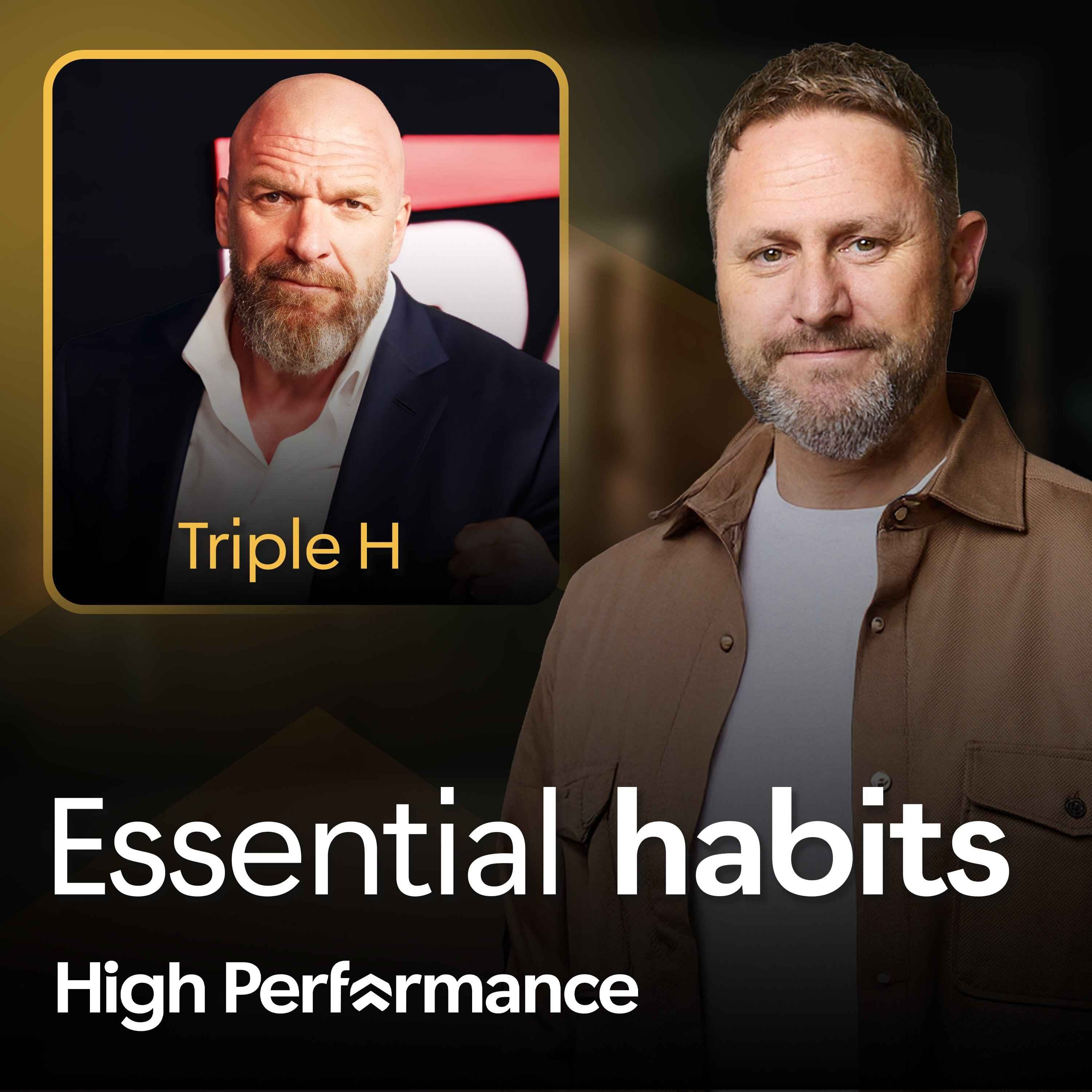
Hosts: Jake Humphrey and Damian Hughes
Triple H (Paul Levesque)
In this episode, the hosts delve into decision-making strategies under pressure, particularly through the lens of the OODA loop (Observe, Orient, Decide, Act). Featuring WWE legend Triple H, the discussion reveals how high performers in various fields can enhance their adaptability and effectiveness by leveraging real-time feedback and situational awareness.
Written by AI. May contain mistakes.

Get the gist, explore an idea or ask about something said.
 Claude
On The High Performance Podcast, what are the key points of this episode?
Searching your listeningAutomatic transcript. May contain errors.
0:28Watch it early on the High Performance App. Grainger for easy reordering so you never run out of what you need. Call 1-800-GRAINGER, click grainger.com, or just stop by. Grainger, for the ones who get it done. The market's uncertain, revenues tied, and hiring on hold. That's why results-driven companies are using Upwork to keep work moving. Go to upwork.com today and start hiring proven freelance talent fast. No bulky overhead. No rigid long-term contracts. Just the right expert, right when you need them. Work smarter and faster with Upwork. Go to Upwork.com now and find your freelance expert.
1:07That's U-P-W-O-R-K.com. Post a job for free and get started today.
1:15This episode is brought to you by Opera Air, the first browser with mindfulness at its core. Now, most of us spend hours every day online, but how often do we pause to take care of ourselves whilst we're doing it? And that's where Opera Air comes in. It's a lightweight, fast, secure browser built not just for productivity, but for your well-being. With Opera Air, mindfulness is built right in. You'll find free breathing exercises, guided meditations, and soundscapes with ambient sounds, lo-fi music, and binaural beats, all designed to help you focus, relax, and even spark creativity while you browse.
1:52I often say our business is the coolest thing ever because we have a focus group every night that we do a show. They're telling us, so when somebody walks out, what reactions are they getting? When they perform, what reactions are they getting? What is working? What is not working? Welcome to the Essential Habits of High Performance. Your front row seat to the daily routines, the decisions, and the mindset shifts behind extraordinary people doing extraordinary things. I'm Damien Hughes. I've worked as a visiting professor of organizational behavior and I've been lucky enough to work with elite coaches from a wide range of different industries and sports.
2:32I love understanding the science and the psychology behind high performance and how we can all use it to our own advantage. What if I told you that one of the most effective feedback systems in the world doesn't sit in a boardroom or live in spreadsheets, but it happens in front of thousands of screaming fans every night? That system? Well, it's the OODA loop. And today, I want to take you inside the mind of someone who's not just shaped a career, but an entire industry. In the roar of the arena, Triple H, or Paul Levesque as we'll know him, found something rare. Real-time truth. He didn't just perform, he paid attention.
3:16Every crowd reaction was a compass. And he shows us that high performance isn't about control. but it's about learning to adapt in real time. We're going to look at the water spirits to his world titles, because this is a lesson in listening deeply, adjusting fast and leading by responding. In the show notes, you'll find links to the studies and research which I reference. Triple H, WWE legend, 14-time world champion. But more than that, he's an architect of performance, he's a master of feedback, he's a leader who listens, not just with his ears, but with his eyes. In the ring, he was known as the game, the cerebral assassin, where he had a reputation for being calculated, dangerous and iconic.
4:09But backstage, he was becoming something even more powerful. He was a developer of talent, a culture shaper, and a living, breathing embodiment of adaptability. See, Paul doesn't just talk about crowd reactions. He studies them. He treats every arena like a living focus group. Every cheer, every silence, every pop. It's all data to him. And it's data that fuels his decisions, real-time adjustments, creative pivots, and identifying breakout stars. From the people's elbow to the yeet chant to his own legendary water spit He explains to us how he's shown that elite performance is never static It's a loop where you observe, you orientate, you decide and then you act In this episode we're going to explore what we can all learn from Triple H Not just in wrestling but in life Whilst Paul may have joked with us At the end of the day, it's not that serious.
5:11We're making fun content. We're not curing diseases. We're not saving the world. We're not doing anything. Hopefully, we're inspiring people or doing whatever. But we have a saying, a couple of us in the writer's room, where when stuff gets really super pressured or things aren't going well or something tragic happens where you just look at somebody else and say, dude, it's phony fighting in our underwear. We're all right. He offers something much deeper than describing wrestling. He describes how to read the room, how to respond and not just react. When you can get people in a crowd just like losing their mind over something they just saw, it's the coolest thing in the world.
5:53You're making them feel. He's talking here about how to turn a small moment into a movement. And this is the mindset of a real high-performing leader. So whether you're leading a team, you're building a brand, or you're just trying to get better, there's something that I promise you will be here for you. So let's step into the loop. I often say our business is the coolest thing ever because we have a focus group every night that we do a show. They're telling us, so when somebody walks out, what reactions are they getting? When they perform, what reactions are they getting? What is working? What is not working?
6:29Think about that. Viewing your fans as a focus group is key. Obviously, The Rock does like his finish to people's elbow, right? It's the silliest move of all time. He runs twice, hits the ropes, drops the worst-looking elbow on you. There's not a knock on it. It started as a joke. It started as a place of us on live events that weren't televised, him trying to make The Undertaker laugh and break character. You know, we were all doing dumb stuff, and he did that one night, and everybody thought it looked really cool, it was silly, and then somebody dared him to do it on TV and he did it on TV, like as a spoof, and the crowd reacted to it and he did it again and they reacted even more and like all of a sudden you realize like, wow, I'm on to something really wild here.
7:16It became a big thing, but it wasn't designed to be that way. It was just, okay, I did this and like they reacted, so I'm going to do that more. Every single performance, whether it's the rock dropping the most, over the top people's elbow, I have a rising star like Jey Uso testing a new entrance. It's an experiment with the crowd acting as data. I like to work with the talent, and I like to give them the freedom to go out there and try and do certain things, and then be able to tell them afterwards, like, hey, that didn't work, don't do that again. Could you give us an example? Like Jey Uso, right now, came out of a long storyline with Roman Reigns and sort of becomes this baby face of the, or the good guy of the group, of the bloodline, and breaks out on his own, main event, Jay, who was in a tag team for years, finally goes off on his own, and we want to see, let's give these guys a shot, him and his brother, let's give them a shot on their own to see how they can do.
8:08So we put him on another show, we create a new entrance track for him, and the entrance track is very rhythmic. And he went out one night, and he just, he got up in the turnbuckle, and he was doing this thing where he was very rhythmically going to the music, and the crowd started doing it with him. And then, you know, he came back and I was like, hey, you did a thing. And he wasn't really aware of it. And we all started talking about it. Like, you did a thing tonight where you got up in the corner and you started to rhythmically bounce to that song. You were just doing it. But I don't know if you noticed, but the crowd started to do it with you.
8:40Go further down that road. Hey, what if you put your arms into it and you started doing this thing? And he, you know, backstage, he would always say the yeet thing. and it became this comic moment between he and his cousin Roman where Jay would say yeet and it would bother him and all this stuff, right? And it just caught on and we went with the yeet and he started doing the thing with his arms during his entrance rhythmically and now it's become this deal for him where we will bring him out through a crowd and he will stand in that crowd and while his music is playing, he's doing the arms and that entire crowd is doing it with him and singing the lyrics and doing this thing.
9:20And it just, it has launched him to another level of stardom. It's just become this thing. It's just by paying attention to what the crowd is doing and how you manipulate that. In military terms, this is pure OODA loop, where, as I said earlier, we observe, we orientate, we decide, and then we act. But let's break it down using the rock's people's elbow. Now it might have started as a joke, just a backstage attempt to make The Undertaker laugh. But when he did it in front of a crowd, the place erupted. Now that's observation. So The Rock did it again. That's orientation and decision. And eventually, it became his signature move.
10:04Action. Now the same goes for Jey Uso's rhythmic entrance. One night he casually matched the movement to the beat and the crowd joined him. The next week, he became part of his brand. Now, it's a ritual. Now let's just step out of wrestling for a moment and into the cockpit of a fighter jet. Because before Triple H ever ran a show and before Jey Uso ever threw a yeet, there was Colonel John Boyd, a US Air Force legend, who reshaped how we think about feedback, adaptation and performance under pressure. Boyd was a maverick. Not the kind that Tom Cruise played, but the real deal. A fighter pilot known as 40 Second Boyd, because he could defeat any opponent in a simulated dogfight in under 40 seconds.
10:53But it wasn't his flying skills that changed history. It was the way he thought. In the 1970s, it was Boyd who developed the OODA loop, which again is observe, orientate, decide and act. Now at first glance it sounds simple, but it's one of the most profound frameworks for human decision making that's ever been created. If we break it down, observation is what's happening around you. Are you paying attention to the right things or are you simply just reacting on autopilot? Orientation is the most underrated step. It's where your background, your beliefs, your experience and your biases shape how you interpret what you've just seen.
11:35Two people can see the exact same thing and draw totally different conclusions. But orientation is where the game is won or lost. Decision is a choice that you make based on what you've observed and how you've oriented yourself. And finally, action. This is where you move, you test and you execute. But here's the impulsant bit. The loop never stops. When you act, you just observe what happens next. You reorientate, you adjust and then you act again. John Boyd's insight was that the faster you can cycle through that loop accurately and effectively the more control that you gain in a fast moving situation and this is why it's an essential habit for high performance because life is dynamic markets shift, people change, plans break and the people who succeed are the ones who can adapt faster than the competition so now we understand the OODA loop let's step back into the WWE arena and watch how it plays out night after night let's break it down 1.
12:39Observation every night when a WWE superstar walks onto that stage they're not just putting on a show they're very deliberately watching the crowd is the energy high or is it flat? are people leaning in or are they checking the phones? when The Rock first did the people's elbow it was a joke but the reaction? well the crowd loved it Now that bit wasn't planned, but that was data And once he observed that reaction, it opens a door Step 2, orientate This is where instincts and experience come in Orientation means understanding why that crowd reacted in the way it did What was the timing, the charisma, was it the build-up?
13:22When Jey Uso first did that rhythmic bounce in sync with the new entrance music He didn't even notice the crowd was doing it with him but it was Triple H and his creative team that did. They recognised it was something special. It wasn't just a movement but it was a moment. Orientation is almost like pattern recognition. It's been tuned in enough to say, hang on a minute, that wasn't random. That meant something. That takes us to step three where we decide. This is where the creative judgement comes in. What are we going to do with this? Triple H didn't go, well yeah that's cool He said, let's go further down that road They made the decision to lean in Add movement, add a bit of gesture Build on the yeet catchphrase Design the lighting around it Build the entrance into a big spectacle All of it was anchored in a single audience reaction That's not luck That's almost like a high performance iteration the final step is react this is where execution is key jay uso brings it back the next week but this time he adds his arms the crowd pick up on it and it grows now it's a signature move it's part of the story just like triple h spitting water into the air a movie did once saw the reaction and built it into an iconic gesture it's all a big loop you try something you read the room you you adjust and you try it again every night, every show and every storyline.
14:57To me, WWE is far more than just scripted entertainment. It's a live lab for behavioral psychology, crowd dynamics and performance feedback. And it's what makes Triple H a high performance leader. Because he's not forcing his vision, he's listening, he's watching and he's adapting constantly. He's cycling through the OODA loop faster and smarter than most people even realise that they're even in one. So whether you're running a business or you're coaching a team or you're performing on a stage, here's the takeaway. Speed of feedback matters, but your speed of adaptation matters even more. Our habit is to observe what's working, orientate ourselves to the deeper truth and decide with clarity before acting with intention.
15:43And just like that, you're in the loop. So how can you apply it in your world? Well this week start by picking one area of your life whether it's your work, your leadership, your fitness, your creativity and observe this. What signals am I getting back? Be honest, what's working but what's falling flat? Then once you've done that orientate yourself. What does that signal really mean? Don't just react but reflect on this. Is the problem your strategy or is it your timing? Is the issue the product or how you're selling it? This is where self-awareness meets context. That's where good decisions begin.
16:25Then you decide. Make one deliberate adjustment this week. Not five, one. Cut out all the noise, double down on what's gaining traction and ditch what isn't. Then the final act is to act. Execute with confidence. Go out and test it. See how the world responds. Because as Triple H has said, it's a loop. The audience will lead you just as much as you lead them. But you've got to stay in motion. You've got to stay in the loop. So whether you're in the ring, in the boardroom or at the kitchen table, remember this. High performers don't fear change, they feed on it. And the fastest way that they do that is by observing, orientating, deciding, acting and then repeating.
17:12Welcome to The Loop. Now, I'm going to be joined by Will. He's our producer that's been with us on the podcast since the very beginning. We're going to listen to some of the other great lessons which Triple H shared with us.
17:29If you're still overpaying for wireless, it's time to say yes to saying no. At Mint Mobile, their favourite word is no. No contracts, no monthly bills, no overages, no hidden fees, no BS. I made the switch because I was tired of those ridiculous bills and sneaky charges from my old provider. With Mint, I'm paying$15 a month and getting the same high-speed data, unlimited talk and text, and the coverage on the nation's largest 5G network. Honestly, the quality is just as good, if not better, than what I had before. And the best part? You don't need a new phone. You can keep your current one, bring your number, and all your contacts.
18:04I use Mint Mobile, and you should too. Ready to say yes to saying no? Make the switch at mintmobile.com slash HPP. That's mintmobile.com slash HPP. Upfront payment of$45 required, equivalent to$15 a month. Limited time new customer offer for first three months only. Speeds may slow up a 35 gig on unlimited plan. Taxes and fees extra. See Mint Mobile for details. If you're a maintenance supervisor at a manufacturing facility and your machinery isn't working right, Grainger knows you need to understand what's wrong as soon as possible. So when a conveyor motor falters, Grainger offers diagnostic tools like calibration kits and multimeters to help you identify and fix the problem.
18:44With Grainger, you can be confident you have everything you need to keep your facility running smoothly. Call 1-800-GRAINGER, clickgrainger.com, or just stop by. Grainger, for the ones who get it done. The market's uncertain. Revenue's tied and hiring on hold. That's why results-driven companies are using Upwork to keep work moving. Go to Upwork.com today and start hiring proven freelance talent fast. No bulky overhead. No rigid long-term contracts. Just the right expert right when you need them. Work smarter and faster with Upwork. Go to Upwork.com now and find your freelance expert. That's U-P-W-O-R-K dot com.
19:25Post a job for free and get started today.
19:32Big Triple H. paul levesque paul levesque i love this one didn't you it was a just to set the scene for listeners it was a sunday so we had been told we had to be down here for midday and we were relying on the unreliable trains that's right yeah down here so we ended up coming down here quite early and then he turned up didn't he a mob of them a mob of sort of former wrestlers and it was some scary looking security guys it was everything that you wanted it to be like there was a buzz about the team around this one because he's slightly a departure of someone that we would normally have on he's like in this world of wrestling obviously a great wrestler and a businessman as i'm right and he's such a persona and some members of the team uh who work at high performance were huge wrestling fans as well oh no yeah that now that bit surprised me you know like the in my naive view of the world i thought wrestling was more for kids oh no no like absolutely not like it's like yeah huge i mean i mean it was i think everyone in some way shape or form has been influenced by wrestling either you were a kid in like our generation you probably watched it on channel four and then you grew up we were like big daddy and giant haystacks kendo nagasaki yeah i was like then going to brett the hitman heart the undertaker who's amazing he's still doing it and then obviously it's just kind of grown and grown and grown and then recently gone to netflix but yeah when we heard we were gonna do triple h uh it there was like a right an energy about oh yeah massively and but but that affected me because i wasn't that familiar with Triple H and the sort of WWE whereas seeing the excitement of people and then when some of the teams started showing me clips and started telling me more about the narrative it became really infectious how do you do you like that because often we speak to people in areas which you might be familiar with like they're in football or you know they might be in uh another sport that you're or you know a team or an area that you know when it's something that you don't know as much how does that what is that like then to to speak to do you find new energy from that yeah yeah definitely i love that like one of the things that really matters to me is curiosity leaning in and going i don't know anything about it so that then is quite liberating because it allows you to ask the daft question or the naive question but i think it gives you a more of an appreciation of it in many ways because you can you're more zoomed out so you can see that that must have been really difficult or starting to understand with the wrestling that these guys are wrestling 300 days a year oh man yeah you go wow physically that must be really tough and yet you're having to write storylines and remember lines and still be like this physical beast that's going in there like not knowing a lot of the detail gave me a sense of appreciation yeah for just how special these guys are and that leads us into the first clip that i want to share because again appreciating that this guy's like built like a brick outhouse and yet he's had his yeah he wasn't he he was and still in tremendous shape yeah so you wouldn't necessarily appreciate some of the health scares that he's had but i was interested in how that's affected him psychologically so let's listen to him explain a little bit about what facing death has done for him when when you have something like that happens a heart issue cancer whatever that is you lose who you are you lose your identity right like i'm triple h this big larger than life wrestler persona like that's how people see me and i'm this and i'm that i'm all these things and while you know who you are and you're just i'm just another guy i don't see myself as any better than anybody else or different than anybody else but you have a persona of what you are and who you are because of what you do in life and then And that, like all of a sudden in a moment, that's gone.
23:37You're not that anymore. You are no longer that guy. Well, fuck, who am I? What do I do? But I can also look at that and say on the flip of that, most important job I have is dad. Most important job I have is husband. Yeah, that's part of who I am, but it's not all I am. Sort of the health scare for me, because my health is great now. Like I have a defibrillator in my chest. I don't think about it. But like, and it's never gone off and I'm, my heart's a hundred percent and I'm healthy and I do everything I want to do other than wrestle, which I don't want to do anymore. Anyways, I'm lucky to be back thinking like I'm, I'm still who I was.
24:14I still have that purpose. I still can do all these things, but I sort of see that moment of reset with my health as a gift because I thought of things differently. and in that moment of time where you're given that gift it resets your mind to like yeah that's all great so when things happen bad I can put them aside now really great because I'm like had a bad show great I have three kids at home they're awesome I got a wife I got a brilliant I got everything I could ever want and more beyond any dream I could have had so it's a reminder that just because something is hard for you doesn't mean it's bad for you yeah exactly and that's a gift You can rationalize that and say it.
24:57You can think it and say it. That's why in today's world of internet, and there's all these cliched, and I've done it a million times here. We have these sayings. We have this thing we say. We have this, yeah, they're all just bullshit sayings, really, unless you actually do them or believe that. Or that has to be who you are inside. It has to be part of your core. So when I say those things, I actually mean them because I might have said them before. I used to say all, I mean, I would say that all the time. I'm like, nobody writes on their tombstone. They wish they worked more. Yet I was doing it, right?
25:29Like it changes who you are on a fundamental belief standpoint so that you can get to the peaceful state of sort of like, yeah, I do all this other stuff. I work really hard. I'm successful to a degree of what I do and like all those things. But it's not the most important part of my life. It's an important part of my life. It's not the most important. It's not all I am. It's not who I am. It doesn't define me. If this stops tomorrow, it doesn't define me. You can use it as the example of what I did, what I was, who I was, what my life was. It doesn't define me. A health challenge, although it can be scary and something like that, it can really help you reassess what's important, can't it?
26:12Definitely. You know, if we go back to the very first episode in this series, the Jo Malone conversation, where she spoke about this idea of it led to a sprinkling in her life. It made her realize what's really important here and what am I sort of tolerating and putting up with? And again, Paul captures that beautifully of actually, I'm a dad, I'm a husband. That's my most important job. Yeah, they're the stuff that really matters to me and the rest of it is noise. Because we asked him, is there a before and after that heart incident? And he said, well, I'll give you an example of what I've done after it, that I don't turn up for every show if my daughter's got a softball game or there's an important recital at school or there's a parent meeting.
26:54I'm not at the wrestling because I have to honour my most important job. And again, you know, as a dad and as a husband myself and as a son and a brother, you've got different roles. It sort of is incumbent on us sometimes. We need that reminder without necessarily having to have such a terrible scare like Paul first. So the next clip then, why don't we listen to something that reminds me of one of my favourite experiments, the Batman effect, where they've done this with kids, Will, where they sort of ask them to work really hard. One control group of children, another group are told, imagine what Batman or your favourite adventurer, Dora the Explorer, would do if they were given the task.
27:39And what they find is that kids that sort of then assume this identity of a superhero or somebody they look up to tend to persevere, work harder, and keep going, even when it's tough. And Paul gives us a great example of that almost real-life experiment of some of these wrestling characters and how they've been used to inspire kids all around the world. We get to create these larger-than-life characters, put them in these crazy circumstances, then go around the world and you're like kids' heroes. Like you're creating these heroes for kids and people that they can watch and aspire to be like and can be motivated by.
28:16And there's life lessons in as silly as it is, the things that we do, how many kids I've seen over the years say, well, you know, John Cena was my favorite growing up and he taught me hustle, loyalty, respect. I've had, you know, I've had people come up to me at points in my career. So like Post Malone was in a meeting with him one time and his dad was there and he came, his dad came over to me after and he said, hey, I just want you to understand, like, he's not saying it that much. But like growing up, you and Stone Cold Steve Austin were like his biggest thing. And he said, I don't know that he would have made it through.
28:53He had a pretty rough childhood. I don't know if he would have made it through that or made it to where he is. If it wasn't like you guys were his role model inspiration to that. You know what? It was great speaking to Paul because I think wrestling's got to the point where they're so open and honest around the two sides to it, the storytelling. And then what really shines through is the responsibility that he holds really close to what he's doing for people and the effect that it has. And they have to deliver that on an entertainment scale. But these are, like you said about John, I haven't seen it, like role models for people.
29:30Yeah, yeah, but it's the fact that, like you say, they don't take it lightly. The fact that they see themselves as having that responsibility of the way they promote themselves, the way they speak to each other. Again, as somebody not really being immersed in that world, it was a real eye-opener for me, but I love the sort of positive impact that they're making and the fact that kids can sort of cling on to their messages and their lessons and maybe assimilate it in their own lives. And it's maybe the same is true with like, whether you're a sports person or what it might be, that you're a role model to so many people around the world who you'll never get to meet and get to see by what you do and the actions that you take.
30:10And like, obviously he could reference Post Malone and his dad saying like, you know, he wouldn't have made it. Yeah. Which sounds quite dramatic, but, you know, you're talking about the influence of a wrestler, but going like he was in such a dark place and that's what he clung on to. Well, you know, we've spoken about how Paul and his colleagues in the WWE inspire a generation of people. I think there's something about some of the politics that go on behind it. You know, he talks about the relationship with CM Punk, but most particularly how they've had a difficult and fractious relationship.
30:43And again, I suppose it's something to do with his health scare issue, but how he'd learned to disagree agreeably. And I think that's a lesson that we can all get better at. When he came back, he and I had a phone call. And I meant this when I said it to him on the phone. Because there had been moments and times where we'd try to reconnect or whatever. And I think a lot of times our disagreements over the years came down to just bad communication with each other. So when this was all, this return here that he's in now sort of came about, we got on the phone together. and one of the things that I said to him is, because I sort of felt like there was still like this underlying mistrust.
31:30And I said, look, to me, if this is going to work, we have to lose everything else. I am a different person than I was 10 years ago when you were here. If I wasn't, I wasted 10 years of my life. I'm hoping you're a different person. If you aren't different, then you wasted 10 years of your life. I feel like I'm different. I think you feel like you're different. so let's forget all that shit that happened before that was bad communication let's be open to each other if you don't like something tell me if i don't like something i will tell you if you like it tell me if i like it i will tell you let's work together we've had a couple of moments since his return like there was one moment where to return and they had told him something creatively and they told me he does not like this i was like okay i'll talk to him went talk to him and i was like what's going on and i told him the creative and he was like that's good whatever and i was like I know you don't like it.
32:22Everybody's told me. So like, let's be open. He's well, well. So then he complained about what it was. And I said, okay, let's go sit and talk about it. Come up with something good. Like, I'm not, I'm not married to that stuff. It's just a thought and an idea. And he was angry and he walked away from me. And a couple of minutes later he came back. He was like, I'm sorry. I have post-traumatic stress disorder still from before. I forget that it's, I'm not used to this process. I would love to sit down with you and be creative. and that sort of changed the paradigm shift for us relationship wise and now part of like it's a funny thing for me to even say like sitting down and being collaborative with cm punk is one of my favorite things at tv because he shares a very similar view at the end of the day of the business as i do i knew a fair amount of wrestling but i didn't know to the extent of the kind of beef that these two had to hear him say like 10 and 12 years later they can find that common ground you know and we've all actually shared some more similarities that uh yeah i kind of like that clip for what it represents well to me represents a man that's been willing to be humble enough to sort of change his mind well i've enjoyed this mate mate i really enjoy it it's a real privilege to go back into the archives to find these essential habits where that any of us can incorporate assimilate into our own lives to chase high performance however we choose to define it.
33:46If you've enjoyed it, please either leave us a review, send us a message, or more importantly, pass it on to somebody in your life that you think could do with understanding the essential habits of what all high performers do.
34:14is key and that the best place to get cleaning supplies is from Grainger. Grainger helps you stay fully stocked on the products you trust from paper towels and disinfectants to floor scrubbers. Plus, you can rely on Grainger for easy reordering so you never run out of what you need. Call 1-800-GRAINGER, click grainger.com or just stop by. Grainger, for the ones who get it done. At Capella University, learning online doesn't mean learning alone. You'll get support from people who care about your success, like your enrollment specialist who gets to know you and the goals you'd like to achieve. You'll also get a designated academic coach who's with you throughout your entire program.
34:58Plus, career coaches are available to help you navigate your professional goals. A different future is closer than you think with Capella University. Learn more at capella.edu.
Triple H didn’t just dominate in the ring, he learned how to read a room, shift direction in real time, and lead an entire industry by listening closely.
In this episode, we unpack the surprising psychology behind his success and explore how the powerful mental model known as the OODA loop (Observe. Orient. Decide. Act.) can help anyone make faster, smarter decisions under pressure.
We also explore how great leaders don’t chase control, they build awareness, stay flexible, and move with purpose. From the energy of the arena to the dynamics of boardrooms and creative endeavors, real-time feedback is the key to sustained high performance.
If you’ve ever felt stuck in indecision, overwhelmed by input, or unsure how to respond in fast-moving moments, this episode offers a blueprint.
It’s not about wrestling. It’s about reading the moment, and rising to it.
Listen to the full episode with Triple H: https://pod.fo/e/2c762a
Here is more information on the studies referenced:
John Boyd & The OODA Loop (referenced in Psych Safety), Col. John R. Boyd, USAF
Hosted on Acast. See acast.com/privacy for more information.


