
 Ask ChatGPT



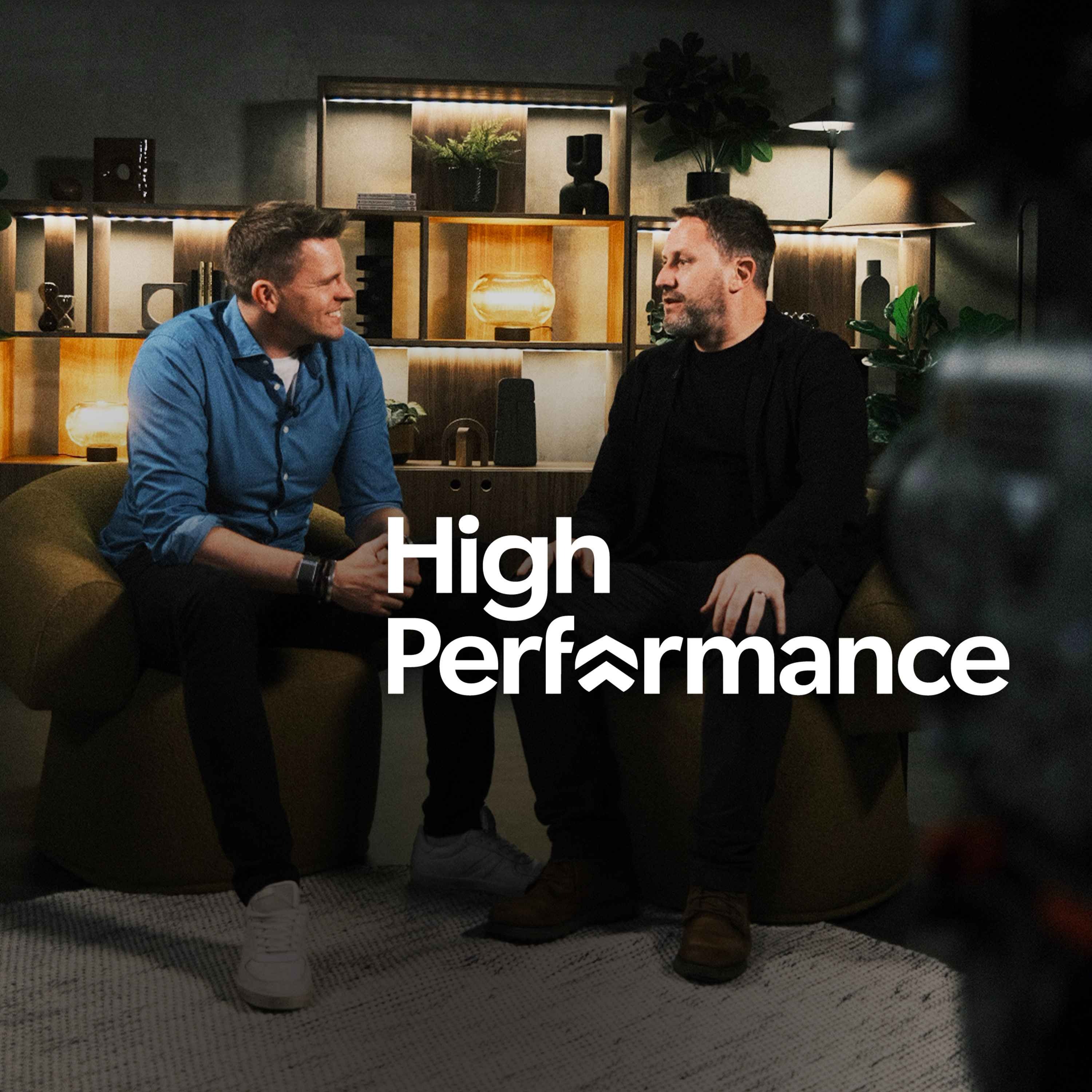
Hosts: Jake Humphrey and Damian Hughes
The podcast focuses on conversations with high performers across various fields to explore behaviors and insights that can help individuals become the best version of themselves.
In this episode, the hosts discuss the importance of breaking free from societal and self-imposed labels. Drawing on experiences from notable guests like Rio Ferdinand, Fearne Cotton, Tom Kerridge, and Lee Child, they explore themes of identity, resilience, and the courage to redefine oneself beyond external expectations.
Written by AI. May contain mistakes.

Get the gist, explore an idea or ask about something said.
 Claude
On The High Performance Podcast, what are the key points of this episode?
Searching your listeningAutomatic transcript. May contain errors.
0:28Watch it early on the High Performance App. You can be confident you have everything you need to keep your facility running smoothly. Call 1-800-GRAINGER, click grainger.com, or just stop by. Grainger, for the ones who get it done. The market's uncertain, revenues tied, and hiring on hold. That's why results-driven companies are using Upwork to keep work moving. Go to upwork.com today and start hiring proven freelance talent fast. No bulky overhead. No rigid long-term contracts. Just the right expert, right when you need them. Work smarter and faster with Upwork. Go to Upwork.com now and find your freelance expert.
1:07That's U-P-W-O-R-K.com. Post a job for free and get started today.
1:15This episode is brought to you by Opera Air, the first browser with mindfulness at its core. Now, most of us spend hours every day online, but how often do we pause to take care of ourselves whilst we're doing it? And that's where Opera Air comes in. It's a lightweight, fast, secure browser built not just for productivity, but for your well-being. With Opera Air, mindfulness is built right in. You'll find free breathing exercises, guided meditations, and soundscapes with ambient sounds, lo-fi music, and binaural beats, all designed to help you focus, relax, and even spark creativity while you browse.
1:52Have you ever felt boxed in by your own story? like the world decided who you are and you had to just play along. It happens to so many of us. We just become one thing, often not the thing that we think we are. However, we've heard from some of the most inspiring voices on this podcast, and they've told us that true growth starts when you dare to become more. And today we'll hear from some of the most inspiring high performers who have ever joined us, who are going to teach you how to rewrite the narrative around you, be brave enough to make big decisions, and live a life of purpose and authenticity.
2:23because so often, Damien, when I'm chatting to people, I'm like, how's life? What's going on? They're like, well, yeah, things are good, but I don't feel people really get me. I don't think they quite understand me. I don't think they really see me for who and what I truly am. You know, this is not an issue that is only affecting a few people. This is a big deal for a lot of people, almost more now than ever before, because we live in a world of opinions. Yeah, definitely. One of my pet hates is, you know, when I ever speak to, say, a friend and they go, well, it's just me. It's not just you, it is you.
2:53You know what I mean? Or when he speaks to people and goes, oh, I'm just a teacher. I'm just a housewife. That word just really niggles me because I feel like it's people putting themselves in a box. It's diminishing themselves from who they are and the richness of their potential. So you're right, Jake. I think if we can become more aware of it, we can stop saying I'm just anything and start just being ourselves. All right. Well, let's crack on then. And we're going to start with our very first ever episode. Episode one of our performance when Rio Ferdinand spoke to us about labels. Yeah, I have a fear of not being regarded as a good pundit.
3:32A fear of not being known that by the time my time's up on this planet, I've got a fear that people are going to go, he was just a footballer. I want to be known for something else. And that's the type of stuff that stimulates me and keeps me going and keeps me ticking. And that was how I was as a footballer. I'm not going to be a good footballer. I don't want to be a good footballer. I've got to be a good footballer. What's next? I want to be a top footballer. I want to be elite. I want to be considered one of the best in Europe, one of the best in the world. Yeah, because I was scared. I didn't want to be seen as one of the just also normal players in that dressing room.
4:04I need you to miss me if I'm not playing. I want my teammates to go flipping out of Rio's top player, you know. Can I just share something, Damien? Like Rio said that I want to be known for something else. And you know when people come onto a show, they often just, they say these things. Well, I'd like to just say that one of my greatest and fondest memories of my time working for BT Sport, it wasn't covering Champions League finals or FA Cup finals. It wasn't doing those games in front of tens of thousands of people or watching amazing goals being scored. It was often at the end of the day when Rio and I were staying overseas or staying in a city that neither of us lived in and we were in the same hotel.
4:42And I'd either go back to his hotel room or he'd come to mine and we'd sit in the bar together and we would just talk about what the future might look like. and this guy was constantly sharing with me his dream for people to see him as someone who wasn't just a footballer. He was like, I want to, if I'm going to be in football, I want to own a football club. If I want to work in business, I want to create not just any old little business. I want to create a business that people know is worth billions. You know, he has this desire, this deep desire within him to have impact. I feel that's the reason why he made it so successfully as a footballer.
5:12But I just thought it was such an interesting thing to sit and talk to a guy who got to the absolute top of the tree. and for 99 % of people to get there is enough, right? Real, we just go, do you know what? I'm done. I've done it. I've won the Champions League, the Premier League. I've been one of the greats. And then they just chill. But the fire still burns bright in him for breaking out of this idea of just being a footballer. And I think the reason why that's valuable to people listening to this conversation is that I think it gives you an energy. I think feeling that you've been labelled wrongly and I feel I've been in that position quite a few times in my career.
5:46I still feel I'm trying to break out of the mould of, everyone just goes, oh, sports presenter, Jake Humphrey. I'm like, yeah, there's a few other things that I've done other than that. But it kind of lights this fire inside you to go, to do other things, to push forward. So I think my first bit of advice, or my first thought for people listening to this today, is not to be derailed or handcuffed or held back by the idea that people are putting you in a box, but actually to be lit up by it, to use it as an energy source. Well, let's explore that, Jake, because one of my favourite bits of your story is, You know, when you went to speak to somebody at the BBC and they said, we don't employ people like you.
6:20You know that bit? And it felt like a slap in the face and certainly felt disappointing. What did you do? So just to sort of give some context to people, I went for a meeting. I said I'd love to be a sports presenter for the BBC. I said I loved Des Lynham. And the first question was, what sport have you performed to an elite standard? and I just said, well, I played one game of football for my school football team. I'm not very good at sport. And then they said, well, don't worry. We'll still employ you if you're a trained journalist, at which point I told them I'd failed all three of my A-levels, including a U for A-level English.
6:56And that's when the line, we don't, BT, they said something like, just enjoy children's BBC while you're there because BBC Sport don't employ people like you. And you know what? What actually saved me in that moment was the challenges of previous years. It was the sort of family trauma that I'd had. It was losing my job at McDonald's and being embarrassed. It was failing my A-levels and having to go again. It was the 50 or 60 rejection letters that I had in a folder that I've still got in the basement of my house reminding me that I wasn't good enough or it wasn't going to happen or I was a failure or a loser or whatever.
7:31The fact I'd been through all of those things meant that I went, well, I just have to go again. And so I think really what that taught me was the power of failure. is that just because something is hard for you doesn't mean it's bad for you. All of those early struggles were actually really good for me and it meant, right, I had to find another way. So, you know, we're talking about people reframing or not being put in a box. I think resilience is the thing that helps you get out of that box. The ability, the optimism to think, well, actually, I'm going to show you that something else exists here.
8:00I think it's a vital, vital ingredient. But it actually sounds to me like you gave yourself a label of being a survivor or a scrapper or somebody that was resilient. It sounds to me like you were writing your own label there without being necessarily conscious of it. I think what I would say is I think I had multiple labels that most people didn't see or know about. You know, I was a scrapper and a fighter and a reframer. I was also a TV presenter. I suppose I also was loads of other things as well. I knew I was a great friend. I knew I was a thoughtful son. You know, I was going out with Harriet at the time when this happened.
8:37I knew that I was a good partner. so I think having like more than one I don't know if there's any sort of science in this but I knew that being more than just a kids TV presenter was actually quite a helpful mindset for me well you're right there is science that there's a study that was done by a psychologist called Linville in 1985 if I recall correctly who said that people who have a multi-dimensional identity a bit like what you're describing there of being a son a partner a brother a friend and all of those different roles they tend to see themselves as more than just a job title or a label so that is a good way of explaining how you weren't crushed by somebody saying people like you because they don't know who you really were and that shows how when you can adopt and embrace those different identities you tend to be a lot more resilient creative and have better mental health and is that a habit that we can all learn well it is and and that's a beautiful intro to uh the essential habits that I've been really privileged to record.
9:40It's a series that's released every week where we take these small lines or throw away remarks from our guests and go and explore the science of how anyone can adopt them. And we've actually explored this Rio episode in more detail about how he had a blazing row with Alex Ferguson because he saw himself as being more than just a footballer. How those conversations that you've had with him in late night bars around Europe, he's actually adopted that and assimilated it and more importantly how anyone listening can go and do the same in their lives so check out the Essential Habits series oh and by the way I'll back that up absolutely do check out the Essential Habits series I messaged Damien actually this week saying this new show you've made is absolutely brilliant I was on the train I got so much from it Damien can I share a story of a good friend of mine someone who I think is the queen of sort of redefining themselves it's Fern Cotton who was one of the big reasons I got into podcasting.
10:36Let's hear from Fern and then I'll talk about why I think this is so important. I started Happy Place for quite selfish reasons really and that was because I was very, I was about to say quite disillusioned with the career that I was in and was leaving lots of jobs that I was more traditionally known for because I was unhappy, not just for work reasons, I had all sorts of stuff going on in my personal life that felt deeply confusing and I had been through a period of depression. So I knew I needed to change something. I didn't know what. So I was just getting rid of stuff left, right and centre.
11:12And podcasting felt like a good natural place to arrive at because I love interviewing people. I'm sort of deeply fascinated by people's stories. And I was really ready to do an interview that wasn't eight minutes long with four songs in the middle where I could only ask about their album. I wanted to know about the people. so it felt almost sort of reckless to go what I can just talk for an hour without any restraint I found it absurd so selfishly I felt really challenged and I felt really excited and I needed both of those things certainly but we're so lucky that we get and hopefully the listeners have a similar experience of oh yeah let me get out of my own head for a minute and and think about other lived lives.
11:57I get to turn up to work now as myself, not this sort of sugar-coated version of myself that has to be super happy and positive all the time and pretend to like songs that I don't. I'm, you know, I can just be like, I've had a shit day or I've had a good day or whatever. So Fern was the archetypal success story, right, when we were at Children's BBC together. There was kind of this strange hierarchy, Damien. If you were on the CBBC channel, you were doing okay. Yeah. If you were on BBC Two, you were doing better. If you were on BBC One or Saturday morning telly, like you were the megastar. And Fern was the megastar.
12:31She was doing Top of the Pops. She was doing all of these other big shows. And I think so often we are anxious and nervous about walking away from success, right? But actually, I want to give Fern huge amounts of credit in this moment because Fern is the reason my high performance happened. Because I saw myself as a TV presenter, right? I didn't see myself as a podcaster. Yet when I called her and said, I was thinking of doing this podcast, like high performance, but I'm not really sure whether it's something that I should be doing. She said to me, it will give you the greatest sense of purpose you've ever had in your life.
13:02She said that doing Happy Place was the best move that she's ever done. She finally has a proper reason for being and she feels valuable for the first time. And that was really powerful. But I think the other thing that I want to credit Fern with is that, you know, when I left BT Sport and I stopped being a TV presenter in the sense that I wasn't working on the telly at the time, in the same way that she stopped being a TV presenter, I was scared, right? And I just kept thinking about Fern. I was thinking, well, I've spoken to Fern. She's three or four or five years further down the line of not being on the telly every week.
13:34And she's the happiest I've ever known. And so actually, I took the power from Fern that she didn't try to become something else to impress people. She actually led further into being herself. I think it takes huge courage. but I think we only realise, right, actually how living feels when we're not living a life that we don't want to be living, when we actually have the courage to do the thing we want to do. It's like, oh, this is how it feels. This is what purpose feels like. This is what flow feels like. This is what contentment feels like. And I really think that she is the queen of not allowing people to put her in a box, of taking her life and her career in the direction that she wants to.
14:15And I think it's very important to shout out when people impact you like that. You know, she's a proper hero for me. Ah, that's lovely. And I like the story about her walking away from the version of herself that everybody else really likes and admired to find the person that she feels authentically is true to herself. But what I take out of that story, Jake, is more the fact that it goes back to when we don't allow ourselves to be defined by others, we're not worried about lifting other people up. We don't see other people as competition. So like when you're reaching out to Fern, She's not seeing you come along and go, oh, you're copying me.
14:48She's going, no, no, do your own version of a podcast and go and be happy doing it. You know, when you sort of stepped away from presenting at BT Sport, you know, she's out there telling you, Jake, this is what I've learned. And I really think that that's a sign of somebody that's got a high level of mental health because she's comfortable with her own identities that she's assumed. Yeah. And I think we all want to get to a place like that. And it happened again this week. I went to see, you know, Stephen Bartlett, who was one of the very early guests on our show. And I sat down with him. Oh, yeah.
15:22And for about two hours, Damien, he was showing me around Flight Studio, talking about Flight Story, giving me numbers on Diary of a CEO, discussing guests, how they've grown, what they've done, the decisions that he made, how he did it. Like, he didn't need to do that, right? It's so much easier for him to go, hold on, that's a podcast that exists in a similar space the diary of a CEO. I don't think I want to tell him what I know. But I thought, having not seen Stephen for a couple of years, because we've both been busy, it was a real sign of someone, again, as you say, who's happy in the position they're in.
15:53And I think only when you are in that position of joy and happiness and flow, you don't see others as a threat, right? You see them as someone that you can kind of bring on the journey with you. So I just want to shout that out as well. Oh, nice. I like that. I like hearing about people that are just comfortable in their own identity know that they're not defined by simply being a podcaster. Going back to your conversation at the BBC, being a partner, a parent, a colleague, a brother, a sibling. All of those different roles allow us to be able to lift each other up in key moments. That's lovely.
16:26Oh, I'm glad Stephen did that for you. Yeah, it was really nice. Okay, what clip should we bring people next and why? I loved the conversation we had with the double Michelin star winning super chef, Tom Kerridge. because this isn't just about his professional brilliance. This was about a challenge that he was facing on a more personal level. You know, he described to us in some detail just the sheer copious amounts of alcohol he was consuming and how he decided that he wanted to stop doing that and start creating a whole new identity instead. Let's listen to him explain more. The head chef that I was working with at the time was like, you're never going to do that.
17:05What are you on about? like it wasn't a day that i wouldn't go for you though i imagine yeah it was like well i'll show you i'll show everyone i'll show all of you and it's weird because you have people ask me how you've done it and what you've done and you worry all of those fears that you talk about there how am i going to be that funny or what's my social group going to be like what's my but actually i had a problem right so when if you're just and i imagine it's a lot more difficult if you're a casual drinker right to then give up drink because you haven't got a problem but you probably drink more than you should, but you want to give up a bit less, but you haven't got an issue.
17:40I think if you've got a problem, you recognize that there's a big thing that you've got to deal with. So you have to change your social outlook, your social standing, what you do, how you go. If your life was always about being in the bar, going out until late at night, being in clubs, doing whatever else, you have to go, actually, I'm not going to do that. So when you say to people, that's not me anymore, I'm not doing that, I'm going to show you. two of my greatest friends two chefs that were also massive drinkers big drinkers really into it the same we'd all be on it together we're all who were um i at first you think they're going to be like oh come on just what that your truest friends when you say to them i've got a massive issue here i've got to change it we're going to i'm not going to do it again they were like amazing brilliant right what do we need to do to help we'd still go out you'd still got like you know be a part and they were massive so your real friends are the ones that help you through it they're the ones that are supportive they're the ones and that's when you start recognizing the rest of it it's just noise it doesn't matter and if you think about your life and people who go to the pub I don't know five or six times a week and they go and they go to the same pub and they're local and I love local life and I love the idea of it but when I look back at it and I I go, I would go to the pub and I would meet people that I'd saw the night before.
18:59And they'd tell me the same story. And it would be the same thing. And it would be this repetitive world of actually achieving nothing. That's so interesting, Damien, because what Tom's talking about there is a change in behavior. Yet we're talking about a change in the way that you see yourself. So are we saying then that your behavior sort of directly impacts the box that you're put in? Yeah, well, a big change like that is not just behavioural, Jake, it's also neurological. So there's a study by a psychiatrist called Savalich that showed that when people make a conscious decision to change their identity, not just the behaviour, so they want to see themselves as being a musician, not just playing music, for example, the brain reward system lights up more when they're doing effort-based tasks around that new identity.
19:50so it's like the brain going right this is really important here let's switch on and pay attention so James Clay's books was around this as well that when you shift who you are your brain tends to work a lot harder then to help you become that version you know James Clay's books was about if you want to see yourself as a writer I assume that identity being a writer and then just sit down and write your brain then goes right this really matters this fits with it one of my favorite examples of this Jake is I'm listening to a an audiobook at the moment about Lennon and McCartney and just the dynamic of their relationship I'm always reminded of like Paul McCartney's story to me is that he saw himself as being a musician not just a member of the Beatles and if you can see that his identity is I'm a musician that just once was in a band called the Beatles you can understand why he's written like classical music why he wrote the frog song why he's collaborated with plenty of other musicians over the years, where he's still performing in his 80s because he's a musician and he's just doing what a musician would do.
20:54Whereas compare it to someone like Ringo Starr that defines himself as being the drummer from the Beatles. Think of Ringo's sort of creative output in the years since. It's tended to be centred around his brilliant work that he did when he was a member of the Beatles. Now, I know that's a bit of an outlandish comparison, but what it shows us is that when we assume an identity rather than just a behavioural change, our brain will respond accordingly when we decide to push ourselves out of the comfort zone and try on new habits. Now that's interesting. So for people who feel like they're in a box, they can reframe their own brain.
21:31But often the best way to reframe your own brain and also reframe the way others see you is changing your behaviours rather than your thoughts. Is that what you're saying? Yeah, very much. So this idea of start seeing yourself in the identity. Start wearing it almost as a cloak of the person that you want to become. Start doing that. Your behaviour will then follow because the brain goes, right, this is really important. Now we'll embed it as a habit. And I think the final point about Tom Kerridge there is that what he stopped doing was something that was so central to the way that he operated.
22:04You know, he partied hard, he played hard, he cooked hard, he worked hard. If you take one of those things away, I'm sure that there is always that fear that maybe if I change my identity, I'm going to lose my success because maybe it's one of those things that is the reason why I'm successful, even though it's maybe stopped serving me. So I think it's a very important thing for us to talk about briefly. And I want to introduce a clip from Lee Child, because we can't confuse comfort with purpose in this conversation. Here's Lee. I mean, it was in one way a super stressful period because I was 39, about to become 40.
22:41and that is like a classically bad age to be out of work. You know, tragically, it's too young to retire completely because you're not quite there yet. And so you've got to find something else to do. But nobody wants to hire you when you're 40 and you're sort of too old and too kind of tired by that point to go through that interviewing process that you used to do when you were 20. So it was a really miserable prospect, really, and scary. And, you know, I was like everybody else. I had a mortgage and I had a kid in school and I had credit cards and stuff like that. So in practical terms, it's a problem.
23:23But simultaneously, I also felt that it was also kind of the last chance. It was your last opportunity to change or do something different. it's halfway through your work in life more or less and you've gained a lot of discipline you've you've learned a lot of things you're a different person by then you're not the idiot you were when you were 20 you can look back over the first half of your career and say what have I got what have I learned how do I use this going forward so in one way it seemed like a really shining opportunity and I played a psychological trick on myself, which was to completely ignore the negatives and just concentrate on the positives, which was, yeah, I can start over.
24:12I can do something different. I can be somebody new. And again, I played another trick, which was I allowed no doubts at all. I thought, I'm going to write a book. It's going to be successful. It's going to be okay, which is a ludicrous, delusional thing to do because writing a book is like buying a lottery ticket, probably even worse odds than that, to be honest. And so, but if you allow that doubt to creep in, you're never going to get anywhere. So, I remember thinking, yeah, people would ask me, what are you going to do now? And I started writing a book and in my own mind, like night follows day, it was going to be a success.
24:51And people would look at me like with this rather apprehensive, worried expression like, he's also gone crazy. So really, Damien, it's about giving ourselves permission to kind of expand the way that we see the world and the way that we behave, right? Yeah, definitely. I mean, the Lee Childs example is really powerful because there's a famous study that was done many years ago by a guy called Greg Bateman about people that worked on the railways that people who identified themselves said, oh, I'm a railway man. That was the way that they would describe their job. When eventually the railways made them redundant, people suffered great mental health challenges because their very sense of identity had been taken away from them.
25:33When they saw themselves as a father that just happens to work on the railways, they had this different identity to be able to assume. And like Lee explains there, that if he saw himself as being a writer for Granada, the day that Granada come along and tell you you're no longer there, he had to switch and he had to see himself there as being an author as well as being a parent and being a partner as well so when these people give themselves permission to expand and whether that's that you know circumstances dictated like lee did or they just simply listen to something like this and say no i want to start playing around with different identities the research shows this really matters there's one study that was done that found that people who could see their past roles, not as failures or constraints, but simply as stepping stones to the person that they are today, report that they have higher levels of self-esteem and more motivation when it comes to doing things into the future.
26:27So it's a really important point for us to dwell on here, I think, Jacob. Just look at past roles that we've had and see them as being parts of a mosaic that add up to the whole picture. I think that's lovely, Damien. What a nice way to come towards the end of this conversation about stopping letting people put you in a box and actually we've got a quick question uh from adam about this who says damien i feel stuck in my job but i'm scared to change could you explain to me how i know when to pivot i think most of us rarely ever feel ready i think this is one of the things if you wait for if you wait for the moment where you go right now i've got everything i need that very rarely comes but i'd say listen to your energy.
27:09So when we spoke to Ali Abdel, he spoke about one of the key elements of his do more productivity messages was about this sense of alignment. He spoke really powerfully about, he was almost like the ultimate high achiever. You know, he'd got great grades at school. He'd got a first class medical degree at Cambridge university and found himself being a doctor. And it drained him because it wasn't aligned to who he wanted to be. He saw himself as being creative and he saw being a doctor wasn't aligned the true version of who he is so listen to your energy if what you're doing is draining you well that's a clue that maybe there's a misalignment in your life here so instead ask yourself the question that what am i really good at what do i love doing and how can i make a difference to people by doing that and what hopefully you find there is a spark that eventually starts to become a roaring fire i think that's great um and the final question comes from Sarah who says, hey guys, how do I manage people's expectations when I want to be something new?
28:10What I would say to this, Sarah, is that it's all about what you want to be, not about what you think other people want you to be. For a start, how do you really know? Okay. Also, why is it any of their business? Why is the life you want to live and the person you want to be anything to do with anybody else? I love the phrase, other people's opinion of you is none of your business. But also, we've had James Clear on High Performance and, you know, he spoke to us about you have no responsibility at all to live up to somebody else's expectations. You know, the importance in life is prioritising your own goals, your own preferences, your own moves, your own direction, rather than trying to meet the expectations of others.
28:48I don't know who this quote comes from, but have you heard the quote, Damien? Blessed is he who expects nothing, for he shall never be disappointed. And it's like, you know, managing expectations of others is very much going to leave you feeling disappointed because others' expectations will always change and will always alter and you can't please everyone all the time, blah, blah, blah. But being true to yourself, man, you know, I feel... Well, do you remember the conversation we had, Jay, with Pippa Grange on this where when we asked her about non-negotiable behaviours that you expect others to do and she was like, whoa, hang on a minute, no, I don't expect anything of other people because that just sets me up for disappointment.
29:27I have behaviours that are non-negotiable for me, but I don't have any expectation that anyone else will do it. That really resonated with me. Love that. And, you know, sometimes there's someone I know who struggles with friendship groups. You know, why are we suddenly not seeing these people and why are they suddenly doing things without us? And I see it all over their Instagram and blah, blah, blah. And I think that's something I'm going to talk to them about and say, like, why do you have expectations that people are any different than that? You know, people are permanently disappointing, right?
29:55Okay, but only if you allow them to be disappointing by having an opinion they should be something else. I think it's really important. I think it's a great way to end. Damien, thank you so much for today. Thank you, Jake. I love these chats. I like going back and looking at the past guests, but again, trying to reinterpret it as to what we can do with this and how we can adopt them and assimilate the ideas into our own lives. That's great. And all I would say finally, Damien, is I'm not in this world to live up to your expectations and you're not in this world to live up to mine. Good. So next time you're late for an interview, I won't be expecting anything.
30:31Brilliant. Don't have a go at me. Don't expect anything other than mediocrity. There you go. Low performance. Mate, thank you very much. Nice to chat. Thanks, mate. Lovely to catch up. And I hope, as always, you've enjoyed this little conversation between myself and Damien. If someone in your life, it might not be you, it might be someone else, is struggling with this idea of being put in a box and the struggle of letting other people's expectations derail them or you being derailed by others not leading up to your expectations, just pass them this episode. Ask them to have a listen. It might just be what they need.
31:01Thank you so much for being a supporter of High Performance. Please hit follow wherever you listen to your podcasts. Download the app if you want to go even deeper and we'll see you soon.
31:52We'll see you next time. Grainger, click Grainger.com or just stop by. Grainger, for the ones who get it done. At Capella University, learning online doesn't mean learning alone. You'll get support from people who care about your success, like your enrollment specialist who gets to know you and the goals you'd like to achieve. You'll also get a designated academic coach who's with you throughout your entire program. Plus, career coaches are available to help you navigate your professional goals. A different future is closer than you think with Capella University. Learn more at capella.edu.
You don’t have to be who the world tells you to be, and sometimes, the most powerful thing you can do is step outside the box others have put you in.
In this episode, Jake and Damian dive into the idea of breaking free from the labels others place on us, and the ones we place on ourselves. Through compelling reflections and lessons from guests like Rio Ferdinand, Fearne Cotton, Tom Kerridge, and Lee Child, they unpack how we can reclaim our identities and live more purposefully.
From Rio’s determination to be more than a footballer, to Fearne’s courageous shift away from mainstream TV, and Tom and Lee’s decisions to redefine their lives in the face of challenge, this episode uncovers what it means to live beyond expectation.
Listen in as they offer practical insights into redefining yourself on your own terms, and why embracing multiple identities may be the key to a more fulfilled, high-performance life.
Listen to the full episodes featured:
Rio Ferdinand: https://pod.fo/e/15914
Fearne Cotton: https://pod.fo/e/1021d8
Tom Kerridge: https://pod.fo/e/22356e
Lee Child: https://pod.fo/e/10a24a
Hosted on Acast. See acast.com/privacy for more information.


