
 Ask ChatGPT


 The High Performance Podcast
23 Sep 2026 · 31m · 17 chapters
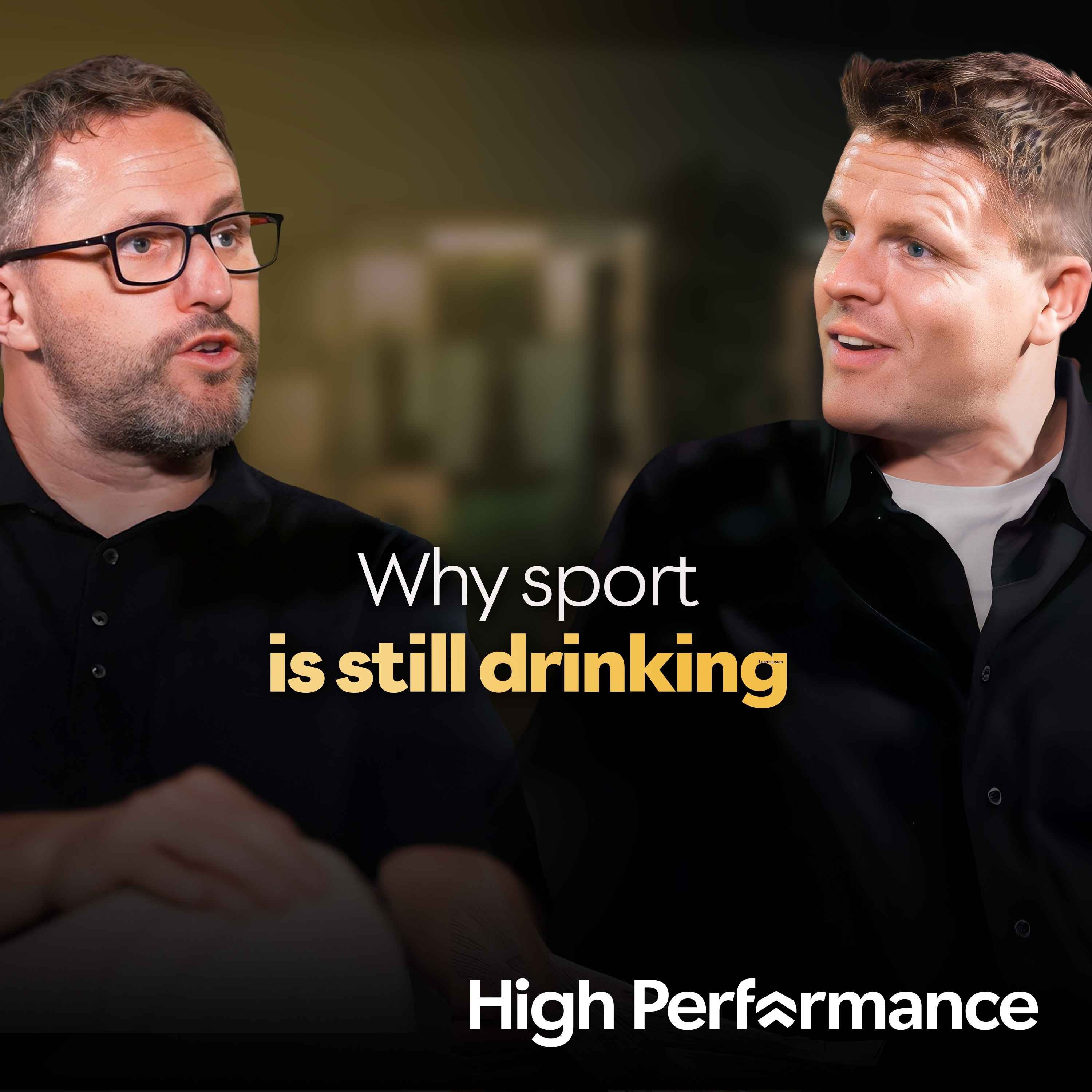
Whether alcohol still plays a role in elite sport, and whether “high performance” culture has removed the social “switch off” that bonding used to provide. The episode argues for balance: alcohol can help bonding, but toxic excess and entertainment of addiction are harmful; teams should create bonding through a wider range of activities.
No named guest appears. The hosts are Damien and Jake (they discuss their experiences and research).
Damien has consulted with professional teams and worked with elite squads including Scotland Rugby Union; Jake references elite sport and social research.
Drinking is a “social lubricant” but less extreme than past eras; constant optimization is exhausting and can increase fragility; alcohol stories often mask cries for help; bonding can be achieved via alternatives (games, shared meals, family time).
Brian Robson’s “drinking club” at Manchester United; sing-song with Scotland vs Australia in Sydney; Dunbar’s Law and Robin Dunbar’s “Icebreaker Effect” (singing speeds bonding); Japan “nomikai”/“bureko” (suspension of rank); women’s sport examples (Alex Scott, Jill Scott, Alex Greenwood, Sarina Wiegman, Serena Wiegman) using fun activities like Love Island and games; anecdotes involving Paul Gascoigne and Lewis Moody.
Written by AI. May contain mistakes.
Discussion on the presence of drinking culture in elite sports today.
“Hi there, welcome along to another episode of High Performance.”
Exploring the balance between high performance and the need to unwind.
“as it used to be in terms of the amount of copious alcohol.”
The potential benefits of social drinking in fostering team bonds.
“And therefore we need to find a new version of what that looks like.”
A personal story illustrating the bonding experience of drinking within a team.
“careful actually about vilifying the fact that any amount of alcohol is negative.”
Exploring Robin Dunbar's research on alcohol's role in social interactions.
“that feels like it's everywhere, particularly sadly in podcasting and on social media, which vilifies every drop of alcohol.”
Highlighting the darker side of alcohol culture in sports through personal anecdotes.
“So let's take this back to the article that we read in the paper that inspired this conversation.”
Exploring the detrimental effects of alcohol on athletes' lives.
“So he uses alcohol to mask everything that's going on in his life.”
Discussing how athletes use alcohol as a coping mechanism for loneliness and stress.
“But what that fails to understand is that like optimization itself is exhausting.”
Discussing alternative ways to bond and build team culture without relying on alcohol.
“So I absolutely agree with this idea of not optimizing it and making space for some kind of social lubricant, whether that's a beer.”
Discussing alternative ways to bond and build team culture without relying on alcohol.
“Look at the interviews that we've been lucky enough to do with, whether it's Alex Scott that slightly preceded that era, Jill Scott, whether it's Alex Greenwood.”
Explore the shift in sports culture regarding drinking habits.
“We've gained loads of people that would have been lost to alcoholism.”
Hear personal anecdotes that highlight the consequences of drinking in sports.
“And we need to stop laughing about those stories, which are like basically tragic stories.”
Discover alternative ways to socialize without alcohol, fostering real connections.
“And I was like, who's going up to a guy that's obviously struggling and asking for money?”
Analyze the conflicting statistics regarding alcohol consumption across generations.
“If there's anyone listening to this going, I feel a bit uncomfortable with this, the idea that I can't go out with friends unless we've got a pint in the middle of the table or whatever.”
Discuss the importance of genuine connections beyond alcohol in social settings.
“That's really what we're all striving for.”
Understand the shift from seeking quick hacks to embracing deeper conversations.
“I like the subtlety of conversations like this.”
Understand the shift from seeking quick hacks to embracing deeper conversations.
“and we'll see you next time So you're not worried about hosting the whole family for the holidays?”

Get the gist, explore an idea or ask about something said.
 Claude
On The High Performance Podcast, what are the key points of this episode?
Searching your listeningAutomatic transcript. May contain errors.
0:00This is Liv Perez from Let's Get Dressed, and one thing fashion has taught me is that the smallest details are often what makes something feel truly special. The weight of a fabric, the click of a clasp, or the way a beautifully tailored piece moves. Lexus approaches craftsmanship the exact same way. Their master craftsman, called Takumi, evaluate sensory details like the sound of a door closing, the click of a switch, and the acoustic feedback of the controls. They use human perception and intuition to create what feels right, and that's engineering to be felt. Because a car that doesn't make you feel something is a car that stops short of amazing.
0:33Experience amazing at your Lexus dealer.
0:40So you're not worried about hosting the whole family for the holidays? Why would I be? Wayfair had everything I needed to get the house holiday ready. What if Mike brings his cheerful dogs? My tree has tons of five-star reviews telling me how sturdy it is. But what if everyone's plus one brings a plus one? We'll see how extendable this extendable table really is. And extra chairs are on the way. Okay, what if there's a blizzard and everyone has to sleep over? Ready to go with extra bedding and towels. From guest-ready essentials to holiday decor you can trust. Wayfair delivers.
1:13Support for today's episode comes from Square. You probably know Square as the thing you tap your card on at your favorite cafe, restaurant, salon, or local shop. And I love visiting my favorite cafe in Norwich that uses Square. And you know those places where everything just works, like checkouts fast, you get your receipt straight away. Sometimes you can even earn loyalty points while you're there. As a customer, it just feels seamless. And obviously, I love the coffee as well. But for the person running that business, Square is so much more than a way to get paid. Square brings the tools you need to run and grow your business together in one system, from payments and appointments to staff, inventory, sales, and customer relationships.
1:48Whether you're starting something new or looking for a better way to run the business you already have. Square gives you the tools to take payments, manage your day-to-day, and keep growing. And right now, you can get up to$200 off Square hardware at square.com slash go slash HPP. That's S-Q-U-A-R-E dot com slash G-O slash H-P-P. Run your business your way with Square. Get started today.
2:18Hi there, welcome along to another episode of High Performance. This is one of our regular Wednesdays where Damien and I just sit and we talk about something that's on our mind and today Damien we're going to talk about the role of alcohol in modern day sport. In fact before we started recording you were talking to us about you know some recent meetings that you've had at the very highest level of sport in England. You work with lots of professional teams, you consult for a lot of people. Is there still a drinking culture in elite sports across the world? It's an interesting question. I think yeah that's the lubricant, that's almost like the door in to sort of players gathering.
2:54I'd say it happens in certain sports, in certain parts of the world, more regularly than others. But I think the idea of a drinking culture, it conjures up the idea of drinking to excess, falling over, not being coherent. I don't think that's as extreme as it maybe used to be when you think about like Brian Robson's drinking club at Manchester United or some of those stories from yesteryear. But I still think drinking is almost like the social lubricant of players getting together, gathering, feeling that they can use it to bond. So I suppose it's a long-winded answer of saying I think it's there, but I don't think it is as extreme as it used to be in terms of the amount of copious alcohol.
3:42Okay, well, the reason why we decided to have this conversation is because we saw a piece in the Times newspaper here in the UK, and we were talking about it, debating it across our little high-performance podcast presenter WhatsApp group. And the reason why the article was interesting is not because it sort of defends drinking in professional sport, although it kind of, in some ways, it kind of does. But there was a line in it borrowed from the legendary Justin Langer, where he said, a beer is permission to stop performing. And we've spent years on this podcast, almost seven years, asking people how to get the best out of themselves.
4:15and what we haven't really done is actually focus on what's the best way to switch off and actually the best way to perform and the best way to switch off both add as much to high performance in equal measure so we're in this world now where people are wearing all the rings and whoop bands and wearables and they're trying to optimize their sleep scores all the time you know the algorithm that sits on your wrist is how you judge how you feel each day so i guess the question has become, has high performance culture left anyone anywhere where they can put their guard down? Or are we now optimizing life all the time that, yes, as you say, drinking is not happening so much, but actually there is a value to the kind of bonding that that can create.
4:59And therefore we need to find a new version of what that looks like. Yeah, definitely. I think it's really a stoop point you're making, Jake, that I think we're in a world of almost like constant optimization. you know the idea that you've constantly got to be measuring everything even like your sleep time has to be optimized about the quality of the sleep how long you have it the depth of your REM sleep and things like that and I think there's something that you know that old saying that everything can be measured doesn't count but not everything counts can be measured I was reading recently an interview with Steve Kerr the head coach of the Golden State Warriors who described back in 2017 they got Roger Federer to come and speak to the players about performance and they asked him to describe like an average day of his training and Federer spoke about getting up and having breakfast with his kids then going and doing two hours work and coming back and having lunch with his wife and then resting in the afternoon and then having a family meal together and what was interesting what Steve Kerr spoke about was it wasn't this sense of optimisation it wasn't the idea of squeezing every last drop out of his day it was about also knowing when to spend time with the people you love when to connect when to relax as much as when it was to be in action and I think when we talk about this idea of a drinking culture like I say I think the images that come to mind is extreme drinking sort of rowdy behavior people losing control of themselves and I think we lose sight of the fact that there's an awful lot of benefits to be had on this and I think for us to sit down and just have a chat and look at it from a few different perspectives you know prompted by the article that we read in the times um it'd be well worthy of our time and hopefully for anyone that wants to join us and of course if you've got any thoughts on this if you feel strongly either way that alcohol is purely 100 % negative in a high performance environment or maybe you listen to this conversation and you think yeah i can see where the value comes from from everyone getting together we'd love to hear from you on this i think where i sit on this is that like everything in life, it's all about balance, right?
7:02I do actually think that getting together with your buddies and bonding over a beer is not bad. And I think we have to be really careful actually about vilifying the fact that any amount of alcohol is negative. And, you know, there are podcasters who've spoken about one glass of wine ruining days of their lives. And actually, the reason why that's an issue is because we've got to be really careful that we don't have a conversation about optimization that removes all the thrill and all the fun and all of the, all of the, some of the madness in life, right? Some of the craziness, some of the like being loose and letting go, like some of that stuff is so valuable.
7:43But then I also think there's a moment where it becomes too much. And I still think that we talk about, I still think we talk about alcohol in a way where we don't treat it like that it's basically poison. There was a period certainly when I was a teenager, and I'm sure a lot of people can relate to this, where the only job on a Friday night was to get so drunk, you can't walk, and the next day you're hiding under a pillow full of anxiety and stress and fear, and then the next night, Saturday, you go and do it all over again and you can't wait to go out with your mates and do it all over again.
8:18I don't regret going through that period, but I also understand that I don't think that that approach to life is compatible with finding high performance. But I do think you and I having a glass of wine over dinner or going out to a cocktail bar with your partner and having a couple of drinks and a dance or going out with your teammates from work or from a sports team and having a sensible amount of alcohol so that you actually, particularly for people who it's not the most comfortable environment anyway, for them to have a drink and be actually, I feel okay here. You know, I know that people listen to this going, well, alcohol just induces anxiety and fear.
8:57So you're barking up the wrong tree. There are much healthier ways to do it. There probably are. But I also think that this sort of human propensity to have a drink and have a laugh, think of the fun that you've had when you've had a few beers over the years. I still think there's opportunity for that in an elite environment. And I see two worlds here. I see the world where it still happens. And then I see the world of pure optimization and this kind of grind slop that feels like it's everywhere, particularly sadly in podcasting and on social media, which vilifies every drop of alcohol. Well, I'll give you a personal anecdote.
9:31When I started working with the Scotland Mugby Union team, the first game I ever was part of the staff was when we played Australia in Sydney. And Scotland had not beaten Australia in Australia for a long time. And we were fortunate we beat them quite comprehensively. and this was during my first week and that evening after the game we went back to the team hotel and they closed the doors so staff and players were sat in a room we all sat in a big circle and just had a sing song got a couple of beers out people were having a drink but sat in a circle and one of the players got a guitar out and it was a sing song the guys with the new cap had to stand up and maybe do a song but I remember thinking just how powerful it was.
10:20It was like a real powerful bonding. And you know that I'm a secret geek at heart. There's nothing secret about your geekiness. But my geekiness meant that when I, like I wanted to understand the emotion that I felt because it was a really powerful sense of belonging that I felt as a new member of the staff, sat in that room that night, having a sing song with everybody else, was really powerful. And I went and looked at the research on this from a guy called Robin Dunbar. He's at Oxford University. He's renowned enough, Jake, that he's actually got a... His name has been lent to something called Dunbar's Law, which says that you can't have more than 160 people in your social circle.
11:02So this is a renowned psychologist, but he spent years studying the psychology of social bonding, right? And his argument on alcohol is actually what I found that evening in that Sydney hotel room, is that its role is in triggering the endorphin system. And that's just what starts to promote the bonding, makes bonding easier. But alcohol is just one of what it describes as a family of endorphin triggers. So the others are having a laugh, singing, dancing, telling stories, and sitting down and eating together, the idea of breaking bread. So Dunbar actually published a paper called The Icebreaker Effect, How Singing Mediates Fast Social Bonding.
11:44So what I experienced that night of everybody just doing it, and by the way, a handy tip that my dad passed on, he said, if you're ever required to stand up in a group and sing a song, choose Yellow Submarine by the Beatles, because they wrote it for Ringo Starr, who was legendary for not being able to sing. And I did it, and within two bars, everybody else joins in and joins you out anyway. So that's a handy tip for you. Yeah, that's good information. but I think this is the point we're making though about this idea that when we think about a drinking culture it's what's the year at the start it's almost like it opens the door where people go ah we're in a social environment this is where we're getting to know each other the barriers come down now if it's only drinking is the way to get those endorphins going I can see how it can become extreme and dangerous but if it's married up to having a laugh if it's married up to having a bite to eat together or getting into a team sing-song session that's actually really powerful in terms of creating those bonds of cohesion.
12:44So let's take this back to the article that we read in the paper that inspired this conversation. It was by a guy called Cameron Steele. And what he said in the article was, in England and Australia, where I've spent most of my life, alcohol is as ingrained in dressing rooms, both grassroots and professional, as it is in the broader cultures of each nation. And I think part of it is that we still make heroes out of people who've spent a lot of their careers drinking to excess. Yeah. So we spoke recently on the podcast with Lewis Moody. The episode hasn't come out yet, but when it does, people will hear him talk about the fact that he stopped doing keynote speeches about his rugby career because despite the fact that he spent his life trying to get to a place that was like really deep and hard and challenging to get to, despite the fact that he was doing kind of like psychological gymnastics every day to try and be the best he could be, despite the fact that he became, you know, one of the greatest rugby players of his generation, when he does keynote speeches, all people want to talk about is who is the biggest party animal, tell us some of your big nights out stories.
13:49But often those conversations with people who will tell you those stories are basically tragic. You know, and we're then laughing about it. And it's not just in keynote speeches and after dinner speeches. And there are lots of people who we know now have struggled with alcohol. Alcohol's destroyed their lives, yet they're on stage telling stories about it and everyone in the audience is laughing about it and lapping it up and I think that's tragic I even heard a podcast the other day and it was three guys chatting to a former footballer who struggled with alcohol he obviously had huge issues with alcohol because he was saying that he would go out till three in the morning and then go back to the same bar till three in the morning and leave his kit bag there he was talking about living in his girlfriend's unfurnished house that didn't have a kitchen or a bathroom and I'm looking at it thinking man this is like a tragic story of someone who's probably got some mental health challenges, doesn't know how to cope with them.
14:39So he uses alcohol to mask everything that's going on in his life. He was clearly needing help at that time. He might even be talking about it now as a kind of cry for help. And the hosts are just laughing their heads off like it's absolutely hilarious that this guy was unable to control his drinking. That's the problem here, is that we still think that it's funny that people have a really toxic relationship with alcohol i think until we can solve that problem we can't find the right balance for where alcohol sits not just in modern sport but i think in modern life now yeah yeah it's an interesting one isn't it like because again it doesn't take a lot to cash your mind back and go george best yeah you know uh stamboles you know characters like that you go from the 60s through to the 70s that i reference the brian robson drinking club at united where the stories are legendary you know Gordon Strackman putting the boot of a car on his way back because he was that drunk.
15:35And we love them and they're funny and they do play a role. But like you say, often they mask the fact that they're a cry for help. They're often people that are damaged or struggling and we're sort of offering them up for our entertainment. I don't know if some of it is, you know, like if Lewis Moody, for example, tells us a funny story about his playing days, suddenly this guy who we saw as like almost superhuman machine wearing the red rose suddenly becomes more like us so that was something that i read about in that times article that made me think about it there's psychologically something about status leveling where we're trying to flatten hierarchies that we can do it through alcohol or in a bar that you can't do on a sports field where talent sort of tends to play out and find its own level.
16:26So the question is whether it's alcohol doing that or whether it's just we're building environments that allow us to feel better about ourselves of seeing our heroes with feats of clay. In Japan they actually have a word for it they call it there's something called a nomikai which is like an after work drinking party that they do right where the senior person uses this term called bureko and it translates roughly jake as a suspension of rank so what it means is the rules of seniority are set aside in this specific after after work party where everybody can have a laugh whatever you say is going to be forgiven nothing gets taken seriously so when you get back in the office in the morning you respect the hierarchy that goes back into it again and i think when you talk about some of these after dinner speeches or the kind of the celebration of people through their drunken excess it's almost like the equivalent of like status leveling making ourselves feel better that these people with prodigious talent are just like us when they've had a uh when they've had a beer or two yeah look you and i have sat with paul gasco and right in his agent's house where he was living in the spare bedroom yeah you know the one of the biggest tales of tragedy from a from an addiction perspective that we've ever seen in in sport yeah but i also come back to the fact that like people are operating at the elite level they still need this like i think we're in a really weird time at the moment where influencers and podcasters and social media content creators um are kind of are trying to make us all feel like if we're not optimizing our life 100 of the time then it's uh then somehow we're losing so you have to get up at five and you have to be like really really really optimized until you go to bed early at eight o 'clock so you can have a good night's sleep with your, you know, all your wearable tech, measuring every part of your body till you wake up early the next morning and go again.
18:19But what that fails to understand is that like optimization itself is exhausting. This constant need to be measured, to be checked, to be tested, to be wanting to be better, you know, this phrase, which I've definitely been guilty of using in the past, the only person you've got to be better than is yourself yesterday. Fuck, imagine living a life like that where for 80 years you have to be better than the person you were yesterday. Yeah, yeah. And I think what alcohol has traditionally given us, exactly as you speak about in that Japanese example after work where there's no rank, there's no hierarchy, and everyone's off duty, there needs to be a moment where all of us go, right, now it stops.
18:56Now the relentlessness and the hard work and the desire for being better has to stop now. But then I think we need something else other than just alcohol that gives us that moment. and I don't know what you think it is. Maybe it is like, you can't just all sit around and sing all the time. Yeah, yeah. Because it's kind of weird, but like I think we don't think about the fact that young footballers who we laud and put on a pedestal and who might have issues with gambling or drinking or snus or whatever it is that they're taking, like they are traveling a lot. They're young. They're being exposed to massive scrutiny.
19:35They're not home very often. they're probably lonely in the hotel room you know, tennis players and Formula One drivers and all these other, you know, they don't live a normal existence right? So therefore alcohol I think naturally becomes not just a way to bond with each other but also a way to actually escape some of the monotony of finding high performance because high performance can be a monotonous thing to chase We'll be right back after a quick word from our partners Today's episode is brought to you by Olympic Hospitality. The Olympic Games are coming to Los Angeles in 2028. This is a once in a generation event that you will not want to miss.
20:15And it's more than a ticket. It's a story you share with your family and friends. And the ultimate way to get closer to the action is with an Olympic Hospitality package. Ticket inclusive packages offer a range of prime seating and lounge access options, venue dependent priority entry, food and beverage selections from LA's diverse dining scene and elevated service and continuous support, making your day at the Olympic Games one to remember for a lifetime. Get ahead of the curve with an LA28 hospitality package. Discover more at hospitality.la28.org forward slash high performance. What if the real question isn't where you're going, but the adventures you experience along the way?
20:54It's time to set your sights higher on peaks still to be climbed, rivers still to be crossed and greater dreams to pursue. It's time to embrace the impossible with Defender. A family of vehicles built around capability, durability, tested on some of the most difficult terrain, Defender defines tough luxury. And I should know, I've driven one for the past three years. I have the Defender 130, but from the compact confidence of the Defender 90 to the versatility of the 110 through to mine, the Defender 130 with seating for up to eight, there's endless potential. You feel in the details as well, the rugged body design, the robust materials, all working together so you can head out with confidence.
21:31And inside, ClearSight technology helps you see the world around you in a new way, while the PV Pro keeps your navigation routes and playlists flowing seamlessly as you go. And with up to 89 cubic feet of cargo space, there's room for everything you need on your journey. Explore the full Defender lineup at LandRoverUSA.com. who says Halloween only lasts one day with Wayfair one night of Halloween becomes a whole season at home from larger than life yard decor and moody lighting to festive accents for every room in the house Wayfair has what you need to make Halloween feel like magic all in one place because the best Halloween memories aren't made in just one night they're made all season long shop Halloween decor now at Wayfair.com wayfair every style every home
22:20if someone's listening to this now thinking yeah well i do fucking love a drink on a friday after work and it is important that's okay yeah but there are people listening to this that go it's definitely too much and we have to find what the answer is like how how can we help people find the answer away from a pint of beer or a line of coke yeah yeah yeah again it's a really good question i like as you were describing that there the idea of optimization i think it reminds me of the like the the the nicholas taleb phrase about being anti-fragile i think the idea that when we optimize everything a bad night's sleep we're then really fragile because we go i've had a bad night's sleep so i can't perform as well so the data almost makes us more fragile we think it's making us robust but it's not whereas wanting to be anti-fragile is that idea that that you grow stronger You can have a setback and you grow stronger for it.
23:14So I absolutely agree with this idea of not optimizing it and making space for some kind of social lubricant, whether that's a beer. I think we've already got an example of it, Jake, of what the alternative looks like. So if you think over the last 15 years and the growth of professionalization of women's sport, partly powered by the success of the England Lionesses and Serena Beegman and what her staff have done. Look at the interviews that we've been lucky enough to do with, whether it's Alex Scott that slightly preceded that era, Jill Scott, whether it's Alex Greenwood. Look at the examples that they're telling us about how they did it because very infrequently are they citing the examples of, where we all went out and got pissed and had a good laugh.
24:07If you think about when Alex spoke to us after the last Euro, she's speaking about how Love Island was where all the players would coalesce in the team room in an evening and they'd watch it and they'd respond to what was happening on the screen. She'd describe how playing games like Monopoly and things like that were ways in which they started to have more fun. Knowing that we were going to talk about this, I was with Serena Vigman yesterday and I mentioned, we were talking about it and I cited the Alex example to her. And she said, I truly believe in connections and communication on the basis that is players that know each other better on and off the pitch have a competitive advantage.
24:49So she's making space for it in her days. She could be optimizing it and looking at what they're doing on the training field, studying the data. but she was recognising there needs to be this space for players to bond and find common ground and have it. But the idea of it having to be simply through booze rather than see it as one sliver of a range of different slices of the pie, so she's seen it in this context of the odd beer every now and again is great, but there's got to be other things that we offer as an alternative instead. Do you think that the men's game would accept a game of Monopoly?
25:30Do you think there's still a difference or a discrepancy between where women's sport is at and where men's sport is at? I don't know. Again, I'll give you an example from being on a tour with Scotland again. We were in Argentina this time, and I remember going into the team room one night and the players were all sat watching Love Island. All the blokes were sat there. and I remember like speaking to some of the coaches and they were like what the fuck are they doing watching this shit and I remember having the conversation to go Love Island isn't aimed at us we're not it's demographic it's aimed at their age but step back and look at what they're doing they're all sat around they're laughing they're responding they're teasing each other but they're all there every member of the squad was sat there enjoying it so when I say it's easy to go I don't think men would I think we are finding different ways of doing it but I think we need to normalise it a little bit more and make it a bit more accessible and I don't think demonising boozing and sort of team nights out is healthy because then you sort of drive some people away from it but some will be attracted towards it I think making it seen as a part of a whole range of different solutions and some of that can be about going on trips together some of it can be about the go-karting that you sometimes see them do playing golf together.
26:54So for the high-performance summer party, it was a paddle tournament, paddle competition. We weren't invited to it, by the way. Let's just point that out. We now know that. We found out about it today. There was a ranking to get in, and we didn't make the ranking. Thanks, Will. But what I like about that is that if you want to play paddle, play paddle. If you don't, you can sit and watch. But also, you can have a drink. And it's not all... I think it's about being more creative about what we do as teams, whether it's sports teams or work colleagues or even family members, be more creative than just, right, end of work, let's go to the pub or let's go and have a drink.
27:29It's like, let's go and do this thing. Let's go and take part in this event or this. And I think there's more of this happening than ever before. Yeah, yeah. And if you want to have a drink alongside that, fine. But if you only go to the pub, what happens? You end up with that same old conversation where the person that doesn't drink is called boring because the only thing you're doing is drinking. Therefore, the only thing you're doing, they can't take part in. so therefore they seem like they're boring they're not boring, they just made a decision but if you're go-karting or playing paddle or doing archery or some other event, they can do all of that stuff no one's calling them boring because they're involved but then they don't have to have a drink so I think if people are listening to this thinking how do I drive a different culture wherever I am or how do I change the way the land lies in my world I think the answer is do things rather than just go drinking but also we have to stop thinking that we've lost something by losing that real deep, hardcore drinking culture that existed in male sport in the 70s, 80s, 90s, and probably even in the early 2000s.
28:30Like, we haven't lost something there. We've gained loads of people that would have been lost to alcoholism. Yeah, yeah. And we need to stop laughing about those stories, which are like basically tragic stories. They're not funny. Yeah. I remember years ago meeting Phil Thompson, the former Liverpool captain, and he very quickly picked up that I was from the other end of the M62 and we sort of then ended up in a bit of a jousting about it. And I was talking about Brian Robson, and I hope Phil won't mind me saying this. I think one of the things he said about Brian Robson was he went, imagine what he could have done if he hadn't had all those injuries because of the drinking.
29:11And he wasn't criticising him. He was talking about how phenomenal they found him. But I think this idea that we sort of put these people on a pedestal and assume that there was no consequence to some of these destructive behaviours, again, it's sort of stitched into our culture. It's the idea of it's not particularly cool to look at somebody recounting those stories and find it funny or find it sad rather than finding it amusing. I still think about that visit we did to go and see Paul Gass going down in Pearl and I found it heartbreaking in lots of ways because he was such a warm, nice, kind guy and it was when his agent said to us that line that people will come up to him in the street and ask him for money.
30:01And I was like, who's going up to a guy that's obviously struggling and asking for money? I said, what was he saying? He said, he'd give it to you if he asks for it, if he thinks you're in need. And I think we need to sort, and again when you think about Paul when he said like he'll be in a band people want to buy him a drink because he go oh I remember that goal you scored against Scotland let me buy you a drink to celebrate and I think we're enabling some people that that actually we need to be helping you know in lots of different ways and like I say I like the idea of just simply offering it as a range as one of a range of options I remember a few years ago I've got a mate back in Manchester Bob who is an alcoholic so he describes himself as an alcoholic even though he's been in sobriety for the last seven years and doing phenomenal and I remember the first time when he said to me do you want to meet up and I was like yeah I'd love to and he's like should we go for a walk and I'll admit I found it a bit like what I thought we'd meet for a beer and he's like I really don't want to be in a pub even though I have no problem with you having a drink in front of me but he was like do you fancy we'll just go for a bit of a walk and we'll maybe find someone and get a cup of tea on the way and at first I felt uncomfortable so I can recognise that this maybe feels a bit strange but then when you do it you go actually that was lovely it was a range it was something different but it was also a real connection yeah like if you're just getting together having a beer yes of course you can have a nice time but there's a when it's the two of you and like no kind of like nothing to hide behind yep then it's real and that's obviously what you were feeling yeah definitely so So I can recognise the discomfort.
31:38If there's anyone listening to this going, I feel a bit uncomfortable with this, the idea that I can't go out with friends unless we've got a pint in the middle of the table or whatever. I can recognise it, but I can also say, just sort of step back and gain a greater perspective and go, it doesn't have to be either or. You can do a little bit of that, but also have a range of other things that facilitate it. And I think hopefully we're seeing, the fact that this debate is going on about sport, sport is just a mirror of what the rest of society sees. Like, I was trying to dig up some stats on this, and it's contradictory.
32:13There's some information, Jake, that suggests that drinking is on the decline. It's definitely on the decline. Well, but then let me offer you... Every one of my mates now loves an alcohol-free beer, but they still love a beer. Yeah. And that's where I land on this whole conversation, is that the great news is you can now have a good beer, like a nice beer, with your buddies and not drink alcohol. So there's some stats that do support it. It says that in one health survey in England, 35 % of 16 to 24 year olds reported not drinking at all in the last 12 months. A record 24 % of adults have abstained completely in 2025, which is an increase of 9 % from three years earlier.
32:51but then there's another bit that i found that almost challenges us to be careful of it the leisure industry data suggests the opposite so in one study reported that gen z alcohol participation in the uk is actually rising by 10 from 66 to 76 in the last two years and they argue that the earlier drop that we think we've seen was down more to money than it was to people prioritizing their health. So again, I think what we're seeing here is it's nuanced. It's not right or wrong, one or the other. I think we'll probably see it in different places, different cultures, and hopefully just starting to see there's a range of options rather than just booze, but recognizing what we're actually trying to do, which is create greater, stronger bonds, more cohesion, connect with people on a human level.
33:41That's really what we're all striving for. It's true. And I sometimes wonder if you're in a group that are always needing to drink. My question for that group would be, have you connected with each other? Like, is there a really good culture here? Or is there a culture where the only way you feel comfortable in each other's presence is to be half cut, so you can actually relax and be yourself? But I suppose lots of things for people to think about. Thank you, brother. Yeah, thanks, mate. I like the subtlety of conversations like this. You know, for a long time, we sort of struggled with this idea of this this optimisation culture that we're in this constant idea for looking for hacks constantly trying to find And we definitely thought for a time that's what this show should be Yeah, yeah but I like now the nuance to the idea of stopping and thinking and going actually it's more subtle than that and I think exploring the grey rather than the simple black and white stuff is what is what I think hopefully people can get some value from I hope so and we would love you to reach out and let us know what you think you can leave comments of course on Spotify you can rate us and review us on other podcasts this is your show and if there's something that you like or don't like about the two of us just sitting and having these conversations please let us know that as well you know this is kind of slightly different normally we've got a load of clips from former guests and we'll continue to do those as well but I think to find a topic and really go deep on it is interesting and if you're listening to this why not tell us which topic you want us to go deep on and we can just riff on that if you do think you have an issue with alcohol please check out drinkaware.co.uk there's loads of advice there there's a cool chat function so you can just chat to them anonymously and share what you're going through thank you very much Damien thanks mate thank you very much for listening please send us a message let us know what you think of the episode and join us next time for another episode of High Performance but for now remain humble, curious and empathetic and we'll see you next time
35:42So you're not worried about hosting the whole family for the holidays? Why would I be? Wayfair had everything I needed to get the house holiday ready. What if Mike brings his cheerful dogs? My tree has tons of five-star reviews telling me how sturdy it is. But what if everyone's plus one brings a plus one? We'll see how extendable this extendable table really is. And extra chairs are on the way. Okay. What if there's a blizzard and everyone has to sleep over? Ready to go with extra bedding and towels. From guest-ready essentials to holiday decor you can trust, Wayfair delivers.
36:40Toast is built for restaurant owners who understand that Toast's tools keep the line moving and keep their customers happy, with fewer mistakes and hiccups in ordering and paying. For owners, that turns busy into business. To learn more, head to toasttab.com. That's T-O-A-S-T-T-A-B, toasttab.com. Toast, built for busy. 500 orders a month was manageable. 5 ,000 is madness. Embrace intelligent order fulfillment with ShipStation, the only platform combining order management, warehouse workflows, inventory, returns, and analytics in one place. What used to take five separate tools, ShipStation does in one.
37:25Automate fulfillment and rate shopping to ship up to 15 times more with up to 90 % savings. Go to ShipStation.com and use code AUDIO to try ShipStation free for 60 days.
Why is sport still drinking? For decades, alcohol has been part of sporting culture. Team nights out, beers after games and stories of legendary drinking sessions have become part of the mythology of elite sport.
But is that culture changing? And if it is, what are we replacing it with?
Jake and Damian explore why alcohol has played such a powerful role in sport, from helping teammates bond and break down hierarchy to simply giving people permission to switch off. They discuss the pressure of constant optimisation, why high performance can become exhausting, the darker side of celebrating destructive drinking stories, and what modern teams can do to create connection without relying on alcohol.
They also explore what elite sport can learn from women's sport, the importance of shared experiences, and why sometimes the thing we need most is simply permission to stop performing.
A conversation about alcohol, sport, connection, pressure and the importance of knowing when to switch off.
If you or someone you know is struggling with alcohol, visit Drinkaware for advice and support.
Hosted on Acast. See acast.com/privacy for more information.


