
 Ask ChatGPT


 The High Performance Podcast
9 Jan 2025 · 57m
Written by AI. May contain mistakes.

Get the gist, explore an idea or ask about something said.
 Claude
On The High Performance Podcast, what are the key points of this episode?
Searching your listeningAutomatic transcript. May contain errors.
0:00Watch it early on the High Performance App. available now Roman Kemp the broadcaster opens up a powerful conversation on success and mental health I don't believe there actually is such thing as an expert in nutrition as a whole people who talk in absolutes very likely not giving you good information this is science right this is dressing it and we've got people in the world struggling to feed themselves here and we sit here in the west plenty of food it just strikes me as very privileged it's all very well living a long time with brilliant healthcare that we've got these days. But can we live older, in good health, in better health?
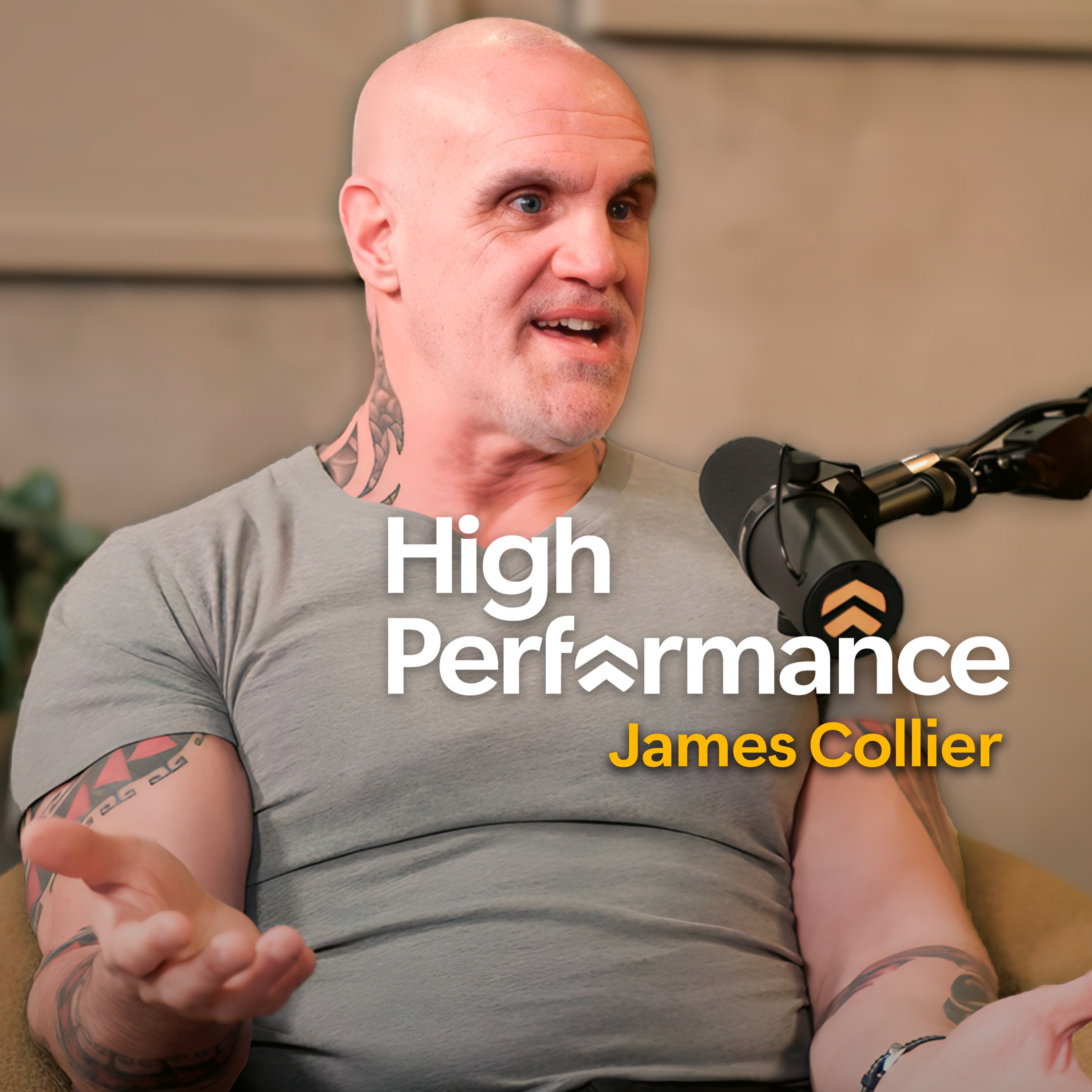
0:39That's James Collier, the author of new nutrition book, Well Fed, and co-founder of Fuel, who joins us on today's High Performance with me, Jay Comfrey, and my expert co-host, Damian Hughes. Now, as you'll hear in this conversation, James first became fascinated by the transformative power of nutrition when his mother was diagnosed with breast cancer when he was a young lad. she made huge changes to her lifestyle and diet with a view to extending her life and it worked James later became obsessed with bodybuilding and went on to study nutrition and dietetics at university before working for over a decade as a dietitian in the NHS now full disclosure okay we partner with Huel on this show which is a brand that James co-founded but on this show no topic is off limits and we know that some people absolutely love Huel it works for them others are skeptical about whether food you drink is really able to be part of a healthy diet.
1:29So you know what? We put those questions to James. And on this show, he breaks down the environmental and lifestyle challenges that Huell are trying to solve, along with the misconceptions that they still have to overcome. So whatever your view on Huell, I promise you the things that James reveals will be interesting to you. And you know what? Talking about misconceptions, we also talk about how in a world of opinion, clickbait headlines and misinformation, we work out what to believe. James shares with us the concept of ultra-crepidarians. I've never even heard the word before, but it basically means people with limited knowledge who were given powerful platforms to share their views.
2:06He also explains that actually, the more nuanced or doubtful a communicator is, the more likely it is they actually know what they're talking about, which is so refreshing in this era of so-called experts giving us definitive answers in short social media clips. Look, I know there's a strong chance you haven't heard of James before, but the knowledge he has and the desire he has to share useful information with people I think is really important. That's why we invited him to have this conversation on High Performance.
2:38James, it's so nice to have you with us. So look, you're a former NHS dietician. For people that are watching this, they'll know already that you're a bodybuilder. I mean, you look in incredible shape. You're also a businessman as well. You've now written a book called Well Fed. What mission are you on? I'm really concerned about people's health. I'm really concerned about how what we eat affects the environment. I want to give people solutions on how they can eat better to address their own health and the environment together. So you want to try and keep people alive effectively? I want not only to keep people alive, but I want people to feel well when they're alive because it's all very well living a long time with brilliant healthcare that we've got these days.
3:19but can we live older, in good health, in better health? I plan on living to be really old. I want to be one of those cantankerous really old men here but I want to do it healthily. Whenever we meet anybody that's on a mission there's always a story that precedes their passion to want to make this change. Would you mind sharing a little bit of your own? When I was about eight years old mum was diagnosed with terminal breast cancer and I had known the word cancer before many eight-year-olds hadn't and I was told what it is and I didn't know at the time, she probably thought she was only going to survive a few months.
3:52She actually survived 11 years. So she actually got to see me complete my first year at university studying nutrition, which was great. But part of the reason I feel she survived so long is she changed the way she ate and the whole mindset, meditation and things like that, which back in the 80s people weren't really doing. She followed a vegetarian diet and she took a lot of supplements. Now, some of the supplements and things she took of things I find highly questionable these days and the sort of thing I fight against. We can talk more about them later if we need to. But there was always good food in the house.
4:25She prepared good meals. We ate as a family. And there was a lot of discussion about food. So I reckon the seed was sown around the dinner table back when I was eight, nine, ten years old about how important nutrition is. Then, of course, I was always a very skinny, I was quite bullied as a teenager. And that used to really affect me. A lot of kids get bullied and I'm sure it affects them all but it sort of stayed with me and when I got to about 16 I found solace in the gym and thought you know I want to do anything I could to try and get bigger muscles so did my A-levels one of them being a biology A-level and I thought well what can I need to go to university what shall I study I was going to do economics that would have been the maybe the logical thing to do but no I wanted knowledge is power as the saying goes I thought I'll go and study nutrition because if you learn more you get bigger muscles that's how it works right?
5:14So that's what I thought I'd do. So I did. And it turns out I did make the right decision in my degree choice because I ended up, you know, co-founding Huel and doing all the other stuff I've done over the years. In many ways, this is perfect for us because we also want to rally against this world of misinformation and clickbait headlines and doing things because it generates income without any care for what the outcome is, right? So when you look at the nutrition industry, the environment around it, what do you see? What are the dangers? What's going on? I reckon nutrition as a topic is more polarised than politics.
5:50Can't back that up, but it feels certainly at least as much. Why? Oh, that's a brilliant question, and I try and dig into that in Chapter 3 in Well Fed. People are committed to their diet, but people are invested in their diet. It's part of their being. It's part of what they believe. And there's several levels of looking at this, And one of them is, let's say they've had health issues, which a lot of people do, and a lot of them are related to diet and lifestyle. And they've changed the way they eat. They've followed a diet strategy. And they feel better. It works for them. Well, they want to tell everybody else about this.
6:23It's the one to follow because it's worked for me, so it's going to work for you. I don't really work like that, does it? Human beings, as is everything, are incredibly complex, both on the level of the gene and the individual, and then, of course, their society as well. Our nutrition is part of our culture. And this is what I find so frustrating when people have strong opinions about food, what you should and shouldn't eat, and they don't respect or acknowledge that other people come from different backgrounds. And what we eat affects us on a physiological level as well as a cultural level. So this is what concerns me.
6:58And, you know, there's a lot of misinformation. You've had guests on this podcast before. Some of them, I think, are really, you know, on point. Some of them I probably disagree with quite a lot. Maybe I won't name names. But in many ways, I think you can and should, right? because if we're ignoring the people that you think are great and we're lauding the people that you think are a bit edgy, then that's also not ideal for the audience, right? Yeah, this is, but who's to say, all right? Yeah. Okay, you've got some bloke in his 50s here, tattooed, you know. So who have we had on where you thought, I don't fully agree with that approach?
7:30Gary Brecker was very questionable. I couldn't listen to it after halfway through. I was trying to, you know, to rehearse for this episode, but it was really questionable. What sort of stuff? So he was talking about the way, for instance, the way proteins are digested, about the impact of the microbiome in the proteins. And I kind of learned this at A-level biology. That's not the way it works. I mean, this is fundamental stuff. We have enzymes that break down the protein. Sure, the gut microbiome, he was emphasizing the gut microbiome, and that's a good thing, right? And this is the problem we have.
7:58You've got communicators there who've got an element of what they say is true. And if you follow their advice, you'll be eating good food and you probably will feel better. But I think it's quite narrow-minded, and I realize I'm going to get a lot of hate in the comments here.
8:37need them. Work smarter and faster with Upwork. Go to Upwork.com now and find your freelance expert. That's U-P-W-O-R-K.com. Post a job for free and get started today. At Capella University, learning online doesn't mean learning alone. You'll get support from people who care about your success, like your enrollment specialist who gets to know you and the goals you'd like to achieve. You'll also get a designated academic coach who's with you throughout your entire program. Plus, career coaches are available to help you navigate your professional goals. A different future is closer than you think with Capella University.
9:16Learn more at capella.edu. This episode is brought to you by Opera Air, the first browser with mindfulness at its core. Now, most of us spend hours every day online, but how often do we pause to take care of ourselves whilst we're doing it? And that's where Opera Air comes in. It's a lightweight, fast, secure browser built not just for productivity, but for your well-being. With Opera Air, mindfulness is built right in. You'll find free breathing exercises, guided meditations, and soundscapes with ambient sounds, lo-fi music, and binaural beats, all designed to help you focus, relax, and even spark creativity while you browse.
9:58How can we have a conversation now that helps people decide who they should and shouldn't listen to when it comes to nutrition? Well, if people are asking that question, they're already halfway there. You know, people should be asking now, why should they listen to this guy? And that's brilliant. And I can't answer that. I can tell you what I do is evidence-based, and I try to, but obviously people aren't going to dig into the research papers to know that what I'm saying is true, and why should they? They listen to experts. That's actually one point. I don't believe there actually is such thing as an expert in nutrition as a whole.
10:33It's such a broad, complex discipline. Now, you can get experts in a pretty narrow range of nutrition, so experts in the microbiome. You've had Tim Spector on here, so he would be an expert in that area. Experts in protein metabolism, experts in appetite and cravings, experts in obesity. But as nutrition as a whole, and I'm not an expert in nutrition, and I think that's really important for people to acknowledge that. What I do have is a broad range of knowledge across the whole field, but an expert in none, if that makes sense. It means I can have conversations with people from a wide range of areas in nutrition.
11:12So how do we know who to listen to and who to ignore? Okay. So let me give you a few. In the book Well Fed, I cover this in more depth, but there's a few watchouts here. Firstly, we all have our biases, right? Are they being transparent about any financial links? Now, I have an obvious bias here. There's nothing I can do about it. So all I can do is be transparent. Co-founder of Fuel, so I'm financially invested in that. Any social media, I have to make that really clear. I don't know how I can make it any clearer, apart from having a big sign pointing at me saying, I'm co-founder of Fuel every time.
11:44Financial, yes, absolutely plays a role. But I think some people pay too much attention to it. I think people are, you know, biased because they're ideologically committed to their information. And if we make a statement, we don't want to be wrong, right? This is more in your field, Damien. We don't like to change our minds, but even the best scientists do. I mean, Einstein famously had to change his mind, didn't he? And it's about relativity back in there. And it takes a lot of intellectual honesty to be able to do that. So you have to make that part. A good communicator will make that part of what they're trying to say, the fact that I am happy to course correct.
12:21But you have to show the evidence. So being transparent about the bias is a key one. but even so you can only do that so much because of how we're committed um psychologically to what we say people who talk in absolutes like saying you must eat this or you mustn't eat that very likely not giving you good information people use the word clickbaits like the truth or the facts well okay what is the truth when it comes to it's not that and i realize you have to use that when you're doing the little clips for podcasts here because that's what sells right so sometimes even more honest communicators have to use those sort of things.
12:57But let's cover that for a moment because I gave that to Tim Spector. I said, you've been on podcasts where the title is so damaging yet the content's great. And his answer I thought was really good actually. He said, look, there is an algorithm game that has to be played. Otherwise the conversations you have get lost forever. And I'm loving this open debate by the way. And he said, look, I'd rather have those titles attributed to podcasts I'm on with a million people watching the whole conversation than maybe a title that is perhaps more aligned to my thinking, but no one sees it. And I kind of get that, right?
13:29Maybe there might be a slightly click-blated title to get people to watch this, but then I'm hoping when they do, they hear us talking about the fact that if you're then talking in a way that the title talks, then it's a problem. I agree. There's quite a lot with Tim Spector I disagree about, but on that point, hang on, I completely agree. You have to play the same game as the ultra-crepidarians, so to speak, those who are giving very questionable information. Otherwise, good information is going to lose. What other red flags are there? So, food fear-mongering. Diets can be good or bad, even that's up for interpretation, but individual foods can't be good or bad.
14:11Let's say you've got a really rubbish diet, McDonald's, Burger King, every day, with crisps or potato chips for the American listeners and chocolate and biscuits, cookies, all day. And then once a week you have a salad. It's not really going to undo all the not so great. Now, I'm not fear-mongering those foods for the very reason I'm going to go into, but it's not a great diet. Now, the other way around as well, let's say you have a diet high in whole wheat grains, whole fruit and veg, lean meats, and then once a week you have go to McDonald's, it's not really going to undo the good work. Now, people tend to say, oh, don't eat these sort of foods because they're going to poison you or cause inflammation.
14:58Which brings me to another one. People use complicated terms like inflammation or insulin without really explaining what they mean. So it's all right to use the terms, but you have to back them up with what do they mean. And the other thing is, are they talking very evangelical or grandiose style? Like, I will heal you if you follow what I say. And there are lots of social media, nutrition communicators who do this, promising everything. Are they egged on by an audience that hangs on every word they say? Does what they say truth track? Do they care? Does the audience care that what their favorite messiah is saying tracks the truth?
15:42And underneath all that, I think the one thing that I think is the most fundamental, does the communicator speak in a very nuanced and noncommittal way? If they do, it's very likely they are credible. It's almost like they should be confidently unconfident about what they say. That means someone you should listen to, because science is complicated and complex. and I think if you follow those rules you should be asking yourself is the person I'm listening to giving good information and anybody listening to me now should have those things going on in their head. So can I just pick up on that because I love that list.
16:23I think it's really powerful for any topic not just nutrition. Absolutely. So if I was occasionally to glance at some of the comments when people see the Huel products in our interview and they'll go, how dare you be promoting something that isn't food? You know, people shouldn't be touching that kind of stuff. I'm interested in how you would answer that now as a co-founder of the product that we're lucky enough that you sponsor us. But I'm interested in, let's apply those principles of you've been transparent, you couldn't be more transparent, as you say. I try to be. Yeah, the intellectual humility that you bring to it, the not speaking in absolutes.
17:03Would you just explain to us a little bit about the product that you co-founded? Okay, well, like I said earlier, I'm trying to address multiple things, issues with the food system simultaneously. Now, there's this big thing at the moment where everyone wants to go back to ancestral eating, whatever that means, going back to when we were hunters, gatherers or farmers and we were doing nothing else. We don't live in that world anymore, you know? We've got eight plus billion people to feed. that's probably going to rise to nine, maybe 10 billion before it plateaus off, so the experts say. We've got problems with the environmental pressures.
17:40We've got land use. We've got greenhouse gas emissions. We've got very questionable farming practices in view of animals and also human rights issues. You know, there's more people in slavery today than there was any other one time in history. It's just there's more people, obviously. So as a percentage, it's smaller, but it's still a problem. We need to look at these things and they all play in. And so we have to eat, the food choices we make have to address all these things. But also, I'd like to think, with science and evidence, things have moved on from how they were in the 1930s or the 1800s or whatever.
18:15I'd like to think they have. And it's interesting that people who criticize modern diets are doing so on their smartphones, which, if you were out on the land farming, everyone was out on the land farming and growing their own and then preparing their own food, We wouldn't have time to invent these things called smartphones. We wouldn't be able to do what we're doing now, having a conversation on podcasts in one of the biggest, busiest cities of the world. So we're not in that world anymore. So science has moved on. We know what good nutrition looks like. We know what bad nutrition looks like.
18:49People aren't having good nutrition. Now, if people can farm their own food and have their own little goat, and I'm taking a bit to the extreme here, or even can afford to buy food that's grown in a certain way, great. But a lot of people aren't privileged for that. And I don't mean privileged in respect to finances here, although that does play into it. You can create affordable meals for people that are nutritionally strong. People should go for that. But people don't have the time. So people are making bad food choices. So we should give someone an optimal food choice that's convenient, and that's what we've tried to do at Hull.
19:32So, yes, there are quite a lot of ingredients, but the products are high in fiber. And there's something to talk about there. I'm just going to make a sidestep for the moment, if I may. We've got a fiber crisis. There's a very easily achievable 30 grams of fiber a day. Hardly anyone's doing, and I know that Tim Spector's got a similar opinion to me on this. So let me just jump in there, because you said about avoid food fear. So when you then use the word crisis, it sort of gets my heckles off. Okay, I'm talking about, yeah, that's a good challenge, Damien, but I'm talking about a crisis on a population level here.
20:06I'm not talking about fear of an individual. Okay, so most people, I think it's only something like, I think the British Nutrition Foundation back in 2021 did a study. I think it was 9 % of adults were actually meeting the recommended daily amount of fibro a day. In America, I believe it's around 5%. This is concerning because fibre does a lot of good stuff. You know, not only is it for good digestion, it can help maintain a healthy blood cholesterol level. It helps the microbiome, all the good bacteria in your gut, which affects cognition. It affects our appetite. It does so much. So it's really, really important.
20:42People aren't having enough fibre. So if you can have a high fibre food like we've done with your products, great. Then protein, okay. Most people are having enough protein, but there's a good reason for that. One is protein is useful, and compared to the other macronutrients, it's got a lower caloric availability. What do I mean by the term caloric availability? Well, let's say someone has 100 calories worth of sugar. Probably around 99 of those calories are going to be absorbed and utilized by the body. Protein, depending on the source, can be as few as about 70 of those calories. So as well as that, protein affects some of the hormones that affect appetite.
21:24Plus, it also is more thermogenic than the other macronutrients. So protein is better for your appetite. And calorie for calorie, you're more likely to absorb and utilize less of it. So having a high-protein diet can be an advantage in that. Now, everyone is getting, in the West, most people are getting enough protein. So I get it why people are challenging that everything's calling high protein and everything. But there is a use to this. We shouldn't ignore it. And of course, there's omega-3s. The fatty acids, we're all told to eat plenty of oily fish. I'm going to give you another stat now. Now, the government say we should, I think it should have two servings of oily fish a week and another serving of white fish as partly to get the omega-3s, which do a bunch of good stuff.
22:13They're at a healthy blood cholesterol level. have been associated with low risk of cardiovascular disease and also involved in cognition. But if everybody was to follow that government recommendation, which, by the way, I think is inadequate, it's just an achievable target, like a lot of the government targets, there's not enough fish in the sea. We've got a problem with overfishing. Okay, so we look at fish farming, like they do in some of the Scandinavian countries. Questionable ethics here, the way salmon go in these round and round. Of course, what are they fed? Well, salmon are carnivorous species.
22:44Where are the fish coming from to feed the salmon? Well, smaller fish that are fished, so we've got a problem with overfishing their... And of course, is the omega-3 level as good in farmed salmon? Some people say it isn't. Okay, so what do we do? Well, you can get omega-3s from plants, like flaxseed, chia seed, hemp seeds, walnuts, and a bunch of others as well. Now, the conversion to the two fatty acids that are in oily fish, which is, I won't go into the long names, DHA and EPA, the conversion from plant-based ALA isn't that good. But you can actually, just by having a good amount of the plant-based ALA, you can get sufficient conversion.
23:31And also, you can get algae supplements. So we don't need to have the oily fish, but we do need a good intake of omega-3s. So in Hul, we've addressed that. we've got a good amount of omega-3s in our products. Then, of course, there's all the vitamins and minerals. People who are having a junk food-rich diet aren't, they're micronutrition, which is vitamins and minerals. And there's phytonutrients, which is good stuff in plants. Huel products have got some of the key phytonutrients in them, which acts as antioxidants, which can be involved in helping reduce risk of cardiovascular diseases as well.
24:05So what we've got with Huel is, I call it the best plan B. And that's the interesting thing. When we talk about Huel, people go, oh, you're a podcast about high performance and you're promoting a drink in a bottle, a powdered drink. It's a UPF. I mean, does it fall under the category of UPF? I'm betting that ultra-processed food, UPF, I'm betting five or six years ago, you hadn't heard the term, or if you had, it hadn't re-registered. Now it's in everyday parlance. Everyone's using it, common terminology. Why is that? My biggest issue is you've got high-profile academics going on high-profile podcasts and using the term ultra-processed food.
24:43They've put it out there into the world. People don't know what it means. It's causing confusion when the word junk food was much better. I think the term ultra-processed food should have been kept in academia and where it looks at research patterns of how increased consumption of certain food groups, like so-called ultra-processed food, is linked to risk of disease, like meat-rich diets are linked to disease risk, like plant-rich diets and disease risk, things like that. that's where it had a use. It's useful to look at, but unfortunately it's out there now and everyone's using it and nobody knows what it means.
25:14And it's causing confusion because you have products, you have high fiber products like baked beans, you've got Weetabix and you've got Huel that's come under this definition. So of course I'm biased here. Everyone's going to be saying, well, of course you're going to say that. You're co-founder of Huel. But let's look at the evidence. We've got high fiber products that are satiating with all the vitamins and minerals. There is literally no evidence to say that there's anything wrong with this. In fact, there's a lot of evidence to say that it's beneficial. You know, we go back to the world where we're all preparing food and walking each other's houses and sharing food every day.
25:47We're not happening. Nostalgia is lovely, but let's live in the real world here. So people are grabbing poor nutrition on the go. So why don't we give someone the opportunity of buying good nutrition on the go? And then when those opportunities come, when they can prepare meals with others, go for it. I absolutely encourage that. You know, it'd be great to live in a world where perhaps we didn't need you, But we definitely do because we've got environmental concerns. We've got a food system that isn't working and we need to address that. And let me just quote someone from, I'll paraphrase it here, Mark Linus, the environmentalist, he made a brilliant statement.
26:24I think it goes something like this. If we were to return to traditional farming methods, say before 1960, we would need a plot the size of two South Americas to feed the planet. We have to look at the way the food system works here. And we rely on other technologies as well. The Huel comes under a category called Complete Foods. There are other technologies as well that we need to rely on in order to feed everybody, to address the environmental concerns, to address the very questionable ethical practices of the way we treat animals. We're going to need technologies like so-called ultra-processing.
27:05We're going to need technologies like regenerative farming. Great, but we also need some arable farming using intensive farming methods. I'm not an expert here, but from what I hear from the experts are saying, we're going to need that. We need a combination of both. We also need some of the cellular agriculture space. Do you know about this? The so-called, I hate the term, lab-grown meats here and the lab-grown milk proteins and other related technologies. We need that. GMOs. Okay, that's a term. everyone's got a genetically modified organisms right people say oh the so-called frankenfoods and you know it's being controlled by i don't know industry here to control and control our crops well we've kind of been genetically modifying the way our food since at least 12 000 years ago since before agriculture so all we've done yeah because we've been selectively breed you know what you know you might have seen this sort of thing before bananas used to have bigger seeds in them a couple hundred years ago and now they've got hardly any seeds and they're bigger well that's we've selectively bred the bananas to be the way we want them.
28:05And it's pretty much every single food we have. Definitely including the animals we have. Talking about intentionally farmed chickens, look how they've grown in size over the last several decades. That's selective breeding. We've not been using technologies to go into the cell and alter the gene, but we've been doing it in a different way. This is science, right? This is addressing it. And we've got people in the world who are struggling to feed themselves here. And we sit here in the West, plenty of food, too much food. And we fearmonger the way other people who can't get enough food in the world.
28:41It just strikes me as very privileged, very narrow-minded. The Philippines have recently outlawed GMOs, and that's a very underdeveloped region of the world. And that comes from misinformation. fear-mongering about GMOs. And I'm going to get a lot of hate in the comments on this one, but I just want people to pause and think, you know, I've got nothing invested in GMOs at all. Nothing. Your products are GMO-free. But we need these technologies in order to address feeding everybody on the planet. And we should embrace them, done in the right way, with the right regulation. Sure, we shouldn't just let industry run wild here, but it's complex.
29:24You know, I can't, I wouldn't want to be in food policy these days. One thing we've realised on this podcast, right, is that we are in the post-expert generation, right? Oh, absolutely. Where, you know, we had someone here the other day saying, university is a total waste of your time. You know, for some people it is, but that just removes the fact that those university lecturers and the education system is set up with experts, right, that we can all learn from. But we seem to want to be experts on the internet. And I think that one of the big reasons for this is because if you are in the know, if you've got secret information no one else has, if you're a conspiracy theorist, what if you're ego?
29:59Hey guys, I'm so clever that all of those scientists with hundreds of years of research don't know I'm going to tell you the truth. Some person in their bedroom like typing on there. But here's the problem. So I go on the internet now while we're having this conversation and I type, is seed oil healthy or unhealthy? So the first thing that comes up is something from the Harvard T.H. Chan School of Public Health saying scientists debunk the claims of seed oil risks. Scientific evidence does not support claims that seed oils such as canola and soy are toxic. Then the next thing that comes up is industrial seed oils are unstable and oxidize easily.
30:33They contain harmful additives. They're derived from genetically modified crops. The next thing that comes up, seed oils contain trans fats. Trans fats elevate LDL, bad cholesterol and majorly increase your risk for coronary disease. Is seed oil worse than olive oil? Refined olive oil is considered better than many vegetables and seed oils due to its healthier fat profile. Europe has a strict standard on the amount of erutic acid in oil. Therefore, it is banned. In other countries, the acid levels and canola oil meet their guidelines. Scroll down a bit further. According to a lot of folk on the internet, the issue with CEDAWs is they contain high levels of omega-6 fatty acids.
31:10I can untake that. The latest research. So everything is contradictory of everything else. Yes, I get it. So what on earth do you do? How do we... It's confusing, right? For a start, the erotic acid thing, well, that's not an issue anymore because that would be toxic. It is a concern if it was a concern. It's not present anymore. But you know that, whereas I don't. Exactly. Because you're in this world. So I just go, right, I better not eat CEDAWLS. I've just read a word that I don't understand and it says it's bad. But then at the same time, you know, there's a whole page here about CEDAWLS are actually good for you according to a public health survey.
31:43You've got to refer to the evidence. When you look at biases, refer to the evidence. But people don't understand evidence and they don't know how to read research. They don't know how to critically appraise research. There's a lot of people actually can read research papers. They just look at it narrow-minded, look at the one paper, but research in an entirety is hard. And I've just said earlier, there's no such thing as an expert. Have you heard of Brandolini's Law? Have you heard of this concept? So it was 2013, I think it was Alberto Brandolini, an Italian psychologist or philosopher, and to paraphrase, it's something like this.
32:16The energy required to refute bullshit is orders of magnitude greater than to make the original claim. Okay, and it plays into here. Now, I'm going to say something here. I'll go on social media. I might do it, actually. And I'm going to say, instant coffee is toxic for you, causes inflammation, because you're consuming the whole dried powder in your hot beverage, whereas when you have percolated coffee, it's just seeped through and it's filtered, which gets rid of all the impurities. I've made that up. That's not a thing at all. Do not put that in one of your callouts from over this podcast.
32:58Nutritionist says instant coffee is dangerous. That's not a tool. I've made that up. Now, people go, oh, that makes sense, right? Because it's coffee, we're having the whole thing. It makes sense. Then everyone's got to go and debunk that. They've got to look at research. So instant coffee consumption has associated, look at the mechanistic data. I mean, how are you going to do that? And this is what's happened. and people are going, are saying these things. Let's use the seed oils thing now. I'm going to try and be intellectually honest here, but I'm going to say, I'm going to talk about this in two ways.
33:28I've been told, this is true, I've been told by someone highly credible that about 2019, 2020, when TikTok was just picking up, that the milk industry paid influencers to come out with a narrative that seed oils are dangerous because the plant-based milks are based on seed oils. and then of course it's taken hold this meme has taken hold and everyone's talking about it and they've looked at data to try and support it and you can always find data to back up everything right now it's a true fact that I've been told that and I've been told that by someone highly credible I can't back that up I could have been misinformed himself that told me this so people that are saying that the seed oil industry is trying to poison us and everything like that it's a conspiratorial what I've just said there that's conspiratorial isn't it just conspiratorial in the other direction So if you've got to be intellectually honest about these things, I can't make up things like that.
34:20Now I realise I've just said it, but I'm using it as an example of something I can't back up. So people should ignore what I've just said on that. It might have happened, and it's very plausible. But it's intellectually dishonest for me to say that. So what do I say again? If in doubt, refer to the evidence. How do you refer to the evidence? You read all those things, Jake, and it's so confusing. And there's elements of truth in each of them, by the way. You know, trans fats are, the one thing, again, another thing that everyone agrees on is trans fats are bad for you, wherever you sit. But they're almost non-existent.
34:52I don't know how we refer to the evidence, though, if the evidence is so hard to find because it's buried underneath a ton of misinformation, conspiratorial conversation. And you've got to look at credible, so look at credible, you mentioned Harvard there, right? That would be a credible source. This is one credible source. Are there any other unrelated credible sources that would give similar information? People say things like, oh, the food industry is controlling you. Ill health is on the rise with non-communicable disease. Obesity is on the rise. People like to have simple answers. And it's very easy to say that industry is making you ill.
35:31I can just go, it's so easy. Brandolini's in full effect here. I can pluck an idea out of thin air and I can make a 45-second Instagram reel about it and it's out there. if I've got a big following in the millions, this is what a lot of them are doing. They can't back it up. Some of them will back up. I mentioned it before, Gary Brecker, who you've had on here. He will make claims like this, and he will back it up with science. Except if you read the paper, does it really back up what they've said? So you've got people like that. He's very credible, and there's a lot of good information that Gary Brecker will say.
36:09And, you know, he's got a resume. He's on a lot of podcasts. He sounds like he's an excellent speaker, far better than me. And he, you know, it's very absolutist thinking. And it's hard, Jake. I honestly don't know the answer. So I refer to the points I made earlier. The certain watch house, is the person credible? Are they giving good information? And of course, there's a narrative there with C-Dolls. We've only been consuming them for 110, 120 years. They found our way into the system, the food system. We're not involved to have them, except actually, you know, that seed oils have been consumed for a few thousand years, possibly.
36:43Junk foods are very often high in fat, and that comes from cheap vegetable oils. They're cheap, they're very palatable, they're easy to... So it's easy to get a lot of calories in. So a lot of the problem is why people are so concerned about seed oils comes from the fact that they're very easy to overeat. The foods that they're in are easy to overeat. Also, some of the highly processed junk foods, the seed oils in them can be oxidised. which is, if you turn the term rancidity, fats go rancid, they're changing the structure, and they can potentially cause issues in the body. And these are justifiable concerns.
37:23But just to say that CEDLs are toxic, whatever that means, or cause inflammation, without quantifying it, it's just very, it's just not backed up by the science. And people, again, there'll be a lot of hate in there, people saying, oh, of course you're going to say that, James, you co-founded it all. I made a conscious decision of putting rapeseed oil in that for the reason I said earlier, due to the omega-3s. They contain omega-3s. So would you fry your eggs at home in rapeseed oil? Yes, I would do. Yeah, if I had fried eggs. That's another whole topic we can talk for an hour about. No, I do occasionally.
37:57I do occasionally. I thought you'd be on 15 eggs a day kind of guy. No, I've boiled eggs. Obviously, I limit the amount of animals which we'll come to when we talk about a good dietary strategy. So there's nothing inherently wrong with seed oils. Let's look at the data. Let's forget my biases, okay? You've got biases of people that come from the olive oil industry or, you know, that are saying seed oils are toxic. And by the way, olive oil is great. That's one thing pretty much everybody in nutrition agrees on. Extra virgin olive oil is a good thing, although I'm sure there are people out there that find a way to vilify that.
38:33But let's look at the data. Show me data where consumption of seed oils is linked to disease risk or inflammation. Now, okay, let's talk about data for a minute. People misinterpret data. I can show you mechanistic data where some of the fatty acids in seed oils, like the omega-6 linoleic acid, is associated with a pro-inflammatory pathway. Now, causing inflammation. I can show you that. I could steel man the other side's argument here. However, there are also a bunch more studies that show that its consumption is linked to anti-inflammatory. Now, of course, we can look at key inflammatory biomarkers here, like interleukins or CRP, which are technical terms here.
39:17I realise what I'm doing here is talking about technical terms. But they are indicators of inflammation. Now, when you look at it in entirety, you look at the data in its entirety, you'll see that CEDOL consumption is either neutral or positive associated with inflammation or risk of disease. so the fact that your products are nutritionally complete so we have to have omega-6s and omega-3s in there because it's nutritionally complete now a lot of people also use the argument here well the ratio of omega-6s to omega-3s is is a concern maybe because like i've explained uh earlier we need more omega-3s in the diet but people are actually focusing on the wrong side of that equation.
39:59They're saying we should reduce the omega-6s. No, let's get everybody having more omega-3s. Now, rapeseed oil contains some, it's not as high as others, but it does contain some omega-3s. It's okay. The problem is, you asked me about frying my eggs in it. If I was to use that rapeseed oil fry eggs and not throw the oil away and after several days fry in the same oil, that would become oxidized. That could become a problem. It's heated to high temperatures repeatedly. That's where it becomes an issue. And I wouldn't do that. Of course, oil's very calorie dense, it's easier to eat more. But when the C-DWEs are the polyunsaturated omega-6 and omega-3 or monounsaturate rich plant-based DWEs are treated correctly, they're positive for health.
40:47Study after study, meta-analysis, which are the type of studies that look at a lot of studies together, they show that compared to saturated fats, diets high in modern saturated fats are positive for health. This is what health policy is pushing. But for some reason, and this is probably since, seems to be since the pandemic, there's a very negative perception of health information and how, you know, governments are putting health information.
41:17If you're still overpaying for wireless, it's time to say yes to saying no. At Mint Mobile, while their favourite word is no. No contracts, no monthly bills, no overages, no hidden fees, no BS. I made the switch because I was tired of those ridiculous bills and sneaky charges from my old provider. With Mint, I'm paying$15 a month and getting the same high-speed data, unlimited talk and text, and coverage on the nation's largest 5G network. Honestly, the quality is just as good, if not better, than what I had before. And the best part? You don't need a new phone. You can keep your current one, bring your number, and all your contacts.
41:52I use Mint Mobile and you should too. Ready to say yes to saying no? Make the switch at mintmobile.com slash HPP. That's mintmobile.com slash HPP. Upfront payment of$45 required, equivalent to$15 a month. Limited time new customer offer for first three months only. Speeds may slow up a 35 gig on unlimited plan. Taxes and fees extra. See Mint Mobile for details. The market's uncertain. Revenue's tied and hiring on hold. That's why results-driven companies are using Upwork to keep work moving. Go to Upwork.com today and start hiring proven freelance talent fast. No bulky overhead. No rigid long-term contracts.
42:32Just the right expert right when you need them. Work smarter and faster with Upwork. Go to Upwork.com now and find your freelance expert. That's U-P-W-O-R-K dot com. Post a job for free and get started today. at Capella University learning online doesn't mean learning alone you'll get support from people who care about your success like your enrollment specialist who gets to know you and the goals you'd like to achieve you'll also get a designated academic coach who's with you throughout your entire program plus career coaches are available to help you navigate your professional goals a different future is closer than you think with Capella University Learn more at capella.edu
43:20So should we go on to these five things and really try and help people from this conversation onwards make better decisions that are really valuable for themselves and their health? So the five pillars are, let's talk very briefly about each one. Eat for your own health, and the second one is eat for your own mental health. I mean, most people, we spoke about fibre, we spoke about fats, so we probably don't need to talk too much more about the first one, apart from the fact we should, you know, prioritize that. What mental health? Well, what we eat is linked to our mental health, and it's both on things like omega-3s, fiber.
43:57They're all linked in good nutrition. We should probably not have too much alcohol. It's not great. We all know that. Caffeine, coffee, well, that's a, you know, it's a cognitive enhancer. You know, I've had a couple this morning and I'm rolling, hopefully. But if you have too much, it can affect your sleep. So that's negative for your mental health. But it's actually a bit more fundamental than that, how food affects how we feel. You know, I both hate and love the term hangry. I hate it because it's just annoying, right? Which, you know, you're hungry and angry. But I also love it because it kind of says, it explains a lot.
44:30You know, you genuinely need food. I think people just use it when they feel a little bit peckish, actually. I'm hangry. and it indicates how it affects your mood and we get food cravings and sometimes when we're craving foods we can think of nothing else apart from we want to eat this food we want to eat this food and some people are more predisposed to this than others and there's a strong link to obesity here this is what the GLP-1 agonists you know the drugs that are like a Zen, Pic, Vega-V, Monjaro etc are being used and they help turn down this so-called food noise it's a term that people are more predisposed to thinking about food have a bigger appetite, have stronger food cravings than others it turns it down so they're less enthusiastic about food so they eat smaller meals, they feel full sooner and very helpful, not without their risks of course but again longer conversation, we probably shouldn't go down there then the third pillar is sustainable nutrition again I've spoken a bit about this, about what we eat the impact of the food system on greenhouse gas emissions Broadly speaking, about 28 to 30 % of greenhouse gas emissions come from the food we eat.
45:38One of the simplest things we can do is to eat less meat and less animal products. So as part of the strategy, contemplative nutrition, I suggest people cut that by about a third to around 10 % of their calories coming from animals, and that's fish, milk, eggs, and meat. How should they do that? Well, it sounds hard, but it's actually quite easy. have a couple of days a week where you almost have no animal-derived ingredients. Meals have maybe a smaller portion of meat. And I'm moving on to the fourth pillar where I will avoid intensively farmed animal produce. Well, can you buy your meat more ethically?
46:18Well, it's more expensive. So you probably want to have a bit less anyway to save money. So it's the whole chicken and chickpeas meal. That's just an analogy, right? You've got the legumes, the beans, pulses, lentils that are high in protein as well and high in fibre. Maybe have a small portion of meat if you feel you must have it and bulk it out with more pulses instead. And then you've got your whole grains. We know that whole grains are linked to reduced risk of disease, high in fibre, rich in vitamins and minerals, based your meals around whole grains and fruit and veg as well and nuts and seeds.
46:51So you've got a sustainable diet that's nutrient-rich, minimal impact on animals and the environment. Then, of course, is how we eat. I'm going to share a little story with you. I think people are going to love this one. Something called the Rosito effect. And this is a good demonstration on how community is linked as an arguably bigger effect than the nutrient composition of food. Back in the, I think it was 1940s, 1950s, a local doctor in a town in Pennsylvania, USA, called Rosito, noticed that people were, there was no cases of heart disease or stroke in people under, I think it was under 60 or something like that.
47:34And people were generally living older. And that was compared with towns just up the road in Pennsylvania where everybody, you know, the fast life was happening and there was increased risk of heart disease. And he noted that people in Rosito were very community focused. They were sharing their foods. It was pretty much an open-door policy with everyone's houses. People would go in and out. They would prepare meals together. There was also a lot of clubs. There was dance clubs and social clubs. Everybody of all ages was taking care of each other. The town was very attractive. Everybody cared for it themselves.
48:10And it was almost a given. Yet, there was a mine up the road, and people were working in the mine. They were smoking like chimneys. They were drinking a lot as well. There was also a factory, and people working long, gruelling hours, So basically doing everything wrong, yet incidence of disease was low. So we put it down to the community. Now, what happened? Fast forward another 15, 20 years, when fast food outlets were cropping up everywhere, fast cars, all the younger were trying to keep up with the Joneses and live the modern lifestyle, levels of cardiovascular disease, you guessed it, caught up with everywhere else around it.
48:43Now, there was a town, it was in the late 1800s, The immigrants had come from a town in Italy called Rosito Balfour, I think that's how it's pronounced. And it was the traditional way of life from Italy had lasted a couple of generations and then it had all gone. So that just indicates that the importance of community in how we can live well. Now, it's all very well me sitting here saying that we should go and eat meals with your family and friends. Well, a lot of people just don't have that opportunity. They work away. There's broken families. you've got single mums that are raising kids on their own and working maybe one or two jobs they haven't ever been taught the cooking skills themselves it's hard, I get that and we can't ignore that but it doesn't just have to be around food, right?
49:32it should be socialising can you sit with your family and talk about things? can you share meals with friends maybe once a week maybe once a month they're all going to have health benefits we've got a mental health crisis and people are struggling are there ways we can try and bring people together around food, brilliant, doesn't have to be food and of course the other kind of thing is people generally make better, healthier food choices when they're preparing food for others as well especially if you're a parent and you want the best for your kids so they all sort of play into one you can see how nutrition and mental health and who you eat with and sustainable nutrition they all play into each other so they're the five pillars that I've tried to address in contemplative nutrition I've tried to break things down, but it's all been very complicated and complex.
50:20People could be a bit baffled here. Oh, so much to take in. How am I going to choose what to eat if I've got to think, well, actually, it's not that hard. So this is what I do, okay? Maybe right, maybe wrong. I'm not a vegan. If you want to be vegan or eat predominantly plant-based, brilliant. I don't. Maybe I will be one day. I don't see it happening. In fact, I have a huge discussion in WellFed about should humans be vegan or not? And I try and argue it from an anthropological perspective, a biological perspective and even a philosophical perspective and it's difficult to find the answer but if you read the book you can see where I'm going on this but I am certain that we should be eating less meat than we do because of the environmental impacts and the effect of meat rich diets on our health and if people are listening to this not watching it they won't know that you're sitting here ripped I mean I don't know what you're I wouldn't say ripped I wish I wasn't ripped come on you're looking great what do you bench press?
51:10what about oh I can't bench oh we don't talk about I can tell you that I have two lives when it comes to training. I have my former life from 20 years ago when I was strong, and I have my older life where I'm full of injuries. I still train a lot. You still look in excellent shape. Well, I'll try. So if people are listening going, I bet he's a skinny bloke with no muscles telling me to limit my meat intake, you can get the protein you need to build your muscles without eating it. Absolutely, and you can do it on a fully plant-based diet as well. Obviously, products like you will make it easier because high in protein and high in fiber and all the nutrition in a convenient format.
51:44Sounds like I'm just giving it a plug then. I am a bit. But that's the beauty of it. Of course, I have a lot of you all in my diet, but I also have a lot of other foods and I do eat meat. But you can, you know, if people want to be vegan, they can get to have a great physique on a plant-based diet. People will be looking back saying, yeah, but I bet 20 years ago when you were eating meat-rich diet, I was. But I know what I know now, right? and I wish I hadn't. And the very fact, if you are having a plant-based diet, you're probably more likely to look at what you eat and take care of what you eat and focus on having good nutrition.
52:18So I've mentioned, I gave some tips earlier about how you can reduce the amount of meat you're having. And I think it's useful, reduce it to about a third, a couple of days a week without meat, reduce the amount of meals. If you're having more plants, but that kind of makes the fiber take care of itself, you can have more fiber-rich diet. Avoid too many junk food snacks, and I'm using the word junk food there, it's the right word to use. Omega-3s I think are important. You can get that from certain plant-based alternatives like flax seeds, chia seeds, some nuts, some seeds, or from algae supplements.
52:55I don't want to give Huel too much of a plug here because it will give the wrong message, but Huel products are high in omega-3s as well. And the rest of the diet, yes, it's important to make good choices, but you don't have to get overly anal about things, right? you just need to, you just eat good food. Try not to overeat. And I realise that's easier, you know, easier for some than others. And be physically active. I mean, we haven't spoken about the importance of physical exercise here, but it kind of pretty much trumps eating. You know, you can be overweight and extremely fit with blood markers that indicate someone in good health.
53:32Obviously, there's a limit to that, and it's probably just a bit overweight, but it's more important to be physically active. I want everybody, you know, we're at the beginning of a new year now. Let's encourage everybody to be one little bit more physically active. If you are very sedentary, can you do five minutes more a day? Five minutes? That's not going to change health much. Well, actually it is. If you're doing nothing, five minutes of reasonable exercise every day and surely most people can find five minutes. If you struggle with mobility, there's something you can do in the armchair just to be more active.
54:05And just keep it up. It's a habit. Five minutes a day extra. And if you're already a bit active, can you do five minutes more? But the impact of doing something from nothing is greater than building on what you're already very active. And five minutes, people are saying, well, that's not going to help people's health much. Well, yeah, but it's achievable, isn't it? The 15 minutes doesn't seem to be working for many people. That recommendation, which we absolutely should be doing. And also take into account that exercise is probably the most under-prescribed antidepressant on the planet. There's that as well, for so many reasons.
54:37I remember Peter Attia actually saying to us, you're much better off being someone who might be slightly overweight with a life with exercise in it than someone who's very thin with a sedentary lifestyle. Absolutely. Sedentary lifestyle is right up there with some of the biggest killers on the planet. Yeah, I would say, so we spoke about a few things here. We spoke about community and we spoke about exercise and physical activity. They're the two most important things. Not overeating, and I realise if you're having a high junk food diet, It's very easy to overeat. And then making good food choices comes after those.
55:10And there's sleep as well, but I'm not an expert in sleep, so I don't really want to talk too much about it, but get plenty. Brilliant. Ready for some quick fire questions to wrap things up? Go for it.
55:23These fly in the face of all the things that you believe in, the way that we should talk, but the three non-negotiables that you'd really like people to be thinking about when it comes to our nutrition? um fiber omega-3s enjoy your food yeah nice what's one habit you'd recommend for people to adopt in their nutrition be more mindful with what they eat now what they've heard the term intuitive eating and mindful eating which is trying to pay attention to how we feel about when we eat foods and that's part of what i mean with that you know so the if you think about you We just gulp food down. I was on holiday with some friends last year and they were just starting their meal and I'd almost finished.
56:06And he said, you're supposed to be the nutritionist here. And I'm no expert, he said, but surely taking your time with what you're eating is what it's supposed to be doing. And I said, do as I say, not as I do. But take your time with your food and pay attention to how you feel, how food tastes. You might find you're not eating so much. But that's part of what I mean when I say, I think, you know, my strategy is called contemplative nutrition for a reason. I want people to contemplate just a bit about what they're eating. But think about your food choices, how it affects the environment, how it affects others.
56:38The final question, really, for people that have listened to this amazing conversation, what do you want to now leave ringing in their ears, your golden rule, if you like, to high-performance eating? You, in the West, we're very, have you heard the term individualism before? Individualist culture in the West, especially so in America, where we think about the individual. or if you work hard, you can achieve mojo. It's very much an individual, a me-focused perspective. In the East, they're more collectivist. We're very much more we-focused. Now, I'm glad I was born in individualist culture where it's very me-focused.
57:11It's been associated with high standards of living. But can we be a little bit less me-focused and a little bit more we-focused in what we do? Our behaviour affects other people and that can affect our own performance. But go back to the point I said earlier, you have to prioritize your own health above all. A diet isn't sustainable if it can't sustain an individual. Brilliant. Look, James, that is fantastic. Thank you so much.
57:44Damien. Jay. In some ways, I sort of think James is kind of fighting a losing battle in some ways because he's trying to do the one thing that the algorithm and the internet and social media and conspiracy theories and in-the-know experts are rallying against, which is to be nuanced, which is to look at all sides of the argument, which is to pose questions. I think it's going to be a really hard battle for him. But I actually love the fact that someone is trying to have this kind of fight in this kind of way. Yeah, definitely. I love, he used that term that I responded to when he first used it, ultra-crepidarianism, which is about people speaking with confidence on a subject they know nothing about.
58:24And I think this is a man that is an expert, who's trying to rally against the ultra-crepidarianism in the nutritional world that are telling us things that are maybe not transparent, maybe are a little bit more complex than what they're trying to present it as. So I wish him well, because it's an area that I don't know a lot about, but when you read out the Google search on Seed Oil, it's confusing and because it's confusing I don't tend to stick and try and understand it I suppose the question is then part of me thinks I'd love him just to come on and go do these things and actually what he's not saying is do these things he's probably just saying ask these questions look at the world in this way I mean I love you know the omega-3 stuff the high-end fiber do some exercise that's kind of stuff that we all already know I think what he's really given us there is this really clear awareness there's so much bs washing around that actually i think what that does is it it confuses us away from making simple good decisions and it makes us believe that getting our nutrition right is massively complex really he's telling us that it isn't and common sense is 90 of the job i like that i like that because it reminds me of when in a completely different industry when sir ian mcgeean told us that most people look for the marginal gains to 1 % when he's like actually just concentrate on getting the 99 % of the billion basics right and I think that's what James is offering there just get the basics right and that can be understood by just slowing down and making more considered choices and I hope people appreciated the fact that we spoke very honestly about Huell and I hope that it provides some value for them for a brand new year thanks mate yeah thank you loved it so that's it for today's episode with James Collier James, thank you so much for sharing that with us.
1:00:11And thanks to you at home for sticking with us to the end of the episode. We love you people that listen all the way through. If you enjoyed what James had to say, and you think that maybe his advice on nutrition or lifestyle is valuable for someone you know, please pass it on. I think it was a really powerful chat. You can also watch these conversations on the High Performance app, which is the best place to enjoy our content. There's loads of other great stuff on the app, which you can get from the app store. But I can't wait to be back with another episode. We've got so much lined up for you in 2025.
1:00:40I'll see you soon.
1:01:02fall is all about cozy comforts but when you're prioritizing your health it's easy to feel like you're missing out. With Hero Bread, you can enjoy all your fall favorites because they're made with Hero Bread sliced bread loaves, tortillas, bagels, dinner rolls, and more. Try their all-new Hero Noodles with 12 grams of protein and just 80 calories. You won't believe Hero Bread's options have 0-5 grams net carbs and are high fiber from the taste and texture. They've even got small batch drops of indulgent favorites like the popular Hero croissant. And right now, Hero Bread is offering 10 % off your order.
1:01:36Go to hero.co and use code Fall25 at checkout. That's Fall25 at H-E-R-O dot C-O. All figures are per serving of Hero Bread. Contains 2 to 18 grams of fat per serving. See the product nutrition panels on Hero.co for more information. At Capella University, learning online doesn't mean learning alone. You'll get support from people who care about your success. Like your enrollment specialist, who gets to know you and the goals you'd like to achieve. You'll also get a designated academic coach who's with you throughout your entire program. Plus, career coaches are available to help you navigate your professional goals.
1:02:11A different future is closer than you think with Capella University. Learn more at capella.edu. Hey, I'm Dr. Z and I'm a neurosurgeon. So that means long hours, early rounds, late nights, and everything in between. And through it all, I wear figs. They're comfortable when it counts and functional when I need them the most. So where do you wear your figs? On shift? On call? On the couch in the break room listening to this podcast? wherever it is, they fit right in. And now listeners of this podcast can get 15 % off their first order. Just head to wearfigs.com and use code FIGSRX at checkout. That's wearfigs.com, code FIGSRX.
James Collier is a renowned nutritionist and co-founder of Huel, dedicated to improving health and longevity through better nutrition. With decades of experience and a no-nonsense approach, James has become a trusted voice in the world of dietary science and food innovation.
In this episode, Jake and Damian dive into James’s mission to help people transform their health, especially through how they eat. James opens up about his path to becoming a nutritionist, what inspired him to take this journey, and the motivations that shaped his career.
He also shares insights into the creation of Huel, shedding light on the inspiration behind the products and the ongoing debate about whether they qualify as ultra-processed food (UPF). Along with Jake and Damian, James explores the often-controversial topic of seed oils, offering his take on whether they are truly healthy or harmful.
This episode offers a deeper understanding of nutrition, practical advice on eating better, and insight into James’s “5 pillars” for improving health and longevity.
James' Book 'Well Fed' 👉 https://tinyurl.com/CollierWellFed
🚨 Partners
Huel 👉 Get an exclusive 15% by using code: HP at: https://hppod.co/HP
Payhawk 👉 See our sponsor, Payhawk in action here: https://hppod.co/Payhawk
Heights 👉 Get 20% off your subscription by using Code: HP20 here: https://hppod.co/Heights
FORA 👉 Claim a free day pass at any Fora workspace and find the perfect home for your business here: https://hppod.co/FORAHP
HP Foundation 👉Do you want to kick-start an evolution that will change the lives of millions of children? Find out more about the High Performance Foundation: https://hppod.co/foundation
HP Corporate Events 👉Click here to book High Performance Events: https://hppod.co/corporate-events
Explore offers and discounts through our other partners:
https://hppod.co/partners
Hosted on Acast. See acast.com/privacy for more information.


