
 Ask ChatGPT


 The High Performance Podcast
24 Jul 2026 · 43m · 21 chapters
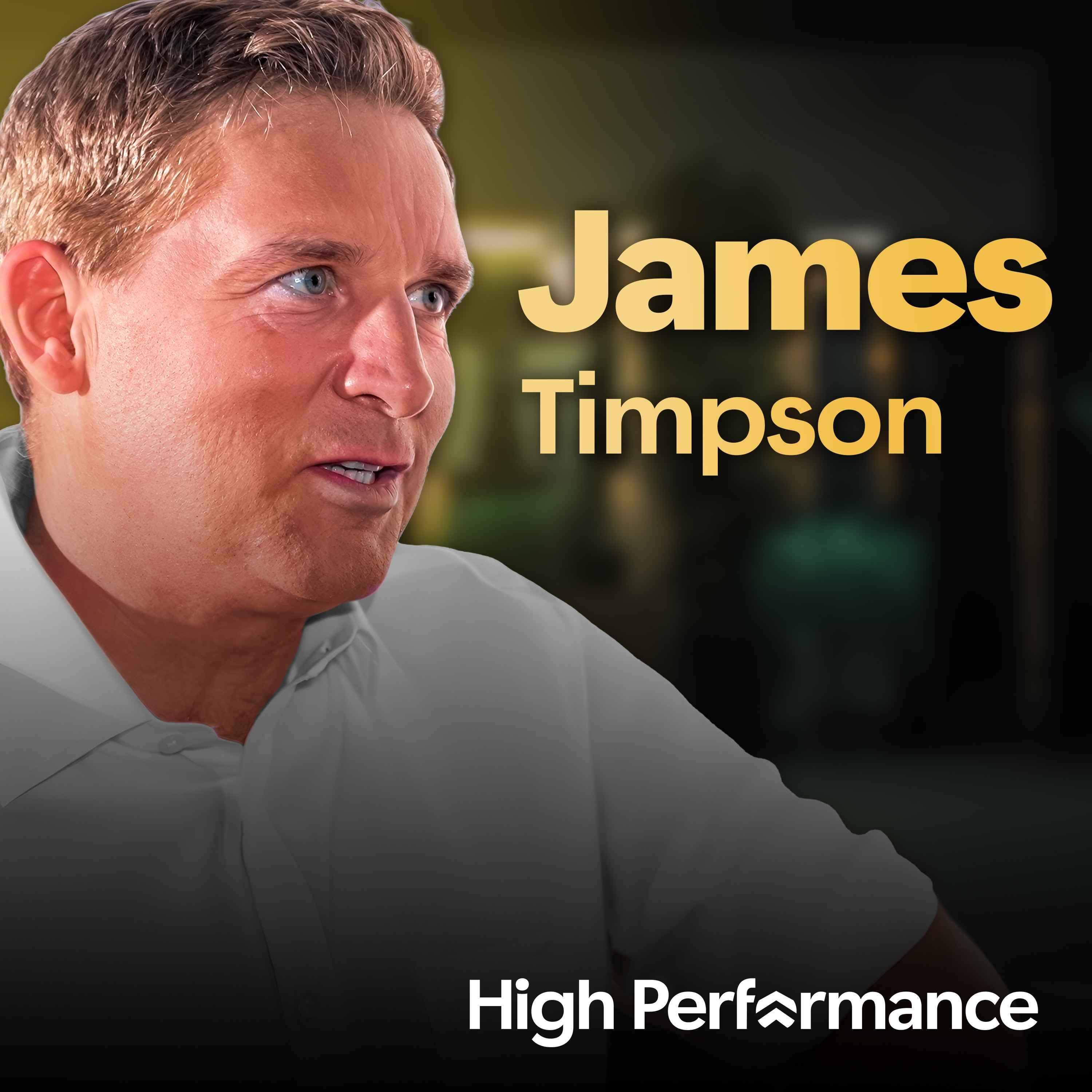
James Timpson explains “upside-down management” at Timpson: trust as the core leadership principle, kindness as a driver of profit, and culture built through hiring for personality, giving second chances, and measuring colleague happiness.
James Timpson is the leader of Timpson (a watch/key/shoe repair retailer) and previously worked for the government examining the prison system, aligning his business values with prison/probation turnaround work. No other named guests appear in the transcript.
Trust reduces overhead and enables innovation; restricting freedom increases cost and kills innovation. Timpson’s colleague happiness (measured weekly and via an annual “rate your boss” index) correlates with profit. Second chances work: people recruited from prison perform similarly to others when trusted and held to standards.
Glenn (a former watch repairer) started doing watch repairs in a West Brom shop; it grew into a £40m/year watch repair business. A cat-lover colleague tested selling collars at a discount after buying stock from Pets at Home; it led to sales. Timpson gives recently released prisoners cash to deposit immediately, building trust through accountability (receipts).
Written by AI. May contain mistakes.
Discussing the significance of trust and second chances in leadership.
“The best ideas come from the people on the front line.”
Exploration of high performance and the role of trust in organizational culture.
“From what you've seen outside of Timpson, are you optimistic or pessimistic about the future?”
How empowering colleagues through trust can drive better service and profits.
“trust is the core element of how you operate.”
Examples of how Timpson fosters kindness and autonomy among its colleagues.
“Can you give us an example, James, as well as that idea where your staff are free to barter and negotiate, of something that happens in a Simpson shop that would terrify most head offices?”
Describing the process of building trust with new colleagues, especially those from prison.
“because they like the culture, because they're trusting the culture.”
An insight into Timpson's unique hiring process focused on personality over skills.
“So when I hear that, that you're giving a recently released prisoner a bag of cash and asking him to go to the bank, my brain goes to the future that hasn't arrived yet, of what if they run off with it?”
James shares his experiences growing up in a home with foster children and the lessons learned.
“We want people who are fun, interesting, engaging, sparky, interesting.”
James reflects on his early experiences with the prison system and its impact on children.
“give people second chances, to assess people on personality rather than sort of preconceptions is powerful.”
James shares his childhood experiences with foster children and how they shaped his views on empathy and leadership.
“they do have a system and it lets a lot of people down?”
James discusses the cultural shift he initiated at Timpson, emphasizing kindness and support for frontline workers.
“taking people out of prison and giving them a job a thing was the upside down management system a thing was putting trust at the heart of the business a thing?”
James addresses the challenges he faced while implementing cultural changes and how he handled resistance from leadership.
“How did you, I mean, what was his response when you pitch in this new way of working to him?”
James emphasizes the importance of listening to frontline staff and shares examples of feedback that led to significant changes.
“I don't get McKinsey in, I'll go and speak to Julie and Dave and Brian, who work in the warehouse, over a cup of tea and a sandwich, and they'll tell me what needs to be done.”
James explains how measuring employee happiness correlates with business performance and profitability.
“and we'll do all the normal sort of updates and go and have fun and everything.”
Discover how colleague happiness correlates with business performance.
“And ironically, she spends most of her time with people who are unhappy.”
Learn about Timpson's unique approach to fulfilling employee dreams.
“The idea of happiness can sound quite abstract.”
Explore how Timpson offers flexible working arrangements and support.
Understand the correlation between employee happiness and company profit.
“And if the average happiness goes down, literally, you'll see the profit go down.”
Insights gained from Timpson's leadership applied to the government sector.
“how I've run prisons and probation and turned it around.”
James reflects on leadership and lessons learned from his experiences.
“If you looked at all of the data, everything was down, down, down, down, down.”
Discussing the role of kindness in society and how individuals can contribute.
“Quick decision making, even though I may get it wrong.”
Explore how kindness manifests in communities and its benefits.

Get the gist, explore an idea or ask about something said.
 Claude
On The High Performance Podcast, what are the key points of this episode?
Searching your listeningAutomatic transcript. May contain errors.
0:03The best ideas come from the people on the front line. The colleague called Glenn was working in West Brom and he used to be a watch repairer. He was basically doing watch repairs on his own and he thought he was going to get a real telling off. And now it's a£40 million a year business.
0:16Jake Humphrey: Your parents fostered over 90 children during your own childhood. What did growing up in an environment of seeing these kids come in for refuge into your family teacher? What it taught me is the people I recruit into the business, I want people who have got a real reason to prove themselves and want to grab that second chance because a lot of people have never given it to them in the past. You stepped away from Timpson so that you could go and work for the government, looking at the prison system, which is so aligned to the values and the life that you've lived. From what you've seen outside of Timpson, are you optimistic or pessimistic about the future?
0:57How are you? Amazing. Great. Well, we're looking forward to this conversation because I think if you asked every leader in this room whether they trust the people around them, they would most likely say that. In fact, we can do that. Let's start with a show of hands. Put your hands up if you believe that you trust the people in your organisation.
1:14I'd say that's 99%. Do you believe that it's 99 %? Not really, no. Why? Why? Because the reason why organizations have lots of overhead and lots of structure and lots of compliance is because we don't trust people or we can't trust people as much as we'd like to. And the nature of organizations is they have a lot of people checking. So when it comes to trust, what does high performance look like for you? For me, it's about trusting people. It's about having a culture where trust is the core element of how you operate. And that means that you recruit people who are fantastic and you trust them to get on with it and decide what they think is best.
2:00Because if you run the organization to stop the 5 % of the problem people doing what they do as bad actors, then the 95 % of the people who are fantastic get tired of the same brush and don't be, they're just restricted from being free and deciding how they should do things better. And what happens if you restrict that freedom? Why is it so important? See, if you restrict that freedom, what happens? One is you build up a lot of cost in the organization, because you need all these people checking and checking and checking. And then the second thing is, is you stop innovation. You stop people being able to make it up as they go along.
2:35Let me give you a small example. If you go into one of the Timpson shops, and you ask for a certain key or a certain shoe to be repaired. And you say, well, I haven't got the money for that, or that's too much, or can you get me a different color? The answer is always just yes. So we'll do deals, we'll order special items, we'll do things that lose us money. There's no rules about how that works, but just trust people to give great service, and then you perform better. So it's a combination of basically trusting people is more fun, and you end up making more money. So to me, those are two good reasons.
3:12Jake Humphrey: Can you give us an example, James, as well as that idea where your staff are free to barter and negotiate, of something that happens in a Simpson shop that would terrify most head offices? Okay, first, we don't have staff, we have colleagues, because we don't like the word staff. It's a bit like sort of nails down a chalkboard for us. We don't believe anybody's more important than anybody else. That's why everyone's a colleague. Let me give you some examples. So stock. So most retail businesses have huge computer sap systems, deciding what stock should be in which shop on which day and have all these projections and so on.
3:45What we have is the colleague in the shop decides what they want. And if they get it wrong, they sort it out. So they literally walk around and say, I'll have 20 of those, 30 of those. I won't bother with any of those. And they learn what is the right stock for their shops. That's one example. Another is pricing. So our colleagues can decide what price they want to charge as long as it's not above our sort of, we have sort of like a limit. But they can do deals. If we stop doing deals, we'd probably lose 20 % of sales. But we even say you can give things away for free if you want. So 4 % of our transactions are for free.
4:17And you may think that's commercially nuts. But actually, it's commercially the most sensible thing that we do because people remember kindness. They remember when someone has given them something for free. So they come back again and again and again. And it's not just about making more money, right? It's also about what this does for a culture. So when you have a culture where, I think almost every culture would say, oh, we trust our people. But when you actually have a culture where the behaviors demonstrate the trust that you have in your people, what does it do for that culture? What it does is it means the culture gets far more intense because colleagues stay, because they like the culture, because they're trusting the culture.
4:56Most of our colleagues have worked in lots of other businesses where they haven't been trusted, they haven't felt that they are treated as an equal, and they haven't felt that they can be successful. So it doesn't work out with everybody in our business. There are people who we don't think are right for us, and we ask them to find the happiness elsewhere. And some people leave in some ways sort of firing us. But people stay a lot longer. Our colleague retention levels are off the chart compared to most retail businesses, our colleague turnover and so on. So people stay. And what that means is that we just give a better consistency of service.
5:31Jake Humphrey: So can I ask you about that period then? If somebody's come from outside of Timpsons and then they join and they're being told you're being trusted, and you said it can often take a while for that to happen, is there a pattern that you see people go through until they really do understand that trust is being given? Well, let me give you a bit of an extreme example. So many people know we recruit people from prison. And what we try and do is the first day they join us, if they leave prison today, we want them starting working for us tomorrow because every day that they're out of work is a problem.
6:01them. So the first thing we'll do is give them the money and say, could you go to the bank and put it in the bank? We trust you to put the money in the bank. And again, it's about building up the trust. But also what we find is the first six weeks when people join the business, they think it's all a bit strange because we're not checking on them. They can do what they want. They can go and have a break when they want. They can give things away for free. They can take things to the car for customers. There are no sort rules but but also then what happens after that is that actually yes it's a business we've got to perform so we've got to get the sales in we've got to you know we've got to get really good customer reviews and so on so it is a balance between um people sort of loving the freedom but also we've got to be consistent and run a business i also think there's a really amazing message though in the fact that someone leaves prison they come to work for you and the first job you give them is to take cash to a bank it almost feels like you've created a contract with them in that moment haven't you and it's trust it's showing them that we trust you but you've got to earn that trust too by coming back with the receipt and and working hard for the rest of the
7:11Jake Humphrey: day so yesterday we had chris hoyt so chris hoyt here talking about it and he was talking about his his terminal cancer diagnosis and he spoke about the two o 'clock in the morning when you your brain starts projecting into a future that hasn't arrived and the terrors that come. So when I hear that, that you're giving a recently released prisoner a bag of cash and asking him to go to the bank, my brain goes to the future that hasn't arrived yet, of what if they run off with it? What if they decide to abscond? Have you ever experienced any of these horror stories that our brains predict? Well, I've recruited a lot of people from prison over the years and I've recruited a lot of people who haven't been to prison over the years.
7:54And what I can tell you is there's no difference in their behavior. When it goes wrong, it goes wrong, whether they've been in prison or not. What I find is that people you recruit through the justice system, when it goes wrong, it can go wrong quite quickly and it all goes completely pear-shaped. But I believe in second chances and I believe that when you trust people, they perform better. And how do you stop the people that abuse the trust from changing your view on whether trust is the right way to run a business? Okay, so we are, everyone sort of looks at our culture from the outside and thinks we're very cuddly and everyone's nice to each other because, you know, you get all these wonderful benefits and everything else.
8:34But if you're not good enough, you've got to find your happiness elsewhere. And the way we judge it is we want everyone to be a nine, every colleague to be a nine or a ten out of ten because we only want to work with people who are amazing. And if someone's an eight, we'll give an opportunity to improve. but if they're less than an eight sorry not good enough for us so when you recruit people you'll it's easy to spot a one two three four or five because their best is not good enough for us they may be fantastic for somewhere else but they're not right for us the danger zone is six and sevens and eights because if you're desperate if you've got vacancies and you just need to fill that gap you will lower the standard of person you'll accept and that's why you need hr departments that's why you have tribunals and that's where the problem zone is but you're using the scale
9:17Jake Humphrey: What is that scale based on? Personality. So what was a name? Right. And it's completely subjective. We want people who are fun, interesting, engaging, sparky, interesting. They look you in the eye. They've got something about them. I don't care whether they can repair a shoe, cut a key, develop a photo. That is irrelevant. I can teach skill. I can't teach personality. So how do you go about assessing whether somebody's got the requisite personality? Basically, we interview people. We'll interview anybody who turns up. A CV for us is basically a complete waste of time because you can't get your personality across in a CV.
9:49People sit in front of our area team, area managers, assistant area managers, and they'll ask questions around, you know, where did you last go on holiday? What are your hobbies? Tell me something about you. And you're just trying to suss out their personality. The thing is, you know within about 30 seconds, really. And then if we like their personality, we'll offer them a job. And does it bother you if they're covered in tattoos, have blue hair, like, look a bit different to you or I would? Well, if that was the case, about 95 % of my colleagues would not pass the test, I think. No, we're not.
10:21What we're interested in is just that personality that is memorable. Yeah. So you're almost looking for people that actually do look and seem a bit different. They bring something to the table. Yeah, we want people who are, who've just got that X factor of, they can come up that they're confident in their shop they can command a personality of warmth and friendship and kindness in the shop i see how this works when you're hiring people to work in one of your stores does the same concept apply if you're looking for a really senior hire in the business or do you suddenly change your rules of engagement at that point well two things one is we don't really hire many senior roles from outside the business we like we spend a lot of time on succession planning.
11:05Succession planning for me is probably the most important part of leadership. So you've always got people lined up, ready to go. But whether you work in IT, finance, property, still want the same personality. Because otherwise the culture doesn't work. You've got to have a really consistent kind of personality across the board.
11:22Jake Humphrey: Can we build back a bit into your own story? Because I think understanding this desire to give people second chances, to assess people on personality rather than sort of preconceptions is powerful. Your parents fostered over 90 children during your own childhood. What did growing up in an environment of seeing these kids come in for refuge into your family teacher? Well, it was a chaotic time. I mean, my whole childhood, when you look back at now, literally, you know, sometimes there would be two foster children, sometimes there would be three, then some would come back, then the parents would come and stay with us.
11:57So it was a madhouse, but it was a loving madhouse. And what it teaches you is that everybody has potential. But sometimes people are handicapped by the life that they've been given, the situations that they're in, whether they've been the care system, whether they've got other issues, but everybody deserves a second chance. And my parents, my mum, especially, that was her thing. She really believed in second chances. And I think what it taught me is the people I recruit into the business, I want people who have got a real reason to prove themselves and want to grab that second chance because a lot of people have never given it to them in the past.
12:33Do you remember how long it took you to learn to trust these young people that kept appearing in your life all the time? It was, I mean, sometimes, if I look back now, I mean, it was quite a strange upbringing, really. But, you know, we had, some of the kids who came to live with us were amazing, like mates, good friends, you know, used to go and play football all the time. Others were a complete nightmare. And basically, they were a nightmare because they were damaged. you know the holidays ruined lots of you know lots of shouting and storming off and that kind of stuff but I think because we knew they were always going to go essentially because they would come for us for a few weeks or a few months at the end in the end some of them actually stayed with us for years but you've got to make your mark you know and they've got to come up with the goods as well so I would say you build up as a kid it was more about friendship than trust but they were great.
13:24I mean, some of them were just very, very troubled. And what would your mum and dad explain to you about why you have all these children appearing in your house? What did they teach you about love and care and empathy? What my mum used to say is, well, their mum can't look after them or their gran can't look after them so that's what we're going to do. And it was about just love, about giving them love, not judging them. If they don't do the homework, it didn't matter. If they didn't, you know, if they weren't well behaved at school, didn't really matter. It was just giving them love. Wow. And what about the conversation around the prison?
13:59Do you remember the first moment that you realized that there are prisons and they do have a system and it lets a lot of people down? In some ways, it sort of started as a kid because basically a lot of the foster children used to come to live with us because their parents, their mums were in prison. So my mum used to actually take the kids to see the mum in prison a lot and we used to sit in the car park and wait outside but and then often the mums would come back and live with us or come and stay with us you know come hang around for the days as part of their reintegration and some of them were great and I just sort of got the prison bug about wondering why these people are there they must have done some really bad things for their kids to be taken away from them and that's when I started to get the bug I think I mean can you remember being sat
14:44Jake Humphrey: in that car park then, a style prison. What was your experience as a kid? How did you perceive it? These massive walls with barbed wire all over and these people dressed in police officer uniform walking in and out the gate. And then the prison van coming from court. That was what I remember in my head. Because we interviewed the comedian, John Bishop, who told us, didn't he, about his dad went to prison and what stuck with him through the rest of his life as the way that he felt people judged his mum when she went to visit him, judged him and his mother to see his dad. He felt judged and looked down upon.
15:22Jake Humphrey: So what was it that you were seeing from your own mum about these women that were coming and living with you or coming to visit their children? What was it that she was role modelling that you think you could still trace a direct line to your own leadership today? One is don't judge people until you know them. and the other is everyone deserves a second chance because the reason why most women are in prison is because they're ill and they're victims and most of these mums really just wanted to be with their kids and if you separate the kids from the mums it's gonna you get this cycle of re-offending as well so it was basically give people a chance put your arm around the shoulder give them some love and hope for the best i really love this idea of your your empathy and your understanding of other people being built when you were this young kid having to share your house with lots of different people every single passing month that obviously the day comes where it's time for you to to be involved in the family business before you were in charge at timpson was this idea of taking people out of prison and giving them a job a thing was the upside down management system a thing was putting trust at the heart of the business a thing?
16:37No, but it was a culture that was open to it. And it was a culture that was different from most businesses, because it was a essentially a family business culture, even though bizarrely for a period, it wasn't a family business, it now is a family business. And it was quite paternalistic. So, you know, we had a lot of people on the payroll who had been there a long time and had a difficult time and we kept them on. And a lot of people who, you know, we paid for operations, paid for holidays. Their kids couldn't get a job anywhere else. So they turned up working for us. It was that kind of culture.
17:08Okay, so when you decided that you were going to make a change, what was the reaction? Your dad was still involved in the business? Very much so. Yeah. Basically, what happened is, is I started reading books. And I was always a bit of a geek around learning from other companies. And I went to the States to go and see about six or seven different businesses. I started being absolutely fascinated by Richard Sounds and Julian Richer and the way he ran the business. And I basically just wrote to loads of these business leaders to say, can I just come and sit with you for an hour and just ask you a load of questions how you run the business.
17:41And the businesses that I admired all did very similar things. They recruited great people. They really looked after them. They didn't judge them to be any different from anybody else. And they were just very much talking about a culture of kindness and looking after people. So I just pulled all that together, copied it. I remember sitting down at the table with my dad saying, basically what happens is the most important people in our business and in every other business are the people who serve customers are on the front line. And everyone else's job is to support them. But the problem is, you see it all the time, that in organizations when people are paid more and more and more, they think they can tell people more and more and more.
18:19When actually, what their job is to support people more and more and more. And there's a business called Nordstrom in the States. There's a few others where they're just brilliant at doing this. And so we started. And I remember getting all the area managers into a hotel for sort of the big reveal. And I just said, right, from now on, everyone's a colleague. We don't use the word staff. It took about a year to get that word out of the culture. And the most important people every day are the people who serve customers and put money in the till. Even if they started today, they are the kings and queens of the business.
18:53It's our job to help them. We cannot tell them what to do. And culture change takes a minimum of three years, probably five, but we're on it all the time. Not all of the leaders got it, so they were replaced. And it got to the point where the more trust that they had in that leadership system, the better the business performed, literally just got better and better and better.
19:16Jake Humphrey: But take us back to that table discussion with your dad, because you sort of present this idea to him, but you've also said it's a family business. Your dad is like this warm paternal figure. How did you, I mean, what was his response when you pitch in this new way of working to him? He was up for it. He's always been amazing with me. I think his view is, which is sort of, James is always going to come up with all these ideas. So the best way is to let him do it. And if it doesn't work, he'll learn his lesson. And, you know, not everything works, but this one did work. And actually, it made the business just more fun.
19:54And it made the business way more successful.
19:57Jake Humphrey: But did you pilot it somewhere first to get some evidence to present to him? No, just went for it. Just went for it. When did you first realize, actually, this is actually... Because what happened is sales started to go up. Right. And then we bought another business. And they were very much a top-down business. And I remember going around and we took a photo of me and my dad throwing bin bags into a skip to say, all the rules are done. Don't worry, this is business report. All the rules are done. Just serve customers, do an amazing job, put the money in the till. So we only have two rules in the business.
20:29Put the money in the till and look the part. So that's all you need to do. Sales went up 20 % overnight. And then every business we kept buying, we kept doing the same thing. Forget the rules. Just serve customers, do an amazing job. Give things away for free. Do what you think is right. Sales go up 20%.
20:44Jake Humphrey: But you said some people didn't get it and had to move on. What did that resistance look like? Was it overt or was it more subtle and insidious? It's quite easy to spot. They love process. They have their favorites. And they don't like doing things in a way that is flexible. So they're sort of pretty rigid. And some of them probably are a bit pleased with themselves. because we've got some colleagues who have amazing jobs and a lot of big money, and they've been with us a long, long time. And actually, the further you are away from the front line, the less power you have. But some people like to hold on to that power.
21:25In our world, that doesn't work.
21:27Jake Humphrey: How did you sort of address any issues of complacency that you might have seen? I think probably because we know the business really well and two, three days a week out and about visiting shops. And I always worry when, if you meet a retailer, who, and I've done this a number of times before, they say, I try and get around the shops on a Friday, which means probably one in every three. Well, actually, that's the main part of the business. In our case, it's the main part of the business. So you've got to spend your time out and about, and that's how you get a real feel of how strong the culture is and how strong the standards are and how good the people are by getting out and about.
22:07You can't do that from the office. So for people in this room and people who are listening to this podcast, what's the first thing that you would like them to do after this conversation to create their own version of upside-down management? If you were to spend five hours or a day with three colleagues who work on the front line all the time and ask them, if they had a magic wand, what are the things that you would do as a leader to help them to do their job better and to serve customers better and to make more money. They will give you a long list of things, often pretty easy fixes, and basically just do that.
22:47That's it? That's it. The best ideas come from the people on the front line. If I want to know how to improve how it works in the warehouse, I don't, with the grace of respect to McKinsey, I don't get McKinsey in, I'll go and speak to Julie and Dave and Brian, who work in the warehouse, over a cup of tea and a sandwich, and they'll tell me what needs to be done. And how do you avoid the idea then of,
23:07Jake Humphrey: like when you turn up in an organization, people tell you what they think you want to hear rather than what you need to hear. Because I can imagine that can be a danger for people in many cultures. Yeah, I think because we know the business well, there is an element of trust that we built up and we know the people. And they tell it straight. Our culture is an honest culture. It's not a political culture. And I think that helps. I think my bullshit radar is pretty good. So can you give us an example then of a piece of feedback that you've had from going and speaking to Dave in the warehouse that has really made you stop, reflect and do something significantly different?
23:49I'll give you one example. We do watch repairs in the Timpson shops. It's actually the second biggest service that we do now. And the reason why we did it is the colleague called Glenn was working in West Brom and he used to be a watch repairer. He was working in the Timpson shop. In those days, we just did shoe repairs and keys and pet tags. and this business wasn't very good in West Brom. In fact, it's still not very good in West Brom. But he was basically doing watch repairs on his own, but ringing it through on the key cutting button on the till. And I walked in there and saw him doing it.
24:21I said, what are you doing? And he thought he was going to get a real telling off. And he said, well, I'm just doing a bit of watch repairs because business is slow. So this is brilliant. So he then started, I said, please do more. And then we started getting other colleagues into the shop to learn how to do watch repairs. And then he ended up basically running our watch repair business. And now it's a£40 million a year business. So if it wasn't for Glenn, you know, just having a go, it wouldn't have worked. So again, the trust gave Glenn the freedom. Glenn makes a lot of money for your business now.
24:50Yep, it works. I'll give you another example the other way. I have a colleague who loves cats. In fact, he's just retired. And we do cat and dog tags. And he said, we will sell so many collars. We need to be selling collars as well as tags. I said, fine, go to Pets at Home, go and buy as many collars as you want, put them in the shop, sell them for about 20 % less than Pets at Home sell them for. If we take a loss, it doesn't matter. Let's see what happens. So I phoned him up a couple of weeks later. So how many of you sold? Three, three cat ones. One to his mum.
25:25He'd bought one with his collie discount and a genuine customer had actually bought one. And your reaction to that, to make sure that he continues to be ambitious and try things? Keep selling as many collars as you want. But I said, when we get to a point where you're selling so many you can't cope, then we'll look at putting them in other shops. We never did.
25:46Jake Humphrey: See, what I find amazing, though, is like you've offered two examples, like Glenn doing the watch repairs and your colleague that loves cats. I think there's something really special about that level of detail that you or your managers get to know colleagues. How do you go about creating that kind of level of detail of understanding? I believe the best way to lead an organization is to operate here and here. For those of you listening, it's high and low. So you operate at the boardroom level and on the front line. And I don't really bother about the middle bit. It's not that I don't value what the middle teams do.
26:22It's just that I trust them to get on with it. But you have to know what is going on on the front line. and you have to know what is going on strategically and investment-wise in the boardroom. And that is where, for me, the focus needs to be. And that's what I really try and do. And sometimes you see people, they're far more comfortable in the middle zone.
26:43Jake Humphrey: It doesn't work. I was hoping you were going to talk to us about what you told me many years ago, the Coronation Street test that you got your managers to do with, starting to ask them personal questions and getting your managers to understand that you valued that information. It wasn't just gossip. That's what we call the do you know your people test. Yeah. So every year we get our area managers together and we'll do all the normal sort of updates and go and have fun and everything. And then we have the do you know people test. So what we do is we randomly pick a colleague who works with them.
27:14And they normally have 50, 60 colleagues. And we'll phone them up a week before and say, right, you need to answer these questions. Where do you live? How many kids have you got? What are their names? What are your hobbies? Where do you last go on holiday? Which sports team do you follow? And what's your favorite kind of music or something like that? And then it's like an exam. So then the area managers come in and we say, right, this is a question about Tracy. And if they don't get 80%, we have a real problem with that. Because they need to know their people. If you're going to be a great leader, you need to know your people, not just how they perform or their qualifications as individuals.
27:52And you've also hired a long time ago, I mean, it's all trendy now to have head of happiness or chief happiness officer or whatever. But you created the director of happiness role. I think we were the first. Yeah, Janet. Janet is our director of happiness. And ironically, she spends most of her time with people who are unhappy.
28:11So the way we work out the health of the business is by how happy our colleagues are. And you may think that is really, you know, just head in the sky kind of stuff. I'm really commercial. I'm as commercial as anybody you will ever meet. And I've worked out that if your colleagues are really happy, you're going to perform well. And the happier they are, the more money we make. There is a direct correlation between the average level of happiness and the profit of the business. So that's why Janet's role as Director of Happiness and the team she has around her is absolutely vital, because we measure how happy everybody is.
28:47How often? So we do it on a Thursday night, every Thursday. The quick question is, how are you feeling out of 10? Average is around about 8.9 normally across the business. And then we have the annual happy index, which is how do you rate your boss out of 10? So your area manager, your team leader. And that is like A-level results day when that comes through. Because if a leader scores badly, it's pretty terminal. It's their job to ensure that their colleagues are happy. And that doesn't mean you're a pushover. It doesn't mean you give everybody whatever they want, but it means you are a great leader.
29:24You know them. You are kind to them. You are as flexible as possible around their lifestyle, and you are honest with them. And that's how we run the business. It's more about happiness than it is about profit. But what if that leader turns around to you and says, 20 % growth in my stores this year. I'm the most successful manager in the country. Not important. It's their colleagues. But what you find is the happier the colleagues, the better they perform anyway. So you can have someone who comes in and sort of just smashes the sales and short-term fix doesn't work because their colleagues know.
30:00Jake Humphrey: The idea of happiness can sound quite abstract. If you were to break down what does make a colleague happy, what have you found out the factors are? I would say that they're trusted to get on with it. They're left alone. If they've got a problem, they can phone up and it's dealt with because a lot of them have worked in organizations where you phone up and asking and nothing ever happens. For us, it has to happen all the time. We're flexible around their lifestyles. And we are really kind to them. So if they have a problem, we'll lend them money. We'll give them dreams come true. I think something like 28 % of our colleagues have had a dream come true.
30:37Jake Humphrey: Go on, let's explain what that is. So I think last year, we spent something like 1.6 million on making colleagues' dreams come true. So you may think, again, you know if we're a private business we can do it if it's a plc it's different i understand that but i'd still think it's probably a sensible way of doing things so basically colleagues right to the dream team the dream team is actually martine who used to be my pa many years ago and it'll be a request and when we first started it i was a bit nervous in fact this is an idea i copied off richer sounds i was a bit nervous because i thought it'll be i want to go to tenerife with my mates or set of golf clubs or something like that but actually it's um the kids have had a really difficult time um can we take them on holiday um the boiler's gone i can't afford a new boiler i can't afford a car i'd love to get the garden done up stair lifts so mum and dad can come and live with us um we do a lot of teeth we do a lot of teeth um and and that kind of thing so the sort of thing where they will they wouldn't be able to necessarily afford it but again we love doing it we're a family business they are part of our family and you look after your family so what's your criteria to then decide whether your dream will come true what how does martin determine are they a great colleague are they nine or a ten out of ten we employ a lot of people from prison and a lot of people from prison have had serious drug addiction issues in the past so their teeth aren't good and i can't tell you the number of times where they write in their dream letter and they're asking for you to because they can't smile in front of their grandchildren yeah because they're embarrassed and they can't smile in front of customers and giving them that confidence yeah that self-belief um you mentioned there we flexible around their lifestyle and i worked for a company that's told me they were flexible around my lifestyle and it was like sometimes they might let you leave half an hour early if it's for a really extreme circumstance what does flexible around your lifestyle actually look like when it comes to best practice so if you take um if you come to timpson house that's a head office we call it head office timpson house in manchester and you have the days when the teachers are on strike the the place is just full of kids um it's full of dogs it's full of kids people's grandparents come in um and then when it comes to working in a shop um if you need to you know i've got i need to go medical appointment on thursday fine no worries we'll cover it and what you'll find is leaders area managers will actually cover shops for colleagues and come in on their day off so their colleagues can have a day off wow and i'm interested then from a commercial point of view you said you can correlate happiness with with with profit and productivity what is it that you've seen can you explain so the so we add up the happy index scores yeah the survey's done every april they get the scores in june and some area managers will literally have every one of their colleagues giving them a 10 out of 10 as a leader and you'll have others where and we also look at the return rate as well because the return rate is actually really important.
33:31And then we have an overall average, and we plot that against the profit of the company. And if the average happiness goes down, literally, you'll see the profit go down.
33:41Jake Humphrey: And can you give us specific percentages of what is one point in the happiness index? Last year, they were up 1.6%, and profit was up about 4 million quid. So can we talk about what your ambitions look like for the future? because I think one of the things that's interesting and I told a friend of mine who runs a very big business that we were having a conversation today and it was all about happiness and interestingly, his reaction straight away was, the problem is the more you give your staff, the more they want, which I think gives you an insight into the culture that he's maybe creating at his business, hence I'm not using his name or his business, right?
34:19But this is a real thing where you're now known for this. So what do you do to keep on growing in this area, like to be ambitious, to be creative? Like what are the things that you have to keep on doing to push the boundaries? Well, we're always looking for new ideas. You get the best ideas from what other people are doing. And you try them. And if it works, you just keep on doing it. But I would say, just go back to your point on, you know, because people want to feel secure. You have a great job now. You know, what you do, you know, you feel secure. A lot of people don't feel secure in their lives and their jobs.
34:55and working for an organization that values them, looks after them, gives a huge amount of security to them. So when it comes to other ideas, I mean, obviously, you know, when I go back to running the business after I've done this job in the government, I'll need to sort of get my thinking cap back on. But it's about recognizing you need to keep doing more and more and more for the colleagues on the front line. And it's going to be interesting with technology because what technology is going to be able to do is to speed up a lot of things but we're in the business of service and people serving people and so we need to make sure that we maintain the culture when the way business works changes quite quickly and that's kind of an interesting challenge you know this isn't a political conversation that's not where we want to take it but it is interesting that you've for people that don't know you stepped away from timpson so that you could go and work for the government looking at the prison system which is so aligned to the values and the life that you've lived.
35:54But I think it's probably also given you a really interesting insight into the general state of the nation when it comes to trust and it comes to care and empathy and understanding. So are you, from what you've seen outside of Timson, are you optimistic or pessimistic about the future? I'm an internal optimist. What I've seen in the last two years doing my job is that the way I've run the business correlates exactly to how I've run prisons and probation and turned it around. The focus on listening to the people on the front line, you get the best ideas all the time. Measuring things, you know, I'm really hot on performance and, you know, the business culture of just drilling into the data.
36:39I've done a lot of that. Also, kindness. And it's a big organization, you know, I'm leading at the moment, but I still write letters all the time, thanking people, congratulating people. So a lot of the values that I've learned in the Simpson business, I've tried to replicate here. But it's way more complex. It is way more complex. And, you know, it's been fascinating. I think when I first started, the first three months were like a traumatic experience in my life, understanding it all, and it's like doing an A-level every week. But I am hopeful. There are a lot of very good people. There are a lot of people who are delivering a service, public service, and work incredibly hard.
37:21And, you know, I've loved working with these people. They are really inspirational people. Very clever. It's a real validation as well of the things that you've put in place. You can take it away from your business, take it into the public sector, and it's also successful there. So what is the thing that you learned in your life running Timpson that you took into the prison service and it's had the biggest effect or the thing that you are really proud of that you took into that world that wasn't there before? A belief that good performance is possible because when I started this job two years ago, everyone's heads were down.
37:58Everything was poor. If you looked at all of the data, everything was down, down, down, down, down. Now 90 % of my probation areas are performing up. 75 % of my prisons are performing up. And literally two years ago, it was completely the other way around. And that's because we've been on performance, but also listening to the people who are doing the job. And they know the answers.
38:22Jake Humphrey: And to flip Jake's question, what have you seen from your current role that you will take back into Timson? They're very good at thinking things through. I'm an entrepreneur. It's like, okay, fine, let's have a go. In government, you can't do that. So it's thinking through not just the next steps, but the third and the fourth step. I think that is something that I will take back very much. And sort of unintended consequences, which, again, private business, if it doesn't work, oh well. Where in this, if it doesn't work, is a big problem. So I think probably being more thoughtful about decisions and the implications of those decisions.
38:55And what has it done for you as a leader to actually step away and have perspective on something that you've been so central to for so long? It's been a challenge that I don't think many people wanted to do or anybody else really wanted to do. I feel tested. I feel pleased that a lot of the things that I hope would work have worked. I feel that I've learned a lot. I've met some amazing people. It's been difficult and hard a lot of the time. But I think that...
39:33I'm really proud of what we've done. And there's a phrase, there's a film, Danny McPhee, which is, if you need me but don't want me, I'll be there. And if you want me but don't need me, I'll be gone. And I want to get to a point where they're on their way, it's robust, and they will keep the good work going. That's lovely. if you need me but don't want me I'll be there if you want me but don't need me I'll be gone yeah we've got some quick fire questions to finish up with the three non-negotiables that you think are most important as a leader kindness writing letters getting on with it fast
40:18Jake Humphrey: it's the single best piece of advice you've ever received and why I would say the single best piece of advice I ever received from my wife. You can only do so much in a day. What's your biggest strength? Quick decision making, even though I may get it wrong. And your greatest weakness? I give people a second chance and sometimes a third and a fourth and a fifth. What advice would you give to a young James? I think when I was younger, you know, I was so ambitious and loved business and wanted, you know, I kept reading the papers about all these, you know, Lord Hansen in those days and Gerald Ronson and all this sort of stuff.
40:54And then when you get to this point where you're actually running this big business, you still think there's more and more and more. So I would say just take every day one step forward and don't try and jump too far every day. If you could go back to one moment of your life, what would it be and why? The day I met my wife in the library at university because that was probably the most important thing that happened in my life. It's beautiful. And finally, what does high performance mean to you that you'd love to leave people thinking about? It's about being the best you can be by every day a step forward, every day a step forward, every day a step forward.
41:34I love that. Listen, it's been a really, really fascinating conversation. Final question before we wrap up. We're told all the time that the world is becoming less kind, less kind, less kind. From your lived experience, do you agree with that and if you do do you believe that us as individuals can make the world a kinder place i think we can all make the world a kinder place i think there is there is so much kindness around the world there's so much kindness in communities you see it on the street you see it everywhere there's you know in our village where we live up in cheshire you know how people look after the old people in the village and it's fantastic um but i don't think we're very good at telling the story and that makes people feel it's less kind but i do think as human beings, we want people to be kind to us and we benefit hugely when we're kind to others.
42:23James Timpson, thank you very much indeed.
The former UK Minister for Prisons and CEO of the Timpson Group, Lord Timpson (James Timpson) believes there's a direct link between happy colleagues and business success. He joins Jake and Damian to explain why putting trust before control has shaped both his people and his company.
Lord Timpson shares the leadership philosophy behind his "upside-down management" approach, why hiring people with criminal convictions has become one of his greatest strengths, and how kindness, trust, and long-term thinking have driven lasting success.
An inspiring conversation about leadership, second chances, and building a culture where people can thrive.
This episode is brought to you in partnership with Aviva.
Hosted on Acast. See acast.com/privacy for more information.


