
 Ask ChatGPT


 The High Performance Podcast
27 Feb 2025 · 1h 11m
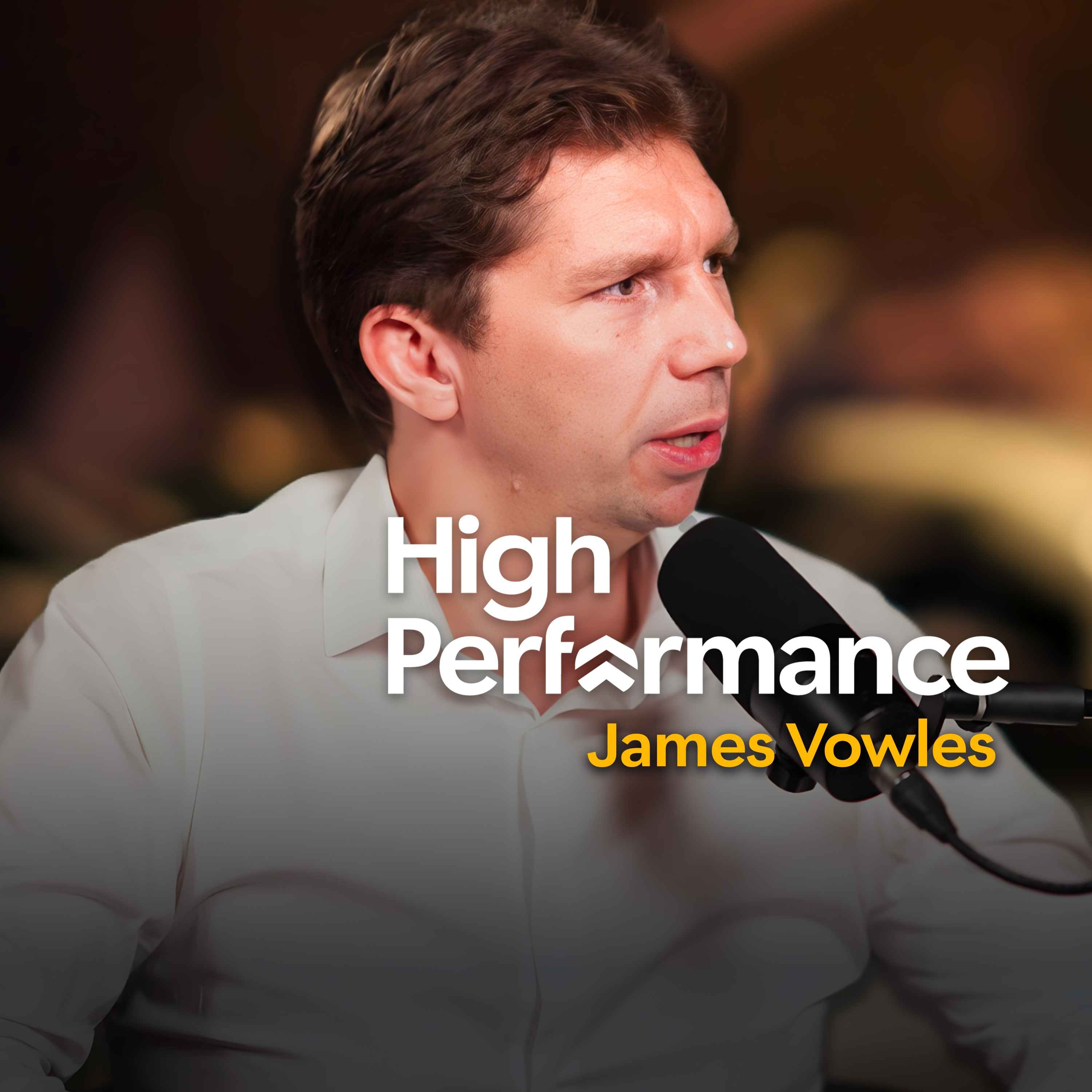
In this episode, Jake Humphrey and Damian Hughes engage with James Vowles, the former Mercedes-AMG Petronas Motorsport Strategy Director and current Team Principal at Williams F1. Vowles shares insights into high performance, his experiences working with legendary drivers like Lewis Hamilton and Michael Schumacher, and the culture shift required for success in Formula One.
Written by AI. May contain mistakes.

Get the gist, explore an idea or ask about something said.
 Claude
On The High Performance Podcast, what are the key points of this episode?
Searching your listeningAutomatic transcript. May contain errors.
0:28Watch it early on the High Performance App. I didn't have partners. If you are prepared to sacrifice everything, you can have greatness. You can have growth. You can have the direction of travel, but there's no such thing as all of it. You're listening to High Performance, the show that speaks to the most interesting people on the planet to get you closer to your own version of high performance with me, Jake Humphrey, and our high performance expert, Damian Hughes. And Damian, today we're going to give people a chance to hear from one of the most impressive people in Formula One, the Williams team boss, James Vowles.
1:01When I talk about this episode, which we recorded at the Williams factory, what do you remember about that day? I was really impressed with James. It was the first time we'd met him, but just a man that had a clarity of vision of where he was going, the courage to pursue a lesser known path for others. And also then just how inclusive he was. You know, I always remember that story where he put all the names of everybody that works at Williams on the wing of the car. You know, this was a man that was bringing a team with him. He wasn't somebody leading and hoping people followed. He was creating a culture of inclusivity.
1:39I thought it was great. I also love the fact that we're giving people a chance to listen to this just a short time before the new Formula One season starts because it's, I think, a massive season for Williams this year. You know, they no longer have Logan Sargent in the car. They don't have Franco Colapinto in the car. They have Carlos Sainz in the car, fresh from Ferrari, a race winner, one of the most loved drivers in the sport at the moment. So actually, there's pressure on Williams to make sure they give him a car that he can compete in. There's also pressure on Alex Albon, who really does have a world-class teammate for the first time since he joined.
2:13but also we're now 12 months away from a huge regulation change right at the start of the 2026 season and people will hear James talk about the fact that they can really push the boundaries and explore and experiment until 2026 starts but I also believe and I'm sure you'll back me up on this that it's hard to win unless you believe you can win right so I think that we need to see something the drivers need to see something the team need to see something the partners need to see something from Williams in 2025 that makes them believe that in 2026 they can win. Yeah, you're right. You know, one of our most frequent phrases we use on this, Jake, is that confidence is built on evidence.
2:51So everybody within Williams will want the evidence that they're making progress, that the foundations that they're building are really solid to allow them to spring on to that next level. So this season is going to be fascinating for that. And And I think what I'd encourage people to look at is similar to the way James views it. Don't necessarily look at where they finish on podiums. Look at where they're progressing on the small, subtle indicators as well. Brilliant. Well, I think you're going to enjoy this conversation. We don't just talk about Williams. We talk about the culture at Mercedes where James Valls was part of their multiple world championship successes, both driver and constructor.
3:28We talk about his time working with Michael Schumacher, with Lewis Hamilton, what separates the very best from the rest. And he also talks about how he pursued his dreams of a Formula One career and made it a reality. I think this is such an interesting conversation. Yeah, definitely. And this isn't just for Formula One fans. This is for anyone that's interested on how you shape a culture and an environment where everybody can thrive. James offers us some real insights into how to do precisely that. Here he is then, James Vowles, the Williams Formula One team boss on High Performance.
4:04Well, James, thank you very much for joining us. What is high performance, do you think? It's a good question. I mean, for me, certainly, I can only put it within the remit that I've been working in for 20, 25 years or so. But it is against peers that are as intelligent and as strong as you are overcoming them and become fundamentally the top of your game in that region. So it's pushing everyone further than they ever thought they could be pushed. It's exploring boundaries that you'd never thought you could go past. And defining and redefining and actually becoming the lead in terms of this is now the mark by which everyone else will assess whether they're doing a good or a bad job by.
4:46So how competitive are you? Massively. It's very difficult to even put in words how competitive it is. Definitely let's not play Monopoly. Oh really? Or anything else for that matter, I think. So where did that first begin? Can you remember? I would say it's always been there to a certain extent. There's just some items that will trigger me to want to be the best in it. And there's other items that didn't. For example, in the early school years, I didn't want to be necessarily best in the class. In fact, I felt that that would put a target on me. And I was more interested in other aspects of things.
5:19And I wouldn't say that in the early days, I was outstandingly good at everything. I was actually just good at everything rather than outstandingly good or excellent. so there's always better than me in every category but if you if we got to a new task i'd be reasonable that is probably the best way of putting it um and i think it happened very much actually at university is probably where it properly triggered by i thought and now's the time to really be um the best at what you do and it was especially um when i made the decision that this is where i wanted to be and i realized very swiftly that this isn't about average anymore this isn't about being good this is the single best person will make it so that's where you need to be so that sounds like a very conscious decision just to be good rather than great at school were you always aware that you had the capacity to go up the gears then i think the best way describing it is my teachers definitely did because my report card said incredibly intelligent but could do much better if he just applied himself i'm fortunate i don't think school was particularly challenging.
6:21It's just, I would find other things that would distract me that I found more exciting and more interesting. At the time, football, for example, I'd play, there was a whole group of us, but we'd play football four times a day to give an idea to it. It wouldn't be unusual to walk away with an hour and a half of football under your belt a day or more, or cycling at the time. So I cycled to school and back for many, many years, which fitness was absolutely fantastic. But I found a challenge in myself. I started timing it and I thought, right, how do we take time out of it. So you can see the competitive spirit, but it was against myself.
6:51And I couldn't do it without some metric to say, this is where you were, let's move it on from there. But I didn't realize at the time, I mean, at 16, you barely dress yourself properly, let alone know what you're going to form into later on in life. I didn't know where that was going to construct to, but definitely I didn't get that from schooling. It made no difference to me whether I went to an international school, so you're rated out of seven, made no difference to me whether you got a five, six or seven. It just didn't trigger any response to me whatsoever at all. and I can flip the question then on its head you made a conscious decision not to be extremely good when you were at school but then you have to make the conscious decision to be extremely good when you're at university because the penny has dropped that if you want to be in formula one it is a sport that rewards the elite so a lot of people think I want to be the best right what behaviors followed on from the moment when you made that decision that this is going to be the life you pursue the best one is probably it's a compulsive behavior which is not necessarily always attributed with good things, but it's compulsive.
7:49You are focused on a singular goal necessarily. It doesn't mean that there's one goal behind it. There's many, many achievements behind that. But you are constantly doubting whether you are the best in the world. And as a result of that, I mean, best in the world sounds extraordinary. We're at university studying, but you're constantly doubting, am I doing enough to be the best person that comes through the door of an F1 team in the next year? And so as a result of that, you push yourself harder and harder and harder you stop doing just the course what you're doing but i started also as soon as i had an hour or two free i was down at snetterton at the racetrack um and then started working with other entities then started writing some software in the background that did something quite clever in terms of motorsports at the same time you start doing not one thing focused but as many things to your um like basically consider it like a tree you're adding just branches to your tree to make sure that it's just not one tall branch but a whole tree that people look at and go okay This is quite special.
9:15That's U-P-W-O-R-K dot com. Post a job for free and get started today.
9:44guarantee, what have you got to lose? Head to bluehost.com to start now. This episode is brought to you by Opera Air, the first browser with mindfulness at its core. Now, most of us spend hours every day online, but how often do we pause to take care of ourselves whilst we're doing it? And that's where Opera Air comes in. It's a lightweight, fast, secure browser built not just for productivity, but for your well-being. With Opera Air, mindfulness is built right in. You'll find free breathing exercises, guided meditations, and soundscapes with ambient sounds, lo-fi music, and binaural beats, all designed to help you focus, relax, and even spark creativity while you browse.
10:29You were corrected there by your own humility, telling you not to say best in the world, right? Yeah. I get the sense that actually with the job that you do now, that has to be the aim right i i don't think my humility will ever let me that i'm against peers just straight away in the business nine other peers of which um many of them are multiple world champions in their position i'm not we've turned up and and we've scored a few points we've done okay but that's the benchmark the benchmark is when others look at me and go yeah you're multiple world champion and you've pulled a team to the front you can be compared to but still not the best in the world at what you do.
11:06There's always another level. But that's where you want to be. Without doubt. That's why I joined here. That's why I joined here because we have the opportunity to, you could do this and join an organization where you're just moving a few little dials around, just fine tuning, or you can get here with the right investment, which is what we have. Dig deep, foundations down and start rebuilding it such that you leave your fingerprint on the sport for many, many years to come. And that opportunity comes once in a lifetime. And it's an opportunity to do something that I believe I know how to do this.
11:40Let's go and prove that to the world fundamentally and keep challenging yourself every day. But back to the original point, I think you were talking about high performance. The humility is what keeps you back and making sure you know that you have to keep pushing yourself until it hurts every day, because that's what you need to do to be the best in the world. but as well as humility James I see that in your story there's an awful lot of self-awareness as well and before we move on to your subsequent career into Formula One I'm interested in that moment when you were at UEA University and made the decision that you're on a career path that you can see the next 30 years spooling out in front of you and you decide to change lanes yeah it it So I think, first of all, let's wind to university.
12:30I did all, going back a little bit further, all of my schooling was in Geneva. And it's a little bit different than international school in Geneva. You fundamentally, from the age of five until 18, you're in the same school. It's three different buildings on the site, but you never move more than 10 meters. So a bit of a culture shock when I came to the UK and found out people travel miles between each school. But you're very disconnected from the UK. And I wasn't actually sure whether I wanted to complete my university education in Switzerland or in the UK. Decided the UK in the end, and actually UEA was nothing more complicated than my sister was there at the time.
13:04And I thought, why not? It'll be fine. Which in hindsight, it's a fantastic university. There's nothing wrong with that. But probably I could have orientated myself more in a different direction had I been more savvy. Again, it goes back to I really wasn't focused enough on the right journey at the time for me. But irrespective of that, went to UEA. I studied a combination of computer science and mathematics. And it was nothing more than I was good at those two things. I had no idea what I wanted to do in life. But what I did know is, let's do something I'm good at, because you can get through.
13:33And pretty much, once you've done those two things, you're back in the 90s. Computer science was always going to be this large area of growth. So you have some skills behind you. Mathematics is just this big area that can apply to near enough everything within scientific world. It didn't take long. It took about a year and a bit of doing that when I thought there was just zero chance I can do this for the next 30, 40, 50 years. No chance. It's just not interesting to me at all. It's a means to an end rather than something I wanted to participate in. And at the time I was looking at what jobs can you do?
14:06And there's finance, there's KPMG, there's Deloitte, there's a bunch of these, but none of them created any excitement to me i'm not someone that enjoys sitting behind a desk at all um and it was you know going back way before then one and some of the fondest memories i have and and we're sitting in front of these cars now you you won't see it because the camera's pointed the other way but i remember watching these cars on tv sat on a sofa um at a home in geneva and um at the time you didn't think this could be a career no chance you're sort of looking at it you don't even realized that there's a couple hundred people behind the scenes as it was back then now a thousand people but i started doing more and more research into it and started finding out actually there is careers you can make out of being involved in something that is um taking a couple hundred people and every weekend challenging you to understand are you good enough on the day and that that just overnight triggered with me i went this is it this is what i want to do sat there wrote I remember it very distinctly and I've got goosebumps now talking about it but just wrote I'm pretty sure it was 11 letters at the time I think there was 11 teams but wrote 11 letters got really good paper it was a good letter as well there was a CV in there but the CV was basic because all I had to that point was education then a couple of jobs that I was doing in the summer always just to earn money but nothing in this remit What did the letter say?
15:39The letter was fundamentally this It is, I think Formula One is not just the best sport in the world, but the best industry in the world. Because no other place can you, I'm paraphrasing, it wasn't exactly written this way, but no other place can you challenge yourself every week to the absolute limit of what you're capable of. I can only see my career taking place within that. And I want your help and guidance in order to help me achieve that goal. I know I may not have everything at the moment, but help me at least understand what I need to do to get there. So it was not a direct, I want a job, because I didn't think that would work.
16:16But it was, I will change my life to come to you. Help me drive that. And there were two responses back that were favorable. It's unfortunate. Someone asked me the other day, do I still have those letters? Because what happened is going through it, all of them were rejection letters. Every single one was, thanks very much. Printed on beautiful lettered paper, really thick paper. And I put every single one on the ball with blue tack, which if I remember correctly, may have cost me on the exit out of that room because the blue tack actually pulled paint off. But irrespective, they were there. And that became my every morning when you wake up, that's where I want to be.
16:53You want to be there? Change everything and let's get on to it. The letters were constructive, but there was two really constructive ones. British American Racing and Williams were constructive both at the time. The rest were very short and concise. We don't have any room for you at this time. Thank you very much, but no, thank you. But those two were constructive. And British American Racing went further, actually, to give me a contact within there that I spoke to. And he said, look, here's the reality behind it. We don't need mathematicians and we don't really take graduates on. The company's 250 people.
17:22So how you got into Formula One, I wasn't sure back then. You were sort of mid-30s and you were in Formula One. But what they did say is, here's the issue. We need engineering. It's great having what you have as background, but you need engineering as a string to your bow. So what I immediately started doing, they didn't request experience, but I took it upon myself to go, actually, what I'm going to do now is bolster my experience every weekend that I'm free and just make sure that I'm doing racing fundamentally. And so I started in really junior sort of GT categories, then did a little bit of Formula Ford, and then it started building from there at the same time.
17:55So just, um, there was no, there was no free minute anymore. And if there was, it means I'm doing a bad job of filling it with building my experience. And one thing that came on board, um, just around this time, towards the time where I was graduating was Cranfield was starting up a new course, which is, um, engineering fundamentally in Cranfield for, um, post-degree education is in engineering anyway, it's one of the most respected. It's a brilliant place. There was over, I think at the time, 2 ,500 applications for 20 spots. and I thought I haven't really got much of a chance of this. Went there and interviewed and got in and was successful to go in.
18:31But to get there prior to that basically wasn't just doing the water sport. I was now studying engineering fundamentally whilst finishing off the mathematics and computer science degree because I wanted to make sure I had sufficient to get through the tests for the course. You're 20 years old at this stage. You're going up against two and a half thousand other candidates into a world where you're interested but don't necessarily have a background. what did you do to prepare yourself to get one of those 20 spots the the main thing was just making sure that um any minute was free that was free in the day train yourself and what you think they're going to want out of you so they want they want engineers and it's an engineering course to be really clear so you're in a master's level in engineering i was the only person on the course without an engineering degree simple as that so i had to have enough foundations that i could at least blag the interview sufficiently that that i can get through this because some of the aspects of it um when you're in the context complex mathematics of aerodynamics and structures it's very very difficult um so those are the main areas i started to put a lot of focus into and again bolstered it by working with teams the problem with working with teams is you gain the real the real tangible world experience but teams don't even really understand when they're buying a car and these the complexity behind all of it all i did though is is um there's a bunch of books um that I read, normally read until, I'm really good at working until very late in the night, so do the normal university bits, but I didn't find that awfully challenging.
19:55And it's not because I'm terribly clever. It's just felt natural. When things feel natural, they're not difficult. But I'd spend pretty much from 6pm until sometimes 2, 3am, which is where I felt just really good to myself and I could work through. And you're young, you don't need that much sleep, as it turns out, studying basically engineering at the same time. Very focused on what I thought Cranfield would be looking for. And it was sufficient to get me through. I think their thought process at the time also would have helped me, which is we want some level of diverse thinking of the course.
20:27We don't just want 20 engineers. Actually, they were quite interested when I asked them, how did I get this? They said, A, you showed enough capacity to learn and grow very quickly. By the way, the challenge on your shoulders is you've got six months to get to their level so good luck um but also you come from a different background both your initial um education not being uk based but um the mathematics and computer science background we actually think you could form something quite interesting so that's why we took a risk on you why does it give you goosebumps now when you reflect because um the main thing is that you you completely changed your life you have this path that's in front of you that that's laid out but you can define where it is.
21:09And I literally took a 90 degree turn to it, conscious decision that that's the route I'm going down and never doubted it, never debated it, never moved back. And there were hard times. I was in a tremendous amount of debt. I paid for a lot of this university education, worked in pubs and other places to try and make money. The GT racing side, Formula 4, they didn't pay any money at all. That was just experience growth. So I worked actually for many years for free in motorsport in order to build up what I had to in terms of experience. But I was prepared to put it all online and risk everything to have the opportunity to get into the sport and that was a young man who when it came to formula one knew so little you're now someone who knows so much multiple drivers championships multiple constructors championships numerous teams you're now a team principal the most senior job you can have in the sport so let's move the conversation on to formula one with all the experience you've got if i ask you what makes a championship winning team?
22:08What's the answer? I'd always go back to people and culture. The two things that drive all of it. Machines help. They make things more efficient. Computers help. They make things more efficient. But once you have a workforce that is 100 % aligned with the direction of travel you're moving in, that are not fighting each other, but fighting everyone else, that are aligned with each other, it's one team pulling together the camaraderie, almost pulling when you're in the trenches and you're really suffering, pull you up and want to do harder. You want to do everything for those around you. You don't want to be seen as the weakness in the team.
22:41So everyone is creating this strength that's bolstering everyone forward in the right direction. And a culture of one that is push the boundaries. Don't be afraid of the boundaries. Don't be afraid to redefine what has happened in the sport previously because that is the beauty of where we are as a journey. We are these small, tiny, in the grand scheme of engineering teams where we can push the boundaries of engineering and we should do every day of the week. And that's not something you can find nearly anywhere else in engineering. Engineering is typically five-year lead times, make sure you're doing something that's robust and reliable.
23:13We are these dynamic groups. This is actually Toto's words, but I really like this phrase, the Navy SEALs of engineering, but I haven't found my own version of it yet. So I'll plagiarize his for the time being. Absolutely, that's what we are. We are the best of the best, the elite within the sport. and you have no bounds fundamentally. The cost cap's not really a bound. It's actually an opportunity. And so the real key behind it is people and culture. Once you have those two, everything else flies. You mentioned about being in the trenches and we will talk about Toto. We'll talk about aligning teams.
23:46We'll talk about creating culture. You mentioned really early on there about a winning team is being in the trenches, dealing with the hard stuff. If I take you back to November, December 2008, when you were at what was about to no longer be Honda. What did you learn in that period and how much were you in the trenches there where you were effectively working for a team that we thought were about to leave the sport and you had a workforce there not knowing whether they were going to get paid one week to next? The first thing it taught me is that there's a fragility that perhaps you don't often consider.
24:22That actually wasn't that bad. This is going to sound very negative and I don't mean it to, but I'll give you how it really was having a job in Formula 1 in 2001, 2002, 2003. When I first joined, within months, about 30, 40 people, remembering the company's only 250 people, gone. Lost their job. In 2002, same thing, about 50, 60 people. Yeah, yeah. Yeah. That was Formula 1 back then. And all you did, it's a really simple rule of thumb, make sure you're not in the bottom half of the team, you're going to be okay. And to ask one of your answers, one of your questions, why did I keep pushing myself?
24:53I was the other way around. I wanted to be in the top 1%. zero chance of losing my job um always doubted am i good enough always always through all of that because you're against peers that are incredible at what they're doing but that drive is still with me today i want to make sure that i'm um earning my place this isn't a right i have to earn it and i have to earn it every single day and that will stay with me forever and that creates the humility it creates all the other lovely cultural aspects out of it um so what was a culture like then in formula one in a period where you knew people were going to get booted out and you had to be in the top half of that business to not be one of them it was um as you would expect it to be um it wasn't a nice culture to be in fundamentally because if you couldn't raise yourself you'd pull others down that's the simple way of doing it which is why i was talking about being the top one percent now you don't worry about that anymore you're you're so detached from it that you're not part of this politics or otherwise how did you get there um no other way than saying it than just hard work.
25:52It was, I lived in Brackley at the time, which is where the team's based and pretty much might have had a sleeping bag at work for what it took. I just, I was there. The real way I did it, that's probably an exaggeration of it actually. It's not that I slept at work particularly, but I didn't have anything else in my life. I didn't have family. I didn't have partners. I think it was, it was about work. But one of the clear things I remember, and it would be my advice to anyone else out there as well, when there was a difficult problem, I would always put my hand up first and say, I'll take that straight away.
26:22Anything that people just thought, I don't really want anything to do with it. And it could be difficult. It could be a lot of work. My hand would go up first and say, I'll take that on. And just kept taking it on and taking it on and taking it on. Because those that take on those work and fundamentally do a good job with it, you then build your team up around it, etc. But you become a reliable force within the team. You increase your knowledge, your learning, and all the other associations with it as well. That was sort of how I went about it. And my advice to anyone would be don't shy away from the difficult bits.
26:51It's quite the opposite. Push into them. Can I tell you about a comment you made about when you were in the classroom at school where you said that I didn't want a target on my back so I deliberately chose to be good rather than great. And now it sounds like you've made that mentality shift to say I'm not bothered that there's a target on my back and will put my hand up. What was that shift like? What did it involve? I think school as well, it has to be recognized that I don't think I was the cleverest person in the room. I think there were other people there that were far more intelligent than I was.
27:21I have a balance, I hope, a little bit between what I call EQ and IQ. But at school, it was also, bullying would be the wrong word. It wasn't bullying. But you were isolated when you were very clever at school. I didn't want that. At work, it's very different. When you're in an environment where you're surrounded by peers that want exactly the same as you do, which is you want to be the best in the world, you're not isolated, you're rewarded. So it's a cultural change that went with it where I thought… Well, you did say that there was also a culture where they drag you down if they couldn't do it.
27:52So it's almost like the adult version of bullying, is it not? It is. But the difference here is you can put yourself so far above the power pit. By describing what I just said, there's a bunch of jobs, I'll get them done. Simple as that. that doesn't matter what your peers do fundamentally now um you're above all of that um and that's that approach doesn't work at school it doesn't you don't have that direct contact with teachers day to day if that makes any sense um i mean it's an interesting analogy i've never really thought about it in this much depth it was a good conversation to be having but for me at the time it was um also based on the fact that the job i initially had was this very kind at the time i got a job sort of created for me but it's not what i wanted to be i knew i wanted to be which is at the time was race engineering and then growing and so what i was doing was when i was pulling on jobs they were helping me in that direction of travel to things so now you had breadth across multiple parts of the organization that perhaps others wouldn't at the time and again as much as you could be pulled down in certain areas and by the way the pulling down it's not people don't do it to bring the team down they'll only do it if they think that someone very close to them that they can just pip ahead of.
29:02But if it's someone clearly whose goals and aspirations are to make us better, make the team better, actually you won't pull backwards, I would say. And that description you said about almost sleeping in the office and being quite monastic in your lifestyle, what were the consequences of that? The biggest one is you have no life outside of it. As long as you treat this as your hobby, your passion your life you don't have any of those other things anymore this is it um and that you form relationships that are keeping you going because everyone needs something there's a support network it becomes okay but it definitely for example um i had a long-term relationship that that was destroyed um for various reasons and and rightly so i i didn't see her at all in that period of time family i didn't see perhaps save for once a year around christmas for a few days that was it um i have nieces and nephews that are fantastic i haven't seen them go up you've got to accept this becomes your sole desire on what you want you really have to give up everything for it or at least that's the conclusion i came to to go away and do it you don't have to of course but for me it was this is the compromise i'm gonna make and do you regret that no no no not at all it was conscious decisions i was making and they've led me to where i am today but it's it's putting it out there that if you are prepared to sacrifice everything you can have greatness you can have growth you can have the direction of travel but there's no such thing as all of it it doesn't work that way let's talk then about the change in culture at what was for those that aren't well versed in formula one british american racing did pretty well as a team and then honda did okay brawn one season amazing i have fond memories of that time absolutely Absolutely.
30:55And then it became Mercedes, Toto Wolff arrived, and then by 2014, you won the Constructors and the Drivers' World Championship. I'm really fascinated by this period of change and turnaround, the arrival of Toto, the change to a winning team, the change in culture. There's a lot to pick out there, but I'd almost love just, when I talk about that period, what comes into your head that really signifies the change? it happened before 2014 um at the end of 2012 i remember this vividly we didn't score a point in eight races and at the time um that that was i mean i think by far the worst year uh at the end of that year certainly i think we won one race that year which was shanghai um and you're questioning am i am i in the right place i haven't come here to just get a car going around the track I've come here to make a difference.
31:49The senior leadership team at the time, so there's no one individual in an F1 team. I still maintain that today. It doesn't matter whether it's Toto or me, there's no one individual. It's a group of individuals. That's why I go back to the people and culture element of things. But the senior leadership team at the time, within the era of 2012, 2013 in Mercedes, we were becoming stronger and stronger as a unit. And the cultural change change happened before Toto came there. And the cultural change was this, have no fear of failure. We've done enough failure. I'm comfortable with it now. Have no fear of failure.
32:22We need to change what we're doing. What we're doing is not good enough. It's not the standard in Formula One. The catalyst was Toto. And it's really important to say, it's not that he had no part in it at all, far from it. It's that the direction of travel already started prior to him joining 13, but he mirrors the views that we did. And that's why it gelled incredibly quickly overnight. because we had now the impetus at all levels within the organization of enough is enough. We're changing. We want to be the best. What do we have to do? What was the consequence? I mean, that's quite a seismic shift to not have a fear of failure in a sport that is defined almost by winners and losers.
33:00What was the consequences of that? First and foremost is you will, as you get a group of individuals and enough of us that stood up and had no concerns about talking about a failure. I mean, if you want the most public example, I came on the radio at some stage in front of 60 million people and said, I've got this wrong, but here's what we're going to do. So that gives you the confidence that in the old Formula One, that will get you fired. You're done. You make a mistake. There was a perception that you're done. You're fired as a result of it. And so you have to go against years, literally years worth of culture that's built up that way.
33:34But because there was a strong leadership team and we knew that as long as we stuck together on what we were thinking as a result of this, we'd move forward and others would actually join us. In the initial part of it, you'd had what you'd accept. People would go, why are we talking about this? It doesn't make sense. We have to make change. But by change, they mean that people are failing. And then very quickly, actually, in 13 especially. So 13 is where all of that got applied because the car in 13 was brilliant on one lap. Fastest car on one lap, no doubt about it. but we're probably the only car I think to have qualified first and second and be out the points within nine laps in Barcelona that's what it was that was the car we made a lot of mistakes that year on a number of tires and setup direction um and uh I remember it very vividly um because this issue wasn't just in Barcelona but I remember the board were there in Barcelona and I made um some claims that we understood far more what we had before we had the most disastrous race that we had um but not postulated in the way of we're great it was here's where we've gone wrong and here's things we are trying to correct it and here's what we expect the outcomes to be so proper experimental driven and data driven systems um actually to the credit of the board um we failed badly but we showed them how we are then rebuilding from that failure they embraced it rather than pushed it away so there was a cultural change that was actually strong enough um that there was a time that a few of us thought we're done um this is this is not looking good for us and actually that the culture change was enough already to take place that we had good momentum that we're able to change and 2013 turned into one of our best years at the end of it and 13 was the foundations that led towards 14 15 everyone was 14 brilliant championship but if you look at the end of 13 especially around budapest we went around from a car that was the fastest in qualifying to the one that can beat a red bull in the race and that only came about because we kept resetting ourselves going through learning processes and make sure we changed everything and we changed a lot on that car so how how did you go about making this culture change and i think the point you make about coming on the radio and admitting failure is a really powerful one like i used to love it when i was watching a race and i heard it's james because i like what follows next is some honesty about actually what's going on here there was very little hiding behind things which you hear a lot of i mean i remember that moment you know to lewis you said i threw away the wind, didn't you?
36:00Correct. And here you say, well, we changed the culture. It sounds so easy. Could you give us a couple of tangible things that happened that drove that? So here's a little bit of the secret sauce. First and foremost, you need to have a clear idea of what culture you want in your head. But it doesn't matter what culture you want in your head to a certain extent. That's not how the culture is created. The culture is actually created from your workforce. It's created bottom up. But you can have an idea. You should have an idea, a very clear idea of what culture you want. You should have some items that help on that journey, behaviors, values, items like that.
36:34And then you need a leadership team that enact every single one of those behaviors and culture. Not bits of it, every single one of it. Behave in the way that you want your workforce to be as well. It's not words, and it's not do as I say, not do as I do. It is behave in the way that you want the culture. What were the behaviors? Within Mercedes, is it was starting with a failure one it is absolutely first of all data driven everything every single decision has to be data driven it's not heuristics it's not i think it's not i haven't looked at the data it is data driven approach to it experiment driven i think this will happen here's the data here's what the outcome was learning loop on the back of it make sure that you understand exactly what went wrong what went right and learn from it because all too often people go through that and then the learning loop's forgotten you just have a result that's actually the most important bit of that whole process.
37:23The next bit is fear of failure. That's failure. And the learning loop is the important bit you get out of it. Make sure you embrace that failure, reward that failure, show it to everyone and go, here's what I got wrong. Can you learn anything else from it? And the next bit, and this is the hardest bit, because humans aren't very good at it, is once you've had that failure, where else are we going to fail in a similar way from that learning? So not wait for it to happen, but how else can you apply that learning to 10 or 12 or 20 other areas where we can stop failure from happening and we can already start learning from it.
37:54And the reason why humans are really bad at that is when you have success, you often don't think about the downsides involved with it. And there's many times in Mercedes where we won by a second, not 10 seconds. And you go, that's done, that's a win. Completely wrong. Why was it nine seconds closer for all the other competitors than it was other races. I mean, we were dominant, so we might as well be honest about it. And those questions actually led to a lot more unlocking of potential. But it's hard for a human to do. It's really painful when you fail. It really hurts, doesn't it? I think there's, I've read this in a book, so whether it's true or not, but it's about 10 times more powerful having a failure than it is having success.
38:31So you need to be really looking at your success to really break it down, whereas the failure hurts so much that you want to get to the bottom of it. And that's, I mean, that's the secret source. Everything there is there. Enact the behaviors you want. Make sure, as I say, don't say them, enact them. And then encourage your workforce that this is how you want them to be. This is how we can become better. And you'll find that in time, it comes through bottom up. And it depends on the size of the organization, how long it takes. Eight people, probably quite quick. A thousand people, quite slow. If you're still overpaying for wireless, it's time to say yes to saying no.
39:08At Mint Mobile, their favourite word is no. No contracts, no monthly bills, no overages, no hidden fees, no BS. I made the switch because I was tired of those ridiculous bills and sneaky charges from my old provider. With Mint, I'm paying$15 a month and getting the same high-speed data, unlimited talk and text, and the coverage on the nation's largest 5G network. Honestly, the quality is just as good, if not better, than what I had before. And the best part, you don't need a new phone. You can keep your current one, bring your number, and all your contacts. I use Mint Mobile, and you should too.
39:41Ready to say yes to saying no? Make the switch at mintmobile.com slash HPP. That's mintmobile.com slash HPP. Upfront payment of$45 required, equivalent to$15 a month. Limited time new customer offer for first three months only. Speeds may slow up a 35 gig on unlimited plan. Taxes and fees extra. See Mint Mobile for details. The market's uncertain. Revenue's tied and hiring on hold. That's why results-driven companies are using Upwork to keep work moving. Go to Upwork.com today and start hiring proven freelance talent fast. No bulky overhead. No rigid long-term contracts. Just the right expert right when you need them.
40:21Work smarter and faster with Upwork. Go to Upwork.com now and find your freelance expert. That's U-P-W-O-R-K.com. Post a job for free and get started today. I'm no tech genius, but I knew if I wanted my business to crush it, I needed a website now. Thankfully, Bluehost made it easy. I customized, optimized, and monetized everything exactly how I wanted with AI. In minutes, my site was up. I couldn't believe it. The search engine tools even helped me get more site visitors. Whatever your passion project is, you can set it up with Bluehost. With their 30-day money-back guarantee, what have you got to lose?
40:58Head to Bluehost.com to start now.
41:06so give us some insight into how you park your ego to do that because you're right it is painful to fail or sometimes we entrench our views or we defend our position and i love the learning loop of going back and admitting failure is something to be embraced rather than feared what lessons did you learn james about parking your ego to be able to do that i i'll say this here on on camera and on vodcast. I'm not the cleverest person in this company. I wasn't the cleverest person in Mercedes. I have no doubt about that. There are many, many other intelligent engineers way above me. I think what I'm able to do, though, is to bring balance between how to communicate information, how to digest it, how to give clear direction.
41:50That's the strength I have. And enough intelligence to be able to understand the very intelligent people in the room in terms of what's good and what's bad out of it. I will always find someone better than me in every regard. I can always find a reset for me. And that's how I live my life. It's not that I want to be beaten by these individuals. I want to then improve myself to become closer to them as much as I possibly can. But this isn't about me as a one individual. It's not about the fear of what people think of me either. Because that's secondary to, I just want us to be better. And as soon as you think this isn't about you this is about the wider good of in this case Williams you're you become not insignificant but you're just a part of the puzzle on the journey there's something very unique though about Formula One which is the team sport and the individual so actually you know when you're at Mercedes and you're suddenly focusing on failures using them as a learning loop pushing forwards playing the long-term game knowing that eventually things will get good that's actually great for the team who are there and are going to get their salary and they're going to be okay.
42:55It's not so good if you're the driver and you're like, well, I'm only on a one or two year contract. I can't, I can't hang around. It wasn't any old driver you were working with at Mercedes as well. You know, before Lewis Hamilton, it was Michael Schumacher, right? So I'm interested in how you give those messages to these driven, often quite ego-driven, self-centered, individualistic sportsmen that are playing the team game but the driver's results is what really matters to them you've probably hit the nail on the thing that makes me one of the most excited by formula one because i struggle to find another sport similar to this where it's a team sport but it starts with beating your teammate you don't beat your teammate you're in question and the key behind it is that that's just one fight but actually each individual contributes towards the success of the team simple as that.
43:49Lewis, when he joined us, was, and still is today, within my Mercedes career, the most naturally talented driver that I had worked with, including Michael. Just so much natural talent. The journey we took him on was, we'll win championships together. His mentality at the time when he joined was a brilliant one. I can see why he's successful, but I'm going to win every race at all costs. It doesn't matter what the cost is, I'm going to win that race, done. And if you speak to him today, it's migrated to, he accepts that the second places and the third places are how you win the championship. And building and working with a team on the days where you can't win the race will give you far more reward than pushing everyone away in order to win that single race out of it.
44:34How did you get in there though? Because that was 20 years of learning that he brought to the team, which was about him winning races. Absolutely. It wasn't the journey of one individual or even Toto or myself or at the time, shove. I would also say Nicky Lauda was a strong part of it as well. A strong-minded individual that had won multiple world champions, and I learned a tremendous amount from him. It starts with being open and honest with the drivers, just simple as that. All too often, we don't actually go to the real truth behind the matter and we skirt around it. They are, after all, in many regards, the best in the world at what they do.
45:07So it becomes difficult to have a direct conversation. And you'll see the way I am publicly, the way I am here, and the way I am would be off camera is exactly the same. is open, honest, transparent. And it starts there. You have that open, honest conversation about it, which includes when their behaviors are ones that are hurting the team and hurting themselves, not helping. Can you give us an example of that? The biggest thing that we got into with the drivers 2014, for example, was that both of them knew, both Nico and Lewis knew that it was one of those two winning the year. They knew, by the way, before we turned the first wheel in the first race.
45:43it took quite a while um but my role in this was i constructed a document that created some very clear how we are going to work with each other how we're going to fight each other some what the time was called rules of engagement um changed later to another term that was less military um but racing intent but irrespective it was some really clear boundaries on this is how we're going to behave and this is how we're going to perform and there was a lot to do and it started with this, and it starts with an ethos that I believe in today, but the whole first page was about being a sportsman. And to explain it, you can win a world championship, but if you've done so in a way that is not fair and sportsman-like, you will have regrets for the rest of your life.
46:24Yep, you have a championship to your name, but it'll be sullied, it'll be muddied, it won't be pure. We, at the time there, we want to win things by doing things just better than everyone else, not because we've found other mechanisms, we just want to be better than everyone else. And that applies to the drivers as it does to the engineers within the team as it does to the designers. And it was very much bringing on that journey and making sure they're aware that you can become the best sportsman in the world, which will create a legacy beyond many, many years. Or you can win a race by doing something that has perhaps forced or hurt or damaged your teammate.
46:57Which one do you want to go down? And it's a very simple choice when you present it to a sportsman. Ultimately, they want the one that creates a legacy in many years to come. Michael, incredible man, but still marred by 1997 in many regards. It stands out in everyone's mind. And we created the mindset that that's not how I want to be remembered. I want to be remembered that we were a dominant force working together. And between the two of you within these rules, the fastest driver across 20 races will win. Not the fastest driver on a weekend, not the one that's done something that's maybe benefited them in the short term, the fastest driver on 20 races.
47:33And we'll construct it and make sure it's built that way. and we'll give you each equal opportunity. And they bought into it and that created a good environment. It doesn't mean that in time we didn't have a breakdown. I mean, everyone will remember 2016 Barcelona. You're talking about when Lewis and Nico crashed into each other. Yeah, absolutely. Still sticks in my mind today because you're taking two elite sportsmen that were constrained within their boxes and just got frustrated. But actually what you do at the time is you don't back off. You double down and go, this is how it's going to be.
48:02Can you tell us what you learn from these great drivers, whether it is Nick Rosberg at one of all titles, Lewis Hamilton multiple world champion, Michael Schumacher, one of the legends of the sport. They're all enigmas in their own unique way. They don't share too much because I think they sometimes, particularly when they're still competing, they worry that it maybe removes either some of the magic around them or gives some power to their competitors. You've been as close as you can ever get to multiple world champions. What separates them? As every human in this room is different. They're all different to each other.
48:35There's literally very few characteristics. You would have thought, this is what makes the world champion. It's these characteristics. It's not. So if I take you through them one by one, Michael, he taught Nico how to work really hard. Michael wasn't the most skillful in the car. I've already said that was Lewis. But he knew how to extract every millisecond out of himself and every millisecond out of the team. He was a leader that absolutely he would say, I'm going to go this way. the team would follow him there so much so that both sides of the garage wanted him to do well so much so that one of my regrets my career is we didn't get a win for him that that still hurts me today he deserved a win how did he take people on that journey with him um a couple of things so first and foremost um you had a genuine interest in who you were and your life i went motorbiking on track with him as in race bikes on track with him in poor card and we had the time of our lives we both still laugh about it um for many years after that um he knew at the time my partner's birthday flowers arrive at home and embarrass me because i didn't do that much he would take a genuine interest in who you are who your family is what drives you every single person in the team and that's hard to do and it's not because he's doing it because he wants to gain advantage he does it because he really cares that's that's michael the michael you had front facing in front of the media is a very different michael to what was behind the scenes um and uh that's how he did it fundamentally so he would bring everyone on the journey and lead everyone on the journey he would extract every he would squeeze himself for every millisecond he had he would work as late as he needed to every hour he needed to that was how he operated right and nico learned a tremendous amount from him um it formed the nico that then became a world champion ultimately which is squeeze everything out of you can at the cost of everything else um so much so you end up having to leave after winning that world title exactly that the sacrifice I talked to you about before that was painful to me where you let go of family and friends and loved ones he did for that year and he decided and all the respect to him for it that actually that's not the life he wanted Lewis just had these as I said it's this oodles of natural talent and with him he's got these tendencies and traits where when you go out in SP1 he's like an octopus all over the wheel he'll change every setting on the wheel near enough and explore it.
50:58But it's what makes him incredible. And if I give you an example of it, there was a time where on simulation in Brazil, it said hold sixth gear up the hill. Sorry, go into seventh gear up the hill. And within two laps, Nico was doing exactly as we asked him to do. Within two laps, Lewis went back down to six and was finding a 10th there. And it took until the end of the session before Nico saw the data and saw that. he's this optimizer that he'll use data as a starting ground but he's got a feel beyond anything else for it and he has no issue exploring the boundaries and that originally manifested itself in you'd often see him go off at turn one he'd find the absolute limit of breaking and it would just push him wide at turn one then he bought the lap and one of our biggest frustrations with him was that out of 20 laps he did one you're like come on you've got to do more than that and actually if you look at the maturity Lewis had between 13 to now you'll see he completes every lap he's now found a way of still gaining the experience of the moment of the lap out of it but it was this perfectionist that wanted and braking was his strength his forte maximize everything under braking and then i know the limits of the car and then i can build from there and get into the rhythm of things um but his is because he's explored all these boundaries he knows in just a few laps in fp1 and he learns the track incredibly quickly what the boundaries of the car is what the limits are already within his tools that he has available on the steering wheel which are quite fast for what it's worth and understands therefore how to get the car into the right positioning for as the grip comes up very very impressive where others are still just spending seven or eight laps learning the track he's explored quite a bit of the boundaries um now that came with some downsides often often he would change the car so quick on that you'd lose yourself certainly as engineers it's difficult when your data's all moving the tracks moving the grips moving the drivers moved everything on the steering wheel you don't know where you are and then he comes in and we've changed Mechbel and Aerobalance.
52:45You think, okay, we're starting from scratch here, basically. And that's some of the reasons why at times you'll see Lewis drops backwards. And often when he jumps forwards again is he's gone to a setup that's known and now he's back on the money. But he's able to do that and many drivers aren't. He's able to explore off and accept they'll have a whole session perhaps in the wrong place on setup, but he's learning from it. And that's Lewis all over. So you have this time at Mercedes, eight drivers, championships, seven constructors all the other way around. definitely eight constructors. Eight constructors, seven driver's titles.
53:17Contentious. Eight constructors' titles, eight driver's titles, right? You can't say. I can't say. Don't answer. No, I mean, it is what it is in the history books. Correct. But that was the time at Mercedes. Yeah. And then you make the decision to walk away from one of the best on the grid to join at the time one of the worst on the grid. please talk us through that decision making process for many years um i'd i'd built up first of all a team behind me so one of the things i've been focused on at mercedes is i knew my long term wasn't going to be doing strategy for the rest of my life loved it to bits it's brilliant job but um for many years built up a really strong team behind the scenes and in fact from from around 21 onwards the hard work was done by them i was simply making a final decision but the hard work was done by them or enacting more aspects of my job, including team orders, other aspects of motorsport, advising Toto, all that sort of thing.
54:17The reason being was that Toto was kind enough with his time to give me as much of his experience as he could. He knew where he was forming me towards. That doesn't mean I had a job within Mercedes to be a team principal there, but he provided me his time and his knowledge and experience and provided me more and more responsibilities back to what I originally described to you before, where if there's an opportunity, I'll grab it and I'll take it, I'll put it in at the cost of time and sleep and all the other things. So that started happening. So simulator drivers, then young drivers, then race drivers fell underneath me, then started working with our Formula E outfit, started working with our GT3 outfit, started working with elements of finance, elements of the cost cap and other bits and bobs, just kept pulling it in.
55:00Of course, you can't just keep doing. So what I did is not absolve the responsibilities, but build a team that just did all the strategy bits for me. And so I could focus on that growth. The direction of the path being clear, once you've based yourself out of engineering, and you're focused a lot more about how the company runs, you have a better idea of how to step into this role. Not that I ever thought this role would appear. But if it did appear, I wanted to have the maximum amount of exposure so that I'd be ready to jump into it. Simple as that. toto is incredible at what he does no no doubt about it and has many many more years as the best one of the best team principals in the pit name and so it got to a point where i had to make a decision for my life not not for mercedes life and um that decision came when i very swiftly realized that actually i think the growth opportunities i have the growth learning i have i enjoyed learning tremendously and that was slowing down in mercedes i can go into a completely a different level by going elsewhere and so i had honest conversations with toto across that year period it wasn't a big surprise to him in the winter and it's why also he was accepting of the fact that he he let me move on he wanted me to move on as well as a result of it um did he give you a particular piece of advice in going into the role that that he could share with us i think he said don't be shit um was his advice uh which i'm trying to do um no uh other than that um he he knows that i've been forming for this for quite a while so there was little he could provide me above it but even today and not just him i would say fred and uh otmar before we left and a few others were were guiding voices zach um where i i can happily call them even though they're adversaries and um not ask for advice but they'll give me guidance and different things Can we explore day one at Williams then, please?
56:49Because you arrive at a team where they're at a low ebb, you know, they work hard, as hard as every other team all week long and then get no results at the weekend, underfunded for year after year. Some of the stuff here would have been obsolete when you arrived compared to what you were working with at Mercedes. So what do you do on day one? How do you communicate the start of a new period here? The start of it is actually find out what our strengths and weaknesses are. Every organisation will have strengths and weaknesses and there are elements here that are stronger than the Mercedes. One of them is passion, which is what drives this team.
57:20This team still has a family feel behind it, which I like. But the reason why we have a car out the door is not because we have digital systems telling us how to do 20 ,000 parts and how to put them together. It's because individuals would do what it took across a period of three weeks, including sleeping here, as required, to get the car out the door. That's what Williams is. It's what it embodies. It's embodied for 20 years or so. but the starting point is you find out what what makes organization strong what makes organization weak um don't assume find out find out from the people that have been here doing the hard work for many years um so a lot of the initial journey and it still is today for that matter as well is i'm trying to go to every single level of the organization i talk to them the second thing is you show your vision for where you want to go and the vision i've shared here is is a very clear one It started with this.
58:09I don't care about 23. I don't care about 24. And I really don't care about 25. Sounds strange, doesn't it? But that's not what's of interest to me. I'm interested in, 25 is a bit of a borderline one, but 23 and 24, I don't care about. We can finish last. Break everything. This is an opportunity you'll never have in your lifetime. Break everything. You have carte blanche from me. You have a free pass to, if we can do it better, let's do it better. Let's talk about it. Don't carry on with the same way we've been doing it for 20 years. And we'll go backwards as a result of that. But break everything.
58:47Learn and use the experience. So for example, how we approached racing was, we highlighted before the season starts, these races, and there was a say that you could highlight from a distance as well. These races we're going to be good at. All the other ones, I want to do learning on those weekends. It is about learning. Try something you haven't tried before. It doesn't matter if it's a setup direction. It's a driving style. It's how we do data. It's building performance engineers. It's how we use the factory. Learn on those weekends. Make sure you set out what you're going to learn. Learn on those weekends.
59:17You'll never get this opportunity again. Same within the area department. Let's focus on actually doing things from ground roots properly. Do flow dynamics. Not worry about what other people are doing. Understand our car. Do flow dynamics, do proper design of experiment, learn from experiment, feedback to everyone from experiment. You'll see how I've used the actions, they apply here. To the credit of the organization, there was little resistance to that. We have a problem at the moment, which is always the same problem, which is there's a little bit of a taste of success. And when there's a taste of success, you want to hold on to what you've got.
59:51But putting that into context, we have as many points less than a top team that score on one race weekend. So it's success by the measure of where we were, but it's not success. I don't want that for this team. I don't want that for the future of this team. We want more than that. And to get more than that, where we are at the moment is on the wrong slope. We have to change everything still. And it's the hardest thing to do. Change. If you look at many organizations, changing what you're doing is incredibly difficult. it's why a number of companies that were some of the most successful in the world blockbuster went bankrupt nearly overnight because you don't change and the same happened to us maybe sense fear from some people here i don't think it's fear the the sort of two beliefs essentially in there one is i've done it this way for a long period of time and so that's not necessarily fear it's comfort but it's comfort in this works why are we changing it um and often it's difficult to know what works and what doesn't work.
1:00:52I mean, if I said to you, use your left hand to right with when you're right handed, because it's change, that's not good change. And often it's difficult to differentiate what's good change and what's bad change. So you're not just literally changing everything. We're not going to make people sit on boxes, which aren't anymore, actually. We're going to properly change structures to be for the good. Sometimes people people are afraid of the challenge that's going to be in front of them sometimes people are afraid of failure failure so i go back to the first of those what you do is you first of all create exactly the right culture i don't why i'm not worried if anyone fails as long as we are changing things for the good but what you've done yesterday is now not good enough and what you're going to do today will not be good enough tomorrow how do you know though if someone isn't failing because they're not good enough or they're not working hard enough and how do you know they're failing because they're pushing the envelope?
1:01:44It's a good question. First and foremost, it won't be one individual, myself, or even a select individual, which is a management committee. You have a leadership team that know what excellence looks like. That's the key behind it all. What excellence looks like and how to drive people towards that fundamentally. And when you start getting division of what excellence looks like sufficiently down the organisation, even if the individual doesn't recognise it, you'll find a level that does recognise this is what excellence is and we're not anywhere near close to it anymore. and you redefine the boundaries where you are.
1:02:13Even if you don't know what excellence looks like, here's where we are today. Here's where I want you to be. All the way over there. How do we get there? And it's not by doing this. It is by large momentum jumps on where you're going. So to your question, even if you don't really know whether what you're doing is pushing the boundaries or not, change the game. Push the boundaries into something completely different and you will fail by doing that. And fundamentally you could say, yeah, but you could be failing already because you're right up against the boundary. I can assure you all of us will look back on what we're doing here in three years time ago.
1:02:45That was nowhere near the boundary. It's much further away than that. So it's about defining what excellence looks like, defining what the gap looks like, and defining a pathway that allows people to get there in a safe way without fearing the failure that comes out of it as the result. When we interviewed Toto, he told us about, on his first day at Mercedes, he gave a speech to all the staff. and he distinctly recounts an engineer saying to him, I believe it when I see it. We've heard these fine words before and he recognized the need, as you've said, James, to role model, to demonstrate that I'm going to do this.
1:03:23Can you give us an example of where you've given a tangible example of you being prepared to break the rules? Not so much break the rules, but in the period of time I am here, the update that was due for Canada, it's a large update for this team everything was on target and then suddenly everything fell way behind and we were going through an empowerment empowerment of our team to say you tell us whether we can make it or not and the answer that came back is we can't make it which i reflected on then we had a lot of damage in the race just before on the floors and now we're in a bit of a tricky situation that there is no existing floors and there's no future floors so i went downstairs with Fred, our COO, went downstairs, brought around about 50 people together and said the following, we will get this update to Canada.
1:04:10There's no ifs, buts and maybes. We will get this update to Canada and I will be here every evening with you until we get this update to Canada. It's not that I'm useful, I'll be crap at laminating floors, but I wanted them to see that it's the journey that I believe in so much that I will put all of my time into it, not other things, all of it into this. The next element of it is, is what I explained, is we will not have many opportunities of points this year. I know that. But one of them is absolutely Canada. I am confident we will score points in Canada. And thank God we did. Otherwise, I'd look foolish.
1:04:42To the extent where we took a new panel unit as well with Alex in Canada, literally all legs in one basket. Not a great way of doing Formula One racing, by the way, but you've got to sometimes back what you believe in to that extent and i walked around um and met a lot of people um across the next few evenings in fact i didn't have to stay late beyond friday because it was done a day and a half early surprised everyone but it was done early um but actually some of the best memories i have from this year is walking around and seeing some of the night shift down in um in the composites area and the floors being built and just seeing them build up over time and the kit building up over time um and that's where you put you put your actions where your your words are um and i uh i enjoyed every minute of that actually for what it's worth it's not something you can do habitually day to day but i wanted to demonstrate to the organization that this isn't about one one of us and i'm no different to the rest of them i want us to have success and to have success means we've got to do things that are tough and difficult um so that was the start of it the same words actually got told to me here when i'm i'm here as well which is there were a number of people something called change saturation um which happens when you've had large amounts of sways of change from different individuals and this organization is probably the epitome of it in formula one it has it's had large amounts of management change over the last 10 years and they become fatigued by it so when you change like yeah we're just changing for the sake of changing again um i had a bit of that at the beginning and actually i'm thankful for it because it means the individuals felt already that they could talk to me openly and honestly so i'd already started to create a bit of that there and thank them for it and said that's fine let's action speak rather than anything else and as you would expect momentum builds momentum so as soon as we had a little bit of momentum on actually the wind tunnel's starting to produce some really good things and the update's starting to produce some really good things and we're getting things out the door and we're scoring points you build in that momentum with everyone else and you can start to see the direction i travel with and the hardest thing is that direction is still very light compared to the direction travel we need to be we have a tremendous road in front of us we've just started on it and it's making sure we build momentum not slow down or accept that what we're doing at the moment's okay because it's not we're far away from where we need to be and that change needs to double down not half going forward brilliant it's time for our quick fire questions
1:07:07what are the three non-negotiable behaviors that you and the people around you must buy into honesty it's um incredibly important to me respect yep to to your peers around you to make sure that you you give them the time of day you listen to them and you understand what they're doing um and actually the third one i would embody which is passion here because the passion is what drives her. And I absolutely keep it. It's tremendous here. I hope we never lose it. What advice would you give to a teenage James just starting out? Probably work harder at school in hindsight. You would have been, could have had a better, easier time and would have made your life easier later on.
1:07:46No, I think the main advice I would give is believe in yourself, believe in what you're capable of. And dreams can become reality if you're prepared to sacrifice enough to get there. What's your biggest strength? What's your greatest weakness? Biggest strength is I think I have the ability to listen to a wide varied selection of individuals and communicate with a wide selection of individuals as well. So in other words, I'm able to understand from very quickly some quite difficult subjects, not the level of depth that many individuals would, but enough to be able to talk about it. and I'm able to communicate and direct individuals.
1:08:29All of my decisions aren't going to be 100 % bang on, but often with an organization, someone that's strong enough to make a decision is what you're looking for because that often is better than just going around in circles. I appreciate that's what we do for a living, but you get the idea. Biggest weakness is I all too easily will get dragged into the details because I love the details. And actually, there's not enough time of the day. So you've got to focus on the big picture items in order to move forward. And the details you have to entrust and empower individuals to get on with it. Sure. What's the single best piece of advice you've ever received and why?
1:09:06It's from a very good CEO who's a good friend of mine who said, trust your instinct. Don't delay the difficult decisions. Get on with them because all you do is regret not doing them six months earlier. and finally your one golden rule that you'd like to leave the viewers and the listeners with for living a high performance life i know i spoke about before about giving up a lot in the life but there is also a balance to it you need your health your health is if you want the biggest and best investment you can make in life is into your health because it will give you returns beyond any others so eating properly being fit and healthy just means you perform better at work and the hour that you take to do that will reward you more than the hour you would spend otherwise.
1:09:49The second piece of advice is there is going to be a point where actually just taking a break and walking around will give you far more return than doing an extra 10 minutes of sitting there scratching your head fundamentally. You'd be surprised how the human brain works but the best ideas I've had aren't sat at a desk for 10 hours. It's in the shower, going for a run at 4am. My brain just wakes up at 4am, have really good ideas. I have a pen and paper and I write them down. by the bed. Maybe that says something to you about that. Not very intelligent, but somehow my sleeping brain is quite good.
1:10:20So it makes up for it. But give your brain the breaks it needs to have the real epiphanies because they don't happen when you just punish it for 10 hours in a row. Listen, thank you so much for sitting and sharing so much with us. We look forward to 2026. There you go. Thanks very much. I hope you're patient. Thank you. Thanks, mate.
1:10:44Damien Jake what an interesting individual and what remarkable stories I loved it it reminded me of some of our classic episodes that we've been lucky enough to do of hearing somebody tell you the real cost of going after high performance in a hugely competitive industry and actually when we spoke about that and he mentioned not seeing some of his family's nieces grow up his voice cracked a bit didn't it and i think that you know he's comfortable with the sacrifice that he's made but it's a really important conversation to say that if you're comfortable with it you can do it there is going to be cost though there is going to be collateral damage but it's it's an argument that you can't disagree with that if you really want greatness you have to sacrifice yeah there is always a price to everything that you're paying And again, just to emphasize here, we're not telling people that you have to work for nothing.
1:11:39We're not telling you have to sleep in the office. That's, that's a choice that every individual has to make, but you have to understand that the cost of that comes with, uh, that there is a price to be paid. And I think James was really clear about that, that it was a price that he was willing to pay. And, you know, we asked him off camera, do you regret it? And he said, well, I wouldn't be here if I hadn't have done that. So that's a man at peace with his decision. He's also a real master of creating change and driving change that he's seen in previous teams working with Toto Wolff. I mean, let's not underestimate that trying to change people is almost the single hardest thing that you can do as a leader.
1:12:20Yeah, I think that what he said there is that we all develop the concepts of heuristics and mental models of the way that we do things. And we'd like to be as efficient as possible. So what he's coming in and advocating is that what you're doing isn't good enough. So you either have to embrace new ways of working, or you maybe have to take your ways and go somewhere else, but you can't exist there. And that is always going to create friction. It's going to create resistance and fear. But I think the way that he's willing to role model that himself, you know, the example of him coming in in the evenings, working late, being visible, is a really powerful message to everybody.
1:13:00the one that stood out for me was that conversation when he came on the microphone and said i've cost us the race here and he understood that that's broadcast to not only the drivers but to millions of other people that psychological safety amy edmondson the pioneer of that phrase says that change can only happen when leaders role model it because you give permission for everybody else to understand that failure isn't terminal in an organization James is a great example of somebody that understands the power of having to role model this not just talk about it absolutely thank you mate thank you mate well thanks so much for listening to that conversation don't forget if you love your Formula 1 we have got team principals we've got drivers we've got mechanics and engineers we've got such an incredible back catalogue of Formula 1 conversations you can watch them on YouTube you can find them here wherever you get your podcasts but ahead of the new Formula 1 season I would recommend you have a listen because I think we have conversations about Formula One that you just don't hear anywhere else.
1:14:01Thanks for listening and we'll see you next time on High Performance.
1:14:26At Capella University, learning online doesn't mean learning alone. You'll get support from people who care about your success, like your enrollment specialist who gets to know you and the goals you'd like to achieve. You'll also get a designated academic coach who's with you throughout your entire program. Plus, career coaches are available to help you navigate your professional goals. A different future is closer than you think with Capella University. Learn more at capella.edu.
As the F1 world gears up for the next thrilling race weekend, we revisit an insightful conversation with James Vowles, former Mercedes-AMG Petronas Motorsport Strategy Director and current Williams Team Principal. Having worked closely with Lewis Hamilton for over a decade, James provides a rare perspective on the mindset and skill set that have made Lewis one of the greatest.
Drawing from his extensive experience in the sport, James also shares what it takes to manage the expectations and pressures of legendary drivers like Hamilton and Michael Schumacher, what separates the best from the rest, and how he transformed his passion for motorsport into a remarkable career at the pinnacle of racing.
Listen in for a fascinating deep dive into the mind of one of F1’s most experienced and respected figures.
🚨 Partners
Heights 👉 Get 20% off your subscription by using Code: HP20 here: https://hppod.co/20heights
HP Foundation 👉Do you want to kick-start an evolution that will change the lives of millions of children? Find out more about the High Performance Foundation: https://hppod.co/foundation
HP Corporate Events 👉Click here to book High Performance Events: https://hppod.co/corporate-events
Explore offers and discounts through our other partners:
https://hppod.co/partners
Hosted on Acast. See acast.com/privacy for more information.


