
 Ask ChatGPT


 The High Performance Podcast
26 Feb 2024 · 1h 14m
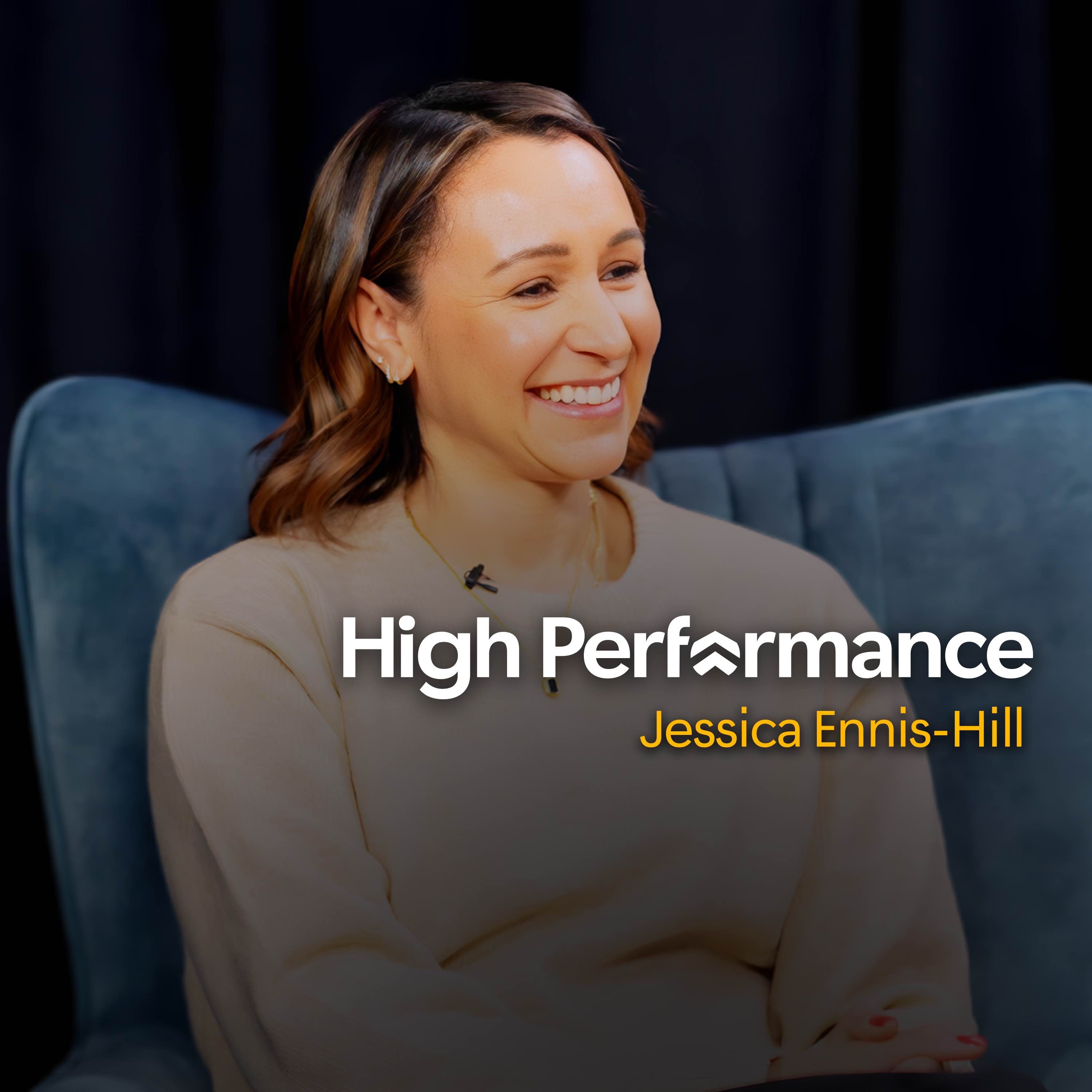
In this episode, Olympic champion Jessica Ennis-Hill reflects on her remarkable athletic career, focusing on themes of mental resilience, the importance of support systems, and personal growth. Ennis-Hill discusses her journey through the pressures of being a top athlete, her experiences as a mother, and how these elements shaped her perspective on success and happiness.
Written by AI. May contain mistakes.

Get the gist, explore an idea or ask about something said.
 Claude
On The High Performance Podcast, what are the key points of this episode?
Searching your listeningAutomatic transcript. May contain errors.
0:00Watch it early on the High Performance app. Available now, Roman Kemp The broadcaster opens up A powerful conversation On success and mental health Hey, you're listening to High Performance This is the award-winning podcast That unlocks the minds of some of the most Fascinating people on the planet I'm Jake Humphrey And alongside Professor Damien Hughes We will learn from the stories, successes And struggles of our guests Allowing us all to explore, be challenged And to grow here's what's coming up today. I remember doing the heptathlon not really understanding how I could be good at this event because I couldn't throw the shark, couldn't throw the javelin, couldn't do the long jump very well.
0:42I had a lot of doubts and I think knowing that all those little failures and things that go wrong if you take something away from it and you're able to pocket that somewhere and keep it and be able to call upon it I think that just keeps helping add into that mental strength. Your body changes so much and it's not just, you know, you've been pregnant for nine months and labour and all those things that you go through, those like massive traumatic moments. I couldn't push myself as hard as I did before 2012. I couldn't train like that anymore. I had to train smart and like really change the way I trained and that made a massive difference.
1:20Yeah, I think I found those moments quite frustrating when she kind of called me a tadpole. I think it's just unnecessary. And it made me think, actually, you know, as an athlete and one that's performing a little bit higher than someone else, you should be gracious. You know, you're having the success, have your moment, but don't belittle someone else's moment. And that's one thing that I would never do. Hi, this is Damien. And today we welcome the fabulous Jessica Ennis-Hill to the show. Now Jess competed at the highest level of international athletics for well over a decade Challenging herself physically and mentally on a regular basis She's a triple world heptathlon champion, a European champion And most famously of all she delivered on that super Saturday at the London 2012 Games But alongside all of that she's had her own personal challenges including dealing with public injury problems where she missed an entire year of competing.
2:23She also returned to the sport after having had her first child where she went on to dominate it once again. So let's do this then. Let's welcome Jessica Ennis-Hill to High Performance. Now just before we hear from Jess, we've got some messages from our valued partners. If you prefer to listen ad-free, you can do so on the High Performance app.
2:52I just want to take a very quick moment to talk to you about something that I really love. My Whoop band. This is wearable fitness tech that feeds back what's actually going on inside my body. After hundreds of conversations on this podcast, I'm told all the time that consistency is king. And what does Whoop do? It tells me about my strain. It tells me about my sleep. It tells me about my recovery. Once I used to think that I was the kind of person that could cope with high stress, without a lot of sleep, without going to the gym for a couple of weeks. And then I got whoop. And then I got the truth.
3:24I mean, I can take a look at my phone right now because last night I was at an event for my daughter. I needed eight and a half hours sleep. I got less than five hours. What does that mean if I click recovery? Well, it tells me my recovery is only 43 % and my heart rate variability, my HRV, how my heart's beating is lower than its usual range. So that then tells me that today needs to be a recovery day, not a heavy gym day. Honestly, WHOOP has changed the way that I feel about everything and I'd love it to do the same for you. So if you want to get involved, then you can. Just go to join.whoop.com forward slash HPP and you can join risk-free for 30 days with no commitment.
4:04It's changed my life. It might do the same for you.
4:10The market's uncertain, revenues tied, and hiring on hold. That's why results-driven companies are using Upwork to keep work moving. Go to Upwork.com today and start hiring proven freelance talent fast. No bulky overhead. No rigid long-term contracts. Just the right expert, right when you need them. Work smarter and faster with Upwork. Go to Upwork.com now and find your freelance expert. That's U-P-W-O-R-K.com. Post a job for free and get started today. At Capella University, learning online doesn't mean learning alone. You'll get support from people who care about your success, like your enrollment specialist who gets to know you and the goals you'd like to achieve.
4:53You'll also get a designated academic coach who's with you throughout your entire program. Plus, career coaches are available to help you navigate your professional goals. A different future is closer than you think with Capella University. Learn more at capella.edu.
5:37and soundscapes with ambient sounds, lo-fi music and binaural beats, all designed to help you focus, relax and even spark creativity while you browse.
5:52Well Jess, welcome to the show. So what is high performance in your mind? Oh, I think it's such a complex thing. I think it's very individual to each person, each athlete I think you have your own journey your own pathway but I think for me high performance is balance I think being able to be very aware of of you as an individual but also like your surroundings and how you balance all those elements to get the best performance out of yourself but of course there is a moment where there is no balance because the intensity in your world just ratchets up to the very highest level it possibly can and when I think of that for you I think of London 2012.
6:31I'd love to start there. You were like the golden girl, the poster person, you were everywhere. What was it like on the inside in the build-up to those games for you? It was like nothing I'd ever experienced. So I'd not done an Olympics before, so I was trying to kind of get my head around this whole, what would an Olympics feel like? What would it feel like to be in the Olympic Village? What would it feel like to be in the stadium in those moments? And then piled on top of that was this whole new layer of pressure that I'd not really thought about or imagined. You know, I always speak to people and they always say, how did you become like the face of the games?
7:11And it was something that just happened like really organically and really naturally. And before I knew it, there was, you know, ad campaigns everywhere. And I was the face, you know, as you were flying into Heathrow on the grass coming in to land in. And, you know, know it just kind of spiraled and it felt I definitely felt the pressure I felt very aware of what everyone expected me to do and I knew that if I didn't win the gold medal that everybody would you know unfortunately class that as failure and disappointment because I was only expected to win the gold I think in those moments I had to kind of just yeah just ground myself with people around me and just remember that actually it was just another championships even though it was under this umbrella of the Olympics and a home Olympics and I was competing against the same girls around the world and I'd done it so many times before and just trying to remain like focused on the job in hand.
8:10But you'd also had a really successful world championships the year before hadn't you? So did that increase or did that give you a sense of calm? It gave me different elements because I trained so hard the year before. I was so ready and so focused for what was to come the following year. And I really wanted to go into the World Championships in 2011 in a really good position and come away with a gold medal so that I had that confidence going into the Olympics. Unfortunately, things played out very differently that year and I performed really well. I was happy with my performance, but it only accumulated in the silver medal and I was deeply disappointed.
8:51You know, fast forward years down the line and I was actually then rewarded the gold medal because the girl who won had been cheating. But it sent me into Olympic year in a completely different headspace. It kind of made me realise that actually, you know, the gold medal and that top position is not guaranteed. and that I had a little bit of a chink in my armour because I came away with the silver and that I still needed to keep focused, keep working to make sure that I didn't come away with the silver in the Olympic year. So was it good for you to get that silver in hindsight, do you think? At the time, I'd say no, because I was very frustrated.
9:28I was just like, I've done everything. I've trained so hard and I've still come away with the silver. You know, what's going to happen the following year? but then at the same time it did give me like a whole sense of new motivation to make sure that I didn't have that feeling again of crossing the line knowing that I just missed out so it kind of did refocus me in a way that I needed going into the Olympics. So it's 2012 the games are getting ever closer the thing that fascinates me most is how an athlete blocks out the noise for the moment of competition because I think that it's very different for average people like us living a normal life but we all still need to deliver in the moment that actually matters so I'd love to talk to you about what you did how you learned that and the techniques that you still use today I think it'd be really valuable for people so can you take us back to that year yeah I think I think there's lots of different ways I was able to to manage that pressure and the noise one way was that we spend a lot of time with a sports psychologist.
10:29So we sit down as a team and individually to really firstly understand how to communicate well as a team so that we all individually weren't getting distracted by things that were happening around us. And that's like, you know, family members needing tickets for the games or, you know, other media outlets wanting a little bit of time with you that didn't previously, you know, know what you were doing within the sporting world so you have all this attention and this noise and actually sitting with a psychologist helped me focus on what was important being really organized in the way that we worked as a team um to try and block out some of that sort of things then did he tell you to do uh communication was the biggest thing so knowing that actually how i was feeling i was able to communicate that either whether it's my physio, to my coach, to some member in the team, and also to understand how other members of the team were interpreting that pressure as well, because we all felt it, and I was the only one that was going out there to deliver, but that's not to say that my physio, my coach, my nutritionist, they weren't all in this pressure pot, and then that wasn't getting transferred onto me, so the way we all spoke and communicated was really, really important.
11:47I read you did some psychometric tests on that where you understood you had colors where you understood that you were a green you said so you were a planner yeah you needed to know what what the steps you were going to take to achieve your outcome was whereas others were just constantly relentlessly driving yeah is that right yeah definitely I mean I did a psychology degree so psychology is always something that I've been very interested and fascinated by and I think for us as a team to be able to understand like you said I'm a green and I like to be organized and planned and really measured in what I'm doing and I'm very focused but on the other side my coach is a red and he's quite fiery and instant and communicates in a very different way to the way I need to receive it and for us to understand those differences and how to to balance it out to kind of get the best out of both of us was a big big part of our success i wonder damien whether there's much research or something about the power of like sharing what you're feeling with people because i you know i've spoken as you know hundreds of athletes and various sports people over the years and loneliness is a word that they say again and again and again and it sounds almost like the psychologist that jess was working with was like you're all in this is a it's an individual sport but it's a team sport at the same time and you have you've got to share well it's really interesting to hear this around talking about an entourage because from the outside it looks like you're the one going out there you're the arrowhead aren't you the tip of it but you have a team behind it and understanding the reaction of that team and how you manage it is key in all individual sports yeah and I think that for me the biggest takeaway out of sport going into different areas is that team I think you're right you know I would be the sole person performing on the track and performing in training sessions or wherever it might be but actually those people around me you know again how we spoke how we you know went through the all those years of training together they were a massive massive influence on you know the person that I became to be and how I performed as well.
13:53Just on the topic of communication there's I remember reading you said your mum sent you a really lovely text message the night before competition that is a great example of really succinct but powerful communication yeah was it the don't let the big girls push you around yeah yeah she yeah I mean my parents have yeah been such a huge support and my mum would always I think she was very aware of that I was you know coming into sport as quite a small kid you know quite scrawny and then going into an event where the athletes and the women are like huge you know they're so tall and like amazonian like and she would always say that to me you know like every competition from you know english schools yorkshire championships all the way up to worlds and olympics well that's what i love because it was like even at the peak of your sport that's the advice that parents would give to any kid going into a playground as well it was such a normal but i found it really moving yeah i think and i think that consistency again you know nothing has to change massively you change as an athlete through the years and you grow and you develop but I think that consistency of the way your parents communicate with you and the support that they give you to just remain the same is really really powerful and thinking back now when you read that message how did it make you feel at that time just supported just and also brought that kind of humor as well and I think that's another thing that being able to look at a situation however stressful it is and find some humor in it and being able to just like bring it down a level and gain a new perspective and know that actually it's a big ask that I'm you know set a big challenge I'm setting myself but bringing a bit of humor into it always helps I think.
15:38So back to 2012 first ever Olympics pressure is mounting you're the golden girl and you're speaking to your psychologist about the importance of communicating with the team what was the next key thing you think that was pivotal in helping you get to the top step of the podium I think my mental strength through those two days was something that I now look back on and I think in the moment I just went through it kind of unaware but I look back and think that mental strength and resilience to get through not just the two days of competition but that whole year of of leading up to those two days and really helped me I think that whole trial and error process of of knowing what you've done in previous competitions and how you've dealt with disappointment and setbacks and how you've been able to like switch your mindset in a way I think that's a really so you know in the heptathlon you have seven events so you're going to have events that go really well and you're going to have events that perhaps don't go quite as well or quite to the level that you want them to and it's being able to have a moment where you're frustrated I definitely had a lot of those throughout the years of competing where I'd come off the track and I'd be very disappointed with one of my events, cry, have a moment behind closed doors, but then be able to switch my focus very quickly to the next event.
17:00What do I need to do to then gain more points? How do I need to, you know, pick up ground from what I've just done in the last event? And I think that's been a massive strength for me, particularly in the heptathlon, but through the years of training as well. And how do we do that? Because I think a lot of us spend too long focusing on what went wrong. Yeah, and it's easy to sit here, but when you're in the moment, it is hard. You're so frustrated, but I think for me, there's nothing you can do to change what's just happened. I have a terrible shot put or I've not run the 200 meters the way I wanted to.
17:34There is absolutely no point in dwelling. I can't change anything that I've done, but I can change the next few steps and the way I approach the next event, the next championships, the next training session and that's what I'm in control of and that's what I'd always tell myself refocus and try and change something that you can actually change as opposed to something that's long gone but can I ask you about the the thoughts preceding the event because as you say you're doing seven events and again reading your story it was often seen as the javelin was one of your weaker disciplines or the shot put might have been something that you struggled with so how did you not allow your mind to focus on what you couldn't do at the expense of the stuff where you were strong like in the hurdles or or the sprints well for many years I did focus on how bad I was at the throws and it would be something that would play on my mind a lot because I'd do the sessions and I'd find them very frustrating and I wouldn't see the improvements I wanted to see straight away and it took years and years of trying to perfect those events but then at the same time you've got strengths and you you know you want to spend more time on your strengths because it brings you more joy and it brings you more success but it's again just being aware that actually I can do a couple of sessions on the high jump and I can still be jumping in the 190s and with the rest of the world and really competitive but if I neglect these other events these two events that I don't enjoy doing particularly then this whole picture falls down I'm not going to be stood on the top of the podium so it's having that patience and that belief that I've got to keep chipping away at the things I don't necessarily enjoy as much but you know in the long term it will bring me a lot of joy because it'll help me get to the top so did you ever have like a ratio that you thought I need to focus 70 % on strengths 30 % on weakness or was it never as sort of calculating as that yeah I think every heptathlete does it slightly differently and every athlete very differently but for us as a team it was we would 100 % spend more time on those weaker events so for example like the javelin I'd do three javelin sessions a week as opposed to maybe one high jump session two hurdle sessions and they were my strong events I'd spend a lot more time addressing the technical side of those two events because I was smaller and just needed to be technically sound to be able to you know produce the distances I needed to I find this conversation about mental strength so interesting I've got a friend called Andy who is such a big fan of yours like I can show you a picture that is that's his office wall and there is a there's a photo there's all sorts of different photographs of things that he finds inspiring and he sent me a message to say Dame Jessica is on my motivational wall here in my office.
20:28I'm a big fan and I love this quote of hers. The only one who can tell you that you can't win is you and you don't have to listen. Talk to us about that. Yeah, I think it's so true. It's so simple, but it's so powerful. I think your strongest tool is your mind, isn't it? And we train so hard physically to be the best we can be, but actually the way you communicate to yourself internally has such a big impact on the way you perform. And I think having that mindset of the need to achieve, the need to win, as opposed to the need to avoid failure, is something that I've perhaps focused on more. So that drive to want to be the best, as opposed to worrying about, oh, if I mess this up, if I don't do it, I just want to always succeed.
21:14And I think having that belief, you go through years where, you know, you doubt yourself at certain elements, but ultimately you have to tell yourself that you can do it because someone else will want it more than you and they will do it you've got to believe in yourself and i'm always interested in those quiet moments you know where you're on your own like when you go in the athlete's village and you go in your own room and you close the door and the next time you go out you're going to face the world what were you telling yourself then was there any tips or tricks or techniques you were using to control that inner talk and make sure that you were focused on winning rather than worrying about the fear of losing i firstly like blocked everybody out so any kind of like social media news everything I just completely switched off from it I didn't want to see positive negative didn't want to see anything because I think it influences you in some way it just puts your mind in a place that you've not planned for your mind to be in so I tried to switch off from all of that and then visualization was something that I think yeah it's so underestimated you can sit there in your room by yourself and I'd go through every event time after time just you know sometimes running the hurdles falling over you know and getting it all wrong in my head and then just replaying it again and again and again so that I visualized the perfect heptathlon and then I could kind of like settle a bit and that really helped me and then just being able to I just always tell myself I've worked so hard like if you've worked hard and you've done all the winter training you've done those horrible grueling sessions where you felt like you're going to be sick you're crying you don't want to do another rep if you've done all of that then who's to say you can't be at the top of the podium I've done it I've done all the hard work this is the enjoyable bit this is the bit where I get to you know soak up the crowd show off a bit enjoy the moment and take an opportunity and I think that's what I'd always tell myself because you'd never been to the Olympic Stadium is that right you deliberately avoided it until the moment you walked out.
23:16I didn't want anything to feel familiar I wanted it to feel like really new and scary and a big crowd and just completely unfamiliar because I knew that if I was in the shape of my life that I'd done all my training that I was ready injury free then that like alien new environment for me would bring out like the best in my performance. Now you use the word scary there and like when I was reading your book that you brought out the year after that Olympic win I noted that you used the word fear 15 times in it oh really yeah yeah I'm sad enough that I can't but you spoke about this idea even from a young age of feeling the fear and walking towards it rather than away from it and through it and you're describing it there even at the highest of challenges you wanted to feel that scary feeling yeah tell us a little bit about fear because because everyone feels it but and most people try and avoid it by the way yeah and you're trying to find the fear which is really interesting yeah i think i i mean i was so scared i was so nervous and yeah really fearful of what was going to happen what was going to unfold when i stepped into the stadium but i think over the years you learn to like embrace that fear and that adrenaline that comes with it.
24:38So I knew that if I stepped out there and I was in an environment where I was really familiar, I didn't have, I'd have some fear, but not that kind of massive kind of overwhelming boom of fear in my face, that that adrenaline might not be as high as it could be. And I knew that I could control the adrenaline to the way it allowed me to perform my best. So for me, having that fear and stepping out into the stadium I knew that I could translate that into one of the best performances just by controlling the adrenaline and using it to really so how would you control it again just being really focused just knowing that I'd done all the hard work that I that feeling I'd started to like embrace that feeling of almost you know when your legs feel like jelly and you feel a little bit sick and you just you just you're so scared like you just don't know what's going to happen but I knew that when I felt like that I was going to perform at my best because I'd have that feeling I'd allow it to just simmer a little bit and then bang the gonna go whatever and I'd be ready to yeah just perform.
25:43And when the gun goes does everything else fall away like is it just is it then just almost silence it's you just performing or are you still doing the kind of almost the mental acrobatics that you've spoken about in the build up it kind of for me goes silent so for the hurdles the first event the crowd was so loud and the energy was just like so electric in the stage i mean i felt that in those moments when i stood on the line for the hurdles and then as soon as you get into the blocks it all goes quiet and then you just focus i just focused on like two technical things i want like wanted to execute in the race and that's all I thought about and then as soon as the gun went it was almost like it felt like it just happened so quickly before I knew I was crossing the line that I just felt the hurdles coming up really really fast and then crossing the line and seeing the time and I was absolutely blown away by the time and couldn't believe how quickly it just unfolded.
26:43What was it like going back into the athletes village where all of your fellow Team GB athletes are desperate to sort of say well done what a great first day and you're kind of you want that but you've won nothing at that point have you yeah it's such a good point because that is one of the challenge really really challenging things because you have to come back into that environment and everybody's in a completely different state some people haven't started some people have finished some people have not performed some people are injured and you're in this like communal space so you're sharing like an apartment with six seven other of your like fellow athletes and they do want to congratulate you you know I remember coming back into the room and I'm going like yeah you're gonna win oh and you're like no no I've got a whole day to go um but people just they're excited for you they want to you know so what did you do to deal with that then just again I came back to the village I had food I kind of tried to keep myself to myself and not be too rude to everyone but just get back to my room as quickly as possible shut the door and just start thinking about day two and how do you sleep on nights like that I've often wondered that you know when you've got the that night in between it's it's the hardest night definitely yeah I mean you're physically exhausted mentally you're drained from the two day like the first day and then you're going into the second day and then you've got all these thoughts whizzing around your head you know what's going to happen the following day am I going to be able to bring these events together and win or is it going to fall apart which it has done in the past you know as a junior athlete I had a fantastic day one I remember so many occasions where I'd be leading or in a medal position going to day two not so great for me in those three events and then drift out the medals and end up in eighth position.
28:33So I knew how easily that could happen in like an instant. So I had to kind of not allow myself to think again, you know, those intrusive thoughts of could things fall apart and just try and get to sleep, visualize again the best performance, get some sleep and then go for that final push for day two. So you wake up on the big day. Was there a text from your mum saying, don't let the big girls push you around? I think it was just a good luck message. that morning and you know I did I checked my phone for messages but I didn't want to see too much I just didn't want too much external influence um I knew my family were there supporting me there in the stadium and tried not to find them in the crowd too much because I just wanted to really stay focused you know if I if I saw them in the crowd I'd start thinking about how they were feeling and then everyone else watching at home on the tv and then it just becomes this really big thing in your mind what was the first event on day two the long jump how did it go the long jump went well but the long jump was a challenging event for me i'd had it's always been an event that i've struggled with and particularly in like the training camp before the olympics i just couldn't get that event right I couldn't get on the board I couldn't get my flight right I just couldn't I couldn't do what I needed to do and part of me was thinking this could be the event that you know ruined it all so I was pretty anxious about you know getting on the board getting a good solid jump in and not making any mistakes so I wonder what that what that did for you when day two started with possibly the event you feared the worst actually being okay I think in a way that was the moment for me i think crossing the line obviously after the 800 was incredible but the long jump was the key to to that success for me um i knew how quickly it could have fallen apart and i think there's a picture of me like going to the crowd like really punching my fists and like really excited which i i rarely showed that much emotion on the track i would always kind of keep it quite internal and be pleased but not show too much but in that moment with the long jump I was so, so happy because I knew that my javelin was pretty good.
30:55I knew I'd been running amazing in the 800. That was the key part to making it work. So now that you sit here over a decade later, can you now say that actually you feel like you knew at that point you'd won the gold? Yeah, I think I knew, yeah. I don't think I allowed myself to really embrace it. I remember doing the long jump and then doing the javelin and coming off the track back under the stadium to see my team. And my soft tissue therapist, Derry, was there and my javelin coach. And they were like, you've got it. Like, you're going to win. And I remember like welling up thinking, I know they're right.
31:37Like, I'm so close, but I can't. See, that's a real change, isn't it? Because in the build up, you don't want to hear any of that. You're cutting yourself off from the world the night before. and then suddenly like that's almost feels to me like that's the first time the arm has come down yeah yeah because I was welling up like I could feel myself close to tears I'm welling up hearing it I could really feel it but that was the moment that actually for it to turn like that was okay because I was going into the 800 where I needed to be aware of everyone else for the first time I needed to be, you know, the distance between me and second and third and know that I had to, like, go and take the gold.
32:18That was my moment to not let anything get in the way and just go for it. But then what interested me at the end of that 800 metres was that you were coming up against your rival and you could have still let her go and pass you and you'd have still won gold, but there was something inside of you that even then refused to concede. Yeah, there's no way I was going to let her go past me. I, you know, like I said, I'd done so much training. I'd done all those awful 800 meter sessions, been like pulled off the track, broken. And I knew I was in the best shape of my life. And I would probably never get that opportunity where I'd put this perfect score together.
32:56Why would I just like hang back? I wanted to win. I wanted to have a great point score. Or, you know, I wanted to, like, leave, like, everything on the track. There was no point in, you know, coming off the track thinking, oh, I've won, but I could have run a little bit faster. I just wanted to give it absolutely everything. Well, you did. You ended up on the top step of the podium. Can you remember what you were thinking at that moment? Or is it such a blur? Yeah, a blur. But I remember seeing my family. That was when I allowed myself to give them eye contact. And, you know, they were so emotional.
33:31I could see, like, my dad. I'd actually seen my dad, I think it was on day two. I'd saw him after day two as I was going back to the Athletes' Village. And I couldn't believe how thin he looked. He looked really, really stressed and really worried for me. So when I saw them after, on the podium with my medal, I was just thinking about how proud they were, but also what it had taken to get to this point. you know the Olympics every four years you have this dream of you know becoming an Olympian but I never imagined that I would have the opportunity to be the face of home games and you know then win it it was just yeah flashbacks to what it took together.
34:17Can you feel it even now like how close to the surface are those emotions even now? Yeah so close it's really strange it was all those years ago but when it's been like your whole life and everything that you've worked for and then it actually happens and you see so many occasions where you know people and athletes work so hard they're the best athletes they can be but in those moments injuries happen or things fall apart and it doesn't ever happen for them I feel like so fortunate that I was able to put all those pieces together with a fantastic team a fantastic like supportive family and be able to yeah just make that can become a reality.
34:59If you're still overpaying for wireless, it's time to say yes to saying no. At Mint Mobile, their favourite word is no. No contracts, no monthly bills, no overages, no hidden fees, no BS. I made the switch because I was tired of those ridiculous bills and sneaky charges from my old provider. With Mint, I'm paying$15 a month and getting the same high-speed data, unlimited talk and text, and coverage on the nation's largest 5G network Honestly, the quality is just as good, if not better than what I had before. And the best part? You don't need a new phone. You can keep your current one, bring your number, and all your contacts.
35:34I use Mint Mobile, and you should too. Ready to say yes to saying no? Make the switch at mintmobile.com slash HPP. That's mintmobile.com slash HPP. Upfront payment of$45 required, equivalent to$15 a month. Limited time new customer offer for first three months only. Speeds may slow up a 35 gig on unlimited plan. Taxes and fees extra. See Mint Mobile for details.
36:23That's WPWORK.com. Post a job for free and get started today. At Capella University, learning online doesn't mean learning alone. You'll get support from people who care about your success, like your enrollment specialist who gets to know you and the goals you'd like to achieve. You'll also get a designated academic coach who's with you throughout your entire program. Plus, career coaches are available to help you navigate your professional goals. A different future is closer than you think with Capella University. Learn more at capella.edu.
37:04Listen, I'm really sorry to interrupt this conversation, but the next bit of the podcast, I think is going to bring you some real value. I'm about to tell you some things about high performance that I've never spoken about before. And this part of the podcast is brought to you by Indeed, we've actually been working with them over the last couple of weeks to bring you some career guidance and inspiration. They're the UK's number one job site, which makes finding better work easier and more effortless. And one of the ways in which they do that is through their new Work Wellbeing School, which helps you discover companies who are prioritising the things you care about when it comes to work well-being.
37:38Things like feeling appreciated, feeling accepted for who you are, being encouraged to learn new skills and many more. And this is something that really matters to me. As many of you know, I'm the co-founder of a production company called The Whisper Group, and we've just been nominated as a best place to work in television for seven years running. And that's why I'm so keen to talk about this, because I see on a daily basis what a strong environment does for the people that work at Whisper. But I thought for this, I would actually pretend I'm an employee of high performance. So I'm going to read out some of the statements that you can find on Indeed's new work well-being score.
38:14And then I'm going to give myself a score from one to five. One being strongly disagreeing. Five being that I strongly agree. So the first question I've got to rate on a scale of one to five is, I feel happy at work most of the time. So I think I would rate this question absolutely as a five. I feel so happy having created and now getting the chance to deliver the High Performance Podcast. I believe that this is the first time in my career I actually feel valuable. You know, I think I found the thing that I love hosting this show. How could you not? I get to lean into incredible people and I just get to know them.
38:53And I think really hosting this show has reminded me that people are just fascinating. And the only way to find out how fascinating they are is to ask questions. So my big learning so far is ask a question of everyone you meet because they all know something that you don't know. And whether it's Shane Parrish, Susie Ma, Johnny Wilkinson, James Clear, all of them have changed the way I think and therefore changed the way I live. There's no doubt about it. In my previous role as a football host, there was a huge buzz. You were live on the telly in these huge stadiums, but there was no purpose. and I feel like finally I've found my purpose.
39:28And that takes me really nicely onto the next statement I've got to score, which is my work has a clear sense of purpose. And you know what? Again, I think I would give it, I honestly would give it a five again because my work does have a clear sense of purpose. And I think it's developed even more so since we spoke to Simon Sinek, who joined us on High Performance and told us about the power of why. and in fact he got me to go through a little sort of exercise with him where I discovered my why, like why did I want to host the High Performance Podcast. And the joy of why is that once you can answer that question, it makes every decision really simple because every time something crops up in front of you, instead of not knowing which way to turn, you just say to yourself, well, what's my why?
40:13And does making this decision take me closer or further away from my why? So everything falls into place. Answers suddenly become simple. The people that you want to work with, it's absolutely clear. I think that we talk a lot about finding our purpose. Sometimes it can be a bit of a dark art for people. They find it a bit difficult to work out what it really means. Think of it as why. What is your why? What is your purpose? And then the things that used to be really stressful for you suddenly make loads of sense. The next one is about stress. So please rate the below statement on a scale from one to five.
40:50I feel stressed at work most of the time. I think I'd probably give this a three, maybe even a four. Like the truth is high performance is great. It's full of purpose. I love doing it. But I also feel a sense of overwhelm most of the time. We've got more than 10 people working on the show. I feel a real sense of responsibility to them. And the other reason why I feel this overwhelm, I think, is because the reaction from the audience has been incredible. you know you know that we get millions of views and downloads every month but I also feel like we've got billions of people that don't hear the podcast that don't see what we're up to that don't get the messages and that sense of knowing that there's so much more that we can do does make me feel overwhelmed you know I love the stage play Hamilton and what does he say Alexander Hamilton there's a million things I haven't done and I wake up every single day feeling like there's a million things I haven't done.
41:43So as much as I love it, yeah, I feel stressed because I feel overwhelmed quite a lot of the time. And the next question is, overall, I am completely satisfied with my job. I think, again, I would probably give this a five. Like, oh no, and you know what, I wouldn't, actually, because I've just said that I feel there's so much more we can do. Like, I love what high performance is doing, but I also feel like we're probably five percent of what we can actually be. So how can I be completely satisfied? And actually, if I was completely satisfied, would it be time to do something completely different and something new?
42:17So I'm going to say a three for whether I'm completely satisfied with my job. I think one thing that I do know about my job is that I get satisfaction focusing on the little wins on the small things every day. I think when you try and focus on the outcome, then you run into trouble. I like to think of it as, you Like, imagine you're watching the start of a race. Everybody in that race wants the same thing, right? They want to win the gold medal. And who's going to get it? Well, it's not the person with the biggest dream, the largest ambition or the targets or the goals. It's the person that does the work.
42:49It's the person that's done the prep. It's the person that's made the sacrifices. So I get a real sense of satisfaction from those wins every single day. But I guess where I'm not satisfied is that I still feel there's so much more that high performance can be. And you know what? but it's actually been really interesting to think about the podcast and look at high performance in that way. And if you want to look up a company's work wellbeing score right now on thousands of Indeed's company pages, then you can. And it'll tell you before you apply to anything, if the company is aligned with your needs.
43:21And I think that is a game changer. Find great places to work. Head to indeed.com and find out more. Right. Back to the episode.
43:34So when you look back on that period then, this is a question we've asked a few Olympians, is how much of it would you attribute to the physical hard work and the hours that you'd spent on the track and how much that gold medal was down to your mental strength, your ability to control your thoughts, to focus and play to your strengths? It's a really good question and it's one that I think about a lot when I watch different sports and I see different athletes competing. I think you can train so hard and be physically great and you have to, you can't just get away with not doing the training, like you have to.
44:14But I think the mental side of it and the belief is worth so much. So I would say 70, 80%. did you always have that i'm really interested you know that the amazing athlete the lady standing on the podium was also once a young girl with a dream right competing in local events so what were you like as a as a young athlete were you naturally gifted naturally talented did it all come easy were you mentally rock solid i don't think i was mentally rock solid definitely not i think as a kid you're you're still growing you're learning about yourself you're learning a new sport I remember doing the heptathlon not really understanding how I could be good at this event because I couldn't throw the shark couldn't throw the javelin couldn't do the long jump very well I had a lot of doubts I didn't see that I had a natural ability my coach and other people around me would say that they could see there was something there but I definitely wasn't aware of it I don't think I came into athletics really mentally strong I don't think it was something I was necessarily born with I think it was something that like I shaped and that my environment helped me shape being able to go through tournaments and I'm saying tournaments because my kids do tennis now I've got tennis in my head but um I think I went through different championships whether that was school level South Yorkshire junior level like world world championships just learning something and I think knowing that all those little failures and things that go wrong if you take something away from it and you're able to pocket that somewhere and keep it and be able to call upon it I think that just keeps helping add into that mental like strength that you keep building up over the years and I think it was something that definitely grew with me as I grew as an athlete.
46:05I was reading some research from from your Olympics but in 2012 at the Paralympics where the Korean swimming team did research with what they called an autonomous coaching relationship so where it was in partnership with the coach rather than the coach being a dictator if you like yeah and what they found is the athletes tended to win more medals when they were in that partnership of a coach rather than feeling they were being dictated to yeah I think I think that's like taking ownership as an athlete in a way I'd say for me as a athlete coming into a sport I didn't really know much about I think at that stage I almost needed to want to be like well this is what you do you know train this way you're going to do this session this is how it all pieces together because I didn't really understand a program or a training schedule or the event as a whole and then I think as you grow and you develop as an athlete that's when it does have to change I think you have to have a bit of a partnership you have to understand why you're doing certain sessions and how that's going to have a knock-on effect to something later on in your program or the competition that you're planning for so that you have control because as you know ultimately you're well in athletics you're an individual you're going out performing by yourself and in those moments when things aren't going well you have to have that confidence that mental strength to make changes little tweaks what if your coach can't communicate to you through a crowd you know you have to have that confidence to know that what you've done in training, you understand it and also how to make those little tweaks and changes in like high pressured moments.
47:46From a coaching point of view, how did they receive it? Because that's a big change for them as much as it is for you. Yeah, I think a lot of coaches can find that quite challenging because as a coach, you want to control all elements of a programme and certain parts of, you know, how you deliver a programme and the competition schedule and all those things. but I think the best coaches understand that you can't control everything and actually your athlete is a human being and you have to be able to adapt understand change things you can't just have this rigid plan that works for everybody in the same way you've got to be able to yeah have that communication flow we hear lots of athletes talking about you have to almost step outside your comfort zone you know like Mo Farron moved to Oregon when he felt like his career had stalled and you had the time when the English Institute of Sport was suggesting you had to move down to London in the build-up and I'm always interested that you resisted that and you chose to almost retreat into Sheffield, that safe base that allowed you to thrive.
48:50I'm interested in that in terms of exploring what was it that Sheffield and the environment that you chose to envelop yourself in gave you that allowed you to go on and achieve such success? Yeah, I think I had those key moments in my career where I had opportunity to go and change my whole setup, my whole kind of way I trained and where I lived. And the first one was when I was deciding to go to university, the opportunity to go and study in America. And I went and had luck and fantastic facilities and setups. But for me, I was already on this path where I had facilities already where I was close to home.
49:31I had a great coach I had people around me great physio in this kind of team that was building and I'd already had some success so that was in the back of my mind thinking actually I'm on a path here and then the other time was when I was you know very much in the thick of my career just before 2012 when the performance director was trying to centralize the whole kind of system so bringing all the athletes into one place and that central base was going to be in London in preparation for the Olympics. And for me, it just didn't feel right. I think I'd always tried to have some separation to what I did in sport and what I did away from sport.
50:12So I chose to do psychology, which wasn't sports related, to keep some distance. Most of my friends, close friends are outside the world of sport. My now husband outside the world of sport. For me to be able to train hard and be in this really intense pressured environment I had to be able to like step away from it completely and be able to switch off and not have it in my mind all the time and I felt that if I moved to America or particularly to London and then became engrossed in this sporting world in every element I felt that that would have affected me in a negative way. So were you following your gut at that point?
50:56Because a lot of the research would say, hold on, go to America. A lot of people have done it before. All be together in London. It's easy for people to come to you with the evidence, isn't it? Yeah. Yeah. And everything's there, you know, all the support staff, you've got the facilities, you've got the medical and it's all in one place. But actually for me, that wouldn't have worked. You know, I already had a great setup had a great team had great facilities and I was happy and I think one thing that is massively underestimated is that ability to be happy in life in general but also in sport and if you are in a content place where your life off the track is is happy and you're you're settled then I think that massively translates into your performance and success.
51:44How rare is it we hear people talk about it's great to talk about all these great achievements but happiness has got to be almost a prerequisite of it. Yeah it has to be and when you walk away from the sport as well like you know you're an athlete for a relatively short amount of time then you've got the rest of your life you have to be happy and content otherwise it comes back and it eats away at you in different ways and I think that balance is often hard to find and there's lots of different pulls you're pulled in lots of different directions as a sports person but I think yeah surrounding yourself with consistency good people and and being happy in life is yeah massively underestimated.
52:24What have the two of you found is the secret to a happy marriage when you know you're with an athlete who's injured and struggling and not happy you're with an athlete who is suddenly the most famous person in the country you're with an athlete who is retiring you're with an athlete who's looking at what that second mountain is going to be in their life. Yeah. You and your husband have been through almost every emotion you can as a couple. Yeah. What have you learned about the power of relationships and I guess actually the power of marriage that has been really good for you that you'd like to share?
52:56Yeah, I think that it's hard. I think you have to be really patient to be married to a sports person because whether you like it or not, it's all about them for a long time and how they perform and what they're doing training wise competitions it's all like you're you pulled into this world but I think for me and Andy we've been through this whole journey together so it's not like he came in at one particular phase where you know all the success came and life was transforming in a different way we got together a time where no one knew who I was I was this junior athlete who hadn't really achieved anything and we grew together and came on this like path together which has been amazing because why does that matter because he's experienced the whole journey you know the whole like backstory of what it's taken for me to get there but also for us to get there together so all the lows and the disappointments of injuries and not feeling like I was going to be where I needed to be as an athlete but also all the highs of you know winning my first world title in berlin he was there and you know my injury in 2008 and the whole thing like it's been a journey that we've done together which has been part of yeah the success was there a moment in 2008 where you thought that this career that you had spent so long creating was was going to disappear before you'd really achieved anything that you wanted to yeah yeah was that bad yeah yeah i i you know as a young athlete you just don't think you're going to get injured and you think that everything's just going to keep going up nicely and you're going to get to where you need to be really quickly but actually that was the first time that I was like wow this actually could all just stop now and then what do I do you know what am I going to do I'm still really young I've not achieved anywhere near what I want to achieve I couldn't do anything I had to stand literally stand still I was doing a heptathlon in a place called Gotsis and I was preparing for the Olympics and had this niggly pain in my ankle which I just kept putting to one side thinking oh it's just a bit of a tight ankle it'll be okay and then I was in the high jump about to jump and I just couldn't run my curve into the high jump I couldn't put any pressure on my right foot and I came off and I saw the physio and he was like you need to like fly home and get it looked at and I was thinking oh gosh I'm going to miss two weeks of training this is going to be really annoying and actually when I had the scans and everything I'd had a stress fracture in my navicular bone one in my metatarsal and one in my talus bone so not just one I had three and the you know the medical team said that there's no way you're doing the Olympics like you're going to have to go on crutches in a boot and yeah that's the end of the olympics the end of the year and see how you come back it's devastating and where did your mind go to at that moment when you went back to sheffield you're in the house the olympics are on the telly oh yeah horrible did you watch yeah i watched but i was just devastated you know everyone's we had a great olympics by the way everyone performed brilliantly great performances I'm there not even training and moving forward just literally standing still in one place not progressing and not knowing if I was going to come back and be the high jumper that I was before or even like the heptathlete so yeah I was just yeah in a really low place so what did you do to exist there and then eventually climb out of it I never felt that I wanted to stop like I was I never felt that that was the end I was going to give up but I had lots of moments of questioning you know why has this happened and that frustration of why has it happened in Olympic year what have I done wrong what can I change and it really made me like have a new perspective on what I was about to do it made me appreciate what I'd already achieved but it made me really realize what I wanted to go on to do and that I had to just again like refocus my team had to start trying to build me back up to where I needed to be and were you thinking about the next four years or was that too far ahead for you it's almost too far yeah I had to think about the following year like the stepping stones what were the stepping stones to get to the next four years because if I thought about the next olympics you're almost just like because four years away, it's so hard.
57:39So my next big goal was the following year, the World Championships. So you were spending hours a week getting your body back in shape. What did you do to get your mind back in shape? Good people around me again. So I just tried to switch off from it as much as I could. I had all, you know, my team was the same. So I had fantastic physio, Ali Rose, and spent a lot of time just having conversations with her. And they had so much passion and belief that I could get back. And I think that passion really translated into me believing that I could be better. There was not one moment where any of my team questioned that I'd be able to come back.
58:19They were just so focused on, right, what does the rehab programme look like? How are we going to do this? And how are we going to do it properly? So nothing like this happens again. And they really gave me so much strength to believe that, you know, I could do it. one of the phrases I love is pay attention to who doesn't clap when you win right people who act like they're on your side but they're not really I'm I'm interested in what the world of athletics was like around that time because all the other athletes that are your best mates suddenly off with their own careers like how much do you remember the people that actually took the time to make sure you were okay as well as looking after their own careers or did that not happen yeah no it definitely happened I remember a few athletes one in particular Goldie Sayers She was an incredible javelin thrower.
59:04And I remember her sending me a card and just a really lovely message of, you know, your time will come. And, you know, those really inspirational, like, quotes that you need at that time. You need those people to believe in you. And those were moments where people, you know, take a moment out of their life and what they're focusing on and, you know, send you a little bit of inspiration. and I'm definitely aware of that now and I do that with other athletes that are going through different challenges. Well, that was a topic I wanted to discuss with you because it's something that I think gets really, well, doesn't get a lot of attention, which the way I describe it is grace.
59:43And I think in your story, I was really taken with two athletes that had contrasting approaches to that. One was Carolina Clough. Yeah. And you tell the story that when you were doing the Lap of Honour, when you were a young athlete, she came up and said you'll be here one day yeah and the contrast was with kelly southerton your british rival that nicknamed your tadpole yeah and was a little bit dismissive of you and i've always been taken by those two approaches and the impact they had on you and how you've taken that learning to apply it say to katarina now that came up behind you yeah i've taken a lot from those two moments definitely I think um you know coming into the heptathlon as a young heptathlete and watching Carolina Clough she was the most incredible athlete so athletic and such a presence on the track but I always just remember how like you say gracious how respectful she was how yeah she just had time for everyone even me who you know I'd not really achieved anything then she didn't have to give me the time of day at all.
1:00:52And that moment where she, you know, had won, I think it was maybe the World Championships, and she came and gave me a hug and she was like, your time will come. And she just had, yeah, just the most amazing, like, presence. And that really stuck with me. And then again, yeah, contrast with Kelly, very different personalities. And, yeah, I think I found those moments quite frustrating when she kind of called me a tadpole. um I think it's just unnecessary and it made me think actually you know as an athlete and one that's performing a little bit higher than someone else you you should be gracious you know you're having the success have your moment but don't belittle someone else's moment and that's one thing that I would never do what was the impact on you of her saying that because it's easy to say well it's just words but they can hurt can't they well it definitely motivated me did it yeah yeah how did you turn it from i um one to the other i think that i kind of laughed it off at the time as you know you know whatever it's fine but deep down in a way it was kind of just like grinding on me a little bit and made me think actually no i'm gonna come out here and i'm going to outperform you and show you that you know this is who I am I'm not a tadpole I'm coming to perform and you know I'm going to rival you so it gave me like a new sense of motivation you've ever spoke to her about it she ever said sorry or explained why no no I don't think we've ever spoken about it I think she would say it was an affectionate term but I personally would never say that about Kat I would never say about any of my other competitors whether they were above me or below me um i just think you know let your actions speak and perform you don't need to make comments but you were doing that with cat weren't you at 2012 when it was your moment yeah i remember seeing footage of you being nurturing and encouraging and supportive of her and that's the great thing about the heptathlon though i think most heptathletes they have such respect for each other and you know what you have to go through in those moments when it doesn't going well I feel the same pain that they feel because you've been there before and that's what I love about the event that's what I love about sport I have those great moments but that respect and that grace I think that like shines above everything look we can't complete your story without talking about coming back from becoming a mum and becoming a world champion after that and I think like for a couple of blokes we can sit here and say well you had a bit of time off had a bit of a rest and then you went again and like take our life with our hands you know like having read about this I mean that doesn't even begin to explain quite what you go through I was sort of thinking on the way here actually today like was winning the Olympic gold at your home Olympics in 2012 your greatest achievement or actually was having a child and then coming back from that and becoming the greatest in the world your biggest and best achievement which would you yeah I think I mean 2012 was the pinnacle at that time it was all that I'd ever focused on and dreamed of like beyond my wildest dreams but actually coming back and that whole journey of having my son and then the doubt because the doubt during those periods were you know I actually thought what am I doing like I should just stop I should honestly stop I've won Olympic gold when How did that come in?
1:04:27The winter season after having, so I had my son in July and then I had to go back into training and the winter and, you know, winter training's horrible at the best of times, but having done it, you know, a few months after having your first child, it was really, really hard. And I, yeah, I remember just thinking, what am I doing? Like, why, why am I trying to go for something again when I've achieved like my pinnacle? but actually that journey was the hardest but the best because he was with me firstly he gave me a new sense of motivation and that feeling of winning again and beating you know the rest of the world and also beating those people who doubted me just was yeah the best feeling I think you know there were people like relatively not not in a mean way saying that you know I couldn't do it they just didn't believe that I'd have the drive and the the kind of capacity to do it again and go again and I don't blame them for thinking that because it's challenging it's hard and you change massively as a person my whole mentality changed completely everything was different I used to go down to the track and I'd be there you know for long hours training so hard and putting every element into being there whereas when I had my son it was all about quality of session I'll be there for two hours but then I'm back to him and then I'll do my weights in the garage at home and then I'll come and do another you know it was all about balance and it wasn't all about me and me being the best it was about me being the best mum and then me being able to couple those two together and try and get back to being the best in the world.
1:06:17But when you're asking that question, why am I doing this? What was the answer? I think the answer was, I didn't want to have any regret. I didn't want to look back now and think, why didn't I just do two more years? Because that's all it was. It was two tough years, but I didn't want to look back and think, oh, could I have just given it a go? And what could I have done? And now I can sit here knowing that I've done it. I have no regrets, like absolutely no regrets from my career and I retired on my own terms when I wanted to. Look we can both relate to how your mental state changes when you become a parent I mean there's nothing quite like it is that your child gets born and you realise what love actually is for the first time in your life you know wow but the physical thing we have no idea so would you mind explaining to us like you've said it was a big mental change what about the what about the physical change when you try and do what you did pre-childbirth what was that like?
1:07:15ridiculous yeah it was your body changes so much and it's not just you know you've been pregnant for nine months and labor and all those things that you go through those like massive traumatic moments it's actually you know the hormones that surge through your body for months after the relaxing that makes all your ligaments really relax so my achilles were really like flexible and loose and that's not great for when you're trying to be this stiff springy like coil that tries to you know needs to jump as high as you can and as far as you can I couldn't push myself as hard as I did before 2012 I couldn't train like that anymore had to train smart and like really change the way I trained and that made a massive difference and as someone then that was so focused on the numbers how did you cope with seeing the numbers not necessarily going up Oh, it was horrible.
1:08:08It was so horrible because, yeah, I'd always look back and always compare myself to me at my best. What was my personal best here at this competition? And what was I running in May last year or two years before? And then when I looked at all those times, there's nowhere near them, like nowhere near them. And my coach would say, well, these are your post-pregnancy PBs and this is the new you and this is what we compare you to now. and eventually you know I did get stronger I actually ended up lifting more in the weights room eventually and those times came back but I was never the same version that I was before but I eventually you know that was okay because of who I was and being a mom and having my son now but I read a quote from Seb Coe years ago that said he knew the moment to retire was he was on a run once and it dawned on him that he would never run as fast as what he'd already done yeah and he said in the moment he realized that his desire to keep putting himself through the grind of hard training just fell off a cliff how did you keep your motivation your drive your willingness to put yourself in those difficult situations when the numbers weren't showing it you were almost just 2.0 so Reggie he motivated me because he gave me like a whole new like sense of vision and purpose and he also gave me this huge challenge because I'd never you know tried to do anything like that before and that's what really motivated me but then the final part of my career just before the Rio Olympics my I remember being in the training camp and I brought Reggie out and Andy and they were part of it because we didn't go with the team we just had our own base because again that's where I needed to be to be in a happy place and I remember thinking like two days before I flew to Rio, this is my last javelin session.
1:10:04This is my last 800 metre session. Part of me was starting to switch onto the mindset of I'm motivated by retirement. So I'm interested in, in 2016, you've given it everything and you are in that silver medal position. Yeah, I felt a twinge of, I could have done it. I was not, I can't remember the point score, it was maybe like 30 points or something. It was close, it was really close and part of me, you know, my mind would think well if I'd done a bit more training, if I'd changed things but I did what was right for me as a person, like for my whole life, not just as an athlete. Like I had to do what was right as a mum and I felt completely balanced so it was perfect for me.
1:10:54And also the girl that beat me, Nafi Tiam, the Belgian heptathlete, who has now gone on to win two more Olympics. It was almost like the passing of the guard. Like I knew she completely deserved that win. And although I'm competitive and I felt I could have had her, she was a fantastic athlete to take that gold medal that day and she deserved it. What was going through your mind as you walked off that track for the very final time? Oh, emotion. I was just bawling, like really, really emotional. I saw my physio, Ali Rose, and the rest of my team and my coach, and we were just all welling up because we knew that that was it.
1:11:35That was the last time that I'd compete. I feel really emotional talking about it now. But yeah, that was the last moment. So yeah, very emotional. I can see in your eyes, it's like, it gets you, right? Yeah, even though it's so long ago, it's just such a key moment in your life. And all the sacrifices, everyone's made for you to be there and for my son to be part of it. Yeah, it was. Don't make me cry in a podcast. It was, yeah, it was very emotional, but very proud moment as well. Time for some quick fire questions, which is how we finish this podcast. Your three non-negotiables that you and the people around you need to buy into.
1:12:14Oh, gosh. got to have humour you've got to have a good sense of humour so I think humour passion be passionate about what you do and team team good team love that what advice would you give to a teenage Jess growing up in Sheffield just starting out I would say don't be too impatient I think as kids you just want everything instantly you want to be the best you can be straight away and I think I'd say to myself like it is a process and it is going to take a good few years but be really patient and yeah try and enjoy the process as much as you can on the journey but yeah be patient and yeah take the steps as they come definitely what's your biggest strength and what is your greatest weakness the biggest strength I'd say mentally I think I'm quite headstrong I think that's always helped I think my biggest weakness is impatience I am really impatient with a lot of things and I think that changes as you become a mother and with kids like you have to have a patience in a different way but yeah that's definitely something I need to work on a bit more patient and the final question your one golden rule for living a high performance life that you'd like to leave ringing in people's ears happiness like it's so simple i think you can perform and train and be the best you can be you can do all the things around it but i think you have to be balanced and happy in life and whether that's the people you surround yourself with the consistency your support network whether that's through family i think having that happiness and ability to be able to switch off from your sport is something that is really important and has worked for me
1:14:09Damien Jake I love the way that we ended that interview with Jess saying that the secret to high performance is happiness and I think that is the thing that is so often overlooked that in this pursuit of success if it doesn't make you happy it isn't worth doing Yeah I think go back to one of our previous guests Hector Garcia when we spoke to him about Ikigai the idea that happiness is about doing what you what you're good at, doing what you love, and how you can serve others in the process of it. And happiness is that sweet spot. And Jess was somebody that lived her life in that state of icky guy, if you like.
1:14:46She was incredibly good as an athlete. She enjoyed doing it. And she made a difference to so many people, both in her family, the city of Sheffield, and for lots of young people that watched her and were inspired by her. And I just loved it. I guess I would. I was one of the sort of hosts for the BBC of the 2012 Games. Were you there on Super Saturday then? Yeah, I was in the studio, which was in a sort of temporary studio made out of shipping containers just outside the Olympic Stadium but on the Olympic Park. So I remember like that big day when it was all happening and I was lucky enough to be one of the hosts.
1:15:23And I suppose what I really loved is that it's a reminder for me that, and I think this often when I think about sports broadcasting, like what we just spoke about there i saw 0.5 percent of that on the television in the stadium like and and you're trying to bring what she's doing home to the viewers and 95 point 99.5 percent of it none of us see it's this it's the secret sauce behind the success of so many people particularly athletes that that is what fascinates me so those things that she was doing to get herself to where she needed to be for for that big day in 2012 like that is just i could have spoken about that for hours i loved it well i always find it a privilege you know when they take you behind the door when nobody else is there so when in her room in the olympic village what are you thinking about the night before yeah the event that's gonna that your whole life has been defined by and the idea of blocking out the noise telling people don't be contacting me now visualizing each event you know all of that is a real privilege to get an access to because anyone listening to this we can do it in our own lives when we're feeling under pressure when we need to perform for something just deliberately choosing our space our environment and our thoughts they're lessons from an olympian that we can apply in pretty much any context i loved it thanks for your company mate as always loved it thanks mate i really enjoyed that conversation with Jess and I really hope you did too.
1:16:51As ever, just want to pass on a huge thank you to you for growing and sharing this podcast amongst your own community and friends. Please continue to spread the learnings that you're taking from these really rich conversations and if you get a minute, download the High Performance app where there's so much incredible content on there to help you on your own high performance journey. And remember, there is no secret, it's all there for you. So chase world-class basics. Don't get high on your own supply. Stay humble, curious, and above all, empathetic. And I look forward to seeing you soon.
1:17:52For a limited time at McDonald's, get a Big Mac extra value meal for$8. That means two all-beef patties, special sauce, lettuce, cheese, pickles, onions on a sesame seed bun, and medium fries, and a drink. We may need to change that jingle. Prices and participation may vary. At Capella University, learning online doesn't mean learning alone. You'll get support from people who care about your success. Like your enrollment specialist who gets to know you and the goals you'd like to achieve. You'll also get a designated academic coach who's with you throughout your entire program. Plus, career coaches are available to help you navigate your professional goals.
1:18:30A different future is closer than you think with Capella University. Learn more at capella.edu. Hey, I'm Dr. Z and I'm a neurosurgeon. So that means long hours, early rounds, late nights, and everything in between. and through it all, I wear figs. They're comfortable when it counts and functional when I need them the most. So where do you wear your figs? On shift, on call, on the couch in the break room listening to this podcast, wherever it is, they fit right in. And now listeners of this podcast can get 15 % off their first order. Just head to wearfigs.com and use code FIGSRX at checkout. That's wearfigs.com, code FIGSRX.
Sign Up To WHOOP, 30 days risk free - join.whoop.com/HPP
Reflecting on her career, Jessica Ennis-Hill offers a glimpse into the life of an Olympian, inspiring listeners to pursue their dreams by building mental strength and resilience whilst keeping a steadfast focus on what truly matters.
Olympic legend Jessica Ennis-Hill delves into the highs and lows of her illustrious career. Jessica is a retired track and field athlete, specialising in the heptathlon and 100 metres hurdles. As a competitor in heptathlon, she is the 2012 Olympic champion, a three-time world champion, and the 2010 European champion.
In this episode, Jess opens up about what it was like being the ‘face’ of the 2012 Olympic Games and how she dealt with the immense pressure that brought; highlighting the crucial role of sports psychology to help athletes block out distractions.
With her degree in psychology, Jessica reflects on how her understanding of the human psyche has transformed her approach to training and communication. She acknowledges the invaluable support of her team and loved ones, emphasising the significance of their consistency in her path to success. They also discuss the importance of laughter and finding humour during tough moments.
Jessica discusses how her career changed after the birth of her son in 2014, and going on to become World Champion soon after. She shares her advice for young athletes and why happiness will always be her top priority. From overcoming career-threatening injuries to embracing the joys of motherhood, Jessica's journey is one of resilience, determination, and continued passion.
Hosted on Acast. See acast.com/privacy for more information.


