
 Ask ChatGPT


 The High Performance Podcast
23 Dec 2024 · 1h 14m
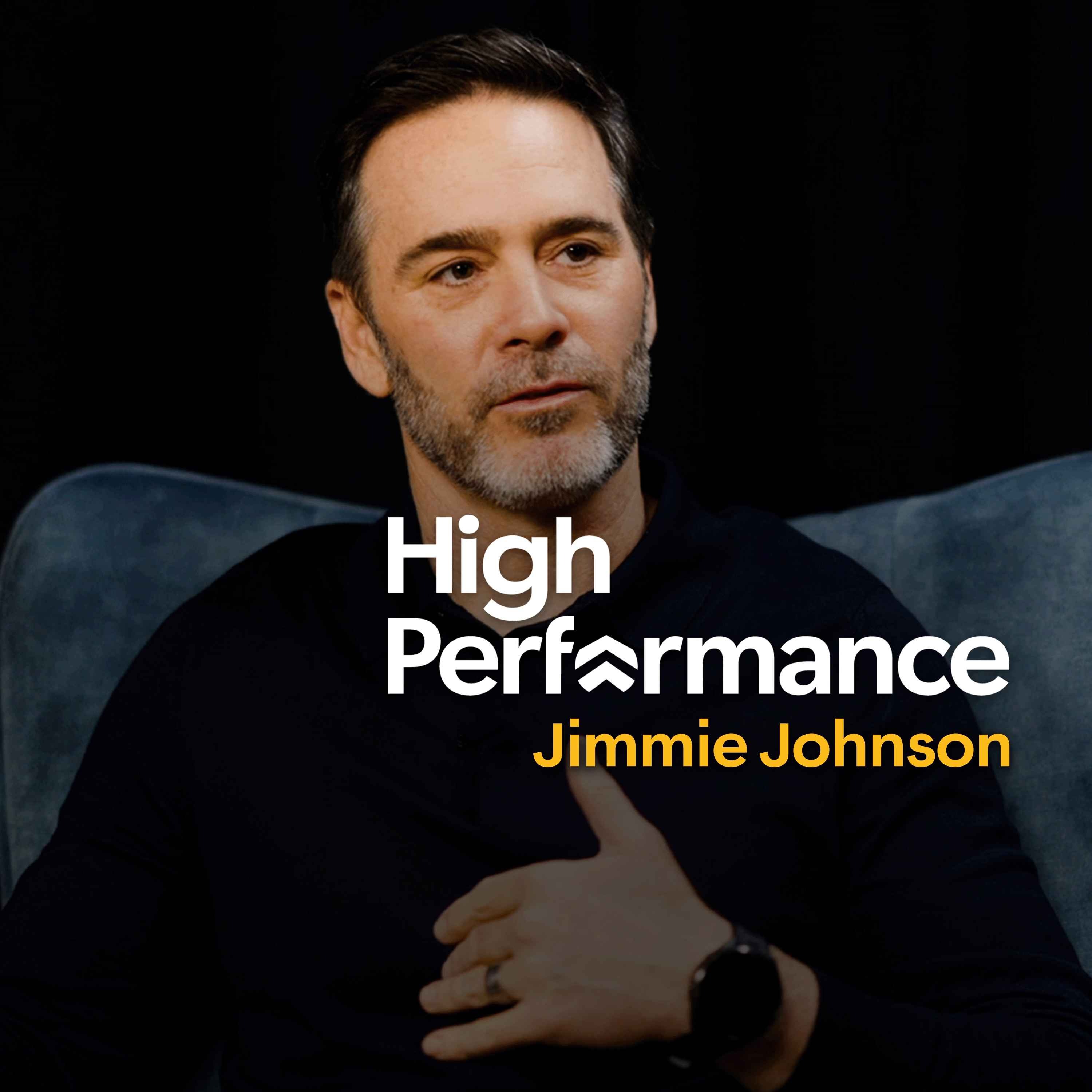
In this episode of The High Performance Podcast, hosts Jake Humphrey and Damian Hughes sit down with Jimmie Johnson, a seven-time NASCAR Cup Series champion. Johnson discusses his racing journey, triumphs, challenges, and the mental resilience required in the high-stakes world of motorsport.
Written by AI. May contain mistakes.

Get the gist, explore an idea or ask about something said.
 Claude
On The High Performance Podcast, what are the key points of this episode?
Searching your listeningAutomatic transcript. May contain errors.
0:28Watch it early on the High Performance App. racing in vehicles. One of my best friends was killed. If he had a Hans device on, he would have survived. And before his race, I tried to give him my Hans device and he's like, no, I don't need it, man. I'm good. You just heard the voice of one of the most accomplished drivers in motorsport history, literally the legendary Jimmy Johnson, who joins us today on High Performance. I'm Jay Comfrey. I was so excited to have this conversation. Alongside me, as always, Damian Hughes, who was with us as we spoke to one of the most impressive people on the planet seven nascar cup championships and a career that spans decades jimmy is certainly special damien he very much is jake and in this episode he takes us into his own incredible journey sharing his pursuit of the elusive edge that can separate the good from the great you're going to hear how he built the team around him that eventually led to his historic success but also you'll hear about him overcoming personal tragedies learning to balance family and high stakes racing and why staying true to yourself is always the ultimate victory yeah it's a very moving conversation this one um we know a lot of listeners to this podcast love formula one so just to put into context what jimmy has done he's won seven nascar cup championships okay that's the same number of formula one titles that michael schumacher and lewis hamilton have quite simply when it comes to motor racing in the states he is a legend of the sport of nascar but whether you love NASCAR, love motorsport, or you don't, there are great lessons in here in how he got there, how he stayed there, and particularly how he dealt with those personal tragedies that Damien's just mentioned.
2:05So please join us in welcoming Jimmy Johnson to High Performance.
2:14Well, Jimmy, welcome to the show. Thank you. Our first ever conversation with a NASCAR driver. We thought we'd start at the top and go for a seven-time winner. We love legends on this show, don't we? I appreciate it. You guys have such a great show and such following and great. I'm sitting in a chair that many greats have sat in, so I appreciate it. Wonderful. Well, let's find out your answer to this question then, which has been answered by many greats before you. What do you believe high performance is? High performance to me is chasing that last one to three percent. And that's the world we live in in motorsport.
2:48And it's amazing how many teams or drivers can exist in that last one to three percent. That's where the whole field sits. And to me, that's high performance. So can you give us an idea of how you spent your life finding that? Because we have people listening to this that go, I'd love to live a life of finding those one to three percents because we're always told that's where the magic happens. Yeah. How do you find it? It's a lifelong journey of chasing it. And I think everyone in motorsports, certainly people make money at it and we see that and it looks glamorous, but no one truly felt like that was their end destination.
3:23It's all about this journey, this passion of being in the sport itself, working on these vehicles, driving the vehicles, whatever it might be. And the way you find that last few percent is by dedicating yourself to it. And that's just the journey and no one ever hits it early. No one ever hits it forever. It's this moving target because there are so many variables in our sport. I've found that through the years, I just had to be very focused on what I knew I could control just to keep my headspace right and then trust the team I drove for, the leadership within the team, the engineers, the development.
3:56And if you're fortunate enough to have that all come together, you have some special days. Can we rewind then to where it all started? Because I think one of the greatest parts of your story is that you weren't someone that was spending his time racing on tarmac when you were a kid. You were spending your time racing on dirt, right? People don't go from dirt to NASCAR. I started on two wheels, racing motocross. My grandparents owned a motorcycle store in Southern California. And the town of El Cajon, where I was born and raised, literally produced like all the world champions in motocross from the 60s, 70s, 80s.
4:33And then the motocross scene moved a little further north, kind of in the 2000s, that Jeremy McGrath era. But that was my the world. And that was everything. So I grew up on bikes. I got my first motorcycle on Christmas when I was four and then started racing at five. Found my way to four wheels when I was a teenager, just had too many broken bones. And my dad found a way to get me into a similar type of racing, but with a roll cage around myself and stadium off-road racing. And things kind of took off from there. I saw a great story of one of your friends talking about you doing a big jump or something when you were a young guy.
5:09Yeah. Maybe you could tell the story. And at the end, your friend says, why did you do that? And Jimmy, well, because you told me to. Yeah, tell us about it. So the guy is Rick Johnson, seven-time Supercross champion. And he was sponsored by my parents' or grandparents' store. And so before I was, you know, really old enough to remember anything, Ricky was always around. We had the same last name. I thought he was my cousin. And I later found out at a school dance when I met his real cousin that I was just lucky and had the same last name. And my dad was his mechanic and worked on his bikes. But Rick went on and had this amazing motocross career and would come back and help me from time to time and sponsored me.
5:48And he came to one of my local races and I'm in the lead doing great, except for this one section because of this huge double jump that I was scared to jump. And in practice, he went out there and stood by the jump and gave me the sign to hold it wide open to clear the jump. And I wouldn't do it. So then my dad gave him a hard time. I was like, look, I don't want you to get Jimmy hurt in convincing him he can jump this thing. So my dad asked Rick not to stand there. So Rick went to the jump before it and stood there and gave me the sign. So I came up to that double jump and I didn't want to let my hero down and held it wide open and cleared it.
6:24Problem was I fell on the other side because I had my eyes closed and went off the track and fell and went down. Why were your eyes closed? Because I was scared of this huge jump. But again, I did not want to let my hero down. I'm intrigued by the fact that so many champions came from the town where you grew up. Because that's often the case where you will see a proliferation of talent. Like once one does it, they open the door for lots of others. What was it about growing up in that area then, Jimmy, that you feel it taught you that you used in your subsequent career? Yeah, I think there's probably a more in-depth reason than the one I'll give.
7:01But, you know, I could literally at the local gas station see Ricky Johnson, Brock Glover, Ron Lachine, you know, all these guys that were the huge riders in the 80s and 90s in motocross. And it was just in my head as a kid. And I knew that they rode on these because we're out in this rural area just east of the San Diego, town of San Diego. And the hills were very, terrain was perfect for motocross riding. and all these guys had their practice tracks there. And we'd ride on our motorcycle from my house. We'd literally ride from my front door out to watch these guys practice on their tracks. And being around that and aspiring to be one of those riders is what did it for me.
7:42And what about coaches as well? So in motocross, would you have people that would coach you? Or was it more the mechanics and the engineers that do that role? Yeah, there's definitely a role once you get a little further up through the ranks. But like most young kids experience, your parents are your coaches, your parents are your mechanics. They shuttle you all around the area to race and do all that. That's what mine did. My dad was also really good at driving heavy equipment. And he would build our local tracks. My mom would run the snack bar. So it was really a family affair. We'd go out Saturday morning.
8:18My dad would get the track ready. My mom would get the snack bar ready. We'd camp, be kids, ride bicycles, make s'mores. wake up the next morning and put on our motocross gear and ride our motos. What a life. Sounds amazing. It was great.
8:34The market's uncertain. Revenue's tied and hiring on hold. That's why results-driven companies are using Upwork to keep work moving. Go to Upwork.com today and start hiring proven freelance talent fast. No bulky overhead. No rigid long-term contracts. Just the right expert right when you need them. Work smarter and faster with Upwork. Go to Upwork.com now and find your freelance expert. That's U-P-W-O-R-K dot com. Post a job for free and get started today. Come to DSW for the shoes, stay for the fun. Because let's be honest, if shoe shopping isn't fun, are you even doing it right? So go ahead, try something new.
9:14Try something different, good different. Try something that feels like you, you know, the real you. And then definitely brag about it later. because at DSW, you've got unlimited freedom to play. With sneakers, boots, and everything in between for every style, mood, and occasion, you'll definitely find shoes that get you at prices that get your budget. DSW, let us surprise you.
9:37This episode is brought to you by Opera Air, the first browser with mindfulness at its core. Now, most of us spend hours every day online, but how often do we pause to take care of ourselves whilst we're doing it? And that's where Opera Air comes in. It's a lightweight, fast, secure browser built not just for productivity, but for your well-being. With Opera Air, mindfulness is built right in. You'll find free breathing exercises, guided meditations, and soundscapes with ambient sounds, lo-fi music, and binaural beats, all designed to help you focus, relax, and even spark creativity while you browse.
10:15So when your dad has to have the conversation with you that you're breaking too many bones, that this is too dangerous. Did you rally against that? I was able to ride for Suzuki in 1985 and 86 on their amateur program. And it required physical training. We traveled all around the country. I had all these injuries and I could see, you know, I wasn't placing where I needed to. And I could sense and feel at that age that, man, this is a reach for me. Like I'm just not, you know, my last injury, I broke both my feet and seven toes. And it's like, okay, well, here I am, another two months out of it.
10:50And at that point, my dad's like, okay, we're going to stop now. But I had a couple of years off before my four-wheeled opportunity came about. And it's wild that those two years were so impactful on me because I'm barely a teenager at this point, but it was so impactful on me and created such a desire and a hunger that if I had a chance to race again, I wouldn't let anything get in the way of it. And it really turned out that way for me. But that young age, I mean, that sounds not insignificant of breaking both your feet and seven toes. What was your relationship like with danger then? I didn't find myself as the most dangerous guy out there or kind of thrill seeker.
11:35I always raced with kind of a smart head on my shoulders and loved race craft more than I did about fastest lap or those days biggest jump. It was more about the craft. That later served me in life once I figured out how to stop making the small mistakes. But I have two younger brothers that are both involved in motorsports. And I'm the oldest. My middle brother took far more risks and was much crazier than I was. Never broke a bone. And here I was with more of the racing mindset, but was always injury prone. So that two-year gap of not racing, take us into your mindset then. What were you thinking?
12:11What did it do for you? And how did you emerge on the other side? I just felt like I didn't have a purpose and it's wild because I had such a purpose at a young age of being a professional motocross racer of course and when I didn't have that like there was a sense of identity that was missing and it's wild to think how again how impactful that was on me when I was you know 13 14 years old and and the weight uh it carried with me forward into my professional career and and the accountability it still has on me today. And I can imagine at that age, there's lots of other distractions that were competing for your attention where you could have maybe forged a different identity.
12:50So what did you do during that two years to resist going off the track? Man, it's wild. I found myself a little more involved with school sports. Growing up in the San Diego area, water sports are really popular. so I was on the swim team and played on our water polo team and it helped me with stay out of trouble, do the right stuff, keep my grades up and it slightly helped with the competition piece that I wanted but it wasn't my thing and I just in my heart knew it wasn't for me long term and again thankfully my dad is such a racer at heart as well. He was at this point he moved to a job working for one of the tire companies in the off-road racing series.
13:34And so although I wasn't in a car, I would travel with my dad at these races and knew other families at the track and other teams and scraping mud off of off-road buggies and trying to network around and trying to find a seat to jump in one day. And eventually it came about. You know what though? Fair play to your dad because we all spend our time around pushy parents that as soon as a kid plays football, they've got to be a professional footballer. As soon as they swim, they've got to get to the Olympics. You know, parents are there all the time, aren't they? So your dad and your mom and dad had this wherewithal to allow you to have that two years as well, which I think is really rare, isn't it?
14:09Yeah. And to that point, I mentioned my two younger brothers. My middle brother wasn't as focused or dedicated on racing at a young age as I was. And I recall being at the starting line with my dad looking for my brother and the gate drops and all the other riders take off. And we're standing there with his bike and my brother's not around. And so we go looking for him and there was this creek and he's down there in the creek making mud pies with all of his gear on. And, you know, there were dads in the area that were quite aggressive with their kids and kind of pushing them to be their best or, you know, ride hard or jump this big jump, whatever it might be.
14:45My dad thought it was so funny. He got such a laugh out of it and he's like, look, whatever you guys want to do, it's your journey. You live your life. That's so powerful. That's lovely. Can you give us an example of those car rides when you're going with your dad? Can you recount any bits of advice or any of his wisdom that he passed on to you? A lot of dreaming. A lot of dreaming of if whatever opportunity came about, what that would feel like, what that would mean. We never dreamed that I could end up in NASCAR and winning seven championships and such. But the early days in going to local motorcycle tracks, or all these new racetracks that we were experiencing for the first time and curiosity around that.
15:29As I mentioned, I rode for Suzuki. So the journey to be a factory amateur rider was a very exciting one. And then the journey switched to four wheels and trying to find that break and then getting the break. And then early in my career, I was spotted by the head of Chevrolet Racing, Global Chevrolet Racing. And he took a very big interest in me and helped guide my career. and the snowball just kept rolling. So those conversations were listening to my dad's 70s and 80s music, which I still know today and actually ironically fall back onto and listen quite often to, but just dreaming. So let's get into this period then where this NASCAR idea became a reality, right?
16:10It just doesn't happen that you go from racing dirt buggies and racing dirt bikes to driving on the track in NASCAR. It's just not the path. Yeah. So what was your imposter syndrome like? What was your fear like? What was your doubt like when you were put in a car on a track and you had to perform and you saw in front of you, there could be a whole world that awaits you if you can get this right? Yeah, fortunately, there were different steps along the way. But the relationship with Chevrolet was crucial. The credibility they gave me as a driver was one of the most important aspects to it all. And then they were very kind to invite me to any and all forms of motorsports that they were competing in.
16:52And they encouraged me to network, pass out business cards, shake hands, meet people. And that's all I had. So I got really good at it. And I built a deep Rolodex of contacts that fast forward 15 years later, those contacts remembered me as this young kid pushing my business cards that said professional race car driver at the bottom. And I wasn't even a paid driver yet, but it's what I wanted to be. So it's wild how people in this very small industry saw my work ethic and dedication and desire. And then over time, some different brakes helped me develop skill. They could see me behind the wheel.
17:30And it all came together for me in 2002 with my first year driving for Hendrick Motorsports. Can we talk about this idea of convincing people to come on the journey with you? I would love to learn a little bit more about this. What would you share with our audience about messaging, about projecting, about how you sell yourself? Because that's effectively what you were having to do at this point, weren't you? Yeah. Yeah. I would say some of the things I learned along the way is the power of showing up on time or early. And it's funny, my dad always told me 10 minutes early was on time. And I grabbed it.
18:06My two younger brothers absolutely do not subscribe to it. But as first child, oldest child, it resonated with me and has worked. Another mentor along the way said, to dress for the job you want, not the job that you have. And there were some of these little sayings that I heard that really resonated well with the corporate world that exists in racing. Not for everyone. Everyone has their own journey, their own cup of tea. But for me and the journey that I was on, and I had zero dollars to bring to the party. I literally had to make it on and people believing in me. And then once that opportunity was there, I had to execute when I was in the vehicle.
18:43And it was just a wild, long journey. And again, the odds were against me. I still scratch my head today, wondering how I got here. And just to make it clear for people, you had$0 to your name. What kind of figures are we talking about you having to raise to go racing? Yeah, from the off-road days, because I stayed in the off-road vehicles for a while, and I was very fortunate to meet some team owners that were based in St. Joseph, Missouri, in the middle of the country. And Chevrolet also saw them as a team that can move to NASCAR someday. So there was this collision of a young driver and a young team making the journey.
19:18And we spent six years together. And they had to spend, on the light side, maybe$750 ,000 to$1 million a year for the off-road program. And then as we stair-stepped our way up through the ranks in stock car racing, it was millions of dollars a year. Pressure. on you though. Well, I'm interested. Do you know when you're meeting like these captains of industry or these big corporate CEOs as a relatively young man at this stage, how did you go about finding common ground that they wanted to invest in you? But not only emotionally, but financially as well. Didn't have to talk a lot, but there were these moments of pleasantries and shaking hands and how are you?
20:00And just some of those common introductory skills that were all, that was the only opportunity I had to really, to meet some very influential people. And ironically, an opinion and a decision would be made on those quick little introductions. And I learned that early. And that's why I made sure I had my shirt tucked in and dressed for the job that I wanted, not the one that I had. I showed up on time because you never knew when the head of Chevrolet racing was going to make his way to to whatever meeting it was or racetrack. So, you know, those little details really created the opportunity. And I've always believed this, and I've passed this along to young drivers as well.
20:41In the beginning, it's who you know. And at some point, it's what you know, and you're going to have to do the job. But for me and my journey, it's always been about who I knew first. And then that opened the door to the opportunity. And I love this idea of small details, because I think people feel to grab a prize as big as a driving NASCAR, your moves have to be huge. but you're talking about small moves here. Little conversations, tucking your shirt in, turning up on time, being polite. So it wasn't about the big stuff. It was about the little details. Yeah, certainly in the beginning because everyone runs through a process of elimination in their minds, who they want to hire.
21:12Does somebody fit into their organization? How does this all work? And subconsciously or consciously, these leaders do that. And for my journey in NASCAR and certainly for the team I ended up with at Hendrick Motorsports, as time went on, Hendrick had a very short list of drivers and honestly one driver and it was me. I just fortunately turned out to be that guy they wanted to put in the fourth car. But that's a nice segue into the fact that you then transitioned to being a leader. You had to recruit your own crew and people that ended up staying with you for the whole of your career. Yeah. So what were you looking for when it came to recruiting people to come and support you?
21:51For me, it was really about a similar dedication and headspace. And I was very fortunate that the vehicle I drove in NASCAR was created the year I came in. So there wasn't a pre-existing history of the car and culture to that specific car number. Yes, the organization was there, but our car really ended up being a group of young, hungry guys that wanted to get it done from the crew chief, which we call our lead engineer, the crew chief, all the way through the kid that was putting air in the tires and working tire pressure. We were all there with our first opportunity at the big time. We had a chip on our shoulder that we're going to make it work, and we built something together.
22:37And so I think that was a really special opportunity that maybe not all young drivers have. But in that environment, and us all being so young, I was the one that tried to relate to all of the crew members. And my lead engineer had to kind of be the bad cop, and I was the good cop. So through our 17 years together, he would really push hard on them to be their best. And, you know, wasn't always everyone's favorite. But after he made his point, I would make sure to come through and be the good cop. And it was just amazing how that balance worked and how we were able to get the most out of everyone in that environment.
23:13And was that a conscious decision or just something that emerged? I think it more emerged first. And then as time went on and the pressure of continuing our success, it became the latter. You see, because I must come clean here, right? I'm a petrol head. I will watch anything on the TV that's got four wheels and some fuel and some screeching tires. So this is a big moment for me to be sitting in front of the seven-time NASCAR Cup champion and be having a conversation about his career. And when I think back to, you know, when you first emerged in the early 2000s, I was a lot younger then, but NASCAR was harder to find on the TV here in the UK than it is now.
23:50You can watch it online like you can now. Sure. But I remember it looking like your team were having a party the whole time. You know, like some teams would win a race and shake hands with each other. And your guys were like doing bumps in the pit lane, jumping all over each other, like you'd pile into them. And I'd love to know about how that atmosphere was created in that team and how you not just created it, but how you maintained it over time because these things can easily fall apart or even worse, it can become too much, too macho, too aggressive, too much of a party, right? Yeah, I think our similar age and we were creating the culture for the team.
24:29We had a clean canvas to work from, which was really, really helpful. I think we got lucky in a lot of respects. I do. I think we had great energy and great leadership at an early stage when we had that clean canvas and it set that kind of arc in motion for us. But, you know, I think our age though was, you know, it's between those two. Just a bunch of young guys trying to have fun and then just got lucky. But you spoke earlier about the chip on the shoulder being important. What was the chip on the shoulder about? What was the common enemy that often can bind people? So for the leadership group with myself and Chad Knauss, who was the crew chief, many wondered what in the world was Hendrick Motorsports thinking.
25:15And I signed my contract with Hendrick in 2000, September of 2000. My first race wasn't until 2002. So there was this long stretch of understanding, or not understand, but this long stretch of PR where the PR scene was trying to understand what Mr. Hendrick and what Jeff Gordon saw in me. And here I am in the Xfinity series, didn't win a race my first year in the Xfinity series. I think my best result was like fifth. And so like, what in the world is Hendrick Motorsports thinking about? And then my second year in Xfinity, I won one race and didn't have the stellar standout career. So when we came into the end of the cup series.
25:56I had a chip on my shoulder for all that. I had two years, year and a half of people asking why, and he's not ready and he's not capable. Chad felt very much the same along on that journey as well. You saw those messages. You saw those. Oh yeah. And then one other thing that was always very helpful for us because that pressure worked well for us is Jeff Gordon handpicked me and everyone that hated Jeff Gordon then hated me. and it was wild because I went from being an Xfinity driver on Saturdays, I would step out onto the stage for intros and wave and only my parents were clapping like nobody knew me and then I walk out on stage and I get booed.
26:36I get booed as bad as Jeff Gordon does because Jeff picked me and I'm driving for Hendrick Motorsports. So that also fueled us in a different way and made it fun. Invite us into your head for this then because I'm intrigued that a lot of people would see that underdog mentality and almost buckle under the pressure of it or take it personally rather than see it as a desire to prove somebody wrong. How were you processing this and what were you doing to use it as a fuel to go on to the greatness that you achieved? It's wild because through my journey, I didn't realize the strengths I had under pressure until I was in those moments.
27:13You know, it's not that I was comfortable in them. I just reacted correctly in those moments. Of course, I took it personal. Of course, I hated to see what was being said about me. It kept me awake at night. It frustrated me. It made me angry. But in the end, it motivated me. And then I didn't realize that until, you know, I started having the success and I could look back and I'm like, okay, this is good. This is helping me. It wasn't fun. It wasn't comfortable, but it's helping me. and I think it's that way for everyone. Like I had no idea that I could be under so much pressure for so many years and walk that fine line and not make mistakes.
27:52I just, I didn't know I was capable of that until I got into it and was able to live it and do it. But there's that lovely saying that life must be lived forward but only makes sense looking backwards. So when you look back on that, what were the tips or the techniques that you can now recognize you were using that maybe could pass on to our listeners? Sure. I always felt like I did my best work if I only gave 100%. And I've spent a long part of my career trying to understand what is 100%. I think it's very easy to give more than 100%, especially as a driver. You get out over your ski tips, you make mistakes.
28:31You know, 100 % is where you can execute at that high performance level, that one to 3 % where you can live in that zone. and if you can get solid reps there and be consistent there, then you can grow into that last little bit that really matters. And I naively or intentionally believe that through my whole career. If I put my blinders on, as I always say, and I did my job to the best of my ability, good things would happen. And that was from how my life started on two wheels all the way to driving in cup and winning seven championships. And you said there are quite a few moments that spring to mind when you think about you performing in the face of adversity.
29:10Would you talk us through a couple of them? And we were able to win five championships in a row. Yeah. And through those five years, there were so many, just so much thrown at us. NASCAR changed the car three different times. We had three different generations of cars to work through. They also changed the point system a handful of times over my seven championships. and I remember the media just thinking that I was this robot that couldn't be phased and I would just always do the right thing at the right time and man, it was never the case. I truly felt like I was given this facade of maybe like a duck where you look at a duck in the water and above it looks so mellow, but down below those feet are going crazy.
29:58That was really the analogy that I could come up with and think about in my head because there were so many pressure packed moments that we had to perform. We had to get the job done. Last lap passes, just whatever it might be. And we were always able to not buckle to the pressure. And do you think the criticism came because you made it look easy or because people didn't really know you very well or because of your route into motorsport? Because if you think of the American dream, like this was the American dream. A kid from the backwaters racing in dirt, got the chance to drive on the track and ended up winning seven titles, including five in a row, which no one probably will ever do again.
30:38I find it hard to understand why you weren't being celebrated. Do you know what I mean? I think in sports, most people hate dominance. And I went from nobody to dominance in a very short period of time and just missed that window of just having enough success to where I could build a fan base. You know, it's my journey. It is what it is. I have no regrets and don't look back on it negatively. But I've often scratched my head and have wondered, like I literally lived the American dream. My dad was a heavy equipment operator. My mom was a school bus driver. Had zero dollars to get me to NASCAR and a cup.
31:16And I got there and I did it. So it's just wild. But watching other sports, it just seems like anybody that wins too much, there's a similar thing that happens. To me, it looks like as humans, we crave novelty. And when you're dominant and you're winning, it becomes boring for spectators. I'm interested in how you staved off boredom to be patient and to keep doing the right thing consistently well for so long. I don't know. I honestly don't know. I was just in that zone. The years just seemed to fly by. Honestly, through my career, I did enough to survive and to make it to the next level, but I never had success.
31:57And so when I finally had success, I didn't want to let go of it. And my preparation, my training, involvement with the team, I just kept reinventing myself and doubling down on my commitment to the team. And the years flew by. Before I knew it, 19 years had passed by. But when I got to the end of the 19 years, the time, the journey, the grind of the journey was weighing on me. and it was time to step away because I couldn't sustain that level. I want to talk about the change and everything that came before it, but I was just thinking, I wonder, just going back to the previous point you made about the sort of criticism, I wonder whether you see a bit of Max Verstappen in your story, this guy that came into Formula One and was dominant really quickly.
32:40And he's had a not-dissimilar experience, I think, maybe. Yeah, I mean, I definitely think there will be common points through it, especially if he keeps going and it's seven or eight. You know, we'll see where the future takes him and what decisions he makes. I mean, he's made it public that winning seven or eight isn't necessarily as high as priority, which would suggest he would maybe move on to something else before that. But, you know, the journey of being that successful, it's funny how people view you and look at you. And my idea or my process of reinventing myself and becoming more and more serious turned off the American fans.
33:19They thought I was a robot. They didn't think that I had a personality. I was called vanilla for the longest time. And it was wild because I would read these chat rooms or hear comments from fans. When you're too boring, all you do is win and you say the right things when you get out of your car and your wife is beautiful and she kisses you and they're going through this list. And I'm like, God, it sucks to be me. You have heard of jealousy, right? You do know that as a concept. That's where I'm going with it. And it's like, okay, you can't make everybody happy. So fortunately, I'm like, look, in sports, fans are going to cheer for their team or their driver.
33:52They're going to move for everyone else. And once I kind of got it and put it in a simple form, my fans are going to cheer for me. There's 39 other fan bases out here. They're going to make more noise than the one fan base. That's fine. Why were you ridden the chat rooms there? That was a terrible mistake. I shouldn't have done that. Was it a terrible mistake? Yeah, especially in the beginning it was. I was too young and had a lot of evolving to do and got a little too emotional with some of the stuff that I read. And then as social media continued to evolve and Twitter came about, Instagram and all these other channels, I found great humor in reading through the comments.
34:28But early on, back in the early days when it was just chat rooms, I wasn't ready for that yet. Do you remember the toughest thing that you read and the impact it had on you when you were young? When race fans decided to start making comments about my family. It's like, I put myself in that car all day long. And just because you see my parents in the background or my brothers trying to come at family in a different way, it was just odd to me. You know where I think you deserve a lot of credit here though? Because, and we've seen this a million times over, you read the comments that you're vanilla or you're boring or you're just perfect or you're robotic, right?
35:06So people can then be impacted by that and go, right, well, I'm going to change how I am. I'm going to suddenly be crazy. I'm going to do daft things. or I'm going to try and rally against it and tell the story and almost appeal the fact, oh, I'm a fun guy, watch me do something fun. I think great credit to you that you retained the thing that got you to the front, despite the fact it would have been so easy, maybe, to actually find a different route just for public approval. Maybe you didn't need the approval. Yeah, I don't think that I did. And with having children, being a father of a 13-year-old and a 10-year-old, the digital social media that has such a different impact on this generation of kids.
35:47And thankfully, I was just either too dumb or didn't care enough back when I first started reading that stuff in the chats. But it's interesting in how that really does shape young people's minds today. And thankfully, it just didn't do that to me. And was there an FU moment where you just were done with it? yeah i think i think i've had a few different moments along the way but um certainly the early days or nascar.com had a chat room and i went on there the one afternoon i was like oh i'm gonna see what my fans have to say about me there wasn't one nice comment in the the jimmy johnson 48 section and i was like well that's the end of it for me and i was actually a late joiner to twitter as a result i'm like i've i've seen enough of this i don't i don't want to want to go through that but that's maturing and understanding you can also turn off comments and some other things and move on it's no surprise though the good looking guy with the gorgeous wife and the successful motor racing career got some hate like you are able now to understand that right definitely that's that's part of that maturing process for sure can i go back and explore a comment that you made to explain some of your longevity where you said i got success and i didn't want to lose it i didn't want to let it go because there's a really intriguing crucible here for lots of high performers like yourself jimmy of you can either play to win or you play then not to lose and neither one is right or wrong but it drives very different behaviors yeah so your statement of not wanting to lose that status that you had but then having the courage to reinvent yourself seems to that you hit that sweet spot of being able to marry both?
37:24Yeah, that's a great question. I think I can add some insight. I have always learned more from mistakes than I have from successes. And living where I do in North Carolina, there's a big golf scene and Quail Hollow Golf Course is near our house. They just had the President's Cup last year. And I was out trying to plant some pro-am and I did hit a kid that day. So I hope that kid's going to forgive me or has. It's been quite some time now. But as I'm walking, there was a very famous sports psychologist that was in the area and is into racing. And I knew of him. And he wanted to just shoot the breeze a bit.
38:03So we're walking the course. He's asking me questions about my thought process and what motivates me and how I succeed. And I share with him that failures motivate me more than anything. And they keep me up at night. and I work hard to make sure that I don't make that mistake again a second or third time and on and on. And he told me I was crazy. He's like, how in the world are you going to have success if all you're doing is focusing on your failures? And he gave this great reason behind it all. And I left that conversation thinking, everyone's different. And I hear you, but there's no way that I can make a huge mistake in a race and then be like, oh, well, you know, get them next time.
38:44Like it just, that's not me. And so I think I, again, I was very true to myself through this whole process. And I knew, I knew in my head what made me work the best. And I just leaned into that. And I had a support system around me that gave me that opportunity from my wife and her letting me be me through all the years. My lead engineer in Chad Knauss, the engineering group, everybody that was around us. I just had the right support staff around me. and I wasn't the nicest, maybe that's the wrong thing to say. I wasn't always in the best mood because I just spent a lot of time reliving mistakes and how am I going to get better with that?
39:22And I would carry those mistakes into a training session. I'd carry them into a sim session. I'd carry them into everything and just had that chip on my shoulder. So can you give us a specific example of that? Because I think your answer is fascinating and I think there's lots of people listening and be like, okay, so I also focus on that. can you give us a specific example of how you focused on a mistake corrected it and how you got other people to share feedback with you and create a culture where they felt safe enough to to contribute sure i mean one of the fortunate things being the driver you can make a lot of mistakes in a lap and rarely do people see them i have found especially from the driver's seat and leading a team that I know this line of being at 100 % what I'm comfortable at.
40:10And every time I step over, I make little mistakes, little mistakes. Under, I'm not going to perform well enough. Somebody's going to do a better job. And that is the mantra that I've really carried through the team from our engineers to our over-the-wall guys changing tires. Dial in 100%. And some people need to build up to that 100 % to find it. Others need to overshoot it and come back, but just know who you are. Know what you're capable of and really ask yourself the tough questions. And I mentioned Chad Knauss' name again. He was so good at helping me listen to that voice. That voice in your head you don't want to listen to all the time.
40:48You kind of make excuses to get around. Well, I don't want to do this or that happened, but you know, something else really caused that. He really taught me to listen to that voice. What would he ask you then so you could hear it and understand it? it wasn't necessarily just one specific question, but his leadership style. And he was almost annoying and just grilling me until he knew that we exhausted the conversation or the topic that was in the conversation. And it almost gave me to break. Like, all right, you're fine. You're right. I messed up. This is what happened. And that's why. And as I broke through those barriers of sharing that to him and to our team and then where we could take our car setup.
41:32Because behind that, there's some kind of instinctual thing that I was missing in the car that made me try that maneuver, try a little too hard to create the mistake. And we were able to find more speed going through that process. So then once I had success in breaking down the barriers and exposing yourself in a sense, success came from it. If you're still overpaying for wireless, it's time to say yes to say no. At Mint Mobile, their favourite word is no. No contracts, no monthly bills, no overages, no hidden fees, no BS. I made the switch because I was tired of those ridiculous bills and sneaky charges from my old provider.
42:10With Mint, I'm paying$15 a month and getting the same high-speed data, unlimited talk and text and the coverage on the nation's largest 5G network. Look, honestly, the quality is just as good, if not better than what I had before. And the best part, you don't need a new phone. You can keep your current one, bring your number and all your contacts. I use Mint Mobile and you should too. Ready to say yes to saying no? Make the switch at mintmobile.com slash HPP. That's mintmobile.com slash HPP. Upfront payment of$45 required, equivalent to$15 a month. Limited time new customer offer for first three months only.
42:44Speeds may slow up a 35 gig on unlimited plan. Taxes and fees extra. See Mint Mobile for details.
43:17FIGSRK.com. Post a job for free and get started today. Hey, I'm Dr. Z and I'm a neurosurgeon. So that means long hours, early rounds, late nights, and everything in between. And through it all, I wear figs. They're comfortable when it counts and functional when I need them the most. So where do you wear your figs? On shift, on call, on the couch in the break room listening to this podcast, wherever it is, they fit right in. And now listeners of this podcast can get 15 % off their first order. Just head to wearfigs.com and use code FIGSRX at checkout. That's wearfigs.com, code FIGSRX.
43:57I'd also love to talk about finding the best of you when times are tough. Because if I think back to your career, I think of all the times that I, even watching on the TV in the UK, was writing you off in a race or in a championship and you would turn it around. you know you sometimes yeah you led from the front and drove brilliantly but all too often i think of the battles and the fights and the scraps a lap down back on the lead lap end up winning the race end up winning the championship the title what did you learn throughout your career about just trusting yourself in those moments because you did it time and time and time again yeah i mentioned a minute ago how dialing it 100 some people kind of need to build into it and others are above and pull it back i'm one that's always had to build into it to really hit it.
44:41And that has affected me in qualifying. The NASCAR system, you literally unload your vehicle and you've got to go straight away. It's not an open session like you have with Grand Prix racing and such. And so I've always suffered in qualifying. I've always suffered in the first half of a race. But the longer the event is, the more I can dial it in and hit that point, the more difficult the track is to drive or quirky, hotter summer days, you know, just these elements that just make it harder, they've always been better for me. And so being down a lap, whatever it might be, starting from the back of the grid, I was always able to fight through it.
45:23And I just didn't have a negative headspace around it because I don't know, it was just me, it was my journey, it was what I was about. And I always had a little bit of optimism to the journey ahead of the day, hey, it's a 500-mile race. I'm starting 25th. I'll get there. I'll just keep grinding. And so the love of the grind is what I kind of attribute that success to. So you would be reminding yourself of those things, would you, in the build-up to a race, or even sitting on the start line preparing to go? Yeah, of course. Crew chief engineers, everybody's like, statistically, we need to be here.
45:54This needs to happen. When you qualify poorly, you have a poor pit stall on pit lane. That's the way our pit stalls are designed, the first pick is by the pole position. They get to pick their first spot. So picking 25th, you really don't have a good option. You start running out of good options on pit lane. And so statistically, there were all these demands that were there, but we kind of grew to understand, hey, this is just who we are as a team. I think the team also performed in a very similar way. The longer the race, the more difficult the circumstances, the better we performed. All that worked really well until stage racing.
46:31In my last couple years in NASCAR, I think were even more tricky because stage racing came into play and it really requires that ability to hit 100 % straight away on lap one. If it's in practice or qualifying or start of a run, you don't have enough time to make it up. So how did you learn to do that then? I didn't. I only ran a couple more years and retired. But was that part of it? Because you realized that the ability just to go 100 % from the off wasn't a strength? No, I don't. My heart was done with the grind of the NASCAR schedule. We have 38 races in 40 to 41 weeks, depending on the year.
47:13And all the minor league racing I did and Xfinity for a couple of years and Cup, I had a good 25, 27 years of racing 40 times a year. And I just got to a point where I just didn't want to do that anymore. And I was trying to find a 15 to 20 race schedule. And that's why I went into IndyCar and SportsCar in 21 and 22. But I was at the end of it. 2019 was an interesting year for me because I left Chad Knauss. Mr. Andrew split Chad and I in 2018. 2019, trying to find that right team balance. 2020, Cliff Daniels emerges as the crew chief. Now Cliff and that team has Kyle Larson in the five car. And so I take a lot of pride into where that car is today and the equipment that Kyle's in, the team that's there, because that core group of guys, I was able to mentor those young guys and bring them along and get them ready.
48:04And with my dedication to the grind, fading as it did, it was time for me to step away and took a lot of pride in knowing Cliff Daniels and those guys were moving on. Do you remember the first time that thought came into your head, I might be done with this? yeah it was the start of the uh 2019 season and i was like whoa i've never thought about like what if i didn't go to daytona this year and so i i let that go for most of the year and then pop up occasionally certainly in the summer months when the grind was was truly on this guy i don't know because i i always felt like i was going to keep driving and i've always had this desire to compete in sports cars and race other vehicles.
48:47So it's not like somebody's going to take my musical instrument away from me and I would never be able to play again or drive again. And then the optimism that came around, I'm like, oh, wow, like I have two kids and a wife and maybe there's this other balancing act in life that I would enjoy. And as my mind opened up to it, I could tell quickly, I'm like, wow, if I'm leaning into this aspect of life or this change in life, I need to probably step down and and what's behind that is i've always felt that drivers that i watched closely when their hearts weren't fully dedicated to it that's when injuries and big mistakes happen and i just didn't want to put myself in that in that place i mean i grew up in boxing and they often say that boxers are the last to know when it's time to get out but watching from outside you can and see where it might be a split-second reaction slower, or it might just be that they're not moving as fluidly as they once did.
49:45Once you started to have these thoughts of maybe stepping away from it, do you think it did affect your performance on the track? It's interesting because it happens to everyone. It doesn't matter the athlete or the sport. And I tried to learn IndyCar formula racing in 21 and 22. at 46 and 47 years old. So I definitely, looking back, I'm like, no, I got this. Totally got this. Wasn't the case. So I do believe that happens and I do believe I'm guilty of it. And I sit here in this chair today. I'm gonna run nine NASCAR events, hopefully a bit of sports car and some extreme e-races this year. So I'm still out there, but I've shifted it in my head to where my expectations aren't to be raising the champagne in victory lane.
50:37I just love the sport so much, and I want to be out there and competing. And I'm also now a team owner and want to help do everything I can for our race team and Legacy Motor Club. And the vision that I have for our existence in motorsports, me being behind the wheel helps. Me being in the car is helpful for a lot of reasons, plus I love it. So are you feeling less pressure than you put on yourself for all those years? Yeah, without a doubt. Are you? Is it more comfortable? It is, but I have to say the most pressure I think I've ever felt in my career was trying to qualify for the Daytona 500 in February.
51:16I put myself into a position to make the race because I had these qualifying races, for those that don't know. And with about 200 yards to go, I passed the car that I had to pass to make the Daytona 500. And as I was going down the back straightaway, completing the white flag lap, I was running through my mind. I'm like, I'm going to have to sit in a suite with all of our partners and explain to them on Sunday why I'm not in this race. I'm going to have to call all, you know, we have a crisis plan. I'm going to have to go to the crisis plan and make phone calls and explain why we're not in the race.
51:48And so that, I've never felt that. I was. And I'd like turned red in the face. I'm like, I have to figure out how to get by this car that's in front of me. And I did. It was wild. I think this story of you going into Indy is really interesting because I watched a lot of bits and pieces preparing for this and almost everyone said, I'm amazed he's threatening his legacy. I'm amazed he's going to do something that could change our opinion of, you know, the great driver that he was and all these. And I watched it thinking, well, whatever you do now, no one ever takes away the seven titles, right? That was not done because of what you've done since.
52:22But also there's this feeling, I think, that the more that you achieve in life, the more that you do in life, it doesn't quell your desire for more. It almost feeds it, doesn't it? So it leaves you in a position where you can't wait to challenge yourself again. I'd love to go with you into this thinking behind stepping into Indy and whether there was any fear or whether you even thought the things that I've heard people say. No, I didn't. And to leave Hendrick Motorsports and the amazing situation I was in there, I knew in my mind that I was closing a door on my opportunity to win races on a regular basis and certainly championships.
52:58I knew that was coming to an end. I had no idea that I would have this incredible opportunity with Chip Ganassi Racing. I have teammates like Scott Dixon and Alex Pillow and Marcus Erickson the years that I was there. And then to be mentored by Dario Franchitti as our driver coach. I mean, it was just the most epic couple of years. But for me, when closing that door, I knew others had different opinions. And I respect those opinions. But I never, I didn't get into this, into racing for anyone else but myself. It was always my journey and experience I wanted to have. So to worry about my legacy or reputation, I didn't care.
53:33Actually, I felt quite the opposite. If I was brave enough to go try something totally different, maybe that would inspire someone, maybe that would help with my legacy. And I look back with great pride to say, you know, I spent two years in the IndyCar series and did a bunch of sports car racing. I think about the drivers I shared a car with and sports car with Kamui Kobayashi. Mike Rockenfeller, Jose Marie Lopez, teammates with Pipo Durrani. The list goes on and on. It was just the most incredible experience that I lived for myself. And the IndyCar piece of that was really because growing up in Southern California, NASCAR was so far away.
54:12And on the other coast, IndyCar was big. And I hung on the fence at the Long Beach Grand Prix, watching Michael Andretti and Jimmy Vassar and Alan Serr Jr. and Rick Mears and all these guys race. And that was my experience as a young kid. And I also remember going to an IMSA race and watching Bobby Rahal win in a low-embrow car and just how cool the prototype vehicle looked. And then, you know, out climbs, I thought it would be this like chiseled athlete and out climbs, you know partially balding guy with this great mustache and it was Bobby Ray Hall so anyways I those memories started coming back to me late in my career and I'm like I want to go do that that stuff motivated me when I was a kid and that was 21 and 22 for me nice but can I ask you about how you reconciled it as being a father now because it is a dangerous sport and you've You've seen your fair share of tragedies of competitors and other people on it.
55:14And I'm interested in how you reconciled it with your wife and your daughters. I'm thinking about your legacy from a personal point of view. Yeah, the IndyCar side wasn't the best decision from a safety standpoint. Year one, I did only street and road courses. Year two was the full circuit with the ovals. And my performance went up dramatically with the ovals. and it's wild how those two disciplines really carry over regardless of car. But in India, I had a pretty good shunt at the end of the race. And, you know, the speed you're running there, it is a risk. And ultimately, I did my best salesman job ever to convince my wife to let me go into car racing.
55:59Go on, tell us how you made it to persuade her. It was a long, slow process. But she eventually was like, look, this is what you want to do. and you're going to fully commit to it, then you have my support. So I was very smart though and I wouldn't let her come to any of the oval test sessions. And the first time she saw a car go around or me and an IndyCar going around was in Texas. And I guess on the opening lap, obviously I was in the car and couldn't see it, but some of my friends said she turned around and ran from the grandstands because we went by at like 2.30, 2.40 on the opening lap and she's like, I can't watch this and ran.
56:32How did that make you feel when you found that out? we had a good laugh about it um you had a good laugh about it i did she had a laugh about it she did laugh to us you know it's funny because racers are racers and i think we look at our risk assessment differently and she's gotten used to that although she her risk assessment is far different than mine but um she's more she i mean she's my biggest supporter she wants me to chase my dreams and ultimately that's what would uh what she allowed me to do but you are still the father of two young girls. So I'm interested in what your risk assessment is, that you do factor them into your consideration.
57:12I find that when the helmet goes on, and I think this is a very safe place to be, when the helmet goes on, that stuff goes away. I've always believed that when the helmet goes on, and if you start worrying about those details, in my opinion, you keep yourself out of harm's way by making offensive decisions. When you start making defensive of decisions that split second timing, the difference in timing, I think you put yourself in harm's way more often. And so the day when I put my helmet on and I worry about that, I'm not going to put the helmet back on. And that hasn't happened. But outside of the car and talking to my wife and my kids about the dangers of IndyCar, NASCAR was kind of an assumed, we were parents while I was racing there and I met my wife while I was a driver.
57:59there was a lot less in and around that but going indy car racing was a different animal um and now that that's you know in the rearview mirror you know i just i'm thankful that safety has come so far when i look at each individual series and the uh the rules and regulations they have in place the invention of softer walls the hans device i mean i look back and i can't believe i climbed in a race car with hard walls and and who needs a hans device you know it was just crazy when i first started what the amount of risk i was taking then it's all about perception isn't it it is and i suppose that leads us on to talking about perception of the fragility of life because you know you've also had tragedies away from the track yeah and i just wonder how those things have impacted the way that you think as well yeah they uh you know i've lost friends from racing in vehicles one of my best friends was killed the night i qualified for my first nascar race um if he had a hans device on he would have survived and before his race i tried to give him my hans device and he's like, no, I don't need it, man.
59:00I'm good. He's no longer here. How did you process that? That was tough. That was in the era that, so then Kenny Irwin was, we lost Kenny Irwin after Blaze. So Blaze Alexander was my friend that I lost and then Kenny, and then we lost Dale Sr. the start of the next season. And that's when all the change happened. So I felt very vulnerable then. We lost five drivers in 12 months due to the same injury and the Hans device would have saved everyone's lives. What was the injury? A basal skull fracture. So the frontal impact and stopping so quickly, the head's traveling forward and unfortunately the spine breaks away from the base of the skull.
59:39And so the Hans device fixes that or prevents that from happening. Are you okay to talk to us about how you process the death of a friend, the fact that you were there trying to convince them to use some equipment that would have saved their life moments before, but also how you then reconcile that with getting back into the car the very next day. Yeah, it was tough. I didn't get much sleep. His family, he was from Pennsylvania and his family was in Charlotte for the race and we're in the hospital all night long. And I was doing double duty that weekend. I had the Saturday race and then the Sunday race in the cup car.
1:00:15And so somehow I ran 900 miles that weekend and maybe had a handful of hours of sleep and And just extremely sad, extremely emotional experience for myself and everybody around in the industry. I mean, racing's a big family, as you know. And it was just a really tough time. And again, I just felt very vulnerable. Although I had a Hans device myself, the soft walls hadn't been put into effect yet. And it was just a wild time to deal with that. Yeah. And you lost your brother-in-law in a skydiving accident. Correct. and then a more recent tragedy which if you're not happy to talk about it we are totally understandable a double homicide suicide on your wife's side of the family I suppose the question here is experiencing something as tragic and as catastrophic and as heartbreaking as that the lessons that you take away from as a family that may all be helpful for our listeners yeah it's just hard for us to even process what's happened on my wife's side of the family in many ways from the loss of her brother in a skydiving accident and then the tragedy that happened last summer.
1:01:30We can't answer a lot of it. We still can't. And it will never make sense. And the pain will never go away. But the thing that's been most impressive is the power of love and the love and support of our friends and the professional help that's out there. We've been able to, not only for my wife, myself, but also our children, be able to have a support system to help us really work through this. And we're forever changed with what we've experienced. But I was able to get back on my feet. My wife is slowly able to get back on her feet. Our kids are as well. And it really is through love and professional help, people that really understand tragedy and can offer that support and help us work through it.
1:02:21So I just, if listeners out there, I just wouldn't, I wouldn't suggest going it alone. It really does take, you know, that support group to help you through those moments. And thank you for sharing, Jimmy. I'm interested that you've got a unique perspective that I'd just like to explore, if you don't mind, that you've but you've been the comforter and you've required comfort as well. What advice could you pass on to anyone about leaning into these difficult, emotive conversations that you feel has been most beneficial to you? Yeah, I think my personality, I've always been a fixer and want to help.
1:03:02Being in my shoes and what my family needed, I was able to really have a purpose in such a tough time and that was helpful. And I think my, again, just my personality and who I am, it was a skill set that I could lean into and help. And it was just some of the most difficult stuff to ever, ever deal with. But decisions needed to be made. And we had a lot to resolve and take care of. And in a whole different space, no one ever prepares for those moments. So to be able to help the family, lead the family from that aspect, but then to also just be there for my family and for my kids and my wife, it's brought us closer together.
1:03:54And we moved over to England in August. and the fact that the four of us have just been here together, we've had such a deeper bond built between the four of us, which was already an incredible bond. So, you know, there's some silver linings, you know, in different circumstances that they come about. And, you know, my love for my wife and my children and the bond that we have is deeper than it's ever been. And I think it's really powerful that you are an advocate for therapy as well. You know, when you say you can't do this alone. We still live in a world where men predominantly don't speak, don't talk.
1:04:34It's seen as a weakness to seek therapy. Would you mind sharing with us either the thing that was said in therapy that almost turned on a light for you, or the thing that it's done for you so that if there are people who, thank goodness, haven't been through quite what you've been through, but are on the verge of thinking about seeking some therapy, what would you want to share with them that it's done for you? I've had therapy for a few different things through life. Obviously, this tragedy. Then she and his brother, Jordan, when we lost him. On a very simple note, before we got married, my wife and I were like, well, let's go to couples therapy, like marriage counsel.
1:05:16Let's do that. Through my career in racing, I've had exposure to a wonderful man that is a sports psychologist. And he's been able to help me be my best self and then also with my crew chief, Chad Knauss, over the years. And so to see the way professionals work, and sure, there are nuances to any and all of those situations, but professionals somehow help you realize that you're not alone. You're not the first one to go through this, whatever it might be. And they have tools that can help you simplify because it's so easy just for your brain to go. And I have found that professionals help me finally put a box around it and know what I'm working on instead of just having this, you know, wild mess of stuff that you don't know where to start and you kind of get lost in the process.
1:06:06You're able to put it in a box and go to work on it and just simplify things. So that's been the beauty of professional help to me. And you spoke about optimism in your racing career. Yeah. No matter where you were on the grid, no matter what the situation, the optimism made you think it would be okay. How important was and is optimism at this point in your life? Yeah, I've been a half glass full guy my whole life and I think it's served me well. We are all who we are, so I'm not saying that my path is for everyone, but the optimism has certainly been helpful, without a doubt. And with the optimism hat on, what would you love the future to look like?
1:06:40You're racing in quite a few indie races, you run a team as well, which I guess is a whole different aspect on what it takes to be successful in motor racing. What would you love the next few years to look like for you? Well, we're highly focused on the NASCAR championship and very excited to have a partnership with Toyota. And my goal, and the team is called Legacy Motor Club, built a legacy behind the wheel. Now it's time to build a legacy, the other side of it, on the ownership side. And Richard Petty is one of those founding members of our race team. My partner, Maury Gallagher, has been very successful as an entrepreneur in the business space in the States.
1:07:21And ultimately, we want to dominate NASCAR. We want to be one of those teams. But in addition to that, I think there are opportunities for us long-term to compete in other championships. We are in Extreme E this year and very excited to see where that might go in the future. It looks like hydrogen can be there in 25. I love sports car racing, I love Indy car racing. I'm not sure where the future will take us, but I'm keeping an open eye to the motorsports landscape and would love to build out our portfolio. What really stands out for me in your story, Jimmy, is the challenge to the idea that you can be a nice guy and still be successful as well.
1:07:59And I don't always think that's the narrative that we hear about in elite sport. What's your take on that? Yeah, I watched plenty of sports and there certainly seems to be an alpha way that maybe isn't, you know, that has its difficulties over time for sure. And I've not been that guy. It's just not me. So I think there are many ways to get the job done. And I think it's more than just one individual. And certainly in motorsport, There's so many variables and so many men and women that work on the vehicle and are responsible for the success. It's about being a good teammate, about being a good leader, trying to get the most out of yourself, trying to inspire others to get the most out of them.
1:08:44So motorsports might be different because it's not a singular sport where you have to have that alpha mindset for yourself. It really does take the whole team. And have you ever thought to yourself, I'm too much of a nice guy? Or has that never crossed your mind? Never, never. I think that the times where I have felt good about being a nice guy, those moments warm me in a way that I wouldn't trade that for anything. Listen, when you've won seven titles and people's only criticism is he was too much of a nice guy, I think you've come out on the right side. Take it. You're on the right side of history.
1:09:12We've reached a point where we do some quick fire questions if you're happy. Yeah, let's do it.
1:09:19So first of all, Jimmy, the three non-negotiable behaviors that you and the people around you need to buy into. Non-negotiable behaviors. I can think of three that are three behaviors that I want. I'm trying to find the right words for the non-negotiables, but essentially putting yourself first. It's about the collective group. It's not about a single individual. I think arrogance is a wasted emotion. You certainly need to be confident, but arrogance just doesn't serve anyone. and being honest or honorable. You know, I think you're only as good as your word. You're only as good as your actions.
1:10:01I know there are a lot of contracts out there that bind relationships until you know how to behave, but ultimately your word and your reputation, you know, that stuff matters the most. What advice would you give to a teenage Jimmy, just starting out? It's going to be all right. Just relax. I don't know. Gosh, I say that, And then I realized I wouldn't change a darn thing. I literally wouldn't because the obsessive concern about, am I going to make it? The near misses, the mistakes made, like all of that made me who I am today. So I guess I'd just tell myself to hang on. It's going to be a wild ride.
1:10:42What's your biggest strength? What's your greatest weakness? I think biggest strength is connecting with people. biggest weakness is, that's where I feel I am right now as a team owner, is just lack of experience. And at one point in my career, it was quite the opposite. I had most experience on track, and that was one of my biggest strengths. But where I am now with this next chapter in life, it's experience. If you could go back to one moment of your life, what would that be and why? I'd go back to winning the seventh championship in Homestead 2016, that evening. Just the emotions that we went through that evening to tie the greats of Dale Earnhardt and Richard Petty.
1:11:24Of course, that upside is very understandable, but 15 laps before I won the race and won the championship, I was in sixth place and was not going to win the race or the championship. And we had a red flag that then sent off a series of restarts. And how low I was and how bummed and sad and angry I was 15 laps before the end to where we ended. Like that emotional rollercoaster, I wish I could relive that experience again. But isn't that also a great message for life, for people listening to this, that you can feel in the place where you felt with a few laps to go. Yeah. And funnily enough, in the blink of an eye, life can feel and look very different.
1:12:03Very different. Very different. Final question. What would you like to leave ringing in people's ears for your one golden rule for living a high-performance life? It's all about your commitment. to performance the more committed you are to your best self the the not to be overly simple but the more hap the more that happens um it gets very complex in how you dig in and where you take it from there but um i grew up in a trailer park i grew up riding on two wheels my mom was a school bus driver my dad was a heavy equipment operator and i was just committed to this life i wanted to experience i've committed to this craft that i love so much and with that commitment became you know, the love of it, the dedication, work ethic, all these elements spun off of it, but it all, it all started with commitment.
1:12:50And I have found that whatever I put my mind to, whatever I commit to, I can go get it. And if, if I half-ass it or I'm like three quarters there, it doesn't happen. I mean, the more committed I am, the more, the more doors open. Jimmy, it's been a pleasure to have an hour of, of your time. Appreciate it. To be in the company of greatness and what a career, what a life and I love the fact that with your optimistic hat on it's far from finished we're just getting started
1:13:20Damien, Jake, I think it's always good to give people an insight into what goes on behind the scenes here at this show and the fact that Jimmy turned up on his own in a cab wandered in no team around him no heirs and graces no demands nothing like that is is a mark of the man you know we're talking about a seven-time champion, we're talking about the person who is the greatest in his sport. In the world of NASCAR, he is Lewis Hamilton and Michael Schumacher. He is Tiger Woods. He is Lionel Messi. He's the greatest that there ever has been, probably the greatest there ever will be. And I loved just the general aura that he gave off in the room.
1:13:58Yeah. There's a great quote from Mark McCormack. He was regarded as almost like the godfather of modern day sports he's the head of IMG who used to say that the best way to judge somebody is go and play around and golf with them and watch them when they make a mistake because you'll see their true character and I think what you're describing there is almost a true character of somebody is how they turn up when nobody else is watching and I think he's the hallmark of humility what he described about the necessary humility in relation to his sport he's just that's not an act that's not something he did just because it had competitive value.
1:14:35That's just who he is. And also the fact that he was so honest with us as well. You're talking about dealing with the criticism on social media, the impact it has on him, and saying, like, I should never have gone on those chat rooms. I should never have done that, but I did. And it's a reminder that we love to have an opinion of people, right? And until we really get to know them, we don't deserve to have that opinion. I remember that great quote saying, if someone's got an opinion of me, they can text me. And if they haven't got my number to text me, I don't care about their opinion and I was thinking of that while he was talking because he had so much thrown his way and only now he can reflect and go everything that they were saying was totally wrong but I wasn't able to counter that he just had to do his job and people hate success mate Yeah they do and I think what he was talking about there was actually he made something incredibly complex sound incredibly simple but the key to it was just loving your craft not doing it because you're fixated on winning seven titles do it because you just love driving and then hopefully if you do that the rest will follow and I think actually considering everything he's been through he seems in a place where he's got a bit of freedom he obviously was having to really control everything behind the wheel that was within his control to win those titles he spoke about the tragedy on the track and off the track as well but I think moving to the UK moving into a whole different sport becoming a team boss as well as a driver, it almost feels like a clean slate for him.
1:16:03And I think you can sense that there's a bit of freedom compared to the previous life that he was living. Yeah, yeah, yeah, I think you're right. I think the weight of expectation isn't there because people here in the UK, he's not the household name he is over in the States. I think his ability is where he focuses most of his time and energy on. I love that idea. You used that phrase, didn't you, about just go at 100%, don't offer 110 % because then you go over your ski tips and that's where you've got to get yourself in trouble. Just 100%, do the best you can with what you've got, where you are.
1:16:34Well, where he is is different than where he was 10 years ago. Loved it. Yeah, it was brilliant. Thanks, mate. So there you go, Jimmy Johnson on the show. Thank you so much for making it to the end of this episode. We love you people that stick right to the very end and I always like to take this opportunity to thank you but also to say that if you can hit follow or share this episode with someone that you know, it makes such a difference to us and it may well just make a big difference to them as well. Thanks for joining us and we'll see you again soon for plenty more from High Performance.
1:17:32We'll see you next time.
1:18:25We'll be right back. than you think with Capella University. Learn more at capella.edu. Dr. India Woods here. As a veterinarian, I demand a lot of my scrubs on the job. That's why I show up in figs. Figs are made for the sometimes crazy situations I find myself in. It doesn't matter if I have to squat, sit, bend, or even chase after one of my patients. Figs moves with me and keeps me comfortable in the highest pressure situations. Figs gives me one less thing to worry about. Get 15 % off your first order by visiting wearfigs.com and use code FIGSRX at checkout. That's wearfigs.com code FIGSRX.
Jimmie Johnson is a seven-time NASCAR Cup Series champion, one of the most successful drivers in the history of motorsports. Known for his calm demeanour and competitive spirit, Johnson has shaped the world of racing with his incredible talent and leadership.
In this episode, Jimmie opens up about his journey into racing, starting at a young age. He shares the invaluable lessons passed down by his father and how they shaped his career. Jimmie also talks about the highs and lows of his NASCAR journey, including the challenges of stepping into a new world and the pressures of performing on the big stage.
He dives deep into the mental aspect of racing, discussing how he handled criticism and setbacks. He also reveals the techniques he used to stay focused and how he built a strong team culture. With honesty, Jimmie reflects on his mistakes and how feedback from others helped him grow, both as a driver and as a leader.
This episode offers a rare glimpse into the mindset of a champion, exploring not just his triumphs but also the challenges that moulded him into the extraordinary competitor he is today.
🚨 Partners
Huel 👉 Get an exclusive 15% by using code: HP at: https://hppod.co/HP
Payhawk 👉 See our sponsor, Payhawk in action here: https://hppod.co/Payhawk
FORA 👉 Claim a free day pass at any Fora workspace and find the perfect home for your business here: https://hppod.co/FORAHP
HP Foundation 👉Do you want to kick-start an evolution that will change the lives of millions of children? Find out more about the High Performance Foundation: https://hppod.co/foundation
HP Corporate Events 👉Click here to book High Performance Events: https://hppod.co/corporate-events
Explore offers and discounts through our other partners:
https://hppod.co/partners
Hosted on Acast. See acast.com/privacy for more information.


