
 Ask ChatGPT



Written by AI. May contain mistakes.

Get the gist, explore an idea or ask about something said.
 Claude
On The High Performance Podcast, what are the key points of this episode?
Searching your listeningAutomatic transcript. May contain errors.
0:00Here at first on the High Performance App, available early, Zach Brown, the McLaren boss on leading at the edge of racing.
0:11I was at a pretty low point in my life and I had a bit of a breakdown and I just didn't know who I was what my purpose was where I was going in life and yet I had so much going for me That is the voice of Joe Marler England and Harley Quinn's rugby legend celebrity Traitors finalist and one of the most honest unfiltered voices in sport When we started this chat, it was fascinating. Joe came in and was nervous, really nervous. He told us that he didn't know what he had to offer to high performance because, in his words, I've been shit at most things. But the interesting thing is we're not here just to talk about rugby.
0:54We're here to talk about life and how it throws us challenges that we need to learn how to overcome. He'll share the moment in 2018 when he stood in his kitchen having turned his house upside down and left his wife of seven months pregnant crying on the floor before driving off thinking the world would be better off without me. This is Joe Marler unfiltered. Just straight out of the darkness, the breakdown and more importantly how he clawed his way back. We're going to dive deep into the catalyst for his mental health breakdown and the best decision he ever made. the teammate who sent him a touching message after watching the revealing documentary that he'd made how Eddie Jones' Test Match Tuesdays left England players shaking with nerves and why the best teams have always got something bigger than simply wanting to win the emotional glue that makes you go that extra mile I remember as Joe walked out of the studio after the record and he said, wow, that was quite some therapy session I hope you'll enjoy listening Please welcome Joe Marler to High Performance.
2:06I don't think I've been this nervous to do something for a long, long time, actually. Why are you nervous? Well, what the fuck do you want to know? Because I can't give you high performance. Of course you can. No, I can't. So what do you think high performance is? I can't answer that. I could answer it if I could Google the definition of high performance and then I'd just read that out and make it out as my own. Do you think you're high performance? No. There's always been an occasion where you feel like, oh, I'm quite good at that. I'm doing that right. But then there's also been a lot of times where you're like, I'm really shit at this.
2:38I'm failing at this. I want to share a quote that I think probably plays nicely into what we're talking about here. And it is one of your quotes, or at least I hope it is. When a ball is up in the air and it's a perfect kick, you know this one? It doesn't matter how great it looks because there's no telling which way it's going to bounce when it hits the floor, that's a bit like life. You think it's going great one minute and it all looks wonderful, but you never know which way it's actually going to take you. Tell us about that quote. That came from a mate of mine that was helping me through a period in my life that I was lost and didn't know what the fuck was going on.
3:17I just think it's a great analogy for... Because you don't, rugby's like that. There's so many different things in the game. so many things going on at once and the beauty of a rugby ball is literally you don't know where it's going to be and that is exactly how I felt where I was, I was like I haven't got any control over this and I was always feeling like I needed control of it but once you realise that you're better off just freeing yourself of that and just going with the things you can control and I was at a pretty low point in my life and I had a bit of a breakdown. And I just didn't know who I was, what my purpose was, where I was going in life.
4:01And yet I had so much going for me. And it was like that feeling of just being lost and empty. And yet I had so much around me that I didn't know how to describe it and I still don't know how to describe it, but I can feel it. How does it feel? Lonely. Dark.
4:29You want it to all go away. Everything. It would be much better if it just all goes away. And does that come on suddenly, or is it a creeping realisation? It used to... I was always described as quite bipolar. Right. One minute, I'm happy as Larry, life and soul. next minute I can't stand people stay away I just want to go under the covers lock myself away not see a soul that would swing quite quickly but then it was becoming more prolonged those periods where it would go from hourly to then daily to weekly and then monthly and then these big lulls of like I can't be bothered to do anything here I don't want to see anyone let's all that side that side of it.
5:23So yeah, that's what was going on. But now, having gone through that, hit low points and got more answers and more control over who I am, what I'm doing, where I'm going, I can not predict, but I can sense things better coming. Okay. That I go, I'm going to need a bit of a break here or don't get too much on my plate at once. Yeah. And there'll be a lot of people listening to this, Joe, that can recognise some of those same symptoms for themselves. Can you give us an idea, like when people talk about having a sense of purpose, it can seem intimidating if we don't know what that is, what that looks like.
6:01How did you come to discover it for yourself? I think the realisation for me was that moment back in 2018 when I'd hit rock bottom and then went and got help. you know started therapy started medication and then started to realize what i had around me and start to prioritize what i wanted and just sit there and actually think about it go what do i want to get out my life then what is what what is life about for me and my my beautiful wife and my wonderful kids I was like I've got these these that's my purpose my purpose is to try and give Daisy my wife the best life she can have and create memories along the way and then try and create these little humans into big good humans and just guide them with that and that was like that's my purpose that's what I'm here for and you know that's come about in the last couple of years because prior to that it was all about it's all about me it's all about rugby this is my career this you've got to be selfish to do this it's all about me and that's just an add-on brilliant and it was all about that and it was like it changes your priorities change over your life you know but that was it but now it is you know my family me which I found very hard a couple of years ago to actually go, hang on, what do you mean you, you're a narcissist, working on yourself or like the sort of self-love that these words people use.
7:46But it's massively important to realise you have to be in a good spot in order to be the best you can be for your family, for your teammates, for your friends. If you're just operating at 20, 30 % all the time, you're going to be no good for them. So you've got sort that out and then it's work so that's my priorities that I have for me there's a few things I'd love to pick up on funnily enough yeah when you talk about hang on have I got to pay for this therapy session no this one's free oh brilliant I'll relax now open up fine yeah thanks yeah do
8:25let me explain why I ask this question in the way I do so when I was in my early 20s I have therapy. But things felt, or things looked great from the outside, which is a really common thing with people who have mental health struggles. They think, how can I put, and you've said it already, how can I possibly have a problem? I'm like, because outwardly my life's great. But I did what you did. I kind of spoke a bit in riddles. I was like, yeah, I had a tough time, but then I had some treatment, and then things got better, and then I came out of it. My issue with that is I don't think it helps other people in a similar position, because they go, what were you feeling?
8:57What did you discuss? What was the enlightenment? And I really think if you're happy to talk in specifics, I'd love to just ask you a few questions. That's spot on because I think I hate using these, but the whole mental health movement, actually, particularly with men, because it affects everyone, of course, but I can only speak from a male point of view, my point of view. But male mental health and the movement to now actually be more vulnerable, open up, talk about your issue. Because you just opened up to me there immediately, you saying you're struggling in your 20s, we haven't got therapy, and I was like, for me, I went, see, it's more common than you think in everyone.
9:40Everyone struggles at various points of their lives to a different degree, of course. But it's more common than you think. But men, we always think, no, we can't ever do that. We can't ever. And you think that what you've got is far more sinister. and disgusting and shameful than anyone else has. Yeah. No one could possibly understand. Exactly. No, that's why I'm not going to put it out there. Plus, I then don't want to be viewed as weak or weird or something like that. But if you want to talk specifics, we can talk specifics. Yeah. For me, 2016, I... What was I? 25, 26. I'd gone through a couple of different on-field incidents.
10:27There was one in particular against England-Wales where I ended up racially abusing a Welsh player from Traveller descent. And I had no idea, like, it was a big learning curve for me there. It exploded on social media. I didn't know where to turn, what I'd done, all that sort of thing. it felt really tough and that the world hated me and that I'd let everyone down. Even though I'd got my family saying to me, it's all right, you're not a racist, but everyone's calling you a racist. I mean, I didn't know what I was doing and all this sort of thing. And then you take responsibility, you accept what happened and you try and learn and move on from it.
11:15But because it was just kicked off in this small rugby bubble and then sort of breached out slightly. Overwhelming. Yeah, it was overwhelming. I was like, I need to get out of this. I just need to withdraw completely. And I pulled out of the England tour to Australia that year and thought that break would do me good. It would just relax and time away, spend time with family. And then I rediscovered my love for rugby again. And I did. I was like, great. and I was given the opportunity by Ellie Jones to come back into the squad. I'm very grateful for that and I was like, great, I'm feeling really, really good.
11:54You fast forward nine months, I'm starting to feel similar feelings without these incidents happening. And then other incidents, whether it's punching people or verbally abusing people on the pitch or that sort of thing, started creeping in again. And then it started creeping into home life where I was becoming very distant. I was there, but I wasn't there. I wasn't engaging with the kids, very short with the wife. The relationship was being tested, and it started to dawn on me a bit. I was like, maybe this isn't just rugby-related or my job-related. Maybe something else is going on. Was there an incident or a moment where that dawned on you?
12:44It wasn't until 2018, because it was kept doing like patch-up jobs. I'll be all right, just have a little break or whatever. Or enforce a break by getting red-carded, getting a ban. That's an easy way out, because... And you did that on purpose, knowing you could get banned and have a break. Knowing that I could get banned and do that. Because it's like, well, I've got a bad record as it is. I know that if I do something like that, I'll get four or six weeks off. Not off-off, like it's not a holiday. And that's a good enough excuse, oh, it was just a mistake on the field, as opposed to going, I need some time off because I'm really struggling.
13:23Even that carries additional challenges because then you're having to kind of outwardly create this false impression that you did something you shouldn't have done. And inside there's a voice going, well, you did that on purpose because, you know, you're a stupid idiot, you need a break, you're weak, you've got, do you know what I mean? Like the self-talk then is a real challenge, I imagine, at that point. Oh, God, you don't want to do self-talk in my head, mate. I don't there's Joe 1, 2, 3, 4 I don't know which Joe I'm today so it was tough but the one incident back in 2018 where it was actually I can laugh about the start of it because it was started by a squirrel it was Squirrelgate and me and my wife had been we'd gone to drop the kids off somewhere to get babysat and we were getting ready to go for a party with some friends.
14:15And on the way back, this squirrel had ducked out into the road and I hadn't swerved. And Daisy, my wife, loves all animals. And we can have a joke and stuff like that about this, and we do. And she was like, what are you doing? Why didn't you swerve? I didn't hit the squirrel. The squirrel just ran off. And I was like, well, I heard you're not meant to swerve because that causes more danger. If you swerve, Have you meant to just go? That was the catalyst to then just this small argument. And how I'd been feeling leading into that, it just then exploded into a massive row. I then lost control.
14:54We get back into the house.
14:59And I completely lose the plot. My anger, my aggression. She's seven months pregnant at the time as well. And I'm turning the house over, punching the walls, punching the doors in. shouting and screaming. And then I just left. I just left her. I said, that's it. I'm gone. There's nothing to do with it. I just needed, I was gone. That's it. Left her. And that image of her being on the floor, crying her eyes out, seven months pregnant, that's burnt into my memory of the biggest, looked like my most ashamed I've been. And that was like a big crescendo of what I'd been building, of how I'd been feeling, trying to put it to one side and I'll be all right with that side.
15:58And then the constant thoughts of not wanting to be here anymore. What would be, everyone would be better off without me actually if I wasn't here. And then leave it. and then it just dawned on me, what the fuck am I doing here? What am I doing? Like, this is all, like, get back there. You know, from there it was like, we've got to go get help. You need help. I can't help you for what you need. I'll be here to support you and that, but you need to go get help. And then that was that moment and from then it was all like a discovery almost swore me to go and talk to this stranger, this psychiatrist, and then delve into what was going on, that it wasn't, it was rugby related, but it wasn't wholly rugby related, and it was all sorts, and it sort of got me in a better position to then understand.
16:51And then I'm still on that. I don't like journey. It's not a journey. I'm still on that learning. Yeah. Every day, every week, of triggers of different tools different ways to try and cope with different situations with different people with different emotions but i'm in a far better place than i was back then and we'd love to talk about the tools that you i know you're particularly interested in the tools that you've employed to calm yourself down and to keep your mental health in a good place but i just want to talk before we get there about the therapy because there are lots of people that get to the point that you got to where it comes to a crescendo, what they don't then do is take the next step.
17:38There are also lots of people who are maybe hearing that and going, well, I don't need therapy because I haven't reached the crescendo where I'm smashing the house down and driving off, you know, contemplating taking my own life or whatever. Therefore, I don't need therapy. But the truth is that these things are on such a sliding scale. And if anyone is contemplating therapy, what would you tell them about that first meeting where you went in and, you know, You often get that first question, which still gets me sometimes, which is, why are you here? Do you remember that moment? Yeah. No, I did.
18:09It took me a while to actually get out of the car. And, I don't know, I don't want to just have this stranger invade my mind out of fear of what's going to come out. Like we spoke, like you mentioned earlier, you know. What are they going to judge me for? Yeah, what are they going to judge me for? And then you go, and once you muster up the courage to actually get up there, get in there and they ask for it. And then it felt like a physical weight actually dropped when I'm sitting there talking to this psychiatrist and asking these questions. And him knowing what questions to ask, I just opened up because then for me it became so easy because he was a stranger.
18:58He was a professional stranger, but he was a stranger, and I felt like he's doing this because it's his job, and I'm not burdening him, which was a lot of the issue with friends and family. It's like they've got a lot going on as it is. And also back to the point of, well, what have you got to moan about, mate? Do you know what I mean? We're struggling to pay the mortgage this month, and you're sitting here crying about feeling low. That was what I had in my head. And so then to have someone like that, a stranger, to just open up to and not have that judgment and then have some answers for me and then guide me in a way to then get more answers to explore different things.
19:39Because he said he could only take me a certain level in terms of the actual clinical diagnosis and stuff like that. To then go and actually you need, let's work out if you need CAT or CBT or that side of it. and it was a massive relief, a massive thing. And it's a little bit like crying. You know, when you cry, you're like, oh, I'm miserable in it or I'm really upset in it. But whenever you cry, the feeling you actually have after, you're like, wow, this is great. I feel great. Do you know what I mean? Yeah, yeah. Surely there's some sort of physical, I don't know the physics, but there must be something that goes around it.
20:17So that half makes me tempt me to just cry all the time because then you know you're going to feel good after it. Yeah. It's never a bad thing to have a cry. No, it's great. Yeah. We were lucky enough to speak to Gabor Mate, the doctor who deals in sort of trauma specialists. Yeah, amazing. And one of the things he speaks about is like, don't look at the behaviour, look at the wound. So what was it when you went to see this psychiatrist that rather than somebody judging the behaviour of what you've done on the field or at home, what was it that he got beyond to understand what was causing it? I won't go into that.
20:55Okay. Yeah, I won't go into that. Although I appreciate it might be useful or helpful, but there's certain things that I'm still trying to get my head round. Okay. So, yeah, I wouldn't be able to do that. But it made sense? oh it makes total sense and then still back to your point on therapy being well i'm not feeling down i'm not feeling low i'm not feeling suicidal i'm not feeling like i've lost someone or grief or anything like that i'm feeling great so that's not what it's like i still say that to my therapist now i'm like well i actually feel all right you know maybe we won't do this with i'm feeling good and she's like, that's almost the perfect time to do it.
21:49Yeah. Because you're in a good spot where you can actually then take the next step of it as opposed to waiting for it. I'm sorry I can't delve into that a little bit more. No, no, it's personal though. Yeah, it is personal, but yeah, I'd like to help, but until I still, because I still have a lot to deal with and get my head around with it. Yeah, no one... Did it make sense though? Because that was the interesting thing that I found was that I hadn't linked the two things together. And it's amazing. Did you then think to yourself, how did I not think this was that? Or did you know all along, really, what was causing it?
22:26I think I might have known all along, but I didn't want to admit it or accept that because then it would be real. That's how I felt. It would become real. But it makes sense. you know a little bit a weird a weird eureka moment that you go oh yes yeah oh do you know that sort of feeling and i i get it but i'm interested as well in how it was received in a professional context and the only the only reason i mentioned this joey is that i worked for a long time in rugby league and there was a guy who your story reminds me of of him and people And when you said, I even heard the same language used by the coaches, I thought he's bipolar.
23:14He's on a bad day today. And unfortunately for him, there was like a real lack of understanding within the dressing room about the issues he was going through that still sort of haunts me. And I'm interested in how it was taken back in the dressing room. Yeah, it was. That was a big worry of mine with that happening. And then from the period of it happening, growing, learning, understanding a bit more to then go in, actually saying it publicly coming out with what had gone on and how I was feeling, there was that panic of like oh god, what are the boys going to think? I play a sport that's you're meant to be this alpha, macho, physical, confrontational in your face and now you're talking about crying on your way to work not knowing why you're upset and showing this weakness thing I was like oh god they're just going to think I'm a soft cock and because there's no you can't afford to have that side of things on the field there's no there's no backward step you can't have that that's not the point of the game you know you have to be there so then that always traditionally has always been the same off the field, the whole environment the macho thing you couldn't ever possibly talk about your mental health or anything that's going on like that so I was panicking about that and I remember speaking to Daisy we made this documentary around mental health and what I'd gone through but also then some of the bits and bobs that I'd tried out to see if that works for me and that was due to come out the following morning and I was like I'm not sure I think I'm going to text Grey and all the people that are involved in that project and like just get it canned.
25:16She's like what are you on about? I was like no I don't want the boys to know I don't want it to be out there I don't want it for them to judge me and things like that and And she said, don't be silly, because that was the whole point of you doing this, was if there was someone else out there in your situation feeling the way you feel, realising you're not alone, it is more common than you think, and actually trying to help them to make that first step of going to get help. That's the point of what you're doing. And then it came out, and the following day, I got a message from a teammate, not overly close with him, family man loving life wouldn't have ever dreamt anything was going on with him and he said his wife had sent him the video sent him the film and it resonated with him and it helped him so much he's now going to go get help and I was like ah makes sense now and also for me it was like oh brilliant there's someone else and there's more you know there's more than you think there is and it was the boys were unbelievably supportive there was a lot of confusion as well around oh we didn't realise anything was going on mate we just thought you were a bit up and down or a bit moody all the time or a bit you know like that and they were like we wish you'd have said something earlier we'd have helped you out and that for me was then like you dream up all this shit of how it's gonna be and it's never as bad as you think it's gonna be but you always dream it up and And yeah, the boys were unbelievable.
26:58And there's been a big shift, particularly in rugby, a lot in sport, particularly in rugby because of that macho side of it all. Yes, you need to be like that on the field, but you can be whatever you want to be and whatever you're going for, everyone's in it together, we're here for you. So there's been a big shift in it. It's just how do you shift it from talking about it so people can resonate and speak to actually, what are the things that can help? What are the right questions to ask? What are the signs to look out for in your teammates? I think that's the next step for rugby particularly, that we start having more education around what we can do to actually help it as opposed to just asking the question twice, how are you, how are you?
27:47Do you know what I mean? Actually looking for signs of it because not everyone's going to open up at first. When I look over your career, you've developed a reputation of being the joker, the loud one, the guy that the party starts when Joe comes in. Was that a coping strategy of dealing with going into those environments as well? Yeah, I think that side of it was a feeling of how the hell am I here? Yeah. How have I managed to do this? Have I blagged my way to this bit? a bit like an imposter, or like how, even now, I'm like, how the hell am I sitting here talking to you lot? And also my background being not from the regular rugby archetype, is that even the word?
28:34Yeah, yeah. Oh, thank you. You're not at public school, you didn't go for the university. Yeah, and there's nothing wrong with that, it's just I hadn't come from the usual background, so I was surrounded, particularly at a club like Harlequins, you know, the London sort of posh boys that have been renowned. I was like, oh God, I flew a little bit out of place here. And it's the same as whether you go to school or a new environment, you've got to try and find where you fit in. And I was like, where do I fit in? I was like, there's not really anywhere to fit in here now, so maybe I'll go the extreme of not fitting in.
29:09Going the opposite, you know, I'm in control of two fingers to the man and all this, let's have the Mohawks, let's have the attention, let's all that side of it and really sort of amp it up with that. I used to be like that, or I still can be like that. And that was the rugby persona, but then I'd go home and then I'd be like, right, I'm just happy sitting in front of the TV. I don't want to do any of that sort of stuff. So I guess maybe that was a coping strategy that I had or attempted it. And also probably because I was an attention seeker and wanted all the cameras on me. Right. You and him both.
29:53Before we move on to talk about rugby, we do have to talk about Daisy. Your face lights up when you talk about her. It's such a nice part of the conversation because I remember, and there are some things I don't want to talk about, but I remember telling my wife something when I was right in the depths, right? And I'm sure the way that you're sitting there now, you can remember a moment with your wife where it's like that that is where true love comes into play here isn't it my wife is everything to me she's uh she's wonderful the stuff that she's experienced in her life and the strength she's then shown to come through that and be the rock that me and the kids rely on so often is just...
30:36I could sit here and eulogise about all the things. She'd turn around and go, oh, for fuck's sake, why are you talking about it? Can you just stop talking about it? I said, would you prefer it if I just send in videos of you snoring on my arm instead? And she said, no, just don't fucking talk about me at all. I was like, well, I can't help but talk about you, mate. You've been the biggest influence on my life. how did you guys meet? we went to school together and yeah we went to school together we actually went out when we were like 13, 14 young love or so I thought you know she dumped me after a month maybe it was the really crap CD or banana I think I got her a banana the old romantic but we were all part of the same friend circle and then I went off to I moved out at 16 up to London to pursue rugby, but we sort of all kept in contact and I'd come down and we'd see each other weekends and all that.
31:39And then, yeah, and then we just ended up falling back in love. I love her to pieces and if it wasn't for her, I don't say it lightly, I probably wouldn't be sitting here now. Not that I'd just be around the coffee shop or anything, I just don't think I'd be here now. I want to talk rugby, but I also want to talk longevity in rugby. To be going as long as you have is incredible. And I know that you're quite a fan of finding fads and various cool things to try and keep the longevity going, be playing as long as possible, stay as young as possible. I'd love to know the things that you've tried. I love all this sort of experimentation.
32:20But also the things that have worked. What have you found actually works really well for you? The biggest thing for longevity is to gather as much blackmail material against your coaches as you can, and then they haven't got a choice but to keep you on board. That's the secret to Joe Marlowe's career. That is the secret. That can be the thumbnail. Apart from that, I don't... Like when you said, oh, I do enjoy fad. I don't enjoy fad, but particularly in the latter part of my career, I'm starting to like, I need to look after myself more. When you're young and you're dumb and you're full of it, you don't need a warm-up.
33:04You're just buzzing all the time. You just crack on. Luckily for me, I've rarely been injured and it was just, you know, away you go. But then you sort of hit the 28 mark in rugby and then you go, oh, I start to feel a little bit more now. The Sunday-Monday mornings turn into Sunday-Monday-Tuesdays and then at a push we'll get a session out on the Wednesday. And then it gets even harder, up above 30, and then you hit 34 and you're like, oh my God, what am I doing? I can't even peel myself off the bed after this now. So trying to find different ways to keep on top of the, you know, the temple that is my melted wheelie bin.
33:47Melted wheelie bin.
33:51you know I've got a sauna at home now I've got my ice tub investing in that investing in looking after yourself in the recovery process so you can actually how often do you use them and do you go from one to the other daily daily in and out and then mixing up with some sea bobbing and it's usually it's meant to be sea swimming but I can't swim so it's only ever sea bobbing because we only ever go out yeah just so that whenever I go with my brother-in-law he's like please can we not go too deep because I don't think I can rescue you if you're drowning so what do you mean? he said you're just you're a bit heavy mate I said what would happen if I did start drowning?
34:33they said I'd probably have to leave you I was like right save yourself cool thanks for that what does that do for you? the bobbin's slightly different to just the ice plunge that I use at home the bobbin's actually it started a couple of years back where we'd go out on a Sunday morning first thing and it was nice to just get round a group of boys all just talking about the week, how they're feeling, having that as a platform to open up and just check in with everyone. And also, I'd be in there and I never thought I'd say, you know, you're such a hippie. What are you coming out with this next sentence for?
35:10It's just such wishy-washy stuff. But then I'd be in there. it'd be freezing cold loving it so you get that actual buzz and thing when you come out but you're in there but you look out at the sea and you just feel really insignificant in a good way because you go I've got all of this going on in my head that I think are massive issues that I'm struggling to control but you look out at this vastness of the sea and you go it's massive and I'm so insignificant in this world and then if I'm insignificant then what are the these are even more insignificant and then it's just like a reset button of you get out and you feel great and you get to go and attack the weak like you do so that's more of a mental process as to a a mental refresh as opposed to a physical You know what that reminds us of when we interviewed Tim Peake the astronaut he was saying that that like there's a condition known that astronauts go through when you see the world from outside orbit Yeah your centre perspective is altered forever that you can never take things seriously and you're describing something similar.
36:21Yeah, I love how you've compared me to Tim and Pete going out and looking at the entire world whereas I'm just bobbing up and down an Eastbourne sewage-filled sea. It's still the same for all of us because we're not all going to go into space but we can all get the same effects that you've just described. I want to talk about culture. I would love to talk about the great cultures you've played in. But I'm also interested in the not-so-great cultures you've played in and why you thought they weren't such great cultures. And again, almost everyone that listens to this either runs a business, works in a business, is a parent, is a colleague.
36:57We're all having to deal with all kinds of different cultures. And you've seen many of them. I find it hard talking about cultures because usually I'll be influencing it one way or the other, whether it's bringing it down or contributing it. You know, someone told me, why don't you use your powers for good more than evil? Like, that's always been said to me. And I'm like, oh, okay. One of the best coaches I've been part of is at Harlequins, where we actually ended up losing our head coach. He was sacked six months, halfway through the season.
37:34And the coaches that were left were still sort of young in their journeys as coaches. So still pretty fresh, learning on the job sort of. And the senior players in that group were like, oh God, hang on, what's going to happen now? It sort of elevated the group. It elevated, accelerated them to go, we've got to take charge, we've got to take more ownership here. Yeah, it accelerated the leadership. You'd love to be there in conjunction and with a coaching staff and management staff that you get a player-led environment that's also guided by the thing, that allows that player, but you've got direction from the head coach and the manager, but it's led, so injected.
38:19But this had swayed completely the other way where it was totally player-led and the coaches, the best thing they did was sort of facilitate that a little bit because they were still all getting to grips with the chaos that was losing their coach and all that. And then we ended up... winning the premiership from the playoff position of fourth in the semi-final going 28-0 down at half-time to then coming back playing 105 minutes and beating Bristol in that game to then go into the final and play Exeter and win 40 points to 38 or whatever, the highest scoring thing. And that culture was brilliant, like amazing because the players almost were like, Not we could do what we want, but we were in control.
39:08It was player-led, beyond belief, and we got to dictate what we wanted to do in training. Even if this was suggested for training, it was kind of turned into actually we want to make it more attack-based. And you can tell because even now we're dealing with the after-effects of really lacking in defence. But then it got to the point where it was too player-led. we were struggling with direction because you get all the players maybe wanting to do this doing all different voices and then we needed we were yearning for someone to actually get a hold of us all and give us a bit more direction and so it then turned to being great to then go oh god this is spread out and we need that so that was a great environment to be a part of but there was no longevity to it because it couldn't carry on like that.
40:03But the one that is fresh in my mind as well is the one under Steve. You've had Steve on here before, haven't you? Steve Balfwick, yeah. Because he has that vision, he has that drive, he has where he wants to take the team. But it's not my way or the highway. It's where do you guys want to take the team? What do you want to do? How do you want to attack? How do you want to defend? so he enables that player-led environment to drive the standards drive it so then you get a better buy-in from the group while still having this direction and all that and how does that compare to under Eddie Jones? I loved Eddie I got on really well with Eddie he was very supportive during those years that we spoke about earlier and again came on here and gave us a brewery was he as well?
40:51yeah mate surely he threw a few fucks in there as well oh he was good was he? Yeah, he did well. Fuck, fuck, mate. He was great. Coming in, taking over the England team in 2016 from the low point that we'd been at, bombing out of a home World Cup, to then come in, instill this confidence, this belligerence, which is sort of his character, into the team, was great. And then we went on to win a first Grand Slam in 13 years and then get into the World Cup final and then bottling it. But that four-year period was unbelievable. Some of the best rugby moments we've had. But it was a really challenging environment and it's important to have an environment that is challenging, where you feel confident enough to challenge each other in the right way.
41:46But at times that environment was probably unhealthy, too authoritative in the way of, too directive, too... When I left this environment and came back in, I had a bit of freedom in the sense of, I've come back in because I want to be here and I'm confident in who I am, what I do. And if you don't like it, I feel okay with you not picking me. I feel okay with you just sacking me off. I can walk away from it and still be all right. So that gave me a bit of freedom to sort of speak my mind more and, you know, encourage others. But boys would be there sitting before a training session, like, shaking as if the sort of symptoms they'd have before a game, the nerves and the sickness in their stomachs, and I would be like, what's the matter with you lot?
42:43And they're like, mate, this Test Match Tuesday, it's worse than playing a game because we were flogged and we were pushed to the limits, particularly in that 2018 year. And I'm sitting there like, look, this isn't good. You shouldn't be feeling like this for a training session. You can semi-understand this for a game and the enormity of games it can be. This shouldn't be constant because God knows what this is actually doing to you. Could you go and speak to Eddie about that and just say, look, this is too much? I could say the odd thing, but Eddie was, this is the plan. This is why I'm doing it.
43:18If you don't like it, I'll just get the next one in. So there's a contrast. I'd be interested in exploring this with you, Joe. We were lucky enough to sit down with Sia Khaleesi and Sia told us a lovely story of the night before that 2019 World Cup final. He said his wife had phoned him up and said, what are you thinking about? And he'd said, oh, the game tomorrow, the line-out plans. He said, what are you worried about that for? You've spent the last six weeks doing that. He said, well, what should I think about instead? and she said, well, tomorrow you're going to be a world champion, so why don't you write down a list of all the things you want to achieve as a world champion?
43:55So he said he'd made a list of speaking out about gender-based violence and opening up food banks. And he said that that sense of purpose of we're doing this for a bigger thing than just winning a World Cup final was a really fundamental part of that powerful spirit that the Springboks have got. And when we told Eddie that, he was like, we weren't talking about that and I'm interested in you've experienced it as you said this player dread, this sense of purpose that you had at Harlequins a little bit it sounds under Steve there's also, there's always tends to be in successful teams there always seems to be some sort of outside influence or emotional driver that isn't necessarily just everyone in the league in the league, whatever sport you're in, everyone wants to win.
44:48Everyone wants, at the start of the year, always wants to win the premiership at the end of it. Everyone's going to say that. There's no one sitting there going, oh, I don't want to win it this year, do you know what I'm saying? Everyone wants to win. But the teams that often win have more than that. The South African team, they wanted to win the World Cup, of course, but another big driver was actually uniting their country and stuff like that. So they're always, for teams that go on and achieve, there's always something added, whether it's externally or something else, that's not specifically that sport or something that you get after to then bring the team closer together and go that extra mile when you're...
45:27So if there's coaches listening to this or leaders of teams that are going, yeah, how do you generate it without it appearing to be a gimmick or the kind of thing that turns people off rather than turns them on? That's so hard. It's so hard to generate it authentically. Because like I said, you think of a lot of successful teams, it hasn't been because someone's come in, forced it upon it. It happens organically. Like the class of 92, well, they were all together. That was them growing up to them and to do it. The same with Saracens. They had this core group of academy players, Owen Farrell, the Vunapolas, Jackson Ray, Jamie George, all together as the core that then followed through.
46:16And that was their bigger driver. All these close mates. We had it similar back in 2012 when we won it. There was a big core of that group that had grown up together through the academy and been through all sorts on and off the field. I think it's really hard to generate that feeling by bringing something in that's not authentic or naturally comes with it. I suppose you just need to make the most of it when it's there. You make the most of it, you capsize it and most teams do that and go, right, we've got this core group. That class in Saracens, they were driven by a teammate, Henry Fraser, his brother was a teammate of theirs and that happened to Henry.
47:00He had an accident and ended up being in a wheelchair and he's doing amazing things now. But that was a big, you know, they became closer and tighter, tighter unit and that was sort of their inspiration to kick on with that. Because one of my questions before we wrap up was, what do you think makes the best of the best? And it sounds like you're saying it's not about the physical abilities that a team has, it's about the emotional connection or the emotional driver that a team has. Yeah, the teams I've been a part of that have been successful, and there's been few and far between, but it is the emotional bit that you get right that nails it and drives it.
47:40Because usually at the top, with the best in the league, everyone's pretty much on the same level. Everyone's on the same level physically. Everyone tends to have the same tactics. Everyone tends to have the same style of play that they're doing. it's right it's that emotional connection how tight the group how hard they're willing to work for each other that isn't just i want to work hard for you because it's my job it's i want to work hard for you because we've been through this and that outside of the game so that is the really crap advice i would give to any coach listening to advice and the final question your one golden rule for living a high performance life?
48:22Full circle from what we spoke about at the start is the golden rule for high performance is consistency. I've had moments where I feel like I've performed well and usually that's because I've been consistent with getting the balance of work and life right, consistent with my diet, consistent with training, and consistent with the emotional energy and all that lot. And they've been thingy. But it's so hard to do. It's so hard to keep that consistency when you've got so much else going on in your life with your family and your pride and all that side of it. So if you want to be a high performer, you need to strive for that consistency so that you get better performances more regularly.
49:13And that's the only thing I can come up with at the end of this. I can't believe what you two have done to me. Well, thank you, Joe, for one of the most honest, vulnerable and candid conversations that I think we've ever had on this show. Just raw truth from the opening minute. Listen, if this episode resonated with you, whether it's the stories about mental health, finding purpose, or just trying to be consistent in an ever chaotic world, please consider sharing it with someone who you think could do with hearing it. and for more incredible conversations like this we've got some incredibly rich episodes with real rugby legends like Johnny Wilkinson, Steve Borthwick Sia Khalisi, Dan Carter Alan Wynne-Jones and many more go to the app store where you can get early access to episodes from the High Performance app as always, thank you for being with us we'll look forward to seeing you next time
50:13Thank you.
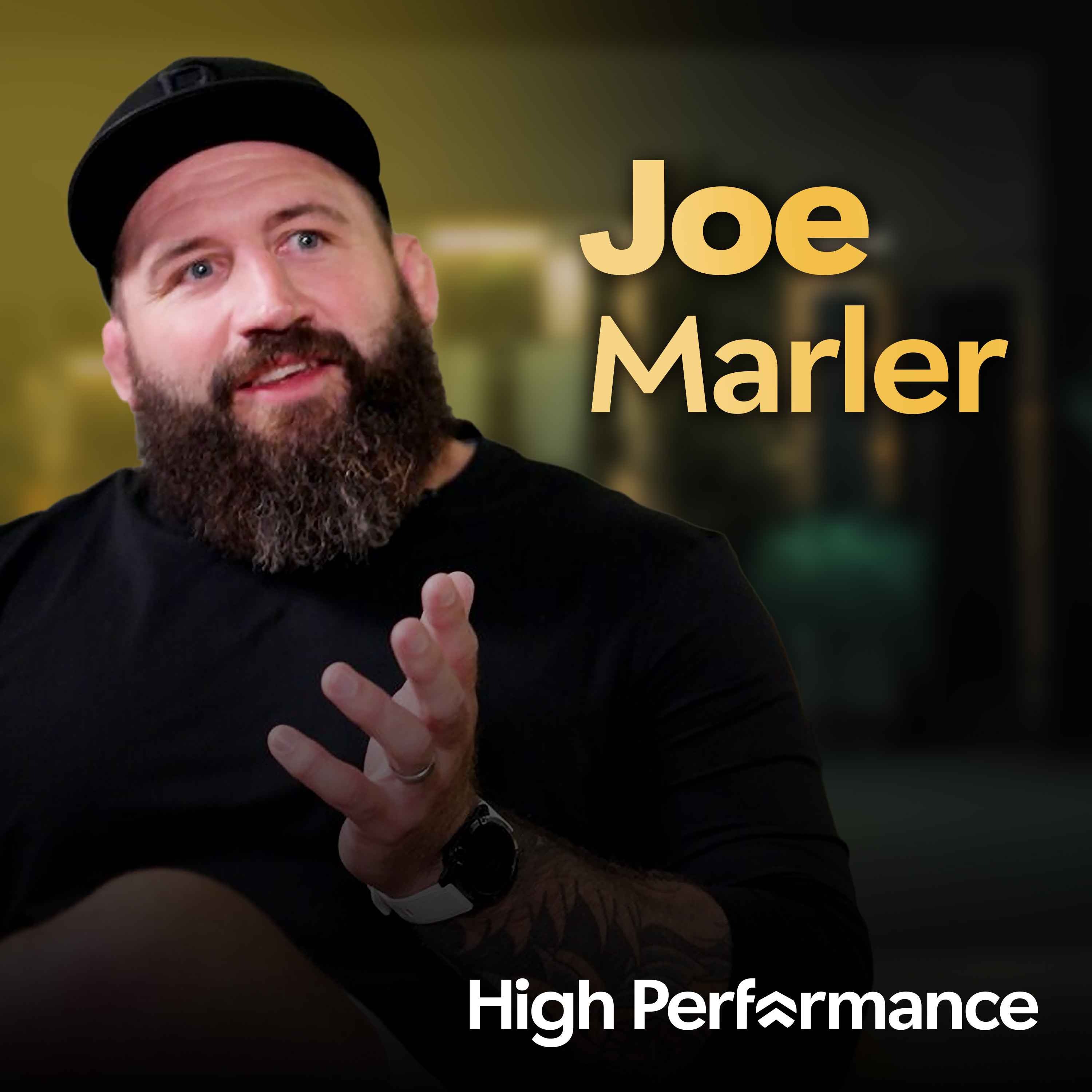
England and Harlequins rugby legend Joe Marler opens up like never before, about the moment in 2018 when he hit breaking point, walked out on his family, and believed the world would be better off without him. What follows is an unfiltered journey through mental health, accountability, and rediscovering purpose.
Joe reflects on the catalyst for his breakdown, the decision that saved his life, and the teammate’s message that made it all worth sharing. He also reveals what it was like to play under Eddie Jones, the pressure of “Test Match Tuesdays,” and the emotional drive that makes great teams go beyond just winning.
Raw, honest, and deeply human, this is Joe Marler finding strength through vulnerability and proving that the bravest thing you can do is ask for help.
Hosted on Acast. See acast.com/privacy for more information.


