
 Ask ChatGPT


 The High Performance Podcast
2 Jun 2025 · 1h 6m
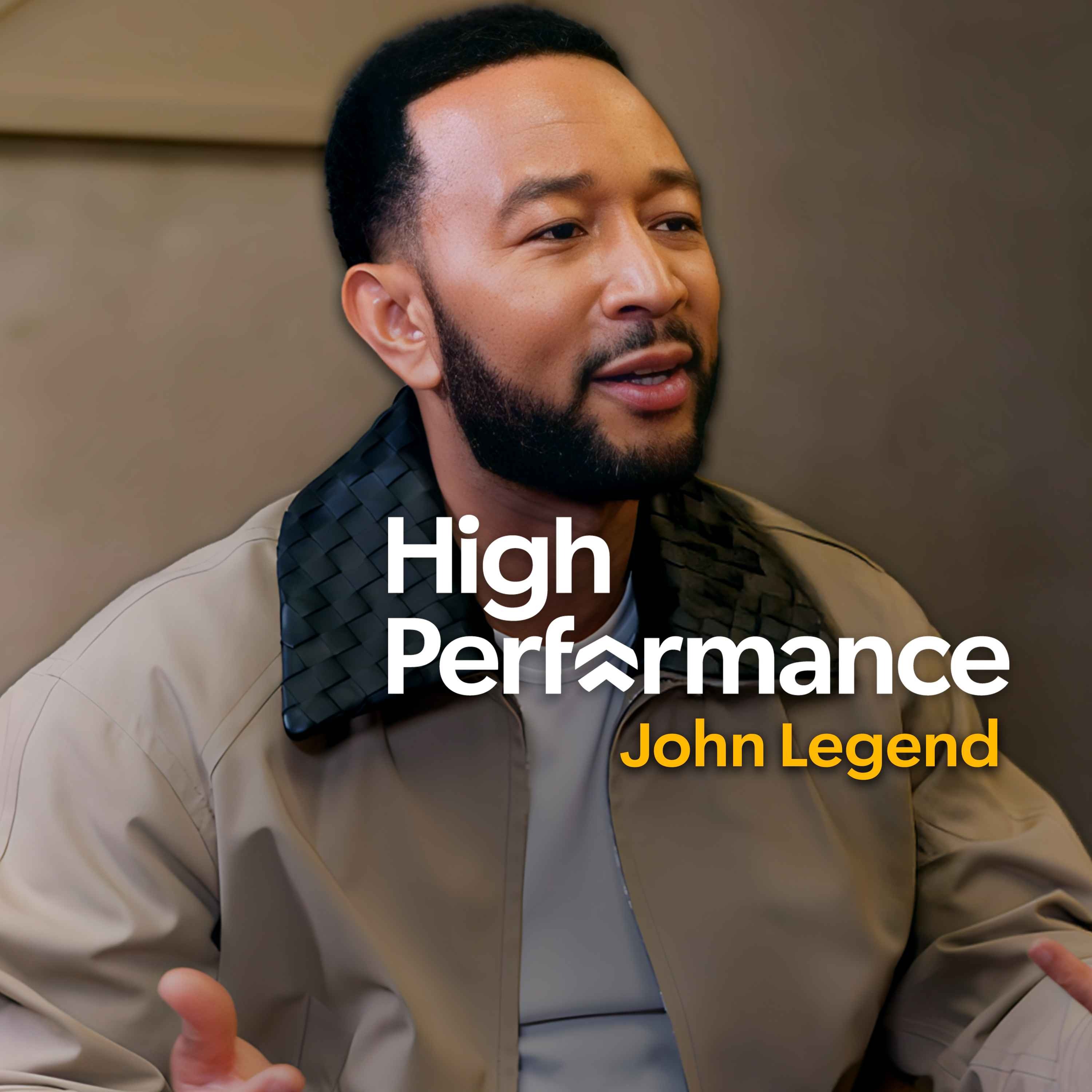
Hosts: Jake Humphrey and Damian Hughes
Insights from high performers across various fields exploring non-negotiable behaviors that contribute to success.
John Legend
In this powerful episode, John Legend shares intimate experiences from his life, including personal loss, his rise to fame, and his evolving relationship with Kanye West.
Written by AI. May contain mistakes.

Get the gist, explore an idea or ask about something said.
 Claude
On The High Performance Podcast, what are the key points of this episode?
Searching your listeningAutomatic transcript. May contain errors.
0:00Watch it early on the High Performance App. Available now, Roman Kemp The broadcaster opens up A powerful conversation On success and mental health My mother was living in the street She started using drugs Self-medicating She was out of our lives Where he is now Very sad and disappointing And pretty alien from the person I knew I had this drive in me This fire, this passion in me every aspect of my life had music in it, the best way for them to get to know who I was was for me to sing. Coming up on High Performance, John Legend. Our very first EGOT guest. That's right. This is a guy with an Emmy, a Grammy, an Oscar, and a Tony, all resting on one mantelpiece.
0:53In this powerful conversation, John opens up to me about being abandoned by his mother as a child. his slow and steady rise to stardom, and why he's still working to live up to the name Legend. He shares the real story behind his decade-long marriage to supermodel Chrissy Teigen, the secrets to making it work in the spotlight, and where he now stands with the man he says helped launch his career, Kanye West. This is a remarkable life lived with purpose. So let's get on and welcome John Legend to High Performance.
1:32Well, John, you've won an Emmy, a Grammy, an Oscar, and a Tony, one of only 19 people. If you could only keep one lesson from one moment of your career and not the awards, what would it be and why? One lesson? Well, I think the most important thing that has something to do with the awards too, but it is to work with people that make you better and will stimulate you creatively and be a good collaborator. I think that's probably the most important thing I've learned throughout my career. And if you just look at a through line of all the great moments of my career, it almost all happened because I collaborated with someone who brought something interesting and creative to the table.
2:19And if you continue to seek out great collaborators and if you are a good collaborator yourself, it will enable you to be a better creator. What was an experience that made you question whether you might want it, but can you get there? Well, I would get rejected a lot, you know. I was trying to get a record deal from basically 99 to 2004. I started making my first demo in 1998 and we started playing it for a record label A &Rs and trying to get signed starting in 99. I played on Lauryn Hill's album. That was my first collaboration on any major album. That was in 98. So, you know, I was starting to make these little steps toward a music career, but I was ready for it to happen right away and I didn't get signed to a record deal until 2004, which means up until then I'm getting told no by everyone, including the label that eventually signed me.
3:26I had gotten rejected by them, you know, probably a year prior. In some of my sessions with Kanye West, who I had been working with for a little while at the time, we were working on the College Dropout, which was his debut album. And one of the collaborators with us was this spoken word artist named Jay Ivey. and Jay, he has a way with words. He's a spoken word artist, of course. And he just started calling me the legend. You know, it was more kind of jokingly and it was, you know, how when you're around a group of friends and they start to notice something about you and they, you know, start calling you a nickname that kind of plays on that.
4:12And I think he heard that I was an old soul and vocally kind of reminded him of the soul artist that our parents listened to. And he saw what I was doing in the studio. I was playing keyboards and singing and doing all kinds of things in the album. And he just started calling me the legend, which kind of morphed into John Legend. And he and Kanye and then a bunch of our friends in our crew started calling me John Legend. And I didn't think of it as a new stage name. I just thought of it as a nickname that they were calling me. But eventually it started to gather enough momentum that I had to make a real decision.
4:55Am I going to adopt this as my official stage name or is it just going to be a nickname among my group of friends? And, you know, you're probably like, well, of course, John Legend sounds cooler than John Stevens now. But at the time, I'm like, it sounds pretty presumptuous to call yourself legend. It takes polls. Yeah. And at the time, I'm not even signed yet. So I'm like, how are you going to call yourself legend? You don't even have a record deal yet. But eventually, I convinced myself that it was a leap I was willing to take. And it was a leap because, you know, it's calling yourself something you're clearly not yet.
5:41So how did you convince yourself? I said to myself, this name is going to announce my presence. It's going to be a bold statement of like intent and aspiration. And it's going to make people pay attention. and once I get their attention, then I'm going to deliver music that's going to justify that attention. And then eventually, I'm going to try to live up to that name. I knew it wasn't something I could live up to in one album or two albums. It was something that would have to be justified over a career. And I didn't want to not take the name because I was afraid of it. I wanted to take that leap, take that risk, and say, you know what?
6:37I'm betting on myself. I'm betting on my own success. I'm betting that this name won't be a punchline and it'll actually be something that will manifest. And that's what I said about doing. You mentioned the early collaboration you did with Kanye West. I'm interested in where your relationship is today It's non-existent I mean he's commented about me in the press said some very disappointing things about me but a lot more disappointing things about other people about Jewish people, about black people about all kinds of things in general, I find where he is now very sad and disappointing and pretty alien from the person I knew at the beginnings of our career.
7:38We shaped a lot of my early music together. We shaped a lot of his early music together. And I'm forever grateful to him for what he meant to my career. and it's just been sad to see what's happened to him over the years.
8:00The market's uncertain. Revenue's tied and hiring on hold. That's why results-driven companies are using Upwork to keep work moving. Go to Upwork.com today and start hiring proven freelance talent fast. No bulky overhead. No rigid long-term contracts. Just the right expert right when you need them. Work smarter and faster with Upwork. Go to Upwork.com now and find your freelance expert. That's U-P-W-O-R-K dot com. Post a job for free and get started today. Come to DSW for the shoes. Stay for the fun. Because let's be honest, if shoe shopping isn't fun, are you even doing it right? So go ahead.
8:38Try something new. Try something different. Good different. Try something that feels like you. You know, the real you. And then definitely brag about it later. Because at DSW, you've got unlimited freedom to play. With sneakers, boots, and everything in between for every style, mood, and occasion, you'll definitely find shoes that get you at prices that get your budget. DSW, let us surprise you.
9:03This episode is brought to you by Opera Air, the first browser with mindfulness at its core. Now, most of us spend hours every day online, but how often do we pause to take care of ourselves whilst we're doing it? And that's where Opera Air comes in. It's a lightweight, fast, secure browser built not just for productivity, but for your well-being. With Opera Air, mindfulness is built right in. You'll find free breathing exercises, guided meditations, and soundscapes with ambient sounds, lo-fi music, and binaural beats, all designed to help you focus, relax, and even spark creativity while you browse.
9:40If you could sit down with him with no cameras, nobody listening, what would you say to him? Oh, it would be hard. You know, part of me thinks about what his mother would say, you know. And part of me would feel anguished about even bringing that up because I know how touchy a subject that is. But I'm so grateful for what we did creatively and so grateful for what he contributed to the world creatively that it makes it all the more tragic to see where he is now. And I wish he would understand that and know that, that he could be so much better and contribute so much light and creative energy to the world.
10:41And he did for so long. I wish he could tap back into that and whatever this hate and bitterness he has in his heart if he could find a way to cleanse himself of that and get back to making the world a more beautiful and interesting place it would be great I think we would all be happy if that were the case but it's been a while since that's been the case but as somebody that went through your own sense of loss with your mother leaving and and for that to be the case for him what what's the one piece of advice you'd want to pass on to him i feel like any conversation would have to be two ways just really trying to understand what's going on with him internally and then responding to that in the conversation and you never know what journey people are going through psychologically and therapeutically and all those things but clearly there are things that need to be addressed that aren't being addressed right now do you mind if we dig into your life story then and hopefully you can share with us some of the lessons that you've acquired along the way so before the awards before all the fame who was John Stevens?
12:00So I was a kid growing up in Springfield, Ohio. Springfield's a small city, about, you know, 80 ,000 people now. We were in a very close-knit family. My parents were both from big families, so my dad was one of five kids, and my mother was one of six kids, and we had lots of cousins and aunts and uncles around. And most of us lived in that general area in Ohio. And you were the second of four. I was the second of four. So I had an older brother, a younger brother, and a younger sister. And we were homeschooled for quite a bit of that time. So my father, and especially my mother, taught us at home.
12:49And my father was a factory worker. So we come from like a blue-collar family, as we call it. My dad built trucks for a living, so like big semi-trucks. He was on the assembly line building those. And my mother stayed with us and taught us. She tutored other kids from the neighborhood. She was a great teacher and still is. She loves to teach her grandkids, my kids, and my siblings' kids. And she stressed the importance of education. We also grew up in a very religious home. So they were part of the Pentecostal movement in the Christian church. And so, you know, my grandfather was the pastor of that church.
13:30My grandmother was the church organist. My mother was the choir director. My father also sang in the choir and was a deacon and taught Sunday school. So I was just around a lot of family and a lot of, you know, fellow church members. And I didn't go to school most of my childhood, early childhood. So that was my world. my family and my church. I want to explore the homeschooling in a moment, but what elements of that background then still resonate today in your life? A lot of things are different about my life now, my kids' lives now, compared to how I grew up. We live in Beverly Hills now. We live in a much, you know, more posh neighborhood.
14:17And, you know, there are a lot of things that are different. I never even flew on an airplane until I was 16 years old when I was a kid. And now my kids have gone all around the world before they turned five or six years old. So there are so many things that are different. I'm not particularly religious now. So my kids aren't growing up kind of steeped in a religious tradition. So there are a lot of things that are different. They're not homeschooled as well. So there are a lot of things about their lives that are very different from how me and my siblings grew up. And now my wife grew up too.
14:54She also grew up in a blue-collar family. And the biggest difference between my wife's family and mine was that they moved around a lot. And they weren't surrounded by a lot of extended family where I was surrounded by a lot of extended family. And my kids aren't consistently surrounded by extended family. but they love it when we have big holiday celebrations and the family comes into town and I see the value of them being around their cousins. So part of me wishes we had more family around during this time. And you were also playing the piano at the age of four. And I've read a quote from you that said that you needed music rather than just loved it.
15:35I loved it. I was steeped in it. It was such a part of my home life, my church life, my family life. Every aspect of my life had music in it. And it just felt like something I was supposed to do. And maybe I said I needed it because it was the thing that even though I was a shy kid, I was homeschooled so I wasn't around a bunch of other kids. It was like my way of introducing myself to people. being able to stand on stage and sing. And it was the icebreaker for me. So if I was feeling shy, feeling like I couldn't talk to people, the best way for them to get to know who I was was for me to sing.
16:25Who was on the front row of that first stage? Well, some of it was at church. So a lot of my family was at my church and family, friends and neighbors. And then there were two years when I wasn't homeschooled and I was at a little Christian school, elementary school. I was in some of the school musicals and piano recitals and things of that nature. And so, you know, my fellow classmates were in that audience. So it was always a fairly friendly audience, either my church family or my school family. it was an early introduction to what it felt like to be on stage and and i think it prepared me all those years of playing in church playing at school playing in local talent shows prepared me for what i'm doing now and what did it feel like i would get nervous sometimes now i don't really get nervous anymore and i think it's due to repetition just having that life has been a rehearsal for me basically getting ready for what I'm doing now.
17:29I was doing it since I was a kid. And how would you cope with those nerves, though? You just sing through it. You know, I'm a coach on The Voice now, and part of what I tell them is prepare your way through the nerves because you're going to feel nervous, and there's a lot of pressure. There's a lot riding on these very short moments you have on television. and usually they'll get like two and a half minutes to do what they need to do. And so there's a lot riding on those two and a half minutes. And a lot of how you get through that is just preparing your way through it so that by the time you get on stage, you've practiced it so much, you've mentally rehearsed it so much that it feels like nature.
18:18They call it second nature, but you want it to feel like first nature. It was what you were supposed to be doing. And can you remember any particular occasions before that understanding of prepare your way through it where things had gone wrong, where you had to recover? Well, you know, I think I got to make mistakes in front of a lot of friendly audiences earlier on. And so I think it's good to give kids that kind of practice if they want to get into our industry, if they want to do what we do. I think giving them a friendly audience to play in front of at first is helpful because you get to work on your chops in a comfortable environment and it prepares you for when it gets a little less comfortable.
19:10And we'll talk about some of them in a while. One of the things in over 400 of these high-performance interviews that often occurs, John, is that people can remember somebody that sowed what Sigmund Freud described as the golden seed, somebody that saw potential in you long before you maybe could recognize it yourself. Was there anyone that comes to mind that did that for you? Well, it started with my mother. I mean, she was my biggest cheerleader and supporter and encourager. She sang too, and like I said, she directed the church choir. so she saw that spark in me she saw that love in music uh love for music in me and she encouraged it from a very young age and so i think she was first and her mother my maternal grandmother she was the church organist and she started to teach me her ways you know she was showing me how if I were to play for the choir, how I would play the songs and teaching me the chords and teaching me her style of playing.
20:19And I still play in her style in some ways. She taught me that from an early age. And so I think both of them saw something in me and they cultivated it. You could say they planted the seed, they cultivated it and helped it blossom. And was there a particular moment that comes to mind when you think about their influence on you? Well, one moment I remember vividly was when my grandmother was going to be out of the service and she needed me to fill in for her. And she taught me the songs that the choir was going to sing. and it was the first time she really walked me through entire songs, taught me the chords, helped me practice them and I always remember that because I was very young.
21:15I was probably eight, nine years old and I was playing for the church choir and my grandmother taught me how to do it. That's a lot of trust that they were putting in there. Yeah, I mean, the stakes weren't extremely high. Our church wasn't some massive church. It was a pretty small church and a lot of the church members were family members or people that had known me since I was a baby. So again, it was a friendly environment to try things. Is there anything about in your shows now that you perform, you're in Europe for your tour at the moment, is there anything that still reminds you back in those church days?
21:52Oh yeah, I think so much of my preparation for being a performing artist happen in church. You know, I was on Instagram not long ago and one of our great producers in hip hop and R &B, his name is Jermaine Dupri, he was talking about the value of so many of our musicians, especially in black music, coming up in the church. And he was kind of lamenting that in the newer generation, a lot of kids aren't going to church. And so a lot of the musicians that we might have had aren't being developed in the same way that they would have been in a different time when more of us were going to church and learning to play music in church.
22:43Because the church is unique in that it gives you that opportunity to be in front of an audience at an early age, again, with the stakes a little bit lower and a friendly audience, but a discerning audience. So many great R &B musicians especially developed their chops in that environment. And we are losing something when it comes to just the virtuosity of musicians in our genre and our style of music. It's something to consider that, you know, even for myself, you know, my kids don't really go to church very often. And maybe this generation is missing something by not having them. You've spoken about that you don't go to church much yourself now, and yet it was obviously such a central part of your early life.
23:35Would you explain if it's a loss of faith or what the reasons for that are? As I got older, I probably just saw more of the world and had more questions about the dogma and the doctrine of it all. But I do believe that the church was important for me in building community and having that sense of extended family around me. And so I was just talking about this in the car. We were talking about how our generation isn't as likely to go to religious ceremonies and have that community around us. and for good reasons, you know, but we may be missing something because of it. What a lot of us need to figure out is how do you replace that community in a different way that doesn't make you feel conflicted?
24:38I think we all need to figure that out. Yeah. And tell us about the homeschooling. That sounds intriguing that it was your mom and homeschooling yourself and your siblings. Yeah, you know, I think it's an interesting way. It's a challenging way to teach your kids. So why did they decide that that was the best way? Well, it was during an era when it was still common that, you know, the wife would stay at home. Whereas now I think someone of my mother's talent and intelligence, she would probably be out in the working world these days. but you know it was still pretty normal for a lot of moms to stay home during that era she was also just a really good teacher and she cared about education a lot and like I said they were also very religious and I think the idea of us going to public school and learning about things that might contradict their religious doctrine and things of that nature they were worried about that and so they would rather keep us at home and then the only two years that I went to school with other kids during my elementary school years it was a small christian school so again they were trying to kind of circumscribe uh the kinds of things that we were taught uh to make sure it kind of adhered to the doctrine things were they teaching you uh they taught us the regular you know uh reading writing and arithmetic um but it all had kind of a religious undertone to it or overtone.
26:07Right. Yeah. So was it more creationist? Yeah, creationist. There was no discussion of evolution. I don't know that you discuss evolution very much in elementary school anyway, but if we had gotten to that point, they would have skipped that section. And how did they receive the challenge when you did start to see more and understand more? It's hard for them to see their kids kind of grow up and go their own way. You want your kids to experience life and learn things on their own, but I think for religious parents, you want them to stick with that religious upbringing that they were given as kids.
26:54A lot of us end up straying from that or at least questioning it. And I did that starting, I think, in college when I went away and got a chance to be exposed to different ideas and doctrines and started to read about my faith a bit more. I read it in a more kind of academic way. Even just the basic stories that we were taught were just factual, kind of historical things. you start to question those and all of that makes you a little more skeptical and critical when you think about the religious dogma and doctrine you're taught. But it's notable that you still have a healthy relationship with your parents now.
27:41Of course, yeah. So I'm interested in how you learn to disagree agreeably. Well, both of my parents aren't very, they're not very pushy about religion. they're very active and practicing for themselves but they don't try to force it on other people I think they're very tolerant in that way and they live in a world where they know there are people that don't practice like they do maybe they're part of different denominations or not Christian or not practicing any religion at all and they're both I think pretty tolerant and easy going about it and don't try to force their own beliefs on other people.
28:28You know what, it's quite telling that you're describing their approach in the same way that you described your approach to collaboration with other artists. Yeah, you know, my personality is a lot like my father. Anyone that spends time with my father and with me, you see a lot of commonalities between our personality. We're both pretty easygoing and I think humble in a certain way and open and creative. yeah you'll see a lot of similarities between our personalities nice and i want to talk about how they taught you to dream john i i dug this out if you wouldn't mind yes this essay this is your essay that you wrote in 1994 yeah my dad showed me this um because he had held on to it and uh i hadn't seen it for quite a long time so i wrote it in 94 and so would you just read it yeah So this is a piece of it.
29:21It says, John Stevens' essay, How I Plan to Make an Impact on Black History. And this was for a competition called Future Black History Makers. And, you know, in the U.S. we have Black History Month in February. And so the question was, how do you plan to make black history? And I said, in an ever-changing society, black America is in dire need of effective leadership that will be an enabling force in the struggle for advancement. Our predecessors used successful tactics in gaining equality through written law. However, the problems of the African American extend much deeper than those which can be solved through legislation.
30:01A new generation requires a modified approach to success. I feel that I possess a concern for my people and exemplary character and God-given talents which will enable me to be a strong leader and an advocate for the African American people. And then, you know, throughout the rest of the... Yeah, I wrote this when I was 15 and then in the rest of the essay I talked about how I planned to be a successful musician and use that success to have this platform to speak out about things I cared about. So how would 15-year-old John respond to John Satin's chair today? Well, you never know what's going to happen, but I was pretty spot on with my aspirations for myself.
30:45And I think naming it at that age helped give me a sense of purpose and direction. And probably, they say you speak things into existence. But I think naming it in advance gives you something to work toward. And I think I named it here and started to work toward it. Well, there's something about psychological priming that you're doing there. Yeah. I'm interested for anyone that's listening to this fascinating conversation to think, how do I do that? How do I dream effectively to identify a sense of purpose or a direction of travel? What can you tell us about that? Well, you know, you may not get an essay question for Black History Month or whatever, but I think it is effective to dream and write them down, write your dreams down and write your aspirations and your goals down and to give yourself something to work toward.
31:49So beyond sharing that with the magazine entry, who else were you sharing? Well, this was an essay. It was actually sponsored by McDonald's, the restaurant McDonald's. And so the essay went out to, you know, was submitted to the competition and it won the competition locally. And so as a result of me winning the competition, it got published in our local newspapers and was shared with my school. And a lot of people in my community were able to see it and know that I won and know that this is what I wanted to do in my life. I think about my junior year English teacher who encouraged me to enter this competition.
32:35She heard about it and said, John, you really should enter this. I think you would do a great job. And I'm grateful for her as well for encouraging me to enter, believing in me. When I think about it, she was also the one who encouraged me to run for student body president. and she saw something in me and encouraged it and really wanted the best for me. And it's good to have people in your life like that who see that spark and do something to help it come to life. Yeah. All of this was going on in your life, a time of real turmoil. Your mother had left the family home at this stage. So when I was around 10 or 11, my parents got divorced and this all happened after my mother's mother passed away, the one who taught me to play gospel piano.
33:28Her mother passed away at a pretty young age. She was only 58 years old and it was pretty shocking for my mother and for her sisters and brother and for the entire family. She kind of disappeared mentally from the family. She got really depressed and eventually my parents got divorced and my mother was basically living in the street. She started using drugs. She was self-medicating, just spiraling downward for quite a while. And she was out of our lives for about a decade. So we weren't around her, even though we were in the same city, but she just was emotionally and physically not there. So were you aware where she was or not even?
34:24Basically, we knew where she was most of the time, but it was hard to see her. And so as a kid, I basically wanted to focus on school and music and not what was going on with her. And so I avoided her, you know? Yeah. Because it was hard, you know, when she's on drugs and you're seeing physically her wasting away and just looking like not this healthy, beautiful woman that you knew before. And my mom is and was a very stunning, gorgeous woman with beautiful skin and just radiant, you know. And during this time, she was the opposite of that. And it was really hard to see that. and I'm so glad that she's recovered and she's sober now she's a wonderful grandmother and she's radiant again but during that time we lost her for a while and so it forced me and my siblings you know sometimes they say that a lot of high achieving people need that level of independence and challenge that sometimes some element of trouble in your childhood creates.
35:43You never wish that on anyone. You don't want to wish that on your children. But there's something to the idea that you need some adversity in your life to help train you to overcome adversity. And so I think that adversity, it definitely was something that taught me things. and so as parents you want to figure out how to teach your kids without them having to experience the worst of what you experienced and so it's an interesting thing to think about you know how do you teach kids in a privileged life to overcome adversity to be challenged and one thing is life sometimes just gives you adversity no matter what you what kind of privilege you have like we I recently learned our oldest son, Miles, has type 1 diabetes.
36:40And that's a tough thing for a kid to deal with, even with all the money and resources that we have and access to whatever care he needs. It's real adversity, a real challenge for him. And so, again, you don't wish these things on your kids, but I think it is going to teach him to be a stronger kid because he's having to deal with that kind of challenge. and so I think life is going to bring those challenges no matter where your kids grow up and how they grow up and I think as parents we have to allow them to experience it and not try to protect them from everything and allow them to work through it, you know.
37:23But if Miles did come to you and say, how do I get through this? I'm finding this tough. what lessons did you learn as a kid growing up in uh in oh in ohio that you would explain to him i think he's learning through experience that he has to be resilient and um that life will throw things at you that um you may not have expected things you can't control uh but you can control how you respond to it and uh hopefully we're teaching him how to respond to challenge and adversity but what survival skills did you learn in that period when your mom has left the family home that that you feel that i've served you well in your subsequent career well i think one of the things our parents did early on was they taught us to do things around the house so uh we didn't have hired help uh we learned how to do the dishes we had a list of chores and we did the laundry did the dishes, vacuum the carpet and clean the bathrooms.
38:27We had to pitch in around the house so that even before my mother wasn't with us, we were taking on some of those tasks as kids. And so they taught us that we had to contribute to the home. And they always told us that, you know, one day you may have to do this for yourself. You might not be married yet. and you're going to need to be able to figure things out for yourself. So we want to make sure you're ready. They taught us to be independent and we needed it, I think, sooner than we expected. When my parents got divorced and we were basically latchkey kids and had to do a lot of self-parenting or as a team helping to raise each other, we needed that sense of independence and just the ability to figure things out.
39:22And I'm glad we learned it at an early age. If you're still overpaying for wireless, it's time to say yes to saying no. At Mint Mobile, their favorite word is no. No contracts, no monthly bills, no overages, no hidden fees, no BS. I made the switch because I was tired of those ridiculous bills and sneaky charges from my old provider. With Mint, I'm paying$15 a month and getting the same high-speed data, unlimited talk and text, and the coverage on the nation's largest 5G network. Honestly, the quality is just as good, if not better than what I had before. And the best part? You don't need a new phone.
39:59You can keep your current one, bring your number, and all your contacts. I use Mint Mobile, and you should too. Ready to say yes to saying no? Make the switch at mintmobile.com slash HPP. That's mintmobile.com slash HPP. Upfront payment of$45 required, equivalent to$15 a month. Limited time new customer offer for first three months only. Speeds may slow up with 35 gig on unlimited plan. Taxes and fees extra. See Mint Mobile for details. The market's uncertain. Revenue's tied and hiring on hold. That's why results-driven companies are using Upwork to keep work moving. Go to upwork.com today and start hiring proven freelance talent fast.
40:39No bulky overhead. No rigid long-term contracts. Just the right expert right when you need them. Work smarter and faster with Upwork. Go to Upwork.com now and find your freelance expert. That's U-P-W-O-R-K.com. Post a job for free and get started today. You're invited to spend an evening on Fremont Avenue. For generations, this house has been home to soulful music, good food, and cutthroat card games. Saints and sinners. unexpected laughs and unspoken truths good times hard times and of course family always family so pull up a chair and join us at fremont avenue a world premiere play only at arena stage performances start october 8th tickets at arenastage.org
41:32you've spoke about one of your one of your greatest attributes is the ability to be vulnerable and i can imagine that your mother leaving home at such a young age is wounding and i'm interested about how did you process the emotions that you that must have been quite intense you know i think i've gotten better at being vulnerable as i've gotten older as i've become a parent as i've dealt with adult um you know challenges and loss and i think because Because of my wife, too, I think she's got such an open spirit. I think I was more willing to keep it in and not share and less vulnerable when I met her.
42:21But I think she's helped me become more open. And I think it's good when you marry someone who's not exactly like you. You have enough in common, but someone that maybe brings out different things in you that may be hard for you to bring out in yourself. And I think she's helped me be more vulnerable and open with my emotions. Whereas I don't think I was very vulnerable as a kid. I think part of it was like a coping mechanism of like toughing it out. And that may be gendered in some ways where boys are taught, you know, don't cry, don't show emotion, don't show vulnerability or weakness. And, you know, I think we all felt like as young boys, there were three of us and we had one sister.
43:15We were just supposed to, you know, figure it out and tough it out and not show vulnerability. and I've become more comfortable with showing it as I've gotten older and I think part of it's due to parenting but also being married to someone who's willing to be vulnerable. And what's the most effective way that your wife has taught you to start expressing emotions more? I think just by example and by interaction with her, she's shown me the benefits of opening up. it allows you to fully experience life in a different way when you allow your emotions to be bigger, you know, allow your emotions to, like, really be in the moment and react to the joy and the pain.
44:06So give us an example of that, John. Well, I think part of it was going through loss together. We lost a pregnancy. We lost a baby. Chrissy was willing to share that with the world and show pictures of us crying together. And that would not have been my personal instinct to do that. But I think it was helpful for us to do it. It's helpful for us to share this vulnerable moment with people who knew we were pregnant and expecting a child. And then for it to just disappear without any explanation would have felt weird. but also sharing it really opened up a conversation about pregnancy loss in the public that I think wasn't really being had.
44:52And I think helped a lot of people feel less alone. And again, it helped me by allowing myself to be vulnerable in this really tough moment following Christy's example. and what was the conversation like at such a harrowing time in your life anyway to also open yourself up like that you know I trusted Chrissy's instincts um I was hesitant but I trusted her instincts and I knew she had just gone through something so physically harrowing so emotionally harrowing that i didn't want to tell her how to grieve you know and um as is often the case she was right you know i think us sharing it was the right thing it was therapeutic for us and i think it was helpful for a lot of other people and what was the biggest surprise you found by opening yourself up like that how many people experienced it themselves i didn't know the statistics around how many women lose at least one pregnancy in their lives how challenging fertility is for so many couples by us talking about it we learned more about how many other people go through it and i think a lot more people learned about it too because us having a very public conversation helped educate people and uh and helped people find solace with each other which brings you back to that 15 year old boy wanting to be yeah making a difference using the platform and this was my wife really inspiring that but you know we've both done it with other you know kind of touchy subjects politics of course and reproductive rights and reproductive health we're willing to use our platform to try to have interesting and edifying conversations that will hopefully move the culture forward.
46:56And how do you and your wife go around agreeing on the boundaries of what will be shared and what won't? I honestly think we don't even need to discuss it anymore because I think we have a sense of instinct around what we are willing to share and what we aren't. I know people think we share everything, but we don't actually. We keep a lot to ourselves. and we like social media because it allows us to control what we share. I think this era, if you use it wisely, allows you to decide what your press is. You publish your own images. You can tell your own story without the filter. I think as we've matured in our relationship with social media, we've gotten good at understanding what we want to share and what we don't and how to use it to our advantage without all of the downsides.
47:59Sure. You said we don't discuss it anymore. Was it a topic of conversation? Well, I just think there was a time when we were all trying to figure it out, you know, because we were on Twitter as Twitter started, you know, and we definitely made some mistakes and, you know, some of the things we said because it felt like, you know, it felt more informal and like it was kind of the wild, wild west when it first started and you didn't think of the permanence of everything you would say at the time. And I think you learn your lessons from that. What's been the biggest lesson? Oh, you know, clearly that everything you say is going out there and even if you delete it, it has a permanence.
48:43it doesn't go away because, you know, someone saw it and someone recorded it. And if you're a public figure, it's going to last forever. So I think it just makes us aware, more aware, you know, of what we say, how we say it, and how it could be misconstrued or misrepresented. So it just makes you a little more judicious about the way you say things, what you share, and how you say it. and I'm interested in there was a comment you made earlier in relation to that trauma in your adolescence where you're almost taught just to do things to be action oriented whether it was academia or whether it was music doing things was like a good distraction and it helped you kind of focus on something that you could control so when you experienced that sad loss how did you not just leap back into action and allow yourself to to grieve well i did both you know i allowed myself to grieve but then eventually we got back to work and engaged again with performing and whatever we needed to do i think i was taping the voice at the time um in the u.s and eventually you go back to work and eventually Chrissy did too but it took her a little longer because it's just something different with a woman because it's not just an emotional loss it's physically, it's very it's just painful and difficult and you go through this time where you feel like your body failed you and it's really difficult And so Chrissy went through a pretty deep grieving process and a lot of therapy.
50:34And, you know, we just had to be there for each other to buck each other up and support each other. But also not try to just crush the grief. You have to allow the grief to have its own life, you know. You can't just make it go away. You have to confront it and deal with it and go through the healing process and not expect it to happen overnight. Did you go for therapy as well? Yeah, we did together. And she went through more individually, but we did some together. And part of it was just about us being there for each other and being great listeners. and again having patience with the grief you know not thinking we can just kind of snap our fingers and we'll get through it and would you mind sharing for our listeners any of the lessons that you learn in therapy that you feel um is useful outside of like such a sad occasion Well, I think a lot of it is about giving yourself grace.
51:51I think especially with Chrissy, and I think a lot of mothers who lose children, lose pregnancies, they blame themselves, you know? And you're like analyzing everything you ate, everything you did, every physical activity, and saying, you know, was this my fault? And I think a lot of it was about giving yourself grace, forgiving yourself. Love that term. And can we go back and talk about a period of your life that intrigues me when you go to Penn State University at 16? University of Pennsylvania, to be clear, there are two different places. Oh, sorry. Yes, we actually had t-shirts that said not Penn State.
52:47Because people would get confused. Penn is part of the Ivy League, so it's known more for its academics. And then Penn State is a really great state university, but it's more known for athletics. So they had this legendary football team. And so growing up in Ohio, we didn't know much about Penn, but we knew a lot about Penn State. So whenever I would tell anyone I was going to Penn, they would be like, oh, Penn State. it became such a thing that we had to get not Penn State t-shirts well apologies no problem it's a common mistake obviously but the bit that really intrigues me is you go there at 16 you're accelerated through you're in amongst 18 and you're old kids where that age gap is significant tell us about how you learned to fit in I always say music was my icebreaker it was my way of making friends because I was in an acapella group and found ways to collaborate with other musicians as a shy kid as a younger kid as a kid from a small town um as a racial minority there were all these reasons why I would feel like an outsider or like you know I didn't completely fit in and I think music was always the thing that made me feel like I could strike up a conversation with anyone once they heard me sing once they saw what i was passionate about it just made it easier for me to relate to them on every level and it reminded me i'm reading a book at the minute john around mccartney and lennon uh-huh how both of them experienced trauma in their adolescence and they both have spoken separately over the years about how they could almost articulate emotions through music that they were incapable of doing verbally.
54:41Yeah, I think as a songwriter I'm more romantic, I'm more emotional than I am in real life. And I think it's what you're saying is that it allows you to express yourself in a way that you may not have the conversational words to say but you're able to channel it into your creativity. and you leave university and then you take a role in Boston Consulting Group that's right I was a management consultant for three years would you tell us a little bit around that double life you were leading in some ways yeah it was a double life I graduate in 1999 and my first job was at the Boston Consulting Group and they do like strategic management consulting and they have offices all around the world including here in London.
55:38And my first year I worked in the Boston office and then I transferred to New York. And my dream was to make music. So I was trying to find a way to get to New York. And so I asked them to transfer me to New York and being there made it so that I could moonlight more effectively. So I was making PowerPoint slides and Excel spreadsheets by day and then going to the studio and writing and making music or playing little gigs around town at night. And I met a lot of different collaborators musically during that time. And I was able to make it work with very little sleep, but I was able to make it work.
56:21But I really was, you know, doing both things at once. And it was hard. People ask me, you know, about my schedule now. And I'm like, it was way harder back then. I feel much more in control of my schedule now, much more able to manage it even with kids even with you know the success we've experienced i'm able to rest more and control my schedule more now than than back then because i was trying to do it all i was working a full-time job and then trying to make music happen in the times when i wasn't working my day job so it was challenging what was the hardest time in that tension well it was a all of it was hard because it was you know just finding the time trying to get some rest i would i would go to work so sleepy like i would like be nodding off at work and and it's just not a healthy way to live i was your bosses aware of what you were doing in the evening yeah they uh they would come to my shows i would invite them to my shows and they encouraged me and they probably didn't think oh this guy is gonna actually make it but they were like yeah it's interesting you know we got this co-worker that goes and does gigs every once in a while and they would come to my gigs and um uh one of my friends who was my co-worker back then he was like yeah i didn't really think it was gonna happen for you but i was like that's cool that you got a dream but i've read that you're earning more than what your dad had done in your first year of working and I'm interested in how you kept hold of the dream of being a musician when you're surrounded by comfort it's like the sirens that are going yeah you know it's all relative but you know my first salary was 50 ,000 us dollars a year and I think the most my dad ever made was probably in the 40s uh in a year um which you know we weren't poor but it was like a working class salary and And for me at age 20, my first job out of school to already be making more than my dad ever made was comfortable in a way.
58:32Though once you move to New York, you find that$50 ,000 doesn't really go a long way. But it's comfortable enough for a 20-year-old to figure things out. I don't think I was ever so comfortable that I was like I want this life as opposed to music I had this drive in me this fire, this passion in me to make music and I still have it I still have that joy of writing the joy of creating something new the joy of being on stage and connecting with the audience I still feel that and I felt it back then and I was chasing that I wanted to feel it all the time and I didn't want to be stuck in that corporate job forever.
59:19And so I didn't get so comfortable in the corporate job that it made me not want to really fight for my music career. Developing that inner belief, I think, comes through work, through practice, through honing your craft and getting better and better at it. That's you at church, practice your way through the news. In the church, in the studio, in the acapella group, in every talent show. So all these experiences of making music and feeling this connection with the audience and feeling like I had something to offer to the world of music, that built up a level of confidence in me that allowed me to persist through all these no's.
1:00:06But what about the resilience bet? again you know I think part of it's through going through adversity with my family with just life you know rejection and challenge and adversity they teach you grit grit is something you can develop over time you know the person that's written about grit I forget the person's name is at Penn She's a professor at Penn. I think it's a real thing that you need. So how do you define grit? Being able to face challenges. And it doesn't mean you won't fail sometimes. It means that even when you fail, you're able to get back up and try again. It means you'll stick with something.
1:01:01Even when it's not working, you'll keep working on it until you figure it out. it's something I think that's kind of like a muscle that you can continue to develop and make stronger again I think it's something that parents with privileged kids have to figure out how to make sure we're able to cultivate that in our kids because we may not naturally see them encounter as much adversity as we may have encountered Was there a no that you were receiving in that five-year period that particularly resonates with you today?
1:01:43Well, I run into executives that declined to sign me. You know, some of them are, you know, very successful executives with, you know, very respected ears and eyes for talent.
1:02:01and I remember the meetings I had with them where they rejected me and I don't feel any bitterness toward them but it's fun to be able to go to the Grammys and see them there and know that they passed on me and had a chance but they decided against it at the time and some of them will come up to me and tell me I should have signed you when I had the chance but you know, such is life and how do you respond? I'd say it happened when it was supposed to happen and sometimes you think you're ready and you think you want something but maybe it's not the right place at the right time what I've learned over the years is especially with this particular decision like where to sign when it comes to record labels or whatever it is.
1:03:01If you're an author and you want a book deal and you want to be with the right publisher, whatever decision that is, or you just want to go work for the right company, sometimes you really want to go to a place, but it's not the place for you. Part of what defines it being the right or wrong place for you is their excitement to work with you and their desire to work with you. And you want that match where you're excited to work with them, they're excited to work with you, they see what you bring to the table and they're ready to make the most of it and I think sometimes we want these opportunities that may be great for someone else but they're not the right thing for you and so when I see those executives that it didn't work out with, I'm like maybe I just wasn't supposed to be there they didn't see it, they didn't get it and they wouldn't have done the right things with it if they didn't get it and didn't see it and so I'm glad it didn't work out with them we're coming towards the end of what's been a really fascinating conversation so thank you for it john just if there was one thing that people assume about you that completely misses the real john what what is it i used to say i think people thought i was so serious all the time and this has been a pretty serious conversation sure but i do have a sense of humor and uh you know i'm not serious all the time and you said that you're on your own journey to eventually be comfortable with the title of legend what's one thing that you still haven't mastered yet that you want to well i'm always um erecting new challenges and new uh hurdles uh for myself just challenging myself to do new things try a new creative pursuit work with someone different the thing that I've been most recently delving into that I'd never done before is writing for Broadway writing for theatre and it's been new and invigorating and exciting I'm working with people I'd never worked with before and I think continuing to find those opportunities to push yourself and try new things even at this stage of my career I think is really important and if you could leave us with one lyric whether it's your own or someone else's that captures how you try to live what would it be um one of the most autobiographical songs i wrote never ended up on the main body of an album it was like a bonus track for love in the future it's a song called so gone and it's literally just about me.
1:05:47It says, I was born at the end of December, not afraid that the cold of the winter would keep me inside. Ever since mama left me at home, I had to search for a class of my own and go there in my mind. I had a dream like Dr. King. I had a song I had to sing, and I knew it wasn't make-believe. And when the teacher said to me, who do you want to be? I said I don't know but all I know is I've got to leave I'm so gone it's a song about following your dream leaving your small town and going out there and making that dream happen and I feel like it's a good companion piece to this essay it's about those aspirations I have for myself and it's probably the most purely autobiographical song I've written well thank you for sharing it thank you We've got some quick-fire questions if you're okay with that job.
1:06:48What are the three non-negotiable behaviors that you and people around you are expected to buy into? When it comes to non-negotiables, I think important to me and to my wife, because we have to hire a lot of people, both to work in our home, and then management, agents, etc., production crew, all of that. And I think it's so important, and she does too, that people are kind and they're fun to work with. We spend a lot of time around people we work with. You want people to be honest and kind and have integrity. And that's non-negotiable for me. Okay, brilliant. what advice would you give to a 16 year old John just growing up?
1:07:39Well part of it you know it's hard to say because it all worked out so even though you know even the things that I didn't do it right the first time eventually it worked out and I feel like back then I probably was afraid to make mistakes and I think now I appreciate the mistakes I made and I look at them as learning experiences and that's probably what I would tell myself is don't be afraid to make mistakes. And the final question, what is your one golden rule for living a high-performance life? Be a great collaborator. I think so much of my success has come from collaborating with interesting, talented people and being good in that room with them, you know, listening, being open, being humble.
1:08:47I think that's critical to success in any field. No man is an island, as they say. And it's not just a cliche. it's really your best work almost always comes through the collaborative process and that means it's an important skill to have being a good collaborator and so I'd say that's the most important thing well you've been an amazing collaborator this afternoon John thank you my pleasure I don't know about you but that was an utterly fascinating conversation with John Legend what stood out for me was his insight on how we can all develop grit and resilience in the face of adversity by learning to look at what it's teaching us and think about where it might be valuable in the future but it was his final point that life is simply better when we learn to collaborate which I think is a message that we all need to hear.
1:09:49Well that's High Performance with John Legend. He's currently on tour for those of you that want to go and listen to those silky tones. Check out dates at johnlegend.com
1:10:21Fall is all about cozy comforts, but when you're prioritizing your health, it's easy to feel like you're missing out. With Hero Bread, you can enjoy all your fall favorites because they're made with Hero Bread sliced bread loaves, tortillas, bagels, dinner rolls, and more. Try their all-new Hero Noodles with 12 grams of protein and just 80 calories. So skip replacing every carb with cauliflower and indulge in your breakfast, lunch, and dinnertime favorites while still hitting your goals. From breakfast bagels and meal-prepped enchiladas to mouth-watering burgers and cheesy noodles. You won't believe Hero Bread's options have 0-5 grams net carbs and are high fiber from the taste and texture.
1:11:00They've even got small batch drops of indulgent favorites like the popular Hero Croissant. And right now, Hero Bread is offering 10 % off your order. Go to Hero.co and use code FALL25 at checkout. That's FALL25 at H-E-R-O dot C-O. All figures are per serving of Hero Bread. Contains 2 to 18 grams of fat per serving. See the product nutrition panels on Hero.co for more information. At Capella University, learning online doesn't mean learning alone. You'll get support from people who care about your success. Like your enrollment specialist, who gets to know you and the goals you'd like to achieve.
1:11:34You'll also get a designated academic coach who's with you throughout your entire program. Plus, career coaches are available to help you navigate your professional goals. A different future is closer than you think with Capella University. Learn more at capella.edu. Hey, I'm Dr. Z and I'm a neurosurgeon. So that means long hours, early rounds, late nights, and everything in between. And through it all, I wear figs. They're comfortable when it counts and functional when I need them the most. So where do you wear your figs? On shift, on call, on the couch in the break room listening to this podcast?
1:12:09Wherever it is, they fit right in. And now listeners of this podcast can get 15 % off their first order. Just head to wearfigs.com and use code FIGSRX at checkout. That's wearfigs.com, code FIGSRX.
John Legend is a singer, songwriter, and producer known for his soulful voice, emotional depth, and ability to cross genres with ease. With multiple Grammy Awards, an EGOT to his name, and a career that’s spanned decades, John has also become a voice for compassion, activism, and vulnerability in the public eye.
In this episode, John opens up about some of the most intimate moments of his life, his complicated relationship with his mother, who faced deep struggles after family tragedies, and how that shaped him growing up. He also talks about the heartbreaking experience he and his wife, Chrissy Teigen, went through with the loss of their baby, and how sharing that pain publicly became a way to heal and help others facing similar grief.
John also reflects on his once close bond with Kanye West, a friendship that deeply influenced his early music career but has since grown distant.
This episode offers a raw and honest exploration of vulnerability, healing, and the strength it takes to navigate life’s toughest moments while staying true to yourself.
🚨 Partners
Heights 👉 Get 20% off your subscription by using Code: HP20 here: https://hppod.co/20heights
HP Foundation 👉Do you want to kick-start an evolution that will change the lives of millions of children? Find out more about the High Performance Foundation: https://hppod.co/foundation
HP Corporate Events 👉Click here to book High Performance Events: https://hppod.co/corporate-events
Explore offers and discounts through our other partners:
https://hppod.co/partners
Hosted on Acast. See acast.com/privacy for more information.


