
 Ask ChatGPT


 The High Performance Podcast
15 Nov 2024 · 21m
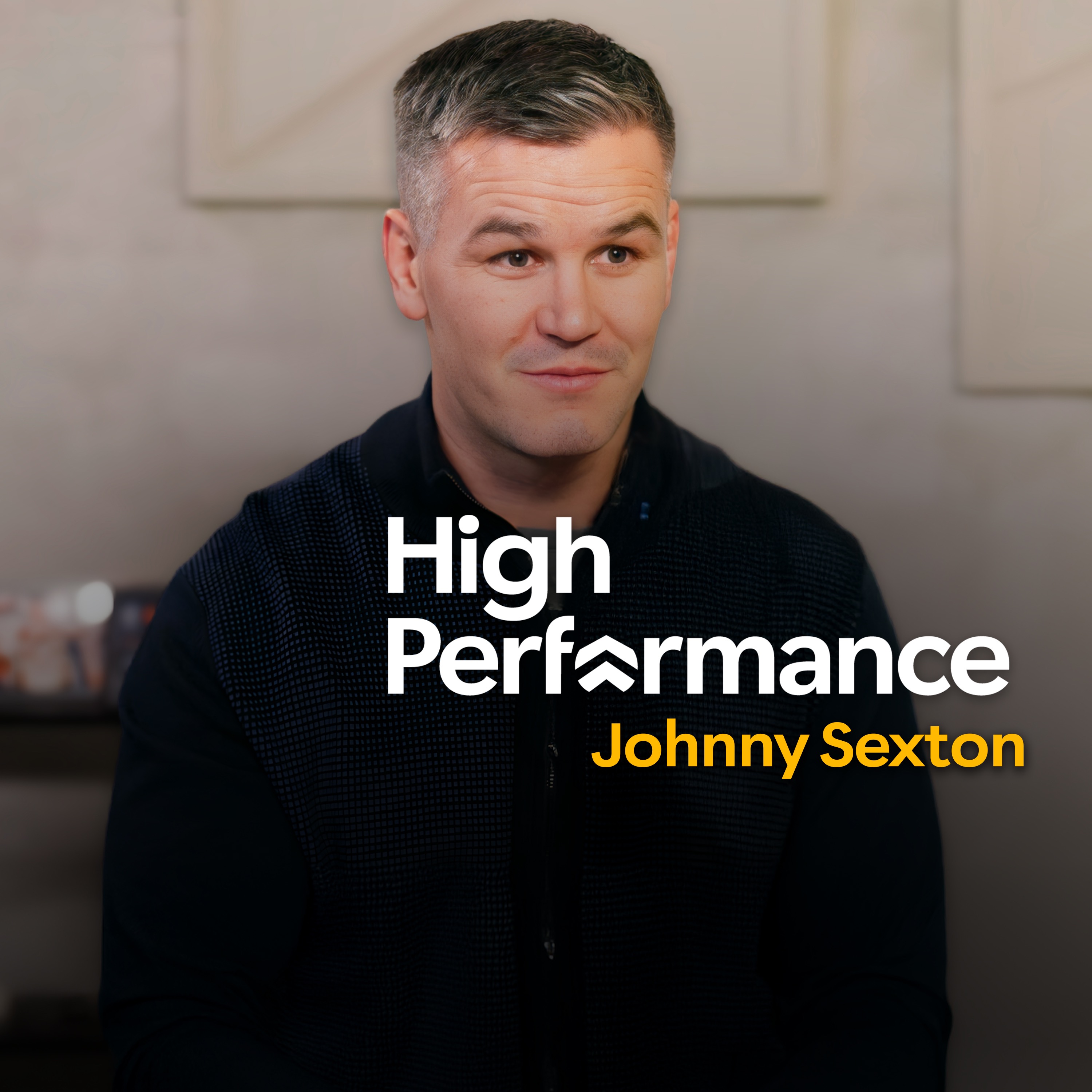
In this episode of The High Performance Podcast, hosts Jake Humphrey and Damian Hughes discuss how to transform feelings of regret into a tool for personal growth. Through conversations with notable figures including Johnny Sexton, Fernando Alonso, Sir Keir Starmer, and Gabor Maté, the episode emphasizes self-awareness, the importance of embracing emotions, and practical strategies for reconciling with past mistakes.
Written by AI. May contain mistakes.

Get the gist, explore an idea or ask about something said.
 Claude
On The High Performance Podcast, what are the key points of this episode?
Searching your listeningAutomatic transcript. May contain errors.
0:28Watch it early on the High Performance App. Right when you need them. Work smarter and faster with Upwork. Go to Upwork.com now and find your freelance expert. That's U-P-W-O-R-K dot com. Post a job for free and get started today. At Capella University, learning online doesn't mean learning alone. You'll get support from people who care about your success. Like your enrollment specialist who gets to know you and the goals you'd like to achieve. You'll also get a designated academic coach who's with you throughout your entire program. Plus, career coaches are available to help you navigate your professional goals.
1:05A different future is closer than you think with Capella University. Learn more at capella.edu. This episode is brought to you by Opera Air, the first browser with mindfulness at its core. Now, most of us spend hours every day online, but how often do we pause to take care of ourselves whilst we're doing it? And that's where Opera Air comes in. It's a lightweight, fast, secure browser built not just for productivity, but for your well-being. With Opera Air, mindfulness is built right in. You'll find free breathing exercises, guided meditations and soundscapes with ambient sounds, lo-fi music and binaural beats, all designed to help you focus, relax and even spark creativity while you browse.
1:52Hey everyone, it's Jake here from High Performance. We're about to talk about how you can turn negative emotions into a powerful force. So if you're the kind of person that is actually walking around and you're filled with regret and you're thinking so much about the past, how can you make sure that those things actually inform your future in a positive way? As always, you can't do this alone. And my co-host on High Performance, Damian Hughes, is with me. And Damian, you wanted, and actually you've been keen for us to speak to someone for a long time. you've had a conversation with this person and I think that not living with regret is probably a theme that came through in the chat you've just had.
2:25Absolutely Jake, I was lucky enough to sit down with Johnny Sexton, one of the most iconic rugby players of the last generation, Ireland's number 10, and sat down with him about talking about how do you turn something that can be quite painful into something really productive and he's written a book where he's gone through these reflections himself and I spoke to him about some of the lessons and what we can learn so let's listen to the interview and then maybe we'll dissect it afterwards. Well hi Johnny and welcome to High Performance. We're a year on now from your retirement Johnny and I'm interested in how you've learned to process and almost reflect on such an incredible career and more personally is there a particular moment where you felt you learned the most about yourself?
3:11I learned so much about myself I think probably towards the middle bit of my career and I think I was really happy that I did it and it was I'm not taking credit for it it's people that forced me into seeing it first of all and knowing it and so like you know the people that stand out for me the Stuart Lancaster's Andy Farrell's who kind of really challenged me around the leadership side of my game you know as well as you know the rugby side of it you know sometimes when you're on a lead and you think you're one way but the influence you're having is actually the opposite and it's about knowing when that is happening and the effect that it's having on others so I used to find that when I was, let's call it in the red which is the term that Stuart used to use, I find that I used to get the best out of me but often it would have maybe a different effect on some of my teammates so I suppose that awareness of it first and foremost is the most important having that self-awareness and being able to grab yourself or getting someone close to you in the team to grab hold of you when you're about to sort of dip into that zone.
4:15And I think that's the key, is really knowing it. Because if you don't know, how do you get better? Who was the coach that did get the optimum out of you? And more importantly, how did they go about doing it? Well, the coach that had such a big influence, I mean, especially the middle part of my career, was Joe Schmidt. Joe was an absolute genius of a coach. changed the way I think about the game, but also changed the way I think about performance. And I thought no one would ever get close to him. And then Andy Farrell came along towards the end and kind of, yeah, challenged me in many ways. But that last few years was probably the most enjoyable I had as a professional, and I'm very thankful for that.
4:56The risk in staying in the game too long is that you go downhill and then you're a member for that last couple of years. And that was always the sort of, you know, when I was deciding whether I wanted to stay on for another year, another two years, that was always the risk. If you stay on too long, you're going to be remembered like that. And I'm so happy that I did. And it was mainly thanks to him that I suppose I finished. I didn't finish how I wanted because I would have won the World Cup if I finished how I wanted. But I suppose I finished playing for Ireland, finished as captain of Ireland.
5:27So a lot of things that I thought would never happen, I finished in. So very happy. There's a really lovely bit in your book where you share a letter written to you by your teacher, Brian Wall. Would you tell us a little bit about that and what it meant to you? Well, it was. It was him warning me about the world I was going into, which is, you know, at the time I hadn't signed anything to be a professional sportsperson, but he kind of knew that that was the way I was potentially going to go. So it was just the risks and what that world is about in terms of... He explained to me in the letter, they don't care about you as a person they don't care, you're a number, you fill the shirt if you're not producing the golds they get rid of you that's what professional sport is in many ways but I was very lucky in the teams that I was in, Leinster and Ireland they really did look after us So if we can take that same idea from your teacher Mr Wall, if you could write a letter to your younger self, what would you say in it?
6:27Maybe to try and enjoy things more, especially early part of my career I felt it was always on to the next thing you know I remember winning the first European Cup in 2009 and barely celebrating you know what I mean thinking I was just on to I think we were on our way on an Irish tour the week after and I was so driven to do well on that whereas I'd just go and celebrate it a bit more I learned to do that more at the back end of my career but I probably left a few good days behind I mean that's a common refrain from lots of our high performers are there any other regrets that you have from your career?
7:04Yeah loads of regrets loads of regrets in how I handled things at times loads of regrets in how I behaved at times but that's again all in hindsight at the time you know you don't know what you don't know you have to be shown the way sometimes and looking back though I'm happy with how it turned out in my career but also I don't want people like I don't for example if I was talking to my son I don't want him to think it's all rosy and you know flashy you know in professional sport it's up and down it's tough you know there's times where you're going to be dropped you're going to be injured you're going to get criticism you're going to get scrutiny when sometimes when you deserve it but often when you don't and yeah I hope that it gives a kind of clear picture to the younger generation of what to expect when you go into professional sport So how difficult do you find that scrutiny when people are choosing to make comments without knowing the bigger picture.
8:00Yeah, it's tough. It's a privilege and an honour to play the game that you love for a living. Don't get me wrong, these are first world problems in many ways, but at the same time, when it comes with the scrutiny that you're under a lot of the time, and that story that we just mentioned, I get criticised for behaving in a certain way, but you don't see what actually happened to start it, and there's a lot of instances like that throughout my career. So your Leinster team were famous for going back-to-back winning titles and cups and trophies If you could explain to us, what was the secret about that consistency and avoiding the complacency trap that many teams can fall into?
8:39Yeah, I think that was definitely the most consistent club team that I played for I think Joe was a big part of that We were very goal-driven before Joe came in We were very driven by winning whereas Joe came in and switched the mentality and he got us living by values and when you create consistent habits, high-performing habits every single day and they stack up on each other, suddenly a perfect week becomes a good win on the Saturday but that's a by-product of the good week you've had. So what were some of the values that you guys identified? At the time they were disciplined, ruthless and humble.
9:20so quite contradictory in some ways but they're really thought out like we started with like you know 10 and we had to narrow it down to 3 and you know some of them meant the same we picked a certain word and at the time I remember doing the process and going like this is bullshit like what's this going to do but then having come out the other side of it when you get an organisation and a group of people all pulling in the same way under the same thing and we used to hold each other really accountable to those standards or values and created a really special environment for sure. So the final question of this really illuminating conversation, Johnny, is what's your golden rule for living a high-performance life?
10:02Just to have the mentality to try and get better every day. I think that's the key. I think you need to surround yourself with good people that'll help you do that, that'll always push you at certain times. But also, yeah, I think people is huge. like but um you know to try and search for more get the best out of yourself and improve every day that would be i would hope that's what people saw in in me um and i think that's the that was the key for me anyway let's go through a few themes that came up in that in that conversation it was brilliant by the way and you know the man is absolutely a legend i suppose where we should begin with this conversation is self-awareness and people first of all finding the self-awareness to know that they're carrying regret or to know that they're living in a way that isn't necessarily serving them?
10:50Yeah, definitely. So the All Blacks sometimes refer to the phrase as OBE, when you're overcome by events, that you almost let the reality of a situation blind you and stop you having a sense of perspective and being able to stay calm. So if you remember when we spoke to Dan Carter and to Steve Hansen, they spoke about how within the culture of the All Blacks, they worked with a psychiatrist called Kerry Evans to introduce the red and blue head concept. So the red head was the impulsive, impetuous, emotional brain. The blue head was the logical, more forward-thinking brain. And Johnny Dare was really good about talking about how he'd had to go through his own process of learning that, learning the difference between the two of them and how to control both of them.
11:35So you get the passion that comes from the red brain, but you also get the clear-minded focus of the blue brain. And before we hear from some more high-performance guests that have joined us, can I just ask you a question I often think about with this, right? We talk about regret as a negative. Oh, don't carry regrets. Don't think too much about the past. Don't dwell on the things you got wrong or things that didn't go right. There's often a real power to that stuff though, no? Yeah, definitely. So there's plenty of research on it that says that all these memories get stored in the hippocampus region of the brain.
12:04So they're there anyway. They're going to be stored. So you might as well store them and use them in the most productive way possible. So some of the questions you can ask of leaning into those regards to work out the obvious thing of what would I do differently? What have I learned from that? What did that experience teach me? These are all ways in which we can take the experiences and use them. So to deny them puts us in a dangerous position as well of not being able to learn from them. And I think that's where we often come back to this point around kindness. so if you beat yourself up and berate yourself for a mistake that you made that stays in the drawer of being regrettable but painful whereas if you're kind to yourself and remember that it's the price of ambition going for something big or daring or bold it's going to involve failure and you accept that and you can build it in that means you can review it in a more productive way Well I tell you what let's hear from another sporting legend here is Fernando Alonso and the answer he gave us when we asked him about what he regrets in his life and not enjoying the moment more?
13:10I regret that. I regret that. When I won the two championships back in Renault, my Ferrari time, I mean, it was good, but you are so focused on the next race, on the next weekend. You finish one race, you may win the race and you go to the airport and when you are in the plane, you are thinking about next weekend. or you land at home and you text your engineer, you know, we need to test softer at the rear because, you know, the traction was very bad in this race, you know, at the end of the race, this kind of thing. And yeah, I think with age and now at this point of my career, it's like the podiums of this year.
13:51It seems that when I re-watched the race on TV, I seemed the happiest in the podium. And I just, I was third and two times second. but it's because I'm able to enjoy more those kind of moments and yeah, celebrating every weekend is part of my thing now. Now I'm always torn with this. I think if we were to list out everyone that's joined us on high performance and we've separated all the sports people out, every single one of them, I reckon, every man, every woman would say I didn't enjoy the moment enough but I also think the reason why they're on high performance and they're not at home wondering why they didn't win a championship, didn't win a title, no one reveres them or talks about them, is because they enjoyed the moment too much.
14:34I honestly feel like you have a choice. You can either really love what you're doing or you can be a high performer. Maybe I'm wrong, I don't know. I mean, Usain Bolt seemed to do both. I think of it like a bit of a tightrope. I remember many years ago I was lucky enough to meet a guy called Steve Williams that served as Tiger Woods caddy and he spoke about one of the simple ideas that he put in place was they had what he called the 20-yard rule. So whatever shot you played, whether it was good, whether it was bad you've got 20 yards to just allow the emotion of that to either the exhilaration of that was great or the frustration of a missed opportunity and then after that 20 yards he said he would walk ahead and when Tiger Woods reached him that was the moment that you switch out of that of allowing your brain to go back into the past and you immediately get yourself back into the moment so that's how I think of the tightrope of how we manage this we have to allow the emotion to infuse and be part of what we experience.
15:29But then quickly we have to snap out of it and start to look ahead. And that applies to both enjoying the moment as well as regretting things that have happened. Yeah, both. But just allow yourself to be consumed by the emotion but have in place a plan that says after a minute or two or 20 yards or however long you want to do that, you do it. So if you remember when we, like Johnny Wilkinson spoke to us about the 30 seconds of joy you had of winning the 2003 Rugby World Cup and then his brain was immediately going on to how do we do this again in 2007? I'd argue that that's too short a period of time.
16:05You've got to allow yourself to enjoy it. 30 seconds joy for 20 years hard work is not a great payoff, right? That's not a payoff that I think is fair in any way, shape or form. But again, you have to almost prepare for how are you going to handle success and failure and just give yourself that time to wallow, to stop, to pause, reflect, to take the learnings, to appreciate the benefits from it and then decide to move on. Shall we welcome the British Prime Minister to the conversation? Because this was a very moving clip, wasn't it? Yeah, this was really powerful. I think, let's listen to Sir Keir Starmer talk to us about how regret has shaped the person that's now in charge of the UK.
16:45I don't regret very much in life. But the last time I saw my dad, he was in hospital, dying. and I walked away. And I knew he was going to die. I just knew it. It was end-of-life stuff anyway. I knew I wouldn't see him again. And I didn't turn around and go back and tell him what I thought.
17:14And I should have died. And that, you know, is this advice for my teenage self? I don't know. It's hardwired advice for myself. in relation to my relationship with our children. So I've tried to make sure that is completely different and that we are together, we talk and we know each other. I mean, I'm sure they'll be sitting in a podcast like this in years to come saying, God, Dad used to insist on taking us to kickboxing or swing or whatever. If you had a turn back, what would you have said to your dad? I would have said, I love you. I'd have also said, I'm proud of you. I'd have tried to close that gap that was so important to him in his life.
18:01A very moving moment that we both shared was Sir Keir Starmer on high performance. And I would never want, and I hope that I'm never in a position to have the regret that he has there. But there is an argument, isn't there, that sometimes you have to make those mistakes to not make them again. Yeah, and I think it taps into an important concept in psychology that's called the Zygarnik effect. It's named after a Soviet psychologist called Bluma Zygarnik. And where it's easily demonstrated is something a little bit more mundane than that, where if you ever see service staff in a restaurant, that they can remember an order and they remember it in the level of detail.
18:39And then once the order has been complete, it almost gets wiped out of the brain because now it's not relevant anymore. So it's the idea of closing the loop so that when the loop is open, your brain keeps hold of it because it's not been resolved. The moment you can close it, your brain can move on and allow yourself to process it better. So I think what we hear Keir talking about there is that he never got a chance to close that loop of telling his dad how proud he was of him, just as he knew that his dad was proud of him. Now, that might have fueled him to put himself into high office and to go after creating a society where people never need to be ashamed of the work that they do, which is one of the things that he told us.
19:20So regret can be useful at times but then we have to know how we can close that loop and make peace with it. Which plays very nicely into Gabor Mate joining us on High Performance and he has regrets but also he's learned to close the loop. This is what he told us. There's certain decisions I made in my personal life that I would not make again. That I would make totally different choices. choices that create a lot of suffering for people that I really love. That's what I'd like to go back to. And without going into detail, obviously from those, how have you learned to live with them? By doing what repair I could, but also by forgiving myself, by recognizing that that's who I was, that's how I was programmed.
20:09I did what I did out of what I believed at that time. so there's no point keeping berating myself the thing is to own it and take responsibility without allowing that to diminish my respect for myself so that's a billion gabo mate the physician and best-selling author and trauma expert they're talking about how he'd learned to find peace with his past mistakes but without diminishing his own self-respect and that i think is a really important point you know you can you can live with regret you can also live happily with regret you can also manage to control some of that and move on from some of that regret but i think where it becomes really poisonous is when you allow that to really damage your your self-respect and your self-worth i guess it's some self-acceptance that life is not about perfection you know we've had so many conversations about failure on high performance about erring and learning from those mistakes and coming back and going again and again.
21:08I think my final thought on this is there will be moments in all of our lives, and for all of us, many of those moments are still to come, where we'll be like, I didn't quite get that right. But when it really starts to damage the respect you have for yourself, I think that's when you really have to take a look at the lessons we've spoken about today and try and take control of this thing. And I want to finish with a quick clip, if you will allow me to indulge myself, because I think that Alain de Botton describes this perfectly. you will be regretting certain things that's okay welcome to welcome to the planet the amazing alan de botta is that brilliant you will live with some regret welcome to the planet welcome to everyday life listen before we finish do you live with regret is there anything that stands out for you uh yeah so there's stuff where i think i um i made decisions that took me away from being a dad where i wasn't as present as i could have been when my children were particularly little and i justified at the time that i was doing the best for my family in the circumstances but sometimes i do think those days are past that my kids are getting a bit older and i sort of look back on those days and think i wish you'd have been around a little bit more absolutely thanks a lot mate thank you mate i thank you as always for enjoying listening to high performance we love the community that we're building don't forget you can download the high performance app and you can get so much more high performance content on there and we'll see you very soon
22:33Thank you.
23:03and the goals you'd like to achieve. You'll also get a designated academic coach who's with you throughout your entire program. Plus, career coaches are available to help you navigate your professional goals. A different future is closer than you think with Capella University. Learn more at capella.edu.
If you’ve been weighed down by regrets and stuck thinking about the past, you might be wondering how to turn those feelings into something positive. In this episode, Jake and Damian tackle this very challenge, sharing insights on how to make regret a tool for growth rather than a barrier, and on how to turn negative emotions into a source of inner strength.
Through conversations with guests like Johnny Sexton, Fernando Alonso, Sir Keir Starmer, and Gabor Maté, they highlight the role of self-awareness, recognising when regret is weighing you down and understanding how it affects your life. Listen in as Jake and Damian explore the value of embracing emotions without being overwhelmed by them, offering practical ways to find peace with past mistakes.
🚨 Partners
Huel 👉 Get £25 off the Taster Bundle. Unlock your offer here: http://huel.com/highperformance
FORA 👉 Claim a free day pass at any Fora workspace and find the perfect home for your business here: https://hppod.co/FORAHP
HP Foundation 👉Do you want to kick-start an evolution that will change the lives of millions of children? Find out more about the High Performance Foundation: https://hppod.co/foundation
HP Corporate Events 👉Click here to book High Performance Events: https://hppod.co/corporate-events
Explore offers and discounts through our other partners:
https://hppod.co/partners
Hosted on Acast. See acast.com/privacy for more information.


