
 Ask ChatGPT


 The High Performance Podcast
20 Feb 2026 · 59m · 24 chapters
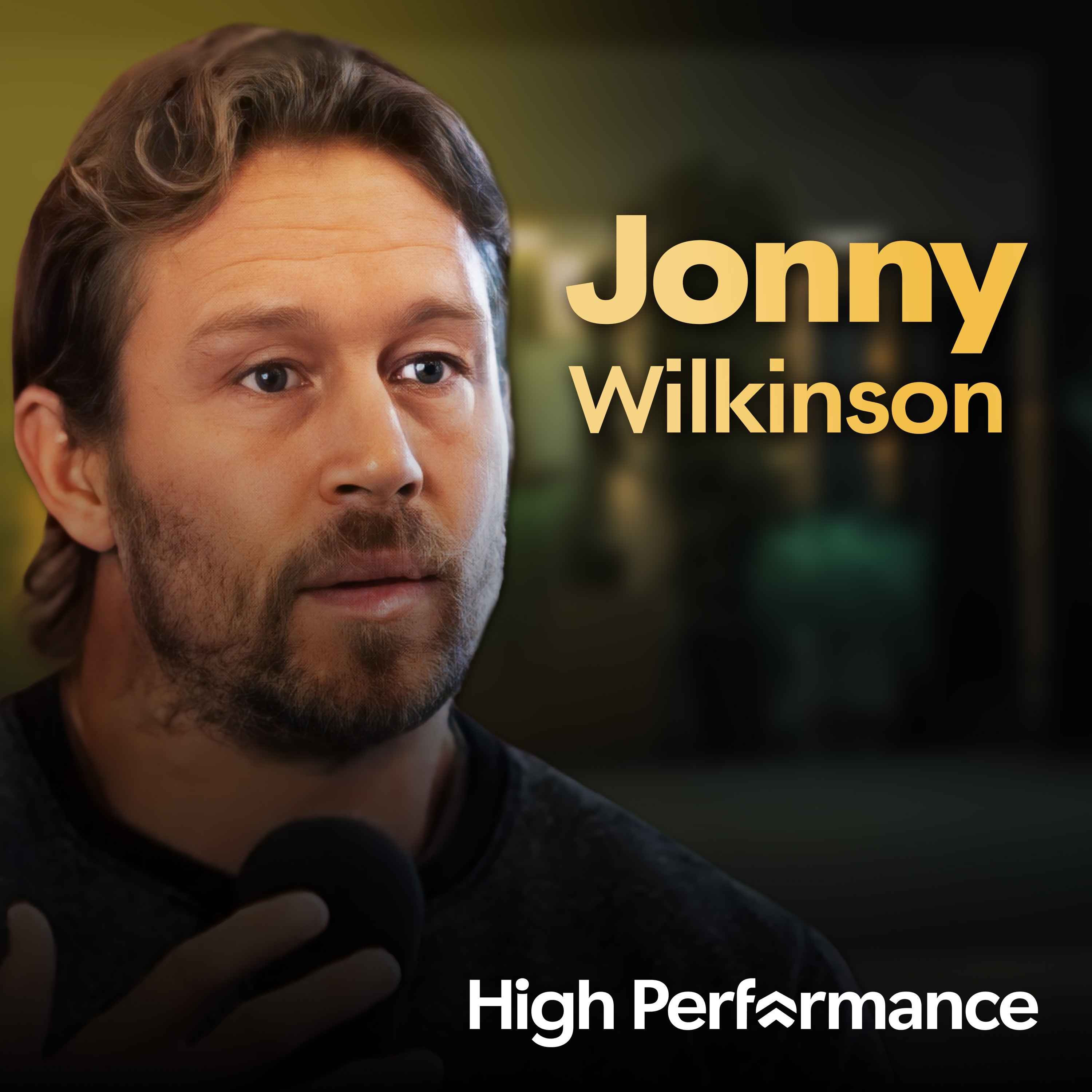
In this episode of The High Performance Podcast, hosts Jake Humphrey and Damian Hughes engage in a profound conversation with Jonny Wilkinson, one of rugby’s greatest players. The discussion revolves around Wilkinson's journey through immense pressure, mental health struggles, and his redefinition of what high performance truly means.
Written by AI. May contain mistakes.
Discussion on Johnny Wilkinson's struggles with perfection and mental health.
“That after two World Cup finals he could barely leave his hotel room?”
Johnny shares his evolving perspective on what high performance means.
“High performance when I was younger was about outcomes.”
Exploration of the misconception that suffering leads to joy and success.
“a simple answer is that that's how I lived yeah between the whistles so on a Saturday afternoon for the majority of the time between half two and four o 'clock, I was in that state.”
Connection between childhood freedom and present engagement in life.
“They're not me pretending to be an astronaut.”
Johnny reflects on his childhood fears and the pursuit of perfection.
“So that would decide, yeah, therefore my definitions of what's good, bad.”
Discussion on the necessity of letting go of old identities for true living.
“And the inevitable part of that cycle is as I was succeeding a bit more, I was reinforcing those old ideas.”
Learn how pressure and self-importance can hinder personal flow and performance.
“Whereas when I'm nothing, I'm just fluid, hence flow.”
Discover the importance of curiosity and acceptance in overcoming disappointment.
“It's up to me how I am on the inside and what I just didn't know I was doing it.”
Explore the relationship between passion, effort, and personal fulfillment in sports and life.
Learn how to redefine success and understand potential beyond external validation.
“So if you were able to move, I'd like to think that all of us can.”
Understand how letting go of old beliefs can lead to true self-liberation and growth.
“that if you start to explore that choice, you start to realize that everything you've been through doesn't decide who you are.”
Explore how our past influences our present experiences and feelings.
“And you create this idea that I'm just distracted from it.”
Discover the significance of choice in shaping our experiences and identities.
“Because I'm hearing some parallels with it that intrigue me.”
Learn how to redefine success by shifting focus from achievements to inner peace.
“when I find, when I was younger looking at, I want to change what I create, I went back as far as how I feel.”
Understand the journey of self-discovery and the struggle of letting go of old identities.
“You could say, oh, well, I'm at work, I'm at this office, but it's kind of like, right, but when you're at home, what is it?”
Explore the importance of introspection and questioning oneself to achieve personal growth.
Discover how shifting perspectives on past actions and experiences can alleviate feelings of regret.
“I've thought I have in the past, and I've looked at what I've done, and I've looked at the environments I've created.”
Learn how to reframe painful past experiences as valuable lessons in self-exploration.
“And one of the other guys thinking, oh, no, it's just so embarrassing, whatever.”
Understand the indicators of mental struggles in others and how to address them effectively.
“And I look back at them now and I look at everything fondly to know that, like I said, at that time, I was doing my best.”
Explore the key questions and reflections that can guide someone on their personal journey to understanding their best self.
“But we're so used to saying they need reassurance.”
Reflect on the insights and challenges presented during the conversation and their relevance to personal beliefs about success.
“But in some ways it flies in the face of everything we've mentioned.”
Discover the importance of embracing vulnerability and courage in performance and life.
“Then at 25, he would have argued back against it.”
Reflect on the depth and honesty of Johnny's insights on reimagining performance.
“Wow, blimey, what a conversation that was.”
Delve into the refreshing honesty of a sportsman reflecting on his life and career.

Get the gist, explore an idea or ask about something said.
 Claude
On The High Performance Podcast, what are the key points of this episode?
Searching your listeningAutomatic transcript. May contain errors.
0:29I want to be all I can be. a perfect moment in English rugby history. The perfect kick delivered under the ultimate pressure. But what if I told you though that the man who delivered that perfection was drowning in his own mind? That before games he was phoning his family trying to find reasons not to play? That after two World Cup finals he could barely leave his hotel room? That he suffered 14 injuries in a row? And he was wrestling with mental health issues throughout his obsession with being perfect. This is genuinely one of the most profound conversations that we've ever had on high performance.
1:08It's not about rugby, it's about life and it's about the danger of self-importance. Johnny talks about the performance paradox that at 18 he was a walking embodiment of opportunity and passion but by the age of 28 he was talking only about pressure and expectation. He was judging everyone around him. He was rigid with fear. We explored the moment when he realised his passion had been replaced by pressure and how learning to let go of all conclusions helped him regain the opportunity to redefine everything. This conversation changed the way that we think about performance on this show. So welcome to High Performance, Johnny Wilkinson.
1:57Welcome to the podcast, Johnny Wilkinson. Thanks for having me. Nice to have you with us. Let's start as we always do. What in your mind is high performance? High performance when I was younger was about outcomes. I'd have painted a picture of, you know, it was all about whether the ball went through the post, whether the pass hit this, whether it hit the mark, whether the guy was tackled, whether he went backwards. All of these things were written up on a stat sheet and that defined who you are and whether you're a success and what have you. As I got further down my exploration of performance and potential, all these things, I started to understand that for me, high performance is about absolute engagement.
2:37Instead of at the time of playing rugby, it was more about what does a good game look like? What does a good number 10 look like? What does a good career look like? I look at it now as being like, what would be a great life lived? and no answer satisfied me until i sort of started to vaguely feel right which was all of me in every moment and that's performance you're either fully attentive and engaged or you're not and that presence that i guess that deep involvement is performance there's for me there's no other way of defining it the out to win version of outcomes and ticks and all those sort of thing and crosses and that is what led me down the route of great mental health was more of a manifestation of my my kind of conflicted inner state and breaking out of that is where I suddenly realized all the flow all the intuition all the feel all the grace and all the real possibility lied and and I kind of fought that for most of my career until the end when I gave into it and suddenly started to find all that passion again so do you think that you could have lived in this present flow-like passionate completely engaged state when you were playing rugby or did you need when you were an elite rugby player to be obsessed with the stats because that was what was going to determine whether you won or lost a game it's a good question but it's quite a simple answer is that that's how I lived yeah between the whistles so on a Saturday afternoon for the majority of the time between half two and four o 'clock, I was in that state.
4:16That's why I was able to do what I did. The thing was, is I just created an idea as most people do that that state is revealed or earned through great suffering and sacrifice. So there seems to be this deep understanding, which I've explored and experienced otherwise since that by suffering and stressing and fighting, you somehow end up in a joyful flowing state. Whereas my understanding, my own experience of it tended to be that by spending my time suffering, stressing and sacrificing, what I did was create stronger habits of suffering, stressing and sacrificing. It's a bit like the whole kind of when I grow up, when I get my car, when I get my promotion, when I get my family, when I get my big house, when I get to retirement, that's when my joy is going to hit me when I've got enough money.
5:02But then even when you've got the boat in the sunny port, you're still suffering and stressing for the next thing. And unfortunately, there's become a new one, which has taken shape more recently, which is going to leave no opportunity for turning inward, which is people now think that leaving a legacy after once they've gone was what bring joy. I mean, it's ludicrous. And that's kind of where I was. You know, my whole rugby career was like, I'm going to suffer through this because I'm going to leave the greatest mark. It's like, well, what happens to just flourishing, enjoying and loving life?
5:33And then you realize that being in a changing room before a game is where you see it happen. You see that fragility of people that believe in themselves. This idea that self-belief is going to create self-exploration on the field is crazy. Self-belief represents itself as fragility. Look at anyone that's in the middle of self-belief. You'll see someone who's covering up fear. Look at someone who's willing to be open to the future and say, let's just see. you'll see someone who's physically and ready mentally ready but the story always ends with that i'm always fine when the whistle goes which is like saying well i've spent my time in the changing room trying to live ahead of myself and when the whistle goes i'm prepared to live now why not just live now all the time and it's and it's been my exploration for the last 15 years because of mental health issues that that left me in nowhere else to turn but inwards and there i found i've never found anything of substance anything of truth i've found nothing solid i've certainly found no boundaries all i've found is opportunity space and deeper dimensions of experience see johnny it sounds that a lot of that description that you've given in terms of what you found describes childhood in many ways that you don't see a child planning for the future they play in the moment in the playground it's it's the immediate so would you say that some of what you've discovered is almost coming back to that childhood state of playing for the pleasure of it living for the moment i look at the childhood experience and i remember from my own that you're able to become whatever you need to become to make the most of every moment like a child says I'm going to be an astronaut.
7:24They are an astronaut. They're not me pretending to be an astronaut. They become an astronaut because there isn't that sense of this is who I, who I really am. And therefore I'm pretending they haven't got an idea of who they are yet. So they can be anything they want, which means they can engage fully in any moment. The imagination is vibrant because there isn't this solid path to who I've become. The thing is though, is that that childhood experience for me in my exploration of things is unconscious it's an unconscious freedom which means it can be lost and it is lost and it's influenced by the outside and by me being falling into that cycle of trying to become someone that self-importance of wanting to know myself and knowing how the world works is that that's the path towards going back to that childlike experience but consciously so without the experience for me of suffering the mental of health stuff there was no way of going back there consciously and there's no other route but to the only way to go back to being free of the identity of who i'd become you know this stuff is is to i want to say just let it go but essentially what that means is it's got to die now that sounds very strong but it's almost like in order to fully live you need to are you willing to die to fully live yeah or are you just living to die now that's the thing for me is i got to a point where i was protecting this old identity this all this stuff that become me i use the the kind of way of articulating it for me is that this is not so much experience there's so much concepts and ideas that i i came into this world with a leaning towards picking things up in certain ways and that leaning goes back generations or goes back culturally or whatever you want to call it previously and that leaning was to start to shape things understandings in certain ways and one of the understandings i picked up very early was about mortality and it scared the hell out of me at a very very young age probably younger than normal and what was it that triggered that fear i i don't know that was just the it was there was a sense of doom about being alive right and that for me was was in the mortality and what i did was sort of say right i need to come up with an answer to mortality and And from a childlike state, what I came up with kind of was just a big self-belief or a big belief that if I'm perfect, when I get to the pearly gates I'd heard about, I'm going to hand over my CV and be like, come on, that's good enough to get in, isn't it?
9:54And I needed ticks everywhere. So that would decide, yeah, therefore my definitions of what's good, bad. So all the uncontrollables in life just destroy me. Right. And therefore what I did. So you were obsessed with perfection at this point, were you? order to rid myself of this sense of doom so there wasn't a pleasure in the perfection which is where the compulsive what age are we talking john from yeah from i guess four or five you know so your your daily actions and your daily thoughts at four or five years old started determined by this desire to get rid of the feeling of doom well fear of death yeah to a degree i mean when i'm talking about this it's not like it wasn't every moment yeah i was a child i loved life i and played basketball and I played my rugby and I had my friends and it was great.
10:38But often there were periods where I just fell into these big holes where it became whatever. And I created this idea that by being perfect, I would be spared the, you know, that would be my, I guess my, yeah, my solace. Yeah. That'd be my saving grace. And as a result, I then unfortunately had at the same time a ridiculous passion for competitive sport so now i'm going into competitive sport with a need to be perfect yeah now competitive sport is a is an environment where you've got a lot of other people also wanting to have their way and you can't guarantee anything so therefore i had a passion mixed with a deep kind of understanding of life that put me in a state before games and after games in terms of over analysis and and the anticipation beforehand just crippling fear of this idea that what i was about to go through or what i'd what i'd already been through had defined me and that no matter the crazy thing was no matter what i'd been through how many kicks i'd missed the next game held the opportunity to rid myself of that which was a kind of almost counter sort of my own belief that I could somehow change my past by being more perfect in the in the next game so I just put more and more pressure on the next game so this idea in rugby that you're only as good as your last game and your next game will define you just added to the fuel to the fire so you said unfortunately there though when you were talking about it like unfortunately I was obsessed with being perfect and I loved elite sport isn't there an element though of fortunately i was obsessed with being perfect and i loved elite sport because i was of the opinion that the reason why you became the leading rugby player of your generation was the combination of obsession and love for the sport yeah yeah maybe or was it in spite of that that you still got to the top no there's it's all in there i'm sure it's all in there but it was a classic journey towards heading down a dark hole.
12:43There's no other way for it to go. And the inevitable part of that cycle is as I was succeeding a bit more, I was reinforcing those old ideas. They were getting stronger and stronger and stronger. And you could hear it in the way I was speaking. And I call that, it doesn't matter what those ideas are, whether they're negative or positive about yourself when they get reinforced they become more important therefore call that self-importance knowing who you are with more and more surety becomes self-importance and that self-importance was clearly evident in everything i spoke about so as an 18 year old you mentioned that childlike side i went to newcastle as an 18 year old i'm stood around inger twig and marler and rob andrew and dean ryan and and pat lamb and and these you know gary armstrong doddy were all these amazing i mean i could name the lot i just thought i'll just name the internationals i'm like oh shit the entire team is an international team and um and i was just a kid in there if i got five minutes if i got two minutes or one play in the team run before a game i was on the bench most of the time in that first year or for half the first half of the year if i got on the team run the the session before the the game if i got on there for one play i was kind of like whoa when i did get on there i was just like look what i'm going to give it fast forward eight ten years i'm the guy in the changement and the only thing i'm talking about is pressure expectation i'm judging the hell out of everyone around me you're not professional other guys are a waste of time they'll never make it no it needs to be like this oh god you know that coaching's rubbish they should be this is what i'm talking like go back 10 years i'm just opportunity i'm a walking embodiment of opportunity and passion now the only result of that is self-importance because when i was 18 I'm like, I'm a nobody.
14:29I've got nothing to lose. I'm just exploring. Now I'm a somebody. I've got everything to lose. And that's why I'm feeling pressure. I've become solid. So those forces are all compressing me. Whereas when I'm nothing, I'm just fluid, hence flow. So nothing can, I just, the wind blows me this way. I don't need to stand against it because I'm not this direction. I'll go any direction. You look at the most beautiful geniuses on the field. They're not solid. So they bend, they flow. They hold your beliefs lightly. Look at a Zidane or a Federer. The ball goes here. it's kind of like they don't expect anything or they expect everything at the same time it's the same thing it's otherwise known as being completely open and ready now what i was before the game was just absolute rigidity but on the field you let go because you because what i designed myself into was a plug that fit the socket of rugby on the field so anywhere that wasn't on that field I couldn't plug in at home.
15:27I'd be thinking about the next game. After the game, I'd be thinking of this game. If I'm trying to eat a meal, I'd be half thinking about this. Am I doing this? How do I look? But as soon as I went onto the rugby field, that first whistle went, who I'd become fit that socket. You plug in and suddenly you talk about being in the zone and effortless. But as soon as the referee blows his whistle and says penalty, suddenly I'm like, now it's about me so i the way i articulate that self-importance is the thought what about me now as soon as you see a referee give a penalty you look at a kicker moments before they're playing the game and they're just effortless as soon as they suddenly the referee blows the whistle you see them change they go and you're like well hold on just be as you were why because the thought what about me comes in and it may be what if i miss this but it ultimately reduces down to what about me if i miss this and then people talk about like i did self-importance oh the pressure the expectation but take away the thought what about me where's pressure take away the thought what what happens if this goes wrong where's fear of failure and it just comes down to self-importance and what it was was i'd allowed myself to think that i knew who i was and i knew how life worked and as a result i had that to protect and now i'm talking about pressure and expectation so when i hear that i I say, I realized more towards the end of my career that I was just kind of like, there's no such thing.
16:48It's up to me how I am on the inside and what I just didn't know I was doing it. Now I do. It's my choice now. So can I ask you a question then, Johnny, around, we get a lot of people listening to this that are teachers or sports coaches. They may have switched off by now, is that what you're saying? They may have gone. No, no, no. But I think that some of the characteristics you described, that some of the, like a traditional sports coach would see you as the perfect player. You're the embodiment of what I want my players to do. And yet you're challenging that convention. So what advice would you give to a parent with an aspiring sports child or a coach or somebody to avoid that trap of building up this idea of perfection or self-importance?
17:31There is no right or wrong. It's the very nature of lack of self-importance. There is no good, bad, right and wrong. It just is. There's a deep acceptance to everything. and what I mean by that is there's also an exploration to everything so if a and that's where when you talk about childlike it's the curiosity that comes with it that means that anything's a possibility so if there's great disappointment be curious about the disappointment yeah don't be angry at the situation be curious about the it's an inward journey and if you point inwards there's no limit there so a degree of just pure curiosity exploration with the aim of finding new space which is new opportunity which keeps passion alive so how much was that encouraged for you in the dressing room environments you were going into well you probably know the answer to that already you know we had team talks where before a game you know you have this week and i'm chatting to the boys before a big game and i'm saying let's just go out there let's just do it it's what we've trained for it's beautiful to be here what a privilege just go out there and love every moment i mean breathe it in yeah and then you go in and the coach says boys we can't lose this one if we lose one of susan i'm sat there going right now that's that energy gone and you can feel the energy palpably change the fact is you ask any coach or or captain or player what do you want from your team i just i want them to to perform brilliantly so what do you need them to feel i want them to feel at their very best so if that's the case look at everything you're doing what do i need for myself i want to feel liberated okay is what you're doing liberating you or doing the opposite is what you're doing for your team allowing them to be all they can be or you needing them to be how you want them to be i have a situation now you're mentioning about the conventional idea of what i brought to the game was a lot of practice and dedication now when that was through passion it's not work it's not dedication it's just enjoying your damn life it's doing what you love doing and spending all your time doing it i say that to anyone what they'll tell you is it sounds like a holiday that's what it was it was a choice now when it becomes effort people think that's somehow courageous and worthy it's like no it's just a loss of passion and what that means is there's no new space if if anyone feels like they're improving and they're growing there'll be passion no one steps away from a journey when you feel like they've just opened and you know when you don't go into a house and go oh this is rubbish and then you see a door and you're like that door's unlocked wow and then just walk off you go in the door you're suddenly like wonder what's in there that's what the journey is so the journey of that is to reveal new space in everything reveal the space of opportunity in disappointment reveal the space of opportunity in losing now there's stories about change or invincibility for me was that people are standing there being like we haven't lost we're unbeaten or yeah we can do this we're not going to lose now that same invincibility or sense of invincibility also parades itself in this feeling deep down of being like i hope the opposition don't travel well i hope their lead guy's injured i hope that guy's not playing or he has a tough game i hope the refs on our side or that wind dies down i mean there's no invincibility there at all now look at the invincibility of someone that sits in the change room and says you know what if we win that's going to be awesome and i'm going to do so i'm going to do everything to win but if things don't go my way i know that's going to bring out so much more of me so i would love to win this game but i would also love to be challenged and to not have it my way now that's invincibility sure not someone going out there being like i can do this and i can make it happen it's going to go my way now what does that look like as a person that goes on the field look at a boxer look at any team that's unbeaten you start to see them get more and more more shady the performances get worse and worse less exploratory yeah it's a movement away from potential because it's a movement away from exploring so yeah the point for me as a kid was that success is either an external thing or an internal thing and being determined by what happens on the outside which is up for everyone to have their involvement in if something you can't control determines something you can control there's a degree of of an issue there now surely you control what you can't control and you allow what's on the outside to be an exploration it's not being painted that way and as a result a lot of solid people for me have been wound to be this is who i am and now being unplugged from the rugby environment through injury or through the end of their career and then are going around trying to plug that in and the only thing that half seems to fit as if I can get back into coaching that kind of fits but not not fully I'm not fully charged from that maybe punditry but eventually like this isn't the same I sit here listening to this and I am jealous of the things you're talking about because I want to live in a life of deep engagement fully committed I want to flow I want to have that growth mindset and the flexible perspective towards everything but then I you know I'm also looking at other people and thinking oh they're doing well why am i not doing well and then i'm wondering whether i'm being a good enough parent to my kids and i know that i've got a really busy week coming up and i know that i haven't spoken with my parents i feel like i'm carrying with me external pressures external expectations internal pressures and expectations but i don't want them yeah and there'll be lots of people listening to this probably coming at it from the same angle going bloody hell i want to live a free life like johnny is explaining yeah if you can get there from where you were as the rugby player representing his country a couple of decades ago, then I'd like to think all of us can, because you've come from a really full-on, very different mindset.
23:20So if you were able to move, I'd like to think that all of us can. How do we do it? I think that for a start, there is no arrival. There's no, like we said, that otherwise you fall back into the idea that I'm going to arrive at retirement and all that work is going to be worth it. It's a bit like winning the World Cup. the ecstasy of that moment incredible but within three or four seconds it's on the decline there's no lasting nature to it then a day later you're like oh and then and then two months later you're in trouble because now you're way down at the bottom of the hill looking back at my glory days and then you add injury to that and you whatever you go through that experience so there's there is no part where you think oh it's it's going to be this the very nature of having an idea of what my potential is is what prevents you from going there sort of have a story about this where you sort of say you know someone you say to someone just go into that room with you and just find your potential for me and if they come back with anything you're like you're moving further away from it if they come back and say what do you mean i don't even know what i'm looking for you like now we're on the right track the point is if you've got an idea of what your best is it isn't your best it's just your next limit it's a limit to your best so how do you know you're going in the right direction then good question now we're now we're talking that's the kind of curiosity now now the thing for me that makes this a big opportunity or that did for me was that i built myself hugely on the idea that who i am was a result of everything i've been through and it's quite a common one it sort of falls in line with the idea that i'm just a physical being so like my body's the result of all the food i've eaten all the growth and all the scars i've got it's all linked in there but if i align who i am with that physical existence you know of mind and body i'm just on the decline from the day i'm born i'm dying yeah i don't like these terms i probably would reword this if i was doing this again but but you know i'm on the decline but when you realize when you just seek a bit deeper for ask the big questions about who i am there's no beginning no end it's already there and i think it's the same way that people So investigating that as an opportunity is big.
25:33And the way that one way to do it is just to look at, right, well, if I catch you on a day where you're just feeling good, you're just feeling good, and I say, well, tell me about that period of your life. And you'll be like, yeah, it's funny. It's like the sort of thing that happened, and I think I've learned so much from it. And now look at the world for me. But if I catch you on a rough day and I say, tell me about that same period, you'll be like, bloody world was against me. what I mean by the point of that is, is that if you're a result of what you've been through, how can you have two separate causes for the same effect?
26:06Surely there's one true way, is there not? The point is, is, is that for me, who I am now is not a result of what I've been through. What I've been through is a result of how I choose to be now. Right. And so you understand that if you start to explore that choice, you start to realize that everything you've been through doesn't decide who you are. Now you're talking about being liberated, but how could you possibly be liberated if you're a product of something? The same way that people talk about leadership, and yet one of the biggest values is who I am is just a result of all I've been through.
26:39But people in an unpredictable world determine your situation, and therefore they're deciding what you've been through. They're deciding how you are now. So other people and the world hold your potential or do you hold your potential so once you get excited about that opportunity to be like you know i'm going to go deeper so i did it i went looking for who i am where did you look good question straight away you're kind of like well hold on this voice in my head this is it these feelings i've got who do they belong to and all i found was just a load of old ideas i never found anything and i've been acting i've been acting on behalf of this apparent me and i couldn't find it i asked for a meeting and he didn't turn up and i'm looking and being like well geez so where's it coming from they're just old ideas now exploring those old ideas there was no logic to any of them there's no logic to any of them even the what was the biggest one that didn't make sense to you probably being a result of who i am now because or other ones would be i had all these immense fear of the failure and the future and all those kind of things.
27:47And they were so true when I was younger. And yet on one day I'd be so happy and I'd be like, hold on, how can I be happy if those are still there? If they're true, they must be constant. And if they're constant, they're still there. So how can I be happy? And you create this idea that I'm just distracted from it. You're like, but no, I'm not distracted because I'm fully engaged. So I'm not taking my mind off elsewhere and trying to think of nicely. I'm just fully. engage in what I'm doing if there's this potential consequence that I need to think about. I realized that the problem for me had always been living in my mind.
28:27And what that meant was that my old ideas of who I was, was deciding for me my memory and my imagination. So I wasn't in control of my memory and imagination. As I let go of those old ideas, my memory expands and my imagination opens. So I start to be able to piece together old things I've been through in my life. I can piece them together in different orders to create different imaginations. Whereas before, that's who I was and how I got here. So all I could do was translate that into the future. That's how I have to get away from here. Whereas now, it's the same understanding that people, I get the impression that people think that the now is a result of the past.
29:09I would think that. Yeah, but it's not. Show me the past. Yeah, but the now for me is like sitting here having this conversation with you. Right. Well, I was thinking, I don't want to be home too late because we've had a busy few days and my wife will be putting both the kids to bed. Yeah. But I know I put that beef in the agar this morning, so at least there's some food made. Yeah. That's all stuff that happened in the past. Yeah. All of which is determining what I'm feeling now. Yeah. So even though we're having this remarkable and brilliant conversation, there is still a part of my brain, obviously cracking on with stuff that's already happened in the past.
29:43But that, but that's the, the now has become the content of the world, right? Not the experience of it. So the idea that now is a, is a time you have to try to get into or live in instead of the now being a state you live through. Does that make sense? I'm familiar, Johnny, with the work of Viktor Frankl. So did you explore his stuff in this? No. Because I'm hearing some parallels with it that intrigue me. So Viktor Frankl was a psychotherapist that he was captured as a prisoner in Auschwitz. Yeah. And the stats of Auschwitz is that only one in every 28 people that went in there would ever survive it.
30:24And he was one of them. And when he was finally released, he wrote a book about the experience called Man's Search for Meaning, where he asked the question of why did I survive and 28 other people wouldn't. And the premise that he came to was this idea of choice, about constantly recognizing how powerful choice was. And lots of people, he describes it as, they were almost overwhelmed by the horror of the Holocaust, quite understandably, whereas he chose to interpret it in a way and said that he was a caregiver. So he said, I'm now going to play the role of being the caregiver and the person that encourages others and gives them hope that there's a better future for them.
31:00Yeah. And he felt that understanding the power of choice was central in terms of his survival, not physically, but mentally. I think what you're talking about is going back to combining the two, is that when the now becomes a physical situation, then yes, past exists. So the physical, the material side of this world for me, yeah, where I park my car, I'm hoping that's where I'm going to find it when I finish. It's the same deal, but it's physical. but when who i am becomes physical i fall into the same laws and that choice goes because how can i have choice you know if i'm going to try and work through the physical because the physical is what it seems obviously actually you can go a lot deeper into that physical side it's not actually what it seems but on the surface it's it's cause and effect so when you invest in the situation physical situation determines my inner state yeah you fall into that stage the difference is for me is where choice comes from is beyond old ideas as soon as i decided this is who i am that decided for me immediately this is how i see things that decided immediately for me this is how i'm going to feel about things that happen to and around me which decided this is what i'm going to do about it, which decides what I create.
32:19That decision of how I see myself immediately translates to what I can create in the world, which is why when people start to create different things, it always relates to a shift of how they see themselves. So when people say things like, mostly when it goes through difficult times, for me, it was a mental health thing. And yeah, there's still loads and loads of interesting challenges for me. But with those challenges, always affects at the level of how I see myself. And when there's a shift there, there's a shift everywhere. But what tends to be the case is that when you're looking at, when I find, when I was younger looking at, I want to change what I create, I went back as far as how I feel.
32:59And then when I got older, I tried to go back to how I see things. But I never went back to exploring how I see myself. And as a result, you just end up creating more and more problems. It's like trying to feel differently than how you see things. No chance. trying to see things differently to how you start to see yourself won't work but most people talk about oh if you keep doing the same thing you'll keep getting the same thing it's like if you keep seeing yourself the same way the whole thing's done so there has to be a desire to look inwards honestly at some of the feels like a very brave thing to do though it kind of yeah it panics me a little bit when i think about doing it you know yeah but i think because because the idea being is that if all I've been through has become my worth and my value, then letting that go is, of course, you're letting go of everything.
33:44But actually, my experience is, is you just ask, how do you feel at your very best? And the answer to that is, I feel liberated. And when you're at your very best, are you thinking about who I am and how I'm a great person? No, you're just free of those thoughts. So in a way, every moment you get where you're outside of thought, you're engaged.
34:09what about if you feel free when you're not at work but you have to do your job to pay your bills or you feel free when you're not with your wife and children and that scares the living daylights out of you because you want to be with your wife and children yeah that will create difficult conversations for people i think but yeah i agree but any line that's been drawn between any line that divides this from this is a definition. Right. Because there is no line anywhere else. Explain that. Well, the physical line of the body, investigate it, explore it deeply, there's no line there. It's just one field.
34:46Even from a perspective of a tree, you can't draw a line around a tree and go, that's where the tree stops. The tree involves the soil. The tree doesn't just stop. The soil is constantly exchanging the tree. Like an ecosystem. Yeah, everything is one. Everything is connected. So every time we draw a line between us and someone else, it's our line. And every time we draw a line between work and home, that's our line. You could say, oh, well, I'm at work, I'm at this office, but it's kind of like, right, but when you're at home, what is it? It's me and this moment. What are you doing at the office?
35:20It's me and this moment. Those lines are our choice, you mentioned, albeit really difficult ones. and I spoke to, I had a chat with a triathlete who was saying to me, I've made an analogy that about how when I was younger, I'd be like, oh, you know, playing a World Cup final, that's important. And now, you know, the idea about doing the washing up would have been like, don't you dare. And now I'm like, I love doing the washing up. And he couldn't believe it. It was like, it's rubbish. I said, well, what is it you love about? Define being a triathlete to me. And he was saying about doing the run and then the swim and then the cycle or whatever.
35:52I said, okay, right now, break that down for me. What are you doing? Well, I'm moving my body to get to a goal i said right what are you doing when you're doing the washing up moving my body to get to a goal so why is one good and one's bad why because of outside opinions and influences i suppose because of old ideas that i've decided that this is something i like doing because i plug into this because this is what i enjoy doing so all those it's a really tricky one and there's obviously going to be likes and dislikes but whether or not you fully engage comes down to how you are on the inside.
36:24Does that make lifting a World Cup more important than doing the washing up? No. No. No, that's my decision. If I choose to be a World Cup winner because I've lifted a World Cup, that's going to be my next limit. Because when I'm a World Cup winner or I'm a rugby player that won the World Cup, now what happens when England win it again? I'm like, I'm a less important guy who won a World Cup just the same as other guys. And now the next time England are playing, And I'm like, I hope they don't win it. But I hope they do really well because I work the guys, but I hope they don't win it. It's like, no, it doesn't work that way.
36:56If I'm a rugby player, when I finish playing rugby, I'm less of a person. But if I'm a nobody, so this unveiling of the, or this unraveling of these old ideas to allow the choice for a new one just means I'm going back from a someone to a no one. And when I'm nothing on the inside, I can be anything on the outside and everything. When I'm a someone on the inside, I can only be. so at this moment in time then johnny who are you that's the biggest question life has if i had an answer for that that would be my next problem i have no idea i see myself as and every situation has undecided potential i find that my passion now involves other people so whereas i started my career saying i want to be the best in the world now if you ask me who the best in the world is right now i'd be like i can't be bothered talking about that i mean best in the world how on earth do you define how do you compare two people you just unless you make an assumption that let's say that they all started on exactly the same place and they're exactly the same being now we can do it yeah oh 20 years ago would you have discussed that at great length who's the best in the world and where do i sit in that well i'd have done it with myself yeah i'd have been like i think yeah the papers are saying that now so i've pretty much done it yeah and the fact that people then say to me now what about yourself and carter and and these guys and you know i'm like you've just left off about 30 other people to name just three it's like you don't get it there's guys that you'd have never heard of you know i've played alongside and gone i mean it's it's immense i would i would you know i'd go to them straight away does it matter anyway of course it doesn't which is the point of saying at the beginning i want to be the best what it did was just that conclusion that idea took over my intellect so my mind is now every time i see something in the paper about so-and-so who's had a good game.
38:44I'm like, oh shit, I've got to read that, but I don't want to read it. And now I'm stressed about that. And then before the next game, I'm like, oh, if he gets into the team, I better play well today. Otherwise I won't keep my game. You're like, well, that one conclusion is deciding how I think. Now, what I said before is that that conclusion is now adding to my pressure. And now you say, right, so I'm going to change it. I'm going to be the best I can be. But I mentioned before about if you know what your potential is, it's your next limit. So how do I know what my best is? It's like, well, I don't.
39:10So now I've got to go one step further, which is I want to be all I can be. And if I'm going to do that, I've got to stop looking at rugby. I've got to stop looking at something bigger than rugby. And that's the point of being like, well, because within that, everything else exists. But if you want to be the best rugby player, what people might find is I did is I felt like I got there or whatever. And what it meant to the rest of my world was I was deeply unhappy, hugely unsatisfied. I was treating people around me like God knows what. I was physically stressed in all kinds of physical state, hence the 14 injuries in a row.
39:44And even when I got injured the first time, all I could think of was, I've got to get back to where I was. Total expectation, stress, no room for beginning again, no freedom, no liberation, no healing. And so I end up with another injury. It's even worse now. Each game's on a big comeback, and this is going to be the one. I've got to get back to where I was. Trying to control, instead of explore what I could be, I was trying to say, I've got to get back to where I was. And so... When you say what was one of the biggest moments of realization was that, kind of like, Jesus, I got 14 messages from the world over and over again.
40:15Be like, just be aware of that. No, still not got it? Just be aware of that. No, no, have another one. This one's your knee. This is an interesting one because you'll do the same knee 30 minutes after you've come back. And this one's a good one. We'll send you on the Lions Tour 2005 when you're so stressed and all over the place and trying to prove yourself and it's a team that doesn't work and now you've got absolutely hammered abroad. and you're kind of thinking oh you thought that would be the last time you had an experience like that after the tour of hell in 97 didn't you here it is again no not listening okay let's have another one another year out and you're kind of like life involves physical mental emotional health and wherever that goes after that and then start exploring what you can do with the world but if you try and explore what you can do with the world without addressing those you end up working the two against each other and it becomes a journey of smaller and smaller i love what you're saying i think it's really profound and i think anything that's that's profound and forces you to think is is well worth investigating and i think allied to that your credibility through your past life gives you a platform to really make a difference and shift the dial in this not not just in sport but in society in general but if we accept that the german philosopher arthur shoppenhauer spoke about three stages of change first people will laugh at you yeah then they'll oppose you and tell you why it's ridiculous and then finally they'll come to accept it as common sense yeah where do you think you are on that journey to get other people to to engage with this alternative way of thinking um i think it's about where i am i think it's i think it's a society yeah i think it's a state of society in general and that you mentioned i think at the very beginning that there's been thousands of people have walked this planet millions billions trillions of god knows how many and everyone has had the same aim of you know all so many of them have had the same aim of transforming the world into something and they've all come with the their beliefs of good and bad and right and wrong and this is where we are and it's not to say that they've been wrong at all it's just to be the fact that it's time to keep no more than ever now to keep looking back inside and questioning and looking at yourself because it's so easy to to go to the outside and say this is why but as long as for me for example for my situation if i need certain things to be a certain way i'm held hostage by them and that means that whoever's in that situation i will then say blame them for being like oh you're controlling me in that respect you know whatever it's been you know with regard to you know it could have been around rugby but mostly it was myself to myself so you mentioned those three stages i'd have been like i would have those three stages if i went back to my 22 year old self now and sort of gave him this i'd get laughed at definitely yeah yeah and then and then probably a bit later on 24 ish after the world cup i would have such a strong idea that i'd come back at me definitely i'd be saying you're a joke you're yeah that's weakness that's just giving in and all that kind of thing and then 28 i'll be like please please let me have this because that was yeah that was one of my major mental health sort of points and it's really a case of saying that for me anyway there's no right wrong everyone is where they're supposed to be in terms of that stage and and to think that i have the answer i don't i'm just exploring my own perspective and my own thing and and trying to share anything that that might allow others to explore theirs but to think that i know anything about anyone else or what's right and wrong.
43:45I've thought I have in the past, and I've looked at what I've done, and I've looked at the environments I've created. I wrote a book in 2004 just after the World Cup. I would be surprised if there wasn't sort of a spike in mental health cases after I wrote it. Just because it was so dogmatic. You were mentioning about suffering, I was mentioning about suffering, stressing. That's all the message is. To all these kids with passion, I pretty much sort of eradicated the idea that passion had anything to do with performance. and just told him it was all about this and this and this and this and this.
44:17And some people came back at the time were like, yeah, I really love this. I'm sort of looking back now thinking, I hope they - What's your relationship like with regret? Do you have that for that book? No, no, no. Because of the same reason is that if I put myself back into that same body and just said, right, one condition, you have to see yourself the way you saw yourself then, it's done. I would see things the way I saw them. You'd do it again. I would feel the way I feel. I'd do what I did. I'd create what I created. and therefore there's nothing to do but accept it but also to realize by accepting it i am now no longer attached to it i'm not the result of it and if i'm not the result of it how can i be regretful it's a bit like i said this to someone about watching a sort of post-match video analysis used to sit in the in the meeting room like this and everyone's looking over the mistakes they've made and going it's coming up on the video an hour oh my god this is my one this is my one when i I throw the interception or I drop the ball or I miss that tackle.
45:14The coach is going to kill me. Oh, my God. And one of the other guys thinking, oh, no, it's just so embarrassing, whatever. But the reason that's there is because everyone's attached to who they were then. It's part of who they are now at the deepest level. And therefore, you have to take on feelings. You have to feel humiliated. You can't see it objectively. but when you have that deep acceptance of okay that was me of then who did that and that me of them because that's how they saw themselves what i can say is they were living they were giving it their all that's what you can say about how we live in every moment according to how you see yourselves you're giving it your all so i can look at that and say that was that version of me giving its all it's got nothing to do with how this version of me wants to be and so therefore i can look at it objectively so i'm looking at it as if it was you on the video doing it but i'm watching me and I'm watching me drop a pass and I'm thinking okay yeah I probably would have done that and someone tries to say oh sorry but I'm lucky about that I'm like what do you mean I'm fresh I'm brand new so what's left of the Johnny Wilkinson that won the world cup memory the same memories but just not in a given order I've got the beautiful memories but I can see them how I want to see them but if you went back to me at 25 and said what's left of your memories now I'd be like, this is my memories.
46:31That's my path of life. That's how it is. Whereas now I can draw up any memory and it represents something completely different according to how I need it now. So if we were going to talk about a moment of, you know, like the kick in the drop goal and that moment of when it needs to happen, how do you perform a technique? Now, when I was 25 and I didn't have control of that, I'd just be like, well, I just put the ball here and kicked it. And when I was 28, I look at it slightly differently. But now I look at it, I can explore it again as if it's brand new. and I get new insights about it now I'm looking at thinking do you know what's amazing because of this and I think because of this and so my own memory has become an exploration for me rather than something that's telling me how I need to live my life it's become part of my are you able now to enjoy things that at the time were painful as in are you able to watch a period in your career where you knew you were struggling with mental health and you weren't happy I'm fascinated by and you can now watch that and you can fascinated by yeah there's games where I was out in that field and I was doing well just to leave the hotel room because of the mental state I was in I was there's games there where I phoned up family and I phoned up Blackie a big part of my my my life and and I was trying to find reasons to not play I was trying to think about you know whether I mentioned injury or whether it's okay to say that mentally I'm just i'm gone you know and this is me after two world cups 2003 and 7 where we've got to the final and won them or whatever i'm doing well just to leave the hotel room and i look at it and i'm fascinated by it not because of a like this is a great story to tell people to paint me in a certain light it's nice because i'm looking at it being like i'm fascinated by how we can see things certain ways and how we can see them differently and how that choice as you mentioned is there and how you know and that i'm fascinated by becoming responsible for that choice and therefore i I love exploring those moments.
48:24And I look back at them now and I look at everything fondly to know that, like I said, at that time, I was doing my best. I was giving my all because it's impossible not to in life. Whether I decide to be lazy and sit down and just apparently lazy and sit down and do this, it's the best I can do because it's how I see myself will govern that decision. But that's also not just the past. That's now. It's happening now. What I'm doing now is I know it's the best I can do. And I might go and say after this, oh, you know, if you'd asked me that again, I might have said this. It's irrelevant because that's the best that me can do.
49:00But this is the you now. This is the me now. So just fully embrace this me of now. Johnny, that description of struggling to leave your hotel room, I find it quite moving because the pain that you're obviously in and the struggle that you're facing is quite profoundly sad. if I was working as a coach or working within an environment whether this is the office whether it's a sports team whether it's in a classroom what sort of signs should we be looking out for that somebody is is engaged in that struggle are there any is there any common traits that is worth us exploring it's difficult because often people look at players and say that's just how and they are just let them get on with it but I think the same the big question is are you okay with feeling like this.
49:45But that can only come from a position of someone who's exploring. Because if a coach is feeling a little bit the same way about the result needs to go a certain way, then there's no, you can't transmit a certain message and be the opposite of that message. It becomes even more confusing and damaging. But I think the question is, are you okay with it? And exploring that with someone to be like, is this how you want your life to be? Because that's what you work with people on. How do you want your life to be? You start there, not with how do you want your life to turn out? You start with how do you want your experience of life to be?
50:20And then you say, let's work on that. And it always comes back to, well, when you're at your very best, tell me how you feel. And it'll be the same answer as how do you want your life to be? I want to feel inspired. I want to feel connected. I want to feel fully engaged. I want to feel effortless. i want to feel like anything's possible how are you feeling right now i'm feeling absolutely fearful stress and you're kind of like right is that how are you happy with this or because we're sort of saying that you know it can be maybe it doesn't have to be this way yeah but you know there'll be a fight with that because it's understood that actually by feeling this way the game seems to go okay and therefore i think well actually if i suffer a bit more it might go even better next time before you know it you're suffering so badly and then all it takes is you to realize that this isn't helping my performance to be like are you ready to explore a different way and it's jesus challenging involves a bit of vulnerability definitely if you ask me to sit in a change room and just sit there and be go on the mindset of if someone says to you how's this going to turn out don't go with the necessarily the idea of it's fine we're going to do this we're going to do that we're going to kill it's going to be great go with the mindset of like, who knows?
51:31Don't know. Let's see. You ready? Yeah, definitely ready. Let's go and take it on. But we're so used to saying they need reassurance. So let's give them the reassurance it's going to be fine. But what we're doing is covering up the opportunity to explore all it can be. And we're trying to tell them what it should be or what it must be or what it will be instead of, no, you go explore all it can be. But just to understand that ongoing support of realizing that no matter what happens, your worth and value cannot be touched by it. your worth and value as a as a player in terms of the contract okay these things are moved but but we understand each other that your worth as a as a being an individual can never be touched and will always be saying that's how i treat you and that's how we treat each other that if i have to drop you from the squad you will feel in the way that i that we have that conversation that there couldn't be a greater respect for you and that nothing change and it's that that always did it for me in terms of a squad it was it was knowing that that team is there and that support is there no matter what and yet because of the influence of the media and this hierarchical thing about who's better than this who should be doing this that's sometimes feels like it's taken away and you feel a bit like my importance my actual self-worth my value is defined by these games which I can't fully control and then yeah that's a tough place to be and with that answer in mind my final question was going to be for people who have listened to this podcast feel maybe a bit like me that this is a journey that they would like to know more about what would be your piece of advice to begin the journey that you've been on where did you begin it what what's the one thing people can take away from this conversation it's a it's a good question um but But it's also, it's a tricky one because.
53:21But in some ways it flies in the face of everything we've mentioned. A little bit, yeah. But it's also that if without knowing or getting to know someone through what they say and spending time with people, it's one of those where it's almost more dangerous. But for me, it was just asking the big question of how am I at my best? And then hearing that and being like, doesn't it feel amazing? And it's like, what's stopping me? from being like that all the time and a clever or clever sort of tool that i use would be like if you imagine i call it like the super version of you i don't mean that as in it's better i just mean like the super version of you doing what you want to do or you're about to do and imagine that super version of you doing it in just the most however you want them to do it i use beautiful graceful flowing just connected just light airy all those kind of things and i imagine it and then i ask a simple question of what is it that they have that i don't and the answer is nothing the bigger question is what is it that i have that they don't what is it that i'm holding on to that they're not and letting go is something i can do immediately but we create this idea that the super version of you has done the 10 ,000 hours.
54:44The super version of you isn't about getting all the ticks. It's about the graceful beauty, the flow, the elegance, the connectedness. And that comes down to what we have and they don't, not the other way around. And so just be it. But don't try and compare yourself to it. Be your version of it right now. And you'll realize that your version is way better than you could ever imagine. Wonderful answer. Thank you very much. Pleasure. Damien. Jake, what did you make of that? My brain is hurting, if I'm honest, but in a really good way. I think he made me think. I think he challenged lots of these old beliefs, old perceptions that we have about success.
55:23And the fact that we never spoke about rugby once in the conversation, I thought was really quite telling. I feel kind of armed against criticism or sniping or negativity of people going, oh, what's Johnny Wilkinson talking about? I don't get it. because what he spoke about was that other people's perceptions are an absolute irrelevance. So if people have listened to that and have taken loads from it, and I think I have, then great. If people have listened to that and it's not for them, then it doesn't matter, does it? Exactly. I think he gave that great description of himself that if he'd have been a 22-year-old player listening to that conversation, he'd have dismissed it.
56:02Then at 25, he would have argued back against it. and then at 28 it'd have embraced it fully and i think it's where you are at a particular time that means that those lessons will be relevant or otherwise to you and i'll tell you where i am i am a point where i find some of the things he talked about quite a stretch and quite a reach yeah because my of you know why would i why would i not because my brain is not in the place that his is in yeah he's spent a lot of time thinking and learning and questioning where i am absolutely aligned with him is in the flow and the growth mindset and being present and living passionately and being fully connected you know i kind of when i finish being alive i want to be like an exhausted burned out husk of a person because i want to have given absolutely everything rather than just sort of float through and quite enjoy it sometimes that's interesting is that nowhere are you talking purely about making so much money living in a certain size house driving a certain car it's all about the being that i think johnny was describing i mean personally what i took from it was i loved this challenge of rather than talking about is something right or wrong i like the question is it helpful or unhelpful is how you're feeling at this moment helpful and how you want to feel or is it not and i think they're really great places to go because it stops us getting into a world of black and white you win or lose you're a success or a failure you're just where you are at a certain moment of time with the resources you have the phrase i used at the start when we were with johnny was that i think courage is a real feature of him in terms of the physical courage what he did at a certain stage of his life but the courage now to come on here and to share some of those ideas and challenge some of our thinking is something that i really respect and admire and I hope people listening admire that virtue of courage that he's shown.
57:59Thanks for your time. No, brilliant. Thank you. Wow, blimey, what a conversation that was. That's one of my personal favorites out of nearly 400 interviews. The depth, the honesty, the courage to completely reimagine what performance actually means. I sat there in complete awe of Johnny for being so candid but so courageous to strip away the veneer of who we think he is and reveal his real innermost thoughts it was refreshing to see a sportsman of his stature reflect on his life and his career in that way if you've enjoyed it please hit subscribe and maybe share this episode with someone that you think may need to hear it but listen above all thank you for joining us we never take the time that you give us for granted and always appreciate that you invite us into your lives and we look forward to seeing you next time on high performance
59:14You
We're revisiting one of the most profound conversations we've ever had on High Performance - a discussion that fundamentally changed the way we think about performance on this show.
Jonny Wilkinson is one of rugby's greatest ever players. The drop goal that won England the 2003 Rugby World Cup is etched into sporting history. But behind the perfection, the trophies, and the records, Jonny was fighting a battle most people never saw.
In this deeply philosophical and remarkably honest conversation, Jonny reveals the mental health struggles that plagued his career - the games where he could barely leave his hotel room, the 14 consecutive injuries that forced him to look inward, and the obsession with perfection that began at just four years old when he became consumed by a fear of death.
Jake and Damian explore what true high performance really means. Not outcomes, not stats, not being the best in the world - but absolute presence. Living fully in every moment, whether that's a World Cup final or doing the washing up. Jonny explains why self-belief is actually fragility in disguise, why the "super version" of you already exists, and why the only thing stopping you from being extraordinary is what you're holding onto, not what you're missing.
This isn't a conversation about rugby. It's a conversation about identity, choice, mortality, and what it means to truly live rather than just exist. Jonny challenges every assumption about success, performance, and self-worth - and offers a radically different way of seeing the world.
If you've ever felt the weight of pressure, the fear of failure, or the exhaustion of trying to be perfect, this episode will change how you see yourself.
Heights 👉 Get 20% off your subscription by using Code: HP20 here: https://highpfrmc.com/hpp_heights_au2
Visit Seattle 👉 Start planning your perfect summer of football by searching Visit Seattle on social media, or discover more at: https://highpfrmc.com/hpp-visitseattle-au
Hosted on Acast. See acast.com/privacy for more information.


