
 Ask ChatGPT


 The High Performance Podcast
3 Oct 2024 · 1h 7m
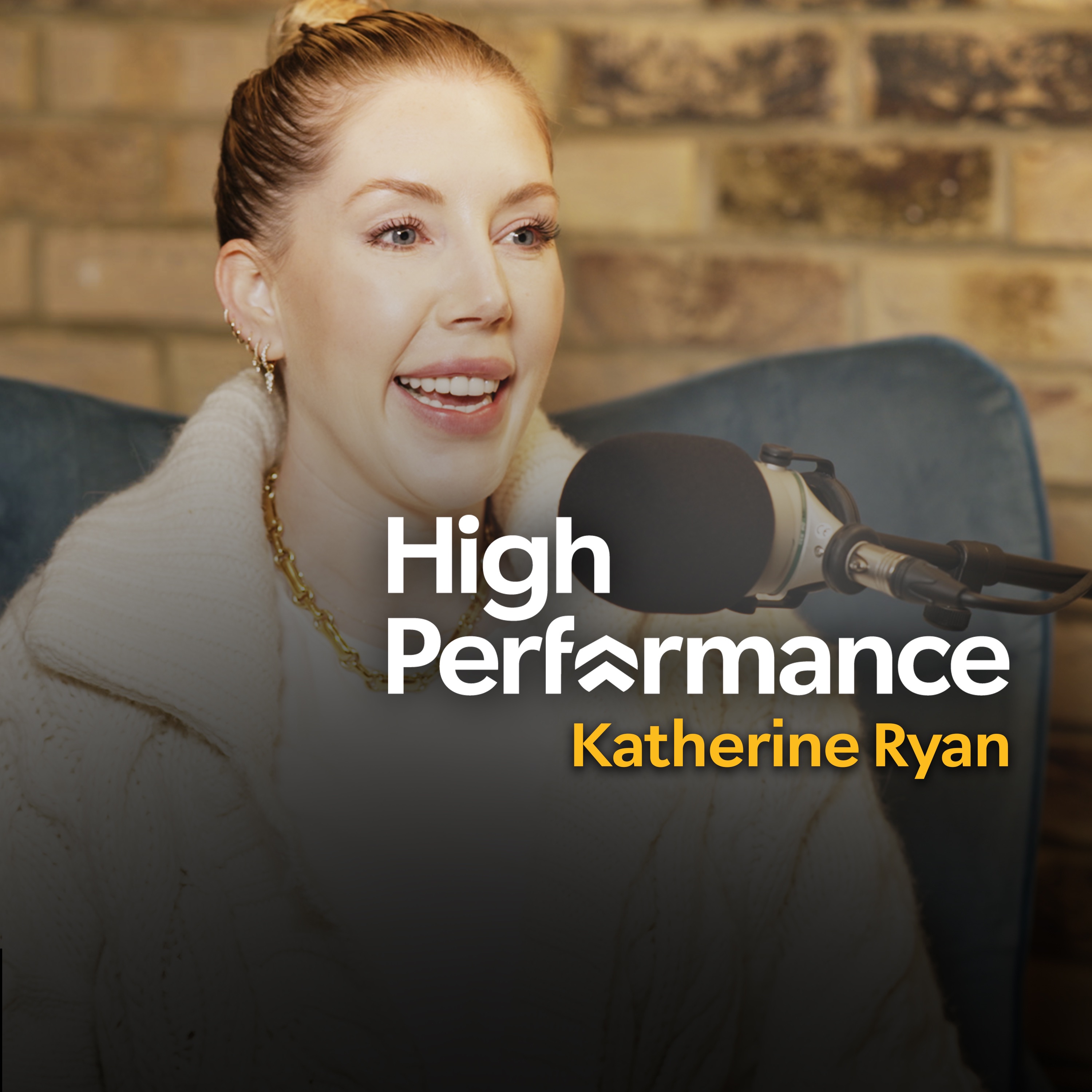
In this episode, Katherine Ryan reflects on her journey as a comedian and a single mother, sharing insights on the challenges and lessons that shaped her career. Throughout the conversation, she emphasizes the importance of gratitude, authenticity, and the significant role of her daughter in her life decisions.
Written by AI. May contain mistakes.

Get the gist, explore an idea or ask about something said.
 Claude
On The High Performance Podcast, what are the key points of this episode?
Searching your listeningAutomatic transcript. May contain errors.
0:00Watch it early on the High Performance app. Available now, Roman Kemp, the broadcaster, opens up a powerful conversation on success and mental health. I was always definitely strange. I had a strange perspective. So I think being an outsider is what felt like home to me. There's no woman in this country with a Saturday night TV show. I knew that if I was sitting in that chair that I was preventing one of my female peers from having a go. And being on that show was life-changing. I always knew that I was lucky and so I should be grateful. And it was gratitude that attracted wonderful things into my life.
0:39That was the voice of comedian Catherine Ryan. And this is High Performance, the show that explores the stories and the ideas of some of the most extraordinary people in the world. I'm Jay Comfrey. And I know that like so many of you, I'm just fascinated with becoming a better version of myself. And I'm Damien Hughes, an expert in the world of high performance. I've been lucky enough to work with the England National Football Team, the Scotland Rugby Team, and a range of professional sports teams right across the world, as well as with leading business people to help them understand how to get the best out of themselves and others.
1:13In this podcast, we discuss both how people can achieve great things and the why that drives them to do so. So, Catherine, you know, it's nice sometimes to actually have some fun on a show as well. Like, sometimes it can be quite a serious conversation, high performance and she's able to impart really interesting life lessons but with a constant like undertone of of comedy which i i really enjoy because it's almost it almost makes the lessons easier to absorb does that make sense yeah there's that great quote in the jake that you know laughter is the shortest distance between two people and i think like when she came in you know she really connected with everybody she wanted to come along and share her wisdom from her career in the trenches in many ways but equally she was happy to share this with us and make sure that she gave us the best podcast she did and I think she's definitely achieved that.
2:02And Damien says they're from the trenches and I can imagine quite a few people wherever you're listening to this going hold on Catherine Ryan lessons from the trenches. Well the truth is she became a single mother at a young age she came across to the UK and took a leap she's also found real challenge in the comedy world as well she had to step away from big shows like Mock the Week just to create more opportunity opportunities for other women. And this insight into the comedy industry is very interesting because I think when someone's funny, you just assume that life is easy because they're always smiling.
2:31They're always making you laugh. But actually the lessons she offers us, Damien, for personal growth and perseverance, I think are very powerful. Yeah. And equally, she talks about when she was on the cusp of great success, there's a conversation that you're going to listen to here that she has with a manager who says, your life's just about to change. So make sure you surround yourself with the right people that are going to facilitate that success rather than look to hold you back. Brilliant. Well, let's do it then. As we welcome the hilarious, talented, but also very wise and interesting, Catherine Ryan to High Performance.
3:09Welcome to the show. Thank you very much for having me on. What is your definition of high performance? oh i think it's competence and relentlessness and i didn't know a lot about those things until i noticed a lot of people are lacking those qualities they want to kick back they can't complete tasks that you ask them to i think being high performance is wanting to do a lot of things yourself and being able to execute those things well do you remember then when you first had that observation that great things can happen but you've got to make those great things happen I was very lucky and I look at my children now in the younger generation whom I'm I'm very fortunate they will still come to see me do stand-up comedy but their lives are so difficult and I think that they're impeded by too much technology and social media and this idea that the world is so big and insurmountable.
4:07And I think it was lovely to grow up in a small town, really distilled, where my parents made me get a lot of things for myself, didn't give me everything. And I knew that if I wanted something, I just always felt empowered that I could go out and get it. And I think a lot of that is because we had to work things out for ourselves. We had to be bored sometimes. We had time to think about who we wanted to be and where we wanted to go. And I think that if I I had grown up in a metropolis where I had lots of entertainment and everything at my fingertips. I might not have had that drive. So what kind of answers did you come up with then when you were having those early debates of who do I want to be, where do I want to go, what do I want to do?
4:51My town in Canada is almost America and it's a big ice hockey town and athletics were really cool. So the cool girls would play basketball, which is like netball without a dress. And we were allowed to wear trousers in Canada. Awesome. Yeah, that's pretty cool. And ice hockey was big and I was not athletic. My dad was Irish, is Irish still. He's from Ireland. I'm an Irish citizen, actually. He was a bit traditional. And my sisters and I had two sisters. We did girl things. So we did ballet and we did piano and singing and musical theater. So a lot of my friends were in the musical theater department.
5:30And I was lucky to have that tribe. but it definitely made me love entertainment and performance. And I could see that there was a low ceiling for that where I lived. And I was like, oh, I could do things with this skill. I could go to the big city. And that was Toronto three hours away. And so my goal very young was just to get out of the athletic small town where I wasn't very cool and find more music and theater. So what was your first experience then of getting up on the stage and a lot of performance about getting bitten by that bug of seeing people respond to what they do little really little um i went to french school as a prank my parents didn't speak french but i was quite an articulate competent toddler and my mom just was like we should send her to an all french school canada's a bilingual country so we have that resource let's just send her to french school And I remember the day being four years old, going into reception, like, what?
6:30I thought the whole world was French. It was just my house that spoke English. I was like, what is this? But you immerse yourself and you speak very quickly. You become fluent. And in the French-Canadian school system, we had speech competitions. Oration is really big. They want to spread the language. They always want to speak. They're very proud of their language. So I'd be standing up in front of the whole school, giving, reciting poems or writing speeches from like four or five years old. And I did one that was very feminist. I was 10. And it was called des baisers, which means kisses. And I did it in front of the whole school.
7:05I remember being really brave. I was never scared of public speaking. It was about all these people kissing me. Everybody wants to kiss you, your babysitter, your auntie, your uncle. And at the end, I was like, mais seulement quand j 'ai envie. Compris? Merci. So it was like, you can't kiss me unless you have my consent. Do you understand? Thank you. And I was, it was 1993. I wonder why you picked that one then. I know I was always quite spicy. Things like politics and consent always mattered to me.
7:48and start hiring proven freelance talent fast. No bulky overhead. No rigid long-term contracts. Just the right expert right when you need them. Work smarter and faster with Upwork. Go to Upwork.com now and find your freelance expert. That's U-P-W-O-R-K.com. Post a job for free and get started today. At Capella University, learning online doesn't mean learning alone. You'll get support from people who care about your success. like your enrollment specialist who gets to know you and the goals you'd like to achieve. You'll also get a designated academic coach who's with you throughout your entire program.
8:27Plus, career coaches are available to help you navigate your professional goals. A different future is closer than you think with Capella University. Learn more at capella.edu. This episode is brought to you by Opera Air, the first browser with mindfulness at its core. Now, most of us spend hours every day online, but how often do we pause to take care of ourselves whilst we're doing it? And that's where Opera Air comes in. It's a lightweight, fast, secure browser built not just for productivity, but for your well-being. With Opera Air, mindfulness is built right in. You'll find free breathing exercises, guided meditations, and soundscapes with ambient sounds, lo-fi music, and binaural beats, all designed to help you focus, relax, and even spark creativity while you browse.
9:20You said your parents sent you there as a prank, and yet that's quite an outlandish prank to continue. What was their rationale of wanting you to be bilingual? Well, I feel like it was a prank because I just, on that first day of school, I'm like, why are you doing this to me? But of course, my mother thought of me as a citizen of the world. She went, well, these kids are going to have European passports because my husband's Irish. I got to get something out of that. And they have these resources. So I'm going to expose them to these resources that might serve them in life. In fact, my mom was really canny that way.
9:58I think it was a wise decision. But then it backfired because my sisters and I all spoke this secret language in the house that my parents didn't understand. So we could openly make plans as teenagers to go out, get some alcohol. We could just say whatever we wanted in front of my parents. They were like, oh, look at them speaking French. Let's talk then about how this kind of transitioned to you focusing on a life in stand-up comedy. So you were working as a waitress in Canada. Do you do your first stand-up there? Or do you take the big leap across the pond to the UK and then have your first experience of that in the UK?
10:33Well, I almost did stand-up at the restaurant where I was waitressing accidentally. So where I waitressed was Hooters. You might have heard of it. It's an owl sanctuary in Canada. We did bikini pageants there. And when I was a young, young woman, I was trying to find my value in the world. And I could see that in the early noughties, your value was to be for decoration, that the women who seemed to have the best, most happy lives were beautiful and thin and had little belly rings and blonde hair, tanned. So I tried to emulate all the things I'd seen from pop stars. Pop stars were really big. So what's happened to the 10-year-old feminist saying you can't?
11:12I know. Like, where did she go? Feminism is a journey. I think you can be a sexy feminist. Yeah, absolutely. But I definitely think having a voice and having value that appreciates rather than depreciates like your youth and beauty is mostly feminist. That's a smart path to take. But at the time, I just wanted to have a good life and to make people happy and to be beautiful. So I started working at Hooters and I won the bikini pageant. I was Miss Hooters Toronto 2002. It's a title that I'm very proud of. Thank you. And then the next year I thought, oh, I don't want to wear the bathing suit. Maybe I could wear a dress, which is my idea of power.
11:50And maybe I could hold the microphone. So I said to my manager, could I present the bikini pageant instead of competing in the bikini pageant? And for some reason he said yes. And then when I was presenting the bikini pageant, what we do is we push all the tables together and make a stage in the restaurant and the patrons of the restaurant watch. It's a really busy night. You make great money that night. They watch the bikini pageant. But they heckled me and they were drunk, some of them. And I had to keep status in that room, bring the girls out, ask them questions, present the bikini pageant, but also manage the crowd.
12:23And I loved that feeling and I loved being funny. We were funny in my house and comedy was always valued in my family and in my friendship groups. I always gravitated towards funny people, but being funny on stage felt really powerful to me. And then there was a comedy club next to the Hooters, the big comedy chain in Canada called Yuck Yucks and I thought well maybe I'll just try some amateur nights there so I would go put my name on the list and secretly do amateur nights just as a little outlet. I thought I'll do stand up comedy secretly and then I can come back to Hooters tomorrow and be the sweet, innocent very non-threatening girl that a pop star would be like that would give me the best life.
13:06That's really interesting. So can I ask you about actually deciding to get up on a stage and do the microphone because when I think about the role of a comedian it almost goes against our natural psychology which is to fit into a group and belong and yet you very purposefully set yourself apart from the group and then look back at them and say like me follow me come into my world and that seems to go against so much of our own natural instincts yeah would you describe how you overcame those instincts and to be able to get up there and then enjoy the experience i think i read something along the lines of what you're saying damien where it's like we're animals and an animal if it separates itself from the pack feels shame afterwards like fear and shame so that your brain says to you don't ever do that again.
14:01That was really dangerous. And I just always liked that feeling, the feeling that you get where you think you're going to be sick and you feel adrenaline, but you also feel a little bit of shame, I guess. It's hard to explain why you would like shame. I don't know what's happening with all the little chemicals in my brain, but that feeling is exciting to me. So as much as my natural core brain was probably saying, oh, that was frightening. You were away from everyone. don't do that again. I felt maybe like an outsider in my life anyway, because growing up, I was French for some reason. And I was also a musical theater kid, whereas the cool girls were athletes.
14:41And I was always definitely strange. I had a strange perspective. So I think being an outsider is what felt like home to me. But also getting up on stage and turning to a group and getting them to come into your world, as you say, I don't find that I'm doing exactly that. I'm trying to be a mirror. I'm trying to reflect their world back to them. I want people to see something of themselves in me, but to make them forget about any hardships they have or laugh at things that might be edgy or spicy or to articulate things maybe they've noticed about their own lives or their families or pop culture.
15:18I view myself more as a mirror. I think that line about shame is really interesting actually it can actually lead to and I totally recognize that feeling you're talking about I get it even now like if I do something and I get a bunch of criticism for it I think well I better not do that again rather than it's still the right thing to do you know what I'm saying like still the right thing for you to do your comedy even if it puts you on a pedestal and gives you that sense of shame like do you still live with that now or did you find that as you became more comfortable standing up in a room where everyone else is sitting down, which always feels like a scary thing to do.
15:51Did it slowly disappear? It has diminished for sure. I used to be physically sick, feel sick before or right after a gig just in the beginning because it was so exciting. It was almost like a roller coaster. So not with fear, with excitement? Just with adrenaline. Now I miss that feeling. And my tour manager said to me, there was a point in my career where I was started to ascend very quickly. And when you're in the middle of your own life, you can't really see what's going on around you. But my tour manager could see it. And he said, remember this feeling the way it feels now, because it's really special and you'll never feel it again.
16:28And I said, what do you mean? He goes, well, once you sort of have done this ascent, then everything gets dulled a little and you start to take things for granted and you should never feel that way. Always get excited by it. So I've looked for those moments where the shame comes back. It's so hard to explain the shame. I'm glad that you know what it is. And I try to explain it to my husband, actually, because he's new to television and he comes on things with me now. My husband, Bobby, sometimes he's included. We did a documentary with Louis Theroux and he was in our lives and in our home. And I'm used to it and I'm busy.
17:02So I wasn't really thinking. I just thought, oh yeah, Louis Theroux is coming. And my husband was more trepidatious. He was like, I don't know. Louis Theroux is like a, almost like a secret mind melding therapist. He gets answers out of people somehow that they don't realize that they're giving. And I didn't realize how monumental it was to be interviewed by Louis Theroux. But after he'd left, then that fear set in, that feeling of, oh, what did I just say? What did I just do? I think the best way that you can relate it to people who aren't performers is, I think when you're hungover and you're trying to remember everything you said last night and you go oh and you probably said nothing wrong at all but you go oh what did I do was I dancing what did I say I think every time I get off stage or I stop I get off filming a big show I go oh what just happened then oh and I've tried to explain that feeling to my husband so that he knows to anticipate it like a wave and lean into it and just welcome it in and know that even if you were wonderful you were going to feel like that for a few hours see i love your ability to almost articulate emotions and it reminds me i was jake and i were talking before and i've i read an interview um with a psychologist called josephine perry that interviewed uh sarah pasco pasco and she was talking about learning to be able to use quite clever descriptions for or more detailed descriptions of her emotions so she talks about in the interview that when she'd seen michael mcintyre's got a saturday night tv show a lazy emotion would be i'm jealous of him and yet when she'd learned to reframe it and explore it and go actually i feel envious because i'd like a saturday night tv show that then empowered her to phone her agent and say what do i need to do to be able to get where i want to do so she learned to understand her emotions to help her rather than harm her and that's something that you seem quite skilled at doing.
18:58I'm interested in, would you explain a little bit around that? I'm certainly not as clever as Sarah Pascoe. She's a very good friend of mine and she's like a trained psychologist somehow. And she is so clever. But yeah, I think stand-up comedy specifically relies on language and the economy of words. And the way you say something could be not as funny as another way that you might say it, a different word that you might choose. It's almost like music. You want to hit the right note and choose the right word to draw people in. And the word acorn might be funnier than the word nut. It's so stupid.
19:38And I don't know why it works that way. But I think we've learned to play with language and try to be as clear as we can. Chris Rock, in some interview that I saw, explained jokes and why sometimes they work and sometimes they don't. And he said, often it's not your punchline that isn't working. It's your premise. People don't remember what you were setting up before you said the punchline. So sometimes Chris Rock repeats premises. He'll say, you know, for example, this is not, this is a terrible example to say, your mom's so fat. Your mom is so fat that your mom is so fat that he'll repeat the premise loads of times before he says the punchline.
20:16Or he'll say like, kids, just don't understand. He'll talk a bit. He'll go back and say again, kids just don't understand. He'll talk a bit. So like language is just really interesting to us. And I think Sarah is such a great example of someone who would recognize the vast difference between the words jealous and envious. I don't really feel envious of anyone. I'm really lucky that way. I feel like empowered and inspired. But what you do have to do to get a Saturday night TV show, Sarah, is grow a dick. That still remains the case? There's no woman in this country with a Saturday night TV show or any late night TV show.
20:54We get put on in the daytime. Even in America, there's Alan in the day and Drew Barrymore in the day and women in the day. And then you've got Jimmy Kimmel and James Corden in the night. And we just, I don't know why. I think they assume we'll be sleepy by then. We just don't get late night chat shows. what can be done to change that do you think because you know we both work in the tv industry there are plenty of amazing women high up commissioners channel controllers you know they're yeah it's not an industry run by men it's an industry run by men and women so why are women not putting women on bbc one at eight o 'clock on a saturday night on their own to hold a tv show it's tricky i'm not really sure but i don't come off at it with this aggressive viewpoint of like we are exactly the same it's not fair they need to put women in these roles i have seen what progressive casting has done lately and i've seen shows where they've tried to populate it with different genders and ethnic minorities and socioeconomic backgrounds i've seen them try to adjust these things.
22:05And at the end of the day, I'm very realistic. And I would like, I like to see them doing more of that because it reflects the UK that I live in. I go outside and I see people from different ethnicities and people of different gender orientations, whatever. But they do have to fill a brief and please an audience. And if they don't please an audience, then they'll lose advertisers and then they don't have a TV show at all. So audiences are still a very much of the viewpoint, not all audiences, but I think the majority who actually watch TV anymore, don't find women funny. And that is a barrier for us because if an audience, an older television viewing audience, whomever, is watching TV and they switch off because they already have this unconscious bias that women aren't funny, then I understand that channel will lose advertisers and they don't want to do that.
22:55So they have to put on someone that people will watch and that will take some time to balance out. And I'm okay with that. I understand. It's a shame though that you have to just kind of live in that world and accept that's the case, isn't it? Do you find you have to work double hard or be twice as funny as a guy to get the same opportunity? I don't, but I'm a specific example. I'm an example of pedestal feminism where I do get all the opportunities. I'm really lucky. I'm on every show. I earn lots of money. People come to see me on tour. So I'm used almost against women because people will say, of course women can do that.
23:30Catherine Ryan's done that. And then they'll say, well, we had Catherine Ryan do it. So we don't have to book any other women or, you know, I can't complain. I have a lot of opportunities. That's what happens to the one woman that they give the opportunities to. They use us as an excuse not to have the others. And that is sad. I never want to be that woman. That's why I've had to step down from certain things. So Mock the Week, for example, isn't a show anymore. It was just ended after a very successful, I think, 30 series or something like that. I loved Mock the Week. I loved Dara O 'Brien. I loved everyone who worked on that show.
24:04But there came a point in my career where I had to stop appearing on that show because I knew that there was just one seat for a woman at that time. And they always put us in the same seat, which is weird. They wouldn't even move us around. One seat. We know where that seat was. One woman on every episode. And I knew that if I was sitting in that chair that I was preventing one of my female peers from having a go. And being on that show was life-changing. You would receive so much more exposure and then people would come to see you on tour and it would really draw people in. It was a game changer of a show.
24:37and a lot of people use the word boycott, Catherine Ryan, boycott Smock of the Week. I never boycotted it. I just was realistic about the fact that if I want a different woman to be in this chair, it can't be me. That's a huge thing to do though because you work in a freelance industry where if you don't work, you don't earn. So would you mind for people who are maybe in a similar position having to make a big decision because this is a selfless decision as well. You're stepping back to kind of pull someone else up behind you, which is legacy effectively. So how did you come to that decision? Well, I was lucky that I had other offers.
25:11I had touring on and I try to balance motherhood and work effectively. So if I can pull back on something professionally and it makes ethical sense to me, like the Mock the Week decision did, then I think I just go with my gut on a lot of those things. I didn't seek counsel from anyone else. I should have maybe because then maybe there wouldn't have been this big news story that I boycotted Mock the Week. I never wanted it to look that way. But no, I just felt that it was the right time. I'm very clear about the decision-making process that leads me. I think our animal instincts are thousands of years old.
25:51And then intellectualism is very young. So I think with my chest a lot of the time. I think with that animal brain. And if something feels good, then I just do it. I didn't think about it too much. I just went, you know, I've got a lot on. I'm the one in that chair. If I don't, if I say no, and it's difficult for me to say no, I do have a freelance mindset. Absolutely. Especially as a single mother in this country for a decade, I was a very destitute, impoverished, 25-year-old single mother once upon a time, and that doesn't feel long ago. And I remember running out of money at the end of every month, even though I had a full-time office job.
26:27And I remember bringing a box of Rice Krispies to work because the milk was free at the tea stand and that's what I would eat all day. And I remember what it was like. And I will never forget that. And so now when people offer me loads of money to do my dream, why would I ever say no? So I always say yes. It was difficult for me to say no, but ultimately I felt, I just felt very clear that it was the right thing to do in the right time. But if you look at the decision to book you so regularly on Mock the Week, there's like that old saying in business, isn't there, that nobody ever gets fired for using IBM because you're almost guaranteed that it's safe.
27:04And I'm interested in the journey between you having to bring your Rice Krispies to work to feed yourself and get into that place of, let's book Catherine because we know she'll deliver. We know that she's good at what she does. What were the characteristics beyond being good at your job that you felt that people did want to just book you regardless of how often you'd been there? I think I learned my authentic voice really young. And it takes people a long time to find that. And there are even comedians today. I look at them and I know that they're proficient. They can do the maths of comedy. But there's something lacking in that I don't know if they're clear on who they are.
27:45I think you have to be very authentic in any walk of life for people to connect with you. I think it makes people feel comfortable. It makes people feel confident when you are clear and peaceful in who you are. And I had to find that out really young. I had to distill what was important to me in life and what wasn't. And I was very lucky. I say this to my daughter's face. Violet is 14 next month. I say, don't be afraid of your mistakes. Like on paper, you are my biggest mistake. Because would you want your child in a partnership that wasn't very good to move to a foreign country and have a baby when she didn't have any money?
28:20You probably wouldn't want that. That's not the life that you design for your own child or for yourself. So on paper, maybe that feels like a big mistake. But what seemed like a mistake was the greatest joy, still is the greatest joy of my life, was also my greatest motivation. it took so much mental energy that when I was at work, I had to be very efficient and think of only work and I would overwrite as well. So I would watch eight out of 10 cats, for example, and I would see, okay, these are the questions and they might come to you. And when they come to you, you shouldn't have one answer. You need five answers.
28:55Give your best answer. And then if everyone's quiet or there's a lull or they come to you again, give another answer, give another answer, and then let the editors choose their favorite when they're putting the show together. I always came with that mindset because I would study, I would do research. And I was lucky that I was so busy with my daughter and so desperate that I couldn't really think of anything else. It made me super efficient. So how long were you in that space for where you were grafting, you had no money, and you were waiting for a big opportunity and you were working hard to get it?
29:30It changed pretty quickly. So my daughter was born in 2009. I was still with her dad at that time, but we were struggling both in our relationship and financially. And then I had properly left. You know, it takes a while to extricate yourself from any bad relationship. I know so many people will be weighing the options. Is it worth it? Should I do it? It's hard. It's at least a solid year of hell. So finally, we split in 2011. And then by 2012 in May, it was my first opportunity to be on 8 Out of 10 Cats. So it was hard from probably before my daughter was born, 2008 to 2012. And all of a sudden, things started to change very rapidly.
30:13It didn't mean I was rich right away. I think you switch on the telly and you go, there's a celebrity. They're rich. A lot of money went to, obviously, my daughter and rent and paying tax and paying my agent and everything else. And then you wait sometimes weeks or months between the next job. but the acceleration was really quick because I was clear about who I was. People knew what they were getting when they were booking me. I didn't try to compete. My first episode of 8 Out of 10 Cats was with wonderful Sean Locke and Hannibal Buress, John Richardson, Jimmy Carr. And I sat backstage for a moment in a yellow dress that I had bought on the high street and Wellington boots.
30:49I had brown wellies because I didn't have any high heels at that point. And I thought, economically, I thought, well, my feet will be behind the desk. And I sat in that dressing room And I went, oh, no, I'm never going to be as funny as these guys. I'm not as funny as they are. But very quickly in my mind, it was a fight or flight response, I think, going back to the animal brain. I went, well, I can climb out the window or I could just deliver the most authentic me that I can and use all my experience from my love of pop culture or being North American or having worked at Hooters or being like a 27-year-old girl.
31:22I just bring that all to the table. And by the grace of God, it just worked. And then it kept working. And in that period where you hadn't yet had that moment where it kind of clicks and everything works, how big was that negative self-talk, that self-doubt? You sort of wondering whether being an authentic me is the right way to go. I remember my family probably preferred that time because I would call them all the time, just crying and be like, I don't know what's going to happen. I had so much financial fear and professional fear. And so many people expected a lot from me growing up because I always had been special, for lack of a better term, different, strange, academic.
32:06I was very capable always in my life. I was the oldest of three girls. People were usually confused or impressed by me. I always got a reaction. And so I had really destroyed all my potential. I thought, I've come to a different country. I'm far away from everyone. And I'm a failure. Like, I haven't achieved the things. And when you're only 26, 25, that feels at the time very old. Like, I should have a house now. I should have this. And everyone in Canada does have those things from my town. They'd all been married at like 19, 20. And they were established. And I wasn't at all. And I didn't know if I ever would be.
32:45And I thought, oh, I've totally ruined my life. But I think that privilege, we talk about privilege now as though it's a dirty word. And there are so many Nepo babies, this is a really cool term, that don't want to acknowledge their privilege. And they go, no, I'm not. I've done everything myself. But in that moment, I had to, again, distill all my thoughts and decide what really mattered and what didn't. And my privilege was one of the things that helped me recognize my privilege. I said, well, hang on a minute, Catherine. You have parents who could loan you money or fly here and scoop you up if you needed them to.
33:22You're too stubborn to ask them. But if you really needed them, not a lot of people have that. You have that. You are young, sort of traditionally beautiful at the time. Don't let my current jawline fool you. I was 26. I had mental health. I could see, even through my tears and my sense of failure, I thought, I have a mental toughness that I know not everyone. has the luck of being born with. And did that ever waver in this time? No. Wow. I always went, you have those things, so you can't complain. You pick yourself up. You have a daughter that you need to impress, not just your family back home.
34:00You can do it. If anyone can do it, you can do it. And that was empowering at that time. And I never lost sight of that. I always knew that I was lucky, and so I should be grateful. And it was gratitude that attracted wonderful things into my life. and to get good at stand-up comedy you actually have to do comedy like you can't learn it in a book or no to sit in your room on your own or a class don't sign up to the classes they're a scam and that was one of the things that jake and i often hear when we interview people is that to get good at something you have to be comfortable at being shit at it for a while and you're going into a bear pit where people will tell you if they don't think you're funny or will tell you if they don't think you're good at what you're doing.
34:44So I'm interested in how did you cope in such a brutal bear pit with heckles and feedback until you got to a level of competence? Well, again, it was wonderful that I was crystal clear on what mattered in life and what didn't. And all of those heckles are very superficial. And if someone says you're shit, or if you haven't made people laugh that night. That is disappointing because ultimately you do want people to like you. That's a very human instinct. But I knew that as long as my daughter was safe and well and I was still getting paid that night, then I really didn't care. And I always viewed that stuff as very temporary and very superficial and I could learn from it.
35:29I went, well, if I didn't do that well tonight, okay, it hurt, it stings a bit, but ultimately does it matter? Will it matter in five years. No. And can I take something positive from this? I was really lucky. And I think about that thick skin because I want to bottle it and give it to my children. I want to bottle it and give it to the divorced women who write into my podcast or even my mother who's from a different generation and is very cool and very confident, but doesn't have the real like IDGAF-ness that I have. I say a lot of the time about like I ran out of fucks to give in the spring of 95.
36:07And what I mean by that isn't that I don't care. I care deeply about people. And, you know, I'm very moved by internet videos of dogs being reunited with their like RAF dad. Yeah. But there are things in life that are so temporary and you can't get hung up on them. You just have to let them pass through you. and you have to lean into them. And when you face your fears is when you realize they're not so scary. And it's not a big deal if people don't find me funny. They have the right to not find me funny. I don't like bread. And I know that I'm wrong. I know that everyone in this country loves bread.
36:45Bread's not offended that I don't like it. Bread's like, I got a load of other customers. I'm straight. I'm fine. Everyone loves bread. Catherine is entitled to not like it. Doesn't make bread any less good. So tell us about the process then in which you did reflect like how did you get feedback how did you learn to do a gig and then work out how do I get better next time that's a tough question I think that I would write material that made me laugh first and foremost I had to be able to stand by it and think it was funny because you can do this thing of just doing the math of comedy going well if I say this it'll get a reaction and I did that in the beginning of my career all the time.
37:27Comedy in Canada, where I was just dabbling. I was doing it as a hobby for fun. It was very misogynistic at that time. It was the guys who would be able to travel to the smaller towns in Canada, the prairies, go to Winnipeg or Alberta, and then guys would find them funny. It was what you would think of 90s comedy. These guys with plaid jackets and beards just being like, I hate my wife. My wife's such a drag. Or talking about smoking weed. Things that I totally didn't identify with, but I understood the brief. So when I went on stage, I would either be shocking because nervous laughter to me is the same as laughter, or sometimes comedians mistake this sound for like good reaction.
38:08It's not. So I became a shocking comedian for a while, and I would talk down about myself. I'd be like, I'm such a dumb slag. And some of that is still present in my comedy today, but ironically now, whereas I used to just do whatever I thought the audience would accept. And then when I came to the UK, I was so lucky because Sarah Pascoe that you mentioned is one of the first people that I saw on stage. And comedy here seemed to be very alternative compared to what it was in Canada. It was very prescriptive. Here, I saw Joe Lycett, and I saw all these very literary comedians talking about Henry VIII.
38:45I didn't even know who that was. I was like, what are they talking about? Comedy here seemed so different and nuanced and clever. And all of it was mainstream. And so I really found my voice here. And the more I would write for myself and know what I thought was funny, the more authentic it became, the more people trusted me on stage, the more people would laugh at it. You still do have to fulfill a brief. So if I'm doing a corporate gig for a company, for example, they don't want to hear me be too introspective. They don't want really the narrative of my family that much. And they certainly don't want anything too edgy.
39:18You got to give them the Christmas hits. They need to see where the punchline is. There's this joke about my dad that I started telling maybe in 2012, and I don't really like it anymore, but I wheel it out for corporates. And all it is is that my parents divorced, so I had to start dating them, take them individually out for dinner when I was 15. And when I would go out with my mom, that was fine. But when I was out with my dad, I started being mistaken for his girlfriend. And my dad's big and old and Irish, and he'd be like, you listen to me that's my daughter and i can do a lot better than her like that's essentially the joke but and like it has political edginess that joke um but also yeah my dad can my dad could do better than me but this whole conversation really is about someone who has the emotional intelligence to know what they are but also know what the world wants so there's a great phrase i heard once which is the strong tree is the one that moves in the wind right does that speak to you that's very Very smart.
40:12I love that you said that. That's such good advice for people because I think the tree trunk of who I am is deeply rooted and everyone knows what they're going to get with me, but I am flexible and I can be amenable. And I'm also very open-minded. And I don't know if that's because I'll be 40 next month. And there are a few things in my periphery that I'm very accepting of different opinions. I want to hear different ideas. And I do not subscribe to what's going on right now. And the teens, they're very interesting. And I know they're in a different world than I am, but they pull me up on stuff all the time.
40:49And they go, well, if you like this, then I hate you. You're as bad as them. Because I'm open to listening to Jordan Peterson podcast. And I follow JK Rowling on Twitter. And that doesn't mean that I, all of my beliefs are in line with theirs. But as soon as we start shutting down ideas that aren't perfectly in line with ours, like this is what my marriage taught me. My husband and I are very different. I listen to his ideas and I've had to be flexible and amenable. And you can't stand alone all your life and like, you know, deeply root yourself in exactly this one way. There are comedians who won't do adverts because they're like, that's beneath me.
41:26That's not who am. I'm an edgy political comedian. It's like, okay, so am I, but I pay my mortgage. Try it. I'm so lucky to do this job and I'm so lucky to be part of a conversation. I have a voice that will transcend my life. My grandkids will be able to look back and be like, oh, my mom did this, my mom did that. Even my daughter now looks back at standup I did 10 years ago and she'll be like, oh, did you really say this, mom? Can't say that. I'm like no I wouldn't say it now but I said I articulated myself the best that I could with the information that I had 10 years ago and I'm a different person now than I was 10 years ago and I'll be a different person again in 10 years than I am now but I'm like open and receptive and I'm just so lucky to do this job in any sense
42:17You mentioned your grandkids If you're still overpaying for wireless it's time to say yes to saying no At Mint Mobile, their favorite word is no. No contracts, no monthly bills, no overages, no hidden fees, no BS. I made the switch because I was tired of those ridiculous bills and sneaky charges from my old provider. With Mint, I'm paying$15 a month and getting the same high-speed data, unlimited talk and text, and coverage on the nation's largest 5G network. Honestly, the quality is just as good, if not better, than what I had before. And the best part? You don't need a new phone. You can keep your current one, bring your number, and all your contacts.
42:53I use Mint Mobile, and you should too. Ready to say yes to saying no? Make the switch at mintmobile.com slash HPP. That's mintmobile.com slash HPP. Upfront payment of$45 required, equivalent to$15 a month. Limited time new customer offer for first three months only. Speeds may slow up a 35 gig on unlimited plan. Taxes and fees extra. See Mint Mobile for details. The market's uncertain. revenues tied and hiring on hold that's why results driven companies are using upwork to keep work moving go to upwork.com today and start hiring proven freelance talent fast no bulky overhead no rigid long-term contracts just the right expert right when you need them work smarter and faster with upwork go to upwork.com now and find your freelance expert that's upwork.com Post a job for free and get started today.
43:47At Capella University, learning online doesn't mean learning alone. You'll get support from people who care about your success, like your enrollment specialist who gets to know you and the goals you'd like to achieve. You'll also get a designated academic coach who's with you throughout your entire program. Plus, career coaches are available to help you navigate your professional goals. A different future is closer than you think with Capella University. Learn more at capella.edu. Yeah. I hope they're well. What would you like them to say to you if in 40 years time someone says, oh, your grandmother was a comedian.
44:30What was she like? What would you want the answer to be? Gosh, if the world keeps going the way it is, we'll probably all be known as like these horrible... Yeah. Well, Jimmy Carr says he's already told the joke that will get him cancelled. Right. Hasn't he? Yes. Which is kind of scary, is it? Well, he survived. They've had a few pops at him. He's still around. I think hopefully as this generation is getting older, they'll appreciate context and nuance. And, you know, we didn't just all appear on this planet today. I believe in ancestral trauma. I believe in this indigenous Canadian perspective that seven generations feel different changes with each other.
45:11So like it will take seven generations to remove a trauma from your family or it will take seven generations. Everything you do has a ripple effect for seven generations ahead of you and behind you. Yeah. So you can bring your ancestors with you on things. And a lot of the women in my family that I was aware of, they were in unhappy relationships or they weren't afforded a voice like I am or they felt a sense of duty to their culture or to being mothers or they didn't get to live their fullest lives. And I learned that from past generations, from my mom, from my grandma, from my great grandma.
45:45And so I think I'm hopefully very pivotal in the story of my ancestry that I do it. I think I'll be remembered as like a witch, as a very disruptive lady. So whatever happens with my descendants, they'll be like, you know, great, great grandma. She pissed off so and so and she did this and she changed. I think if we can all just think that deeply about that generational reach, just edge it forward a little bit each time. It's important. So are you brave or do you find this quite easy? Both. I think I am brave. And I also, because I'm brave, I find everything that I do quite easy. And again, I lead with gratitude.
46:27That was the most pivotal realization in my life was to be grateful when I had nothing. Because when I had nothing, I knew that I had everything. And as the more gratitude that I give to the world and that I show, and like I'm not traditionally religious, but I have a relationship with the universe. And I'm so grateful every day I wake up like a dog and I go, oh my God, it's still here. Hey, good morning. I don't hold on to resentment or anything else. That's what makes wonderful things come into my life. And I don't want to sound like Kim Kardashian when she goes like, get your fucking ass up and work or Molly May when she's like, we all have the same 24 hours in the day.
47:05I know what those women meant when those statements were taken out of context. It's just that whatever you have or don't have, if you can find the light, then it will open up so much more light. And is that a habit everyone can learn? Yes. How? I suppose the things that I held most dear were threatened. So when my daughter was small and I was splitting up with my partner, I thought, what if? Like, what if I'm not able to make it and I have nothing? And what if, God forbid, I don't even have my daughter anymore? Like, what if she were to get sick? Or what if she were to go live with my partner?
47:42Or like, what if, what if, you know, the things that I cared about were only that, her well-being and our relationship and me being able to provide for her in this country? That's all I thought about. And even though I have all these wonderful things, I know that they don't matter. At the end of the day, all that matters is your safety and the safety and health of the people that you love. And I learned that. maybe it's like a little trauma response like it was ingrained in me at 25 26 I went all that matters is this one thing and as soon as I realized that and I was grateful for for little things then I just started getting like the most magical gifts in the world and they could be taken from me because the joke that gets me canceled I've probably already told but if they're taken from me I really don't care because when I had nothing I had everything so can we just touch on something you mentioned earlier which was like the moment your career kind of was rocket fueled and your agent said enjoy this moment we always like to drill down onto a kind of specific moment and just talk about it for two or three minutes and go quite deep on it can you take us back to that moment what was happening how it felt because you know sometimes when things go well it can derail people because for the first time there's a risk because when you first arrived here and you no money you also have nothing to lose suddenly you've got stuff to lose and it can then change the way people are it was probably around 2015 and my tour promoter ian coburn from live nation live nation have supported me from the beginning and i thought why would the biggest promoter agency in the world you know they do beyonce they do everyone why would they want to look after me but they're great with upcoming artists.
49:25They're really wonderful getting behind you. So Live Nation promotes my tours. And I was doing small tours, art centers, little theaters, back when I would get the train there myself and just do everything myself. And Ian Coburn came to the show, very supportive. He watched me. And he drove me back home that day. And we were in his car. He has a really fancy car and he lived not too far from me in North London. And that's when he said he was looking at the sales for the tour and how they had changed. He's a real numbers man. And he was booking the next tour and doing bigger venues. And he was noticing that I was on TV more and what that was parlaying to in terms of people wanting to come and see me.
50:06And I guess he had seen these patterns before. And he just went, remember what this feels like because you're going to ascend really quickly now and it only happens once. And it's really special when your life changes this way and not everybody gets to experience that. And then once it does, things are less exciting because as you say, Jake, then maybe you have something to lose. He didn't put it that way. That's scary. But he was like, yeah, this is going to be really special. And I thought, well, I really don't know what he's talking about, but I respect Ian. So he must be right. We'll see. I did.
50:38I think I am an optimist, but I had a level of trepidation about what he was saying. I thought, okay. And I hadn't bought a house at that point. And the very next year I bought our first property in London. And it was a ground floor flat in the complex that I was renting a third floor flat in. But I wanted the maisonette with the front door that was all mine. It's in a listed church conversion. and the next year I bought it. And then when I did that, I felt really safe for the first time. I thought, oh, I own property now in the UK. I never thought I would ever be able to do that. Coming from Canada, owning property in London, it just seemed insurmountable.
51:14But I thought that's a year later I started to believe him. I went, oh, things are getting better. And then I'd be recognized a little bit more and I get to choose more jobs. I was offered more opportunities and everything that he said came to fruition. But I do think you can call it manifesting, but I think that gravity falls in the direction that you point it. So if you look upwards and you believe that things can get better, it's weird how it happens. I'm not smart enough to totally understand the universe, but being an optimist and thinking, yes, maybe ice cream, maybe what Ian's saying makes sense, then you'll naturally lean that way and people can feel your energy and they want to believe in you and give you opportunity.
51:58because they feel like you can come through. And professionally, I understand the moment you own a property is when you realize things are changing, but was there a moment professionally when you thought, I'm in a different league now? It was 2016 again. It was that year. I went to Los Angeles really to follow a boyfriend, which is not aspirational or feminist but I was dating a comedian in the UK whom I'm still very good friends now with and he's doing tremendous things. He's on Broadway now. He's great. He's my good friend. But we never should have been dating. We're better off friends. But he knew that and he went, I live in America.
52:42I'm going back to America. I'm going to end this relationship. And I was really afraid because relationships were my Achilles heel. As successful as I was, as wonderful as my relationship with my daughter was, I had great friends. I would choose the wrong relationships. And he was the nicest of all the bad relationships that I'd been in. And I thought, oh, if I'm not with him, then I'm going to attract another bad relationship. And I was so scared of being in another bad relationship. And I thought, I just need to be with him. So I'll prove to him that I'm invested and I'm going to go to Los Angeles.
53:14And I went to Los Angeles just for a week, but I'm very busy. I'm very competent. So in that time, I didn't just want to be sitting in a hotel winning him back. I booked meetings with the help of my British agent, Kitty Lang. We booked meetings with three arts, and that's Josh Lieberman and Dave Becky, who look after Kevin Hart and Amy Poehler and Maya Rudolph. Yeah, I've heard of them. Yeah. Like, he's the best manager in the world. The best comedy manager. Bill Burr. Like, everyone that I look up to, and I was like, oh, I'm going to have a meeting with them. And I went to Los Angeles very quickly.
53:51They got me on the Conan O 'Brien show. I did James Corden. They signed me right away. They got my first Netflix special. It was so fast and so crazy how everything happened. But again, I think I was distracted. I was really in LA just to prove to this boyfriend that, oh, I'll make this move for you. I'll be here. But in the space of like three weeks, I had all this momentum in America all of a sudden. And then I did The Fix on Netflix with Jimmy Carr and I was in America a whole lot more. And that was crazy to me. so I mean that was a huge turning point again that I never saw coming but again I went to Los Angeles I'm the type of person I wasn't just going to sit on my hands I booked meetings I'm like very multitasking so we were looking through Gary Barlow yeah on the podcast and Gary spoke about his moment when he went to America and rather than stay true to what he was good at he allowed his producer to like remix a set and almost do stuff that he wasn't used to that eventually he went through with it he didn't have the courage he said to stop and just refuse so he went along with it and it crashed and it burned and set him off on a spiral for the next seven years of a real depression and when you describe that that fast ascent where you've been invited onto chat shows in America and these agents are returning your call.
55:18How did you find the courage to stay true to that authentic voice you said had initially set you on the path without compromising or trying to be somebody that you weren't? I was really lucky because no one asked me to compromise. I think the music industry is a mucky place and I'm very lucky to be in comedy where someone like Dave Becky or Josh Lieberman goes, yeah, you're great. Be who you are. What do you want to do? And I think there's one thing where I might have fumbled the ball though, is my Netflix series called The Duchess. And I wrote that, but of course it's collaborative. There are producers and other people giving you notes in the network.
56:06And then there's the director on the day who goes, well, this is my vision. You do it like this and you have to act and you have to be around other people. I wasn't really used to working with other people like that because I am so solitary. I don't have anyone commenting other than an audience. All my management thus far have just been like, do what you want to do. Ian Coburn, do what you want to do. Kitty Lang here, do what you want to do. And the Duchess, all of a sudden I had to collaborate and debate and adjust and make notes and moving toward making the Duchess, it takes so long to write the scripts and to take the notes and to make the adjustments.
56:40And someone said to me, sometimes, and this is, I'm sure you've said this on the podcast. If not, I'm sure you agree. When you're going into an important project, you could say the next six months is going to dictate the next six years or the next 10 years. So I really need to knuckle down for this six months because it could go right or it could go left. And when The Duchess came out, there were a number of factors. I don't think Netflix really market shows that much. They kind of let it sit on the platform and see how it performs. They had some controversy with another show, so they shut down their socials.
57:14It was locked down. But I think I didn't quite edge it right. And The Duchess didn't get renewed for a second series. And some people liked it and some people didn't. but that's one where I wasn't good enough at collaborating yet. I don't think my authenticity quite came through. I don't blame anyone for that but myself but had that gone well I would do a second series of Duchess and a third and maybe I would have written a film by now but like there are setbacks like that. I view the Duchess as something I loved to do and it was a real learning experience but I'm not deterred. I want to write something again and this time maybe be a bit better at collaboration.
57:53Did you give it your all? Yeah. And also like you only now know that you didn't necessarily collaborate in a way that was successful with hindsight. What, like we've, we've sort of managed this still high performance down to three sentences, right? Doing the best you can, where you are with what you've got. And when you created the Duchess, you did the best you could where you are with what you had. The truth is that in hindsight, You needed to know things that you didn't know. So you can't berate yourself too much around that. It's just about taking the learning. So what are you like with setbacks and failures and disappointments?
58:33I think when you talk about language and articulating yourself and your emotions correctly, I think it is embarrassing. Not shameful. I don't feel ashamed of it, but it's a little bit embarrassing to go, oh, I tried that thing and everyone could see it not go well. And it had my name and my face and no one thinks about anything other than me having not done well. So for a moment, it's just a little bit embarrassing. And then you have to invite that feeling into your life rather than push against it and just go, well, that's all right that it didn't work. And I feel a little bit embarrassed and that's okay.
59:12And I know from experience that this feeling doesn't last forever. I think sometimes people get caught up in a feeling of failure being ever present, but it's, everything changes all the time. It's cyclical. And I knew that it would pass just like a breakup or anything else. You go, oh, that's a little bit embarrassing for a while, but I learned this, this, this. Yeah. That's the key thing that how you take the learnings from it rather than just living with the feeling. It's about being really honest with yourself actually, isn't it? And like licking your wounds a little bit and going, oh, I should have done this differently.
59:44and that differently. And I've never been an addict, but I like the addict mantra of change the things you can, accept the things you can't, and have the wisdom to know the difference. I can't build a time machine and do the things differently that I learned from this experience. And I'm so lucky to have learned that. What did you learn about collaboration? I think that certainly doing a sitcom is full of debating minutia. And there were a lot of times when I didn't know what my authority was. I didn't want to come across as difficult. And I didn't know how much I was allowed to push back because women especially, if you get tainted with that word difficult, oh, she was difficult.
1:00:30You don't want that. And so sometimes when there would be a debate over something, I show people respect by just letting them get on with it. I go, well, you know what you're doing. Just do that. Whatever you want. If you feel strongly, you do that. But I think with the sitcom, you really have to make it your baby and dig your heels in and be prepared to sit in that room and go over every detail with people. I think people describe me, have described me in the past as high maintenance. And when I got married, people online were like, oh, good luck to him. But I'm the very opposite. I like to have ultimate control over myself.
1:01:06I want to dictate everything that I'm going to do. I want to be my own boss. I do not want to be anyone else's boss. I hate telling people what to do. I hate arguing. I don't want to get into a debate. If you feel strongly that it should be that way, that way. But again, I need to do what you mentioned, Jake, and like be the tree that can sway with the wind. And sometimes I need to learn to get stuck into debates and be uncomfortable and do that. It's boring. We're about to move on to our quickfire questions. Before we do, we started this conversation where you talked about your version of high performance involves being relentless, right?
1:01:42So would you mind sharing with us what hard work looks like to you? Well, I think if you're freelance or if you're an entrepreneur, then you can never say no and you have to be available all the time. So I don't go on holidays. It's very difficult for me to take a holiday because I'm so worried, even still, that I'll be on an island somewhere and someone will be sick or will drop out of a corporate and my phone will ring and I'll be like, I gotta get a boat. I hate that idea. It makes me very uncomfortable. I like to be available. Now with the babies, it's a bit different. I am still breastfeeding, like I'm quite tied to the house, but still I never say no.
1:02:24So yesterday I was in Manchester. I got picked up at four in the morning. The night before I was in Brighton, I got home at like 10 o 'clock at night. I'm very committed to being awake all night with my children if they need me to responding to everyone's needs. And I just think sometimes people say to me at work, are you comfortable? Can we get you anything? Are you comfortable? And I say, I don't come to work to be comfortable. I love that saying, even though I am very comfortable. I like hearing myself remind myself, I don't go to work to be comfortable. And I know people who call in sick, even at my level.
1:02:59And if you are not living your dream, if you're not in the career of your choice, and you're not being looked after, and you do feel sick, you should stay home. But if you're in my line of work, and we are paid too much to be anywhere, when I hear that one of my peers has called in sick, I'm right there doing their job, taking their money, thinking, how sick can you be? When I had a newborn, I had a gig in like the North, somewhere in Leeds, and my daughter was two weeks old and I was sick. I had a fever and a cough and I took double paracetamol and I got the babysitter and my newborn in a car and we went and did the gig and my newborn and my babysitter waited in the dressing room.
1:03:40I came off stage. We all got back in the car. I was feeding her in the car and got back. I never say no. I don't come to work to be comfortable. And I remind myself how lucky I am to do this job every day. And your agent advised you when things started to go well to never forget the feeling. Have you remembered the feeling? Are you still enjoying the feeling? I absolutely remember the feeling. And I think I don't feel that I'm ascending right now. I'm actually taking a very difficult break because I've had these babies. And my attitude towards work is also my attitude toward parenting. I don't want anyone else raising my children.
1:04:23I don't want anyone else feeding my children. And that is a hurdle for me. And it's so new that I can't even talk about it yet because I haven't figured it quite out. But the balance is not straightforward. And I can't be in two places at once, but I try my best to be super responsive. I'm an attachment parent, if you know what that means. I carry my kids everywhere like a monkey. It's really weird. But I am not ascending right now. I'm trying to learn a new path so that my work can be sustainable and that I can have a family who feels like they haven't been neglected by their mother. I am still working all the time.
1:04:58But even when I was touring, I'd drive back every night. I have another gig this afternoon, but I have an hour in between. So I'm going to go home for 45 minutes and then come out again. I'm trying my best, but I think it's important for me to learn this phase of my life so that hopefully I can build a foundation to ascend again when I'm an older woman. And we've made space for older women to be on TV again, hopefully. I want to work until I'm dead. You hear about comedians dying on stage, literally having like heart failure and dying on stage. That's going to be me. That's the ambition. or under the knife but but i am thinking i remember many years ago being at an event where there was a very successful female entrepreneur talking it was a female networking event and i remember feeling affronted on behalf of the young women in the audience because she was saying to them you know you can have everything you can have this successful career you can be a great mother at home you can be and i remember thinking but there is a cost and you're not telling them the cost of this so people go away feeling shit that are they feel that they failed at one or the other and i know that's not what you're telling us here katherine i'd be interested in what is the cost as well i am sort of telling you that you do feel a bit shit i feel that i'm letting someone down all the time i'm either letting my husband down or i'm letting my older daughter down who isn't the baby anymore or i'm letting the babies down or i am letting my agent and my career down.
1:06:26And on top of it all, I got quite fat, which is not yet embraced by our society. And then I had to get lots of messages online going, oh, she's had her face full of like Botox or whatever else. No, I just got fat because I was pregnant four times in three years. There is a cost. And I think when women specifically ask me this, there's also such a biological injustice that you all can have babies until you're 90, Bernie Eccleston. But we can't. And we're meant to have figured out our careers and our partnerships and everything by age, what, 35? And there's this ticking time bomb where everyone in your life starts to say to you, what are you going to do?
1:07:08What are you going to do about your legacy? Are you going to have kids or not? And I think that all women should have their eggs frozen at age 20 on the the NHS. I feel like if this happened to men, that would be prioritized. And then it can be off the table. You don't have to think about it anymore. However, I digress. You can have it all. I don't think you can have it all at once. We just need to stop talking about maybe how unfair it is and just decide without resentment. Just go, all right, if I want this, I have to make time for this. And if I want that, I have to make time for that. And luckily, I'm a woman, so I can multitask.
1:07:42I can have it all, but not at once. There is a cost. There will be a cost. We'll see. I'll let you know when the babies are grown, if their central nervous system is as regulated as my daughters, my older daughters. Let's see. Right, time for some quickfire questions. What are the three non-negotiable behaviors that you, and ideally the people around you, should buy into? Competence, kindness, and generosity. What advice would you give to a teenage Catherine just starting out? Do exactly what you're doing. I wouldn't want to tweak it because things have ended up really great. Even the mistakes.
1:08:17I would say the times that you suffer, you will look back on as the greatest times of your life. What's your biggest strength and your greatest weakness? My biggest strength is that I'm incapable of remembering anything as being bad. For some reason, my brain rewrites everything as having been really great. I have a lot of secondary fun. so I am an optimist and my greatest weakness in the past has been relationships I think my greatest weakness is that maybe I suffer from hyper independence I really struggle to trust anyone else and I like to do everything myself and I need to learn how to let go and delegate a bit more because other people are very competent can I ask what's different about your current relationship and what you've learned from previous ones that you do differently well my current husband is divorced and i think i wasn't dating enough divorced men when i was young divorced men have been humbled and they know they can't do better than you because they've already tried and the final answer um and this is really your kind of the message to leave ringing in the ears of the people that have listened to this brilliant conversation um what would you like to leave them thinking about when I say to you, you're one golden rule, really, for living a high-performance life.
1:09:41Well, I think if you want to be high-performance, you need to cut out the fat, cut out the noise, so I don't ask any question if the answer A doesn't matter or B is going to be a lie. Just don't even ask the question. Brilliant. Catherine, thank you so much.
1:10:01And that's it for today's conversation with Catherine. I hope you enjoyed listening to that. Just a reminder that you can also watch all of these conversations as well. You can see them on YouTube. We upload them on there. But I think the best place to actually watch and enjoy high performance is on the high performance app. So the team have been working for years to create something that gets you closer to your own version of high performance, where you can build your own playlists. You can enjoy boosts. You can be inspired by so many brilliant life lessons. And it all comes together on the high performance app.
1:10:32You can either click the link in the description to this podcast or you can download it from the app store. But however you enjoy high performance, please continue to take the lessons and the learnings from these conversations. Stay humble, curious and empathetic. And myself and Damien look forward to seeing you next time.
1:11:02Thank you.
1:11:32your professional goals. A different future is closer than you think with Capella University. Learn more at capella.edu. Dr. India Woods here. As a veterinarian, I demand a lot of my scrubs on the job. That's why I show up in FIGS. FIGS are made for the sometimes crazy situations I find myself in. It doesn't matter if I have to squat, sit, bend, or even chase after one of my patients. FIGS moves with me and keeps me comfortable in the highest pressure situations. Figs gives me one less thing to worry about. Get 15 % off your first order by visiting wearfigs.com and use code FIGSRX at checkout.
1:12:07That's wearfigs.com, code FIGSRX.
In this episode, we revisit a captivating conversation with comedian, actress, and presenter Katherine Ryan.
Reflecting on her inspiring discussion with Jake and Damian, Katherine opens up about how her unwavering focus on her daughter’s well-being empowered her to pursue her stand-up career with fearless determination.
Listen in as Katherine shares her journey from struggling as a single mom to making the decision to create space for women in the industry by stepping away from Mock the Week. She offers valuable insights on embracing positivity, leading with gratitude, and the true meaning of hard work.
🚨 Partners
Huel 👉 Join some of the world’s top performers and millions globally choosing Huel everyday to shortcut their nutrition. Unlock your offer today at: http://huel.com/highperformance
Heights 👉 https://hppod.co/Heights Get 20% off your subscription by using Code: HP20
FORA 👉 Claim a free day pass at any Fora workspace and find the perfect home for your business here: https://hppod.co/FORAHP
Explore offers and discounts through our other partners:
Hosted on Acast. See acast.com/privacy for more information.


