
 Ask ChatGPT



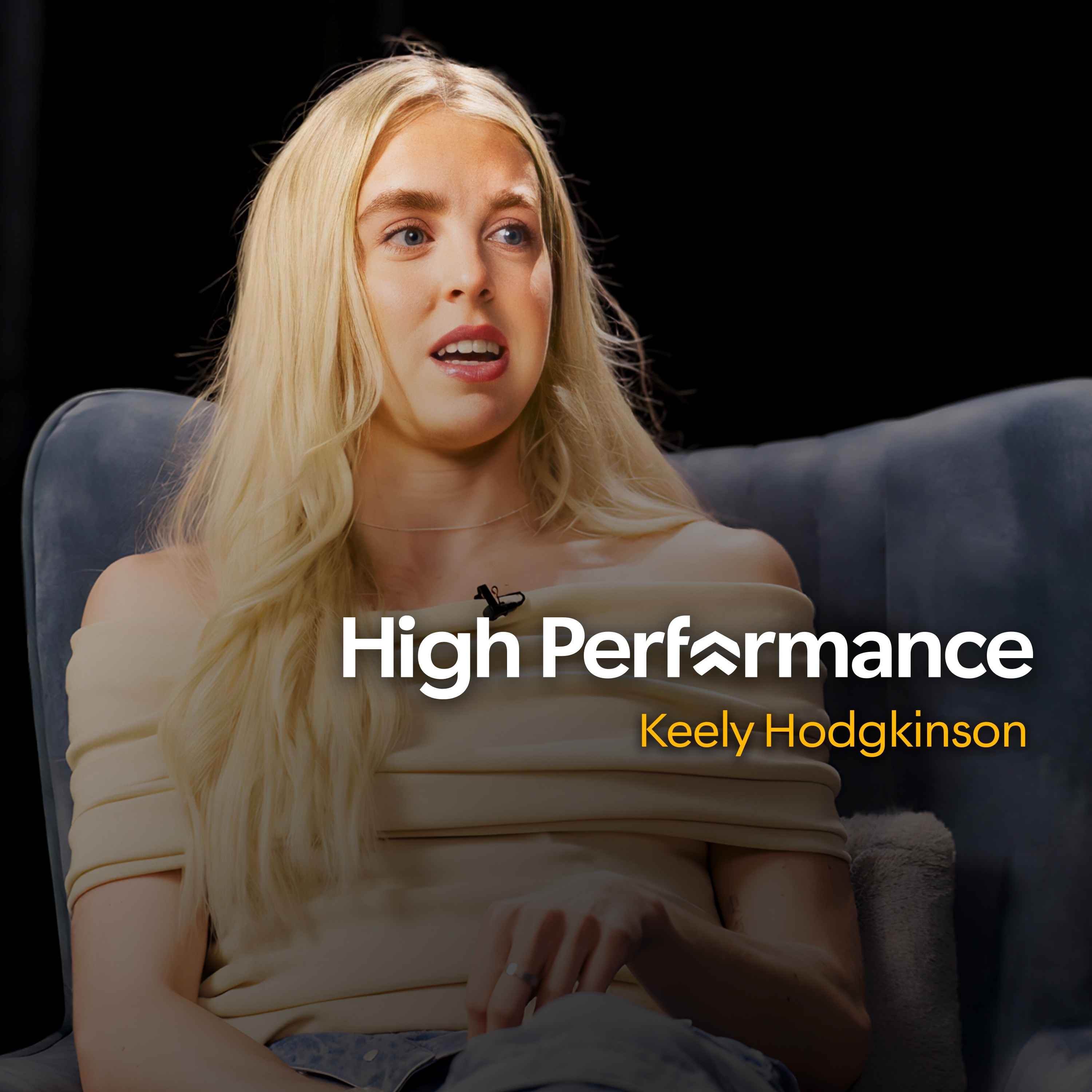
In this episode, Jake Humphrey and Damian Hughes converse with Keely Hodgkinson, a promising middle-distance runner from Great Britain, who is a favorite for Olympic gold in the upcoming 2024 Paris Olympics. The discussion covers her journey from winning silver in the 800m at the Tokyo Olympics to her preparation and mindset as she aims for gold.
Written by AI. May contain mistakes.

Get the gist, explore an idea or ask about something said.
 Claude
On The High Performance Podcast, what are the key points of this episode?
Searching your listeningAutomatic transcript. May contain errors.
0:28Watch it early on the High Performance app. was such a high that when I then came down from that high it was almost like the other things that you used to get high from whether that'd be like going out of your friends or this and that just weren't that high anymore and I just felt like I was always just low. I've just been growing up in an environment that I'm really grateful for with my parents and stuff where they've just always told me that I'm a person that if I really believe it it can happen and that's just something I've had in me since I was like 10.
0:54That is the inspiring talented Keely Hodgkinson who's competing for Team GB in Paris at the 2024 Summer Olympics. And this is High Performance, the show that unlocks the minds of the most fascinating people on the planet. I'm Jay Comfrey, and alongside our expert, Damien Hughes, we learn from the stories, the struggles and successes of our guests, allowing us all to find our own version of High Performance. And the nation expects High Performance from Keeley this summer. I mean, she's absolutely one of the favourites for a gold medal. Her determination, her drive, her talent. She deserves to stand on the top step of the podium in Paris this summer.
1:32We'll wait and see what happens. But I do know it won't be for the want of trying. And you're about to hear all the effort and all the thought that goes into her incredible career. I know you're going to love this interview. So let's get straight to it and welcome Keely to High Performance. But first, let's quickly hear from our valued partners who enable us to give you this content for free. you can now get both of next week's high performance guests up to seven days early on our high performance app right now you can listen and watch a conversation with a true olympic legend an american runner who actually won five gold medals but gave one of them back find out why and also a doctor and neuroscientist who's educating millions across the world both episodes are live right now on our app and best of all they're completely free so join our growing community right now on the High Performance app.
2:52That's U-P-W-O-R-K dot com. Post a job for free and get started today. Ah, DSW. Birthplace of the humble brag. Here, the shoes are so good, no one would ever know how little you paid. If you didn't go telling everyone that is. And with never-ending options for every style, mood, and occasion, all at really great prices, we'll definitely give you something to brag about. So go ahead, stock up on fresh sneakers from your favorite brands. Or try those boots you always secretly knew you could pull off. Find the shoes that get you at prices that get your budget at DSW stores or DSW.com.
3:31This episode is brought to you by Opera Air, the first browser with mindfulness at its core. Now, most of us spend hours every day online, but how often do we pause to take care of ourselves whilst we're doing it? And that's where Opera Air comes in. It's a lightweight, fast, secure browser built not just for productivity, but for your well-being. With Opera Air, mindfulness is built right in. You'll find free breathing exercises, guided meditations, and soundscapes with ambient sounds, lo-fi music, and binaural beats, all designed to help you focus, relax, and even spark creativity while you browse.
4:09Well, Keely, thank you so much for joining us on the show. No, thank you for having me. What do you think of when I say high performance? I think these questions come in already. I think for me, high performance is being able to get it right and produce your best when it matters the most. And fortunately, I've been able to do that quite a lot so far. So I feel like that is something that's really important to me would be high performance doing it when it really matters on the day. You say fortunately, you don't just keep getting lucky time and time again. Yeah. So have you looked at why you keep on delivering when it matters?
4:46I think it has to do a lot with trusting yourself and your ability because you can't control what anyone else does in that race. Like, you know, people in front of you, behind you, their race tactics, your race tactics, and just playing to your strengths. And it's, I feel like with 800, you have to make a lot of decisions on the spot. And I have, there's been times where I've thought, that is where I lost the race, or this is where I won the race, or this and that. And I'm still learning that. I think that's something I'll still carry on learning my entire career. but I've done very well to walk away with a medal from each of my championships so far so I think I'm doing something right now.
5:19Particularly because you're apparently always late for everything. Is that true? Yeah, it's true. How is such a fast person always late? I wonder whether this is just you being able to continue being you if you like in this sort of madness of the athlete's life. Yeah, I feel like a lot of people say I'm quite chilled and relaxed and that would be the weakness of my chilled and relaxed state just being like 25 minutes late for training. luckily my coach is quite chill about it and he's just like you know I do like I would prefer to be on time but I just can't seem to do it your coach you know your coach thinks it's a benefit yeah well I saw a video one time and he saw the same one and it was like lazy people late people are more successful than on time people so I was like I'll take that see that's really interesting because we've met lots of coaches here most famously Clive Woodward you know the former England rugby coach and he said that in his culture of England rugby when he took over that they introduced something called Lombardi time which was 10 minutes early is actually being on time and they felt that You'd be in a world of trouble by the way Yeah, they'd be on press-ups every day But then so many of our guests tell us that they see being late as a sign of disrespect to other people So I'm interested in your view on it I can see that I guess it's also a culture thing as well like if you have meetings I wouldn't want to be late for that but I think in my spot and setup I have with Trevor and my training group is they want to create a relaxed, chilled, fun environment to come to like because I've got to push myself so hard every day his philosophy is just I want it to be fun I want you to keep coming back I don't want to keep shouting at you for this and that but I have a few times told him you need to actually shout at me because sometimes it gets out of hand I'm like you need to tell me no Keely if you're late today or sometimes he'll say training's 9.30 but it's actually 10 so then I'm on time I don't think it really matters about the importance of the moment because weren't you almost late for your Olympic medal ceremony?
7:12Yeah, but that, just on a high, you know, time just went away. One thing I'm not late for, though, is Colerim and race. I will never be late on race day. I'll always structure out and I will turn up when I'm meant to turn up, even early sometimes. So when do you switch on then? Because that's a very definite decision, isn't it? Yeah. I think for me, obviously when I was younger, I probably did used to get, people get quite nervous before races and whenever people start thinking about it. But for me, I find it's a big waste of energy, like really being anxious all week. So I like to switch on literally probably on the day or like a few hours before I leave to go to the track.
7:55Yeah. See, because again, there's a contrast there. We interviewed the woman whose record you beat, Dame Kelly Holmes. Oh, yeah. And Kelly told us about, she had to learn this and the example she offered was in 95 when she came up against Bull Merker, I think it was, in the World Championship Final. And I think it was Gothenburg. And she said that she spent the whole day before the race using up nervous energy, worried about what Bull Merker did. And it was only when she got to the track, she didn't realise the energy had sat from her. So tell us a little bit around how you learned to manage that nervous energy.
8:32I think a lot of it I'm quite lucky that it is a bit in my personality to be quite relaxed and I'd prefer to be distracted away from the tension of what's going to go on in the race because you really can sit there and overthink it and I'm not going to sit there and be like oh no I don't think about it at night before I go to sleep I think about it all the time but it's just how you think about it I think so I'll know what I'll do I'll discuss with Trevor throughout the week you know when we get to the final hopefully everything goes fine what I'm going to do what people might do this and that but yeah I think I just leave it for on the day like because like you say you can take up so much energy and you can get through it with adrenaline but there's only so much adrenaline you're going to have before it crashes and I would just I just don't think I'm the type of person that would do that and like think about it so much to drain that energy so I'm quite fortunate that that is the way that I think So what do you do to distract yourself then and take your thoughts in a more positive direction?
9:24Well I think I'm quite sociable so I like to socialise with people on the team and like there'll always be like a pool table around or laugh people are always laughing and joking I think everyone helps each other out in terms of like just trying to stay relaxed and not think about it. Because when you've got three rounds, if you're getting that nervous for three rounds, like imagine how you're going to be about the final. Like it's a long week, especially last year in Budapest when we had a day between each round. So that's five days of just... And for me, that's quite intense. So I like the day off.
9:53But some people wouldn't like it because they think it's too much time to think. But I think it's just nice to relax, take a seat back and just let it all unfold. You see, Trevor tells a great story, and I'm sure you'll remember this, where you were FaceTiming him about your tactics and your plans for the race. Hmm, this is Tokyo. Yeah, exactly. Go on, you tell us the story. I'm doing my makeup. Yeah, I don't know, he loves that story. I was just killing two birds with one stone. But I think that is an example of maybe my personality and how I can be quite relaxed and not get too worked up about it in my head.
10:23And that is probably the main reason why I've been able to keep my composure and deliver on the day. So tell us how you do this then, because I think that lots of athletes would not do their makeup while talking to their coach a few hours before one of the biggest moments of their life. Because, you know, common thought is, oh, you shouldn't do that. Not many athletes would be late because the common thought is, oh, you better be on time. How do you remain you in this world of people telling you that this is how it should be done? Yeah, almost seen as like a bit unserious. I'm not taking it seriously.
10:55I remember another time that day on my Garmin watch it said that I was like peeking just before the Olympic fight and I wanted to send him a picture of it but I thought he's gonna think I'm being so stupid if I do that like concentrate on your face so I didn't end up doing it but I did take a picture on my phone um but yeah no I think for me I was just being myself I literally was just being myself and I was having so much fun in the Olympics like I was very much an underdog back then no pressure on me at all I knew I could get a medal he knew I could get a medal it was just figuring out the best way to do that and once we figured out it was like well I've run a million eight hundreds in my life just go and win another one and it sounds so simple because it is it really is that simple and I know there's a lot on the line Olympic medals can really change my life 100 % back then but I think you just have to take it back to that basics of literally just another race in a really big stadium.
11:47Love that. Oh yeah. So how do you manage it then when because if you think of it through the lens of you've got the weight of expectation you've got your ability of I'm just going to run another race I've done this thousands of times and then the consequences that are there of you can change your life by winning a medal here how do you process both when people are trying to put the expectation on you or talk about the consequences of success or failure? Yeah, that is something that's changed over the years because obviously when I first did Tokyo I was very much an underdog that year would probably be the easiest year of my life I look back and I'm like God, it was so easy.
12:25Because I was upcoming, I was young, didn't matter if I meddled or not, didn't even matter if I made the final or not, didn't even matter if I made the team or not, because I was just doing my best, and I was like, just started uni. Whereas now it's like, okay, I didn't want, when I won my silver in Tokyo, I really didn't want to be just the young one that got lucky, and was like, oh yeah, she just got that medal one time. Like I wanted to back it up and be like, no, like I can do this year after year. So that next year was quite difficult for me in terms of flipping that mindset. And now instead of being an underdog chasing everybody else, I was now one of the targets.
12:57And obviously the American girl, she was the main target. But even like racing the circuit that year, like the year before I was coming fourths and fifths and I just raced the Olympic final so well I got a medal. But that next year it was like, no, I want to win on a weekly basis. I want to do this, this and that, run more consistently. But I think, again, it just goes back to shipping it back to basics. Like that's one thing that I've spoke to about my psychologist and with Trevor like just go back you know what you do in training our training is so good that I know what shape I'm in the second I step on the track I know what I'm capable of and that really helps in my confidence because some athletes may be like they might see it as like no don't tell me that I can run that time it might be too much but I'm like Trevor I need you to tell me in fact I'm 155 I need you to tell me because then I'll believe I can do it so I think that's how my mind works like I need that like confidence from the group around me so when you step on the track then are you focused on going after the gold medal or is it just literally, I'm going after this time?
13:56See, that's a sticky one because I think there's a difference. So in Tokyo, for example, I raced for a medal, which is very different to racing for a gold medal because you can race for a gold, go really wrong and come fourth, fifth and sixth. But then these last two years, for me, I only race for gold if I know for a definite I'm walking away with a medal. And Trevor's very honest with me about that. If he thinks, yes, you're in a position that you can get a gold if you want it, we're going to race for the gold. In Tokyo, maybe he didn't fully believe that I could win, but he was like, you can definitely get a medal.
14:32So we ran for a medal. And if I ran another way, maybe I wouldn't even got on the podium. So it's a very honest conversation you've got to have with your coach, I think, about really what position are you in. But in terms of time, the time tends to just come with it. I run my best times not even trying to go for a time. they just happen to come because I think on those days you've got to be very relaxed the weather's got to be good you've got to be feeling good the warm up's got to go good a lot of factors going in whereas if you're racing for a medal it's like you don't even think about the times you're just thinking about the people around you and what positions to put yourself in and excuse my naivety here but I'm thinking what's the difference between running for a medal and running for a gold medal because in my head I've always thought when I watch you all competing you're just going as quick as you can for as long as you can, right?
15:23But there's obviously an awful lot more to it. So would you mind sharing for our audience actually what happens in the thought process? I think it's definitely a mindset switch. Because when you're going for a medal, like there's three opportunities. If you're going for a gold, there's just a one. So it definitely is a bit more pressure on yourself, I would say. And a bit less opportunities to make any mistakes because I feel like one mistake and you can just lose that gold. But like I said, I would only go for that if I knew 100 % I was in that shape. so Budapest I race for a gold Oregon I race for a gold So what are you doing then when you're racing for a gold?
15:53I think you just got your mind on that gold I can't really explain it it's just a mind thing I think it's just like a mindset shift in like just a self-belief of like no I can get that gold and we're going for a medal and just maybe the tactics that you make you might not go as early because you might because you're thinking I don't want to burn out I definitely want to make sure I'm in that medal spot whereas in the gold you're thinking no I need to be on it like let's go the whole way see how far you can go but I think if you watch my races back now that I've said this you might be able to see the difference in my Tokyo race compared to my Oregon race whereas Oregon I was on at the front I was really trying to get the American girl whereas in Tokyo I was in seventh until about 200 meters to go then I started coming through but I do remember thinking the last hundred in Tokyo right see if you can catch it see if you can catch it but the line just came too soon but yeah I think it's just a mentality switch of just like you really have to believe you can get gold in order to run for it but does that not create a sense of desperation and if so is that helpful for you i guess so a desperation i think it's more just like something i really want like i really want i've got three silvers now so i really want to upgrade um that to that goal but i think something i've been working on with like my psychologist is that switching mentality of because it can be quite scary as well thinking okay like how am i going to find this extra one percent to like upgrade to that goal against these really really good girls and you can't control what they do so i think just really believe in the narrative is what we've been working on and i'm quite a visual i'm quite a visual person so i like so in tokyo like i kind of just knew i was going to get the silver i had just something i visualized all the time all the time and i knew i was going to 155 as well.
17:36I remember thinking, I'm going to 155 today. I'm quite intuitive, I feel like. So when it happened, I wasn't necessarily surprised. But then fast forward to Oregon, I genuinely thought I was going to win that day. I didn't. I lost by 0.08 for the gold medal for the world championship title. So yeah, I think something I'm working on is just like really believing how much I believed in myself to get a medal in Tokyo. I need to really believe in myself that much to be able to get the gold. And that leads us into, I mean, there's really interesting research on this about counterfactual thinking. I don't know if you remember, like, the research was originally done at the 92 Olympics, where they went and questioned athletes that had medalled.
18:17And what they found is that bronze winning athletes were happier than silver winning. Because we're both asking what if, but bronze medal winners went, what if I hadn't raced as well and come forth, where the silver medal winners were going, what if I'd have raced a bit harder and got gold? And got the gold, yeah. So how do you process, having got three silver medals, what's your what-if thinking then and what's it doing in terms of changing your approach? I think it definitely helps me push myself on a daily basis. At this point, I'm trying to find as many little 1 %s as I can. I've slept sleeping better, eating better, training hard, even though I do train really hard.
19:02but yeah like you say with the the bronze that could go either way of if you were not even meant to get a medal and you got one any color it doesn't matter you're going to be happy whereas in silver in the next year like I was disappointed with my silvers and it does afterwards make you think okay you were analyzing the race thinking where did I go wrong here where I can look back at Budapest and I'm like that's where I lost it so tell us where was it you lost it giving away all my secrets now no um for me my plan going into that race was to really stick I didn't know who was going to take it on didn't think it would be me because I think one of the other girls was going to do it and the American girl did but she took it out really fast 56 dead is very fast paced for us for the first lap um and I think I just had a little moment of a doubt at 300 where I let the Kenyan come past me and there I was in fourth because I had the other British girl on my inside Gemma and then I had the other two at the front but that already created a gap which meant when it came to the last hundred although I caught them up the Kenyan already had the jump on me so even though I caught the gap and my hundred may have been faster than hers she already had that meter and at that point in that little tiny percent I'd lost it.
20:12It's so interesting that we just watch a race and see people running and there's so much to think about getting on your head which leads us to a really interesting question which is to what extent do you think your success to this point has been mental and to what extent has it been physical? I'm probably going to say like 90-10. 90 % mental, 10 % physical I'm going to say. Just because I think if I go back to again the Tokyo year, like I don't think anyone apart from Trevor or Jenny really believed that I would even make the Olympic team or even run sub two that year. I did knock off a big chunk of my, like six seconds off in a year, which will never happen again in my life but yeah I just think my I've just been growing up in an environment that I'm really grateful for with my parents and stuff where they've just always told me that if I'm a person that if I really believe it it can happen and that's just something I've had in me since I was like 10 so I think when it came to that year I was just like no I can't no I can't even when I ran the Olympic qualifying time I still don't think people thought I was gonna make the team whereas as long as I believe and I've got Trevor believing in me and Jenny then that's all I really need and I think that will just push me on to do and I do like pipping people wrong yeah this is why I'm so so pleased that you work with a psychologist because it's you know it's a very common answer I mean 90 % is high Dan Kelly Holmes said 80 % mental 20 % physical it's in that same ballpark but then we've had athletes sit in front of us and we we say how many hours a week are you working on your body 36 40 hours a week what about working on your mental resilience and your mental to have oh zero so 90 of your success is mental therefore it's mad that you don't put loads of effort and time into that part of your training yeah i think it was something that not many people i mean when i was definitely younger i was like i don't need that i'm fine because i actually started working my psychologies first for me off the track not really anything to do with the tracks i felt like at the time i was fine um but then now slowly i'm like trying to get into that gold little mindset you know.
22:14From what age were you when you started working with a sound contest? I probably started working with Tom now for about two years. It was 2022 I started working with him. Okay. And for me back then it was more about the me getting used to the switch from just being like teenage girl just finished uni to then like just a different life like I'd bought my own place I'd moved out there was a new sort of pressure I was more struggling off the track personally than I was on but then now I've gone through all that I feel like I've grown into the role now and now we've worked more towards tracks of the road.
22:46How did those struggles manifest themselves? Because it's not uncommon that when the thing you've always wanted starts to happen, it's amazing how much that can actually negatively impact your mental health. Yeah, I think I didn't actually realise how much the Olympic countdown is actually a really big thing. So I feel like the best way I can explain it would be I was 19, I had such a big high because Olympic medal is something I'd dreamed of. You know, did I think it was going to happen at 19? No, absolutely not. It just kind of did. But then I feel like that thing was such a high that when it then came down from that high, it was almost like the other things that you used to get high from, whether that be like going out of your friends or this and that, just weren't that high anymore.
23:27And I just felt like I was always just low and sad. And I would actually say I did hit a stage of depression at some point. And I just was like, but why do I feel sad? I don't have to feel sad about. So that was like a struggle. Because you end up thinking, my life's great. what have I got to feel sad about but it was just I couldn't really get any sort of high from anything else so I was just working on you know getting used to that switch and then it became all about the little things and spending time with family and really pushing time and being at home and then eventually it came around and I'm so pleased you said this because you know we work with some mental health providers on this podcast it's really important to us to have this sort of conversation you would be amazed how often athletes wait till they retire before admitting this kind of stuff and I think it's a shame so what has the psychologist said to you that might be helpful for people who are watching this and they might be in a similar situation um i think for me it was because although i did drop out of uni after um well i actually decided before tokyo that i was not going to go back to uni because it wasn't really for me it was just finding again the pleasures and the small things and taking it day by day and whether that was literally getting out of bed and making your bed in the morning was like a progress or i just didn't couldn't look too far ahead i had to just day by day and plus the next year when we had three championships to do in one summer we had the world the commonwealths and the europeans still no idea how i got through that because it was so much racing but i think it was literally one day at a time find little hobbies that i like to do so like i now learn to play the piano as a nice little peaceful thing i just think i found joy in the in the small things and i wanted to feel like it wasn't a chore to go to training it was a pleasurable thing um and we just slowly worked on that and just took our patience i'd say I don't have a lot of patience but I think patience was the the big one that we factored in and what advice would you give to people listening to this that maybe recognize people in their life are struggling what was the best piece of advice you received from your inner circle I'd probably be my mom to be honest like I feel like as a parent she's probably one that really didn't understand and like at the time and being so young my friends they hadn't really been I was in a very different situation to them and And I didn't really talk to them about it, to be honest.
25:39Because, you know, how much would they understand? Probably not that much. But my mum was like, no, I totally get how you're feeling. Like, you might feel guilty for feeling sad or whatever. But, you know, I think she just spoke to me on FaceTime. I lived in Leeds at the time. And my parents are from Manchester. So we just took our time. And I think she just listened to me. I just like me to listen to. I think the best thing is to do is to sit down and listen. Can we go back to the start of your journey? because when we were preparing for this, I read a really interesting paper by a psychologist called Marie Effering-Gemse who wrote a book called Elite Athletes and how they get there.
26:16Yeah. And there was two factors that she identified with lots of talented athletes about making that leap into Olympic level like you did. Yeah. One of them was that around the age of 13 to 15, the athlete would take early ownership of their career, whether it was their training or who their coaches were going to be or how they were going to do it. How old was that? Between the age of 13 to 15. It's quite young, isn't it? And then the other one was something around, they demonstrated a level of grit, like a test of character and resilience. Okay. And I'm interested in your story, if you can recognise those two factors and if so, how they manifest themselves.
26:56Yeah, I probably could actually. I think my moments of grit, I think I probably think back to two. so when I was about 12 13 I had a ear operation um I had a mastoid ectomy which is like a tumor that grows and it had grown been growing for about 10 years the doctor's thing and it crushed all my hair most much actually half death in this ear um and I had to get it removed but because it was like near the brain I literally I couldn't walk I couldn't go to school for a month then I had to have like three months off any kind of like jumping moving my head and even though I was so young I was still training quite like quite a lot like I used to swim before I ran um so that for me coming back from that like I actually wanted to quit and be like no I don't want to do this anymore like it's just like the comeback I come back from nothing like not even able to bike or no fitness at all was very difficult for me so I was like I'm just gonna do it for fun and then soon my competitive side kicked in and I was like no and then all of a sudden I think I won my first national title when I was 15 and the next year was the European under 18s and I was like oh I said to my dad I really want to make that team um the next year yeah fast forward I ended up winning it that was my first international debut that I won so I feel like through those years was like a a good moment of testing I was quite young and the other one would be I remember I say I say this people as that as my make or break point I was about probably similar age maybe just before I had the operation and I was racing um a girl in Manchester and it was the great Manchester schools like you think back and you think you think it's the world at that age but it's really not and I didn't want to do it I was like I'm not doing it and I knew that me and this girl were going to be really really close so I was like oh like it's not going to be an easy win or anything and my dad actually bribed me with a pair of shoes he was like if you do it I'll take the self-injews and get you a pair of shoes and it's like it's probably against his parenting but it's probably the only time that he's done it and I remember he tells me I was like yeah I had to ring your mum and say I'm so really sorry I had to bribe her um but I did it and I won by like 0.01 but I I'm adamant that if I hadn't if he hadn't have made me do that race I think I would have just quit shied away and just so he really pushed me out of my comfort zone um which I feel like has helped complement who I am too which leads us into a really interesting area about intrinsic and extrinsic motivation because lots of athletes would say oh it's all about just getting better and learning the craft but the reality is it's probably a mix of both isn't it sometimes you need to incentivize yourself with a pair of shoes as well as wanting to learn the craft yeah that's quite funny um yeah i would say so i think you need other goals as well maybe i think a lot of it is i think the last couple years definitely been about getting better and this and that and then but then eventually i feel like when you've been doing it a long time you may need other motivators as well and if that's what makes you do it So what are you using to get you a gold in Paris 24?
29:57It's going to sound so materialistic I think I wanted a new car and I was like if I get the gold it's a nice payday and I will buy myself a new car I wanted a Porsche, like a sports I don't know which one it is it's like the low down sports one but in this really nice beige colour it's just hot Would you allow yourself to buy the car if you've got silver? No. Really? Yeah, no. So it's gold and you get the car? Yeah. There's something else that I think we should touch on because there's two points to that research. The first one was about grit. The second one was taking responsibility. Yeah. Obviously, these days, you're taking responsibility by saying, get a car, forget the gold.
30:36Let's rewind, though, to when you were younger. Do you remember a time where you took responsibility away from coaches, away from parents, and put yourself at the centre of some of your decisions? Yeah, I think there will be quite a few, but one of the main ones was actually probably when I joined Trevor. I was about 17, just after the summer. I'd known Trevor and Jenny for a little bit because they're from my area. But I kind of knew the setup that I was in, even though I used to be with the club coaches at Lee Harriers, and they were so good for me growing up. They did a lot for me. They really believed in me.
31:08But there did come a point where it was like, right, if I want to be better, I need to leave this and move on. How did you know that? I think I just knew, like I was going to trainings, like the range of people there was just, I'd surpassed it at this point. And as much as my coach at the time, Margaret, would want to do everything, I think she was almost relieved when I told her I wanted to leave, which is unusual because some coaches would probably be annoyed thinking, why would you want to do that? But it shows how much they supported me and they wanted the best for me. But at 17, having that conversation, I think, with someone who I didn't want to hurt their feelings and it was very awkward and I don't really like conversations like that.
31:44it was quite a big thing for me. But I think it showed how much I really did want the best scenario for me. So I messaged them. I was like, I want to have a conversation. I'm thinking of joining Trevor and Jenny. If Trevor and Jenny had taken me, they actually debated it at the time. I was like, do we really want to take on this girl because it could change the course of their life completely? And it has because now they dedicate their life to me and their group. But luckily they did. And then it was actually quite a peaceful transition an end but I think that for me was quite a confrontational moment.
32:17Tell us about that conversation because that's a very mature thing for a 17 year old to go and do with a long-standing coach like that. Yeah I think I just kind of knew deep down that it wasn't right for me and if I did really want to progress I've got one of the best world's best coaches on my doorstep why would I not take that opportunity but I just didn't want to hurt their feelings like they've done a lot for me they still do I still go and see them and they still support me all the time um but I think I think it's just that you know how they were going to react and me being young like I've managed to keep my parents out of it actually I wanted to do myself which is quite good with help from my dad obviously and things like that so I think it was just a bit of a character development as well being able to do that at a young age and progress forward
33:06If you're still overpaying for wireless, it's time to say yes to saying no. At Mint Mobile, their favourite word is no. No contracts, no monthly bills, no overages, no hidden fees, no BS. I made the switch because I was tired of those ridiculous bills and sneaky charges from my old provider. With Mint, I'm paying$15 a month and getting the same high-speed data, unlimited talk and text and the coverage on the nation's largest 5G network. Look, honestly, the quality is just as good, if not better than what I had before. And the best part? You don't need a new phone. You can keep your current one, bring your number, and all your contacts.
33:41I use Mint Mobile, and you should too. Ready to say yes to saying no? Make the switch at mintmobile.com slash HPP. That's mintmobile.com slash HPP. Upfront payment of$45 required, equivalent to$15 a month. Limited time new customer offer for first three months only. Speeds may slow up a 35 gig on unlimited plan. Taxes and fees extra. See Mint Mobile for details.
34:30PricerK.com. Post a job for free and get started today. Ah, DSW, birthplace of the humble brag. Here, the shoes are so good, no one would ever know how little you paid if you didn't go telling everyone that is. And with never-ending options for every style, mood, and occasion, all at really great prices, we'll definitely give you something to brag about. So go ahead, stock up on fresh sneakers from your favorite brands. Or try those boots you always secretly knew you could pull off. Find the shoes that get you at prices that get your budget at DSW Stores or DSW.com.
35:11There was another lovely story that Trevor, your coach, shared with us that he did, though, that really jumped out to me, is when you went and recruited two lads from your class that were faster than you to train with you. Oh, yeah. Yeah, that's probably another moment, actually. Yeah, will you tell us about it? That would be before I moved. So that summer, I'd shook with shin splints the whole winter, and Trevor had helped me with the off-the-track training, like on the bike. I'd never been injured like that before. When I came back, like I said before, with the difference, I was training with my mum.
35:44Me and my mum were in the same training group, and that's when you just know it's not right. My mum was like, yeah, I don't think we should be training together. So then I was like, said to my coach, Margaret, I said, oh, any chance we could get, just come a bit earlier. so then we can get the proper recovery times and the proper do it properly. She's like, yeah, yeah. So then the boys are happy to come and help me. I've had a lot of nice boys come along and really help me out over the years, you know, because they don't have to. And they could be thinking, I won't get beat by go. And what did they do?
36:13So you went and asked two guys that were faster than you to actually come and push you on, is that? Yeah, yeah, just train with them. And it's better, it's nicer to have people to do it with. I could have come and do it by myself, but when you're chasing people, tend to get more out of yourself. So this takes us nicely onto what you think. makes a great coach? I think a level of getting on with the athletes really well. I don't really like it when I see coach-athlete relationships and they're always arguing or they're, not that I've seen many in my time, but, you know, you hear just bad stories and I'm not going to sit down like me and Trevor get on all the time.
36:45You know, I mean, I see him more than I see my own parents and my own family every day. When we're on camp, it's like twice a day every day. So there's definitely, I think it's being able to cope with that as well. there is going to be disagreements and I ask questions of why are we doing this, why are we doing that, or et cetera, et cetera. And he's very good at handling those things. I think also creating a fun environment for the athletes to want to come back to. I think he said that before when he was talking to you and that's his big philosophy. A fast athlete is a happy athlete. So even though he makes terrible dad jokes all the time, it creates a really nice environment and I feel like everybody in our group likes it and we always have a laugh and a joke even though it's our job technically.
37:27Do you feel able to question him? And is that important? Yeah, I do. I think as I get older, he said before, you know, you might have more input in what you do because you've had way more experience. Currently, I've been with them four and a half years. I kind of know the plan, but he still adds in more things and I'm like, it just gets harder every year. Like, you think it gets easier, it doesn't. So, you know, I'll say, why are we doing that? Or, you know, I'll be like, no, I'm not doing that. And then we do have a little back and forth sometimes, but ultimately why we worked together so well when I first came to it because I just trusted him completely.
38:01I trusted his experience and I didn't know anything and it's worked out so well. Why would I not trust him now? It reminds me of when we were lucky enough to sit down with Dina Asher-Smith. She spoke to us about the relationship with John Blackie, her coach, and she recounted one example in the World Championship semifinal when she had a bad start and got through and she said she was in real panic mode thinking what do I need to do? How do I need to improve? do I need to do extra reps? And she went and spoke to John, who just said, do what you've done a thousand times before. Yeah. And that, to her, was an example of great coaching.
38:35Yeah. Can you give us an example where Trevor or Jenny have intervened and made a real difference through what you would recognise as great coaching? Quite a few like that. Like, I think as an athlete, one of the hardest things is to say no. Like, most athletes at the top, they'll always want to do more. How can I get better? How can I do this? And you need, well me I need someone to tell me when there's too much and when you're like no you don't need to do anything or you know there's been times like I do emphasize a lot on my like pre-race sessions because some of them will tell me exactly what shape I'm in and you kind of get a bit scared about what's going to come from the clock because it's going to tell you exactly what's going on but like I remember before Oregon um I had a really bad pre-champ session and that's kind of the one that I'd always rely on to be like filming with confidence and I was like crying off the track like no it's gonna be terrible he's just like one bad session is not gonna make or break you for this champ you've done a year's worth of stuff and I think it's just remember he helps me remember that like just to keep calm keep your focus you've done all the work it's all there and it's just it's very easy to just offset by one thing so I think that for me is the good coaching of being able to just take the composure as well can we talk about a day of you and your coaches and what does it look like what does a day look like for you in the build-up to the olympics day every day's a little bit different um i see Trevor pretty much every day i'll go for a tuesday a typical tuesday track day so we get up go to be meet at the track about 10 a.m if i'm on time um we'll have a bit of a chat stretch and roll everyone will come do a warm-up do some hurdles or whatever get the session done that can take up to about two three hours depending on how much everyone talks then have a break if we're on camp then i'll see him twice in a day um we'll go for lunch sometimes i'll go for lunch in the city center with my friends then later on i'll go back to the gym double day cross train maybe some core and that's my day done it sounds quite easy but so how do you know you're working hard enough see that's something that actually crosses my mind quite a lot really yeah where you just think like some days some sessions might feel really easy or not easy but you're thinking oh I feel really good today like I'm not throwing up in the bin over there like am I okay but I think I think it's just this there's a rule of three I've heard a lot of people say like the rule of three is something like out of three sessions a week you might have one that's average oh okay and that one might put you down because it's not as good as where it has been or there's been times where times I've been that good but I'm absolutely dying I'm like am I just not fit your body's not going to be 100 % all the time I think that's important to remember I think there has been times during sessions where I've been like am I working hard enough or am I not but it's very easy to say that when the workout's done yeah because during it when I'm absolutely dying I'm you're like I can't go any harder my legs are finished I can't get I can't get up but then when you're done you're like no I definitely could have gone half a second faster on that rep but that's the mind playing chicks on you I think because when it comes to the end of that year I know as long as I follow Trevor's process that I will be fine I've heard you know Steve Magnus the athletics coach in America he's a brilliant author as well and I've had a really interesting idea from him I'd be interested whether you use this where he says in training where you're doing lots of reps like you he said he finds it more helpful rather than constantly striving to raise the bar raise the floor so it's almost like as long as you can guarantee that consistently I can run a certain time you give yourself the opportunity that on those days where you do feel good you can then raise the bar but actually you consistently yeah I would agree with that actually I think definitely one thing I've learnt over the last couple of years is to like recover recovery is very key and I think when I was younger like when I had like steady run days I think a lot of athletes are probably guilty of this of like pushing it and being like and you're absolutely knackered like just doing a 30 minute run being like dying whereas the days are meant like you need recovery time I think the one thing I've learnt is I've always thought oh well if I don't like I'm going to lose fitness or something silly like that but then now I've gone through the process I've been like no you need to chill out you need to recover and I've ended up running better so I think the rest of the years is nothing but madness So what is a world class I mean there'll be lots of people listening to this that are like I need to be better at recovery what advice would you share with us?
43:09I go back to the saying no thing with a lot of people can't say no everyone's different obviously but I think I am a person that will always be looking for more to do more if my SNC coach sets me 10 to 12 pull ups I'll do 12 that's just how my mind works and if my coach says just do 30 to 35 minutes I'm like is it 30 or 35? tell me which one and they'll be like just do 30 so I think for me it has been learning the art of saying I have one rest day a week my week is very intense like training for 800 like most days it's twice a day it's quite an exhausting life so I think the big 1 % I'm looking for now is how I can get it in the recovery so yeah we're talking at a time where you need to get it right because we're in the build up now to Paris 2024 Olympics so how do you not let the the fear and the doubt and the risk of injury and the worry about your opponents and all these other things that will start to swirl around in your mind.
44:09How do you not let those derail you so you go into those Olympics in the right space? It's definitely hard. I've just probably been through that. Like, the reason I missed it indoors is because I tore a ligament in my knee a couple months ago and people weren't really telling me how bad it was. I mean, it's because I think people were trying to protect me from that and I'm just like, well, if I knew it was this long then I would have been fighting in my head because I'd have had a set plan. That's just kind of how my brain works. And I think I've not really had an injury this big in a long time.
44:40So I think it was like full recovery was three months, but I started running again after two. Eight weeks out is kind of a long time to have out with no running at all on the bike. I hate the bike. I hate it. And being injured is a lot harder than actually not being injured because it takes up more time. You've got rehab, appointments, physio. So it's just annoying. but you definitely are thinking like, oh God, this hasn't happened. It's an Olympic year. Like last year went so smoothly. What's going to happen now? And I think it's just, again, Trevor was so chill. He's like, it's fine. It's not fine.
45:13It's fine. So definitely good. That's because he knows you though, I think, isn't he? Yeah, probably. There'll be other athletes where he might say something different. Yeah, he knows I'm always willing to work hard and killing myself on the bike every day. So I was fit when I came back but you know, you've got to work on that sharpness. So definitely now, I'm like, can't get injured, can't afford any more time out. I'm in a good place now and training's going really well. I'm fit, I'm healthy, I'm fast. So now it's just maintaining that. And to be honest, there is nothing I could do. Nothing more I could do.
45:41I do everything I can. I recover, I train well, see physio, eat well. You just kind of got to hope for the best. I think with some injuries, they're just unpredictable. Like with my knee, it was a freak accident. I twisted my ankle and it's gone up to my knee and I've carried on running and it's torn. That's not even my fault. There are even more frustrating ones. So you just have to hope, I think, sometimes. What about rivalries? When do you start thinking about your biggest rivals for Olympic gold? I feel like you're always kind of thinking about it, to be honest. Like, I'm not going to lie, you're always thinking about it.
46:15Like, you know, wonder what they're doing, what shape they're in. Because none of my main rivals have actually raced indoors this year. So no idea what shape anybody's in. Who are your main rivals, you think? I'd say currently they're probably, I think the other British girl, Gemma, is up there. Definitely in terms of domestic, because when we go to British Champs, she's definitely one of the world's best. The American girl, I think Mo, and the Kenyan girl, Mary Maura. I don't race the American girl a lot. We probably actually race about four times. So I don't, it's still yet figuring out how she races.
46:46But with Mary, I tend to see her quite a lot on the circuit. And Gemma as well, so a bit more confident with them too, I guess. But yeah, you just don't know. I think it is definitely 80 % focused on what you're doing, 20 % on maybe a little sneaky eye on what's going on over there. Well, again, there's some really interesting research on this, Keely. There's a guy called Gavin Kilduff that wrote a book called The Upside of Rivalry. Yeah. So rather than see it as a bad thing, it's like, well, what are the benefits? I love it. Well, one of the things that he talks about is that there was one study with cross-country runners that said when you have a rival present, you tend to run about five seconds a kilometre faster by having somebody there.
47:24So how do you not see it as an induce that threat state that can come from seeing a rival and instead see it as a challenge state? What do you do to process that? I think, again, it's definitely a mind shift of trying to see the positive side of some things. So when we do get together, I've produced a lot of my fastest times racing her, especially the American Girl. I think three or four of my fastest times ever have been in championship finals racing the American Girl. So that's a bonus. you're only going to bring out the best. I think I've broken two British records with her in the race. And I think it's just not shying away from it because I always think in my head, no one's going to kill me if I don't win this race.
48:06Like, my life's not over. It's fine. And I just think, I just don't want to walk away with any regrets. Like, I remember the last thing I said before, I was like, right, just don't make any mistakes that you're going to regret or don't not commit and regret it later on because you can't go back and you have to wait for the next one then. and like the next time I'll probably race here is the Olympic final. It was a whole year to then go and get it right again. So I think it's just, yeah, no regrets and just go for it. There's a great phrase that success leaves clues, right? And the lovely thing for you is that the clue is you keep beating these rivals when you need to.
48:42That must be lovely for you from a mental capacity going into the Olympics. Yeah, it's definitely good knowing I am capable of doing it because I feel like every time we line up, it's a different order. Unfortunately, I always come second. But it's always been like maybe the Kingsman or the Americans were not, you know. It's always been a different, which is what makes it quite exciting at the moment. One thing when I was growing up watching athletics, like Jessica Ennis and Mel Farah was, how do they come back and keep doing it over and over again? And it kind of took me a while to kind of consider myself someone like that, because I look back and I've managed to do it quite a few times now, which is quite good.
49:19But even now, I couldn't give you an answer on how I do it. I think it's just one year at a time, one race at a time, one champs at a time. Because like I said, look back at my friend, I think, how did he win Olympic, Olympic, Worlds, Worlds? Like it's actually really impressive when you break it down to come back year after year and produce the best. Crazy. Have you ever had the opportunity to ask either of those? No, I haven't actually. Definitely something I would... Even Kelly Holmes, like doing the double, that is probably very unheard of now, doing the 8-15 double. any kind of double crazy so just how did she do it?
49:55Kelly told I mean I'm not trying to answer for Kelly but when we spoke to her she told us that lovely she shared a lovely extract from her diary that she wrote at the start of Olympic year where she'd spoken to her about feeling it was her destiny but she'd started working with a coach out in South Africa yeah just for when we go there yeah and she she said that one of the exercises a coach had done was asked her to write down all her strengths all the things she was good at and then write down the things that she felt had let her down and when she did that she wrote a long list for all the strengths and then there was two things which was bad luck and injury and then she felt like she could do something about the injury stuff by being kinder to herself and things like that so what are the kind of tips and techniques similar to what Kelly shared with us that you're doing to put yourself mentally in that gold gold medal winning mindset that um i think for me like i i remember in tokyo we got like a diary thing and i'm not really a writer down i remember i did actually because i wanted to look back and like look back and like you know think oh what was i thinking at that time and i write it written down like how the heats went how the semis went how the final went and i feel like it does help but i'm quite a visualizing person so for me i think to get into that mindset it would just be like what's it going to feel like winning that gold or what's it like all the hard work i've put in like i think it's that feeling that i'm chasing of like i finally did it i think that's what really helps me keep going and pushing for that i've been quite fortunate that my body's pretty healthy most of the time and i've not been subsided with bad luck like that a lot of athletes are it's really unfortunate um nothing i can really do about that i just gotta keep in that mindset of visualizing what i want and almost manifesting it So how often do you visualize our manifest?
51:44Probably every day. Yeah. Yeah, probably. And even if it's in the back of your mind subconsciously. What's in your head when you're manifesting? Is it the gold? Is it standing on the podium? Is it celebrating back home? What do you see? All of it, I think. Just different snippets. And you're just like, I really want that. I think that's just always kind of worked for me in the past. Like, I visualize something that I really want and I almost believe it so much, I just make it happen. So, obviously, it's not always happened and you fall short a few times, but I think that's just something that's really helped me like depends what kind of person you are I think but could work for others We had an expert on Roxanne Fousey that wrote a book called Manifest Okay And she was at pains to point out to us that just wishing it isn't the answer it's about then marrying up that really rich picture Yeah with the hard work that underpins it Yeah So on a Tuesday when you do the double session and you know it's going to be hard do you manifest before you get out of bed that gives you the energy?
52:39I think it will be more like when it gets to like the last two reps and like I probably have already thrown up inside of it and I'm thinking I just want this to be over. It's like that ability to get back up onto the start and do another one and just put yourself in even more pain and just thinking like this will all pay off one day. Like it will come together and you will get that. I think that's what just helps me keep going I think. Should we run through a few quick fire questions? Yeah, go on. Three non-negotiable behaviours that you and the people around you should buy into. Accountability.
53:14honesty
53:20and I think happiness actually I think that's really important to just be happy nice bring the optimism yeah yeah what advice would you give to a teenage Keeley just starting out
53:34I'd say don't forget to live your teenagers make sure you're always having fun doing it and that don't compare yourself because I think comparison is the thief of joy we're 20 seconds away from the gun going at the start of the Olympic final what's going through your head oh I'll be thinking this will all be over in about 2 minutes and 10 seconds so you'll be fine and also I'm probably just telling myself like let's go like this now is now or never and just really raring to get off that line to go, yeah. What's the best piece of advice you've ever received and why? Ooh.
54:20Best piece of advice. I think it would actually be what I've just said about the comparison. I think growing up, I was never top of the UK rankings and everyone always focuses on top of the 17th rank, top of the 20th. I never really was. I was always fourth and fifth I mean I think it's a bronze every now and then and I think it was just patience and just sticking to your craft and what you're doing and making it through those teenagers into the seniors is one of the hardest things so to be able to do that in one piece was quite good I think so just patience What's your biggest strength? What's your greatest weakness?
54:56I am a strong believer that people's biggest strength is also their biggest weakness like it's the same thing so mine probably would actually be my stubbornness I'd say I think it's I'm stubborn in training when it comes to like I want to do this now I want to do work as hard as I can do the best I can but if I don't want to do something I'm not doing it so I think yeah get the balance and the final question what's your one golden rule to live a high performance life?
55:29Satisfaction I think in terms of if I can just walk away from a day feeling like I'm satisfied whether it's been a good or bad day I've made the right decisions then I'm happy thank you so much fascinating and all of us wish you the very best Paris 2024 thank you very much it's exciting you are the queen of the north thank you Keeley
55:54Damien Jake I am cheering for Keeley at Paris 2024 I tell you oh me too what a pleasure it was to meet a young person that's just so comfortable being themselves. And I think that was the magic in that conversation. Like, it's hard to be yourself when you're on the global stage. It's hard to be yourself when you live a life as abnormal as hers, pushing yourself to the limit all the time. It's hard to be yourself when there are athletes you're competing against, doing things that are different to you all the time. It's hard to be yourself when you're suddenly being photoed by Vogue and you're being featured and spoken about across social media and the internet and things.
56:30So I think what that shows is incredible strength of character. And it's strength of character that she will need when she lines up, hopefully, for the final in Paris. Because that's the moment where your ability to be you and stay true to who you are is required the most. Yeah, definitely. But I think the two characteristics that we spoke to her around from that study about elite athletes and how they got there, one is that strength of character. but also that ownership, that willingness to keep going to the edge of a comfort zone, whether that's seeking out new coaches to help her, whether it's going out to South Africa and putting yourself in new environments or embracing the challenge of new rivals coming up.
57:12That's somebody that is walking towards pressure rather than shying away from it. And I think there's some really important lessons that any of us listening to that can think about applying in our own lives. I think something else that's really important, right, is Dame Kelly Holmes has walked before her. And Kelly's been on this podcast and said to us she was self-harming, she was struggling really badly with mental health challenges, but had no one to speak to, nowhere to turn, and never mentioned it during her career. Yet here's Keely talking to us weeks before she goes out and runs for a gold medal at an Olympic Games, openly admitting I've had therapy, I suffered with depression, I had a really hard time.
57:52I'm really pleased that we live in a world where elite athletes are happy to offer us that level of vulnerability whilst they're still in their career, which they weren't doing 20 or 30 years ago. Yeah, you're right. I hadn't thought of that. But that is a sign of a shift in our culture and our society that I think we can only applaud. And I just hope Keita gets the rewards that that level of vulnerability deserves. Absolutely. And I just, I don't know, I just think she seems really happy, really comfortable, and in a great place. And we wish her all the best, right? Yeah, I do. I hope she's driving that Porsche around in September this year.
58:27Oh, yes. Yes. I hope she buys a Porsche. Yeah, nice one. Thanks a lot, mate. Thank you, mate. So that's it. Keeley, we're all with you. We wish you the very best of luck in Paris this summer. What I'd love you to do is just hit subscribe if you're enjoying these conversations. It makes more of a difference to our show than you would ever know. It means we can continue to attract big names with incredible life lessons for you to enjoy here on High Performance. so please hit follow hit subscribe tell your friends about the show and we'll see you again soon
59:01so
59:20for a limited time at mcdonald's Get a Big Mac extra value meal for$8. That means two all beef patties, special sauce, lettuce, cheese, pickles, onions on a sesame seed bun, and medium fries, and a drink. We may need to change that jingle. Prices and participation may vary. At RxBar, they believe in simple nutrition without the BS. That's why they said no to artificial ingredients, and yes to deliver intentional, transparent nutrition. Try their original 12-gram protein bar, the nut, butter, and oat bar, or minis. RxBar, the proud sponsor of No BS. Use code RxBar on RxBar.com for 25 % off. Subject to full terms and conditions and to change.
59:58Valid until September 30, 2025 and may not be combined with other offers. See RxBar.com for full details and limitations. At Capella University, learning online doesn't mean learning alone. You'll get support from people who care about your success. Like your enrollment specialist who gets to know you and the goals you'd like to achieve. you'll also get a designated academic coach who's with you throughout your entire program plus career coaches are available to help you navigate your professional goals a different future is closer than you think with capella university learn more at capella.edu
Jake and Damian are joined by Great Britain Olympic medal favourite Keely Hodgkinson, to dive deep into her journey as a middle-distance runner and her mindset as an elite athlete.
Keely Hodgkinson is a rising star in athletics, winning 800m silver at the 2020 Tokyo Olympics at just 19 years old, before becoming European Champion in June 2024. She shares how she manages nervous energy and the importance of staying relaxed and focused before races at the highest level.
Keely discusses balancing external expectations with staying true to herself, even in high-pressure environments like the Olympic Games. She openly shares her personal challenges following the 2020 Olympics, and highlights the support of her mother in overcoming some of her toughest moments.
Emphasising the crucial role of her coaches in her development, Keely cites their ability to push her to reach her potential whilst balancing a sustainable and positive training environment.
This episode uncovers the journey of Great Britain’s most promising Olympic talents, highlighting the importance of recovery, avoiding burnout and the mental strength required to excel in modern-day athletics.
Partners
Huel 👉 https://hppod.co/huel Discover all 154 health benefits at uk.huel.com/benefits
Heights 👉 https://hppod.co/heights
Explore offers and discounts through our other partners:
https;//hppod.co/partners
Hosted on Acast. See acast.com/privacy for more information.


