
 Ask ChatGPT


 The High Performance Podcast
5 Sep 2024 · 58m
Written by AI. May contain mistakes.

Get the gist, explore an idea or ask about something said.
 Claude
On The High Performance Podcast, what are the key points of this episode?
Searching your listeningAutomatic transcript. May contain errors.
0:28Watch it early on the High Performance app. myself, I don't care what he thinks, but I cared. That's my dad. And he's the greatest of all time. Of course, I want his respect. I am Muhammad Ali's daughter. I always had a fighting spirit. And what I mean by that is I had no fear. You're never going to be faced with something harder than you can actually overcome.
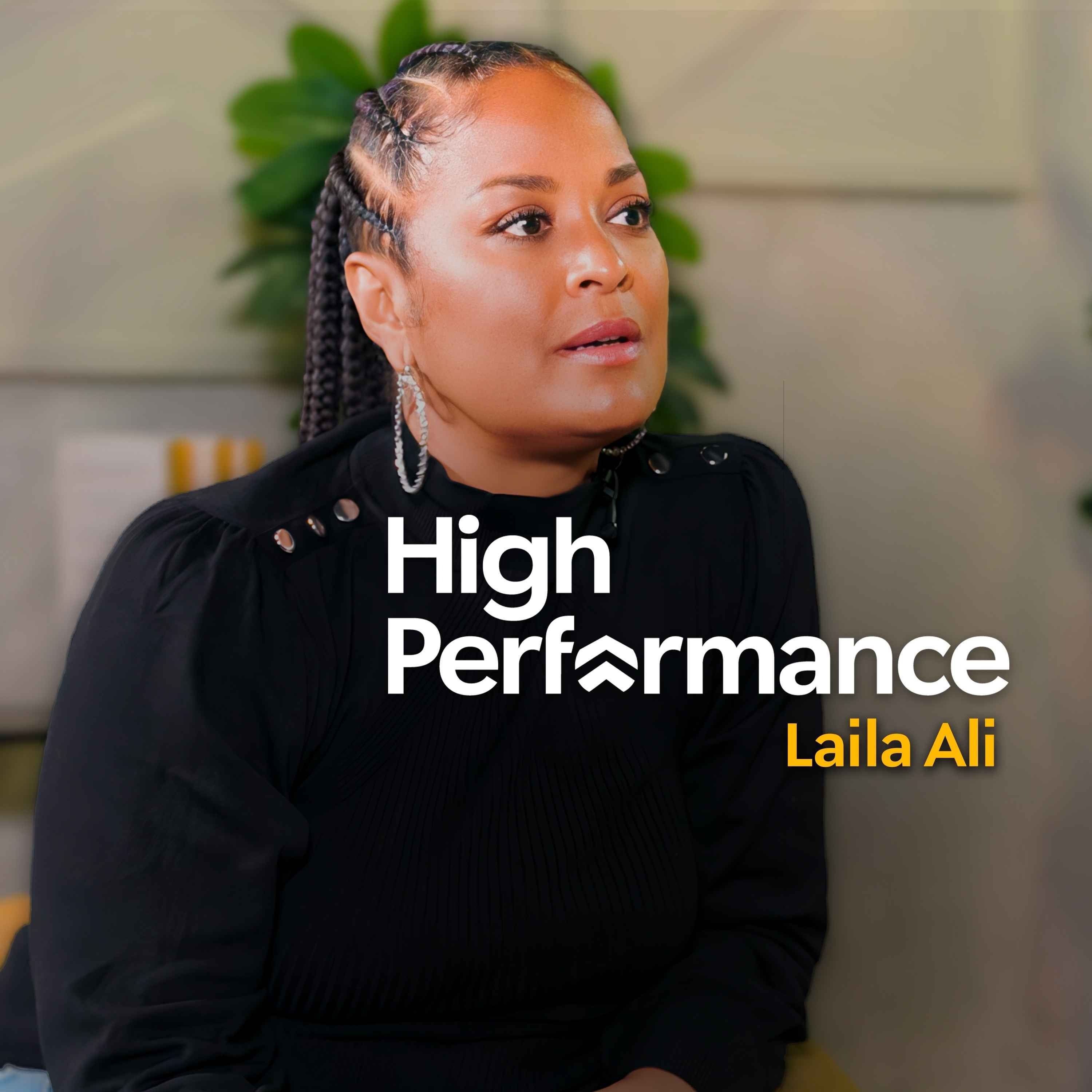
0:51You've just heard a few clips here from my conversation with Leila Ali, the daughter of the most iconic sportsman of the 20th century, the legendary Muhammad Ali. Leila herself is one of the most successful female boxers in the sports history, a four-weight world champion with an unblemished record of 24 wins and no losses. So this was a really rich, fascinating discussion with Leila, where we spoke about the lessons that her father, the great Muhammad Ali, passed on to her. We speak about learning to find your own lane and blaze your own trail. And finally, how do you pick yourself up on the canvas when boxing and sometimes life can put you there?
1:32All of that coming up now. Leila Arley on High Performance.
1:41So Leila, it's a real privilege to have you here. And we were just talking that we have common ground that I, so my dad was a boxing coach and my playground was a boxing gym as a kid. And not only were you an incredible, undefeated, four-time world champion yourself, you also had a ringside seat to the greatest boxer of all time as well, your father. So my first question is almost like, when I mention your dad's name, what's the first thoughts that come into your mind about him? There's the public Muhammad Ali, and then there's dad. So when you mention him the way you just did, that's public Muhammad Ali.
2:18I'm not thinking of him as dad. It's almost like two separate people, right? Even though he's one. But I will say that I'm incredibly proud of the person that my father was, the man that he was, the athlete that he was. And there'll never be another like him. And all the things that made him so great and made him so loved, I just have so much respect for. And when you think of that, and again, if I can be selfish and sort of relate it to my dad, that I think about so many of the lessons that he taught me through life, but also through the sport as well. And I'm interested, are there any lessons that you think of that really stand out that your dad taught you that maybe you pass on to your children now?
3:05My father did a lot of his teaching by example. Just by watching him, I learned so much. And he was very consistent. So meaning that, obviously, my father, wherever we went, there was always a crowd. And he loved attention. And he always said, bring it on. He wanted to be noticed. He wanted to entertain. He wanted to sign autographs. He wanted to pick up babies and kiss them and shake hands and take photos for hours. And as a child, that wasn't always fun. You want to just go get something to eat at the local diner. You don't want to be stuck there for three hours. Oh God, the same thing every time.
3:42But I remember my father getting in the car with us when we leave. And he'd say, you know why I do that? You know why I take time to look people in their eye because it makes them feel special. They're just so happy to see me. He would paint that picture for us. So why do we have to stay for two hours? Because if there's a line, think about that last person that gets cut off. Sorry, I got to go. He never wanted to cut it off. And we're like, okay, but we can't just stay here forever. What about us? But he cared about people so much and he always let us know that he actually was being intentional you know about giving back my dad would literally sit there at his desk and sign pamphlets with his autograph because at the worst case scenario here is an autograph but you're talking your brilliant book reach that you wrote when you were in your early 20s when you were fighting yourself that sometimes the frustration that you had of him as a dad that it was always people in the house it It was an open house and there was times where you wanted his attention just for you rather than for a public gathering.
4:48So what sort of father was he in that way? I've always been someone who doesn't like crowds, even until now. I don't necessarily like attention. So I don't remember growing up thinking, man, I just wish I had my father's attention. I really just like privacy. You know, when you think about your childhood, whatever that may be, for most people growing, if they grew up in their home with their parents or, you know, you have those memories. I have memories of lots of people around all the time. So that's just part of what comes with it, though. It's not really something that I complain about because it is what it is.
5:25You know, you're going to have to suffer a little bit. You know, when your father is a global icon, one of the greatest men of all time, was freeing hostages and doing all these things. And, you know, he's not going to be able to be there for every birthday. He's not going to be able to be there for every graduation. That's just the way that it is. So luckily, I had many other people in my life that filled in in those places, and I turned out great. You know what I mean? But absolutely, I mean, I think that, you know, you would be, it wouldn't be true if I would say that it would have been nice to have more privacy, obviously to have both of your parents, my mom and my dad.
6:02Because nobody wants to feel abandoned. nobody wants to feel left to figure it out for themselves you know but i am one of many who have had to go through it in one way one form or the other you know having to figure things out for yourself and you make a lot of mistakes along the way you know and you discover a lot of things about yourself but that was definitely my life yeah and i was lucky enough once to spend time with angelo dundee who trained your dad throughout his career and he had this lovely phrase when i was talking to him about he said learn to spot the people in your dressing room after you've been beat not the ones that are there after a victory because they're the people that are there for the right reasons that they care about you and I'm interested in why do you think your dad couldn't spot that in many ways that he allowed people in through his generosity that sometimes didn't have the best of intentions for him my dad um was someone who sometimes he would spot it and he just would let them yeah he would still let them be around because he felt like it's they there's something that they needed like so for example i know to try to explain i remember when my mom and my father my mom told me that mercedes-benz had given my mom and my dad a car each you know um two two cars and they never came and next thing she knew his manager and his wife were driving them And my dad's like, it's okay, just let him have him.
7:30Like he knew that he took the cars. So that was an example of when I think he did see it. But a lot of times, like you said, he didn't see it. It's just when there's so much going on, right? And that wasn't really his focus. I think it's really important though to have people in your corner that can do some of that for you, to weed out. But he was so strong that everyone would say he's going to do what he wants to do. He's going to have around who he wants to have around for whatever reason.
8:26faster with Upwork. Go to Upwork.com now and find your freelance expert. That's U-P-W-O-R-K.com. Post a job for free and get started today. Come to DSW for the shoes, stay for the fun, because let's be honest, if shoe shopping isn't fun, are you even doing it right? So go ahead, try something new. Try something different, good different. Try something that feels like you, you know, the real you, and then definitely brag about it later, because at DSW, you've got unlimited freedom to play. With sneakers, boots, and everything in between, for every style, mood, and occasion, you'll definitely find shoes that get you, at prices that get your budget.
9:03DSW, let us surprise you.
9:08This episode is brought to you by Opera Air, the first browser with mindfulness at its core. Now, most of us spend hours every day online, but how often do we pause to take care of ourselves whilst we're doing it? And that's where Opera Air comes in. It's a lightweight, fast, secure browser built not just for productivity, but for your well-being. With Opera Air, mindfulness is built right in. You'll find free breathing exercises, guided meditations, and soundscapes with ambient sounds, lo-fi music, and binaural beats, all designed to help you focus, relax, and even spark creativity while you browse.
9:47Well, that brings us on to talking about the traits that you have in common with him, because he made a comment like that to you didn't he when you were fighting of like you're just like me you're headstrong definitely I'm definitely that so when you look back now that you're at an age when your dad had long retired and at the same age as you now what do you see as the common traits that you and him did share and possess oh man so many we're so we're alike in a lot of ways but very different in a lot of ways also um I would say the first thing that comes to mind is confidence leadership dedication you know perseverance tenacity loyalty you know those are the things and authenticity we're both very intelligent not necessarily book smart intelligent you know anyone can read a book and memorize something you know but I think that those are the things that come to mind.
10:52I'm different than my dad. Number one, I'm a woman. He's a man. I'm not as friendly as my dad was. I'm a nice person, but I'm not the type of person that's going to be, come, come, gather around. I'm kind of more, I'm going to size you up and kind of keep it moving. And like I said, I think that has to do with being a woman also. You have to be more guarded. I can't just open myself up because people take it the wrong way. I'm 100 % amazing at putting up boundaries. Well, it also sounds like you're describing the trait that you had to learn because your parents separated when you were, was it eight or nine?
11:35Around that age, yeah. Yeah, and you described that you almost had to become the protector of the family for your mother who moved on to a different relationship with an abusive guy. So would you describe a little bit about that for us? Well, I was always a fighter. I always had a fighting spirit. And what I mean by that is I had no fear. So a lot of times, you know, if people get in a situation where they feel like they have to fight or defend themselves, they feel fear. Right. I never felt fear. So I would never want to start something. But if something got started, it was like, what? You know, I'm ready.
12:13so I did feel that way with my mom and my sister and I just remember my mom was like Layla Layla like why is this girl tough like this or even just trying to be strong when being young and let me help you move that my mom's like it's too heavy for you I got it see I want to show her I'm strong almost like a boy would be right you would think um but and then my mom did get remarried and she ended up marrying a guy who turned out to be just just like mentally and emotionally abusive to her, not physically. But he was mean to us, mean to my mom. And I had to stand up for myself, you know, and I started to look at my mom a certain way.
12:55I'm like, why are you gonna let this guy treat you like this? Why are you gonna let him treat us like this? I started losing respect for my mom. And then, you know, it's already hard as a teenager, sometimes with girls and moms, you know, there's a little friction there. But then having somebody as strong as me and as opinionated as me and who was going to speak her mind. And then with all that was going on, it was a lot for her. And then I ended up having a lot of anger inside, and that didn't mix well with being this fighter who was angry, who felt abandoned, not only by my mom, but also by my dad, because my dad was in another state.
13:37He was busy doing his thing. You know, this is just how I felt inside, even though at the time I couldn't verbalize it. I didn't know. I can say this now. Yeah, yeah, sure. So, you know, when you feel that way, sometimes you just take it out, you know, other ways. And, you know, I got in trouble at one point. I wasn't doing good in school. I ended up in juvenile hall. Yeah. I ended up having to go to a group home, like a placement where you go live. so I went through a lot on the way to becoming an actual fighter in the ring. Yeah, yeah, cool. Again, I've heard you talk about this really well about during that abusive relationship that your mum was enduring that you almost used to bottle up the rage that you had to try and control it and that's a trait that great fighters have the ability not to allow their emotions to hijack them.
14:32Oh, I can compartmentalize it. Yeah, absolutely. So tell us about that. So if you fast forward when I was fighting, right? And I remember when I started fighting, everyone was like, oh, she's a pretty girl. Oh, she's Muhammad Ali's daughter. Oh, she can't fight. Oh, she's just in it for publicity, whatever their thought was. But they didn't really realize what I had been through. They didn't realize I had been a fighter all my life. They also underestimated I am Muhammad Ali's daughter. I do have that same DNA. And I'm also a big girl. I'm a strong girl, a confident girl. and I'm very ambitious, meaning I'm going to do the work.
15:08I'm going to work hard. I'm going to be disciplined. I'm going to find the best trainers. You know, you don't want to have to face me in the ring. Trust me, you don't. And then on top of that, you have to dig. You have to go somewhere, as your father probably would tell you, in any fighter, because when that heat, you know, comes in that kitchen and you're in there with someone who wants it just as bad as you and is really about who's going to be the best fighter tonight, you've got to be able to dig deep somewhere. So for me, I was fueled by a lot. I had a lot of fuel inside of me that I needed.
15:40I needed during training. I needed just from my mindset. And I felt fully in control in the ring. And I didn't feel that kind of control anywhere else in my life. Like I literally stepped in that ring. Like I'm going to win this fight, period. It wasn't a maybe. It was 100 % I knew. And it was an amazing feeling. and there's never been another feeling like that. That's what I miss about boxing. So, but yeah, so I can compartmentalize and I can do that now, even now. Like I can put away whatever's going on for a moment and I can focus all my attention on that. And I had a lot going on even when I was boxing that people didn't realize.
16:22I didn't write about that in the book because it hadn't happened yet. But I had a lot going on that most fighters wouldn't have been able to deal with and wouldn't have been able to have an undefeated boxing career. I've had some fights that were lackluster. I've had some fights that I looked at like, man, that was horrible. I could have done better, but I still won. But my bar was very high. So I would look at it and be like, man, I fought with the flu. And people would say, man, she didn't have any, you know, her punches were slow and, you know, whatever. Yeah, I was fighting with the flu like nobody knew, you know, but I was so confident I could fight with the flu.
17:00you know but I'm like what was I doing you know so yeah there's a lot going on there's a lot of stories and I want to come and talk about your boxing career in a bit but there'll be people listening or watching this later that like hang on a minute you went to juvenile hall right right wait rewind yeah oh that's been so let's just go back and talk about that period then of like because I was interested when I was reading it that you'd said you'd learned to spot fakes and hucksters and people that were there. And yet, what led you into juvenile hall or what we know as like young offenders prison is the same sort of hucksters and people that had tempted you in and led you down the wrong path.
17:43Well, I led myself down the wrong path, really. I can't really blame anybody for that. When you're looking for trouble, you're going to find it. That's really what it comes down to at the end of the day. So for me, I made a choice to hang out with certain type of people. Okay. And they have a certain lifestyle. I had no business being around those people to begin with. But in my desire to want to find a circle outside of my dad, outside of my other wealthy family's friends, I mean kids, I ended up going into the hood, hanging around. I had a friend, for example, one day when I first got in trouble, she's like, oh, she's stealing.
18:22She's shoplifting. I have money. But here I am. Oh, okay. So I try to steal too. Guess what? I get caught, you know? And it was crazy. Excuse me. It was crazy because there was three of us. And one of the girls, that's what she did. And the two of us, me and my other friend, we just did it just because. And we all got in trouble. And then when we got caught, you know, we're in the room and they're holding you like they're going to take you to the police station. They're both crying. Boo-hoo. And I'm like, what are you guys? But I'm just like, we knew what we were doing. It wasn't that I wasn't, you know, sorry, like, but I had an attitude about myself.
19:01I didn't seem remorseful. Well, guess who ended up at the police station? Me. Guess who ended up on probation? Me. They let them go because they were crying and they looked sorry. But everything happens for a reason. And then once I got in trouble, that's when they started looking at everything. Like, wait a minute, your grades really aren't that good. Wait a minute, you got a lot of absences at school, you know, and they realize, okay, something's going on here. And that's kind of how I ended up in the system and going down that path of being removed from my home. Yeah. And that's what I needed.
19:35That's what I needed at the time. Which I can imagine you can look back on and recognize. But tell us about that first night then, because it came as a shock when you were first incarcerated. Yeah, yeah, it came as a shock when I went to court that day and then they were like, you're not going home and lock me up. And I'm like, looking back at my mom, like, mom. Then I turned to a little girl again, right? And she's crying, I'm crying, nothing she could do. And there's nothing like losing your freedom and that feeling. That right there was enough for me. I had learned my lesson, right? Like it was real, but I went, I had to go to the county prison, put on their underwear, put on their clothes, be locked up, not knowing, does my mom know where I am?
20:15Where am I going? You know, you're just scared, afraid. And, you know. So that fear that you said that you never had, did that show up? Oh, yeah, yeah, absolutely. I felt fear. What would Layla today say to 15-, 16-year-old Layla? Oh, my gosh, so much. I would have said slow down. I wanted to grow up so quickly. And a lot of that, again, stemmed from just my childhood, being the experience I had living at home with my mom. I wanted to move out the house. I wanted to be independent. I wanted to be in control. So for me, I really wanted to move out and I had this plan. I wanted to go to school, learn how to do nails, make my own money.
20:55And I had Layla's Nail Studio. By the time I was 18, I had a business. So, you know, and I moved out the house by the time I was 18. I was paying my rent and paying my car note, you know, and I was very proud of myself. So tell us about the ditch then, because you talk about everything has the ditch in it, where things do get tough, where it does get hard and challenging. What have you learned about getting through the ditch? For me, and that changes with time. The ditch was different for me when I was younger than it is now. Now I'm 46 years old. I have two children. I'm on my second marriage, my last, but my second.
21:33So I have some experience under my belt is what I'm saying to you. And now the ditch is just sometimes getting lost in being a mom. you know just getting caught up in your your kids and you know not having time all the time for the things that you that you want to do for yourself i would say that you have to just know that there is going to be a ditch there is going to be a challenge and you just have to know that you can get through it you're never going to be faced with something harder than you can actually overcome there's things like that might have happened three or six months ago in our life they were like oh And now they're like in the past.
22:10So I still look past things like this will pass, no matter what it is. Even if it's a death of somebody, like you mourn it, but at the same time, it's like I'm going to get back to a place where things feel normal again. You have to sometimes just remind yourself that I'm going through something tough right now, but it's going to be okay. Just that energy, that positive mindset, that attitude really helps. I want to now segue into like the nail salon, you achieve your independence, she was successful at it. And then you decide that you've got a family history in the absolute trophies of all sports.
22:47And the crazy gene kicked in. Yeah. So tell us about the journey that eventually led to you becoming an undefeated world champion. So I was not an athlete growing up. Y 'all already told you, I was bad. I was doing the wrong thing at the wrong time that got myself in trouble. But I got back on track. By the time I was 18, I was living on my own. I was running Layla's Nails studio, had clients, was ordering product, managing money, doing all that. And I go to a friend's house to watch a Mike Tyson's fight. And all of a sudden, these women come into the ring on the undercard. And I was like, my mouth dropped.
23:23I was like, women box? I didn't even know. So I said, oh my God, I was glued to the television. And then they started brawling and it was a bloody fight. And it was amazing. And I was like, I want to do that. And I remember my friend's dad was like, girl you're crazy those women would take your head off you're a pretty girl you you can't fight and i was just like he doesn't know me like he doesn't know my friend was like layla layla you can do it because she knew and i went home that night dreaming about becoming a professional boxer the way i think things through like oh my god like first thing i thought was my dad would not like it i knew that was it that was your first oh yeah that's one of the first i would say i can't say my first but it definitely was in that thought process like why do you think he wouldn't like it?
24:04I knew he wouldn't like it because number one, nobody in our family, okay, I'm the youngest girl, okay, of nine children. I'm the last born, he has one adopted son who's younger, but I'm the last of his last, you know, natural born children, a girl. No one had been boxing. No one was a boxer. No one talked about, daddy was the known person, the boxer in the family. So that wasn't even something was talked about. And then women's boxing, like my dad was Muslim. I'm not, but my dad was very strict. Just to be wearing a sports bra and shorts and showing all that skin is going to be something. And then to be fighting, coming into his arena as a public person.
24:50I'm his baby girl. He's not going to like that. I know that. But that wasn't something I was like, okay. I did a lot of things he didn't like. I was like, okay, we're going to put another one on the list. So that was, but I knew that. Okay. But then just the fact that I didn't know what it'd be like to be an athlete. I didn't play any sports growing up. What would it take? What would people say? But the biggest thought though, the biggest thought was all this time and planning I've spent building my nail salon, wanting to start a chain of salons. How am I going to just turn my back on that. That was the thing because I was, I told you, I stick with it.
25:30So I was just like, hmm. So I talked myself out of it. And about a year later, I decided I was going to go, I think about a year later, I decided I was going to go to the gym and start training. I was like, let me just see. Let me see if I have what it takes because I didn't want to embarrass myself. I didn't want to embarrass my father. I was aware, okay, of how enormous this would be if Muhammad Ali's daughter started boxing. So I had to be really, had to take care with this, right? So I went to the gym and started training every night after school, after work, and fell in love with boxing. And I was like, oh, I'm going to do it.
26:05You know, and the trainer was like, oh, yeah, you have what it takes. He was going to tell me that anyway, you know, because he saw the opportunity. But I felt that I did also. I started sparring and I saw like, okay, I got speed. I have power. I'm learning quickly. so the news eventually got around to my dad because you know people talk especially when I started sparring it's like wait a minute you're not just working out because up until then I had said I was just working out I was keeping it I want to make sure that I really want to do this you know because I knew that the floodgates were going to open like and there was going to be a lot of naysayers and people trying to talk me out of it I had to be strong you know so um I said okay I'm ready.
26:45So when my dad came in town and asked me about it, I said, yeah, it's true. Yeah. What you heard is true. I've been training and he was like, and he got really serious and he had his Parkinson's, those hands shaking and you could tell he's getting upset, you know, and, uh, we're sitting here just like this. And he says, well, do you know how hard it's going to be? Like, do you realize how much pressure is going to be on you? And I said, yeah, I thought about this and I'm going to do it. But of course you tell, it's like, you're telling your kids something. and you think they just don't get it?
27:14Like, I'm telling him, he's like, she has no idea what I'm talking about. And he paints the picture, like, in a ring with all these lights shining down on you and a crowd around you chanting, and you're getting in the ring. Like, do you realize how much pressure would be on you? I'm like, yeah, I do. And then he says, well, what's going to happen if you get, you know, knocked down? I was like, then I'm going to get back up. Just like you did. And he just really gets really frustrated because he's indirectly trying to talk me out of it, his reverse psychology, bringing up all the negative things wasn't working.
27:44So he finally just said, it's not for you. It's not for women. I don't want you to do it. I'm not, I'm against it. And I just said, oh, dad, I respect how you feel, but I've already made my decision. I'm going to do it regardless. So you're either going to be there or you're not. Either way, I'm going to do it. So that's how we left it. Right. And he publicly was honest. He wasn't happy with it, but he supported me. You know, he didn't say anything super negative. He wasn't going to pretend he liked it. But he came to my fights. Not all of them because he had Parkinson's. He had his schedule. And it was fine.
28:22And one thing I never did was count on him to be there. I didn't count on anybody to be there because to me that's a weakness. That's how I saw it. I don't have space and time for those kind of emotions. All I have time is that person in front of me. So if you're there, great. I'll see you after the fight. If you're not there, okay. I'll see you after the fight. Either way, I'm going in this ring and I'm going to do what I have to do. So, like, that was the thing. Every fighter is different. You know, every fighter is like, okay, some fighters want people in a dressing room. Some don't. Some fighters do interviews before a fight.
28:53Some don't. I didn't want people in my dressing room. I didn't want to do interviews before a fight. Yeah. I didn't want any of that because I'm very focused and I have my ritual of, like, what I like to do. So tell us, Layla, that I'm always intrigued when you're in the dressing room of a fighter because it's the loneliest place in the world. And there's that old saying, isn't there, that a fight is never won on the warts of the ring, but it can be lost. And I'm interested in, what would you have been saying to yourself that you talk about control as an important element before you go out there for that first fight?
29:27Even though it's a small hall show, you've still got the world's media turning up. Oh, yeah, every fight was big for me. Yeah, it's a feature in it. So you're on a tightrope where you can fall quite a long way here. what would you be saying to yourself before you left that dressing room to make your way to the ring I always just remember thinking this is it this is the moment this is what you wanted you got it like I'm a I'm a tough love kind of person with other people too I'm a straight talk kind of person you know and um like you made your bed lay in it this is how I talk to my friends my girlfriends that are crying about a certain guy I told you about him and you chose a mini I'm not I look myself in the mirror and say, okay, it's time to do it.
30:12You back it up. Go out there and do it. So I felt really empowered. I felt really strong. I didn't get nervous in the dressing room. Everyone gets butterflies leading up to the fight. But in the day of the fight, the day I'm in the room and I'm wrapping my hands and I'm focused, like all the butterflies are gone. I just really looking forward to that moment. And again, I look towards the end of the fight. I'm like looking around. I'm going to be back in this room in about 20, 30 minutes, you know, eating that cake. I always had a cake. Did you? Oh, yeah. Because, you know, I've dieted down. You know, I've deprived myself.
30:48And I'd be like, I'll be right back for you. We're going to go home early. We're going to go get the knockout. So, yeah, I think, you know, everybody, everyone had different thoughts. But I like to stay really focused. Like when I was walking to the ring, I never looked into the audience. I never looked in people's eyes. I always kind of kept my head down. If I looked at anything, it was usually my opponent across the ring from me. I kind of keep my eyes locked on them. I'm not like, hey, everybody's here. I never did any of that. And did you ever pick your dad's brain to go, like, give me some tips for this?
31:23I didn't. You know, it's funny because back then, as foolish as it may sound to somebody listening, I didn't really I was so adamant about not being like my dad that I didn't want to know it didn't matter to me you know and it's because I remember
31:49are you going to do the rope-a-dope, Layla? Are you going to call rounds? I'm like I'm not Muhammad Ali, I'm Layla Ali. I don't want to do those things I don't know how to do those things. That's his thing, you know? And it's not something that you just, first of all, I'm just proud that at a young age, I knew that if I ever start trying to be like my dad, I'm never going to be able to stop. I'm not coming out to try to be like my dad. I'm not going to talk about my dad every single time I fight. I'm not going to compare my style to my dads every single time that I fight. I'm not going to allow you to put on a TV package just about my dad.
32:33Yes, I'm Muhammad Ali's daughter. You know what I mean? But when it came to certain things, like fighting styles, we're different. I have no problem now talking to you about my dad. But back then, I was so focused on my own career and I had to make that distinction. But you could sit here and say, well, but you could ask Muhammad Ali. Any fighter would want to ask, but I was so adamant because of what was going on at that time. You know what I mean? And remember, my dad didn't really support what I was doing. So I had to figure a lot out on my own. It wasn't like he was like, this is my daughter.
33:10Give her the best of everything. Best trainers, best this. I went into this world on my own and had to figure it out on my own. My dad That had nothing to do with my boxing career.
33:22If you're still overpaying for wireless, it's time to say yes to saying no. At Mint Mobile, their favorite word is no. No contracts, no monthly bills, no overages, no hidden fees, no BS. I made the switch because I was tired of those ridiculous bills and sneaky charges from my old provider. With Mint, I'm paying$15 a month and getting the same high-speed data, unlimited talk and text, and coverage on the nation's largest 5G network. Honestly, the quality is just as good, if not better than what I had before. And the best part? You don't need a new phone. You can keep your current one, bring your number, and all your contacts.
33:57I use Mint Mobile, and you should too. Ready to say yes to saying no? Make the switch at mintmobile.com slash HPP. That's mintmobile.com slash HPP. Upfront payment of$45 required, equivalent to$15 a month. Limited time new customer offer for first three months only. Speeds may slow up a 35 gig on unlimited plan. Taxes and fees extra. See Mint Mobile for details. You walk in tired and hungry. One bad dinner away from losing it. You don't like to cook. You don't want more takeout. You just want something good. That's why there's Dish by Blue Apron. Pre-made meals with at least 20 grams of protein and no artificial flavors or colors.
34:38From fridge to fork in five minutes or less. Keep the flavor. ditch the subscription get 20 off your first two orders with code apron 20 terms and conditions apply visit blueapron.com slash terms for more the market's uncertain revenues tied and hiring on hold that's why results driven companies are using upwork to keep work moving go to upwork.com today and start hiring proven freelance talent fast no bulky overhead no rigid long-term contracts just the right expert right when you need them work smarter and faster with upwork Go to Upwork.com now and find your freelance expert. That's U-P-W-O-R-K.com.
35:18Post a job for free and get started today.
35:28But what I suppose I was inquiring about, and I think you might have answered it, Leila, is that I'll give you a really simple example. I remember my dad when I was a kid and he'd be in the dressing room and he always used to say, watch the feet. And you say, what do you mean? And you say, well, often when somebody's nervous, the only way that the adrenaline can escape is through their foot tapping away. So I often say that to coaches now, that just watch the feet so you can get a sense of how people are really feeling, that you might look confident. That's why your foot's been tapping this whole interview.
35:59All the way. I'm just messing with you. Was there ever any sort of like little insider tricks like that? So not necessarily saying boxing the way I did, but anything about the sport or being able to overcome an opponent that he'd say, look for this or what's this? Well, my dad, when he, okay, so my dad, I told you that he said, don't box, it's not for you. He did come back to me and apologize and said, I want to talk to you. I was like, oh God, now what are we going to talk about this time? And how many fights in was this? Oh man, I had won a world title, at least one by then. So I was a world champion and he says, you know, I was wrong.
36:37you can fight and women can fight and I'm proud of you and he started crying and I started crying my dad cried all the time I'm sure you probably heard so that wasn't a big deal but he had he was so emotional and we both got emotional because I I had told myself I don't care what he thinks you know I'm gonna do this without him forget him forget him but I cared yeah that's my dad and he's the greatest of all time of course I want his respect I want his respect and I want him to tell me, yeah, you can box. You can fight, girl. And I'm proud of you. So for him to say, you move around like me, you move like me, you jab like me, you know, and we're like crying and, you know, he's got his Parkinson's and he's shaking and he couldn't deny, you know, what he sees.
37:19Obviously, I'm not the level of my dad, right? But we're built the same and our style was similar because of our build, right? Long arms, long legs, speed, power, agility, all these different things. So then that's when he said, you know, you know, you got to, you got to jab. Like every fighter has their thing, right? That they always say. And he says, you got to jab, you got to hit the speed, you got to hit the heavy bag as if a fly is on it and you're trying to hit it before. Brilliant. Yeah. Cause if you think about that's the kind of speed, cause when you get that visual, no, that's not fast enough.
37:54That's not fast enough to hit a fly. You know what I mean? You gotta, and you gotta snap it. You gotta snap it. So, um, and I just said it. I just said it to someone that I know that is fighting. And I was like, I need you to bring your speed up, you know, because he sent me some tape of him fighting. And he looks slower than I think he should. And then, you know, it's one thing to say, bring your speed. I said, this is what my dad told me. He's like, thank you. I'm going to use that. Now he's imagining that fly on the bag. Now, don't do that when you're in the ring with a fighter. You do it when you're practicing and then it flows naturally.
38:24As with anything, do it when you're by yourself working. And then when you go out and round other people in you, it's going to flow for you, right? After you do it enough times. Yeah, of course. Yeah, so that was big, though. I love that. That was big because the jab is the most underrated and most important weapon in boxing. If you have a good jab, everything else comes behind that. It sets everything up. You know, if you have someone looking for your jab, you know, and worried about your jab, it makes a fight much easier. Yeah, especially for your reach as well. And he saw I wasn't using my jab enough.
38:53Right. Because I wasn't. Because I'm a fighter. I like to fight. My dad was more of a boxer. I don't mind, like, mixing it up, you know, and getting on the inside, whereas my dad is smarter to box, though. It's smarter to use your jab. You have your reach, you know. So he was giving me some good advice. And that leads me then to ask you about the Karen Bills fight, because that was the first time where you got put down. It was the only time I got knocked down. Yeah. So, like, because that's often the sign of, you know, all the qualities you said about the courage, the guts, the authenticity. that's where you really see somebody at their true character.
39:31What did you learn about getting put down on the camera? Oh, man, I mean, well, first of all, I can literally look at the tape and see what I was doing wrong. And it was something that I had been told in the gym many times that I didn't fix. She was throwing wild punches, just wild. She was strong when she was throwing wild punches. And I just put my hands up and I was blocking them. Well, I just stayed there like that. So after seeing that for a while, she came up the middle. Right. And then I just dropped. And it was like a flash knockdown. I got right back up. Yeah. I didn't think I was hurt, you know, and I looked at my corner and they're like, because they didn't know, what's she going to do now?
40:10They never see until you actually show them. I wasn't experienced enough yet to know how to box and move. But I knew how to fight and I was confident in my fighting. So in that moment, I was like, oh, it's time to fight because this is a mental thing. And that's where you see the heart. That was a good learning experience for me. Obviously, I went back to the gym and fixed that, you know. But it also taught me that I'm tough, you know, because I remember at the end, everyone was like, you got knocked down. You got back up. I was like, what? I got knocked down? So I did have some kind of concussion because I didn't remember.
40:44I was like, oh, yeah, I did. But I did not remember. So something happened in there, you know. And you made a comment there lately about it is mental. So you finish your career as an undefeated world champion. So when you reflect back on it, how much of your success do you think is down to the mental side of the sport? And how much of it is down to the physical gifts? I think that in my experience, I was just unbeatable. Those poor girls, they never had a chance. I'm just kidding. Because I had it all. I would say that the physical side is really important. Obviously, being an athlete is being trained and having the right trainers.
41:28Because I see fighters a lot of the time that I'm like, man, if only they would just do this. And they just don't fix it. The mindset is like you can be a really good fighter. You can be a perfect physical specimen. Have all the right trainers. have everything, but you don't have the mind and you don't have the heart, it just takes that right fighter to come get, to expose that and get into the ring with you and show everybody. Because a lot of times, you know, if you're somebody who's marketable, for example, and people have high hopes for you, they're going to put you in fights that they're confident you can win, right?
42:07Because you want to keep your record to a certain point and learn. Like I learned in the ring. I didn't have an amateur background. I learned under the lights. So of course, my handlers It was my first few fights. Okay, let's make sure she can handle this. Because I could say I'm going to be tough, but they don't want to see for themselves. But at a certain point, you got to fight real fights, especially if you want titles. You can't win world titles by fighting, you know. Yeah. So I think that it takes a little bit of everything. I think for me, like I said, I had the confidence is amazing. The mindset, because in my situation, being Muhammad Ali's daughter, going into boxing with all the criticism that was against me.
42:48It was more criticism than positivity. What's that? Oh, absolutely. When I was fighting, absolutely, 100%. Now, I can sit here and have these interviews and people respect. But back then, it was just kind of like, eh, they didn't respect women's boxing. It wasn't in the Olympics yet. It still isn't huge, but I'm saying it wasn't even where it is now. It was a new sport. People just weren't comfortable with it. Yeah. They didn't believe that I would just want to be a boxer. But you could be an actress. But you could be this. You could be that. It's like, why do you want to box? Most people that are boxers is because they can't do anything else.
43:23So they came from a bad neighborhood. That's what they thought. Yeah. So I didn't fit the bill for them. The girls that were boxing that had been boxing for so many years and weren't getting attention had animosity towards me. They fought me 10 times harder. So if you're just thudding along, working a day job as a waitress and having some fights and trying to make ends meet, you're going to get really inspired if someone tells you, beat Layla Ali and you're going to become a millionaire, whether it's true or not. They had extra oomph. Everybody fought me harder. So I always had to come with my A game, even though I didn't.
43:59Even if I was a 60%, a lot of the times I would still be able to win. And I'm always intrigued in your story that you spoke about having the right trainer and you sought out different trainers, including you went to the Mayweather gym in Vegas where it was Roger that trained you initially, wasn't he? Yeah. At the time, there was no Mayweather gym. So I went to Vegas, started training with Roger Mayweather. I actually opened a gym in Vegas and he started training me at my gym. Oh, right. Okay. But at the time, he trained at a gym called Top Rank. Right. Yeah, yeah. Yeah. Before Mayweather had his own gym.
44:32Yeah, so Floyd Jr. used to train at top rank, yeah. Right, okay. So what was that like in terms of being? Amazing. So what did you learn from them? So Roger was one of my favorite trainers, I would say. And Roger, the main thing I would say taught me my punch count and speed went up. Because, you know, the Mayweather is like blah, blah, blah, blah, blah. You know what I mean? You throw all these different combinations. so I remember having to take a year off for shoulder surgery and then when I came back my first fight back I was throwing so many punches that my at the time my husband was like okay now you need to slow down it's just too many there's not enough power on them you know it was great but we had to find balance okay um but yeah Mayweather was was a great trainer in that sense and um you know I learned a lot through Patty because Patty had a good watchful eye he paid attention to detail.
45:26And he knew my strengths and my weaknesses. And he would fine tune. Whereas Roger may just be like, let's do the mitts. Okay, go do the heavy bag. Patty, come over to the heavy bag and watch me. And don't just hit the heavy bag. I need you to do X, Y, and Z. So, you know, I had so many different parts to my team that, you know, helped make me amazing in the ring, you know. And what do you feel makes a good coach? I think that you just have to know how to get to the person that you're talking to, first of all, you have to be intelligent. You have to be knowledgeable, right? And whatever it is, we're talking about boxing, right?
46:03For me, I wanted a coach that had done it themself. Like for me, I wanted, I respected Roger as a world champion fighter. I respected Buddy McGirt as a world champion fighter. You know, so they have done this before. They've seen everything that I'm going to see. They know how I feel. they know what I'm going through, right? They've worked with other world champion fighters. So that level was great. But at the same time, you have to really know how to alter. So I think for a coach, you can't coach everybody the same way. You can't say the same thing to get that feedback out of each person. You got to know what makes them tick.
46:42I just remember we were talking about Roger and we're talking about boxing. And I just remember coming back to the corner and, you know, him telling me why it's important too, just having those eyes in the corner. She's ready to go. She's already ready to go. So he knew that I had a third gear and a fourth gear. You see what I'm saying? And I always save a little bit. So for someone to tell me that with confidence, and I know this is someone who watches me and is with me and sees my hardest days training with guys in the gym, and he says she's ready to go, then I'm like, okay, let me go out there.
47:25So that made a difference. I think it's an appropriate time, given the title of this podcast is High Performance, as somebody that did go through your career undefeated, what is your definition of high performance? Oh, man, so much can be said, but just being at your best, you know, and just firing all engines, you know, and constantly looking to improve, constantly looking to be more efficient in your life. To be efficient and to be at your best means you have to be open-minded, right? You have to be willing to make changes when things aren't working or, you know, what worked for me at 40 may not work for me at 50, right?
48:08And that's just an example. So for me, that's what I'm always doing. That's what life is about. Because some people do go through life stagnant. Just kind of like, oh, I'm just going to go to work and just kind of take life how it comes. Yeah. I can't imagine living that way. What do you think your dad would have said if he was here and we asked him the question of what is high performance? He probably would have said something similar. But at the same time, you know, I would think that, and I don't like answering for my dad, but I would think that he probably would have done some things differently maybe when it comes to his own health and wellness.
48:46My dad lived the life that he wanted to live. He said early on that boxing he loved, but it was going to be his platform for his humanitarian work. He believed that he needed the Rolex and he needed the Rolls Royce to get people's attention, but then he was going to spread his message, and he stayed true to that. Even through his Parkinson's, he still traveled the world. He still was shaking hands. He was still freeing hostages. He was still a strong voice. And he didn't try to hide, right? Even though he couldn't speak anymore. He still made that connection with people. So he lived his life fully.
49:22But I think that he, at the same time, was always trying to be at his best. And his definition of his best was different in that he wanted to do his humanitarian work. It took an incredible amount of energy and dedication for him to continue doing that with Parkinson's disease. He could have easily sat down and relaxed, and people would have been okay with that, but he didn't. So I think that that was him trying to be his best to keep pushing, to stay true to what he said that it was that he wanted to do, and he wasn't going to let anything stop him. I think you've touched on something there that is like a really underrated virtue that I think about when you mention your dad, especially the latter end of his life, of the courage it took to still go out there in public when the Parkinson's disease had started to really take effect.
50:17How did it feel for you as his daughter, seeing him vulnerable and still putting himself out there? It was hard to see him sick, and it was hard to see him suffer. It wasn't so much about putting himself out there. Because we, you know, I grew up with the same type of values, you know, and mindset and vibe around all of that as my dad. I didn't really care about really what the public thought. But just seeing him and knowing how it must have felt as a man to not have that control over your body anymore. You know, for your body to shut down on you. You know, his mind's still there, but his mouth isn't moving or working or stiffening up on him or he can't chew anymore.
50:57You know, and just when he got to the point where he had to wear a bib and need help eating, it's hard. Sure. Need help, you know, going to the restroom for a man such as himself. You know, anyone that gets sick has to depend on other people. It's very humbling. So that was tough. But I also know that's a part of life that we go through as human beings. and we're going to deteriorate, all of us, at some point or the other. So as long as you can keep your mind right and still be a happy person inside, the better. So that's why I still felt good knowing that he felt happy. He was happy with himself.
51:34If he was no longer happy, then I wouldn't want him to be dealing with anything longer. But when he passed, I did feel like he's free again. you know he's free from this body that had deteriorated and he's free being his amazing self you know in heaven or wherever he is so you know that was what gave me peace and knowing he's not suffering anymore you know sure i can empathize with that i i my dad passed away a couple of years ago when he had dementia that some of that was exacerbated by boxing did you ever feel that Parkinson's was a result of the career that he'd chosen. I think it might have had something to do with it, but so many people have Parkinson's and never boxed.
52:20Sure. So it's really hard to say. My father, I remember my father thought he had pesticides poisoning from fruit. I remember he's always saying, wash your fruit, wash your fruit. He's obsessed with that. Because they put pesticides and things on the fruit that cause issues, and heavy metals and all these different things going on in our body. So a lot of the illnesses have a lot to do with environmental issues. So who knows? But I know that a lot of people have Parkinson's that didn't box. But I think that even if he didn't have Parkinson's, he probably would have had some effects from boxing.
52:51And what do you think he was put on the earth to do? To uplift a lot of people. You know, I mean, I can't tell you how many people I have met that are like, come to me in tears about how much they love my father just because of a stand that he took to show them that you can stand up for what you believe in, that you can speak for so many different people. You know, when he was fighting for his rights and fighting for the rights of so many, you know, when he refused to go to the war to stand for his religion, for a religion that a lot of people didn't respect, that Muslims around the world have so much respect for him.
53:27You know, it's like, even though I'm not Muslim, I understand, you know, why it was such a big thing. You know, when he changed his last name, when he got everything stripped from him and had to go and speak at colleges just to take care of his family. He was having death threats and the government was following him. I mean, so many different things were going on that people don't realize in his life. But he's nine kids. I got sisters in all the major states. I'm like, New York, Philadelphia, California. You're all over. All over. What does that tell you? So I'm just saying, you know, and a lot of people probably in his shoes might have been in the same situation that they had all the beautiful women in the world throwing themselves at him.
54:16They were not they weren't in that didn't have that opportunity to see if they could stand to it or not, you know. Yeah. So, you know, it is what it is. But I won't let who my dad was define me. Yeah. I won't let what I've been through in the past define me. we have to all decide what is going to define our life. What is our own legacy going to be? And even if you don't know, it's like you wake up every day and you do the right thing. You do what you know is right. Right? My dad used to tell us, God is always watching you. Even when you think no one else is around. A lot of people do things when they think no one's watching.
54:55But if you think, okay, that's how I grew up thinking. There's never a time to do the wrong thing. There never is. Never. So, you know, it's like I don't really have to worry about heaven or hell or right or wrong. I'm going to do the right thing because it's the right thing to do. That's how I live my life. That's how I teach my children. I mean, imagine how much of a better world we would live in if everybody would just do the right thing. What a brilliant way to end this fascinating conversation. Thank you for doing this. We normally finish up with some quickfire questions. What are the three non-negotiable behaviors that you and everyone around you buys into?
55:41You have to be authentic. You have to be honest. And you have to be kind. If you could go back to one moment of your life, what would it be and why? Probably back to when I was a little girl and I just felt like I just had to grow up quick and I had to solve all the problems of everyone around me. It was a tremendous amount of pressure to put on yourself and weight to carry that I just didn't get to have that childhood. So that, I would say, slow down. It's okay. Slow down. Just be a child. Focus on you. Focus on now. What's the best piece of advice you've ever received and why? I remember my dad telling me and us when we were younger, step on anybody to get ahead.
56:29Never step on others to get ahead. And I didn't know what it meant back then. But that stuck with me because, again, it just goes back to, you know, not trying to dim someone else's light to make yours shine brighter, to help someone along. You know, just this whole concept of helping others, being a good person, all that is instilled in me so deeply. And it's so important to me. It's more important than business advice that I've gotten or advice on how to make money or, you know, all these different things. Just the core of just being a good person to the core. So how important is legacy to you?
57:12It's important to the extent of, you know, I think about what I will leave behind. I think about, you know, especially being a public person. Like when you write about me in the history books, and they do a documentary on me. What is it going to say? Who was I? How was I different than anybody? Did I make a difference on this earth while I was here? To me, it's important to leave this place better than it was when I got here. I don't want to be someone who just passed through. And that doesn't mean you have to be a celebrity. It doesn't mean you have to be a public person. There's people who, I like to use example of my father because people know who my father is, right?
57:49And he's this young boy from Louisville, Kentucky who came from modest parents. His mom was a housekeeper. His dad was a painter, right? And some boys stole his bike and that's how he got into boxing. The local boxing trainer was like, young man, you know, he's like, I'm going to get them. I'm going to fight them. He's like, well, do you know how to fight? And he's like, I'm coming to this gym, the amateur training. But he really just wanted to get him off the street so he wouldn't get in trouble. That man had no idea that this was going to be the next Muhammad Ali. But we don't write about him and his name and, you know, necessarily who he was.
58:20But, you know, you can make an impact in your community by helping a child that can become the next Muhammad Ali. Every piece of the puzzle is just as important. So we don't want to diminish the importance of the roles. Everybody has their piece and they're all just as important. So what would you want people to say about you? That I'm confident, that I'm strong. You know, my friends will say that I'm loyal. I'm authentic. I'm a good business person. I'm a great mom. I'm a wonderful wife. I'm a good friend. You know, I was a wonderful daughter to my dad. Those are the things. And I think it's okay to say positive things about yourself.
58:56If you're someone who thinks, oh, who does she think she is? Well, maybe you need to lift yourself up a little more because you should be okay with that. And if you don't feel like you have anything positive to say, then put in the work. Put in the work so you can feel good about yourself and just be honest. You know what I'm saying? So my final question later is, what is your one golden rule for living a high-performance life? I mean, for me, honestly, like, and I hardly ever say the word honestly because I'm always being honest. But to give you the real, real, for me, it's about being able to accept criticism when I know it's something I need to fix.
59:37So, you know, because I'm so strong, sometimes I get into that, no, this is how it is. you know and it takes certain like my husband yeah my husband's that person that sometimes he'll put that mirror up and it'll piss me off at first you know it'll piss me off and i'm like he's right you know and i know he's right and i'm like okay i gotta work on this i gotta work on it because i'm wrong you know so it takes it takes a lot of um you know strength to be able to do that so for me it's it's really like i said being able to accept criticism some of the hardest things that you may not want to face and be willing to change.
1:00:17That's the one thing is being able to accept the tough criticisms and be willing to make an improvement. So always being open, you know, always being open, even when you're great, even when you're amazing, even when you've got lots of successes, you're not perfect. You're not perfect. I love that. But this has been an amazing interview. So thank you so much for coming and sharing so generously with us. Well, thanks for having me on.
1:00:47So that brings us to the end of a really fascinating conversation with Leila Ali. We'd love to hear from you. So please leave us a review wherever you get your podcast from. But until next time, we look forward to catching up with you again on High Performance.
1:01:10Thank you.
In this episode, we welcome the incredible professional boxer, Laila Ali, to High Performance. As the daughter of legendary boxer Muhammad Ali, Laila has carved her own path in the world of sports and beyond. Not only is she a former undefeated world champion boxer, but she's also a successful entrepreneur, author, and TV personality.
Laila sits with Damian to share stories of her childhood, her father’s influence, and her journey to greatness. She dives deep into the lessons she learned from her father, Muhammad Ali, especially the importance of generosity and strength in the face of adversity. She reflects on the special moments she shared with her dad and how those experiences shaped her character.
Laila also opens up about the challenges she faced growing up, including being strong for her mother during tough times and navigating her own vision to become a champion. She shares valuable insights from her boxing career, including her experiences working with renowned trainers Roger Mayweather and Paddy Fitzpatrick.
This episode offers an inspiring look at Laila's journey from being Muhammad Ali's daughter to becoming a champion in her own right. It explores themes of resilience, self-belief, and the power of a clear vision.
🚨 Partners
Huel 👉 Claim your FREE t-shirt HERE: https://hppod.co/huel
Heights 👉 https://hppod.co/Heights Get 20% off your subscription by using Code: HP20
FORA 👉 Enjoy 25% off your first meeting room booking at a Fora workspace HERE: https://hppod.co/FORA25
Explore offers and discounts through our other partners:
https://hppod.co/partners
Hosted on Acast. See acast.com/privacy for more information.


