
 Ask ChatGPT


 The High Performance Podcast
20 Jun 2024 · 58m
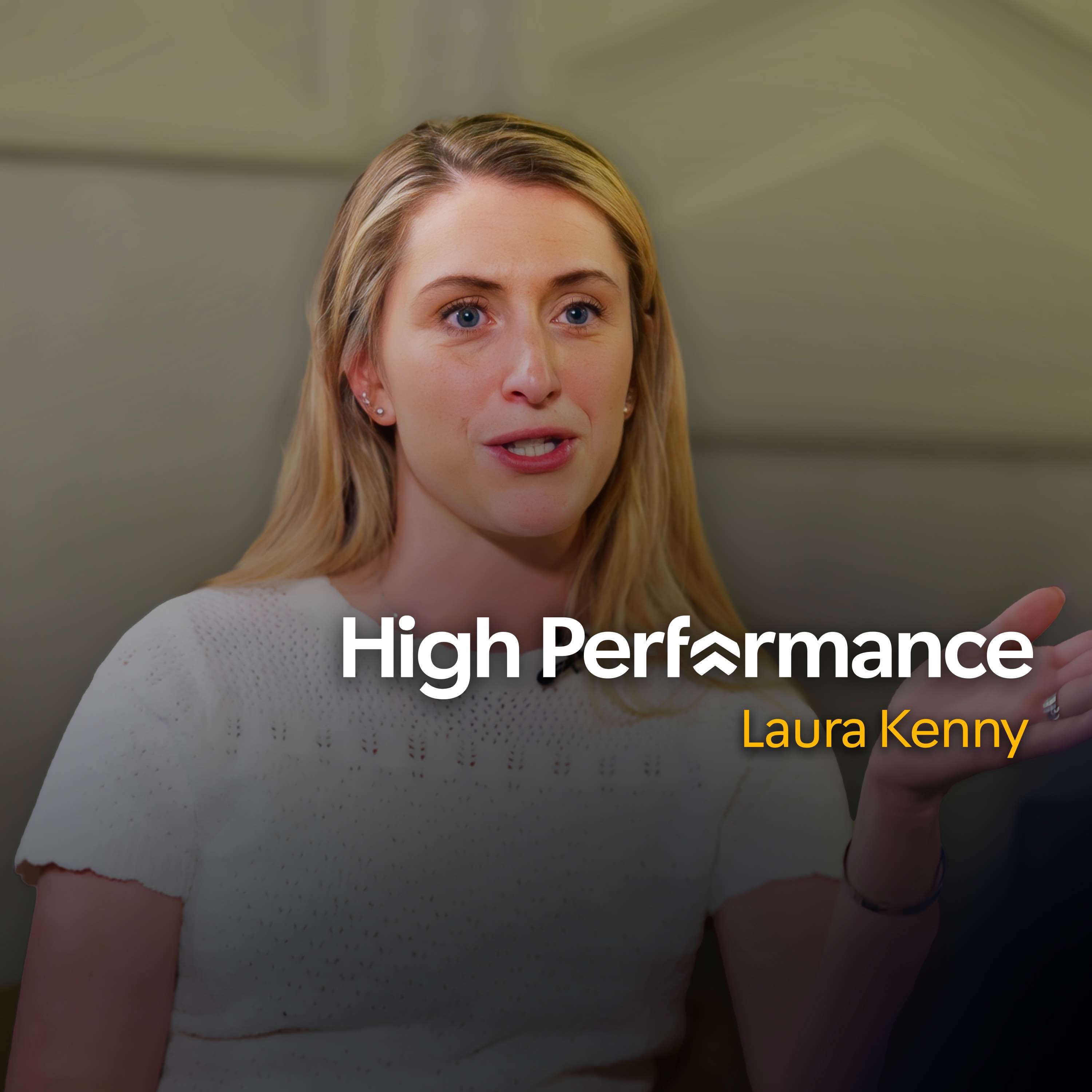
Hosts: Jake Humphrey and Damian Hughes
Laura Kenny
High performance and personal challenges in elite sports.
In this episode, Olympic champion Laura Kenny, the most successful female cyclist in Olympic history, shares her journey through the highs and lows of her career, including intense pressures, personal struggles, and her decision to retire from competitive cycling.
Written by AI. May contain mistakes.

Get the gist, explore an idea or ask about something said.
 Claude
On The High Performance Podcast, what are the key points of this episode?
Searching your listeningAutomatic transcript. May contain errors.
0:00Watch it early on the High Performance App. Available now, Roman Kemp, the broadcaster, opens up a powerful conversation on success and mental health. I literally would miss parties, proms, you name it, I missed it. I didn't celebrate anything. Because my ultimate goal was to go and win gold medals. I felt like the nation wanted me to perform in this bike race. And I remember before the 500 metre, my favourite event, I should be going into that, confident as anything. I was in the toilet being sick. because I just couldn't deal with how nervous I was. I was painting this picture of just being the same Laura, the same happy person who's about to go to the bike race.
0:40I did all the press conferences. I did everything that I normally would do. But at home, I actually remember crying to my mum, just being like, I don't want to do this. I don't want to be here. I just do not want to do this. That is Britain's most successful ever female Olympian, Laura Kenny. And this is High Performance, the show that unlocks the minds of the most fascinating people on the planet. I'm Jake Humphrey, and alongside Damien Hughes, we learn from the stories, the struggles, and the successes of our guests, and this episode is as motivating as it is moving. We also cover the theme of baby loss, and if you're affected, please see a helpful link in the description to this podcast.
1:22Here we go, as we welcome Laura Kenny to High Performance. But first, a few quick messages from our valued partners.
1:56companies are using Upwork to keep work moving. Go to Upwork.com today and start hiring proven freelance talent fast. No bulky overhead, no rigid long-term contracts, just the right expert right when you need them. Work smarter and faster with Upwork. Go to Upwork.com now and find your freelance expert. That's U-P-W-O-R-K.com. Post a job for free and get started today. at Capella University learning online doesn't mean learning alone you'll get support from people who care about your success like your enrollment specialist who gets to know you and the goals you'd like to achieve you'll also get a designated academic coach who's with you throughout your entire program plus career coaches are available to help you navigate your professional goals a different future is closer than you think with Capella University Learn more at capella.edu.
3:18and soundscapes with ambient sounds, lo-fi music and binaural beats, all designed to help you focus, relax and even spark creativity while you browse.
3:32Well, Laura, welcome to the show. Thanks for having me. It's a pleasure. How are you feeling? Yeah, good, thank you. Yeah, really good. Good. So what is high performance to you? So high performance, right, the first thing that comes to mind is a sports car. and let me just unpick that because it sounds really random doesn't it right but what is a sports car it's pretty uncomfortable it's normally only has two seats because it's built solely for one purpose to go really fast and that to me is an athlete's mindset and the mentality of someone who wants to perform at their best so the first thing you say about that sports car is that it's pretty uncomfortable yeah let's start there okay how uncomfortable is the life of an elite sports I mean it just right I wouldn't change it for the world I have loved literally every minute of it but there are so many ups and downs that you go through and everyone always says to me oh do you want your kids to be involved in sport now don't get me wrong everything that cycling has ever given me has been brilliant but I also know how tough it is and at those bad times when all the pressure's on you don't want that for my child like because it is it can be so unbelievably intense at times.
4:40Take us to one of them then. Okay, well, so 2012 for me, easy, because young kid, no one really cared about me. 2016, whole different ball game. And just getting on the start line, the team pursuit, when you're with your pals, I'm just chilled, you know, everyone's got their job, everyone's got a role, it's fine. Get me on the track on my own, and it's all on me, all the pressure is on me. And it wasn't even just, you know, the pressure I was putting on myself, I felt like the nation wanted me to perform in this bike race. And I remember before the 500 metre, my favourite event, I should be going into that confident as anything.
5:16I was in the toilet being sick because I just couldn't deal with how nervous I was. And I just think I can't imagine putting that on my child. And ultimately they could have that, you know. And when I look back, I do think, wow, like to come out the other side of that, it takes a certain kind of mentality to be able to get on the start line and perform like that but yeah it was just incredibly intense so can we talk about that mentality then because I was struck by the fact that your dad had said to you you weren't born with that that wasn't a quality that he could see from the earliest of age so it was something that you obviously developed that ability to be comfortable with discomfort yeah I mean I guess you're not born with it I don't I think there is a part of me like definitely natural talent is a thing I totally believe in that but I believe in that more from like a makeup like from a body and like what you're born with you know your your structure as such so I am very unique in the fact that I'm an endurance rider that's got fast twitch fibers I was born like that definitely but I think everything else that comes with um like your mentality and the way you think about things and the way that you're able to process things I think I learned characteristics whether that be from people around you like my mum she lost loads of weight like she literally lost eight and a half stone in a year and a half I had that person to like idolize throughout my entire career and whether it was her that taught me that without actually teaching me that I don't know but I do think that like your mind behaviors I'll definitely learn.
6:53So can you tell us some of the ones that when you look back on your career you go they were essential they were behaviors and mindsets that really made a difference so I think I was lucky enough to go to Delhi Commonwealth Games um and I think when I went to Delhi I was young I was 18 um it was my first games as such obviously not an Olympics but it had an athlete's village I was away from home I was with people that I'd literally never met because it was the first time I'd actually competed for obviously England at the time but it was the girls that were trying to get a spot on the Great Britain cycling team to go to the Olympics.
7:29And it was terrifying. It was literally terrifying. You walk into a food hall and you're just like thrown to the wolves. It's like free bar, have what you want, like literally walk in and go get your food. And as an 18 year old, you look around like, wow, like this is totally overwhelming. But I was so structured and so to the point, I remember going in there and being like, I'm just having pasta and I'm just having chicken because that is what I would have at home. And I think because I was like that and because I had the mindset of I need to do everything that's right for my performance that to me was really the starting point of a career that kind of I guess took off from that point didn't you celebrate your 21st a few years early um well I didn't really celebrate my 21st to be totally honest um because I mean I just saw all my birthdays got raveled into one when I was 16.
8:16Explain that because obviously when you're an athlete you're so selfish you're so selfish I I cannot even tell you. I literally would miss parties, proms, you name it. I missed it. I didn't celebrate anything because my ultimate goal was to go and win gold medals. And you can't do that if you're out partying at weekends and everything is always about the next session. Like if I miss one, someone else is doing that session and I'm not. So they're definitely going to be ahead of me. And that's how my mind works. And so when I was, yeah, 21, all of them to be honest, even my 30th, I didn't celebrate my 30th.
8:51because why would I? Because I'm training and birthdays can be celebrated. I'll celebrate my 50th and 60th because I won't be riding then. But at this moment in time, everything is about winning gold medals. But that's such a rare ability for a young, you know, to be 16 and to go, right, I'm going to celebrate my 16th and my 18th and my 21st and my 25th and my 30th because the rest of my life is going to be dedicated to cycling. That's rare because it's so mature. So do you remember when you, let's say stopped thinking like a kid yeah and started thinking like an athlete um no I think my dad my mum and dad always keep me really grounded um like throughout life like they have done I always go back to them I'm constantly on the phone to them and I think you know having them there and being like that and kind of bringing me back down to earth I guess after the important races has kind of really helped I think when I was 18 and I won the first world championships.
9:47I think when you're in the athlete's world, you're already more mature than your, you know, your normal 13, 14 year old. I started to go on camps when I was 12. Um, and so you're already in a world where your mum and dad aren't there anymore. Lots of people would have done like one overnight at school, but they'd never have done a week, two week camp, um, which we were obviously taken on. And so, um, I, you're already like a step ahead, I would say. But when I was 18, um I went we won the world championships um in the team pursuit and obviously that was 18 months out before the Olympics and then I got thrown into living in Belgium for six weeks totally on my own didn't speak the language um luckily my sister was living over there so I could go and live with my sister and that was the first point that I was like wow like this is going to be tough but and I'm totally on my own that was the first moment where I was like oh this is me steering my career now like this is very much me in control of this and it it was young like 18 is definitely young I mean so many things happened that I look back on I'm like wow I'm actually carnage like I set fire to a jacket potato for example because I'd never cooked because why would you like my mum literally did everything for me at home I had to I turned up with a dirty skin suit at the first training session because I didn't wash it from the session before because why would I normally I leave it outside and my mum would wash it and so it was just like a massive learning curve but I would say yeah it was probably 18 where I was like wow I need to grow up and I need to grow up fast.
11:18So can I ask you because there's one incident I read about in your book where you said you were chasing points I don't know what age you were yeah and you were at Cardiff and you and you said you collapsed in the final straight yeah and your dad took you to a cafe and what I'm interested in is you described the consequence of that chat that your dad had with you that you saw what had happened as in your words a speed bump and not a roadblock yeah what did he say that helped you be able to deal with those setbacks so any setback that we had was very much what happened like why did you do that and what can we change for next time and I mean I can remember that one because I basically it was an elimination race which is funny because at the time it wasn't in the Olympics and then it ended up in the Olympics so all these bad experiences actually really helped by the time I got to the Olympics.
12:05But with that, I sat up, basically, I sat up too early and then I ended up coming out. And then that was me done. I was out of the omnium then because obviously you have one bad race. And I actually listened to someone else telling me I was out when I actually wasn't. And annoyingly, I sat up, but that's game over by that point, right? And I obviously never did that again. Like I never, you'd keep going until someone starts shouting at you to get out of the way. And it was just a learning curve. But had he come at me and been like why did you do that which I've seen so many times with parents who are too pushy if he'd come at me and started shouting it would have just given me a negative um like I would just felt negatively about it and then the next time I'd been terrified to do it again whereas I actually went in thinking well I won't do that again I'll try this and I think having that clarity going into a bike race knowing what you're going to do is key to success it sounds like you were so well set up right by your upbringing and the way your parents operated and by you you know as you say being born with natural gifts right but then making the most of them in your own mindset but then when you step into the professional setup of british cycling i imagine it is a whole other level now people have been obsessed for years right about how british cycling has become so dominant so powerful so successful yeah over such a long period what would you love us to hear about that world that maybe we don't already know?
13:27I honestly just loved every minute of it. Like to this day, I can sit back and I look so fondly on, especially the Dave B era, the Sir Dave Browsford era, just the way he managed to get people to rally around us as athletes and get everyone working to the same goal, whether or not it was you that was standing on the podium or not. Like he could get physios, mechanics, coaches, everyone working together for one ultimate goal, which was to win medals. But these people weren't standing on the podium. We were. And so to be able to do that, I just felt, was just incredible. So how did he do it? He just had a way with words.
14:05Like he just, you know, you see these conferences where you get your football manager and he sits in there and he's dead like, I've just watched the Pep Guardiola Man City thing. And he sits in there and he's dead like, shouty. Dave isn't like that. He's very much, this is how we're going to do it. This is how it's going to happen. And then you're going to go on to win. And just the way he sells it to you, you come out of the meeting and you're like, yes, yes, I am. And I feel like everyone feels like that. Like you come out just feeling like elevated. And then he continues that. And he was always really approachable.
14:43Anyone could go and meet with Dave. He just had to knock on his door. and he would literally speak to academy rider, to a podium rider, to a mechanic, to a physio because he wanted everyone to buy into his plan. And so his door was always open. And I think that was kind of key to that, you know, the fact that it wasn't like a shut door, I'm the boss. It was very much he was approachable and, yeah, I don't know, he just had this way with words that made you feel brilliant. What about the days, though, where you fell short or you didn't deliver to the expected standard or those around you didn't?
15:14How would he deal with that? um I mean he we had a really good relationship with our coaches and then Dave also had a really good relationship with our coaches so I think instead of Dave coming in because it would feel scary I think if you know the PD comes along and it's like that wasn't good enough today like you'd be like whoa and he was never like that he would get your coach to sit you down and you'd have a meeting just one-to-one with your coach and so I think he had a nice formula of working out who would be best to speak to us as athletes he would also come and speak to us if he felt you know we needed a kick up the backside can you remember a time when he did that he never like lost it with us as a group i mean i think he probably has lost it with people in in the past but us as women's endurance we're always a little bit like a step ahead especially pre-2012 era we're always sort of performing but i do remember him saying you know you're not just given gold medals and i remember sticking with it like and i remember thinking oh yeah like he's right like we do need to keep going and keep going.
16:11Because we were at the top by that point, but we did also still have 18 months before the Olympics. Because obviously arrogance can slip in there, complacency can crop up. I'm really interested in any sort of standout bits of information or things that you remember from that time that people listening to this can really learn from and put it into their own lives. The things that we talk about, the marginal gains, the attention to tiny detail, those kinds of things. Yeah, well, see, the marginal gains, right, I think everyone thinks bikes and equipment that they're using, but it wasn't like that with Dave.
16:44It was the extra bits. It was sorting out. So I had something happen in my personal life and I rang Dave and I was just like, I just do not know what to do. And he was just an ear then. He wasn't going to change my circumstance, but he was an ear for me to speak to. And then he would go into every little detail, like the beds. he got us all new mattresses before the Olympics and then and then those mattresses traveled with us to the Olympics so we'd been sleeping on these mattresses for like six months because he believed that sleep and sleep disturbances going into the games would be a massive error like there'd be a massive no-no and so he like he went really into depth with that but it would literally be anything like my car window got smashed and I'm like 19 like I don't know what to do and he sorted it out for me like he rings someone to come and fix the window because it was causing me a stress and he didn't want athletes turning up in a stress so it the marginal gains yes was secret squirrel and all the fancy equipment you know he managed to rally that team together but it was actually the extra things i think that made the real differences nice so one of the things that dave is on record is talking about is that he employed something that he called the king or the queen strategy that you were at the centre of everything and everybody was there to serve you.
18:06But that depended on you as the monarch hitting the targets that they'd set for you. Yeah, so we were the queens of our castles. That's what we always used to say. And when I look back, when you first got on the programme, there's that interesting story where you were kicked off it and you've made the phone call yourself to, was it Helen Mortimer? Yeah. To get yourself on it. So you were obviously used to speaking your mind and making demands. Yeah. How did you go about getting the buy-in of all those other people to help you get on the podium? So the Helen Mortimer story, basically, I was too young to be put onto the endurance programme at the time.
18:42I was 15. I might have been 14 going on to be 15. No, I was 16. I'm lying, because it was juniors. And it was just before juniors, and I was trying to get onto the junior programme, but I was too young, right? and so they said to me look we will allow you to go on to the sprint program and I'm like okay and because you know there's been some youngsters go through that Rebecca James had gone through that and so I was like okay you're not going to turn that opportunity down like for someone who is chasing Olympic dreams you're not going to turn an opportunity from British cycling down and so I said okay I'll do that and then long story short it gets like eight months in and I'm clearly not a sprinter.
19:24Like, yes, I've got fast twitch, and yes, my starts were really fast, but that was all I had. Like, if it got past the 500 meter, I was nothing. Like, I just wasn't a sprinter. And so they kicked me off. And then they put me on the mountain bike program. I've never ridden a mountain bike. Like, the last mountain bike I rode, I was like 10, you know, riding up and down the bumps on the driveways. And so I was like, this really is not for me. And I don't know what made me just pick up the phone, but I knew Helen from talent team days. So I just picked the phone up. I remember being on the mountain bike camp and just ringing her and being like, you've got to give me a trial to get on the endurance program.
20:01I am not a sprinter. I never have been. I didn't enjoy it. I'm now being released from that. How do I get on it? And then luckily for me, she did just put me on it. So I had like two weeks where I had to sort of prove myself. Do you think she did that because this young 15 year old had the bravery to ring her up and fight our corner. And I think maybe partly that, but I also think history played a big part in it. Like before I went onto the endurance programme, I'd won national titles as like a 13, 14 year old as an endurance rider. And so I think maybe, yeah, like the history of what I'd done before that had helped that.
20:40Because I mean, there was lots of people that didn't agree because I didn't even test. Like she literally just put me on the programme. But what interests me though, Laura, is that like Jade just picked up on, you're 15 and having the courage to phone up an adult and make demands at that age even though you've got that history yeah still take some resolve I'm interested in in how you'd explain it now um I don't know I think I just I sport gave me confidence when I was in school right I wouldn't speak I wouldn't say boo to a goose that my worst nightmare was reading like much ado about nothing out loud you know you know how they go around one by one and I'm like oh gosh don't ask me please don't ask me and it just it didn't give me confidence but you get me out on the athletics track or in the playing field and all of a sudden I became a light like I loved it I could shout at people I could tell them what to do and I don't know why it gave me that kind of confidence but it never even crossed my mind not to ring her I wanted something and the only way that I was going to get it was by talking to the head of that and I'm all for this cutting out middleman as well like I've always had that like my whole career I've always said like if I've got an injury or whatever and why am I going to ring my coach to tell them that I've got an injury when I need to speak to the physio look there's no point me ringing him to ring her when I can just do it and I was always like that like with Dave B with Shane if I had an issue then I rang them like I just I never bothered with anyone else and yeah so I don't know I never even crossed my mind not to ring her I just rang her but there's interesting research on this I think it's a I've researched in Holland called Maria Elphick that has studied young prodigies like you that have got that really rich potential and asked who makes that transition like you did to become the most decorated Olympian.
22:25And one of the factors is early ownership. You don't let anybody else decide your career path. You're the one that takes control of it. So when you get into the Olympic programme and you're in there, you've got Paul Manning as your coach, haven't you? Yeah. How do you create a relationship where you have your say and go, this doesn't feel right, rather than just defer to them and assume that they know better? The way me and Paul worked was definitely personality traits. Like, I am very say it how it is and so is he. And I think it just clicked. Like, from the get-go, I never felt like I couldn't, like, literally there was no topic I couldn't speak to him about.
23:04And so that, I think, was unique in terms of, if I'd had someone else as a coach, I think it would have taken more, like to get to know him a bit more talking I probably wouldn't have felt as confident to just go at him and say no I don't agree with this session I think we need to move this here because that was definitely our personalities were so similar that it just clicked from the get-go like and there was never a point that I didn't trust Paul with my training plan like there was very few things that I questioned with him so I feel like that relationship was actually really quite unique right no you know what I think is interesting right here Damien is is this sort of of simplicity.
23:40You know, sometimes people want to really overcomplicate how you can be successful. You know, you're talking to us as the most successful British female Olympian of all time. But when you talk, it isn't like, oh my goodness, I would never have considered that. Oh wow, what a revelation. I'd never believe that would happen. Like it's simple stuff. There's like in the nicest possible sense. Do you know what I mean? Yeah, no, I actually totally agree. I always say my best tool and the tool that I've used throughout my career is talking. I think that has helped me just to be as successful as I am I I've never been scared to raise my hand and ask a stupid question or have an argument if I don't agree with something I just think I've always been quite good at just talking like being able to say how it is and I think that about so many things like when I look back now I remember that like we had a couple of arguments within the team and Steve Peters had to get involved because obviously he was the psych at the time and I remember just sitting there and holding my ground i was just like no like this is what i agree with and this is the point i'm gonna keep pushing um i can yeah i'm not sure i want to share it to be honest there was just when you're part of a team right um especially in the team pursuit you have lots of communication within the team pursuit and some of the ways that people were communicating at the time was savage like i didn't agree with the language that was being used yeah when you when you are literally in the team pursuit line because you can shout what you want really but we always use like hold squeeze um or change if you think someone needs to get out of the way but it started to get a little bit like abusive really like and there was lots of yeah lots of like there was it was getting intense because people were wanting to be selected for the bike races right so there were a couple of times where people would be doing things to like screw someone else over and i sat back and i didn't take being like team leader as such i never felt like that but there were times that I felt I had to step in because the language that was being used wasn't in a team that I wanted to be part of I didn't agree with that and so I remember just coming off the track and just being like no we are not talking like that like we're a team going for gold medals we are not talking like that I'm sorry I'm not having swearing and I swear quite a lot but when it comes to a bike race I'm not having people getting shouted rude names it's not happening and Steve got brought down and I remember just sitting there and being like I'm not going back on the track until I get an apology like I'm not being spoken to like that and I mean I'm talking pre-2012 I'm 20 you know we did eventually apologize to each other and then when we went up on the track we were obviously going really fast again because it reminds me of a line that in in the book that you co-authored with Jason yeah he's it's so it's credited to him his section he says that you and him needed to learn to argue better in your own relationship and it sounds like that has a personal and a professional impact how do you learn to make your point or argue more effectively I mean for me it's funny because when I say I talk a lot when it comes to an argument with Jase because I know it winds him up I just stop talking I'm just like no I'm not I'm not biting I'm just not talking and it would go on for like a day you know we wouldn't have spoken because he'll argue he'll he'll be wanting to argue and I'm like no I'm not arguing because I know that it winds him up like to no end seriously and but it got to a point where it wasn't really productive and so we got to the um what's it like we agreed that he wouldn't go mental and I would actually open up and I would actually say what the issue is and yes we're still arguing but it wasn't like one person just getting their point across and the other one just ignoring him we had to get to a point was you know we had to kind of meet in the middle on how we wanted to resolve our issues can we talk about a relationship between two elite athletes yeah because i mean the fact that we both laugh at that point probably tells a lot right yeah i mean it's funny you wouldn't think it would work because as an athlete you're so selfish like it's unbelievable um but jason and i well i mean you've done this with him we couldn't be more yin and yang if we tried i don't shut up he barely says a word and but that just works it works in our house but there was so many things that we agreed on when it came to well high performance but so many ways of life that we felt we had to live to perform at that level we would do very little at weekends we would say no to anything really like any parties birthdays get-togethers whatever we were both on par with saying no to we both enjoy the kind of simple life or did do because our life now is absolute carnage but at the time we really enjoyed just doing nothing because the only thing that really mattered yes we cared for each other but the only thing that really mattered was winning gold middles and the biggest thing for us and it was actually jace that kind of set the rules i suppose set the standard he said to me when we go into the velodrome we're professionals and actually we're colleagues and then everything outside is you know when we're a relationship and it stuck with me because I would never have thought of it like that I'd have just been like you know not acting like you do at home but just I would have been a bit more friendly with him but it was very much the minute we got into track centre he was with his team and I was with mine and yeah right there might be the odd if I'd been upset or he'd been upset or he crashed once he had a really bad crash once and you can't help but get up because obviously you care for that person but all the other times we were so professional and I think if you went into the velodrome and asked anyone that worked with us like they would agree but there is a wider context isn't isn't it that you'd also come in in bitty cycling there was the Victoria Pendleton relationship with one of the coaching staff or support staff so how did you go about communicating what you and Jason had decided so everybody else understood where the boundaries like yeah I mean I think that got a bit confusing and a bit, like there was a bit of a conflict in terms of, I think Vicky maybe took it to heart a little bit that we were allowed, it looked like we were allowed to have a relationship, but we do sign a contract that said you can't have a relationship with a staff member.
29:59Now, Jace obviously wasn't a staff member. So it was allowed, like there was, you can't stop two athletes obviously falling in love with each other. And so it was always allowed. I can't really remember like having the initial conversation of when we got together but I do remember pre-2012 when we went on our holding camp and Shane actually said to us I think it's like in your best interest to keep this kind of under wraps until after the Olympics and at the time I remember being like well why like no one cares but obviously they didn't care before and they probably wouldn't have done but the aftermath of it if we'd had that prior to the olympics it would have been the biggest distraction and i think it was the best advice that we were given was actually don't let the media know i mean you can see it now i hosted the track cycling right for the bbc up up high with mark cavendish yeah and i'm thinking from my perspective if i'd have known that you two were a couple at that time it would have been the conversation of course you know you're cheering him on he's cheering you on what's the dynamic in the team you know the papers would have done all the headlines about you know gold medal partnerships and whatever wouldn't they yeah and it would have been eyes on us even before we'd competed um and that and because i actually remember i didn't even really watch jason's races because i was i was a little bit nervous you know of it becoming apparent and i just remember seeing every now and again i'd look up at the scoreboard and be like okay he's still in the sprint um and he would do the same we're seeing the omnium but it wasn't until afterwards um he came in for the omnium and then that's when people were like hang why is he come in?
31:34And then obviously afterwards it didn't really matter and I just stuck it on Twitter and that was that, it was out there.
31:43If you're still overpaying for wireless it's time to say yes to saying no. At Mint Mobile their favourite word is no. No contracts, no monthly bills, no overages, no hidden fees, no BS. I made the switch because I was tired of those ridiculous bills and sneaky charges from my old provider. With Mint, I'm paying$15 a month and getting the same high-speed data, unlimited talk and text, and coverage on the nation's largest 5G network. Honestly, the quality is just as good, if not better, than what I had before. And the best part? You don't need a new phone. You can keep your current one, bring your number, and all your contacts.
32:18I use Mint Mobile, and you should too. Ready to say yes to saying no? Make the switch at mintmobile.com slash HPP. That's mintmobile.com slash HPP. Upfront payment of$45 required, equivalent to$15 a month. Limited time new customer offer for first three months only. Speeds may slow up a 35 gig on unlimited plan. Taxes and fees extra. See Mint Mobile for details.
32:59the right expert right when you need them. Work smarter and faster with Upwork. Go to Upwork.com now and find your freelance expert. That's U-P-W-O-R-K dot com. Post a job for free and get started today. At Capella University, learning online doesn't mean learning alone. You'll get support from people who care about your success, like your enrollment specialist who gets to know you and the goals you'd like to achieve. You'll also get a designated academic coach who's with you throughout your entire program. Plus, career coaches are available to help you navigate your professional goals. A different future is closer than you think with Capella University.
33:40Learn more at capella.edu.
33:48So can I ask you about competition itself? Because there's always like an element of the devil around you when I was watching you compete. you know like you were quite calculating wouldn't you that mind games were a big part of what you were doing especially in the omnium yeah i mean mind games were a massive part of it yeah i actually remember in rio the big this was like the the one like mind game that kind of sticks in my head there was two things that happened in that year so it was the pre-rio year and mine and sarah hammer i never felt like we were head to head like it never felt like that who sarah hammer yep the american The American, yeah.
34:26Maybe it looked like that from, you know, everyone else's perspective. But we were talking track centre and stuff, so it never felt like I was head-to-head with anyone. But there was like a real change in what her coach was doing and what he was saying. I don't know whether maybe she did then see me as more of a threat because obviously I'd won in 2012. I don't know. But I remember it was in one of the last qualifying events before the Olympics. and the pursuit was part of the Omnium at the time. And obviously in the pursuit, you start either side of the track, don't you, right? And it goes in the rank that you are in the Omnium.
35:02So me and Sarah were first and second. I think she was beating me at the time. And we set off for the pursuit. Now, every time I came past, her coach would shout, come on, Sarah. And obviously it made me feel like, hang on a minute, what is she catching me? And he would do it every single lap. And I came off and I was like, and she did beat me, but she beat me by like half a second. She didn't beat me enough to even nearly catch me. And I remember coming off and saying to Paul, my coach, like, what the heck? Like, why would he do that? I don't understand. And he was like, because it's mind games.
35:33And I remember thinking, wow, like for a coach to do that, it's not even an athlete saying something, her coach, which I should maybe add at the time was a husband. I was like, wow, like that is intense, really. But I'm glad he did it. because then when we got to Rio, we had these big fancy new gears, right? And so my chain ring at the front was huge. And I'm walking up onto the track in one of the training sessions, the last training session. I'm about to go off and do a flying lap. And now I knew I was about to blow out the water because I was flying. And he goes to me, that's a big chain ring for a little girl.
36:09And I was like, oh, that is savage. But I walked up and I just said, yes, it is. Because it already done his mind games. I was so prepared for stuff to leave his mouth that I was like, you literally don't scare me anymore. If he'd left it, if he hadn't done that in the qualifying event, I'd have been like, why has he said that to me? And I probably walked on like, yeah, yeah, it is, it is. I'm sorry. But actually I was so confident and I was just like, you literally don't scare me. You've played your mind games. I know what you're doing. And I walked on the track. Obviously I did a PB, whatever, and it didn't matter.
36:43But that's the real, yeah, I just remember thinking, wow, like people will stoop to a level but also who plays mind games with someone who isn't a threat you were a threat oh he was worried about you therefore he felt he had to do that yeah yeah and i mean i do appreciate that but you know i don't know it's that's never been in me you know i've never said to paul i'll just go whisper something into her ear for me like did you did you ever play mind games um no i don't think so i think we played mind games in terms of you we kept our bikes covered and stuff like that and as much as it wasn't mind games that I was playing it does make you walk into the velodrome with your head held a little bit higher because people were talking about your stuff and your equipment and what you're going to do and so it is mind games it wasn't mind games that I necessarily played but but then actually you say that when you're in a bike race you can like look tired and you can make you can do things to make people think oh she's having a bad day and then next minute like you're out sprinting them so like there are little things that you can do yeah because i because i think you're underplaying your hand there because when i remember watching you in these events like there was no discernible pattern to what you'd do sometimes you've got you'd stay at the back of the park sometimes you you go and set the pace yeah and i think the fact that you had the ability to vary what you were doing yeah must have created confusion and a little bit fear in in your rivals i think it was good that i was able to write i was able to race very differently in every race that i did so even the scratch race which is literally whoever crosses the finish line first wins right basic as anything but sometimes i would leave it really late i'd come right from the back sometimes it looked like i'm boxed at the bottom but i'm calm as anything because i know i can get out at any one point um and then yeah the elimination race i mean i've raced that a million times over and i did it 10 hundred different ways every single time so when it comes to making decisions then yeah this is what i'd like to explore in a bit more detail yeah would you pre-plan that tactic or was it in the moment how would you go about making these smart consistently correct decisions right the scratch race i would have gone in with a fixed plan because it's coming down to a sprint pretty much if i think it's not coming down to a sprint i would do everything in my power to make it come to a sprint like going up and down on the track doing lots of like s movements brings the group down it gets people to chase i would try and force that i would force that hand because i as you know a sprint endurance rider would want that um so i tend to have a plan for the scratch the elimination race note solely on how i feel i would have put the same gear on every single race i'd ever done and then um it's funny because in an elimination race everyone always says to you sit second wheel because if you sit second wheel you can keep getting out and like and obviously you're at the front of the pack and you can keep getting out it is so difficult to have a perfect race sitting in second wheel because if one thing goes wrong you've got to come out the bottom and go around the whole 20 odd riders and so it just clicked one day so Paul would said to me it was actually the London test event and he said right sit second wheel and like just see what happened and before that as well I'd had some serious shockers the one before that in columbia i was second out like so i mean i ended up with like 19 points something stupid um so in london i just realized that one my legs were really hurting and two the easiest way for me was to just sit behind a rider and just keep going around them and that was obviously the first time that people were like hang on a minute like what the heck has she done and i remember chris baldman's commentary and he was like oh she's doing it the hard way oh she's going to be out and then it got to like six people left and he was like hang on a minute I take this back I think she knows what she's doing I mean I didn't know what I was doing but it just seemed easier I was choosing what in my head was the easier route so sometimes it was a majority of times for the elimination race it was purely on how I was feeling going into it so much has gone into this career of yours yeah physically mentally emotionally so how do you make the decision to walk away?
40:47It was an easy decision, really, to be honest. My mindset really changed once Monty was here. Obviously, I was quite open with the issues that Jason and I had had to conceive Monty. And once he came, I cannot tell you how low I felt for 18 months, just with this desire to have another baby. And it consumed me. And it was the first time that I'd ever heard Jason like mental health is thrown around too easy like just saying people have mental health issues it's it's that um like the wording of that is just thrown around too easy but it was the first time that Jason said to me that he'd seen me change like he'd seen my personality be like sad upset because I'm not like that I'm like this like I'm a bubbly person you know and it was the first time that he ever said anything about you know there being like a change in my personality and it was because I was literally consumed by this.
41:45Did you notice? Did you know that? I think I knew I was getting, like, obsessed is probably the word I would use, like the obsession to want another baby, like it was an obsession. And so I knew that, I knew that my every day was, well, am I going to be pregnant? Am I ever going to be pregnant ever again? And that was in my brain every single day. So I was very aware of that. I don't think I was aware of how much, pressure's probably the wrong word, but how much I really was relying on Jason for happiness, if you know what I mean. Like, I just, I spent so much of being like, oh, well, Jason will make it better.
42:20Like, Jason will decide what we're doing today. And I don't think I realised until afterwards how much kind of pressure I was putting on him for that. And can I ask, like, is this after the miscarriage as well? Yeah, yeah. So did you ever give yourself time to grieve that properly? No, I think when we fell pregnant with Monty, that was the first, I remember crying. So obviously we had the positive test and I remember being in the kitchen and I just burst out crying. And it wasn't, I was obviously so happy, like so ridiculously happy. But there was a part of me that just felt so sad for everything that I'd lost in the past.
43:01because the miscarriage was one thing. The ectopic was just another level of scariness. And I think I never really processed that because all I ever wanted was another baby. So I think for me, it was, I almost didn't give myself time to process it because I went into the athlete mindset of saying, what can we do? How can we make that go away? And how can we improve that? Like, you know what I mean? Because that's, as an athlete, that's what you do. And so I don't think it was until I felt pregnant that I really realised how sad I'd been and how upset those moments had actually made me. How hard did it make still being a cyclist?
43:38Because I imagine the things that meant so much to you six months before probably meant an awful lot less when there's finally something bigger that you want. Yeah, I mean, it was difficult. The Commonwealth Games was the toughest race that I'd ever been a part of. Also because you paint... So I went to the Europeans and then obviously I came out, I told the world, that was in the April. And in the August or end of July, August was Commonwealth Games. And I just was painting this picture of someone who was ready and who really wanted to go. And they were on the London velodrome. So of course I wanted to be there.
44:12And I was painting this picture of just being the same Laura, the same happy person who's about to go to the bike race. I did all the press conferences. I did everything that I normally would do. But at home, I actually remember crying to my mum just being like, I don't want to do this. I don't want to be here. I just do not want to do this. And the hardest thing about all of it was, as an athlete, you expect your body to perform. And I'm very much in control of that. And when I step on the bike, I know what training sessions have gone into that. I know how I'm going to feel. Chances are I know roughly how well I'm going to do.
44:48Yeah, okay, there are some circumstances I might crash, whatever. But I know roughly how I'm going to feel on the bike. Why was my body given me all of that I went on and won those Commonwealth Games I went on and won that scratch race why was my body doing that but it wasn't doing the one thing that I feel like a female body should be able to do and so I had this really horrible like yin and yang and then I came out and I did that interview and I feel like the interview with the BBC where I just like was like I'm not okay like these sessions have been this the prep for this has been horrendous without saying why can't I just have another baby but that's basically what I was obviously getting at in that interview and it was just yeah it was a really horrible yin and yang mindset that I had going on I'd never really considered this that your entire life was built around a body you could trust and that did what you wanted when you wanted it to and suddenly the one thing that you desperately want more than anything in the world your body's not just wouldn't do it yeah and like why and everything else I would have answers for if I have a bad training session I've either slept badly or you know the sessions prior to that have probably gone badly my heart rate will be high I had all the answers to all of that but I had no answers for the thing that I just so desperately wanted it to do and what was the reaction to I mean that famous interview was moving I'm interested in what was the collateral impact I don't think anyone truly understood even within British cycling I don't think anyone truly understood what I was going through but I think at the It was like a realisation that I'm actually a human being underneath this.
46:26And because the commentary, I mean, I use the commentary because it's brilliant for my retirement video. And the commentary is like, of course, Laura Kenny does it again. And I look at it and I just think it's mental. Like that's what people were relying on. You know, they were relying on me to cross the line first. And it wasn't until I came out and I just said, you know what, I'm not OK. Like my mindset is all over the place. I feel under so much pressure to perform. and I have gone on to perform but just because I've done that doesn't mean that I'm okay and then after that the head coach did ring me and he said Laura just take as much time as you need like we do not feel like you need to come into this building and I think I took two months it might have been a bit longer than that I can't think now and then I went back to it because I did again still feel lost because I didn't have my happy ending.
47:14So for anyone in the audience hearing you talk about this and feels that empathy of that they feel lost or they just don't generally feel okay. Yeah. What have you learned from surviving that experience that you think would be helpful? I mean, it was definitely, it's funny because I said, didn't I, right at the start that my biggest tool is being able to speak. And it was the first time that I found myself not really opening up to people. And like, why is that? Like, why does it feel so difficult as a woman to say I've had a miscarriage but it does because is it failure because that's that's almost what it feels like and I just felt I didn't have anyone to turn to because you don't know who's been in that position who do you talk to about that but I would say that once I did start speaking about it that was my biggest tool like going to my mum and telling my mum and then I mean when I look back I'm like for god's sake mum why don't you just tell me because she too had a miscarriage but it took me to go to her and say I have before she even told me that and so I would say my biggest tool was actually opening up like do not let it consume you like it did me because it was horrible like I felt so alone and I would lie there at bed at night and I would be stuck on google and googling and googling to just work out anything just working out answers but actually once I did do that interview and say how sad I was and how it was consuming me so many people got in contact and all of a sudden I didn't feel alone.
48:42I actually felt really normal and I wasn't a failure because it's happened to so many people. Honestly, I can sit here today and I just, I feel so passionately about sharing it because it's not failure. And it is also okay to be sad about it. Like you said earlier, it is grieving something you so desperately wanted. And I think there's something in this as well, you know, like people need to understand that you can be sad for the rest of your life if that's... Of course you can. If that's what it takes. And you can be sad about whatever the hell you want to be sad about because I felt like I couldn't be sad because I had a baby because I had Albie and I feel like people who hadn't had a baby I felt like I couldn't be sad because I should be really happy because I was able to have a baby but it wasn't like that you can be sad about whatever the hell you want to be it's your emotions and it's your life and just because I've got Monty doesn't take away from the fact that I dreamt of having that baby because I did ultimately.
49:40My plans were the other baby, you know. My plans were the one we lost. They're the dreams that I'd envisaged with Albie and his sibling. I dreamt that they were four years apart, you know. And so you can be sad about whatever the hell you want to be sad about and for as long as you want to be sad for. And you now sit here as a former athlete. Yeah. But as a mum, as a wife, how happy are you now? Like so unbelievably happy. it's funny because everyone says to me oh do you miss it and I don't know if I'm too close to just being out of retirement like I'm just obviously it's the start for me this now isn't it it's been what six seven weeks um but all I've like dreamt of for so long is to be at home with the family and the kids and to have no other worries that at the minute I'm honestly I'm so happy with how my life is panning out.
50:32So good. And obviously your husband's been through the same thing, retiring as a professional cyclist. He's now gone back in as a coach. Yeah. Do you see what he's doing and think, oh, I definitely have a bit of that? Or do you see what he's doing and think, that seems like a proper job. I'm going nowhere near that. No, I just think absolutely not. The responsibility of other people's careers, no thank you. Like he has to have some tough meetings, you know, like they're selecting their Olympic team and he has to tell someone, well, you're not going to be in it. And yes, although they will stay on the programme, you've just ended someone's Olympic dream.
51:06I could not have that responsibility. Absolutely not. No. Ready for some quickfire questions? Okay, go. The three non-negotiable behaviours that really matter to you. You must have heard of the 10-minute rule, the cycling 10-minute rule. You tell us it. Right, well, I mean, I literally live by the 10-minute rule and it does my nutting that Jason does not mind if we are late. but the 10 minute rule was always an Ian Dyer special right and it was no matter what whether it be a meeting whether it be a bike ride you have to be there 10 minutes early because if anything goes wrong if your meeting room changes if you get down to your bike and you've had a puncture you've got 10 minutes to resolve that problem and you will still leave on time and that has lived with me throughout um so I'd say that is one I totally agree number two I would say respect for everyone no matter what level of career they're in whether that be from the academy riders that are just starting out to be speaking to your PD everyone deserves the same amount of respect and I would say that the biggest thing for me was really getting to know people my staff members you know I would go to Ernie and I would ask him who's our mechanic and I would sit in there and I'd have lunch with him and I'd ask him about his kids because um not his kids sorry he doesn't have kids about his mum because I knew his mum was poorly and it was really about getting to know these people for people they're not civvies they are there to work with you not for you and I would say that that's always been like a massive thing for me and I mean it sounds bad saying this right but as an athlete I think selfishness is a attribute that I would say is key to success I think putting your career before anything is key to being successful.
52:55And so as much as, yeah, you might say, well, selfishness is a funny personality trait to think. But for me, I would say that helped Jason and I be successful. The fact that we would do everything to make sure we turned up on that bike at 100%. What advice would you give a young Laura Trot just starting out? Well, the first thing I would say is make sure you're always enjoying it. Never do anything for the sake of doing it. you know just make sure that whatever you're doing you're enjoying it because when you get to the 15 years or however long my career was down the line it has to still be fun otherwise it becomes hard work and the minute becomes hard work you don't want to do it anymore so I would say just whatever you are doing whether it be a training session training camp everything try and make it as enjoyable as possible and I'd also say um like being able to voice your opinion from the get-go because as much as we are saying, you know, I was very confident in saying things, there were times when I would sit back and go, oh, I would probably change that, but I'm not going to.
53:54So I would say just make sure you're always able to voice your opinion. If you could go back to one moment in your life, where would you go and why? Oh, I would go back to London 2012. It changed my life. Like, there's no two ways about it. It literally changed my life. Obviously, I met Jase just prior to London 2012. and then competing on at home games was just something else like it was just absolutely mind-blowing and yeah I would relive that time and time again what's the single best piece of advice you've ever received and why oh um it's got to be something that my dad said his attitude was always it's just a bike race that is all it is you are riding around in circles and so it probably is that like to go into these races for enjoyment not like don't take anything too seriously lovely and the final question your one golden rule that you'd like to leave people with for living a high performance life do everything for you there is never any you hear of so many athletes doing like staying in sport even or even the sport itself because they felt under pressure by other people but for me it's always been about doing it because I want to do it and so my rule would be make sure it's your decisions that are getting you where you are today I like that and you know with the conversation we've just had look at what happened to you in the one part of your career where you didn't do something for you you yeah the right thing for you would have been to speak right and to speak out but you were unable yeah for various reasons so look at the impact to have and thank you so much for sharing what you did i mean it's as a parent it's such an emotional conversation to have isn't it um but i think it's an important one i think the most important thing is for you to lay back actually how hard it is because we still skirt around the surface a bit and there will be people listening to this yeah who are in a really difficult place definitely yeah and they will easily think to themselves well what i have is so much harder than where Laura was but you've been so clear about actually that you probably were depressed you probably did you were suffering with your mental health right?
56:03Yeah definitely There's no doubt about that No yeah for sure And for you to talk in a way that you have about it I think you're so helpful for others It feels like that's something that you want a bit of a legacy for you now Definitely yeah yeah like because it's not always I think when you see me and you see my Instagram and whatever you see me as a spokesperson but there's always another side to our personalities and so for me it's so important to be able to have those discussions now. And did you have therapy at any point? No, I didn't. I didn't, no. I mean, it really was. I think once I was able to open up and speak to Jase, because we struggle, because this is the other thing, we take for granted what you as men go through.
56:41Like, ultimately, you too live it, and you too lose children. But no one ever asks how the males are, because obviously it's happening to us. It was in our bodies, not yours. and we really struggled to speak to each other about it and I think once we were able to speak to each other about it it made a huge difference to how I was feeling and how I was thinking and how was he doing he struggled massively initially Jase um we actually did an appearance um I didn't realize how badly he was struggling until we went and did a Q &A and it was actually with Susie Wolfe um who was he was doing it for us and he was asking us the questions and she asked us because I think it must have been post me putting on Instagram and she asked us how we were and Jace just burst out crying in front of like what 300 people in this audience and it never occurred to me how badly he was and then obviously afterwards we went out the back and we were both really upset and I was like wow like literally she's probably one of the first people that have actually asked Jason if he's okay and like it was mad like like in my head I was like I'm like literally like you've just only ever cared about how you feel because it happened to you but of course it happened to both of us and so initially it was so difficult for him because he also felt like he couldn't say he wasn't okay yeah because I was so upset and so it was just it was a real like yeah it was just a horrendous time for the pair of us because there There is this feeling, isn't it, that it's happened to the woman?
58:14Yes. Therefore, the trauma is greater. Therefore, as the husband, you can't say I'm really struggling here. No. Because you feel like that's selfish. Because as a husband, you think it's 10 times worse for you. Yeah. And I think that is exactly how Jason felt. And he felt like I'm his go-to, as he's my go-to. And he felt like he couldn't come to me because it would just make it worse for me. But whereas actually, it really took the pair of us to open up to each other, to get onto the other side, I guess, of it. Thank you for sharing. Thank you.
58:47Damien. Jake. Brilliant woman. Brilliant conversation. Brilliant outlook on life. Brilliantly simplistic. Brilliantly honest. That was brilliant. I think you've summed it up perfectly. In fact, I think you've summed it up brilliantly, Jake. I think when you meet somebody like Laura that's spent the last decade or more at the sharp end of performance, you realise it's the ability to keep things really simple, to focus on what Ian McGeehan said was the brilliant basics that actually distinguishes them. And she was a great example of that. And another reminder that we saw someone on the world stage and we assumed the only thing she was thinking about was cycling.
59:25But she wasn't. She was thinking about lost babies. She was thinking about pregnancy. She was deeply emotional. And you can even see the emotion now when she talks about that period in her life. And again, it's another reminder that we're having conversations on this show that people aren't having elsewhere. And it's so important for us to understand that everyone is complex, everyone has challenges, and we need to care far more about who they are than our opinion of them. Yeah, definitely. And the bit I found moving, only because we met her husband, Jason, and I remember we both commented on how pragmatic he was.
1:00:02Do you remember he was sort of like very, that's just the way it is, I don't get caught up in mind games, I just go and do my job. and then for Laura to recount that story where we broke down on stage I think sometimes that even when you're in the midst of it we can forget that as well as an individual we have a team of people around us that we need to just tap into to make sure that everybody is okay. Yeah, really important. I can't thank Laura enough for joining us and having that conversation. You know what? What an incredible career that she's had and I think beyond the gold medals I think she's broken the glass ceiling for many young girls in this country that can look at her and see an inspiration of somebody that can go after incredible dreams and ambitions and still keep your feet on the ground at the same time.
1:00:50Brilliant. Thanks, mate. Well, that's it for today. Thank you so much, Laura, for coming on, joining us and being so brave in our conversation. Don't forget, if you were affected by any of the points that we discussed today, there is a link in the description to this podcast that you may well find helpful. Just remember though, keep finding your own version of high performance. Stay humble, curious, and empathetic, and we'll see you soon.
1:01:46We'll be right back.
1:02:09At Capella University, learning online doesn't mean learning alone. You'll get support from people who care about your success, like your enrollment specialist who gets to know you and the goals you'd like to achieve. You'll also get a designated academic coach who's with you throughout your entire program. Plus, career coaches are available to help you navigate your professional goals. A different future is closer than you think with Capella University. Learn more at capella.edu. Dr. India Woods here. As a veterinarian, I demand a lot of my scrubs on the job. That's why I show up in FIGS. FIGS are made for the sometimes crazy situations I find myself in.
1:02:50It doesn't matter if I have to squat, sit, bend, or even chase after one of my patients. FIGS moves with me and keeps me comfortable in the highest pressure situations. FIGS gives me one less thing to worry about. Get 15 % off your first order by visiting wearfigs.com and use code FIGSRX at checkout. That's wearfigs.com, code FIGSRX.
Jake and Damian sit down with Olympic record-breaker Laura Kenny to discuss the highs and lows of her illustrious cycling career, and the personal challenges she's faced along the way.
Legendary British track and road cyclist Laura Kenny made her mark as a five-time Olympic champion and the most successful female cyclist in Olympic history. In this episode, Laura opens up to Jake and Damian about the intense pressure of competing at the highest level, and what led to her retirement this year.
Laura openly shares her experiences of the 2012 and 2016 Olympics, recounting the overwhelming nerves she felt and the unique mindset required to overcome such immense pressure. She also reflects on the invaluable support and lessons from her father, emphasising the importance of constructive feedback over harsh criticism.
Laura talks about the emotional toll of her struggles with conceiving and the impact it had on her mental health. She bravely shares how speaking out about her miscarriage and the pressures of being a top athlete helped her cope and heal.
This conversation provides important insights into managing pressure, fostering supportive relationships, and the crucial role of communication in overcoming personal challenges.
If you've been affected by miscarraige - miscarriageassociation.org.uk
Partners
Huel 👉 hppod.co/huel Discover all 154 health benefits at uk.huel.com/benefits
Eight Sleep 👉 hppod.co/eightsleep
Manual 👉 hppod.co/manual
Explore offers and discounts through our other partners:
Hosted on Acast. See acast.com/privacy for more information.


