
 Ask ChatGPT


 The High Performance Podcast
16 Sep 2024 · 1h 5m
Hosts: Jake Humphrey and Damian Hughes
Insights from top performers across various fields, emphasizing non-negotiable behaviors that contribute to achieving high performance.
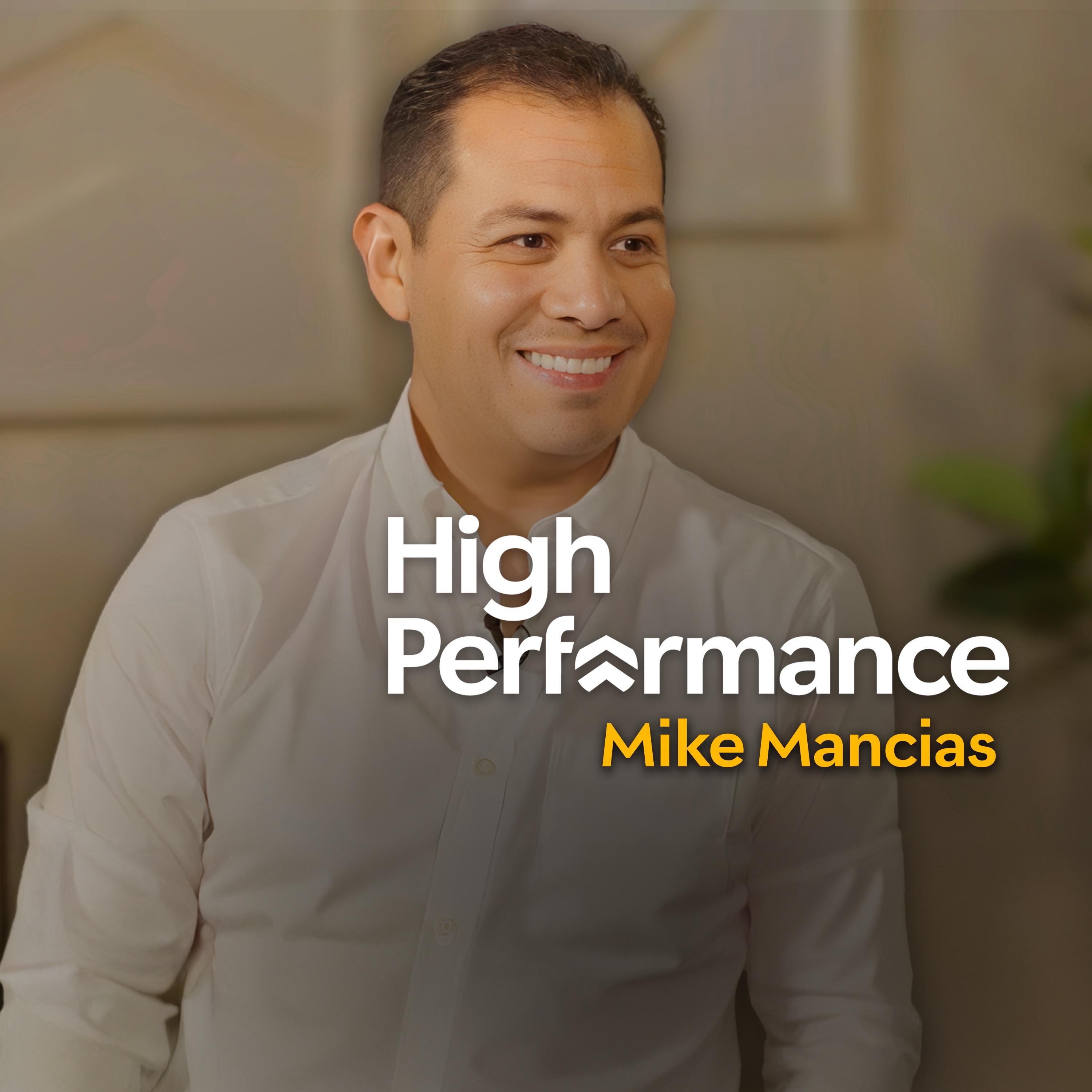
In this episode, Mike Mancias, a performance coach and trainer renowned for his work with NBA superstar LeBron James, shares his experiences and strategies that have contributed to their long-standing success in the NBA. Mancias discusses the importance of consistency, mindset, and accountability in achieving greatness both on and off the court.
Written by AI. May contain mistakes.

Get the gist, explore an idea or ask about something said.
 Claude
On The High Performance Podcast, what are the key points of this episode?
Searching your listeningAutomatic transcript. May contain errors.
0:28Watch it early on the High Performance App. You know, I need to do the extra work at nighttime, a nighttime routine or something to kind of get me, give me that edge. You know, you establish your own recipe, your own regimen for success. And so, again, it's all about accountability, accountability. So, you know, you set your own rules up for what you want to become. And it's an everyday journey.
0:55that is Mike Mancius the trainer who's been described as LeBron James's secret weapon in fact LeBron says there's no way I'd be playing 20 seasons without him it's literally that simple but Mike has also worked with people who aren't pro athletes um how about this Usher said Mike Mancius is more than a teacher or trainer his approach to health and wellness is an approach to life. If you stay ready, you ain't got to get ready. What a great line from Usher. And in this episode, I'm going to sit down with Mike and we're going to talk about the day that he met LeBron, the very moment that LeBron decided that he wanted to be the greatest in the world.
1:32And crucially, the intention that you and I need to live with if we want to be the greatest at whatever it is that we truly desire. This is a fascinating, long-ranging conversation where we talk about the small decisions that you and I are making every single day. And if we change how we make those decisions. We can change the outcomes so that you can stay ready. Mike is about to take us inside the world of one of the greats, LeBron James, with key lessons for your life. So let's do it as we welcome Mike Mancius to High Performance.
2:10Does it ever feel like you're a marketing professional just speaking into the void? But with LinkedIn ads, you can know you're reaching the right decision makers, a network of 130 million of them, in fact. You can even target buyers by job title, industry, company, seniority, skills, and did I say job title? See how you can avoid the void and reach the right buyers with LinkedIn ads. Spend$250 on your first campaign and get a free$250 credit for the next one. Get started at linkedin.com slash campaign. Terms and conditions apply. At Capella University, learning online doesn't mean learning alone.
2:44you'll get support from people who care about your success like your enrollment specialist who gets to know you and the goals you'd like to achieve you'll also get a designated academic coach who's with you throughout your entire program plus career coaches are available to help you navigate your professional goals a different future is closer than you think with Capella University. Learn more at capella.edu. This episode is brought to you by Opera Air, the first browser with mindfulness at its core. Now, most of us spend hours every day online, but how often do we pause to take care of ourselves whilst we're doing it?
3:24And that's where Opera Air comes in. It's a lightweight, fast, secure browser built not just for productivity, but for your wellbeing. With Opera Air, mindfulness is built right in. You'll find free breathing exercises, guided meditations, and soundscapes with ambient sounds, lo-fi music, and binaural beats, all designed to help you focus, relax, and even spark creativity while you browse.
3:52Well, look, Mike, thank you so much for joining us. You got it. It's a real pleasure of mine to have you on the show, and I love the fact that you're a listener to High Performance. Oh, yeah, yeah. And you know what the show's about? It's about allowing people to listen to the wisdom and the life lessons of others. so they can find their own version of high performance, whatever that might be. And you have had the incredible pleasure to work with one of the greatest performers the world has ever seen, LeBron James, for 20 plus years. So if this show is about how people can get the most out of themselves, let me ask you how you have got the most out of LeBron.
4:26I think it's been a marriage. It's been a 20-year marriage. And our goals align. Our goals are aligned because we know what the end result is to be. And that's just to be the greatest and to be a champion. And so every day we challenge each other. You need to be the best athlete. You need to be the best basketball player. I need to be the best athletic trainer for you. And so every day we challenge each other. We've had this 20-year marriage, if you want to call it, because we challenge each other each and every day. So do you remember the day that you had the conversation about what LeBron wants to be?
5:01and the answer was the greatest of all time. The greatest, yes. When did he first say that to you? It was really early on in his career. It was probably, he was 19 or 20 years old when we had that conversation. I was only 24, 25 at the time as well. You know, I'm only eight years, I'm eight years older than he is. And so, but it was my second year in the NBA. So I was just learning as well. And so I said, okay, let's do the research, you know, what others have done, what has failed for others. And so let's just learn from other people's mistakes and let's build our own journey. And when you say you challenge each other every day, can you give me an insight and our audience an insight into what that actually looks like?
5:38What are the behaviors? What are the conversations? Sure. So, you know, we challenge each other each and every day, but I say day, but the challenge begins the night before. How much sleep did you get? You need to be in bed by a certain time in order for you to get a full 8 to 10 hours of sleep, which is ideal for someone who's burning all these calories and who's pushing themselves each and every day. So every day starts with nighttime the night before. Come in, sleep well-rested, well-hydrated. Did you hydrate the night before? Did you hydrate before you came in? Did you have a little snack before we lift weights, et cetera, and do our workouts?
6:14So all those are challenging yourselves and challenging your accountability. So it's just an ongoing process. I think you can follow our step now and our process. It's not really cut and dry. it's just it's overlapping it's constantly overlapping and it's it's an entirety it's an entire process that just overlaps each other and is there ever a day where he says yeah I had 8 hours sleep I've had my nutrition I've drunk my water and you're thinking I don't think you're taking my attention there's there's been a few days like that it's been a few days but luckily he's very transparent with me and and he's he takes full accountability you know he'll look at me and say well Mike you know we had some some guests over last night whereas you know because I think this is an important place to almost begin the conversation that even LeBron James is flawed.
6:59The greatest people in the world are flawed. People aren't perfect. Correct. They slip. Correct. Yes, yes, yes. And it's all part of the journey. It's all part of the journey. We're not robots, and I'll talk about it in my book as well. We're going to have days where we don't hit a grand slam. So we're going to have days like that. What matters and what's important is how quickly do you get back up? How quickly do you start your process again for greatness? If this is how you push him, how does he push you? He questions, you know, Mike, I read something there, or I saw this on a TV show about training or about this or about that.
7:39Why aren't we doing that? Or do we do some of that? You know, so he'll question some of the things that he sees or he overhears. We're always, you know, trying to evolve in what we're doing and educating each other. And I think that idea of evolution is important. You know, we had a guest on the podcast, Professor Brian Cox, who said you need to think like a scientist. You have to be proved wrong. Love that, yes. Does that speak to you? Absolutely, absolutely, yes. Because once you think you got all the answers and you know everything, well, then you're definitely going to fail because science is evolving.
8:12Training is evolving. You know, the way these men and women now, they play the game of basketball. That's evolving. And so, you know, you really have to be on the cutting edge, if you will, you know, to borrow a catchphrase. You really have to be on the cutting edge and do your research. And with all of these years of you two pushing each other and you holding him to account, him holding you to account, looking for new ways to evolve. When you reflect, what do you think is the greatest lesson that you've taught him? The greatest lesson that I have taught him, I believe, is just consistency. You know, being consistent.
8:48I actually think we've taught each other that because, again, we challenge each other each and every day. You know, I'm not going to back down. He's not going to back down. So what has happened here is now we've both become uber consistent in our process and what we're doing. So consistency has been, I think, the key to everything. And why does consistency matter so much? Because you know what you're going to get out of your body. and when you're in a team sport, in a team setting, then others know that you're going to be there for them as well. Okay, you know, because if you're consistent with your behavior, if you're consistent with your attitude, with your performance, then there's no question on, you know, the teammates don't have to question what you're going to bring to the table that particular day.
9:38They know what you're going to get. I want to delve into the specifics that you and LeBron have worked on over the years, but I think it's also important to make it clear to the audience that are watching this that you didn't just rock up when LeBron was some global megastar. This has been a long journey. Yes. So you were there right at the very beginning, is that right? I was there when the Cavaliers just drafted him. They had just drafted him, and I was the summer league intern, athletic trainer for the Cleveland Cavaliers, and we just started at the same time. I was done after the summer league, and he did his rookie year.
10:12I went back to university, and I came back his second season full-time. And how did you end up in the NFL? What was your route into that world? It was really just a lot of interning, a lot of cold calls, a lot of just volunteer work. It was probably a five - to six-year journey for me of volunteering, of taking jobs at high schools, of taking jobs at physical therapy clinics, of working with minor league baseball, you know, interning with paramedics, with hospitals and clinics, and just to try to get as much experience as I could in the field of sports medicine. And so finally, the Cavaliers, they said, okay, come on in, we'll give you a chance to be our summer league intern.
10:55And, you know, the rest is history, I guess. So you must have written loads of letters, made loads of phone calls. It was letters, it was phone calls. It was before email. It was right before email was really popular. I don't know how to use email. Hours and hours of writing letters to people. Letters, you know, licking the envelope, going to the post office. You know anyone under 21 is thinking, what's an envelope, what's a letter? I don't understand. What is this guy talking about? What kept you going in those times? Because I think, look, LeBron's story is amazing. We'll talk about it. But I think, you know, let's do due service to you.
11:30Your story as well, Mike, is amazing how you ended up in the world of the NBA. I come from a small town, Brownsville, Texas, which is right on the border. It's right on the U.S.-Mexico border. And so we don't have access to a lot of big-time pro-sporting teams, etc., or programs. I had lofty aspirations to be involved in professional sports at whatever level. I knew I wasn't going to play because after high school I ran out of talent. And so I said, okay, I really love medicine and biology and anatomy, physiology. Why don't I merge the two? So I did that. I said, I can get a job in sports medicine.
12:09And then when I got to college and I was an intern, I said, well, why can't I do this at the pro level? And so right then and then I decided I'm going to do this. I'm going to become a sports medicine athletic trainer for a professional sports team. And I'm going to do all the legwork and the groundwork that I need to do to get there. And did you think that the dream of a life in the NBA was never going to happen at any point? There was a couple of times where, you know, I was a little dejected. I was a little, you know, turned off by, you know, some of the responses I was getting. You know, even some of the people around me were like, oh, you know, maybe it's just not meant for you.
12:48But all they did was really fuel me. I said, what? No. You know, it is for me. Okay, and you're not going to tell me that it's not for me. So, you know, that only fueled me more once I heard comments like that, that, you know, maybe this isn't for you. Or, you know, maybe a small-town kid can't really get it done. So what is high performance then? High performance to me is something special to me. High performance is the end result of a journey. It's the sum of all these parts. So high performance comes from doing all the necessary work, all the grunt work, all of the sacrificing, and all the discipline and accountability it takes to get there.
13:26And then once you master all that and go through the process, then you can achieve high performance. So let's talk then about your journey with LeBron. There's a lovely line in your book where you say, I could see he was a blank canvas with literally every paint color available. So tell us about the day that you met LeBron James. So we initially met in Orlando, Florida. You know, I flew in to do the NBA Summer League for the Cavaliers. LeBron had just been drafted. And we'd come in. And to be honest, guys, I never knew who LeBron was until right before I went to Summer League. And a buddy of mine who follows the NBA, Colosi, is, oh, you're going to work with LeBron James?
14:10I said, oh, the high school kid? I said, yeah, yeah, I think so. And so, you know, all I knew, he was this famous high school kid who was really, really good. And we were going to draft him. I said, okay, cool. So, you know, I was just happy to be in the NBA. And so I said, okay, if I meet him, great. If not, you know, I just want to do a really, really good job for the team. And so we met and just he walked in the hotel room to do a little treatment and therapy. And he was, I was kind of taken aback by him because he was, for an 18, 19-year-old kid, this huge kid. And, you know, there's a lot of tall kids and, you know, tall guys that come into the NBA, obviously.
14:48But this guy was just massive. Just and well proportioned just shoulders his back and his legs are just really really proportional He walks in the door and I saw this guy special This guy's pretty special. Oh, this is this is the high school kid, you know So okay, you know here he is and you know, just just very very businesslike, you know at 18 19 years old. He was very very businesslike and just he would talk about You know my body feels this right. I think I need to do this tonight. Okay, you know to help me get right but low key you know just kind of very very professional so that was the very very first time that we met so physically he had everything oh yeah yeah yeah he was just amazing what about mentally mentally I think he was getting there he was getting there he was still 18 19 years old like I said so he was still getting there he wasn't obviously you know the professional he is now or the professional he was 10 years ago you know he was still a kid you know in a man's world than trying to figure this out.
15:49And so you two, you clicked straight away? We clicked, I believe, we clicked when I got on the Cavaliers full-time during training camp, is when I was doing some stretches and some mobility work with some of the veterans on the team. And I could see him kind of looking and say, you know, he didn't know my name. He said, hey, man, you know, show me that exercise. What does that do? What is that for? Very, very inquisitive early on. and so we started to gravitate toward each other and he said, well, how can we do this? Well, this is for your back, this is for your hips which in turn will help your legs and your ankle, etc.
16:26Whatever the case may be. He said, okay, okay, I kind of like that stuff. And then we go off and practice. And then before every practice, it started to like, hey man, let me get that stretch. Hey man, let's try that exercise. And it was always, hey man, hey man. And so finally he says, it's Mike, right? I said, yeah, Mike. All right, cool. All right, Mike. Let's do this. Let's do this. And then finally, the night before our home opener, I think it was Halloween, 2007, I believe, he said, what are you doing tonight? I said, nothing. He says, well, why don't you come to the house and we'll do some of these exercises at the house because I like the way I feel.
17:04It's okay, cool. In preparation for the next day. So his body, his mind was already thinking, you know, I need to do the extra work to get to where I want to be. You know, I need to do the extra work at nighttime, a nighttime routine or something to kind of get me, give me that edge. And so I drove over to the house and I think it was Halloween night, like I said. And, you know, he opened the door, he was dressed as Batman. Was he? Yeah, he was just this giant Batman, you know, opening the door. So, you know, he changes and we start doing all the stretches and stuff in front of about 20 people at the house.
17:39And they're all wondering, you know, they're all looking at me with these eyes. Hey, you know, don't mess them up, kid. You know, that's our guy. You know, make sure you don't hurt him. And so, but that became the routine. The night before every game, I would drive down to Akron, Ohio to his home and we'd do our exercises, our stretching, any icing or any little therapy if he has a little injury. and we do that and then you say, why don't you stay for dinner? And we would talk over dinner and that's when Bronny James was in a high chair. He was spoon feeding him. Now he's in the NBA. That's amazing.
18:11So it's been quite a journey. But that's been, I remember those times were very, very special. And I think you can read so much into the mindset of a young player that wanted to do that. How many other players were asking you to go over the night before matches to their house and do all these extras with them? Oh, I mean, you know, now, you know, that the more and more of these stories are out there, you know, you might get a handful now. But then? Well, but then it was really unheard of. There's a great line in your book, Game Plan, where you say, mind first, grind later. Correct. Tell us what that means.
18:44Correct. So, you know, I believe when we heard, we were talking about, you know, LeBron and Mike are writing a book and co-authoring a book together, etc. You know, everybody wanted, oh, what's the secret sauce? What are LeBron's workouts? And what are all these things? Well, we'll get to that later. But before you go through and become a high performer, and to have high performance, it starts with the mind. So you need to have the mental worth of all and the mental discipline to do all the sacrificing and to do all the little tidbits that it takes to become great. So we don't want to start with exercise.
19:21We want to start with the mind. And what is the right mindset for greatness? So for people that want to achieve greatness, what is the right mindset? How do we begin having that conversation? Number one, you begin with a self-assessment. Okay, you're different. I'm different. LeBron James is different. Michael Jordan is different. Everybody's different. So what is high performance for you? So the first thing you do is a SWOT analysis for yourself. What are my strengths, weaknesses? Where do I want to be? That's number one. What does high performance mean to me? What is my goal? Why did I pick up this book?
19:55All right? Why do I want to be better? So figure that part out first. Then we could dive in to, okay, start by doing this, eliminate this, add this, et cetera, et cetera. So a needs analysis is vital before we do anything else. And when you first had that analysis with LeBron, what was the answer that the two of you came up with? It was, number one, he wanted to be the greatest. That was, you know, that's the goal, is to be the greatest ever. And so, okay, well, we both know that that's going to take a ton of sacrifice, commitment, and you have to be able to play this game for a long period of time.
20:32You know, because we both believe that greatness isn't measured by, you know, a handful of years. Greatness, you know, can you sustain greatness? And for us, that's the definition of being great. You know, how long can you sustain this? Because it's not always fun. It's not always sexy. You know, it is a grind. So if the first thing that we do is think about where we want to be, what is the dream for us, what's next? Because for 99.9 % of people who are enjoying this conversation, the answer is not going to be to be the greatest NBA player the world's ever seen. It's going to be something very different.
21:04What's the next step after doing that kind of self-assessment, if you like? Okay, so the first step, where do I want to be? We just talked about. Okay, now, where am I now? What is stopping me from getting there? What steps are hindering my process, you know, that are getting in the way of, you know, for me to get there? And so, you know, you have to do, you know, you have to be real with yourself, which I talk about in the book, and just look yourself in the mirror and say, okay, I should be doing this. I should be adding this. I should omit this because, you know, the way that I eat, the way that I move, you know, am I exercising?
21:40Am I doing the right things? Am I networking the right way in business to get me to be CEO of my own company, etc., etc.? Why is it so important to make sure that you're real with yourself? Well, because, again, we're talking about sustained longevity. And so a flash in the pan, everyone can have a great weekend and close the deal. But can you close multiple deals for a long period of time? And so if you're not real with yourself, then your success will be short-lived. When you looked at LeBron all those years ago and you'd made the plan, you want to be the greatest ever, where are you not delivering?
22:18What answers did you come up with then? We're talking about what are we doing each and every day? And how much are you actually taking care of your body? What are you eating? But back then, 18, 19, you would pick up fast food and go to the arena, to eat some fast food in the locker room and then go out there and score 20, 30 points. But that was great back then and then. But now, you can't get away with doing stuff like that anymore. That was great when you're 19, 20. But in order to sustain a high performance, you're just going to be shooting yourself in the foot if you keep doing that. Okay.
22:58So you've made the self-assessment. You've looked at where you're not quite delivering. Yes. and you've worked out those areas to improve. What's the next step after that? The next step is, and this is one that gets a lot of folks, is share your idea. Oh, right. Tell me more. Share your idea because I believe and we believe and the proof is there that a group of people working to accomplish a goal is much, way more effective than just an individual trying to do it by him or herself. And so you want to share your idea, share your plan, talk to someone, either a spouse, a parent, or a really, really close friend that's going to help you to get there.
23:36That's going to make you accountable. We talked about earlier about LeBron and I challenging each other each and every day. Well, it's easy because we're challenging each other to be the best, to be the greatest each and every day. And so if you have someone along with you for the journey, it's going to be a lot easier. Who else did you tell that this was your plan? Did you go to the head coach of the Cavaliers at the time and say, listen, this guy wants to be the greatest NBA player the world's ever seen. you need to help us get there? Yeah, yeah, yeah. No, you know, initially it was just he and I.
24:06Initially it was he and I. You know, I'm sure he, you know, maybe he spoke to his mother or spoke to his spouse. But, you know, it was really just he and I early on. And people around us didn't quite get, you know, why are these guys here, you know, four hours before the game? You know, why are these guys, why is Mike driving to his house the night before a game? You know, what is that really doing for him? You know, why is he doing all these actual lifts? Why is he doing all this? What does that do? So a lot of people didn't understand what he and I were working on. We were working on a project, and a long-term project.
24:38And we still are, you know, 20, 21 years, 22 years later. There's a great quote from Mark Webber, the former Formula One driver. I know you're into your Formula One. Yeah. He said to us once on high performance, average is easy. That's why it's popular. I love it. Absolutely. But what's really interesting is you weren't doing the average there. You weren't doing what was popular. You were kind of outliers at this point. Oh, yeah. Yeah. But at that particular time, we were doing stuff that not a lot of folks were doing. And so it was extra time in the gym. It was extra time in the weight room. Extra time at his home doing therapy, exercises, crowd therapy, et cetera.
25:13And also researching. What is this new modality about? What are they doing in Europe? What are they doing in football, in rugby? You know, how can we get some of these ideas to help benefit us and what we're trying to achieve? And I understand why you would read a lot, research a lot, look at the latest studies that are coming out of the world of biomechanics and physiology and things. Was LeBron doing the same? LeBron was doing the same from a basketball perspective and from a business perspective. If we're just talking about performance in basketball, I can't promise you, but I can assure you that there's no one that has seen more tape or that studies more basketball games than LeBron.
26:03He really is a basketball savant. He's a basketball encyclopedia. He knows the offensive schemes. He knows the defensive schemes of other teams, of other players, tendencies of other teams, of other players, of other coaches. He has done his homework for years now, and he studies different tactics from not only players but from coaches as well. Would you tell us a story about maybe the first time or one of the early times you realized the links that he's going to to understand the game of basketball and most importantly understand his opponents, understand other coaches? Yeah, well, I mean, I would be at the house and I would show up maybe half an hour early before our treatment time.
26:47And someone would open the door and, you know, where's he at? Oh, he's in his office. I don't know what he's doing. So open the door and knock and he's watching film. He's watching film. He's got his son with him. He's got Bronny Jr. But he's, you know, he's tending to him, but he's watching a game out on the West Coast somewhere. You know, like, I don't know, the Lakers are playing the Utah Jazz or something. Just a random game that night. But he's studying it. He's watching it because we're playing Utah, you know, in three nights. So he's already scouting. He's already doing his homework. Another thing is, you know, we'll be doing therapy and treatment.
27:23I got him on the treatment table, and he's watching games on his iPad. You know, he's watching games because, you know, we have a game again in two or three days. So he was doing that 20 years ago. He's still doing that now. So nothing has changed. He's still prepping. Man. Yeah. And how, I suppose, what I'd be wondering if I was him and you, like, is what we're doing the right thing? And I think often that derails a lot of people because it takes time for the evidence to become clear. Yes. So how did you know that the extra work you were doing was going to pay off? How did LeBron know that watching all these games or doing these extra sessions with you the night before was actually going to make a difference?
28:01Initially, it was a little trial and error, like most things in their infancy are. So it was a lot of trial and error early on. But at the end of the day, it could only make you better if you sacrifice. If you add things that make you feel better, that are healthier for you, at the end of the day, you're just going to get more positive results. And so with him, it was, yeah, it's trial and error, but it's, you know, mentally, it's an advantage already over your opponent because you come to the game way more prepared than your opponent because you know you've been doing stuff the night before to prep you for tonight.
28:40So how much of LeBron's success do you think is raw talent? And how much do you think it's down to this work ethic? I believe it's, gosh, if I had to put a number on it, I'd say 65 % of it is just raw talent. But the other percentage is just how much he dedicates himself to his craft. So inspiring, though, for the two of you to keep on lifting each other up all the time and be in this kind of... I almost look at it as like a cool little gang that no one else knows you're in where you've got this plan to be the greatest in the world and you're doing all of this, what was secret work. It's not so secret now because you're telling us about it.
29:15But it must have been such an exciting time to try and build this guy. It was this blank canvas. and for him to acknowledge, you know what, I want to be the greatest. And, you know, can we go on a journey together? Let's go. And so it was, it's funny, we didn't celebrate too much, you know, some of the big accomplishments here because for us, it was just part of the journey. It's part of where we want to be. So it's not like we, you know, we're MVP one year and went out and had this huge party. It was just, okay, this is part of where you want to be. Even now, 20 years in, the longer he's done it, every other game is like he's breaking a record.
29:55Most points or most of this or most games played or most minutes or this and that. Or the oldest to be this. He was the youngest to achieve things. Now he's the oldest to achieve things. And so every other game, they're acknowledging him. But it doesn't change his preparation or my preparation or our mentality. we had a conversation a few weeks ago it was a little before the Olympics and he had just won this great award or what have you and he said, you know I really don't even think about it anymore because it's still part of the journey you know, maybe one day after I'm done I'll go back and say, oh yeah, I did that oh yeah, I did that but right now it's not really it's not really phasing him right now so when he won his first title, right?
30:40yeah that wasn't, I've achieved everything I wanted to achieve it was for a brief second it was for that night you know yeah we did celebrate but then it became well I got to do this again if I want to be considered the greatest I got to do this multiple times you know it can't just be like I said you know I'll win it once and then you know right after the sunset and I've done it yeah I've had a hell of a hell of a career no this is I need to be doing this more often now you know in order for me to be in those conversations you know as the greatest ever do it. And we're having this conversation just a few days after the Olympics is happening in Paris.
31:18I'd love an insight into what LeBron James' mindset is like at the Olympic Games at this stage. Because there's part of me that thinks, well, he's achieved everything there is to achieve in the game. Surely he just goes to France and looks to enjoy himself now. No? Well, initially, that was kind of the thinking. You know, we had a meeting during the season, and he says, you know what, Mike, I'm not going to be doing much. I'm not going to be playing much. I'm going to let some of the young guys get some more experience and stuff. And I said, okay, well, me knowing you, we'll see if that holds true.
31:51Because I knew once the game started, that was not going to be the case. And so sure enough, he wanted to set the tone early. He had a mind shift change. He said, you know what? He took inventory of the team around him and how much experience they had with FIBA, etc. And so he said, well, I still have to set the tone. And so from day one, we were in Las Vegas having training camp, and he was the first one in the weight room, first guy up. At 7.30 in the morning, he's out there lifting weights in a hotel. And first one to breakfast, first one for therapy, for stretching, etc. And then first one in the layup line, in the warm-up line.
32:35And just setting the tone early. And I said, okay, this guy's not here just to hang out. This guy's going to be a true leader. And he ended up being the most valuable player for all of the Olympic basketball games. And how much does he pass on when he's learned to those younger players? How much is he coaching them, discussing with them, explaining to them what he's doing and why he's doing it? I believe he's always been an open book to those who seek his advice. Okay, so he's not just standing there and dishing it out to the group? No, no, no, no. He's definitely an open book, But you have to be accountable.
33:10You have to take ownership in your own process to go up to him and talk to him, track up a conversation. If he's lifting weights at 7 a.m., well, you need to be there at 6.45 as well, you know, to meet him and say, you know, whether it irritates him or not, you know, hey, LeBron, I want to go lift with you. I want to go work out with you. I'll be there at 6.45, you know, whatever. But sometimes we get that, sometimes we don't. I love that, though, because I think that I, you know, I spend a lot of time giving advice to people that tell me they want to work in the TV industry, right? Yeah. Or they want to set up a podcast or be a broadcaster or something.
33:44Yeah. And then very quickly you give them a bit of advice or you share one or two things with them. And then you see the behavior doesn't change. They don't come for any more. And you kind of think, oh, kind of a waste of that meeting that nothing happened. And I can understand how LeBron would be almost looking to them to say, well, if you want this, you can have this. But you have to show me that you want this. Is that fair? Yeah, absolutely. You hit the nail on the head. If that individual doesn't take ownership in the process, like he did when he was 19, then, you know, good luck to you. I'm sure you'll have a great career, but, you know.
34:21If you're still overpaying for wireless, it's time to say yes to saying no. At Mint Mobile, their favorite word is no. No contracts, no monthly bills, no overages, no hidden fees, no BS. I made the switch because I was tired of those ridiculous bills and sneaky charges from my old provider. With Mint, I'm paying$15 a month and getting the same high-speed data, unlimited talk and text, and the coverage on the nation's largest 5G network. Honestly, the quality is just as good, if not better, than what I had before. And the best part? You don't need a new phone. You can keep your current one, bring your number, and all your contacts.
34:56I use Mint Mobile, and you should too. Ready to say yes to saying no? Make the switch at mintmobile.com slash HPP. That's mintmobile.com slash HPP. Upfront payment of$45 required, equivalent to$15 a month. Limited time new customer offer for first three months only. Speeds may slow up a 35 gig on unlimited plan. Taxes and fees extra. See Mint Mobile for details.
35:30Proven freelance talent fast. No bulky overhead. No rigid long-term contracts. Just the right expert, right when you need them. Work smarter and faster with Upwork. Go to Upwork.com now and find your freelance expert. That's U-P-W-O-R-K.com. Post a job for free and get started today. Fall is all about cozy comforts, but when you're prioritizing your health, it's easy to feel like you're missing out. With Hero Bread, you can enjoy all your fall favorites because they're made with Hero Bread sliced bread loaves, tortillas, bagels, dinner rolls, and more. Try their all-new Hero Noodles with 12 grams of protein and just 80 calories.
36:10So skip replacing every carb with cauliflower and indulge in your breakfast, lunch, and dinnertime favorites while still hitting your goals. From breakfast bagels and meal-prepped enchiladas to mouth-watering burgers and cheesy noodles. You won't believe Hero Bread's options have 0-5 grams net carbs and are high fiber from the taste and texture. They've even got small batch drops of indulgent favorites like the popular Hero Croissant. And right now, Hero Bread is offering 10 % off your order. Go to Hero.co and use code FALL25 at checkout. That's FALL25 at H-E-R-O dot C-O. All figures are per serving of Hero Bread.
36:45contains 2 to 18 grams of fat per serving. See the product nutrition panels on Hero.co for more information.
36:55You know, when I knew we were having this conversation, I was thinking of a bit of footage I watched quite a few years ago of LeBron, and he was walking off a court, and I don't know enough to tell you the game or the court or where he was, but it was a fan filming on their phone, and they just said, LeBron, how do you keep doing it? And he just went, intention, and carried on walking. And I remember thinking, I don't really understand quite what he is saying there. Yeah. I'd love you to explain that. That intention started, again, when he was 19, 20 years old, being, I want to be the greatest.
37:27And so I know that I have to sacrifice each and every day. And so the fan asked him, how do you keep doing it? How do you keep doing it? Well, because that's my intention, is to be the greatest. And so every day I know I have to sacrifice. Every day I know I have to do things that aren't comfortable, that aren't always fun and exciting, and do the things that most people aren't doing. So intention then is quite powerful because it informs every behavior? I believe so, yes. And how do we all get to a point where we can live with intention? What questions should we be asking ourselves? How should we be operating?
38:06If we want to have this intentional lifestyle, how does it feel? What do we do? Again, you just have to take ownership in your decision making and be okay with not being the most popular. Be okay with not being a little separate and being not recluse, but being away from the group. Because the sacrifices that you have to do aren't always popular. The decisions aren't always popular within a group. And so you have to be okay with just setting your own path by yourself. Could you explain to us or share with us a time when a decision that you and LeBron have come to isn't popular with the group and you've had to just stick to your guns to get it through?
38:49Leaving Cleveland for the first time. That was, as the world knows now, that was a very unpopular thing to do. But it's something that he needed to do for himself and for his journey because he needed to challenge himself. Get away from home, if you will. compared to a young man or a young girl leaving school to go to college. You know, to go to college for four years, you know, to grow up, you know, to gain accountability, to kind of be self-sustainable for a minute and see you mature and see you grow up. So for him, he needed to leave home. You know, he got drafted, you know, for the Cavaliers, and he grew up, you know, 45 minutes away from the city.
39:28So, you know, he never really left home. And so this was that experience for him to grow up. When was the first time you had a conversation with him where he was thinking, maybe I need something new in my life? It was probably a couple of weeks before he made the decision. So that's quick. Yeah. I think he was thinking about it throughout the season and weighing in all his options, talking to his close friends, close family. But when he and I first had the conversation of, hey, you know what, I could be leaving here, you know, and I may need that. It was probably about a week or two before the actual decision was made.
40:10And what does he look for from you in that situation when he's trying to come to a decision? What are the questions he asks you? You know, he'll ask for my opinion on certain matters. Now it's changed. Now he has a wife, grown-up kids, you know, so he has that ecosystem. But early on in his career, he kind of had just kind of a small group, a small circle. And so back then it was, what do you think of this? What would you do about this? And so we would communicate a lot on certain things like that. But now he's got a wife, he's got his family. Now all decisions go through the proper channels. He knows what he needs to do.
40:50And when he makes a decision with intention, which is really important, and he does get the criticism. He was being booed by fans. It was a big period in his life. Yes. How does he deal with that psychologically? I think it just really fuels him. It just really fuels him. But also, it's more pressure on him to make sure that this decision, he has to make the decision, the right decision. When you come to a fork in the road, you take it. So how do we do that in our own lives? Again, be intentional. You know where you want to be. So goal setting is number one, like we discussed earlier. Goal setting is number one.
41:36And making sure that that's where you want to be. Are you sure you want to get there and do that? And why do you want to do that? Okay, cool. If that's where you want to be and you know that's your goal, okay then every decision again that you make has has to help you along the way and it's not going to be like it's early it's not it's not going to be popular but you just you have to live with it because you know that that's going to help you achieve your goal how does lebron work with you to deal with failure to deal with setbacks to deal with getting things wrong i think he's very accountable you know if if we messed up on on something okay we'll we'll discuss it briefly Yeah.
42:17Okay, we learn from it, and we move on. You know, very rarely does he just linger on, oh, I made a bad decision, and I don't know if that's right. You know, he doesn't mill around. You know, it's an explain mentality. As far as he and I, I think, you know, from doing a different exercise routine or a mobility routine or something, you know, that didn't quite feel right. Oh, okay, Mike, you know, and I didn't really move well. All right, cool. We tried it together. We're done. let's move on next we live and learn and we move on i want to talk to you about the rules of regimen would you first of all explain what they are to the audience or describe what we mean by rules of regimen it all it all goes goes back to goal setting and that that's something that cannot sway you know depending on the day and so you know you establish your own recipe your own regimen for success and so again it's all about accountability accountability so you know you set your own rules up for what you want to become.
43:20And it's an everyday journey. Okay, so I want to talk to you about a couple of the key things that I think really stand out in your book that will have a big impact on people. The first one is nutrition. You know, we've all heard the phrase, you can't out-train a bad diet. Yes. So from all the work that you and LeBron have done together, what does a good diet look like? Balanced. A balanced diet. And then again, all goes back to what your goal is. What works for me may not work for the next individual, etc. But whatever your goal, what do you want to achieve? So say you want to lose 10 pounds and be more toned, etc.
44:01Well, you know you've got to eat more protein. You've got to cut out some of the fast foods. You've got to come out some of the soft drinks. That's all basic things. So just stay balanced in what you're doing. and just make common sense decisions. What does a day's nutrition look like for someone like LeBron? For someone like LJ, it's a heavy breakfast during the season. It's a heavy breakfast because he's going to need those calories. He's going to need those calories come 7 o 'clock, 8 o 'clock at night. And so it's a heavy breakfast. And his chef does an amazing job. She's wonderful. It's more high protein.
44:36Lots of eggs. Lots of eggs, some turkey bacon, etc. You know, don't be afraid to sprinkle in a couple, you know, small pancakes in there as well. You know, you need those carbohydrates and you need to feel good about what you're eating. You know, reward yourself because you know you just had 8 to 10 hours of sleep. You know you're well hydrated. You know you've worked out the night before. And you know you're going to burn that that night as well because you're about to play 40 minutes a night. But it's a ton of hydration. You know, he carries around a gallon of, you know, this giant jug of water.
45:08That's one gallon. He carries it around everywhere he goes. He has a couple of those every day. Really? Oh, yeah. Why is that so important? Well, it's just hydration. Hydration is key for obviously preventing failure on the court. Failure can mean fatigue. Failure can mean muscle cramping or just lack of focus from being dehydrated. So being dehydrated can really, really play a key role in why you would lose a game or why your performance can be a failure. And is it the same for you and I, for Ben who's in the corner recording this conversation? Do we all need to pay particular focus to that? We all need a hydration.
45:52I would say at least a gallon a day. At least a gallon a day in order for our digestive system, to work functionally and for, again, hydration, muscle cramping, and just overall clarity. You'll be amazed of how clear your mind thinks when you're well hydrated. And you also talk in your book about scoring our meals. Yeah. Again, this is about living intentionally, thinking about the things that are going into our body. So how should someone go about scoring their meals for the first time? How do we do that? I would say, is your plate well balanced? Okay, you know, the more balanced it is, the higher the score.
46:34If it's just all pancakes, well, you're going to have a low score. You know, do you have an element of fruit? Do you have an element of veggies? You know, is your protein heavier than your carbohydrate intake? Well, then, you know, that would be a really high-scoring meal. You know, if it's more protein, okay, that's great. But, you know, you need some fruits and veggies as well. So is LeBron going through life like this, sort of always reviewing, was that the best I could do in that training session? Was that the best meal I could eat? Was that the best sleep I could get? Was that the best hydration I could deal with?
47:12Was that the best nutrition? Was that the best conversation with my coach? Yes, he is, but he's not taking time right as soon as he's done to sit and go over everything. Again, it's all overlapping. And so before he gets on the court, he's reviewing what we just did in the weight room. Was that exercise beneficial? How was that going? But part of that is my job as well, making sure that he's doing the right things in the weight room, the right exercise routine. So what we do in the weight room will enhance what he's doing on the basketball court. You've mentioned about recovery quite a few times.
47:45Yes. Where on the list of the most important things to get us to our own version of high performance sits recovery? It's mindset number one, mental awareness mindset. that it's nutrition, it's mobility, exercising, and then it's recovery. So how do all of us go about improving our recovery? What are the steps we can take right now to make our recovery better? Okay, this is now assuming that you have your roadmap already set. You have your roadmap, you have your goal already. And so let's say the goal is to run a marathon. And so today I ran 15 miles today. Well, what was my goal tomorrow? So based on your goal, based on your plan, how can you be best suited either to run the next day or is the next day a recovery day or is the next day a session in the weight room?
48:41What can you do right after you're done in order to make sure that you're ready for the next day to perform at your maximum? And what are the things that we should do? I mean, from making sure you're well hydrated, making sure, you know, it goes back to that recipe of hydration, nutrition, mobility. You know, how mobile are you? You know, are you doing your stretches? Are you doing the mobility work? Are you doing some of the small difference makers, what I talk about in my book, difference makers are these small, minimal exercises that you can do throughout the day to help strengthen your joints.
49:14You know, are you doing that? Are you getting enough rest and sleep? How do we improve our sleep? I would say by shutting off your phones, your iPads, you know, but an hour before you plan on sleep. And just work backwards. If you know you have meeting at 9 a.m., okay, well, make sure you have eight hours of sleep locked in there. Make sure you give yourself time in the morning to do a little mobility, 15 minutes, if you will, and however long you need to eat something. And so work backwards in order for you to help prepare you for the next day. And there's a few things you mentioned in your book that I just want to pick up on.
49:58At bedtime, you talk about the importance of magnesium. Yes. What does that do for us? It just really relaxes and really calms your muscles, calms your body, calms your brain a little bit. It really puts you in a nice sense of relaxation. And I've heard a lot of people talk about magnesium. I've not heard very many people talk about six to eight ounces of tart cherry juice. Talk to me about the importance of cherry juice. Tart cherry juice definitely can be a sleep aid. It helps as an anti-inflammatory medicine, if you will. But it's all natural. It's all tart cherries. And so that's a concoction that we use on the road, is tart cherry juice with some magnesium as well, in order for you, especially after games, just to kind of relax you and go to sleep naturally without the melatonins and all this other stuff out there.
50:54So that's what LeBron's taking after a game to bring himself into a good state. On summer most days, yes. When he's busy. You also talk about the room being completely black and lowering the temperature. Why is a completely black room important? Well, it minimizes distractions. So the eyes play a key role in you falling asleep and shutting off the brain, getting yourself in a more relaxed state. That's why phones are a major detriment to sleeping. We all love to scroll right before bed, etc., get back our text messages and our emails. But the more we can shut off light, especially artificial light, before bed, the more relaxed you're going to have and the deeper sleep you're going to get.
51:39What I love about this conversation is not that we're talking about a year of success or 18 months or two years of success. It's about longevity. I think the true high performance is being able to do something and then being able to sustain that thing. And I was just reading in my research for this that LeBron is the last player of his draft season to remain in the NBA. That's out of 58 players. Half of the players drafted when he was drafted didn't make it past five years. that's an amazing stat you guys have just finished year 21 yes so what would you share with us is the secret to LeBron's longevity daily accountability the decisions you make each and every day will affect you in the long run and so if you make the right decisions for most of those days and obviously we're talking about you know we're not robots but you know if you make those decisions and have the right people around you it's also is also another one.
52:38Have the right people around you. Then that's going to lead to whatever your goal may be. That's going to help you achieve whatever goal that you set out for yourself. And what I think that you can't say often enough is having the thing, the moment is here. And too many people maybe focus on this is what I want. But they don't take it right back to here. Which is the work right at the very beginning. Yes, yes. Doing the groundwork. We've talked about evolving and learning. I'd love to know, not just, you know, we've spoken about how LeBron deals with setbacks and issues and things that have gone wrong.
53:13What about dealing with success? How has he not got to the point where he's won his first title or he's had his first big moment of success or he's got his first million in the bank and then he's taken his foot off the gas? How has that not happened? How has he kept on going for all this time? The early starts, pushing his body, the sacrifices of not seeing his family, the constant need to be the best. Well, it all stems from that decision. That one decision that he made, he now has to live with. And that decision is to be the greatest. And so you need, he's still not done. So, you know, everyone expects him to take his foot out the gas.
53:53But, you know, you're here to show people what they haven't seen yet. Yeah. Like nothing they've ever seen before. And so that's on his mind. I'm still playing. and I'm still working hard because I'm still showing people something that they've never seen before. What's the thing that he's done in all of your time working together that's taken your breath away, that's amazed you the most? His humility. His humility amongst all of the success that he's had. He's still very much a dad at the end of the day. He's still very much a family man. Sometimes with success, you put that off to the side a bit.
54:35and he can come back and haunt you. But he's still dead. Does he not feel he's the best already? He might, but it's not stopping his drive. It's not stopping his drive. He's here to, again, to show folks that, yeah, you can achieve greatness at whatever age. And I'm here on the show to tell you that it's not easy. It's not easy. And there's a reason why only 1 % of people are really true high performers. True high performers that can do this for a long period of time. What are the hardest parts of it? The sacrifice. The sacrifice of, especially if you're a family man, you know, and I go through it as well.
55:25You know, you sacrifice family time, sacrifice family, loved ones. But if that's your goal, that's what you set out to do. and you've shared your goals with your family, if you shared your goals with loved ones and they're all helping you do it, well, you know, hopefully they understand. And neither of you have ever got sick of each other? You've enjoyed each other's company all this time? Oh, we get sick of each other all the time. Do you? Yeah, all the time. You know, there's times, especially during the middle of the season, we're like, oh gosh, I have to see Mike again. He's like, oh yeah, well, you're no picnic either, pal.
56:01after 20 years of seeing each other for all this time. But we know what the journey is. We know what the goal is. And that's to be the greatest. And how far in advance do the two of you plan? What does planning look like for you? I will plan stuff for him as far as performance-wise a couple of weeks in advance because this is the NBA. This is some nights he could play 32 minutes a game. Okay, great. in one game. Next night, we can go to double overtime. So I don't want to plan too far ahead because of the uncertainty of the game. We know what the game schedule is. That comes out in August. But we don't know what the game itself would look like.
56:45Is it going to be double overtime? Is it going to be an easy game for him? And so I need to plan at the most a couple weeks in advance knowing that things can change. You've worked with some other incredible athletes as well. Obviously, we've spoken a lot about LeBron, tell us some of the other greats that you've coached and worked with. I had a chance early on when I was in Miami to work with Rory McIlroy, who was just amazing, an amazing individual, very, very focused. You know, we first came together through a mutual friend, and his goals were very, very much the same. You know, I want to be the greatest.
57:23I want to do this, you know. And so, you know, we talked about, you know, kind of the mindset, number one, and then doing some of the little things, doing all the prep work, et cetera. And then recently, I guess about three years ago now, I was introduced to Miles Garrett, Cleveland Browns player, who's just an awesome individual, just a very, very special individual. And I love him to death. He's just a phenomenal person. And one heck of an athlete. I mean, you know, we've all seen the highlights and whatever. And so we started our process and he said, could you oversee some of the stuff that I'm doing?
58:01Could we put a team together around me? You know, we all know you're busy with LJ full time. But can you kind of oversee and give me some tidbits on what things to change or to add? Or, you know, what am I missing from my prep work? Because I want to take my training, my performance to the next level and then grow from there. And so I said, yeah, let's do it. So I was able to put a team around him and oversee some of the things that he's doing. And with his hard work, with his commitment, not only did he talk about it, but he did alter some of the things he was doing. He altered his training. He altered his mindset.
58:41He altered some of the daily habits. And he's had some really, really good successes. This past year, he was voted NFL Defensive Player of the Year. And when you're working with someone like him or with Rory, what's the most valuable question you can ask them? What's your goal and what's stopping you from getting there? You're asking me for help. You're asking me for advice. What's stopping you from getting there? Then you turn the ownership back on them and say, well, now I've got to be self-accountable now. Shit. I mean, I think the true mastery of yours is working with incredible people, giving them your knowledge and your understanding, but also learning from them as well.
59:23And I know early on you had the opportunity to work with Tim Grover. Yes. Who is, again, Lorded is one of the greats in this world. Michael Jordan's trainer, of course. What was the biggest thing you learned from working with Tim? I love that question because everyone says, oh, you're around Tim Grover and Michael Jordan. Well, I was around him for two weeks, two summers in a row, when Jordan was coming back to play for the Wizards. So in those four weeks total, in two years, I learned it wasn't about the exercises. It wasn't about the working out. It was about how to handle myself around greatness.
1:00:01And so I watched Tim, how he handled himself around greatness and around MJ. And so I took more, I learned more from that than I did the exercises. It wasn't about the squats or the bench press or anything. It was more about how to handle myself and how to make sure that Tim was matching Michael's energy when he walked in the room. Or Tim would even supersede it and bring more energy. You know, if one day MJ came in, you know, in a mood or what have you, you know, Tim was there and he would provide the energy for Michael. And you've taken that on. That's something that you've learned? Yes, yes, yes.
1:00:37So I learned more about handling greatness. Tell us what else you learned about handling greatness. I think that's fascinating. Yeah, I think just really patience. And I spoke about it in a conference recently about matching the energy in the room. Reading the energy in the room, and especially if I'm just working one-on-one with an individual, if he or she comes in and, you know, if they're in a mood or what have you, okay, I kind of, I don't do any digging and poking, hey, what's wrong? Yeah. You know, I just, if they want to talk, then they'll talk about it. but my energy doesn't change, meaning I don't bring it down a notch.
1:01:17I bring it even, I push them even more because by me challenging them, then they're forgetting about their problems. And then at the end of the day, and I'll talk about it in the book, they feel better after a hard workout or after a challenging session with me, then they feel better. You know what? Okay, yeah, this is the way I should address the problem that I had before I came in. They usually figure out a way. And it's interesting what exercise does to stimulate the mind and the thought processes around it. I think something that's really interesting here is that so many of us see other people doing more or achieving great things, and it derails us.
1:01:56It's almost like their success is our failure. But it sounds like LeBron is able to look at other people doing great things or doing more or finding an edge and be inspired by that rather than knocked back by that. Is that fair? Yes, yes. Again, it goes back to the mindset. What is your mindset with all of this? How serious are you about achieving that goal? Well, don't look at competition as... Look at it fiercely, yes. You want to dominate your competition. But you also want to learn from that. Don't let your ego get in the way of your progress. So learn from your mistakes. Learn from your defeats.
1:02:30And learn from the competition as well. You spent a little bit of time with Kobe. A bit of time with Michael Jordan. plenty of time with LeBron James, some time with Rory McIlroy, some NFL greats as well. So when you look at the plethora of talent at the very highest level that you've spent decades working with, what do you believe unites them all? When they finally make a decision that they are willing to sacrifice to be the greatest, once they make that decision, then it's came over. They're willing to face down that journey, that journey of sacrifice. The only way they get there is by believing that greatness is possible.
1:03:15So do they all have that innate belief that they can be the greatest? Yes. Once you decide that, you have to, then everything else is easy because you know where you want to be. All right? So now make the daily commitment to it. Listen, before we wrap this up, and I've loved this conversation, there was a great quote from Usher, which I feel I need to share. Usher said, Mike is more than just a teacher or a trainer. His approach to health and wellness is an approach to life. If you stay ready, you ain't got to get ready. Look, Usher is, he's not quite a normal guy, is he? I mean, he looks incredible.
1:03:53He's a talented guy, but he's not a professional athlete. So for people like me, people like Usher, people who are listening and watching this conversation right now, what advice would you like to give to us about how we can find our own edge, how we can find our own version of greatness? I would say stay centered and stay occupied in what makes you happy and what makes you want to be great. And so you need to figure out your own journey. Okay, figure out your own journey and be accountable to yourself throughout that journey. You know, know that you're going to have some, yeah, you're going to have some days where you're just not feeling it or you got some days where it's just not coming together as you would like, but continue with the journey.
1:04:37And don't lose the belief on those tough days. Don't lose the belief. Absolutely not. Does LeBron have tough days? Absolutely. Yeah, absolutely. But, you know, he takes it on the chin and he knows that today will be gone tomorrow. Okay? So do the best you can today and tomorrow start fresh. And in all your years of coaching him, how many times has he turned up to the gym and gone, I'm not having it today. I'm going to just toss this off. It's happened a few times where he comes in and the energy isn't quite there. But he battles through it because he knows in his mind he does not lose sight of that goal to be the greatest.
1:05:12And he knows it's not easy. He knows it's not going to be easy. And he's fueled by being able to show folks something different, again, that they haven't experienced before. It wasn't long ago that Michael Johnson was in the very chair you're in now and he said he never missed a training session. He said, why would I ever miss a training session? It just was not part of my mindset for being the greatest. I love it. Yeah, exactly. And it's not part of that journey that you just laid out for yourself. You've given so much to LeBron, so much of your knowledge, so much of your experience. You've kind of helped each other.
1:05:46After all your time together, all these years, the highs, the lows, the successes, the struggles, if you could say one thing to LeBron, what would you want to tell him? Just that I'm proud of him. I'm proud to be a part of this journey. Love that. And when you think about how proud you are, where does your brain take you? It takes me always back to our initial conversation. To our initial conversation in Akron, Ohio, about being the greatest. You've done it together. Yeah, yeah. We're still going. I love that. Every time I say how well you've done, what a great career LeBron has had. You're like, we're still going.
1:06:27Yeah, yeah, we're still going. It isn't over yet. There's still work to do. Are you ready for some quickfire questions? Yeah, let's do it. From all the work that you've done over so many years with yourself and LJ, what are the three most important non-negotiable behaviors that matter? Being on time, being accountable, and three, sacrificing whatever needs to be to achieve the goal. What's the greatest piece of advice that you've ever been given? Who was it from and why did it matter? Gosh, I've been mentored by so many greats. Stan Kellers an old strength coach of mine live every day constant movement with purpose have constant movement with purpose, have a purpose each and every day lovely, what's your biggest strength?
1:07:16what's your greatest weakness? my biggest strength I believe is that I have the ability to not lose sight of the goal I'm not derailed by small things. And weakness? I'm a caring person, too caring. Is there such a thing as too caring? Yeah, yeah, it could be. Why is that a weakness? It could be. Some people take, they'll mistake your kindness for weakness. Right. If you could give some advice to a young Mike desperate to get into the NBA just starting out, what would your advice be to him? Stay the course. Be closer to your family. And don't forget to look after yourself as well. Yeah. I can imagine that's an issue if you spend your life looking after other people, yeah?
1:08:08Yes, yeah. What would you recommend, apart from your own, one book that the high-performance audience should read that had a real impact on you and your life? I really like The Alchemist. I love that book. Yeah, I love the book. I actually shared it, and I gave it to LeBron during the playoffs. You know, he likes to read during the playoffs. He shuts off social media. And actually, I gave him a copy of it and he loved it. Oh, yeah, that's brilliant. He actually wrote it cover to cover. And finally, your one golden rule for living a high-performance life. What would you like to leave people thinking about?
1:08:43They were not robots. Okay. There are going to be days that you're not going to have it. Stay the course. Stay the course. That's it.
1:08:55And that's it. Thank you so much for listening as always. please, if you can, just hit the follow button. It means we can grow high performance and it means we can attract even more incredible people to have some really special conversations with us. Remember, there is no secret. It is all there for you. So chase world-class basics. Don't get high on your own supply. Remain humble, curious, and empathetic. And we'll see you very soon.
1:09:29Thank you.
1:09:58with you throughout your entire program. Plus, career coaches are available to help you navigate your professional goals. A different future is closer than you think with Capella University. Learn more at capella.edu.
Mike Mancias is a renowned performance coach and trainer, best known for working with NBA legend LeBron James. With decades of experience in the sports world, Mike has become a key figure in helping athletes reach their peak performance through a combination of physical and mental training.
In this episode, Mike sits down with Jake to discuss the strategies he uses to push LeBron James to new heights, focusing on consistency, mindset, and discipline. He opens up about his journey into the NBA and what it takes to stay on top in such a demanding field.
Mike also touches on LeBron’s mentality at the Olympic Games and how they work together to overcome setbacks. He breaks down the importance of mental discipline and shares practical advice for those looking to achieve greatness, both in sports and everyday life.
This episode provides insights into the daily routines that fuel the success of some of the world's greatest athletes.
🚨 Partners
Huel 👉 Claim your FREE t-shirt HERE: https://hppod.co/huel
Heights 👉 https://hppod.co/Heights Get 20% off your subscription by using Code: HP20
FORA 👉 Claim a free day pass at any Fora workspace and find the perfect home for your business here: https://hppod.co/FORAHP
Explore offers and discounts through our other partners:
https://hppod.co/partners
Hosted on Acast. See acast.com/privacy for more information.


